Feeds:
Posts
Comentários

Archive for the ‘Uncategorized’ Category


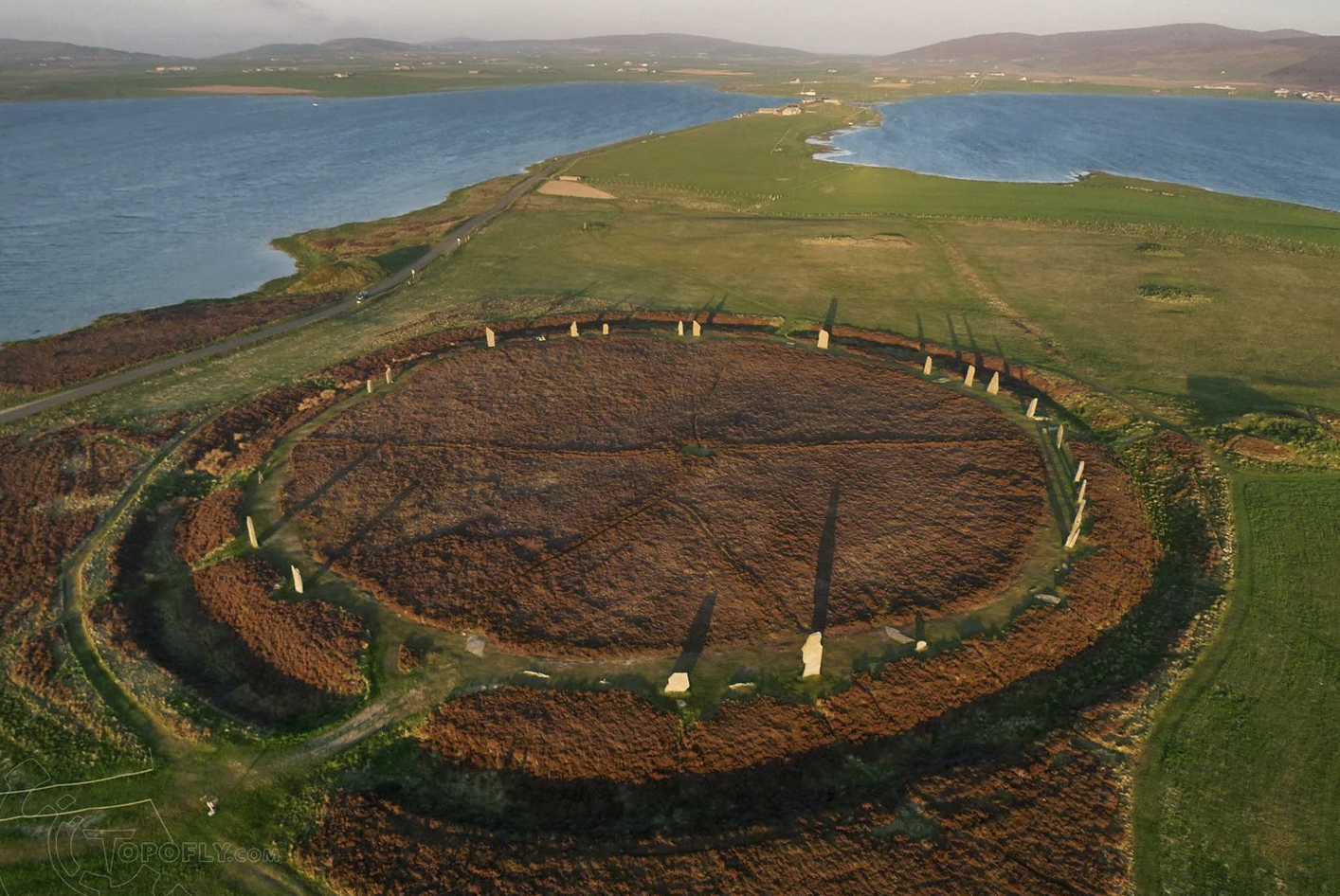
Vista aérea do Círculo de Brodgar, no istmo entre os lagos de Stenness e Harray. / Aerial view of Ring of Brodgar, in a istmus between the Lochs of Stenness and Harray.

O impressionante Anel de Brodgar não é uma estrutura solta na paisagem. Faz parte de um conjunto de monumentos Neolíticos em Mainland (maior parte do território) das Ilhas Orkney, na Escócia. O conjunto foi batizado de Coração Neolítico de Orkney, nome adotado pela UNESCO quando o sítio foi oficialmente declarado Patrimônio Mundial, em Dezembro de 1999.

The impressive Ring of Brodgar is not a single structure in the landscape. It stands as one of the Neolithic monuments on the Mainland of the Orkney Islands, Scotland. The group is called Heart of Neolithic Orkney, name adopted by UNESCO when it proclaimed these sites as a World Heritage Site in December 1999.

O Coração Neolítico de Orkney / The Heart of Neolithic Orkney

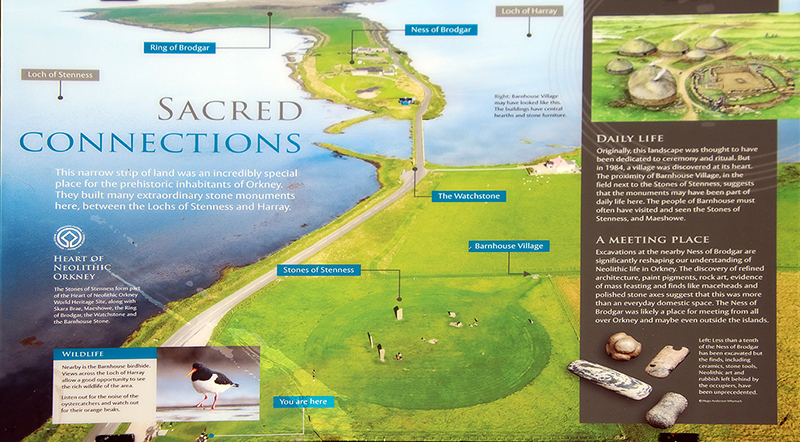
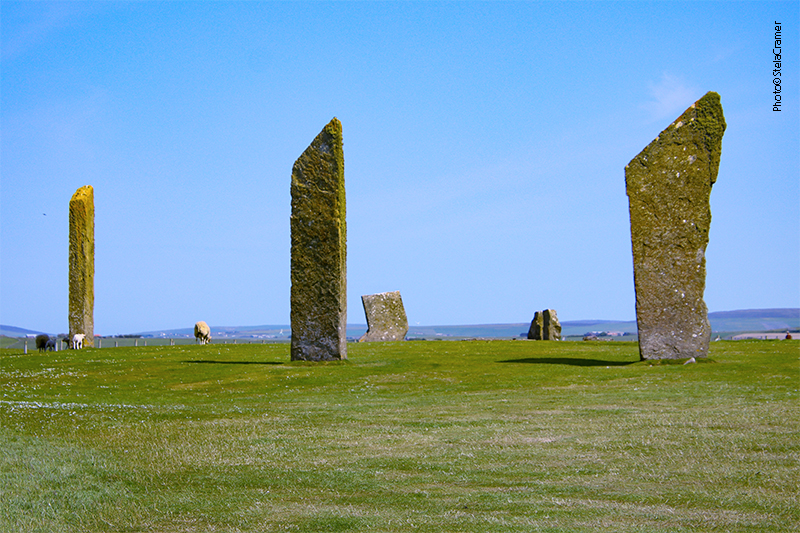
Os quatro monumentos que formam o Coração Neolítico de Orkney estão, sem sombra de dúvida, entre os mais importantes da Europa Ocidental: uma câmara mortuária (Maeshowe), dois círculos de pedras (Stones of Stenness and the Ring of Brodgar) e um povoado em excepcional estado de preservação (Skara Brae), além de túmulos, habitações e locais cerimoniais ainda não escavados. Juntos, constituem uma formidável paisagem pré-histórica que nos permite vislumbrar como viviam as pessoas neste longínquo arquipélago ao norte da Escócia, há cerca de 5000 anos atrás.

The Barnhouse Stone, Maeshowe Chambered tomb in the background

The four monuments that make up the Heart of Neolithic Orkney are unquestionably among the most important Neolithic sites in Western Europe: a large chambered tomb (Maeshowe), two stone circles (the Stones of Stenness and the Ring of Brodgar) and a remarkably well-preserved settlement (Skara Brae), together with a number of unexcavated burial, ceremonial and settlement sites. The group constitutes a major prehistoric cultural landscape which gives a graphic depiction of life in this remote archipelago in the far north of Scotland some 5,000 years ago.

Standing Stones of Stenness
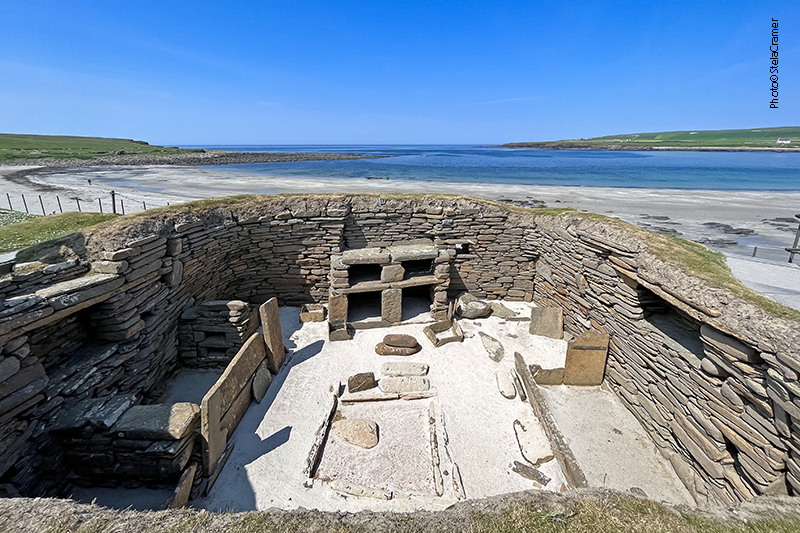
Skara Brae, mais antigo que Stonehenge e Pirâmides de Gizé / A settlement older than Stonehenge and the Great Pyramids of Giza.

Quando comecei a escrever este blog, estava unicamente fascinada pela história do Rei Arthur, pela sua carga mitológica e arquetípica. À medida que fui viajando, lendo e aprendendo, meu foco foi mudando para o conteúdo de realidade que poderia estar contido nos mitos, e as descobertas arqueológicas que os embasavam.

Orkney é um verdadeiro paraíso para pesquisadores e arqueólogos. As 70 ilhas deste arquipélago que agora parece tão remoto já foram um centro de civilização e desenvolvimento, justamente por estarem localizadas ao longo da rota do Mar do Norte, que povos pré históricos trilharam indo do norte da Europa para o atual Reino Unido.
Por exemplo, a sofisticada cerâmica de fundo chato, com sulcos (grooved-ware pottery) teria sua origem em Orkney, 5,100 / 5,300 anos atrás, e esta “tecnologia” dali teria se espalhado para todo o resto da Britânia – assim como outras tecnologias, idéias e estilos de arte. Outro exemplo é o grau de complexidade das habitações em Skara Brae – que possuíam isolamento térmico, mobília e mesmo o mais antigo sanitário britânico.
Este cantinho da Escócia não era apenas um centro de civilização Neolítica. Bem pode ter sido O Centro.

Mapa do Ártico destacando as Orkneys, ao norte da Escócia, Reino Unido /
Arctic Map highlighting the Orkneys, North of Scotland, UK

When I started writing this blog, I was utterly fascinated by King Arthur’s legends, by their mythologic and archetypal contents. As I went on travelling, reading and learning, my focus shifted to the reality that could have been behind the myths, and the archaeological discoveries that supported those.

Orkney is a paradise for researchers. Today, the remote location of the archipelago’s 70 islands seem so remote but, once, it was this very location that made them a centre of civilization. The islands were along the North Sea route that prehistoric people would have taken from northern Europe to Britain and back. Archaeologists have already found, for example, that Orkney invented grooved-ware pottery some 5,100 to 5,300 years ago – a development that later made its way all across Britain, probably accompanied by other types of technology, art and ideas. For example, the buildings of startling sophistication at Skara Brae – the setttlement had insulation, furniture and even what’s thought to be Britain’s earliest toilet ever discovered. This corner of Scotland wasn’t just a centre of Neolithic civilization in Britain. It may have been the centre.

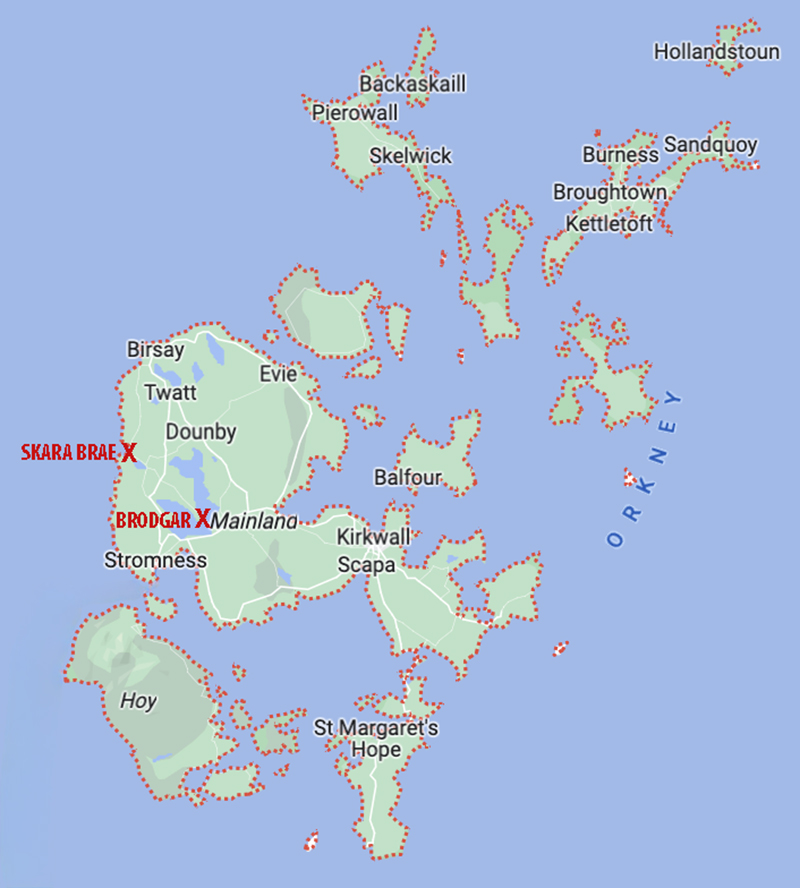
Mapa das Ilhas Orkney destacando Skara Brae e Brodgar /
Orkney Islands map highlighting Skara Brae and Brodgar

Entre o anel de Brodgar e os monolitos de Stenness, há outro importante sítio arqueológico: Ness of Brodgar. Embora não esteja incluído no Patrimônio Mundial, está conectado aos demais monumentos. Estive lá também e breve compartilharei as fotos aqui.

Between the Ring of Brodgar and the Stones of Stenness there’s another important archaeological site: the Ness of Brodgar. It’s connected to the World Heritage Site, although it’s not part of it. I’ve been there too, and the photos will be shared here very soon.

Read Full Post »


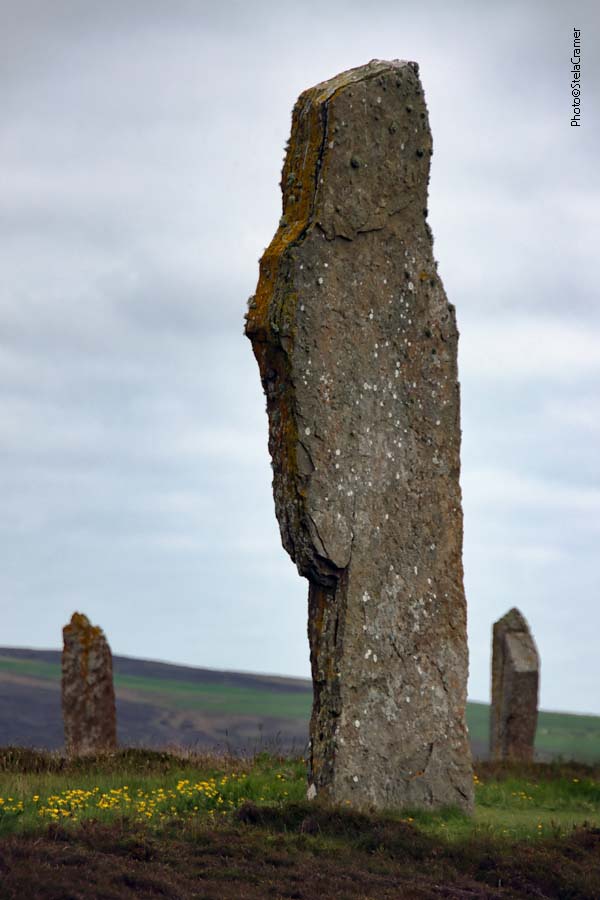
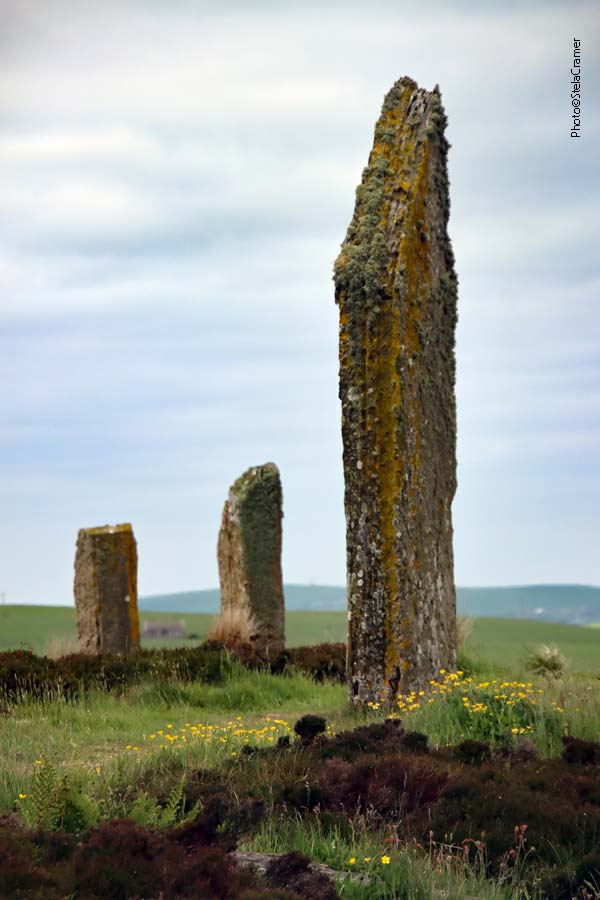
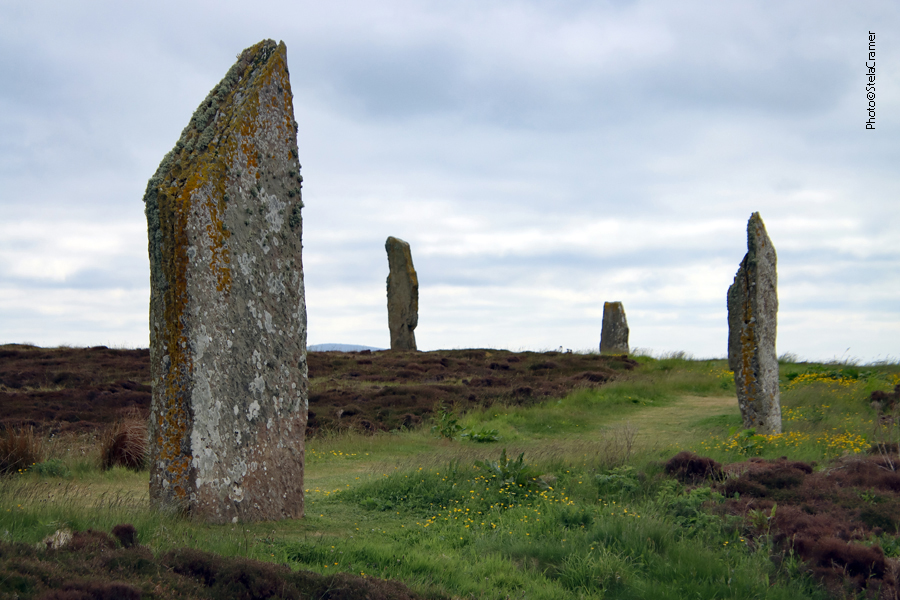
Ring of Brodgar – Círculo de pedras com 104m de diâmetro, composto originalmente de 60 monolitos (dos quais apenas 27 permanecem) cercado por um fosso circular de 10 m de largura por até 3 de profundidade. / Stone circle 104 metres in diameter, originally composed of 60 stones set within a circular ditch up to 3 metres deep and 10 metres wide.

Vou interromper temporariamente o relato da viagem com Vicky (retomarei mais adiante), pois algo muito importante aconteceu.

Há quase 20 anos atrás, jurei para mim mesma que voltaria às Ilhas Orkney para visitar o Anel de Brodgar, assim como os demais monumentos Neolíticos e locais sagrados. Isto foi depois de uma frustrante excursão que fiz partindo de Inverness, relatada anteriormente no post 045.
Finalmente, neste ano de 2023 cumpri minha promessa.
No dia 4 de junho aterrissei em Kirkwall, a capital das Orkneys.

O anel foi construído entre 4400 e 4600 anos atrás/ The Ring of Brodgar was built between 4400 / 4600 years ago

I will interrupt for now my report on the trip with Vicky (to be resumed later) because something remarkable happened.

Almost 20 years ago, I have sworn an oath to myself that I would return to Orkney Islands and properly visit the Ring of Brodgar, and the other Neolithic and sacred sites as well. That was after a frustrating tour I took from Inverness, formerly described in the post 045. This year of 2023 I have finally fulfilled my oath. On June 4th, I landed on Kirkwall, Orkney’s mainland capital.

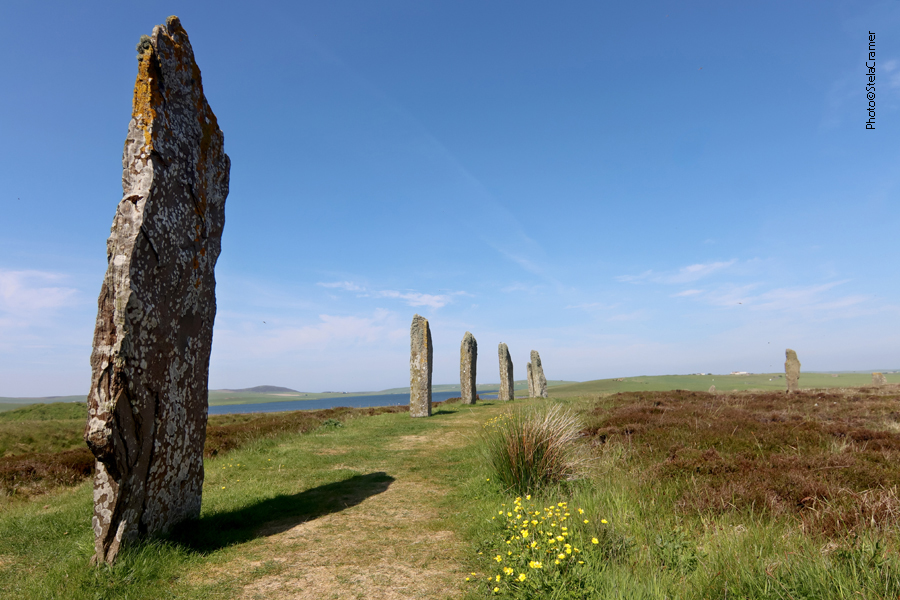
O Anel de Brodgar é um dos mais bem preservados monumentos pré-históricos da europa./ The Ring of Brodgar is one of the best preserved prehistoric monuments in Europe.

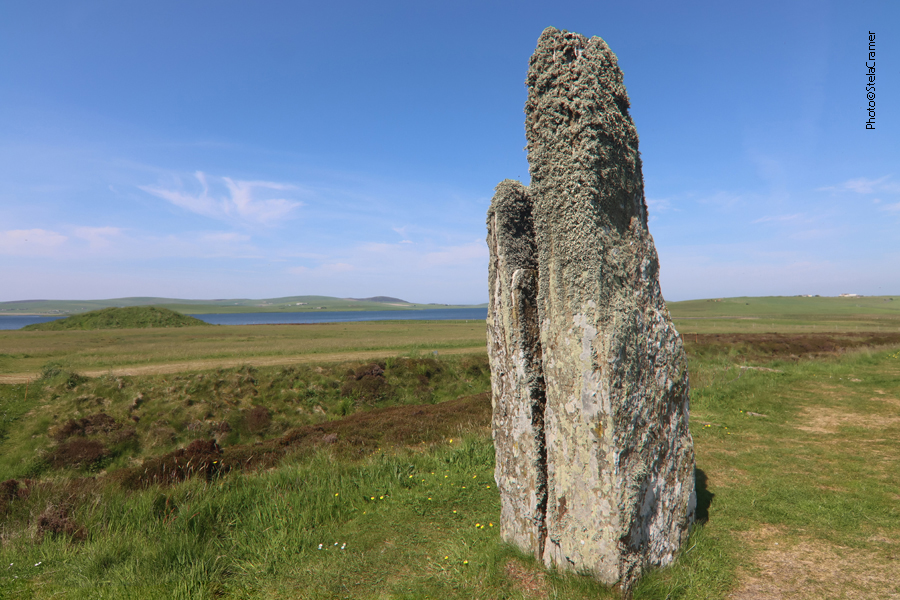
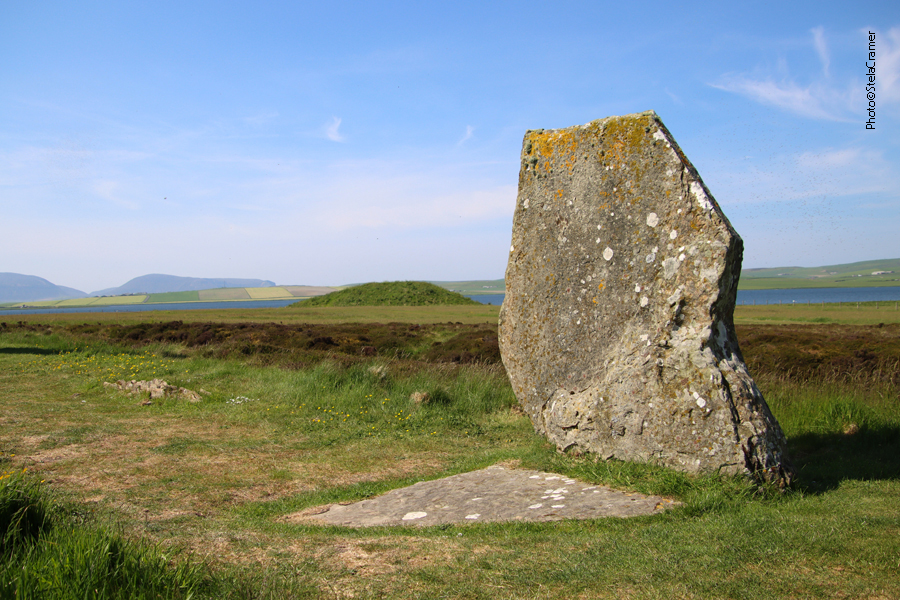
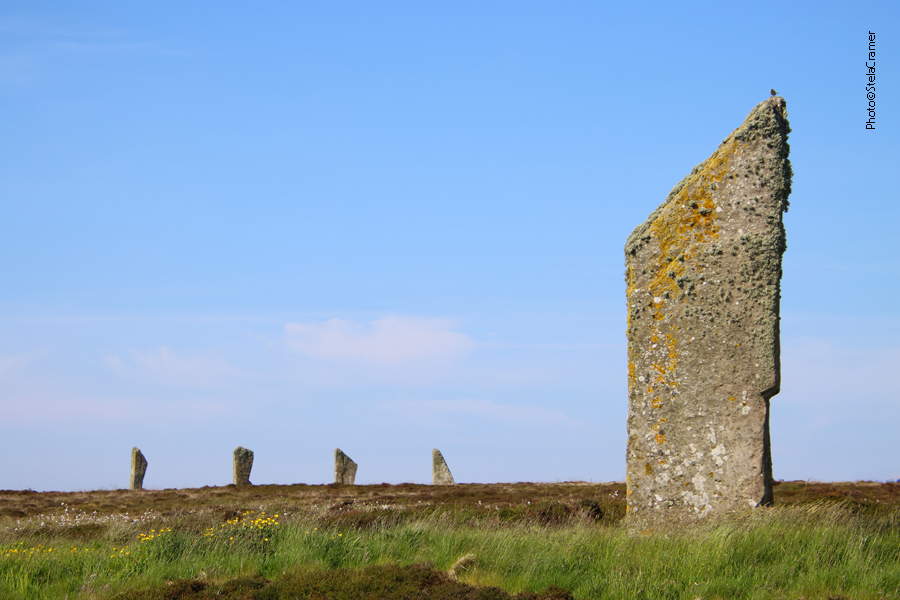
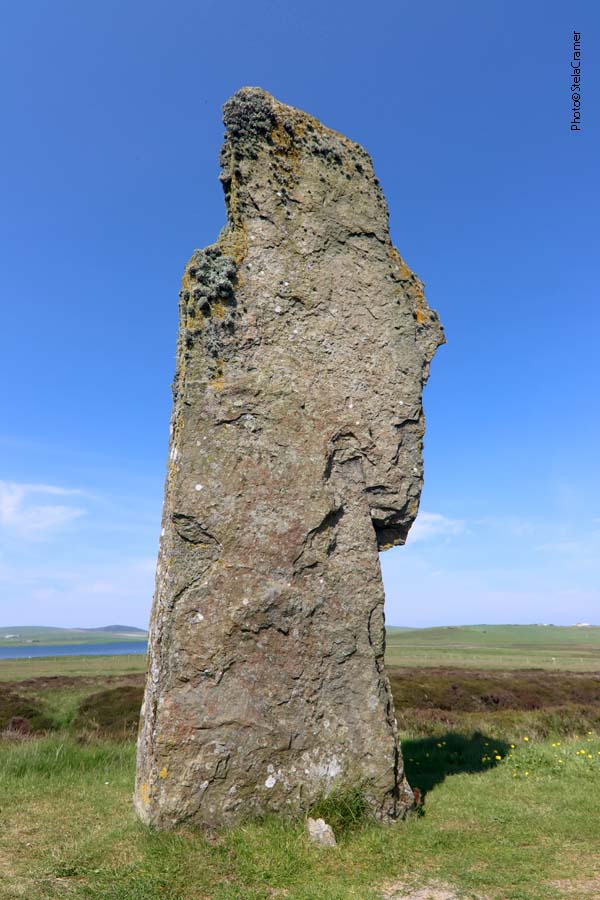
Visitei o Anel de Brodgar três vezes, em diferentes dias e horas, para evitar a horda de turistas: três navios de cruzeiro gigantescos estavam ancorados em Kirkwall. Compartilho aqui as melhores fotos.

I visited the Ring of Brodgar in three different days and hours, trying to avert the tourist crowd: there were three huge cruise ships anchored in Kirkwall. I share here the best photos.

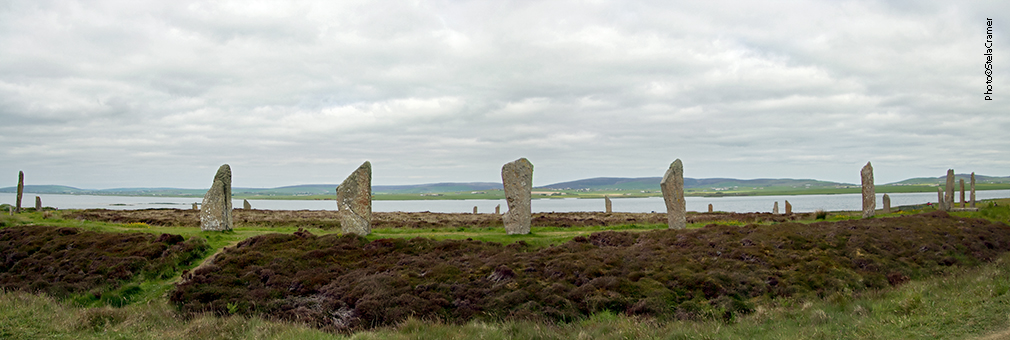
O círculo fica no pequeno istmo entre os lagos de Stenness e Harray. /The ring of stones stands on a small isthmus between the Lochs of Stenness and Harray.
Algumas das pedras com o lago de Stenness ao fundo /
Some of Brodgar’s standing stones with the Loch of Stenness in the background
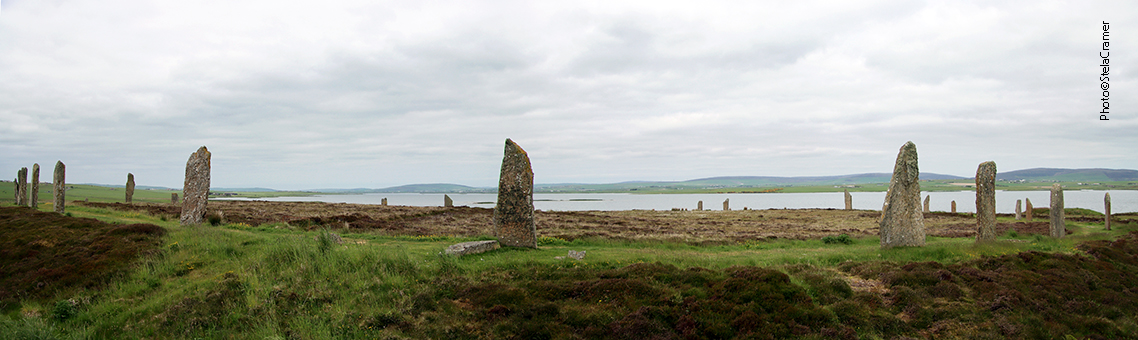
Algumas das pedras com o lago de Harray ao fundo /
Some of Brodgar’s standing stones with the Loch of Harray in the background
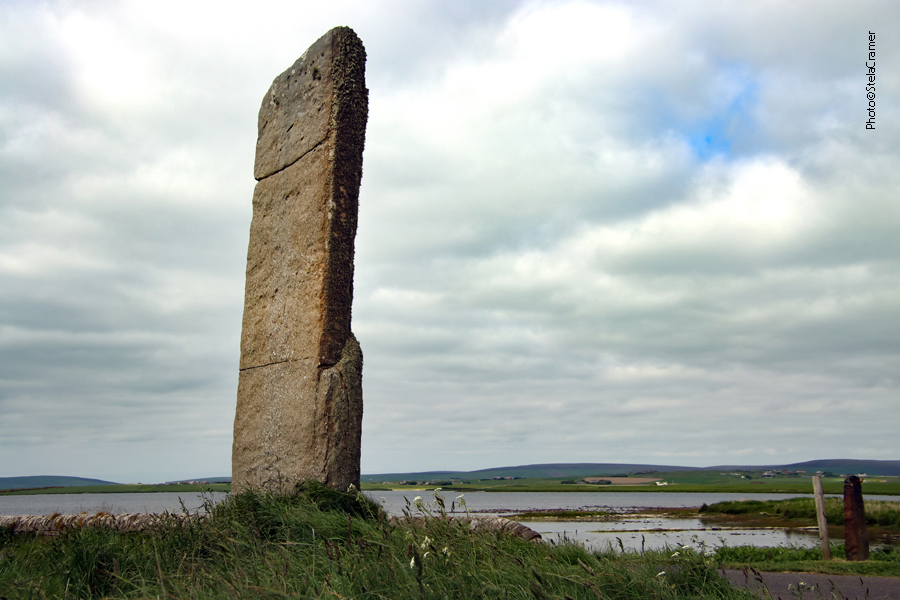
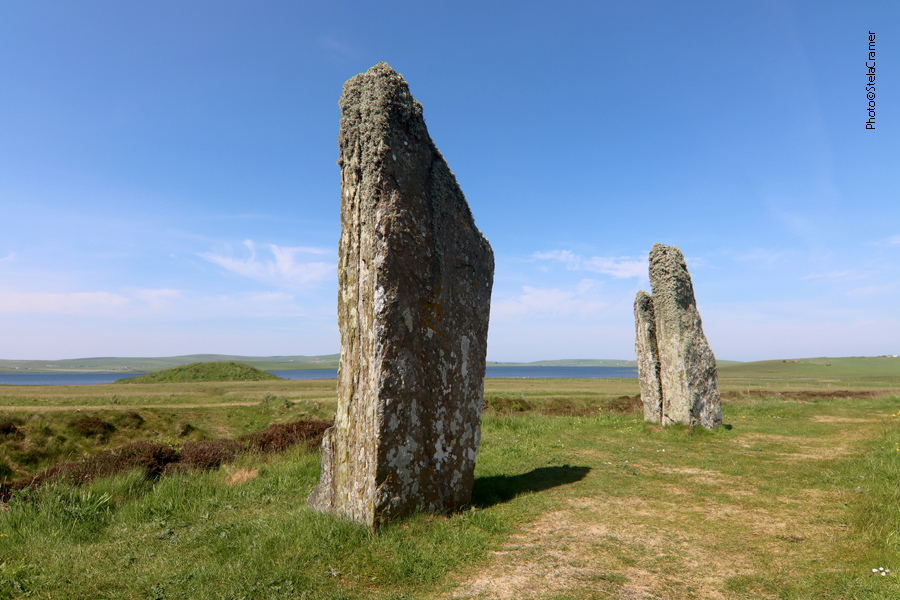
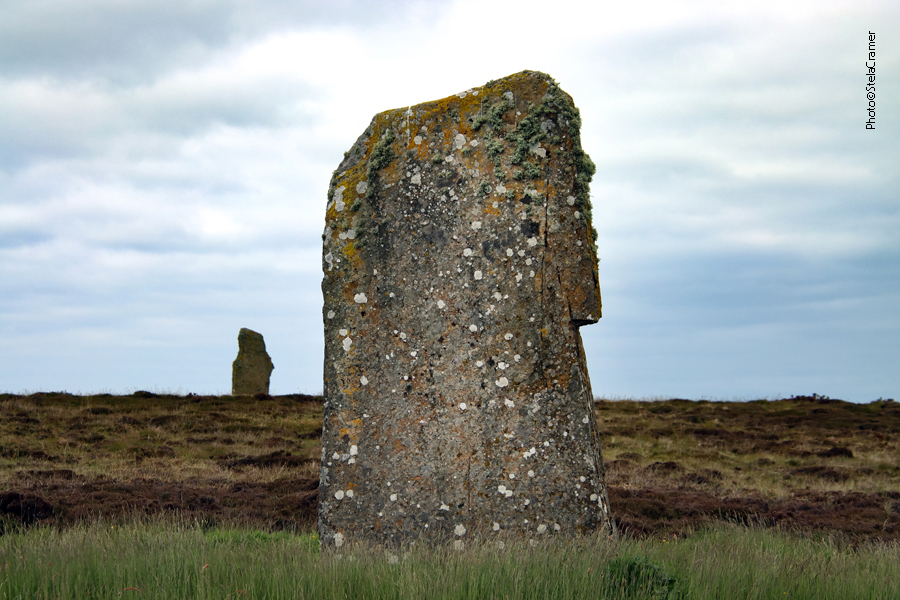
Uma das curiosas pedras com o mound South Knowe e o lago de Stenness ao fundo/
One of the odd stones, with South Knowe mound and Loch of Stenness in the background
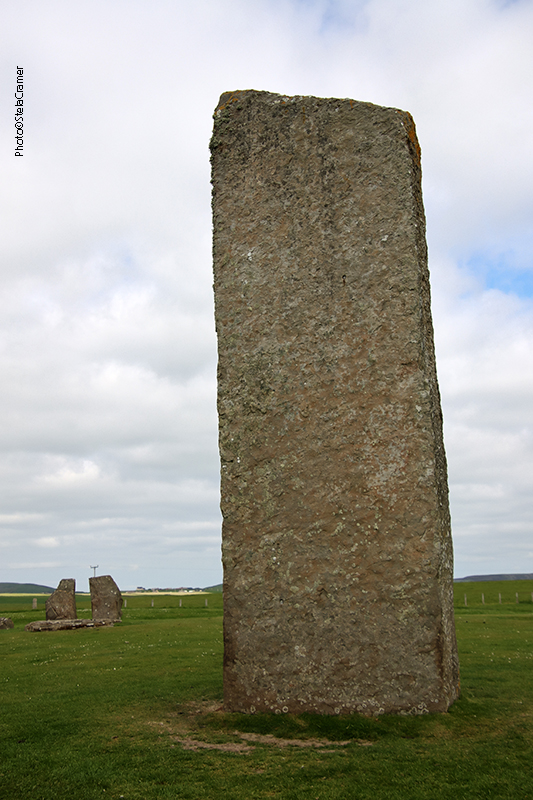
Textura de um dos monolitos / Stone’s texture
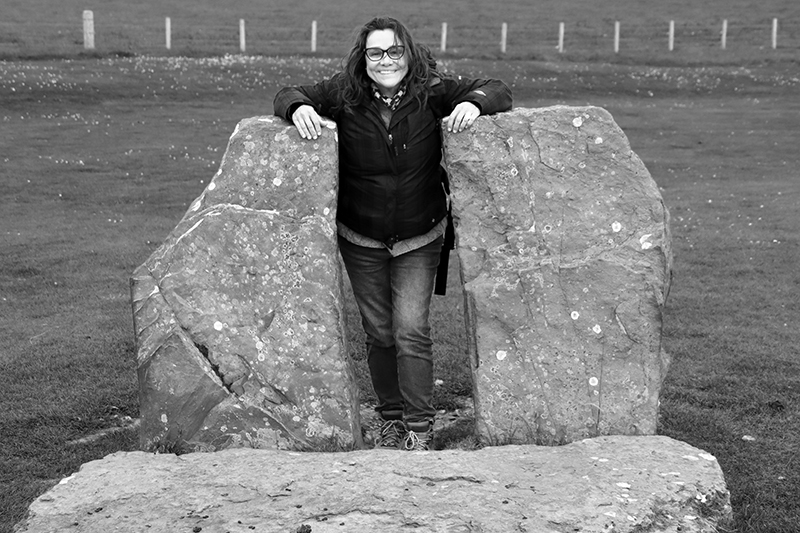
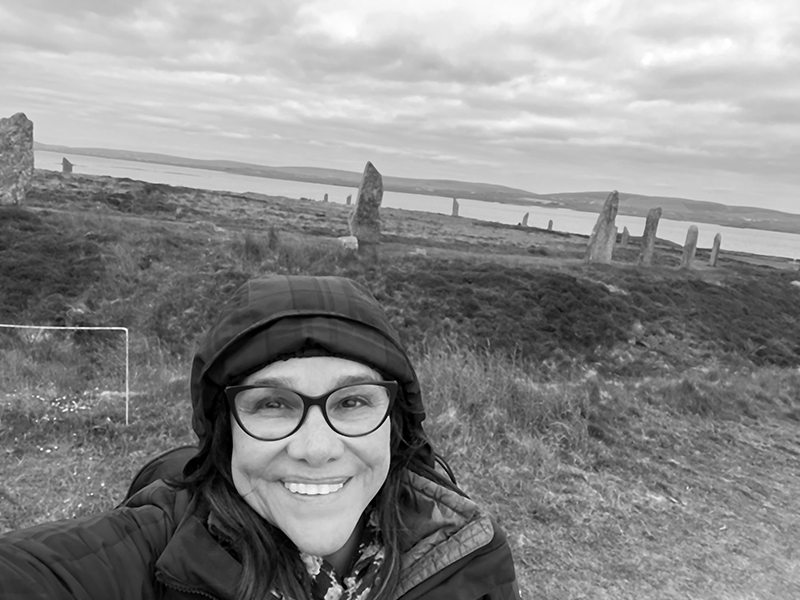
Selfie de chegada. Estava frio, ventando. / Arrival selfie, under chilly wind
Última selfie, numa linda manhã de sol /
Last selfie, awesome sunny morning

Read Full Post »


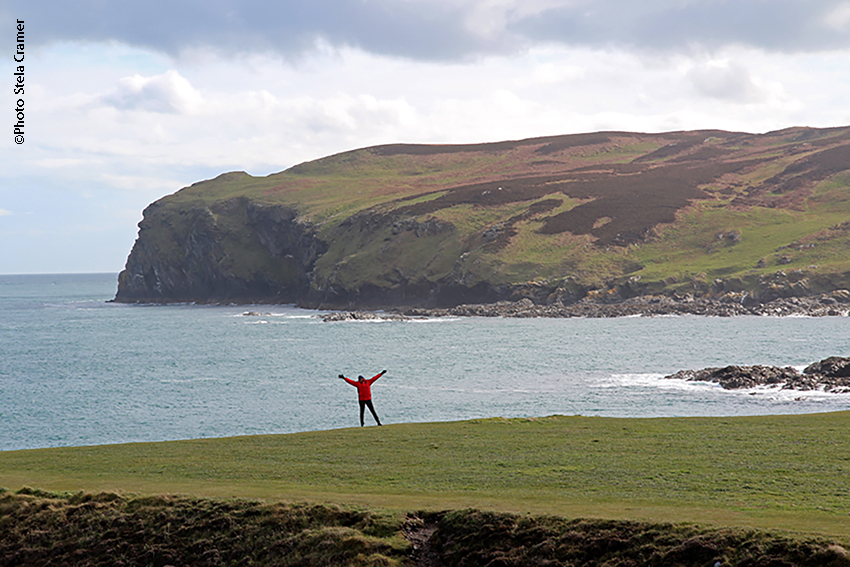
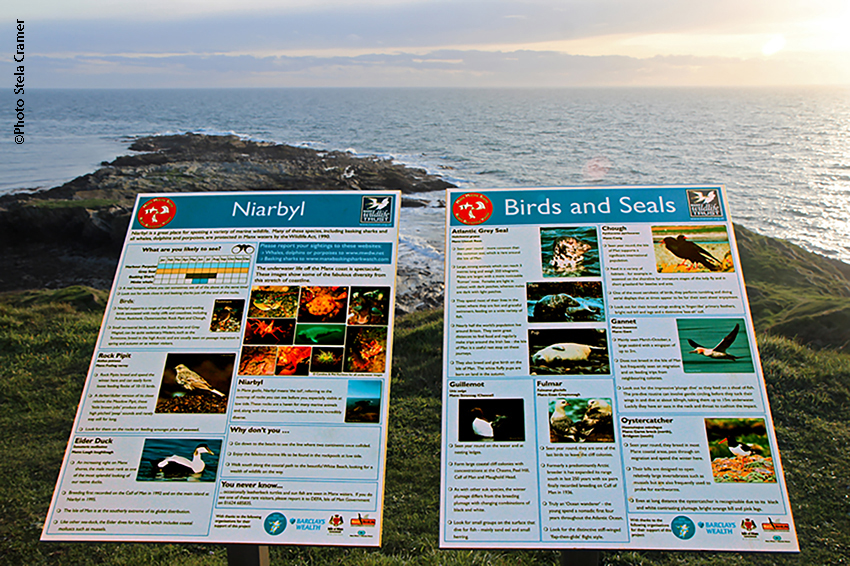
Por fim o sol apareceu, depois de um dia tempestuoso. Seguindo a estrada, visitamos Calf of Man e ainda uma praia chamada Niarbyl, local que abriga fauna marinha – tubarões, focas, etc. Embora nenhum tenha nos agraciado com sua presença… sabíamos que eles estavam ali, em algum lugar sob as águas.

After a stormy day, the sun eventually showed up. We followed the road, visiting Calf of Man and a beach called Niarbyl, a wildlife spotting site, where if you’re lucky you can see seals, sharks, etc. Although none had kindly shown itself to us, we knew they were there, somewhere under water.

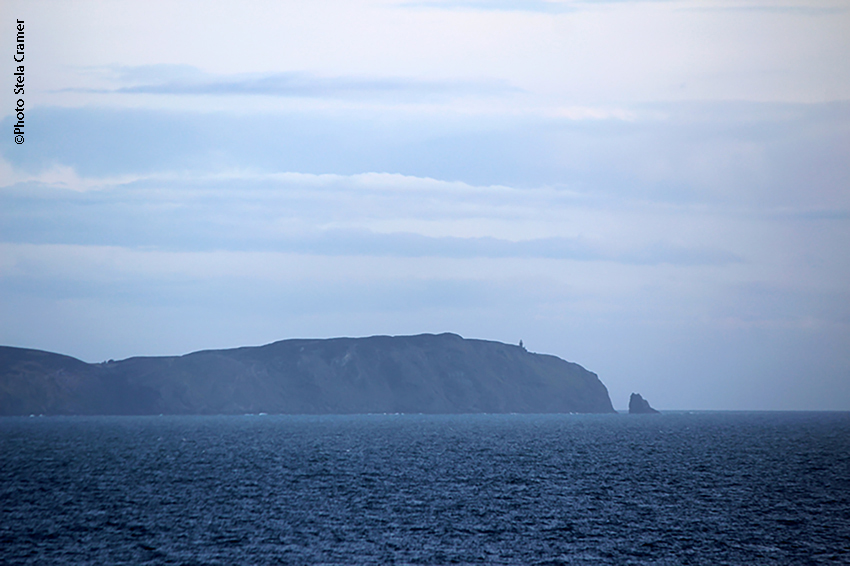
Calf of Man é uma ilha de 2,5 km2 separada da Ilha de Man por um estreito canal chamado Calf Sound. A palabra ‘Calf’ provém do termo nórdico antigo “kalfr” que significa uma pequena ilha perto de uma maior.

Calf of Man is a a 2.50-square-kilometre island, separated from the Isle of Man by a narrow stretch of water called the Calf Sound. The word ‘calf’ derives from the Old Norse word kalfr , which means a small island lying near a larger one.

Esta vaquinha estava bem no meio da estreita estrada, nada disposta a deixar nosso carro passar… então tentei conversar. Saí do carro e mugi para ela. O bichinho entendeu! Olhou, levantou-se e saiu do caminho.

This cow was happily seated on the middle of the road, apparently not willing to let us pass… so I tried to talk. I got off the car and mooed to it. The cow understood!!! It got up, looked at us and moved out of the way.

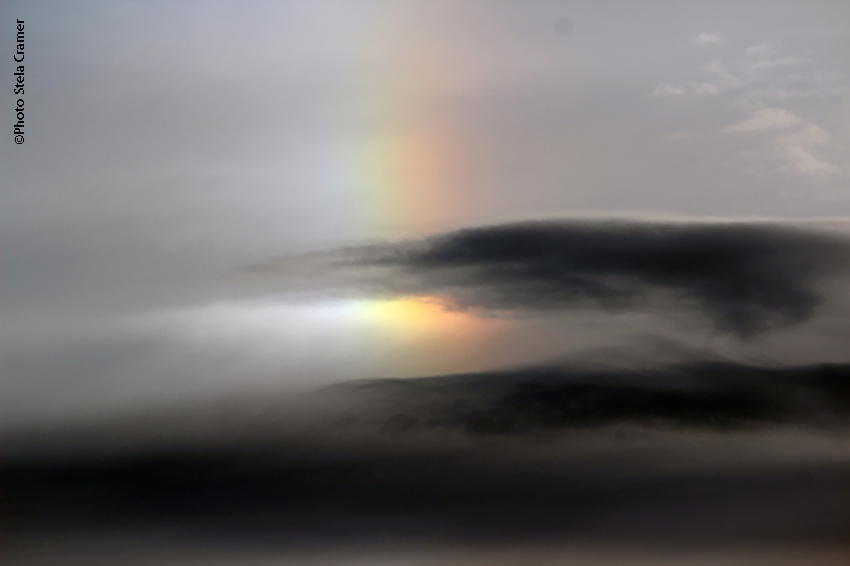
Um belo por do sol, com arco íris e tudo, para fechar o dia.

A gorgeous sunset, rainbow included, to call it a day.

Read Full Post »


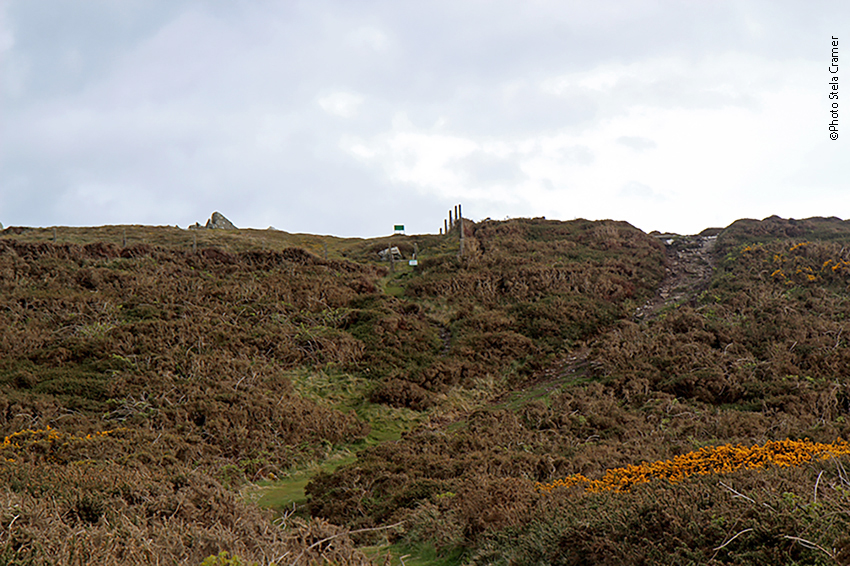
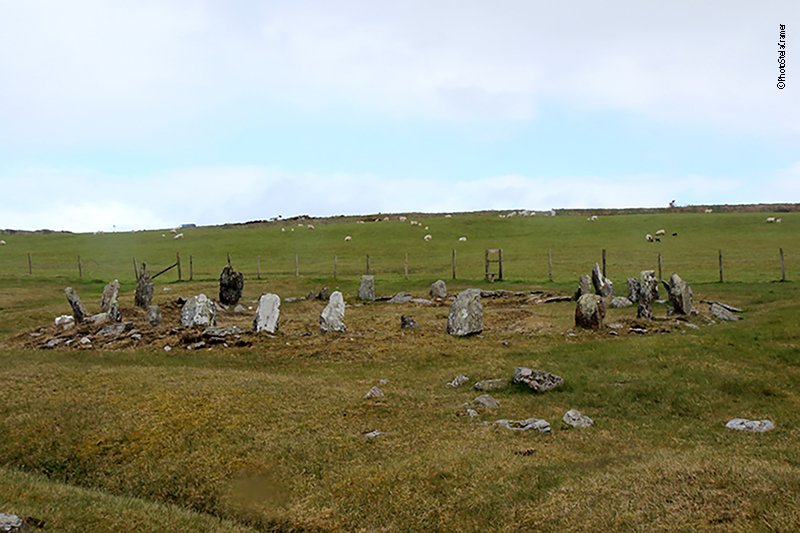
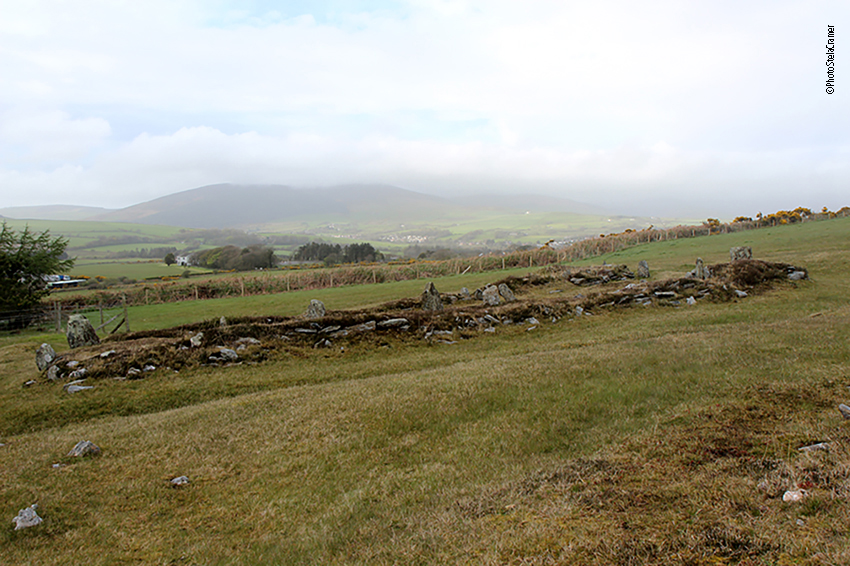
Meayll Circle e a trilha de acesso vista da estrada / Meayll Circle and its footpath seen from the road

De volta à estrada, nos dirigimos a um círculo de pedras próximo, dispostas a visitá-lo ainda que debaixo de chuva. Meayll Stone Circle, também chamado de Mull Circle, é uma câmara funerária composta por megalitos dispostos num círculo de 18 metros, com seis pares de túmulos datados do final do Neolítico ou início da Idade do Bronze.

Back on the road, we headed to a near Stone Circle, which we were adamant to visit even under the rain. Meayll Circle, also known as Mull Circle, is a megalithic chambered tomb covering an 18 metre diameter circle. There are six pairs of graves believed to be from the late Neolithical or early Bronze Age.

VIsta norte de Meayll Stone Circle, no alto do monte Mull, na direção de Port Erin / Meayll Stone Circle on top of Mull Hill, looking north towards Port Erin

A trilha, mais apropriada para cabras, estava escorregadia mas não levamos mais de quinze minutos para chegar ao topo, apesar de um tombo ou dois. Fomos recompensadas com uma bela vista, ainda que cinzenta.

Desta vez havia um acostamento adequado para estacionar / This time there was a proper shoulder for parking

The footpath, more suitable for goats, was slippery but it didn’t take us more than fifteen minutes to get to the top, despite a couple of tumbles. We were rewarded with a lovely view, although grey.

Trata-se de um monumento arqueológico singular. Composto por doze câmaras mortuárias dispostas em círculo, com seis entradas, cada uma levando a um par de câmaras. No centro, uma única pequena pedra de quartzo branco / This is a unique archaeological monument, consisting of twelve burial chambers placed in a ring, with six entrance passages each leading into a pair of chambers. In the middle there’s a single small white quartz stone.
Entrada de uma das câmaras / Entrance to one of the chambers
Esta câmara funerária foi escavada em 1911 e posteriormente em 1971, mas fecharam o acesso ao interior. / This chambered tomb has been excavated in 1911 and again in 1971, but the acess to the interior was closed.
Outro par de túmulos / Another pair of tombs
Pedaços de cerâmica decorada, ossos carbonizados, ferramentas de sílex e seixos de quartzo branco foram encontrados dentro das câmaras. / Sherds of ornate pottery, charred bones, flint tools and white quartz pebbles have been found in the burial chambers.
O monumento foi construído por volta de 3500 AC; existem histórias de assombrações associadas mas não encontramos ninguém que as conhecesse para nos contar. / This monument was built around 3500 BC; it is a site of legends with diverse stories about haunting, but we found nobody who could tell us such tales.
Vicky, o fantasma de Maeyll / Vicky, the Maeyll ghost
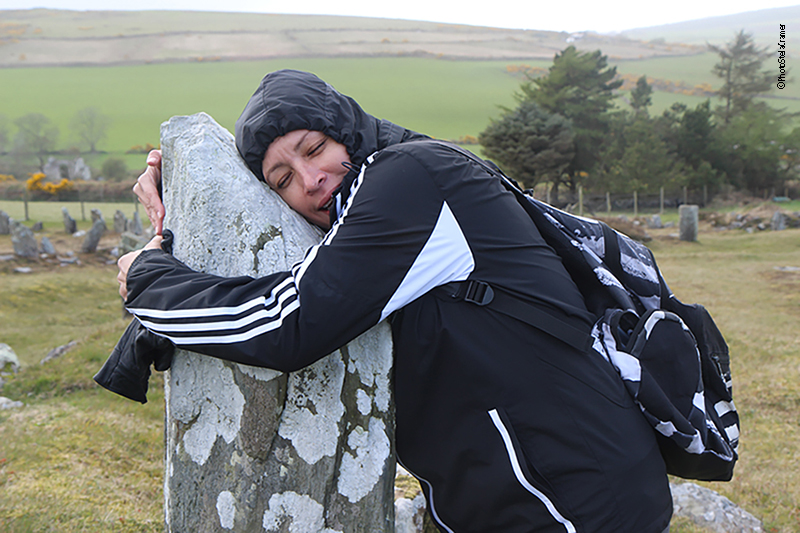
O vento gelado constante e (mais) chuva fizeram com que nos abrigássemos nos túmulos! Mas nenhum espírito tentou entrar em contato conosco. / The persistent chilling wind and (more ) rain forced us to take shelter in the graves. But no spirit tried to contact us.
Textura das pedras do Círculo de Meayll / Meayll Circle stone’s texture
Única pedra de quartzo branco , no centro do círculo / White quartz single stone, in the center of Meayll Circle
O círculo fica em Ballnahowe Road, entre Port Erin e Cregneash. Voltamos para o carro a fim de prosseguir o passeio. / Meayll Circle stands on the Ballnahowe Road between Port Erin and Cregneash. We went back to the car, to resume the tour.
Sound Road, na direção do Calf of Man, nosso próximo destino / Sound Road, the way to our next destiny: Calf of Man.

Read Full Post »


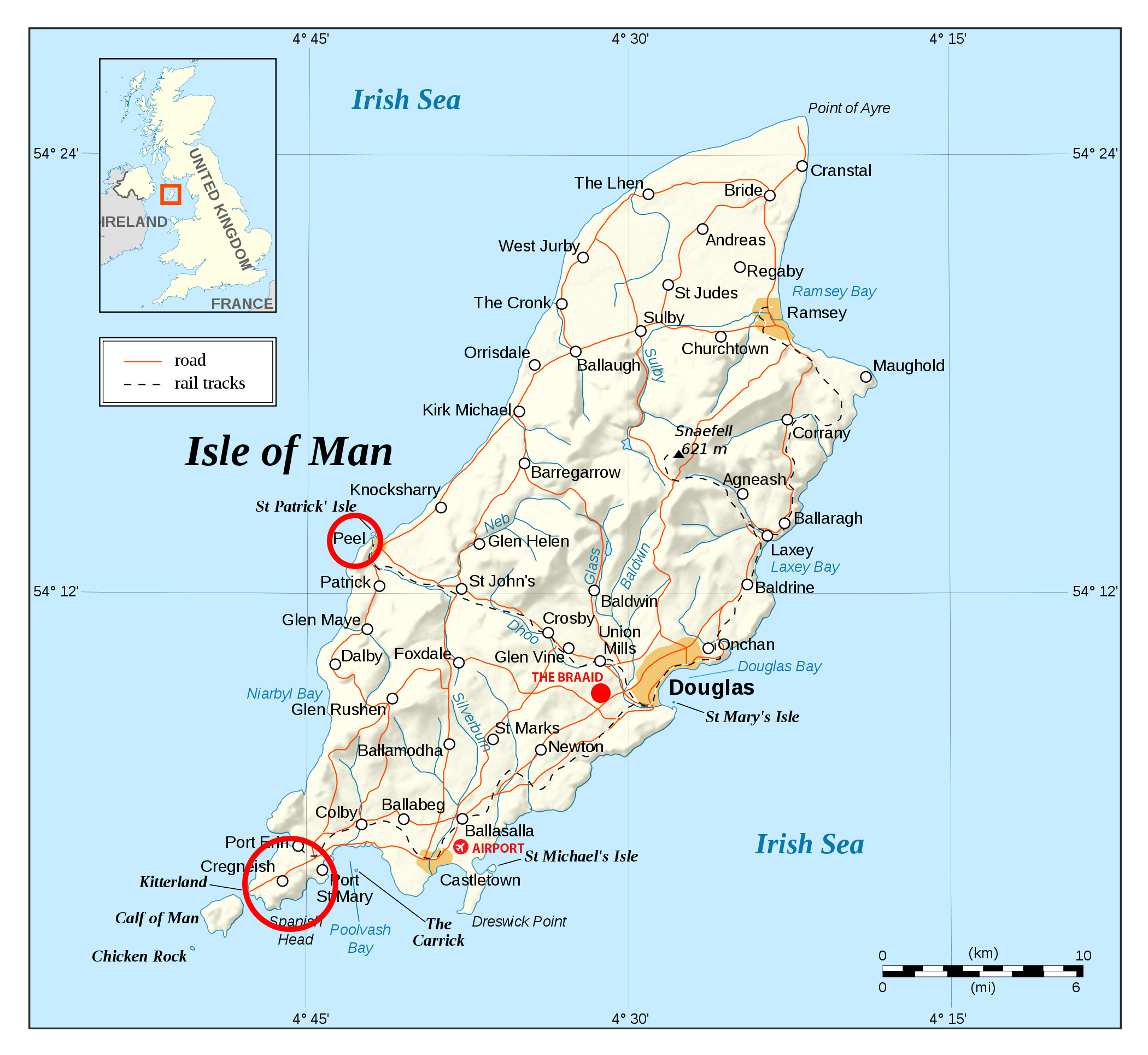
Neste mapa da Ilha de Man marquei Peel (onde ficam o Castelo e o Museu); The Braaid (que visitamos) e nosso destino seguinte: Cregneash. Visitar este vilarejo é fundamental para entender a história do povo de Man e seu estilo de vida. É um museu a céu aberto, onde em algumas casas os visitantes podem vivenciar os artesanatos e ofícios locais. É cobrada entrada.

/ In this map I marked Peel (where stands the Castle and the Museum); The Braaid (which we visited) and our next destination: Cregneash. To understand more about the Manx people and their past way of life; a visit to this village is a must. Some of the houses and cottages are run for visitors to experience local Manx crafts and trades. To view the living museum a pass sticker must be purchased, which will allow entrance to the sites around the village.

Port St. Mary – no caminho para Cregneash / on the way to Cregneash
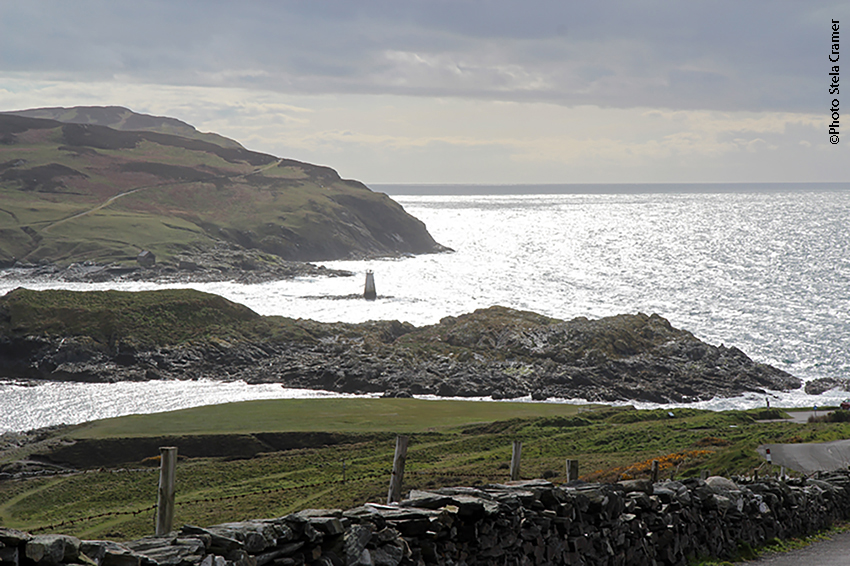
Após uma caminhada pela orla de Port St. Mary seguimos viagem. O tempo estava nublado mas ainda bom. / After a walk by Port St. Mary’s shore we resumed the trip. Weather was still ok, although cloudy.
As cores de primavera na paisagem fazem das estradas um alimento para a alma./ The spring coloured landscapes make the roads nourishment for the soul.
.
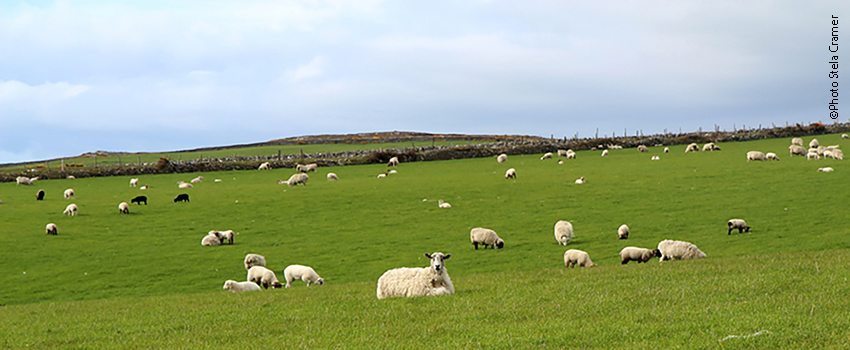
Além das ovelhas normais, em Cregneash vivem os raros Loaghtan – carneiros de quatro chifres. / Besides normal sheep, Cregneash is home to a flock of the rare four-horned Loaghtan sheep.
Cregneash é um “museu vivo” que mostra o estilo de vida típico de um pequeno vilarejo da Ilha de Man no século 19. / Cregneash Folk Village is a “living museum” that shows the typical way of life of a small Manx village in the 19th century.
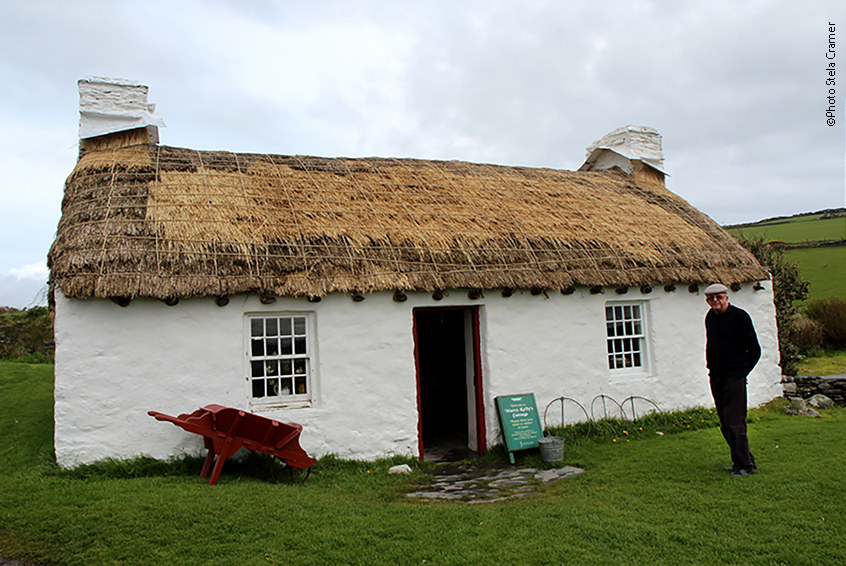
Os chalés originais foram preservados com seus telhados de palha. / Original Manx cottages have been preserved with its thatched roofs.
Um museu central reúne informações históricas, enquanto em muitos chalés o visitante pode ver as atividades rurais realizadas por pessoas em roupas de época, como pudemos ver no chalé de Harry Kelly. / A central museum holds a wealth of historical information, whilst many of the cottages in the village allow visitors to see rural activities performed by museum workers in traditional dress, as we could see in Harry Kelly’s cottage.
Interior do chalé de Harry Kelly / Inside Harry Kelly’s Cottage
Mobília e objetos originais no chalé de Harry Kelly / Original furniture and objects in Harry Kelly’s Cottage
Lindas louças antigas / Lovely antiques
O mais interessante é observar as atividades realizadas pelas pessoas, como esta senhora utilizando um fuso do século 19, que funciona perfeitamente. / The most interesting was to watch the activities performed by people, like this lady working with a 19th century spindle, that works perfectly well
Apaixonei-me pela técnica de Quilt da Ilha de Man, que usa apenas retalhos de roupas usadas, linha e agulha: o mínimo necessário, pois morando num lugar tão remoto era difícil ter acesso a todo tipo de material. As tiras de tecido são dobradas para fazer o acabamento da peça ; assim também deixam a manta mais quentinha. / I fell in love with the Manx Quilting, that uses only scraps of fabric from worn-out clothing and bedding, a needle and thread: just the essential, for these people had minimal access to supplies because of their remote location. The scraps are folded to create a finishing that also made the quilt warmer.
A janela do chalé, por dentro e por fora. As paredes grossas também ajudavam a proteger do frio. / The cottage’s window, from the inside and outside. The thick walls also helped to protect people from the cold.
Um gatinho veio fazer amizade conosco / A cat made friends with us
Além dos carneiros terem quatro chifres, os gatos de Man não possuem rabo! / Besides the sheep having four horns, the cats in Man have no tail!
Prosseguindo a visita / Continuing the visit
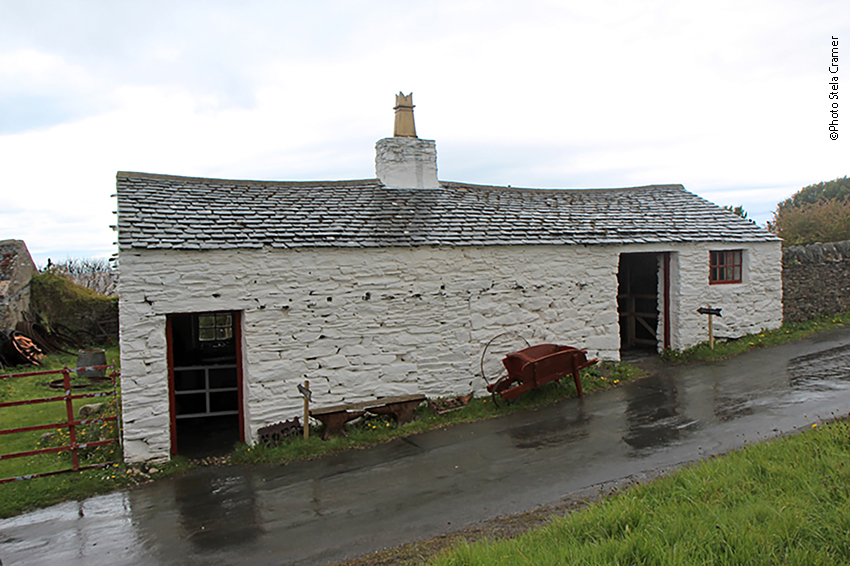
Existem algumas casas particulares no vilarejo, mas todas mantém a unidade visual antiguinha. / There are also a number of private homes in the village, but their external appearance is controlled to maintain an older look.
Cregneash serviu como cenário para filmes de época e programas de TV. / The historic village backdrop has been used in film and television shows.
As fazendas funcionam exatamente como no século 19: na base da tração a cavalo e animais criados livres. / The farms are runned exactly as in the 19th century: maintained with horsepower and much of the livestock roaming free.
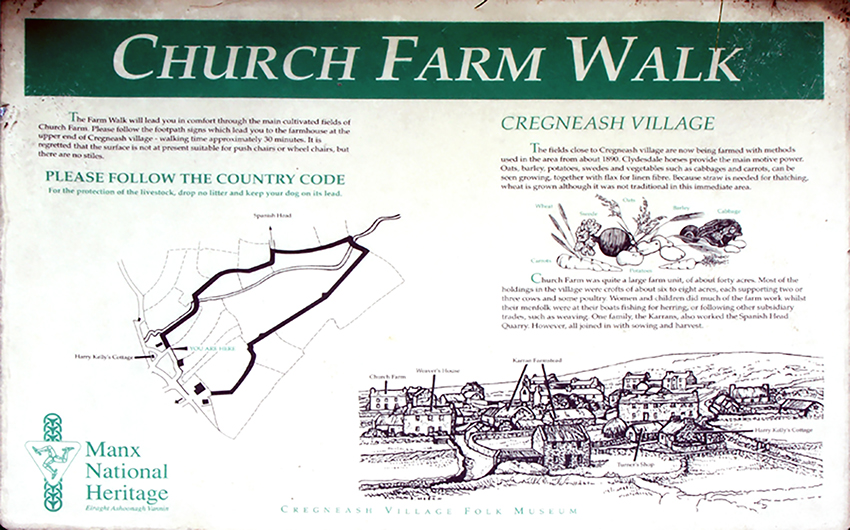
Há uma trilha pelas plantações até a Fazenda da Igreja na parte mais alta do vilarejo. Tempo estimado de caminhada: 30 minutos / There is a footpath through the cultivated fields, all the way up to the Church Farm. Walking time: approximately 30 minutes.

O tempo, entretanto, não nos ajudou. Começara a chover forte e, pela hora, as pessoas já estavam se recolhendo. A própria senhora que fiava e tricotava estava só esperando irmos embora para fazer o mesmo. O senhor que nos atendera na Recepção comentou que o ideal é chegar lá pela manhã, para ver toda as atividades, que incluem mesmo uma forja. Assim sendo, encerramos a visita.

The weather, however, didn’t help. A hard rain had started and it was about closing time. The lady who was spinning and knitting was just waiting for us to leave to do the same. The front desk gentleman told us that one should arrive in the morning, to visit all the premises, which also include a blacksmith’s workshop. So our visit ended up.

Read Full Post »


Estávamos entaladas no fim de uma estreita estrada de terra, sem largura para manobrar, no meio do atoleiro que se formara com a chuva que, felizmente, não tinha sido tão forte; assim o carro não estava atolado mas não foi muito fácil subir a ladeira de marcha-ré. Vicky precisou empurrar, e ir andando para o veículo ficar mais leve. Engasgando aqui e ali, consegui chegar até a beira da estrada. Ali se configurou o problema: a grossa camada de asfalto era um verdadeiro degrau e o carro de passeio não queria subir de jeito nenhum! Foi preciso juntar pedrinhas, mato, pedaços de qualquer coisa para tentar atenuar o degrau. Vinte minutos depois, todas enlameadas, começamos a nos preocupar pois começava a escurecer, a chuviscar novamente e a estrada estava deserta. Ninguém viria nos ajudar, apenas talvez os antigos deuses celtas. Para eles começamos a rezar.

We had parked at the end of a dirt road that turned into mud after the rain which, fortunately, hadn’t been heavy, so the car wasn’t stuck. Still, we were down a slope and it was too narrow to make a U-turn. We had to go in reverse. It wasn’t so hard, especially with Vicky pushing the car. Although it coughed a bit, we made it all the way up. We then realized the problem was the thick asphalt road, which next to the dirt, was like a large step; of course we didn’t notice that when we were going down, but now going up in reverse the car wouldn’t climb it. So we began gathering stones, sticks, leaves, anything to create a smoother path. Twenty minutes later, covered in mud from head to toe, we started to worry because it would soon be dark, it was starting to rain again, and the road was deserted. No one would come to help us – maybe only the ancient Druids. To them we started praying.

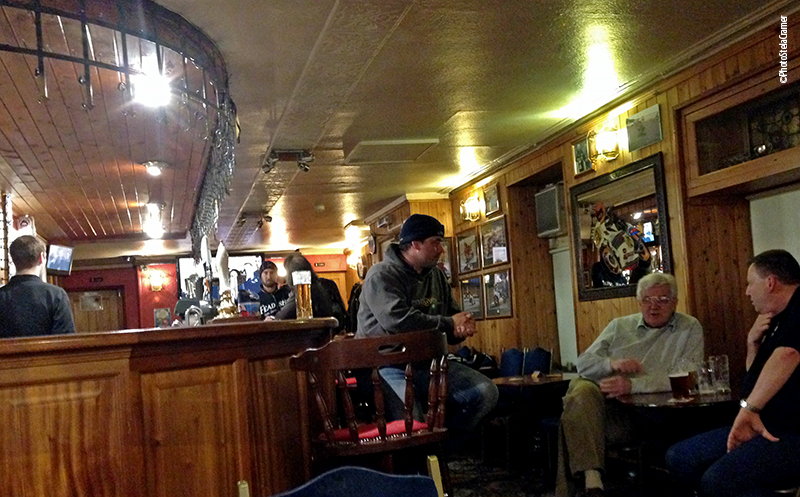
O pub onde fomos tomar uma merecida cerveja depois da aventura. /The pub where we went for a well deserved pint after the adventure.

Não havia acostamento para manobrar. Deixei o carro descer um pouco, virando na diagonal tanto quanto foi possível, para sair dos sulcos já feitos pelos pneus, engatamos a ré, retomamos a subida e quase na beira da estrada meti o pé no acelerador. Demos uma esmerilhada nos pneus, mas depois de alguns tensos segundos, conseguimos. Um pneu traseiro, outro, depois os dianteiros… finalmente se encontravam sobre o asfalto firme. Ficamos por instantes paradas ali, só respirando e agradecendo aos deuses! Digitei no GPS o endereço do Fernleigh, em Peel, e por um tempo parecia que tudo corria bem. Foi quando percebemos que o GPS era tosco, ou talvez o mau tempo afetasse a conexão, o fato é que em algum cruzamento nos perdemos e em vez de chegar em 20 minutos levamos mais de uma hora para estacionar em frente ao B&B, sãs e salvas, ainda que com fome, frio, cansadas e cobertas de lama. O carro, que era branco poucas horas antes, estava marrom. Felizmente era um carro alugado.

There was no shoulder to maneuver. All we could do was let the car go downhill a bit, as diagonally as possible to free the tires from the grooves they had created. We engaged reverse again and put the foot down on the throttle. We still bumped against the thick layer of asphalt, but persisted. After a few seconds of tension, holding our breath and burning the rubber on the tires , we made it. One after another, the four wheels found their way to the solid asphalt road. For a while we just stayed there, breathing and thanking the Druids. I put Peel Fernleigh’s address in the GPS, and for a while everything was apparently well. That was when we realized that the GPS was primeval, or perhaps the bad weather was messing with it. At some crossroads we got lost and, instead of arriving in 20 minutes, we took more than an hour to park in front of our B&B. Safe and sound, though hungry, thirsty, tired and muddy. The car, white hours ago, was now brown. Fortunately, it was a rental.

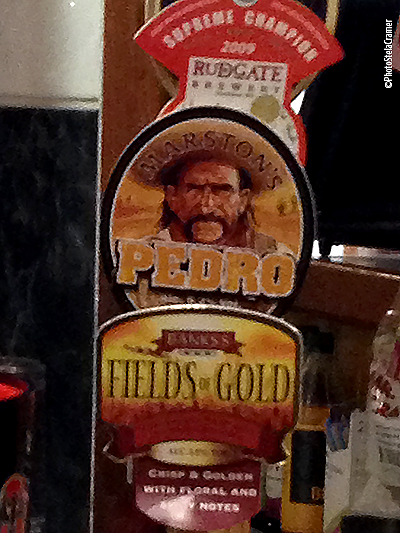
Precisávamos urgentemente de uma pint, então nos dirigimos ao pub mais próximo. Em Peel não estava chovendo, fomos caminhando pela orla, admirando a iluminação noturna do Castelo, crentes que o visitaríamos no dia seguinte. Sentamos numa mesa próxima ao balcão, rindo muito porque uma das cervejas expostas se chamava Pedro, e Vicky bateu foto para mandar para um Pedro amigo nosso. Lá pra tantas, ainda estávamos bebendo, rindo da aventura no atoleiro, quando dois homens muito bonitos se aproximaram perguntando se podiam sentar conosco. Os recebemos felizes e sorridentes; ambos eram inteligentes, engraçados, e pensamos que os deuses estavam nos enviando um prêmio consolação pelo perrengue daquela tarde. Um era mais velho e outro parecia mais novo, portanto supusemos que fossem pai e filho… só que não. Eram casados há mais de dez anos.

In urgent need of a pint, we walked by the shore to the nearest pub – it was not raining in Peel – admiring the Castle’s night lights. We intended to visit it the next day. Sitting at a table next to the counter, we bursted out laughing because of a beer bottle in the shelf labeled “Pedro”. Vicky took a picture to send to a friend of ours called Pedro. And there we were, still laughing at our adventure in the mud, when two really handsome guys approached, asking if they could sit with us. We welcomed them, smiling happily; both were intelligent, funny, and we thought that the Gods had sent us a consolation prize for the afternoon’s trouble. One was older and the other appeared younger, so we thought they could be father and son… only they were not. They were a couple, married for more than ten years.

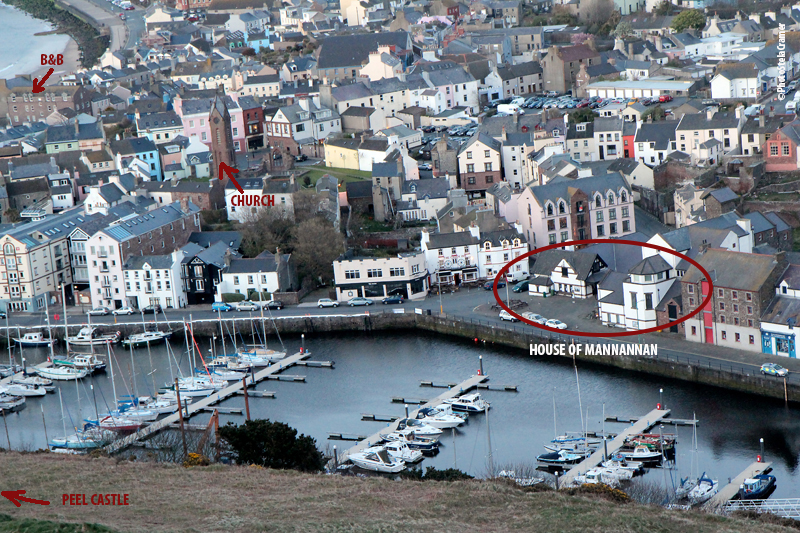
Pelo menos a conversa foi muito boa, tanto que bebemos mais pints do que o previsto, e por fim voltamos ao B&B, para tomar um bom banho e ir dormir. O dia seguinte amanheceu sob chuva torrencial. Pela janela do quarto dava para ver o carro ( e quase nada além dele); lavado pela chuva, estava ficando branco novamente! Resolvemos então vestir nossos casacos de chuva e andar até o Museu House of Mannannan, que era ali perto, cujas fotos ilustram este post.
At least the conversation was great, so that we‘ve drank a couple of pints more than we intended to, but eventually walked back to the B&B for a well deserved shower and sleep.
Next day we woke up under heavy rain. We could see the car from our window (and not much beyond it) and it was rainwashed to white again! So we decided to put on our raincoats and go visit the House of Mannannan Museum, just a couple of blocks away, which photos illustrate this post.
O museu tem o nome do deus mitológico Manannan mac Lir (filho do mar) e engloba a história Celta, Viking e marítima da ilha.
The museum is named after the mythological sea god Manannán mac Lir (“son of the sea”) and covers the island’s Celtic, Viking, and Maritime history.
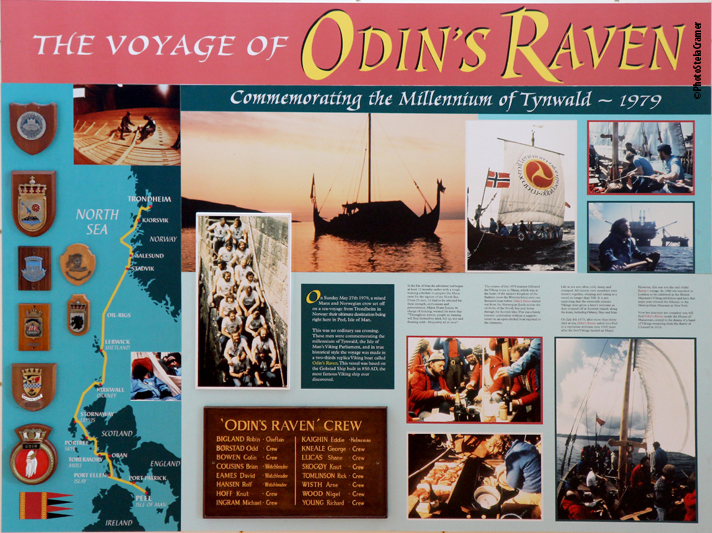
A principal atração é a réplica de um navio Viking numa escala de 2/3. O “Corvo de Odin” foi construído na Noruega e navegou até Peel, chegando em 4 de Julho de 1979 para a comemoração de um milênio do Tynwald (Parlamento da Ilha de Man).
The Museum’s highlight is Odin’s Raven, a recreation of a Viking longboat in two-thirds scale. Odin’s Raven was made in Norway and then sailed to Peel, arriving on 4 July 1979 to celebrate the millenium of Tynwald (Manx Parliament).
Os navios longos eram construídos pelos Vikings da Escandinávia e Islândia para comércio, exploração e guerra./ Longships were naval vessels made and used by the Vikings from Scandinavia and Iceland for trade, commerce, exploration, and warfare.
As cabeças de animais entalhadas na proa dos navios Vikings se destinavam a conferir proteção divina à embarcação. /
The carved animal heads in the stern, in Viking vessels, had divine protection purposes.
Tynwald é como se chama o Parlamento da Ilha de Man, o “mais antigo Parlamento em continuidade” segundo eles, por ser uma tradição herdada dos Vikings.O encontro acontece anualmente, ao ar livre, e ali as leis são promulgadas, petições são ouvidas e demais assuntos públicos tratados, tais como aprovação de impostos e assinatura de decretos. / Tynwald is the Manx Parliament, the “oldest continuous parliament” in the world according to them, because it’s a Viking heritage. The meeting is at an open-air ceremony, when all laws are promulgated, petitions are received and important public business is conducted, such as resolutions authorising taxes and bills signature .
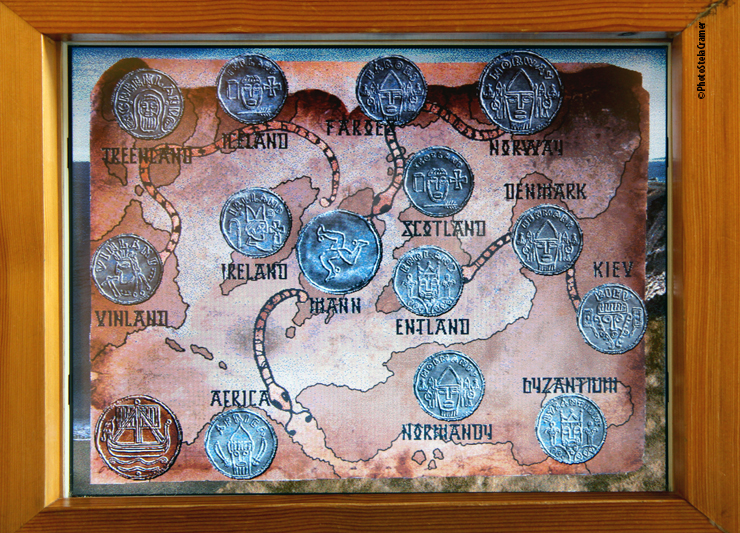
Antigas rotas de navegação / Ancient navigation routes
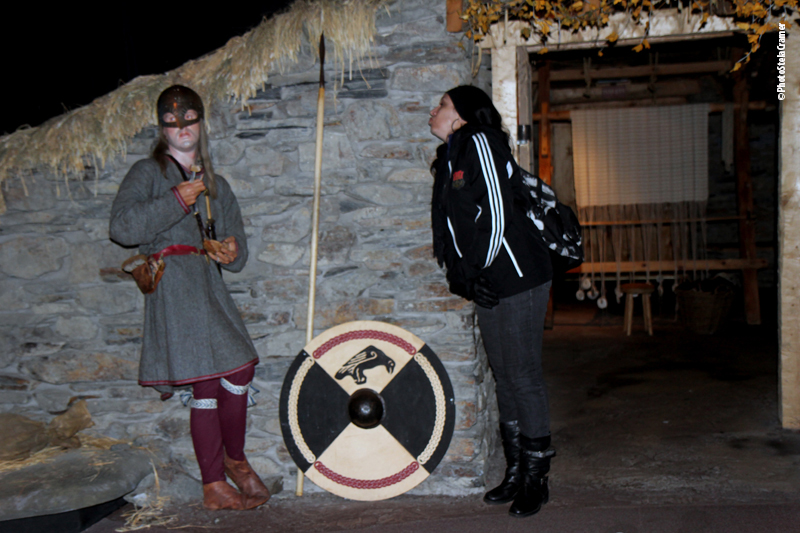
Exposições permanentes retratam a Ilha de Man desde o período Celta, incluindo uma reconstrução em tamanho real de uma típica casa redonda celta./ The museum has several permanent exhibitions depicting the Celtic period of the Isle of Man to the modern era, such as a life size reconstruction of a Celtic roundhouse.
Filmes curtos, exibidos continuamente nos cenários, mostram aspectos da vida em diferentes eras /
Short movies loop in stages, depicting life aspects in different periods
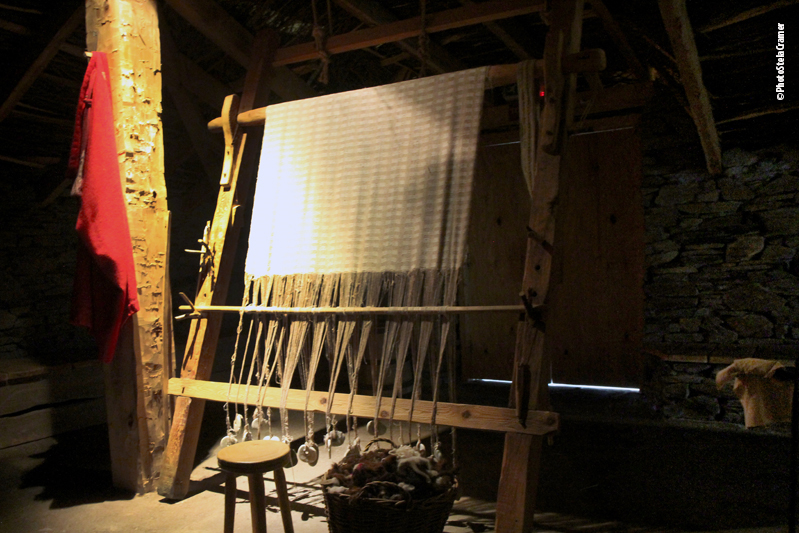
A tecelagem era uma atividade fundamental para os povos antigos, não só para confecção de roupas e agasalhos, mas também redes de pesca e velas para os barcos / Weaving was essential for the ancient people, not only for clothing and wraps but also for fishnets and sails
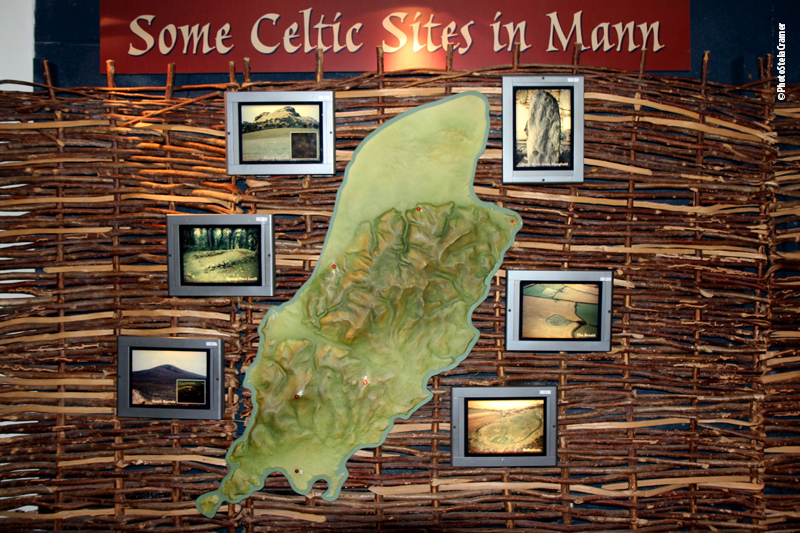
Mapa de sites arqueológicos da Ilha / Isle of Man’s archaeological sites map
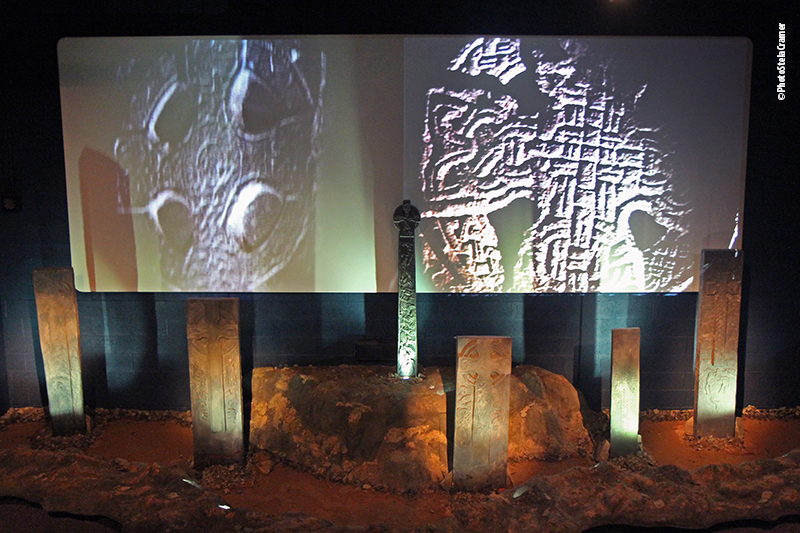
Filme sobre as Cruzes Célticas da Ilha. Voltaremos a esse assunto. / Movie about Manx Celtic Crosses. We’ll talk about it soon.
Vicky encontra o amor de sua vida (passada). / Vicky finds the love of her (past) life

Read Full Post »


Casas de pescadores em Peel / Fishermen’s houses in Peel

Nosso segundo dia em Peel começou com um super café da manhã. Há dois dias comíamos basicamente sopa ou fish and chips… e muita cerveja. Assim, fomos surpreendidas por uma quantidade de especiarias locais, trazidas à mesa, nada de buffet. A própria June, dona do B&B, veio nos explicar que aquele queijo vinha de uma fazenda próxima e as geléias eram produzida localmente segundo uma receita de família. Podíamos escolher entre três ou quatro opções de pratos quentes à base de ovos frescos e/ou defumados como salmão, bacon e arenque (o famoso Manx Kipper, cuja produção vem do século XIX, sendo a mais importante indústria local).

Our second day in Peel started with a super breakfast. We hadn’t eaten properly these days, basically soup or fish and chips…and pints of beer. Thus we were amazed at the local delicacies brought to our table. No buffet. June, the B&B’s owner herself, was there to explain that the cheese came from a dairy farm nearby and the marmalades were locally crafted according to a traditional family recipe. We could choose between three or four hot dishes of fresh eggs and/or smoked salmon, bacon or herring (the famous Manx Kippers, that have been produced in Peel since at least the 19th century and were the Island’s main industry).

Saímos bem nutridas para pegar um ônibus até o aeroporto, onde ficava a locadora. Tínhamos reservado um carro, pois nessas ilhas é o melhor transporte, uma vez que tudo fica afastado. Caminhamos pela orla, subimos a Castle Street, admirando as casinhas e as ruas estreitas e sinuosas e, como nosso ônibus ia demorar, tivemos tempo de visitar a Catedral, ao lado do ponto final.

Well nourished, we left to take a bus to the airport, where the car rental facilities were located. We had booked a car, the best transport because, in such islands, everywhere is too far.
We walked along Marine Parade and went up Castle Street, admiring the lovely houses and narrow winding lanes. The bus stop was next to the Cathedral, and we had time for a short visit.

Reproduções de cruzes medievais na Catedral.
Reproductions of medieval Manx crosses at Peel Cathedral

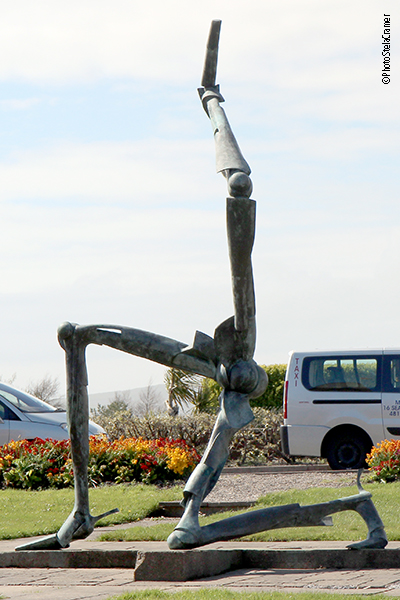
Escultura de Triskalion no aeroporto de Mann – Nosso carro alugado! /

Triskalion sculpture in Isle of Mann airport / Our rental car

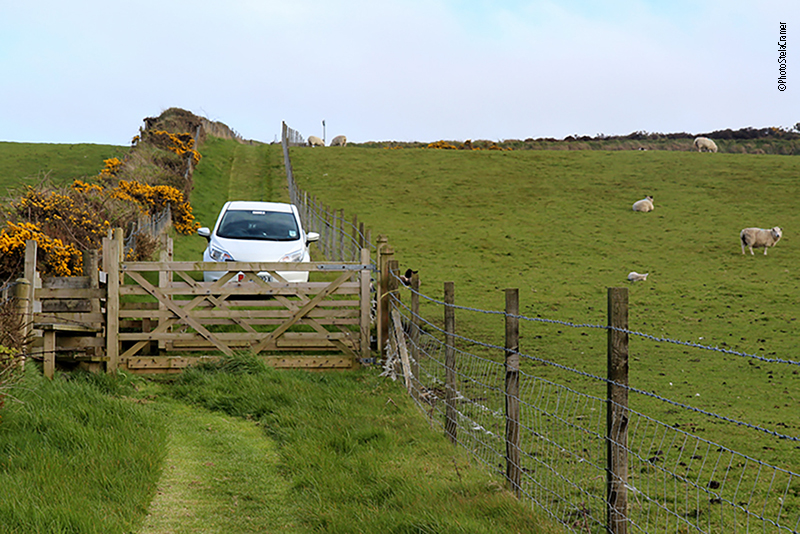
O tempo estava bom, mas até chegar no aeroporto, fazer todo o processo de alugar o carro e efetivamente sair de lá com ele, nuvens escuras já encobriam todo o céu.O plano era visitar The Braaid, um sítio arqueológico que ficava no caminho de volta a Peel. Pega-se menos de 1 km de estradinha de terra ao sair da rodovia. Estacionamos, ou melhor, largamos o carro em frente à porteira que dá acesso ao local, pois a estrada estreita não permitia qualquer manobra. Chegamos lá pouco antes da chuva, que felizmente não foi muito forte e parou em poucos minutos.

Weather was apparently good when we boarded the bus. But until we arrived at the airport, found the car rental, went through the rental process and actually leave with the car, dark clouds already covered the sky. Our plan was to visit The Braaid, an archaeological site, on our way back to Peel.
From the highway you must turn into a dirt road; half mile down the slope it ends in front of a rough gate that opens to the site. There we parked, or better, we just left the car as it was because the narrow path didn’t allow maneuvers. We got there a bit before the rain that, fortunately, wasn’t so heavy and stopped soon.

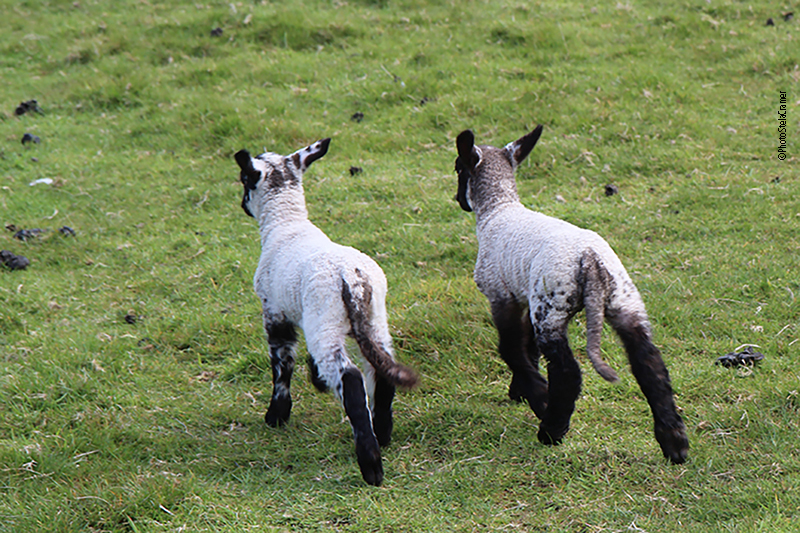
O sítio fica no meio de um pasto cheio de ovelhas, que pastavam felizes com seus filhotes. Estávamos na primavera – estação em que nascem as ovelhinhas.

The site is surrounded by fields were sheep were happily grazing with their offspring .It was springtime – lambing season!

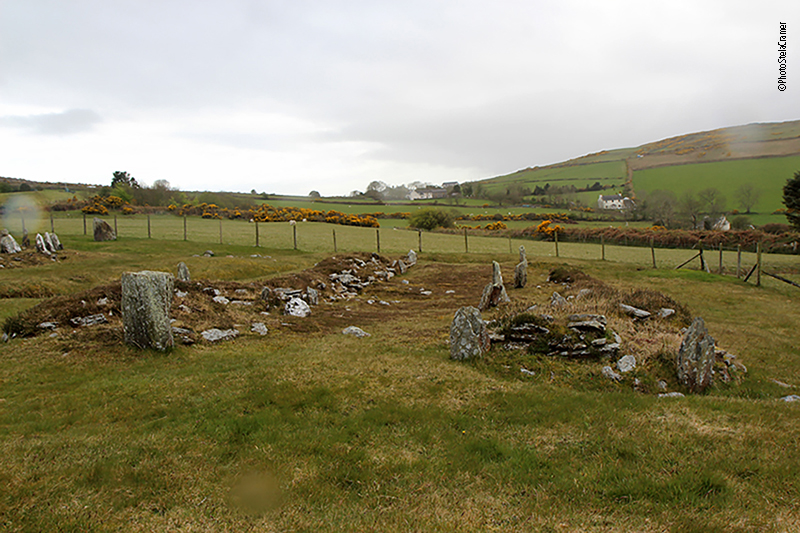
The Braaid consiste em uma fazenda abandonada onde coexistiam uma casa redonda da Idade do Ferro, duas casas compridas estilo Viking

The Braaid contains an example of an abandoned farmstead comprising of, an Iron Age round house, two Norse long houses, Iron Age buildings and Viking styles that were used together and survive today.
A casa redonda da Idade do Ferro / The Iron Age round house
As construções estiveram em uso até o século XI ou XII / The buildings had occupation until the 11th or 12th century AD

Vicky estava emocionadíssima pois este era o sítio mais antigo a que tínhamos chegado até então.

Vicky was thrilled because this was the most ancient site we had visited so far.

Vistas da casa redonda / The round house from different angles

Uma das casas longas mede cerca de 20 por 9 metros, internamente. A outra era um curral, medindo externamente cerca de 18 por 8 metros. / One of the long houses is nearly 20 meters long and 9 m broad internally. The other was a cattle byre, measuring almost 18 by 8 meters externally.

Por um instante, uma pincelada de azul surgiu no céu e pudemos dar um tempo apreciando a paisagem rural ao redor de The Braaid: pastos salpicados por bosques, casas e colinas na distância. Porém isso não durou muito. O manto de nuvens cinzentas logo se fechou novamente, e decidimos pegar a estrada antes que começasse a escurecer.

For a brief moment, a bit of blue brushed the sky, and we could better appreciate the rural landscape around The Braaid: pastures sparkled with woods, some houses and hills in the distance. But it didn’t last long. Dark clouds overtook the scene, so we wanted to hit the road before it got dark.

Embora o carro tivesse GPS, não conhecíamos a estrada, e era a primeira vez que eu estava dirigindo na mão inglesa. Então voltamos pelo pasto até a porteira, onde tínhamos deixado o carro.
A estradinha de terra tinha virado um atoleiro, e teríamos que ir de ré – ladeira acima – até o asfalto.

It was the first time I was driving English way, on the right. Although the car had a GPS, we didn’t know the roads, so we walked back to the car.
The dirt road had become a bog, and we’d have to cross it in reverse, up the slope, to reach the paved road.

Read Full Post »


Atravessamos praticamente a Ilha toda para chegar a Peel, onde tínhamos reservado um B&B bem próximo ao castelo: The Fernleigh, em Marine Parade.

We crossed quite the whole island to reach Peel, where we had booked a B&B, the closest possible to the Castle: the Fernleigh, in Marine Parade.

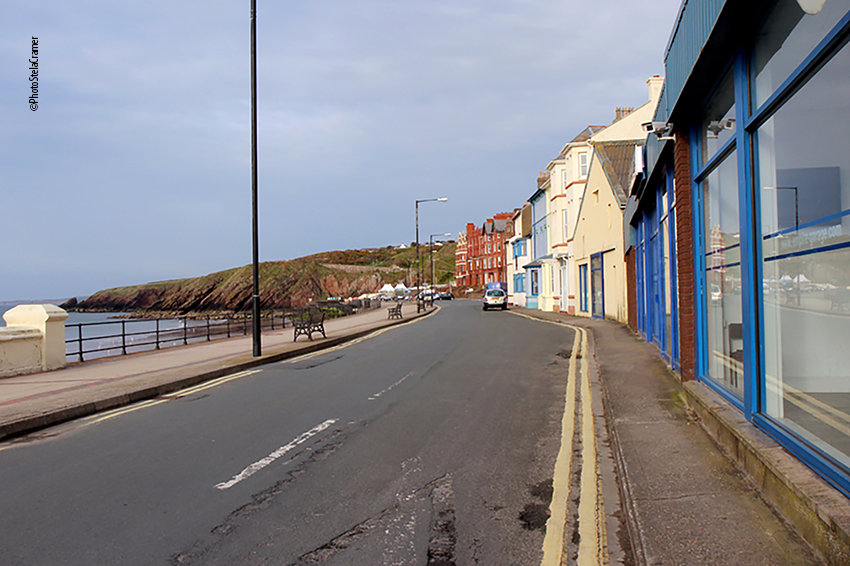
As construções mais antigas de Peel são de arenito avermelhado. O Fernleigh é o penúltimo edifício à esquerda na foto. Nosso quarto era no terceiro andar, bem de frente para o mar… e o castelo!

The older buildings of Peel were built of reddish Peel Sandstone. The Fernleigh is the penultimate building to the left, and our room was on the third floor, facing the sea… and the Castle!

Além da localização com vista privilegiada e proprietários super solícitos, o café da manhã era maravilhoso, sempre à base de especialidades locais tais como queijos, geléias… e peixes. Pela primeira vez na vida passamos dias comendo pratos de peixe no café da manhã, inclusive o Kipper defumado, produzido ali desde o século XIX.

Besides the privileged view from the room and the lovely hosts, breakfast was outstanding, serving local delicacies such as cheese and jam… and fish. We had never before eaten fish on breakfast! These days we tried assorted ones, including the Kippers, that have been produced in Peel since at least the 19th century.

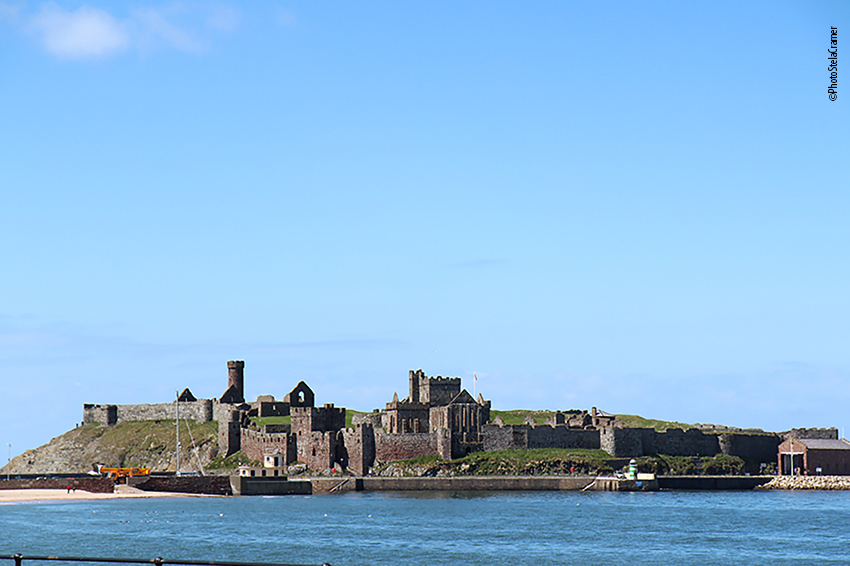
Peel Castle, visto pela janela do quarto! Largamos a bagagem e saímos correndo para aproveitar a linda tarde.

Peel Castle seen from our window! We dropped our luggage and left immediately, to enjoy the wonderful afternoon.

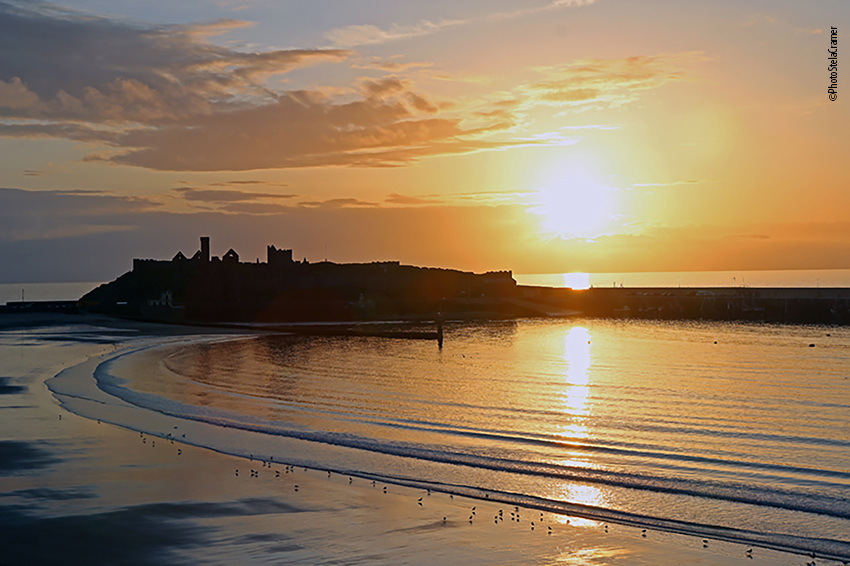
Peel Castle in the sunset

O castelo de Peel ficava a dez minutos a pé do nosso B&B, mas pelo horário já estava fechado para visitantes. Só conseguimos visitá-lo dias depois, porque chovia muito e estávamos esperando um dia de sol.

Peel Castle was a ten minutes walk from our B&B, but it was already closed this day. We could only visit it a few days later, because it was raining and we were waiting for a sunny day.

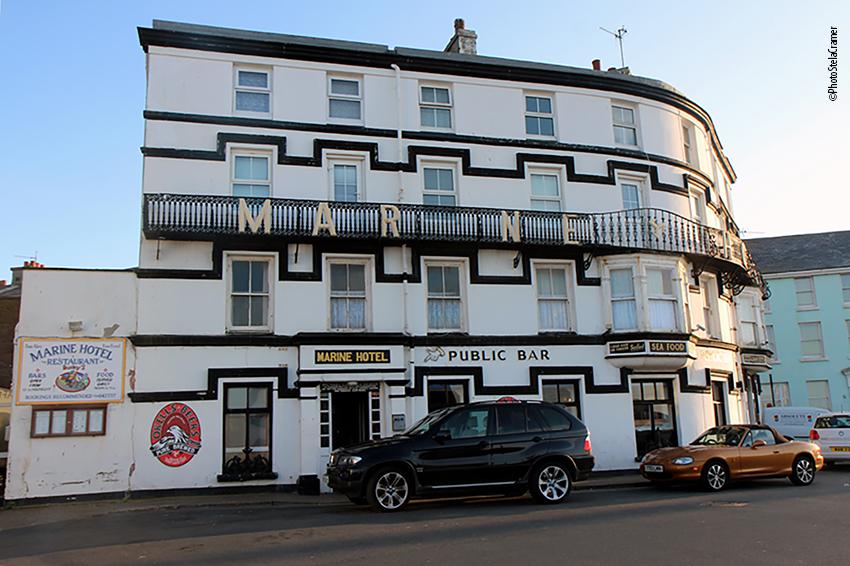
Marine Parade – The Promenade à tarde / In the afternoon

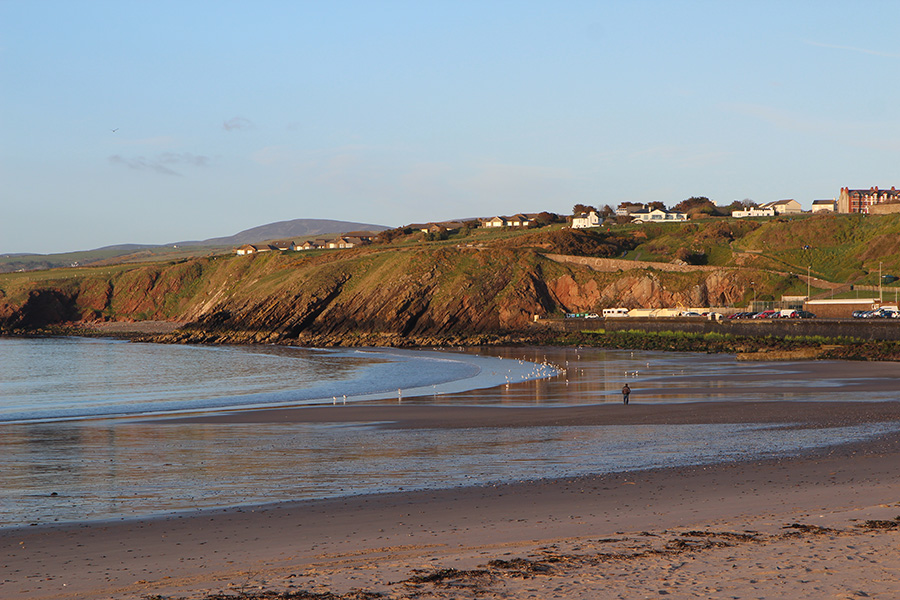
Algumas fotos da praia em Peel / Some photos of Peel Sea shore

O símbolo da Ilha de Mann é o Triskelion, composto por três pernas usando armadura, com esporas de ouro. Na bandeira, sobrepõe-se ao fundo vermelho- a bandeira oficial de Mann desde Dezembro de 1932.

The Isle’s symbol is a triskelion composed of three armoured legs with golden spurs, upon a red background. It has been the official flag of Mann since 1 December 1932.

Embora não tenhamos entrado no Castelo logo no primeiro dia em Mann, fizemos uma boa caminhada em toda a volta. Fomos presenteadas com um lindo por-do-sol dourado.

Although we’d not been able to visit the Castle on our first day in Mann, we walked around it all and were gifted with a wonderful golden sunset.

Irei repetir os Posts 115 e 116 já publicados antes neste blog, que tratam especificamente do Castelo de Peel. Caso queira ver logo, pode digitar na lupa de busca.

I will repost the entries 115 and 116, previously published here, all about Peel Castle. In case you want to see it at once, write Post 115 (or Post 116) in the Search.

Read Full Post »


VIew of DOuglas from the ferryboat
Douglas é a capital da Ilha. Aqui a cidade vista do ferryboat. Fiquei toda animada ao ver este pequeno castelo, mas fui informada que não era uma ruína antiga, e sim a Torre do Refúgio, construída neste recife em 1832. Muitos navios afundavam ali quando o recife ficava submerso, por isso construíram este refúgio onde sobreviventes podiam aguardar socorro.
Douglas is the island’s main city, here seen from the ferryboat. I was thrilled by the sight of this little castle, but soon learned that it wasn’y an ancient ruin, but The TOWER OF REFUGE, a structure built in 1832 upon the reef in Douglas Bay. After several shipwrecks upon the semi-submerged rock, a refuge was built for survivors, until help could arrive.
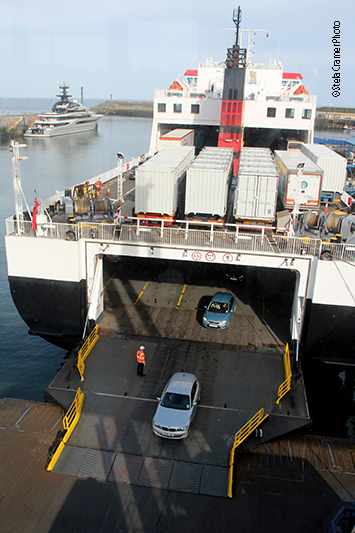
Carros desembarcando do Ferryboat./
Cars leaving the Ferry
Desembarque de passageiros / Passengers leaving the Ferry
Desembarque da bagagem / Baggage claim
Os lindos edifícios de Douglas Promenade, que ocupa toda a extensão da orla /
Lovely buildings in Douglas Promenade, which runs nearly the entire length of beachfront in Douglas
Após desembarcar fomos pegar um ônibus para Peel, nosso principal destino na ilha: ali se situa o castelo identificado como Avalon pela escritora e pesquisadora Norma Lorre Goodrich. As fotos já foram publicadas nos Posts 115 e 116 deste blog. / After landing, we got a bus to Peel, our main goal in the island: there stands the Castle identified by the writer and researcher Norma Lorre Goodrich as the real site of Avalon. Photos have previously been published in the Posts 115 and 116 of this blog.

Read Full Post »


O ferryboat que nos levaria à Ilha de Mann. The ferryboat that would take us to Isle of Man
Fizemos amizade com a dona do hotel The Port House: uma brasileira, Munik. Ela nos levou até o porto de Heysham para pegar o ferry. We made friends with the Port House hotel’s owner, a Brazilian called Munik. She drove us to Heysham Harbour to take the ferryboat.
O ferryboat saindo do porto / Leaving the harbour
Navios vem abastecer nestes tanques de combustível gigantes / Massive tanks to fuel the ships
O porto de Heysham, com a cidade ao fundo / Heysham Harbour, the city in the background
Na mesma cidade há ruínas romanas e vikings, uma usina nuclear e uma eólica.
In the same city you can find Roman and Viking ruins, a nuclear plant and an eolian.

Conhecemos uma fotógrafa, que trabalhava num projeto sobre Mulheres Número 1 – campeãs em esportes, líderes de empresas, etc., e descemos com ela para o pub, pois estava frio apesar do tempo bom. O vento do mar é sempre frio.

We met this photographer who was working on a project about Number 1 Women – sports champions, company leaders, etc. ; we went down to the pub because it was cold despite the good weather. The sea breeze is always chilly.

Meia hora depois quando voltamos ao convés o tempo tinha mudado radicalmente. Parecíamos estar em mar aberto, mas dentro de uma nebulosa. As cores do mundo se condensaram numa palheta de cinzas. E à medida que a névoa ia se dissipando, estranhas árvores surgiam: torres de energia éolica, plantadas no mar.

Half an hour later, when we went back to the deck, the weather had changed radically. We seemed to be in the open sea, but inside a nebula. The world’s color was condensed into a palette of shades of gray. And, as the mist faded away, weird trees appeared, planted in the sea: eolian towers.

eoliansIrishSea10

Eu já tinha visto tais torres mas nunca assim brotando do mar. Fiquei fascinada, e permaneci no convés fotografando até o limite da hipotermia.

I had already seen such towers but never like this, sprouting from the sea. It was fascinating, so I stayed in the deck taking pictures until the edge of hypothermia.

Cada vez que achava que tinha fotografado o suficiente, algo mudava na paisagem – um raio de sol, uma nuvem mais escura ou mais clara, e a diferença era tal que eu acabava ficando mais um pouco, apesar da dor nos ouvidos, nariz correndo e dedos congelados.

Everytime I thought it was enough, something changed in the landscape. A sunbeam, a darker or lighter cloud, and it made such a difference that I decided to stay a bit longer, in spite of aching ears, running nose, frozen fingers.

Por fim o tempo abriu. O vento gelado carregou as nuvens. Chegamos a Douglas, capital da Ilha de Man, numa bela tarde de sol.

Eventually, the strong chilly wind carried the clouds away. We arrived in Douglas, Isle of Man’s capital, in a lovely sunny afternoon.

Isle of Man

Read Full Post »

« Newer Posts - Older Posts »