Feeds:
Posts
Comentários

Posts Tagged ‘Vikings’


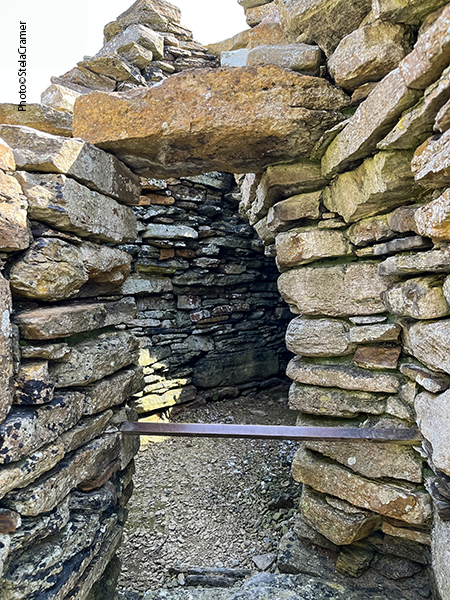
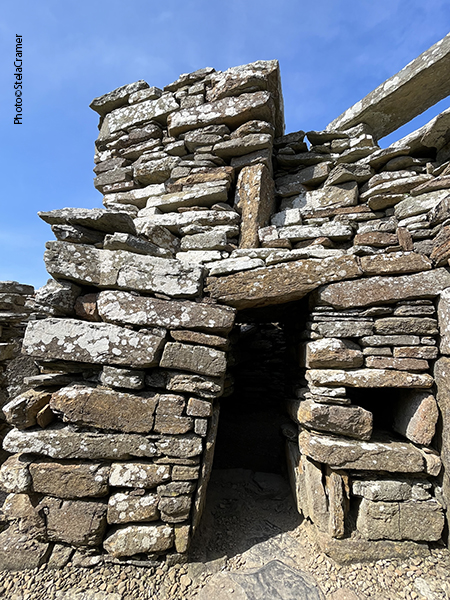
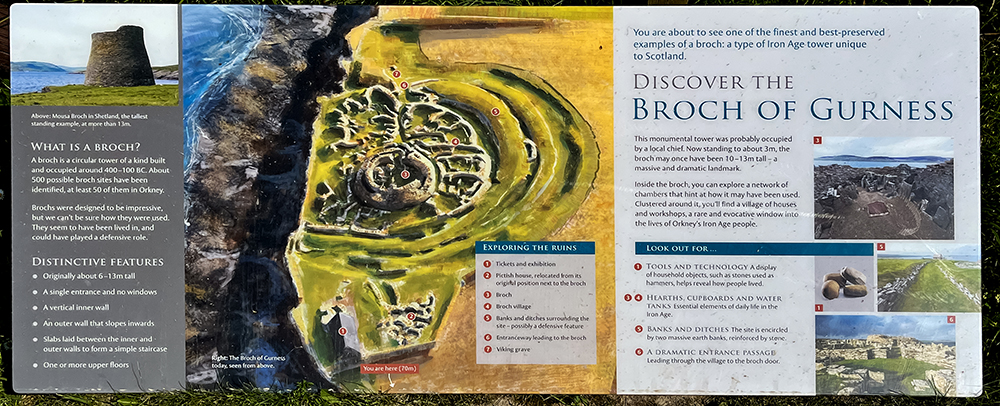
O Broch of Gurness é cercado por três fossos e plataformas escavados com paredes e plataformas de pedra, mostrando claramente três etapas de construção e reconstrução. A área total tem cerca de 45m de diâmetro. / The site is surrounded by three ditches cut out of the rock with stone ramparts, showing clearly three phases of construction and reconstruction. It encircles an area of around 45 metres diameter.
Como devia ser o Broch; vista da mesma posição que a foto acima / How the Broch should look like, from the same position of the picture above
O “Broch” é a torre redonda no meio, cuja altura provavelmente atingia 12 metros; as construções em volta eram as casas do povoado/ the Broch itself is the round tower in the middle, which once probably reached a height of around 12 metres; the buildings around it were the village houses.

Brochs são construções redondas encontradas apenas na Escócia. Há mais de 500 deles, a maioria nas ilhas e nas Terras Altas. Alguns existem sozinhos, mas nas Orkneys a maioria aparece cercada por aldeias de tamanho razoável. Um dos exemplos mais impressionantes, e o mais bem preservado, é o de Gurness.

Brochs are roundhouse buildings unique to Scotland. There are more than 500 of them, mostly in the northern and western Highlands and the islands. Many stood alone, but sizeable villages often surrounded those in Orkney. The broch village at Gurness is one of the most impressive and the best-preserved examples.
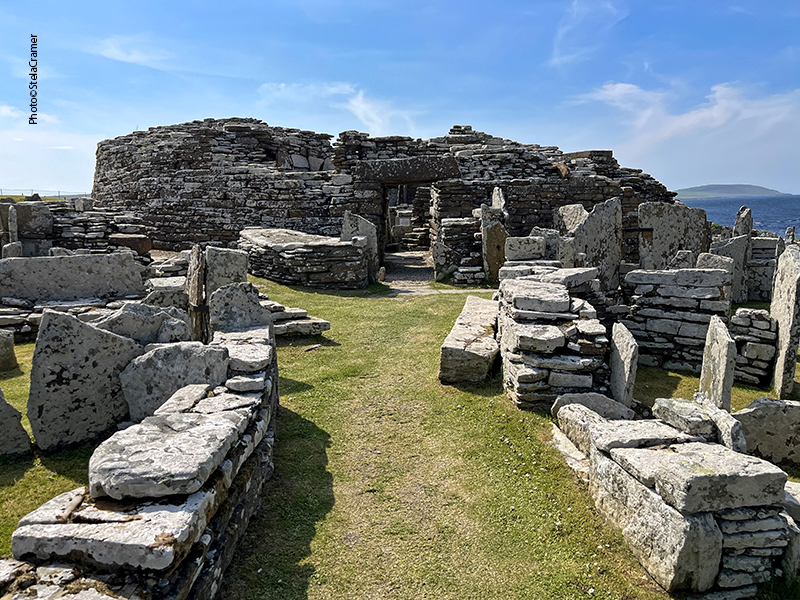
Uma “avenida” principal conecta a entrada da aldeia à do Broch. / A “main street” connects the village outer entrance to the broch.
A foto anterior foi tirada na posição 6 deste mapa / The picture above was taken from the position number 6 in this map.
Vista da posição 2 : a casa dos Pictos, logo junto à entrada / View from position 2: the Pict House, right by the entrance

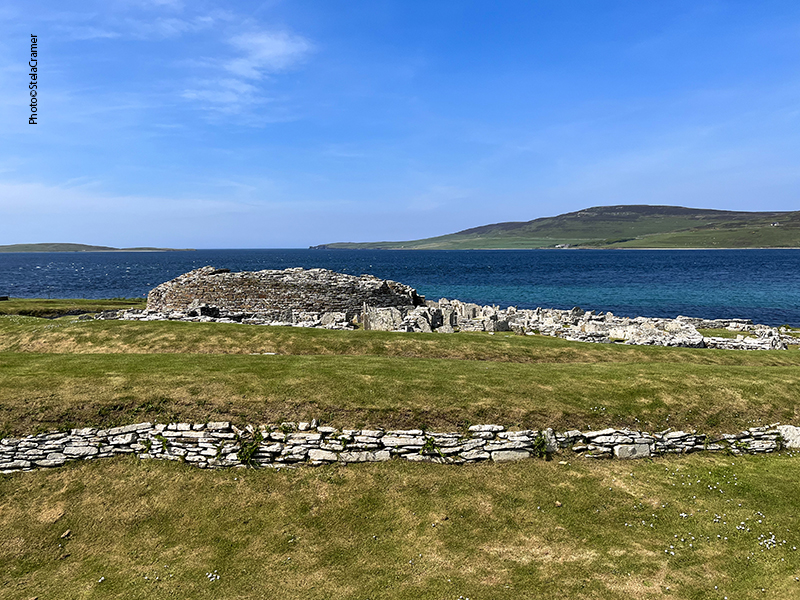
O Broch de Gurness tem cerca de 2000 anos. Construído no Neolítico, em algum momento depois de 100 A.C. parece ter sido abandonado e os fossos preenchidos. A aldeia em volta continuou existindo até cerca de 5 A.C., o chamado Período dos Pictos. Depois, construções Vikings ocuparam parte do lugar. Essa mesma sequência de ocupação se repete nos Brochs próximos, em Birsay e em Midhowe, este na Ilha de Rousay, que se vê ao fundo, na foto. Devia haver conexão entre os habitantes desses lugares. Imagino que, há milênios atrás, o nível do mar devia ser bem mais baixo e se pudesse atravessar a pé durante a maré baixa.

The Broch of Gurness is around 2000-years-old. Built by Neolithic people, at some point after 100 AD the broch was apparently abandoned and the ditches filled in. The settlement around it continued into the 5th century AD, the period known as Pictish times. Subsequently, Viking buildings occupied part of the site. This same sequence of occupation is seen in the nearby Brochs, Birsay and Midhowe, this last one in Rousay, the island seen in the background, in the picture above. There must have been connection between all these inhabitants. I guess that centuries ago the sea level was lower and people could cross on foot in the ebb.

Interior do Broch, cujo diâmetro tem cerca 20m / Inside the Broch, around 65ft in diameter

O Broch original tinha uma lareira central; armários construídos em pedra em volta das paredes; uma espécie de banheira – provavelmente um poço – e escadarias entre as paredes levando aos andares superiores. Este layout foi alterado quando o Broch começou a cair. O poço foi preenchido e o interior redividido.

The Broch originally had a single central hearth; stone-built cupboards around the wall; a sunken water basin – probably a well – and set of stairs between the broch walls, which led to the upper floors. This layout was altered when the broch began to collapse. The well was filled in and the interior refitted with new partitions.

Escadarias que levavam ao andar superior: uma “galeria” com piso em pedra, entre as duas camadas da parede externa, de cerca de 4m de largura / The tower features two skins of drystone walls, with stone-floored galleries in between, up to 4m thick, which were accessed by these steps.

O tanque apresenta o fundo e as laterais impermeabilizados com argila. Há outros semelhantes na aldeia em volta, muitos próximos às lareiras. Isto nos leva a crer que usavam a água para cozinhar, e que podiam aquecê-la pondo pedras da lareira dentro do tanque. / The water basin sides and bottom were made watertight using local clay. Similar tanks were found in the village, many placed near the hearths. This suggests using the water for cooking, and that water could be heated using stones from the hearth.

Havia um banheiro, com cisterna subterrânea / The broch features a “toilet” with a subterranean stone cistern
O forno poderia ser usado para secar grãos (repare a pedra de moer ali ao lado) e para queima de cerâmica / The kiln could have been used for drying crops ( notice the quern stone beside it) , and to fire pottery

Impressionante alvenaria num labirinto de compartimentos / Impressive stone masonry in a network of chambers

Vista da entrada e “avenida” principal por dentro do Broch (número 3 no mapa) / Inside view of the entrance and “main street” (number 3 in the map)
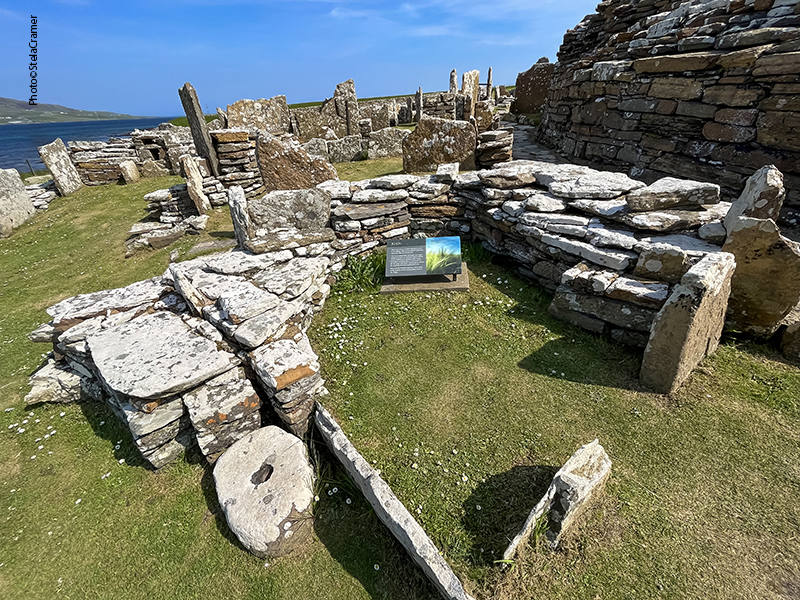
Na aldeia, a entrada de cada casa leva a um cômodo maior, como um sala e quarto conjugado, com a lareira ao centro, o tanque de água, armários e camas de alvenaria, assim como pequenas câmaras menores, divididas por blocos de pedra.
In the village, each house entrance leads to a large living and sleeping room, off which were smaller side rooms. The main room had a hearth, a large tank set into the floor, cupboards and sleeping spaces divided by stone slabs.
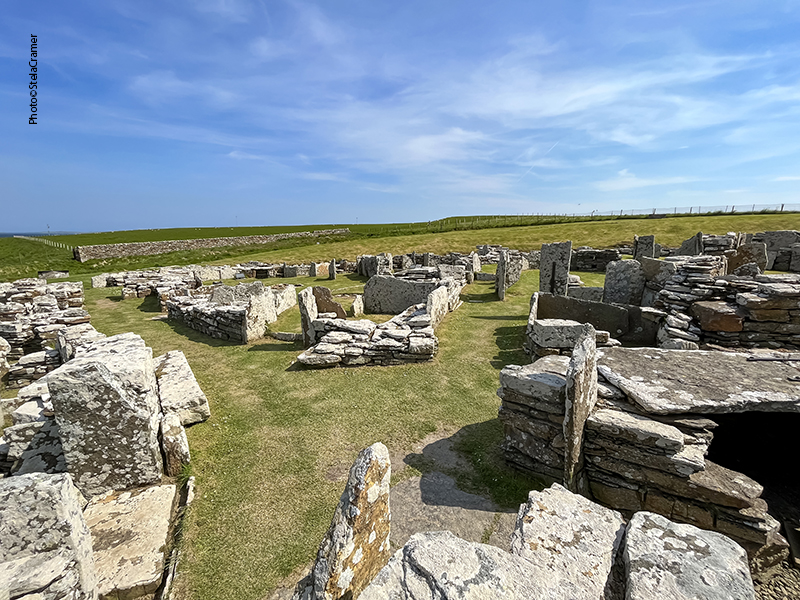
Escavações em 1920 revelaram que o Broch foi usado e reusado, demolido e reconstruído ao longo do tempo, assim como o povoado ao redor. Ou melhor dizendo, a série de povoados que foram se sobrepondo aos anteriores ( Pictos, Norsemen, etc). Estas casas nunca foram totalmente escavadas, pois seria preciso destruir esta camada para ter acesso ao que se encontra enterrado por baixo.
Excavations in the late 1920s revealed the broch was used and reused, demolished and rebuild, over a very long period, as well as the village around it. Or rather, several small villages of houses built one on top of the other (Pict, Norse, etc). These houses have not been fully excavated, as access to some of the lower levels would require destruction of the buildings at the upper levels.

Do outro lado do Estreito de Sound, existe outro Broch super bem preservado: Midhowe, na ilha de Rousay, ao fundo na foto. Chegaremos lá. / Across Eynhallow Sound you can see another well-preserved example at Midhowe in Rousay, seen in the background. We’re going there.

Aqui link para um vídeo tour: / Link to a video tour:

https://www.facebook.com/watch/?.mibextid=KsPBc6&rdid=eaGEcqJBYGdENiWE&v=2687884308026791
Read Full Post »


Estávamos entaladas no fim de uma estreita estrada de terra, sem largura para manobrar, no meio do atoleiro que se formara com a chuva que, felizmente, não tinha sido tão forte; assim o carro não estava atolado mas não foi muito fácil subir a ladeira de marcha-ré. Vicky precisou empurrar, e ir andando para o veículo ficar mais leve. Engasgando aqui e ali, consegui chegar até a beira da estrada. Ali se configurou o problema: a grossa camada de asfalto era um verdadeiro degrau e o carro de passeio não queria subir de jeito nenhum! Foi preciso juntar pedrinhas, mato, pedaços de qualquer coisa para tentar atenuar o degrau. Vinte minutos depois, todas enlameadas, começamos a nos preocupar pois começava a escurecer, a chuviscar novamente e a estrada estava deserta. Ninguém viria nos ajudar, apenas talvez os antigos deuses celtas. Para eles começamos a rezar.

We had parked at the end of a dirt road that turned into mud after the rain which, fortunately, hadn’t been heavy, so the car wasn’t stuck. Still, we were down a slope and it was too narrow to make a U-turn. We had to go in reverse. It wasn’t so hard, especially with Vicky pushing the car. Although it coughed a bit, we made it all the way up. We then realized the problem was the thick asphalt road, which next to the dirt, was like a large step; of course we didn’t notice that when we were going down, but now going up in reverse the car wouldn’t climb it. So we began gathering stones, sticks, leaves, anything to create a smoother path. Twenty minutes later, covered in mud from head to toe, we started to worry because it would soon be dark, it was starting to rain again, and the road was deserted. No one would come to help us – maybe only the ancient Druids. To them we started praying.

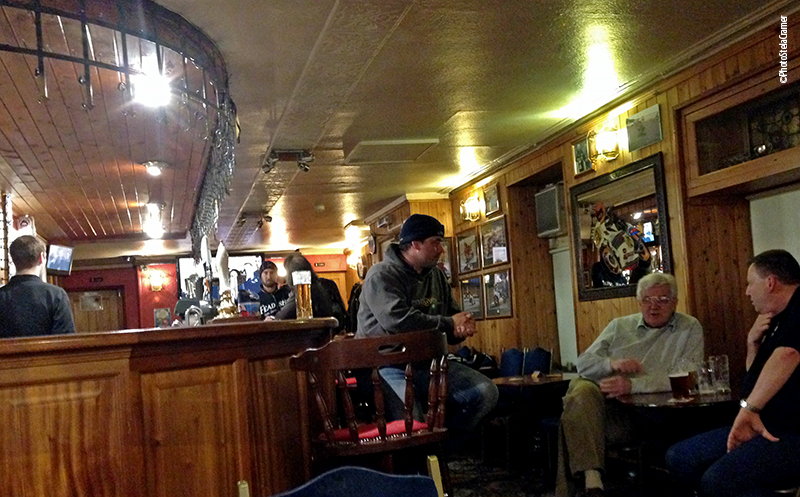
O pub onde fomos tomar uma merecida cerveja depois da aventura. /The pub where we went for a well deserved pint after the adventure.

Não havia acostamento para manobrar. Deixei o carro descer um pouco, virando na diagonal tanto quanto foi possível, para sair dos sulcos já feitos pelos pneus, engatamos a ré, retomamos a subida e quase na beira da estrada meti o pé no acelerador. Demos uma esmerilhada nos pneus, mas depois de alguns tensos segundos, conseguimos. Um pneu traseiro, outro, depois os dianteiros… finalmente se encontravam sobre o asfalto firme. Ficamos por instantes paradas ali, só respirando e agradecendo aos deuses! Digitei no GPS o endereço do Fernleigh, em Peel, e por um tempo parecia que tudo corria bem. Foi quando percebemos que o GPS era tosco, ou talvez o mau tempo afetasse a conexão, o fato é que em algum cruzamento nos perdemos e em vez de chegar em 20 minutos levamos mais de uma hora para estacionar em frente ao B&B, sãs e salvas, ainda que com fome, frio, cansadas e cobertas de lama. O carro, que era branco poucas horas antes, estava marrom. Felizmente era um carro alugado.

There was no shoulder to maneuver. All we could do was let the car go downhill a bit, as diagonally as possible to free the tires from the grooves they had created. We engaged reverse again and put the foot down on the throttle. We still bumped against the thick layer of asphalt, but persisted. After a few seconds of tension, holding our breath and burning the rubber on the tires , we made it. One after another, the four wheels found their way to the solid asphalt road. For a while we just stayed there, breathing and thanking the Druids. I put Peel Fernleigh’s address in the GPS, and for a while everything was apparently well. That was when we realized that the GPS was primeval, or perhaps the bad weather was messing with it. At some crossroads we got lost and, instead of arriving in 20 minutes, we took more than an hour to park in front of our B&B. Safe and sound, though hungry, thirsty, tired and muddy. The car, white hours ago, was now brown. Fortunately, it was a rental.

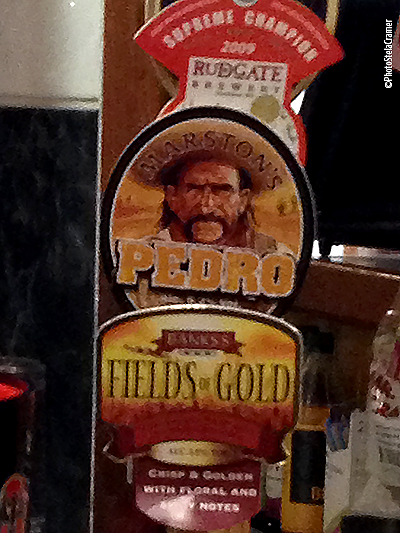
Precisávamos urgentemente de uma pint, então nos dirigimos ao pub mais próximo. Em Peel não estava chovendo, fomos caminhando pela orla, admirando a iluminação noturna do Castelo, crentes que o visitaríamos no dia seguinte. Sentamos numa mesa próxima ao balcão, rindo muito porque uma das cervejas expostas se chamava Pedro, e Vicky bateu foto para mandar para um Pedro amigo nosso. Lá pra tantas, ainda estávamos bebendo, rindo da aventura no atoleiro, quando dois homens muito bonitos se aproximaram perguntando se podiam sentar conosco. Os recebemos felizes e sorridentes; ambos eram inteligentes, engraçados, e pensamos que os deuses estavam nos enviando um prêmio consolação pelo perrengue daquela tarde. Um era mais velho e outro parecia mais novo, portanto supusemos que fossem pai e filho… só que não. Eram casados há mais de dez anos.

In urgent need of a pint, we walked by the shore to the nearest pub – it was not raining in Peel – admiring the Castle’s night lights. We intended to visit it the next day. Sitting at a table next to the counter, we bursted out laughing because of a beer bottle in the shelf labeled “Pedro”. Vicky took a picture to send to a friend of ours called Pedro. And there we were, still laughing at our adventure in the mud, when two really handsome guys approached, asking if they could sit with us. We welcomed them, smiling happily; both were intelligent, funny, and we thought that the Gods had sent us a consolation prize for the afternoon’s trouble. One was older and the other appeared younger, so we thought they could be father and son… only they were not. They were a couple, married for more than ten years.

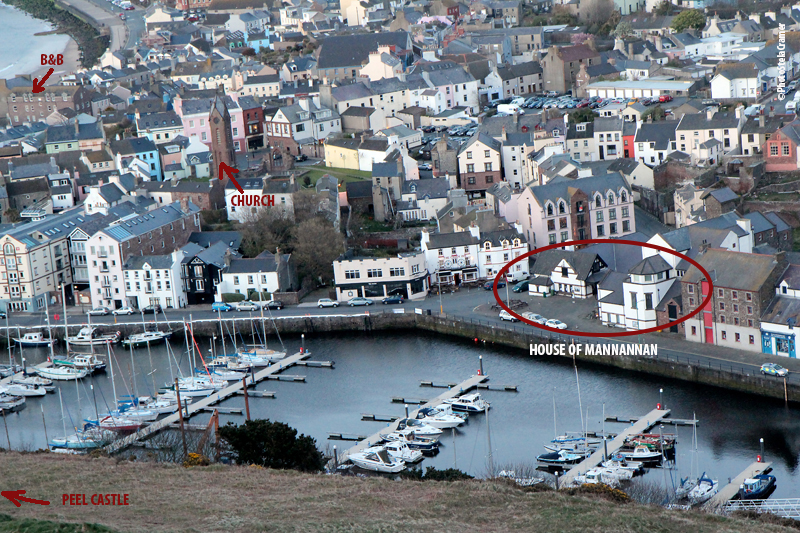
Pelo menos a conversa foi muito boa, tanto que bebemos mais pints do que o previsto, e por fim voltamos ao B&B, para tomar um bom banho e ir dormir. O dia seguinte amanheceu sob chuva torrencial. Pela janela do quarto dava para ver o carro ( e quase nada além dele); lavado pela chuva, estava ficando branco novamente! Resolvemos então vestir nossos casacos de chuva e andar até o Museu House of Mannannan, que era ali perto, cujas fotos ilustram este post.

At least the conversation was great, so that we‘ve drank a couple of pints more than we intended to, but eventually walked back to the B&B for a well deserved shower and sleep.
Next day we woke up under heavy rain. We could see the car from our window (and not much beyond it) and it was rainwashed to white again! So we decided to put on our raincoats and go visit the House of Mannannan Museum, just a couple of blocks away, which photos illustrate this post.

O museu tem o nome do deus mitológico Manannan mac Lir (filho do mar) e engloba a história Celta, Viking e marítima da ilha.
The museum is named after the mythological sea god Manannán mac Lir (“son of the sea”) and covers the island’s Celtic, Viking, and Maritime history.
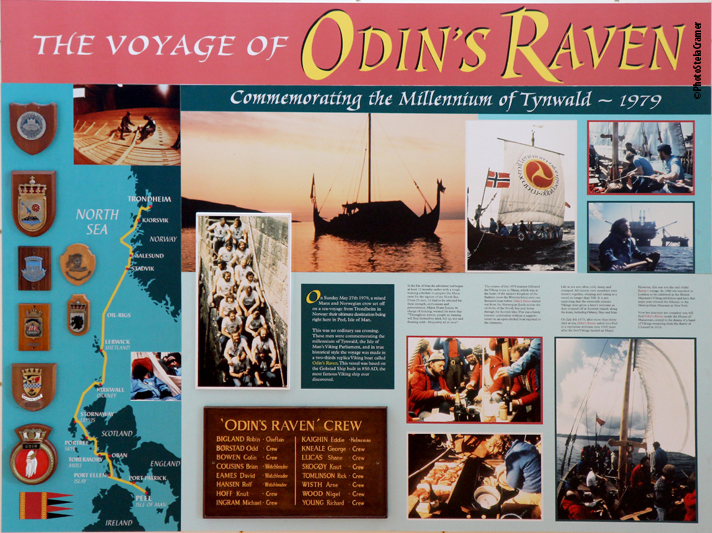
A principal atração é a réplica de um navio Viking numa escala de 2/3. O “Corvo de Odin” foi construído na Noruega e navegou até Peel, chegando em 4 de Julho de 1979 para a comemoração de um milênio do Tynwald (Parlamento da Ilha de Man).
The Museum’s highlight is Odin’s Raven, a recreation of a Viking longboat in two-thirds scale. Odin’s Raven was made in Norway and then sailed to Peel, arriving on 4 July 1979 to celebrate the millenium of Tynwald (Manx Parliament).
Os navios longos eram construídos pelos Vikings da Escandinávia e Islândia para comércio, exploração e guerra./ Longships were naval vessels made and used by the Vikings from Scandinavia and Iceland for trade, commerce, exploration, and warfare.
As cabeças de animais entalhadas na proa dos navios Vikings se destinavam a conferir proteção divina à embarcação. /
The carved animal heads in the stern, in Viking vessels, had divine protection purposes.
Tynwald é como se chama o Parlamento da Ilha de Man, o “mais antigo Parlamento em continuidade” segundo eles, por ser uma tradição herdada dos Vikings.O encontro acontece anualmente, ao ar livre, e ali as leis são promulgadas, petições são ouvidas e demais assuntos públicos tratados, tais como aprovação de impostos e assinatura de decretos. / Tynwald is the Manx Parliament, the “oldest continuous parliament” in the world according to them, because it’s a Viking heritage. The meeting is at an open-air ceremony, when all laws are promulgated, petitions are received and important public business is conducted, such as resolutions authorising taxes and bills signature .
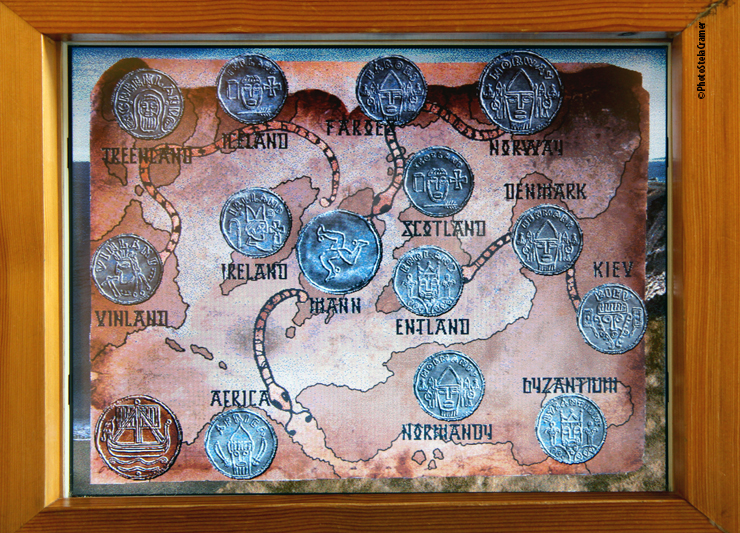
Antigas rotas de navegação / Ancient navigation routes
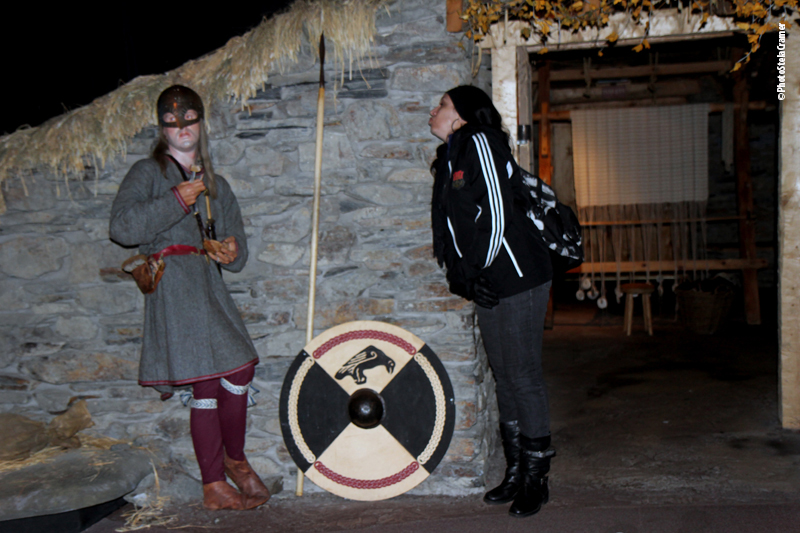
Exposições permanentes retratam a Ilha de Man desde o período Celta, incluindo uma reconstrução em tamanho real de uma típica casa redonda celta./ The museum has several permanent exhibitions depicting the Celtic period of the Isle of Man to the modern era, such as a life size reconstruction of a Celtic roundhouse.
Filmes curtos, exibidos continuamente nos cenários, mostram aspectos da vida em diferentes eras /
Short movies loop in stages, depicting life aspects in different periods
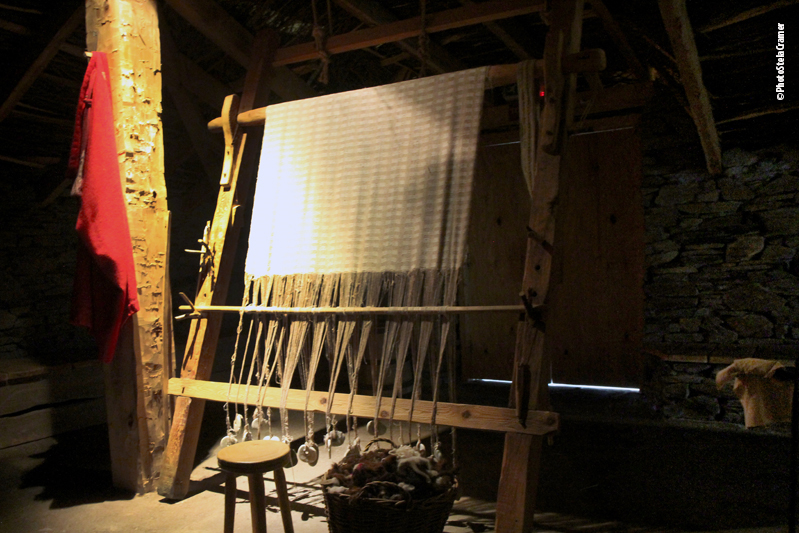
A tecelagem era uma atividade fundamental para os povos antigos, não só para confecção de roupas e agasalhos, mas também redes de pesca e velas para os barcos / Weaving was essential for the ancient people, not only for clothing and wraps but also for fishnets and sails
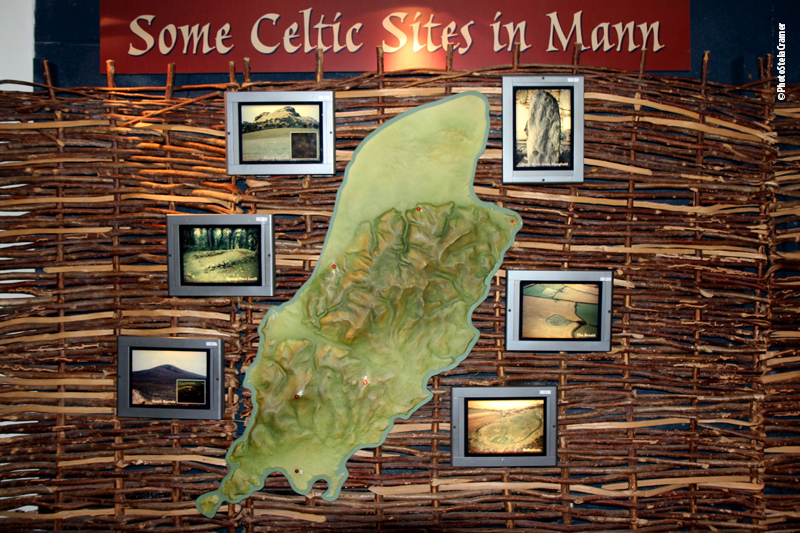
Mapa de sites arqueológicos da Ilha / Isle of Man’s archaeological sites map
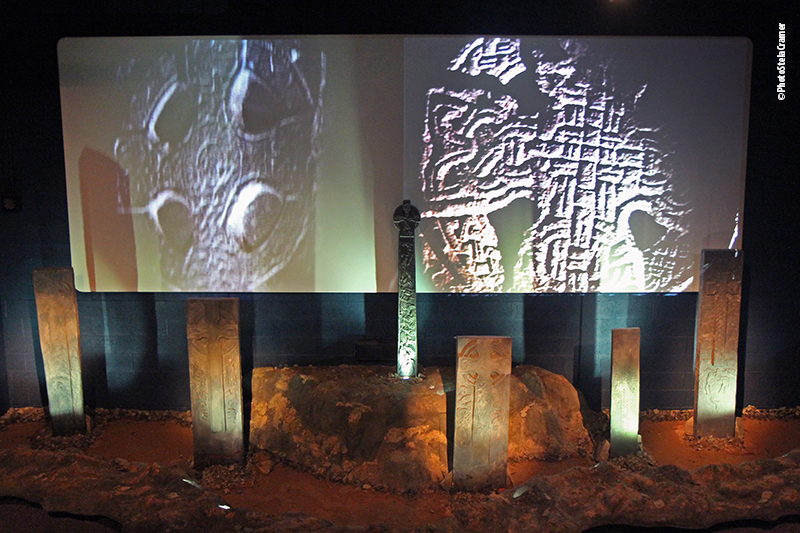
Filme sobre as Cruzes Célticas da Ilha. Voltaremos a esse assunto. / Movie about Manx Celtic Crosses. We’ll talk about it soon.
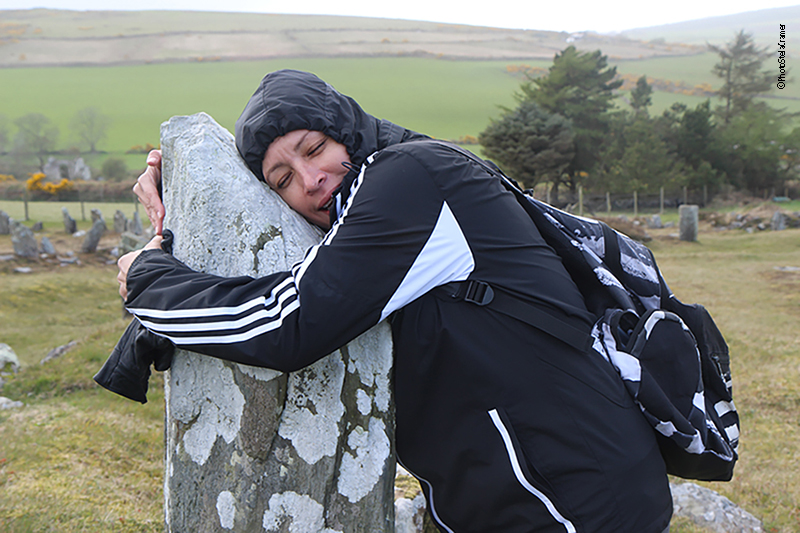
Vicky encontra o amor de sua vida (passada). / Vicky finds the love of her (past) life

Read Full Post »


Casas de pescadores em Peel / Fishermen’s houses in Peel

Nosso segundo dia em Peel começou com um super café da manhã. Há dois dias comíamos basicamente sopa ou fish and chips… e muita cerveja. Assim, fomos surpreendidas por uma quantidade de especiarias locais, trazidas à mesa, nada de buffet. A própria June, dona do B&B, veio nos explicar que aquele queijo vinha de uma fazenda próxima e as geléias eram produzida localmente segundo uma receita de família. Podíamos escolher entre três ou quatro opções de pratos quentes à base de ovos frescos e/ou defumados como salmão, bacon e arenque (o famoso Manx Kipper, cuja produção vem do século XIX, sendo a mais importante indústria local).

Our second day in Peel started with a super breakfast. We hadn’t eaten properly these days, basically soup or fish and chips…and pints of beer. Thus we were amazed at the local delicacies brought to our table. No buffet. June, the B&B’s owner herself, was there to explain that the cheese came from a dairy farm nearby and the marmalades were locally crafted according to a traditional family recipe. We could choose between three or four hot dishes of fresh eggs and/or smoked salmon, bacon or herring (the famous Manx Kippers, that have been produced in Peel since at least the 19th century and were the Island’s main industry).

Saímos bem nutridas para pegar um ônibus até o aeroporto, onde ficava a locadora. Tínhamos reservado um carro, pois nessas ilhas é o melhor transporte, uma vez que tudo fica afastado. Caminhamos pela orla, subimos a Castle Street, admirando as casinhas e as ruas estreitas e sinuosas e, como nosso ônibus ia demorar, tivemos tempo de visitar a Catedral, ao lado do ponto final.

Well nourished, we left to take a bus to the airport, where the car rental facilities were located. We had booked a car, the best transport because, in such islands, everywhere is too far.
We walked along Marine Parade and went up Castle Street, admiring the lovely houses and narrow winding lanes. The bus stop was next to the Cathedral, and we had time for a short visit.

Reproduções de cruzes medievais na Catedral.
Reproductions of medieval Manx crosses at Peel Cathedral

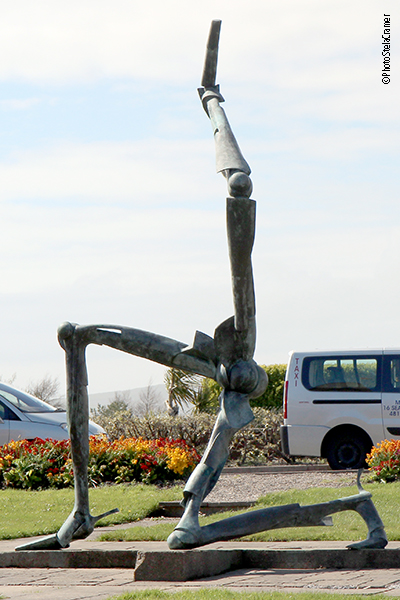
Escultura de Triskalion no aeroporto de Mann – Nosso carro alugado! /

Triskalion sculpture in Isle of Mann airport / Our rental car

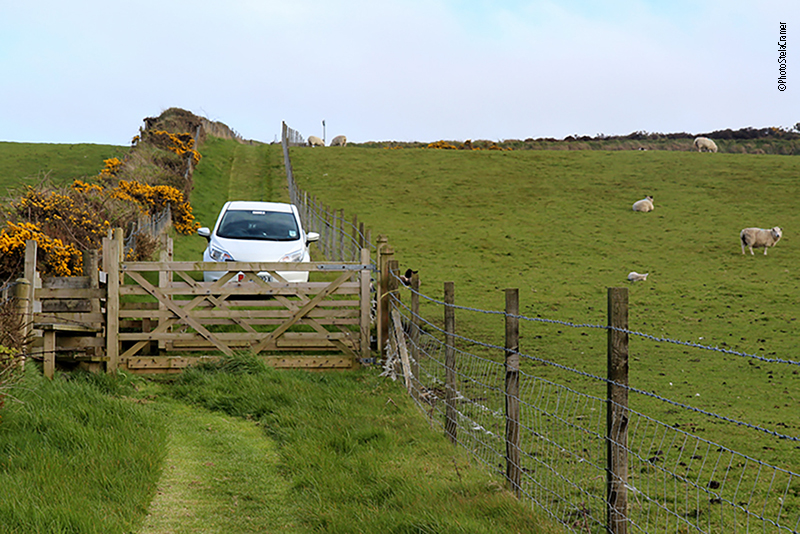
O tempo estava bom, mas até chegar no aeroporto, fazer todo o processo de alugar o carro e efetivamente sair de lá com ele, nuvens escuras já encobriam todo o céu.O plano era visitar The Braaid, um sítio arqueológico que ficava no caminho de volta a Peel. Pega-se menos de 1 km de estradinha de terra ao sair da rodovia. Estacionamos, ou melhor, largamos o carro em frente à porteira que dá acesso ao local, pois a estrada estreita não permitia qualquer manobra. Chegamos lá pouco antes da chuva, que felizmente não foi muito forte e parou em poucos minutos.
Weather was apparently good when we boarded the bus. But until we arrived at the airport, found the car rental, went through the rental process and actually leave with the car, dark clouds already covered the sky. Our plan was to visit The Braaid, an archaeological site, on our way back to Peel.
From the highway you must turn into a dirt road; half mile down the slope it ends in front of a rough gate that opens to the site. There we parked, or better, we just left the car as it was because the narrow path didn’t allow maneuvers. We got there a bit before the rain that, fortunately, wasn’t so heavy and stopped soon.

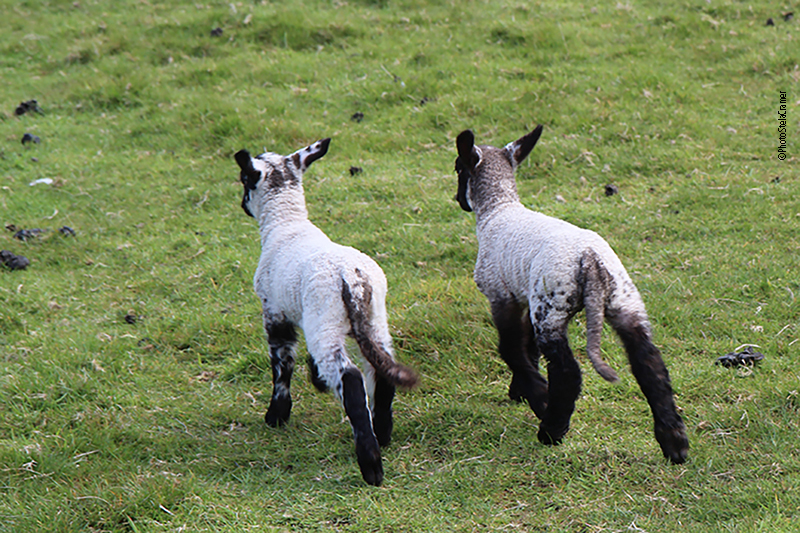
O sítio fica no meio de um pasto cheio de ovelhas, que pastavam felizes com seus filhotes. Estávamos na primavera – estação em que nascem as ovelhinhas.

The site is surrounded by fields were sheep were happily grazing with their offspring .It was springtime – lambing season!

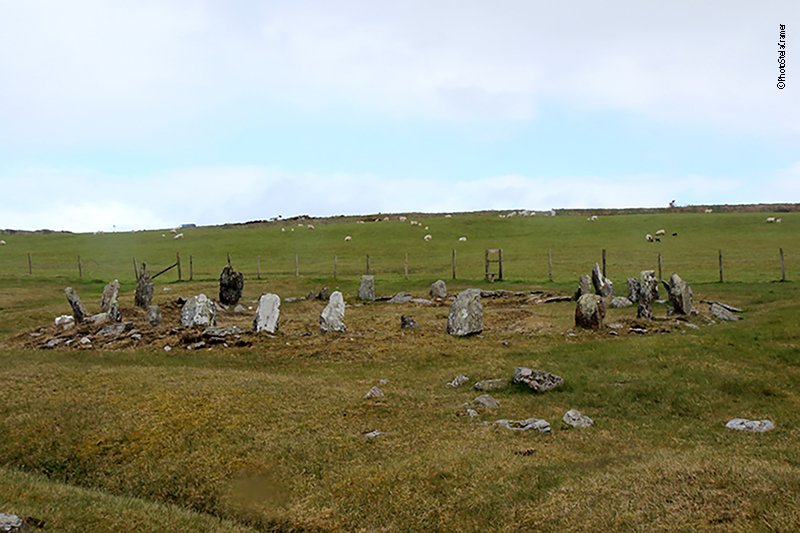
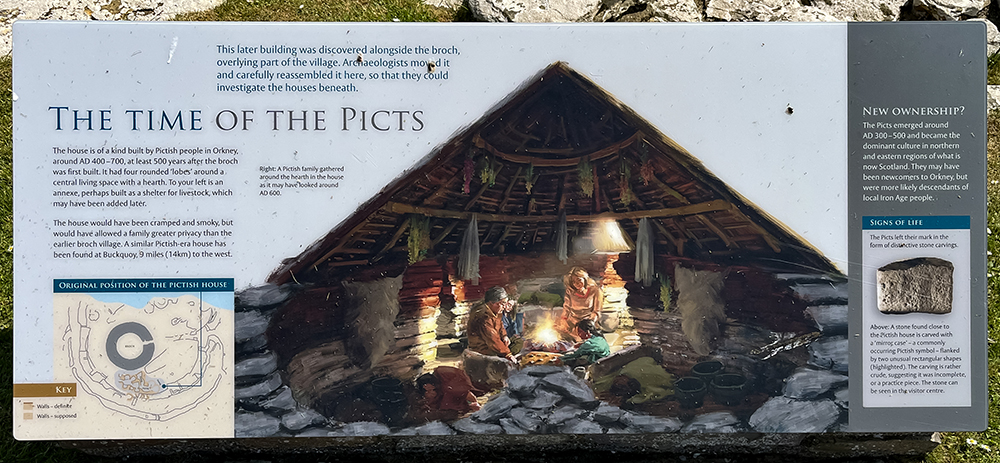
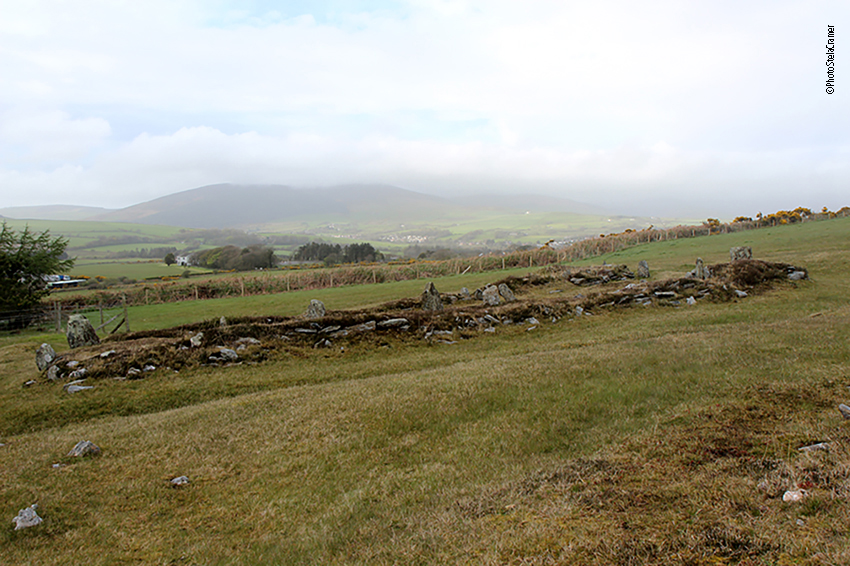
The Braaid consiste em uma fazenda abandonada onde coexistiam uma casa redonda da Idade do Ferro, duas casas compridas estilo Viking

The Braaid contains an example of an abandoned farmstead comprising of, an Iron Age round house, two Norse long houses, Iron Age buildings and Viking styles that were used together and survive today.
A casa redonda da Idade do Ferro / The Iron Age round house
As construções estiveram em uso até o século XI ou XII / The buildings had occupation until the 11th or 12th century AD

Vicky estava emocionadíssima pois este era o sítio mais antigo a que tínhamos chegado até então.

Vicky was thrilled because this was the most ancient site we had visited so far.

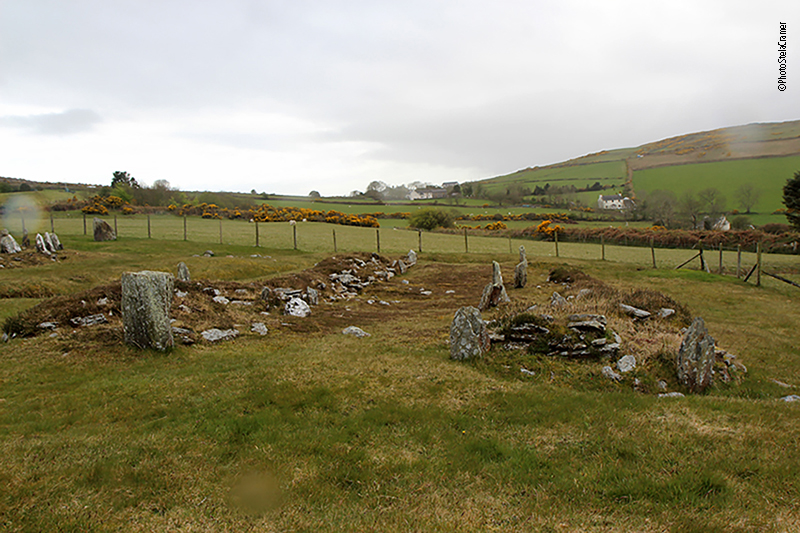
Vistas da casa redonda / The round house from different angles

Uma das casas longas mede cerca de 20 por 9 metros, internamente. A outra era um curral, medindo externamente cerca de 18 por 8 metros. / One of the long houses is nearly 20 meters long and 9 m broad internally. The other was a cattle byre, measuring almost 18 by 8 meters externally.

Por um instante, uma pincelada de azul surgiu no céu e pudemos dar um tempo apreciando a paisagem rural ao redor de The Braaid: pastos salpicados por bosques, casas e colinas na distância. Porém isso não durou muito. O manto de nuvens cinzentas logo se fechou novamente, e decidimos pegar a estrada antes que começasse a escurecer.

For a brief moment, a bit of blue brushed the sky, and we could better appreciate the rural landscape around The Braaid: pastures sparkled with woods, some houses and hills in the distance. But it didn’t last long. Dark clouds overtook the scene, so we wanted to hit the road before it got dark.

Embora o carro tivesse GPS, não conhecíamos a estrada, e era a primeira vez que eu estava dirigindo na mão inglesa. Então voltamos pelo pasto até a porteira, onde tínhamos deixado o carro.
A estradinha de terra tinha virado um atoleiro, e teríamos que ir de ré – ladeira acima – até o asfalto.

It was the first time I was driving English way, on the right. Although the car had a GPS, we didn’t know the roads, so we walked back to the car.
The dirt road had become a bog, and we’d have to cross it in reverse, up the slope, to reach the paved road.

Read Full Post »


Avalon!

Avalon!

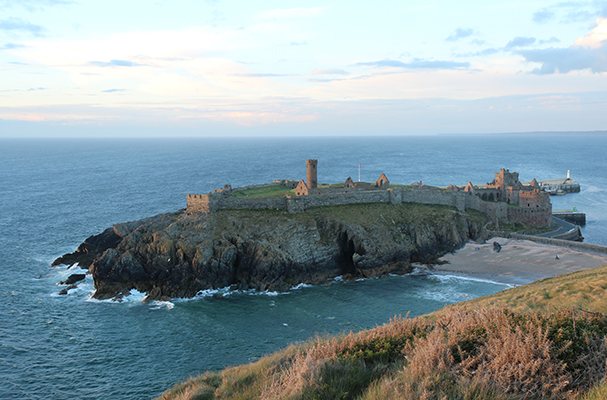
Algo novo aconteceu. Se você leu os Posts 092 e 093, já sabe que Dra. Norma Goodrich situou Avalon na Ilha de St. Patrick, atualmente ligada por uma calçada ao porto de Peel na Ilha de Man – o “coração do Reino Unido” por ser o ponto central entre Inglaterra, Escócia, Gales e Irlanda. Bem, fui lá. Aqui estão fotos do Castelo de Peel.

Peel Castle by nightfall

Peel Castle by nightfall

Something new happened. If you’ve read the Posts 092 and 093, you’re aware that Dra. Norma Goodrich located Avalon in St.Patrick’s Isle, which is nowadays connected by a causeway to Peel Harbor, in the Isle of Man – “heart of UK” – the central spot between England, Scotland, Wales and Ireland. Well, I’ve been there. Here I present photos of Peel Castle.

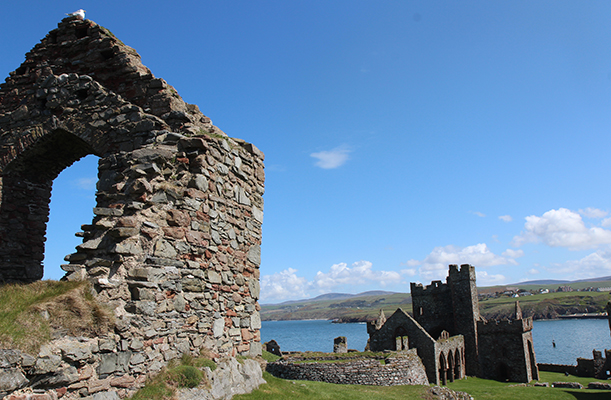
Peel Castle foi construído no século 11 pelos Vikings, no reinado de Magnus Barefoot. / Peel Castle was built in the 11th century by the Vikings, under the rule of King Magnus Barefoot.

Peel Castle foi construído no século 11 pelos Vikings, no reinado de Magnus Barefoot. / Peel Castle was built in the 11th century by the Vikings, under the rule of King Magnus Barefoot.

Inside Peel Castle. The first Viking fortifications were built of wood / Interior do castelo. As primeiras fortificações dos Vikings eram feitas de madeira.

Inside Peel Castle. The first Viking fortifications were built of wood / Interior do castelo. As primeiras fortificações dos Vikings eram feitas de madeira.

Entrada / Entrance

Entrada / Entrance

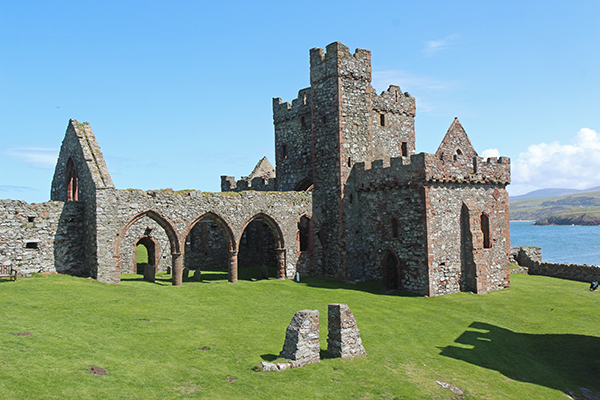
Havia na ilha construções celtas de pedra, mais antigas. /There were older stone Celtic monastic buildings on the island

Havia na ilha construções celtas de pedra, mais antigas. /There were older stone Celtic monastic buildings on the island

Depois do domínio Viking, o castelo continuou a ser usado pela Igreja devido à catedral que ali tinha sido construída. Mas o local acabou sendo abandonado no século 18. / After the rule of the Vikings, the castle continued to be used by the Church due to the cathedral built there but was eventually abandoned in the 18th century.

Depois do domínio Viking, o castelo continuou a ser usado pela Igreja devido à catedral que ali tinha sido construída. Mas o local acabou sendo abandonado no século 18. / After the rule of the Vikings, the castle continued to be used by the Church due to the cathedral built there but was eventually abandoned in the 18th century.

Escavações em 1982-87 revelaram um extenso cemitério, assim como vestígios do forte de madeira original de Magnus Barefoot. Mas isso não está em exibição... / Excavations in 1982-87 revealed an extensive graveyard as well as the remains of Magnus Barefoot's original wooden fort. But such are not in display...

Escavações em 1982-87 revelaram um extenso cemitério, assim como vestígios do forte de madeira original de Magnus Barefoot. Mas isso não está em exibição… Estes túmulos são bem mais recentes./ Excavations in 1982-87 revealed an extensive graveyard as well as the remains of Magnus Barefoot’s original wooden fort. But such are not in display… These graves are much more recent.

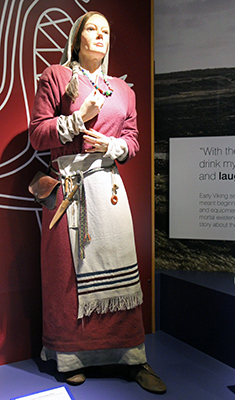
Um dos mais espetaculares achados foi o túmulo da "Dama Pagã" do século 10. A reconstrução da figura se encontra no Museu de Man, mostrando um colar Viking de contas e moedas de prata de 1030 / The most spectacular finds were the 10th century grave of "The Pagan Lady" which included a fine example of a Viking necklace and a cache of silver coins dating from about 1030. This model is actually in the Manx Museum.

The Pagan Lady

Um dos mais espetaculares achados foi o túmulo da “Dama Pagã” do século 10. A reconstrução da figura se encontra no Museu de Man, mostrando um colar Viking de contas e moedas de prata de 1030. Pelo status revelado, esta poderia ser a Senhora de Avalon! Um dos souvenirs vendidos na entrada do castelo é o conjunto de contas para fazer um colar semelhante.

The most spectacular finds were the 10th century grave of “The Pagan Lady” which included a fine example of a Viking necklace and a cache of silver coins dating from about 1030. This model is actually in the Manx Museum. She might have been the High Priestess of Avalon, by her apparent status ! At the Castle’s reception, among other souvenirs, there are kits of beads and string to make a similar necklace.

My guess is that here was the ancient worship place. In the background, the original Peel cathedral. / Meu palpite é que aqui era o antigo santuário. Ao fundo, a Catedral de Peel.

My guess is that here was the ancient worship place. Behind it, the former Cathedral of St. German. In the background, the town of Peel./ Meu palpite é que aqui era o antigo santuário. Mais atrás, a Catedral de Saint-German. Ao fundo a cidade de Peel

Turistas, a maioria alemães / Tourists, most Germans

Turistas, a maioria alemães / Tourists, most Germans

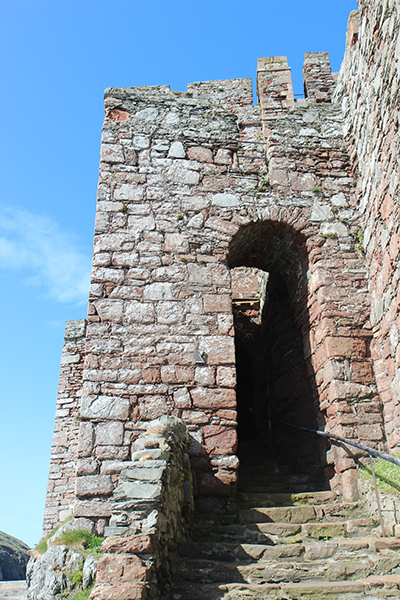
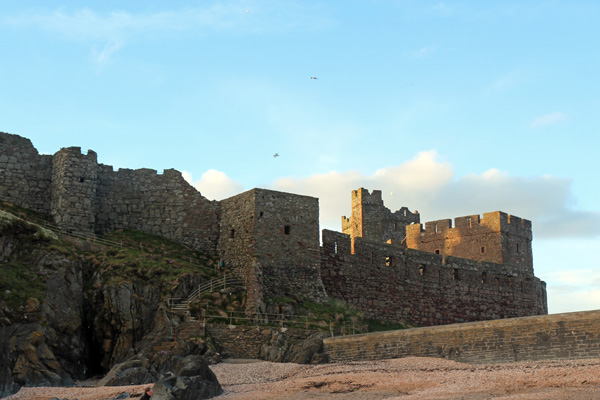
A maioria das paredes e torres foram construídas com arenito vermelho, abundante na região / The majority of the walls and towers were built  from red sandstone, abundantly found in the area

A maioria das paredes e torres foram construídas com arenito vermelho, abundante na região / The majority of the walls and towers were built from red sandstone, abundantly found in the area

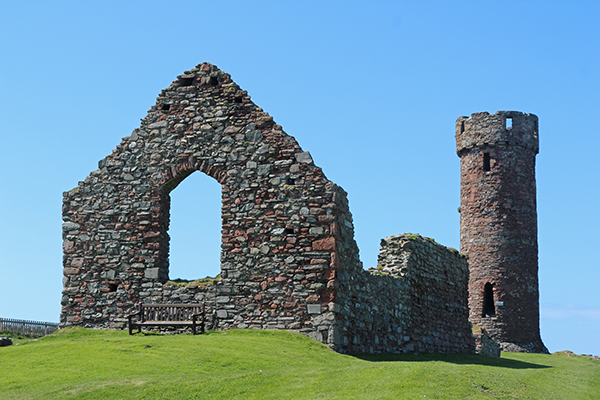
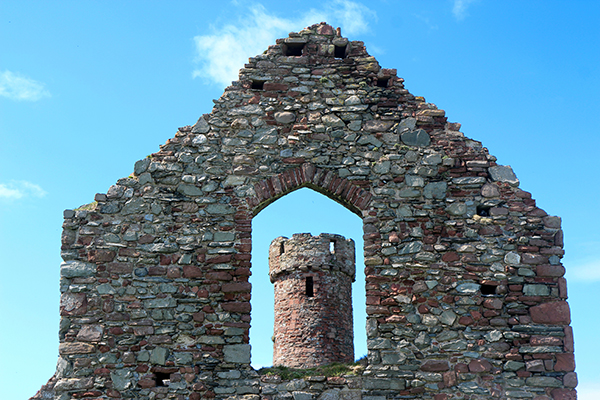
O Arsenal e a torre Redonda / The Armoury and Round Tower

O Arsenal e a Torre Redonda / The Armoury and Round Tower

A Torre Redonda data dos séculos 10 e 11 / The Round Tower was built in the X-XI centuries

A Torre Redonda data dos séculos 10 e 11 / The Round Tower was built in the X-XI centuries

Amurada norte / North Ramparts

Amurada norte / North Ramparts

Postos de guarda ao longo das amuradas / Guard posts along the ramparts

Postos de guarda ao longo das amuradas / Guard posts along the ramparts

Parte mais antiga, cozinha no primeiro plano / Most ancient ruins; kitchen in the foreground

Parte mais antiga, cozinha no primeiro plano / Most ancient ruins; kitchen in the foreground

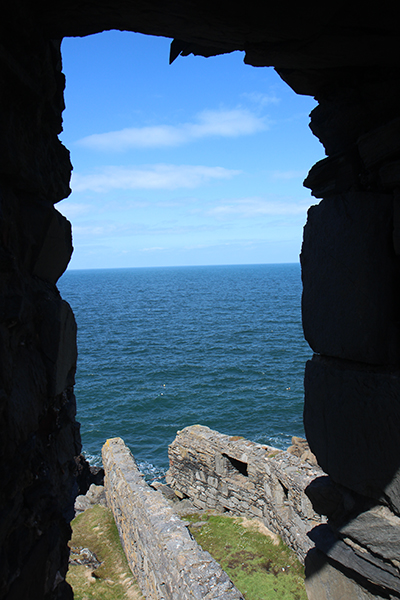
Posto de guarda a oeste / Guard post facing west

Posto de guarda a oeste / Guard post facing west

Vista oeste -dia / Daylight west landscape

Vista oeste -dia / Daylight west landscape

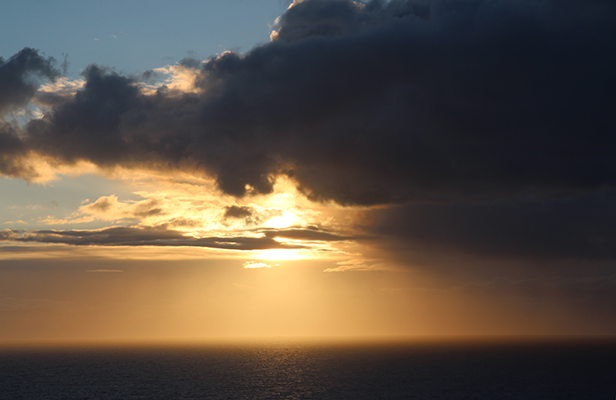
Vista oeste, por do sol / West landscape, sunset

Enorme amurada norte vista da praia / Massive North ramparts seen from the beach

Aqui quase não existe areia / There's almost no sand here

Aqui quase não existe areia / There’s scarcely sand here

Magic sunset in Avalon

Magic sunset in Avalon

+ Magic Sunset in Avalon

Another magic sunset in Avalon

Read Full Post »