Feeds:
Posts
Comentários

Posts Tagged ‘St Patrick’s Isle’


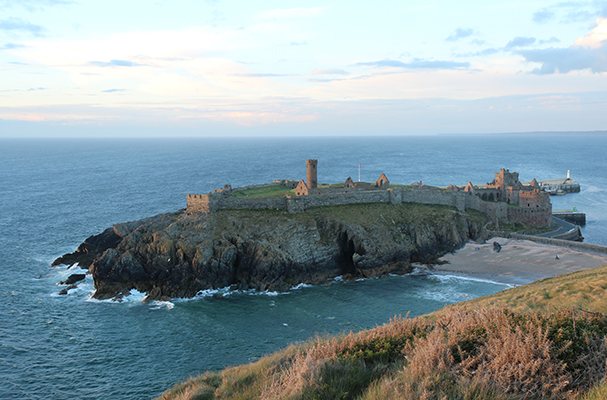
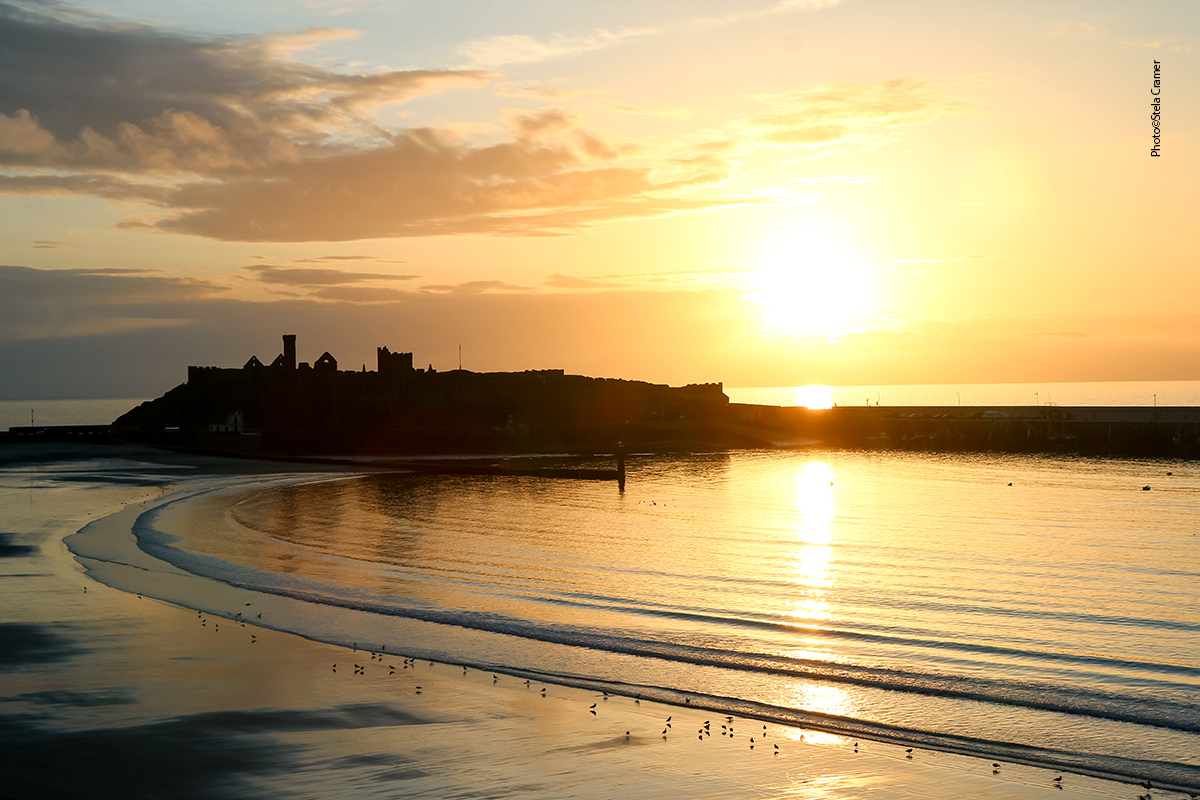
Peel Castle ao por do sol / Peel Castle at sunset

Após um longo parênteses, volto à narrativa inicial, da viagem com minha amiga Vicky, até porque tinha interrompido num momento importante para o espírito do blog: a visita a Peel Castle, na Ilha de Mann, lugar que, segundo a pesquisadora Norma Lorre Goodrich, corresponde à verdadeira localização da Ilha de Avalon. Podíamos ver o Castelo da janela do quarto, mas foi preciso esperar dias até que o tempo estivesse bom para visitar as ruínas.

After a long parenthesis, I’m going back to the root story here: the trip with my friend Vicky, actually in an important moment for this blog’s main theme, the visit to Peel Castle in Isle of Mann – Isle of Avalon’s definitive location, according to the researcher Norma Lorre Goodrich. From our hotel room we had full view of the castle, but it took us some days to get good weather to visit the ruins.
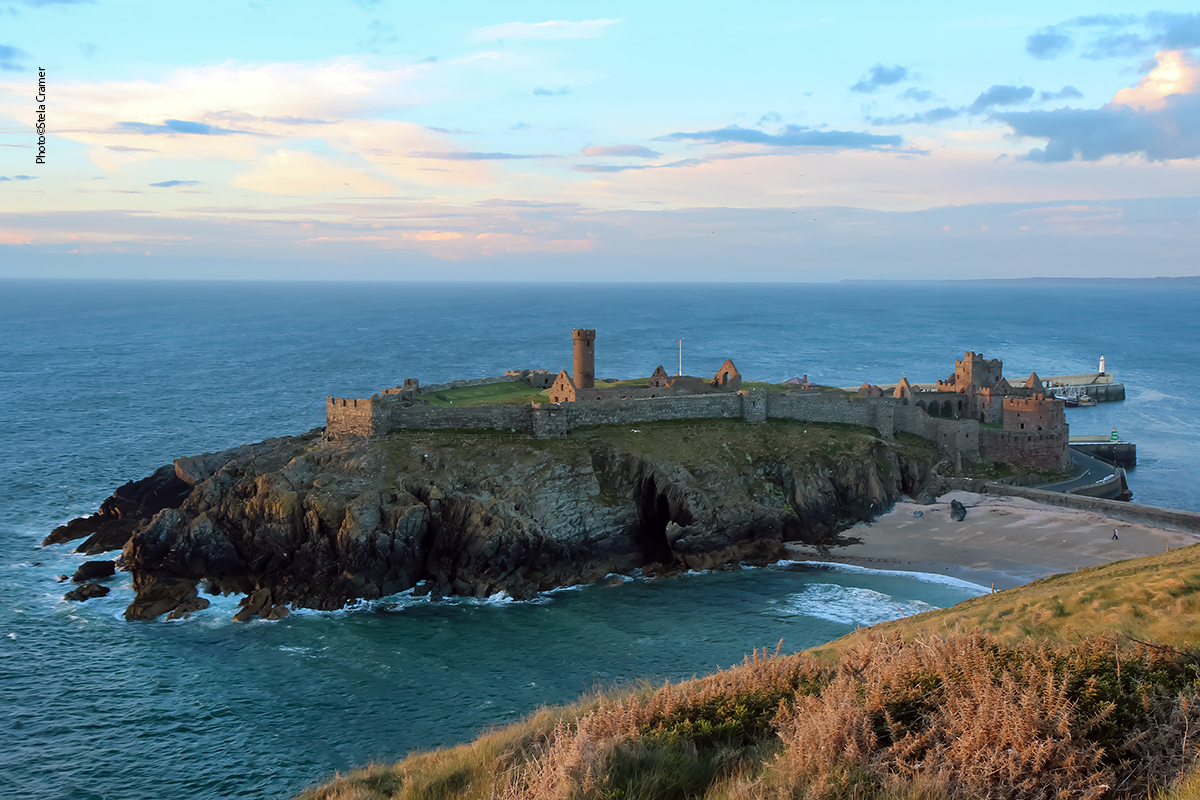
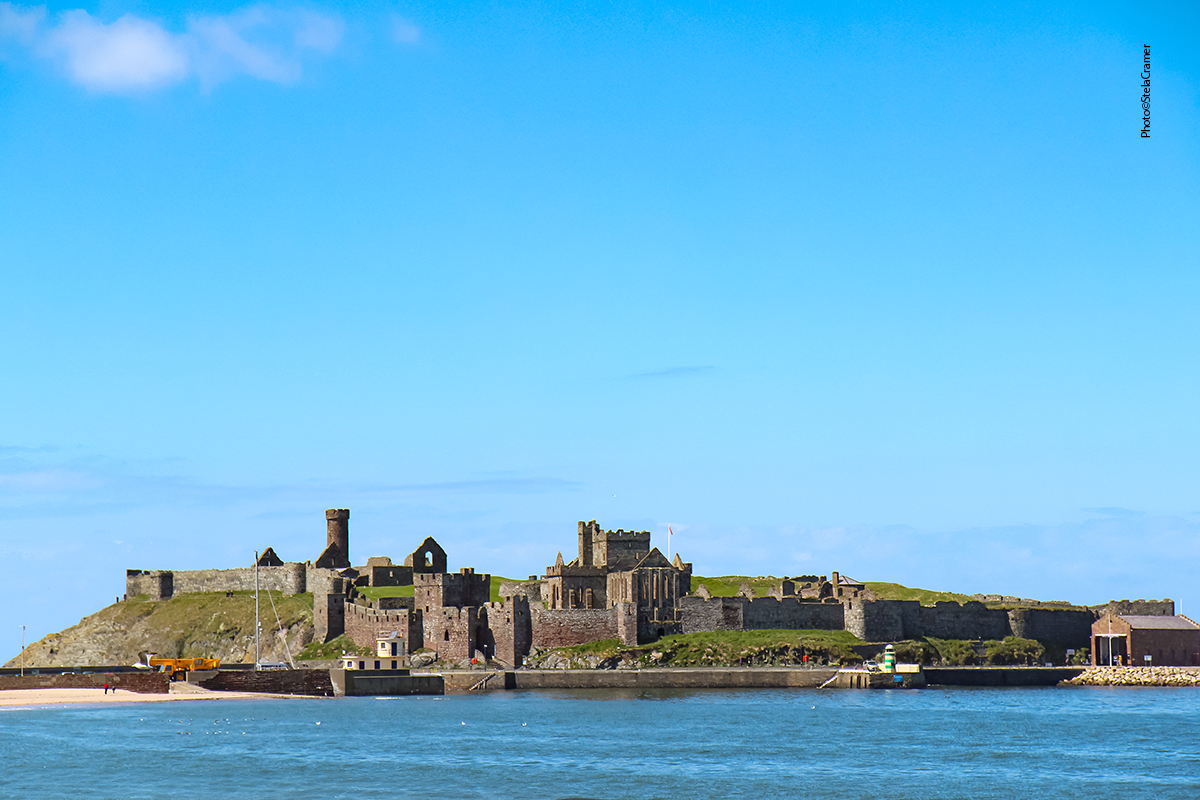
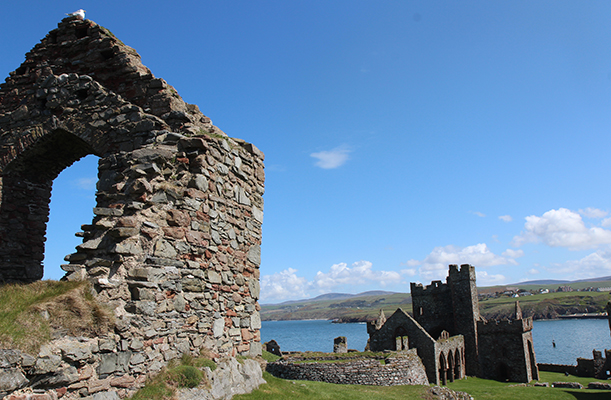
O Castelo fica na Ilha de St. Patrick, atualmente ligada à cidade por uma ponte. Mas nos tempos Arturianos, o acesso ficava submerso durante a maré alta. Isso somado à densa névoa típica do lugar, explica a dificuldade – e o perigo – para chegar à Ilha de Avalon. Esta foto foi batida num dos poucos dias de sol, no verão. Mais de 3/4 do ano o tempo é chuvoso, e a neblina é uma constante.

The castle stands on St Patrick’s Isle, which is now connected to the town by a causeway. But back in Arthurian days the access was submerged during high tide. This, added to Peel’s typical dense mists explains the difficulty – and the danger – to reach the Isle of Avalon. This photo was taken in one of the few sunny days, in summertime, but the weather is mostly rainy throughout the year, with constant mists.
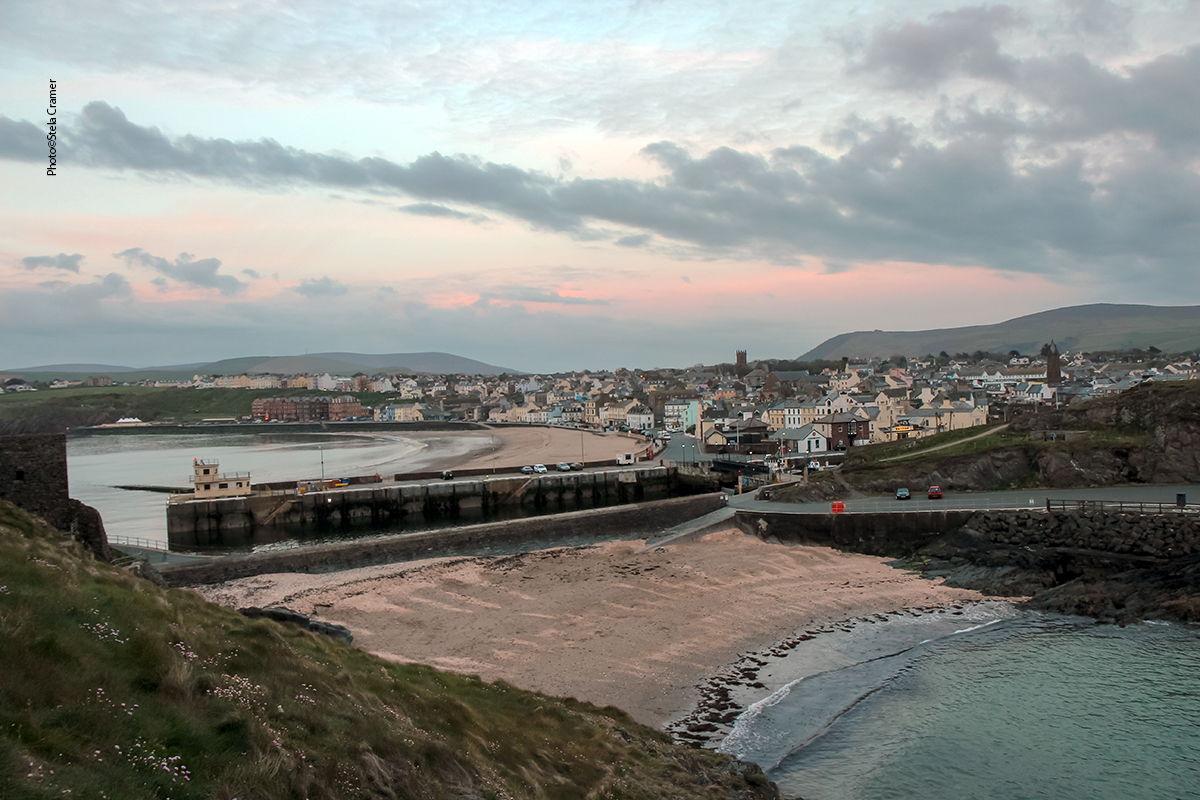
O pier e o acesso à cidade visto do alto do Castelo / Pier and access to town seen from the Castle’s height
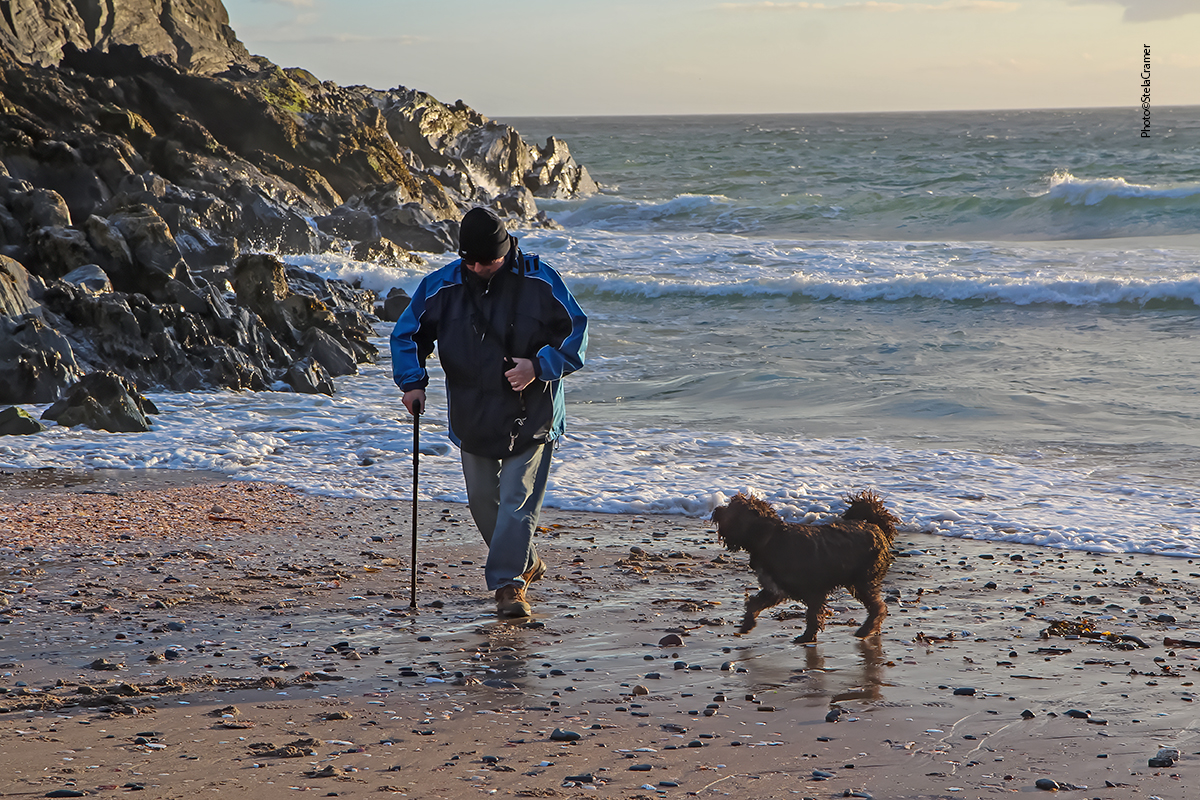
Cenas na pequena praia durante a maré baixa/ Ebb tide snapshots at the little beach
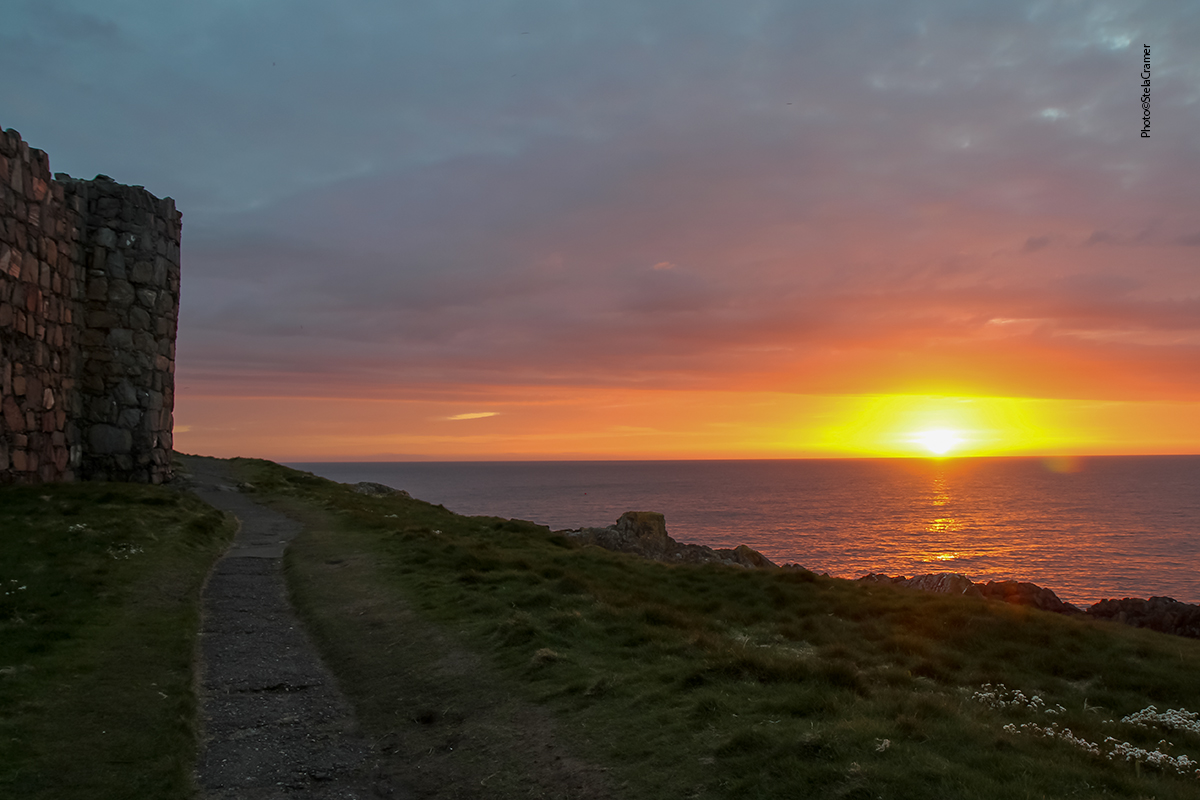
Quando chegamos em Peel era tarde para visitar o Castelo, mas fomos presenteadas com um belo por do sol junto às muralhas. / The day we arrived in Peel it was too late to visit the Castle, but we’ve been gifted with an awesome sunset by the ramparts.
Faltando dois dias para encerrar nossa estadia em Peel, afinal o tempo colaborou. Depois do nutritivo café da manhã no Fernleigh B&B, fomos direto para, enfim, pisar no solo sagrado de Avalon. /
The weather eventually favoured us, the day before our checkout in Peel. After a nourishing breakfast at the Fernleigh B&B, we walked straight to the Castle, to step on Avalon’s sacred soil at last!
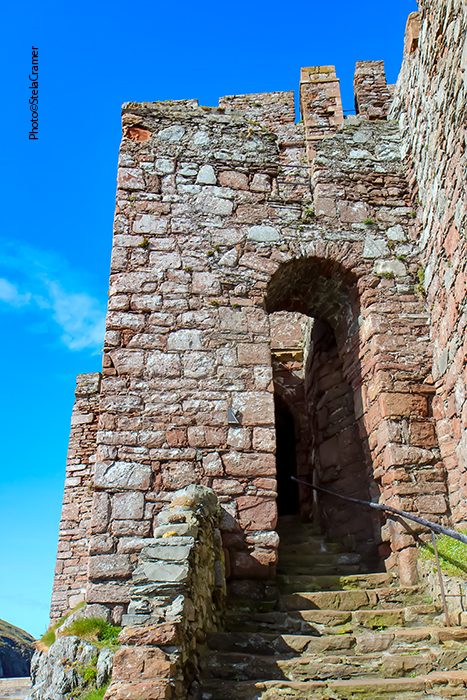
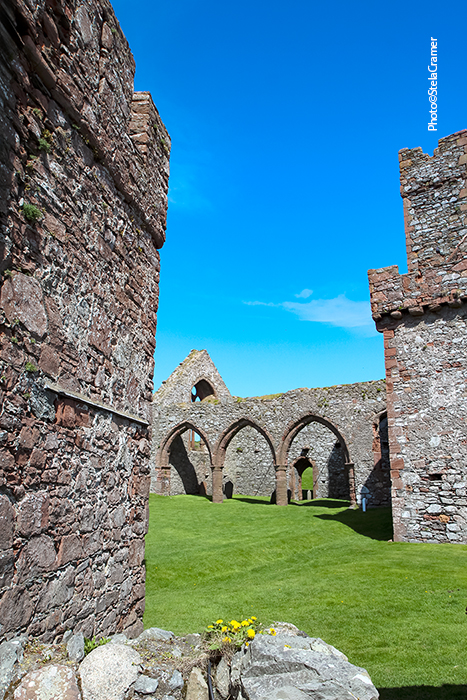
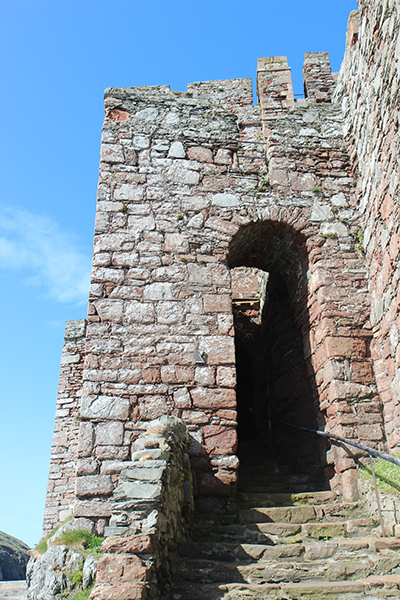
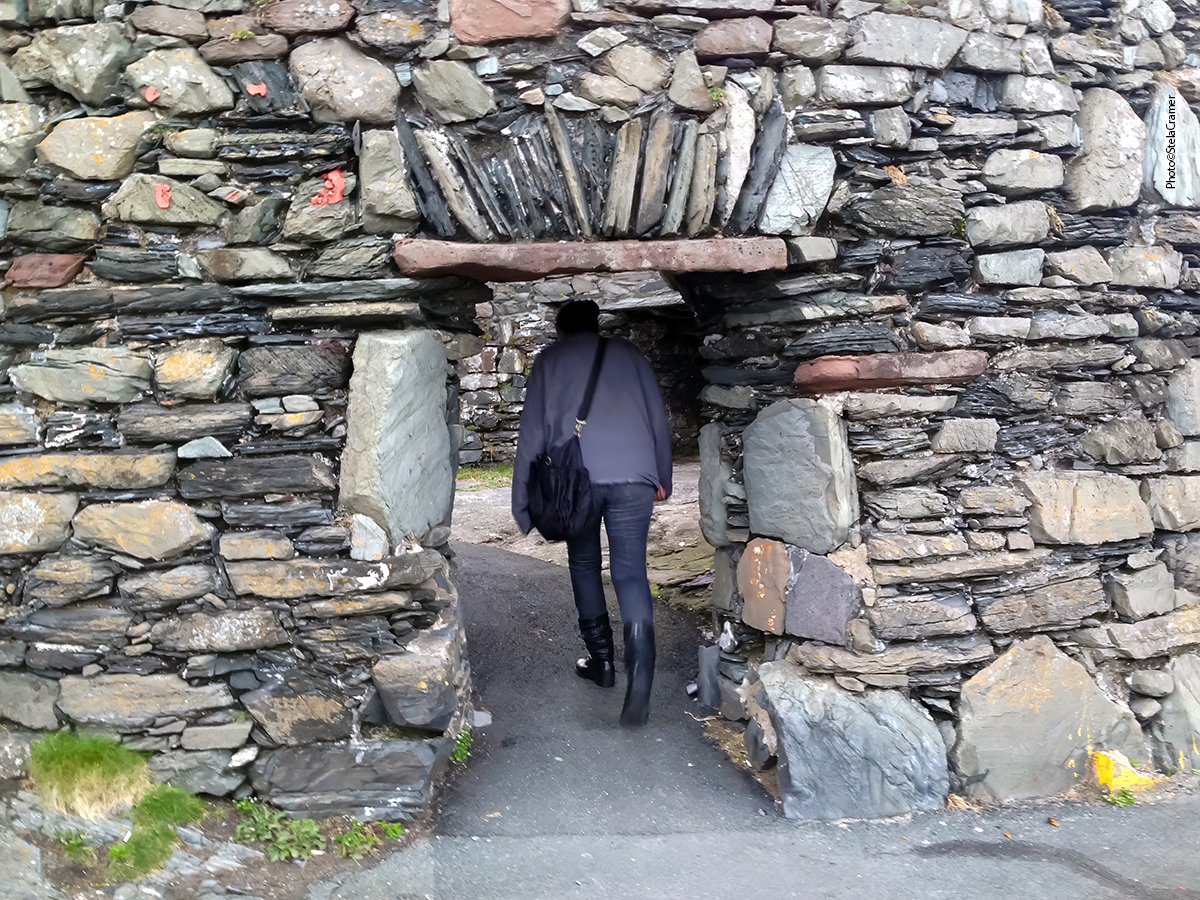
Entrada do Castelo / Castle’s entrance
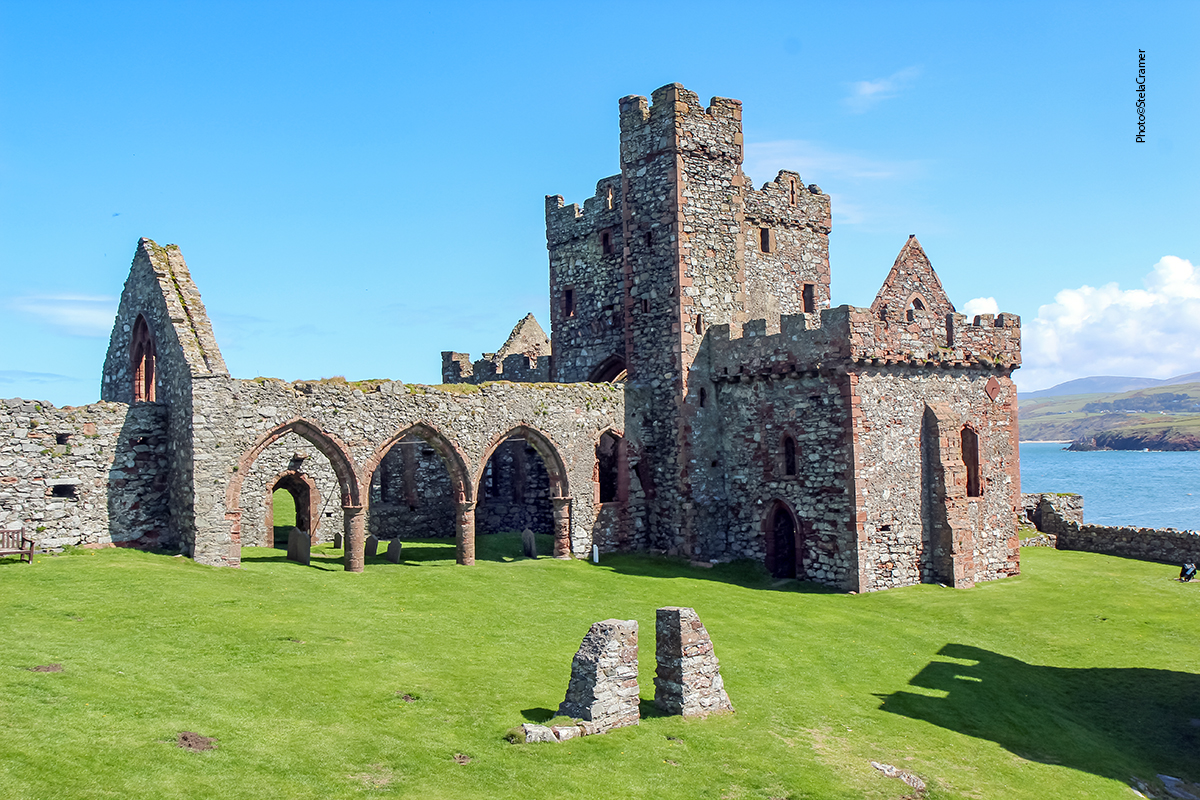
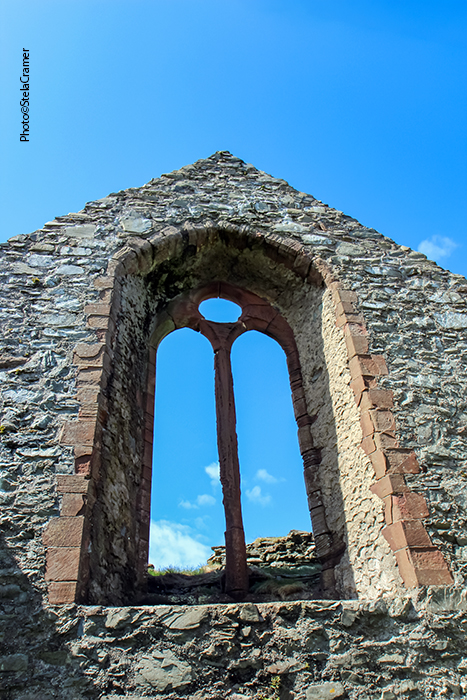
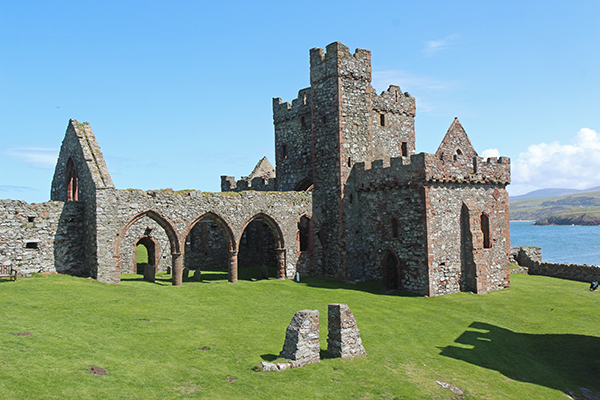
Catedral de St. German / St German’s Cathedral

O Castelo cujas ruínas hoje vemos foi construído no séc. 11 pelos noruegueses, sob o reinado de Magnus Barefooot. As primeiras fortificações dos noruegueses foram construídas com madeira, mas ali já havia edificações mais antigas, dos Celtas, em pedra. Escavações encontraram um cemitério e objetos justamente da época Arturiana, sob os vestígios dos Vikings.

Em manuscritos do Rei da Noruega, de Marie de France e Percival, a descrição da viagem para Avalon coincidem com a de Lancelot. São textos longos, que se encontram detalhados no livro Arthur, de Norma L. Goodrich, que dão respaldo à teoria de St. Patrick’s Isle ( hoje o Castelo de Peel) ser a verdadeira Ilha de Avalon. Ela inclusive fez a viagem checando tais referências.
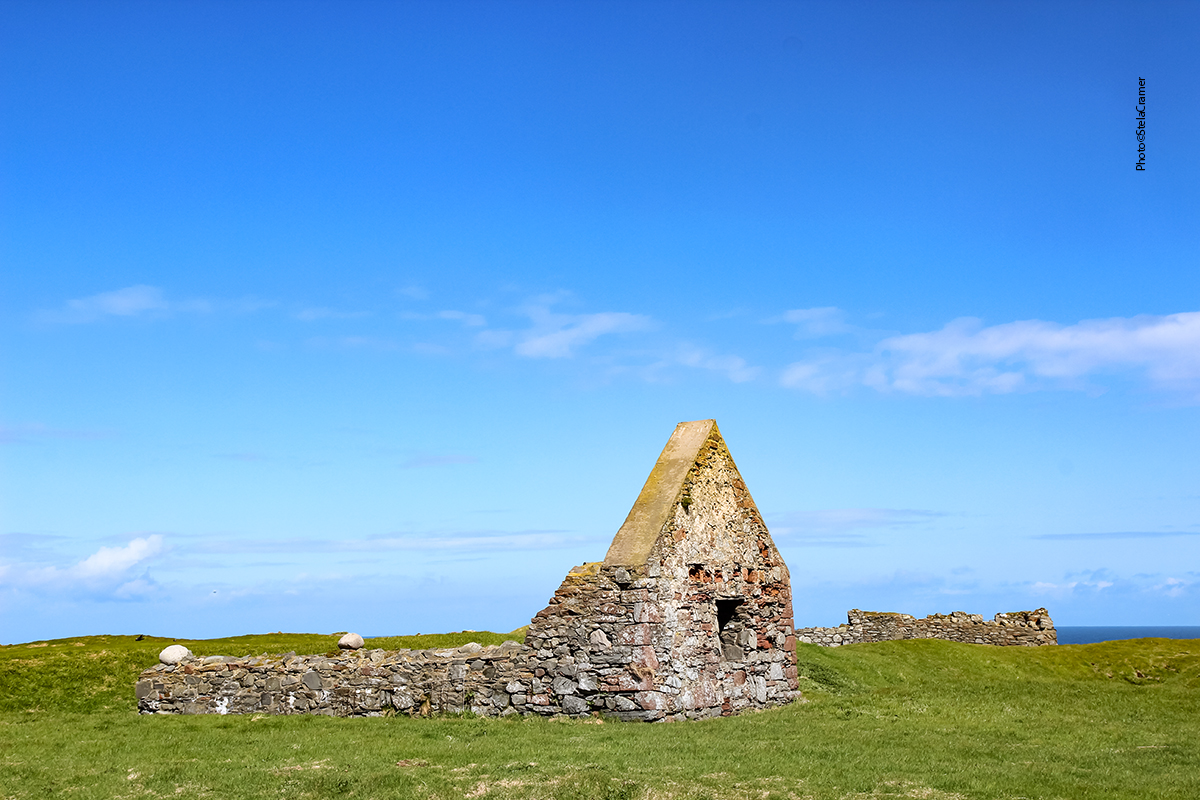
The castle ruins we visit today was built in the 11th century by Norwegians, under the rule of King Magnus Barefoot. While the first Norwegian fortifications were built of wood, there were older stone Celtic buildings on the island. Excavations revealed a graveyard and objects from Arthurian times, buried below the Vikings’s stuff.

The King of Norway, Marie de France and the Perceval manuscripts all coincide with Lancelot’s description of his trip to Avalon. These are long texts, detailed also in the book Arthur, by Norma L. Goodrich, supporting the theory of St Patrick’s Isle ( nowadays Peel Castle) being the real Avalon. She has actually taken the trip, checking all references.
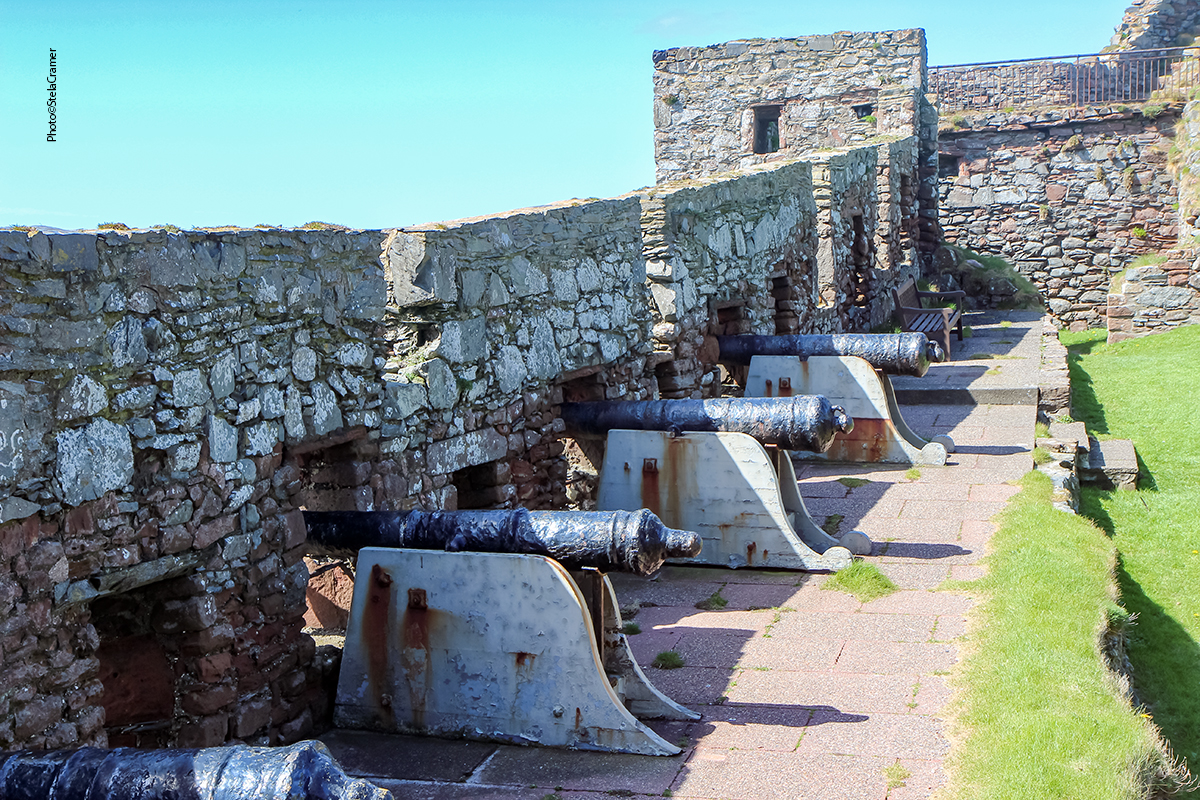
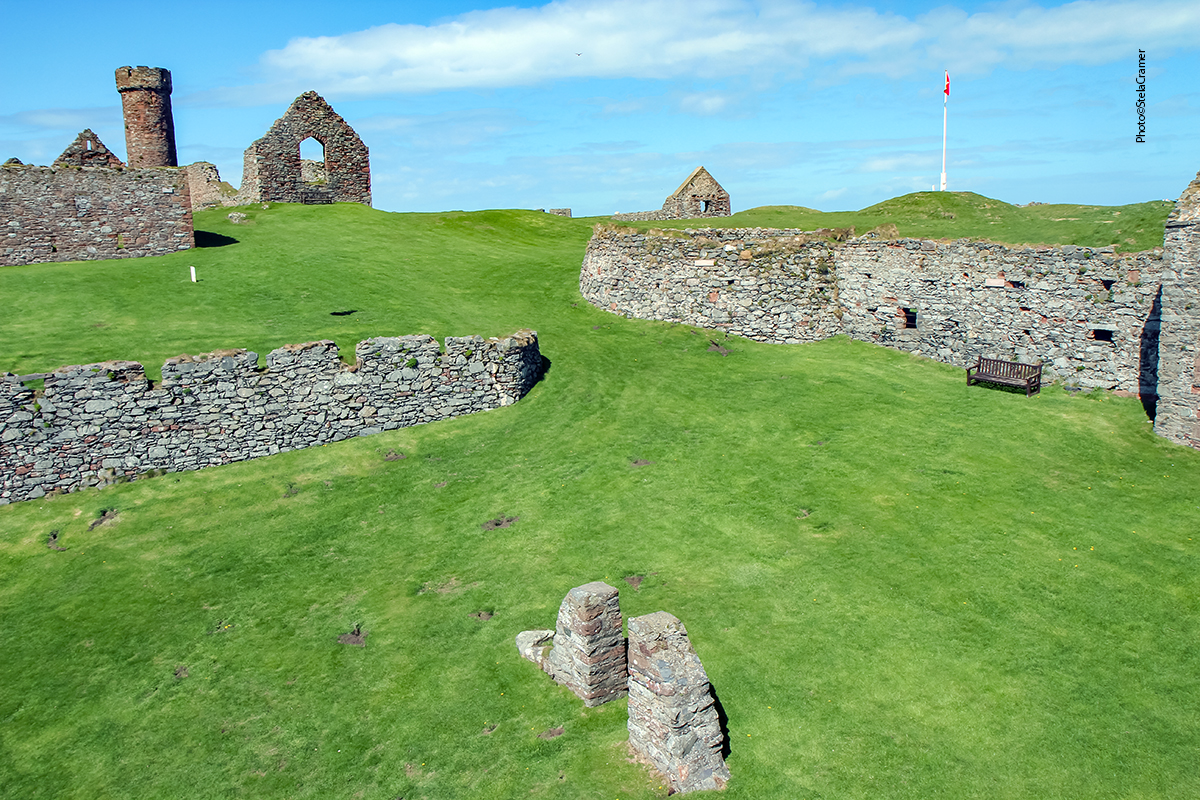
O castelo foi fortificado e novas posições defensivas acrescentadas até 1860. As edificações estão em ruínas mas as muralhas permaneceram intactas.


The castle remained fortified, and new defensive positions were added as late as 1860. The buildings within the castle are now mostly ruined, but the outer walls remain intact.
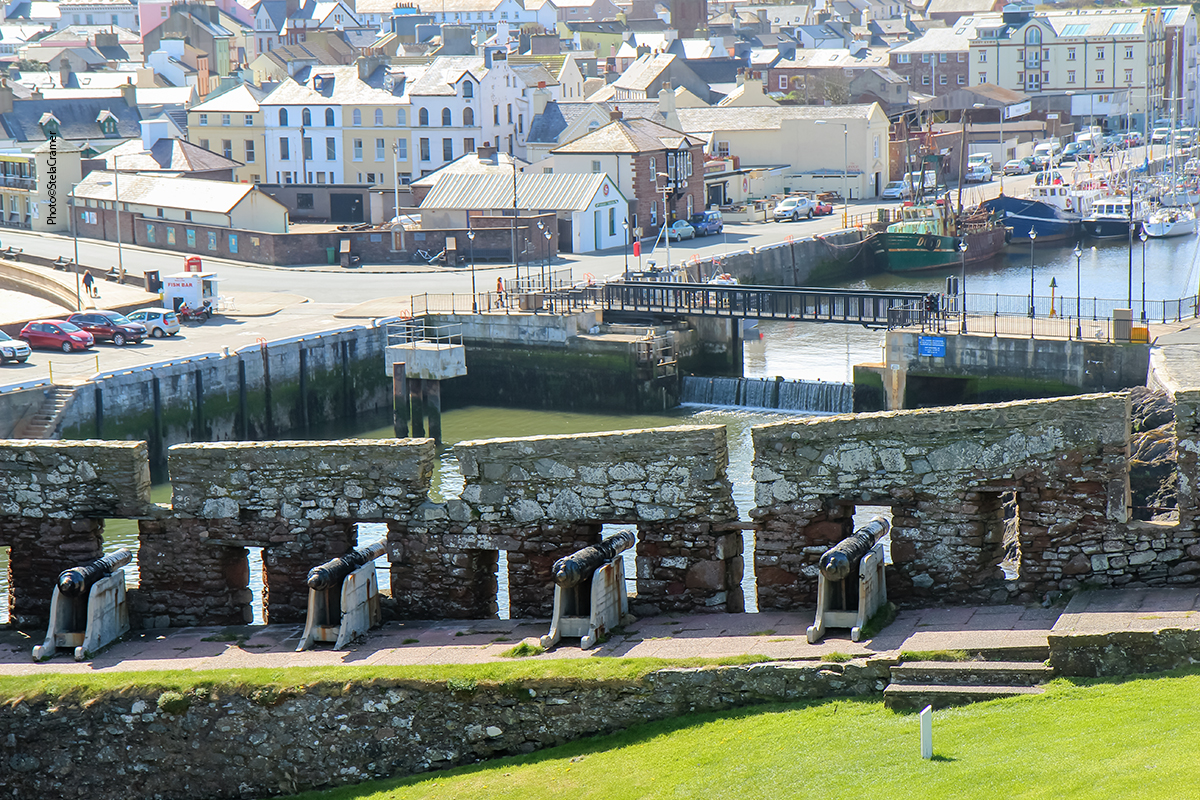
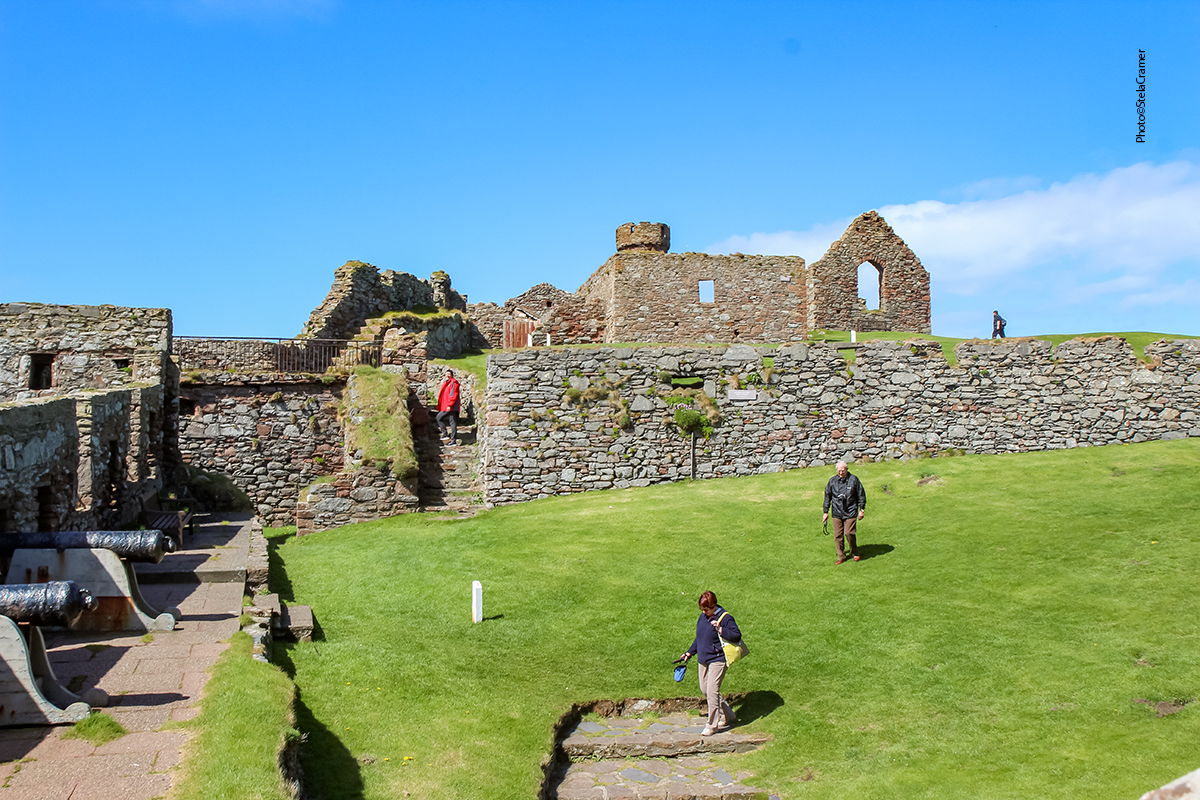
Subindo a escada, saindo da parte mais moderna do castelo, parece que você entra em outro mundo.

Up the stairs, leaving the “modern” part of the Castle, you feel like you’re entering another world.
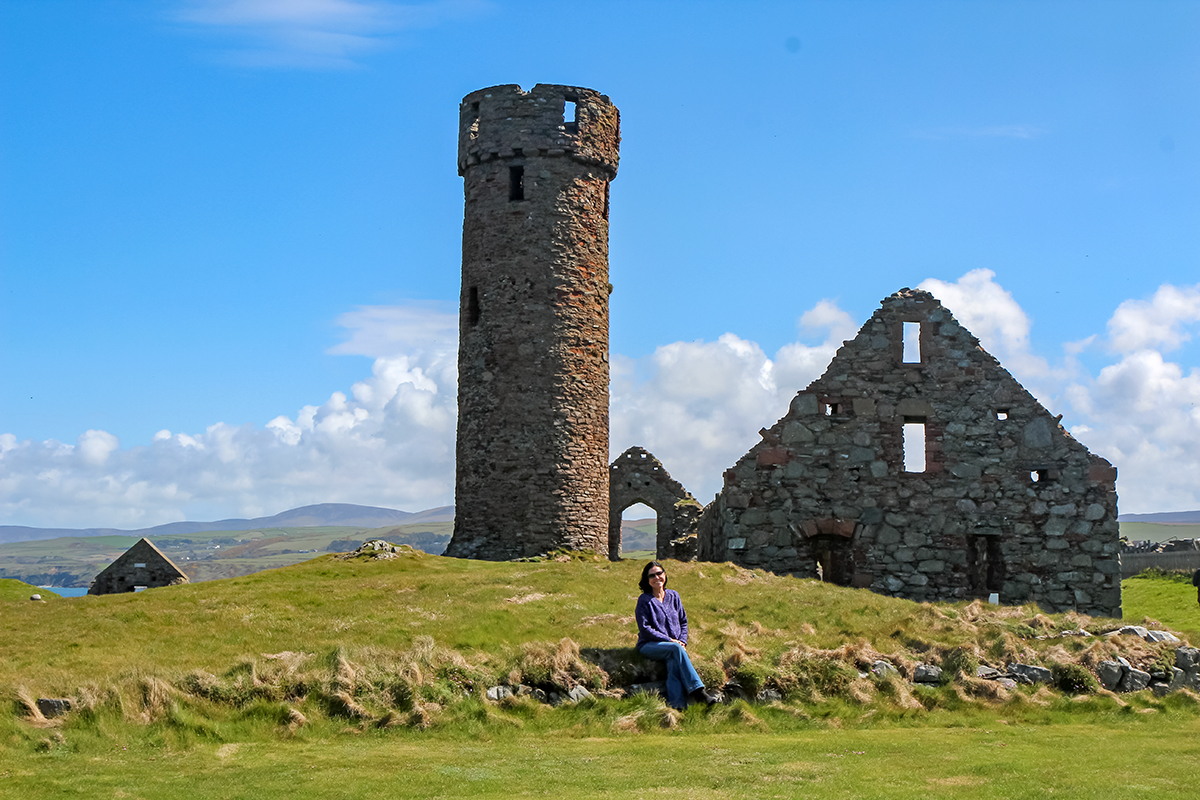
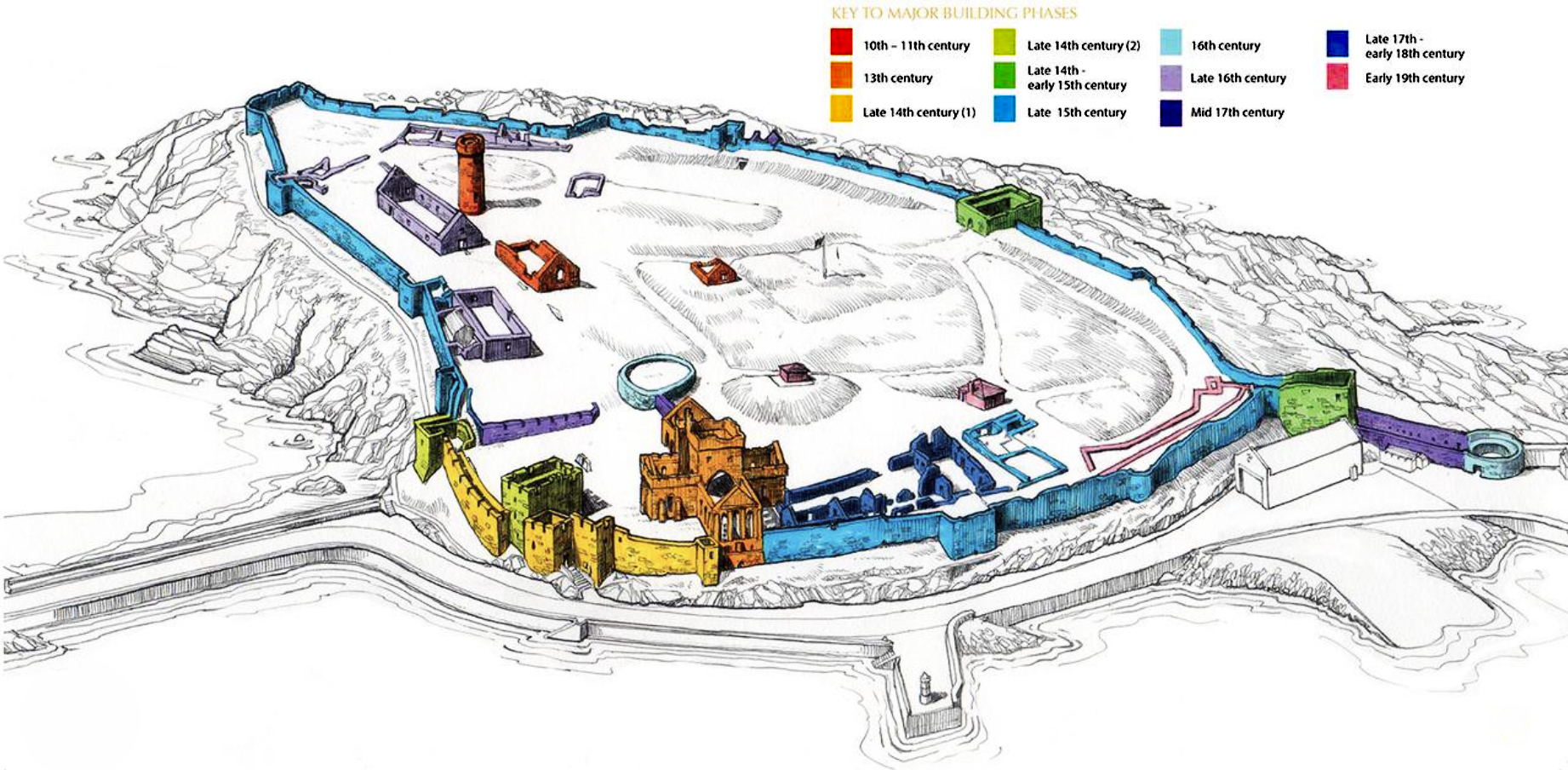
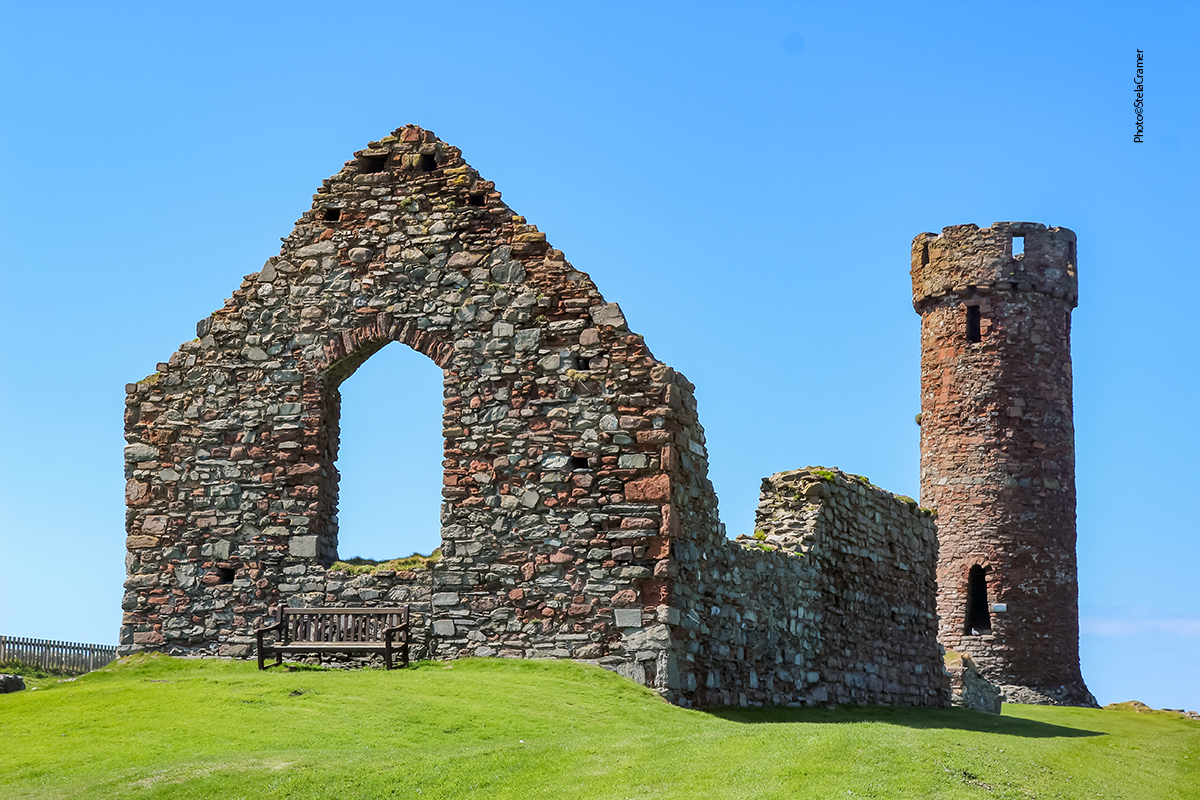
Estas são as construções mais antigas, conforme o mapa abaixo. Mas, como foi arqueologicamente comprovado, houve ocupação mais antiga…

These are the oldest buildings, as shown in the map below. But, as it’s archaeologically proven, there’s been previous occupation…
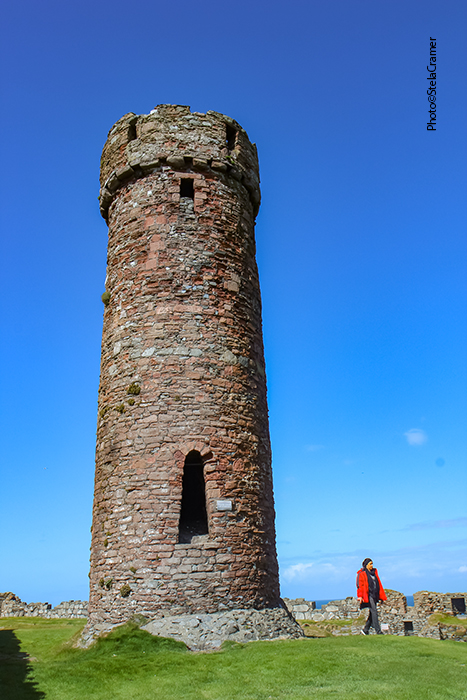
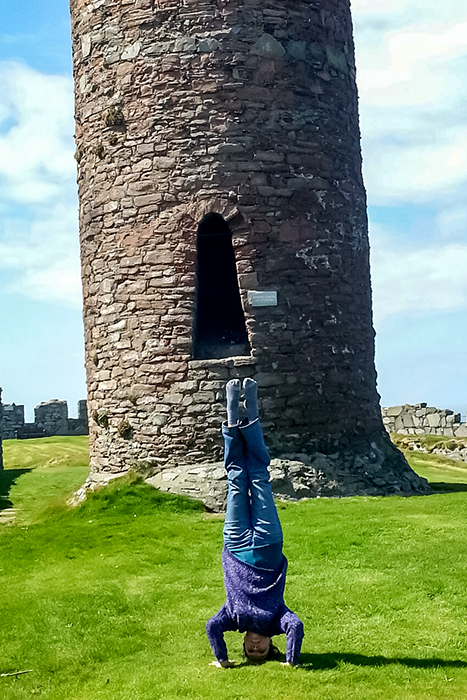
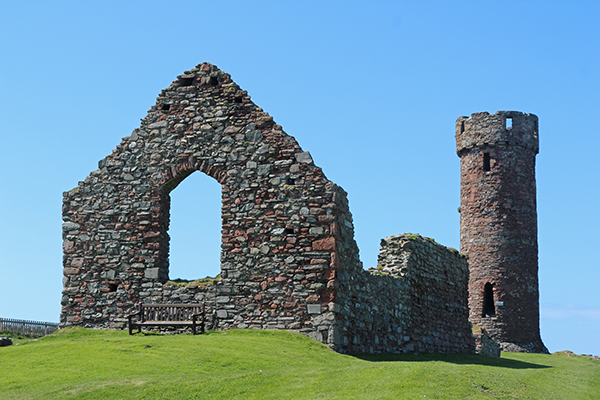
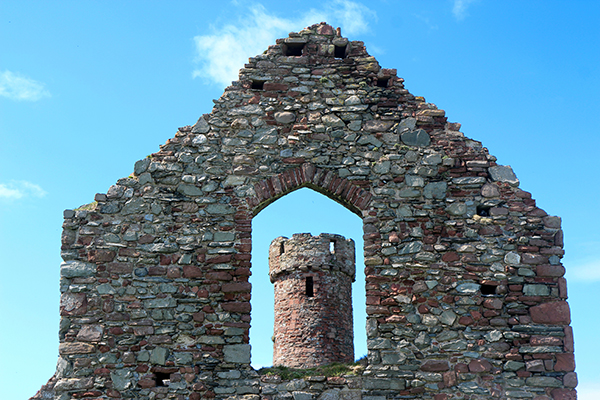
A imponente torre redonda era, originalmente, parte do monastério Celta. /

The prominent round tower was originally part of the Celtic monastery
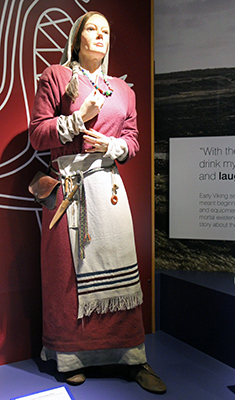
Um dos mais importantes achados arqueológicos no local foi o túmulo da “Dama Pagã”, que incluía um colar e moedas do ano de 1030. Estas peças estão em exibição no Manx Museum, em Douglas, capital da Ilha de Mann.

The most spectacular finds were the 10th century grave of “The Pagan Lady” which included a fine example of a Norwegian necklace and a cache of silver coins dating from about 1030. These pieces can be seen at the Manx Museum, in Douglas, Isle of Mann’s capital.
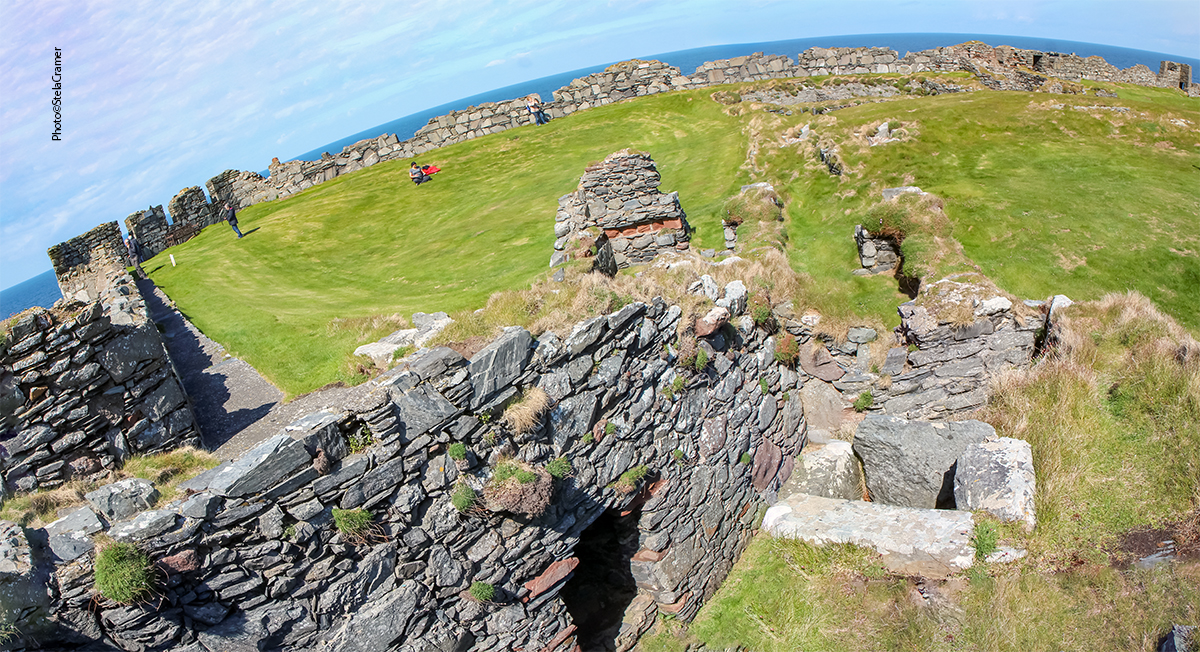
Do alto dos aposentos do Lorde do século 15, você se sente no topo do mundo.


From the late 15th century Lord’s Apartments, one feels on top of the world.
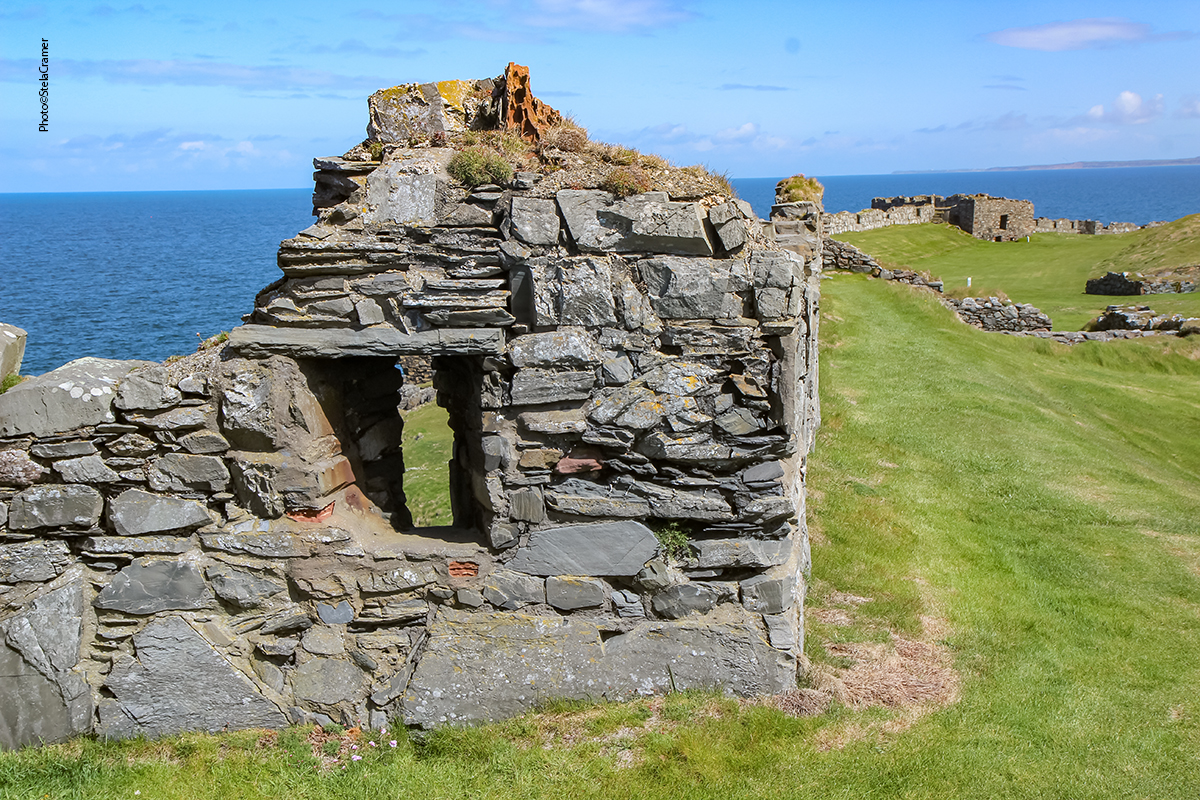
Cozinha / Kitchen
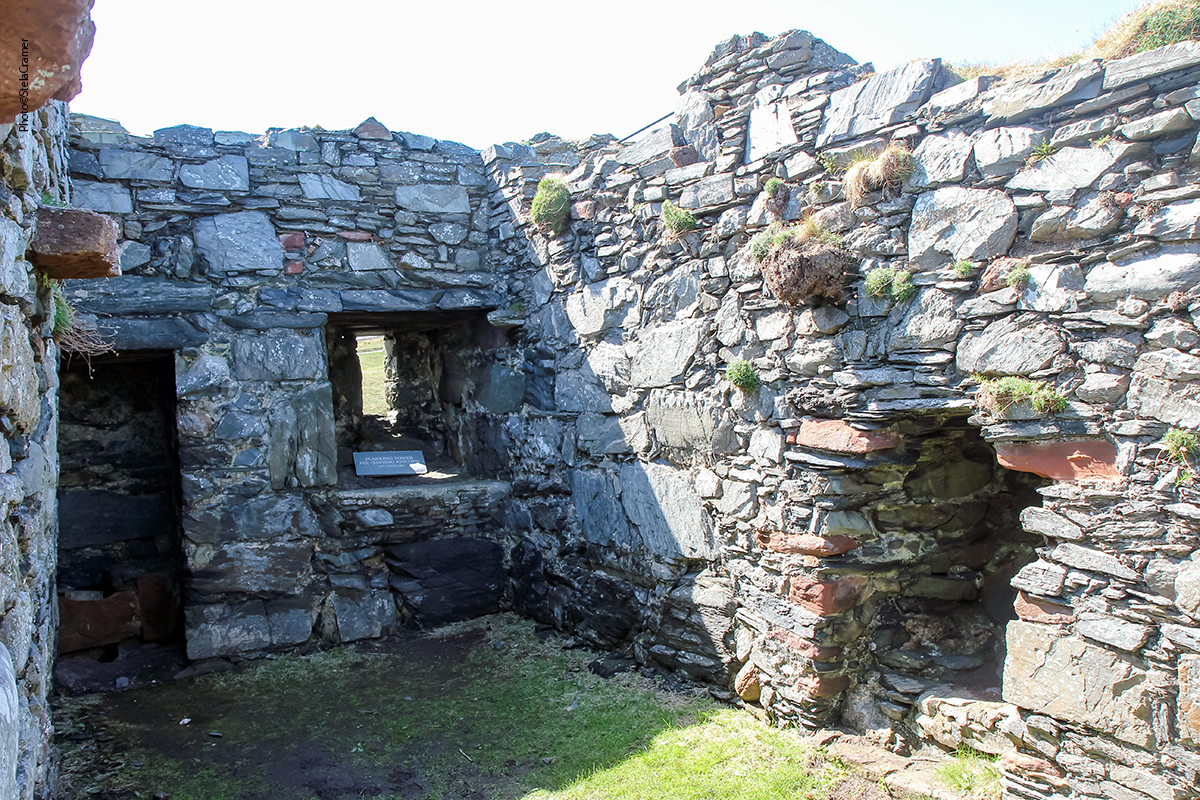
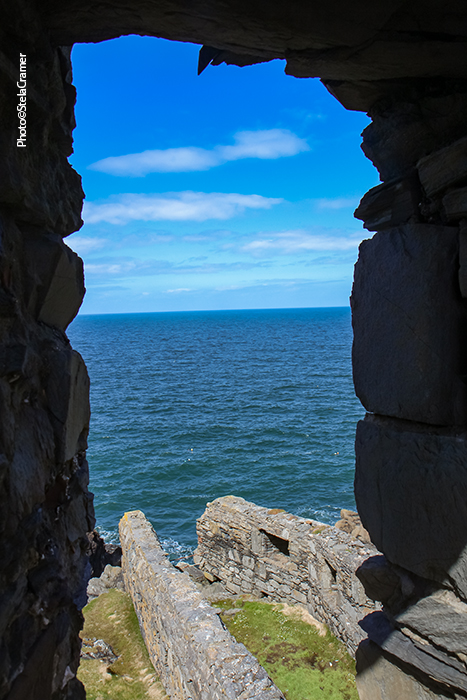
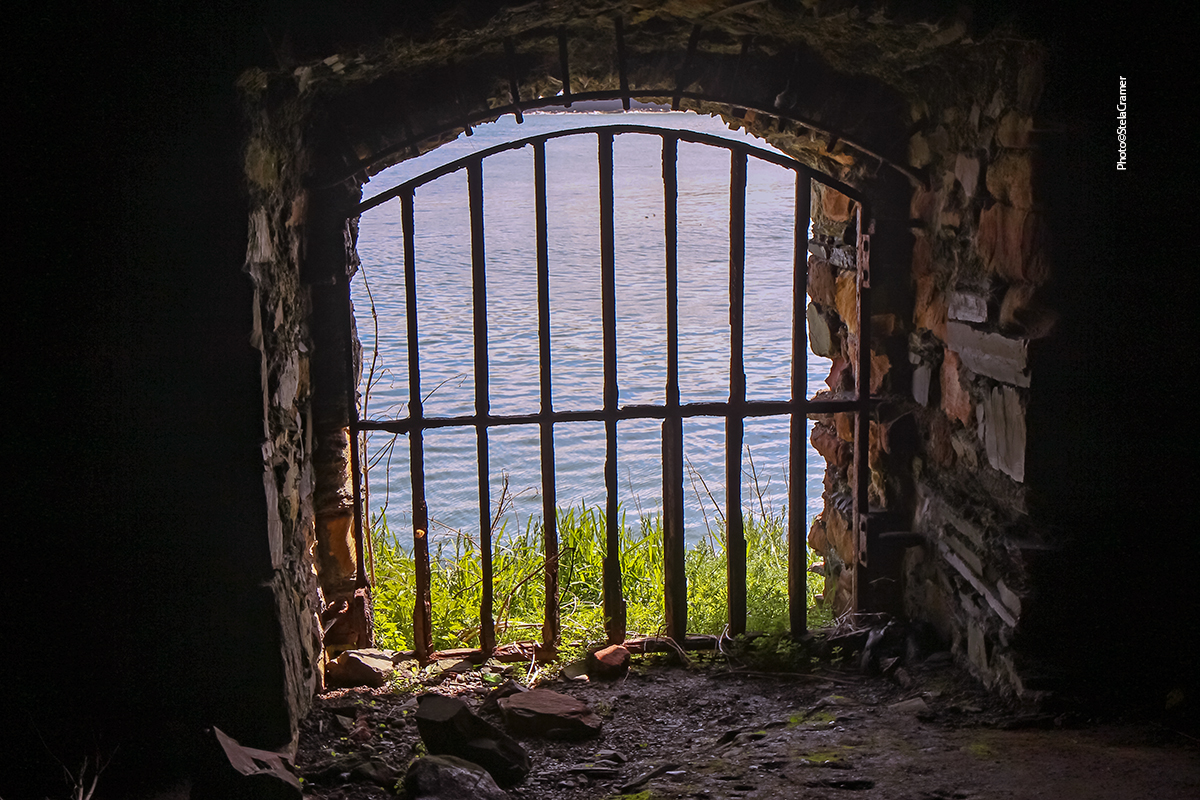
No improvável caso de um cerco ou invasão, esta saída levava a um ancoradouro por onde as pessoas poderiam fugir de barco .
In the unlikely event of a siege or invasion, this escape route led to a mooring where people could escape by boat.
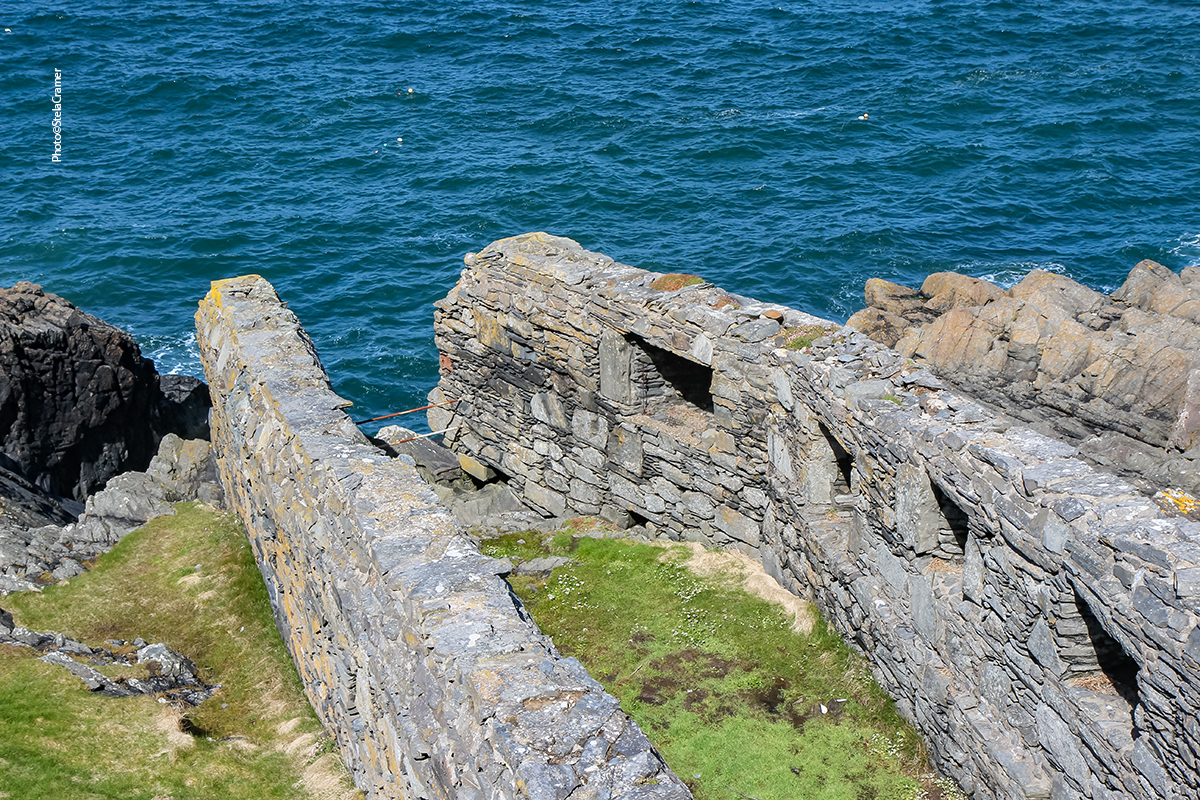
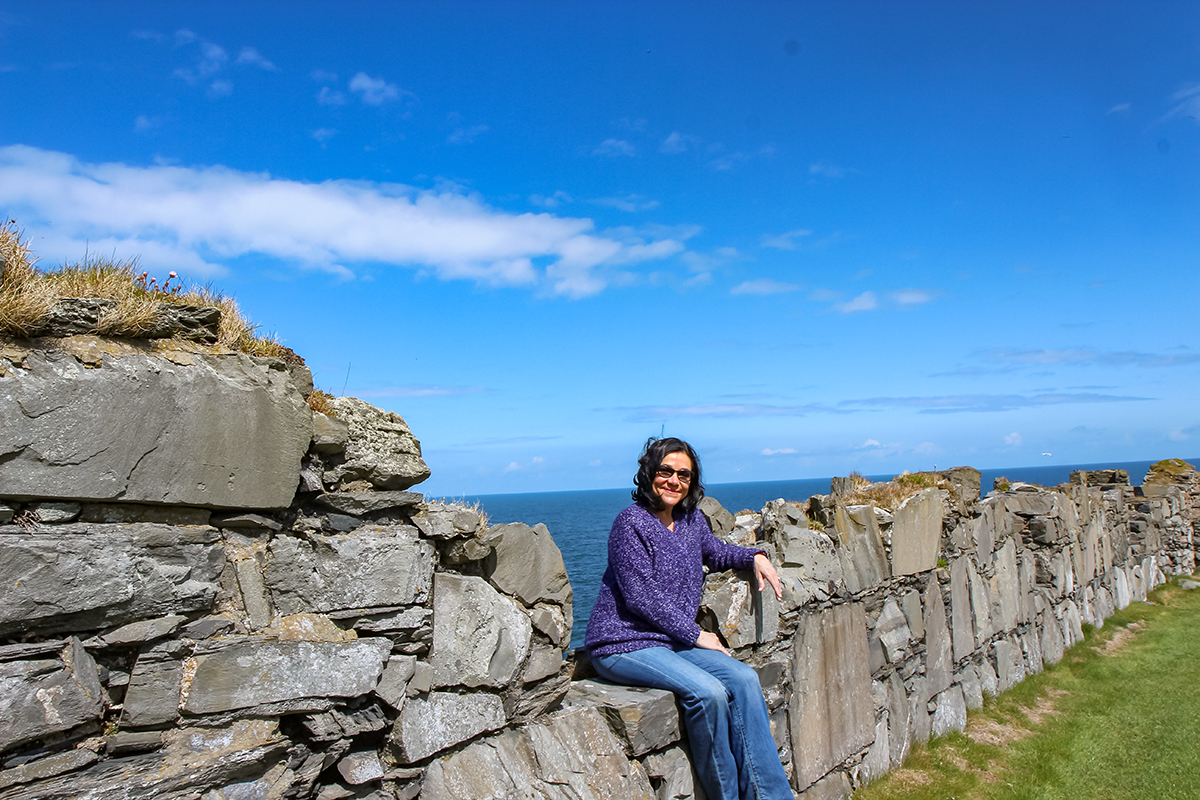
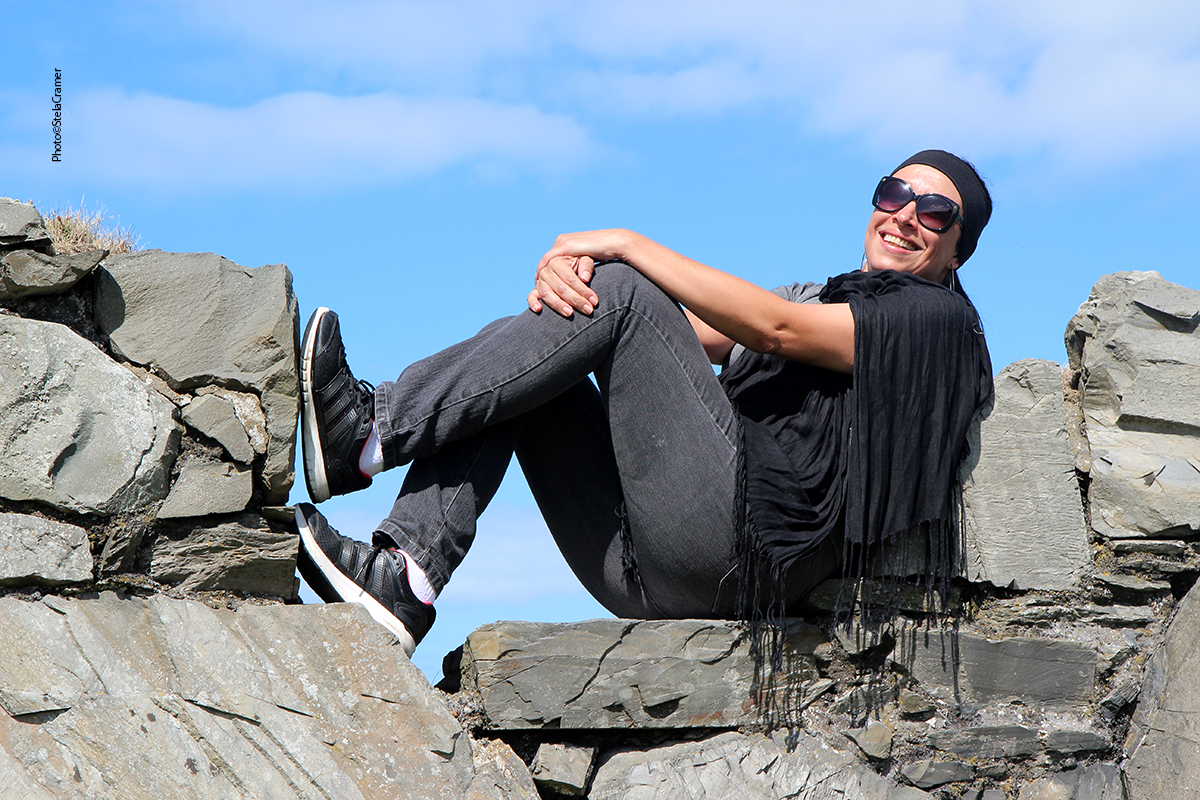
Aqui o ruído da cidade e dos turistas ficou para trás. O mar, as plantas, as aves, a música do vento e das ondas, tudo poderia ser o mesmo de séculos atrás. Meditando perdemos a noção do tempo; respirando só existe o momento presente.

Here the town and tourist’s noises were left behind. The sea, the flowers, the birds, the song of the wind and waves, it all could be just the same as it was centuries ago. Meditating we lost count of time; breathing exists in the present tense only.
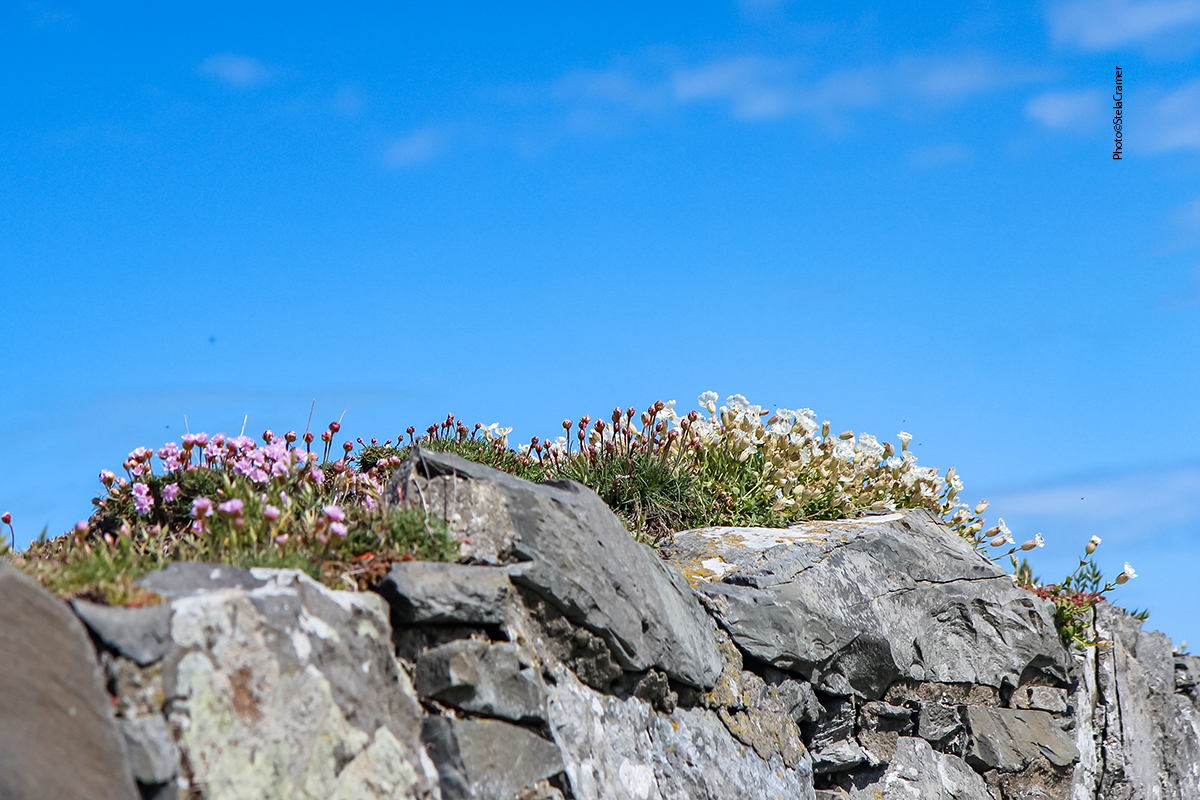
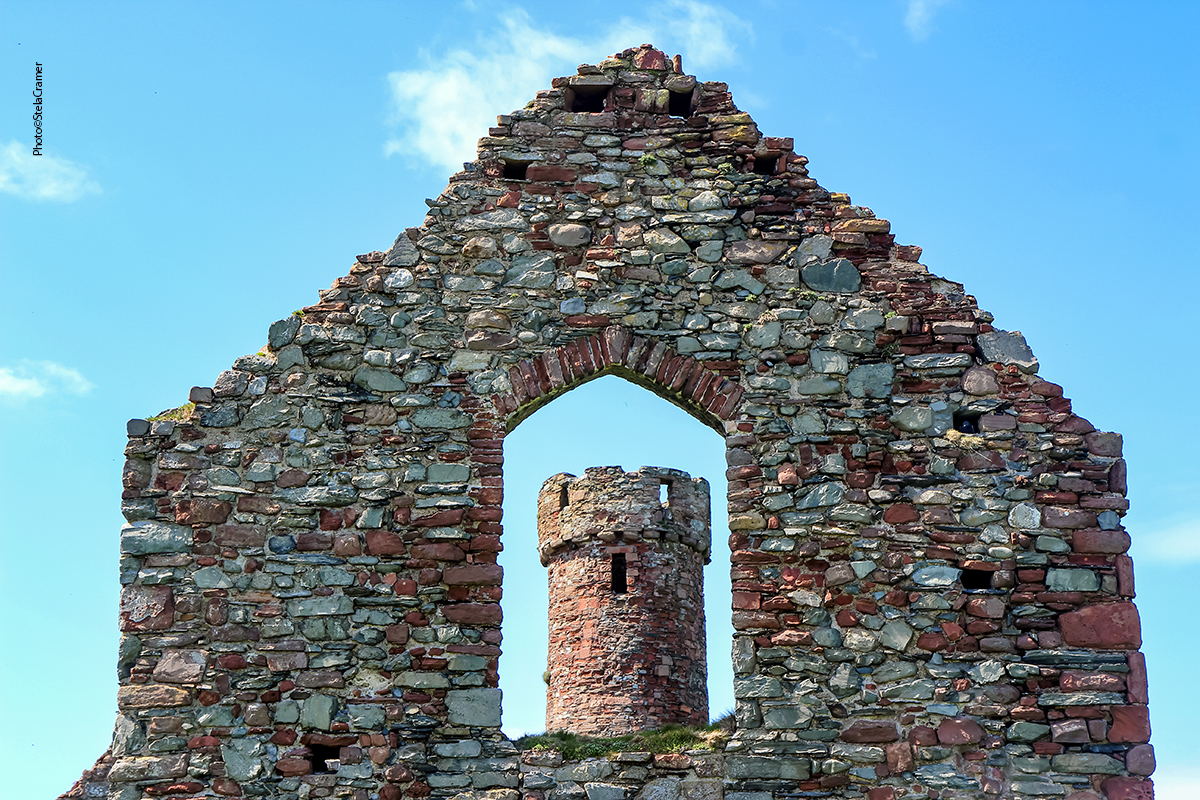
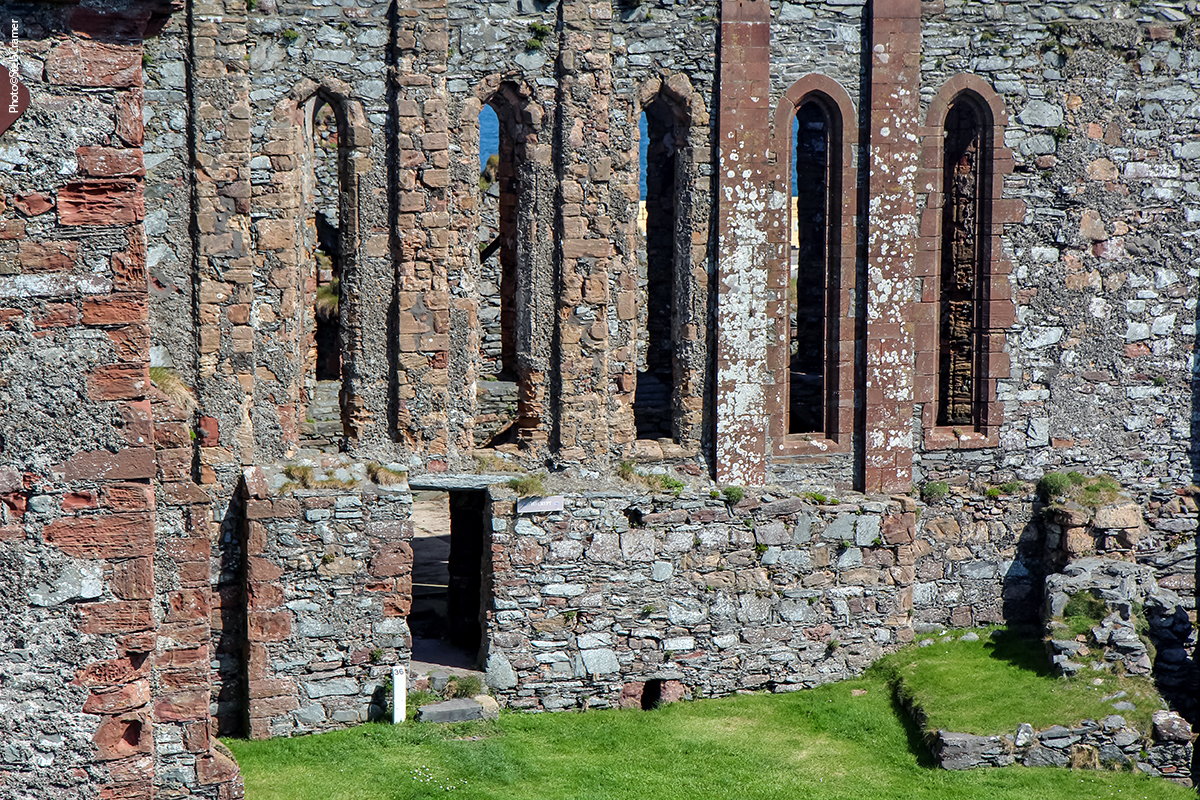
No início do séc.14, o arenito vermelho, abundante na área, foi usado na construção da maioria das muralhas e torres.


In the early 14th century, the majority of the walls and towers were built primarily from local red sandstone, which is found abundantly in the area.
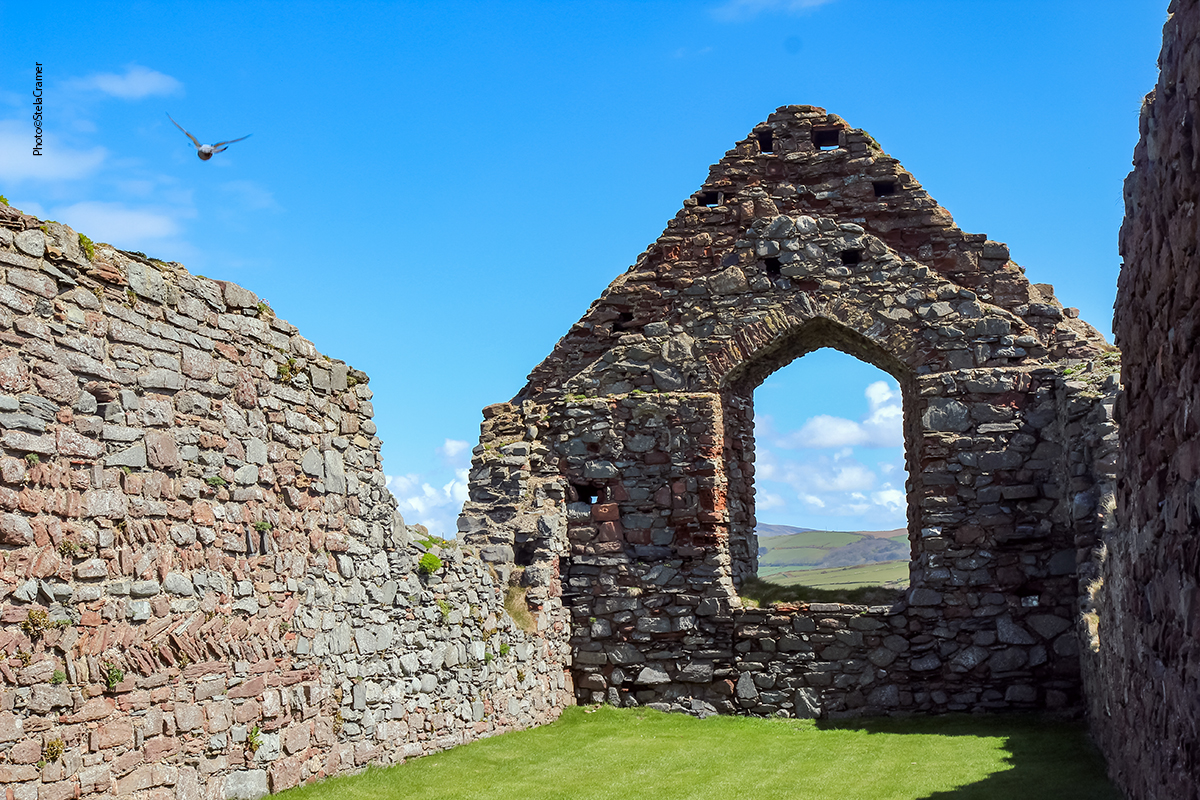
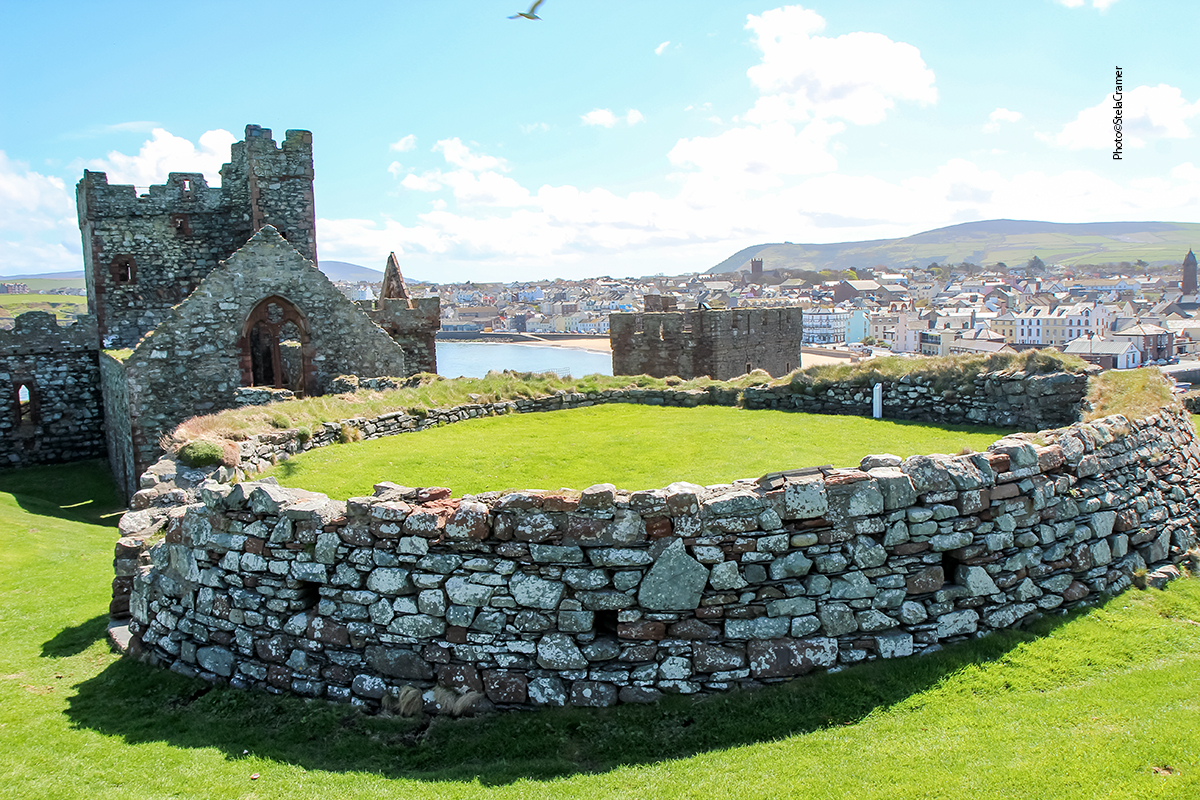
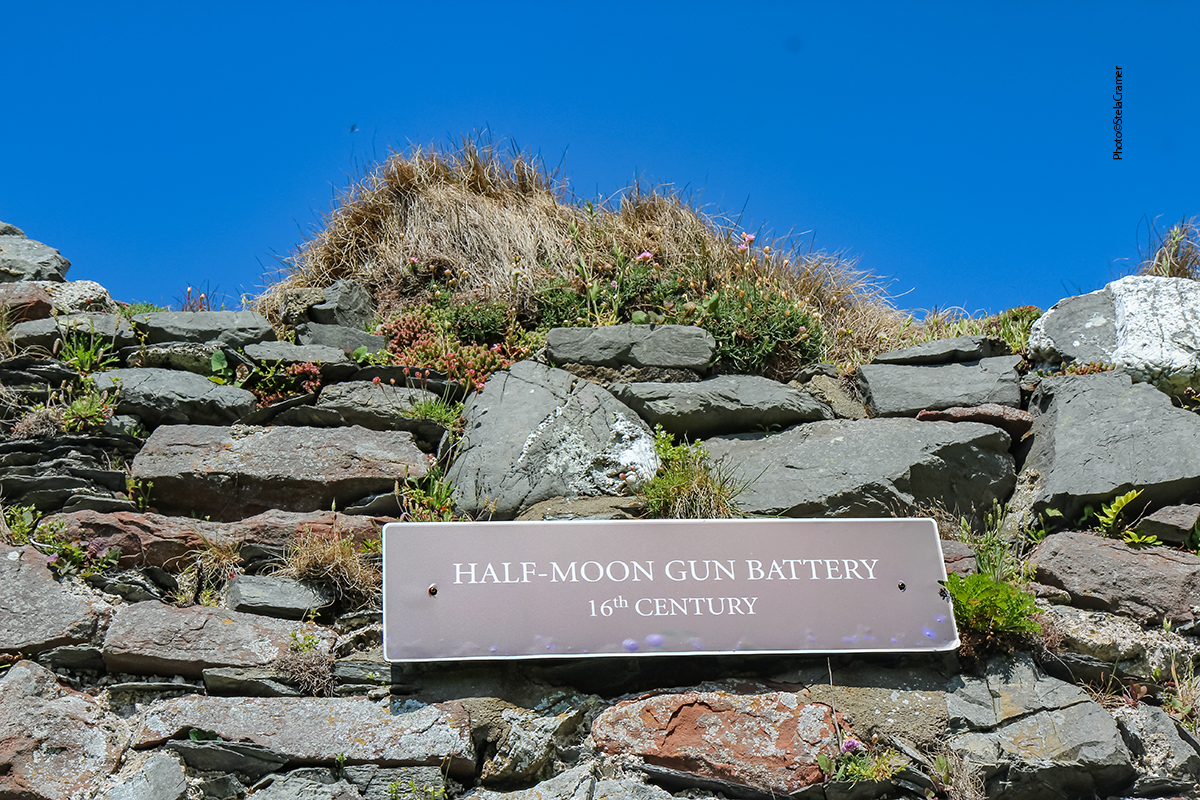
Bateria meia-lua: mais uma construção defensiva do sec. 16 / Half-moon gun battery: one more defensive building
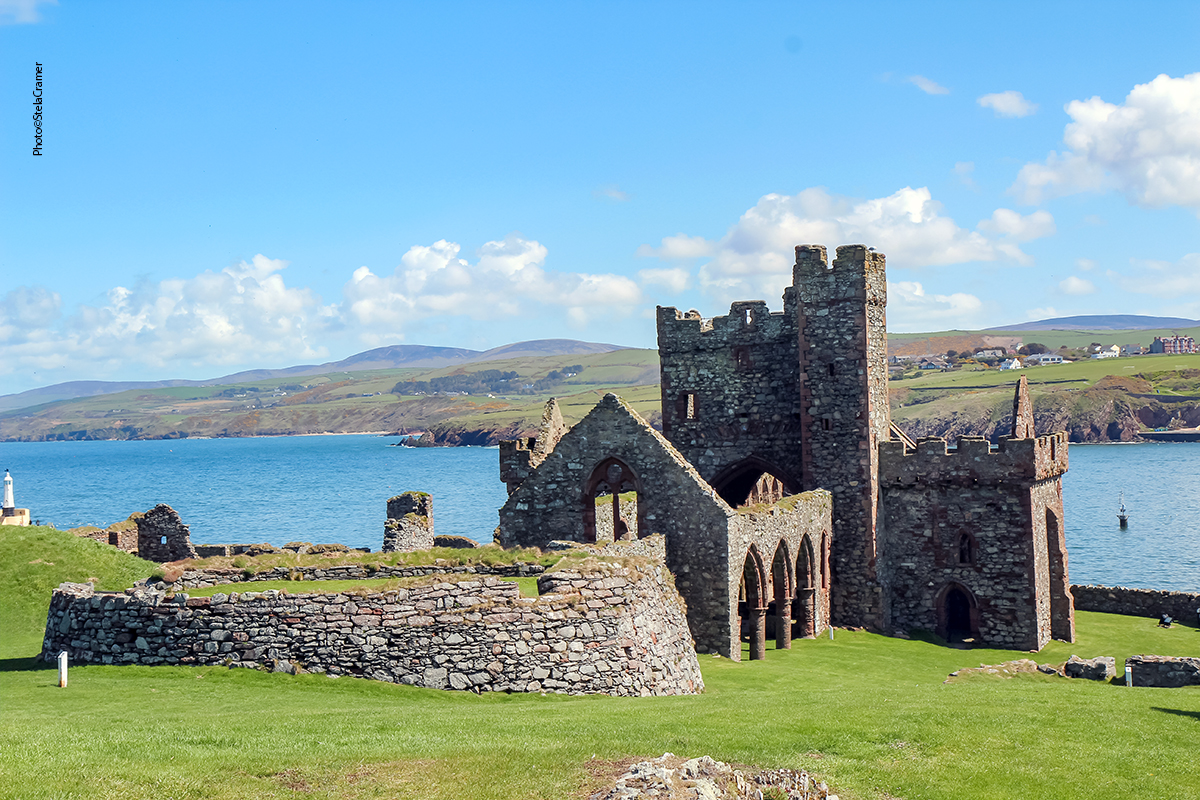
A catedral e a meia-lua / The cathedral and the half-moon
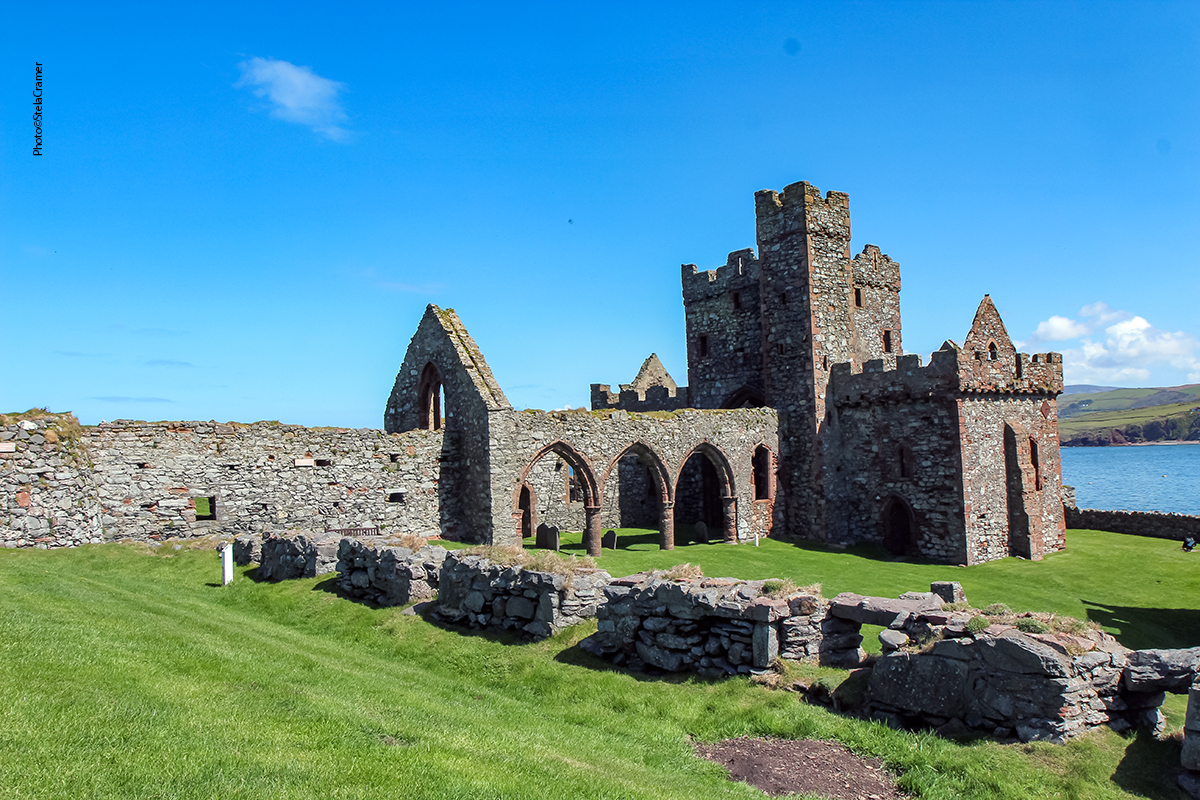
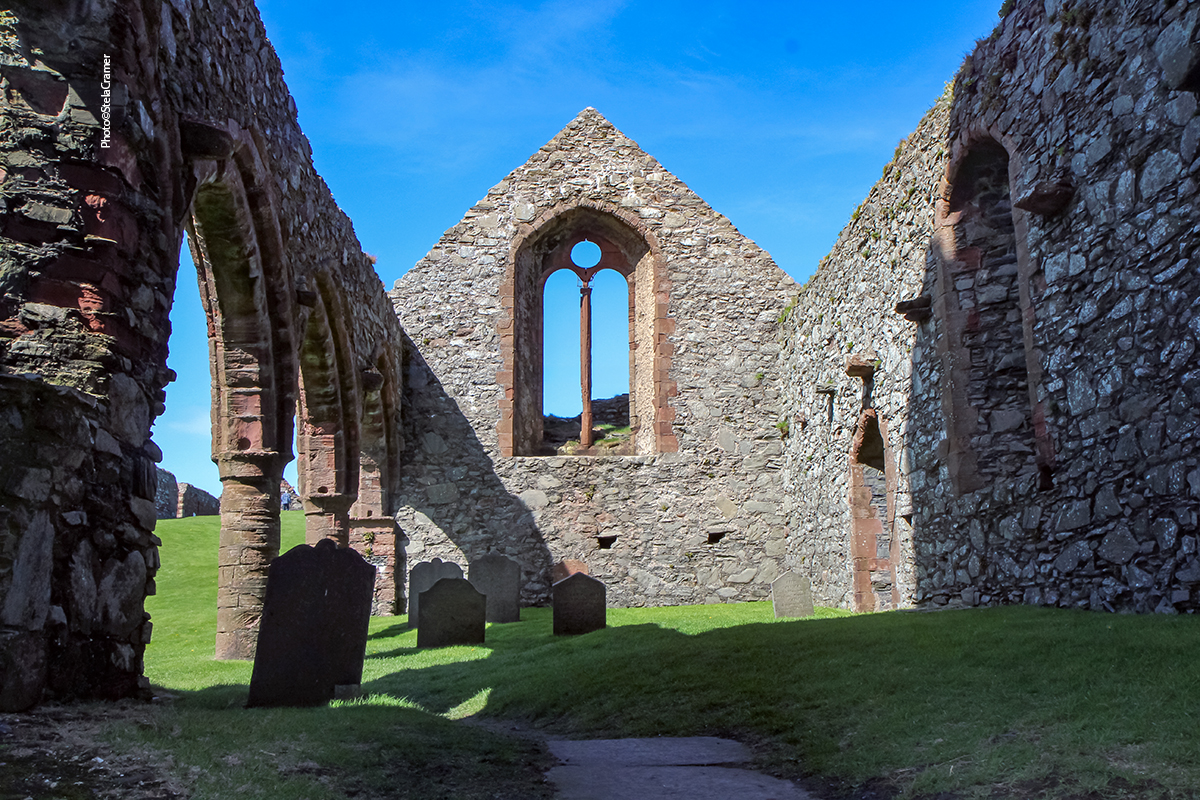
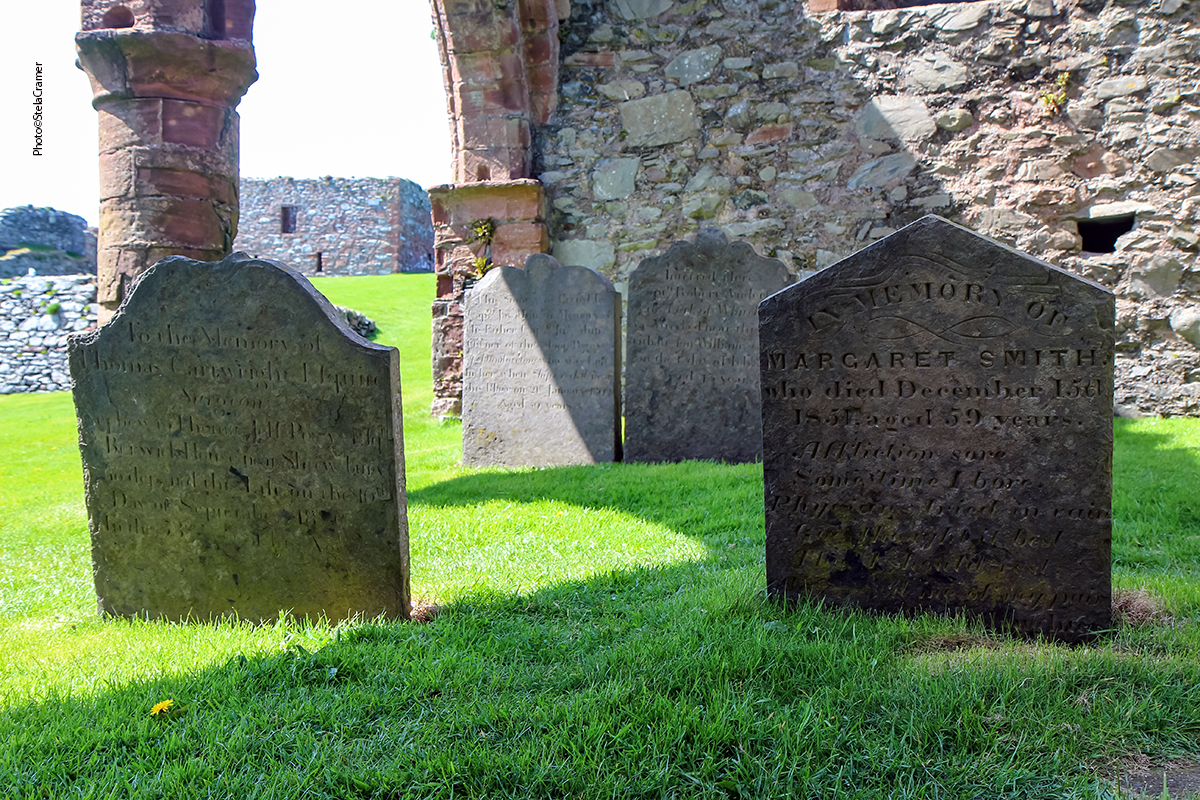
A antiga nave da catedral é atualmente um cemitério. / There is a cemetery in what was once the cathedral’s nave.
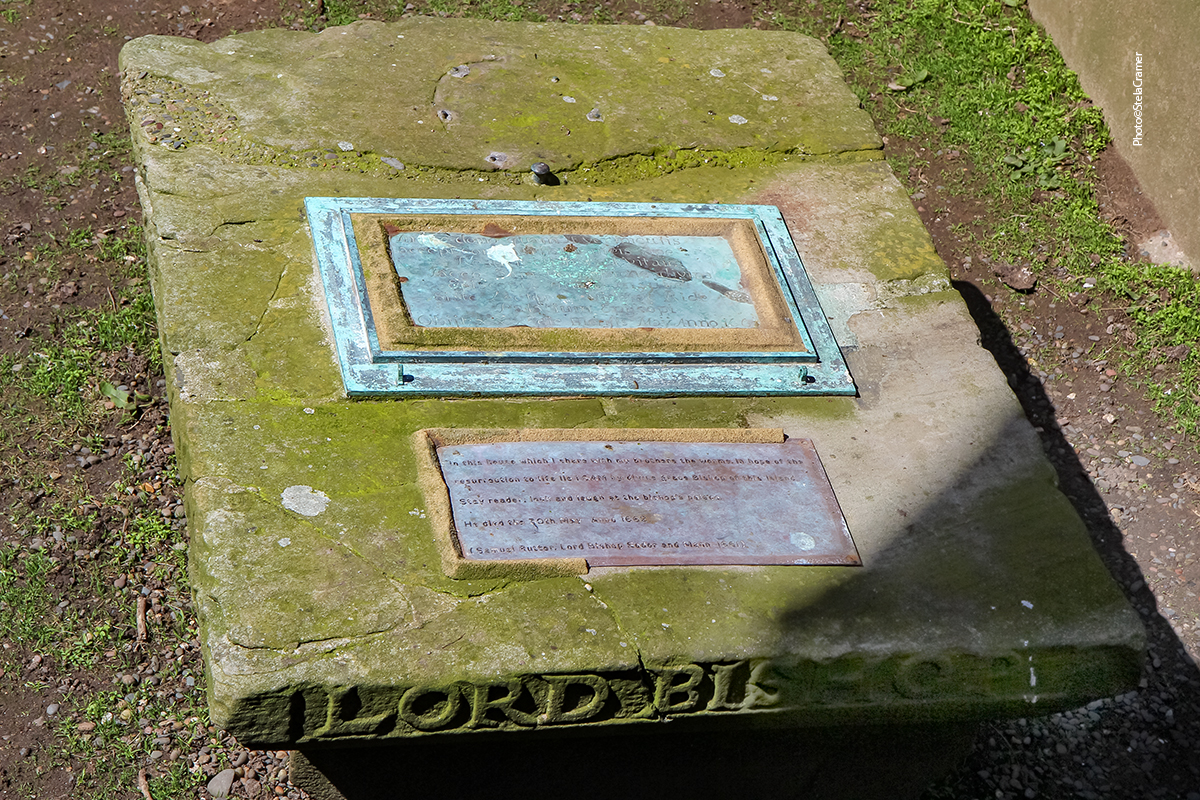
Túmulo do Bispo Rutter, de 1661. Depois dos noruegueses, a Igreja assumiu o Castelo por conta da Catedral que ali existia, até o século 18.

After the rule of Norway, the castle continued to be used by the Church, due to the cathedral built there, until the 18th century. This is Bishop Rutter’s tomb, buried in 1661.
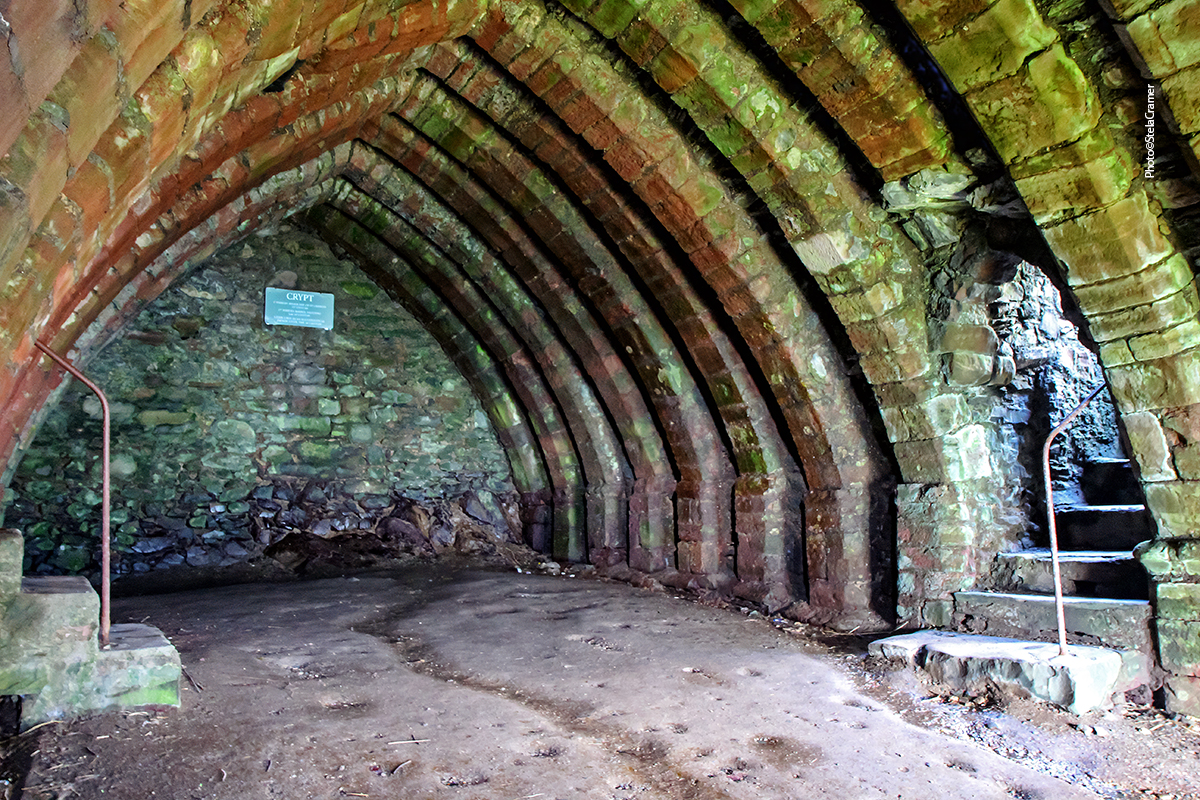
A cripta sob a catedral / The crypt under the cathedral
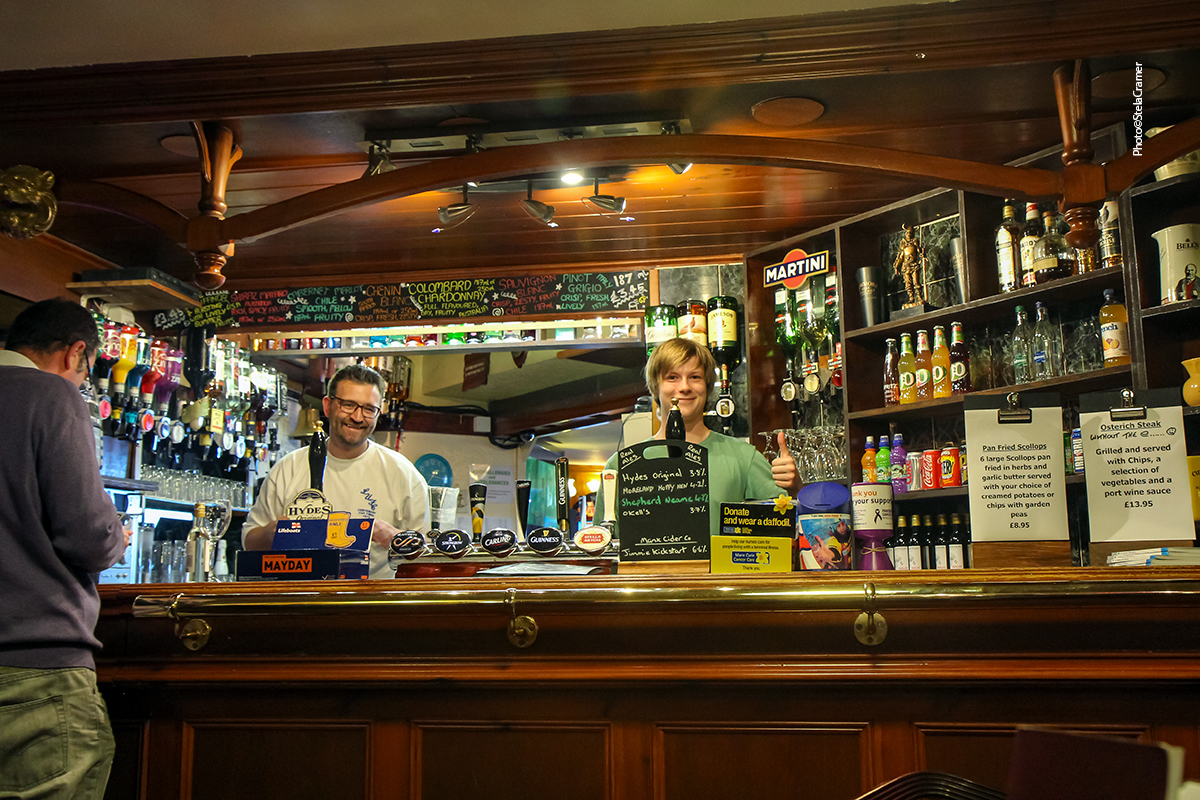
Ficamos no Castelo até a hora de fechar, ou seja, o dia todo. Felizmente, para pessoas famintas, cansadas e com sede, no Reino Unido há sempre um bom pub por perto!

We left the Castle by closing time, meaning, we stayed there the whole day. Fortunately, for tired, hungry and thirsty people, in the UK there’s always a good pub nearby!

Read Full Post »


Avalon!

Avalon!

Algo novo aconteceu. Se você leu os Posts 092 e 093, já sabe que Dra. Norma Goodrich situou Avalon na Ilha de St. Patrick, atualmente ligada por uma calçada ao porto de Peel na Ilha de Man – o “coração do Reino Unido” por ser o ponto central entre Inglaterra, Escócia, Gales e Irlanda. Bem, fui lá. Aqui estão fotos do Castelo de Peel.

Peel Castle by nightfall

Peel Castle by nightfall

Something new happened. If you’ve read the Posts 092 and 093, you’re aware that Dra. Norma Goodrich located Avalon in St.Patrick’s Isle, which is nowadays connected by a causeway to Peel Harbor, in the Isle of Man – “heart of UK” – the central spot between England, Scotland, Wales and Ireland. Well, I’ve been there. Here I present photos of Peel Castle.

Peel Castle foi construído no século 11 pelos Vikings, no reinado de Magnus Barefoot. / Peel Castle was built in the 11th century by the Vikings, under the rule of King Magnus Barefoot.

Peel Castle foi construído no século 11 pelos Vikings, no reinado de Magnus Barefoot. / Peel Castle was built in the 11th century by the Vikings, under the rule of King Magnus Barefoot.

Inside Peel Castle. The first Viking fortifications were built of wood / Interior do castelo. As primeiras fortificações dos Vikings eram feitas de madeira.

Inside Peel Castle. The first Viking fortifications were built of wood / Interior do castelo. As primeiras fortificações dos Vikings eram feitas de madeira.

Entrada / Entrance

Entrada / Entrance

Havia na ilha construções celtas de pedra, mais antigas. /There were older stone Celtic monastic buildings on the island

Havia na ilha construções celtas de pedra, mais antigas. /There were older stone Celtic monastic buildings on the island

Depois do domínio Viking, o castelo continuou a ser usado pela Igreja devido à catedral que ali tinha sido construída. Mas o local acabou sendo abandonado no século 18. / After the rule of the Vikings, the castle continued to be used by the Church due to the cathedral built there but was eventually abandoned in the 18th century.

Depois do domínio Viking, o castelo continuou a ser usado pela Igreja devido à catedral que ali tinha sido construída. Mas o local acabou sendo abandonado no século 18. / After the rule of the Vikings, the castle continued to be used by the Church due to the cathedral built there but was eventually abandoned in the 18th century.

Escavações em 1982-87 revelaram um extenso cemitério, assim como vestígios do forte de madeira original de Magnus Barefoot. Mas isso não está em exibição... / Excavations in 1982-87 revealed an extensive graveyard as well as the remains of Magnus Barefoot's original wooden fort. But such are not in display...

Escavações em 1982-87 revelaram um extenso cemitério, assim como vestígios do forte de madeira original de Magnus Barefoot. Mas isso não está em exibição… Estes túmulos são bem mais recentes./ Excavations in 1982-87 revealed an extensive graveyard as well as the remains of Magnus Barefoot’s original wooden fort. But such are not in display… These graves are much more recent.

Um dos mais espetaculares achados foi o túmulo da "Dama Pagã" do século 10. A reconstrução da figura se encontra no Museu de Man, mostrando um colar Viking de contas e moedas de prata de 1030 / The most spectacular finds were the 10th century grave of "The Pagan Lady" which included a fine example of a Viking necklace and a cache of silver coins dating from about 1030. This model is actually in the Manx Museum.

The Pagan Lady

Um dos mais espetaculares achados foi o túmulo da “Dama Pagã” do século 10. A reconstrução da figura se encontra no Museu de Man, mostrando um colar Viking de contas e moedas de prata de 1030. Pelo status revelado, esta poderia ser a Senhora de Avalon! Um dos souvenirs vendidos na entrada do castelo é o conjunto de contas para fazer um colar semelhante.

The most spectacular finds were the 10th century grave of “The Pagan Lady” which included a fine example of a Viking necklace and a cache of silver coins dating from about 1030. This model is actually in the Manx Museum. She might have been the High Priestess of Avalon, by her apparent status ! At the Castle’s reception, among other souvenirs, there are kits of beads and string to make a similar necklace.

My guess is that here was the ancient worship place. In the background, the original Peel cathedral. / Meu palpite é que aqui era o antigo santuário. Ao fundo, a Catedral de Peel.

My guess is that here was the ancient worship place. Behind it, the former Cathedral of St. German. In the background, the town of Peel./ Meu palpite é que aqui era o antigo santuário. Mais atrás, a Catedral de Saint-German. Ao fundo a cidade de Peel

Turistas, a maioria alemães / Tourists, most Germans

Turistas, a maioria alemães / Tourists, most Germans

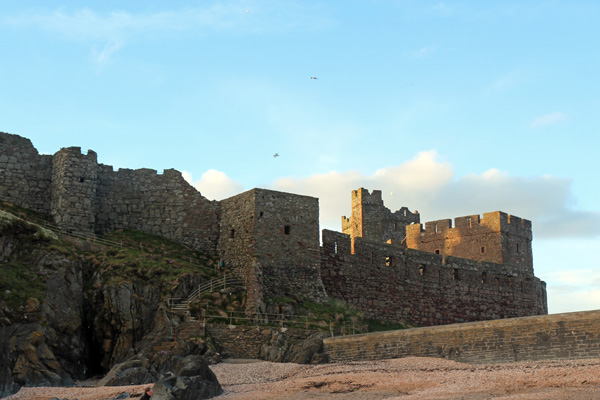
A maioria das paredes e torres foram construídas com arenito vermelho, abundante na região / The majority of the walls and towers were built  from red sandstone, abundantly found in the area

A maioria das paredes e torres foram construídas com arenito vermelho, abundante na região / The majority of the walls and towers were built from red sandstone, abundantly found in the area

O Arsenal e a torre Redonda / The Armoury and Round Tower

O Arsenal e a Torre Redonda / The Armoury and Round Tower

A Torre Redonda data dos séculos 10 e 11 / The Round Tower was built in the X-XI centuries

A Torre Redonda data dos séculos 10 e 11 / The Round Tower was built in the X-XI centuries

Amurada norte / North Ramparts

Amurada norte / North Ramparts

Postos de guarda ao longo das amuradas / Guard posts along the ramparts

Postos de guarda ao longo das amuradas / Guard posts along the ramparts

Parte mais antiga, cozinha no primeiro plano / Most ancient ruins; kitchen in the foreground

Parte mais antiga, cozinha no primeiro plano / Most ancient ruins; kitchen in the foreground

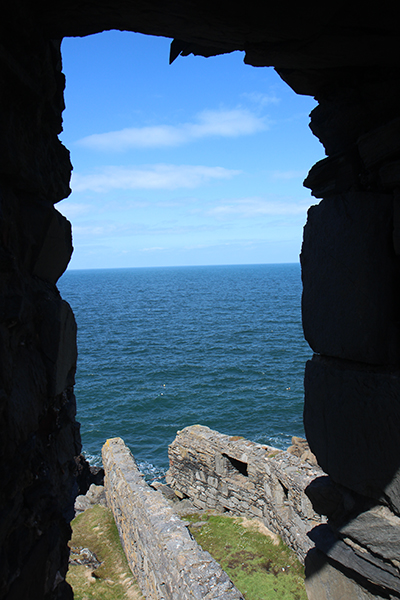
Posto de guarda a oeste / Guard post facing west

Posto de guarda a oeste / Guard post facing west

Vista oeste -dia / Daylight west landscape

Vista oeste -dia / Daylight west landscape

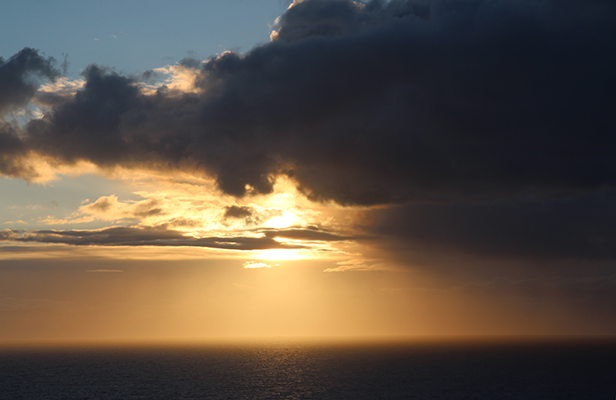
Vista oeste, por do sol / West landscape, sunset

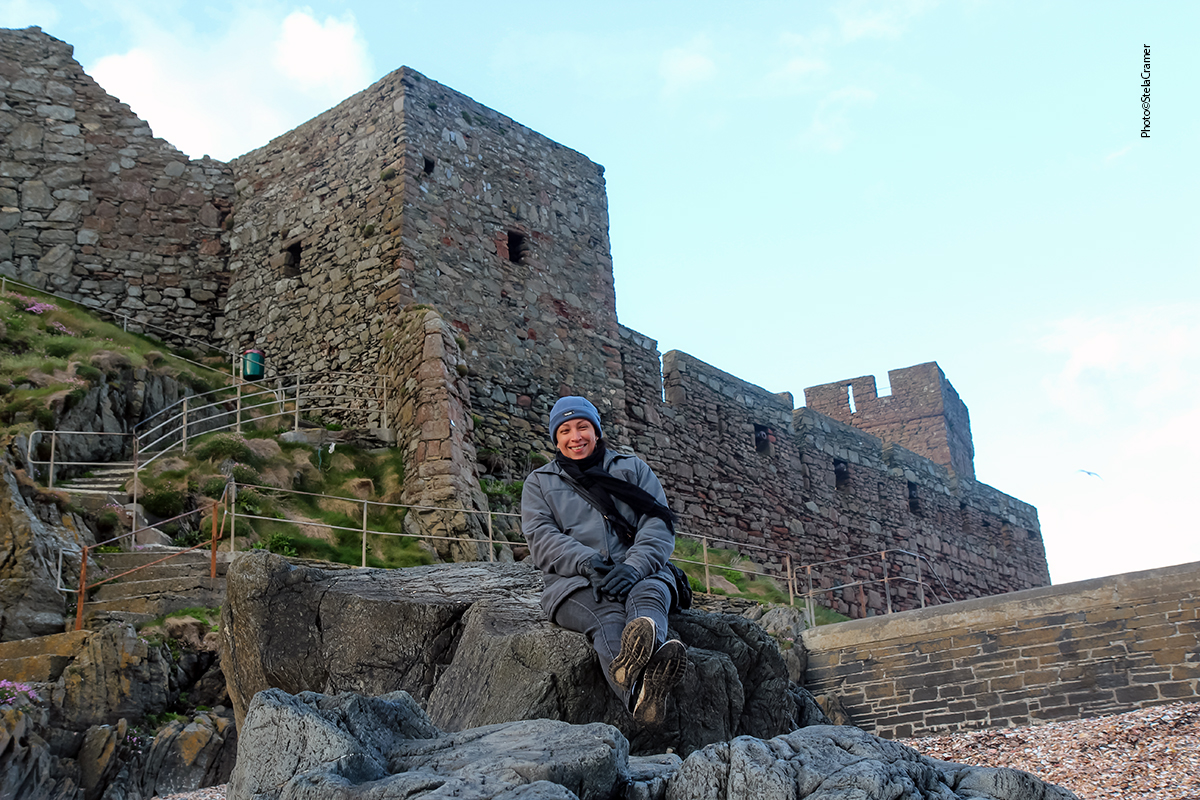
Enorme amurada norte vista da praia / Massive North ramparts seen from the beach

Aqui quase não existe areia / There's almost no sand here

Aqui quase não existe areia / There’s scarcely sand here

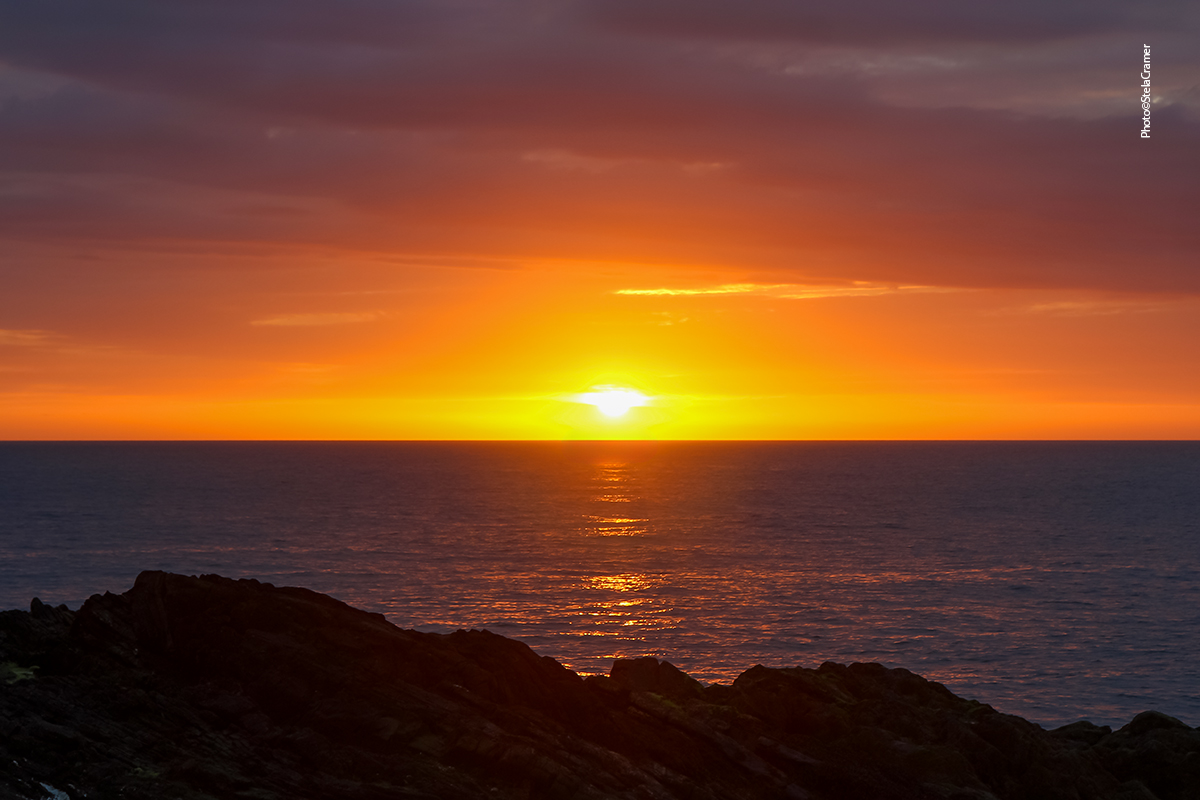
Magic sunset in Avalon

Magic sunset in Avalon

+ Magic Sunset in Avalon

Another magic sunset in Avalon

Read Full Post »