Feeds:
Posts
Comentários

Posts Tagged ‘viagem’


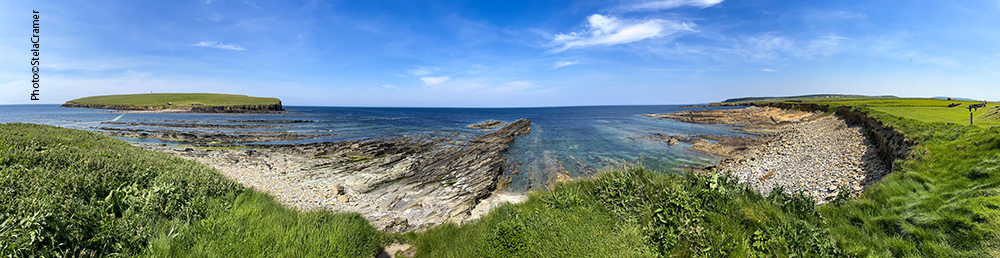
Point of Buckquoy panorama, Brough of Birsay to the left / Panorama, Brough de Birsay à esquerda

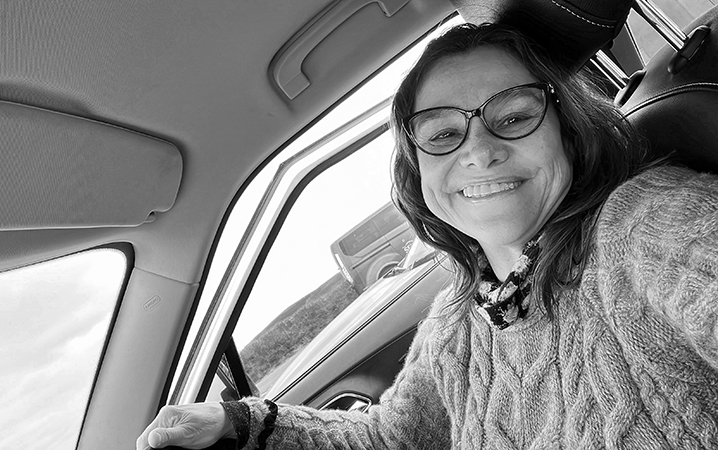
Alugar um carro é fundamental para se locomover em Orkney. Eu tinha reservado um com a Drive Orkney em contato anterior por e-mail, e fui buscá-lo assim que botei o pé em terra firme, em Kirkwall. Por economia, havia escolhido um modelo com câmbio manual. Ao retirar o carro, o gerente me perguntou se eu tinha certeza disso, e respondi que não haveria qualquer problema, pois a vida toda dirigira apenas carros manuais. A cara dele me pareceu meio incrédula, mas a ficha só caiu depois de iniciar a jornada rumo a Stromness, onde ficaria hospedada por três noites: no UK, o volante fica do lado direito, portanto a alavanca de câmbio é acionada com a mão esquerda. Até adquirir um mínimo de destreza creio que fiz algumas barbeiragens. Felizmente não havia muito movimento na estrada.

Rent a car is mandatory to get around in Orkney Mainland.
I had booked one online with Drive Orkney, and picked it up as soon as I set foot in Kirkwall. For economy, I had chosen an old model with manual gear. The manager asked if I was sure about that, and I answered that it wouldn’t be a problem, because all my life I had driven manual cars. He made a skeptic face. Too late I realized that in the UK the steering wheel is on the right side, thus the driver uses the left hand to change gear: I was already on the road to Ring of Brodgar – before heading to Stromness, where I’d stay the next 3 nights. I made some horrible mistakes until I started to get used to it.
Fortunately the road was quite empty.
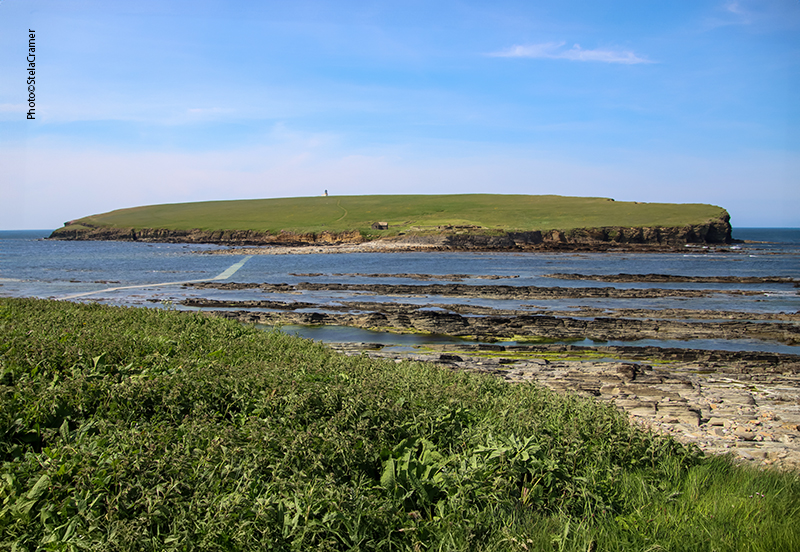
Brough of Birsay, com o farol ao fundo / Lighthouse on the background

No dia seguinte, que amanheceu azul e ensolarado, fui visitar de novo o Ring of Brodgar, pois na véspera estava cheio de ônibus de turistas, e o dia muito nublado, o que atrapalhou as fotos. Acabei ficando a manhã toda lá, assim o sol já estava alto quando segui para visitar os Broughs (ou Brochs) de Birsay e de Gurness.
“Brough” e “Birsay” são palavras originadas do Norueguês antigo “Borg”, que significa “forte”, mas significam coisas diferentes. “Brough” se refere às defesas naturais da ilha; “Birsay” quer dizer ilha com um único acesso, por uma estreita faixa de terra. Assim sendo, Brough of Birsay é uma ilha cujo acesso só é possível durante a maré baixa, quando o caminho de concreto que a liga à terra firme fica exposto. Quando lá cheguei, a maré já estava subindo.

Next day was sunny, sky was blue, so I went back to the Ring of Brodgar. In the eve, it was crowded with tourism buses, the day was grey, my photos were therefore shitty. So I took my time under the sun, which was already high when I left, on my way to the Broughs of Birsay and Gurness. It’s not far.
The words ‘brough’ and ‘birsay’ both come from the Old Norse ‘borg’ (‘fort’), but their meanings are slightly different. ‘Brough’ refers to the natural defences of the island. ‘Birsay’ (previously byrgisey) means an island accessible only by a narrow neck of land. Brough of Birsay is a tidal island only accessible for around two hours in low tide, and it’s linked to headland by a concrete causeway visible only when the sea retreats. By the time I got there, tide was rising.

Antes de Kirkwalll se tornar a capital, no séc. XII, Birsay era o centro do poder em Orkney. Escavações mostram uma camada de ocupação Nórdica por cima da anterior, pelos Pictos. /
Before Kirkwall became the centre of power in the 12th century, Birsay was the seat of the rulers of Orkney. The extensive remains of an excavated Norse settlement and church overlay the earlier Pictish settlement.
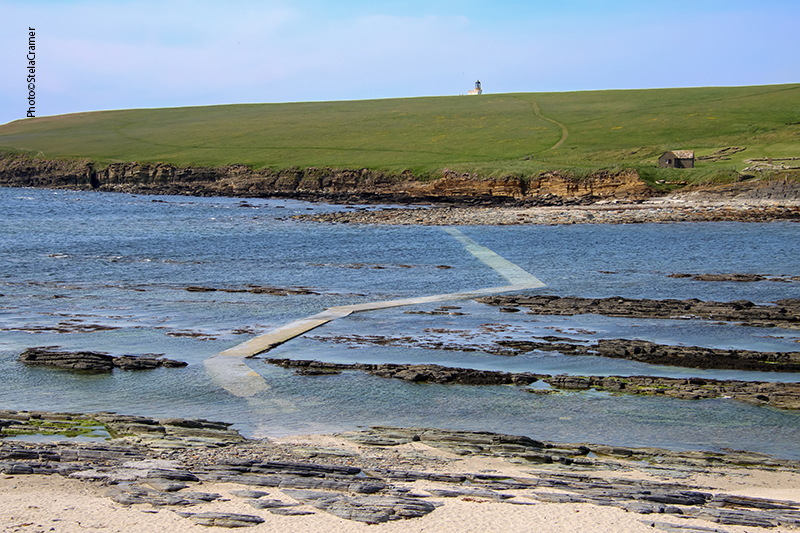
O caminho de concreto tem 150 m de comprimento. Fica submerso na maré cheia, e as fortes correntes tornam a travessia perigosa. Antes de se aventurar é preciso checar os horários da maré, expostos no Centro de Informações de Turismo em Kirkwall, no Centro de Visitantes em Skara Brae ou no site da meteorologia (link abaixo) .

The concrete causeway is approximately 150m long.During high tide is submerged underwater and the strong tides here make it dangerous to cross. Low tide times are displayed in the Kirkwall Tourist Information Office and at the nearby Skara Brae Visitor Centre, or on the Met Office website:

https://www.metoffice.gov.uk/weather/forecast/

A ilha abriga vestígios de um importante assentamento Picto. Escavações comprovaram que este povo viveu aqui no fim do século VII. Os Nórdicos chegaram 200 anos depois, no século IX, e ainda são visíveis as ruínas de suas casa, celeiros, e mesmo uma sauna. Mais tarde, uma igrejinha e monastério foram construídos, mas usados por pouco tempo: não foram encontrados muitos artefatos medievais e a torre oeste da construção nunca foi completada.

The island hosts the remains of a substantial Pictish settlement. Excavations show that Picts lived here in the late 7th century. Norse people settled on the brough 200 years later, in the 9th century, and the remains of their houses, barns and even a sauna can still be seen. Later, a small church and monastery were built on Birsay. The church was only used for a short time; there were very few medieval artefacts discovered there, and the west tower of the building was never complet
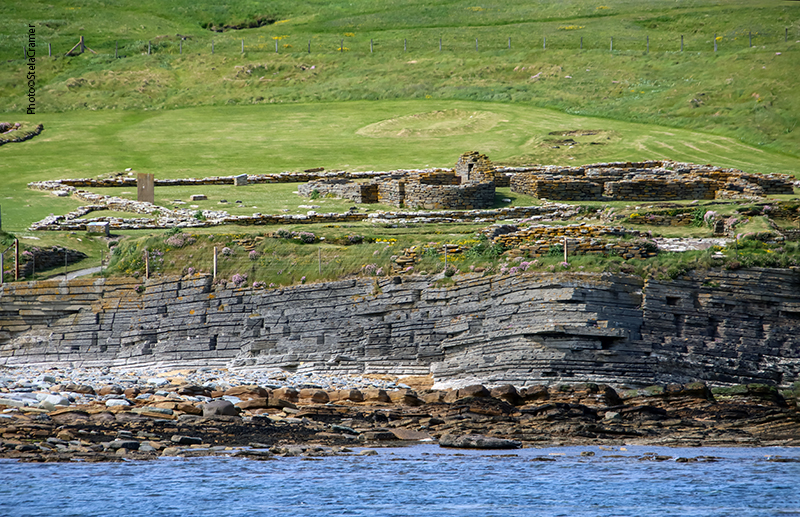
Parte das construções foi destruída pela erosão recentemente, o que levou à construção de um reforço de concreto, construído de forma a parecer rocha natural /
Some of this settlement was washed away by coastal erosion in recent years, what has led to the construction of a concrete reinforcement cleverly sculpted to resemble the natural sandstone.
Foto aérea de Charles Tait / Aerial photo by Charles Tait

Os Vikings chegaram no século IX e seu assentamento se desenvolveu ali por três séculos. O processo de construção e reconstrução de estruturas criou um verdadeiro labirinto de paredes de pedra, umas por cima das outras. Ainda são visíveis algumas das “casas longas” Nórdicas, celeiros, oficina de ferreiro e mesmo uma sauna do século XI com piso aquecido! A ultima estrutura construída pelos Vikings foi a igreja, no século XII.

The Vikings arrived on the Brough of Birsay during the 9th century and their settlement there was developed over the next three centuries. The process of building and rebuilding structures has left a complicated maze of stone walls, one on top of the other. Remains of several Norse longhouses, barns and a smithy can still be seen today, as well as an 11th century sauna with underfloor heating! A 12th century church was the last of the structures built by the Vikings.

Os vestígios deixados pelos Pictos são um pequeno poço, as fundações por baixo das construções posteriores e uma importante coleção de artefatos, incluindo um conjunto de moldes sofisticados para fundição de metais, como bronze. Os Pictos eram exímios artesãos que tinham um estilo de vida refinado séculos antes da chegada dos Vikings. Fragmentos de vidro, alfinetes de osso e pentes foram encontrados misturados com os artefatos Nórdicos nas casas no Brough. Havia um cemitério Picto por baixo do cercado em volta da igreja Nórdica. Ali também foram encontrados os pedaços de uma pedra entalhada pelos Pictos, retratando três Pictos vestidos com túnicas longas, portando espadas e escudos quadrados, e outros símbolos. Em Birsay mesmo puseram uma réplica; a original está no Museu Nacional da Escócia, em Edimburgo.

The Pictish settlement is attested by a small well, foundations under the later buildings and an important collection of artifacts, including a group of moulds for fine metalworking. Pictish people were skilled craftsmen who led a sophisticated lifestyle for several centuries before the Vikings arrived. Fragments of glass, bone pins and combs were found amongst Norse artefacts in houses on the Brough.
The enclosure round the Norse church overlies a Pictish graveyard .
An important Pictish carved stone was found in pieces in this enclosure. It shows a striking procession of three Picts dressed in long robes and bearing spears, swords and square shields. The stone in Birsay is a cast; the original is in the National Museum of Scotland, Edinburgh.
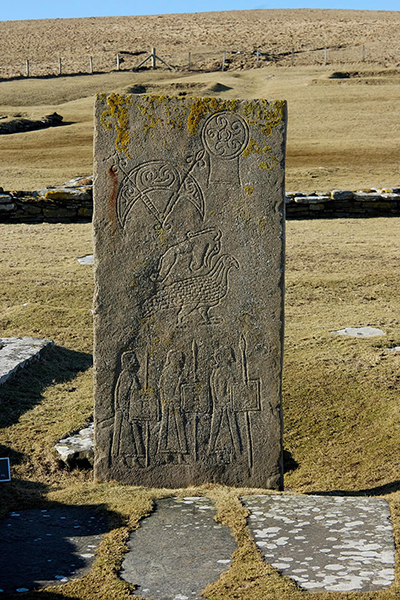
Pictish stone replica, Photo by Charles Tait
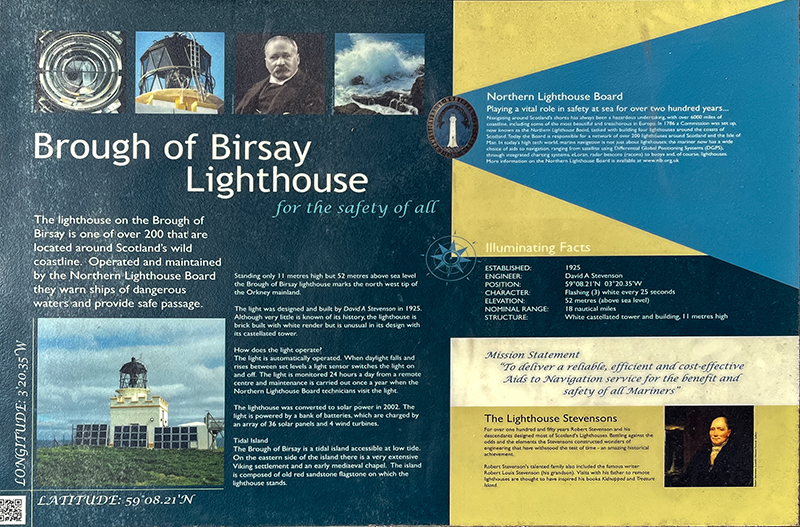
O farol , projetado para funcionar automaticamente, era movido a gás antes de ser convertido para energia solar em 2001 /The lighthouse was gas-powered (converted to solar power in 2001) and designed to be unmanned.
Paisagem do local / Site landscape
Venha comigo se tiver coragem! Come with me if you’re brave enough!

Read Full Post »


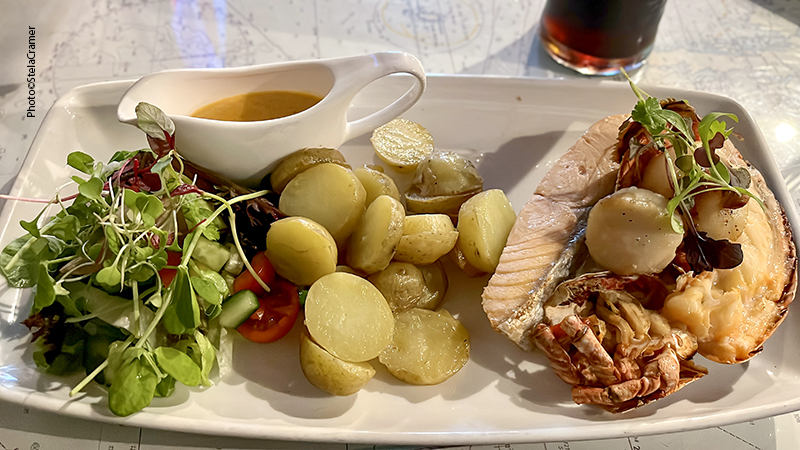
Frutos do mar deliciosos nesta pequena cidade portuária / Yummy seafood in this harbor village

Estávamos falando sobre o Coração Neolítico de Orkney, e após o post sobre Maeshowe decidi encaixar as fotos de Newgrange (e o vizinho Knowth, na Irlanda) por ser o maior e mais importante dos monumentos tipo “Túmulos de Passagem” no Reino Unido e mesmo na Europa. Mas antes de abordar a viagem à Irlanda terminarei de falar sobre a Escócia, para não ficar confuso.

I was talking about the Neolithic Heart of Orkney, and after the entry on Maeshowe I decided to bring forward Newgrange (and its neighbor Knowth, in Ireland) because it’s the biggest and most important of Passage Tombs in the UK and Europe. But before approaching Ireland’s trip I will resume the Scotland’s, so it will not get confused.

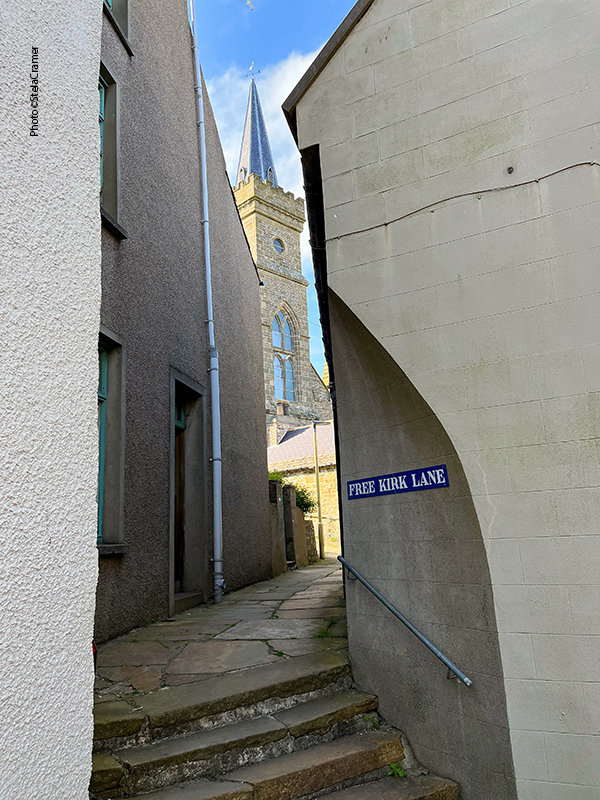
Minha melhor foto de rua em Stromness/ My best street photo

O motivo para visitar as Orkneys, tempos atrás, foi obviamente o fato de aparecer nas Brumas de Avalon. Na verdade eu nunca tinha pensado muito sobre isso até o dia em que, andando em Inverness durante minha primeira viagem, vi um ônibus de excursão com o letreiro “Ilhas Orkney” e resolvi embarcar nele (ver posts 043 e 044). Em 2023, ou seja, 20 anos depois consegui voltar lá para uma visita mais adequada. Embora não seja exatamente um lugar Arthuriano, as ilhas reúnem quantidade de monumentos Neolíticos alucinantes, menires e círculos de pedras. Tudo isso é séculos anterior à existencia dos Druidas, tais como Merlin, mas no imaginário popular ambos estão indiscutivelmente associados.

The reason for visiting the Orkney Islands back in the day was, of course, the Mists of Avalon. I actually hadn’t given it too much thought until one afternoon, walking in Inverness in my first trip there, I saw a tour bus with the sign “Orkney Islands” and decided to take it (see posts 043 and 044). In 2023, that is, 20 years later I could go back there for a proper tour. If not exactly an Arthurian location, the islands are home to awesome Neolithic monuments, stone circles and standing stones. All these are centuries older than the druids, but there is an indelible association in the popular imagination between Druids (such as Merlin) and stone circles.

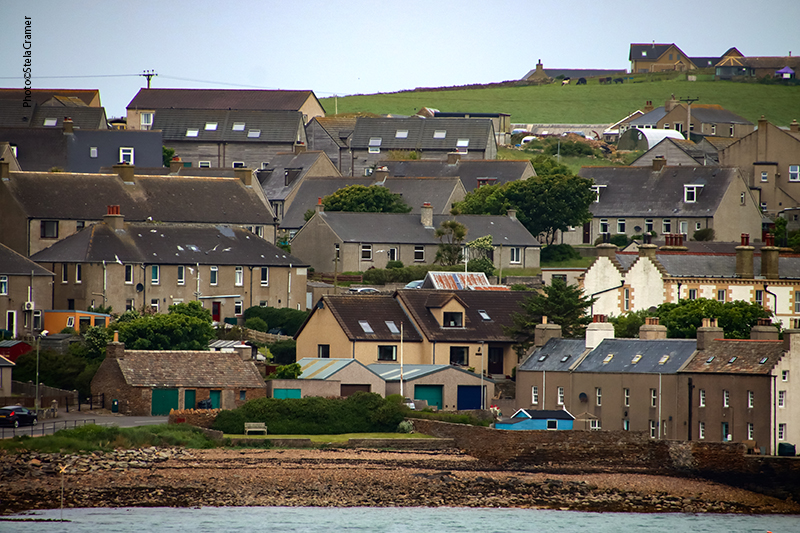
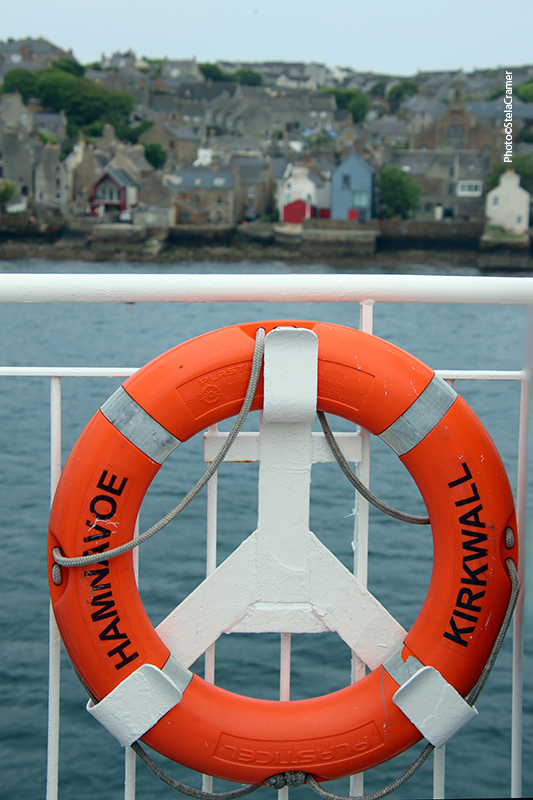
Cidade vista do Ferry / Village view from the Ferry

De qualquer forma, é tudo fantástico, e tentei visitar tantos monumentos quanto foi possível, assim como as principais cidades: Kirkwall e Stromness, em Mainland – a maior ilha do arquipélago Orkney. Aqui seguem algumas fotos, antes de prosseguir com a Arqueologia.

Anyway, it’s all more than interesting, awesome, and I tried to visit as many monuments as possible, as well as the main cities: Kirkwall and Stromness, in Orkney Mainland. Here you can see some photos, before going back to Archaeology.

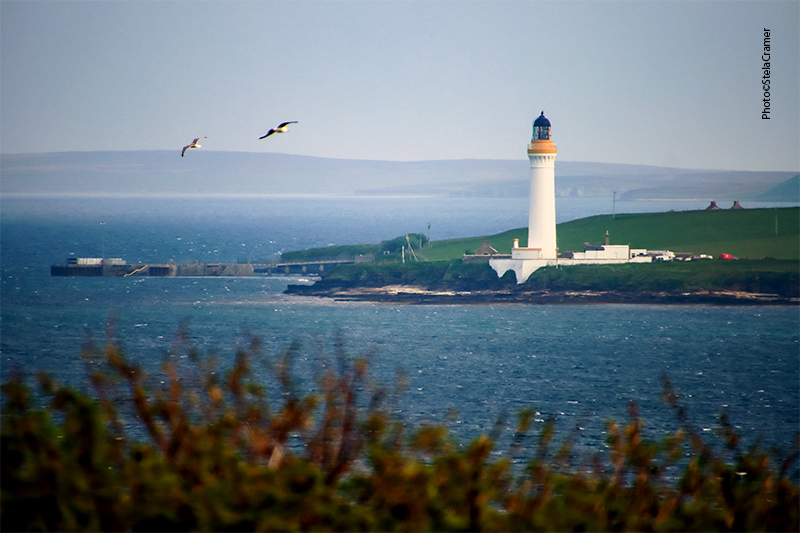
O Farol / the Lighthouse
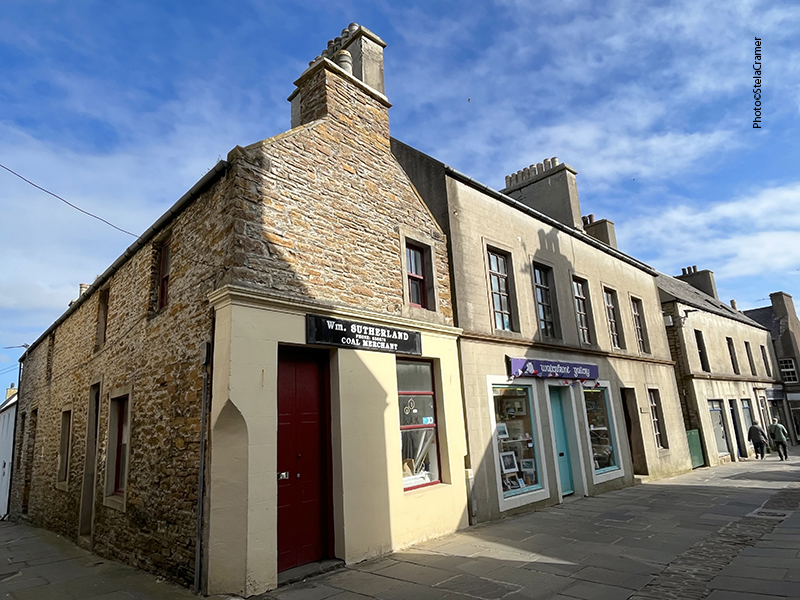
Victoria Street, rua principal, onde ficava meu hotel / The main street, where my hotel was located
Hotel muito bem localizado, mas precisando uma reforma urgente/ Perfect location, but needs a thorough renovation
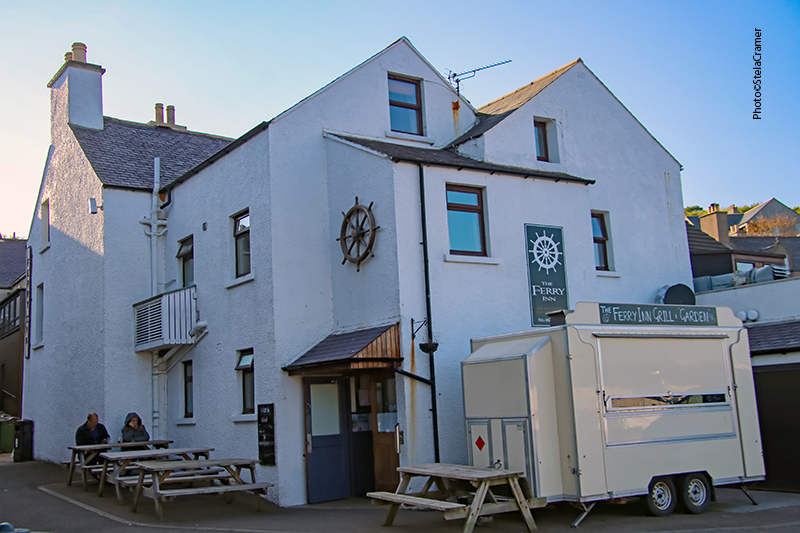
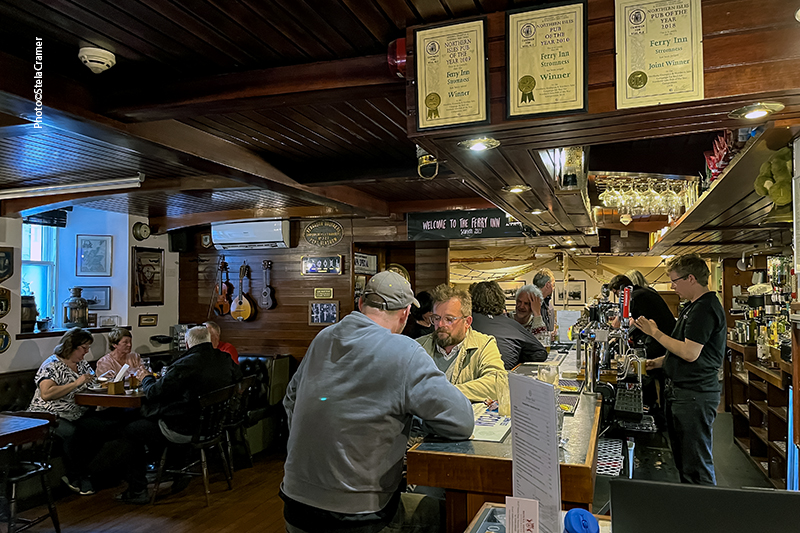
Em frente ao Terminal fica o Ferry Inn, excelente restaurante / In front of the Ferry Terminal is an awesome restaurante, the Ferry Inn
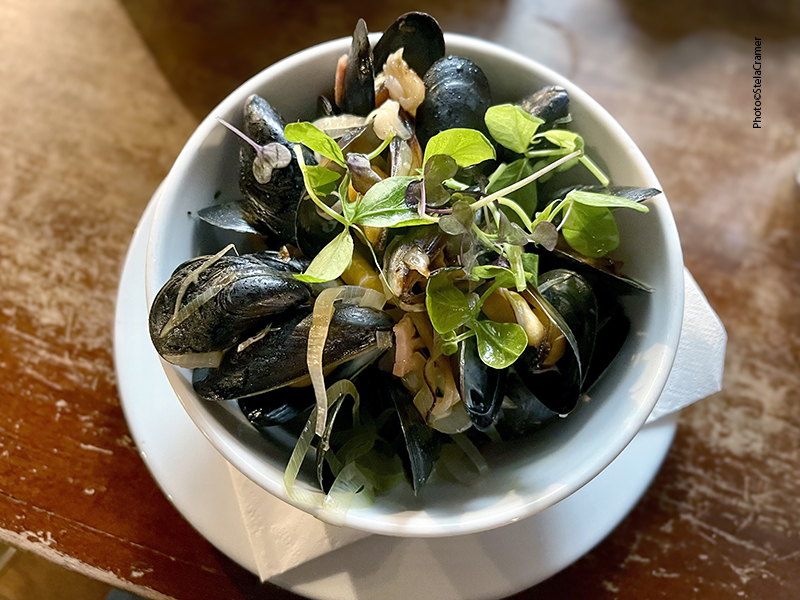
Comi muito bem nessa viagem / I ate very well in this trip
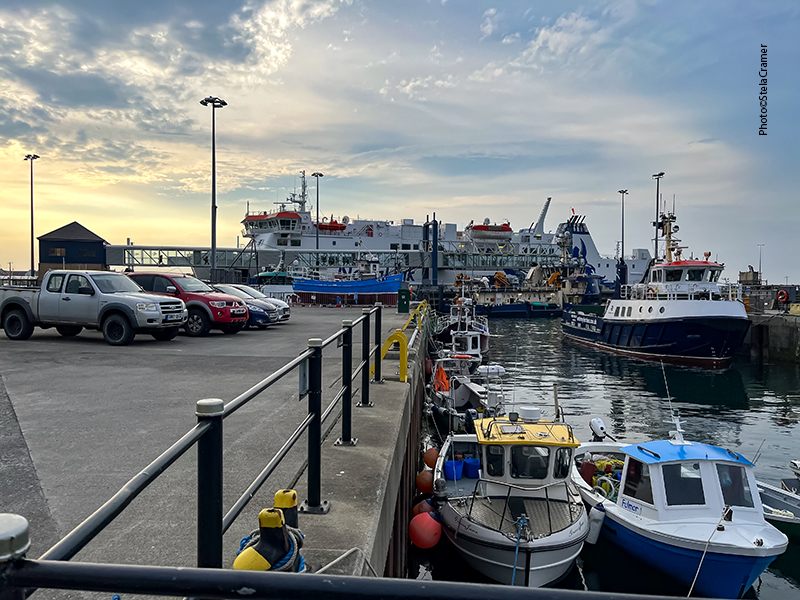
Terminal do Ferryboat / Stromness Ferry Terminal
Tive uma ótima surpresa depois do jantar: esta banda estava tocando no estacionamento do Terminal do Ferry./ What a great surprise! After dinner, I saw this pipe Band playing at the Ferry Terminal Car Park.
Ferryboat chegando no Terminal / Ferry arriving at the docks
Dr John Rae was an Orcadian Arctic Explorer who never received the same recognition for his achievements as other Arctic Explorers, because Rae discovered the fate of the Franklin Expedition, concluding that the missing sailors had been forced to resort to cannibalism. The British establishment condemned Rae’s findings and questioned his integrity. In 2013 Stromness celebrated Dr John Rae’s 200th Anniversary by unveiling this statue, created by sculptor Ian Scott of North Ronaldsay.
Dr John Rae foi um explorador do Ártico, mas seus feitos nunca tiveram o mesmo reconhecimento que os de outros exploradores. Isto porque ele descobriu que fim levou a desaparecida Expedição Franklin, concluindo que os marinheiros tinham sido forçados a praticar canibalismo como último recurso de sobrevivência. O Governo Britânico refutou suas descobertas e questionou mesmo sua integridade. Para comemorar os 200 anos do explorador, em 2013, foi inaugurada esta estátua criada pelo escultor Ian Scott, de North Ronaldsay.
Seguindo Victoria Street: à esquerda, entrada do Centro de Artes Pier, galeria aberta à visitação gratuita / Following Victoria Street: to the left, entrance of The Pier Arts Centre, an entrance free Gallery
A galeria tem obras de artistas Britânicos do século 20 tais como Barbara Hepworth e Ben Nicolson/ The Pier Arts Centre contains works by 20th century British artists such as Barbara Hepworth and Ben Nicolson
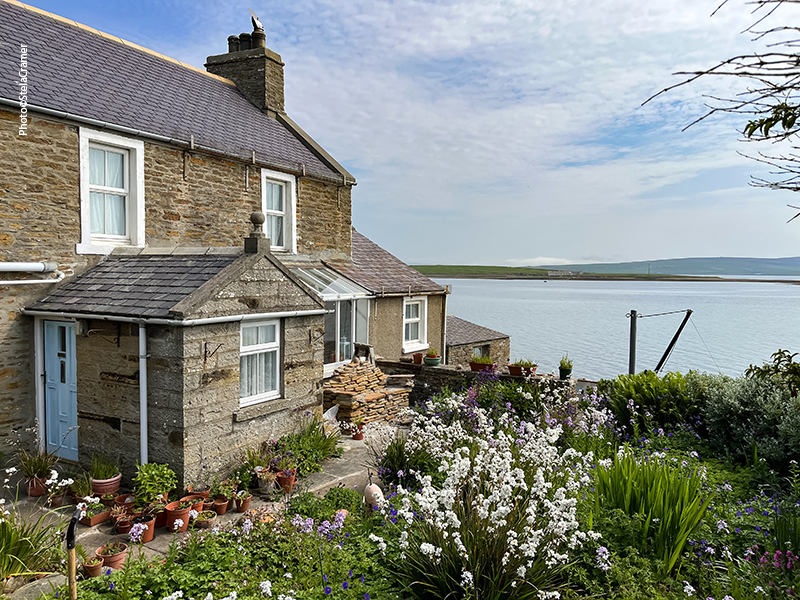
Casas em Stromness num dia de verão/ Stromness Houses in a summer day

Não descobri a razão para esta “fatia” faltar em algumas paredes

I couldn’t find a reason for this “missing slice” in some walls

Victoria Street vira Dundas e depois Alfred Street / Victoria Street becomes Dundas Street and then Alfred Street
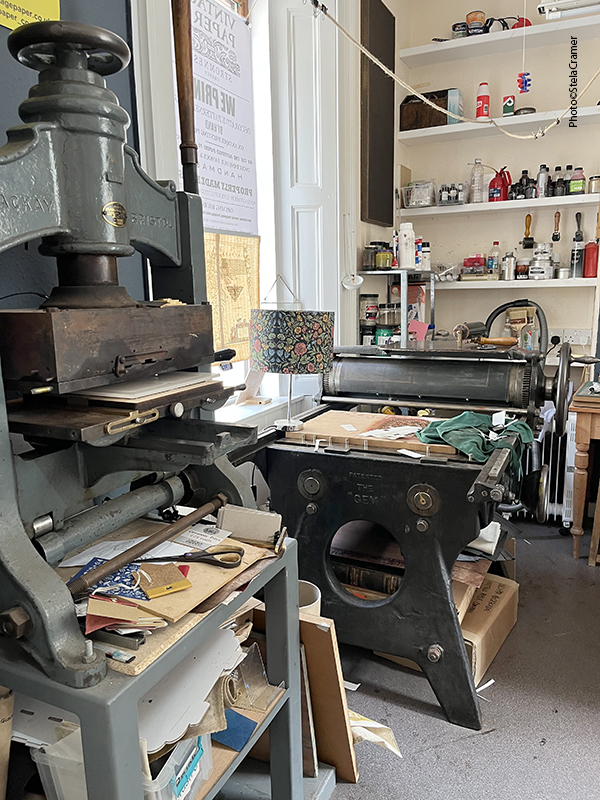
Tive sorte em encontrar este atelier maravilhoso, recomendo a visita: Vintage Paper Co., 4 Alfred Street / I was lucky to find it, and strongly recommend you visit this wonderful print shop: Vintage Paper Co., 4 Alfred Street
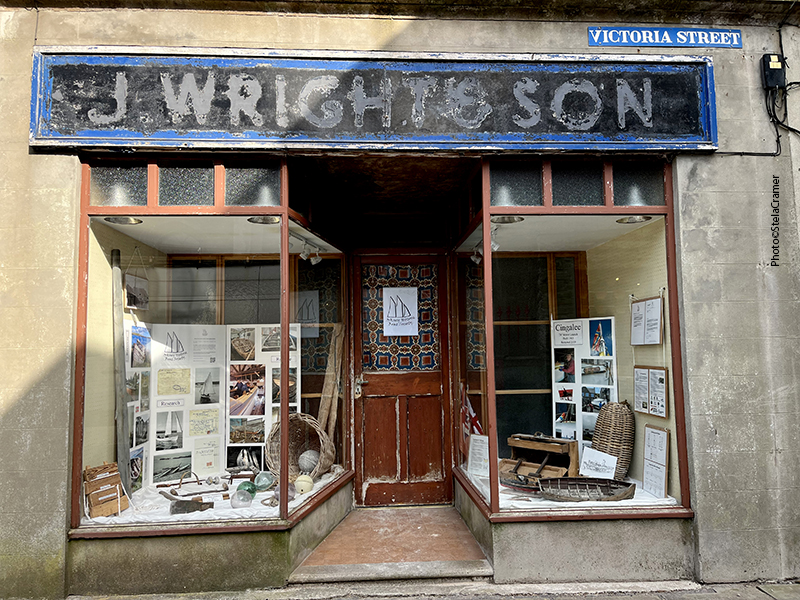
Já esta lojinha parece ter, infelizmente, fechado / Unfortunately, this little shop has apparently closed
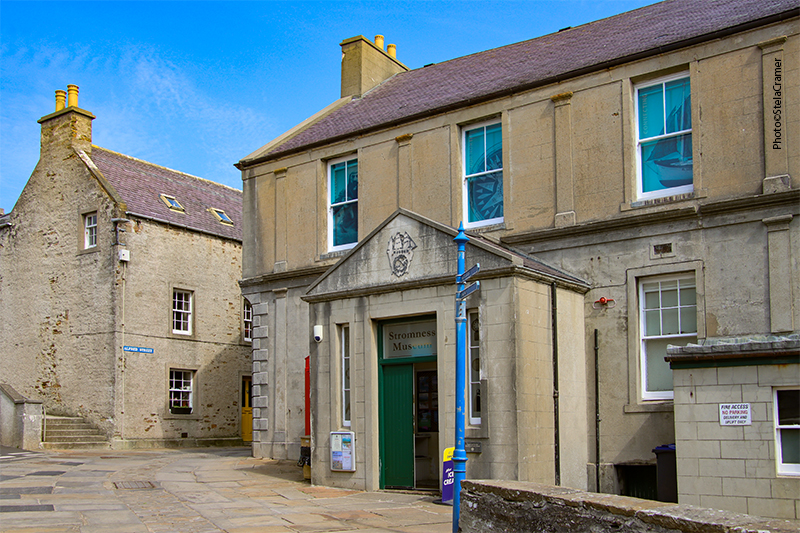
O Museu de Stromness abriga objetos e curiosidades incluindo itens dos navios da Segunda Guerra, ferramentas de sobrevivência dos exploradores, assim como fósseis, conchas e pássaros que nos contam um pouco da história natural de Orkney. / Stromness Museum displays artefacts and curios including wartime items from the ships in Scapa Flow, survival tools for Arctic Explorers and sea chests. It also covers the natural history of Orkney, displaying fossils, shells and birds.
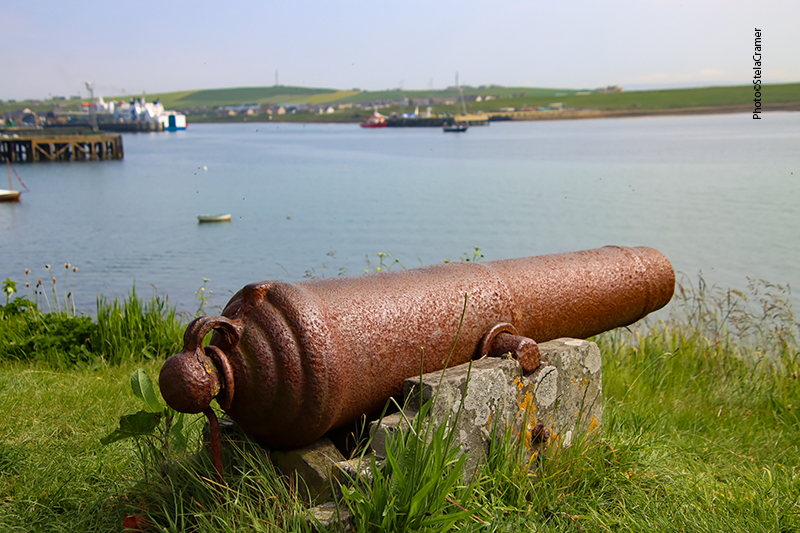
Este Canhão fica numa pracinha um pouco adiante do Museu. Era de um navio americano, o Liberty. Costumavam disparar sempre que chegava a Stromness um navio da Hudson’s Bay Company. / The Cannon sits on a grassy verge a few steps ahead of the Museum. It comes from an American Privateer, The Liberty. In the past it was fired whenever a Hudson’s Bay Company ship arrived in Stromness.
O lugar é perfeito para apreciar a vista do mar. / A great place to stop to enjoy the sea view.
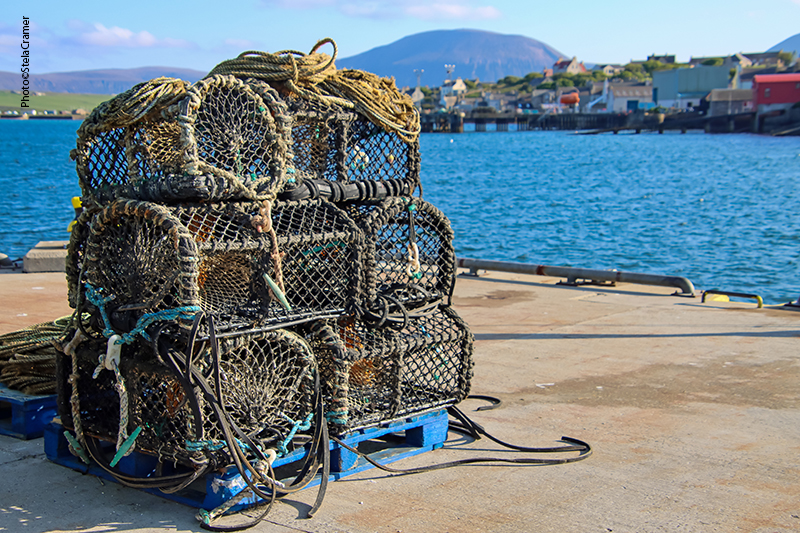
Armadilhas para lagostas, caranguejos, etc / Lobster traps
Ferry chegando a Stromness / Ferry arriving

Read Full Post »


Da janela do trem de Londres para Salisbury avista-se um enorme cavalo carvado na montanha, uma das tantas “figuras de giz” que existem no Reino Unido; postarei fotos em breve com mais informações. One of the many massive horses (chalk figures) of UK seen by the window, in the train from London to Salisbury. Soon more photos and information on the subject.

Minha viagem foi incrível, porém caótica. Como eu tinha casa em Londres, fiquei o tempo todo voltando para lá em vez de traçar uma rota e seguir sempre em frente. Mas não, fiquei indo e vindo como um peru tonto na véspera de Natal. Talvez por estar viajando sozinha pela primeira vez, ter a casa do Fernando como base me dava segurança. Além disso, carregar a mala para toda a parte seria… uma mala sem alça! Imagine ir ao Solstício com aquele trambolho. Deixava a mala em Londres e levava uma mochila para viagens curtas. As estações não tem guarda-volumes, por medo de atentados a bomba.  Além disso, a passagem ida e volta é mais barata.
A primeira viagem foi em 2005; não faz tanto tempo assim, mas a Internet evoluiu uma barbaridade nesse tempo. Não havia Google Maps, Wikipédia, Facebook, blogs ou Twitter. Nem celular acessava a Internet!
Recomendo sempre consultar na Wikipedia (em inglês) as cidades que se pretende visitar. Além das informações básicas, há sempre uma lista de links onde consta o site oficial das cidades, que facilita muito a reserva de acomodações.
Pessoalmente, gosto de me hospedar em albergues, pois são bons, baratos e você sempre pode fazer amigos. A palavra chave no Google é backpackers, mas adianto aqui alguns links.

My trip was amazing, but chaotic. As I had a “home” in London I kept going back there instead of going straight ahead. I went forth and back like a drunk turkey in Christmas’ Eve. Maybe I felt safe and warm with Fernando, that was my first trip all by myself. Besides, I had a suitcase to carry, it was such an encumbrance, imagine taking it to Summer Solstice! Lockers are not available in stations anymore, people are afraid of bomb attacks. And return tickets are cheaper. So I ‘d rather do with a backpack and shorter journeys, leaving the suitcase in London.
My first trip was in 2005, not so long ago, but Internet developed tremendously in the meantime. I had no Google, Wikipedia, Facebook, blogs or Twitter. Mobiles couldn’t access the web.
My advice is to search the cities you want to go in the english Wikipedia. There’s always plenty of basic information and links to the cities’ official sites, which helps a lot to book accomodation.
I’m fond of hostels because they’re fine and fair, and a good place to make friends.
The keyword in Google is backpack, but here you have some links:

www.backpackers.co.uk

www.hostels.com

www.bug.co.uk

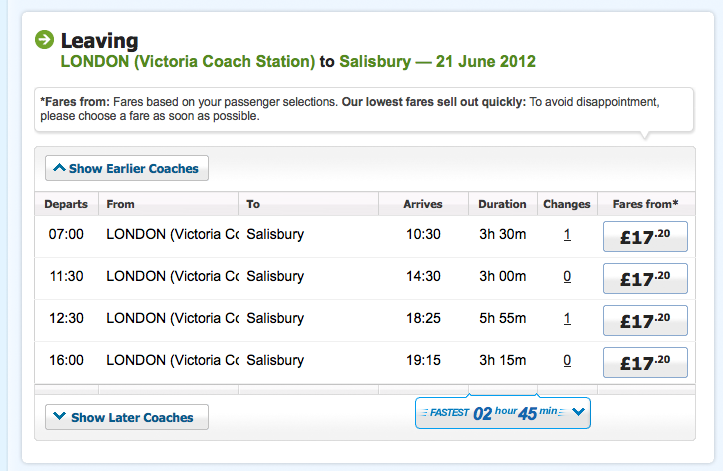
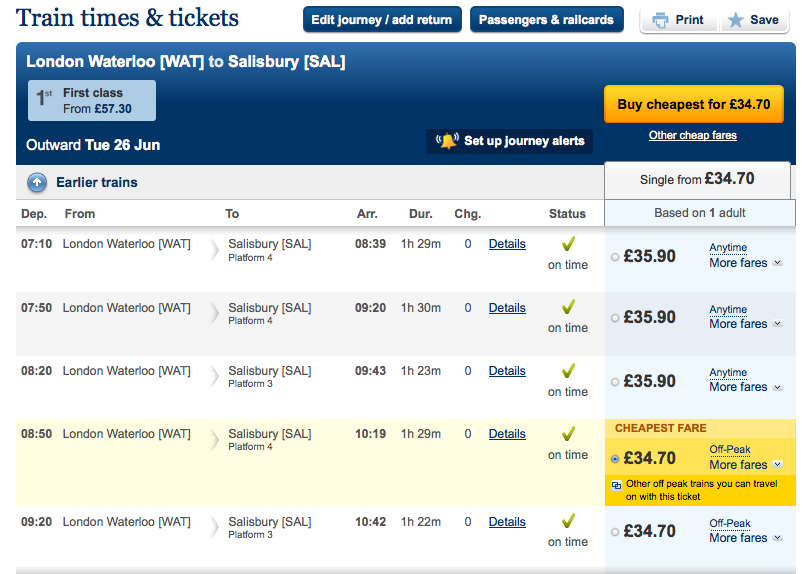
Para ir de Londres a Salisbury, você pode pegar o trem em Waterloo Station ou o ônibus em Victoria Station. Ambos tem saídas frequentes, mas compare preços e duração da viagem. Às vezes o preço da passagem é o mesmo mas um trem faz muito mais paradas que o de outro horário,  podendo a mesma viagem levar uma ou três horas. A quantidade de baldeações também faz muita diferença, especialmente se você carrega muito peso.

To go from London to Salisbury you can take a train in Waterloo Station or a coach in Victoria Station. Both provide frequent departures; you want to compare fares and duration. Sometimes the fare is the same but one train stops many times more than the next, so your trip can be twice or three times longer. Mind how many times you’ll have to transship, specially if you carry heavy bags.

Horários e preços de ônibus de Londres para Salisbury, partindo de Victoria Station

Trem de Londres para Salisbury: mais confortável, porém mais caro / From London to Salisbury by train: more comfortable, but more expensive

De Londres para Glastonbury não há trem, apenas ônibus com baldeação. Há quem vá de avião até Bristol, mas de lá terá que embarcar num ônibus. Saem vôos dos aeroportos de Heathrow e Gatwick.

From London to Glastonbury there’s no train, only coaches and buses. You can fly to Bristol but from there you can’t avoid the bus. Flights depart from Heathrow and Gatwick airports.

Londres/Glasto de ônibus
London/ Glasto by coach and bus

Viagem mista: London/Glasto de trem e ônibus, via Bristol
London/Glasto by train and bus changing in Bristol

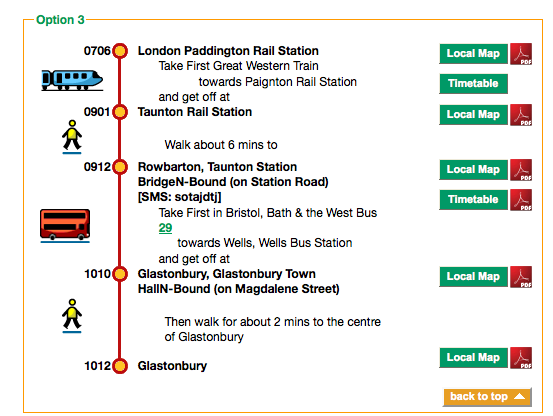
Outra possibilidade de viagem mista: London/ Glasto Via Taunton, menos baldeações
Another possibility, through Taunton, you only change once

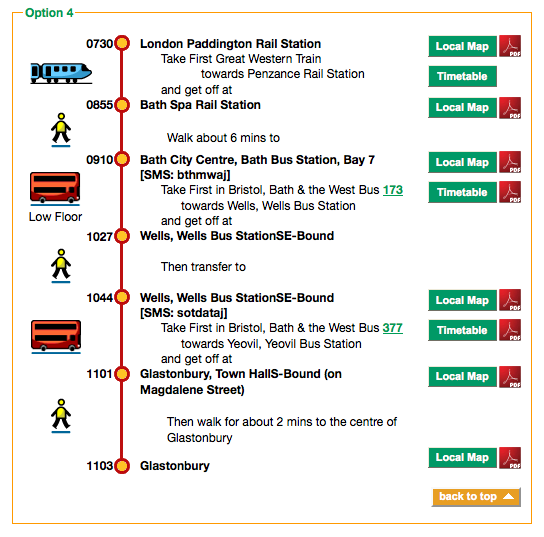
London/ Glasto through Bath

Analisando todos os trajetos, caso você queira refazer meus passos, partindo de Londres sugiro ir primeiro a Glastonbury. De Glastonbury pegue o ônibus para Bath, conforme linha acima. De Bath siga para Salisbury, para visitar Stonehenge. Salisbury é ponto de baldeação para: Cardiff, no País de Gales;Winchester, Avebury (a 37 km de Stonehenge) e outros lugares aonde chegaremos neste blog, como Tintagel, na Cornualha.

If you want to follow my steps, from London you better go straight to Glastonbury. From there take the bus to Bath. From Bath go to Salisbury, to visit Stonehenge. Salisbury is the place to change to Cardiff in Wales; Winchester, Avebury ( about 22 miles from Stonehenge) and many other places we’ll be arriving soon in this blog, as Tintagel in Cornwall. I got  these coach and train routes in this useful site for planning trips in UK. You’ll see below  the options to go from Salisbury to Glastonbury.

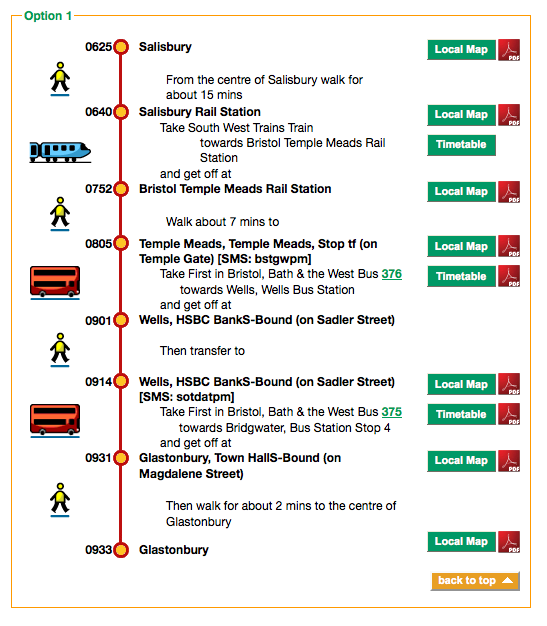
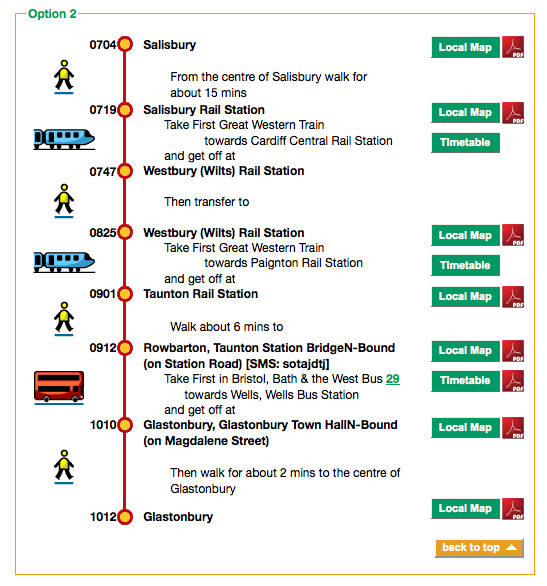
Estas viagens mistas obtive num site muito útil para planejar uma viagem no Reino Unido:

www.travelinesw.com

Aqui as opções para ir de Salisbury a Glastonbury:

Salisbury/ Glasto option 1

Salisbury/ Glasto option 2

Salisbury/ Glasto option 3

Para mais informações sobre trens/ More  train information:

www.nationalrail.co.uk

www.southwesttrains.co.uk

www.mytrainticket.co.uk

www.crosscountrytrains.co.uk

Ônibus / Coach:

www.nationalexpress.com

Read Full Post »