Feeds:
Posts
Comentários

Posts Tagged ‘ferryboat’


Broch de Gurness em Mainland visto de Rousay / Broch of Gurness in Mainland seen from Rousay

O Estreito de Eynhallow separa a ilha de Rousay de Mainland, a maior ilha das Orkneys, mas de uma se avista a outra. São apenas 3 km de distância. Dois Brochs ficam praticamente de frente um para o outro. Antes de visitar Midhowe vamos dar uma olhada em Rousay, apelidada de “Egito do Norte”, devido à quantidade e importância de sítios arqueológicos.

Eynhallow Sound divides the island of Rousay from Mainland, one in sight of the other, only 3 km apart. Two Brochs almost face each other across the water. Before visiting Midhowe, let’s take a look at Rousay. It has been nicknamed “Egypt of the North”, due to its archaeological diversity and importance.
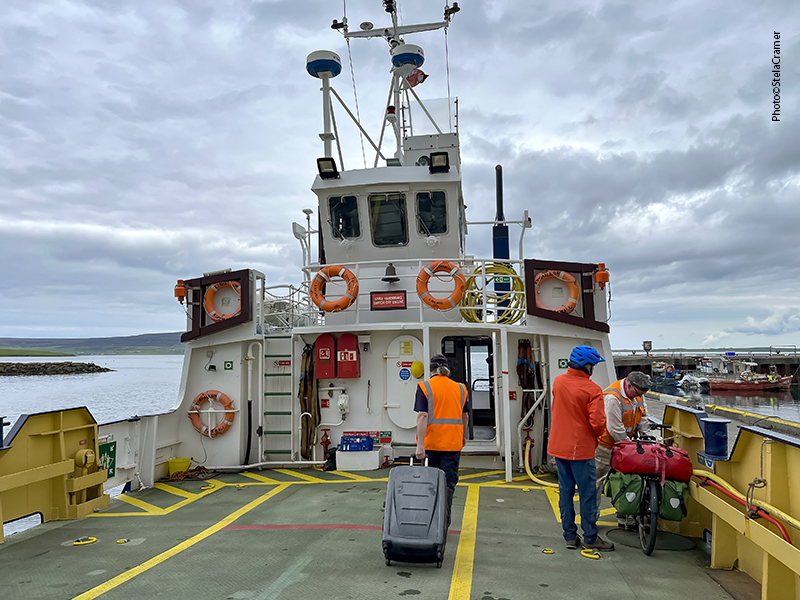
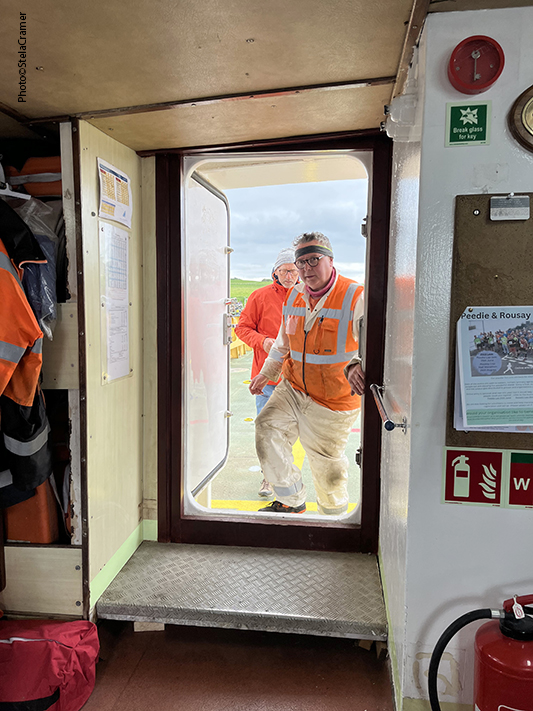
O ferry liga as ilhas de Rousay, Egilsay e Wyre entre si e com Orkney Mainland. Pode levar até 10 carros e 95 passageiros (no inverno apenas 50). / The ferry links the islands of Rousay, Egilsay, and Wyre with each other, and with the mainland of Orkney. It can take up to 95 passengers (reduced to 50 in winter), and 10 cars.

Depois de dois dias intensos em Westray e Papay (ver posts 167 a 170), peguei o ferry dia 6 de junho/2023 para Kirkwall apenas para pernoitar lá. Consegui um quarto no hotel Ayre, em frente ao terminal do ferry, e bem perto do terminal de ônibus de Kirkwall, assim pude ir andando até a condução para Tingwall, outro terminal de onde sai o ferry para Rousay. Os horários dos ônibus e dos ferrys são todos coordenados. Tinha planejado pegar o primeiro barco mas não foi possível porque precisei antes encontrar uma pessoa, que vinha de Westray trazendo o cartão de crédito que eu tinha perdido lá. O atraso acabou sendo fortuito: o guia Patrick, com quem eu tinha agendado um tour de Rousay, embarcou no mesmo horário. Foi o simpático marinheiro do ferryboat que nos apresentou. Ao me ver na prancha de embarque, correu para me ajudar com a mala e, na conversa que se seguiu, perguntei como chegar ao Taversoe, onde reservara duas noites. Ele respondeu que eu estava com sorte. Patrick era pai da dona do hotel, e me daria uma carona com o maior prazer!
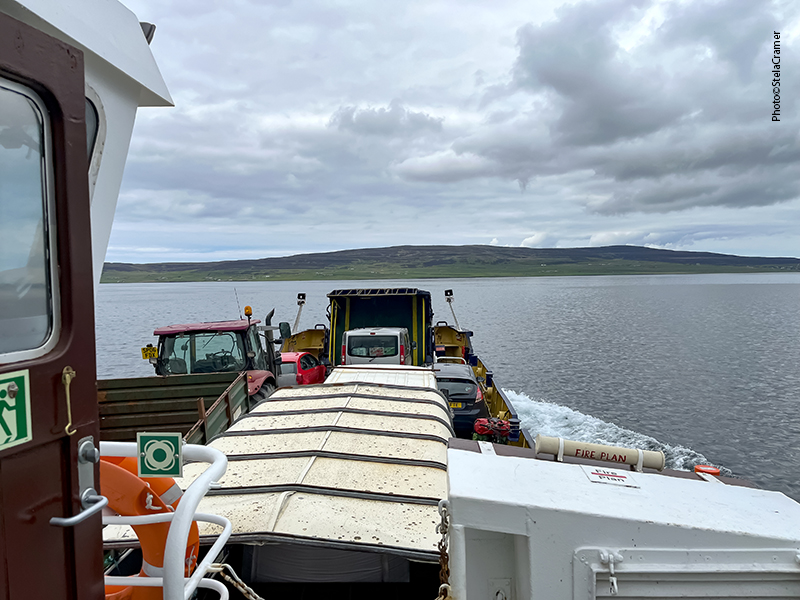
A travessia leva de 20 a 25 minutos / The journey takes approximately 20-25 minutes.

After intense days in Westray and Papay ( see posts 167 to 170), I took the ferry to Kirkwall the 6thJune, just to spend the night there. Got a room at the Ayre hotel, in front of the ferry terminal and walking distance to Kirkwall Travel Centre, where I could take the bus to Tingwall, another ferry terminal that services the Rousay line. The buses and ferries’ schedules are all coordinated. My plan was to board the earliest one, but I couldn’t because I had to meet someone coming from Westray, bringing the Credicard I had lost there. The delay proved fortunate: the guide Patrick, with whom I had booked a Rousay tour, was in the same ferry I took. As I was walking aboard, a lovely sailor hurried to help me with my suitcase and, when I asked him how to get to The Taversoe (where I had booked two nights), he smiled and said that I was lucky. He introduced me to Patrick, who was the Inn owner’s father, and was happy to give me a ride.
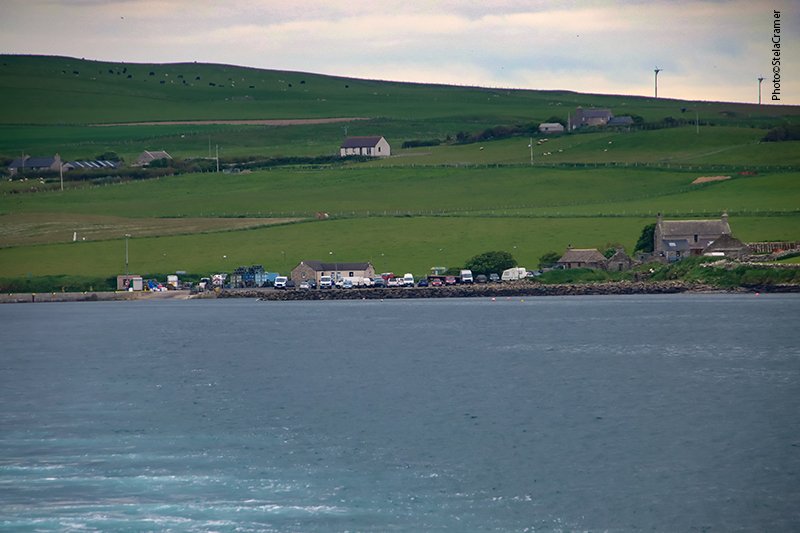
Tingwall Terminal
Rousay Ferry Terminal
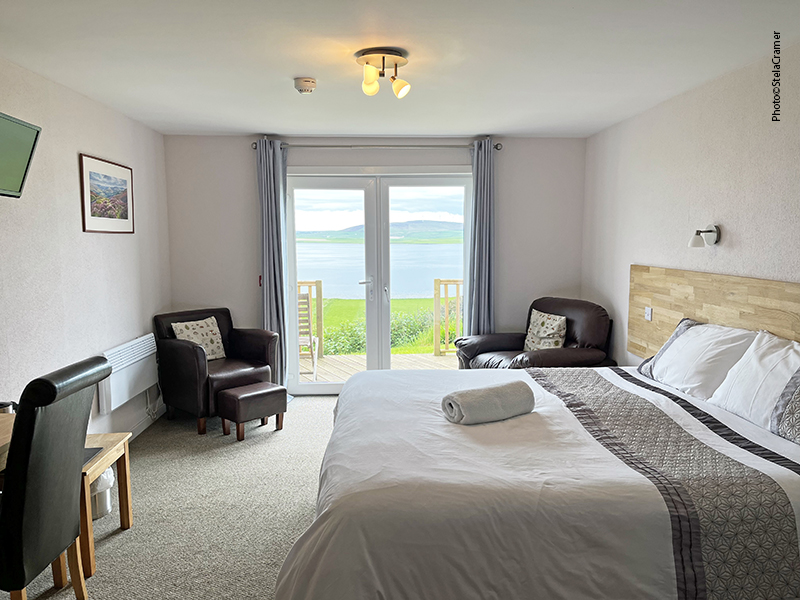
The Taversoe: o único hotel, bar e restaurante em Rousay, muito bom. / The Taversoe is the only Inn, Bar & Restaurant in Rousay, which I recommend.
Meu quarto era muito confortável, com um bom banheiro e varanda! Abaixo link para o site. / My room was very comfortable, with en-suite bathroom and a porch! Their website is:

https://www.taversoehotel.co.uk/

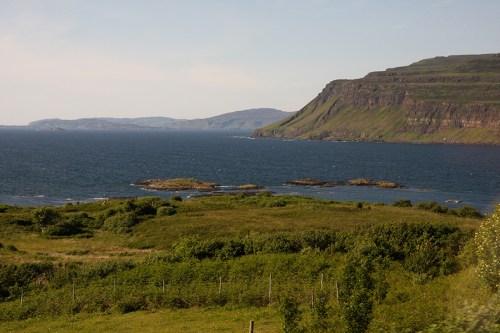
A impressionante vista da varanda: Mainland do outro lado do estreito /
The stunning view from the porch: Mainland across the water
O Broch de Gurness, que eu iria visitar em breve (ver Post 176), visível da varanda / Broch of Gurness, which I was going to visit soon (see Post 176), in sight from the porch

Foi uma sorte mesmo. Embora a distância fosse de apenas uns 2 a 3 km, consistia em subidas e descidas íngremes e estava chuviscando. Meu tour seria no dia seguinte, o que também foi uma sorte, pois abriu um lindo dia de sol. Aliás o sol apareceu naquele dia mesmo, um pouco mais tarde, apesar do mau tempo pela manhã. Eu já tinha tomado banho, uma pint e estava espichada na varanda do quarto apreciando a bela paisagem. À medida que caía a tarde pensei em dar uma volta, quem sabe capturar um belo por do sol! A mocinha na recepção me sugeriu subir uma trilha próxima, passando por uma pequena ponte, de onde eu teria uma linda vista. E lá fui eu toda contente.
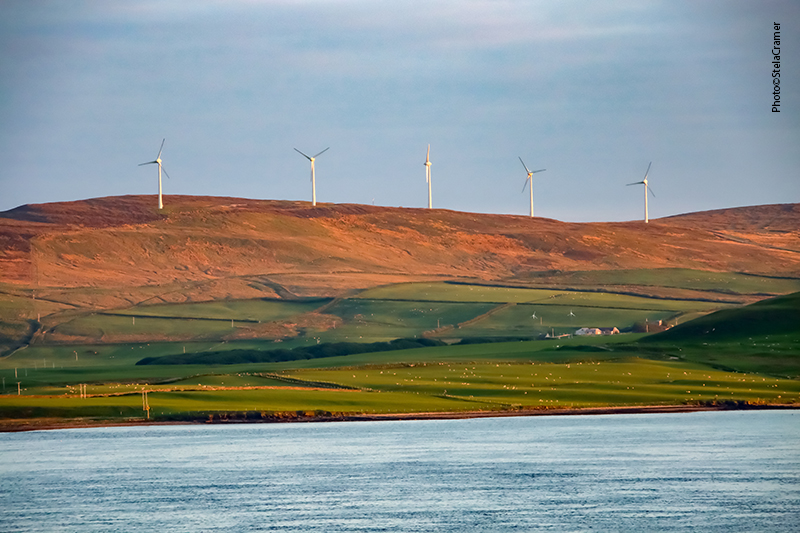
Sol poente, ovelhas e moinhos de vento / Sunset, sheep and wind farm turbines

I was lucky indeed. Although the Inn was just one mile away, the road was steep and a cold drizzle had started. My Island Tour would be the next day, lucky as well because it was a gorgeous sunny day. But the sun reappeared that same day, a bit later, despite the previous bad weather. I had already taken a shower, a pint and was lazying on the porch, reveling in the awesome landscape. As the afternoon approached dusk, I thought of going for a walk, perhaps capture a beautiful sunset. The clerk suggested a trail nearby, that crossed a small bridge, from where I’d have a stunning view. So there I happily went...
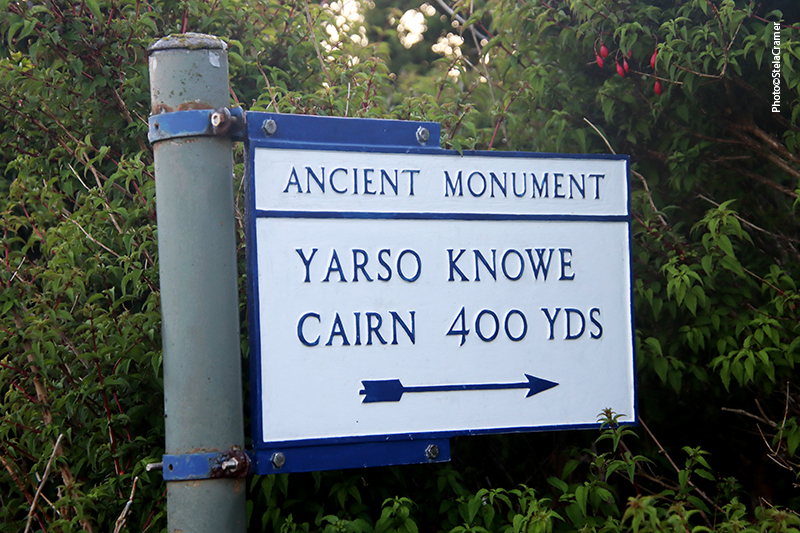
A trilha levava a um túmulo! Mais contente ainda, prossegui.
The trail led to a chambered cairn! Happier still, I went on.
A ponte indicada existia, mas não dava vista para nada além de mato / The little bridge was there but the view from it was just overgrown bushes
A trilha é quase invisível, mas a vista grandiosa/ The trail is almost invisible, but the view gorgeous

A trilha era praticamente inexistente, um caminho pedregoso no matagal, mais adequado para as ovelhas que por ali estavam do que para gente. Mesmo estas não me pareceram muito amistosas. Se afastaram quando passei, mas ficaram me encarando à distância. Levei quase meia hora para chegar à entrada do túmulo, quase suando apesar do vento frio.

The footpath was almost non-existant, steep, muddy and stony in the weeds, more appropriate to the sheep than to people. Even the sheep didn’t look very friendly. The got away as I went on, but kept staring at me from a distance. It took me around half an hour to reach the cairn. I was almost sweating despite the chilling wind.

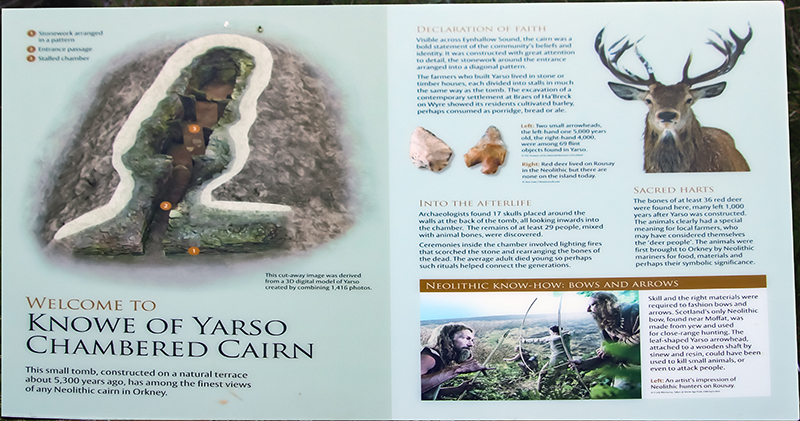
Knowe of Yarso data de 3500 a 2500 AC, mas cerâmica ali encontrada sugere que tenha permanecido em uso até 2000AC. O telhado não existe mais, mas as paredes permanecem mais ou menos da altura original. A câmara é dividida por lajes de pedra em compartimentos, semelhante a outras estruturas Neolíticas que visitamos.

Knowe of Yarso dates to between 3500 and 2500 BC, but pottery found inside the tomb suggests it remained in use until the late 2000s BC. Its roof is gone, but the walls still stand close to their original height. The chamber is divided into compartments by upright slabs, similar to other Neolithic structures we’ve seen before.

A entrada original ainda existe, embora o monumento tenha sido encapsulado numa estrutura de concreto com clarabóias e uma porta moderna. / The original entrance remains, although the monument is encapsulated in a sky-lit concrete cap with a modern door.
O fim da câmara / The chamber’s end

Knowe of Yarso é um entre pelo menos 15 outros túmulos semelhantes na pequena ilha. Arqueólogos acreditam que eram usados como cemitérios comunitários. Escavações na década de 30 encontraram os restos de pelo menos 29 esqueletos, e 17 crânios arrumados um ao lado do outro. Ossos de uns 36 cervos também foram desenterrados, assim como pederneiras, ferramentas de osso, pontas de flechas e pedaços de cerâmica.
Knowe of Yarso is one of at least 15 chambered tombs on the small island. Archaeologists believe these were used for communal burial. Excavations in the 1930s found the remains of at least 29 skeletons, with 17 skulls arranged side-by-side ; bones from at least 36 deer and also flint, bone tools, arrowheads, and shreds of pottery.

Assim, ali estava eu imersa em pensamentos, absorvendo a atmosfera e tentando bater umas fotos apesar da pouca luz, pois esta vinha por clarabóias cheias de sujeira acumulada, além disso estava escurecendo. Eis que escuto um barulho do lado de fora. As ovelhas tinham vindo até a porta de entrada. Imediatamente meu cérebro foi bombardeado por pensamentos assustadores: e se alguma delas esbarrasse na porta, fechando-a, e eu ficasse presa dentro da tumba? A tranca ficava pelo lado de fora. Meu celular estava com a carga no vermelho, tipo 10%, e ali não tinha sinal. Eu poderia gritar por socorro, mas não havia uma alma por perto para ouvir. Só iriam dar pela minha falta na manhã seguinte, na hora do tour, quando eu já teria com certeza morrido de fome (talvez) e de frio (certamente). Não trouxera mochila nem outro casaco. Rapidamente fiz mais um clique ou dois – inúteis, pois as fotos obviamente ficaram tremidas – e saí correndo.

So, there I was, deep in my thoughts, absorbing the atmosphere and trying to take some pictures in spite of the sparse light flowing through dirt covered skylights; besides, it was dusk. Then I heard a noise outside. The sheep had gathered next to the door. Horrible thoughts came to mind: what if one of them bumped the door closed and I got stuck inside the cairn? The lock was on the outside. My mobile was nearly dead – only 10% charge, and there was no signal. I could scream for help, but there was not a single soul around to hear me. I would only be missed in the morning, for the tour, and by then I’d be dead by starvation (maybe) or cold (definitely). I had no backpack or spare coat. So, I quickly took a couple more pictures – useless, obviously blurred – and ran away.

Run, Stela, run!

Demorei mais para descer a trilha do que para subir, pois já estava quase escuro. Não queria tropeçar e ir rolando os quase 400m até lá embaixo. Ou ir parar dentro do rio, que embora estreito devia ser gelado. As ovelhas ficaram lá de cima me olhando. Mas escapei.
It took me longer to get down the trail, because it was almost dark. I didn’t want to risk stumbling and rolling down 400 yards to the road. Or to the river, that was not broad but probably freezing. The sheep stood up there, still staring. But I had escaped.

A salvo, pousada à vista / Safe, the Inn within sight

Read Full Post »


VIew of DOuglas from the ferryboat
Douglas é a capital da Ilha. Aqui a cidade vista do ferryboat. Fiquei toda animada ao ver este pequeno castelo, mas fui informada que não era uma ruína antiga, e sim a Torre do Refúgio, construída neste recife em 1832. Muitos navios afundavam ali quando o recife ficava submerso, por isso construíram este refúgio onde sobreviventes podiam aguardar socorro.
Douglas is the island’s main city, here seen from the ferryboat. I was thrilled by the sight of this little castle, but soon learned that it wasn’y an ancient ruin, but The TOWER OF REFUGE, a structure built in 1832 upon the reef in Douglas Bay. After several shipwrecks upon the semi-submerged rock, a refuge was built for survivors, until help could arrive.
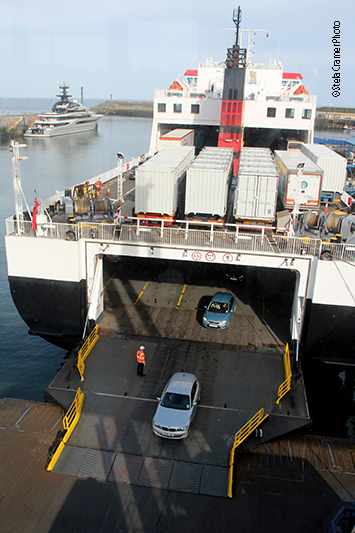
Carros desembarcando do Ferryboat./
Cars leaving the Ferry
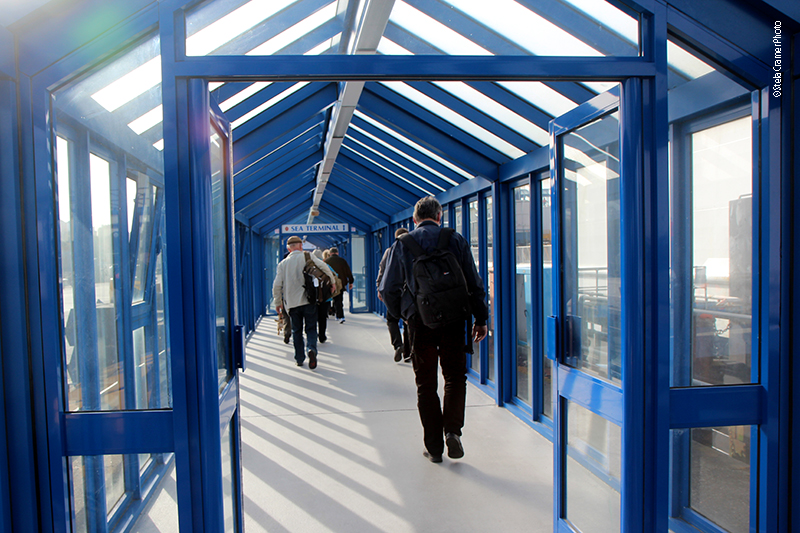
Desembarque de passageiros / Passengers leaving the Ferry
Desembarque da bagagem / Baggage claim
Os lindos edifícios de Douglas Promenade, que ocupa toda a extensão da orla /
Lovely buildings in Douglas Promenade, which runs nearly the entire length of beachfront in Douglas
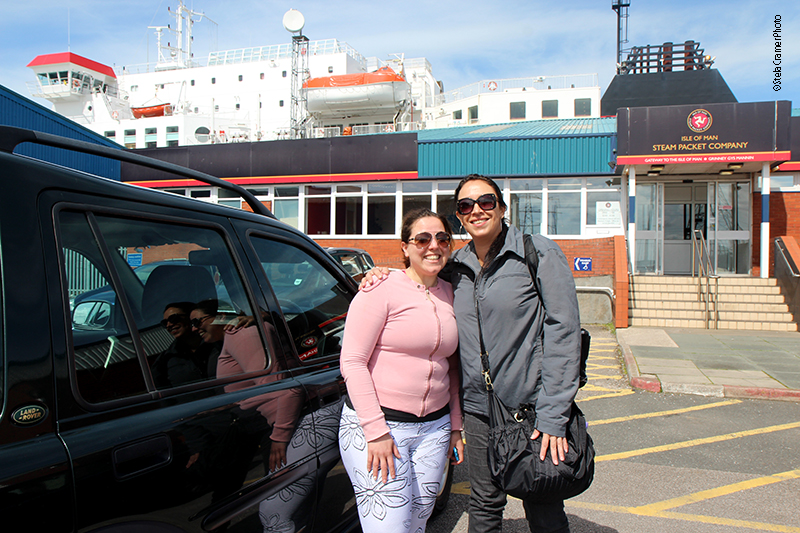
Após desembarcar fomos pegar um ônibus para Peel, nosso principal destino na ilha: ali se situa o castelo identificado como Avalon pela escritora e pesquisadora Norma Lorre Goodrich. As fotos já foram publicadas nos Posts 115 e 116 deste blog. / After landing, we got a bus to Peel, our main goal in the island: there stands the Castle identified by the writer and researcher Norma Lorre Goodrich as the real site of Avalon. Photos have previously been published in the Posts 115 and 116 of this blog.

Read Full Post »


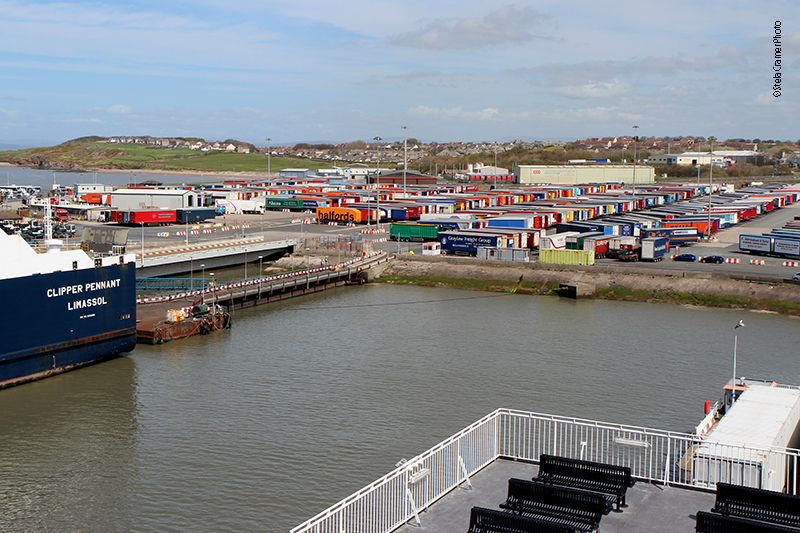
O ferryboat que nos levaria à Ilha de Mann. The ferryboat that would take us to Isle of Man
Fizemos amizade com a dona do hotel The Port House: uma brasileira, Munik. Ela nos levou até o porto de Heysham para pegar o ferry. We made friends with the Port House hotel’s owner, a Brazilian called Munik. She drove us to Heysham Harbour to take the ferryboat.
O ferryboat saindo do porto / Leaving the harbour
Navios vem abastecer nestes tanques de combustível gigantes / Massive tanks to fuel the ships
O porto de Heysham, com a cidade ao fundo / Heysham Harbour, the city in the background
Na mesma cidade há ruínas romanas e vikings, uma usina nuclear e uma eólica.
In the same city you can find Roman and Viking ruins, a nuclear plant and an eolian.

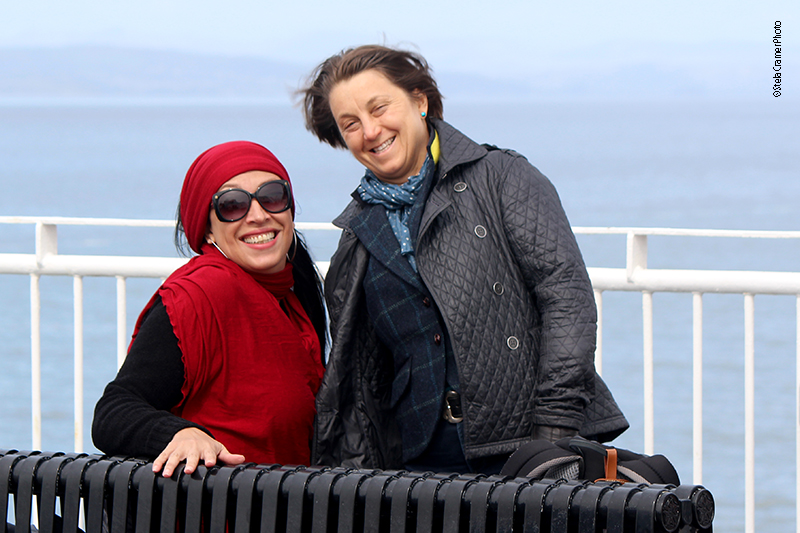
Conhecemos uma fotógrafa, que trabalhava num projeto sobre Mulheres Número 1 – campeãs em esportes, líderes de empresas, etc., e descemos com ela para o pub, pois estava frio apesar do tempo bom. O vento do mar é sempre frio.

We met this photographer who was working on a project about Number 1 Women – sports champions, company leaders, etc. ; we went down to the pub because it was cold despite the good weather. The sea breeze is always chilly.

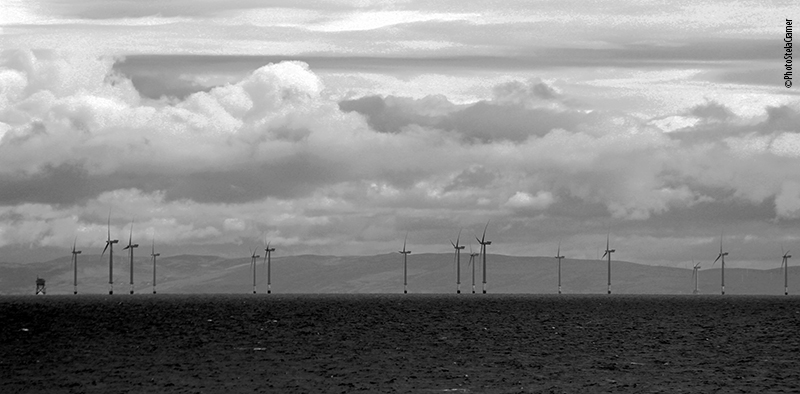
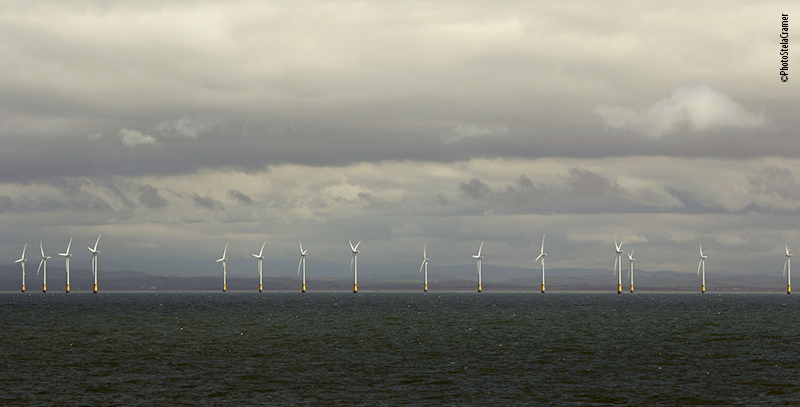
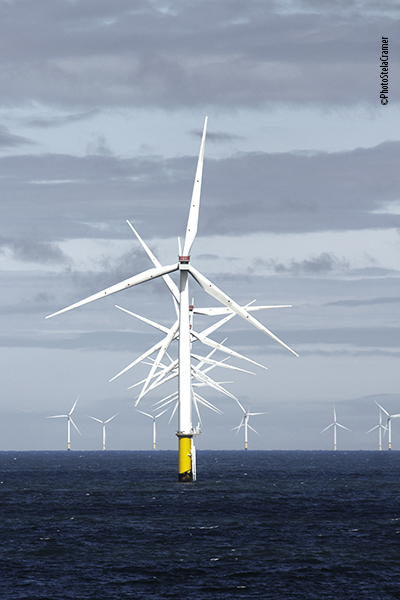
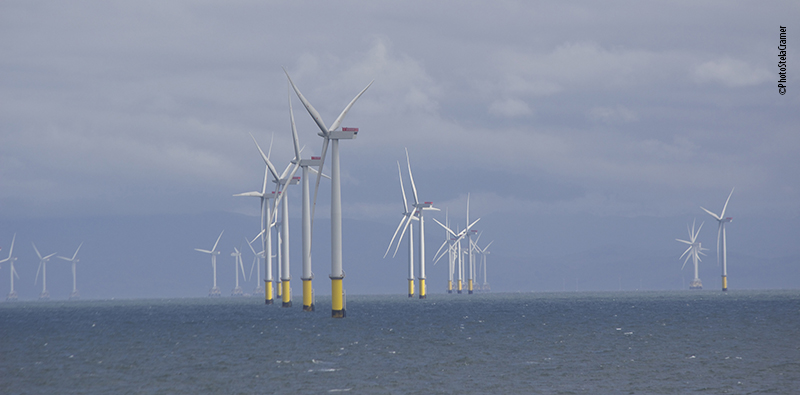
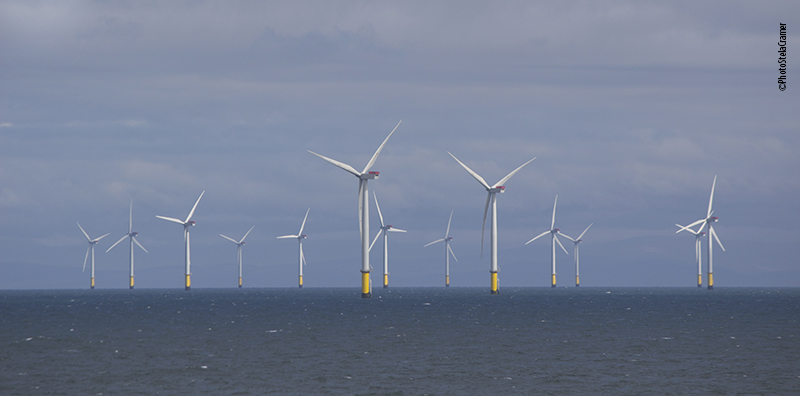
Meia hora depois quando voltamos ao convés o tempo tinha mudado radicalmente. Parecíamos estar em mar aberto, mas dentro de uma nebulosa. As cores do mundo se condensaram numa palheta de cinzas. E à medida que a névoa ia se dissipando, estranhas árvores surgiam: torres de energia éolica, plantadas no mar.

Half an hour later, when we went back to the deck, the weather had changed radically. We seemed to be in the open sea, but inside a nebula. The world’s color was condensed into a palette of shades of gray. And, as the mist faded away, weird trees appeared, planted in the sea: eolian towers.

eoliansIrishSea10

Eu já tinha visto tais torres mas nunca assim brotando do mar. Fiquei fascinada, e permaneci no convés fotografando até o limite da hipotermia.

I had already seen such towers but never like this, sprouting from the sea. It was fascinating, so I stayed in the deck taking pictures until the edge of hypothermia.

Cada vez que achava que tinha fotografado o suficiente, algo mudava na paisagem – um raio de sol, uma nuvem mais escura ou mais clara, e a diferença era tal que eu acabava ficando mais um pouco, apesar da dor nos ouvidos, nariz correndo e dedos congelados.

Everytime I thought it was enough, something changed in the landscape. A sunbeam, a darker or lighter cloud, and it made such a difference that I decided to stay a bit longer, in spite of aching ears, running nose, frozen fingers.

Por fim o tempo abriu. O vento gelado carregou as nuvens. Chegamos a Douglas, capital da Ilha de Man, numa bela tarde de sol.

Eventually, the strong chilly wind carried the clouds away. We arrived in Douglas, Isle of Man’s capital, in a lovely sunny afternoon.

Isle of Man

Read Full Post »


ferryboat

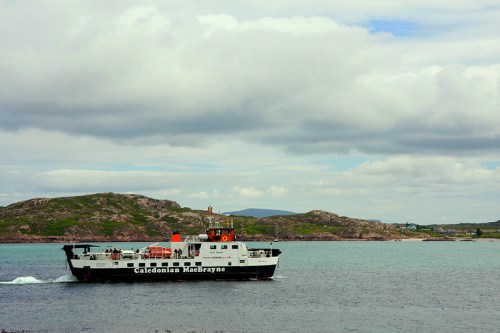
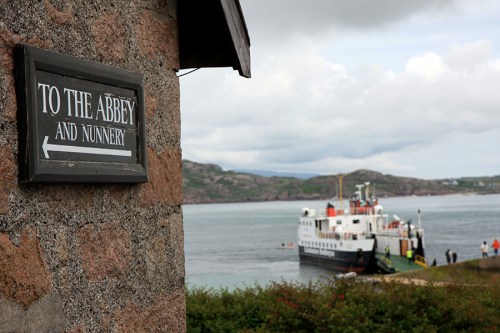
O ferryboat que liga Iona a Fionnphort (ao fundo) / The ferry connects Iona to Fionnphort ( in the background)

Não seria possível visitar a Abadia naquele dia devido à hora. A visitação se encerra às 4 da tarde e já seria quase isso quando eu chegasse lá. Optei então por apenas caminhar e registrar imagens.

I wouldn’t be able to visit the Abbey that day because it closed at 4 pm; it would be almost that when I arrived there. So my choice was just stroll around and take pics.

IMG_9628

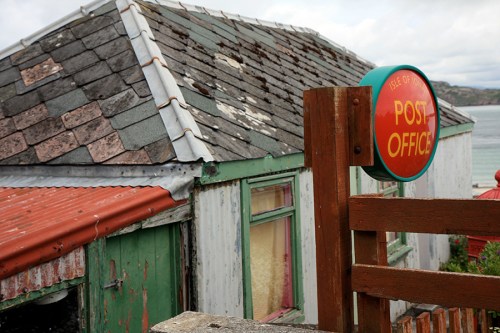
Isle of Iona Post Office

Correio de Iona / Isle of Iona Post Office

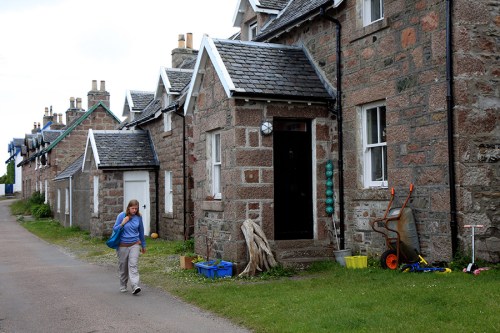
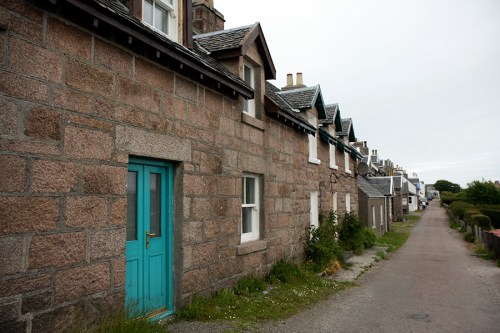
Isle of Iona street

A rua principal / The main road

Ainda a rua principal. Não vi nenhum carro na ilha. / Still the main street. I haven't seen a single car in the island.

Ainda a rua principal. Não vi nenhum carro na ilha. / Still the main street. I haven’t seen a single car in the island.

IMG_9636

IMG_9633

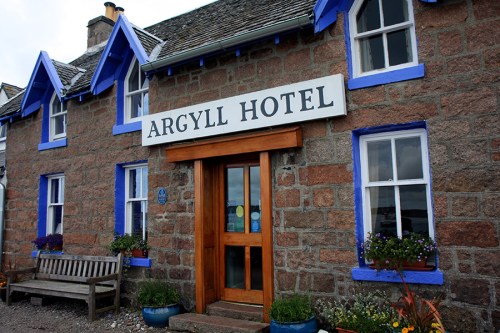
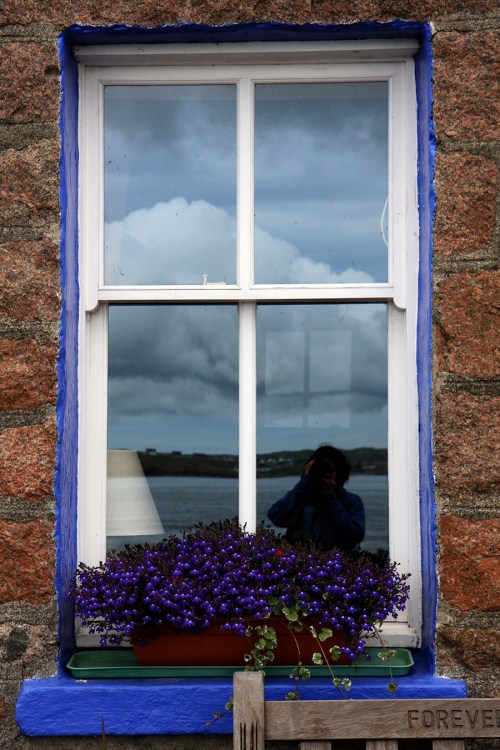
Selfie na janela do Hotel / Selfie in Argyll Hotel’s window

Iona Abbey footpath

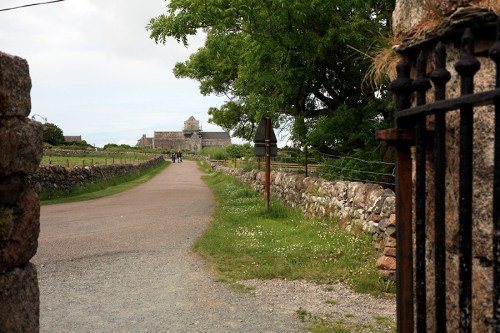
Caminho para a Abadia/ Footpath to the Abbey

IonaIV

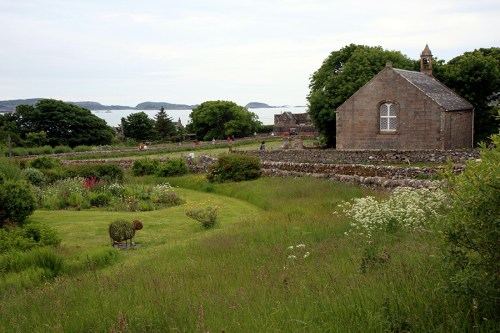
Jardim da capela junto à escola primária / Chapel’s garden, next to Primary School

Um belo jardim

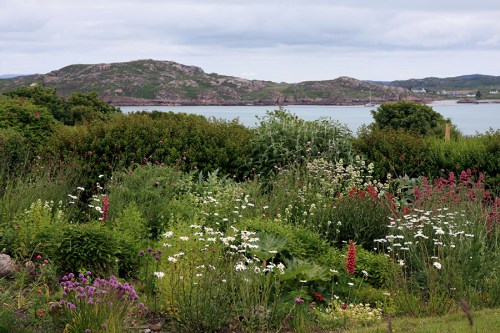
Um belo jardim britânico / Beautiful British Garden

Detalhes

Reduzir, reutilizar, reciclar. Eles fazem muito isso. / Reduce, re-use, recycle. They do it a lot.

IMG_9631


Iona Overview1 Horta orgânica com Abadia ao fundo./ Organic garden , Abbey in the background.

Iona Overview3

IMG_9635

Arquitetura / Architecture

IMG_9475

ForgetMeNot

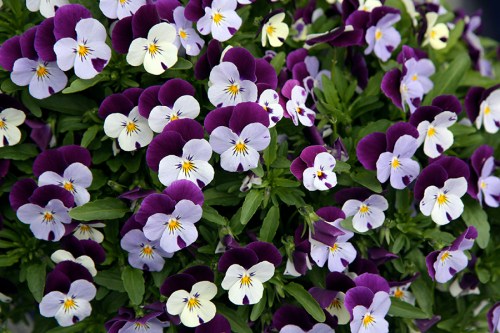
Amor-perfeito / Forget me Not


IMG_9520

Sempre elas, por toda parte./ Them! Always, everywhere.


IMG_9634

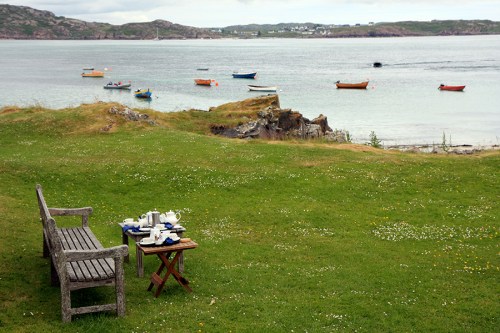
Chá da tarde com vista para o mar/ Afternoon Tea by the seaside

Iona Book Shop

Livraria / Iona Book Shop

Read Full Post »


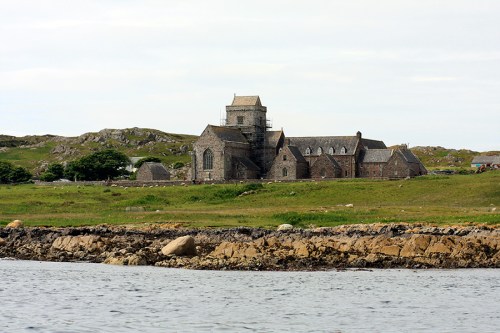
Iona Abbey

Iona Abbey

ionaBoatview01

Bay at the Back of the Ocean / Iona Landscape from the boat – 01

ionaBoatview02

Vista de Iona do barco / Iona Landscape from the boat – 02

ionaBoatview03

Vista de Iona do barco / Iona Landscape from the boat – 03

ionaBoatview04

Vista de Iona do barco / Iona Landscape from the boat – 04

ionaAbbeyBoatview03

Vista da Abadia de Iona do barco / Iona Abbey – Landscape from the boat – 05

ionaBoatview06

Vista do “centro” de Iona do barco / Iona Downtown – Landscape from the boat – 06

ionaBoatview07

Vista de Iona do barco – chegando!!!! / Iona Landscape from the boat , arriving!!! –

ionaBoatview09

Pessoas na praia aguardando a chegada do Ferryboat / People waiting Ferryboat’s arrival by the beach

ferryboat

Ferryboat. Fionnphort ao fundo / Fionnphort in the background

IonaBoats

Luz do sol modificando as cores da paisagem / Sunlight changing the landscape’s color chart

IMG_9640

Nuvens escuras modificando a cor da paisagem / Gray clouds changing the landscape’s color chart

IMG_9639

Um trabalhador / Guy working

mussels

Primeira atividade em Iona: almoçar./ First activity in Iona: lunch!

Read Full Post »


obanLandscape

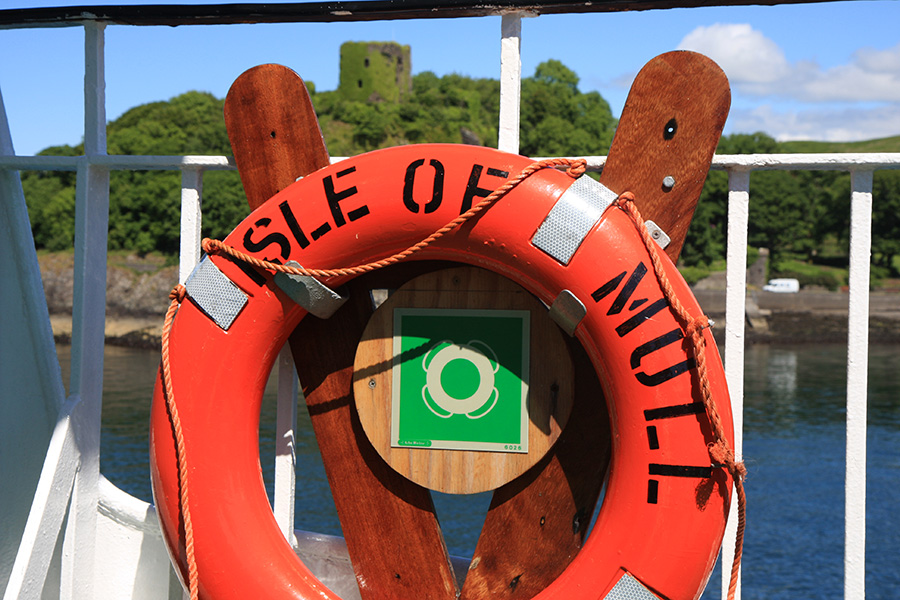
Oban, vista do Ferryboat / Oban, view from the Ferry


ferryMull

Saindo de Oban / Leaving Oban


ObanToMull01

A viagem de ferryboat para Craignure, em Mull, leva pouco mais de uma hora. / The ferry trip to Craignure, in Mull, takes little more than one hour.


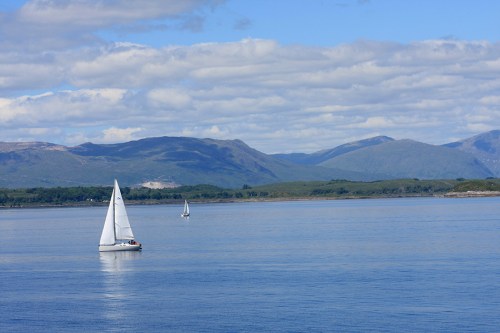
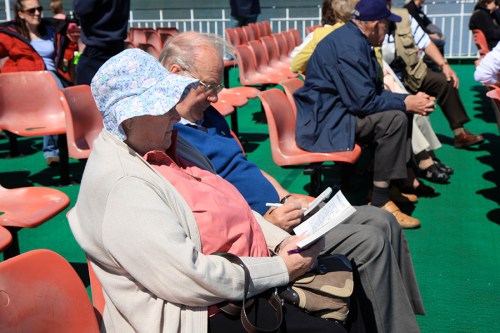
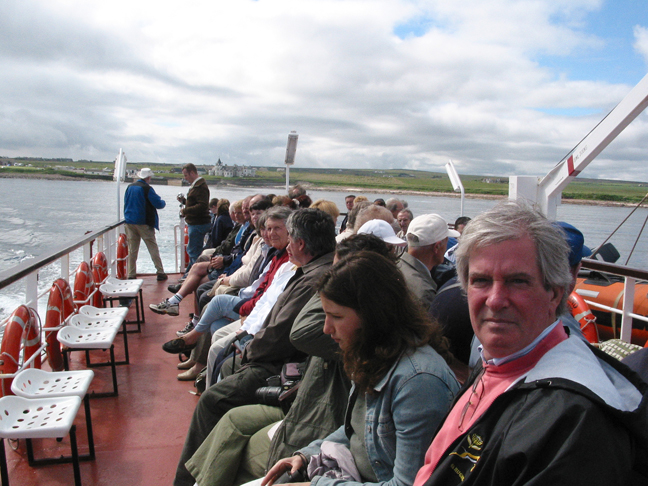
Passageiros aproveitando o tempo bom e a belíssima viagem. / The passengers were enjoying the gorgeous day and outstanding view.

Passageiros aproveitando o tempo bom e a belíssima viagem. / The passengers were enjoying the gorgeous day and outstanding view.


Travessia / Crossing

Travessia / Crossing


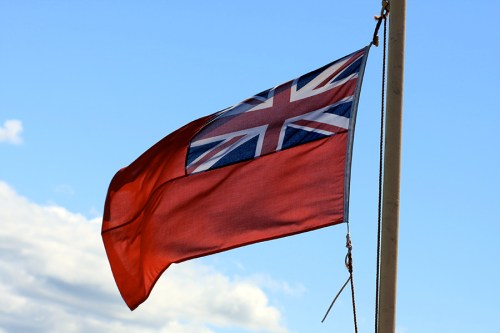
A bandeira vermelha, usada nas embarcações civis britânicas /The Red Ensign, used by civilian vessels.

A bandeira vermelha, usada nas embarcações civis britânicas /The Red Ensign, used by civilian vessels.


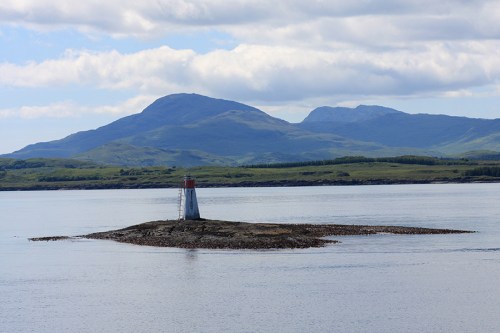
Farol / Lighthouse

Farol / Lighthouse


Outro farol / Another lighthouse

Outro farol / Another lighthouse


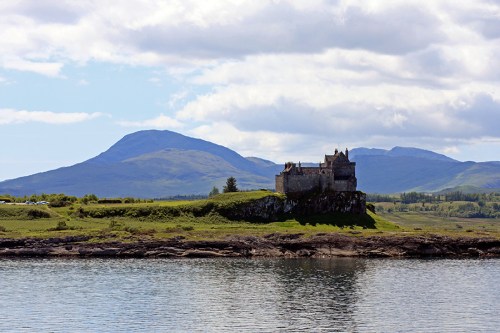
Duart Castle , Isle of Mull

Duart Castle , Isle of Mull


Palavras cruzadas e sudoku são muito populares entre os britânicos / Crosswords and sudoku are very popular in Britain

Palavras cruzadas e sudoku são muito populares entre os britânicos / Crosswords and sudoku are very popular in Britain


Chegando a Craignure / Arriving at Craignure

Chegando a Craignure, lugar com cerca de 200 habitantes. A Ilha de Mull tem mais ovelhas que gente. / Arriving at Craignure, population of roughly 200 people. In Mull there are more sheep than people.


Desembarquei por volta das 15h. Como o ônibus para Fionnphort só saía às 16h, tive uma hora para descobrir que não havia nada para ver em Craignure além deste lindo carro antigo./ The ferry arrived around 15p.m., and the bus to Fionnphort would leave at 16 p.m. So i had one hour to stroll around and find out that there was nothing to see in Craignure but this lovely old car.

Desembarquei por volta das 15h. Como o ônibus para Fionnphort só saía às 16h, tive uma hora para descobrir que não havia nada para ver em Craignure além deste lindo carro antigo./ The ferry arrived around 15p.m., and the bus to Fionnphort would leave at 16 p.m. So I had one hour to stroll around and find out that there was nothing to see in Craignure but this lovely old car.


Antes de embarcar no ônibus para Fionnphort, aproveitei o tempo para enviar e-mails para minha família no centro de apoio ao turista. /Before boarding the bus to Fionnphort, I had time to check my e-mail in the Visitor Information Centre.

Antes de embarcar no ônibus para Fionnphort, aproveitei o tempo para enviar e-mails para minha família no centro de apoio ao turista, única coisa que existe em Craignure além do cais /Before boarding the bus to Fionnphort, I had time to check my e-mail in the Visitor Information Centre. The Centre is the only existing thing in Craignure, besides the Ferry pier.


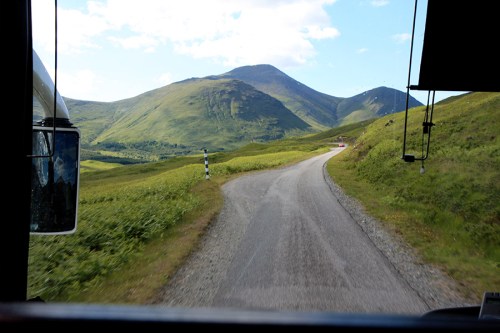
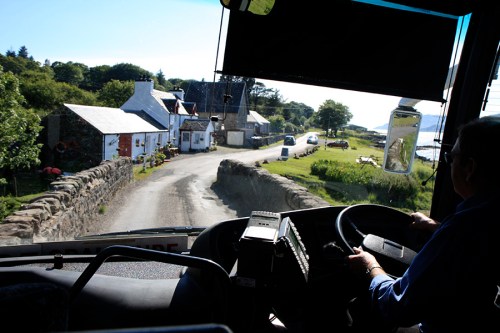
Fionnphort ficava no fim do mundo, embora eu ainda não soubesse disso. Foram horas atravessando pastos sem uma alma viva sequer, salvo as ovelhas que ali, no meio do nada, se plantavam tranquilas no meio da estrada. O motorista precisava parar e buzinar para que os bichinhos se levantassem e lentamente dessem passagem ao veículo. Fionnphort was at the end of the world, though I wasn’t still aware of that. The bus took hours crossing fields and pastures without a single living being except sheep. They lay down peacefully in the middle of the road; the driver had to stop and honk to make them get up and give way to the bus… slowly.

Fionnphort ficava no fim do mundo, embora eu ainda não soubesse disso. Foram horas atravessando pastos sem uma alma viva sequer, salvo as ovelhas que ali, no meio do nada, se plantavam tranquilas no meio da estrada. O motorista precisava parar e buzinar para que os bichinhos se levantassem e lentamente dessem passagem ao veículo.
Fionnphort was at the end of the world, though I wasn’t still aware of that. The bus took hours crossing fields and pastures without a single living being in sight except sheep. They lay down peacefully in the middle of the road; the driver had to stop and honk to make them get up and give way to the bus… slowly.


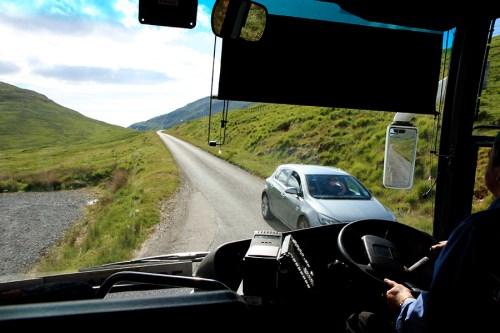
Como a estrada só tem uma pista, a cada tantos metros existe um pedacinho de acostamento chamado “passing place” para permitir que passem dois veículos sem colidir./ Passing place

Como a estrada só tem uma pista, a cada tantos metros existe um pedacinho de acostamento chamado “passing place” para permitir que passem dois veículos sem colidir./ Passing place


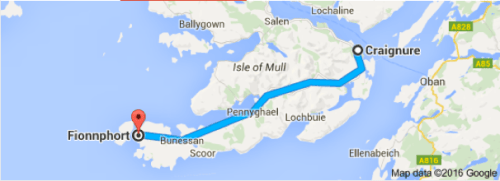
A viagem leva uma hora e meia, cruzando toda a ilha. It takes one hour and the half to cross the island by bus.

A viagem leva uma hora e meia, cruzando toda a ilha.
It takes one hour and the half to cross the island by bus.

Screen Shot 2016-01-04 at 02.04.48

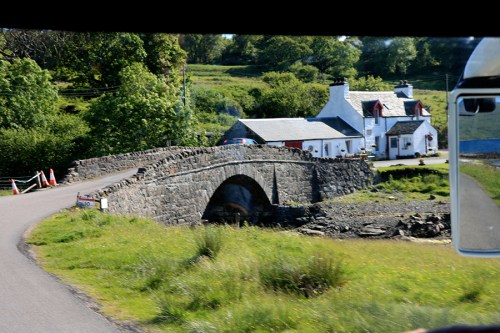
De vez em quando, passávamos por um vilarejo de, no máximo, uma dúzia de casas. From time to time, we passed by a village, never bigger than a dozen buildings

De vez em quando, passávamos por um vilarejo de, no máximo, meia dúzia de casas.
From time to time, we passed by a village, never bigger than half a dozen buildings


Quase seis da tarde e o sol ainda a pino / Almost 6 p.m. and the sun still overhead

Quase seis da tarde e o sol ainda a pino / Almost 6 p.m. and the sun still overhead


Marco na estrada / Landmark

Marco na estrada / Landmark


Quase chegando / Almost there

Quase chegando / Almost there


Fionnphort Pier

Fionnphort Pier


Fionnphort

Fionnphort landscape


Fionnphort é o segundo maior vilarejo na área, com aproximadamente 80 habitantes. Fionnphort is the second largest settlement in the area (its population is approximately 80).

Fionnphort é o segundo maior vilarejo na área, com aproximadamente 80 habitantes. / Fionnphort is the second largest settlement in the area (its population is approximately 80).


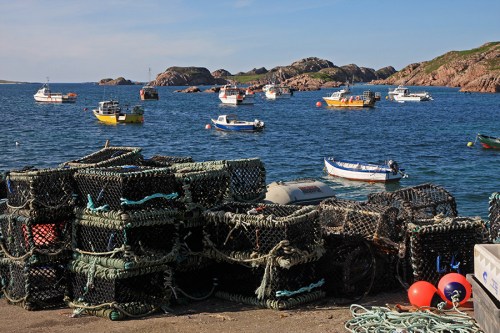
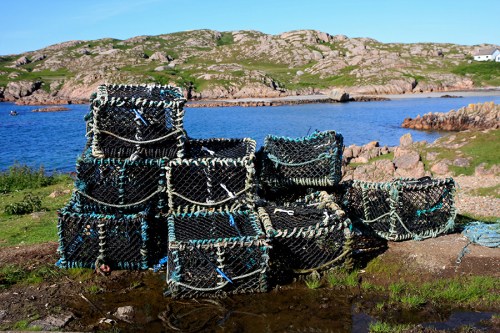
A principal atividade econômica é a pesca, especialmente caranguejos e lagostas. The catch of crabs and lobsters is the main economical activity

A principal atividade econômica é a pesca, especialmente caranguejos e lagostas.
The catch of crabs and lobsters is the main economical activity


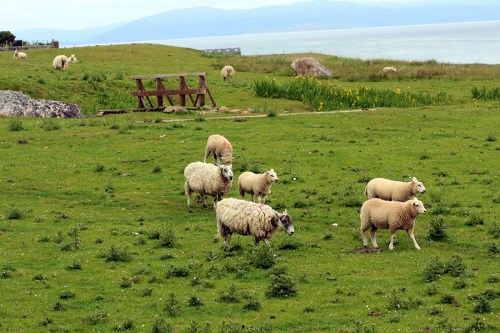
Ovelhas passeando tranquilas / Sheep strolling undisturbed

Ovelhas passeando tranquilas / Sheep strolling around undisturbed

sheep01

Enfim, cheguei. / At last, i arrived.
Enfim, cheguei. / At last, i arrived.
Read Full Post »


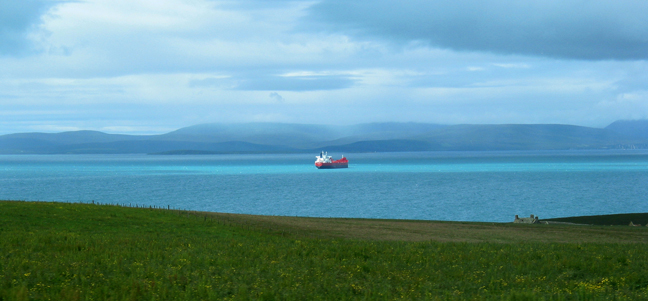
Atravessando o estuário de Pentland / Crossing the Firth of Pentland

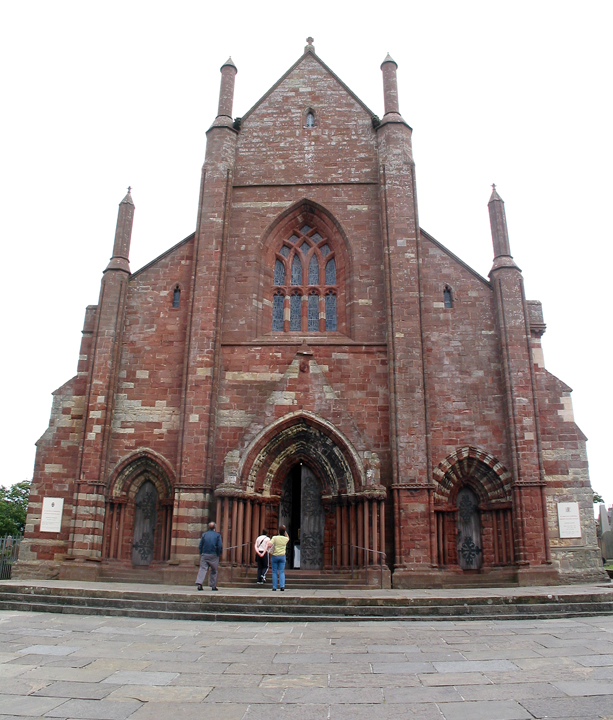
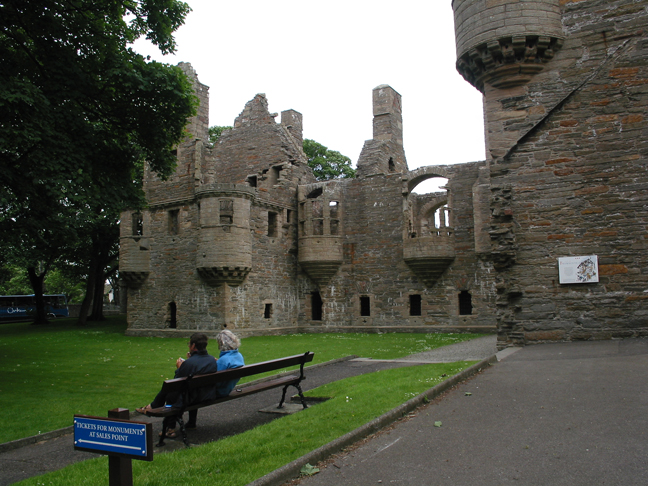
Após a almoço embarcamos no ferryboat para cruzar o estuário de Pentland. A travessia levou 40 minutos, sob o vento cortante do Mar do Norte. Outro ônibus nos esperava para prosseguir viagem até Kirkwall, principal cidade de Orkney, onde houve uma parada para visitar a catedral de St. Magnus, que data do século XII. Ao lado da igreja encontram-se as ruínas do Palácio do Conde. O tempo fechou, ameaçando chuva. Fiquei tensa, quarenta minutos me pareceram a eternidade, mas depois de um café e algumas fotos a excursão prosseguiu.
Mais perto / Closer

After lunch we boarded the ferry to cross Pentland Firth, 40 minutes under the freezing North Sea wind. In the end, another bus was waiting to carry us further, to  Kirkwall, main Orkney town. There was a stop to visit St. Magnus, a XII century Cathedral. Next to it are the ruins of the former Earl’s Palace. We stood there for what seemed eternity, plenty of time for pictures and a coffee and the weather went worse, threatening rain, so I was quite tense. But eventually the tour departed.  
St. Magnus Cathedral

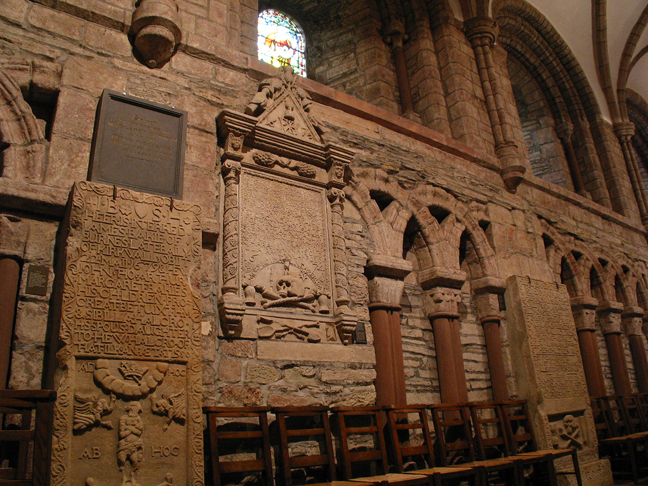
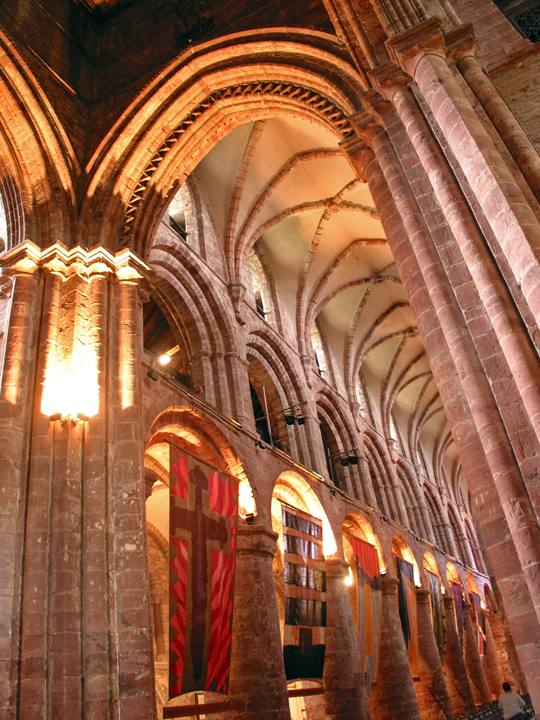
Interior sinistro da enorme catedral / Inside the massive Cathedral… creepy!

Ruínas do Palácio do Conde, no meio de um parque em Kirkwall
The Earl’s Palace ruins with a park around, in Kirkwall

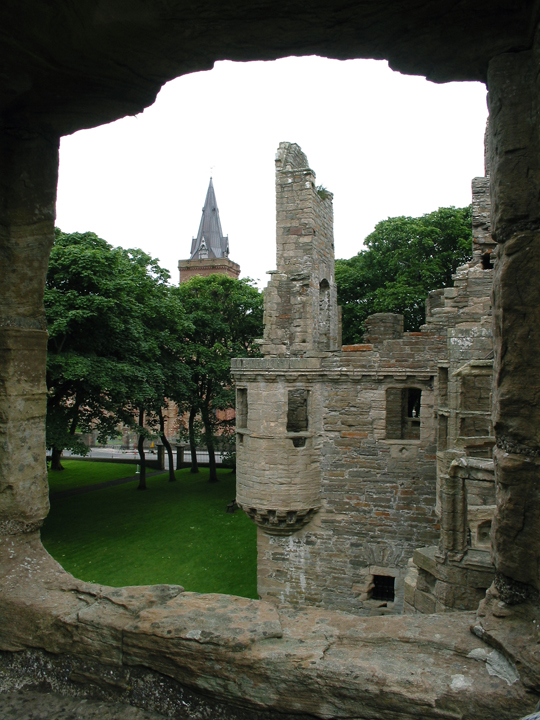
A torre da catedral vista do Palácio do conde
Cathedral Tower seen from the Earl’s Palace

Enfim raios de sol. / Sunlight at last.

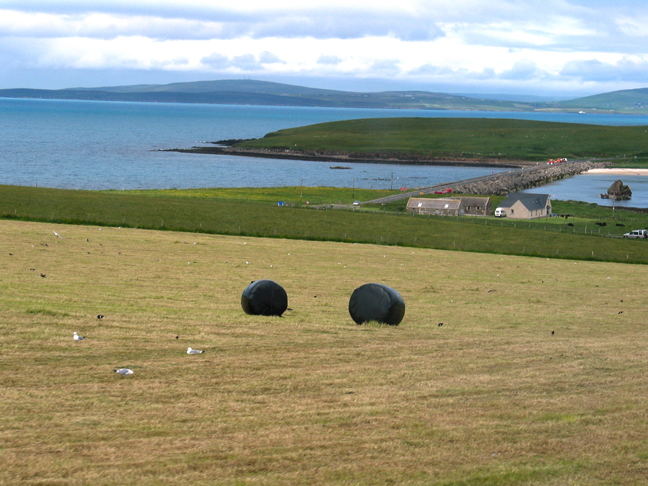
A estrada ia costurando as ilhas como um patchwork. São setenta ao todo, das quais apenas vinte são habitadas. Percorremos quilômetros entre nada e lugar nenhum, campos arados pontilhados por rolos de feno aguardando serem recolhidos sabem os deuses por quem, pois não se via uma alma sequer.

Pontes interligam as ilhas, algumas minúsculas / Bridges between the tiny islands

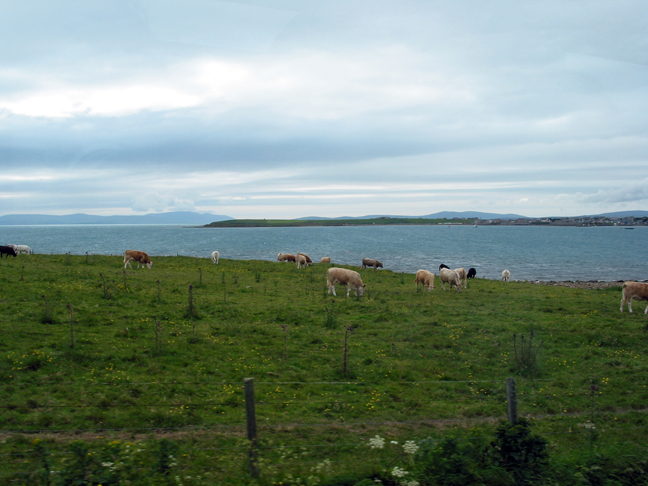
Paisagem através da janela do ônibus / Landscape seen through the bus window

Casco de um barco naufragado / Wreckage of an old boat

The road sewed together, like a patchwork , approximately 70 islands of which 20 are inhabited. A long way between nothingness and nowhere. Miles of plough fields dotted with haystacks waiting to be collected, the Gods only know by whom, for there wasn’t a single living being in sight.
Skara Brae!

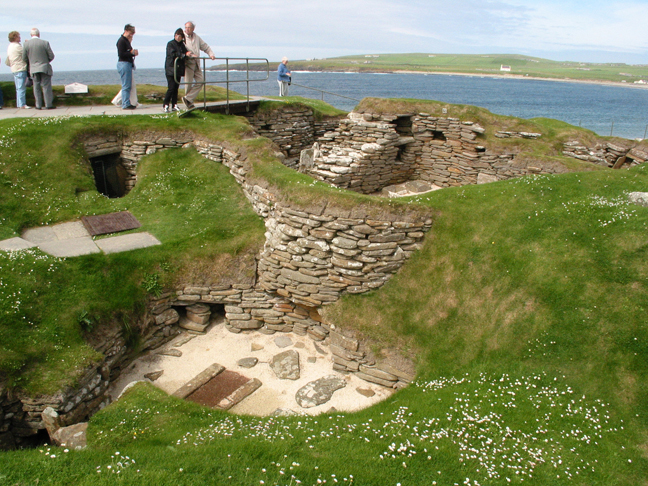
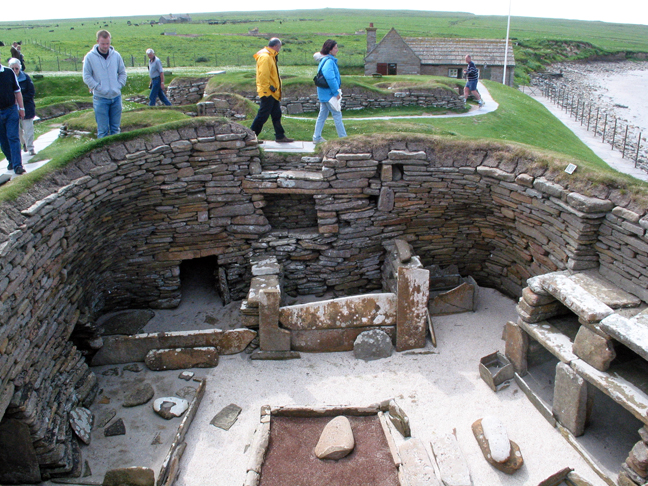
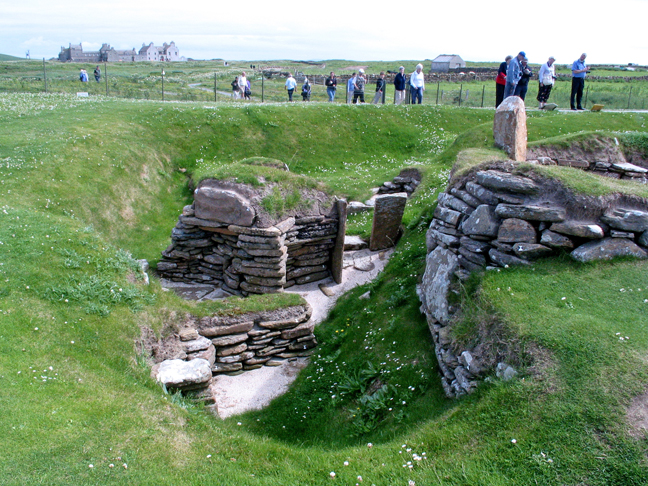
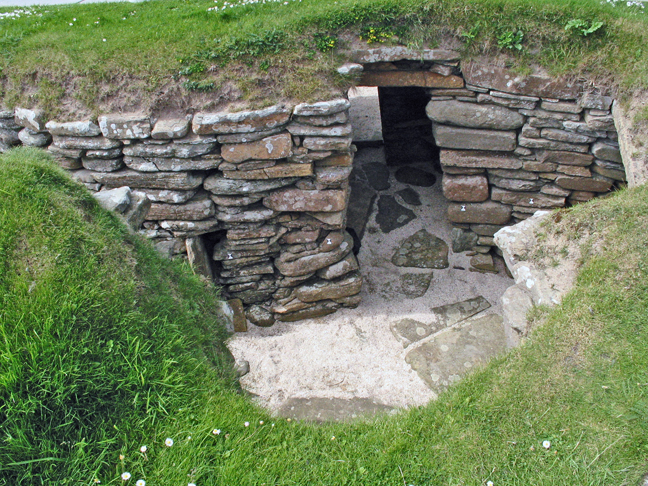
Por fim chegamos a Skara Brae, sítio arqueológico que guarda um dos mais antigos vestígios de ocupação humana de que se tem notícia, datado entre 3180 e 2500 a.C. Uma relíquia do Neolítico com tal grau de preservação que ganhou da UNESCO o título de Patrimônio Histórico Mundial. São dez habitações de pedra enterradas no solo, ligadas por passagens também de pedra, que abrigaram não mais de cinquenta seres humanos. Lugar absolutamente inóspito, o vento glacial constante nas Orkneys impede o crescimento de qualquer árvore, só se vê grama num raio de quilômetros.

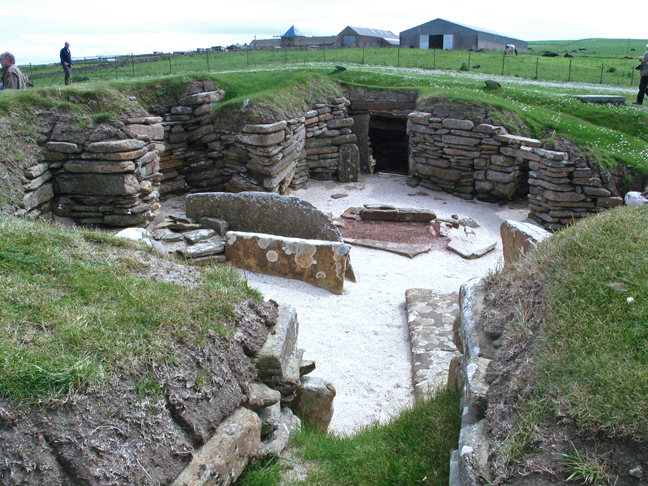
Contornando as escavações / Circling around the excavations

We arrived at last in Skara Brae, archaeological site that keeps traces of the most ancient known human settlements, dating back to 3180 BCE – 2500 BCE. It’s Europe’s most complete Neolithic village. Due to its excellent preservation, it was given UNESCO World Heritage Site status. It consists of ten clustered stone houses sunk into the ground for insulation against Orkney’s harsh winter climate, where once lived no more than fifty people. An inhospitable place, an empty wilderness where the frosty wind prevents any tree from growing, all you see in a radius of miles is grass.

As casas foram cobertas pela areia gradualmente, e tudo indica que já tinham sido abandonadas quando isso ocorreu, mas não se sabe por que.
Burial in sand was gradual and it seems that the houses had already been abandoned — for what reason, no one can tell.

Skara Brae é mais antigo que Stonehenge e que as pirâmides. Na trilha para o sítio arqueológico, passa-se por uma réplica em tamanho real de uma das habitações, com vasilhas de barro, cestos de peixe seco, pilhas de lenha, peles e mobília de uma alvenaria feita com pedra, areia e palha. Os habitantes deviam ser esquimós, pois o gelo cobre tudo no inverno. Ali em pleno verão, ao meio-dia, apesar do sol ter aparecido, meu nariz e orelhas já estavam congelados assim como as mãos, que insistiam em empunhar a câmera.

Quase todas as casas tem mobiliário semelhante, com as camas e aparador no mesmo lugar. / Most of the houses have similar furniture, with the beds and dresser in the same places in each house.

Skara Brae is older than Stonehenge and the pyramids in Egypt. On the footpath to the archaeological site there’s a life size model of one of the houses, with all its pottery inside, baskets of dry fish, furs and stone-built pieces of furniture. The inhabitants must have been Eskimos, for in winter ice covers everything. It was midsummer, it was midday, the sun had decided to shine but I had my nose and ears frozen, as well as my hands that wouldn’t let go of the camera.

A aldeia tinha um sistema de drenagem que incluía um vaso sanitário tosco em cada habitação.
A drainage system was even incorporated into the village’s design, including a primitive form of toilet in each dwelling.

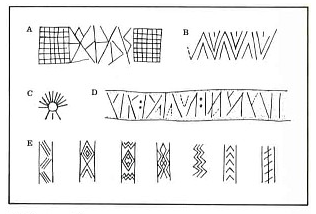
Os desenhos gravados nos objetos encontrados em Skara Brae são semelhantes aos encontrados no Vale do Boyne, Irlanda, sugerindo uma conexão entre estas culturas. / The spiral ornamentation on artifacts found at Skara Brae match stylistically objects found in the Boyne Valley in Ireland, suggesting a linkage between the two cultures.

Jules e eu sentamos na areia (pois Skara Brae é numa praia) e ficamos pensando o que seres humanos estariam fazendo em um lugar desses. Como chegaram ali? Será que já nasceram ali? Mas de onde vieram seus pais? Que combustível usavam? O que comiam? Apenas peixe, algas, ou será que plantavam cereais? Ou criavam gado e ovelhas? Ninguém sabe ao certo, mas as escavações indicam que durante seiscentos anos essa população sobreviveu. O frio e o sal preservaram suas construções, que hoje estão ali como prova do triunfo do espírito humano sobre a adversidade numa época remota.

Vista aérea de Skara Brae e o aspecto que devia ter, imagens do Google
Aerial view and how the village should have looked like, from Google Images

Jules and me sat in the sand (because Skara Brae stands in a beach) wondering what the fuck would human beings be doing in such a place. How did they get there? Were they born there? Where did their parents come from? What kind of fuel did they employ? What did they eat, fish and seaweed only? Or did they cultivate some cereal? Did they raise cattle and sheep as well? No one knows for sure, but excavations indicate that these people survived for about six hundred years. The cold and the salt preserved their buildings, that today stand there as a proof of triumph of the human spirit over adversity in early ages.

Read Full Post »