Feeds:
Posts
Comentários

Archive for the ‘Uncategorized’ Category


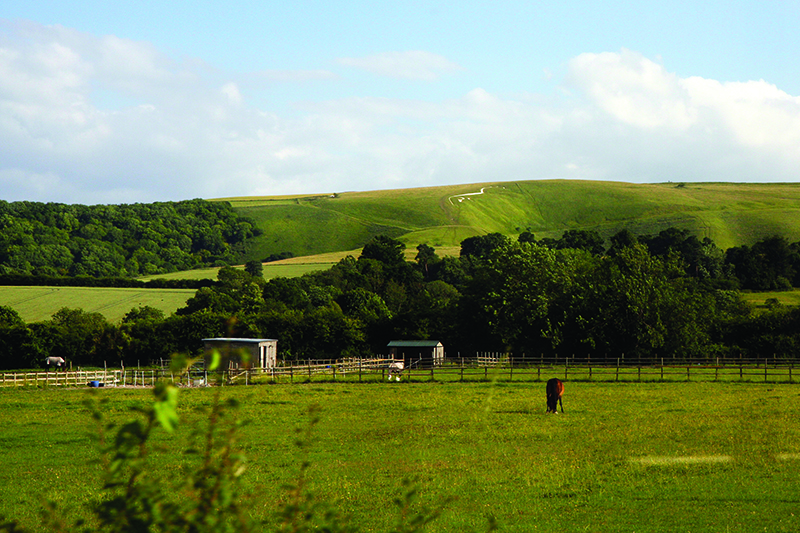
O cavalo de Uffington visto da estrada, pela janela do ônibus. /The Uffington Horse from the bus window, on the road.

Depois de hora e meia em Farington esperando, um único ônibus apareceu. Com o mochilão nas costas, fui falar com o motorista. chamava-se Steve, e foi promovido nesse dia a anjo da guarda do século. Disse-lhe que tinha vindo do Brasil especialmente para fotografar o cavalo de Uffington, por isso precisava chegar lá. Ele interrompeu o lanche que fazia, me olhou com cara de quem está vendo um extraterrestre , consultou uma planilha e pediu um momento para telefonar. Voltou dizendo que me levaria a Wantage, cidade onde nasceu Alfred, o rei que criou o Estado inglês. Lá eu devia pegar um outro ônibus, número tal, cujo motorista deveria ser seu amigo Jeff:
“– Jeff vai levar você lá!”
Assim sendo, embarquei esperançosa.

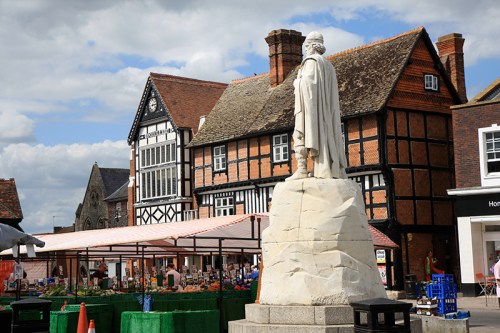
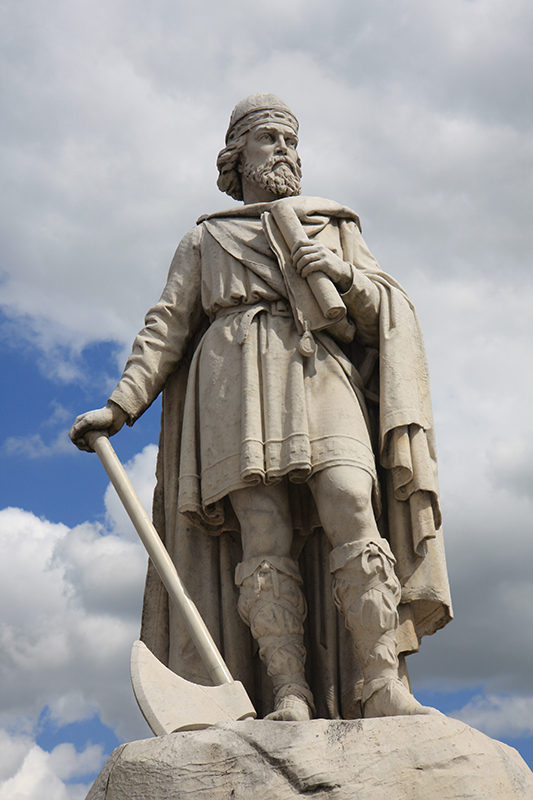
Estátua de Alfred, o rei que criou o Estado inglês, em Wantage /Alfred’s statue in Wantage. This King created the English state.

After one hour and the half waiting in Farington, a single bus appeared. With my huge backpack in my back, I went to talk to the driver. His name was Steve, and this day he’s been promoted to Guardian Angel of the century. I told him that I had come from Brazil specially to take photos of the Uffington Horse, so it was imperious that I arrived there. He interrupted his snack to look at me, with the expression of someone staring at an extraterrestrial. Then he consulted a spreadsheet and asked me to wait for a moment, to make a phone call. When he came back, he told me that he would drop me off at Wantage, King Alfred’s home town, from where I should hop on another bus , which number I have forgotten now; the driver should be his friend Jeff.
“– Jeff will take you there!”
So, my hopes were high. 

alfred

King Alfred

Steve estacionou em Wantage, na rua perpendicular à praça principal, onde uma feira estava chegando ao fim e os comerciantes começavam a se recolher. Eu tinha vinte minutos para achar um toalete, comprar comida e bater fotos da estátua do Rei Alfred, a única coisa que havia naquele lugar. Steve, que a essa altura já era meu amigo íntimo, me apresentou a Jeff e recomendou-lhe que me deixasse na estrada junto ao cavalo. Mas foi categórico: eu tinha de pegar aquele mesmo ônibus de volta, pois seria o último. Se o perdesse teria de pernoitar em Uffington, sabem os deuses onde. Jeff repetiu o aviso quando parou para eu descer: deveria estar de volta em uma hora.

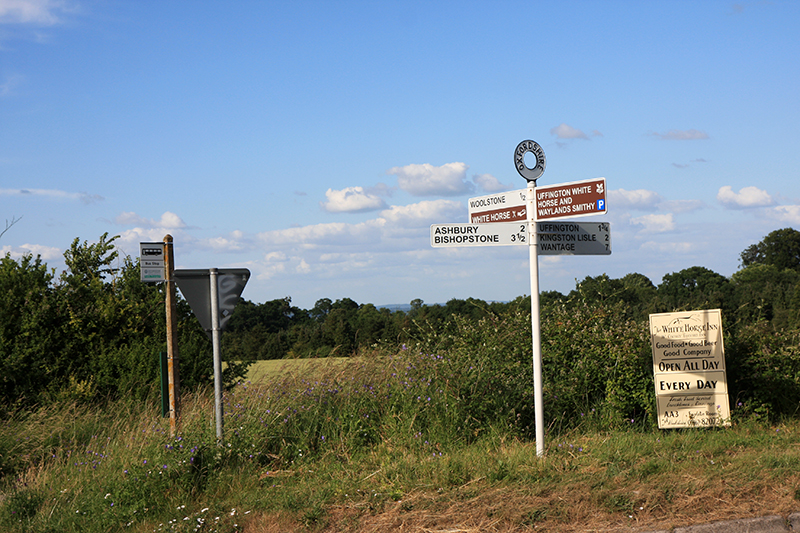
Ponto de ônibus com o cavalo ao fundo / The bus stop and the horse in the background

Steve parked the bus in Wantage, close to the main square where a street market was about to end and the merchants were starting to keep their stuff. I had 20 minutes to find a toilet, buy some food and take photos of King Alfred’s statue, the only thing that apparently existed in that village. By now, Steve and I were best friends. He’s introduced me to Jeff, and advised him to drop me off on the road, by the Horse. But he was categorical: I had to take that same bus on his way back, because there wouldn’t be another. If I lost it, I’d have to stay somewhere in Uffington for the night. Jeff repeated the advice when we arrived at my stop. I had one hour exact to be on the other side of the road to board the bus back.

gateway

Inicio da trilha / Where the footpath starts

Saltei animada para encarar uma pirambeira com o mochilão nas costas, mais uma mochilinha e a bolsa da câmera. Atravessei um pasto cheio de ovelhas e esterco para subir enfim no monte onde, há séculos atrás, alguém desenhou a figura do cavalo. O dia estava lindo, céu azul, e um calor do cão. Logo eu já estava dissolvendo em suor. Havia um morrinho, Dragon Hill, mais abaixo, acessível por uma trilha logo abaixo da figura. Contudo, a melhor vista era a da estrada. Na verdade, a melhor vista seria aérea. No alto do morro, junto à figura, as linhas se apresentam em outra perspectiva, distorcendo o desenho.

sheep

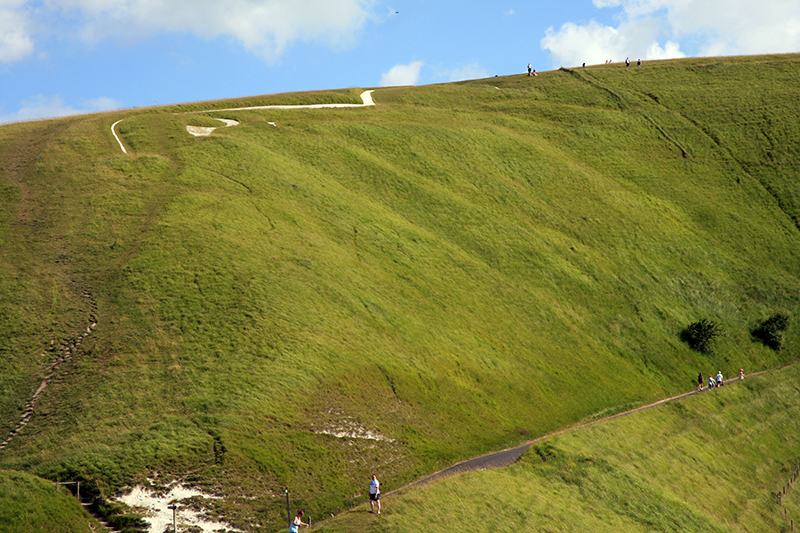
Mais ou menos 3km até o topo , pois o caminho dá voltas./ More than one mile to the top, because it’s not a straight way

I got off spirited for the walk, carrying the huge backpack, a small one and the camera bag. I crossed a field full of sheep and sheep shit to start going uphill where, centuries ago, someone has carved a horse figure. It was a magnificent day, blue sky, and a terrible heat. In minutes I was already bathed in sweat. There was a footpath to Dragon Hill, a mound below the horse, but still the best view was from the road. Actually, the best view would be aerial. On top of the hill, by the figure, the lines in perspective present a distorted drawing.

whiteHorse02

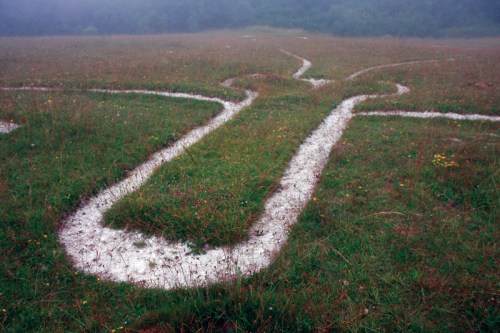
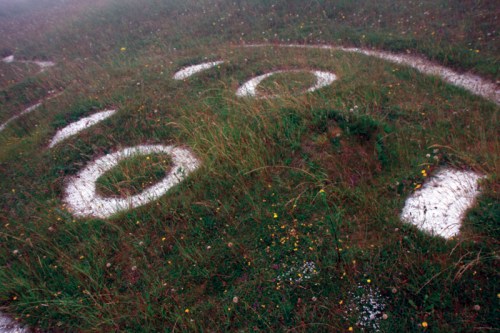
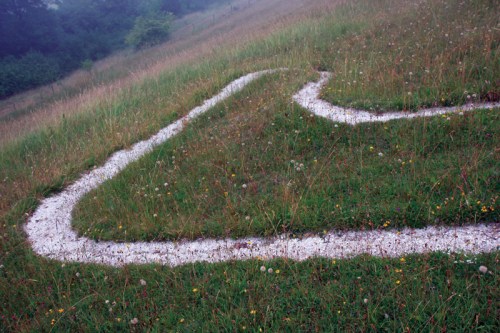
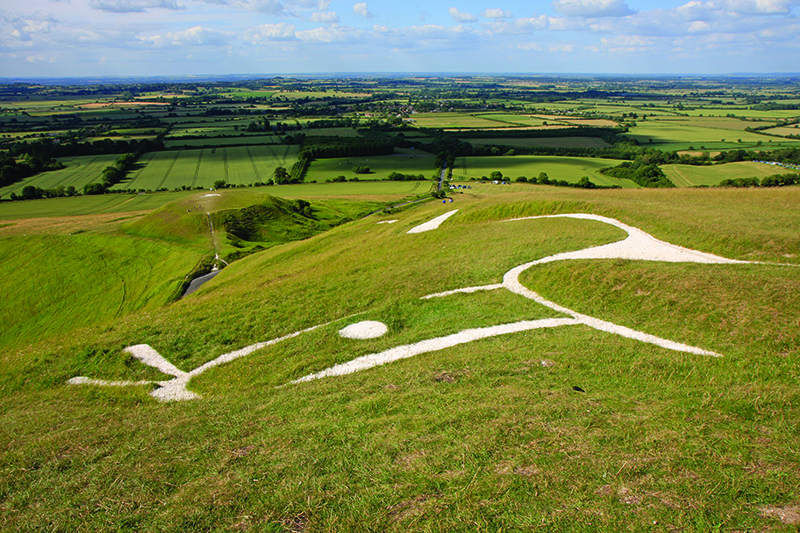
Uffington Horse’s eye and O cavalo não é apenas arranhado na superfície de giz. As linhas tem cerca de um metro de profundidade. / The horse was cut into the hill up to 3 ft deep, not simply scratched into the chalk surface.

mound

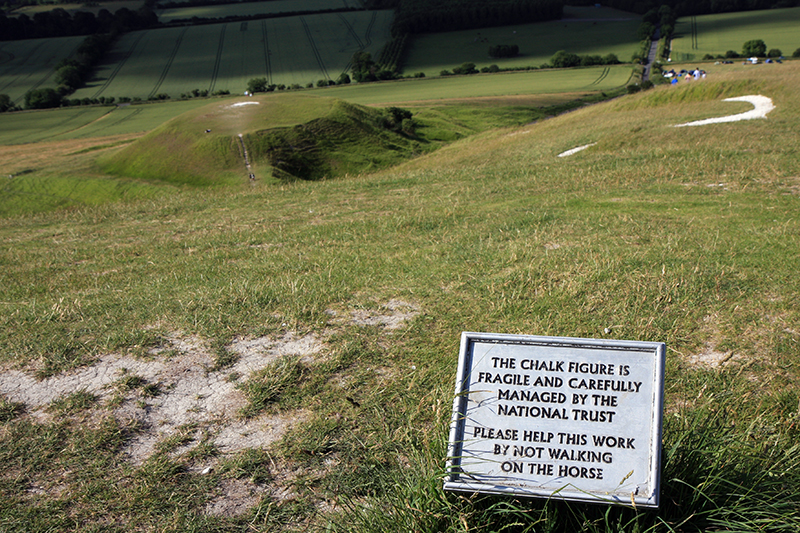
The chalk figure is fragile, please help National trust’s work by not walking on the horse. / A figura de giz é frágil; por favor ajude o trabalho do National Trust (Patrimônio Histórico) não andando sobre o cavalo

Eu precisaria ser rápida. Com peso nas costas, levara mais de vinte minutos para subir. Fiquei quase isso procurando bons ângulos para fotos e levaria quase o mesmo tempo para descer. Não voltei pelo mesmo caminho, pois havia outra trilha a partir dali. No entanto, esta saía na estrada um quilômetro antes (ou depois) do ponto de ônibus. Acelerei o passo para chegar lá.

theMound

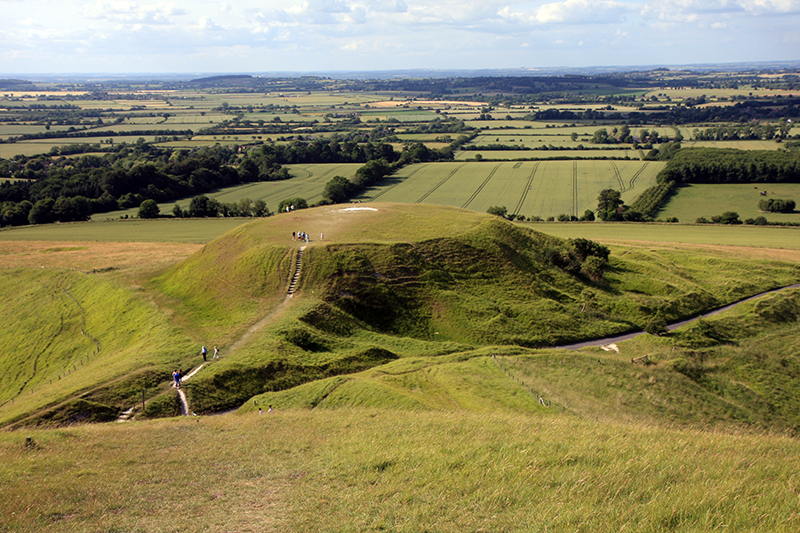
Dragon Hill is a natural chalk hill with an artificial flat top, associated in legend with St George / uma colina de giz natural com o topo artificialmente achatado, associado à lenda de São Jorge

I had to be quick. Carrying the heavy backpack, it had taken me more than 20 minutes to get on hilltop. I stayed more 20 minutes looking for the best views, taking photos and it would take me more less the same time to go down. There was a different footpath from the mound where I was, and I followed it, but it met the road half a mile before – or after – the bus stop, so I speeded up to get there.

horseFromMound

Vestígios de lodo retirados do cavalo foram datados da Idade do Bronze, algo entre 1380 e 550 AC. Seu desenho é semelhante ao de outras figuras na Arte Celta. Moedas da Idade do Ferro também foram encontradas contendo desenhos comparáveis ao Cavalo Branco de Uffington, reforçando a antiguidade do monumento. / Deposits of fine silt removed from the horse were scientifically dated to the late Bronze Age, sometime between 1380 and 550 BC. Its design is similar to comparable figures in Celtic art. Iron Age coins that bear a representation comparable have been found, supporting the Uffington White Horse’s early dating.

Bastou chegar ao ponto e largar a bagagem no chão… uma vontade incontrolável de fazer xixi tomou conta de mim. Não poderia me afastar dali ou perderia o ônibus. Percebi então que o mato à beira da estrada estava alto e, sem opção, abaixei-me atrás de uma touceira. Obviamente, naquele ponto ermo e deserto do planeta onde nunca passava ninguém, neste exato momento apareceu um grupo caminhando. Eram quatorze pessoas – velhos, crianças e não um, mas dois cachorros, felizmente na coleira. Ainda pude esconder o rosto entre os braços, revelando apenas o inevitável: o branco das nádegas entre a folhagem. Eles não poderiam me reconhecer em caso de um novo encontro.

horse2

Muitos visitantes neste dia de verão / Many visitors in this summer day

I had just arrived at the bus stop and put the luggage on the floor when I felt a terrible need to pee. I couldn’t risk leave that spot and lose the bus. I noticed that the hedges were high by the road so, out of option, I crouched behind some bushes. And obviously – there, in the middle of nowhere, where no one ever walks – as soon as I started to pee a trekking group showed up. Around fourteen people: seniors, kids and not only one but a couple of dogs too, fortunately on the leash. I could only hide my face in my arms, although my white ass was glowing among the shrubs. Anyway, they couldn’t recognize me if we ever met again.

horseAndHorse

O Cavalo de Uffington carvado na colina e um cavalo no gramado. / Uffington Horse carved in the hill and a real horse grazing

Os britânicos passaram como se não estivesse acontecendo nada. Foi o tempo exato para me recompor e atravessar a rua trinta segundos antes de ver o ônibus virando a esquina. Jeff se alegrou quando me viu: “– Você conseguiu! Muito bem!”
“– E bem na hora! “– respondi satisfeita. Mal sabia ele…

bushes

O ponto de ônibus e o matinho / The bus stop and the bushes

The British group walked by as if nothing was happening. I had just enough time to finish, recompose and cross the road thirty seconds before the bus appear around the corner. Jeff seemed very happy to see me: “– You made it! Well done!”
“– And right in time! “- I answered joyfully. He had no idea…

busStopWantage

De volta a Wantage, esperando o ônibus para Londres/ Back in Wantage, waiting for the bus to London

Read Full Post »


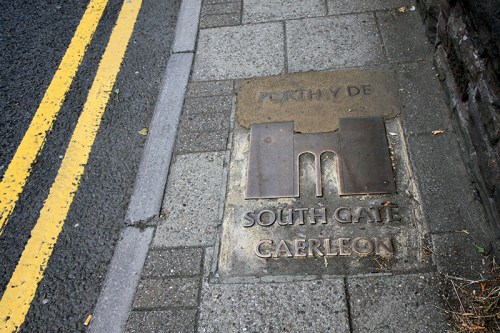
Últimas imagens de Caerleon: marcos indicando coisas que não existem mais / Last Caerleon pics: signs pointing out things that are no more

No dia seguinte, voltaria à Inglaterra. Alguns amigos que moravam em Oxford tinham me convidado a pernoitar na casa deles, portanto eu iria.

The next day I’d be on my way back to England. A couple friend was living in Oxford and had invited me to stay the night with them, so I would not decline the offer.

Rua principal de Caerleon /Main Street in Caerleon

O trem saía no meio da tarde, tive tempo de fazer um tour pela cidade pela manhã. Era época de liquidação nas lojas de Cardiff. Quis aproveitar e comprei umas roupinhas e acessórios para minha filha toda animada… nem me passou pela cabeça que aquilo não cabia na mochila! Antes de pegar o trem, fui ao correio e despachei tudo numa caixa para o Brasil, juntamente com o dragãozinho vermelho de pelúcia. Distraída, esqueci a bolsa da loja, onde tinha trazido as roupas, no chão ao lado do balcão do Correio. Que susto! A funcionária veio atrás de mim aos gritos. Me deu a maior bronca, gesticulando muito e, por fim, entendi o porquê: medo de bombas e terrorismo. Britânicos  – aliás, americanos também – tem paranóia com bolsas e objetos abandonados, ainda que seja uma bolsa de papel vazia.

Antes de deixar Caerleon, parei aqui para uma refeição, no local onde ficava a Porta Praetoria – portão principal do forte romano / Before leaving Caerleon I stopped here to eat something. This place stands where was located the ancient Porta Praetoria, main gate to the Roman military city

The train would leave in the afternoon, so I had time to make a sightseeing tour in the morning. Most shops in Cardiff were on sales, so I decided to take advantage of that and buy clothes and stuff for my daughter. I was so happy that I didn’t realize that all that stuff would never fit in my backpack! So, on my way to the train station I stopped by the post office and dispatched it all in a box to Brazil, including the stuffed red dragon. My head was elsewhere and I forgot the shopping bag, on the floor by the Post Office desk. What a shock! The clerk came after me, scolding and screaming, and it took me a while to understand why:  the British are very much afraid of bombs and terrorism.  Actually , americans too – they have this paranoia with objects left behind, even an empty paper bag.

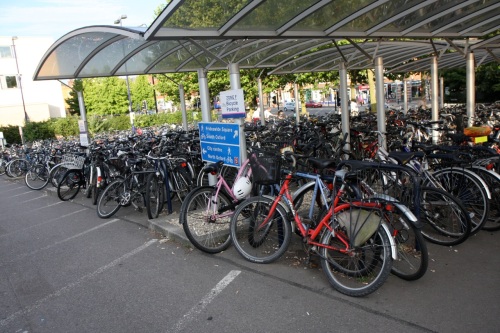
Bicicletário na estação de trem em Oxford / Bike parking at Oxford train station

Cheguei a Oxford em plena Copa do Mundo, dez minutos após o início do jogo do Brasil contra a Holanda. Desci do trem com a camisa da seleção brasileira por cima da roupa e estava esperando para atravessar a rua quando um taxista indiano parou o carro na minha frente, disse que o Brasil estava ganhando de 1 x 0 e me indicou um pub onde estariam assistindo o jogo. Agradeci e corri para lá, pois só iria encontrar meus amigos à noite. As apostas estavam todas no time do Brasil. Entretanto, no pub presenciei o mico do ano: o time brasileiro foi derrotado vergonhosamente e voltou para casa no dia seguinte!

As apostas no Brasil estavam altas/ Bets in Brazil were high

I arrived in Oxford in the World Cup season, ten minutes after the game Brazil x Netherland had started. I had got off the train wearing the yellow Brazilian team shirt over my clothes and was waiting to cross the street when a taxi stopped by me. The driver, an Indian, told me that Brazil was winning 1 x 0 and showed me a pub where I could watch the game. As I was supposed to meet my friends only by night, I thanked him and ran to the pub. Bets in Brazil were high! However, my country suffered a terrible humiliation, losing by 3 x 1 and flying back home the next day.

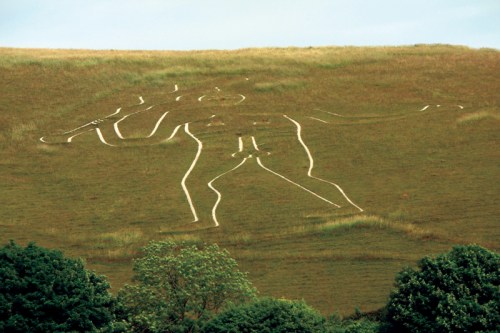
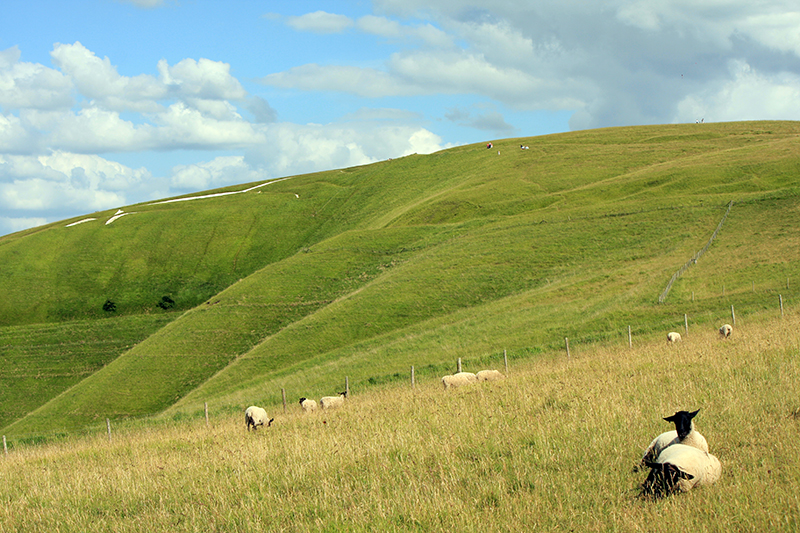
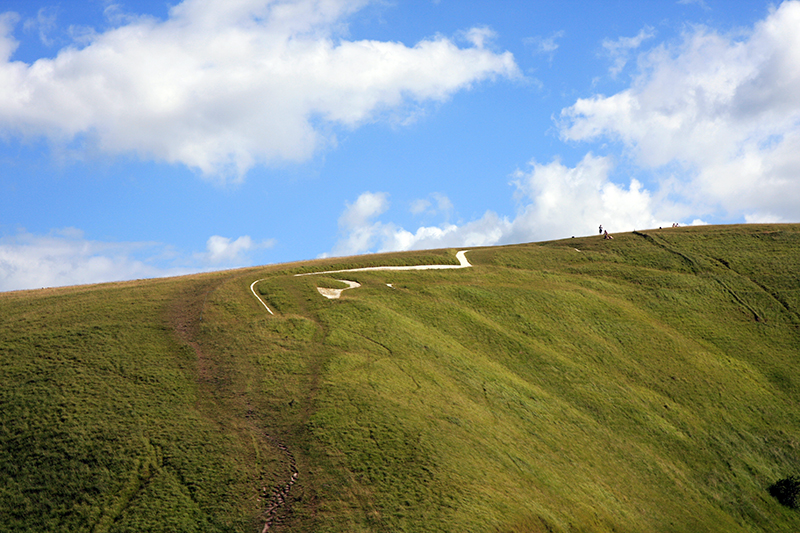
O cavalo de Uffington à distância. Acabei chegando lá, continue lendo… /The Uffington Horse from the distance. I eventually got there. Keep reading.

Eu também estaria voltando logo. Mas iria ainda visitar outras famosas figuras de giz carvadas nas colinas inglesas: o cavalo branco de Uffington (o mais antigo dos quatro que existem no Reino Unido) e o Gigante de Cerne Abbas. Eu já tinha visitado o Long Man de Wilmington (ver post 106).

Centro da cidade – Farington downtown

I should be leaving soon too. But before that I was going to see other famous English chalk figures: the White Horse of Uffington (the oldest of the four chalk horses in the UK) and  the Cerne Abbas Giant. I had already visited the Long Man of Wilmington (see post 106).

Restaurante no centro de Farington / Farington downtown restaurant

À noite, meus amigos Eduardo & Dani me ajudaram a traçar o itinerário para Uffington. Na manhã seguinte, me deixaram num ponto de ônibus onde embarquei para um lugar chamado Farington, obviamente um fim de mundo. Dali saía diariamente um ônibus para Uffington… menos naquele dia. E nem era domingo, ainda era sábado! Respirei fundo. Tinha um problema para resolver.

Fiquei ali muito tempo esperando alguma solução / I’ve been stuck there a longtime, waiting for a solution

By night, my friends Eduardo & Dani helped me to plot the trip to Uffington. Next morning, they left me in a bus stop where I’ve boarded the bus to somewhere called Farington, obviously by the end of the world. From there a bus was supposed to go daily to Uffington… except that very day. And it was not even Sunday, it was a Saturday! I took a deep breath. I had a problem.

Read Full Post »


Pendragon presente / presence

O autor Gerald de Wales, em seu “Itinerarium Cambriae” de 1191, escrito sobre uma viagem de recrutamento para a terceira Cruzada no País de Gales em 1188, diz sobre Caerleon: “ Aqui os Embaixadores Romanos tiveram audiência na corte do grande Rei Arthur”.

In his 1191 Itinerarium Cambriae, written about a tour of Wales in 1188 to recruit for the Third Crusade, the author Gerald of Wales says of Caerleon, “the Roman ambassadors here received their audience at the court of the great king Arthur.”

Lord Tennyson hospedou-se no Henbury Arms em 1856, quando trabalhava em seu longo poema “Idílios do Rei”, inspirado no Rei Arthur e Cavaleiros da Távola Redonda. Havia uma teoria de que a Távola Redonda se situava no Anfiteatro Romano em Caerleon. / In 1856, Lord Tennyson lodged at the Hanbury Arms while working on his long poem Idylls of the King. His inspiration was the legend of King Arthur and the knights of the round table. There was a theory that the round table was located at the remains of Caerleon’s Roman amphitheatre.

Geoffrey de Monmouth, o primeiro autor a escrever longamente sobre o Rei Arthur, considera Caerleon a capital de Arthur, e uma das mais importantes cidades britânicas em sua “História dos Reis da Grã-Bretanha”.

Geoffrey of Monmouth, the first author to write at length of King Arthur, makes Caerleon Arthur’s capital , one of the most important cities in Britain in his Historia Regum Britanniæ.

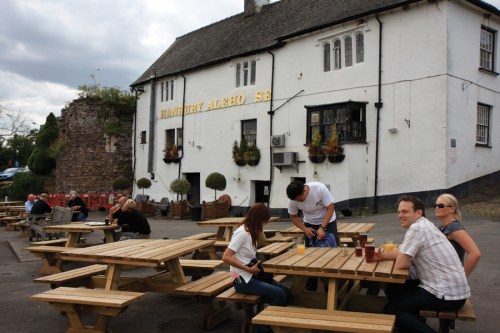
A Torre Redonda, ao lado do Hanbury Arms, é tudo que restou do Castelo de Caerleon./ The Round Tower, at the Hanbury Arms public house, last remnant of Caerleon Castle

Sir Thomas Malory considera Arthur coroado em Caerleon. O autor associa o ainda visível anfiteatro romano à Távola Redonda presente nas narrativas Arthurianas, sugerindo que a lenda possivelmente tenha se originado daí: “Porque se localizava num agradável lugar em Glamorgan, no Rio Usk, não longe do Canal de Bristol*. … pois o nobre rio que mencionei corre paralelo a este em uma das margens, onde os reis e príncipes que vinham de além mar podiam chegar de navio. Mas a outra margem, protegida por pradarias e florestas, destacava-se pelos palácios reais… Caerleon foi preparada para a anunciada festa”. ((Historia Regum Britanniae / História dos Reis da Grã-Bretanha)
*O Canal de Bristol até a época dos Tudors, e ainda hoje no País de Gales e na Cornualha, era conhecido como Mar de Severn.

Edifício do Priorado de Caerleon

Sir Thomas Malory has Arthur re-crowned there. The still-visible Roman amphitheatre at Caerleon has been associated with Arthur’s ‘Round-Table’s element of the tales; and has been suggested as a possible source for the legend: “For it was located in a delightful spot in Glamorgan, on the River Usk, not far from the Severn Sea*... For the noble river I have named flows along it on one side, upon which the kings and princes who would be coming from overseas could be carried by ship. But on the other side, protected by meadow and woods, it was remarkable for royal palaces… Caerleon was made ready for the announced feast.” (Historia Regum Britanniae /History of the Kings of Britain)
* – Until Tudor times the Bristol Channel was known as the Severn Sea, and it is still known as this in both Welsh and Cornish.

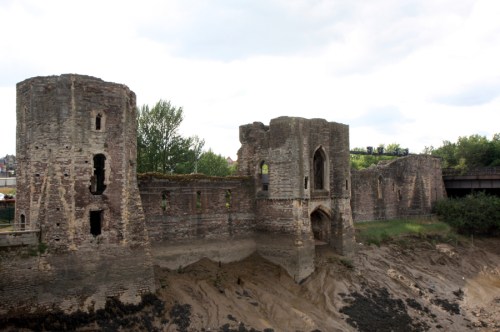
Ruínas do Castelo de Newport , também às margens do Rio Usk / Newport Castle ruins, also by the River Usk

Embora Geoffrey possa ter se inspirado na dimensão das ruínas, assim como na importância de Caerleon como centro urbano do Reino de Gwent, no inicio da Idade Média, a mais importante fonte histórica da ligação de Arthur com o “acampam ento da legião” é a lista das doze batalhas de Arthur na “Historia Brittonum” ( História Britânica) escrita por Nennius no século IX. Ele se refere à nona delas como a Batalha da Cidade da Legião. As hipóteses sobre o local desta batalha incluem Carlisle, Chester, York e Caerleon – também, segundo Geoffrey of Monmouth, local da corte de Arthur e do convento de Guinevere. Entretanto, é mais provável que a “urbs legionis” ( cidade da Legião) mencionada seja Chester, ou mesmo York. “Camelot” aparece pela primeira vez em Lancelot, escrito por Chrétien de Troyes, embora este autor também mencione Caerleon.

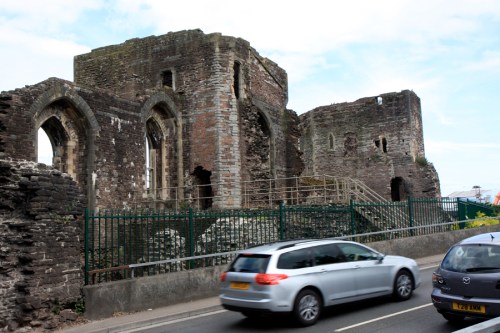
Em Newport, caminho para Caerleon, as ruínas dividem a paisagem com o espaço urbano / In Newport, on the way to Caerleon, the Castle ruins amongst urban landscape

Though the huge scale of the ruins along with Caerleon’s importance as an urban centre in early medieval Kingdom of Gwent may have inspired Geoffrey, the main historical source for Arthur’s link with “the city of the legion” is the list of the twelve battles of Arthur in the 9th century Historia Brittonum by Nennius.He refers to the Battle of the City of the Legion as 9th battle. Hypothesized sites for this battle include Carlisle, Chester, York and Caerleon – also, according to Geoffrey of Monmouth, the site of Arthur’s court and Guinevere’s convent. However the “urbs legionis” mentioned there may rather more probably be Chester , or even York.  “Camelot” first appears in Chrétien de Troyes’ Lancelot, though Chrétien also mentions Caerleon.

Agora só resta o lado leste do castelo./ Now, only the east side of the castle remains

A escritora Mary Stewart, em sua narrativa das lendas Arthurianas, também menciona Carleon como sendo um lugar da corte de Arthur.

Mary Stewart’s account of the Arthurian legends also mentions Caerleon as a place where Arthur held court.

Read Full Post »


Se esta era a Távola Redonda, deveria haver centenas de cavaleiros! / If this was the Round Table, there must have been hundreds of Knights!

Dizem que o túmulo de Arthur em Glastonbury é falso, uma invenção dos monges para atrair peregrinos e dinheiro. A história prova que os focos de resistência britânica contra todas as invasões se concentraram na fronteira com a Escócia, na Cornualha e País de Gales – onde fica Caerleon. Isso pode confirmar a teoria de que ali se encontravam os melhores guerreiros e generais, e entre eles podiam estar Arthur e seus cavaleiros. O autor Stephen E. Lawhead atribui a Aurelianus Ambrosius a paternidade de Arthur.

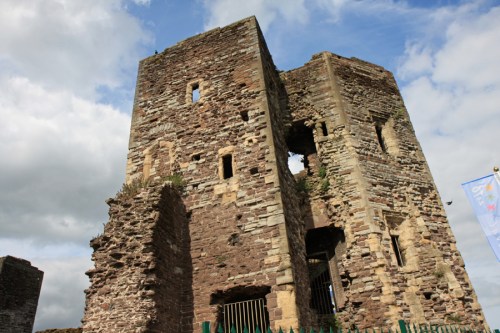
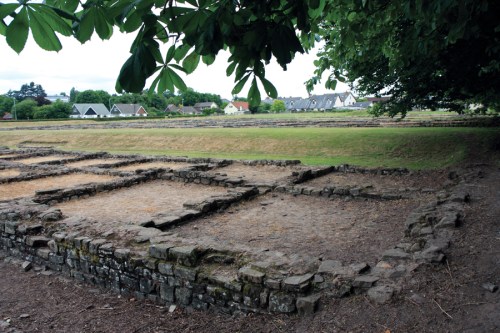
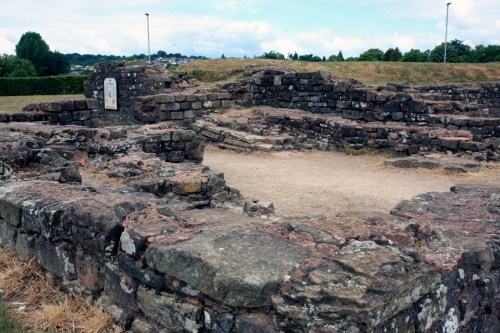
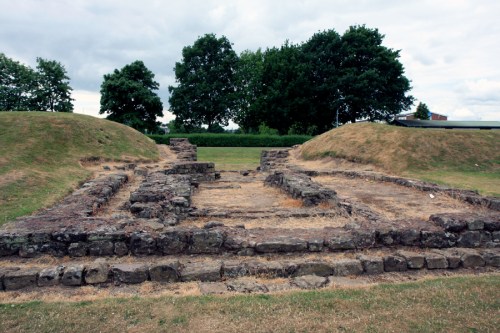
Sítio arqueológico da fortaleza romana de Isca Augusta / Archaeological site of Isca Augusta Roman barracks

Some say that Arthur’s grave at Glastonbury is fake, priests’ fabrication to attract pilgrims and their money. History shows that the main spots of British resistance against all invasions were concentrated in the Scottish borders, Cornwall and Wales – where Caerleon is located. That may confirm a theory of these places having counted on the best warriors and generals, Arthur and his Knights among these. The author Stephen E. Lawhead imputes Arthur’s fatherhood to Aurelianus Ambrosius.

Murais nas ruas sugerindo que Caerleon era a Camelot de Arthur / Street boards suggesting that Caerleon was Arthur’s Camelot

Assim, o País de Gales também reclama a origem de Arthur. De toda forma, é significativo que o Pendragon, título de Uther, seja o símbolo do país. A lenda também conecta o mago Merlin a Gales. A estória é a seguinte: o rei Vortigern* decidiu construir uma fortaleza em Snowdonia (uma região de Gales) e escolheu um local estratégico. Porém, uma coisa estranha ocorreu quando os trabalhadores começaram a lançar as fundações e paredes de pedra do castelo. Tudo que era construído durante o dia desabava misteriosamente durante a noite.

Vista do sítio arqueológico da fortaleza romana de Isca Augusta / View of the archaeological site of Isca Augusta Roman barracks

So, Wales claims  Arthur’s origins too. Anyway, it’s meaningful that the Pendragon, Uther’s title, is the symbol of Wales. The legend also links the wizard Merlin to Wales. It goes like this: King Vortigern* had decided to build a stronghold in Snowdonia ( a region in Wales) and had chosen a proper place, strategically located. But the weirdest thing happened when the building began. The foundations, the stone walls, everything that was built in the daytime collapsed mysteriously by night.

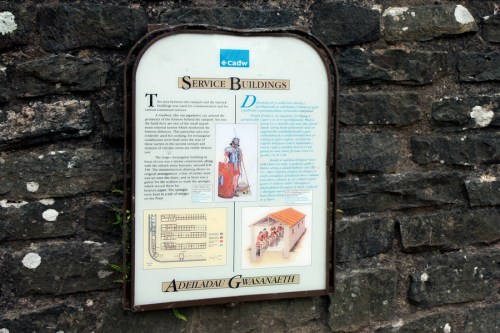
Painéis explicativos nas ruínas / Explanatory panels in the ruins

Os magos da corte de Vortigern recomendaram que o sacrifício de uma criança que não tivesse pai fosse feito no local, para que o sangue derramado fortalecesse a terra. Tal criança foi localizada e trazida à presença do rei. Tratava-se, entretanto, de Merlin, que seria reconhecido como o maior druida de todos os tempos.

* Vortigern foi um general do sec. V, um rei dos britânicos, ou pelo menos assim considerado pelo escritor Bede. Diz-se que ele contratou os mercenários saxões Hengist e Horsa para lutar contra os Pictos e os Escoceses. Porém estes acabaram por se voltar contra ele, e mataram seu filho. Hengist conquistou Kent, tornando-se o primeiro de uma linhagem de reis. Por este erro, atribui-se a Vortigern a perda da Grã- Bretanha para os saxões.

Outra vista das ruínas do quartel de Isca Augusta / Another view of Isca Augusta’s barracks ruins

Vortigern’s magicians consulted their oracles and recommended a blood sacrifice to strengthen the soil. The victim should be a fatherless child, and such a kid was eventually found and brought to the King’s presence. But the child happened to be Merlin, who would be renowned as the greatest Druid ever.

* Vortigern was a 5th-century warlord, a king of the Britons, at least connoted as such in the writings of Bede. He’s said to have hired the saxon mercenaries Hengist and Horsa to fight the Picts and the Scots. But they eventually betrayed him, killing his son and Hengist successfully conquered Kent, becoming the forefather of its kings. So, Vortigern is blamed for his misjudgement and the loss of Britain to the saxons.

O encontro de Vortigern e Merlin, de acordo com Geoffrey de Monmouth em sua História dos Reis Britânicos / Vortigern meeting the young Merlin, as related in Geoffrey of Monmouth’s Historia Regum Britanniae

Merlin se dirigiu ao rei afirmando que aqueles magos ignoravam que, sob o lugar escolhido para a construção, havia um lago subterrâneo, onde habitavam dois dragões, um vermelho e um branco, que lutavam durante a noite e dormiam de dia. A construção desabava em consequência da luta.

Merlin told Vortigern that his magicians ignored that under the exact building ground, there was an underground pond, home to two dragons, one red and the other white, who would sleep the day and wake up at night to fight each other. Their fierce battle caused the building to collapse.

Há escolas em volta das ruínas. Aqui, estudantes no intervalo de aula / The ruins are surrounded by schools. Here, students during class break

Vortigern ordenou que os servos cavassem; o lençol d’água foi localizado e, à noite, escondidos, os nobres presenciaram o surgimento das criaturas. O dragão branco parecia vencer o vermelho, mas, no último instante, este revidava e derrotava seu oponente que, ao se retirar para as profundezas, derrubava toda a estrutura da fortaleza. Intrigado, o rei pediu ao garoto que interpretasse o significado daquela visão.

Vortigern ordered his subjects to dig in the spot; the pond was found and, at night, the noblemen, hidden in the bushes, witnessed the dragons show up. The white one at first appeared to beat the red but, in the last moment, the red would fight back and defeat his opponent. The white dragon’s retreat to the depths made the whole built structure fall to the ground. The king, puzzled, asked the boy to interpret the meaning of such vision.

Turistas se divertem / Tourists having fun

Estudantes se divertem / Students having fun

Merlin explicou que o dragão branco representava o povo invasor que quase chegaria a dominar a ilha de uma ponta à outra, enquanto que o vermelho representava o povo bretão que se levantaria e viria a expulsar os invasores. Impressionado, Vortigern libertou Merlin e o elevou à categoria de seu conselheiro. Daí o dragão vermelho ser o emblema dos galeses.

Merlin explained that the white dragon impersonated the invaders, who would almost succeed to conquer the isle from one end to the other. The red dragon was the British people, who would raise to defeat and kick out the invaders. Impressed, Vortigern freed Merlin and made him his counsellor. And this is why the red dragon is the Welsh symbol.

Outra escola – primária – junto às ruínas / Other school – elementary – neighbor to the barracks

Eu tinha comprado, na loja de souvenirs do Cardiff Castle, um irresistível dragãozinho vermelho de pelúcia. Nem lembrei que teria de carregá-lo na mochila todo o resto da viagem.
I had bought an irresistible stuffed red dragon at Cardiff Castle’s souvenir shop. It hadn’t crossed my mind that I’d have to carry it in my backpack all along the trip.


Read Full Post »


caerleonPanorama1

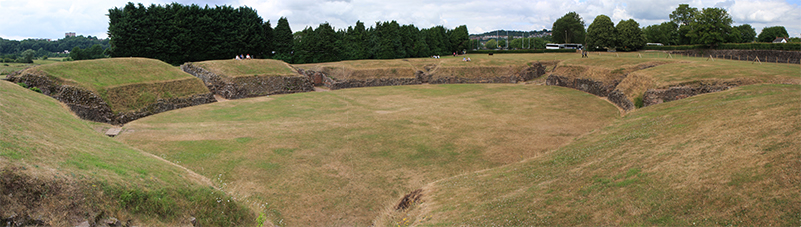
Por sua forma redonda, o anfiteatro romano é identificado por alguns autores como a Távola Redonda do Rei Arthur / Because of its rounded form, the roman amphitheatre was identified by some authors as ‘King Arthur‘s Round Table

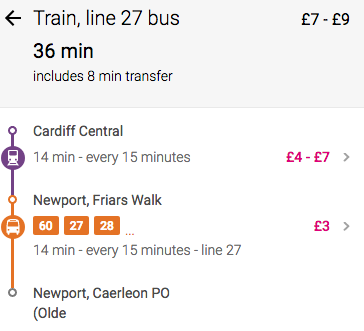
Para ir  de Cardiff a Caerleon, era preciso pegar dois transportes, com baldeação em Newport. São aproximadamente 30 km. Fui de ônibus para economizar 4 míseras libras.

To reach Caerleon from Cardiff you need two transports, changing in Newport. Distance is around 18 miles. I’ve chosen the bus, to save four miserable pounds.

Screen Shot 2018-01-07 at 10.27.09 PM

Screen Shot 2018-01-07 at 10.28.03 PMScreen Shot 2018-01-07 at 10.28.37 PM

caerleonUskRiver

O nome romano Isca significa “água”, referindo-se ao Rio Usk, em cujas margens fica Caerleon / The name Isca means “water” and refers to the river Usk, on which banks is located Caerleon.

Caerleon é um importante sítio arqueológico, onde estão preservadíssimos os vestígios de Isca Augusta, antiga fortaleza romana que abrigava a Legio Secunda Augusta. “Augusta” significa “de Augusto”. Muitas legiões romanas recebiam o nome de seu general. O nome Caerleon, que surgiu mais tarde, derivou de “fortaleza da Legião” em galês.

Caerleon is a site of archaeological importance, being the location of  Isca Augusta, a notable Roman legionary fortress, headquarters of the Legion “II Augusta” which remains are very well preserved. “Augusta” means “Augusto’s”. Many Roman legions undertook their general’s name. The later name Caerleon may derive from the Welsh for “fortress of the legion”.

MuseumEntrance_1

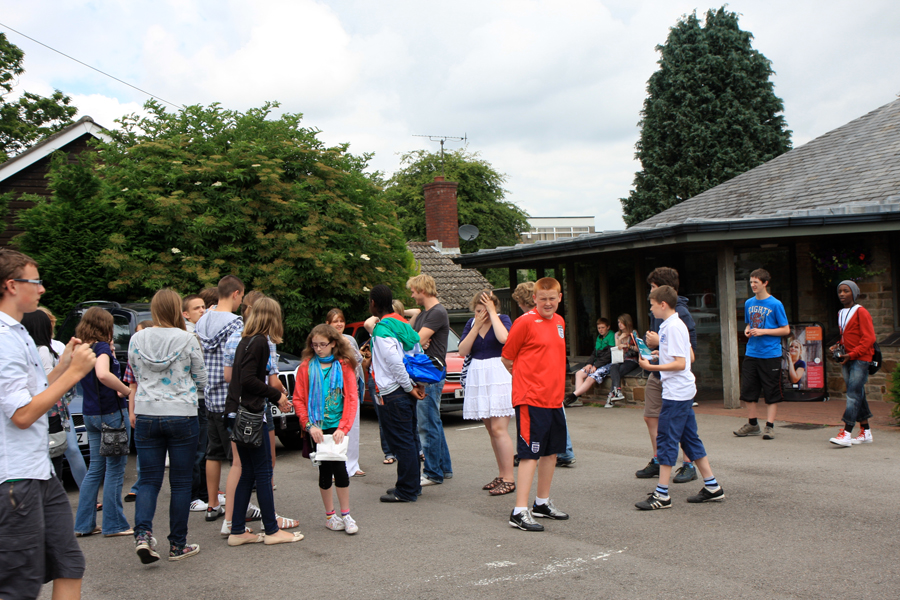
Grupo de estudantes chegando ao museu / A school party arriving at the museum

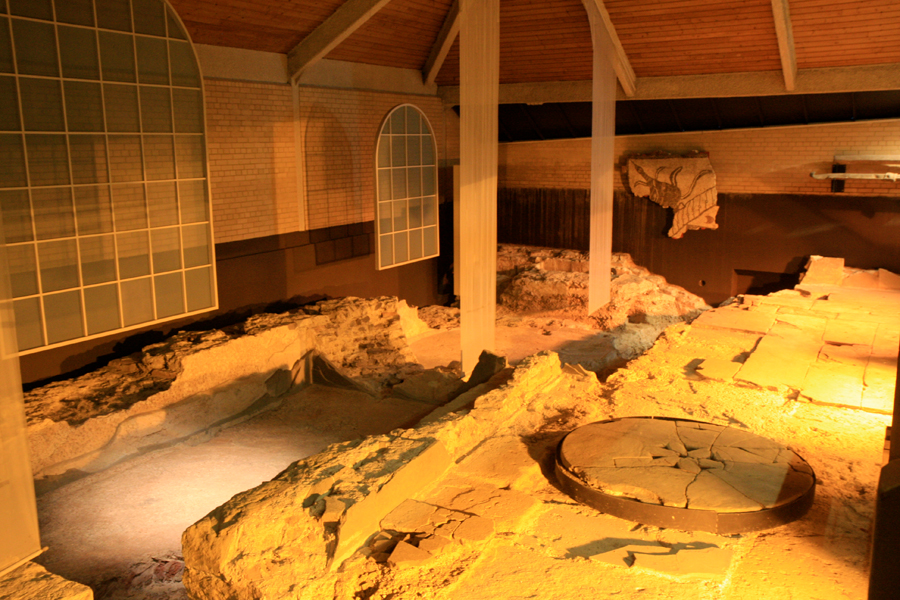
As escavações revelaram um anfiteatro praticamente intacto, as termas (casa de banhos) e os alojamentos dos legionários. O ônibus para em frente ao Museu dos Banhos Romanos, que abriga as antigas termas.

Excavations unearthed a practically intact military amphitheatre, thermae (baths) and barracks occupied by the Roman Legion. The bus stop is right in front of the Roman Baths Museum, where are the ancient thermae.

caerleon01

Entrada do Museu dos Banhos Romanos / Roman Baths Museum entrance

caerleonRomanBaths02

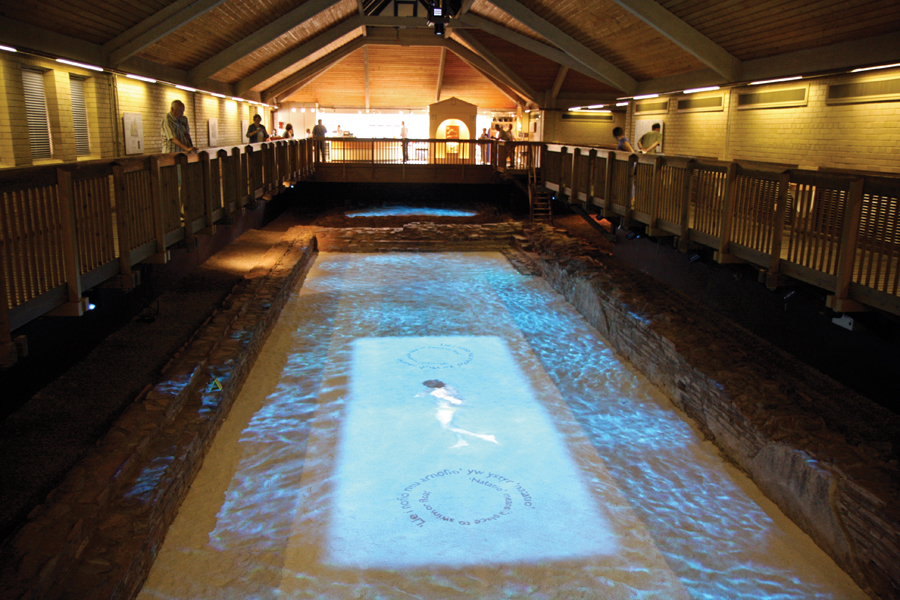
O museu é estruturado em passarelas em torno das ruínas da casa de banhos romana. / The museum structure consists in walkways over the remains of the military bath house.

caerleonRomanBaths03

Isca foi uma das três únicas fortalezas legionárias permanentes na Britannia romana. Foi o ponto mais distante a oeste a que chegou o Império Romano na ilha. / Isca was one of only three permanent legionary fortresses in Roman Britain. It was the farthest point west in Britain that the Roman Empire extended to.

caerleonRomanBathsPlaca02

Painéis explicativos nas passarelas em volta das instalações preservadas /  Explanatory panels on the walkways around the preserved facilities

caerleonRomanBathsPlaca01

caerleonMuseumKids1

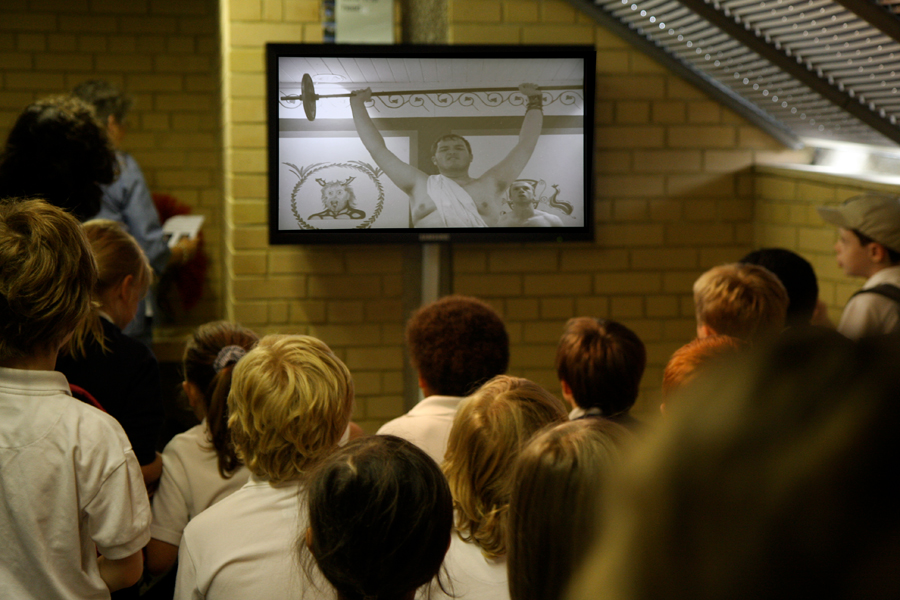
Filmes mostrando como era a vida dos legionários, sempre com um personagem trapalhão para prender a atenção dos colegiais em excursão. / Short movies depicting the legionaries’ daily routine, always featuring a clumsy character to catch the scholars’ attention

Praticamente ao lado fica o Museu Nacional da Legião Romana e a Igreja de St. Cadoc. A visitação é gratuita nos dois museus.

Almost beside this museum there’s another one: The National Roman Legion Museum. Both are free. St. Cadoc’s Church lies ahead.

National Roman Legion Museum:

Opening times:  Segunda a sábado /  Monday / Saturday, 10am–5pm

Domingo/ Sunday, 2pm–5pm 

Caerleon Roman Fortress and Baths:

Opening times:November 2017 – 31 March 2018:

Segunda a sábado / Monday to Saturday  9.30am – 5.00pm ;

Domingo / Sunday 11.00am – 4.00pm

1 April – 1 October 2018 : Diariamente / Daily 9.30am – 5.00pm

caerleonMuseum

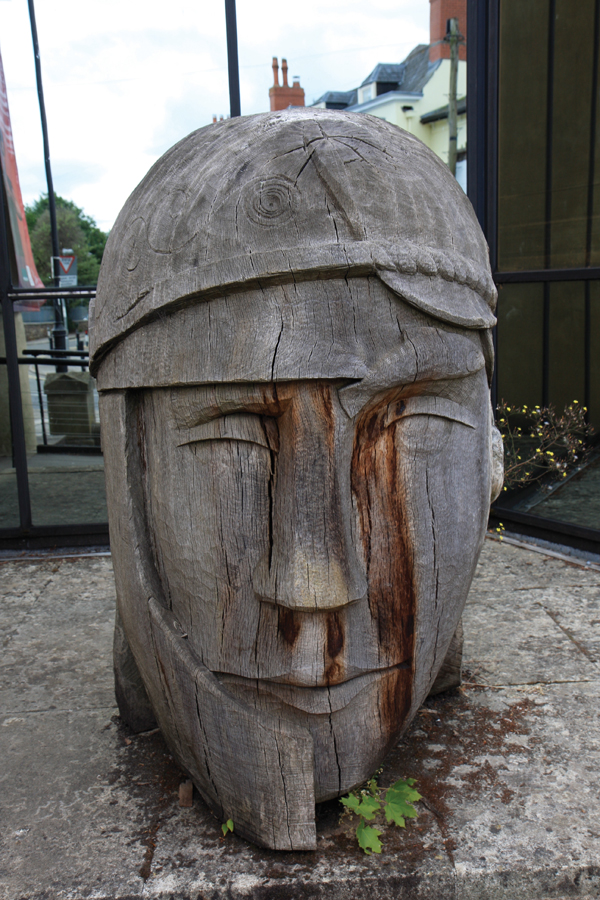
Linda escultura na porta do museu da Legião Romana/ Nice sculpture by the Roman Legion Museum entrance.

caerleonMuseumKids

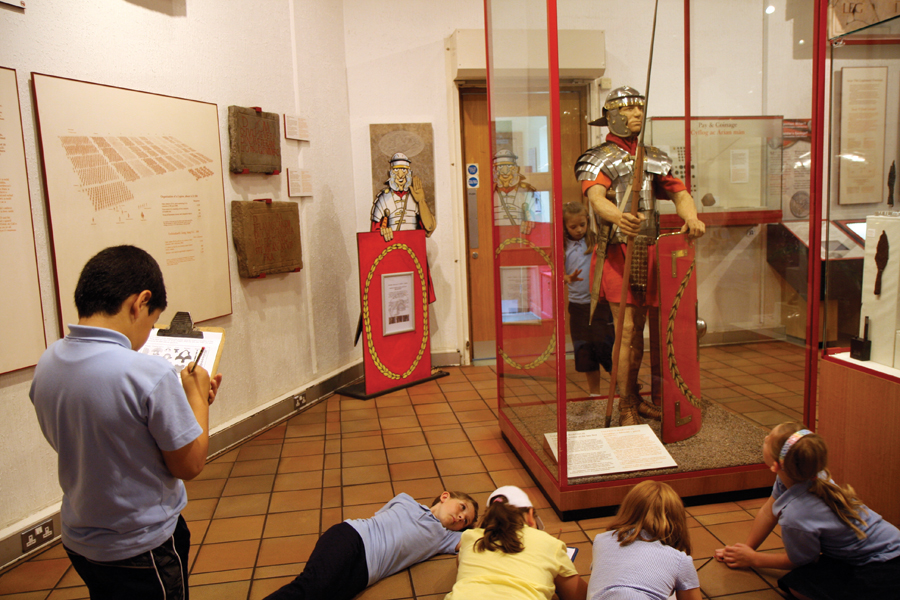
Me traz imensa alegria ver tantas crianças visitando os museus. Em quase todos os que visitei no Reino Unido havia sempre um grupo de estudantes. / My heart overflows with joy to see so many kids visiting the museums. There were school parties in almost every one I’ve been.

caerleonStCadocsChurch01

St. Cadoc’s Church

caerleonStCadocsChurch05

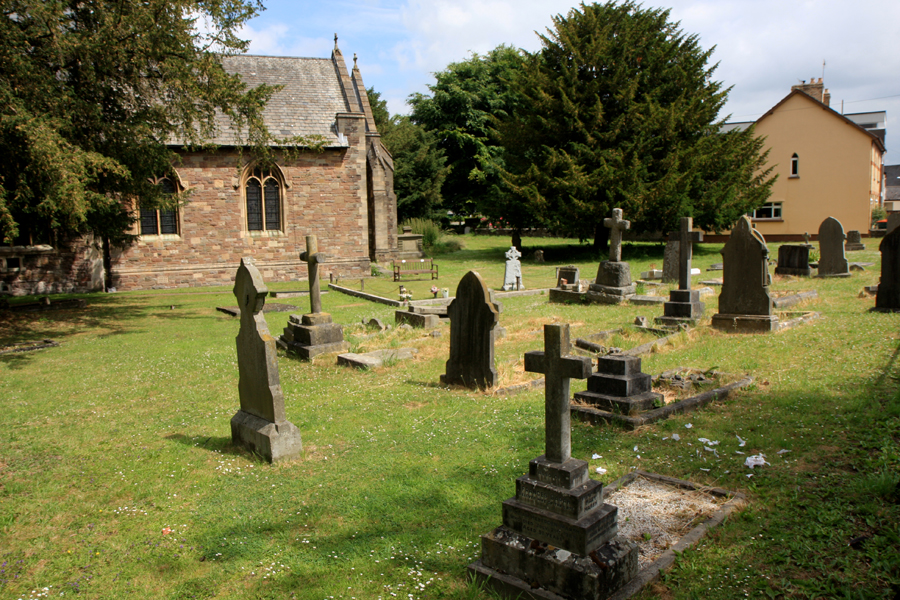
O lindo cemitério num raro momento de sol / The lovely graveyard in a unique sunbeam

caerleonStCadocsChurch04

Todos já sabem que sou fascinada por cemitérios antigos. / Everybody knows by now that I’m fascinated by ancient graveyards.

Read Full Post »


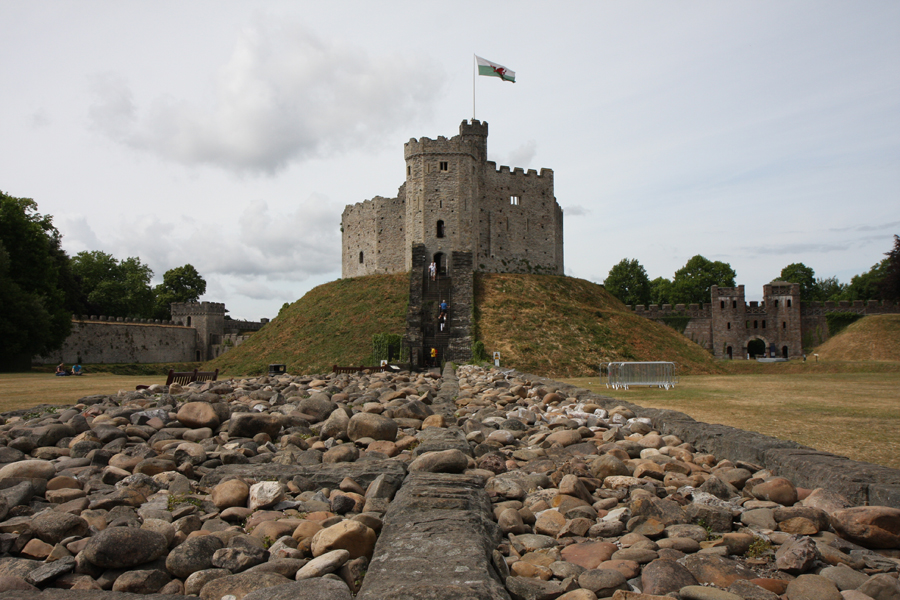
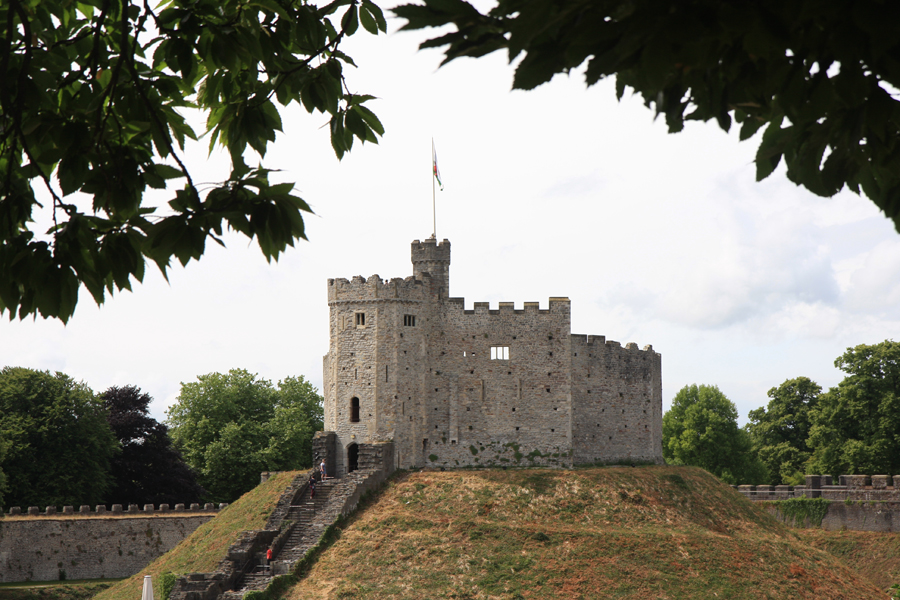
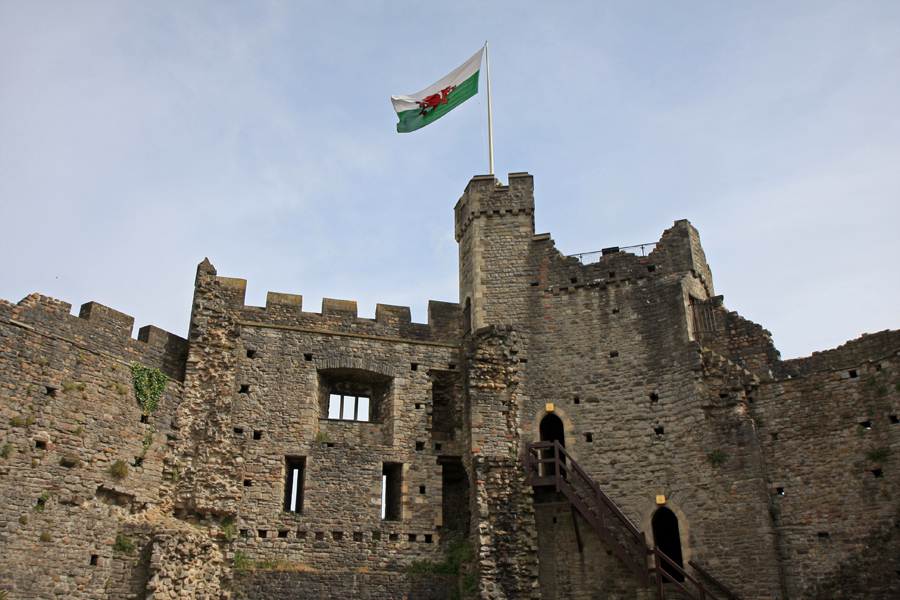
O museu do castelo de Cardiff dá saída para um jardim – na verdade, só se entra no museu se quiser, pode-se atravessar direto um enorme gramado onde, ao fundo, erguem-se as ruínas (muito bem restauradas) do Cardiff Castle. Pode-se subir três lances de escada até a torre principal, que ostenta no cume a bandeira do dragão vermelho, símbolo de Wales. O Pendragon!

From the Castle Museum you enter a yard – actuallu you can go straight into the yard where, in the background, stand the (very well preserved) ruins of Cardiff Castle. Going up three sets of stairs you reach the Tower, where the red dragon, the Pendragon flag,  unfolds.

Lá de cima, avista-se um círculo de pedras no parque vizinho ao castelo. / From the Tower you can see a stone circle down in the neighbouring park.

Este parque antes fazia parte do castelo, mas foi graciosamente doado à municipalidade pelo proprietário, o 5º Marquês de Bute, em 1947. O nobre é citado ad nauseum em quase todos os tópicos do audioguide do museu. O parque tornou-se público; é enorme, lindo e limpo.

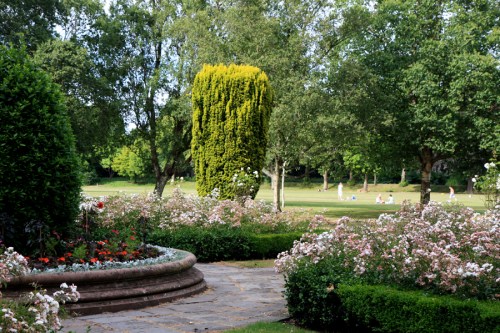
O Parque Bute compreende 53 hectares de jardins paisagísticos e áreas de lazer  / The Park comprises 130 acres (53 ha) of landscaped gardens and recreation grounds

This park was once part of the Castle until the owner, the 5th Marquess of Bute, donated it to the Council in 1947. The nobleman is mentioned in each and every Museum’s audioguide topic. The park nowadays is public; it’s huge, beautiful and clean.

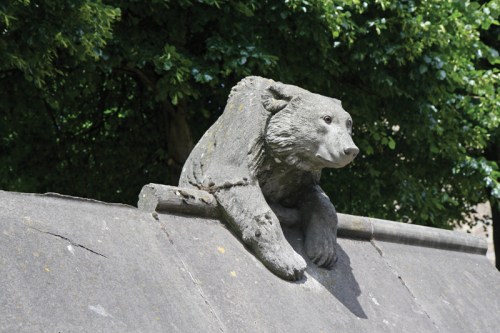
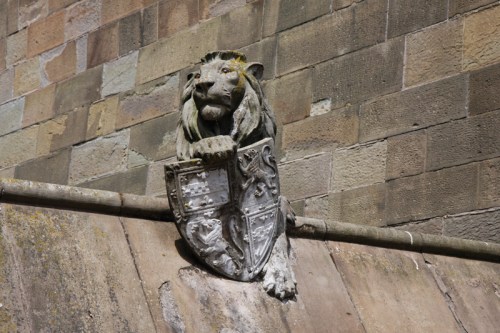
O Muro dos Animais, feito de pedra com diversos bichos esculpidos no topo/ Animal Wall, a stone wall topped by sculpted animal heads.

Os bichos parecem estar pulando o muro para fugir do parque / The animals seem to be on the run over the wall

Trata-se de humor britânico: o parque fora projetado para ser um zoológico. / It’s British humor : the Park had been designed to be a Zoo

Círculo de pedras no Bute Park / Stone circle

Apenas a pedra central do círculo é realmente antiga. / Only the stone in the middle is really ancient.

As demais pedras foram postas em 1880 para celebrar o primeiro Eisteddfod oficial do país, um festival anual nos moldes daqueles onde os antigos bardos apresentavam música e canções do folclore. Reviver essa tradição foi ideia do druida Iolo Morgwang, um estudioso que pretendia valorizar a herança da cultura celta. No País de Gales, seu projeto parece ter sido bem sucedido.

The rest of the stones were put there in 1980 to celebrate the first official Eisteddfod in the country, an yearly festival like the ancient ones, where Bards presented music and folk songs. Revive this tradition was Druid Iolo Morgwang’s idea, to reinforce the celtic heritage. In Wales, apparently, his project has thrived.

Entrada pela Rua Norte, no muro esquerdo do castelo /Entrance in North Road by Cardiff Castle left Wall

Tarde de primavera / Springtime afternoon

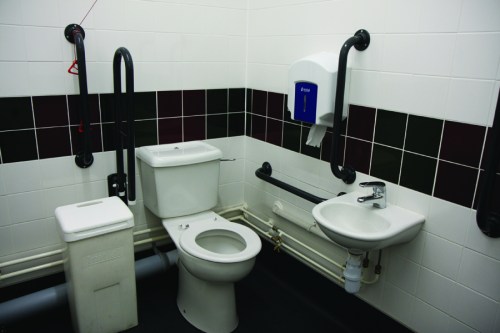
Banheiro público no Parque Bute / Public restrooms…

…com trocador de bebê e estrutura para portadores de deficiência./ …diaper changer and facilities for the disabled

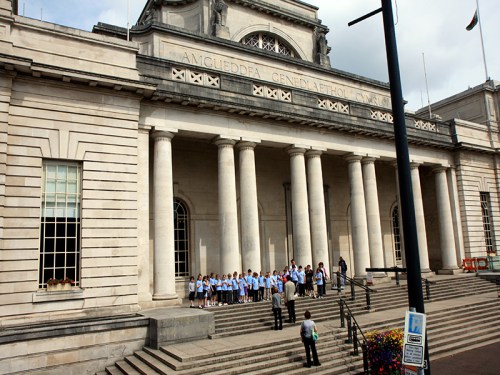
Em Cardiff tudo funciona. O Museu Nacional é gratuito; além da Galeria de Arte, apresenta enorme variedade de material geológico. Vi uma animação da configuração dos continentes sobre a crosta terrestre desde os primórdios. Assiste-se à separação de enormes blocos, a submersão de áreas e o levantamento de montanhas e vulcões. Aprendi que o País de Gales já esteve no Equador antes de ir parar quase no Mar do Norte.

Estudantes visitando o Museu / Students visiting Cardiff National Museum

Everything works in Cardiff. The National Museum is free; besides the Art Gallery, it offers a large range of Geological stuff. I ‘ve watched a short movie about the continents’ conformation on Earth’s crust since its origins. You see massive blocks being torn apart; large extents of land sinking and the rise of mountains and volcanos. I’ve learned that Wales was once located in Ecuador before settling down where it is now, almost in the North Sea.

Cardiff Bridge – the southern end of the park / na Saída Sul do Parque

Voltando ao albergue, parei no pub da esquina. Um time de rugby da França chegou, mas de 20 jogadoress invadiram a varanda e depois de muito tumulto formaram um grupo para um deles bater uma foto. O rapaz estava todo atrapalhado com a câmera. Eu já sabia o nome dele – aliás, de quase todos; parecia que a diversão deles era ficar berrando um pro outro. Yves! Jules! Marcel! Resolvi interferir: Hey, Jules! Laisse-moi prendre la photo! Allez-y! Todo mundo riu, peguei a câmera e fotografei o grupo. Alguns vieram gentilmente me trazer um prato de queijo e uma pint.

On my way back to the hostel, I stopped at the pub. A French rugby team arrived. Around 20 players entered the porch in uproar, and grouped together for a photo. The guy supposed to take it was clearly gawky.  By that time I already knew their names. Apparently their greatest fun was to call out loud one another: Yves! Jules! Marcel!  So I felt pity for the clumsy photographer and took the camera from his hands:Hey, Jules! Laisse-moi prendre la photo! Allez-y! ” Everybody laughed. I took the picture, and some of them were so nice as to bring me a cheese plate and a pint.

Paisagismo britânico / British landscaping

Depois de quinze minutos de papo, um músico dentro do pub começou a tocar e as pessoas foram entrando. Fiquei ouvindo um bom tempo; quando cansei fui embora tomar banho e dormir. O dia seguinte seria muito importante: planejara ir a Caerleon, onde, segundo As brumas de Avalon, localizava-se a corte de Arthur, antes da construção de Camelot no chamado “País do Verão”.

After chatting for a while, we’ve heard a guitar player starting his gig in the pub. Everybody went inside. After some time I’ve got tired and left, longing for a shower and a bed. Next day would be very important: I planned to go to Caerleon where, according to The Mists of Avalon, was Arthur’s Court , well before the building of Camelot in the so-called Summer Country.

Read Full Post »


cardiffCastle01

Cardiff Castle, Wales

Quando acordei na manhã seguinte, Tony havia saído. Era dia de feira. Voltou com queijo, ovos, pão e chouriço. Esses últimos foram para o forno sobre uma grade toda grudada de vestígios de pães e chouriços anteriores, e os ovos fritos em uma frigideira de aspecto idêntico, mas achei o breakfast uma delícia. Até o chouriço provei: Anthony ficou ofendido quando falei que era peixetariana e me deu a maior bronca pela frescura, pois ele tinha ido comprar os víveres especialmente para que eu provasse produtos orgânicos, tudo produzido ali mesmo em Somerset.
cardiffPendragon

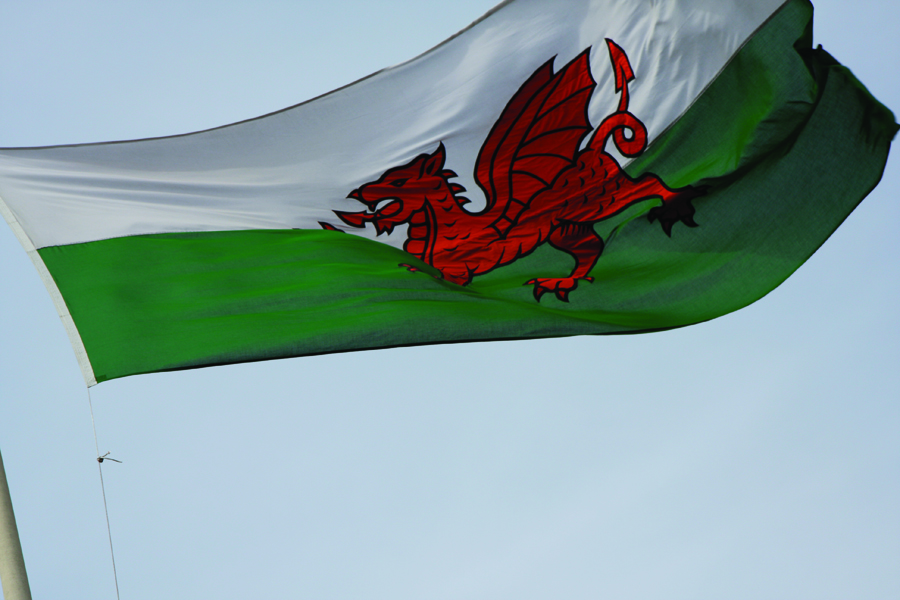
O Pendragon, símbolo de Uther e de Arthur, é a bandeira do País de Gales. / The Pendragon, Uther’s and Arthur’s symbol, is Wales’ national flag.

When I woke up next morning Tony wasn’t home. He’d gone to the Street Market, and came back with cheese, eggs, homemade bread and black pudding. The last were put in the oven, on a sticky grill where traces of former slices of bread and black pudding still lingered on. The eggs were scrambled in a pan as dirty as the grill, but breakfast was delicious nevertheless. I ‘ve even tasted the black pudding. Anthony was very aggrieved when I told him I was piscatarian, and scolded me for being so whimsical. He had bought all that food specially for me, so I could taste Somerset fresh organic products.
cardiffPendragon2

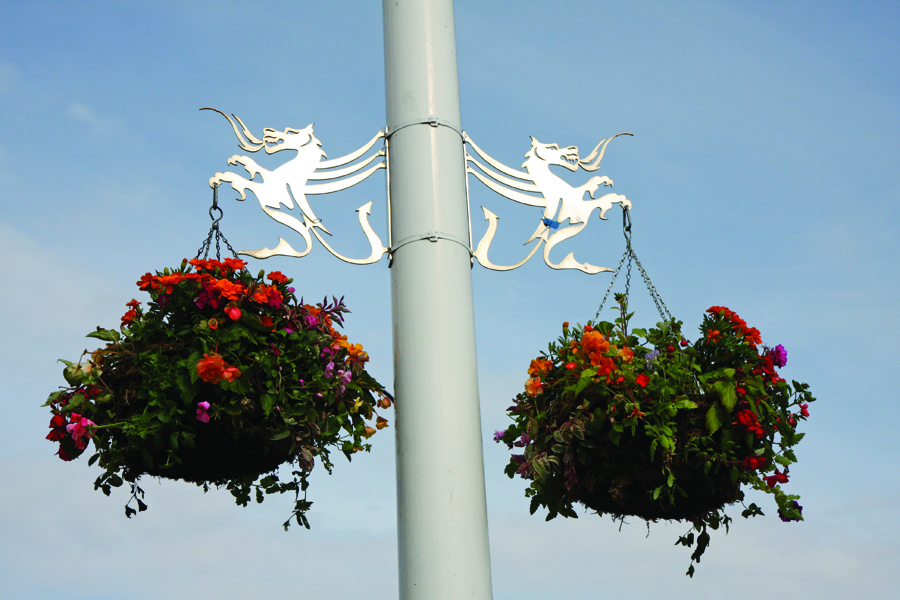
No País de Gales há Pendragons por toda parte / Pendragons are everywhere in Wales
cardiffPendragon3

Tudo é Pendragon/ Pendragon is all over

Meu amigo, ao seu jeito, era um perfeito cavalheiro. Quando andávamos pela estrada, ele se punha entre eu e o movimento dos carros. Compartilhava da minha sintonia com o rei Arthur, sabia tudo a respeito e acreditava mesmo ter sido um dos cavaleiros. Fui embora antes que me apaixonasse pelo inglês louro, de olhos azul safira e nariz romano, mas que vivia de seguro-desemprego e parecia nunca lavar sua roupa. Ele disse que sentia falta de uma mulher para tomar conta da casa e que se casaria comigo. Eu teria um passaporte inglês. Refleti e, observando o estado do apartamento, achei melhor declinar a oferta.

IMG_8784

Inglês e Gaélico / English and Gaelic

My friend was a perfect gentleman in his own way. We also shared King Arthur’s vibe. He knew all about the story and even believed he’d been one of the knights. I left Glasto before I fell in love with that blond, sapphire blue-eyed and roman nosed Englishman, who, on the other hand, lived on unemployment insurance and apparently never did his laundry. He told me that he missed a woman to take care of his home and that he wanted to marry me. I’d get an English passport! But thinking over it, and taking a look at the apartment , I thought better to turn down the proposal.
IMG_8789

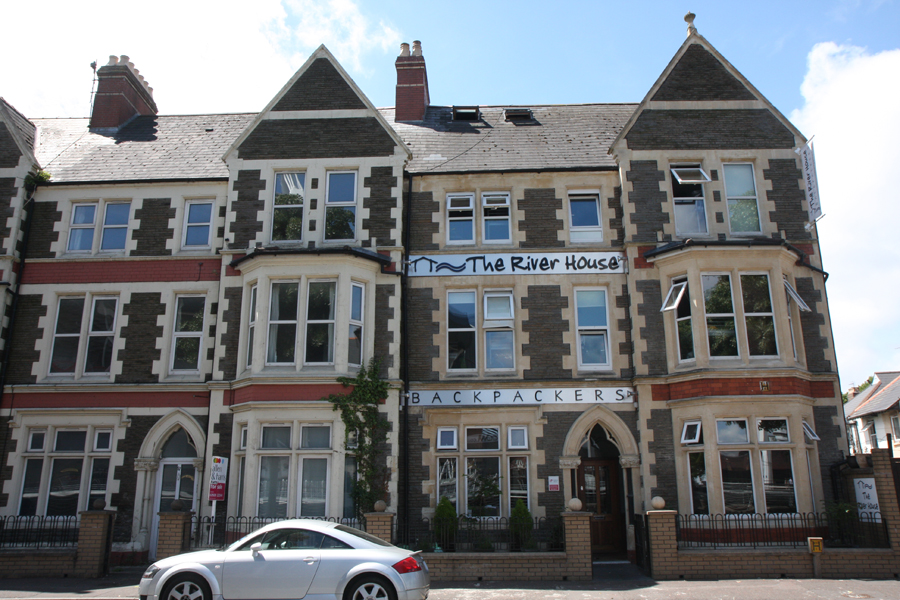
Meu hostel  em Cardiff / My hostel in Cardiff

Voltei para Londres com um nó na garganta. Poderia ter ido direto para o País de Gales, mas na mochila não tinha nem mais uma peça de roupa limpa. Não tomava um banho decente há dias, meus tênis estavam cor de bosta. Precisava baixar todas as fotos, apesar de ter comprado mais um cartão de memória em Bristol, na volta de Iona. Queria fazer uma refeição sentada à mesa, usando garfo e faca normalmente. Contudo, no caminho para a Tilehurst Road em Londres, minha garganta começou a fechar como se eu estivesse sendo estrangulada. Atribuí a sensação às lágrimas que engoli durante toda a viagem pensando no quase romance que acabara de viver. Nunca ninguém me pedira em casamento antes. Sou uma boba mesmo.
IMG_8790

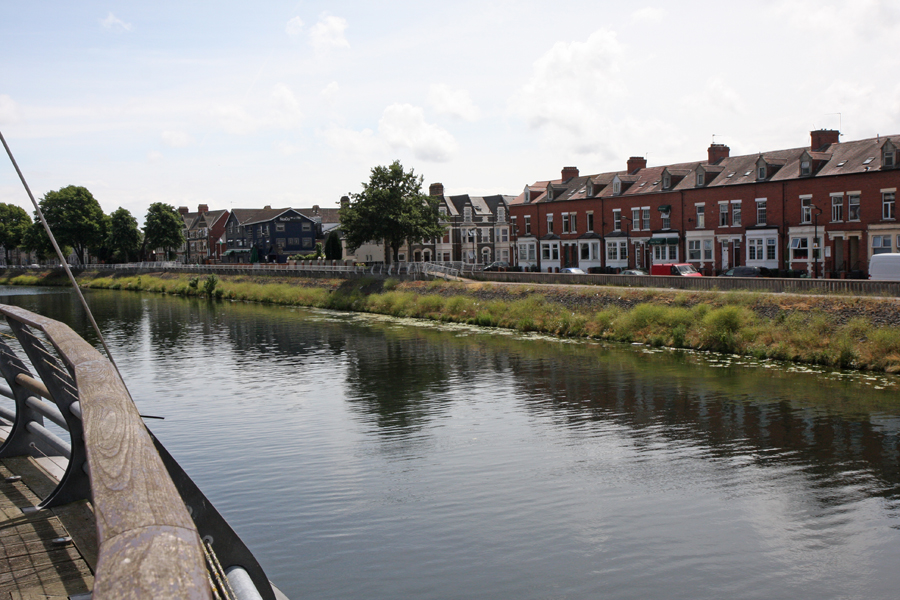
A rua do hostel / The hostel’s street

I could have taken a train straight to Wales, but there was not a single clean piece of cloth left in my backpack. I hadn’t had a proper bath for days, and my sneakers were dung colored. I needed to download all photos, though I ‘d bought one extra memory card in Bristol, on my way back from Iona. I wanted to have a normal meal, sitting at a table, using cutlery. In spite of all that, I was choking all the way to London, as if being strangled. I’ve credited the feeling to the tears I’d been swallowing along the way, thinking about the romance I’d been so close to live, and regretting my stupidity. Nobody had ever proposed to me before.
IMG_9001

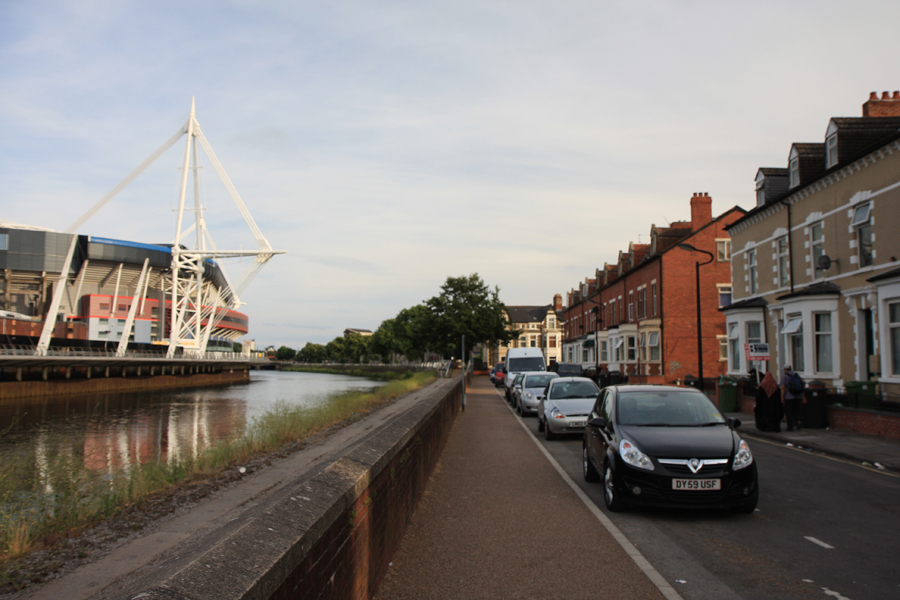
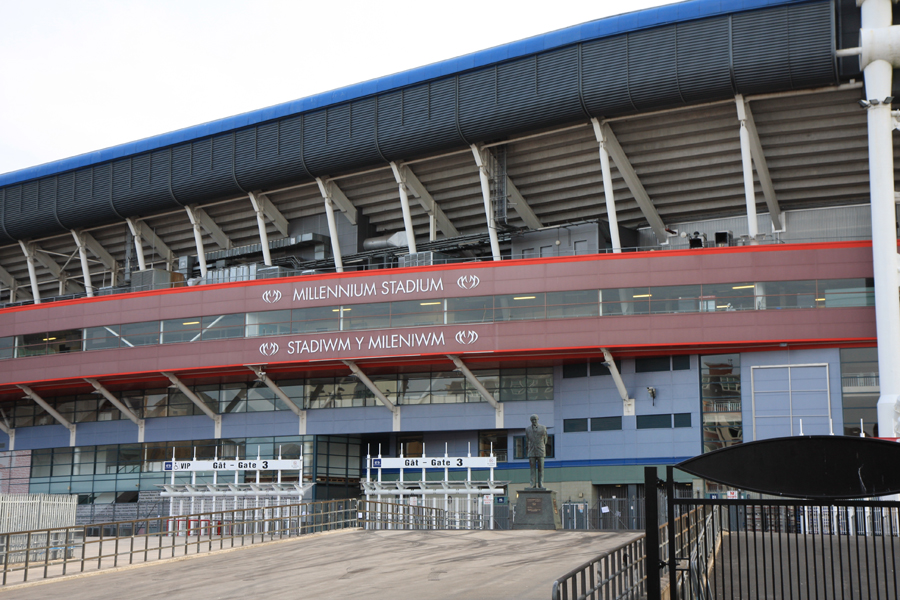
A rua do hostel; do outro lado do rio fica o Estádio da capital / Hostel’s street, with Millenium Stadium just across the river

Como Fernando e as crianças não estavam quando cheguei, fiz um pouco de terapia do grito primal – isto é, urrar feito um urso drogado – para ver se melhorava, mas o alívio não correspondeu à expectativa. Só no outro dia descobri o que de fato sentia: a faxineira apareceu se queixando de alergia, com sintomas semelhantes aos meus, devido à concentração de pólen no ar naquela época do ano. Fiquei curada quase instantaneamente.
IMG_8999

Millenium Stadium

Fernando and his kids were not home when I arrived at Tilehurst Road. So I took my time for some Primal Scream Therapy – that is, start bellowing like a stoned bear – in a vain try to feel better. I was still choking. Next day, the cleaning woman came by complaining of the same symptoms. According to her, it was allergy, due to the season’s high concentration of pollen in the air. So when I’ve found out what the real problem was, I felt immediately healed.

IMG_9003

Hostel’s backyard / Jardim nos fundos do hostel

Descansei alguns dias antes de pegar o trem para Cardiff, capital do País de Gales. A viagem levaria apenas duas horas, mas minha roupa precisou ser lavada mais de uma vez para desencardir. Os tênis ficaram de molho um dia inteiro. Eu tinha esquecido de que cor eram! Reservei três noites no albergue considerado o melhor de todo o Reino Unido, que ficava a cinco minutos a pé da estação. Era, de fato, limpíssimo, arrumado, bem decorado, tinha camas confortáveis, sala de TV com Wi Fi, e até um jardinzinho nos fundos e cozinha muito moderna. Servia um farto café da manhã incluído na diária, com iogurtes, granola, corn flakes, pães, bolos, croissants, geléia… tudo menos queijo. Não entendo qual o problema dos britânicos com queijo no desjejum, para mim, é fundamental!
IMG_8791

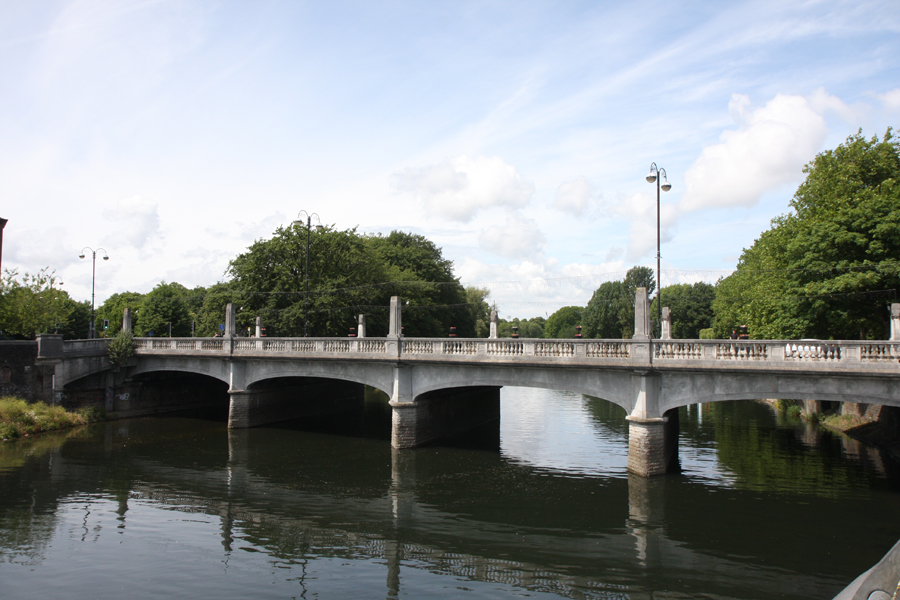
Do hostel ao castelo, caminhada de dez minutos atravessando esta linda ponte. / From the Hostel to the Castle it was a ten-minute walk, crossing this lovely bridge.
IMG_8794

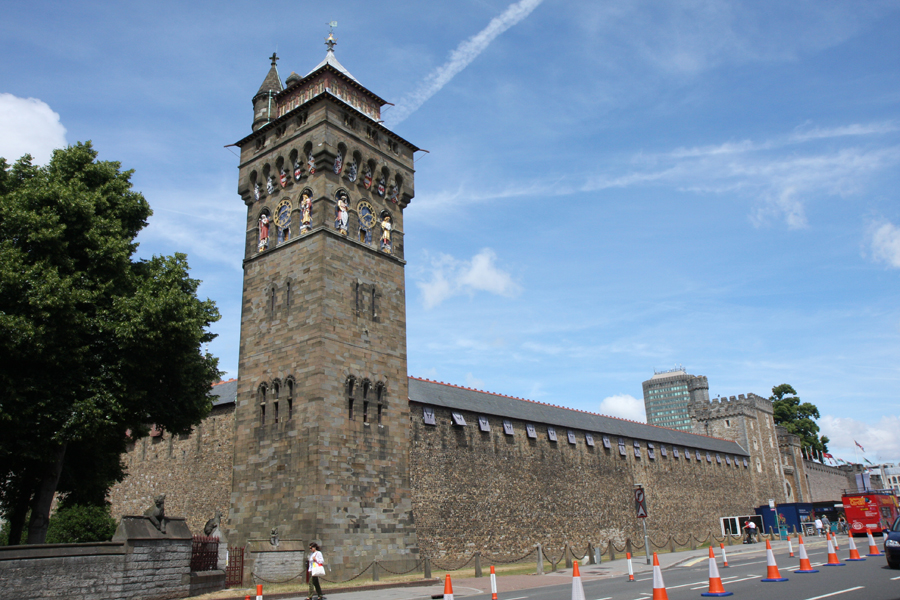
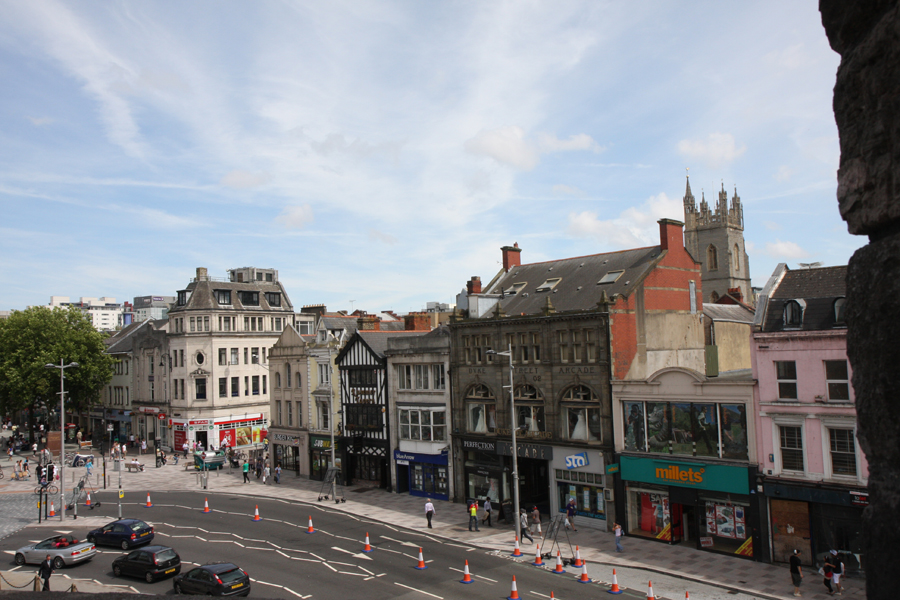
Chegando ao Castelo de Cardiff. Rua em obras. / Arriving at Cardiff Castle. Street in mainteinance.

I’ve rested a couple of days before taking the train to Cardiff, in Wales. it was a two-hour trip, but my clothes were so filthy that they had to be laundered twice. My sneakers had to be soaked overnight. I had even forgotten their real color! In Cardiff was located the best hostel of all UK, and there I booked three nights. It was a five minute walk from the train station. The place was indeed clean and neat, with comfortable beds, TV room, free WiFi, and a cosy little garden. The kitchen had all modern appliances. A rich breakfast was included: assorted cakes, cookies, croissants and bread, yogurt, cereal, corn flakes, honey, jam… everything but cheese. I don’t understand why the British have no cheese at breakfast. For me it’s essential.
IMG_8792

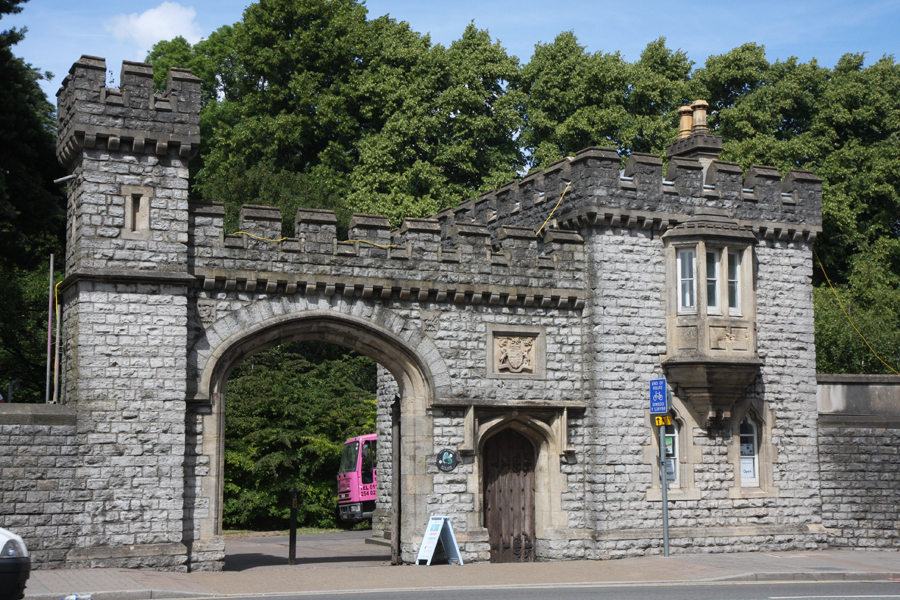
Entrada do Castelo / Cardiff Castle’s entrance

Meu passaporte ficou guardado em Londres. Fernando me garantiu que eu não iria precisar mostrá-lo em nenhum momento e ele estava certo. Mesmo assim, levei uma xerox na mochila. No meu quarto dormiam uma moça, um adolescente metaleiro e um rapaz de Jerusalém. Este queria comprar casa em Cardiff e estava há três semanas desenrolando papelada e burocracia. Nenhum deles quis ir comigo ao Castelo de Cardiff, que ficava a três quarteirões. O ingresso comum custa onze libras e o com visita guiada à antiga residência dos Bute (nobres que eram donos do castelo) custa quatorze.
IMG_8811

Vista do Castelo / Castle view

I had left my passport in London. My friend Fernando assured me I wouldn’t need it, and he was right. Nevertheless, I had a copy in my backpack. I was sharing the room with a young lady, a metalhead teenager and a guy from Jerusalem, who wanted to buy a house in Cardiff and had been the last three weeks trying to comply with bureaucratic requirements. None has wanted to go with me to Cardiff Castle, three blocks away. The entrance costed 11 pounds, or 14 including a guided tour to the Bute’s Palace.
IMG_8809

A rua em frente ao castelo / Street across the Castle

No museu do castelo, a cada meia hora, passava um filminho contando sua história ao longo de dois mil anos de existência. A personagem é uma menina que adormece enquanto desenha o castelo e sonha que está participando de acontecimentos em diferentes épocas. Aparecem normandos, decuriões romanos, vikings e outros inimigos que tentam tomar o caderno de desenhos da menina, mas um rapaz surge para ajudá-la. Eles saem correndo e escapam milagrosamente de todos os obstáculos com simples chutes e empurrões. O cenário, que é o próprio castelo, também vai se modificando. Assim o filme mostra as sucessivas invasões de todos os povos que fazem parte do DNA do Reino Unido.
IMG_8915

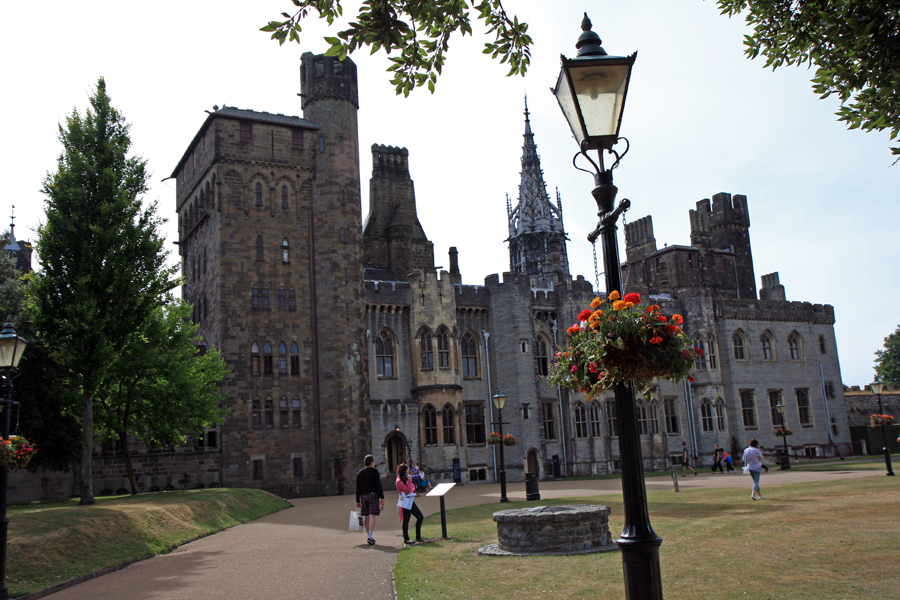
Palácio da família Bute / Bute family’s home

In the Castle Museum, each half hour a short very naive movie was replayed, narrating the place’s history through the two centuries of its existence. The main character was a girl who falls asleep while drawing the castle. In her dream, she is threatened by enemies from the different times – Normans, roman soldiers, vikings – who, one after another, try to steal the sketchbook from her. A boy appears to help her. They run a lot and manage to escape miraculously just by kicking and pushing away their foes.The location is the very castle, the movie shows how it’s changed through the ages. The movie depicts the sequential invasions of all people whose DNA is nowadays mingled with the British.
IMG_8870

Dentro do castelo / Inside the Castle


Quando se fala em invasão, imaginam-se logo centenas de navios desembarcando milhares de soldados para ocupar um território de uma vez e para sempre. Na Britannia não foi assim; foi um processo lento. Ao longo de séculos, invasores de diversas origens chegaram. Uns foram repelidos; outros conseguiram se estabelecer; alguns precisaram abandonar seus primeiros assentamentos para ir plantar-se mais adiante. Mas acabaram por miscigenar-se à população local e enraizar-se em solo britânico.

IMG_8902

Subindo / Going upstairs

When one speaks of invasions, you always imagine hundreds of ships landing thousands of soldiers to invade a kingdom or a region at once and forever. In Britain that’s not how it happened. It was a long and slow process. Through centuries, invaders have arrived and been repelled; others managed to succeed in settling down; some were driven from their first settlements to somewhere else, but eventually they’ve mingled with local people and taken roots in British green and pleasant land.
IMG_8892

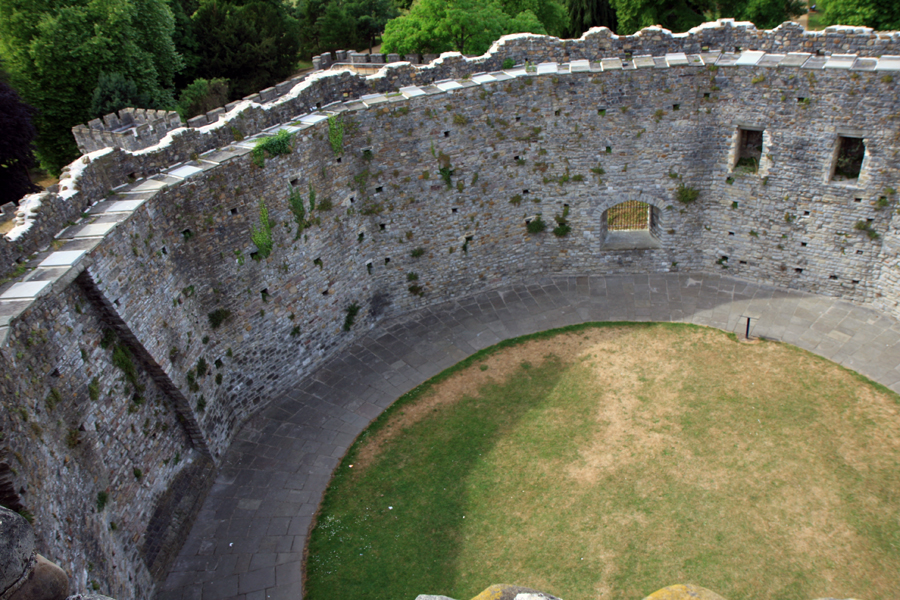
Vista dos fundos do Castelo / Castle’s back view

IMG_8897

Vista surreal: um palácio neogótico vitoriano com um enorme estádio ao fundo / Surreal landscape: a Victorian Gothic Revival mansion  with a huge modern stadium in the background
IMG_8816

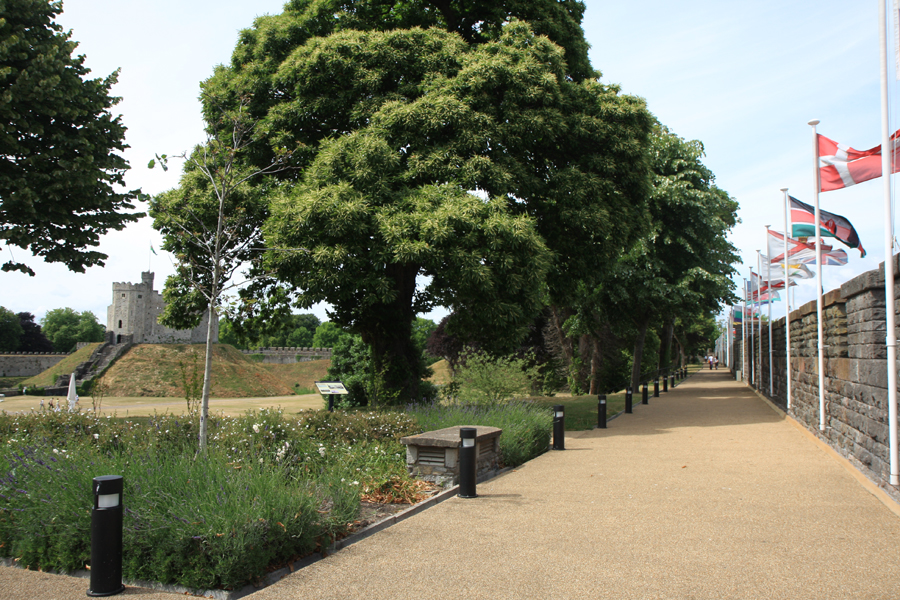
Caminho ao longo do muro / Footpath by the walls
IMG_8833

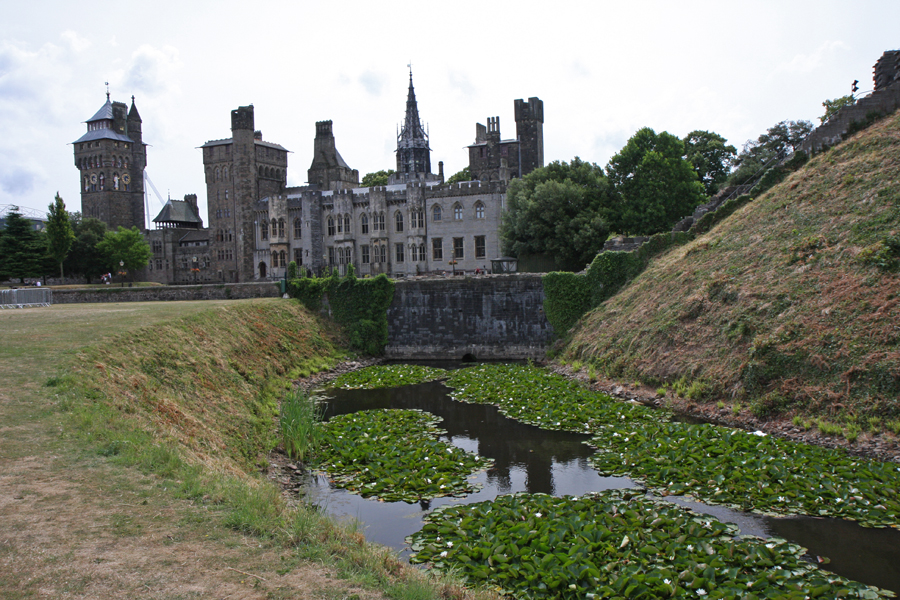
Fosso em volta do castelo / The ditch around the castle

A história do País de Gales fica evidente em suas línguas, o galês e o inglês, ambos parte do currículo escolar e presentes em todas as placas de sinalização, que são bilíngues. O site oficial do país abre em galês, você tem de mudar a opção de idioma para ver a versão em inglês. Senti um forte movimento de recuperação de identidade local, depois de séculos de domínio inglês. O País de Gales parecia acolher bem os imigrantes. A guia do city tour de Cardiff mostrava orgulho ao apontar uma escola que abrigava estudantes de mais de cem nacionalidades diferentes. Meu companheiro de quarto era de Israel; queria mudar-se para Londres, mas era economicamente inviável, por isso escolheu Cardiff, onde a vida é mais em conta.

IMG_8819

Abrigo anti-aéreo da Segunda Guerra construído nos muros do castelo / One of the Second World War air raid shelter tunnels built in the castle walls

Wales’ history shows plainly in the language, Gaelic and English, both taught in schools and manifest in , for instance, all street signs – bilingual. Wales’ official website is written in Gaelic; you must change the language option to read the English version. I’ve felt a strong movement for recovering the national identity after ages of English rule. Wales apparently welcomed immigrants. Cardiff city tour’s guide was very proud to point out a school whose students’ origins could be tracked back to more than a hundred different countries. My roommate was from Israel; he wished to move to London, but that was too expensive for him, so he’s chosen Cardiff instead, where life was much cheaper.
IMG_8808

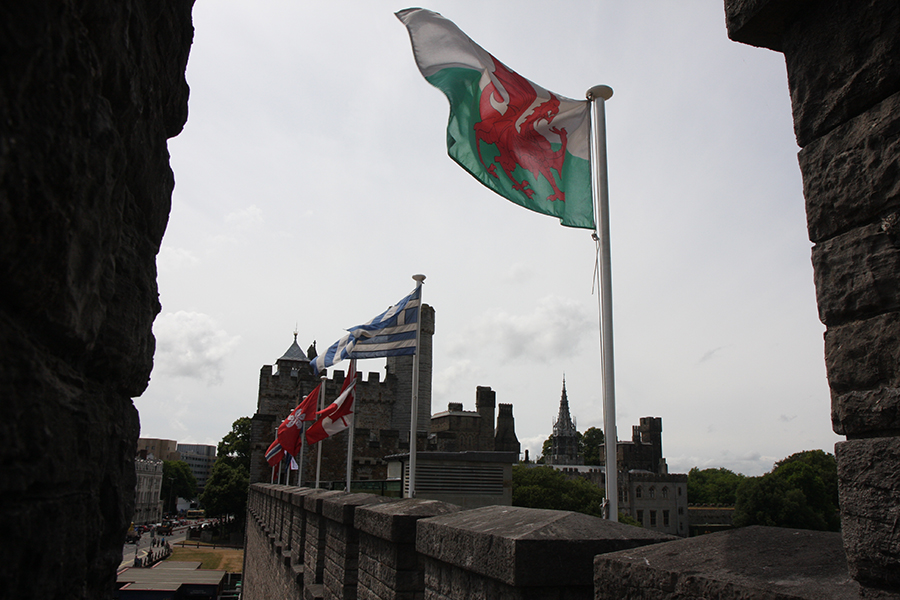
Vista da amurada / View from the ramparts

Este post foi escrito há cerca de dez anos. Imagino se as coisas mudaram por lá, como reflexo dos eventos mais recentes da história ocidental.
This entry’s been written around ten years ago. I wonder if something has changed by now, considering recent events in Western history.

Read Full Post »


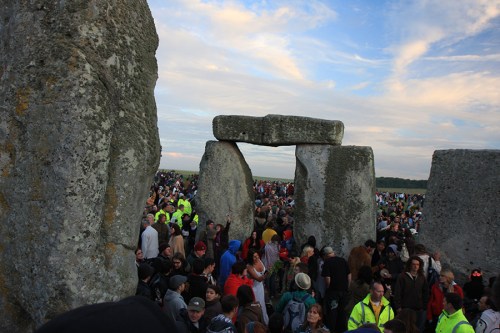
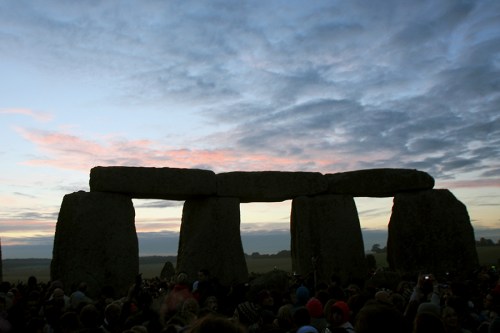
Summer Solstice, Stonehenge, 2010

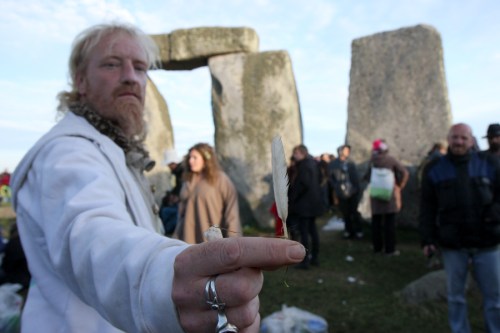
Em 2005, cerca de vinte mil pessoas compareceram ao Solstício de Verão em Stonehenge. Em 2010, parecia haver o triplo de gente em busca de espiritualidade e da festa.   Tanta gente que eu nem conseguia me aproximar dos grupos que tocavam música, fantasiados e com as caras pintadas. Para tirar fotos, erguia e apontava instintivamente a câmera acima das cabeças, deletando depois as fotos ruins.

In 2005, around 20.000 people attended to Summer solstice in Stonehenge. Now, in 2010, there were apparently three times more, in search of spirituality and good party. The place was so crowded that I couldn’t get closer to the groups playing music, in costumes and with painted faces. To take a photo I had to raise my camera above the heads and click by instinct, deleting later the bad pictures .

Grupos ostentavam suas bandeiras: uma enorme confraternização de diversos caminhos espirituais. / Groups bearing their flags: a massive gathering of assorted spiritual paths


Tribos variadas / Assorted tribes


Às 19h a multidão já se espremia. / Around 7 pm a crowd was already pressed together


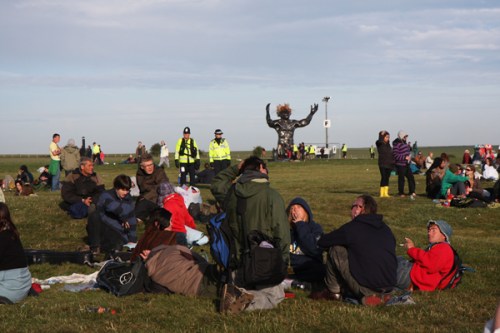
Novidade bizarra / Bizarre innovation

Havia mais coisas diferentes. Uma estátua esquisitíssima fora erigida próximo às pedras, um ídolo negro muito feio.
Some things were different this year. A weird statue had been placed near the stone circle, a very ugly black idol.

Também puseram enormes torres de iluminação em volta das pedras / Massive light towers had also been placed around the stones.
Cães policiais estavam a postos na entrada do evento para farejar drogas. Havia cartazes sinalizando “caixas de anistia”, onde tais substâncias deveriam ser dispensadas. Um cara chegou contando que estava com haxixe, um cachorro farejou a droga e policiais imediatamente o levaram para um trailer, onde fizeram o flagrante. O sujeito foi liberado em seguida, ileso mas muito assustado. E revoltado por ter ficado sem a erva.

Police dogs stood by the entrance, ready to scent drugs. Signs read “amnesty boxes” where such substances should be discarded. A guy told us that he had brought hashish but the dogs scented it and he’d been arrested at once and taken to the police caravan, where the weed was confiscated. He was then released, unharmed but scared to death. And very angry for having lost his green.

Diversões de verão / Summer entertainment


A Lua quase cheia chegou cedo para abençoar a festa. / An almost full moon came early to bless the celebration.

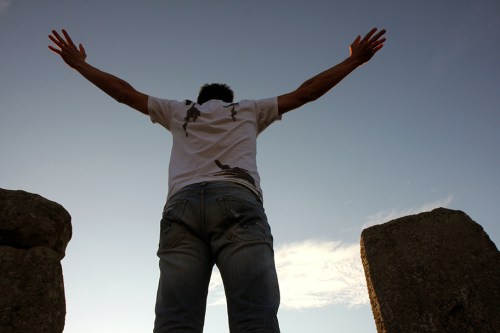
No meu primeiro Solstício, me plantei no alto de uma pedra e ali fiquei com medo de perder o lugar. Desta vez, com Anthony, fiquei zanzando de um lado para o outro, conversando com todo mundo e, assim, a noite passou muito rápido. O dia começou a querer clarear; era tanta gente, que foi até difícil voltar para o centro do círculo de pedras. Os tambores marcavam a batida do coração da Terra. Meu corpo entrou em sintonia com esse ritmo; dançando sentia a vibração daquelas pedras ancestrais. Meio em êxtase, procurei um ponto alto para me posicionar e acabei indo parar no mesmo lugar onde estive cinco anos antes!

In my first Solstice I’ve stayed all night stuck on top of a stone, afraid of losing the place. This time , with Anthony, we’ve been walking around, talking to everyone, so the night was over in a blink. Dawn approached. It was hard to get back into the stone circle’s heart, but eventually we succeeded . Drums were beating with the Earth’s pulse.  I felt my body dancing , in tune with the rythm, feeling the vibration from those ancient stones. In kind of a trance, in search of a high place to stand, I suddenly found myself at the very same spot where I’d been five years before!!

Espera / Waiting for the sun

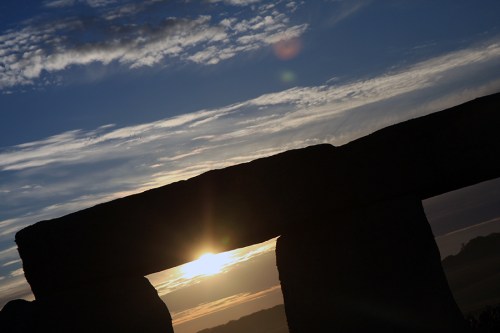
A luz foi surgindo, depois as brumas, que, por fim, foram tingindo o céu de rosa, de laranja, até surgir o primeiro raio no horizonte, para delírio da multidão.
A faint light started to touch the horizon; the mists came painting the sky pink and orange, and at last the first sunbeam broke free, stirring the crowd’s cheerings.

Veja nos posts 14 e 15 mais fotos desse momento mágico . / More photos of this magic moment are found in entries 14 and 15


A bênção do Sol / The Sun’s blessing

À luz do Solstício você consegue enxergar o ar que respira, dourado. Você consegue sentir seu frescor banhando cada célula do seu corpo, e traçar o caminho do prana em seu interior. É quase como respirar um fluido, a poção mágica da vida, da juventude eterna.

Under Summer Solstice light you can nearly see the air you breathe, all golden. You can feel its coolness moistening each cell in your body. You can trace its way inside you. It’s almost as breathing a fluid; a magic potion of life, to keep you forever young.

Hora da selfie / Selfie time

Os mesmos “ageless” que vi em 2005 realizaram a mesma performance, soprando berrantes e tocando seus instrumentos folclóricos. Pensei nos druidas, que pena terem optado por uma celebração privé. Perderam o amanhecer mágico…
Depois que o Sol já estava mais alto, descemos da pedra e encontramos uma roda de percussionistas contagiantes. Ficamos dançando em estilo tribal e quando dei por mim tinha muito mais gente à nossa volta aplaudindo. Tony pulava feito um cabrito com as mãos em chifres na testa, encarnando Cernunnos, o deus chifrudo, consorte da Deusa na tradição celta.

The same ageless people I’ve seen in 2005 were there, performing the same ritual, playing horns and folk instruments. I thought of the Druids, what a pity they had chosen to perform a private celebration. They’ve lost this magic sunrise…
After the sun had risen higher, we came down the stone where we were and just found a group of drummers. Then we’ve got carried away, dancing tribal style. I suddenly realized that a crowd had gathered around us, cheering and dancing too. Tony was jumping like a mad goat, making horns with his hands in his forehead , impersonating Cernunnos, the horned God, the Goddess’ consort in Celtic tradition.


Testando o Efeito Borboleta / Testing The Butterfly Effect

Uma hora depois, cansados, fomos procurar um trailer para tomar café. Tínhamos levado sanduíches; comemos apenas um durante a noite, mas agora nenhum de nós sentia fome, nutridos pelo calor do Sol – o mesmo que viria a azedar os sanduíches restantes.

One hour later, tired, we went looking for a coffee. We had brought sandwiches and eaten only one so far; but none was hungry now, nourished by the sun heat – that would eventually sour the remaining sandwiches.

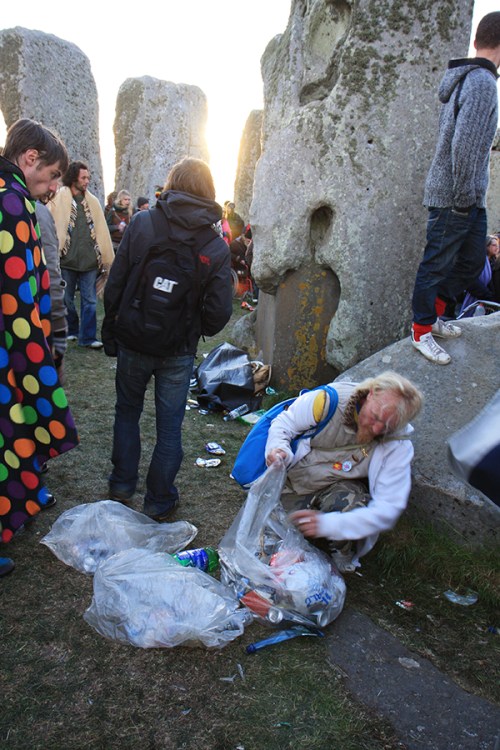
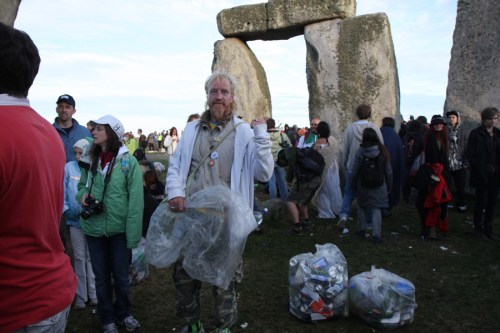
Tony foi subitamente tomado por um espírito de gari. / Suddenly, a street-sweeper spirit has overtaken Tony.

Revoltado com a quantidade de lixo espalhada no chão, meu amigo começou a catar tudo. Resolvi ajudá-lo. Logo um guarda surgiu com um enorme saco plástico e se enturmou na limpeza. Mais pessoas foram aderindo e, em pouco tempo, centenas de garrafas pet, tetra-pak, embalagens vazias e papel sujo estavam ensacados e empilhados em um monte pronto para ser recolhido. Me ocorreu perguntar por que ele não fazia o mesmo em sua própria casa…

My friend was pissed off when he noticed the amount of garbage scattered around, and started to collect it. I went to help him, and soon a police officer joined us, bringing  huge plastic bags. More people joined in, so, in no time we had tons of bottles, cardboxes, empty packages, paper and stuff, all bagged and piled up, ready to be collected. I wondered why didn’t he do the same in his own house…

Missão cumprida / Mission accomplished


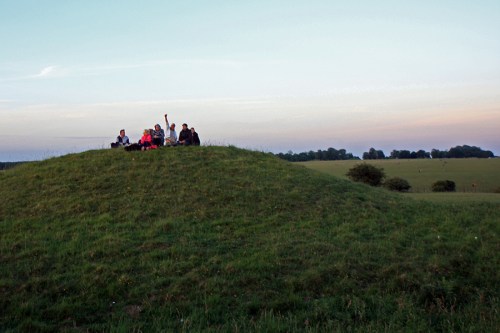
Um dos mounds no perímetro do monumento / One of the mounds in the monument’s perimeter

Perto do círculo de pedras existem três mounds. Segundo Tony, ali é o verdadeiro túmulo de Arthur. Nos sentamos no alto de um e, aos poucos, outras pessoas se juntaram a nós. Muitos haviam participado da limpeza e vieram nos parabenizar pela iniciativa. Ficamos ali tão absortos na conversa que constatamos – tarde demais – que o último ônibus para Salisbury já havia partido.

Near the stone circle there are three mounds. According to Tony, there is the true King Arthur’s grave. We climbed one of them to sit down for a while and soon other people had joined us. Many had taken part on the cleaning, and came to congratulate us for the initiative. We’ve got so deep in conversation that lost track of time – and the last bus to Salisbury.

Na estrada para Amesbury / Road to Amesbury

Caminhamos dois quilômetros até Amesbury, a cidade mais próxima, com um grupo de italianos muito simpáticos. Pelo caminho, havia um rio limpinho onde nos banhamos antes de achar um lugar para comer e o ponto do ônibus para Salisbury. De lá, pegamos o trem até Shepton Mallet, com as passagens de volta que já tínhamos e felizmente ainda se encontravam em nossos bolsos. Entretanto, ao ligar para seu amigo, Tony soube que ele estava ocupado e não poderia nos buscar na estação! Não haveria outro trem. Foi preciso pegar um ônibus de Shepton Mallet para Wells, de onde saía outro para Glastonbury – aliás, pegamos o último! Chegamos em casa quase à meia-noite, exaustos, sujos e ainda com fome. Nem reclamei do banho de caneca. Ainda conversamos um pouco (antes de eu desmaiar), enquanto tomamos chá e fumamos. Os europeus não compram cigarro e sim tabaco, seda e filtros. Fazem o cigarro na hora. Especialmente no Reino Unido, onde um maço industrializado custa o equivalente a mais de trinta reais.

We walked one mile to Amesbury, the nearest village, with a nice group of Italians. The road crossed a river, where we were delighted to bathe and refresh, before finding a place to eat and the bus stop. We waited for a bus to Salisbury, from where we took the train back to Shepton Mallet, very happy to have found the tickets still in our pockets. However, when Tony called his friend, who was supposed to pick us up at the station, the guy said he was busy and couldn’t  come for us! And there were no more trains that day. We had to take a bus from Shepton Mallet to Wells, and another one from Wells to Glastonbury. By the way, we’ve managed to board the last one! So we arrived home around midnight, exhausted, filthy and still hungry. Before I passed out we’ve talked a bit, had some tea and cigarrettes. Europeans don’t buy cigarrettes. They buy tobacco, paper, filters, and roll their own cigarrettes. Specially in the UK, where a pack costs a fortune.

Igreja / Church in Amesbury

Cemitério junto à igreja de Amesbury / Cemetery next to the Church


Save

Save

Save

Save

Save

Save

Save

Save

Save

Save

Save

Read Full Post »


Anthony

Anthony estava me esperando no ponto de ônibus. Fiquei feliz em revê-lo! O B&B onde havia me hospedado antes estava fechado, aliás tudo estava fechado àquela hora, por isso aceitei o convite para pernoitar em sua casa. Precisava desesperadamente tomar um banho. Lá chegando, ao subir as escadas, reparei um acúmulo de lixo nos degraus. Estou com um mau pressentimento – pensei, como Indiana Jones.

Anthony was waiting for me at the bus stop. I was glad to see him! The B&B where I had stayed previously was closed, as everything else in the city by that time, so I accepted his offer to stay at his place. I was in desperate need of a shower! But when we got there, making our way upstairs, I noticed lots of garbage all over the steps. Indiana Jones’ quote came to my mind: I have a bad feeling about this.

Cota de malha e espada encontrada na Casa do Anthony em Glastonbury / Coat of mail and sword found in Anthony’s place

A porta do apartamento parecia travada. Com certo esforço conseguimos abri-la apenas o suficiente para entrar. Quando acendeu a luz entendi o porque. Tecnicamente, era uma kitchinette com cozinha e banheiro. Na prática, um depósito de lixo. Todo tipo de coisas e pedaços de coisas se amontoava pelo chão. No canto, uma cama de solteiro servia de sofá, coberta de lençóis puídos e restos de comida de gato sobre folhas de papel. Anthony abriu caminho até lá entre pilhas de objetos, fitas VHS, roupas, aparelhos quebrados, livros e revistas.
– Este prédio vai ser demolido em breve, outro está em construção ao lado; os moradores serão transferidos em poucos meses – disse ele, como se isso explicasse um ser humano viver naquele monturo.

The door was apparently blocked, it took us some efforts to push it open just enough to get in. When he turned on the lights I understood why. Technically the place was a kitchenette, with one bathroom and kitchen. Practically it was a dump. All sorts of stuff and pieces of stuff were huddled on the floor. On the corner, a single bed served as sofa, covered in shabby sheets and cat food leftovers on scattered pieces of paper. Anthony made way to it pushing aside stacks of VHS tapes, objects, clothes, broken gadgets, books and magazines.
– This building will soon be demolished. Another one is being built beside it, the tenants will be transferred in a few months – he said, as if that was a perfectly suitable reason for someone to live in such filth.

Anthony e seus morangos / Anthony and his berries

No banheiro, para meu constrangimento, a lâmpada estava queimada, então deveria deixar a porta entreaberta. A descarga não funcionava, portanto tive de usar um balde. O chuveiro continha pilhas de caixas cheias de lixo, então para tomar banho, precisei encher a pia da cozinha com água fervida na chaleira elétrica, completar com água fria e ali mesmo derramar sobre o corpo com o auxílio de uma canequinha. Precisei ferver sete vezes a chaleira e, quando me dei por limpa – cabelo lavado com xampu e condicionador –, o recinto tinha virado um lago no qual ele diligentemente passou o rodo – embora os caixotes de lixo ali acumulados tivessem ficado encharcados. Como Anthony pareceu não se importar, também não liguei, afinal água evapora até mesmo na Inglaterra.
For my embarrassment, in the bathroom the bulb was burnout, so the door should be left ajar. Toilet flush was also malfunctioning. Had to use a bucket instead. In the shower there were stacks of boxes containing garbage, so bath should take place in the kitchen, boiling kettles of water to mix with cold water from the sink and use a mug to pour it over my body. After boiling seven kettles I considered myself clean – my hair was washed with shampoo and conditioner – but the kitchen was flooded. Anthony squeegeed it easily, apparently not caring for the mess. There were more litter-boxes stacked there, thoroughly soaked by then. I didn’t care either. After all, water evaporates, even in England.

Tony e o amigo que nos deu carona/ Tony and his friend who’s given us a ride

Ele fez chá com biscoitos e estendeu uma pele no chão do quarto, por cima de guimbas de cigarros, revistas e papel amassado. Deitou-se ali e elegantemente me cedeu a cama. Exausta, dormi imediatamente sob edredons surrados, mas, felizmente, inodoros.
Na manhã seguinte, ele já havia combinado com um amigo para nos levar de carro a uma estação chamada Shepton Mallet (entre nada e lugar nenhum) onde passava o trem para Salisbury, de onde sai o transporte para Stonehenge na véspera do Solstício. O amigo comprometeu-se a nos buscar no dia seguinte, no mesmo local. O ônibus para o Solstício fora gratuito cinco anos antes. Agora, custava oito libras para ida e volta!Um terrível baque nas nossas finanças, pois teríamos que comer e pegar o trem de volta. Mas pensaríamos nisso mais tarde.

Tony made us tea with cookies and spread a fur on the floor over cigarette butts, crumpled papers and magazines, where he laid down to chivalrously offer me his own bed. Exhausted, I fell immediately asleep under shabby duvets – fortunately, odorless.
Next morning, a friend of his appeared , as they had arranged, to drive us to Shepton Mallet station, in the middle of nowhere, to take the train to Salisbury, from where we were supposed to take the bus to Summer Solstice. The guy promised to pick us up back there the next day. Five years ago, the bus had been free. Now it costed 8 pounds, return included. That was a terrible blow to our finances: we had to eat and pay the train back! But for the moment we just let it be. We’d deal with that later.

Read Full Post »


Tobermory , Isle of Mull, Scotland

O último dia em Mull foi para visitar Tobermory, outro povoado pitoresco: duas dúzias de casinhas coloridas em volta de uma baía. O mapa assinalava a existência de um círculo de pedras nos arredores, mas claro que não havia transporte para lá, portanto procurei um táxi. Porém…

My last day in Mull was to visit Tobermory, another scenic little village that comprised two dozens of colorful houses around a bay. According to my map, there was a standing stones circle in the surroundings, so I tried to take a taxi to get me there, once there was no public transport. But…

Tobermory Main Street

Tobermory, rua principal – mais perto / Main Street – closer

Tobermory Bay

Uma fonte meio sinistra / Creepy fountain

Igreja na rua principal à beira-mar / Church in the main street by the shore

Detalhe do vitral e torre / Church tower and glasswork detail

Rua principal de Tobermory / on Main Street

Nunca acontecia nada em Tobermory, assim como em Fionnphort e em todos os vilarejos da Ilha de Mull, mas justo naquele dia tinha um casamento. Todos os táxis do lugar (três ou quatro) estavam mobilizados para o evento e os motoristas foram irredutíveis: tinham que ficar ali na estação à disposição dos convidados. Eu não teria tempo hábil para caminhar até encontrar o círculo de pedras (que aliás ninguém conhecia ) e voltar a tempo de pegar o último ônibus. Então só deu para caminhar pela cidade.

Nothing ever happened in Tobermory, just as in Fionnphort and all other villages in Isle of Mull, but that very day there was a marriage party. So all the taxis ( three or four) had been mustered for the event and the drivers were adamant: they were supposed to stay there, available to the guests. I had no due time to walk until I’ve found the stone circle (by the way, nobody knew it) and come back to take the last bus. So I could only stroll around the village.

O casamento era nesta igreja , na rua mais alta da cidade / The marriage was to take place in this church, located in the village’s upper street

Preparativos para a cerimônia / Preparation for the ceremony

A rua de cima / The upper street

Portão para a paisagem / Gateway to the landscape

Tobermory landscape from the upper street/ Vista da rua de cima

Então desisti. É inútil lutar contra o destino. Na verdade, já estava de saco cheio dessa dificuldade de transporte e frustrada mesmo pois atravessara meio mundo para visitar essas pedras e agora que estava tão perto não tinha como chegar lá. Na manhã seguinte, entrei no primeiro ônibus para trilhar o longo caminho de volta. Por meio de torpedos, combinara com Anthony, meu amigo de Glastonbury, de irmos juntos a Stonehenge para o Solstício de Verão. Eu já tinha as passagens de ferry (para Oban) e trem (para Glasgow) compradas, só foi preciso pegar mais um ônibus para Bristol, outro ônibus de Bristol a Wells e outro de lá para Glasto, onde cheguei dia 19 de junho por volta da meia-noite, depois de quase 24 horas de estrada.

So I’ve given up. Fate is inexorable. Actually, I was already tired of this transport difficulty issue and very frustrated because I had crossed half the planet to visit such stone circles and now that they were so close I couldn’t reach them. Next morning I took the first bus to start the long way back. Through messages, I had arranged with Anthony, my friend from Glastonbury, for us to go together to Stonehenge for the Summer Solstice. I already had the ferry (to Oban) and train (to Glasgow) tickets. I only had to take one more bus from Oban to Bristol, another from Bristol to Wells and another from Wells to Glasto, where I eventually arrived around midnight, on 19th June, after around 24 hours travelling.

No Terminal, esperando o ônibus / At the Terminal, waiting for the bus

No ferry, indo embora de Mull / On the ferry, leaving Isle of Mull

Paisagem com farol – a bordo do Ferry / Lighthouse landscape from the ferry

Uma coisa impressionante é a quantidade de bagagem que as pessoas carregam. O ferryboat transportava muitos turistas – oitenta por cento de terceira idade, de bengala, cadeira de rodas, andador –, todos com dúzias de malas. Observei, incrédula, a ginástica que as pessoas faziam carregando volumes gigantescos, além das malas com rodinhas.

 It’s astonishing how much luggage people carry. There were hundreds of tourists in the ferry – 80% seniors, walking on sticks, wheel chairs, walkers – all carrying dozens of suitcases. I watched in disbelief as they struggled with those massive bags, besides the wheeled suitcases.

Passageiros desembarcando no Terminal em Oban / Passengers leaving the Ferry at Oban Terminal

Uma moça me perguntou se o mochilão, a mochilinha e a bolsa da câmera eram “toda “ a minha bagagem. E eu já achando isso a maior tralha! Estava usando as mesmas roupas há um mês: tênis, um jeans no corpo e um extra, três camisetas, três meias, um casaco de fleece que zipava em um casaco impermeável, três mudas de lingerie e um par de havaianas. Mas na mochila ia acumulando lembranças dos lugares visitados: pedras, folders, mapas, uma coisinha e outra. E havia comprado uma bateria extra para a câmera.

Passageiros e suas bagagens / Passengers and their luggage

A lady asked me if “all” my luggage consisted on the backpack, plus a small backpack and the camera case. For me that was too much stuff already! I’ve been wearing the same clothes for one month: sneakers, three t-shirts, three socks, three lingerie sets, a fleece coat with a zipped raincoat, flip flops. And had a spare jeans in the backpack, along with pebbles, folders, maps, a few souvenirs from my trip. I had also bought spare batteries for the camera.

Paisagem pela janela do ônibus / Landscape through the bus window (1)

Paisagem pela janela do ônibus / Landscape through the bus window (2)

Craignure – esperando o ferry / Waiting for the ferry

Read Full Post »

« Newer Posts - Older Posts »