Feeds:
Posts
Comentários

Posts Tagged ‘Scotland’


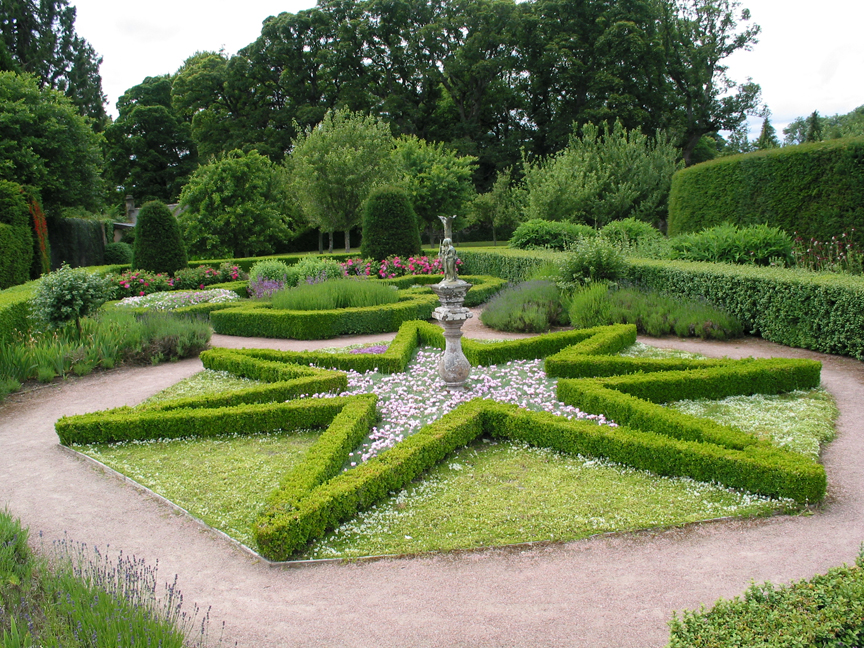
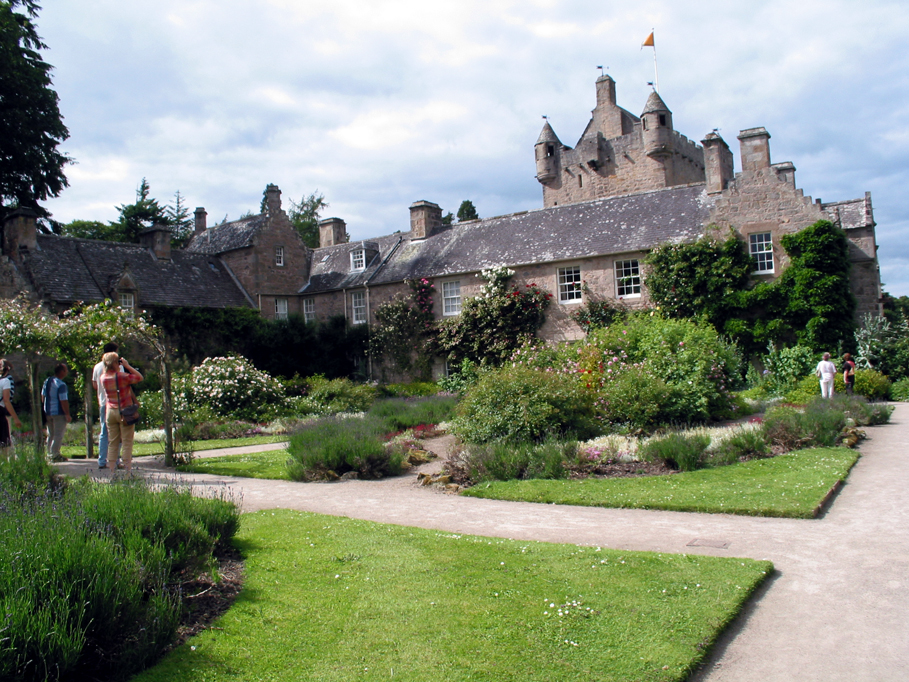
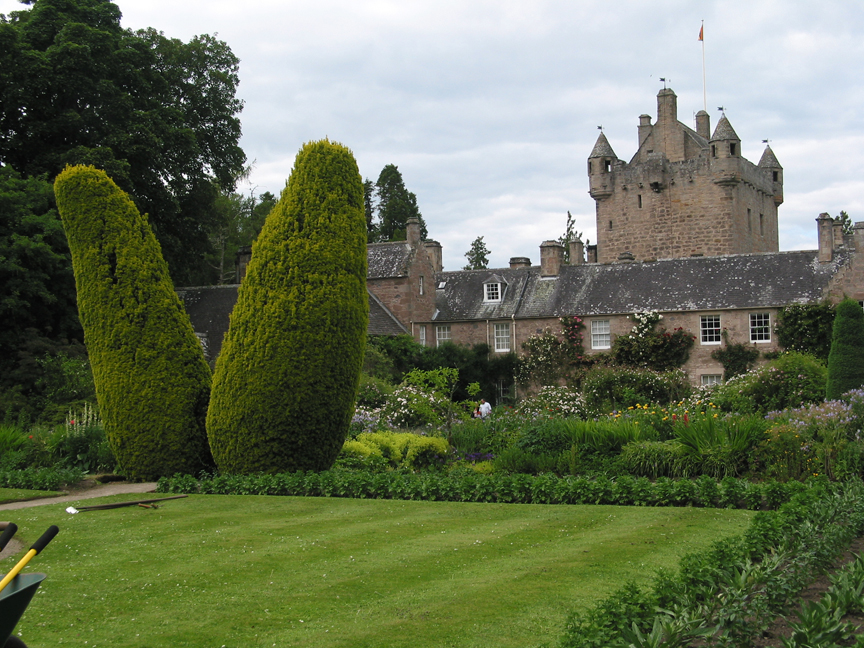
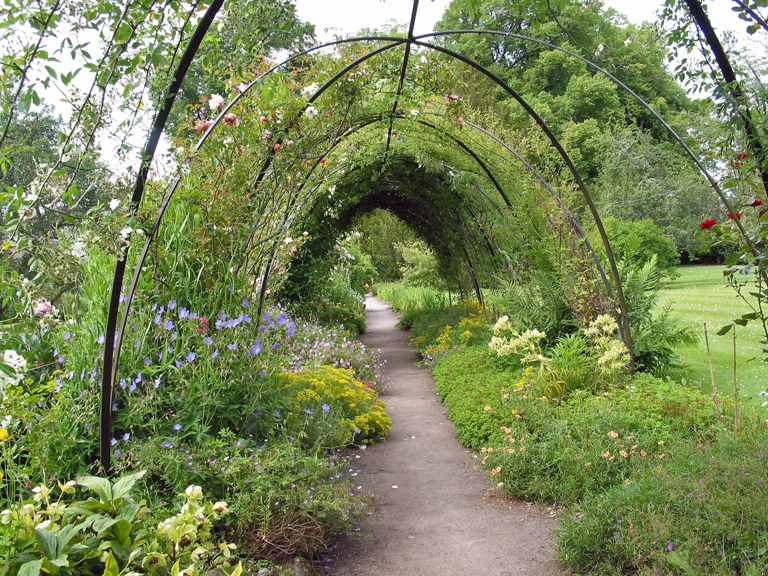
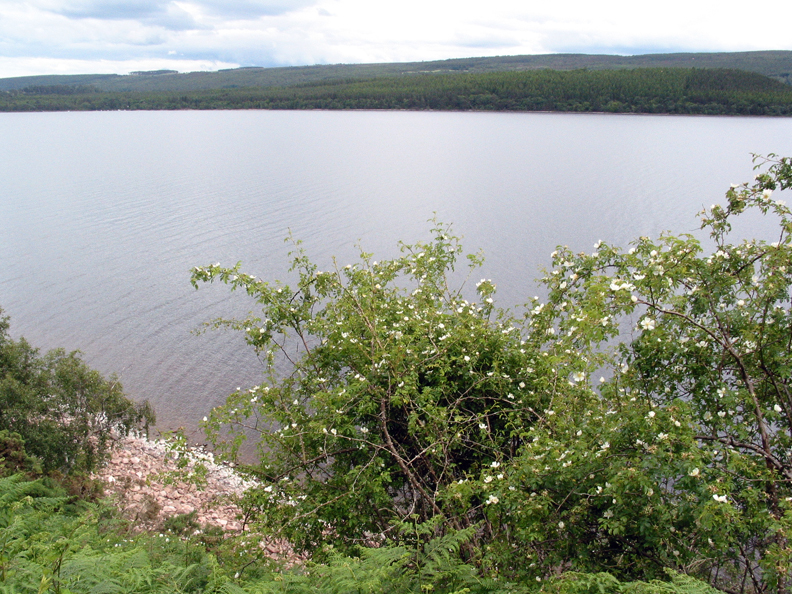
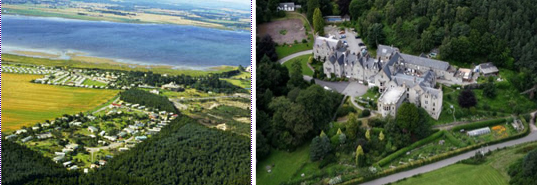
A Fundação Findhorn é uma comunidade espiritual, centro de ensino e ecovila cujas principais sedes são “O Parque” em Findhorn e Cluny Hill, em Forres (fotos acima). The Findhorn Foundation is a spiritual community, learning centre and ecovillage based mainly at The Park (Findhorn) and at Cluny Hill in Forres (pictures above).

Os cursos ali não eram nada baratos, todos compreendendo meditação, atividades em grupo e trabalhos comunitários na horta, cozinha e jardim. Me pareceu esquisito pagar tão caro para fazer coisas tão corriqueiras como cozinhar. Mas há muita gente que precisa aprender a se comunicar e interagir com os outros.
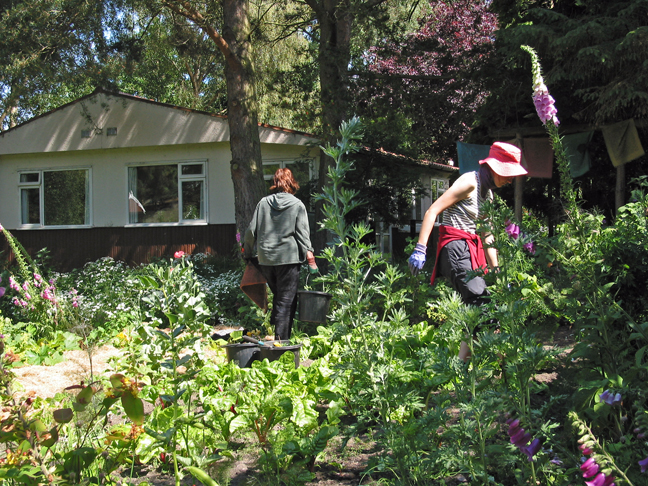
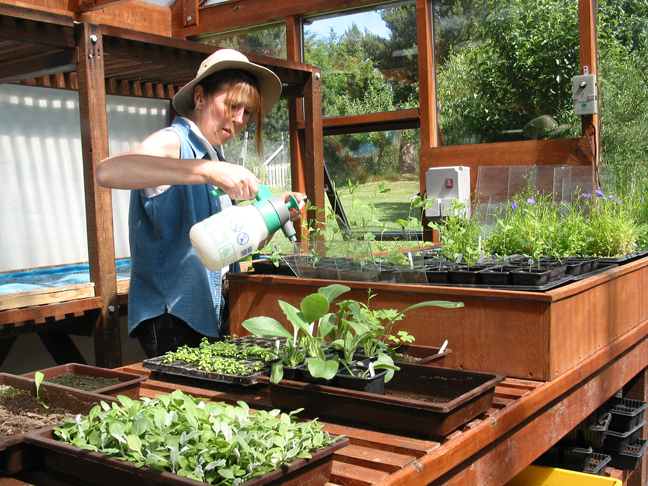
Estudantes fazendo trabalho comunitário / People into communitary work
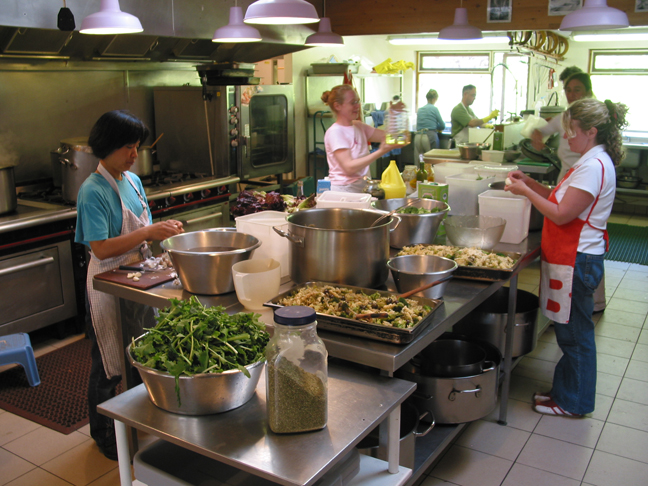
The workshops were not cheap and all included meditation, group activities and communitary work in the kitchen and garden. I thought it weird people pay so much to do common stuff such as cooking, but there are many who need to learn communicating and interacting with the others.

O Centro Comunitário junto à entrada do Parque. / Community Center next to The Park entrance
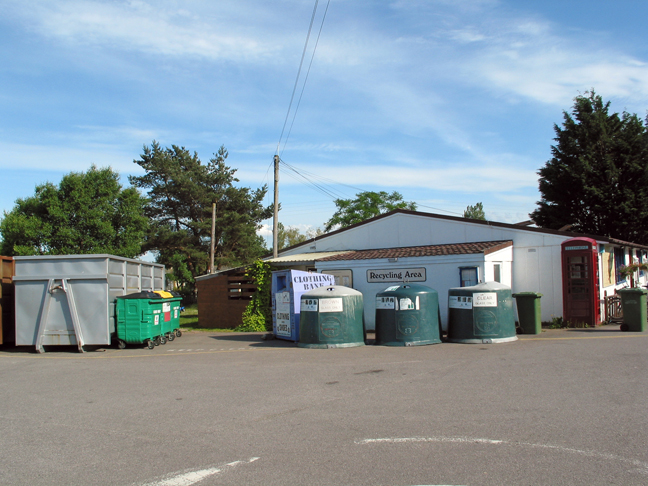
Mercadinho e reservatórios de material para reciclagem junto à entrada /
Mini market and recyclable stuff bins next to the entrance
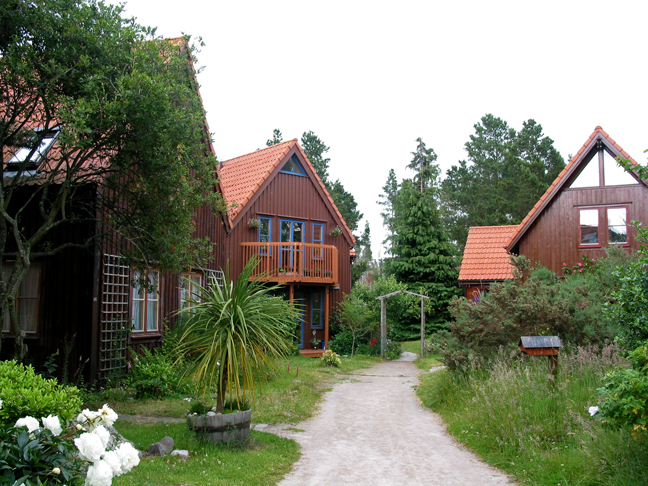
Caminhos do Parque, com casas e escritórios./
Paths in the Park, with houses and offices

Melissa me levou para copiar as fotos da passeata em Edimburgo no Centro de Informática, onde seis rapazes pilotavam Mac Minis, recém-lançados. Ela pediu para um deles fazer duas cópias e deixou-me lá para pegar os CDs quando estivessem prontos. O funcionário amarrou a cara, fez só uma e me despachou dizendo que tinha muito trabalho e não podia perder tempo com aquilo. Melissa ficou furiosa… comigo! Disse que eu devia ter insistido, e não quis aceitar o fato de que eu não tinha nenhuma autoridade para exigir nada do carinha. Sugeri que ela mesma fosse falar com ele e isso a irritou ainda mais.

To copy my pictures of the march in Edimburgh, Melissa took me to the Computers Centre where six guys were working, all in Mac Minis, that had just been released. She asked one of them to make two copies and left me there to take the CDs when they were ready. But the man was in a bad mood; made only one copy and sent me away because he had a lot of work to do and no time to waste on that. That made Melissa very angry… at me! She said I ought to have insisted and didn’t accept the fact that I had no authority to give orders to anyone there. I suggested she went back there and talked to him herself, but that only increased her rage.
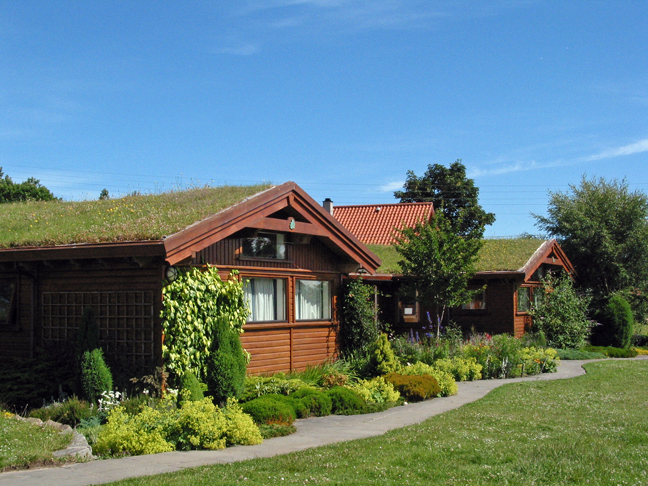
Todas as construções são ecológicas, como estes alojamentos para estudantes. / All buildings are ecologic, as these lodgements for students.
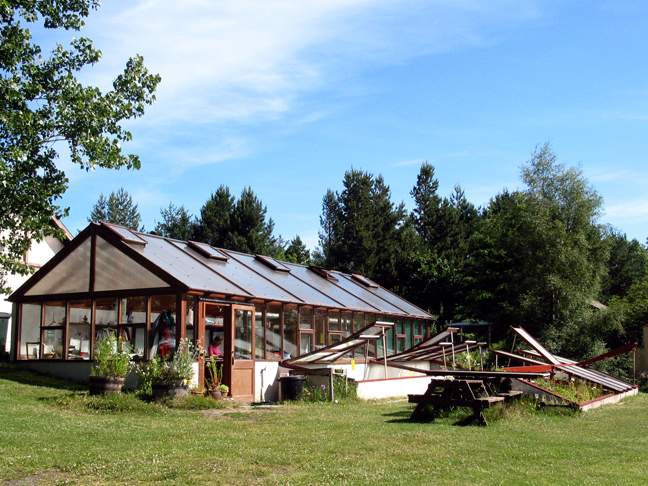
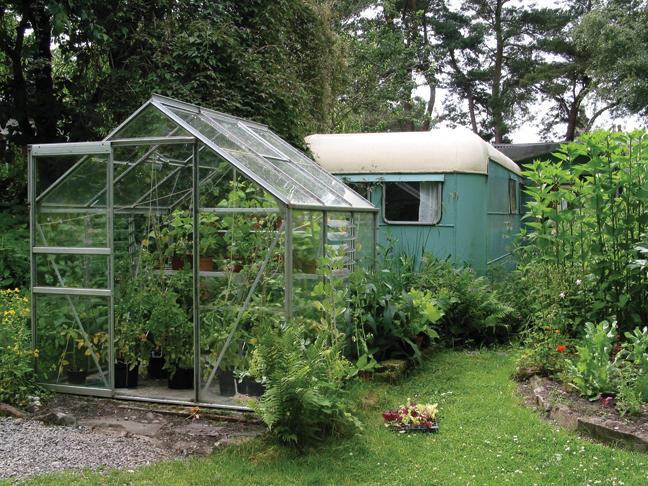
Estufa para cultivo de plantas / Greenhouse

Jardins / Gardens
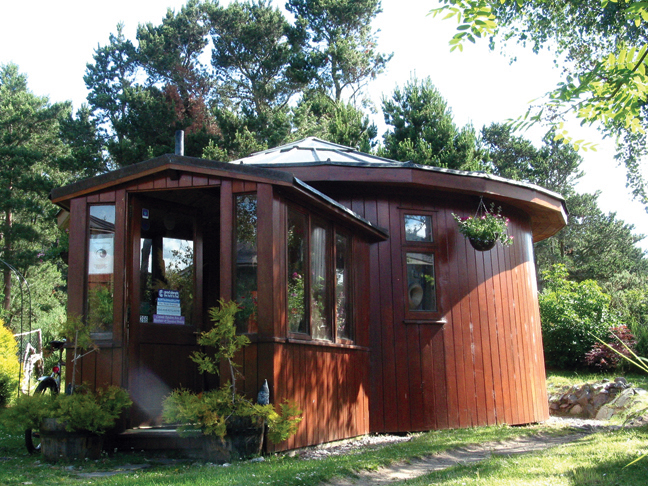
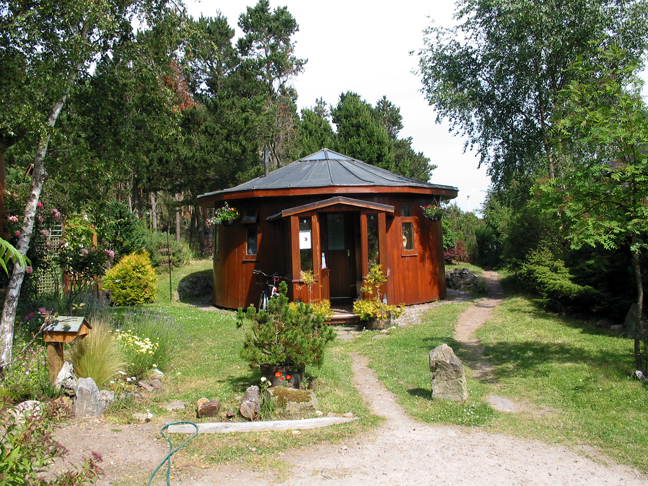
Casas feitas de antigos tonéis / Homes made of old barrels
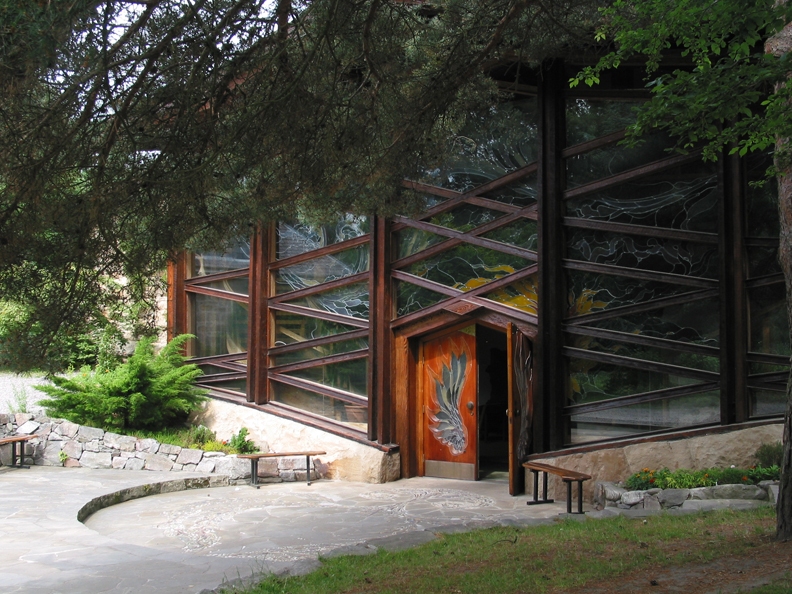
Comecei a achar a moça um tanto estranha, pois no momento seguinte ela me convidou a dar uma caminhada pela Fundação, toda sorridente. Passamos por jardins, estufas, chegando por fim a uma casinha igual à dos hobbits de J. R. R. Tolkien. Era de pedra, arredondada e toda irregular, com o telhado gramado. Tratava-se de um local de orações, lindo, na mesma hora levei a câmera aos olhos. Foi quando Melissa ficou histérica. Me deu uma bronca e proibiu-me de fotografar porque iria atrapalhar a concentração das pessoas que estavam meditando lá dentro. Além disso ser absurdo, estava uma luz linda, mas o tempo poderia fechar a qualquer momento. Não se deixa uma foto para depois. Cliquei, ela surtou e abruptamente interrompeu o passeio. Apresentou-me a uns paulistas que estavam lá fazendo cursos, disse que “não podia tomar conta de mim como se fosse uma criança, porque tinha mais o que fazer”, virou as costas e sumiu. Nunca mais a vi! Chateada, fui buscar minha mochila e saí do seu trailer, deletando-a da minha vida também. Ela tinha dito que tomava remédio porque contraíra uma doença crônica na África, mas acho que seu problema era mesmo uma bipolaridade grave.
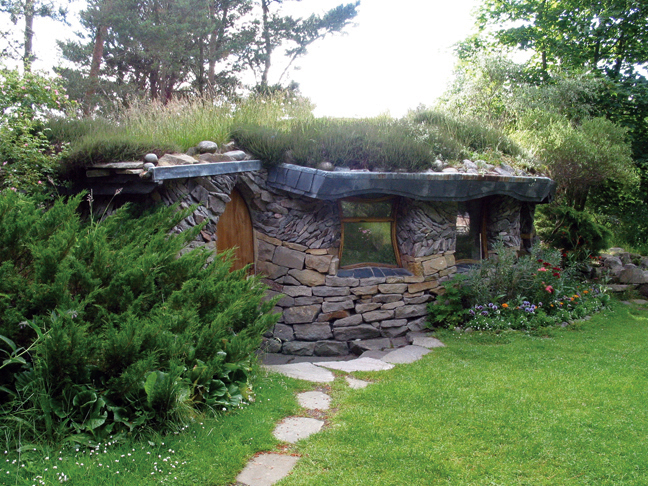
A casinha de hobbit chamada Santuário da Natureza / The hobbithole was called Nature’s Sanctuary

I realized there was something wrong with the girl, because the next moment she smiled and invited me for a walk in the Foundation whereabouts. We crossed gardens, greenhouses, and found ourselves in front of a little cottage just like J.R.R. Tolkien’s hobbit holes. It was made of stone, all round and irregularly shaped, with grass covering the roof, so cute, at once I grabbed the camera. That was when she became hysterical. She scolded me saying it was a place for prayers and I was forbidden to take pictures because that would jeopardize the meditation in progress inside the house. Besides the absurd of the statement, the light was beautiful and I knew the weather could change in a blink. One does not postpone a photograph. So I took it anyway, and she, rabid, cut the walk short roughly. Found some brazilians who were there enrolled in workshops; introduced me to them, stated that she “couldn’t take care of me as if I was a child, because she had her own work to do”, turned her back on me and left. I never saw her again! Very upset and I went for my backpack and left her trailer, deleting her of my own life as well. She had said she was on heavy medicine due to a chronic illness she had caught in Africa, but I could tell for sure her problem was a serious bipolarity.

O antigo trailer de Eileen Caddy / Eileen Caddy’s old caravan

O novo estacionamento para trailers / The new caravan park
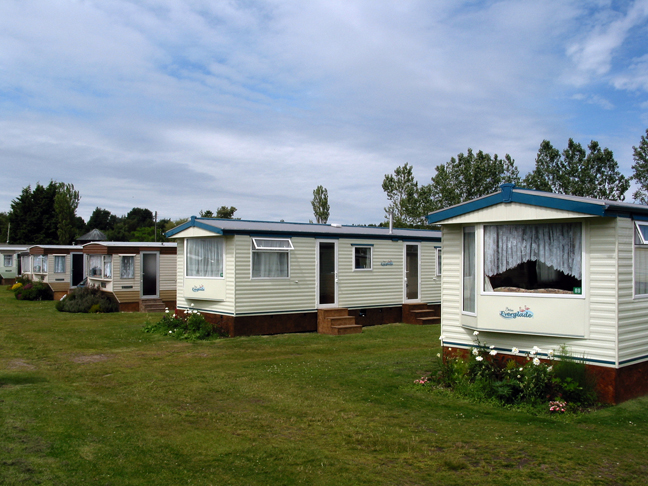
Uma das brasileiras a que fui apresentada, Claudia, embora morasse por ali e alugasse quartos, sabendo que eu tinha muito pouco dinheiro, sugeriu que eu me instalasse no trailer da Helka, uma alemã que estava em férias. Não me custaria nada e parecia a única coisa a fazer. Ela foi fofa e me levou até o trailer, onde já havia outra hóspede, uma moça da Croácia. Estava matriculada no curso de Danças Sagradas Circulares e não saía do telefone – deve ter deixado uma conta enorme para Helka. O trailer era confortável, a não ser pela água fria que não soubemos aquecer. Provavelmente, teria de acender a lareira e esperar, mas não conseguimos e acabamos tomando banho gelado todos os dias.
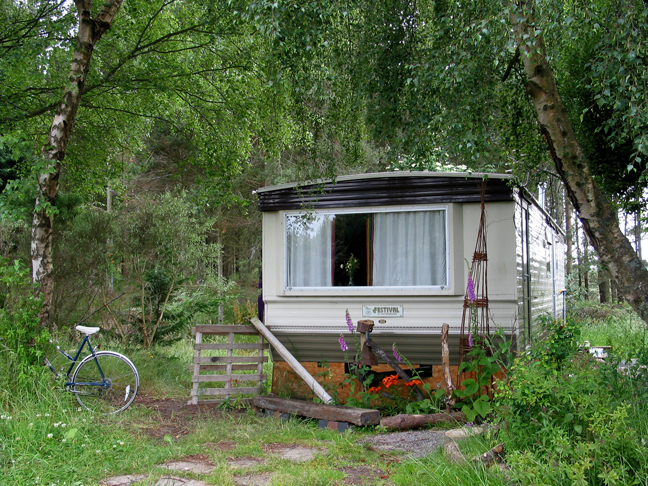
O trailer de Helka onde me instalei. / Helka’s caravan, where I lodged

One of the Brazilians I had just been introduced to, Claudia, lived around there and had rooms for rental in her home. But she knew I was short of money and was so kind as to take me to a caravan where I could stay for free. It belonged to a german woman called Helka who was out for holidays. It was the best I could do. In the caravan there was another guest, a girl from Croacia, enrolled in the workshop Circular Sacred Dances. She used to spend hours on the telephone, I guess she left Helka a very high phone bill. The caravan was comfortable except for the water in the bathroom we didn’t manage to heat. For sure we had to light the fireplace and wait a while, but none of us could do it. In the end, we resigned ourselves to endure everyday’s icy shower.
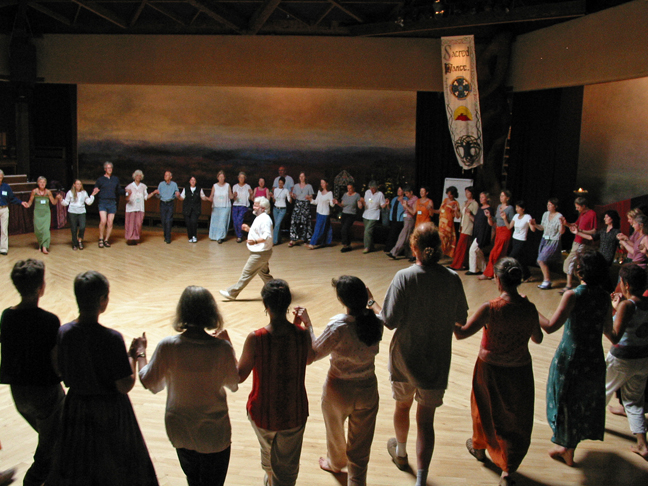
Aula de Danças Circulares Sagradas / Circular Sacred Dances Class

Outro restaurante, porém aqui tudo era pago. As refeições servidas no Centro Comunitário estavam incluídas no preço dos cursos. / Another restaurant, but here one had to pay; meals served in the Communitary Center were included in the workshops fees.

Abaixo o link para o site da Fundação Findhorn. Here goes the link to Findhorn Foundation website:

http://www.findhorn.org

Read Full Post »


Findhorn Bay

Cluny havia sido um hotel, onde trabalhavam Peter e Eileen Caddy, mais uma moça, Dorothy Maclean. Foram demitidos, mudaram-se para um trailer na pequena cidade junto à baía de Findhorn e começaram a meditar e ter contato com seres elementais. Na década de 1960, a espiritualidade dos três e sua suposta comunicação com devas (divindades da natureza) e com Deus (Eileen psicografava mensagens diárias) virou notícia. Os legumes que cresceram naquele solo considerado pobre assumiram proporções gigantescas, como a abóbora com cerca de 18 quilos. O feito foi creditado às instruções dos devas, curiosos começaram a aparecer e uma comunidade se formou.

Cluny once was a hotel, where Peter & Eileen Caddy, and Dorothy Maclean worked. They were fired and moved to a caravan in the small village by Findhorn Bay, where they started to meditate and contact elemental beings. In the 60’s word was spread about their spirituality and the supposed communication with devas (nature deities) and God himself (Eileen psychographed daily messages). The massive vegetables they grew according to devas’ directions, as 40 pounds pumpkins, in a barren sandy soil, were reported in newspapers and magazines. Curious people arose, some stood there and the place eventually became a community.

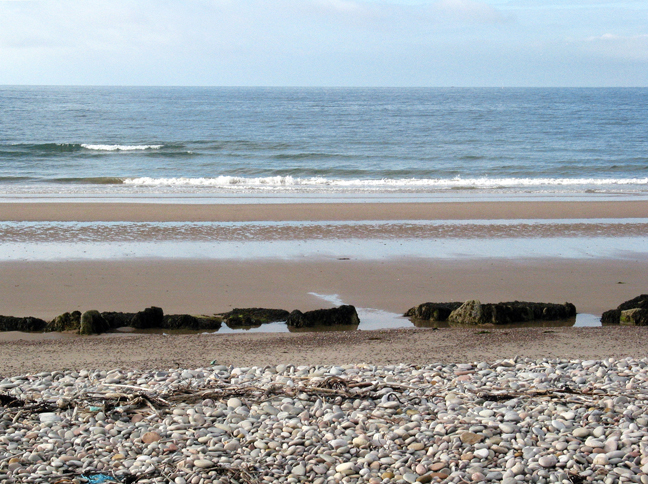
A caminho da praia / The way to the beach

Mar do Norte / North Sea

Nenhuma praia no Reino Unido tem areia, só pedrisco. Em Findhorn, são seixos brancos como os de aquário. / There’s no sand in UK beaches, only pebbles. In Findhorn, they’re white like those used in aquariums.

Em 1970, tendo evoluído para centro de educação espiritual e, posteriormente, ecovila, a comunidade foi registrada sob o nome Fundação Findhorn. Foi construído o enorme Universal Hall, teatro e salão de eventos. O hotel em Cluny Hill foi comprado e rebatizado Cluny Hill College, para sediar workshops e acomodar visitantes, Hoje superconceituada internacionalmente e conectada à ONU, a Fundação compreende “O Parque”, que se estende num raio de 80 km e acaba na praia, beijada pelo Mar do Norte. A paisagem se completa com uma baía cheia de veleiros, casas, um fish-and-chips e uma base aérea militar na vizinhança. É curioso como ao lado de lugares com caráter espiritual há sempre a presença do exército.

Os primeiros trailers, que pertenciam aos fundadores da comunidade, ainda estão lá. /
The first caravans that belonged to the community’s founders are still there

Universal Hall

In the 70’s a spiritual education center and ecovillage were stablished and the community was formally registered as a Scottish Charity under the name The Findhorn Foundation. The massive Universal Hall was built as Art Centre and Cluny Hill Hotel was purchased and renamed Cluny Hill College to be a centre for workshops and members’ accommodation. Nowadays the Foundation is internationally highly regarded and connected to ONU, comprising a 50 miles radius of land known as The Park, bordering a beach kissed by the North Sea. The landscape is framed by Findhorn Bay, with sailing boats, houses, fish-and-chips and a neighbour Air Force Military Base. It’s weird to remark the ever-present military zones in such places of spiritual nature.

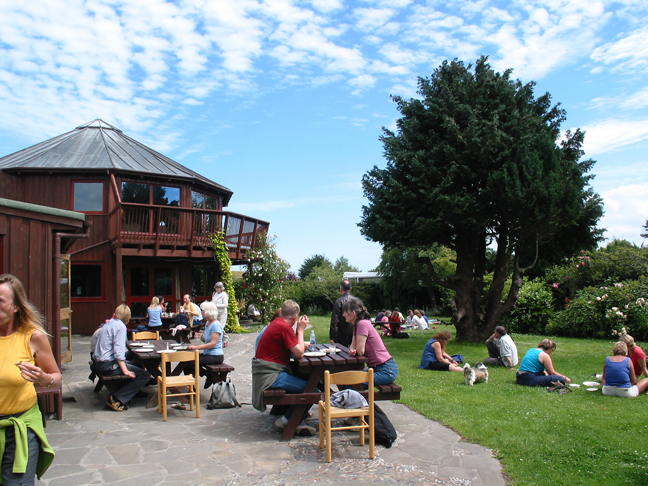
Almoço ao ar livre / Lunch out in the open

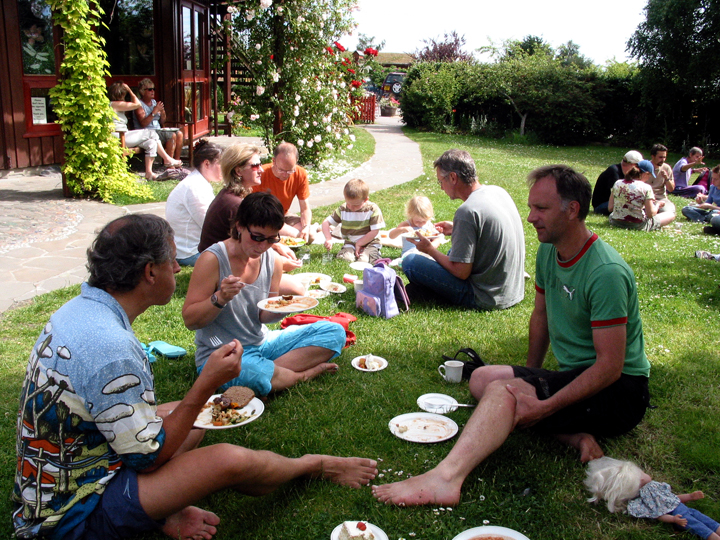
Quando cheguei, procurei a administração, localizaram Melissa e ela me levou para almoçar. O tempo abriu e o povo lá fica doido quando vê o sol. Aquelas pessoas de cor leitosa faziam sua refeição ao ar livre, pondo os pratos na grama e achando aquilo o máximo. Queriam se bronzear, mas, na verdade, ficavam vermelhas como pimenta. Eu, habituada a comer sentada à mesa usando talheres, como minha mãe me ensinou, estava bem sem jeito, desconfortável mesmo, mas fiquei quieta. A comida era vegetariana, orgânica e muito gostosa.

I arrived at the Foundation reception, Melissa was contacted and took me for lunch. The day was bright now and everybody there go nuts when they see the sun. Those milky white people were eating out with the plates on the grass and having much fun on that. They wanted to get a suntan but they would turn pepper red instead. I was used to eat by the table, using cutlery as my mother had taught me, so it was kind of clumsy and uncomfortable, but I kept my mouth shut and ate the delicious vegetarian organic meal.

Read Full Post »


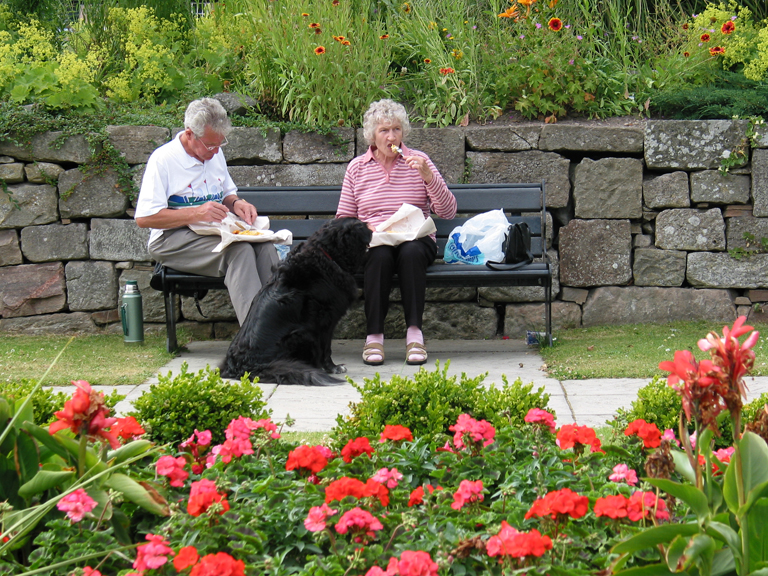
É comum ver pessoas almoçando ao ar livre, como esse casal e seu cão. Britânicos aproveitam cada instante do verão. / Couple with dog having lunch out in the sun. Not an unusual scene, british people enjoy every single summer moment.

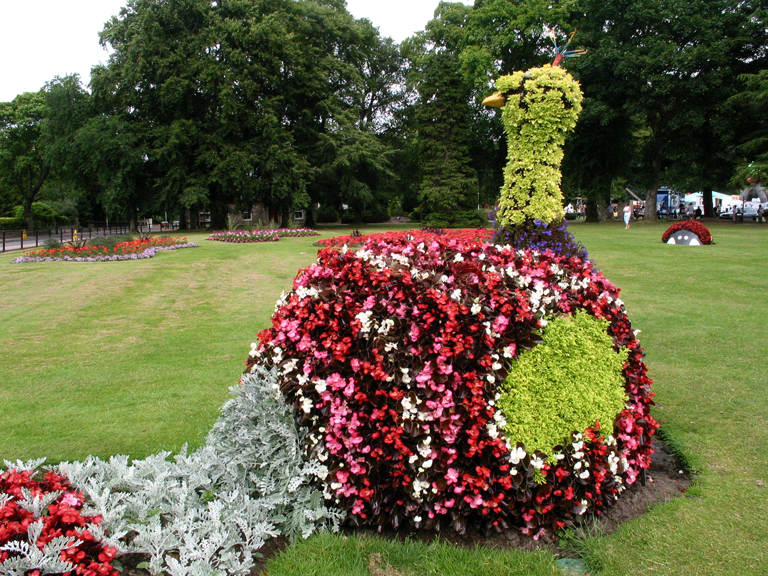
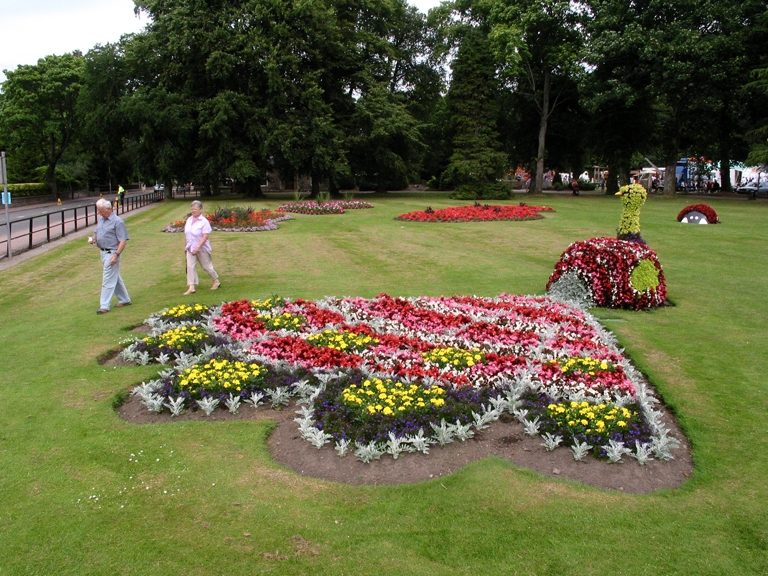
De Inverness a Forres são aproximadamente 50km; cheguei pela manhã, mas o dia estava cinzento, anunciando chuva. Forres é uma cidade bonitinha. Ganhara o prêmio de “jardim mais bonito” do Reino Unido, dizia a placa junto a uma praça onde realmente os jardineiros fizeram um trabalho notável. Usando bases de tela, esculpiram bichos feitos de plantas: joaninhas, pavões, lagartas. As guias de tela ordenaram o crescimento de flores cuidadosamente podadas, todas coloridas. Os britânicos são doidos por jardins, orgulham-se deles e este era realmente espetacular.

The distance from Inverness to Forres is around 31 miles. The day was foggy, forecasting rain when I arrived in that cute city. A sign in a square celebrated the prize Forres had just won as the most beautiful garden in UK. And the gardeners really did a hell of a job. They sculpted ladybugs, peacocks and caterpillars with coloured flowers, carefully trimmed, supported by an underneath grid. British people love gardening and are very proud of their work.

Topiaria: a arte de esculpir com plantas e flores, na qual os britânicos são experts. / Topiary: art of cutting trees and shrubs into ornamental forms, mastered by the British


Segui procurando o ponto de ônibus para Findhorn, mas as pessoas na rua nada sabiam informar. Nem havia muitas pessoas na rua, então saí andando, arrastando minha malinha pela avenida principal. Algumas placas indicavam um monumento próximo, a Sueno’s Stone, uma pedra com inscrições do tempo dos pictos que resolvi conferir. E fui seguindo as setas, mas, em outra praça, no meio do caminho, tinha outra pedra.

Sueno’s Stone, bem protegida em uma vitrine. As inscrições mostram cenas de batalha, possivelmente uma vitória contra invasores nórdicos. / Sueno’s Stone, well protected in a glass window. The carvings show battle scenes, maybe a victory against the Danes or Norse invaders.

I was looking for the Findhorn bus stop, and nobody knew where it was. There was no one out on the streets, so I went on carrying my little suitcase up the main street. Signs  pointed out a historical monument straight ahead, Sueno’s Stone, with pict inscriptions, so I decided to check it out and followed the arrows. But in another square, in the middle of the road, there was another stone.

Witches Stone, Forres, Scotland

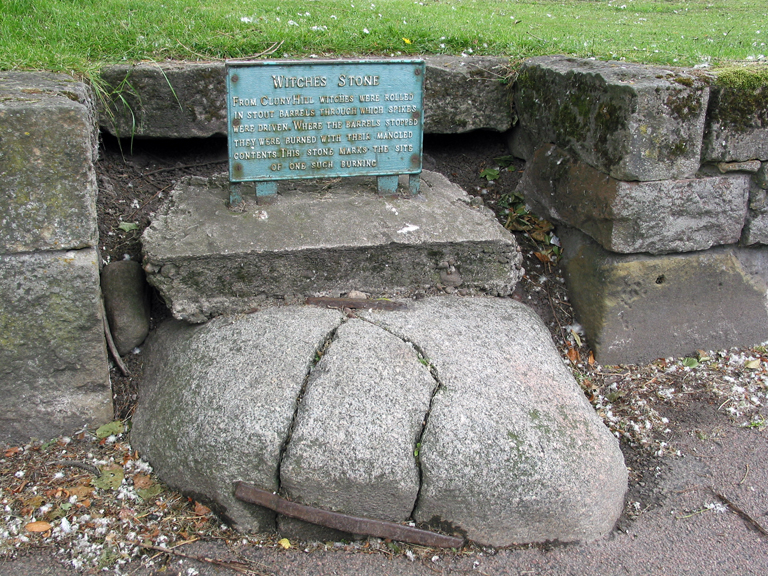
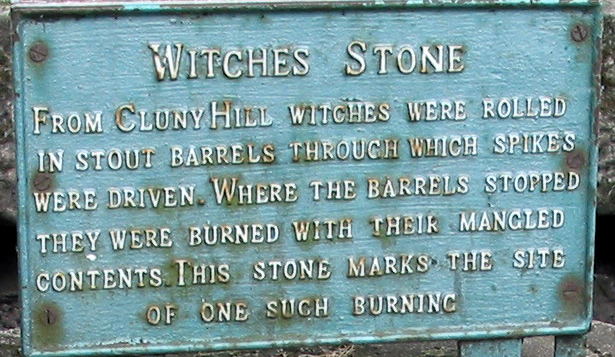
Witches Stone. A placa informava: no tempo da Inquisição, mulheres suspeitas de bruxaria eram postas dentro de um barril no alto da colina. O barril era espetado com várias lanças e empurrado para descer rolando pela encosta da colina de Cluny. Onde parava, ateavam fogo com o que restara da mulher dentro. Aquela pedra sinalizava o local onde um desses barris fora incendiado. Fiquei chapada. Esqueci Findhorn, o horário do ônibus, esqueci meu nome. Sentei e fiquei olhando aquele testemunho de algo que só tinha lido nos livros. Me vi dentro de um barril, sendo dilacerada e depois queimada viva.  Me veio a imagem de um porco no rolete.

Witches Stone. In Inquisition times, women judged guilty of witchcraft were put inside a barrel through which spikes were driven and the barrel was released to roll down Cluny Hill. When it came to a halt, fire was put to it with the woman’s remains still inside. That stone marked the spot where one of these burnings had happened long ago. I was stunned. I forgot all about Findhorn, the bus, I forgot my own name and just sat down there, staring at a material proof of something I had only read about in books. I could feel myself inside a stout barrel, being shredded in pieces and burnt alive. A hog roast came into my mind.

Detalhe. / Detail

E justo nas Terras Altas da Escócia, onde as mulheres reinavam nos antigos clãs! Possuíam seus próprios títulos, propriedades, terras. O livro “A Rosa Branca Rebelde”, de Janet Paisley, do qual transcrevo os seguintes trechos, descreve os costumes célticos dos clãs escoceses, povos que “escolhiam viver livremente juntos, pelo bem geral”. Ninguém passava fome nem ficava sem abrigo ou cuidado em caso de necessidade, pois todos se ajudavam mutuamente. “As mulheres, casadas ou não, deveriam se satisfazer caso quisessem outro homem. Suas ancestrais se divorciavam dos maridos com facilidade, quando eles não conseguiam sustentá-las ou respeitá-las, se roncassem, fofocassem, fossem impotentes ou apenas repugnantes. Uma esposa frustrada poderia ter um amante se seu marido bêbado não a satisfizesse. O noivado servia para que dois amantes vivessem juntos por um ano e decidissem se queriam mesmo casar-se um dia antes de completar esse período. As inglesas não tinham direitos nem poder, tampouco nome. Seu corpo, seus filhos e sua casa eram bens dos homens.” Ao casar-se, todos seus bens passavam a ser do marido e caso se separassem, a infeliz ficava sem nada.

It was a shock to learn that such stuff happened in the Highlands, where women were sovereign in ancient clan times. Scottish women, unlike the English ones, had their own titles, properties and land. I quote from “White Rose Rebel”, written by Janet Paisley, describing the celtic customs of Scottish clans, people “of free choice who lived together for common good”. Nobody would starve or go unattended in case of need, for people would care about each other. “Women, married or not, should satisfy their needs if they desired another man. Her grandmothers were already used to divorce easily if the husband did not sustain or respect the wife; if he snored, gossiped, were impotent or just disgusting. A frustrated wife could have a lover if her husband were a drunker and didn’t satisfy her. Engagement endured one year, so the lovers could live together and decide if they really wanted to get married after that time. English women didn’t have any rights, power or name. Their bodies, their children and their home belonged to the husband. If a couple divorced, all the properties were kept by the man”. There was nothing left for the poor woman.

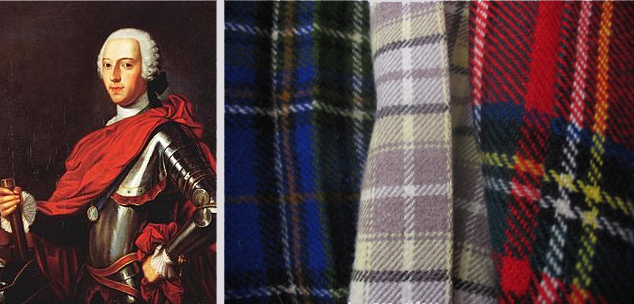
Charles Edward Stuart fugiu após a derrota e passou o resto da vida no exílio.
Os lindos tartans, felizmente, continuam a existir.
Charles Edward Stuart fled after the defeat and spent the rest of his life in exile.
The beautiful tartans survived to the present day.

Em 1745, na Batalha de Culloden, o exército inglês massacrou a insurreição dos clãs das Terras Altas que apoiavam a volta de Charles, herdeiro legítimo dos Stuarts, ao trono do Reino Unido. Além da execução e deportação de milhares de escoceses, o Parlamento britânico baixou um ato de desarmamento, para confiscar todas as armas das Terras Altas (Highlands) e banir o uso de suas tradicionais roupas, gaitas, danças e tartans. Foi abolido o direito hereditário dos chefes de clãs de aplicar a justiça em tribunais regionais. Além disso os professores escolares deviam jurar lealdade à Coroa inglesa e o inglês substituir o gaélico como idioma nacional. Em suma, reduzir a pó toda a cultura de um povo. Chamar mulheres de bruxas e achar que isso justifica queimá-las me parece apenas a sequência do processo.

In 1745, in the Battle of Culloden, the English Army butchered the Highlands’ clans uprising in support of “Bonnie Prince Charlie’s” restoration, as last legitimate heir to the Stuarts, to the British throne. Thousands of Scots were killed and deported. The British Government enacted laws to incorporate Scotland—specifically the Scottish Highlands—within the rest of Britain. The abolition of Heritable Jurisdictions Act ended the hereditary right of landowners to govern and make justice in their estates through barony courts. The Disarming Act confiscated all “warlike weapons” and the Dress Act declared wearing tartans and kilts as illegal. The traditional pipes and dances were banished; teachers were forced to swear loyalty to the English Crown and English replaced Gaelic as official language. In short, a deathly blow to Scottish culture.
Seems to me that naming a woman a witch, and believing this is enough to burn her alive was just a later outgrowth of the process.

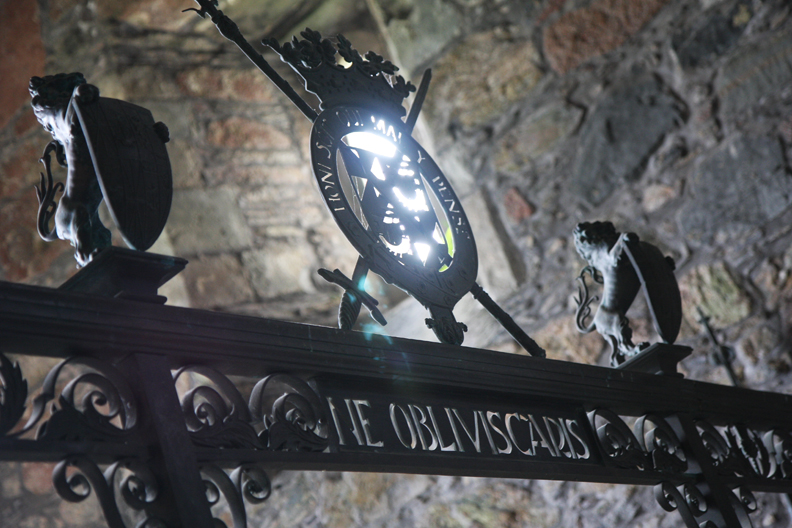
Ne Obliviscaris. Do Not Forget. Não esquece.

Entretanto, voltando ao tempo do Império Romano, poucos séculos antes, temos relatos de brutalidades semelhantes inflingidas às tribos britânicas pelos conquistadores. Na verdade a história se repete, até os dias de hoje, mudando apenas de endereço, remetente e destinatário. Quanta tradição preciosa perdeu-se para sempre! Me dei conta que poderia ter morrido assim em uma vida passada. Plantada em frente à pedra chorei bem uma meia hora por todas as injustiças do mundo dito civilizado.

However, if we go back in time a few centuries, to the Roman Empire, there’s evidence of the same brutality inflicted on the British tribes by the conquerors. Indeed History repeats itself to this very day, the only things that change are the characters involved. How much precious tradition is forever lost! I realized I could have been burnt in a past life, and remained roughly half an hour sitting by the Witches Stone, weeping for all unfairness of the so called civilized world.

Read Full Post »


Retornei ao albergue. A cozinha estava cheia de hóspedes, entre eles o indiano fazendo uma travessa de kebabs. Cobriu meia bola de isopor com papel prateado, na qual arrumou um monte de espetos mistos – pedaços de carne, frango, porco, salsicha, tudo misturado – e levou ao forno. Quando o prato ficou pronto, ele insistiu muito para que todos compartilhassem, mas ninguém quis. Eu devia ter desconfiado, mas estava faminta e aceitei. Comi um espeto inteiro. Ele tinha combinado com os americanos e o espanhol ir a um pub à noite e a room mate aqui foi convidada a acompanhá-los. Novamente aceitei, feliz porque iria me divertir com os novos amigos.

Back in the hostel, the kitchen was full of guests, amongst them the dutch/indian cooking a kebab plate. He had covered half of a styrofoam ball with foil, spiked the kebabs (mixed pieces of beef, pork, chicken, sausage, all together), and put it in the oven. When the stuff was ready, he invited insistently people to share, but everybody declined. I should have suspected, but I was starving and ate a big one. That night he was going to a pub with the spaniard and the american dudes, and I was invited to join them. I accepted happily, it would be cool to have some fun with the room mates.

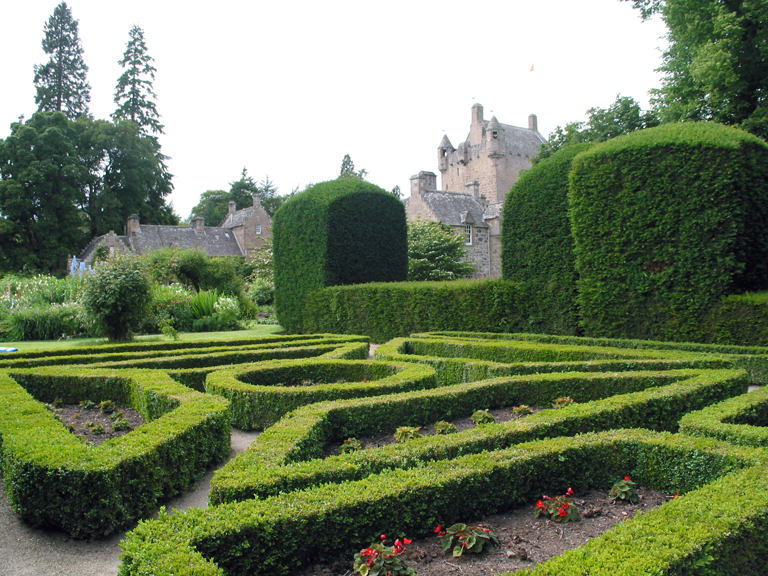
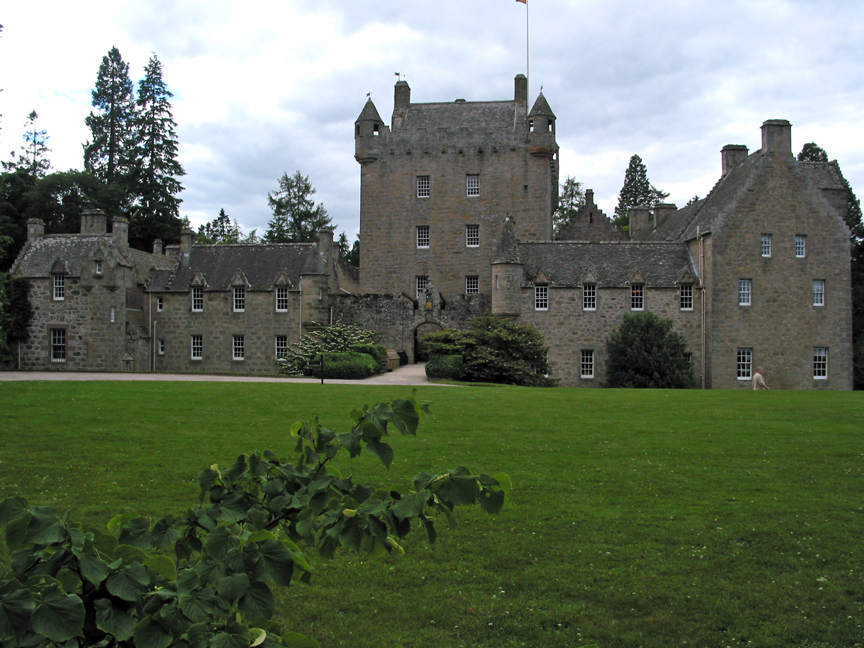
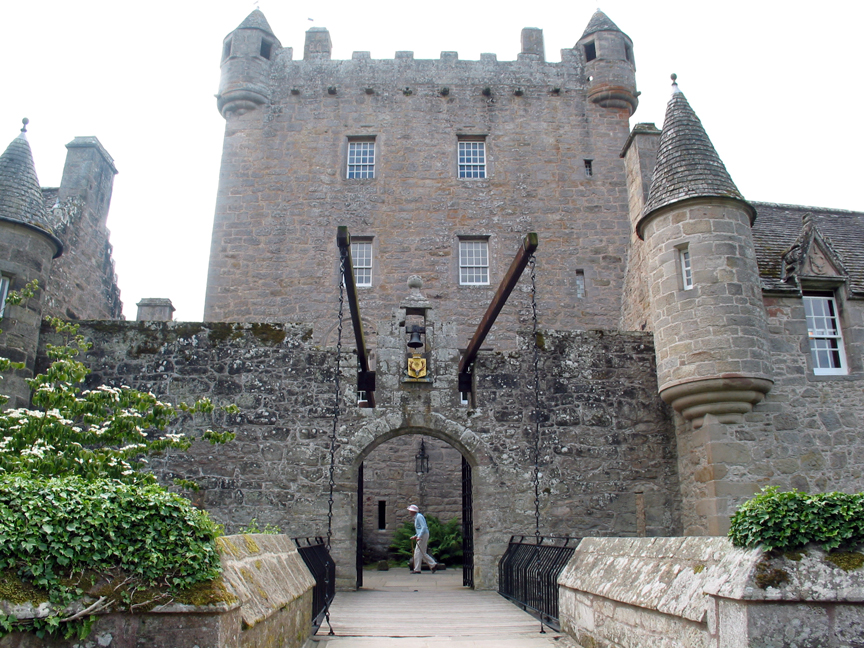
Cawdor Castle, cerca de 16 km de Inverness / 10 mls. from Inverness

Saímos. No verão, é delicioso como escurece tarde na Escócia. Eram nove horas mas estava claro como se ainda fosse final de tarde. Fomos andando, conversando e rindo, por fim entramos num pub. Acabamos nos enturmando com Paul, um rapaz bonitinho que trabalhava no correio (Royal Mail). Tinha cabelo preto curto e olhos azuis. Lá pelas tantas, o indiano-holandês começou um discurso terrorista que horrorizou o grupo, insistindo que queria colocar uma bomba em algum lugar. Criou um constrangimento tal que, ao declarar que iria para uma boate, ninguém quis ir com ele. Pelo contrário, sua partida foi um alívio. Os americanos tinham ido embora logo no início da conversa esquisita, portanto sobramos eu, o espanhol e Paul, o escocês, que nos convidou para ir para sua casa. Ao chegarmos, os pais dele já haviam se recolhido. Fomos até seu quarto, onde ficamos conversando, e o assunto ainda era o indiano.

We left the hostel at night, but the sky was still bright, such an amazing Scottish summer. Around 9 pm one could say it was still 5. We went strolling, talking and laughing until a nice pub was spotted. There we made friends with a Scottish guy, Paul, black hair, blue eyed, who worked in the Royal Mail. After some drinks the dutch/indian started a terrorist speech on how much he wanted to put a bomb somewhere. His insistence on the subject brought up such an uneasiness that the americans left. It was a relief when the freak stated he was going to a disco, of course none of us accompanied him. Me, the Spaniard and Paul stood, and later he  invited us to go to his house. His parents were asleep when we arrived. In his room, the talk was still about the weirdo.

Um dos lindos jardins do Castelo de Cawdor /
One of the splendid gardens in Cawdor Castle

Estava tudo bem, mas comecei a passar mal. O kebab voltou. Tive de sair correndo para o banheiro, segurando a boca com as duas mãos para não vomitar no meio do quarto. Minha pressão caiu, o mundo escureceu ao meu redor. Vomitei até o estômago doer; mas o pior foi que, enquanto me recompunha e procurava pasta de dentes, Paul irrompeu banheiro adentro. A porta não trancava.
– Are you OK?
– Oh, yes! – respondi, tentando sorrir para não parecer que me sentia na merda.
Dá para acreditar que o bonitinho veio me dar um beijo na boca? Evitei, pois ainda estava sentindo gosto de carne podre e morrendo de vergonha. Contei o que se passara e os dois ficaram ainda mais revoltados contra o indiano: “He could have killed her!”
A noite terminou com o escocês nos colocando num táxi de volta para o albergue, o espanhol muito irritado, pois queria ficar até mais tarde e eu tonta, já não me entendendo. Fui me deitar e no dia seguinte, acordei, mas os olhos não abriam. Estavam grudados e doíam horrivelmente. Tinha esquecido completamente de tirar as lentes de contato!

Everything was fine but a few minutes later I started to feel very ill. And the damned kababs came all the way up. I ran out of the room holding my mouth closed, trying not to throw up in the floor. Feeling dizzy, pressure dropping, seeing the world turn black, I headed to the bathroom. After having puked until my stomach ached, I was trying to piece myself together, looking for some toothpaste, when the door opened up – it didn’t have a lock – and Paul appeared.
– Are you OK?
– Oh, yes! – Was my answer, trying to smile although I was feeling like shit.
And then I couldn’t believe my eyes: the nice blue-eyed guy came to kiss my mouth! I had to avoid it, still tasting rotten meat, what a shame! So I told him what happened. Both guys were furious with the indian: “He could have killed her!”
The night ended with Paul calling a cab for me and the Spaniard, this one in anger because he still wanted to enjoy the night. Back in the hostel I went straight to bed and, the next day when I woke up, my eyes refused to open. Eyelids were stuck together and the pain was excruciating. I had forgotten to take out my contact lenses.

Cawdor Castle Gardens: The maze / Labirinto

Gastei quase todo o vidro de soro fisiológico, consegui tirar as lentes mas não enxergava nada, então bebi água e voltei a dormir. Acordei por volta de meio-dia ainda praticamente cega. Tentei raciocinar.  Precisava de um colírio, e não tinha mais ninguém no quarto. Teria que sair da cama e achar uma farmácia. Então, nem sei como, o fiz. Tateando consegui me arrumar e saí como um zumbi pelas ruas, sob o sol ofuscante, mas achei uma farmácia e o colírio que o balconista indicou aliviou muito a dor, mas ainda via apenas vultos.
Estava com raiva de mim mesma, como podia ter dado esse mole? Estava fazendo a viagem da minha vida, não queria perder tempo. Então resolvi ir assim mesmo, tateando pelas ruas até o ponto do ônibus que me levaria até o castelo de Cawdor, cenário de Macbeth, de Shakespeare. Embarquei, de câmera na mão e curiosamente bati umas fotos razoáveis nos jardins do castelo, que tinha um lindo labirinto de sebes.

It took me half a bottle of physiological saline to take off the contacts, but the blindness persisted, so I drank water and went back to sleep. By midday I woke up still blind, trying to figure out what to do. I was alone in the room, in desperate need of eye drops. I’d have to get out of bed and find a drugstore, so I did it, don’t ask me how. Groping I got dressed and went out like a zombie in the streets, under the dazzling summer sun. I managed to find a drugstore and the clerk appointed me eye drops that really healed much of the pain, but didn’t bring my sight back.
I was miserable and had only myself to blame. And this was the trip of my life, there was no time to waste. So I decided to go ahead, still groping, until the bus stop where I boarded the right one which would take me to Cawdor Castle, scenary of Shakespeare’s Macbeth. I had my camera in hand and curiously took some photos, not so bad! The gardens are very nice, one of them has a maze.

Procurando a cafeteria / Looking for the Coffee Shop

Quase chegando à cafeteria / Almost in the Coffee Shop

Eu fazia assim: parava, ficava um pouco de olhos fechados e ia abrindo aos poucos até ver o suficiente para me localizar, aí fechava os olhos de novo e caminhava na direção escolhida contando os passos, sempre pingando colírio. Aos trancos, mas sem derrubar nada nem esbarrar em ninguém, consegui chegar até a lanchonete do castelo, onde um delicioso chá com muffins levantou meu astral. Ainda vendo apenas vultos entrei no ônibus de volta ao albergue, onde caí na cama sem jantar. Desta vez, uma boa e longa noite de sono me recuperou. Acordei enxergando e resolvi partir imediatamente para Findhorn.

To walk around I opened my eyes slowly, until I could see enough to realize where I was and which way to go; then it was a matter of go ahead counting footsteps, always trickling eye drops. I managed to walk around and find the coffee shop without knocking down nothing and nobody, and a delicious tea with muffins restored my humor. Still almost blind, I took the bus back to the hostel and fell in bed at once, without dinner. A good long sleep brought back my sight and I set off at once for Findhorn.

Mapa do Castelo de Cawdor. Ainda não acredito como consegui andar tanto sem enxergar./
Cawdor Castle map. I still don’t realize how did I manage to walk so much around without seeing.

Turistas apreciando os magníficos jardins./
Tourists enjoying the magnificent gardens.

Para mais informações sobre o Castelo, preço e horário de visitas,  etc. acesse o link abaixo.

For more information about Cawdor Castle, opening times, admission prices, etc. :

www.cawdorcastle.com


Read Full Post »


Urqwhart Castle, às margens do Loch Ness / Urqwhart Castle on Loch Ness shore

Dormi cedo, porque, no dia seguinte, embarcaria numa excursão ao Loch Ness. Os tours saem diariamente e não é preciso fazer reserva. Optei por um passeio que se estendia até Clava Cairn, um túmulo da Idade do Bronze que fiquei curiosa para conhecer. O Loch Ness foi meio frustrante, pois o dia se cobriu com um manto cinza e as fotos não prestaram. Paramos num mirante à beira do lago onde o motorista mostrou um álbum de recortes de jornais com depoimentos das pessoas que diziam ter visto Nessie, o monstro do Loch Ness e especialistas analisando fotos. Passou na TV do ônibus um vídeo sobre o mesmo assunto. Mas para nós, Nessie não deu o ar de sua graça.

I went to sleep early because the next day I would take a tour to Loch Ness. These are daily tours and booking in advance is not required. I chose a company that extended the tour to Clava Cairn, a Bronze Age tomb that roused my curiosity. The Loch Ness was a bit disappointing. The day was clad in grey and the photographs resulted poor. The bus parked by the lakeside and the driver, who was also the guide, circulated a book of newspapers clipping about the appearances of Nessie, the Loch Ness monster – witnesses statements, photo analysis by experts and so on, while we watched a video on the same subject. But Nessie didn’t give us the grace of her presence.

O guia da excursão convidando os turistas a embarcar na lancha /
The tour guide inviting us to get in the motorboat

O Loch Ness, sem sinal de Nessie / The Loch Ness, with no sign of Nessie

O mais perto que chegamos do castelo / The closest we’ve been to Urqwart Castle

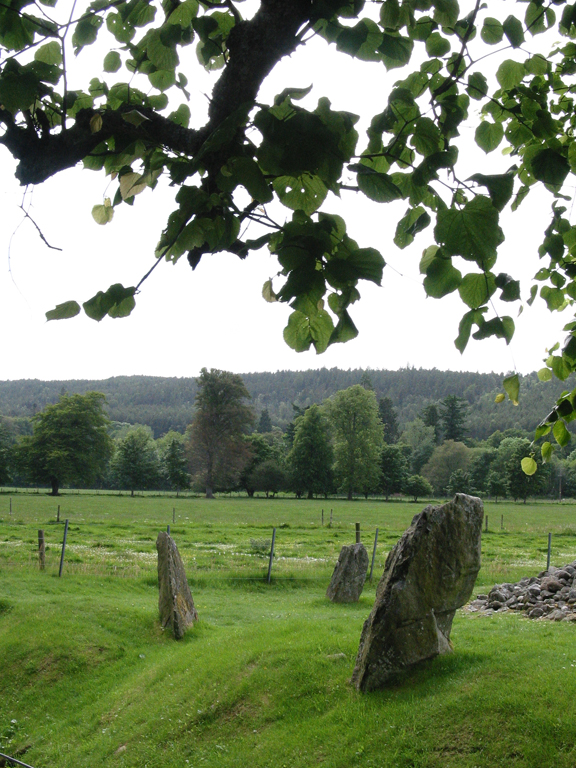
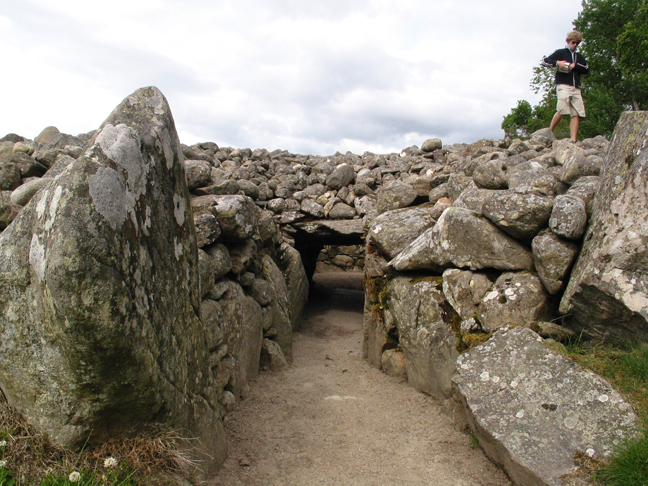
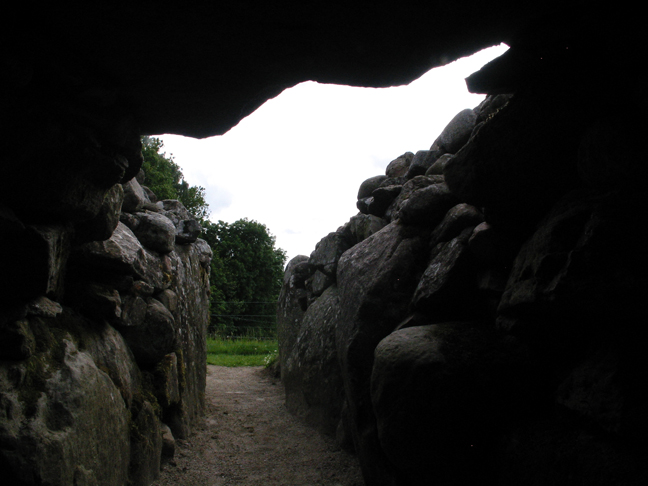
Seguimos adiante até um pequeno cais onde uma lancha nos levou às ruínas do castelo de Urqwhart, uma das maiores fortalezas escocesas da época medieval; porém, o barco não parou ali, contornou o penhasco e voltou. Dali nos encaminhamos ao centro turístico onde vendiam souvenirs e havia uma exposição do mesmo material que o motorista havia mostrado. Felizmente, havia uma boa lanchonete. Meia hora depois, seguimos enfim para Clava Cairn, que foi bem interessante. Existem cerca de 50 túmulos como este nas proximidades de Inverness: uma única câmara mortuária coberta por pedras empilhadas cuja entrada era uma estreita passagem, orientada para sudoeste, direção do por do sol no solsticio de inverno.

We went ahead towards a small quay, where a motorboat was waiting to take us to the ruins of Urquhart Castle, one of the largest strongholds of medieval Scotland. But the boat didn’t make a halt there, just skirted the Castle and came back. From there we were taken to a touristic centre with souvenirs for sale and an exhibition of the same stuff we’ve seen about Nessie’s appearances. Fortunately there was a good snack bar! Half an hour later we moved on to Clava Cairn, and that was really interesting. There are about 50 cairns of this type in an area round about Inverness: a single burial chamber linked to the entrance by a short passage and covered with a cairn of stones, with the entrance oriented south west towards midwinter sunset.

Clava Cairn: megalitos em volta do túmulo / Standing stones surrounding the tomb

Era comum nas sociedades ancestrais construir esses túmulos de pedra que podiam ser cobertos com vegetação, parecendo elevações naturais do terreno para protegê-los de saques e profanação. /
These ancient tombs built of stone when covered with grass would go unnoticed as natural terrain elevations, to prevent plunder and profanation.

Vista de cima / The tomb seen from above

A entrada ficava escondida por pedras e mato, grande o suficiente apenas para uma pessoa entrar se arrastando. /
The entrance, hidden by stones and bushes, was scarcely large enough for someone to crawl in

Vamos entrar? Let’s go inside?

O motorista acumulava a função de guia. Tinha um microfone e ia contando a história da Escócia enquanto dirigia. Os escoceses fazem piada dos ingleses, como os brasileiros fazem dos argentinos. Depois que o país caiu sob o jugo da Inglaterra, não conseguiu mais recuperar a independência. O motorista narrou algumas passagens em que isso quase aconteceu, mas, por alguma fatalidade ou absurdo do destino, não se concretizou. O relato do homem era totalmente passional, ele se indignava, esbravejava, quase largava o volante do ônibus. Parecia meu pai contando a história da França, não só pelo modo de falar, mas também fisicamente; por isso no fim da excursão, de volta a Inverness, uma saudade enorme veio à tona, saí andando pela cidade até achar um banco de praça escondidinho onde não houvesse ninguém para testemunhar minhas lágrimas.

The driver/guide had a microphone, he drove on telling us Scotland’s story. The Scottish make jokes on English, just like Brazilians on Argentines. After the country fell under English rule they never recovered independence. The driver told us historical events when this almost happened, but by misfortune or fate never substantiated.  He had a striking resemblance to my father, not only physically but in his manners as well. His speech was passionate, rampaging, even releasing hold of the steering wheel. I missed so much my father! So when the tour was over, back in Inverness, I walked the streets feeling miserable, looking for a hidden park bench where my tears would go unnoticed.

Dentro da câmara mortuária / Inside the burial chamber

Read Full Post »


Inverness!

A viagem de Edimburgh a Inverness levou praticamente o dia todo. Após check out fiquei esperando um shuttle para a rodoviária e só peguei o ônibus de 12:30h, que chega lá às 16h (são 156 milhas, quase 250 km),mas houve um atraso, contrariando a pontualidade britânica. O ônibus parou entre nada e lugar nenhum e os passageiros ficaram plantados ali mais de meia hora para trocar de veículo e seguir viagem. Tive sorte novamente: a menina sentada ao meu lado trabalhava na Fundação Findhorn! Para chegar lá deveria ir para Forres, cidade de onde há linhas regulares de ônibus e são menos de 15 minutos do centro até a entrada da Fundação. Ao saber que eu tinha estado na passeata em Edimburgo, ficou interessada em copiar minhas fotos e ofereceu me hospedar em troca. Morava num trailer dentro da Fundação, como muitas outras pessoas ali. Eu só precisaria chamá-la na recepção quando chegasse. Fomos conversando durante a subida para as Highlands (região das terras altas escocesas onde fica Inverness), vi um alce na floresta junto à estrada e Melissa me disse que era um ótimo presságio, pois esses bichos são ariscos e não se deixam avistar com facilidade. Acreditei.

It took me the whole day to go from Edinburgh to Inverness, about 156 miles away. After check-out I waited for the shuttle to the station and caught the 12:30h coach, which should arrive at 16h. But despite british timekeeping, something happened and we stopped on the road, in the middle of nowhere, half an hour waiting to board another coach and keep going. I was lucky once more: the girl sitting next to me worked in Findhorn Foundation. She told me how to get there: I should go to Forres, from where there are regular bus lines that would drop me off right in front of the Foundation gates in 15 minutes. Melissa was very interested in copying my photos of the march in Edinburgh, and offered in exchange to lodge me in the trailer where she lived in Findhorn. I should call her in the reception as soon as I arrived there. We chatted all the journey, while the coach mounted the Highlands, and when I pointed her a deer among the trees by the road, she told me it was a good omen, because deer are skittish and not easily spotted. I believed her.

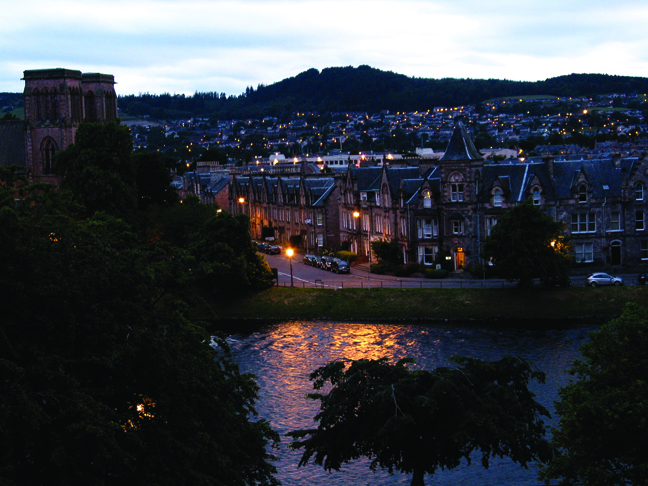
Inverness à noite / by night

Inverness é linda. Cheguei no fim da tarde e me dirigi a um albergue próximo da estação, onde acreditava ter feito reserva pela Internet dois dias antes. Entretanto, não tinham computado a reserva, nem mesmo sabiam que estavam na página de reservas online do site oficial da cidade! Mas me arrumaram uma acomodação. O quarto tinha três beliches e cheirava azedo. Três rapazes, dois americanos e um espanhol, estavam sentados conversando e, quando me viram entrar, pediram mil desculpas, atribuindo o mau-cheiro a um indiano, que, segundo eles, era muito porco, não tomava banho e deixava as meias fedidas debaixo da cama. Mais tarde conheci o tal indiano, que se dizia holandês, e era, de fato, esquisitíssimo. Precisava urgentemente de implantes em todos os dentes, que  eram pretos, tortos e encavalados. Contudo, andava elegantemente vestido, não cheirava mal e dizia estar procurando emprego. O leito acima do seu era ocupado por uma canadense que entrava muda e saía calada.

Inverness is beautiful. I arrived late in the afternoon and headed for a hostel near the station where I believed to have booked a bed two days earlier, in the town official website. But they knew nothing about it, not even that they were listed on the site. Anyway they found accomodation for me. The room had three bunks and smelled sour. Three guys, two americans and a spanish, were there talking but when they saw me, started apologizing, imputing the stench to another guest, an indian who, according to them, was dirty, never showered and used to leave his stinking socks under the bed. Later I made acquaintance with the so-called indian, who claimed to be dutch, and was really a weirdo. His teeth were rotten, but he was odorless (!), dressed elegant and told me he was looking for a job. The bunk above his was taken by a canadian girl who would come and go without a single word.

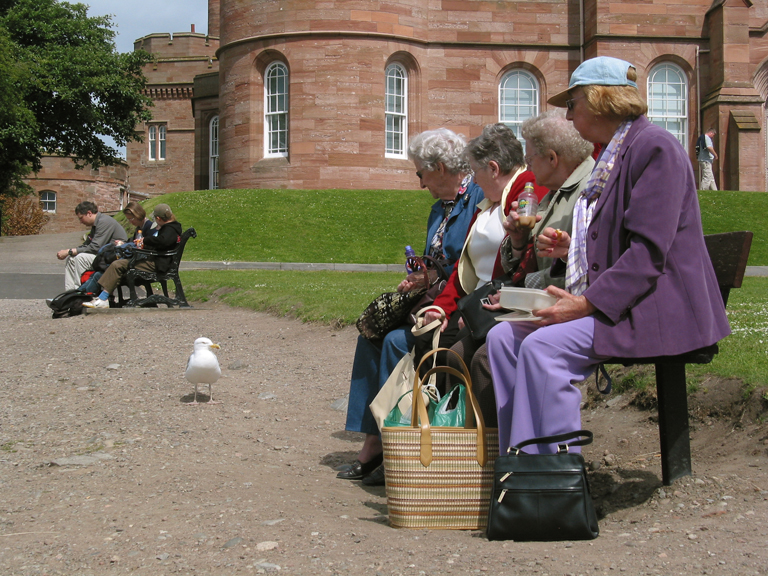
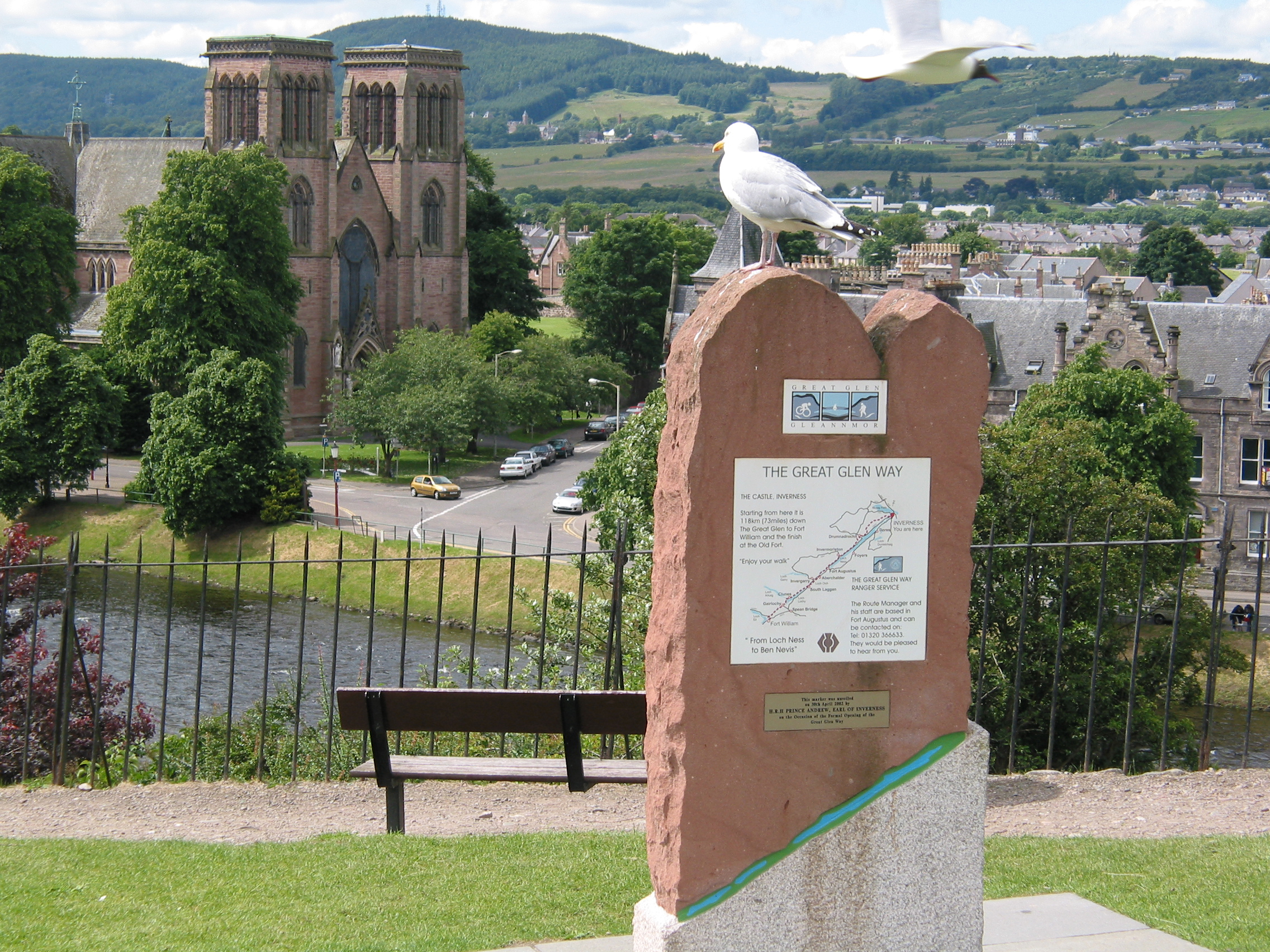
Praça em frente ao Castelo de Inverness / Square in front of Inverness Castle…

…com vista para o rio Ness e a Catedral de St. Andrew, com suas curiosas torres inacabadas pois a verba acabou antes da construção estar completa /
…overlooking the river Ness and St. Andrew’s Cathedral, with this curiously square-topped look to its spires, as funds ran out before they could be completed.

Os rapazes saíram e eu fui tomar banho, de Havaianas, tomando cuidado para não encostar em nada. pois o banheiro estava molhado e sujo, coisa bastante incomum. Mas tomar banho de chinelo é uma boa prática em albergues, por mais limpos que estejam você nunca sabe se algum portador de micose passou por ali antes. Pela mesma razão, é bom dormir dentro do saco de dormir sob as cobertas.

The guys left and went to the bathroom which, unlike other hostels I’ve been, was dirty and wet, so I tried not to touch anything and showered wearing my Havaianas sandals. This is a good habit, just as sleeping inside your sleeping bed under the coverlets. Even when it’s all clean and neat, you never know if somebody infected was there before you.

Inverness Castle

Os escoceses, como os irlandeses, eram considerados selvagens e inimigos dos ingleses. Sempre em pé de guerra, invadiam fronteiras para pilhar animais, colheita, escravos, mulheres, ouro, prata e o que mais pudesse ser obtido nessas incursões. Não que os ingleses não fizessem o mesmo – parece que invadir terras vizinhas era costume de todos os povos na Idade Média. Curioso é que os escoceses eram os Pictos  e os Scots irlandeses. Os pictos eram tão temíveis que ainda durante a ocupação romana foi construída uma muralha (O Muro de Adriano) para impedir, ou dificultar suas investidas. Inverness foi uma das principais fortalezas dos Pictos.

Arthur viveu no século I d.C., e sua preocupação era unir os britânicos contra esses invasores e principalmente contra os saxões, guerreiros germânicos que vinham de navio para se estabelecer numa terra mais rica, com clima mais ameno. E obviamente para saquear também. Depois, os jutos (povo escandinavo) resolveram fazer o mesmo. A música “Immigrant’s Song”, do Led Zeppelin, fala sobre isso: “We come from the land of ice and snow.” …”our only goal will be the western shore”.

The Scottish, as the Irish, were considered savages and enemies of the English. Always in state of unrest, invaded the borders to plunder livestock, food, women, slaves, silver, gold and whatever else they could get. I won’t say English people didn’t do the same. Invasion and plunder seem to have been routine in the Middle Ages. It’s curious that the scottish tribes were the Picts; the irish were called Scots. Picts were so terrible that still under roman domain a wall was built, the Hadrian’s Wall, to prevent their assaults. Inverness was one of the chief strongholds of the Picts.

Arthur lived in the 1st century and his concern was to unite the british against these invaders, specially the saxons, germanic warriors that sailed towards England’s green and pleasant land, richer soil, milder weather. Then came the jutes, from Scandinavia. Led Zeppelin’s hit “Immigrant’s Song” is all about it: “We come from the land of ice and snow.” … ”our only goal will be the western shore”.

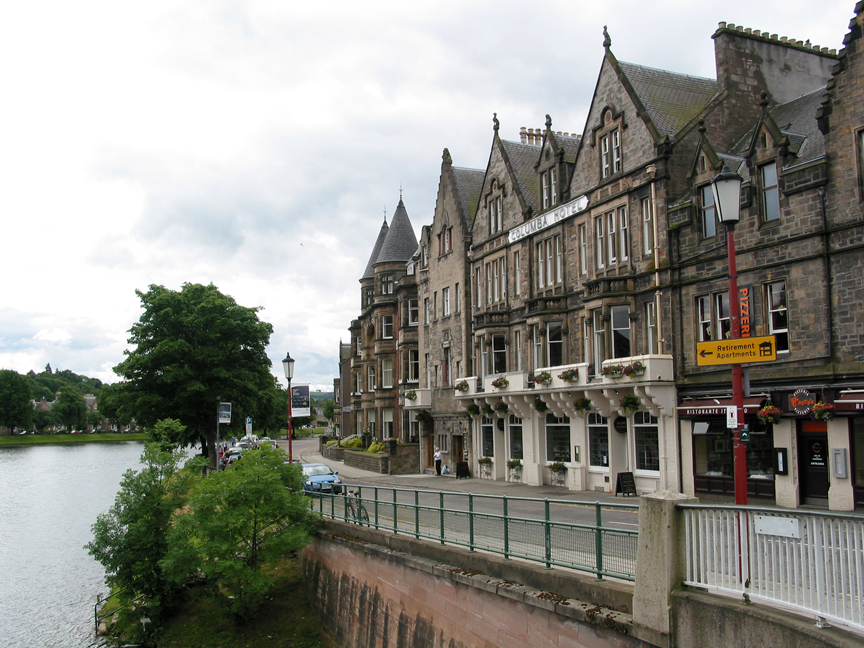
Casas às margens do rio Ness / Houses by the river Ness

Read Full Post »


Victoria Station, onde tantas vezes estive, indo e voltando
Victoria Station, where I’ve been so many times, coming or going

Uma coisa engraçada nos ônibus do Reino Unido é a paranóia dos motoristas com a bagagem de mão. Se for um pouquinho maior do que determinado tamanho ou estiver muito estufada, exigem que seja colocada no compartimento de bagagem. Como já tinha percebido esse detalhe, embarcava me mantendo sempre de frente para o motorista, ainda que precisasse subir os degraus de costas para que ele não visse o tamanho da mochila nas minhas costas, senão nem me deixaria entrar. E a escondia imediatamente debaixo da cadeira, atrás das minhas pernas, embora devesse guardá-la na prateleira acima dos assentos.
Para esta longa viagem ( de Londres a Edimburgo, 656km) levava casacos, cachecol, lanche, câmera e o livro Harry Potter and the Half-Blood Prince, um tijolo. Mas o volume passou despercebido quando o motorista foi checar se estava tudo em ordem no ônibus antes de dar a partida.

Something funny in UK coaches is the drivers’ paranoia concerning hand luggage.
If it’s an inch bigger than a certain size or too overweighted, they oblige you to put it in the luggage compartment under the vehicle. As soon as I took notice of this detail I made a plan, and it worked quite well. Whenever I was boarding I never turned my back to the driver so he couldn’t see my backpack size, otherwise he wouldn’t let me in. I would circumvent the man, climbing the steps backward if necessary. And immediately hid the backpack under the seat, behind my legs, although hand luggage is supposed to be kept in the compartment above the seats.
For this overnight journey (from london to Edimburgh, around 408 miles) I had brought coats, scarf, a snack, camera and “Harry Potter and the Half-Blood Prince”, a book thick as a brick. The driver went all the way through the corridor to check out if everything was in order before starting the engine, still the backpack went unnoticed.

Estrada para Edimburgo / On the road to Edimburgh

Presenciei uma cena bizarra na Victoria Station por causa de bagagem. Um negão entrou carregando um galão de vinte litros e, interpelado pelo motorista, disse que era óleo. Confusão à vista: o motorista disse que era proibido transportar óleo no ônibus. Mas o tal óleo – de cozinha talvez – não existia na cidade do passageiro, que tinha ido a Londres especialmente para comprar aquilo e se recusava a abandonar a mercadoria.
– Nesse caso, o senhor não pode viajar – afirmou o motorista.
– Mas eu paguei a passagem – rebateu o homem.
E a discussão começou. Dez minutos depois, o motorista mandou chamar uma guarda da estação, também negra, para ver se convencia o sujeito:
– Senhor, lamento, mas são normas da empresa, não posso permitir.
O passageiro insistiu. Não digo que as pessoas se amontoaram em volta, como teria acontecido na Rodoviária Novo Rio, porque os ingleses são muito discretos, mas o bate boca já estava chamando atenção e os demais passageiros amarrando a cara devido ao atraso. Foi chamado outro funcionário, mais graduado, que se mostrou irredutível do mesmo jeito. Nem no bagageiro era permitido levar óleo. Enfim, depois de quarenta minutos, o galão foi finalmente colocado num compartimento separado do resto da bagagem e o ônibus partiu.

I witnessed a bizarre occurrence concerning luggage in Victoria Station. A big black man was boarding the coach carrying a demijohn of around 5 galons. Heckled by the driver, he said it was oil, and the trouble started. The driver told him it was expressly forbidden to carry oil in the coach. But such oil (probably cooking oil) was not available in the passenger’s town. He had gone all the way to London just to buy it and refused to leave it behind.
“– You can’t travel then”, the driver stated.
“– But I paid for the ticket”, refuted the passenger.
The quarrel began, and after ten minutes of argument the driver sent for an officer, black herself, to talk him into the matter:
“– I’m sorry, Sir, these are the company rules, there’s nothing I can do”.
And the passenger insisted. There was not a crowd gathering around, as would surely happen in Brazil, for English people are very discreet, but the squabble was drawing people’s attention and the other passengers were already ugly-faced for the delay.
Another station officer appeared, adamant as well: it was forbidden to carry oil, even in the luggage compartment. At last, forty minutes later, the demijohn was put in another compartment, apart from the luggage, and the coach departed.

Vista da janela do ônibus a caminho de Edimburgo
View from the coach window, on my way to Edimburgh

A viagem levou a noite toda. O ônibus ia lotado, o carinha ao meu lado era um fofo e logo começamos a conversar. Ele percebeu que eu estava inconfortável naquele assento apertado e me emprestou uma almofadinha inflável que se encaixa em volta do pescoço, salvou minha vida. Embora fosse verão, fazia um frio absurdo. No meio da madrugada o ônibus fez uma parada. Jimi tinha cigarros, e saímos para fumar no estacionamento, quase congelamos no vento cortante.

The journey took all night. The coach was full, the guy sitting next to me was very nice and soon we were engaged in a conversation. He noticed how uncomfortable I was in that narrow seat and lent me an air cushion to put around my neck, that saved my life.
Despite being summertime, it was utterly cold. Early morning there was a stop, Jimi had cigarrettes and we got out to smoke in the parking lot. It was freezing there in the biting wind.

Aurora se anuncia / Dawn closing by

Não consegui dormir, mesmo com a almofada . Ao romper da aurora, já estava com a câmera grudada no vidro da janela.
Lamentei não ter um celular naquela hora para manter contato com Jimi. Ele poderia me ligar quando terminassem seus compromissos, mas eu nem sabia onde iria me hospedar. Então só trocamos e-mails e até hoje somos amigos no Facebook.

I tossed and turned but could not sleep. Came dawn, my camera was already pressed in the windowpane.
So sad I didn’t have a mobile to keep in touch with Jimi. He would call me when he was finished with his appointments, but I didn’t knew where I was going to stay in Edimburgh. But we exchanged e-mails and still today we’re friends in Facebook.

closer


Read Full Post »


Till the next time we say goodbye, Glastonbury!

No último dia da minha estadia no ashram, escapei de lavar a louça do almoço para não perder o horário do ônibus. Fui encontrar Selina e Jonathan na praça principal, onde nos despedimos. Ela ia para Leiceston pegar o trem para a Cornualha. Ele pegaria um avião de volta para os Estados Unidos. Eu ia de ônibus até Bristol e, de lá, para Londres onde fiquei uns dias para me recuperar e organizar fotos. Procurava dar uma força na casa, fazer um baby-sitting básico para que meus anfitriões economizassem preciosas libras, mas não queria abusar da sua hospitalidade.
A sequência lógica seria ir à Cornualha, pois os dias estavam lindos e ensolarados, entretanto eu queria ir à Escócia antes. Quando criança, li que havia um lugar onde, apesar de o solo não ser nada propício para a agricultura, pessoas plantaram e colheram abóboras e outros legumes gigantescos com a ajuda dos seres elementais, com quem conseguiam se comunicar. Esse lugar era Findhorn e tornara-se uma fundação onde são ministrados cursos e workshops de meditação, danças rituais circulares, agricultura orgânica, entre outros. A proposta é que os participantes vivenciem a espiritualidade aplicada ao cotidiano.

I escaped doing the dishes the last day in the Ashram, thanks to the bus timetable. Jonathan and Selina were leaving too, we met to bid farewell in the centre. She was on her way to Leiceston, to take a train to Cornwall and he was flying back to USA. I took a bus to Bristol and from there a coach to London, for a few days to catch my breath and organize the photos. I tried to be helpful to my host friends and did some baby-sitting to save them precious pounds, but I didn’t want to linger too long and abuse their hospitality.
The next logical destination would be Cornwall, because days were gorgeous, but I chose Scotland instead. As a child I had read about a place called Findhorn where a bunch of people planted vegetables and, despite the soil was unsuitable for agriculture, giant pumpkins and other stuff were grown, with the help of the devas (elemental beings) with whom these people were in touch, according to them. Findhorn became a Foundation that offers nowadays a range of workshops, as meditation, circular dances and other programmes in the environment of a working ecovillage, where students are supposed to apply spiritual values in daily life.

Paisagem nas Ilhas Orkney / Orkney landscape

Findhorn é banhada pelo Mar do Norte, onde ficam as Ilhas Orkney, onde, segundo As Brumas de Avalon, reinava Lot, com quem se casou Morgause, irmã de Igraine. De acordo com o livro, ambas eram filhas de Merlin, por isso tinham o sangue real de Avalon. Foi Morgause quem criou Mordred, filho de Arthur com sua meia-irmã Morgana. Esta era sacerdotisa de Avalon, onde se realizou o ritual de iniciação de Arthur, que devia entrar sozinho na floresta e, munido apenas de uma faca, enfrentar e matar um enorme cervo, tomando para si o título de Gamo-Rei. Tal ritual era fundamental para que as tribos do povo antigo reconhecessem seu direito ao trono. Mordred foi gerado quando Arthur voltou vitorioso da prova; era parte do ritual deitar-se com uma sacerdotisa virgem, justamente Morgana. Eles não se reconheceram, pois tinham sido separados havia muito tempo.

Findhorn is located on the shore, bathed by the North Sea, which surrounds the Orkney Islands.
According to The Mists of Avalon, Morgause married Lot, Lord of Orkney. She was Igraine’s sister; both were Merlin’s daughters, therefore descendants of the royal Avalon bloodline. Morgause raised Mordred, son of Arthur with his half-sister Morgana. She was priestess in Avalon, where took place Arthur’s initiation rite: he was to enter the forest alone and with one single knife kill a massive deer, taking upon himself the title of Deer King. Such rite was required otherwise the old tribes wouldn’t accept his leadership. Mordred was begot when Arthur came out of the woods victorious: he was supposed to lay with a virgin priestess to complete the rite, and that was Morgana. They didn’t recognize each other, because their lives had fallen apart too long ago.
Ring of Brodgar, Orkney Islands, Scotland

A escolha recaiu sobre Morgana pois se pretendia que o herdeiro do rei Arthur fosse da linhagem real de Avalon, comprometido com a antiga religião, disposto a evitar que os católicos a extinguissem. Mas Morgana assustou-se com a idéia de ter um filho do próprio irmão e o entregou para que a tia o criasse no reino distante de Orkney, o que foi um erro, segundo Marion Z. Bradley. Morgause era uma mulher ambiciosa que queria ser rainha. O garoto foi criado para odiar o pai e querer tomar seu lugar. Em outras versões da história Morgause não existe, e atribui-se à própria Morgana seu caráter cruel e malévolo. Já o escritor Bernard Cornwell, em suas Crônicas de Arthur, apresenta Mordred como filho legítimo de Uther Pendragon, herdeiro do trono, sendo Arthur seu irmão mais velho, bastardo, que faz o juramento de manter o reino coeso até que o garoto tivesse idade para governar.
Eu sabia também que nas Ilhas Orkney havia um gigantesco círculo de pedras chamado Anel de Brodgar, que despertara minha curiosidade. Isso foi motivo suficiente para pegar a estrada para Edimburgo, a capital da Escócia. De lá, acharia o caminho para Findhorn, Ilhas Orkney e também para a Capela Rosslyn, do livro O Código Da Vinci.

Morgana was chosen because Arthur’s heir should also be of the royal bloodline of Avalon, to avoid the extinction of the old religion by the hands of catholics. But the idea of giving birth to a son of her own brother scared Morgana so as soon as the baby was born she handed him over to her aunt, who fostered Mordred in the distant kingdom of Orkney. According to Marion Z. Bradley’s tale that was a great mistake. Morgause was an a greedy woman who wanted to be queen. The boy was raised to hate his father and plot to take his place. In many versions of the story Morgause doesn’t exist and this wickedness is assigned to Morgana’s role. The author Bernard Cornwell in his Arthur’s Chronicles, presents Mordred as Uther’s legitimate son and Arthur as an elder bastard who was sworn to keep the kingdom together until his brother comes of age.
I was also aware of a massive Stone Circle in Orkney, the Ring of Brodgar, which aroused my curiosity. Putting it all together, was reason enough to hit the road to Edimburgh, Scotland. From there I would find my way to Findhorn, Orkney Islands and Rosslyn Chapel as well, which appears in “Da Vinci’s Code” book.

Read Full Post »

« Newer Posts