Feeds:
Posts
Comentários

Posts Tagged ‘Ilhas Orkney’


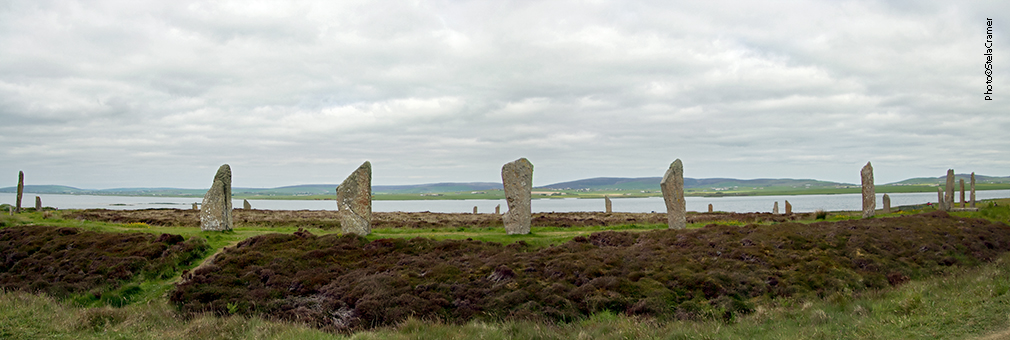
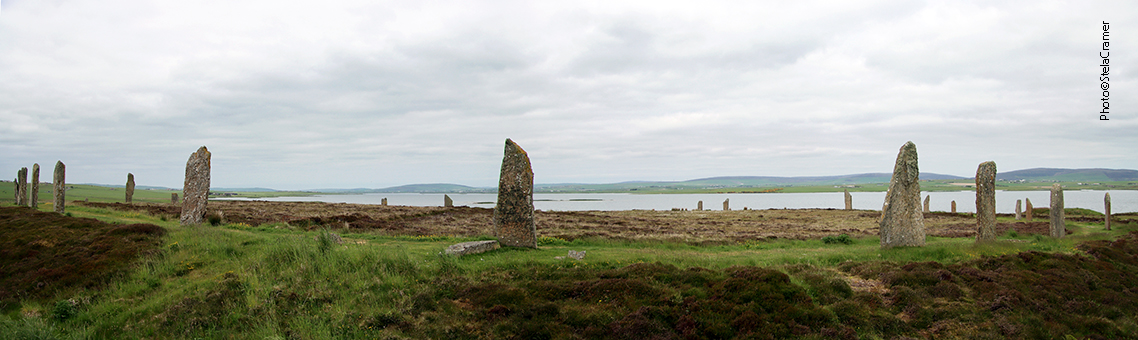
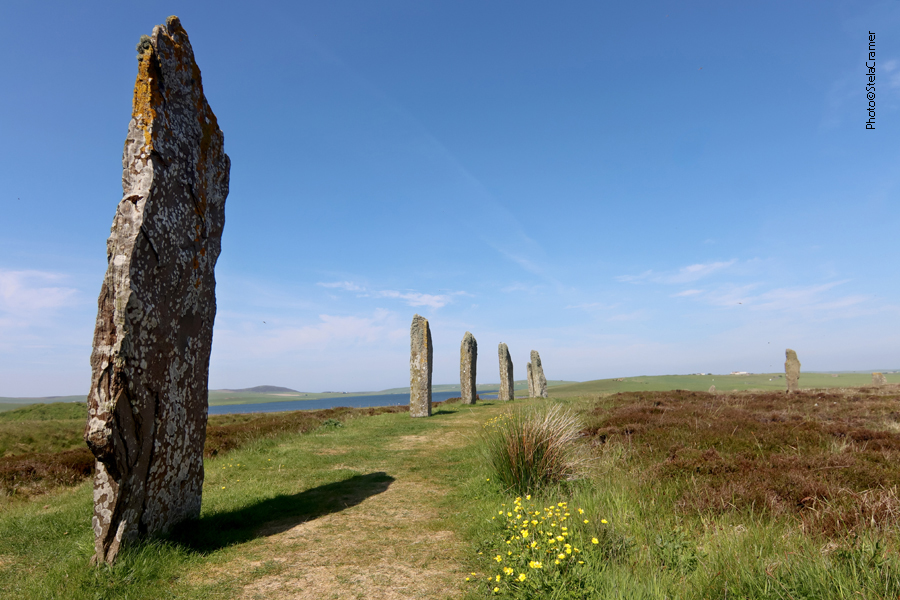
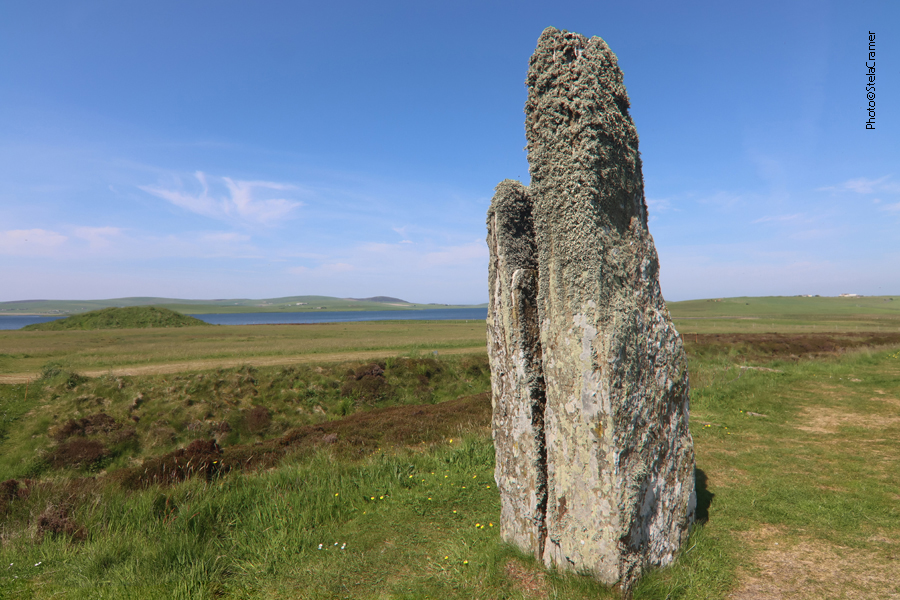
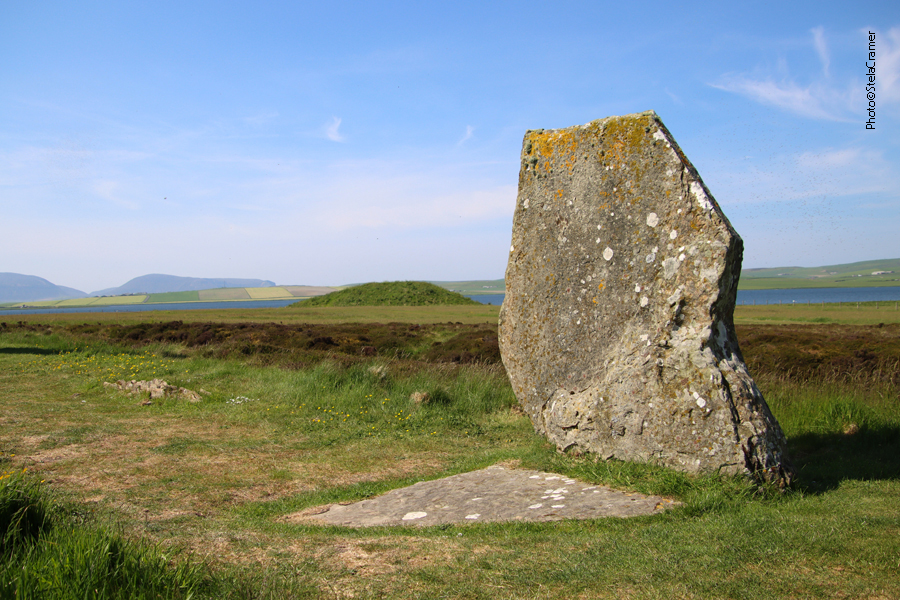
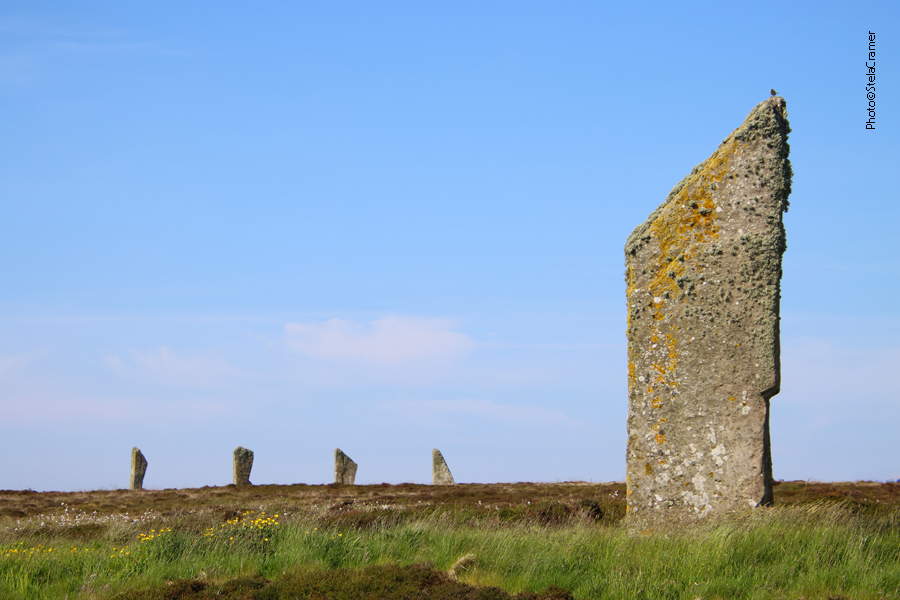
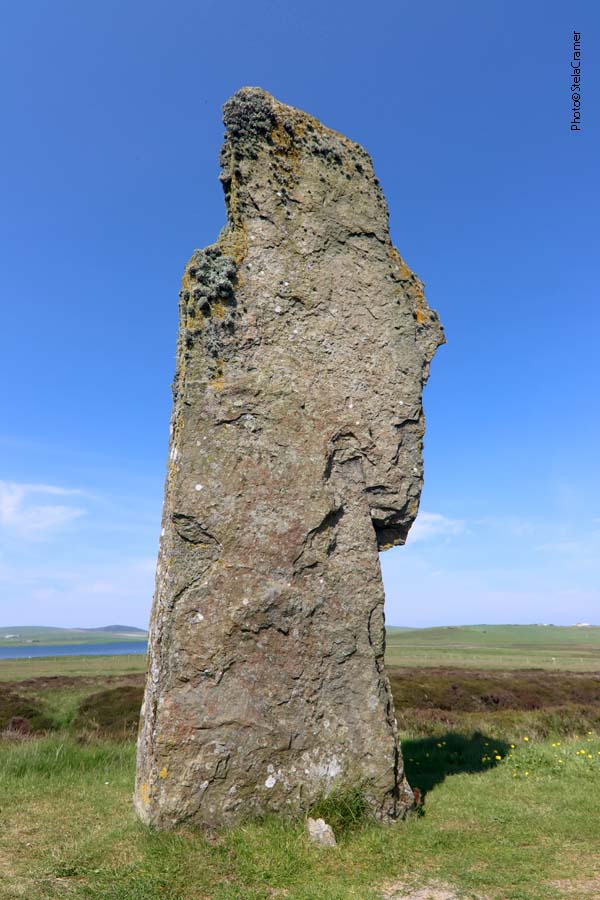
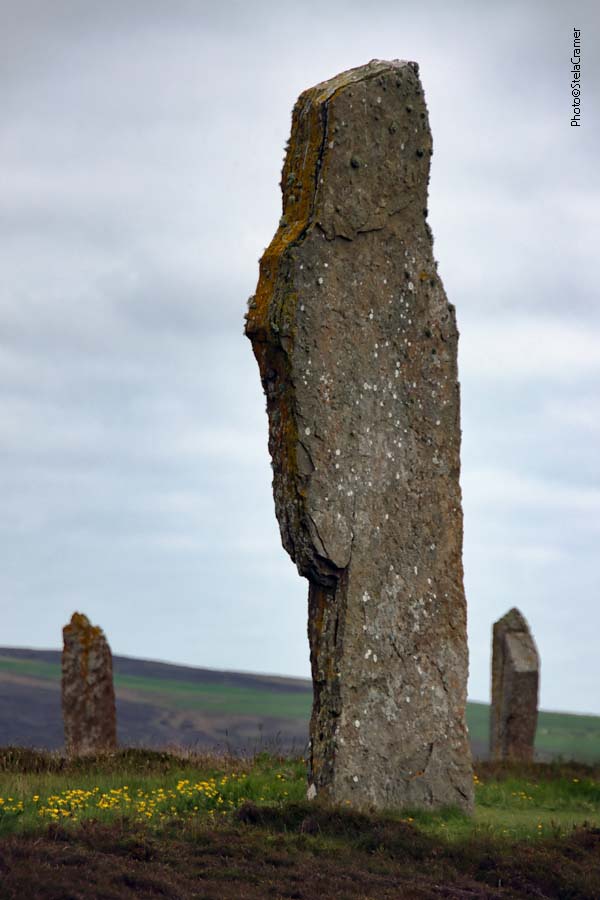
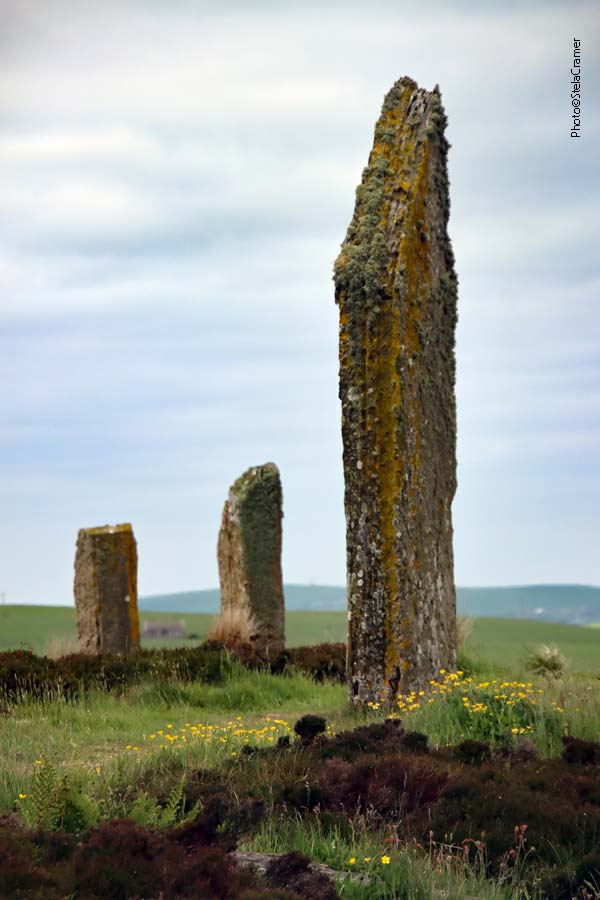
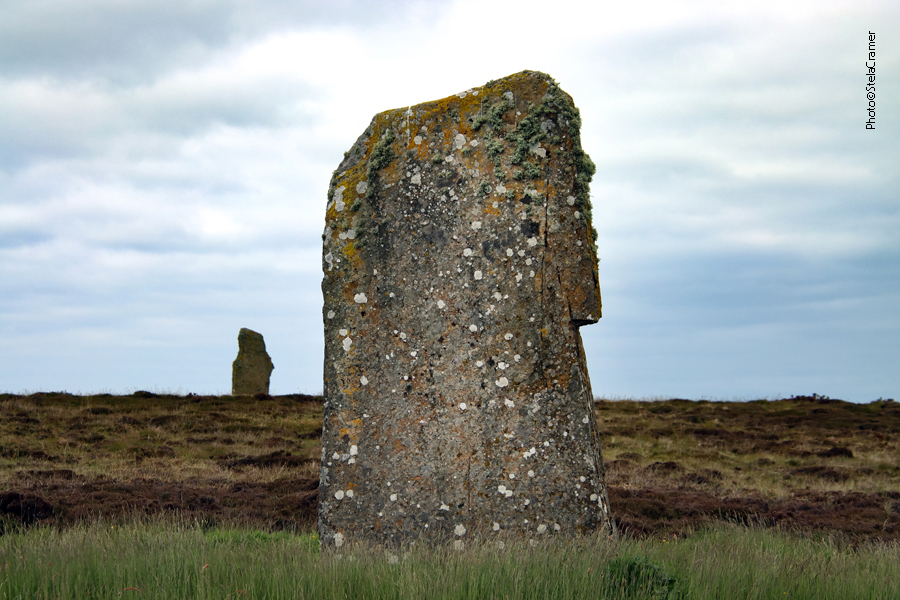
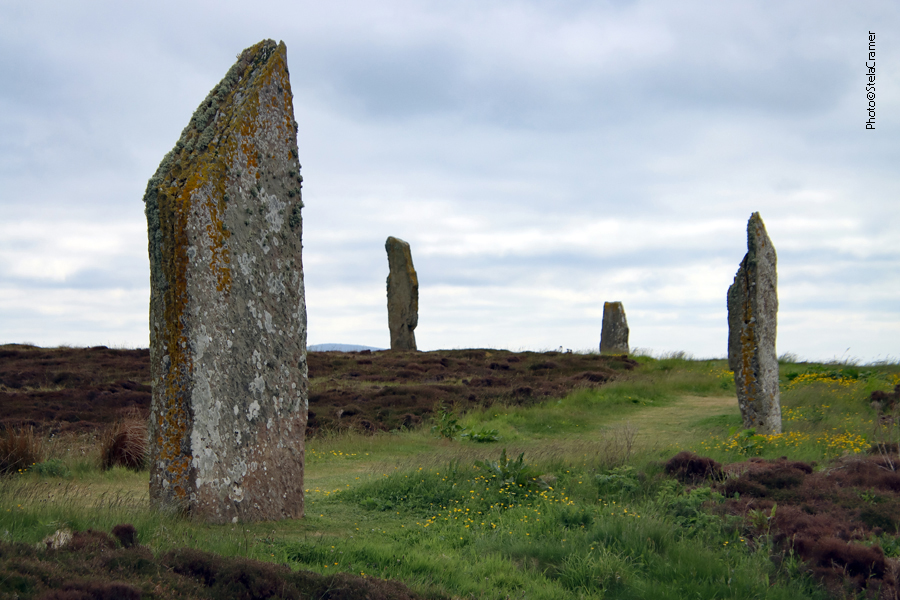
Ring of Brodgar – Círculo de pedras com 104m de diâmetro, composto originalmente de 60 monolitos (dos quais apenas 27 permanecem) cercado por um fosso circular de 10 m de largura por até 3 de profundidade. / Stone circle 104 metres in diameter, originally composed of 60 stones set within a circular ditch up to 3 metres deep and 10 metres wide.

Vou interromper temporariamente o relato da viagem com Vicky (retomarei mais adiante), pois algo muito importante aconteceu.

Há quase 20 anos atrás, jurei para mim mesma que voltaria às Ilhas Orkney para visitar o Anel de Brodgar, assim como os demais monumentos Neolíticos e locais sagrados. Isto foi depois de uma frustrante excursão que fiz partindo de Inverness, relatada anteriormente no post 045.
Finalmente, neste ano de 2023 cumpri minha promessa.
No dia 4 de junho aterrissei em Kirkwall, a capital das Orkneys.

O anel foi construído entre 4400 e 4600 anos atrás/ The Ring of Brodgar was built between 4400 / 4600 years ago

I will interrupt for now my report on the trip with Vicky (to be resumed later) because something remarkable happened.

Almost 20 years ago, I have sworn an oath to myself that I would return to Orkney Islands and properly visit the Ring of Brodgar, and the other Neolithic and sacred sites as well. That was after a frustrating tour I took from Inverness, formerly described in the post 045. This year of 2023 I have finally fulfilled my oath. On June 4th, I landed on Kirkwall, Orkney’s mainland capital.

O Anel de Brodgar é um dos mais bem preservados monumentos pré-históricos da europa./ The Ring of Brodgar is one of the best preserved prehistoric monuments in Europe.

Visitei o Anel de Brodgar três vezes, em diferentes dias e horas, para evitar a horda de turistas: três navios de cruzeiro gigantescos estavam ancorados em Kirkwall. Compartilho aqui as melhores fotos.

I visited the Ring of Brodgar in three different days and hours, trying to avert the tourist crowd: there were three huge cruise ships anchored in Kirkwall. I share here the best photos.

O círculo fica no pequeno istmo entre os lagos de Stenness e Harray. /The ring of stones stands on a small isthmus between the Lochs of Stenness and Harray.
Algumas das pedras com o lago de Stenness ao fundo /
Some of Brodgar’s standing stones with the Loch of Stenness in the background
Algumas das pedras com o lago de Harray ao fundo /
Some of Brodgar’s standing stones with the Loch of Harray in the background
Uma das curiosas pedras com o mound South Knowe e o lago de Stenness ao fundo/
One of the odd stones, with South Knowe mound and Loch of Stenness in the background
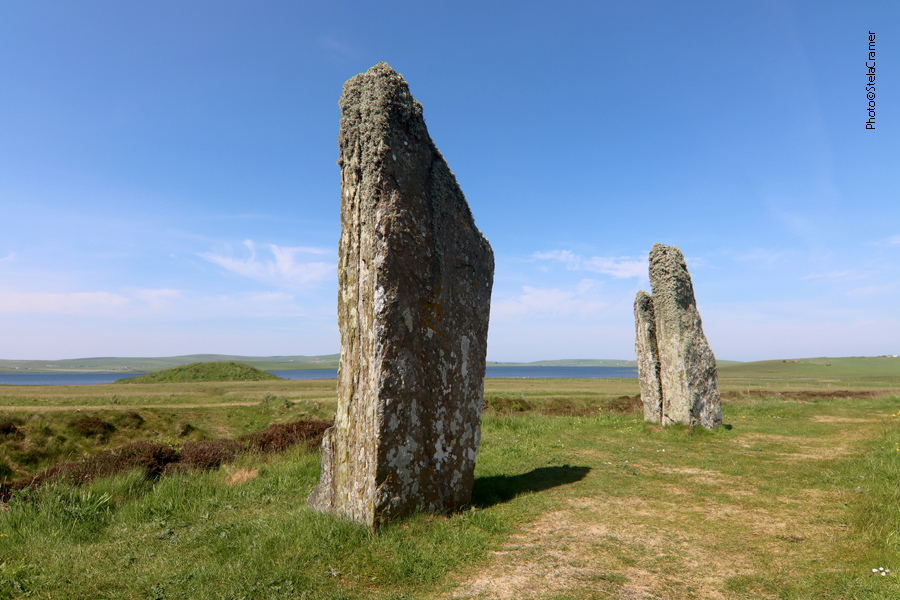
Textura de um dos monolitos / Stone’s texture
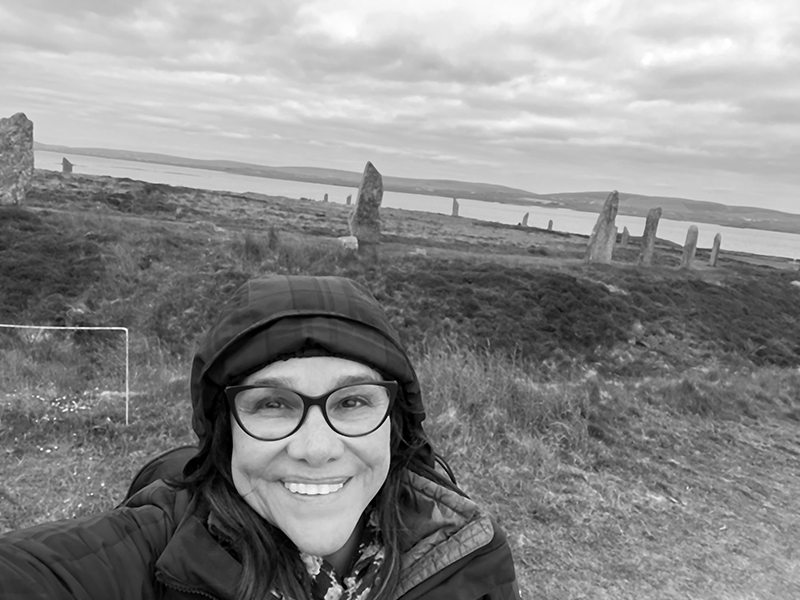
Selfie de chegada. Estava frio, ventando. / Arrival selfie, under chilly wind
Última selfie, numa linda manhã de sol /
Last selfie, awesome sunny morning

Read Full Post »


Ring of Brodgar, Orkney Islands, Scotland

As Ilhas Orkney se estendem ainda mais ao norte, porém depois da parada em Skara Brae o ônibus volta a Kirkwall, só então passando pelo Anel de Brodgar, mas para minha surpresa não para lá e sim nas Standing Stones of Stenness, um pouco adiante na estrada. “Por que não paramos em Brodgar?” Reclamei com o guia ao ver o enorme círculo de pedra ficar para trás e o veículo estacionar em Stenness. Falei que eu tinha vindo do Brasil para ver o Anel; ele replicou que Stenness tinha maior valor arqueológico e o horário da excursão não comportava visitar os dois, ou perderíamos o último ferry.

The Orkneys are spread further north, but the coach returns to Kirkwall after Skara Brae, and only then it passes by the Ring of Brodgar, but for my astonishment it didn’t stop there! We halted one mile ahead, in the Standing Stones of Stenness. As the massive circle was left behind, I asked the tour guide why was that. I told him I had come all the way from Brazil to see the Ring. He replied that Stenness was archaeologically more relevant, and the tour schedule didn’t allow to stop in both places, otherwise we’d lose the ferryboat.

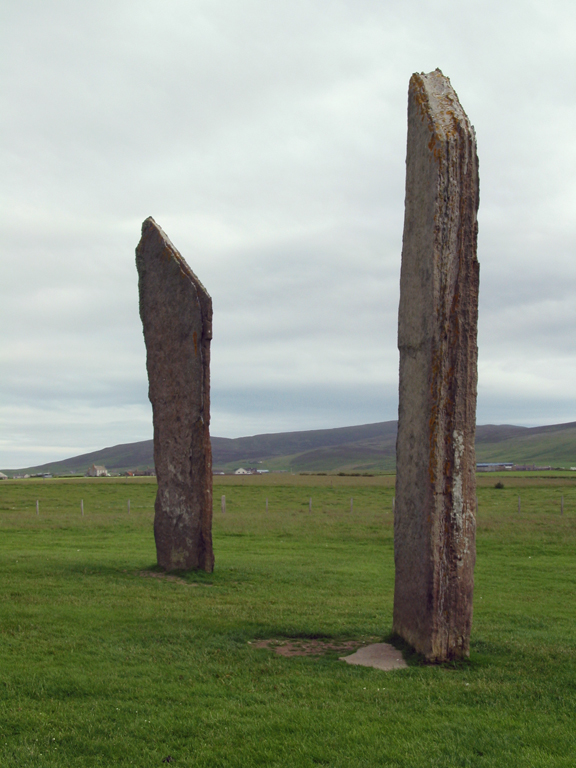
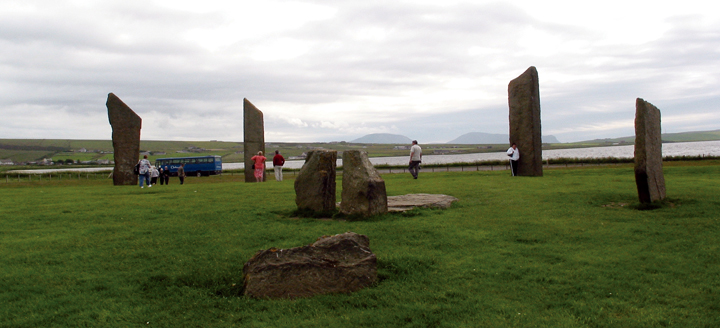
The Standing Stones of Stenness.
Of course the coach would park in the perfect spot to spoil my picture.
Claro que o ônibus parou no lugar ideal para estragar minha foto.

Na hora aceitei a explicação e fui fotografar as pedras. O tempo estava fechando, o céu se tingia de grafite, e fiquei tentando me convencer de que daria um ar dramático às fotos. Pela milésima vez na vida quis ter asas, que me erguessem pelo menos uns cinco metros do chão, para sobrevoar o local e conseguir por todas as pedras numa mesma foto.

For the moment I accepted the excuse and went strolling among the stones to take pictures. The sunny weather at Skara Brae was quickly turning into a graphite grey sky, and I tried to believe it would add a dramatic atmosphere to the photos. For the thousandth time in life I wish I had wings that could uplift me a few meters, just enough to overfly the place and get all the stones in one single picture.

Barnhouse Stone

Do círculo de pedras se avista Barnhouse Stone, um monólito solitário, e o mound de Maeshowe, uns setecentos metros adiante. Os monumentos ficam todos alinhados, mas só os vimos de longe. Consegui duas fotos do Anel, que ficaram tortas e tremidas através do vidro sujo do ônibus. Um profundo mau humor tomou conta de mim. Estava  revoltada porque não paramos em Brodgar, mas o pior foi que depois disso a excursão parou numa droga de uma capela italiana construída por prisioneiros da Segunda Guerra e lá ficamos meia hora antes de voltarmos ao ferryboat! Meia hora preciosa que poderíamos ter passado em Brodgar. Saí possessa atrás do guia, que, ao ver a minha expressão assassina, desapareceu entre os turistas.

From the Standing Stones of Stenness you spot Barnhouse Stone, a lonely standing stone, and the Maeshowe Mound ahead. All the monuments stay in a line, but we could only see the latest from the distance. I’ve got two photos of the Ring of Brodgar, crooked and blurred through the dusty coach window. A dark mood took hold of me. I couln’t accept missing the Ring, but the worst was yet to come. The tour made one last stop in a stupid Italian Chapel built by II World War prisioners, and remained there for half an hour, thirteen precious minutes stolen from Brodgar! I went after the guide, in rage. The man noticed my murderous look and disappeared among the tourists, aware that I was going to strangle him.

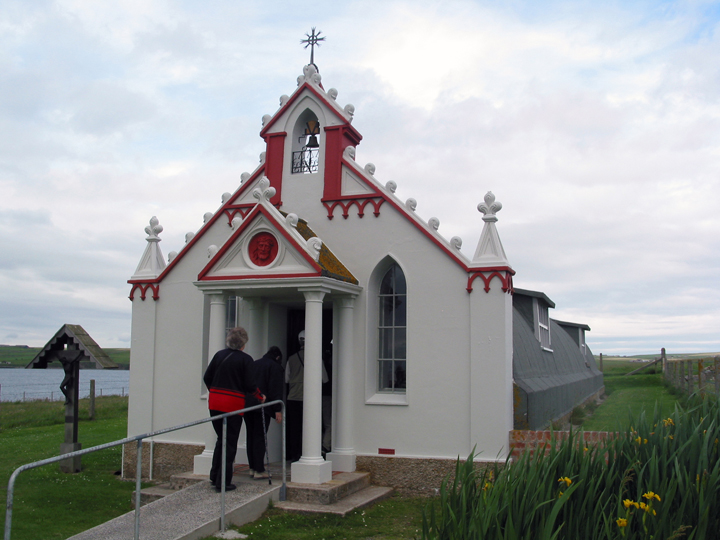
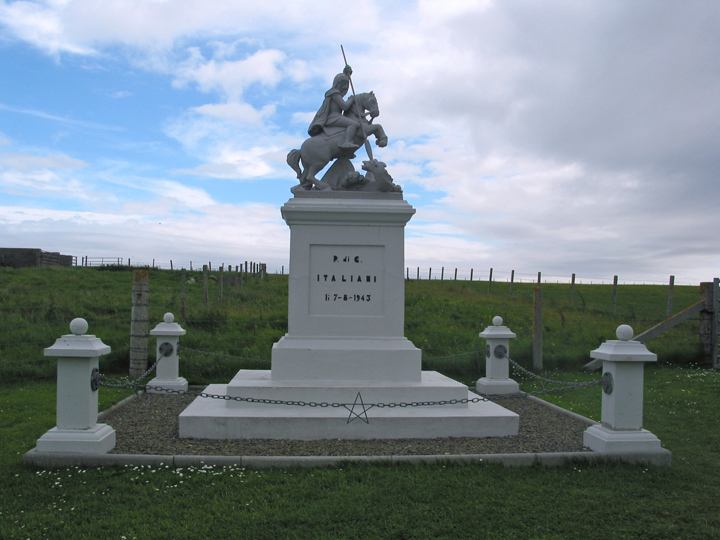
The Italian Chapel and a monument in front of it. What a waste of time.
A capela Italiana e o monumento em frente. Que perda de tempo.

Voltamos a Burwick, onde o ferryboat nos aguardava para os quarenta e cinco minutos de travessia até John O’Groats. Jules ficara íntima do capitão na viagem de ida, mas o frio na volta a deixou mais quieta. Na verdade, quase congelamos. Eram cinco da tarde, o vento norte não dava trégua.
Eu estava arrasada pois queria tanto percorrer o Anel de Brodgar, e o lugar é tão longe que duvidava muito que conseguisse voltar lá um dia para fazer as fotos que perdera hoje. Minha amiga observou que eu tinha “tanto tesão em fotos”, e que eu não devia me sentir assim, que realmente estava chateada sem motivo. Afinal, quantos brasileiros eu conhecia que já tinham estado em Orkney? Provavelmente só eu mesma. E bati tantas fotos quanto comportou a memória da câmera. O problema é que quero sempre mais.

Back to Burwick, the ferryboat was waiting to take us back to John O’Groats, forty five minutes under the unmerciful North Wind. Jules had made friendship with the captain in the outward journey, but now she was silent, such was the cold at 5 pm. We’d nearly frozen. I was devastated because I had been longing so long for a walk in the Ring of Brodgar and that was denied me. I doubted I could ever go back there for the lost pictures. My friend remarked I had “such a lust in photos” and I shouldn’t feel that bad; for how many Brazilians I knew had ever been to the Orkneys? Probably only me. And I took as many pictures as my memory cards could bear.
The problem is, I do always want more.

Despite the frustration, I’ve been able to smile and say a prayer.
Apesar da frustração, fui capaz de fazer uma oração e dar um sorriso.


Read Full Post »


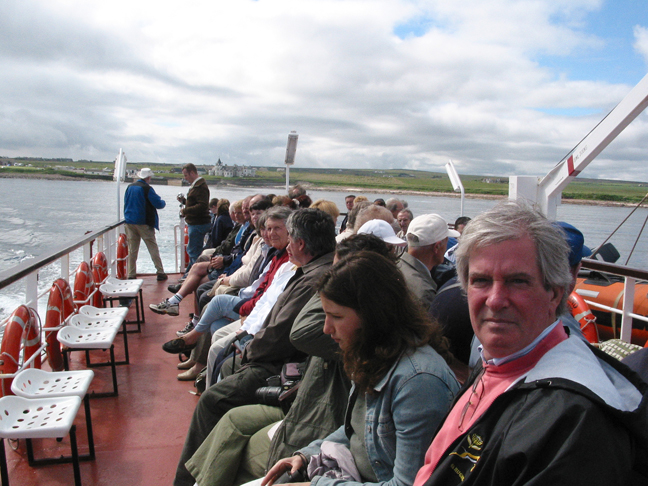
Atravessando o estuário de Pentland / Crossing the Firth of Pentland

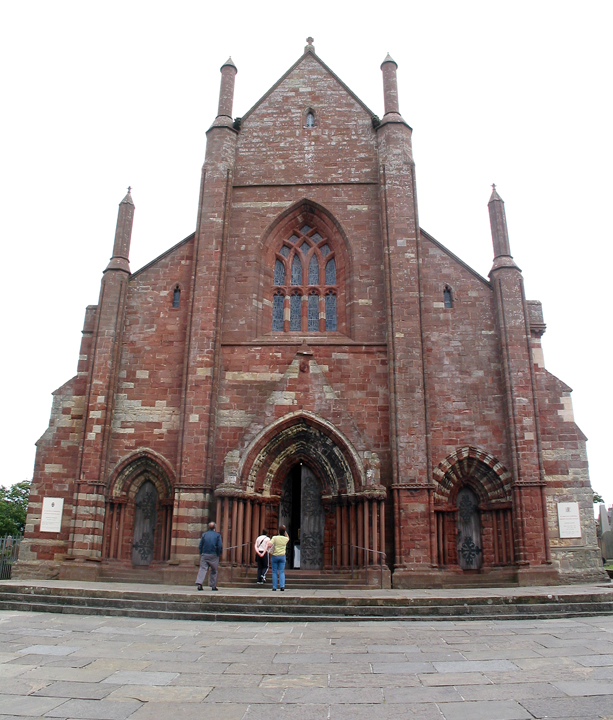
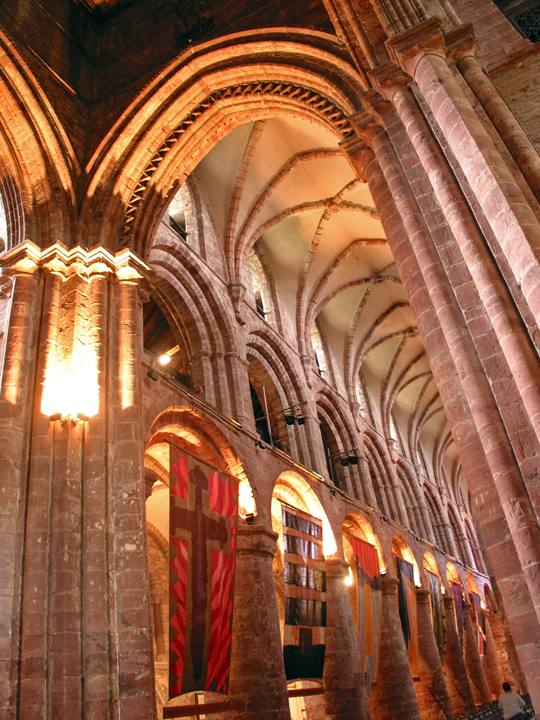
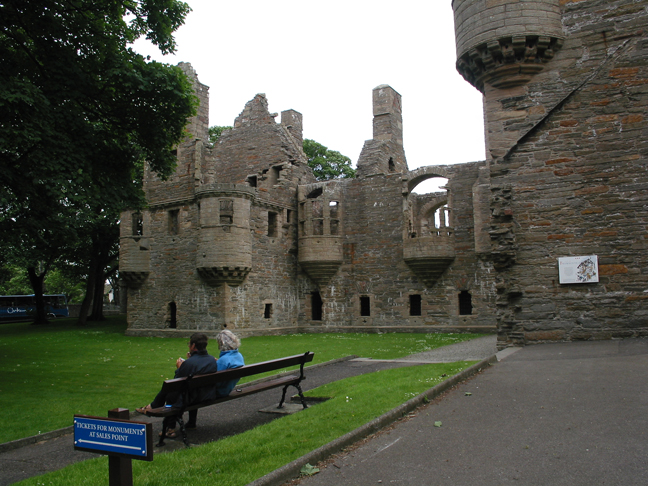
Após a almoço embarcamos no ferryboat para cruzar o estuário de Pentland. A travessia levou 40 minutos, sob o vento cortante do Mar do Norte. Outro ônibus nos esperava para prosseguir viagem até Kirkwall, principal cidade de Orkney, onde houve uma parada para visitar a catedral de St. Magnus, que data do século XII. Ao lado da igreja encontram-se as ruínas do Palácio do Conde. O tempo fechou, ameaçando chuva. Fiquei tensa, quarenta minutos me pareceram a eternidade, mas depois de um café e algumas fotos a excursão prosseguiu.

Mais perto / Closer

After lunch we boarded the ferry to cross Pentland Firth, 40 minutes under the freezing North Sea wind. In the end, another bus was waiting to carry us further, to  Kirkwall, main Orkney town. There was a stop to visit St. Magnus, a XII century Cathedral. Next to it are the ruins of the former Earl’s Palace. We stood there for what seemed eternity, plenty of time for pictures and a coffee and the weather went worse, threatening rain, so I was quite tense. But eventually the tour departed.  

St. Magnus Cathedral

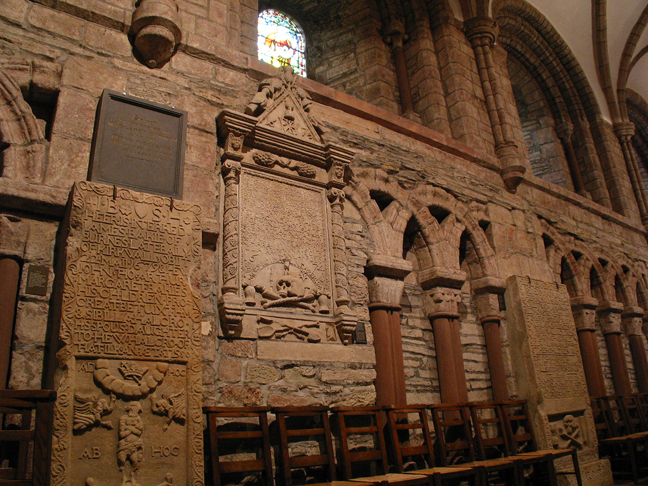
Interior sinistro da enorme catedral / Inside the massive Cathedral… creepy!

Ruínas do Palácio do Conde, no meio de um parque em Kirkwall
The Earl’s Palace ruins with a park around, in Kirkwall

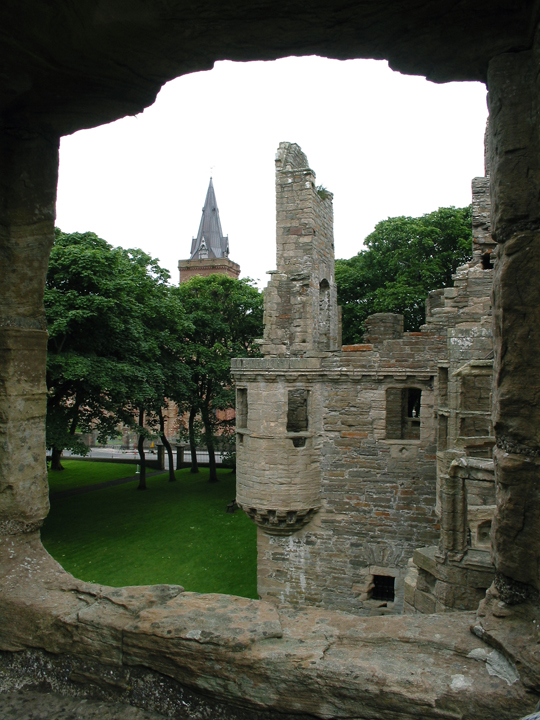
A torre da catedral vista do Palácio do conde
Cathedral Tower seen from the Earl’s Palace

Enfim raios de sol. / Sunlight at last.

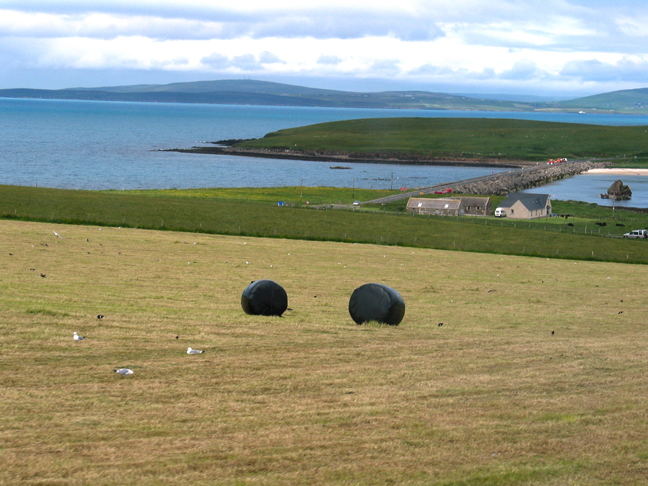
A estrada ia costurando as ilhas como um patchwork. São setenta ao todo, das quais apenas vinte são habitadas. Percorremos quilômetros entre nada e lugar nenhum, campos arados pontilhados por rolos de feno aguardando serem recolhidos sabem os deuses por quem, pois não se via uma alma sequer.

Pontes interligam as ilhas, algumas minúsculas / Bridges between the tiny islands

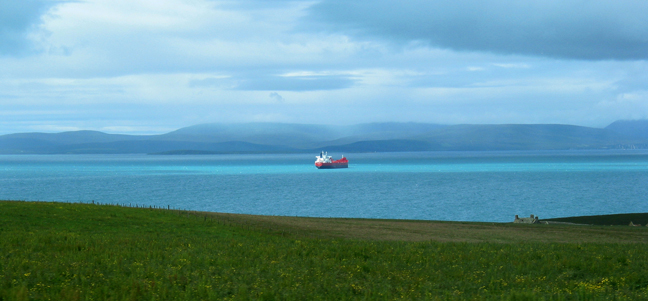
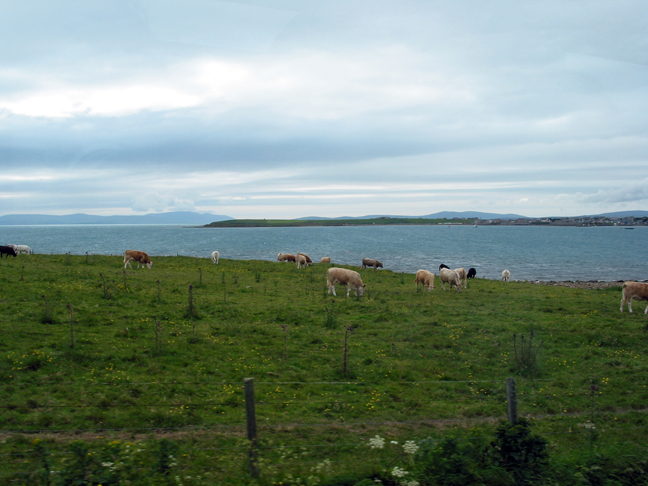
Paisagem através da janela do ônibus / Landscape seen through the bus window

Casco de um barco naufragado / Wreckage of an old boat

The road sewed together, like a patchwork , approximately 70 islands of which 20 are inhabited. A long way between nothingness and nowhere. Miles of plough fields dotted with haystacks waiting to be collected, the Gods only know by whom, for there wasn’t a single living being in sight.

Skara Brae!

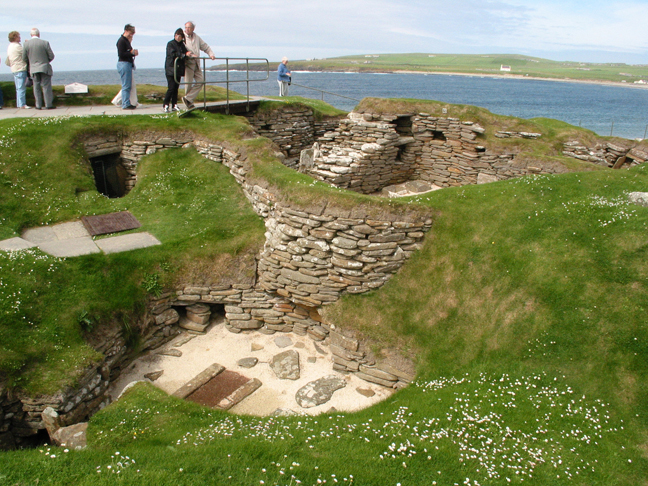
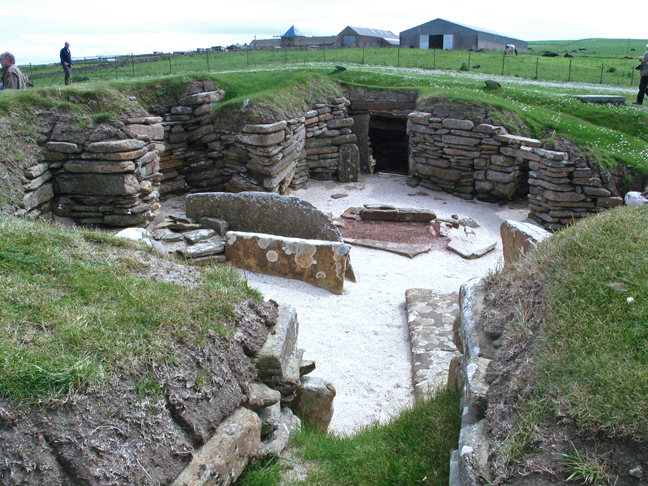
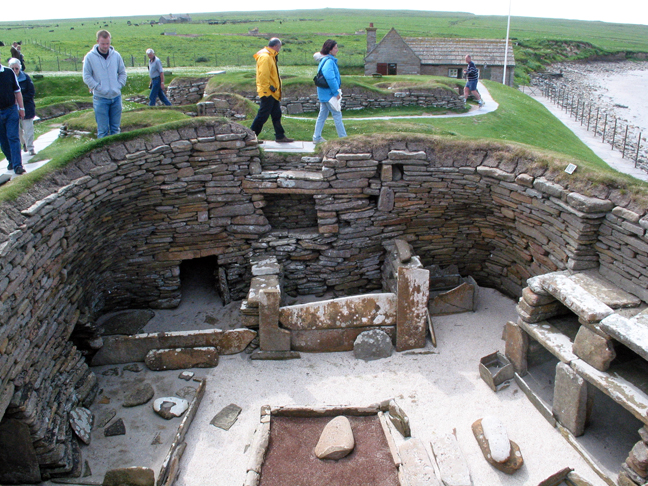
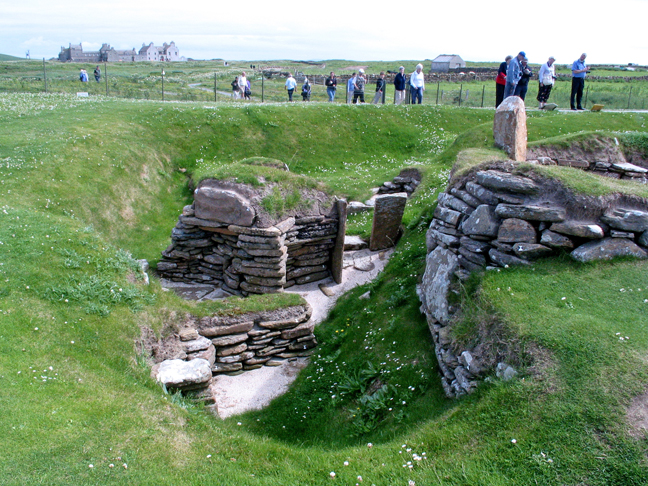
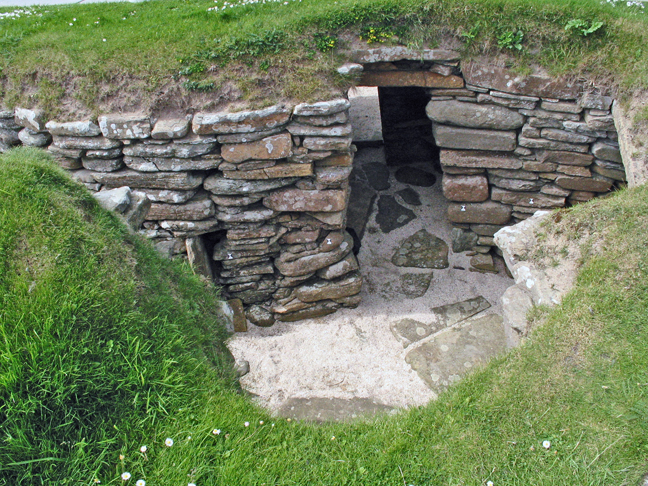
Por fim chegamos a Skara Brae, sítio arqueológico que guarda um dos mais antigos vestígios de ocupação humana de que se tem notícia, datado entre 3180 e 2500 a.C. Uma relíquia do Neolítico com tal grau de preservação que ganhou da UNESCO o título de Patrimônio Histórico Mundial. São dez habitações de pedra enterradas no solo, ligadas por passagens também de pedra, que abrigaram não mais de cinquenta seres humanos. Lugar absolutamente inóspito, o vento glacial constante nas Orkneys impede o crescimento de qualquer árvore, só se vê grama num raio de quilômetros.

Contornando as escavações / Circling around the excavations

We arrived at last in Skara Brae, archaeological site that keeps traces of the most ancient known human settlements, dating back to 3180 BCE – 2500 BCE. It’s Europe’s most complete Neolithic village. Due to its excellent preservation, it was given UNESCO World Heritage Site status. It consists of ten clustered stone houses sunk into the ground for insulation against Orkney’s harsh winter climate, where once lived no more than fifty people. An inhospitable place, an empty wilderness where the frosty wind prevents any tree from growing, all you see in a radius of miles is grass.

As casas foram cobertas pela areia gradualmente, e tudo indica que já tinham sido abandonadas quando isso ocorreu, mas não se sabe por que.
Burial in sand was gradual and it seems that the houses had already been abandoned — for what reason, no one can tell.

Skara Brae é mais antigo que Stonehenge e que as pirâmides. Na trilha para o sítio arqueológico, passa-se por uma réplica em tamanho real de uma das habitações, com vasilhas de barro, cestos de peixe seco, pilhas de lenha, peles e mobília de uma alvenaria feita com pedra, areia e palha. Os habitantes deviam ser esquimós, pois o gelo cobre tudo no inverno. Ali em pleno verão, ao meio-dia, apesar do sol ter aparecido, meu nariz e orelhas já estavam congelados assim como as mãos, que insistiam em empunhar a câmera.

Quase todas as casas tem mobiliário semelhante, com as camas e aparador no mesmo lugar. / Most of the houses have similar furniture, with the beds and dresser in the same places in each house.

Skara Brae is older than Stonehenge and the pyramids in Egypt. On the footpath to the archaeological site there’s a life size model of one of the houses, with all its pottery inside, baskets of dry fish, furs and stone-built pieces of furniture. The inhabitants must have been Eskimos, for in winter ice covers everything. It was midsummer, it was midday, the sun had decided to shine but I had my nose and ears frozen, as well as my hands that wouldn’t let go of the camera.

A aldeia tinha um sistema de drenagem que incluía um vaso sanitário tosco em cada habitação.
A drainage system was even incorporated into the village’s design, including a primitive form of toilet in each dwelling.

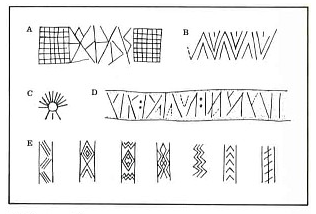
Os desenhos gravados nos objetos encontrados em Skara Brae são semelhantes aos encontrados no Vale do Boyne, Irlanda, sugerindo uma conexão entre estas culturas. / The spiral ornamentation on artifacts found at Skara Brae match stylistically objects found in the Boyne Valley in Ireland, suggesting a linkage between the two cultures.

Jules e eu sentamos na areia (pois Skara Brae é numa praia) e ficamos pensando o que seres humanos estariam fazendo em um lugar desses. Como chegaram ali? Será que já nasceram ali? Mas de onde vieram seus pais? Que combustível usavam? O que comiam? Apenas peixe, algas, ou será que plantavam cereais? Ou criavam gado e ovelhas? Ninguém sabe ao certo, mas as escavações indicam que durante seiscentos anos essa população sobreviveu. O frio e o sal preservaram suas construções, que hoje estão ali como prova do triunfo do espírito humano sobre a adversidade numa época remota.

Vista aérea de Skara Brae e o aspecto que devia ter, imagens do Google
Aerial view and how the village should have looked like, from Google Images

Jules and me sat in the sand (because Skara Brae stands in a beach) wondering what the fuck would human beings be doing in such a place. How did they get there? Were they born there? Where did their parents come from? What kind of fuel did they employ? What did they eat, fish and seaweed only? Or did they cultivate some cereal? Did they raise cattle and sheep as well? No one knows for sure, but excavations indicate that these people survived for about six hundred years. The cold and the salt preserved their buildings, that today stand there as a proof of triumph of the human spirit over adversity in early ages.

Read Full Post »


Me, Jules, Michelle and Nessie!

De volta a Inverness, desta vez dei sorte com o hostel. O Bazpackers era limpíssimo, tinha um jardim com mesas onde gente simpática conversava e dois recepcionistas brasileiros, ambos chamados Marcelo. Enturmei-me com uma menina do Canadá, uma da África do Sul e outra inglesa mesmo, que ia embora no dia seguinte. A canadense era magrinha, ruiva de olhos azuis, sardenta e comprava legumes no mercado para cozinhar suas refeições no albergue. A sul-africana, Jules, era gorducha, usava roupa de homem e só comia enroladinhos de salsicha, para “não perder tempo de viagem”.

Back to Inverness, I eventually found a excellent hostel, the Bazpackers, so tidy and neat, with a pleasant yard where tables provided people a meeting point. Two of the receptionists were Brazilian, both called Marcelo. I made friends with a girl from Canada, another from South Africa and a third, British, who was leaving the next day. The Canadian was thin, red haired, blue eyed, freckled faced and used to buy daily fresh vegetables to cook her meals in the hostel kitchen. The South African, Jules, was plump, wore men’s clothes and would eat only sausage rolls to “waste no travel time”.
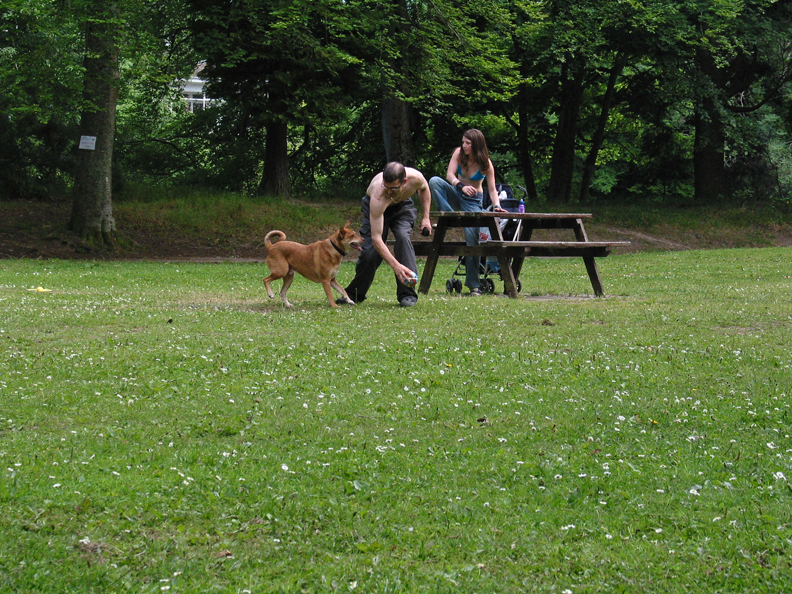
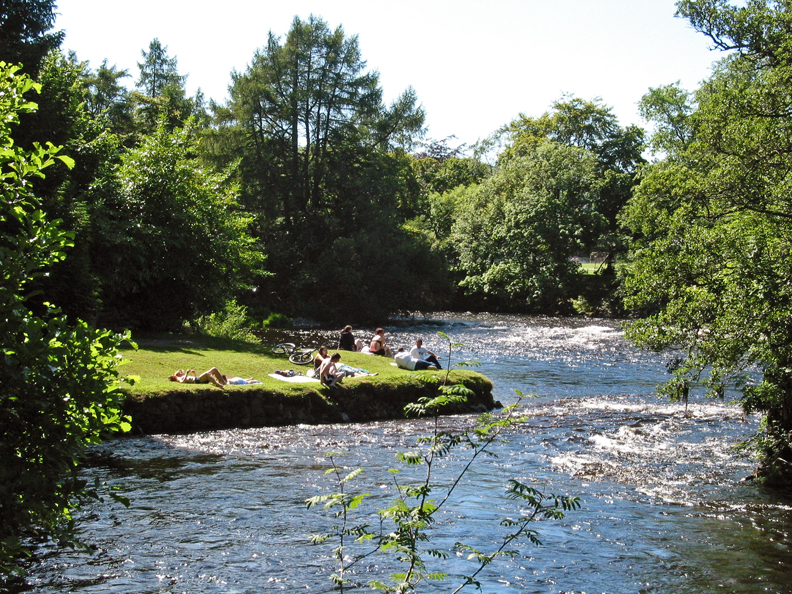
Pessoas brincando com seus cães no lindo parque às margens do rio.
People walking their dogs in the beautiful park surrounding the river.
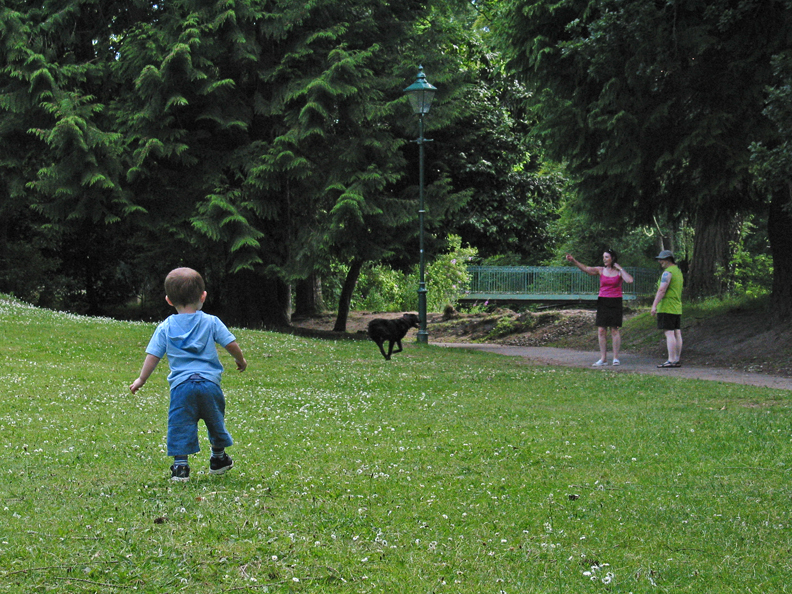
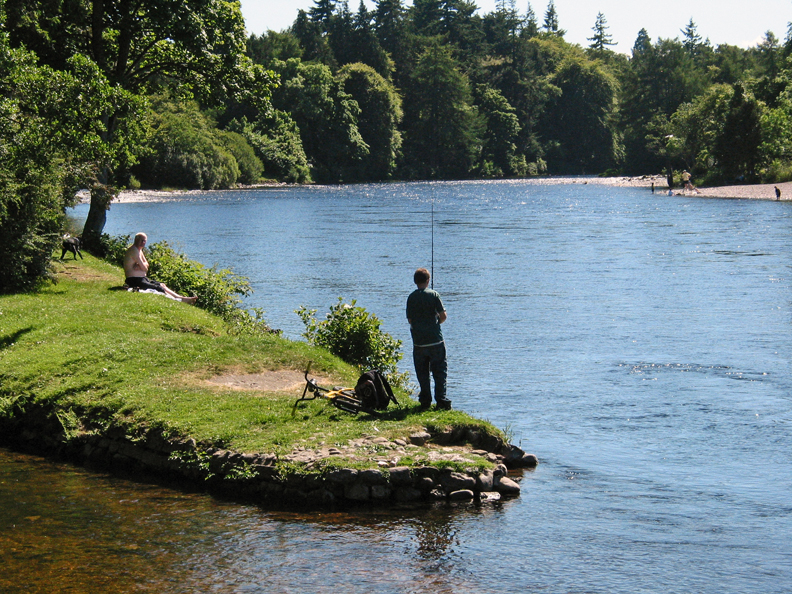
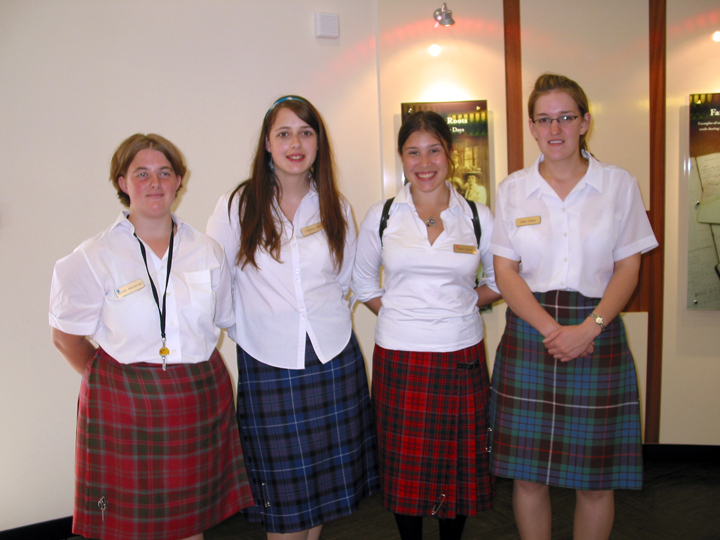
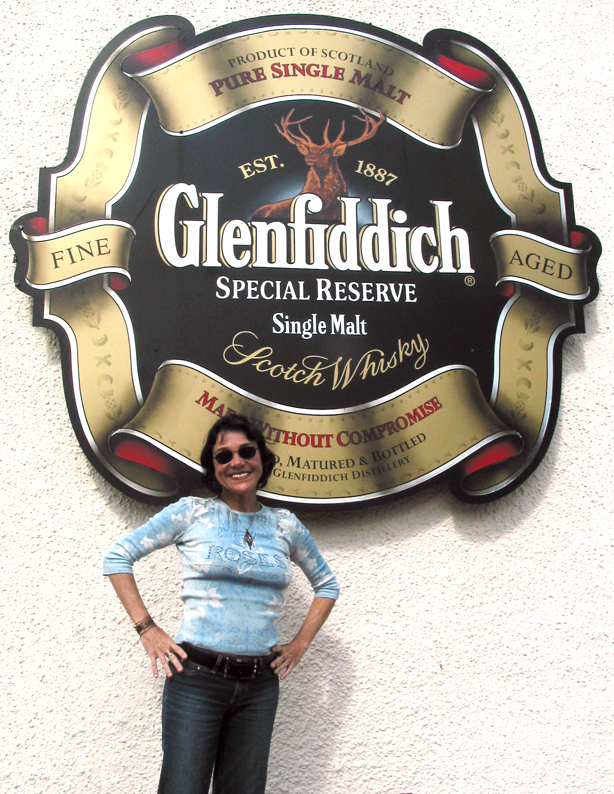
Fomos andar no belíssimo parque que beirava o rio Ness, de águas cristalinas, onde havia muita gente pescando… salmão! Jules dizia “Good thinking, Batman!” toda vez que uma boa ideia surgia na conversa. Ela era uma figura, super engraçada, de cara ficamos super amigas  e no dia seguinte fomos juntas à destilaria da Glenfiddich, que era seu uísque preferido. Michelle não quis ir, tinha combinado sair com um dos Marcelos.

We went for a walk in the gorgeous park settled along the River Ness, where many people were salmon fishing in those crystalline waters. Every time when we’re chatting and a brilliant idea came out of it Jules would say “Good thinking, Batman!” She was so funny, we made instant friendship and the next day went together to visit her favourite whisky distillery, Glenfiddich. Michelle didn’t go with us, she had a date with one of the Marcelos.
Inverness, 11 de julho de 2005 / July the 11th, 2005

Moleque pescando salmão / Kid salmon fishing
Quando entramos no ônibus e fomos pagar a passagem, lembrei de pedir ao trocador: “Return!” Custava praticamente o mesmo preço da passagem só de ida! No fim da visita à destilaria tinha degustação, e aporrinhamos tanto os funcionários, que acabamos bebendo muito mais que os outros visitantes. Ou seja, ficamos de pileque. Na volta, a caminho do albergue, passamos por um pub com música ao vivo e ainda tomamos algumas pints ali com o dinheiro que economizamos na passagem.

Glenfiddich Distillery Keith, Dufftown, Keith, Banffshire AB55 4DH, Reino Unido
01340 820373
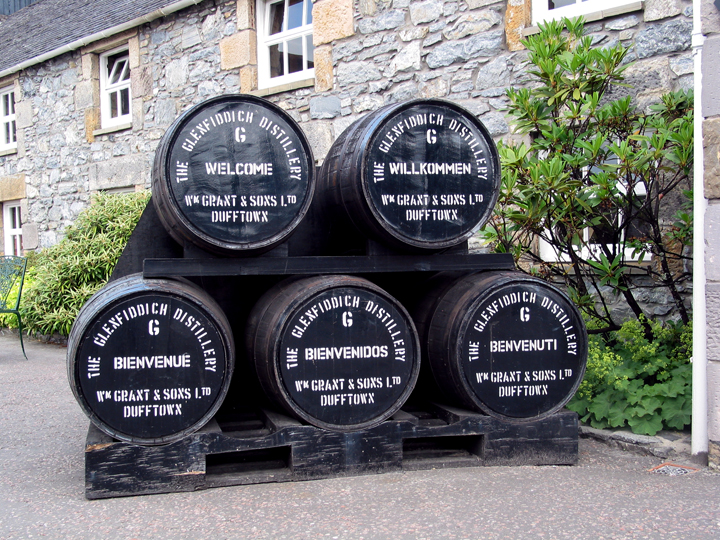
I remembered to ask for a return ticket when we boarded the bus, and it costed almost the same as the one way ticket. After the tour in the distillery there was a degustation and we bugged the staff so much that in the end we were given much more whisky than the other tourists. In other words, we got drunk. Back in Inverness, on our way to the hostel there was a pub with live music and we’ve still hung around there and had a couple of pints with the money we’d saved.

Visita à Glenfiddich / The Glenfiddich Distillery Tour

No dia seguinte, acordamos cedo para uma excursão às Ilhas Orkney. No post 029 já falei sobre esse reino distante onde Mordred, o único filho de Arthur foi criado por sua tia Morgause, irmã de Igraine, que se tornara rainha de Orkney ao casar-se com o Rei Lot.
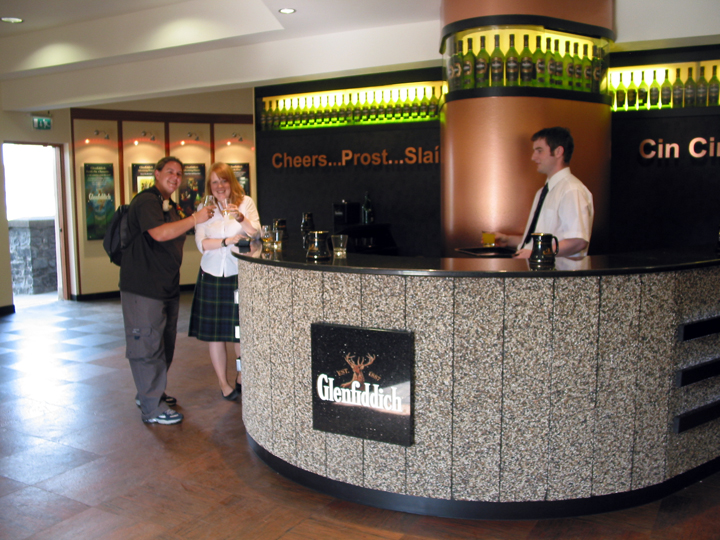
Os funcionários foram muito fofos apesar de termos enchido o saco deles.
Although we’ve surely pissed off the staff, they were very friendly and nice to us.
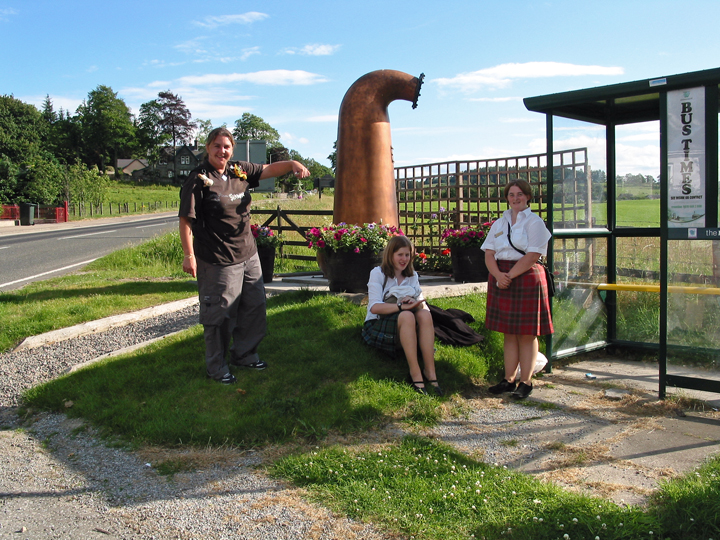
Ponto do ônibus em frente à destilaria.
Glenfiddich’s bus stop at the distillery’s entrance.
Early next morning we boarded a tour to Orkney Islands. I’ve said something about this place in Post 029, a far away kingdom where Arthur’s only son Mordred was raised by her aunt Morgause, Igraine’s sister who became a Queen by marrying Lot, the king of this realm.

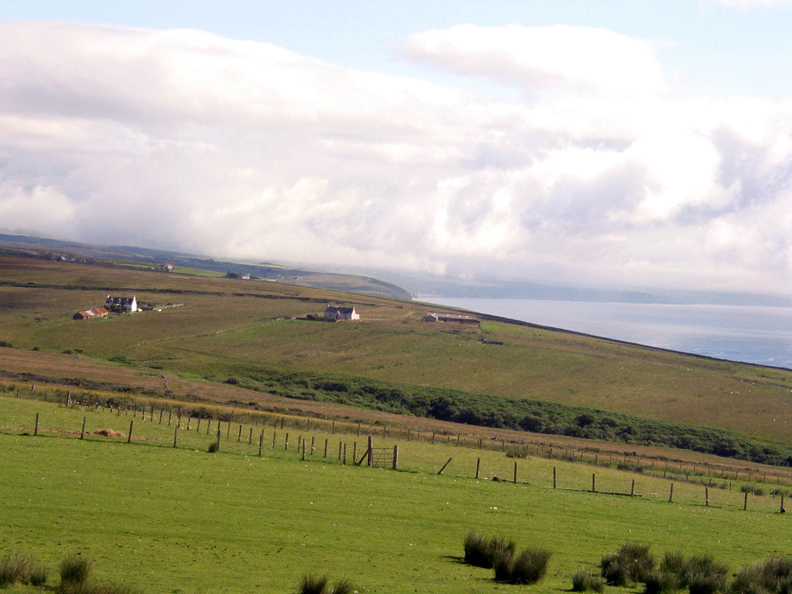
Caminho entre Inverness e John O’ Groats, da janela do ônibus.
The landscape from Inverness to John O’Groats through the bus window.
A viagem era muito longa, fomos parar bem ao norte do mundo. Era impossível entender o que o guia falava. Mesmo para Jules, cujo idioma pátrio era o inglês, o sotaque carregado do sujeito só permitia captar um mínimo de informações básicas. Levamos quase cinco horas até descer do ônibus em John O’Groats, a última cidade no extremo norte da Escócia, no condado de Caithness. Ali houve uma parada para almoço antes de prosseguir viagem num ferryboat. Consegui convencer minha amiga a almoçar uma sopa de legumes, que vinha acompanhada de cesta de pães e, apesar do sabor acentuado de molho de tomate, nos deixou satisfeitas, até por ser o prato mais barato do cardápio.

That was a long way north. The guide’s strong scottish accent made it impossible to understand him. Even Jules, a native english speaker, was able to get only tiny bits of basic information. It took us almost five hours to drop off the bus at John O’ Groats, the northernmost spot of Scotland, in Caithness County. There was a lunch break before boarding the ferryboat to resume the trip. I’ve got to persuade my friend to have a proper lunch – a vegetable soup, the cheapest menu option, which came with a basketful of bread and filled well our stomachs despite the strong taste of tomato sauce.

John O’Groats

Há outras linhas de ferry para as Ilhas Orkney, e pode-se chegar lá de avião também, saindo de Aberdeen, Glasgow, Edinburgh e Inverness, como assinalado no mapa abaixo, que tirei da página “getting here” neste site super abrangente, que contém todas as informações para sua viagem:

http://www.visitorkney.com

There are other ferryboat services to Orkney Islands and also flights from Aberdeen, Glasgow, Edinburgh and Inverness, as shown in the map below that I copied from the embracing site above,  where all information you need is under the link “ getting here”.
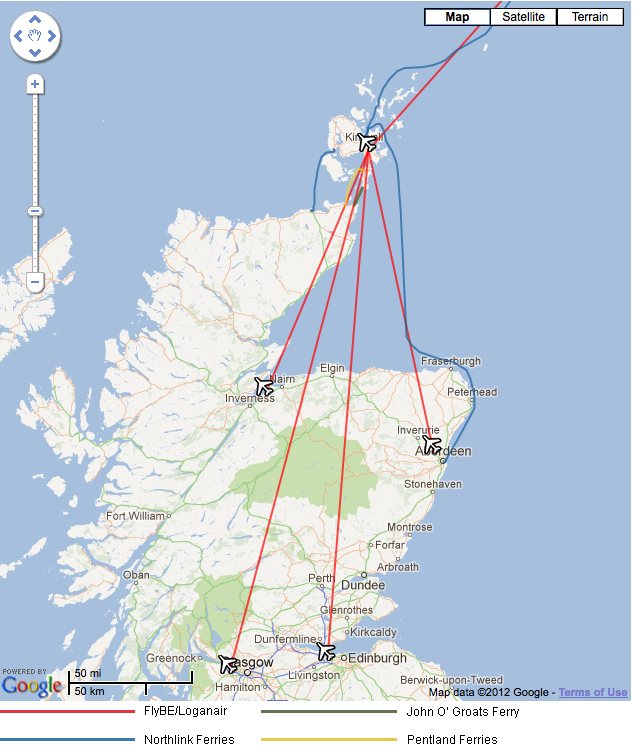
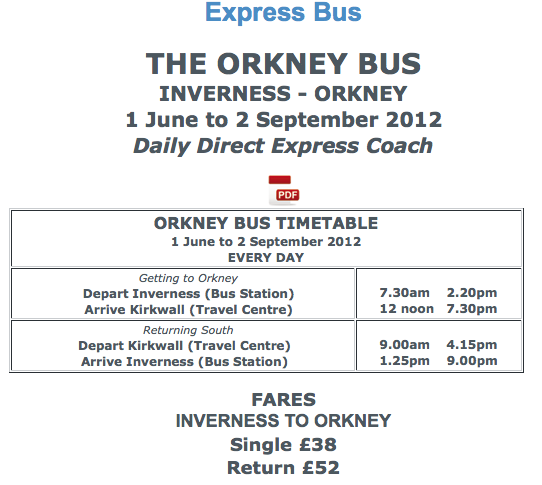
Jules e eu optamos por uma excursão que ia e voltava no mesmo dia, totalizando 14h de viagem, cujos detalhes atualizados também colei aqui. O ônibus sai diariamente da plataforma 1 da Rodoviária de Inverness às 7:30 da manhã, e pode-se comprar o ticket na hora.

Jules and me have chosen an one-day bus tour , 14 h. duration, which updated details are copied below. Coaches leave daily from Platform 1 at Inverness Bus Station, 7:30 a.m. There’s no need to buy the tickets in advance.
Fiquem espertos: postarei na sequência as fotos desse passeio alucinante.

Don’t miss next entry: photos of this unforgettable tour.

Read Full Post »

Till the next time we say goodbye, Glastonbury!

No último dia da minha estadia no ashram, escapei de lavar a louça do almoço para não perder o horário do ônibus. Fui encontrar Selina e Jonathan na praça principal, onde nos despedimos. Ela ia para Leiceston pegar o trem para a Cornualha. Ele pegaria um avião de volta para os Estados Unidos. Eu ia de ônibus até Bristol e, de lá, para Londres onde fiquei uns dias para me recuperar e organizar fotos. Procurava dar uma força na casa, fazer um baby-sitting básico para que meus anfitriões economizassem preciosas libras, mas não queria abusar da sua hospitalidade.
A sequência lógica seria ir à Cornualha, pois os dias estavam lindos e ensolarados, entretanto eu queria ir à Escócia antes. Quando criança, li que havia um lugar onde, apesar de o solo não ser nada propício para a agricultura, pessoas plantaram e colheram abóboras e outros legumes gigantescos com a ajuda dos seres elementais, com quem conseguiam se comunicar. Esse lugar era Findhorn e tornara-se uma fundação onde são ministrados cursos e workshops de meditação, danças rituais circulares, agricultura orgânica, entre outros. A proposta é que os participantes vivenciem a espiritualidade aplicada ao cotidiano.

I escaped doing the dishes the last day in the Ashram, thanks to the bus timetable. Jonathan and Selina were leaving too, we met to bid farewell in the centre. She was on her way to Leiceston, to take a train to Cornwall and he was flying back to USA. I took a bus to Bristol and from there a coach to London, for a few days to catch my breath and organize the photos. I tried to be helpful to my host friends and did some baby-sitting to save them precious pounds, but I didn’t want to linger too long and abuse their hospitality.
The next logical destination would be Cornwall, because days were gorgeous, but I chose Scotland instead. As a child I had read about a place called Findhorn where a bunch of people planted vegetables and, despite the soil was unsuitable for agriculture, giant pumpkins and other stuff were grown, with the help of the devas (elemental beings) with whom these people were in touch, according to them. Findhorn became a Foundation that offers nowadays a range of workshops, as meditation, circular dances and other programmes in the environment of a working ecovillage, where students are supposed to apply spiritual values in daily life.

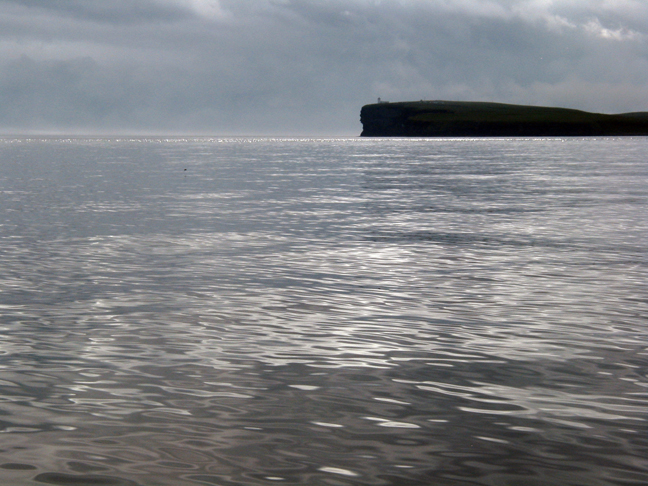
Paisagem nas Ilhas Orkney / Orkney landscape

Findhorn é banhada pelo Mar do Norte, onde ficam as Ilhas Orkney, onde, segundo As Brumas de Avalon, reinava Lot, com quem se casou Morgause, irmã de Igraine. De acordo com o livro, ambas eram filhas de Merlin, por isso tinham o sangue real de Avalon. Foi Morgause quem criou Mordred, filho de Arthur com sua meia-irmã Morgana. Esta era sacerdotisa de Avalon, onde se realizou o ritual de iniciação de Arthur, que devia entrar sozinho na floresta e, munido apenas de uma faca, enfrentar e matar um enorme cervo, tomando para si o título de Gamo-Rei. Tal ritual era fundamental para que as tribos do povo antigo reconhecessem seu direito ao trono. Mordred foi gerado quando Arthur voltou vitorioso da prova; era parte do ritual deitar-se com uma sacerdotisa virgem, justamente Morgana. Eles não se reconheceram, pois tinham sido separados havia muito tempo.

Findhorn is located on the shore, bathed by the North Sea, which surrounds the Orkney Islands.
According to The Mists of Avalon, Morgause married Lot, Lord of Orkney. She was Igraine’s sister; both were Merlin’s daughters, therefore descendants of the royal Avalon bloodline. Morgause raised Mordred, son of Arthur with his half-sister Morgana. She was priestess in Avalon, where took place Arthur’s initiation rite: he was to enter the forest alone and with one single knife kill a massive deer, taking upon himself the title of Deer King. Such rite was required otherwise the old tribes wouldn’t accept his leadership. Mordred was begot when Arthur came out of the woods victorious: he was supposed to lay with a virgin priestess to complete the rite, and that was Morgana. They didn’t recognize each other, because their lives had fallen apart too long ago.

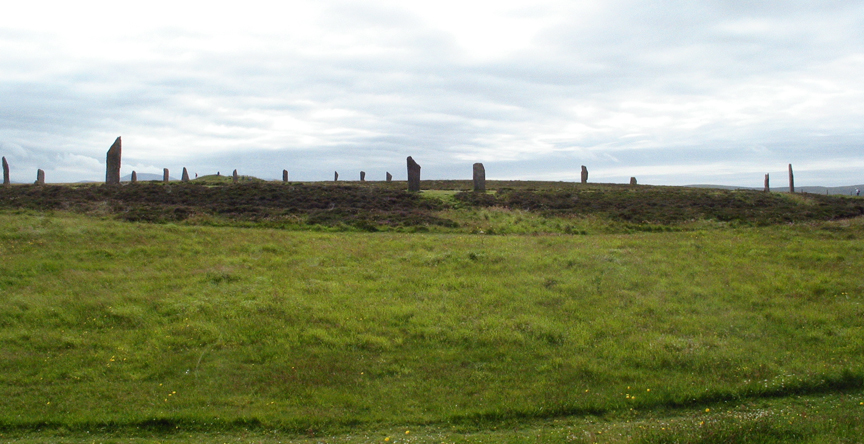
Ring of Brodgar, Orkney Islands, Scotland

A escolha recaiu sobre Morgana pois se pretendia que o herdeiro do rei Arthur fosse da linhagem real de Avalon, comprometido com a antiga religião, disposto a evitar que os católicos a extinguissem. Mas Morgana assustou-se com a idéia de ter um filho do próprio irmão e o entregou para que a tia o criasse no reino distante de Orkney, o que foi um erro, segundo Marion Z. Bradley. Morgause era uma mulher ambiciosa que queria ser rainha. O garoto foi criado para odiar o pai e querer tomar seu lugar. Em outras versões da história Morgause não existe, e atribui-se à própria Morgana seu caráter cruel e malévolo. Já o escritor Bernard Cornwell, em suas Crônicas de Arthur, apresenta Mordred como filho legítimo de Uther Pendragon, herdeiro do trono, sendo Arthur seu irmão mais velho, bastardo, que faz o juramento de manter o reino coeso até que o garoto tivesse idade para governar.
Eu sabia também que nas Ilhas Orkney havia um gigantesco círculo de pedras chamado Anel de Brodgar, que despertara minha curiosidade. Isso foi motivo suficiente para pegar a estrada para Edimburgo, a capital da Escócia. De lá, acharia o caminho para Findhorn, Ilhas Orkney e também para a Capela Rosslyn, do livro O Código Da Vinci.

Morgana was chosen because Arthur’s heir should also be of the royal bloodline of Avalon, to avoid the extinction of the old religion by the hands of catholics. But the idea of giving birth to a son of her own brother scared Morgana so as soon as the baby was born she handed him over to her aunt, who fostered Mordred in the distant kingdom of Orkney. According to Marion Z. Bradley’s tale that was a great mistake. Morgause was an a greedy woman who wanted to be queen. The boy was raised to hate his father and plot to take his place. In many versions of the story Morgause doesn’t exist and this wickedness is assigned to Morgana’s role. The author Bernard Cornwell in his Arthur’s Chronicles, presents Mordred as Uther’s legitimate son and Arthur as an elder bastard who was sworn to keep the kingdom together until his brother comes of age.
I was also aware of a massive Stone Circle in Orkney, the Ring of Brodgar, which aroused my curiosity. Putting it all together, was reason enough to hit the road to Edimburgh, Scotland. From there I would find my way to Findhorn, Orkney Islands and Rosslyn Chapel as well, which appears in “Da Vinci’s Code” book.

Read Full Post »
« Newer Posts