Feeds:
Posts
Comentários

Posts Tagged ‘Chambered cairn’


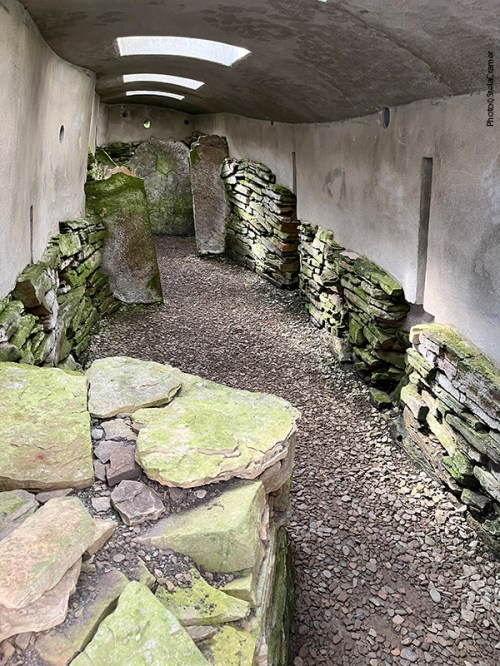
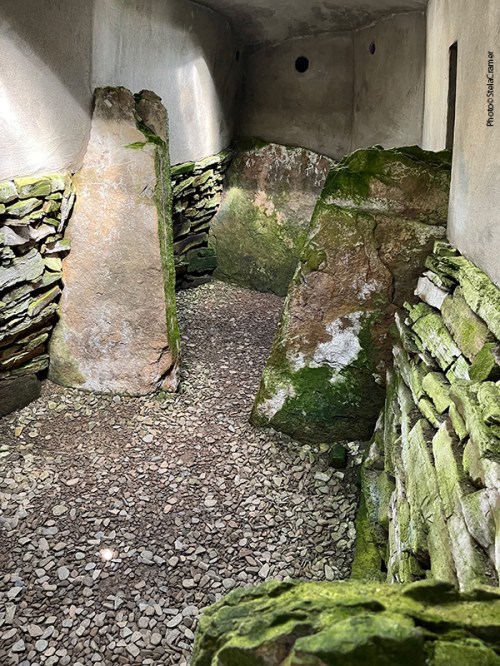
O tour de Rousay terminou com a visita a mais duas câmaras mortuárias: Blackhammer e Taversoe Tuick. Ambas estão protegidas da erosão por uma redoma de concreto. Blackhammer era meio mais do mesmo mas T Tuick foi uma surpresa.

Rousay tour ended with two more burial chambers: Blackhammer e Taversoe Tuick. Both are protected from erosion by a concrete dome. Blackhammer was pretty average but T Tuick held a surprise!


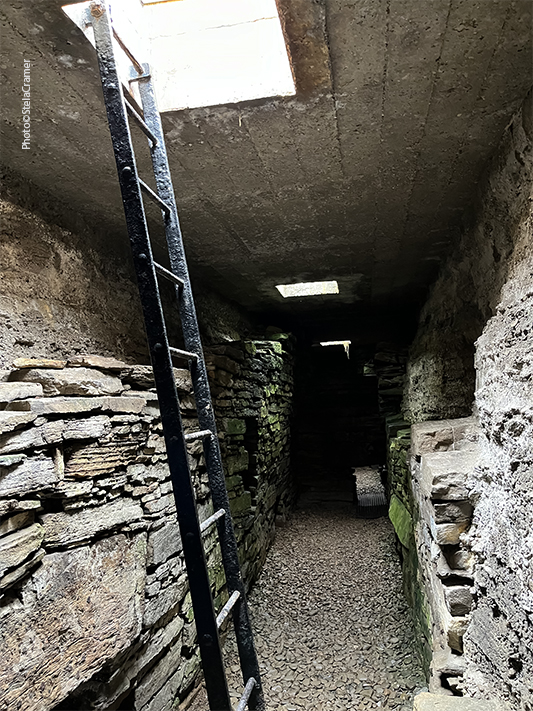
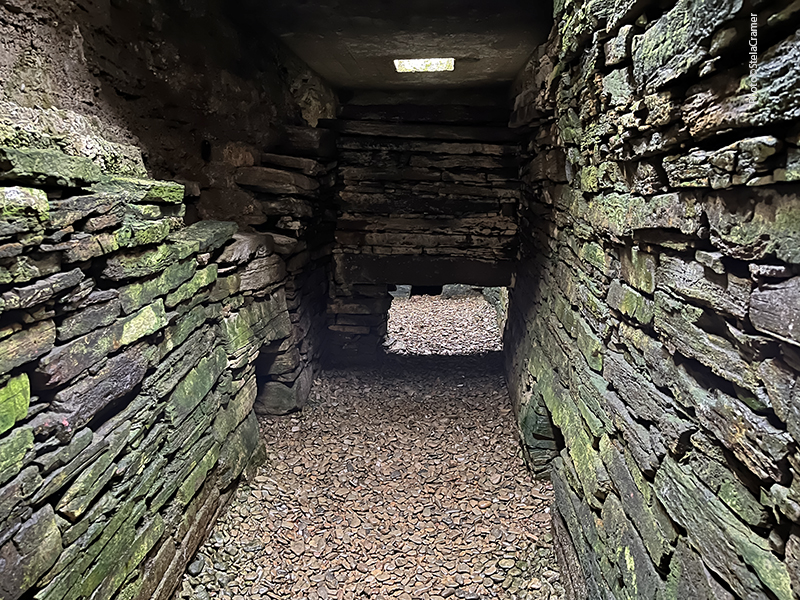
Em Blackhammer foi construída uma clarabóia ao lado da entrada que permite a visão da câmara e iluminação natural. /A skylight built beside the entrance allows the chamber’s view and natural light inside.
A placa mostra um corte de Blackhammer, foto da câmara original e dos arqueólogos que comandaram a escavação em 1936. / The sign shows a section through Blackhammer and photos of the archaeologists and the chamber before being excavated in 1936.
Restos humanos e objetos foram encontrados em Blackhammer./ Human remains and objects were found in the chamber.
Blackhammer Interior

Pouco mais adiante chegamos a Taversoe Tuick, o grand finale do tour. Daqui, Patrick levaria o grupo para pegar o ferry em Trumland Pier de volta a Kirkwall. Eu ainda pernoitei no B&B The Taversoe , só retornaria a Kirkwall na manhã seguinte.

We eventually arrived at Taversoe Tuick, tour’s grand finale. From here, Patrick would drive the group to Trumland Pier, to take the ferry back to Kirkwall. I still stayed the night at The Taversoe B&B, only leaving for Kirkwall the next morning.
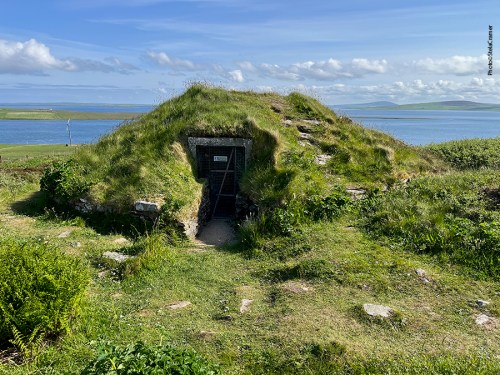
A 1km do Trumland Pier, com uma bela vista de Wyre Sound, Taversoe Tuick foi descoberto no fim do século 19, mas a principal escavação aconteceu apenas em 1930. / Situated overlooking Wyre Sound, only half a mile west of Trumland Pier, the Taversoe Tuick was first found in the late 1800s, before being excavated in the 1930s.

Este é o mais extraordinário dos túmulos em Orkney, pois apresenta dois andares. Este design é incomum: até hoje, apenas um outro foi encontrado com a mesma característica, em Eday.

It’s the most remarkable of all the Orkney cairns: a two-storeyed chambered cairn. This design is highly unusual, only another one like it was found ,so far, on Eday.

O grupo examinando a câmara externa de Taverson Tuick, no fim de um canal de pedra. Ao fundo, a bela paisagem de Wyre Sound. / The group examining Taversoe Tuick’s outer chamber at the end of a stone channel; Wyre Sound landscape in the background.

Restos humanos foram encontrados nas duas câmaras, e cacos de cerâmica numa pequena câmara externa, conectada à estrutura principal por um canal feito de pedra. Arqueólogos ainda não sabem qual era a função desta.

Excavations uncovered human remains in both chambers, and pottery shards in an outer chamber too. This outer chamber is connected to the rest of structure by a stone-channel, but there is still discussion about what it was actually used for.
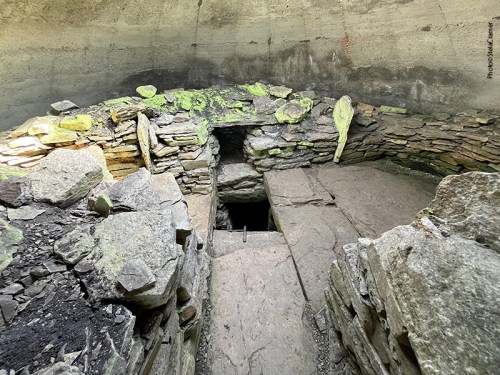
Inside the concrete dome / Interior da cúpula de concreto

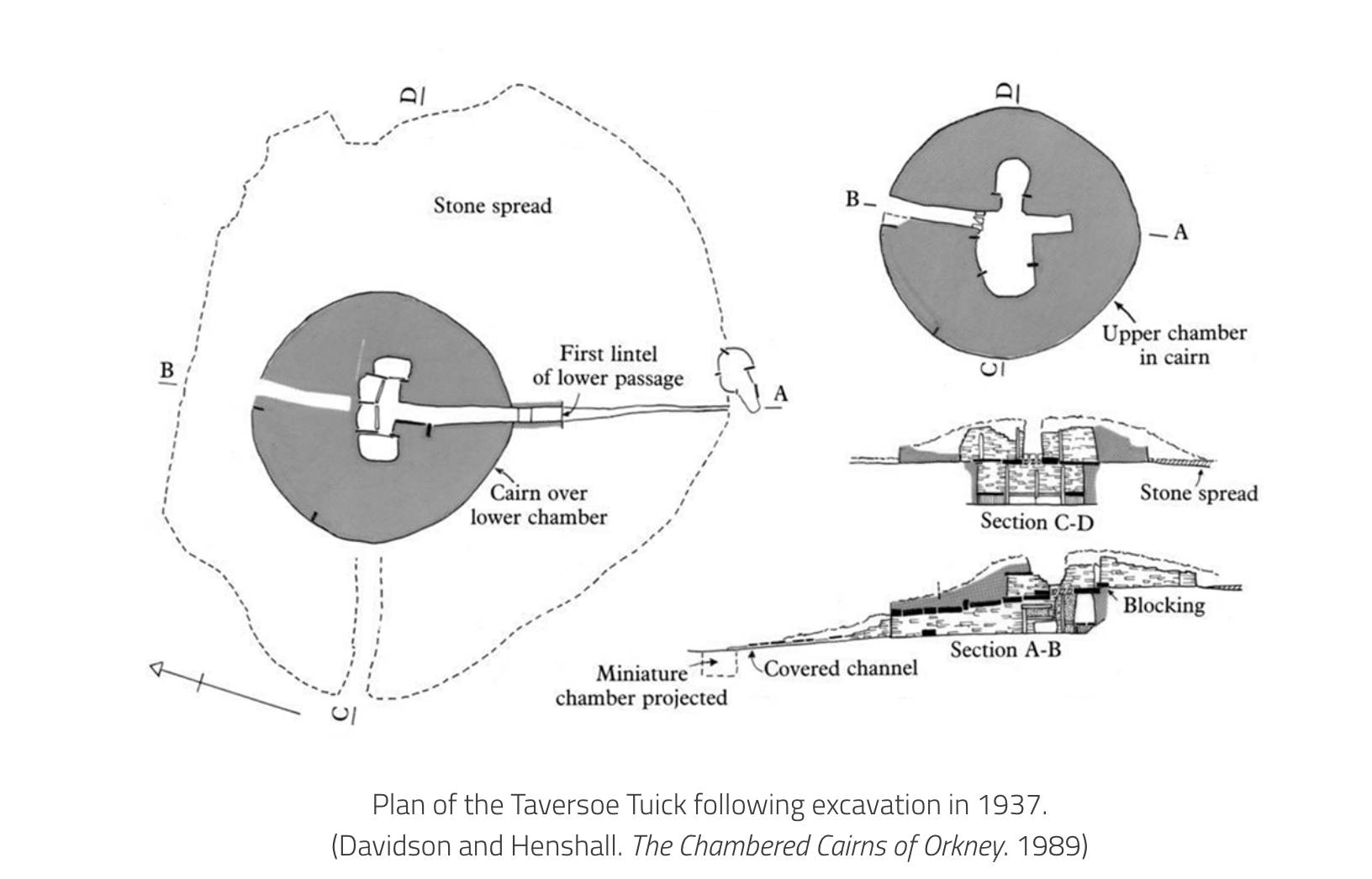
As primeiras explorações no séc XIX encontraram ” uma parede bem preservada, com lajes de pedra inseridas verticalmente sobre a câmara subterrânea”. Na época não ficou claro do que se tratava, embora tenha-se discutido a possibilidade de ser uma segunda câmara. Os arqueólogos hesitaram em acreditar serem duas estruturas contemporâneas, pois nunca havia sido encontrado antes uma câmara mortuária de dois andares. Entretanto, as escavações de 1937 confirmaram que era exatamente isso: um andar de cima e um andar de baixo, ambos construídos na mesma época, dentro do mesmo monumento, um bem em cima do outro, cada um com sua entrada separada.

During their 19th century explorations, a “well-preserved, rough-built wall with uprights of stone slabs was found on the ground above the underground chamber”. At the time, what this represented was not clear. It was subsequently mooted to have been a second chamber, but antiquaries were reluctant to believe that the two chambers were contemporary, since “a two-storeyed burial vault would be unprecedented”. The 1937 excavations, however, confirmed that was exactly what it was – an upper storey contemporary with the subterranean chamber, both constructed and enclosed within the same stone cairn, one placed almost exactly over the other and each with a separate entrance passage.
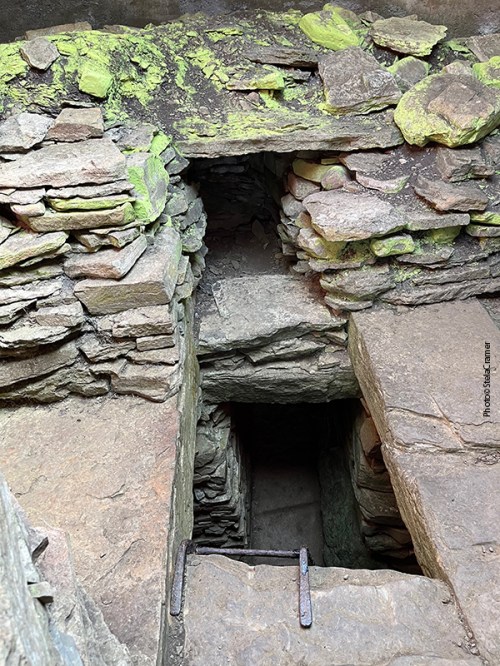
Os dois andares não eram originalmente conectados. Criou-se um acesso por meio de uma escadinha de ferro, num alçapão no chão do andar de cima. A entrada da câmara superior fica do lado norte, voltada para o interior; o acesso à inferior era por uma longa passagem voltada para o sudeste, na direção do mar.

The two layers of the interior were inaccessible from one another. Today they are connected by a hatch in the floor of the upper tomb and a short iron ladder. The upper chamber had its entrance on the north side of the cairn,facing inland, while the lower chamber was entered via a longer passage facing south-east towards the sea.
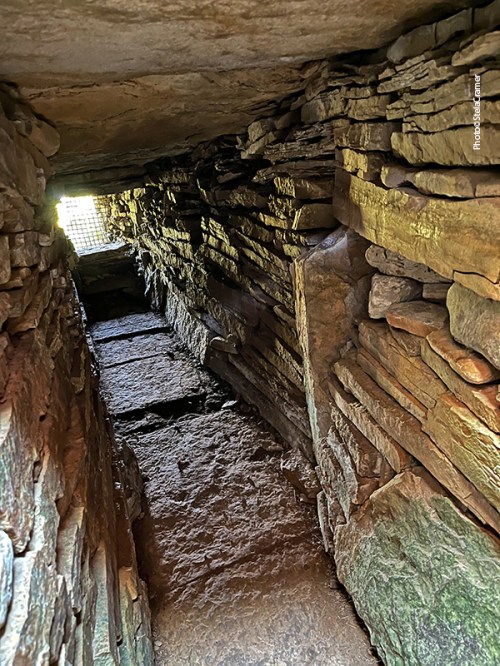
Antiga entrada da câmara inferior / Lower chamber ancient entrance

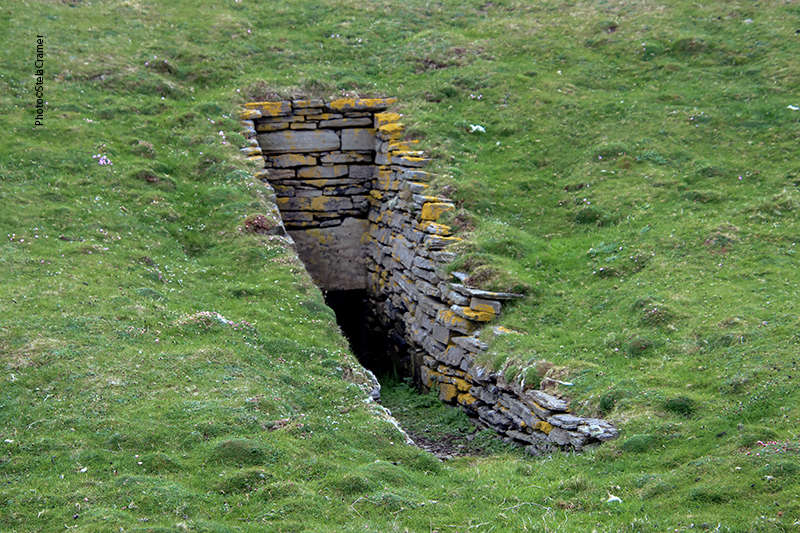
A entrada da câmara inferior foi fechada por uma grade de ferro. / The lower chamber entrance passage has been closed with an iron grate.
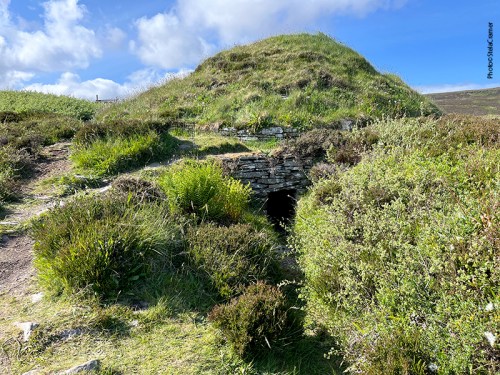
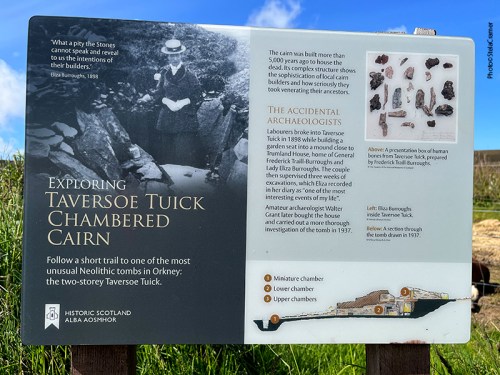
Entrada da câmara inferior vista de fora / The lower chamber entrance passage from the outside

A escavação em 1937 revelou também que a entrada da câmara superior havia sido bloqueada com alvenaria. Isto não é incomum em túmulos Neolíticos, mas as evidências apontavam claramente para a câmara ter sido selada na Idade do Bronze. Sob a alvenaria, mas 30 cm acima do chão na passagem, estavam os vestígios de um colar: 35 contas e um pendente de pedra-pome perfurados, identificados como da Idade do Bronze, isto é, contemporâneo às urnas de cerâmica que tinham sido encontradas na primeira escavação, 40 anos antes. O fato do colar estar acima do material, mas debaixo do bloqueio, prova que a passagem foi selada na Idade do Bronze. Este e outros achados levam a crer que a importância desta estrutura permaneceu para além do Neolítico e que, aparentemente, foi largamente modificada na Idade do Bronze.

The 1937 excavation also found that the inner end of the upper entrance passage had been blocked with masonry. Again, this is not uncommon in Neolithic chambered cairns but at the Taversoe Tuick the evidence clearly pointed to the chamber being sealed in the Bronze Age. Beneath the blocking material, but 30cm above the passage floor, were the remains of a necklace – 35 stone disc beads and a perforated pumice pendant recognised as Bronze Age, prompting that the necklace, and its deposition, was contemporary with the cists found almost four decades before. The fact the necklace lay on top of material, but beneath the blocking, is proof the passage was sealed in the Bronze Age. This, and other recorded finds, strongly suggests the structure remained a focus long after the Neolithic and, it appears, was also extensively modified in the Bronze Age.
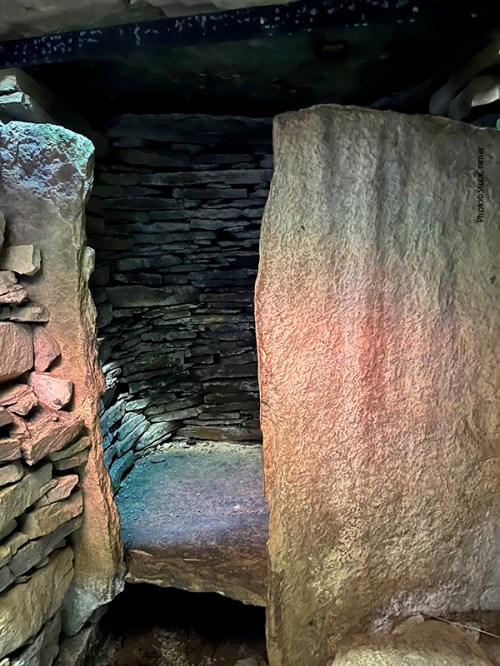
O andar de cima consiste numa área central rodeada por quatro compartimentos. / The upper chamber consists of a central area surrounded by four compartments.
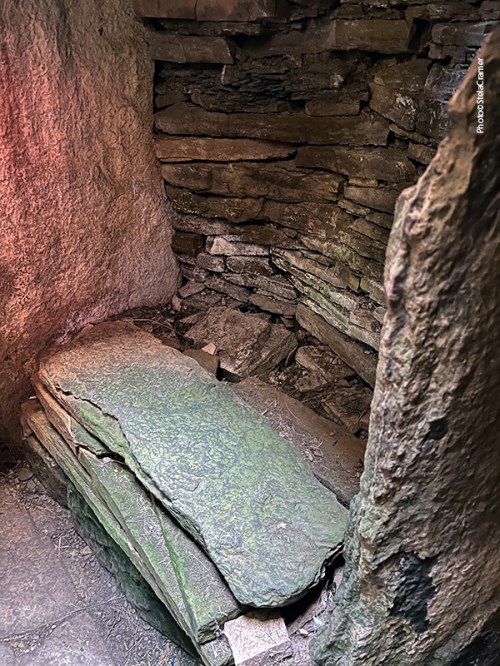
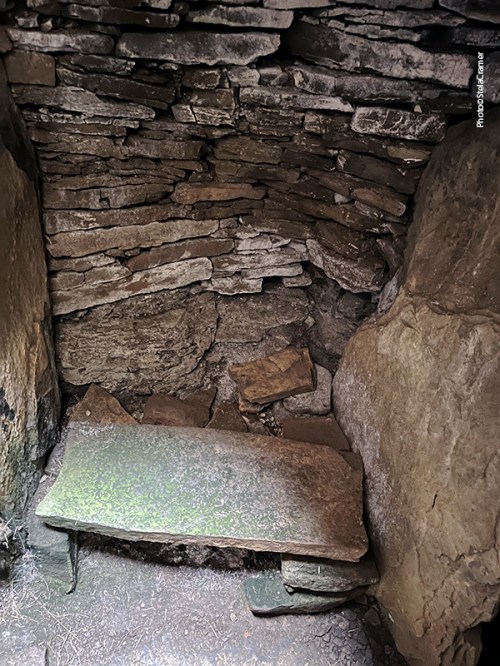
E se fosse o primeiro edifício de apartamentos conhecido na História? Uma família em cada andar…E se os cairns não fossem túmulos, mas simplesmente dormitórios, construídos subterrâneos como proteção contra o frio e predadores? Que falta faz uma máquina do tempo, para nos proporcionar respostas a tantos mistérios.

What if this was History’s first known apartments building? One family on each floor? What if the cairns were not graves but just bedrooms, built underground to protect the inhabitants from the cold and predators? How useful would be a time-machine, to provide us with answers to so many mysteries.
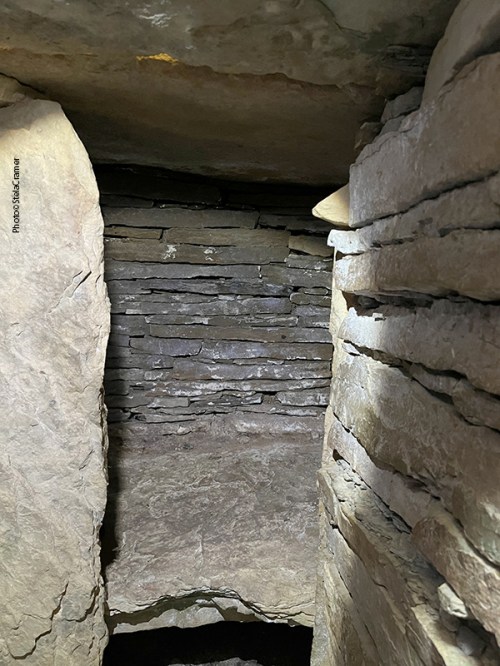
Abaixo um link para o modelo em 3D de Taverson Tuick.

Link to Taversoe Tuick 3D model:

https://skfb.ly/6zvsv

Read Full Post »


Broch de Gurness em Mainland visto de Rousay / Broch of Gurness in Mainland seen from Rousay

O Estreito de Eynhallow separa a ilha de Rousay de Mainland, a maior ilha das Orkneys, mas de uma se avista a outra. São apenas 3 km de distância. Dois Brochs ficam praticamente de frente um para o outro. Antes de visitar Midhowe vamos dar uma olhada em Rousay, apelidada de “Egito do Norte”, devido à quantidade e importância de sítios arqueológicos.

Eynhallow Sound divides the island of Rousay from Mainland, one in sight of the other, only 3 km apart. Two Brochs almost face each other across the water. Before visiting Midhowe, let’s take a look at Rousay. It has been nicknamed “Egypt of the North”, due to its archaeological diversity and importance.

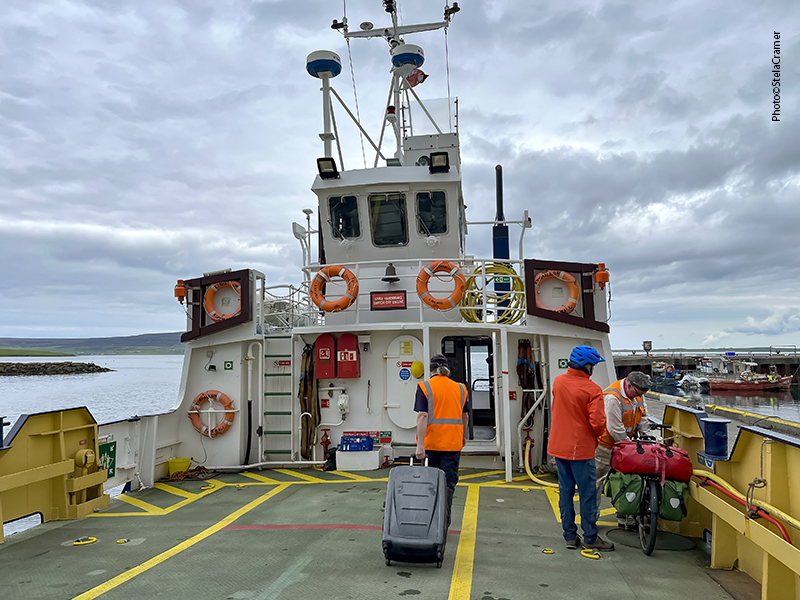
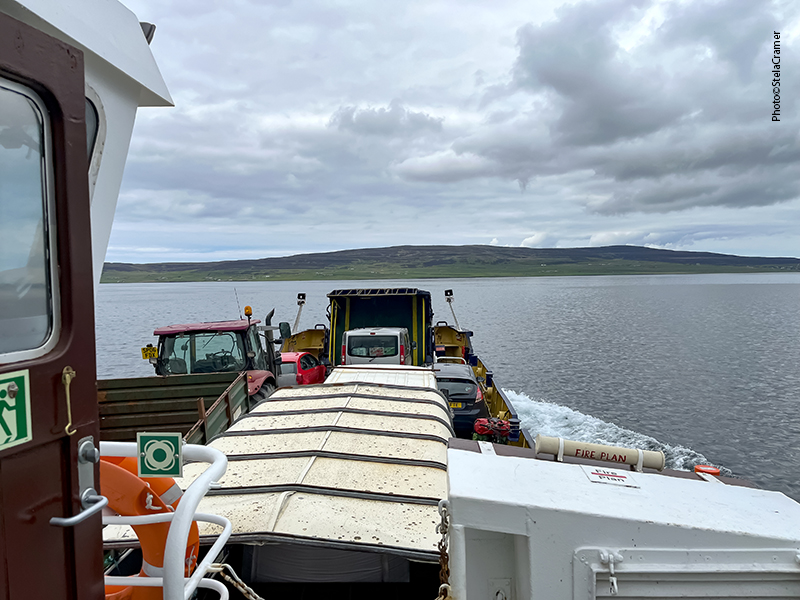
O ferry liga as ilhas de Rousay, Egilsay e Wyre entre si e com Orkney Mainland. Pode levar até 10 carros e 95 passageiros (no inverno apenas 50). / The ferry links the islands of Rousay, Egilsay, and Wyre with each other, and with the mainland of Orkney. It can take up to 95 passengers (reduced to 50 in winter), and 10 cars.

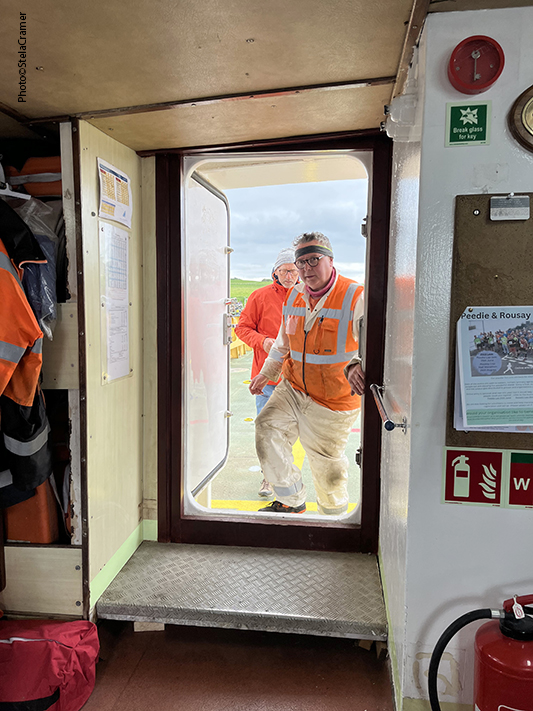
Depois de dois dias intensos em Westray e Papay (ver posts 167 a 170), peguei o ferry dia 6 de junho/2023 para Kirkwall apenas para pernoitar lá. Consegui um quarto no hotel Ayre, em frente ao terminal do ferry, e bem perto do terminal de ônibus de Kirkwall, assim pude ir andando até a condução para Tingwall, outro terminal de onde sai o ferry para Rousay. Os horários dos ônibus e dos ferrys são todos coordenados. Tinha planejado pegar o primeiro barco mas não foi possível porque precisei antes encontrar uma pessoa, que vinha de Westray trazendo o cartão de crédito que eu tinha perdido lá. O atraso acabou sendo fortuito: o guia Patrick, com quem eu tinha agendado um tour de Rousay, embarcou no mesmo horário. Foi o simpático marinheiro do ferryboat que nos apresentou. Ao me ver na prancha de embarque, correu para me ajudar com a mala e, na conversa que se seguiu, perguntei como chegar ao Taversoe, onde reservara duas noites. Ele respondeu que eu estava com sorte. Patrick era pai da dona do hotel, e me daria uma carona com o maior prazer!

A travessia leva de 20 a 25 minutos / The journey takes approximately 20-25 minutes.

After intense days in Westray and Papay ( see posts 167 to 170), I took the ferry to Kirkwall the 6thJune, just to spend the night there. Got a room at the Ayre hotel, in front of the ferry terminal and walking distance to Kirkwall Travel Centre, where I could take the bus to Tingwall, another ferry terminal that services the Rousay line. The buses and ferries’ schedules are all coordinated. My plan was to board the earliest one, but I couldn’t because I had to meet someone coming from Westray, bringing the Credicard I had lost there. The delay proved fortunate: the guide Patrick, with whom I had booked a Rousay tour, was in the same ferry I took. As I was walking aboard, a lovely sailor hurried to help me with my suitcase and, when I asked him how to get to The Taversoe (where I had booked two nights), he smiled and said that I was lucky. He introduced me to Patrick, who was the Inn owner’s father, and was happy to give me a ride.

Tingwall Terminal
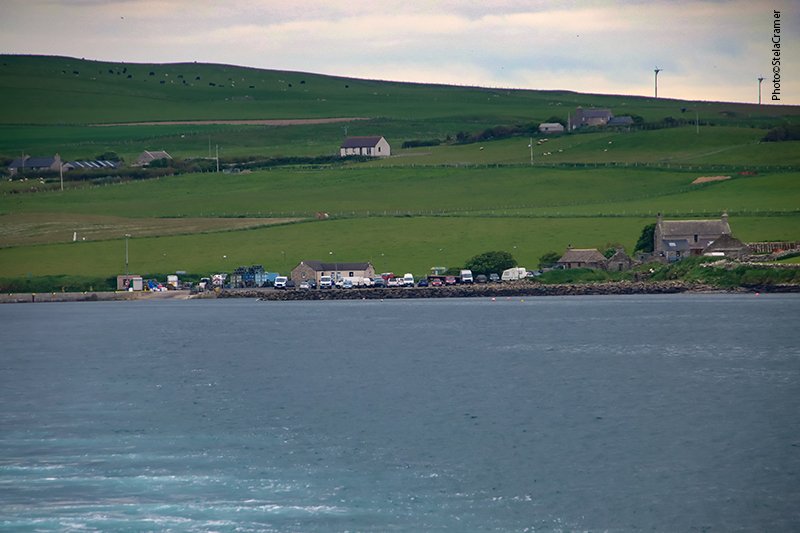
Rousay Ferry Terminal
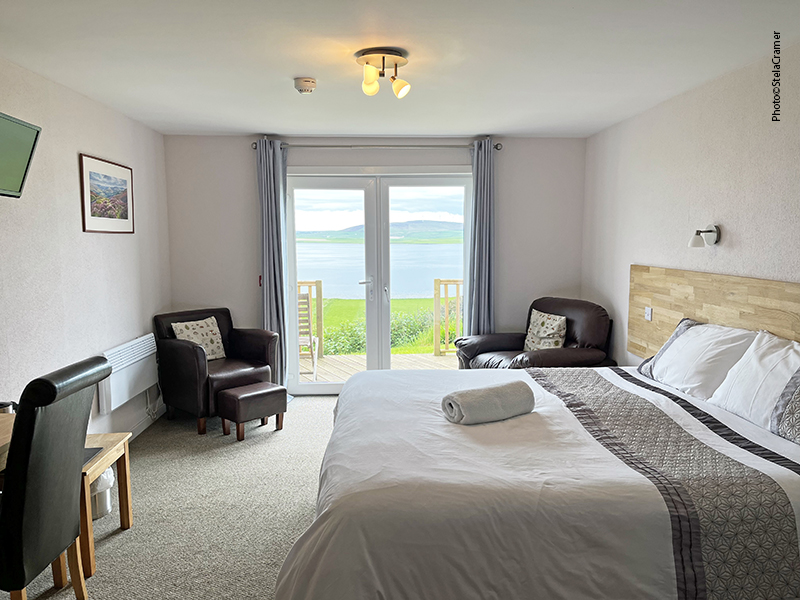
The Taversoe: o único hotel, bar e restaurante em Rousay, muito bom. / The Taversoe is the only Inn, Bar & Restaurant in Rousay, which I recommend.
Meu quarto era muito confortável, com um bom banheiro e varanda! Abaixo link para o site. / My room was very comfortable, with en-suite bathroom and a porch! Their website is:

https://www.taversoehotel.co.uk/

A impressionante vista da varanda: Mainland do outro lado do estreito /
The stunning view from the porch: Mainland across the water
O Broch de Gurness, que eu iria visitar em breve (ver Post 176), visível da varanda / Broch of Gurness, which I was going to visit soon (see Post 176), in sight from the porch

Foi uma sorte mesmo. Embora a distância fosse de apenas uns 2 a 3 km, consistia em subidas e descidas íngremes e estava chuviscando. Meu tour seria no dia seguinte, o que também foi uma sorte, pois abriu um lindo dia de sol. Aliás o sol apareceu naquele dia mesmo, um pouco mais tarde, apesar do mau tempo pela manhã. Eu já tinha tomado banho, uma pint e estava espichada na varanda do quarto apreciando a bela paisagem. À medida que caía a tarde pensei em dar uma volta, quem sabe capturar um belo por do sol! A mocinha na recepção me sugeriu subir uma trilha próxima, passando por uma pequena ponte, de onde eu teria uma linda vista. E lá fui eu toda contente.

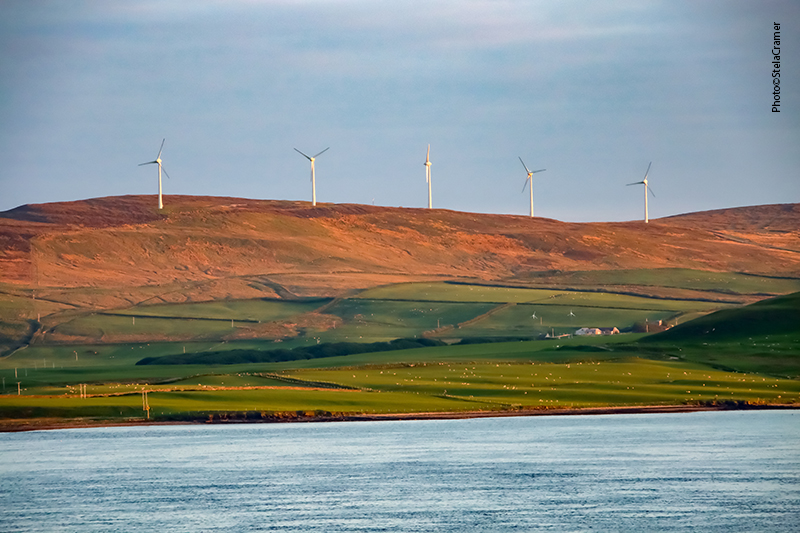
Sol poente, ovelhas e moinhos de vento / Sunset, sheep and wind farm turbines

I was lucky indeed. Although the Inn was just one mile away, the road was steep and a cold drizzle had started. My Island Tour would be the next day, lucky as well because it was a gorgeous sunny day. But the sun reappeared that same day, a bit later, despite the previous bad weather. I had already taken a shower, a pint and was lazying on the porch, reveling in the awesome landscape. As the afternoon approached dusk, I thought of going for a walk, perhaps capture a beautiful sunset. The clerk suggested a trail nearby, that crossed a small bridge, from where I’d have a stunning view. So there I happily went...

A trilha levava a um túmulo! Mais contente ainda, prossegui.
The trail led to a chambered cairn! Happier still, I went on.
A ponte indicada existia, mas não dava vista para nada além de mato / The little bridge was there but the view from it was just overgrown bushes
A trilha é quase invisível, mas a vista grandiosa/ The trail is almost invisible, but the view gorgeous

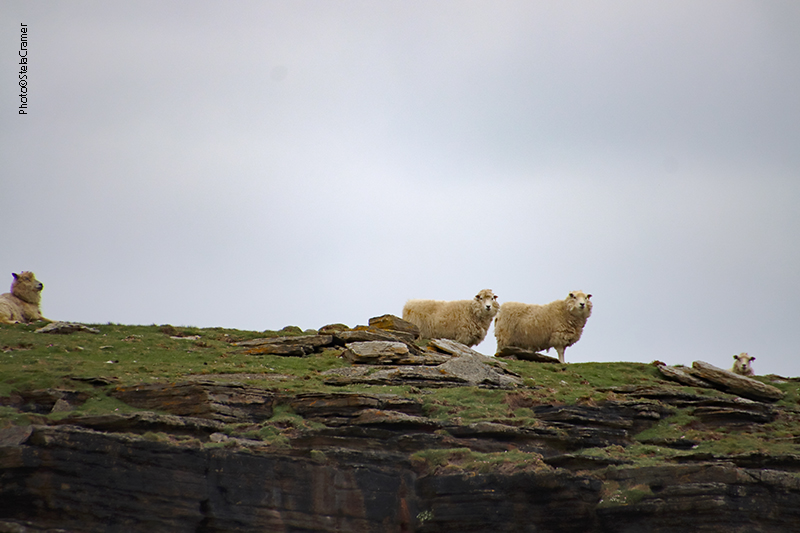
A trilha era praticamente inexistente, um caminho pedregoso no matagal, mais adequado para as ovelhas que por ali estavam do que para gente. Mesmo estas não me pareceram muito amistosas. Se afastaram quando passei, mas ficaram me encarando à distância. Levei quase meia hora para chegar à entrada do túmulo, quase suando apesar do vento frio.

The footpath was almost non-existant, steep, muddy and stony in the weeds, more appropriate to the sheep than to people. Even the sheep didn’t look very friendly. The got away as I went on, but kept staring at me from a distance. It took me around half an hour to reach the cairn. I was almost sweating despite the chilling wind.

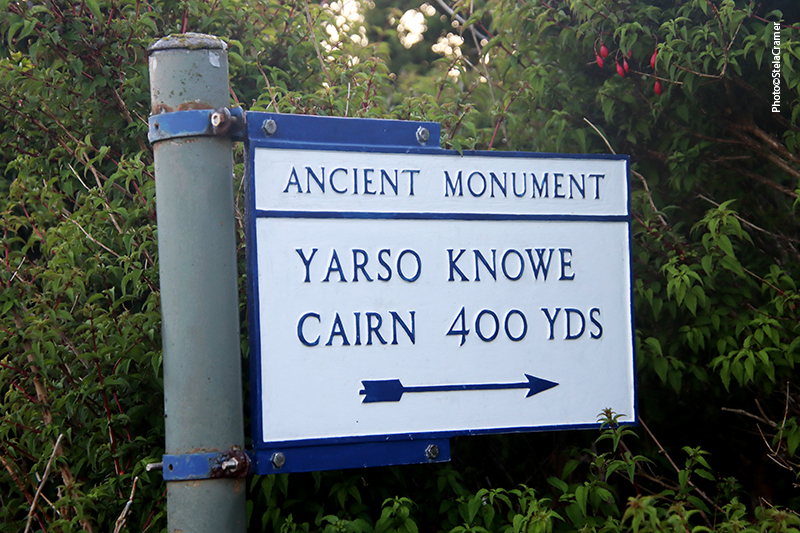
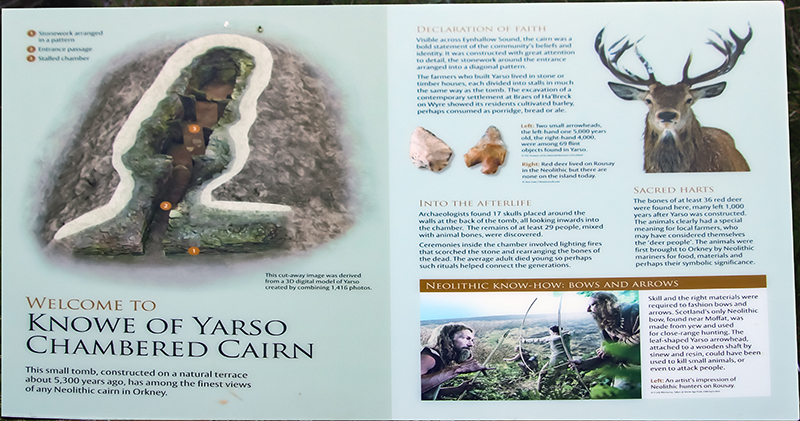
Knowe of Yarso data de 3500 a 2500 AC, mas cerâmica ali encontrada sugere que tenha permanecido em uso até 2000AC. O telhado não existe mais, mas as paredes permanecem mais ou menos da altura original. A câmara é dividida por lajes de pedra em compartimentos, semelhante a outras estruturas Neolíticas que visitamos.

Knowe of Yarso dates to between 3500 and 2500 BC, but pottery found inside the tomb suggests it remained in use until the late 2000s BC. Its roof is gone, but the walls still stand close to their original height. The chamber is divided into compartments by upright slabs, similar to other Neolithic structures we’ve seen before.

A entrada original ainda existe, embora o monumento tenha sido encapsulado numa estrutura de concreto com clarabóias e uma porta moderna. / The original entrance remains, although the monument is encapsulated in a sky-lit concrete cap with a modern door.
O fim da câmara / The chamber’s end

Knowe of Yarso é um entre pelo menos 15 outros túmulos semelhantes na pequena ilha. Arqueólogos acreditam que eram usados como cemitérios comunitários. Escavações na década de 30 encontraram os restos de pelo menos 29 esqueletos, e 17 crânios arrumados um ao lado do outro. Ossos de uns 36 cervos também foram desenterrados, assim como pederneiras, ferramentas de osso, pontas de flechas e pedaços de cerâmica.
Knowe of Yarso is one of at least 15 chambered tombs on the small island. Archaeologists believe these were used for communal burial. Excavations in the 1930s found the remains of at least 29 skeletons, with 17 skulls arranged side-by-side ; bones from at least 36 deer and also flint, bone tools, arrowheads, and shreds of pottery.

Assim, ali estava eu imersa em pensamentos, absorvendo a atmosfera e tentando bater umas fotos apesar da pouca luz, pois esta vinha por clarabóias cheias de sujeira acumulada, além disso estava escurecendo. Eis que escuto um barulho do lado de fora. As ovelhas tinham vindo até a porta de entrada. Imediatamente meu cérebro foi bombardeado por pensamentos assustadores: e se alguma delas esbarrasse na porta, fechando-a, e eu ficasse presa dentro da tumba? A tranca ficava pelo lado de fora. Meu celular estava com a carga no vermelho, tipo 10%, e ali não tinha sinal. Eu poderia gritar por socorro, mas não havia uma alma por perto para ouvir. Só iriam dar pela minha falta na manhã seguinte, na hora do tour, quando eu já teria com certeza morrido de fome (talvez) e de frio (certamente). Não trouxera mochila nem outro casaco. Rapidamente fiz mais um clique ou dois – inúteis, pois as fotos obviamente ficaram tremidas – e saí correndo.

So, there I was, deep in my thoughts, absorbing the atmosphere and trying to take some pictures in spite of the sparse light flowing through dirt covered skylights; besides, it was dusk. Then I heard a noise outside. The sheep had gathered next to the door. Horrible thoughts came to mind: what if one of them bumped the door closed and I got stuck inside the cairn? The lock was on the outside. My mobile was nearly dead – only 10% charge, and there was no signal. I could scream for help, but there was not a single soul around to hear me. I would only be missed in the morning, for the tour, and by then I’d be dead by starvation (maybe) or cold (definitely). I had no backpack or spare coat. So, I quickly took a couple more pictures – useless, obviously blurred – and ran away.

Run, Stela, run!

Demorei mais para descer a trilha do que para subir, pois já estava quase escuro. Não queria tropeçar e ir rolando os quase 400m até lá embaixo. Ou ir parar dentro do rio, que embora estreito devia ser gelado. As ovelhas ficaram lá de cima me olhando. Mas escapei.
It took me longer to get down the trail, because it was almost dark. I didn’t want to risk stumbling and rolling down 400 yards to the road. Or to the river, that was not broad but probably freezing. The sheep stood up there, still staring. But I had escaped.

A salvo, pousada à vista / Safe, the Inn within sight

Read Full Post »


Voltando ao Coração Neolítico de Orkney, chegamos a Maeshowe ( pronuncia-se Máesrráue), uma das maiores “tumbas compartimentadas” (Chambered Cairns), e com a estrutura mais sofisticada. Construído há cerca de 5000 anos atrás, o monumento marca o meio do inverno: por 3 semanas antes e depois do Solstício de Inverno (21 de Dezembro, o dia mais curto do ano no Hemisfério Norte), o sol poente brilha através da passagem de entrada iluminando uma pequena câmara na parede do fundo.

Back to Neolithic Heart of Orkney, we’ll visit Maeshowe chambered tomb, the finest in north-west Europe: one of the largest and most sophisticated in structure. Built around 5000 years ago, probably around 2800 BC, it marks the midwinter: for 3 weeks before and after the solstice (21 December, the shortest day of the year), the setting sun shines straight down the passageway into the tomb, illuminating the chamber at the back interior wall.

“Tumbas compartimentadas” como Maeshowe se caracterizam por uma passagem de entrada longa e baixa ( você não consegue entrar sem se abaixar) que leva a uma câmara principal, retangular ou quadrada, a partir da qual se pode acessar cubículos laterais. É o que se chama também de “ túmulo de passagem”, como Newgrange (na Irlanda), que veremos aqui a seguir. O alinhamento com o Solstício de Inverno, ou o de Verão, é uma característica desse tipo de construção. Mas em Maeshowe não foram encontrados restos humanos! Arqueólogos sugerem que o lugar era usado como observatório, calendário, ou mesmo para cerimônias, e não como túmulo… nunca saberemos ao certo.

Chambered tombs of the Maeshowe “type” are characterized by a long, low entrance passageway leading to a square or rectangular chamber from which there is access to a number of side cells.
It’s called a “passage grave”, just like Newgrange (in Ireland) that will be shown here next. Alignment with aspects of the winter or summer solstice is a typical feature of such buildings.
But no evidence of human remains had been found at this site! Archaeologists suggest that it was used as an observatory, calendar, and for ceremonies rather than as a tomb…we will never know for sure.

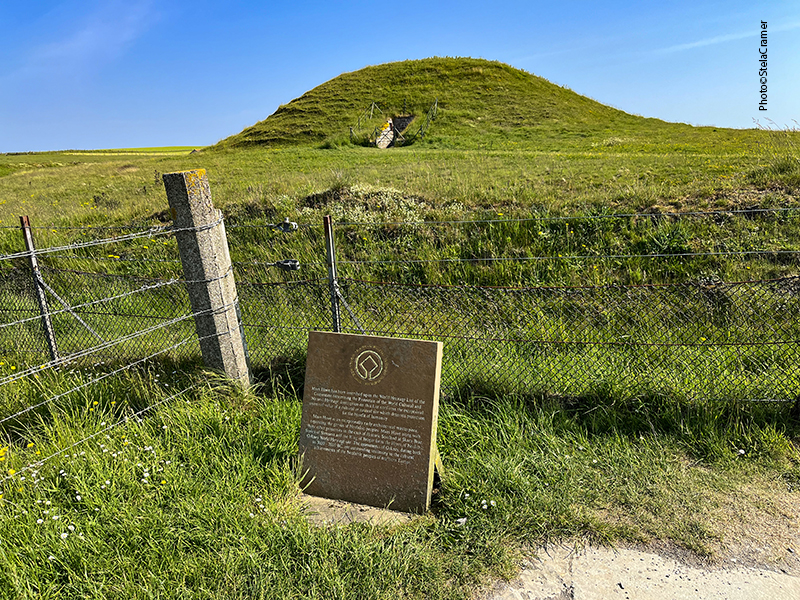
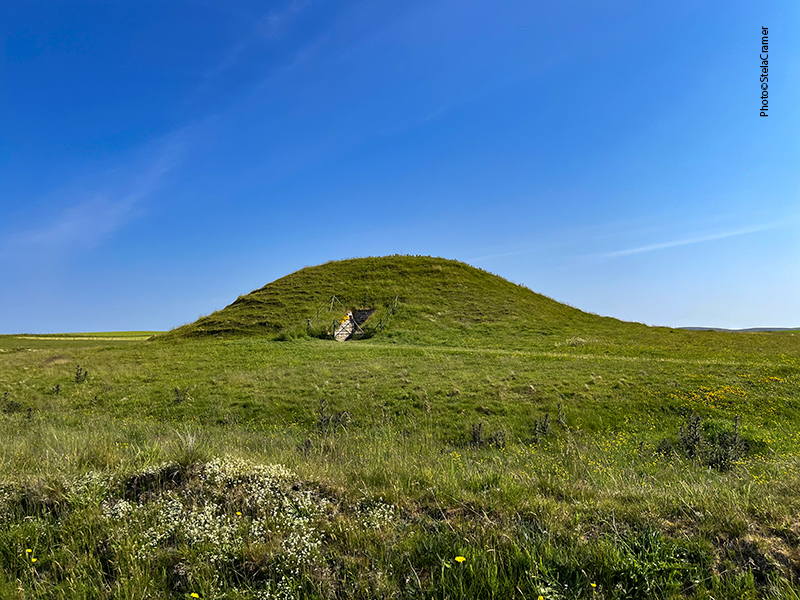
Maeshowe é uma das maiores tumbas em Orkney, embora por fora pareça apenas um monte de grama./ Maeshowe is one of the largest tombs in Orkney, although from the outside it looks just like a large grassy mound.

O acesso ao interior é unicamente por tours guiados, que começam e terminam no Centro de Visitantes em Stenness, de onde saem os microônibus levando grupos de no máximo 16 pessoas até o monumento, até 7 vezes por dia. É proibido bater fotos no interior da câmara, e pedem que os visitantes não toquem em nada. Apesar disso, o próprio guia do meu tour a toda hora se encostava nas paredes durante sua explanação…

Access to Maeshowe Chambered Cairn is by guided tour only, starting and finishing at the Visitor Centre at Stenness. Tours depart from there on a shuttle bus which takes tour groups of 16 people down to the chambered cairn itself between 4 and 7 times a day. Visitors are not allowed to take photos inside the chamber, and advised to not touch anything, although our guide, himself, was always leaning on the walls while giving his speech.

Chegando lá / Getting there
A entrada, visível na foto, é uma passagem de apenas 90 cm de altura, obrigando os visitantes a se curvar ou mesmo engatinhar até a câmara central. / The entrance passage, as you see in the photo, is only about 3 feet (0.91 m) high, requiring visitors to stoop or crawl into the central chamber.
Perfeitamente alinhada com a entrada da câmara e o sol poente fica a Pedra de Barnhouse.
O sol parece estar sentado em cima da pedra enquanto seus raios atingem o interior do monumento. / The Barnhouse Stone, standing in a field some distance from the tomb, is perfectly aligned between the entrance and the setting sun, that sits right above the standing stone as the sunlight penetrates the tomb.
O monte protegendo a tumba tem 35m de diâmetro e 7,3 de altura. À sua volta numa distância de 15m a 21m, encontra-se o fosso de 14m de largura. Sob a grama se esconde um complexo de passagens e câmaras construídas em pedra, algumas pesando até 30 toneladas. (Flagstone, uma espécie de arenito que lembra a nossa Pedra de são Tomé ou ardósia, pois se configura em fatias) /

The mound encasing the tomb is 115 feet in diameter and rises to a height of 24 feet. Surrounding the mound, at a distance of 50 feet to 70 feet is a ditch up to 45 feet wide. The grass mound hides a complex of passages and chambers built of carefully crafted slabs of flagstone weighing up to 30 tons.
A primeira escavação foi feita pelo arqueólogo James Farrer, em 1861, tendo cavado através do cume. Esta decisão foi criticada posteriormente, pois originalmente o monte tinha um formato bem diferente: era cônico, com uma profunda depressão no topo, como mostra a ilustração acima. Tinha cerca de 30m de diâmetro e 11m de altura./
Archaeologist James Farrer first excavated the cairn in 1861, having dug down through the top of the mound – a choice which has been eventually criticized – because originally the mound had a distinctly different shape than it has today. As in the illustration above, Maeshowe was once conical, with a deep depression in the top. It had a diameter of around 100 ft and stood 36 ft high.
Em 1910 o sítio passou aos cuidados do governo, e um telhado de tijolos pintados de branco foi construído em cima da alvenaria Neolítica ( em parte para fechar o buraco aberto por Farrer); puseram uma cobertura de concreto sobre o telhado e o monte foi moldado na sua forma atual.
/ In 1910 the site was taken under government care and a white painted brick roof was built over the Neolithic masonry (in part to close the cavity made by Farrer); a cap of concrete, covering the roof, was added and the mound shaped to its present form.

Pesquisas arqueológicas mais recentes sugerem que a estrutura foi construída por cima de uma mais antiga, talvez uma casa neolítica que posteriormente deu lugar a um círculo de pedras, das quais quatro teriam sido aproveitadas, formando os quatro cantos da câmara principal de Maeshowe. Estas pedras não tem aparentemente nenhum propósito arquitetônico: não apoiam o telhado, nem servem para reforçar a estrutura, portanto os construtores deviam ter outras razões para deixá-las ali.

Archaeological work in recent years hints that the cairn was built on top of an earlier structure – perhaps an early Neolithic house, later replaced by a stone circle – four of the stones of which came to be incorporated into Maeshowe, forming the corners of the main chamber. These stones serve no architectural purpose: don’t support the roof and in no way strengthen the structure, so the builders must have had other reasons for placing them here.

Photos: Historic Environment Scotland

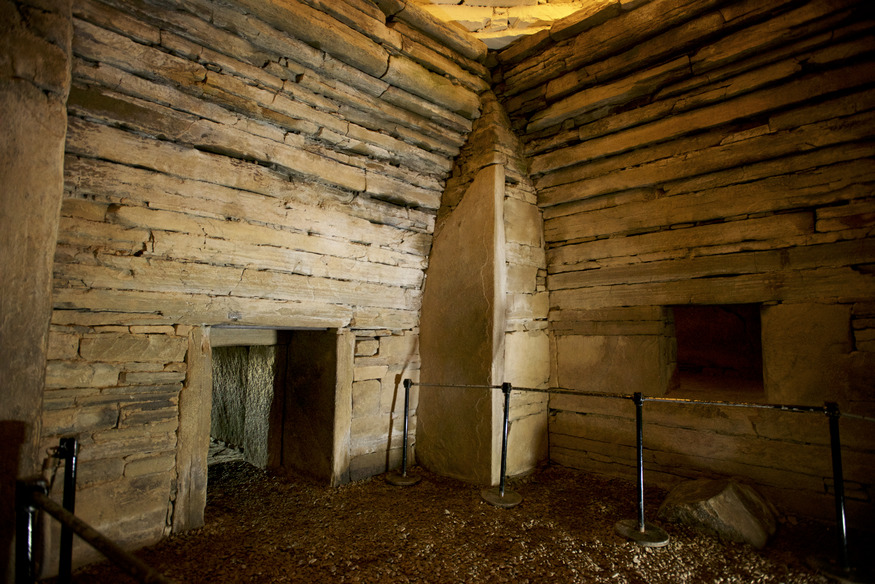
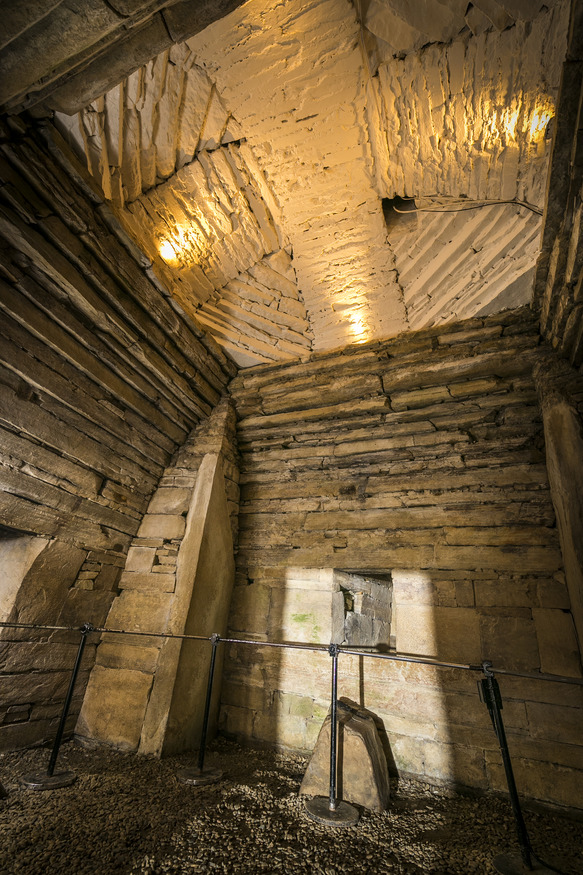
A câmara é basicamente construída por “fatias” de pedra, muitas das quais atravessam todo o comprimento das paredes. Em cada canto, eleva-se um enorme contraforte, formando um ângulo que vai até o teto. A partir de uma altura de 90cm as pedras que formam as paredes passam a ser sobrepostas de forma a ir arredondando, criando um teto em forma de colméia. Uma construção desse porte deve ter sido um tremendo desafio para nossos ancestrais, que não dispunham de ferramentas de metal ou máquinas. Podemos inferir também um elevado grau de empenho da sociedade.

The chamber is constructed largely of flat slabs of stone, many of which traverse nearly the entire length of the walls. In each corner lie huge angled buttresses that rise to the vaulting. At a height of about 3 feet (0.91 m), the wall’s construction changes from the use of flat to overlapping slabs creating a beehive-shaped vault. Creating such a huge building must have been a major challenge for our remote ancestors, working without metal tools or powered machinery. It also clearly shows a tremendous social commitment.

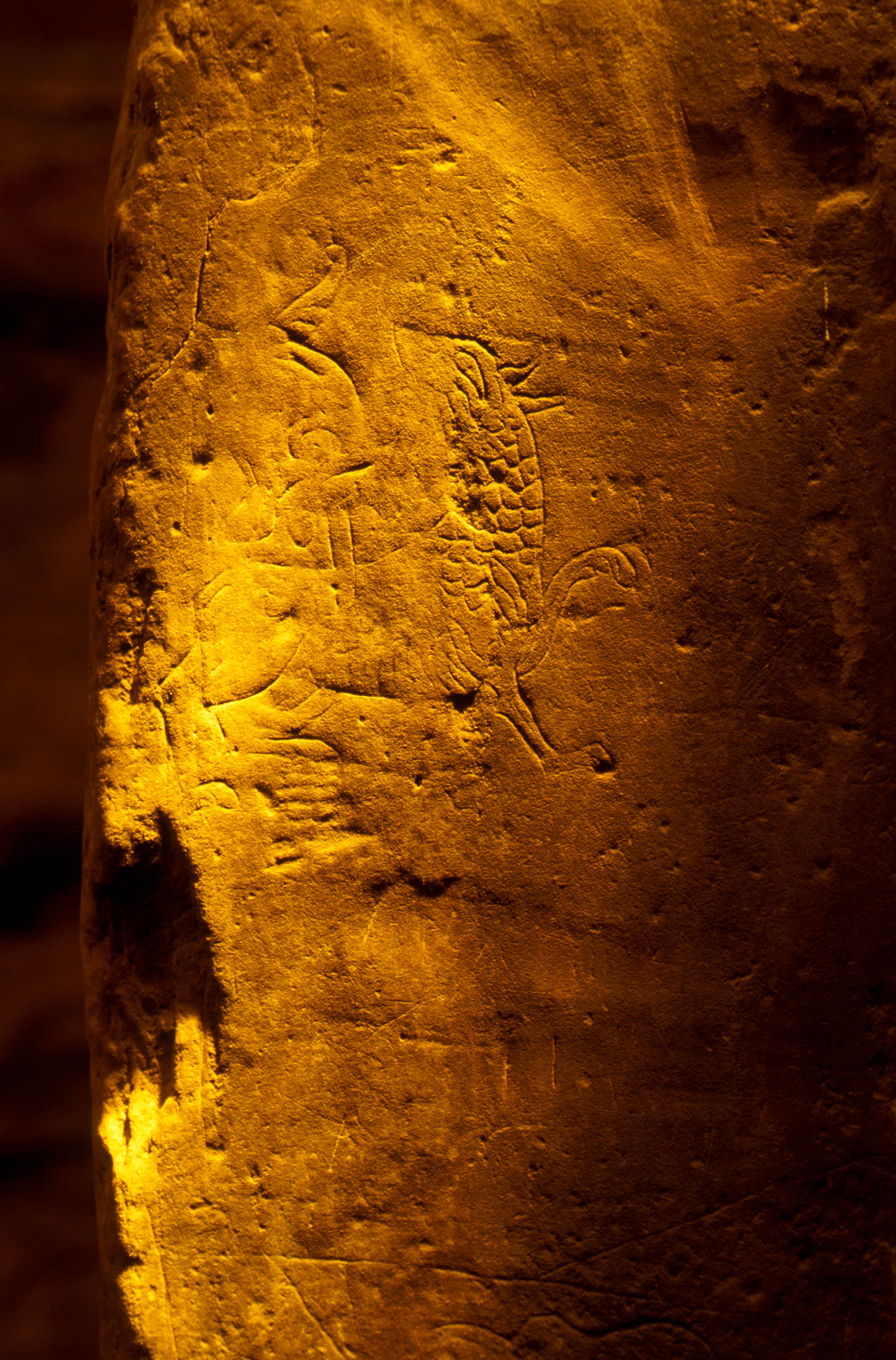
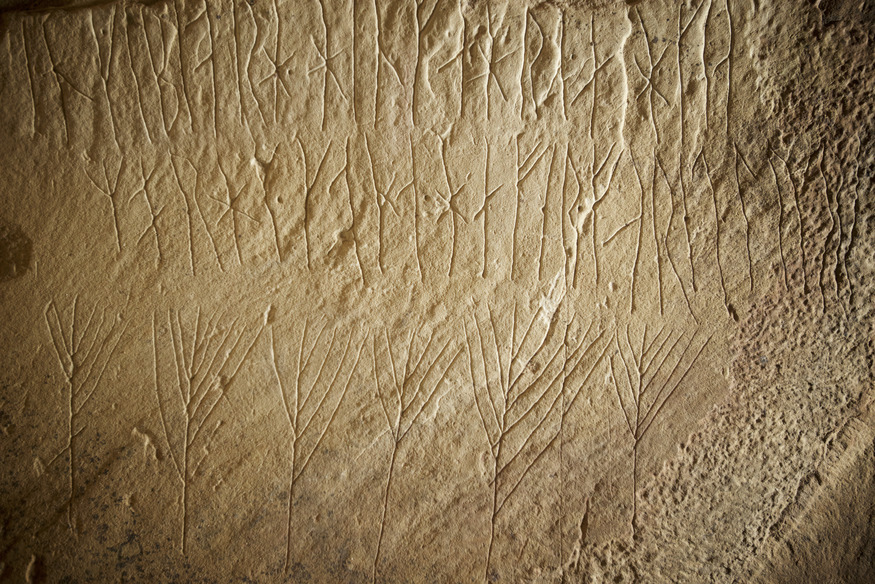
Mais de 30 inscrições rúnicas, assim como um dragão e outros animais foram encontradas entalhados nas paredes. Datam do séc. 12, atribuídas a um grupo de Nórdicos que entrou no monumento para abrigar-se de uma tempestade. Este grupo poderia ter levado quaisquer restos e/ou objetos de valor que ali houvesse: parte do grafite rúnico menciona um grande tesouro encontrado no local e outro enterrado ali perto. Não se encontrou nenhuma evidência disso, mas também não sabemos que tipo de coisa podia ser chamada de tesouro por uma civilização ancestral.
Embora seja basicamente equivalente a pichação, trata-se da maior coleção de tais inscrições no mundo. Fico pensando se daqui a 5.000 anos arqueólogos vão encontrar os nomes que pessoas gravam em monumentos (vandalismo, na verdade) e consagrá-los como arte ancestral.

One of Maeshowe highlights are the (more than thirty) runic inscriptions as well as the engraving of a dragon and other animals carved on the walls. These date to the 12th century when a band of Norsemen took refuge in the cairn during a winter storm. This same group may have carried off whatever valuables or remains were there, if such existed: some of the runic graffiti mentions a great treasure taken away from the site and another buried close by the site. No physical evidence was found to support such claim, but the word “treasure” could have easily meant something quite different to an ancient community than it does to us nowadays.
It represent the largest single collection of such carvings in the world, but most of the inscriptions are simply ancient graffiti. I wonder if in 5.000 years from now archaeologists will find people’s names carved in monuments ( actually vandalism…) and praise them as ancient artwork.

“Ofram filho de Sigurd gravou estas runas” / “Ofram the son of Sigurd carved these runes”
“Haermund Hardaxe gravou estas runas” / “Haermund Hardaxe carved these runes”
“Ottarfila gravou estas runas”/ “Ottarfila carved these runes”
“Benedikt fez esta cruz” / “Benedikt made this cross”
“Tryggr gravou estas runas”/ “Tryggr carved these runes”
“Arnfithr o filho de Stein gravou estas runas” / “Arnfithr the son of Stein carved these runes”

…e por aí vai. / …and on it goes

Acredito ter feito uma boa escolha nesta viagem: fiz um tour misto, parte sozinha e parte com um grupo pequeno, um tour que super recomendo, abrangendo as Orkneys e Shetlands. Na verdade cheguei em Orkney uma semana antes do grupo para visitar lugares que não constavam do programa da excursão, como Westray, Papay e Rousay. Quando o grupo chegou, as visitas a sítios como Skara Brae e Maeshowe, que envolviam compra de ingresso, já estavam incluídas no pacote. Talvez eu sozinha não tivesse conseguido entradas nos dias convenientes, pois a quantidade de turistas era surreal. Três navios de cruzeiro gigantes estavam atracados em Kirkwall ao mesmo tempo . Tudo estava lotado, inclusive hotéis. Meus pernoites “solo” tinham sido agendados com 3 meses de antecedência, inclusive com tarifas melhores. E depois de semanas viajando sozinha, foi bom passar dias com outras pessoas, excelentes guias, sem preocupação com transporte. Deixo abaixo o link da agência e um filminho mostrando o interior de Maeshowe, que era proibido fotografar.

I believe I made a solid choice for this trip: a mixed tour, part alone and part in a “Orkney- Shetland small guided group”, which I strongly recommend. I arrived in Orkney one week before the group, to visit places that were not in the tour program, such as Westray, Papay and Rousay. After joining the group, I didn’t have to worry about buying tickets to sites like Skara Brae and Maeshowe, because it was included in my package. By myself, perhaps it would be difficult to get the tickets in a schedule of my choice, because the place was surreal, crowded with tourists – 3 huge cruise ships were docked at once in Kirkwall. There were no vacancies in hotels and B&Bs; fortunately I had my solo bookings all done 3 months in advance, actually with better prices. Besides, after travelling alone for weeks, it was good to spend days with other people, outstanding guides and no worries about transport.
I leave you with the tour agency link and a short movie on Maeshowe interior, where taking pictures was forbidden.

McKinley Kidd Tours website

Read Full Post »


Pegamos o barco para Holm of Papa Westray (também chamada de Papay Holm), uma ilhota na costa leste, atravessando a baía de South Wick, conhecida por ter três câmaras mortuárias Neolíticas, das quais a maior (ao Sul) é impressionante, com uma longa passagem de entrada e diversas pequenas câmaras acessíveis pela área central.

Jonathan preparando o barco para a travessia. Longe ao fundo, a Câmara ao Norte / Jonathan preparing the boat for the crossing; the North Cairn far in the background

A short boat trip across South Wick took us to the Holm of Papa Westray, an islet off the eastern shore notable for its three Neolithic Chambered Cairns, the largest of which (South Cairn) is the most impressive, with a very long entrance passage and numerous burial chambers off a central area.

North Cairn
Contornamos a ilha para ver os penhascos do outro lado, formações impressionantes, ricas em vida selvagem / We went around the islet to see the impressive geos, abundant with wildlife
Segundo Jonathan, aqui aportavam os barcos Vikings/ Viking boats moored here, according to Jonathan

Cerca de 150 espécies de pássaros podem ser avistados na ilha, que é Área de Interesse Científico Específico, além de Área de Proteção Especial, para a reprodução de aves como a Arctic Skua (nas fotos).

Around 150 species of bird have been seen around the island, which is a Site of Special Scientific Interest, and a Special Protection Area as an important breeding site for birds as the Arctic Skua (in the photos).

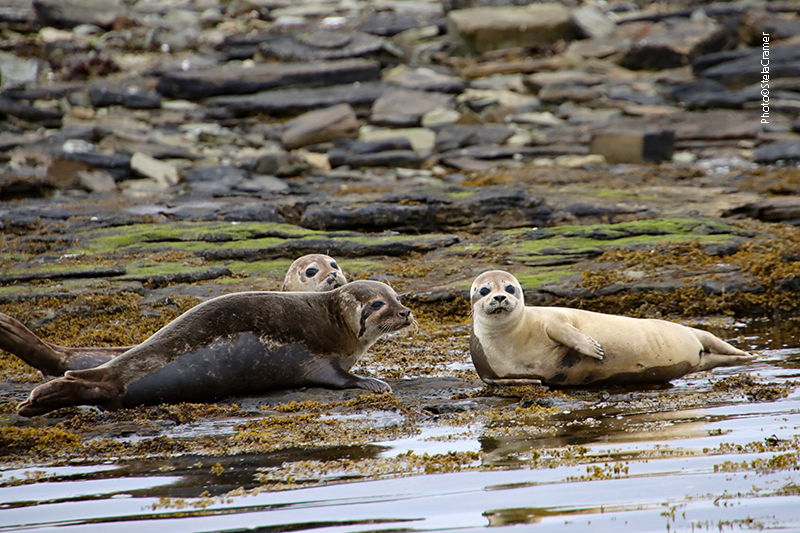
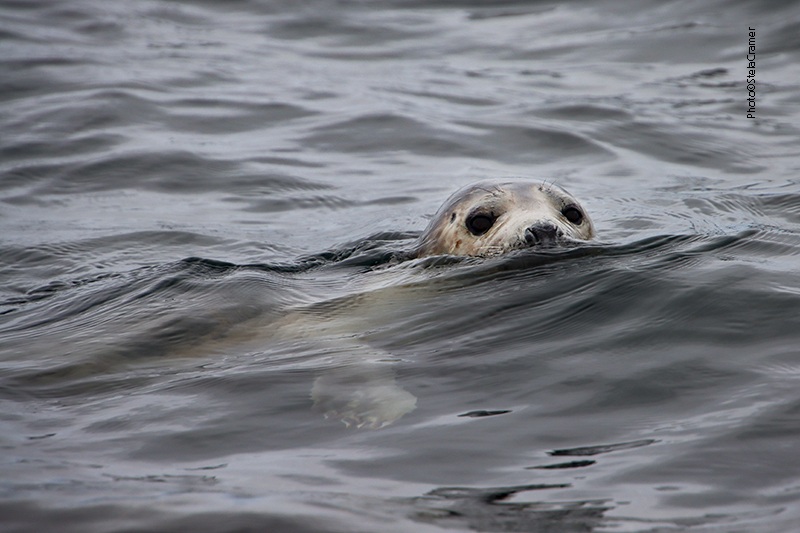
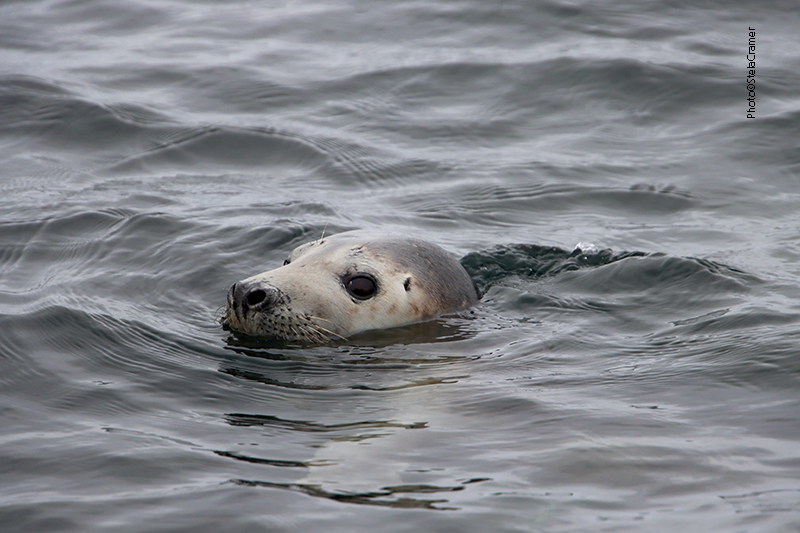
Simpáticas focas e outros bichos vieram nos receber / Lovely seals and other assorted creatures showed up to welcome us

Após cinco minutos de caminhada chegamos à Câmara Mortuária ao Sul, um monumento de 5.000 anos. Consiste numa câmara principal retangular, com subdivisões, da qual saem outras doze pequenas câmaras. Foi escavado em 1849, mas depois disso ficou exposto aos elementos e estava se deteriorando, até que em 1930 passou a ser protegido pelo Estado. Construíram uma cobertura de concreto com turfa por cima para preservar a estrutura.

A five-minutes walk took us to The Holm of Papa Westray South Chambered Cairn, a 5.000 years old monument comprising a large subdivided rectangular chamber, from which twelve small cells open out. It’ been excavated in 1849, but after that, left open to elements, the site deteriorated badly until it was taken into State Guardianship in 1930, roofed in concrete and turfed over to preserve it.

Atualmente o visitante desce por uma das escotilhas na cobertura, que tem uma escada, mas a entrada original construída no Neolítico era por uma longa e estreita passagem. Este acesso agora está bloqueado por uma grade.

Today, visitors descend into the chamber through a hatch in the cairn’s reconstructed roof and down a vertical ladder, but in Neolithic times entry was through a long, low and narrow passage, now blocked by a grill.

Entrada original do monumento / Original entrance
Câmara central, ao fundo a parede transversal noroeste /
Main chamber, north-west transverse wall in the background

A câmara principal se divide em três, sendo a parte central com 13.5m de comprimento. De cada lado, uma estreita passagem aberta numa parede transversal dá acesso a uma câmara menor. O compartimento a noroeste (foto acima) mede 2,2m, enquanto a sudoeste (foto abaixo) temos um espaço maior, com 3,4m.

Câmara central, ao fundo a parede transversal sudoeste /
Main chamber, south-west transverse wall in the background

The main chamber is divided into three parts, with the largest, central part measuring 13.5m in length. At either end are smaller spaces entered by small openings in the transverse walls. At the north-east end this compartment is 2.2m long, at the south-west end (photo above) it is 3.4m.

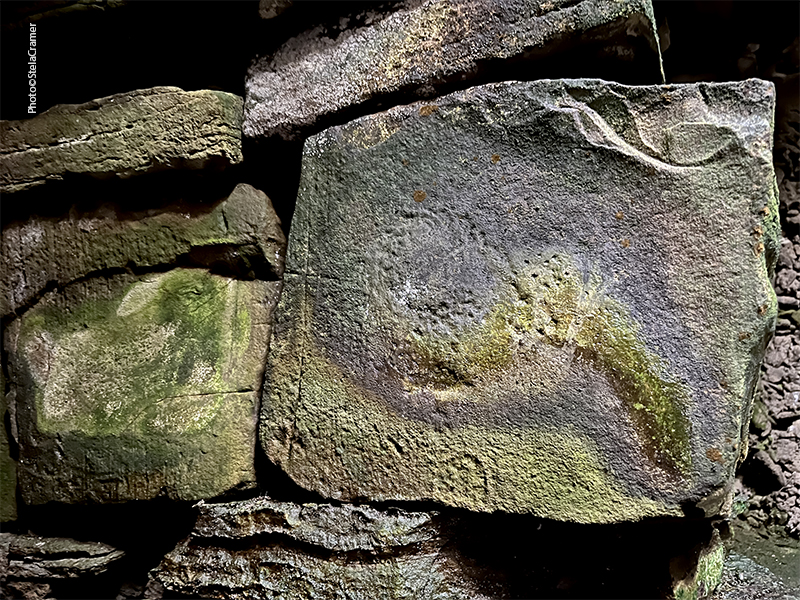
Os desenhos encontrados neste monumento são da maior importância. Na câmara menor a sudoeste, temos um lintel decorado com o motivo que pesquisadores chamam de “sobrancelhas” (um par de círculos sob dois arcos).

The artwork found in this cairn are extremely important. In the south-west end cell, a decorated lintel bears two pecked ‘eyebrow’ motifs (a pair of cup-marks under double arcs).

Motivos entalhados em zigzag / Zigzag incised motifs

É muito raro encontrar tais exemplos de arte em seu lugar original. Os desenhos aqui são variados e encontram paralelo em artefatos de outros sítios, como Skara Brae, Links of Noltland e Ness of Brodgar. Entretanto, Papay Holm ao Sul é o único monumento funerário Neolítico em Orkney onde ambos os motivos (furados e entalhados) foram encontrados juntos.

It is very rare for such artwork to survive in its original setting. The designs here are varied and can be paralleled at artifacts from other sites such as Skara Brae, Links of Noltland and the Ness of Brodgar. However, Papay Holm South is the only Orcadian Neolithic funerary site in which both pecked and incised decoration have been identified.

Passagem na parede transversal noroeste / Passage in north-west transverse wall

Não há provas quanto à finalidade do monumento; entretanto, comparando com outros sítios semelhantes em Orkney, se acredita que foi construído para abrigar os restos mortais de uma comunidade.

No evidence for the uses of the cairn survives, however it is assumed, on comparison with other similar sites in Orkney, that it was constructed with the intention of holding the mortal remains of a community.

Câmara menor a noroeste / North-west smaller chamber

A Câmara Mortuária de Papay Holm ao Sul é um exemplo bem preservado da chamada “Câmara tipo Maeshowe”: uma câmara retangular com entrada por uma longa passagem pela lateral, com acesso a cubículos menores, decoração em muitas pedras e uso de blocos muito grandes na construção, posicionados cuidadosamente em determinados pontos, usando inclusive pedrinhas de fixação para ajustar com precisão o alinhamento e orientação. Tais monumentos mostram a habilidade dos construtores Neolíticos, tanto no planejamento como na construção em si. Veremos Maeshowe na sequência.

Detalhe de pedra bem maior, precisamente utilizada na construção / Detail: a much larger stone skillfully placed in the building
Holm of Papa Westray South chambered cairn is a well-preserved example of a “Maeshowe-type of Cairn”: a rectangular chamber entered at the side via a long passage, with cells leading off the chamber, several decorated stones and many very large blocks of stone used in the construction, carefully placed in certain locations, often using small pinning stones to precisely adjust their alignment and orientation. These monuments displays the skill of the Neolithic builders in both planning and construction. We’ll visit Maeshowe next.
O nível do mar elevou-se desde que Papay Holm foi construído, formando a quantidade de pequenas ilhas que hoje formam o arquipélago Orkney. Durante o período Neolítico, entretanto, seria composto de menos e maiores extensões de terra. É provável que Papay Holm, Papa Westray e Westray fossem uma coisa só.

Sea levels have risen since the cairn was constructed, giving rise to the large number of small islands which today form the Orkney archipelago. During the Neolithic period, however, Orkney would have comprised of fewer, larger landmasses. It is likely that the Holm of Papa Westray formed part of a larger landmass which also took in what today are the islands of Papa Westray and Westray.

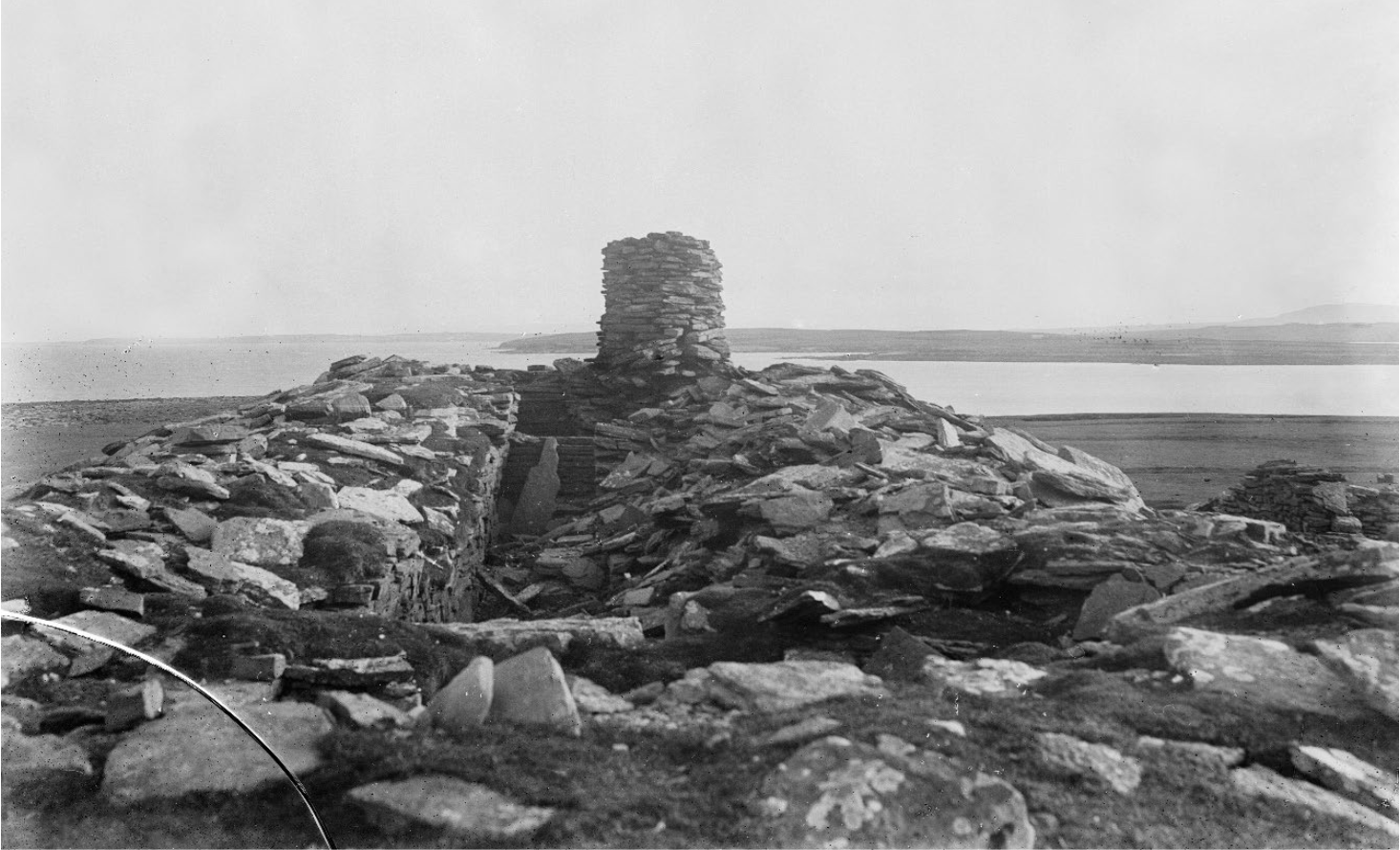
Foto tirada em 1930, aproximadamente, antes da construção do teto de proteção em concreto / Photo taken around 1930, before building the protective concrete roof

As focas vieram se despedir quando embarcamos para retornar a Papa Westray. Uma delas nos acompanhou por um bom tempo!

The seals came to say goodbye when we boarded the boat back to Papa Westray. One kept us company for a long time!

Read Full Post »