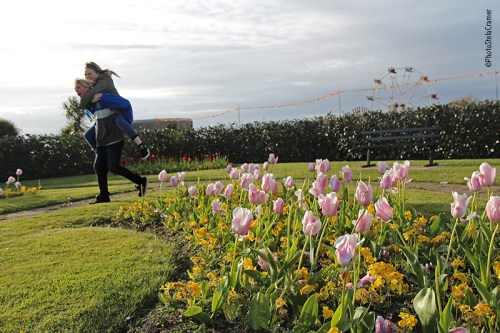
Jovens se divertindo na pracinha / Teens having fun in the square
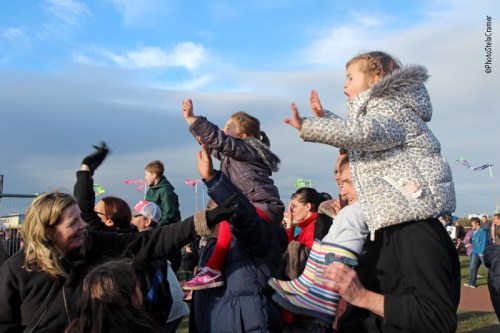
Prosseguimos nossa caminhada até o Centro de Morecambe só para descobrir que o tal Carnaval era uma festinha infantil. No palco, popstars adolescentes levaram as crianças ao delírio! / We resumed our walk to Morecambe Downtown just to find out that the so-called Carnival was a party for children. Teen popstars on the stage were making the kids’ day!
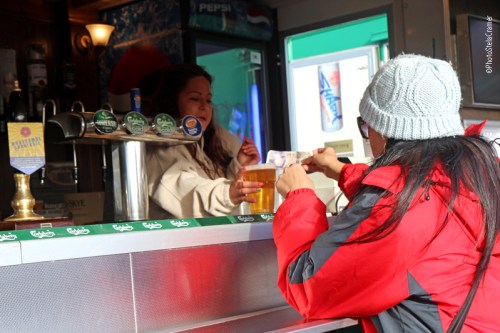
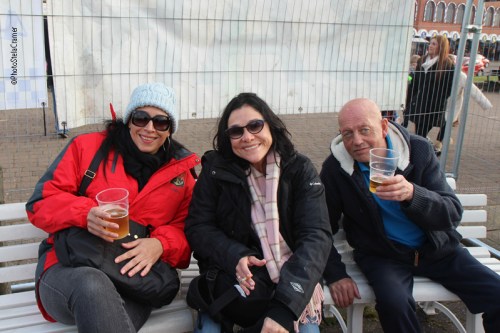
Para refrescar depois da caminhada compramos uma cerveja e nos sentamos na sombra para beber. Nisso um sujeito se ofereceu para tirar nossa foto. Aceitamos felizes… só para descobrir que o amigo dele entrou de papagaio de pirata! Nem tínhamos percebido aquele homem que se sentara ao nosso lado. Tivemos um ataque de riso. Ele começou a conversar, e se identificou como o responsável pela sonorização do evento, apontando o nome da sua empresa impresso na lateral do palco. Ainda nos ofereceram outra cerveja. Foi divertido! E a foto ficou engraçada.
To cool up after the walk, we bought ourselves a beer and found a place in the shadow to sit down and drink. That was when a guy offered to take our picture. We accepted happily… just to find out that his friend had squeezed himself into our photo. We burst into laughter, because we hadn’t even noticed that guy sitting beside us! He started a conversation, presenting himself as the responsible for the party sound, proudly showing us his company’s name printed on the stage, and offered us another beer. It was really funny… as was the picture!
Aluguel de burrinhos para diversão da criançada / Donkeys for rent, fun for the kids!
Crianças se divertindo na praia / Kids having fun on the beach
Inaugurada pela Rainha em 1999, a estátua do famoso comediante Eric Morecambe é uma das atrações do calçadão. Ele foi retratado numa de suas poses características, e com um par de binóculos, pois era também ornitólogo. / Unveiled by the Queen in 1999, the slightly larger than life-sized statue depicts famous comediant Eric Morecambe in one of his characteristic poses with a pair of binoculars around his neck (he was a keen ornithologist). The statue is a highlight in the Promenade.
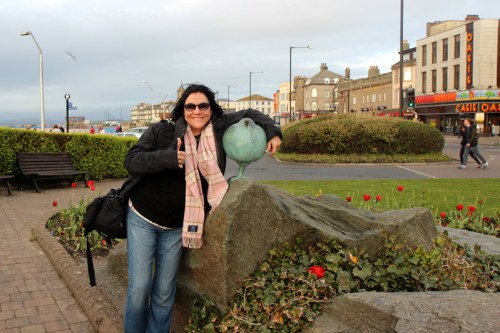
Downtown Morecambe / Centro da cidade
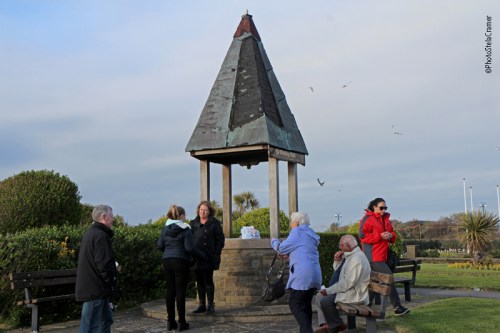
Um poço, infelizmente estava sujo e cheirando mal. Nem jogamos moedinha / This well unfortunately was dirty and stinking. So we didn’t drop a coin .
Já eram quase sete da noite quando iniciamos a caminhada de volta. Ainda com sol! / It was almost 7pm when we started to walk back. Sun was still up!
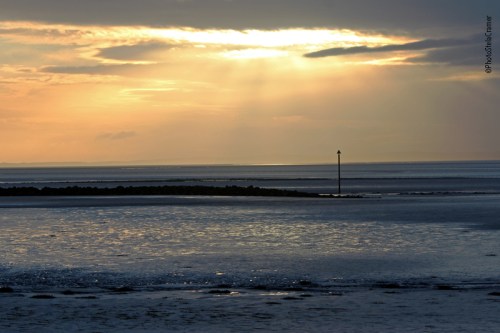
Lindo por do sol no caminho de volta, para nos despedirmos de Morecambe Bay / A beautiful sunset on our way back, to say goodbye to Morecambe Bay
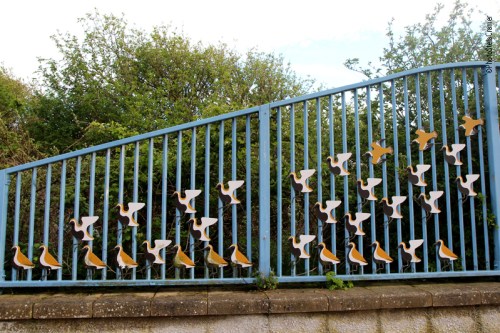
As gaivotas são definitivamente a maior fonte de inspiração para artistas aqui. Finalizo este post com mais alguns exemplos de gaivotas na arte urbana. / Seagulls are definitely the local artists’ muses. I end this post with a few more examples of seagulls in street art.
Compartilhe meu blog se você gostou.Share my blog if you liked it!
Este post é basicamente composto por fotos. Um belo lugar que fiquei feliz por ter conhecido, até por ter sido inesperado. Fomos até lá porque o motorista do táxi disse que haveria uma festa de Carnaval, e ficamos curiosas para ver como seria um carnaval britânico em maio. No Brasil esta festa ocorre geralmente em fevereiro ou algumas vezes no início de março. O tempo nos ajudou: abriu um lindo sol, que possibilitou registrar o trecho que cobrimos caminhando pela orla. Fiquei em dúvida se estas fotos caberiam num blog que tem como finalidade mostrar lugares Arthurianos, denominado Avalon. Concluí então que, após tantas andanças, Avalon para mim passou a ser todo o Reino Unido. Uma terra onde ao dobrar uma esquina nos deparamos com monumentos, círculos de pedras, túmulos, tantos vestígios fascinantes do passado; um lugar cuja cultura tanto admiro, com um grau de civilização que, como brasileira, chego a invejar.
Sol da tarde em Morecambe Bay / Afternoon sun
This post contains basically photos of a beautiful place I’m happy to have unexpectedly visited. We decided to go there because the taxi driver told us there was going to be a Carnival party, so we were curious to see what did a British Carnival look like, in May. In Brazil, this holiday takes place usually in February, sometimes first week of March. The weather was favorable: a bright sun had broken through the clouds, and made possible to take photos of the seaside stretch we covered on foot. I had doubts if these pictures would fit in a blog called Avalon, which purpose is to show Arthurian sites. Then I realized that, after all I’d been through, all my travelling, all the adventures, the whole United Kingdom had become Avalon for me. A land where traces of the past await around each corner: monuments, stone circles, ancient graves and buildings; a land whose culture I admire so much, with a level of civilization that, as a Brazilian, I envy.
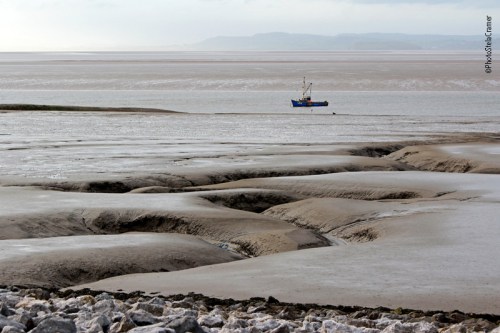
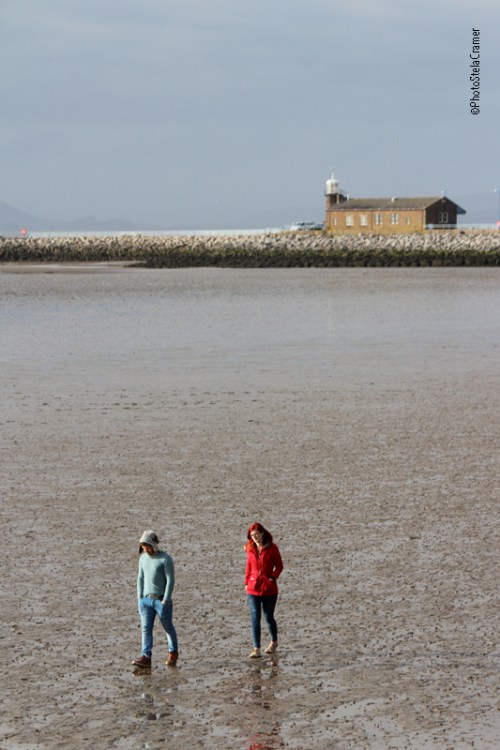
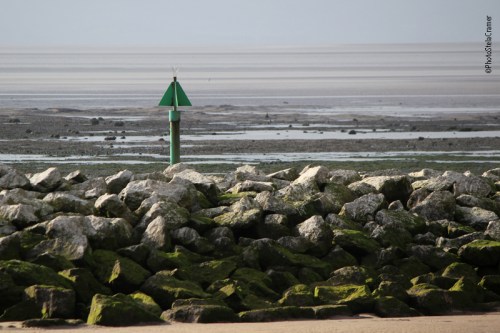
Maré baixa / Ebb in Morecambe Bay
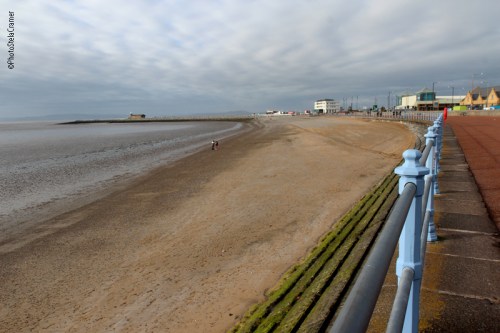
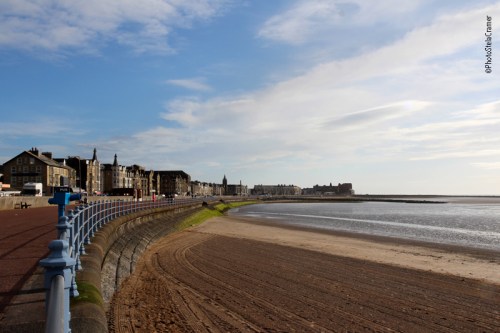
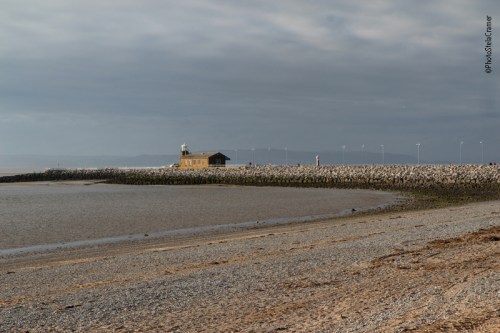
Marine Road, com o molhe de pedra e o farol ao fundo / Morecambe Promenade (Marine Rd.), the Stone Jetty and Lighthouse at its end
Heysham vista do molhe de pedra / View from the Stone Jetty
O farol / Lighthouse
Pausa para meditação / Meditation break
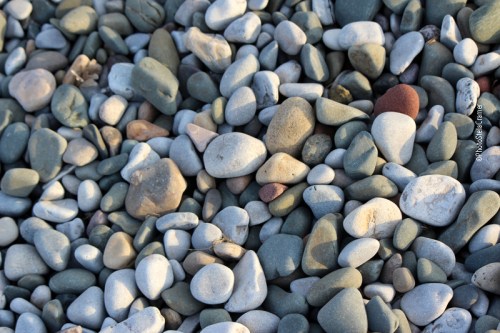
Praia de seixos, sem areia / Beach of pebbles, not sand
Farol / Morecambe Lighthouse
Heysham vista do Farol / Heysham view from the Lighthouse
O molhe de 250m foi reconstruído e estendido na década de 90 como parte do sistema de defesa litorânea, mas originalmente era um centro ferroviário. / The 250m Stone Jetty was rebuilt and extended in the mid-1990s as part of the coastal defense work, but it was originally constructed as a rail hub.
A estação de trem próxima ao molhe. Antes da construção desse molhe, existia desde 1850 um pier de madeira para carga e descarga de mercadoria na estação. / Train station next to the Jetty. Prior to the Jetty there existed from 1850 a wooden pier with railway close to the location. From the pier goods could be loaded and unloaded.
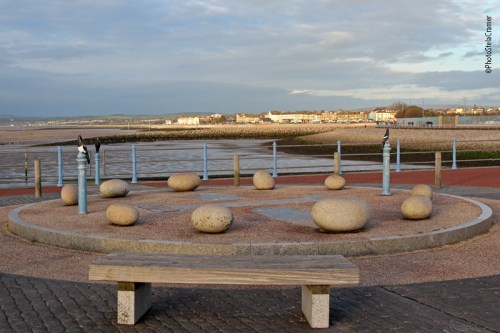
Instalação de arte no molhe: jogo de Amarelinha. Você pode pular os ovos de pedra, ou sentar-se neles. / Jetty Art: Magpie Hopscotch – Hop and jump or simply sit on one of the stone eggs
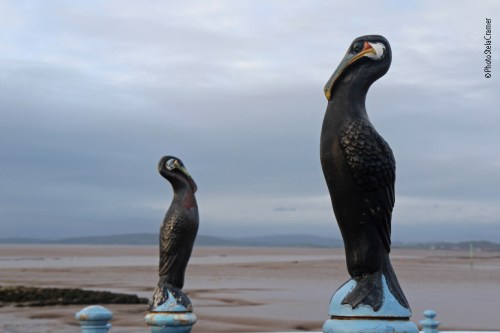
Espécie de Monumento à Gaivota no molhe / Jetty Art: a massive bird statue, a seagull, I guess
Mais esculturas de gaivotas. Iríamos encontrar muitas delas! / More seagull sculptures. We were still going to find many more of them.
Arte no Molhe: outra escultura de gaivotas / Jetty Art: another Seagull Sculpture
Labirinto em granito no molhe, também em forma de pássaro / Jetty Art: Maze, a bird shape in granite to navigate
Vicky e mais gaivotas / Vicky and more seagulls
Compartilhe meu blog se você gostou.Share my blog if you liked it!
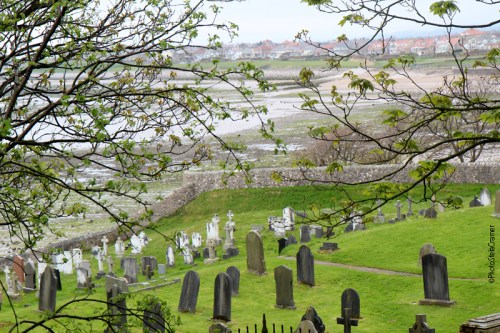
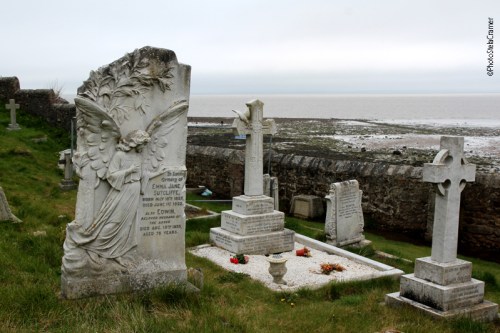
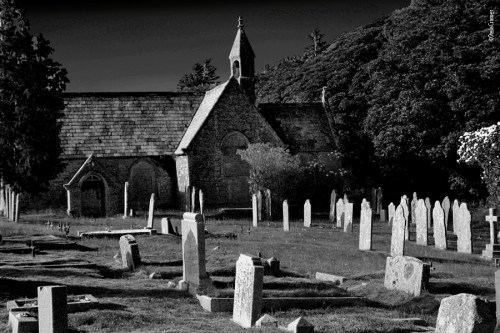
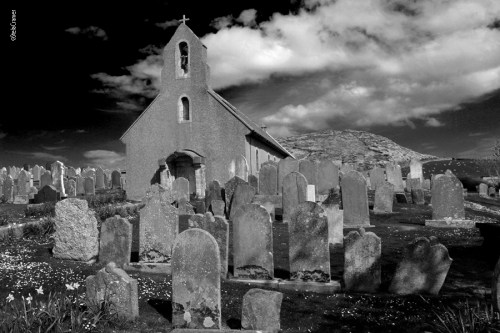
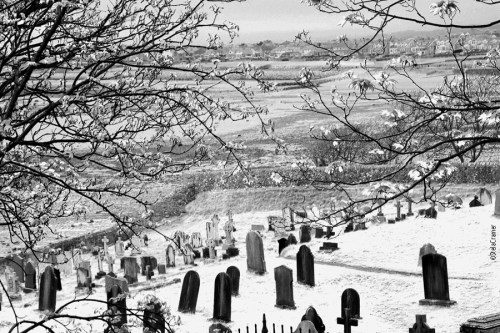
O cemitério, com Heysham e a Baía de Morecambe ao fundo / Graveyard, Heysham/Morecambe Bay in the background
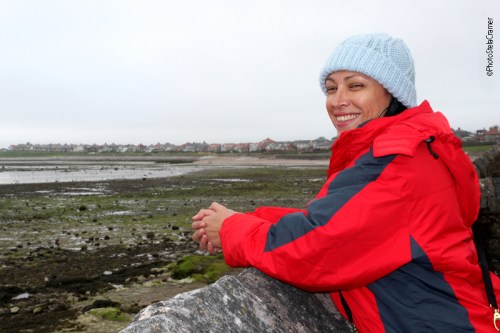
Vicky observa feliz a maré baixa na Baía de Morecambe / Vicky happily watching Morecambe Bay ebb
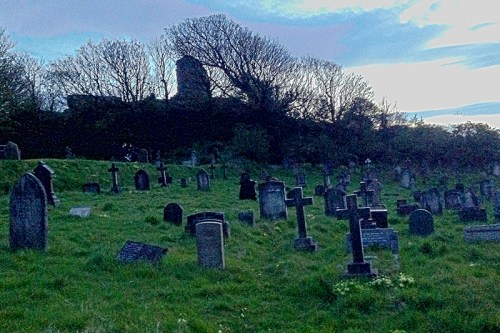
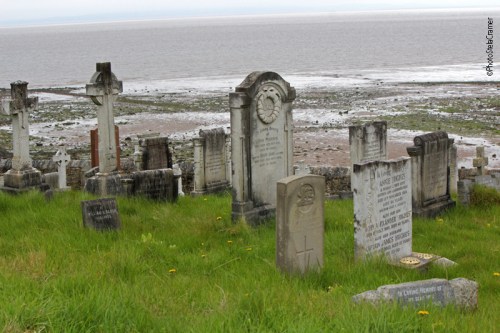
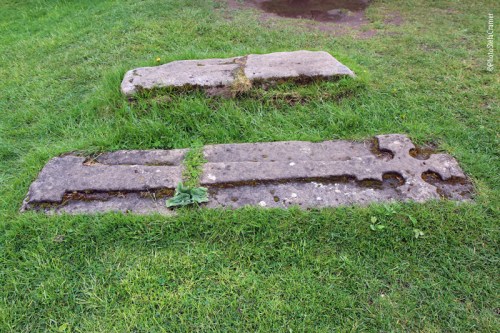
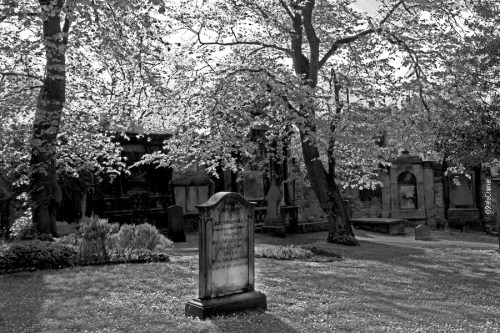
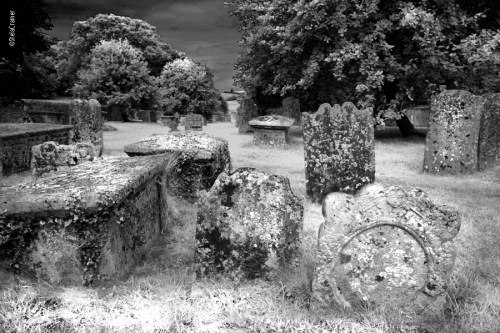
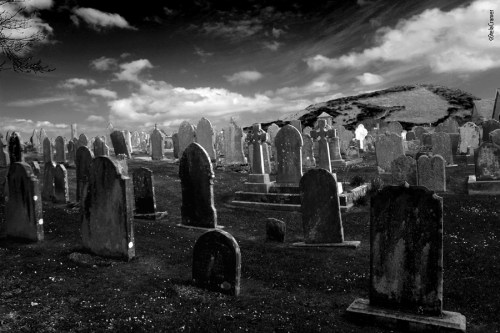
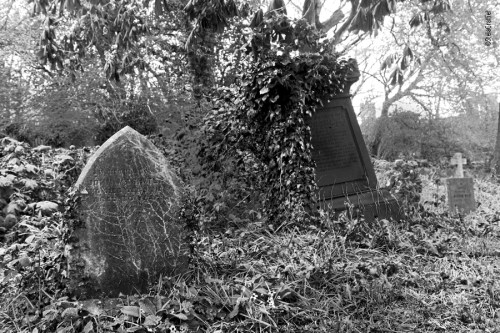
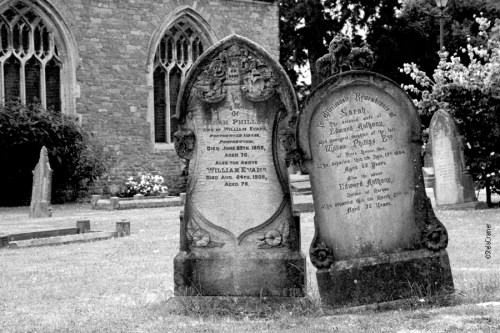
Túmulos antigos /Old graves
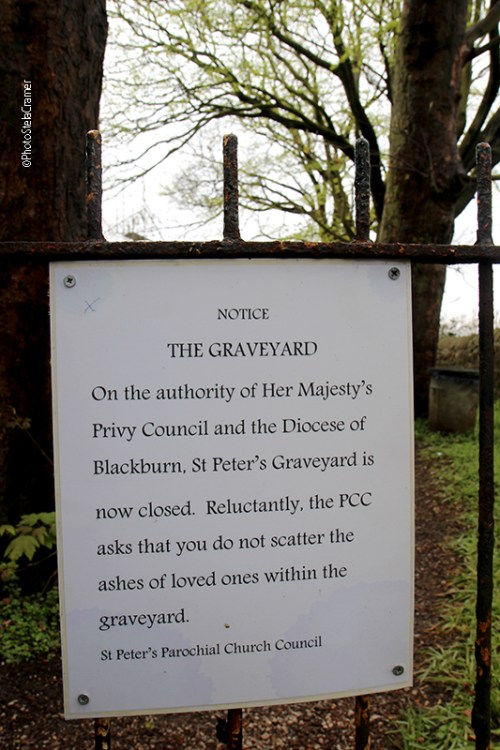
“O cemitério está fechado, pedimos que as pessoas não espalhem as cinzas dos entes queridos no cemitério”
Foto batida pela Vicky: o cemitério e, ao fundo silhueta da Capela de St Patrick e das ruínas romanas. E ali estou eu batendo fotos./ Photo taken by Vicky: the graveyard and, on the background, St Patrick’s Chapel and roman ruins in sillouette. And there I am taking photos!
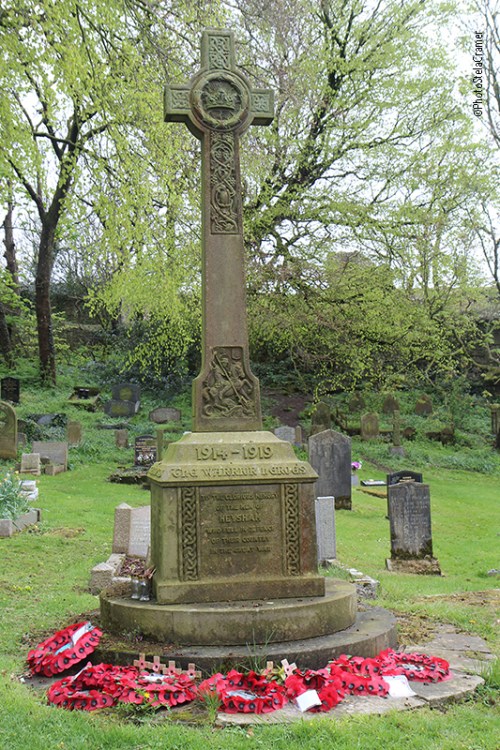
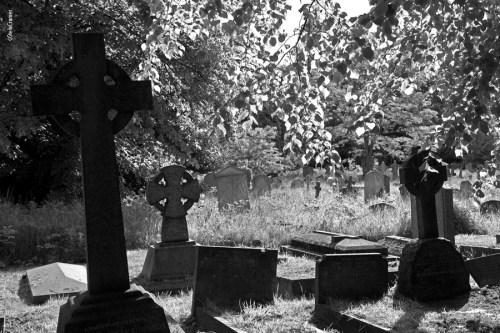
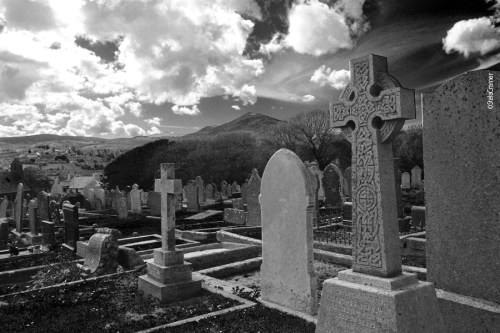
A cruz em homenagem aos soldados mortos na Primeira Guerra Mundial / The cross for the WWW1 dead soldiers
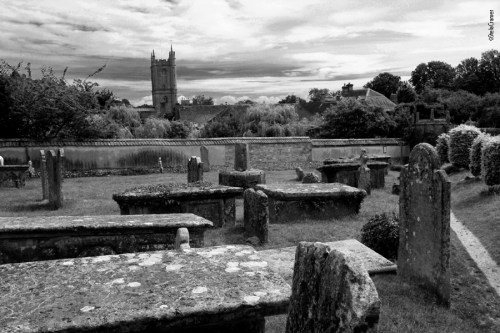
Túmulos antigos com a Baía de Morecambe ao fundo / Ancient graves, Morecambe Bay on the background
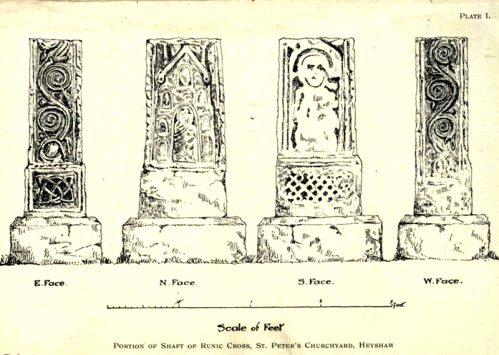
A Cruz Rúnica estava na área em obras fechada à visitação. Imagem tirada do livro de E.M. Grafton “Notas sobre a Igreja e a Paróquia de Heysham” .Esta Cruz Rúnica é um monumento de importância arqueológica nacional, protegido contra qualquer modificação sem autorização / The Runic Cross was in the restricted mainteinance area. This image was taken from the book “Some notes on Heysham Church and Parish” by E. M. Grafton. This Runic Cross is a scheduled monument :a nationally important archaeological site or historic building, given protection against unauthorised change.
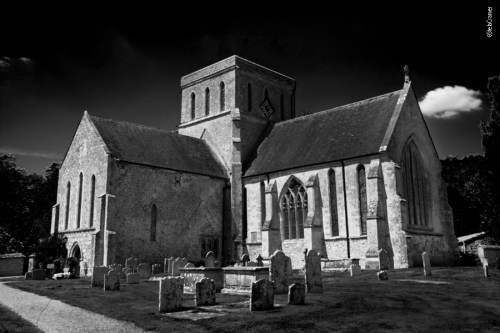
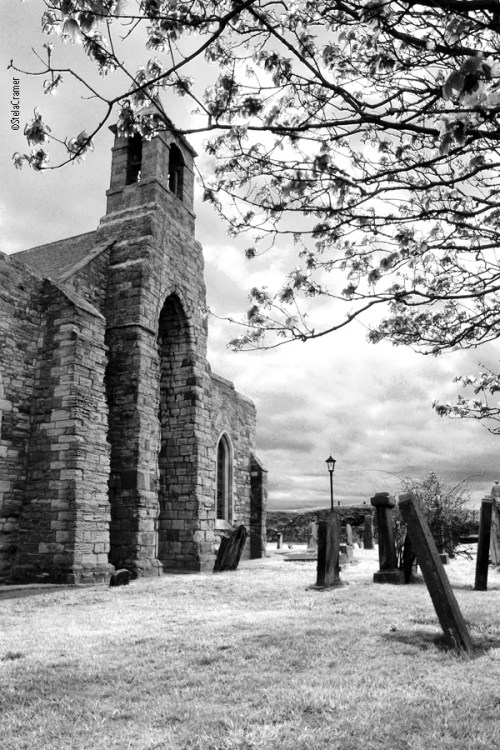
St.Peter’s Church; foto da Wikipedia, pois a Igreja estava em manutenção, coberta por andaimes e tapumes / St. Peter’s Church, a Wikipedia photo because I couldn’t see it, covered by scaffolding
Compartilhe meu blog se você gostou.Share my blog if you liked it!
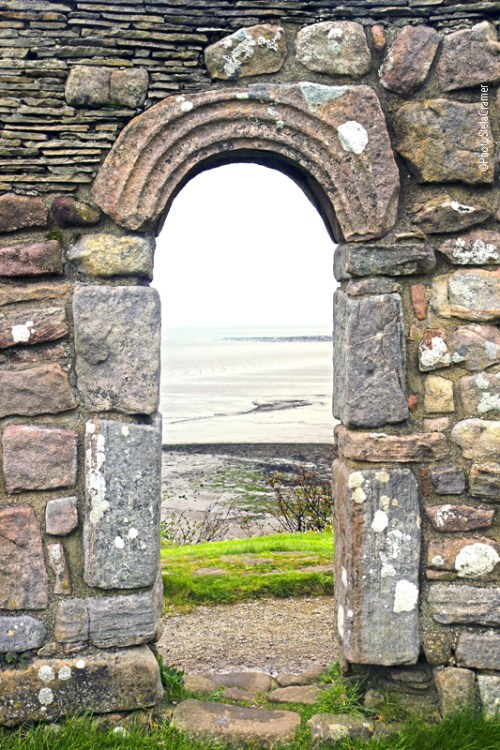
Panorama com vista das ruínas da antiga Capela de St. Patrick’s / Landscape with ruins of the ancient St. Patrick’s Chapel
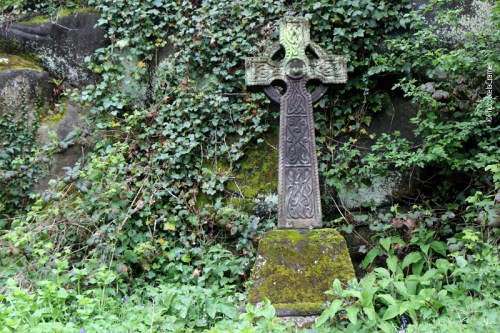
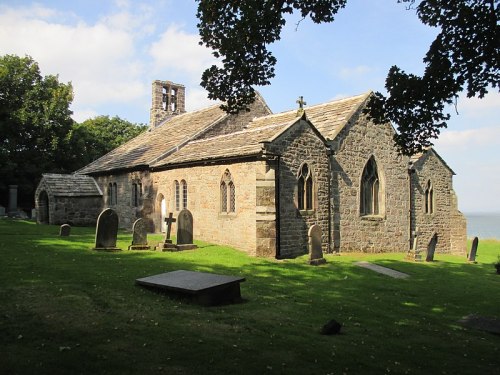
Estávamos em Heysham unicamente para pegar o ferryboat para a Ilha de Man. Nem sabíamos que essa cidade existia até pesquisar transporte para Man. Entretanto o lugar se revelou uma magnífica surpresa! Após almoçar, andando na direção do mar pela rua principal, resolvemos visitar a Igrejinha de St. Peter. Uma pena que estava envolta em plásticos e andaimes, em restauração, tanto que não pude bater nenhuma foto. Existe uma cruz Anglo-Saxã, mas estava dentro da área cercada em obras. Apenas parte do cemitério podia ser visitado. Além dos lindos túmulos antigos encontramos uma passagem, um caminho entre antigas ruínas romanas, subimos alguns degraus e de repente estávamos de frente para o mar e para a Capela de St. Patrick! Um lugar alucinante.
Ruínas romanas, Capela de St. Patrick e Heysham ao fundo/ Roman ruins, St.Patrick’s Chapel and Heysham in the background
The only reason we were in Heysham was to take the ferryboat to the Isle of Man. We didn’t even know that this city existed! However it turned out to be a magnificent surprise! After lunch, on our way on Main Road to the shore, we found a sign indicating St. Peter’s Church, and decided to visit it. Unfortunately it was under repair, shrouded in scaffolds and plastic covers, so we couldn’t take photos. Inside the restricted area there’s also an ancient Anglo-Saxon cross. Only part of the graveyard was open to visitors. But beyond the beautiful ancient graves we’ve found a stairway, and a passage through ancient Roman ruins that led us to St. Patrick’s Chapel, by the sea, a stunning place!
Vista ao nível do chão / Ground view
Capela de St.Patrick; ao fundo muro romano / St Patrick’s Chapel; Roman wall on the background
Esta pedra quadrada era uma espécie de relógio de sol. Ao fundo a baía de Morecambe, ao longo da qual se estende Heysham. / This square stone once was kind of a sundial. On the background, Morecambe Bay. Heysham stretches alongside it.
Vista da Capela em outra perspectiva / The Chapel from a different point of view
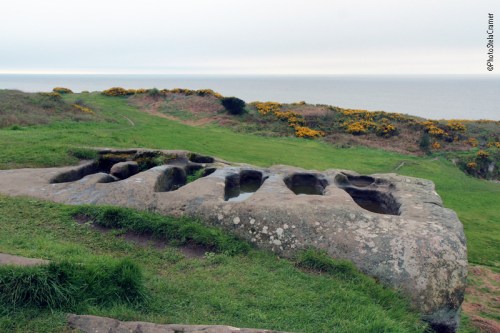
Junto à Capela há túmulos vikings ancestrais, do século XI / Beside the Chapel are these viking stone graves, thought to date from the 11th century
Os túmulos vikings são sempre virados para o Norte, de onde este povo veio. / Viking graves always look North, from where these people came
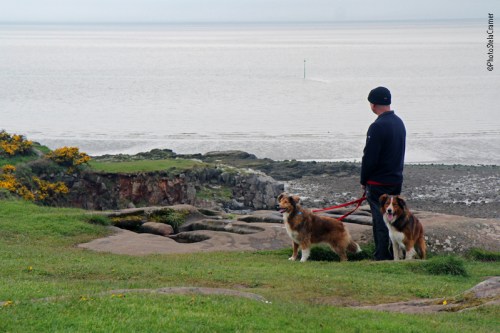
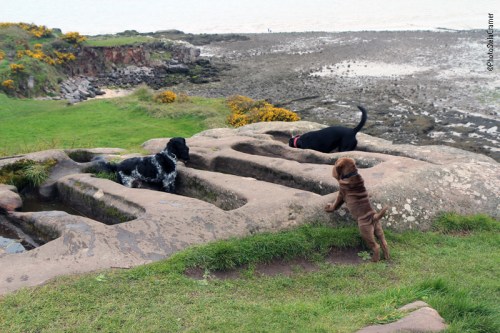
Estes túmulos aparecem na capa do CD “O Melhor do Black Sabbath”. Estes cães ( e seu dono) não ligam a mínima! / These stone graves appear on the cover of the CD “The Best of Black Sabbath”. These dogs (and their owner) show no respect!
Supõe-se que um dos túmulos seja de uma criança, pelo tamanho / The small grave is supposed to be a child’s
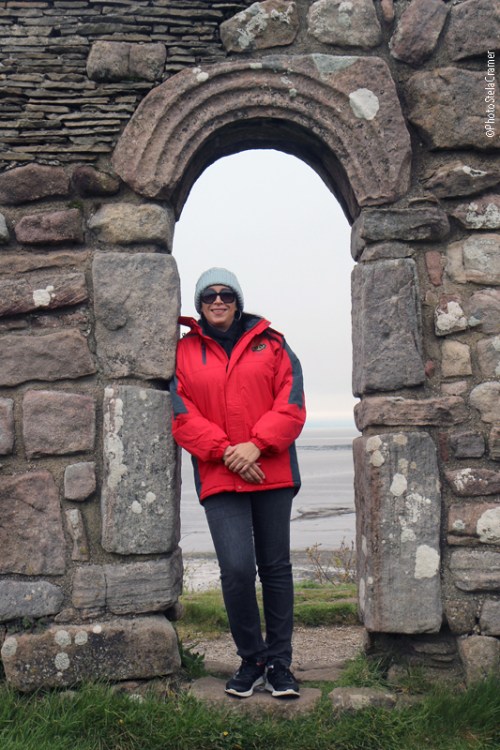
Vicky na Capela de St Patrick/ Vicky at St. Patrick’s Chapel
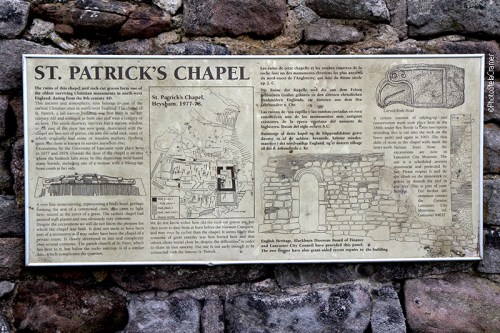
Painel informativo afixado no muro romano / Informative panel attached to the roman wall
Artefatos encontrados neste local, hoje no Museu de Lancaster, sugerem que aqui era um antigo cemitério, ou “barrow”. A área ainda é chamada de “the Barrows”./ Lancaster Museum holds artefacts from the area that suggest that this was an ancient burial ground, or barrow; the area is still known locally as “The Barrows”.
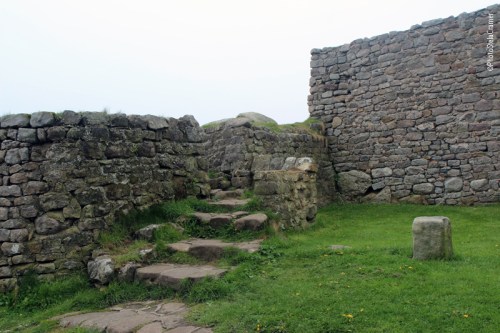
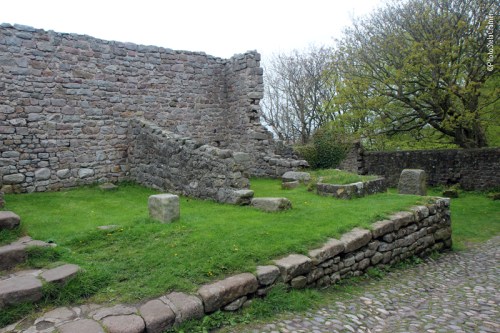
Ruínas romanas / Roman ruins
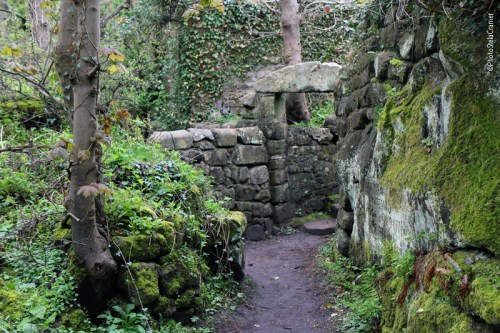
Andando por estas passagens estreitas nos sentimos num túnel do tempo / Walking through these narrow passages, we felt as we were crossing a time tunnel
Inscrições romanas na passagem. Pesquisando, ainda não achei nada sobre elas. / Roman inscriptions on the wall. I’m doing some research but hadn’t found anything about them yet.
Morecambe Bay
Do outro lado do muro / The other side of the wall
E por fim o sol apareceu, para nos acompanhar na caminhada pelo resto da tarde./ The sun eventually showed up, to keep us company for the rest of the afternoon walk.
Compartilhe meu blog se você gostou.Share my blog if you liked it!
Chegando na bucólica Heysham. / Arriving at bucolic Heysham
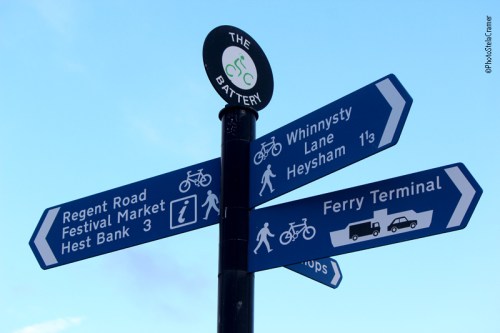
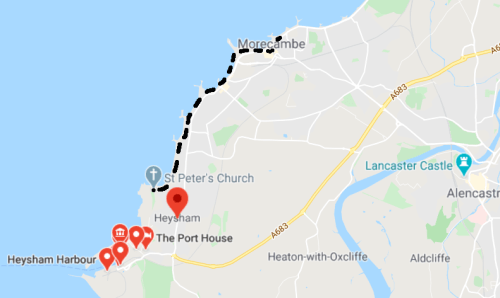
Depois de visitar o Castelo de Lancaster, pegamos nossas malas e voltamos à estação de trem. A viagem até Heysham levou meia hora. Um taxi nos levou ao B&B The Port House, e no caminho, conversando, o motorista disse que naquela tarde haveria um “carnaval” na cidade. Para ir a pé dali era longe, mas ele sugeriu nos levar até o centro de Heysham, de onde podíamos ir caminhando pelo litoral até o local da festa, que era na rua. Deixamos as malas no hotel e seguimos no taxi.
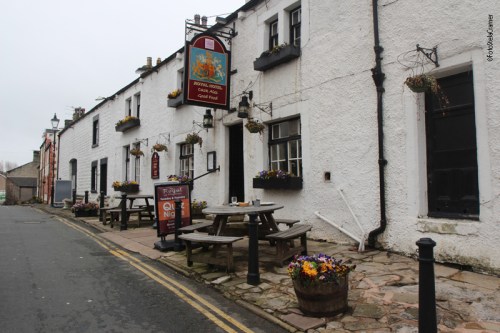
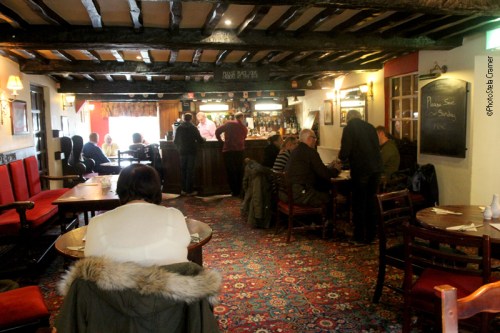
Fome, sede + chuva= hora de entrar num pub. / Hunger, thirst + rain = pub time.
After visiting Lancaster Castle, we retrieved our suitcases and walked back to the train station. The ride to Heysham took us half an hour. From the station we took a taxi to the B&B The Port House and, on the way, the driver told us that there would be a “carnival” downtown. It was far to go on foot but he could drive us to town, from where we could walk by the shore to the party, that would be on the street. So we left the baggage and got in the car again.
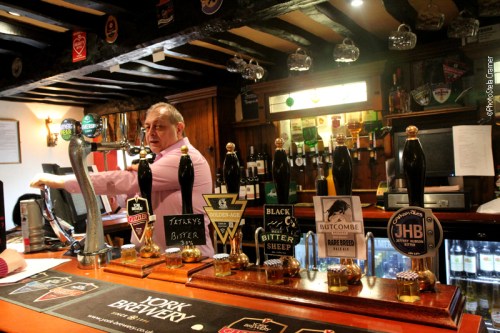
No pub/ Inside the pub
Heysham é uma grande vila costeira em Lancashire, Inglaterra, com vista para a Baía de Morecambe. É um porto, de onde saem ferryboats para a Ilha de Man e Irlanda, e local de duas usinas nucleares. A baía de Morecambe é conhecida pela areia movediça e pela maré que sobe rapidamente. Em 2004, um grupo de chineses, cerca de 20 pessoas que estavam catando mexilhões, foram pegos de surpresa pela maré. Afogaram-se todos.
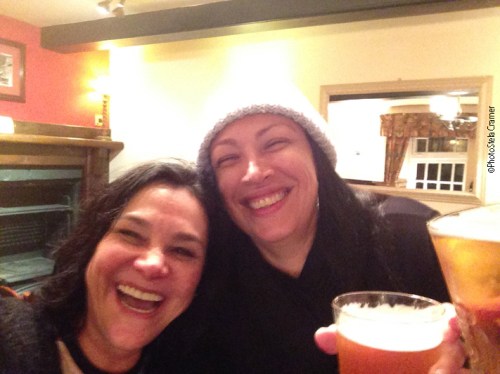
Recarregando as baterias / Recharging batteries
Heysham is a large coastal village in Lancashire, England, overlooking Morecambe Bay. It is a ferry port, with services to the Isle of Man and Ireland, and the site of two nuclear power stations. The bay is notorious for its quicksand and fast moving tides. In 2004, a Chinese group, around 20 cockle pickers drowned after being cut off by the tides.
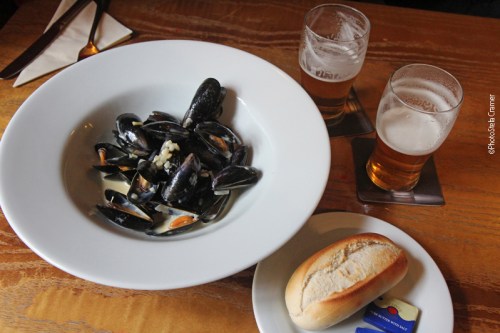
Mexilhões frescos como entrada / Fresh mussels for appetizer
O táxi nos deixou perto da Igreja de St. Peter, mas chovia, então entramos num pub para almoçar. We got off the taxi near St. Peter’s Church, but it was raining, so we went to the pub for lunch.
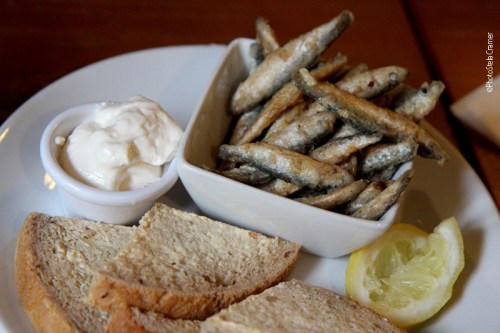
Muito famintas, pedimos duas entradas. Acertamos nos mexilhões, mas esse peixinho tinha gosto de pomada Hipoglós. Mesmo assim comemos. / Starving, we ordered two appetizers. The mussels were delicious, but these tiny fish tasted like baby ass ointment. Still, we ate it all.
O barman já nos olhava desconfiado. Acho que nunca tinha visto duas moças comendo e bebendo tanto. / The barman looked at us suspiciously. I guess he’d never seen two girls eat and drink so much.
Quando saímos do pub, felizes e alimentadas, a chuva tinha passado. E uma maravilhosa surpresa nos esperava no caminho. O dia ainda estava só começando. When we left the pub, happy and nourished, the rain had stopped. And a wonderful surprise was waiting for us on the way. Our day was just beginning.
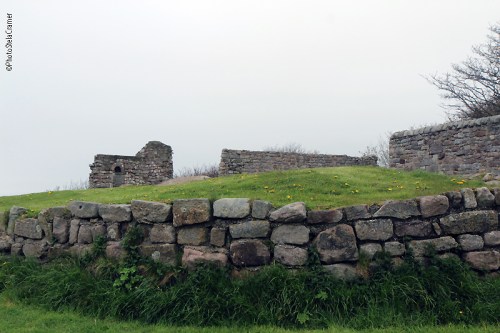
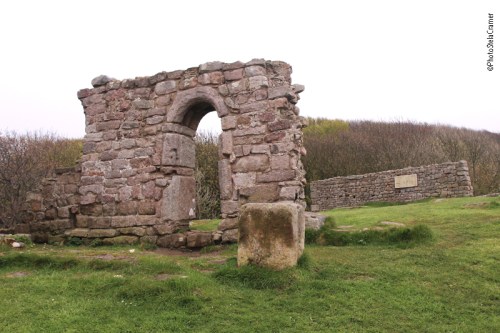
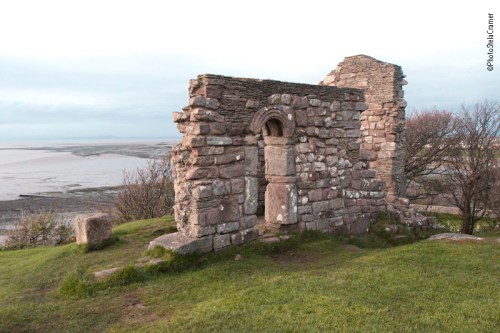
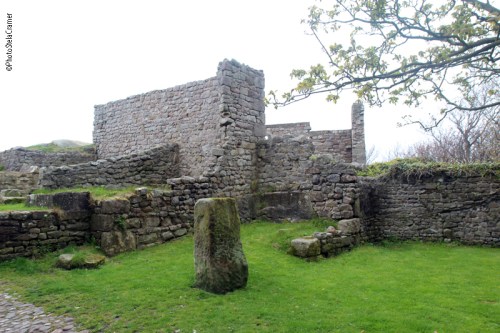
Ruínas da antiga Capela de St. Patrick / Ruins of the ancient St. Patrick’s Chapel
Compartilhe meu blog se você gostou.Share my blog if you liked it!
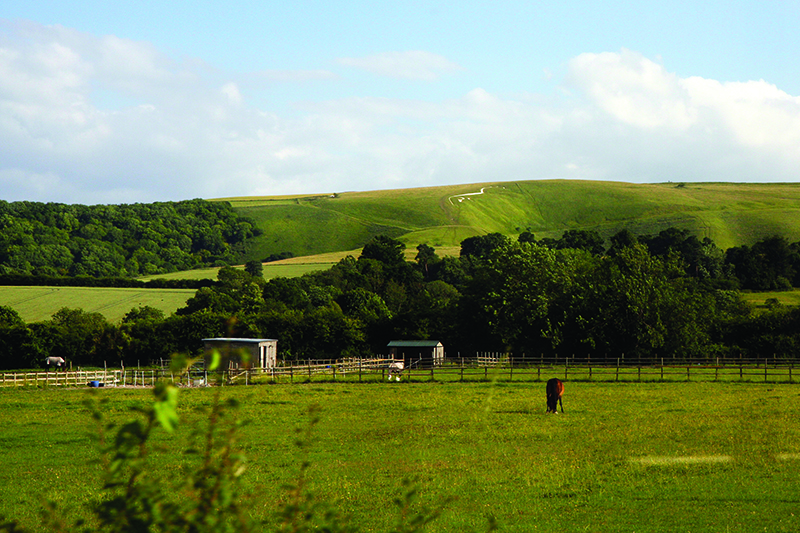
O cavalo de Uffington visto da estrada, pela janela do ônibus. /The Uffington Horse from the bus window, on the road.
Depois de hora e meia em Farington esperando, um único ônibus apareceu. Com o mochilão nas costas, fui falar com o motorista. chamava-se Steve, e foi promovido nesse dia a anjo da guarda do século. Disse-lhe que tinha vindo do Brasil especialmente para fotografar o cavalo de Uffington, por isso precisava chegar lá. Ele interrompeu o lanche que fazia, me olhou com cara de quem está vendo um extraterrestre , consultou uma planilha e pediu um momento para telefonar. Voltou dizendo que me levaria a Wantage, cidade onde nasceu Alfred, o rei que criou o Estado inglês. Lá eu devia pegar um outro ônibus, número tal, cujo motorista deveria ser seu amigo Jeff: “– Jeff vai levar você lá!” Assim sendo, embarquei esperançosa.
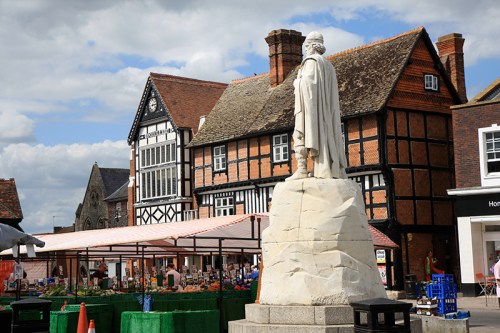
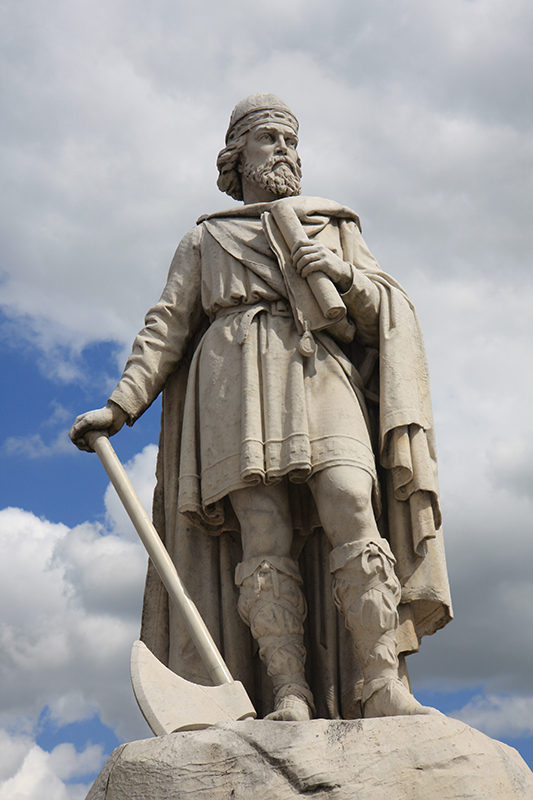
Estátua de Alfred, o rei que criou o Estado inglês, em Wantage /Alfred’s statue in Wantage. This King created the English state.
After one hour and the half waiting in Farington, a single bus appeared. With my huge backpack in my back, I went to talk to the driver. His name was Steve, and this day he’s been promoted to Guardian Angel of the century. I told him that I had come from Brazil specially to take photos of the Uffington Horse, so it was imperious that I arrived there. He interrupted his snack to look at me, with the expression of someone staring at an extraterrestrial. Then he consulted a spreadsheet and asked me to wait for a moment, to make a phone call. When he came back, he told me that he would drop me off at Wantage, King Alfred’s home town, from where I should hop on another bus , which number I have forgotten now; the driver should be his friend Jeff. “– Jeff will take you there!” So, my hopes were high.
King Alfred
Steve estacionou em Wantage, na rua perpendicular à praça principal, onde uma feira estava chegando ao fim e os comerciantes começavam a se recolher. Eu tinha vinte minutos para achar um toalete, comprar comida e bater fotos da estátua do Rei Alfred, a única coisa que havia naquele lugar. Steve, que a essa altura já era meu amigo íntimo, me apresentou a Jeff e recomendou-lhe que me deixasse na estrada junto ao cavalo. Mas foi categórico: eu tinha de pegar aquele mesmo ônibus de volta, pois seria o último. Se o perdesse teria de pernoitar em Uffington, sabem os deuses onde. Jeff repetiu o aviso quando parou para eu descer: deveria estar de volta em uma hora.
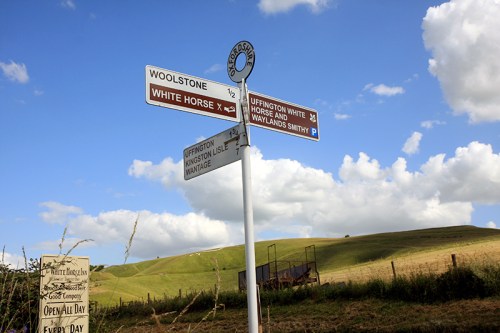
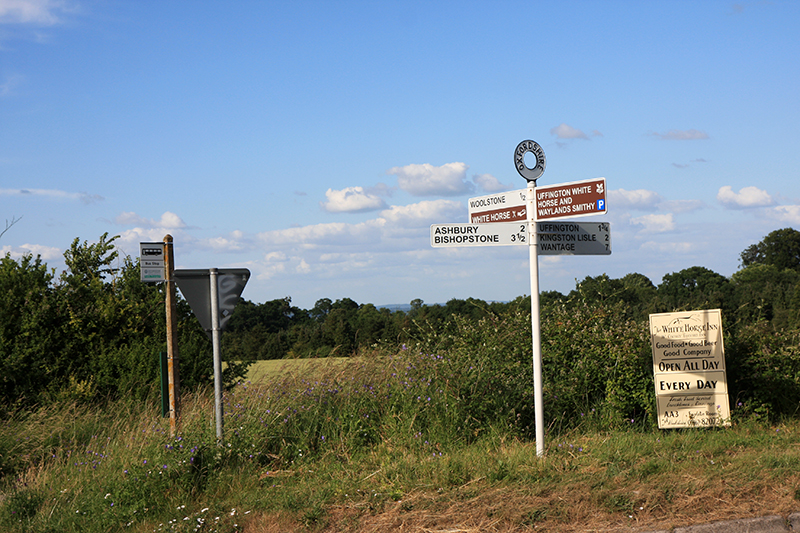
Ponto de ônibus com o cavalo ao fundo / The bus stop and the horse in the background
Steve parked the bus in Wantage, close to the main square where a street market was about to end and the merchants were starting to keep their stuff. I had 20 minutes to find a toilet, buy some food and take photos of King Alfred’s statue, the only thing that apparently existed in that village. By now, Steve and I were best friends. He’s introduced me to Jeff, and advised him to drop me off on the road, by the Horse. But he was categorical: I had to take that same bus on his way back, because there wouldn’t be another. If I lost it, I’d have to stay somewhere in Uffington for the night. Jeff repeated the advice when we arrived at my stop. I had one hour exact to be on the other side of the road to board the bus back.
Inicio da trilha / Where the footpath starts
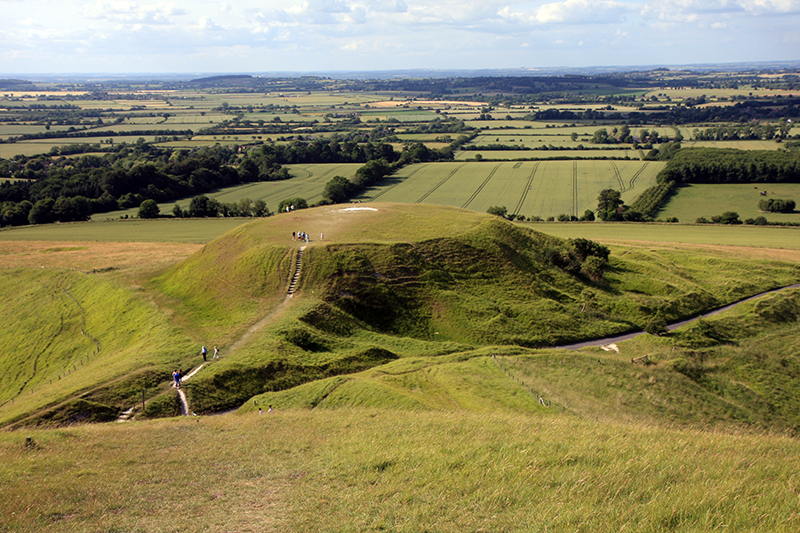
Saltei animada para encarar uma pirambeira com o mochilão nas costas, mais uma mochilinha e a bolsa da câmera. Atravessei um pasto cheio de ovelhas e esterco para subir enfim no monte onde, há séculos atrás, alguém desenhou a figura do cavalo. O dia estava lindo, céu azul, e um calor do cão. Logo eu já estava dissolvendo em suor. Havia um morrinho, Dragon Hill, mais abaixo, acessível por uma trilha logo abaixo da figura. Contudo, a melhor vista era a da estrada. Na verdade, a melhor vista seria aérea. No alto do morro, junto à figura, as linhas se apresentam em outra perspectiva, distorcendo o desenho.
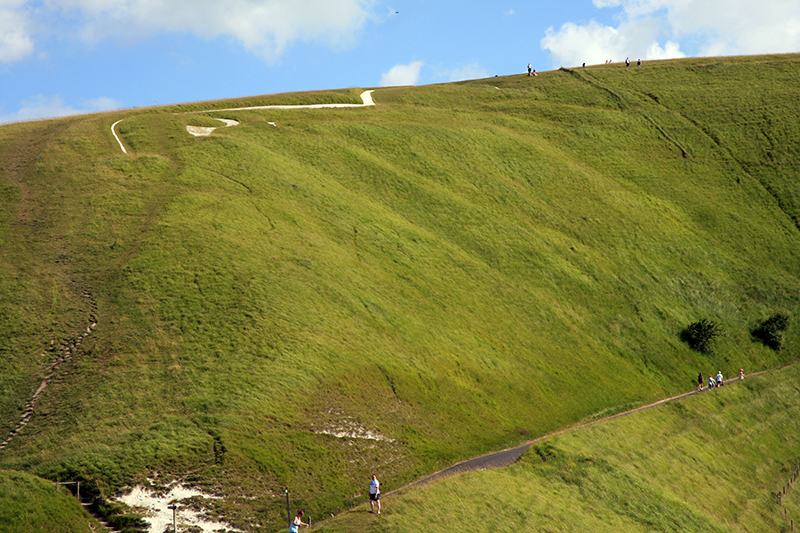
Mais ou menos 3km até o topo , pois o caminho dá voltas./ More than one mile to the top, because it’s not a straight way
I got off spirited for the walk, carrying the huge backpack, a small one and the camera bag. I crossed a field full of sheep and sheep shit to start going uphill where, centuries ago, someone has carved a horse figure. It was a magnificent day, blue sky, and a terrible heat. In minutes I was already bathed in sweat. There was a footpath to Dragon Hill, a mound below the horse, but still the best view was from the road. Actually, the best view would be aerial. On top of the hill, by the figure, the lines in perspective present a distorted drawing.
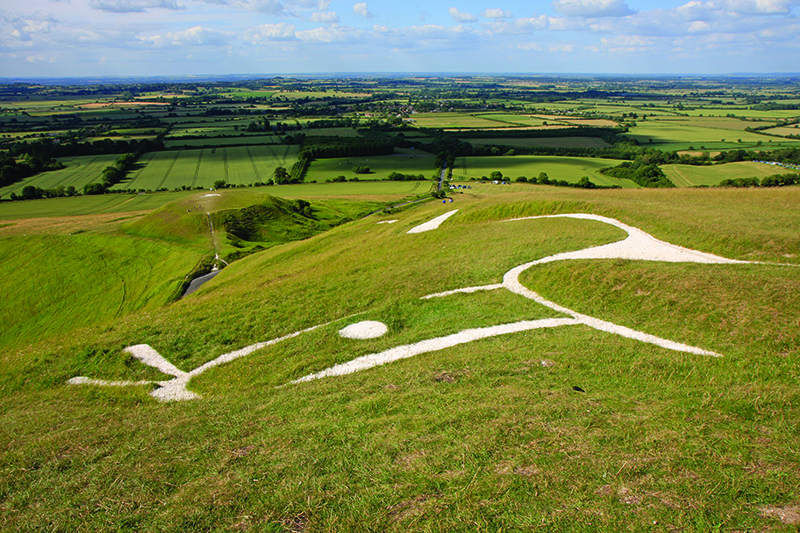
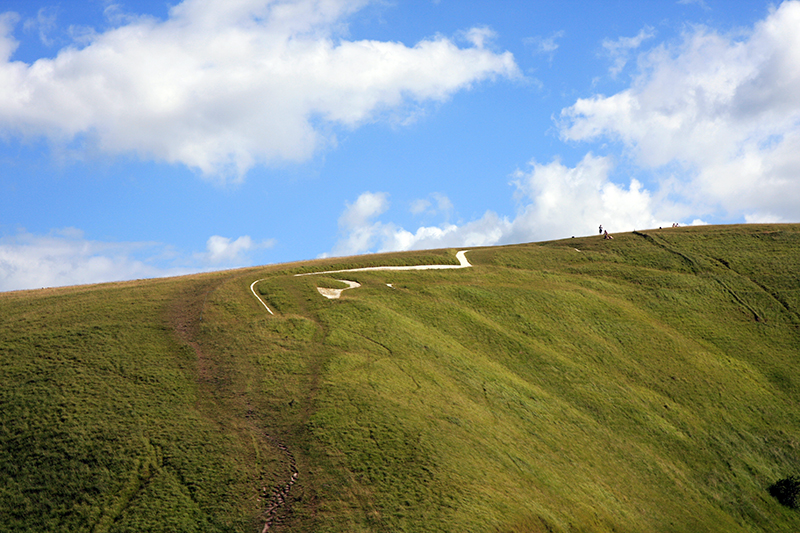
Uffington Horse’s eye and O cavalo não é apenas arranhado na superfície de giz. As linhas tem cerca de um metro de profundidade. / The horse was cut into the hill up to 3 ft deep, not simply scratched into the chalk surface.
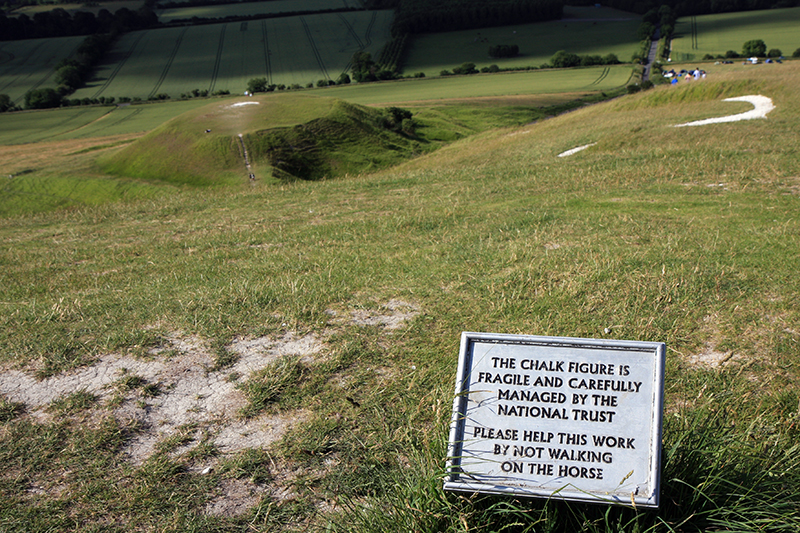
The chalk figure is fragile, please help National trust’s work by not walking on the horse. / A figura de giz é frágil; por favor ajude o trabalho do National Trust (Patrimônio Histórico) não andando sobre o cavalo
Eu precisaria ser rápida. Com peso nas costas, levara mais de vinte minutos para subir. Fiquei quase isso procurando bons ângulos para fotos e levaria quase o mesmo tempo para descer. Não voltei pelo mesmo caminho, pois havia outra trilha a partir dali. No entanto, esta saía na estrada um quilômetro antes (ou depois) do ponto de ônibus. Acelerei o passo para chegar lá.
Dragon Hill is a natural chalk hill with an artificial flat top, associated in legend with St George / uma colina de giz natural com o topo artificialmente achatado, associado à lenda de São Jorge
I had to be quick. Carrying the heavy backpack, it had taken me more than 20 minutes to get on hilltop. I stayed more 20 minutes looking for the best views, taking photos and it would take me more less the same time to go down. There was a different footpath from the mound where I was, and I followed it, but it met the road half a mile before – or after – the bus stop, so I speeded up to get there.
Vestígios de lodo retirados do cavalo foram datados da Idade do Bronze, algo entre 1380 e 550 AC. Seu desenho é semelhante ao de outras figuras na Arte Celta. Moedas da Idade do Ferro também foram encontradas contendo desenhos comparáveis ao Cavalo Branco de Uffington, reforçando a antiguidade do monumento. / Deposits of fine silt removed from the horse were scientifically dated to the late Bronze Age, sometime between 1380 and 550 BC. Its design is similar to comparable figures in Celtic art. Iron Age coins that bear a representation comparable have been found, supporting the Uffington White Horse’s early dating.
Bastou chegar ao ponto e largar a bagagem no chão… uma vontade incontrolável de fazer xixi tomou conta de mim. Não poderia me afastar dali ou perderia o ônibus. Percebi então que o mato à beira da estrada estava alto e, sem opção, abaixei-me atrás de uma touceira. Obviamente, naquele ponto ermo e deserto do planeta onde nunca passava ninguém, neste exato momento apareceu um grupo caminhando. Eram quatorze pessoas – velhos, crianças e não um, mas dois cachorros, felizmente na coleira. Ainda pude esconder o rosto entre os braços, revelando apenas o inevitável: o branco das nádegas entre a folhagem. Eles não poderiam me reconhecer em caso de um novo encontro.
Muitos visitantes neste dia de verão / Many visitors in this summer day
I had just arrived at the bus stop and put the luggage on the floor when I felt a terrible need to pee. I couldn’t risk leave that spot and lose the bus. I noticed that the hedges were high by the road so, out of option, I crouched behind some bushes. And obviously – there, in the middle of nowhere, where no one ever walks – as soon as I started to pee a trekking group showed up. Around fourteen people: seniors, kids and not only one but a couple of dogs too, fortunately on the leash. I could only hide my face in my arms, although my white ass was glowing among the shrubs. Anyway, they couldn’t recognize me if we ever met again.
O Cavalo de Uffington carvado na colina e um cavalo no gramado. / Uffington Horse carved in the hill and a real horse grazing
Os britânicos passaram como se não estivesse acontecendo nada. Foi o tempo exato para me recompor e atravessar a rua trinta segundos antes de ver o ônibus virando a esquina. Jeff se alegrou quando me viu: “– Você conseguiu! Muito bem!” “– E bem na hora! “– respondi satisfeita. Mal sabia ele…
O ponto de ônibus e o matinho / The bus stop and the bushes
The British group walked by as if nothing was happening. I had just enough time to finish, recompose and cross the road thirty seconds before the bus appear around the corner. Jeff seemed very happy to see me: “– You made it! Well done!” “– And right in time! “- I answered joyfully. He had no idea…
De volta a Wantage, esperando o ônibus para Londres/ Back in Wantage, waiting for the bus to London
51.601076-1.560180
Compartilhe meu blog se você gostou.Share my blog if you liked it!
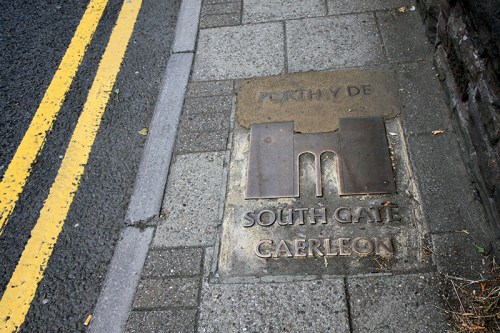
Últimas imagens de Caerleon: marcos indicando coisas que não existem mais / Last Caerleon pics: signs pointing out things that are no more
No dia seguinte, voltaria à Inglaterra. Alguns amigos que moravam em Oxford tinham me convidado a pernoitar na casa deles, portanto eu iria.
The next day I’d be on my way back to England. A couple friend was living in Oxford and had invited me to stay the night with them, so I would not decline the offer.
Rua principal de Caerleon /Main Street in Caerleon
O trem saía no meio da tarde, tive tempo de fazer um tour pela cidade pela manhã. Era época de liquidação nas lojas de Cardiff. Quis aproveitar e comprei umas roupinhas e acessórios para minha filha toda animada… nem me passou pela cabeça que aquilo não cabia na mochila! Antes de pegar o trem, fui ao correio e despachei tudo numa caixa para o Brasil, juntamente com o dragãozinho vermelho de pelúcia. Distraída, esqueci a bolsa da loja, onde tinha trazido as roupas, no chão ao lado do balcão do Correio. Que susto! A funcionária veio atrás de mim aos gritos. Me deu a maior bronca, gesticulando muito e, por fim, entendi o porquê: medo de bombas e terrorismo. Britânicos – aliás, americanos também – tem paranóia com bolsas e objetos abandonados, ainda que seja uma bolsa de papel vazia.
Antes de deixar Caerleon, parei aqui para uma refeição, no local onde ficava a Porta Praetoria – portão principal do forte romano / Before leaving Caerleon I stopped here to eat something. This place stands where was located the ancient Porta Praetoria, main gate to the Roman military city
The train would leave in the afternoon, so I had time to make a sightseeing tour in the morning. Most shops in Cardiff were on sales, so I decided to take advantage of that and buy clothes and stuff for my daughter. I was so happy that I didn’t realize that all that stuff would never fit in my backpack! So, on my way to the train station I stopped by the post office and dispatched it all in a box to Brazil, including the stuffed red dragon. My head was elsewhere and I forgot the shopping bag, on the floor by the Post Office desk. What a shock! The clerk came after me, scolding and screaming, and it took me a while to understand why: the British are very much afraid of bombs and terrorism. Actually , americans too – they have this paranoia with objects left behind, even an empty paper bag.
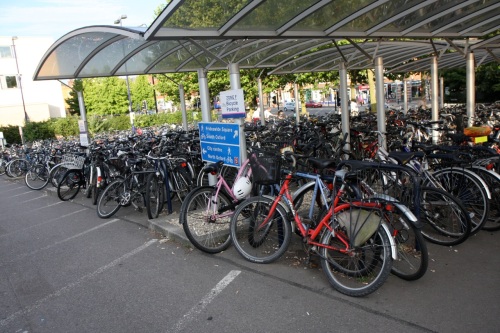
Bicicletário na estação de trem em Oxford / Bike parking at Oxford train station
Cheguei a Oxford em plena Copa do Mundo, dez minutos após o início do jogo do Brasil contra a Holanda. Desci do trem com a camisa da seleção brasileira por cima da roupa e estava esperando para atravessar a rua quando um taxista indiano parou o carro na minha frente, disse que o Brasil estava ganhando de 1 x 0 e me indicou um pub onde estariam assistindo o jogo. Agradeci e corri para lá, pois só iria encontrar meus amigos à noite. As apostas estavam todas no time do Brasil. Entretanto, no pub presenciei o mico do ano: o time brasileiro foi derrotado vergonhosamente e voltou para casa no dia seguinte!
As apostas no Brasil estavam altas/ Bets in Brazil were high
I arrived in Oxford in the World Cup season, ten minutes after the game Brazil x Netherland had started. I had got off the train wearing the yellow Brazilian team shirt over my clothes and was waiting to cross the street when a taxi stopped by me. The driver, an Indian, told me that Brazil was winning 1 x 0 and showed me a pub where I could watch the game. As I was supposed to meet my friends only by night, I thanked him and ran to the pub. Bets in Brazil were high! However, my country suffered a terrible humiliation, losing by 3 x 1 and flying back home the next day.
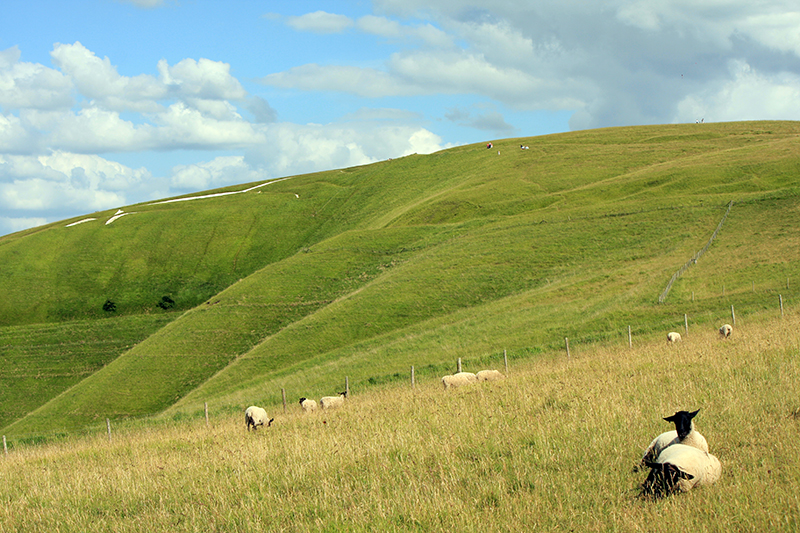
O cavalo de Uffington à distância. Acabei chegando lá, continue lendo… /The Uffington Horse from the distance. I eventually got there. Keep reading.
Eu também estaria voltando logo. Mas iria ainda visitar outras famosas figuras de giz carvadas nas colinas inglesas: o cavalo branco de Uffington (o mais antigo dos quatro que existem no Reino Unido) e o Gigante de Cerne Abbas. Eu já tinha visitado o Long Man de Wilmington (ver post 106).
Centro da cidade – Farington downtown
I should be leaving soon too. But before that I was going to see other famous English chalk figures: the White Horse of Uffington (the oldest of the four chalk horses in the UK) and the Cerne Abbas Giant. I had already visited the Long Man of Wilmington (see post 106).
Restaurante no centro de Farington / Farington downtown restaurant
À noite, meus amigos Eduardo & Dani me ajudaram a traçar o itinerário para Uffington. Na manhã seguinte, me deixaram num ponto de ônibus onde embarquei para um lugar chamado Farington, obviamente um fim de mundo. Dali saía diariamente um ônibus para Uffington… menos naquele dia. E nem era domingo, ainda era sábado! Respirei fundo. Tinha um problema para resolver.
Fiquei ali muito tempo esperando alguma solução / I’ve been stuck there a longtime, waiting for a solution
By night, my friends Eduardo & Dani helped me to plot the trip to Uffington. Next morning, they left me in a bus stop where I’ve boarded the bus to somewhere called Farington, obviously by the end of the world. From there a bus was supposed to go daily to Uffington… except that very day. And it was not even Sunday, it was a Saturday! I took a deep breath. I had a problem.
Compartilhe meu blog se você gostou.Share my blog if you liked it!
Se esta era a Távola Redonda, deveria haver centenas de cavaleiros! / If this was the Round Table, there must have been hundreds of Knights!
Dizem que o túmulo de Arthur em Glastonbury é falso, uma invenção dos monges para atrair peregrinos e dinheiro. A história prova que os focos de resistência britânica contra todas as invasões se concentraram na fronteira com a Escócia, na Cornualha e País de Gales – onde fica Caerleon. Isso pode confirmar a teoria de que ali se encontravam os melhores guerreiros e generais, e entre eles podiam estar Arthur e seus cavaleiros. O autor Stephen E. Lawhead atribui a Aurelianus Ambrosius a paternidade de Arthur.
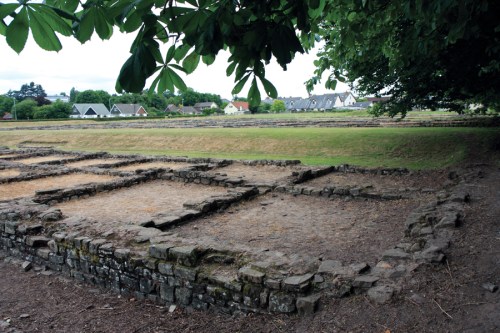
Sítio arqueológico da fortaleza romana de Isca Augusta / Archaeological site of Isca Augusta Roman barracks
Some say that Arthur’s grave at Glastonbury is fake, priests’ fabrication to attract pilgrims and their money. History shows that the main spots of British resistance against all invasions were concentrated in the Scottish borders, Cornwall and Wales – where Caerleon is located. That may confirm a theory of these places having counted on the best warriors and generals, Arthur and his Knights among these. The author Stephen E. Lawhead imputes Arthur’s fatherhood to Aurelianus Ambrosius.
Murais nas ruas sugerindo que Caerleon era a Camelot de Arthur / Street boards suggesting that Caerleon was Arthur’s Camelot
Assim, o País de Gales também reclama a origem de Arthur. De toda forma, é significativo que o Pendragon, título de Uther, seja o símbolo do país. A lenda também conecta o mago Merlin a Gales. A estória é a seguinte: o rei Vortigern* decidiu construir uma fortaleza em Snowdonia (uma região de Gales) e escolheu um local estratégico. Porém, uma coisa estranha ocorreu quando os trabalhadores começaram a lançar as fundações e paredes de pedra do castelo. Tudo que era construído durante o dia desabava misteriosamente durante a noite.
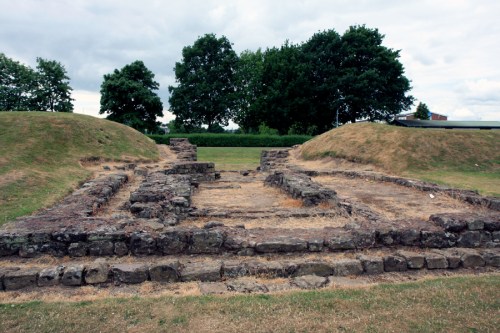
Vista do sítio arqueológico da fortaleza romana de Isca Augusta / View of the archaeological site of Isca Augusta Roman barracks
So, Wales claims Arthur’s origins too. Anyway, it’s meaningful that the Pendragon, Uther’s title, is the symbol of Wales. The legend also links the wizard Merlin to Wales. It goes like this: King Vortigern* had decided to build a stronghold in Snowdonia ( a region in Wales) and had chosen a proper place, strategically located. But the weirdest thing happened when the building began. The foundations, the stone walls, everything that was built in the daytime collapsed mysteriously by night.
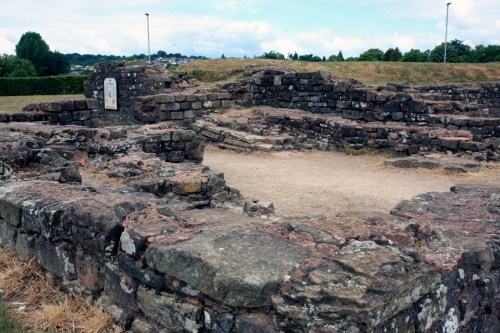
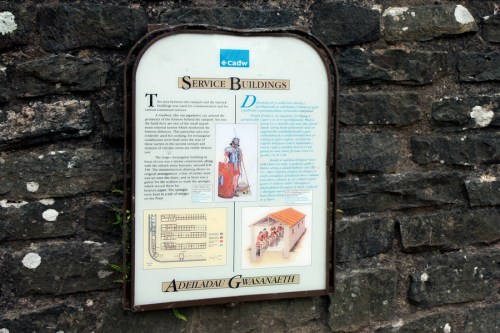
Painéis explicativos nas ruínas / Explanatory panels in the ruins
Os magos da corte de Vortigern recomendaram que o sacrifício de uma criança que não tivesse pai fosse feito no local, para que o sangue derramado fortalecesse a terra. Tal criança foi localizada e trazida à presença do rei. Tratava-se, entretanto, de Merlin, que seria reconhecido como o maior druida de todos os tempos.
* Vortigern foi um general do sec. V, um rei dos britânicos, ou pelo menos assim considerado pelo escritor Bede. Diz-se que ele contratou os mercenários saxões Hengist e Horsa para lutar contra os Pictos e os Escoceses. Porém estes acabaram por se voltar contra ele, e mataram seu filho. Hengist conquistou Kent, tornando-se o primeiro de uma linhagem de reis. Por este erro, atribui-se a Vortigern a perda da Grã- Bretanha para os saxões.
Outra vista das ruínas do quartel de Isca Augusta / Another view of Isca Augusta’s barracks ruins
Vortigern’s magicians consulted their oracles and recommended a blood sacrifice to strengthen the soil. The victim should be a fatherless child, and such a kid was eventually found and brought to the King’s presence. But the child happened to be Merlin, who would be renowned as the greatest Druid ever.
* Vortigern was a 5th-century warlord, a king of the Britons, at least connoted as such in the writings of Bede. He’s said to have hired the saxon mercenaries Hengist and Horsa to fight the Picts and the Scots. But they eventually betrayed him, killing his son and Hengist successfully conquered Kent, becoming the forefather of its kings. So, Vortigern is blamed for his misjudgement and the loss of Britain to the saxons.
O encontro de Vortigern e Merlin, de acordo com Geoffrey de Monmouth em sua História dos Reis Britânicos / Vortigern meeting the young Merlin, as related in Geoffrey of Monmouth’s Historia Regum Britanniae
Merlin se dirigiu ao rei afirmando que aqueles magos ignoravam que, sob o lugar escolhido para a construção, havia um lago subterrâneo, onde habitavam dois dragões, um vermelho e um branco, que lutavam durante a noite e dormiam de dia. A construção desabava em consequência da luta.
Merlin told Vortigern that his magicians ignored that under the exact building ground, there was an underground pond, home to two dragons, one red and the other white, who would sleep the day and wake up at night to fight each other. Their fierce battle caused the building to collapse.
Há escolas em volta das ruínas. Aqui, estudantes no intervalo de aula / The ruins are surrounded by schools. Here, students during class break
Vortigern ordenou que os servos cavassem; o lençol d’água foi localizado e, à noite, escondidos, os nobres presenciaram o surgimento das criaturas. O dragão branco parecia vencer o vermelho, mas, no último instante, este revidava e derrotava seu oponente que, ao se retirar para as profundezas, derrubava toda a estrutura da fortaleza. Intrigado, o rei pediu ao garoto que interpretasse o significado daquela visão.
Vortigern ordered his subjects to dig in the spot; the pond was found and, at night, the noblemen, hidden in the bushes, witnessed the dragons show up. The white one at first appeared to beat the red but, in the last moment, the red would fight back and defeat his opponent. The white dragon’s retreat to the depths made the whole built structure fall to the ground. The king, puzzled, asked the boy to interpret the meaning of such vision.
Turistas se divertem / Tourists having fun
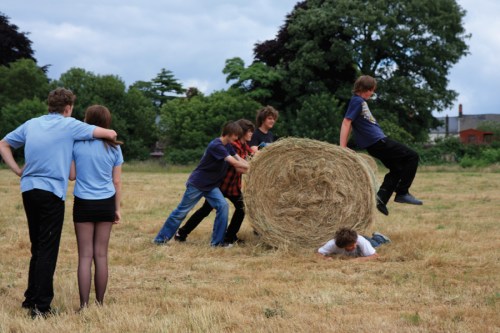
Estudantes se divertem / Students having fun
Merlin explicou que o dragão branco representava o povo invasor que quase chegaria a dominar a ilha de uma ponta à outra, enquanto que o vermelho representava o povo bretão que se levantaria e viria a expulsar os invasores. Impressionado, Vortigern libertou Merlin e o elevou à categoria de seu conselheiro. Daí o dragão vermelho ser o emblema dos galeses.
Merlin explained that the white dragon impersonated the invaders, who would almost succeed to conquer the isle from one end to the other. The red dragon was the British people, who would raise to defeat and kick out the invaders. Impressed, Vortigern freed Merlin and made him his counsellor. And this is why the red dragon is the Welsh symbol.
Outra escola – primária – junto às ruínas / Other school – elementary – neighbor to the barracks
Eu tinha comprado, na loja de souvenirs do Cardiff Castle, um irresistível dragãozinho vermelho de pelúcia. Nem lembrei que teria de carregá-lo na mochila todo o resto da viagem. I had bought an irresistible stuffed red dragon at Cardiff Castle’s souvenir shop. It hadn’t crossed my mind that I’d have to carry it in my backpack all along the trip.
Compartilhe meu blog se você gostou.Share my blog if you liked it!
O museu do castelo de Cardiff dá saída para um jardim – na verdade, só se entra no museu se quiser, pode-se atravessar direto um enorme gramado onde, ao fundo, erguem-se as ruínas (muito bem restauradas) do Cardiff Castle. Pode-se subir três lances de escada até a torre principal, que ostenta no cume a bandeira do dragão vermelho, símbolo de Wales. O Pendragon!
From the Castle Museum you enter a yard – actuallu you can go straight into the yard where, in the background, stand the (very well preserved) ruins of Cardiff Castle. Going up three sets of stairs you reach the Tower, where the red dragon, the Pendragon flag, unfolds.
Lá de cima, avista-se um círculo de pedras no parque vizinho ao castelo. / From the Tower you can see a stone circle down in the neighbouring park.
Este parque antes fazia parte do castelo, mas foi graciosamente doado à municipalidade pelo proprietário, o 5º Marquês de Bute, em 1947. O nobre é citado ad nauseum em quase todos os tópicos do audioguide do museu. O parque tornou-se público; é enorme, lindo e limpo.
O Parque Bute compreende 53 hectares de jardins paisagísticos e áreas de lazer / The Park comprises 130 acres (53 ha) of landscaped gardens and recreation grounds
This park was once part of the Castle until the owner, the 5th Marquess of Bute, donated it to the Council in 1947. The nobleman is mentioned in each and every Museum’s audioguide topic. The park nowadays is public; it’s huge, beautiful and clean.
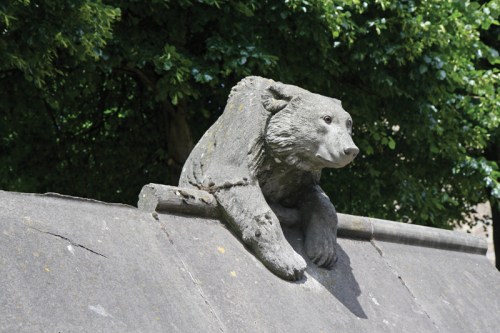
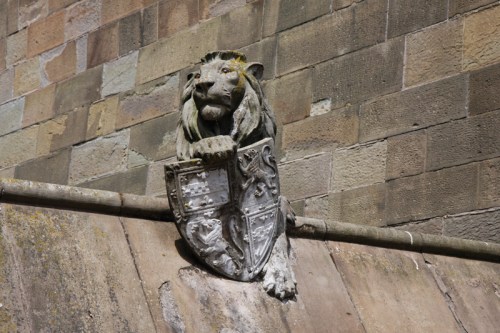
O Muro dos Animais, feito de pedra com diversos bichos esculpidos no topo/ Animal Wall, a stone wall topped by sculpted animal heads.
Os bichos parecem estar pulando o muro para fugir do parque / The animals seem to be on the run over the wall
Trata-se de humor britânico: o parque fora projetado para ser um zoológico. / It’s British humor : the Park had been designed to be a Zoo
Círculo de pedras no Bute Park / Stone circle
Apenas a pedra central do círculo é realmente antiga. / Only the stone in the middle is really ancient.
As demais pedras foram postas em 1880 para celebrar o primeiro Eisteddfod oficial do país, um festival anual nos moldes daqueles onde os antigos bardos apresentavam música e canções do folclore. Reviver essa tradição foi ideia do druida Iolo Morgwang, um estudioso que pretendia valorizar a herança da cultura celta. No País de Gales, seu projeto parece ter sido bem sucedido.
The rest of the stones were put there in 1980 to celebrate the first official Eisteddfod in the country, an yearly festival like the ancient ones, where Bards presented music and folk songs. Revive this tradition was Druid Iolo Morgwang’s idea, to reinforce the celtic heritage. In Wales, apparently, his project has thrived.
Entrada pela Rua Norte, no muro esquerdo do castelo /Entrance in North Road by Cardiff Castle left Wall
Tarde de primavera / Springtime afternoon
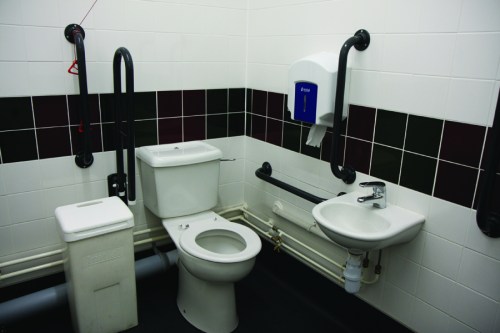
Banheiro público no Parque Bute / Public restrooms…
…com trocador de bebê e estrutura para portadores de deficiência./ …diaper changer and facilities for the disabled
Em Cardiff tudo funciona. O Museu Nacional é gratuito; além da Galeria de Arte, apresenta enorme variedade de material geológico. Vi uma animação da configuração dos continentes sobre a crosta terrestre desde os primórdios. Assiste-se à separação de enormes blocos, a submersão de áreas e o levantamento de montanhas e vulcões. Aprendi que o País de Gales já esteve no Equador antes de ir parar quase no Mar do Norte.
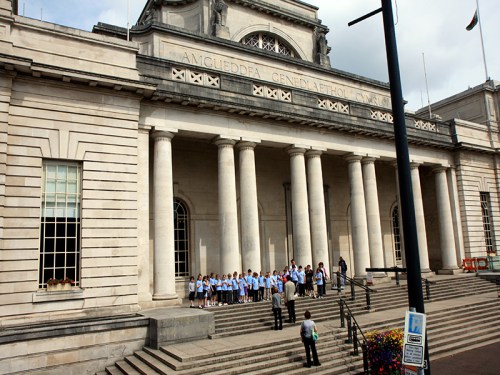
Estudantes visitando o Museu / Students visiting Cardiff National Museum
Everything works in Cardiff. The National Museum is free; besides the Art Gallery, it offers a large range of Geological stuff. I ‘ve watched a short movie about the continents’ conformation on Earth’s crust since its origins. You see massive blocks being torn apart; large extents of land sinking and the rise of mountains and volcanos. I’ve learned that Wales was once located in Ecuador before settling down where it is now, almost in the North Sea.
Cardiff Bridge – the southern end of the park / na Saída Sul do Parque
Voltando ao albergue, parei no pub da esquina. Um time de rugby da França chegou, mas de 20 jogadoress invadiram a varanda e depois de muito tumulto formaram um grupo para um deles bater uma foto. O rapaz estava todo atrapalhado com a câmera. Eu já sabia o nome dele – aliás, de quase todos; parecia que a diversão deles era ficar berrando um pro outro. Yves! Jules! Marcel! Resolvi interferir: Hey, Jules! Laisse-moi prendre la photo! Allez-y! Todo mundo riu, peguei a câmera e fotografei o grupo. Alguns vieram gentilmente me trazer um prato de queijo e uma pint.
On my way back to the hostel, I stopped at the pub. A French rugby team arrived. Around 20 players entered the porch in uproar, and grouped together for a photo. The guy supposed to take it was clearly gawky. By that time I already knew their names. Apparently their greatest fun was to call out loud one another: Yves! Jules! Marcel! So I felt pity for the clumsy photographer and took the camera from his hands: “Hey, Jules! Laisse-moi prendre la photo! Allez-y! ” Everybody laughed. I took the picture, and some of them were so nice as to bring me a cheese plate and a pint.
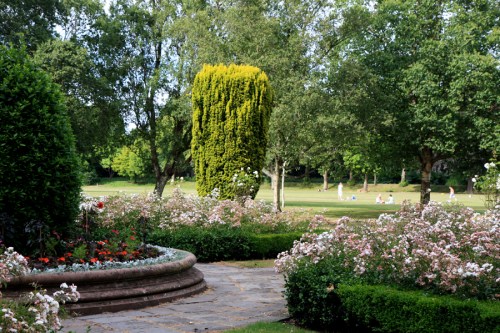
Paisagismo britânico / British landscaping
Depois de quinze minutos de papo, um músico dentro do pub começou a tocar e as pessoas foram entrando. Fiquei ouvindo um bom tempo; quando cansei fui embora tomar banho e dormir. O dia seguinte seria muito importante: planejara ir a Caerleon, onde, segundo As brumas de Avalon, localizava-se a corte de Arthur, antes da construção de Camelot no chamado “País do Verão”.
After chatting for a while, we’ve heard a guitar player starting his gig in the pub. Everybody went inside. After some time I’ve got tired and left, longing for a shower and a bed. Next day would be very important: I planned to go to Caerleon where, according to The Mists of Avalon, was Arthur’s Court , well before the building of Camelot in the so-called Summer Country.
Compartilhe meu blog se você gostou.Share my blog if you liked it!































 Ponto de ônibus com o cavalo ao fundo / The bus stop and the horse in the background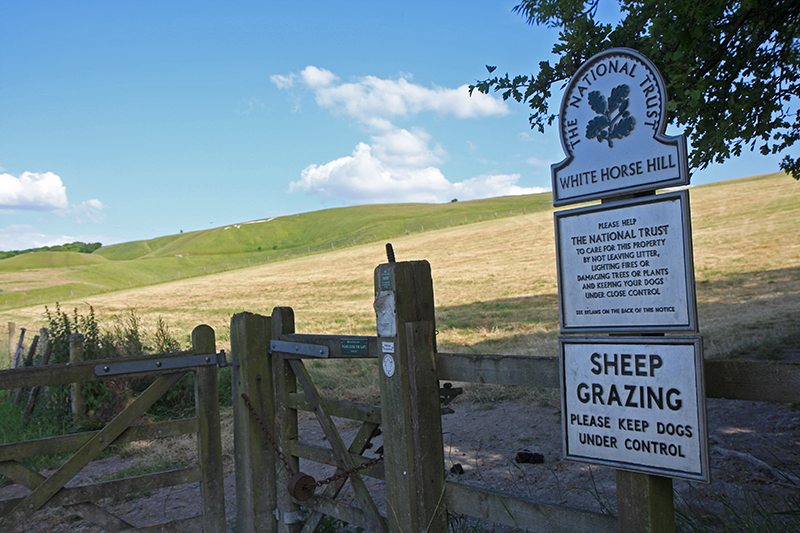














 Avalon