
Pegamos o barco para Holm of Papa Westray (também chamada de Papay Holm), uma ilhota na costa leste, atravessando a baía de South Wick, conhecida por ter três câmaras mortuárias Neolíticas, das quais a maior (ao Sul) é impressionante, com uma longa passagem de entrada e diversas pequenas câmaras acessíveis pela área central.

A short boat trip across South Wick took us to the Holm of Papa Westray, an islet off the eastern shore notable for its three Neolithic Chambered Cairns, the largest of which (South Cairn) is the most impressive, with a very long entrance passage and numerous burial chambers off a central area.


Cerca de 150 espécies de pássaros podem ser avistados na ilha, que é Área de Interesse Científico Específico, além de Área de Proteção Especial, para a reprodução de aves como a Arctic Skua (nas fotos).
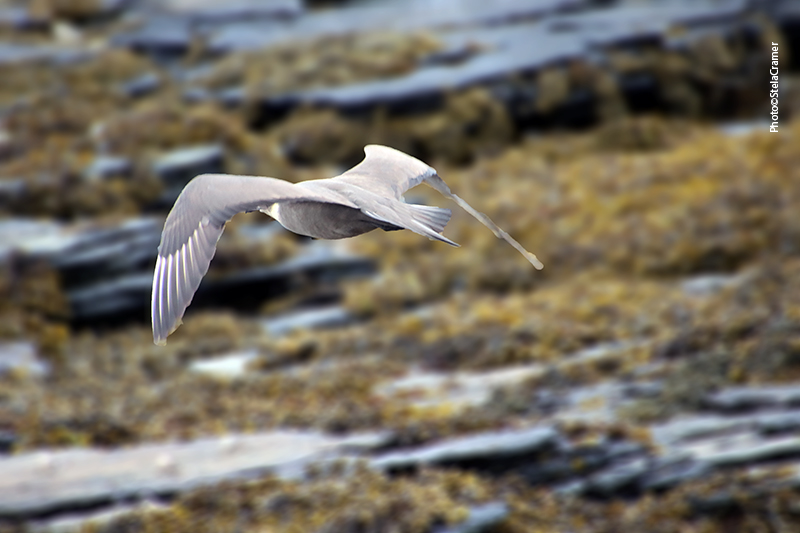
Around 150 species of bird have been seen around the island, which is a Site of Special Scientific Interest, and a Special Protection Area as an important breeding site for birds as the Arctic Skua (in the photos).


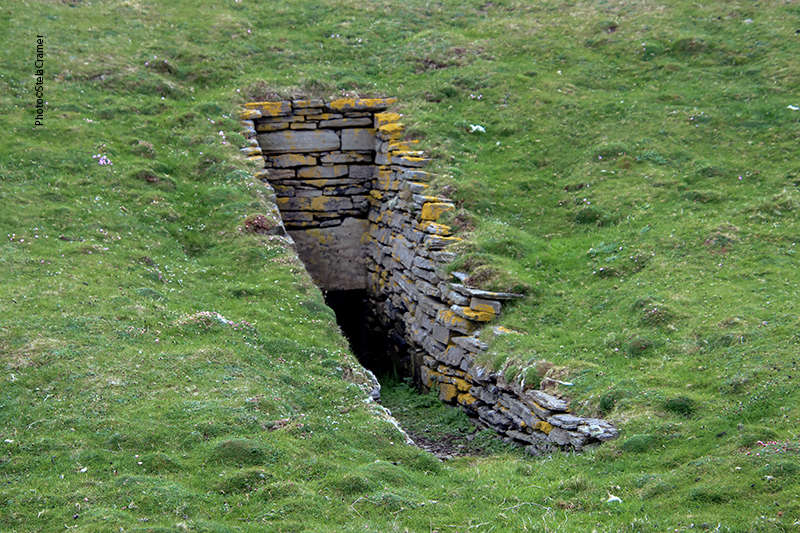
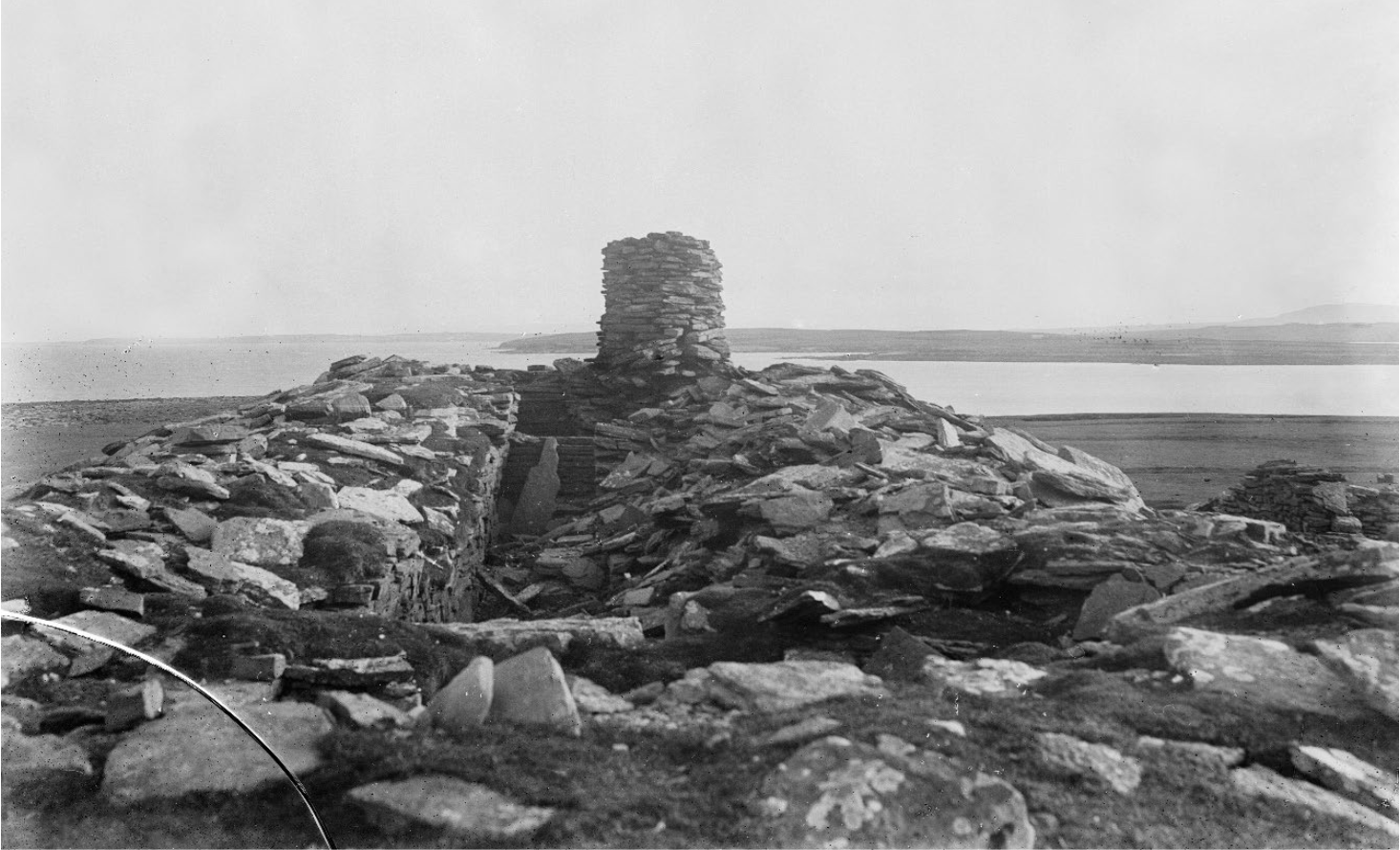
Após cinco minutos de caminhada chegamos à Câmara Mortuária ao Sul, um monumento de 5.000 anos. Consiste numa câmara principal retangular, com subdivisões, da qual saem outras doze pequenas câmaras. Foi escavado em 1849, mas depois disso ficou exposto aos elementos e estava se deteriorando, até que em 1930 passou a ser protegido pelo Estado. Construíram uma cobertura de concreto com turfa por cima para preservar a estrutura.


A five-minutes walk took us to The Holm of Papa Westray South Chambered Cairn, a 5.000 years old monument comprising a large subdivided rectangular chamber, from which twelve small cells open out. It’ been excavated in 1849, but after that, left open to elements, the site deteriorated badly until it was taken into State Guardianship in 1930, roofed in concrete and turfed over to preserve it.

Atualmente o visitante desce por uma das escotilhas na cobertura, que tem uma escada, mas a entrada original construída no Neolítico era por uma longa e estreita passagem. Este acesso agora está bloqueado por uma grade.

Today, visitors descend into the chamber through a hatch in the cairn’s reconstructed roof and down a vertical ladder, but in Neolithic times entry was through a long, low and narrow passage, now blocked by a grill.

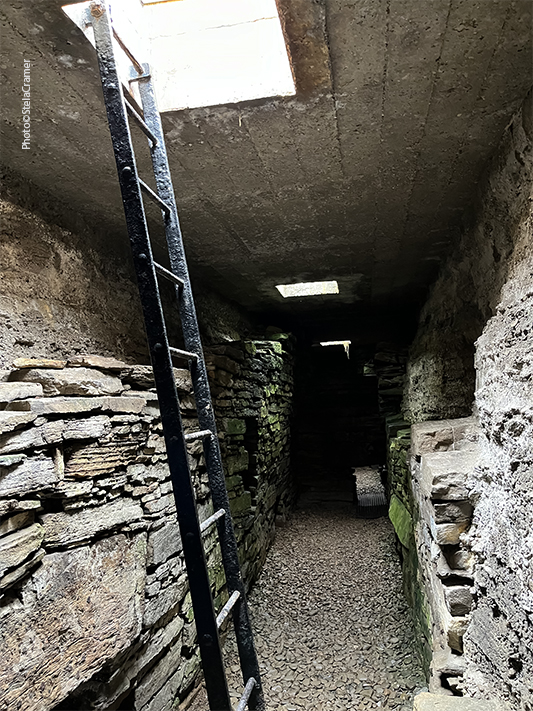
Main chamber, north-west transverse wall in the background
A câmara principal se divide em três, sendo a parte central com 13.5m de comprimento. De cada lado, uma estreita passagem aberta numa parede transversal dá acesso a uma câmara menor. O compartimento a noroeste (foto acima) mede 2,2m, enquanto a sudoeste (foto abaixo) temos um espaço maior, com 3,4m.
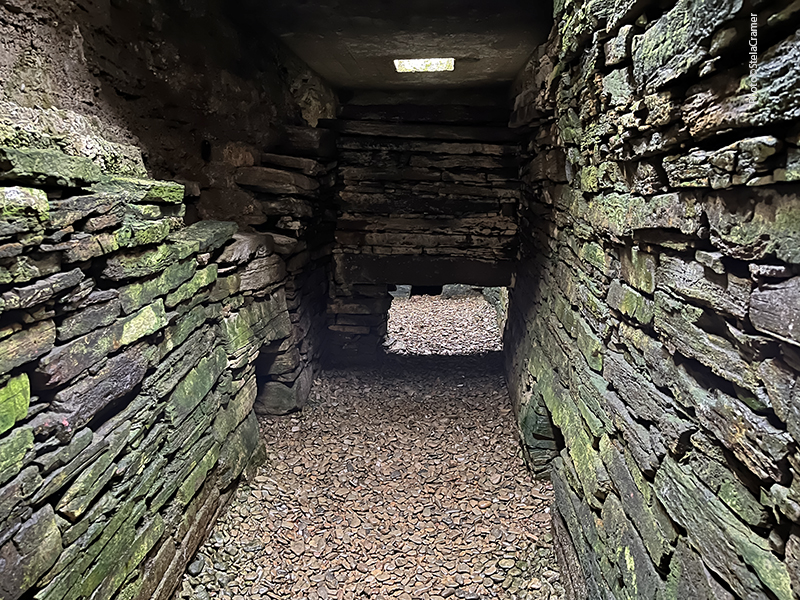
Main chamber, south-west transverse wall in the background
The main chamber is divided into three parts, with the largest, central part measuring 13.5m in length. At either end are smaller spaces entered by small openings in the transverse walls. At the north-east end this compartment is 2.2m long, at the south-west end (photo above) it is 3.4m.

Os desenhos encontrados neste monumento são da maior importância. Na câmara menor a sudoeste, temos um lintel decorado com o motivo que pesquisadores chamam de “sobrancelhas” (um par de círculos sob dois arcos).

The artwork found in this cairn are extremely important. In the south-west end cell, a decorated lintel bears two pecked ‘eyebrow’ motifs (a pair of cup-marks under double arcs).

É muito raro encontrar tais exemplos de arte em seu lugar original. Os desenhos aqui são variados e encontram paralelo em artefatos de outros sítios, como Skara Brae, Links of Noltland e Ness of Brodgar. Entretanto, Papay Holm ao Sul é o único monumento funerário Neolítico em Orkney onde ambos os motivos (furados e entalhados) foram encontrados juntos.
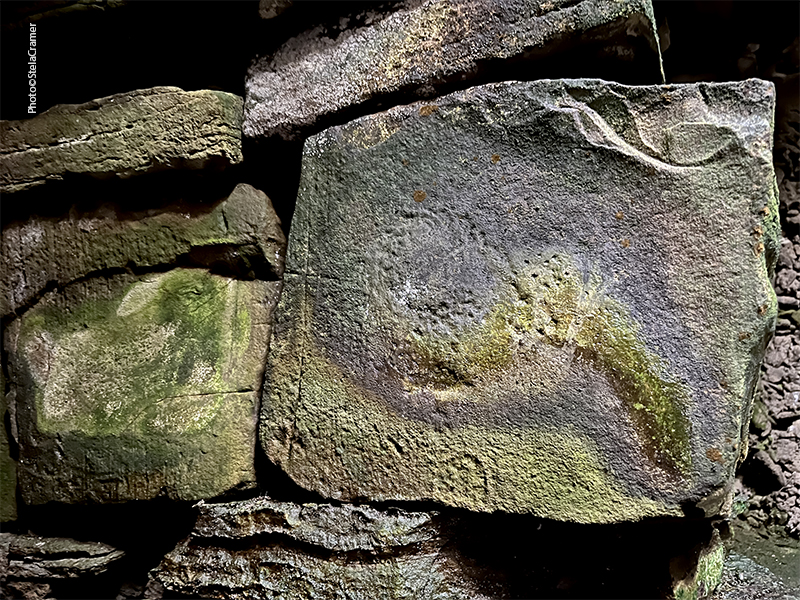
It is very rare for such artwork to survive in its original setting. The designs here are varied and can be paralleled at artifacts from other sites such as Skara Brae, Links of Noltland and the Ness of Brodgar. However, Papay Holm South is the only Orcadian Neolithic funerary site in which both pecked and incised decoration have been identified.

Não há provas quanto à finalidade do monumento; entretanto, comparando com outros sítios semelhantes em Orkney, se acredita que foi construído para abrigar os restos mortais de uma comunidade.
No evidence for the uses of the cairn survives, however it is assumed, on comparison with other similar sites in Orkney, that it was constructed with the intention of holding the mortal remains of a community.

A Câmara Mortuária de Papay Holm ao Sul é um exemplo bem preservado da chamada “Câmara tipo Maeshowe”: uma câmara retangular com entrada por uma longa passagem pela lateral, com acesso a cubículos menores, decoração em muitas pedras e uso de blocos muito grandes na construção, posicionados cuidadosamente em determinados pontos, usando inclusive pedrinhas de fixação para ajustar com precisão o alinhamento e orientação. Tais monumentos mostram a habilidade dos construtores Neolíticos, tanto no planejamento como na construção em si. Veremos Maeshowe na sequência.

Holm of Papa Westray South chambered cairn is a well-preserved example of a “Maeshowe-type of Cairn”: a rectangular chamber entered at the side via a long passage, with cells leading off the chamber, several decorated stones and many very large blocks of stone used in the construction, carefully placed in certain locations, often using small pinning stones to precisely adjust their alignment and orientation. These monuments displays the skill of the Neolithic builders in both planning and construction. We’ll visit Maeshowe next.

O nível do mar elevou-se desde que Papay Holm foi construído, formando a quantidade de pequenas ilhas que hoje formam o arquipélago Orkney. Durante o período Neolítico, entretanto, seria composto de menos e maiores extensões de terra. É provável que Papay Holm, Papa Westray e Westray fossem uma coisa só.
Sea levels have risen since the cairn was constructed, giving rise to the large number of small islands which today form the Orkney archipelago. During the Neolithic period, however, Orkney would have comprised of fewer, larger landmasses. It is likely that the Holm of Papa Westray formed part of a larger landmass which also took in what today are the islands of Papa Westray and Westray.


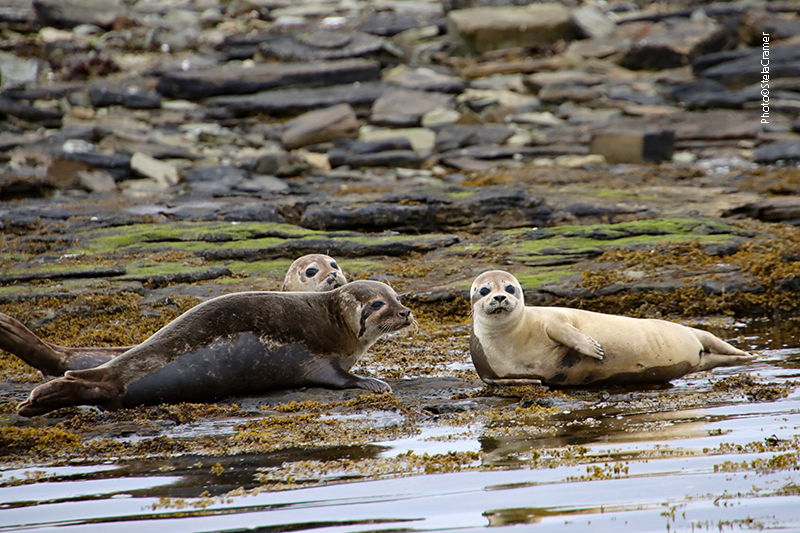
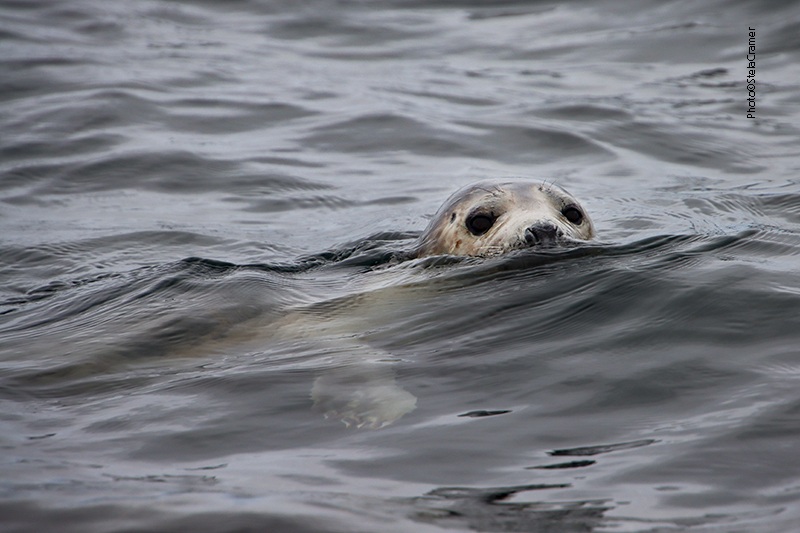
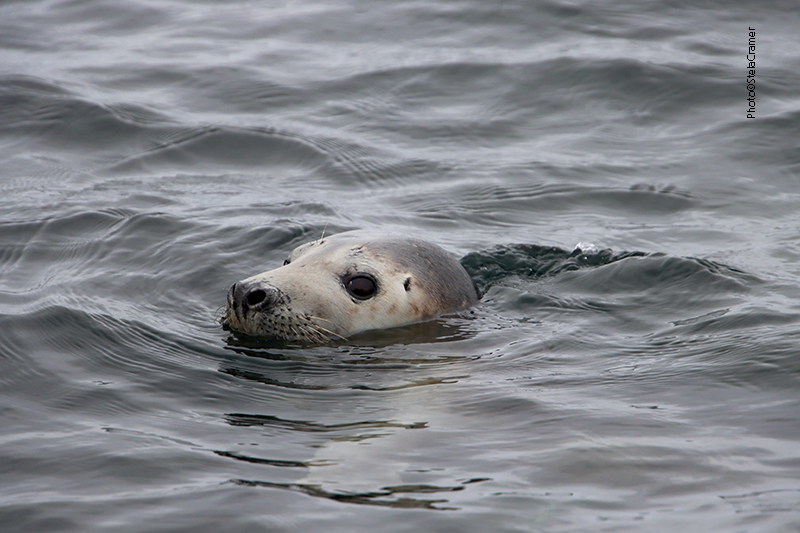
As focas vieram se despedir quando embarcamos para retornar a Papa Westray. Uma delas nos acompanhou por um bom tempo!
The seals came to say goodbye when we boarded the boat back to Papa Westray. One kept us company for a long time!
 Avalon