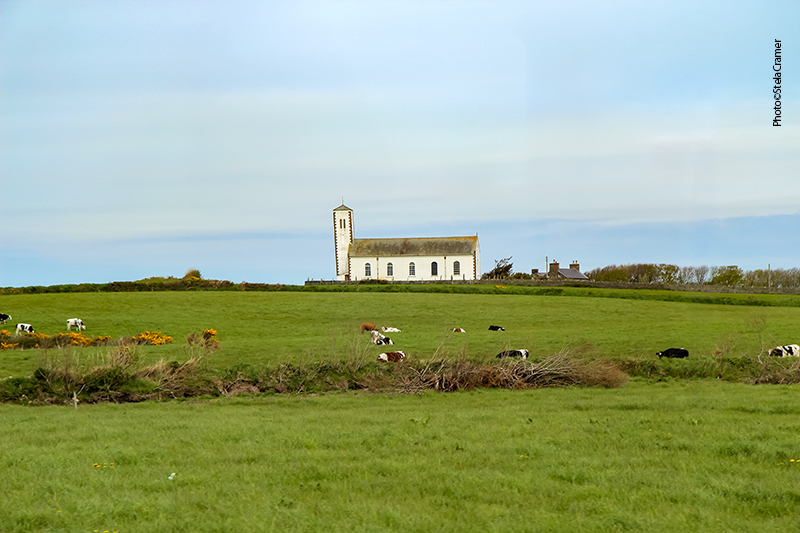
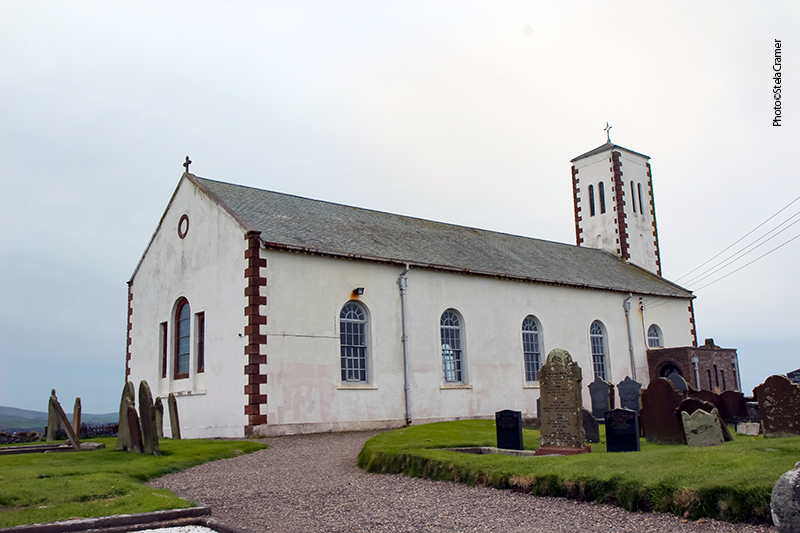
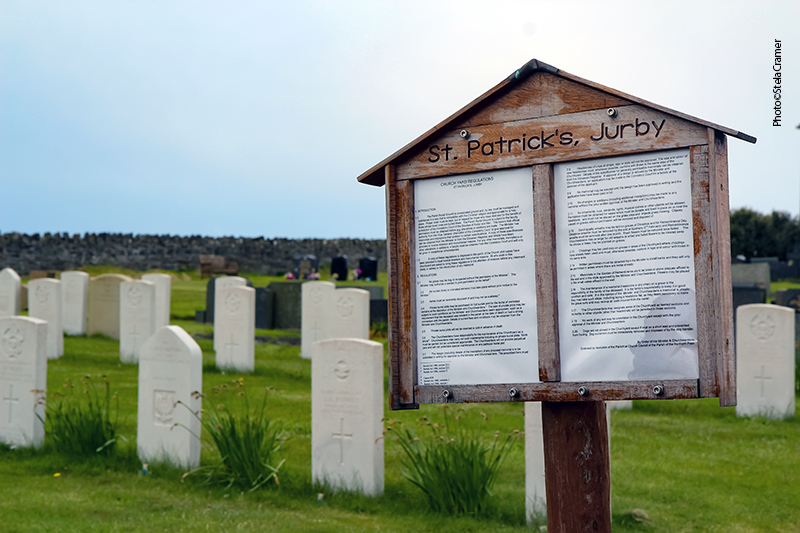
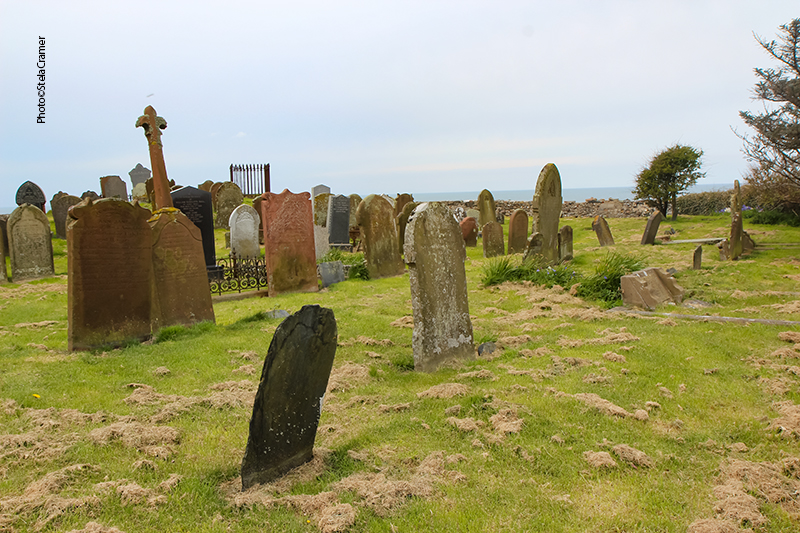
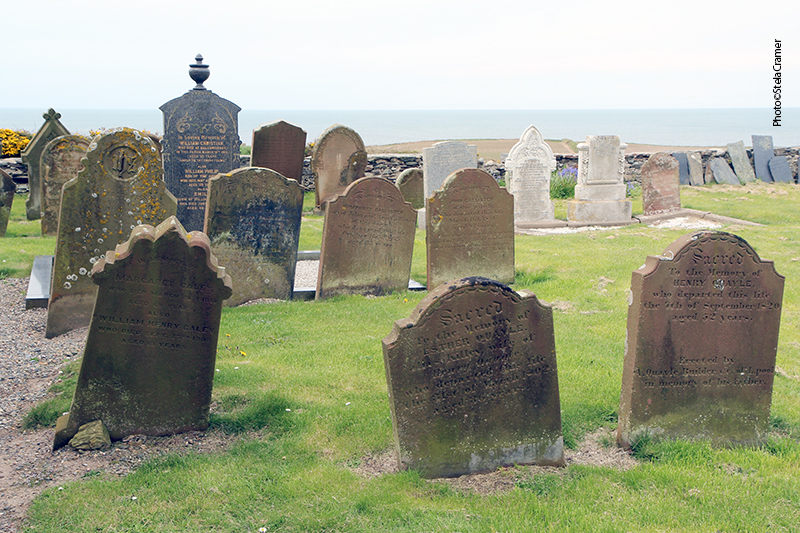
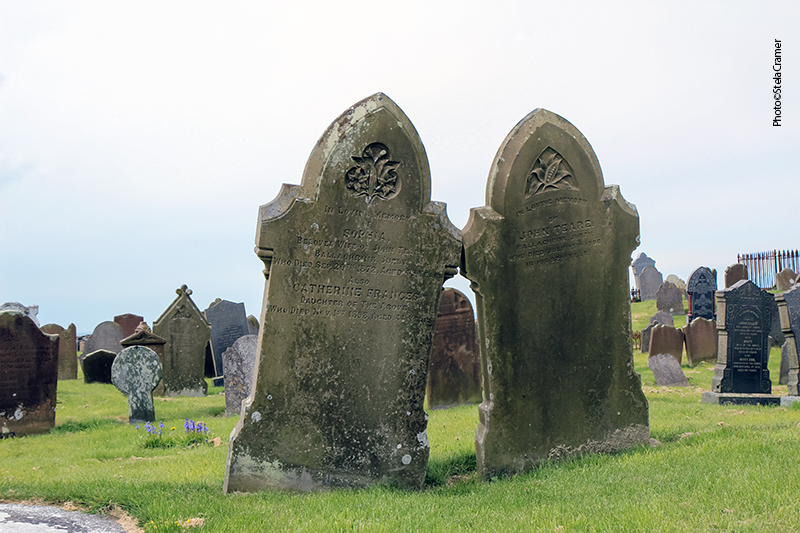
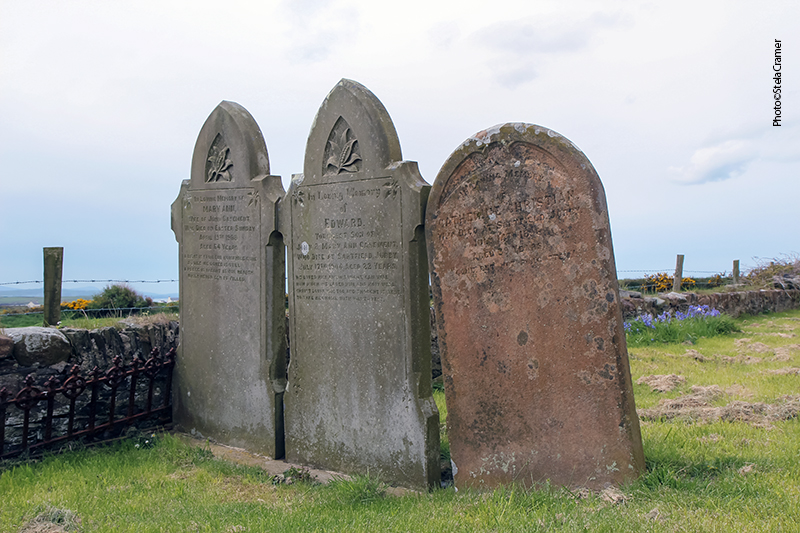
O último lugar que visitamos em Man foi Jurby, ao norte da ilha. Ali, cercada pelo antigo cemitério, a Igreja de St Patrick guarda uma coleção fascinante de cruzes esculpidas em pedra, com mais de mil anos de história. Tínhamos visto as réplicas dessas pedras no pátio da igreja em Peel e queríamos ver as originais, ou o que resta delas. Para isso encaramos uma longa viagem de ônibus, pois na véspera já tínhamos devolvido o carro e, inclusive, deixado Peel. Passaríamos a última noite num B&B em Douglas, capital da Ilha, pertinho do terminal do Ferry.
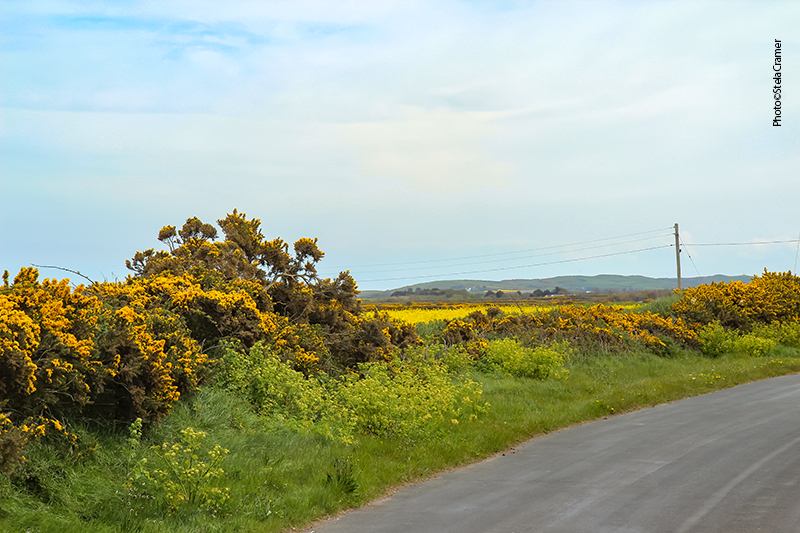
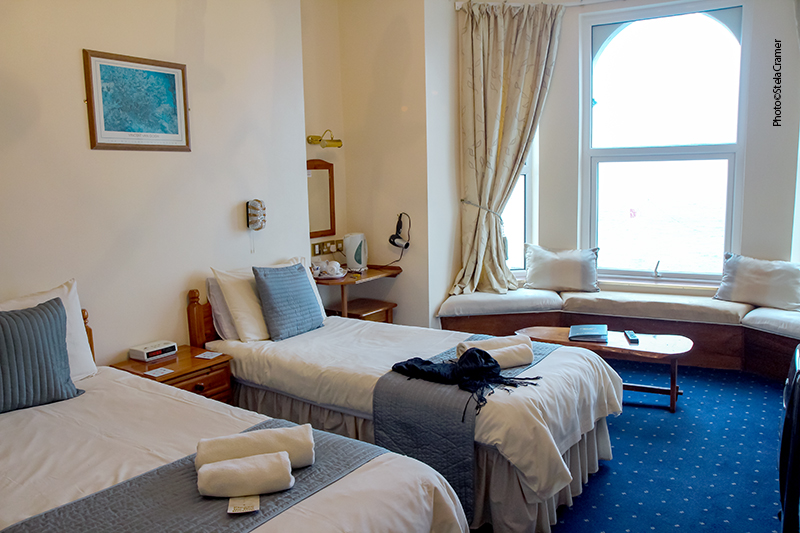
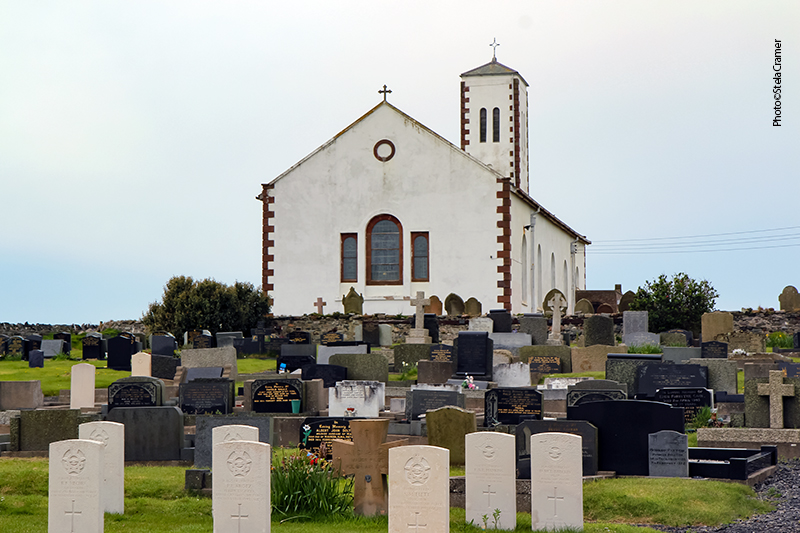
Our last visit in Man was Jurby, a village to the north of the Island. There, surrounded by the graveyard, St Patrick’s Church keeps a fascinating collection of stone crosses, more than a thousand years old. We had seen the replicas at Peel church and wanted to see the originals, or what’s left of them. For that, we took a long bus trip, because the car had been returned the eve. We had also left Peel behind. Our last night in Man would be in a B&B at Douglas, the capital, walking distance to the Ferry terminal.
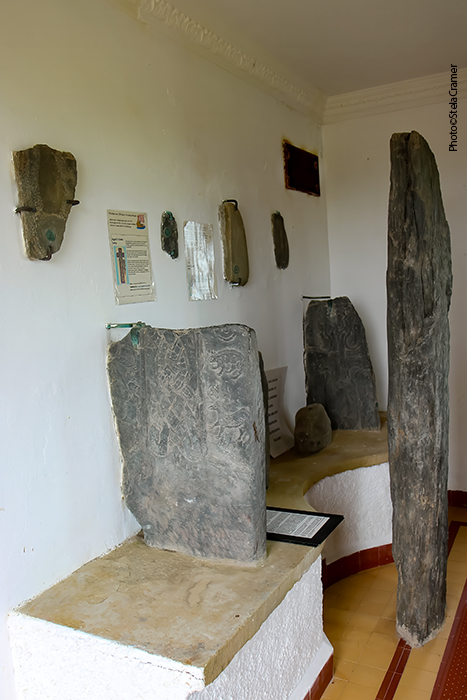
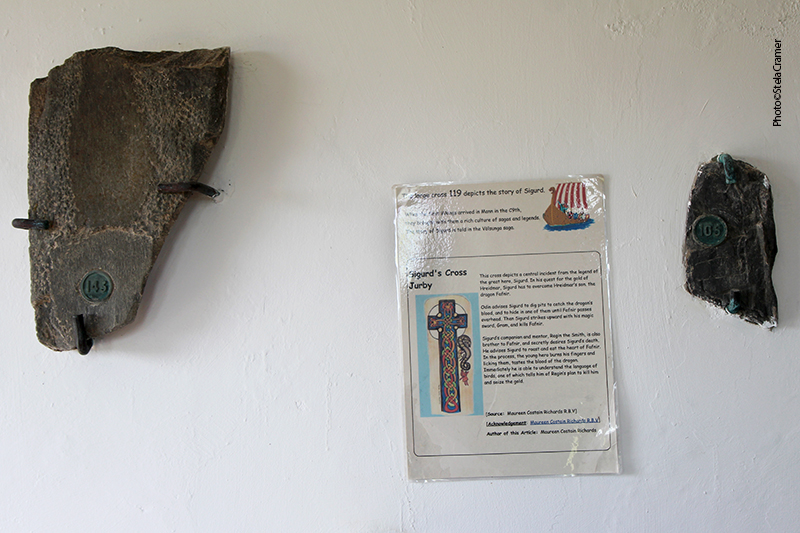
Numa salinha externa, com acesso separado da Igreja, estão expostas as Cruzes de Man, com pequenos textos explicativos impressos e plastificados.
In an outer room with separate entrance the Manx Crosses are exhibited, with printed and laminated sheets of explanatory texts about them.
Acredita-se que muitas dessas cruzes fossem originalmente pintadas com cores vivas, bem diferentes da aparência austera que apresentam hoje.
These crosses are thought to have been originally painted in bright colours, quite unlike their austere appearance today.
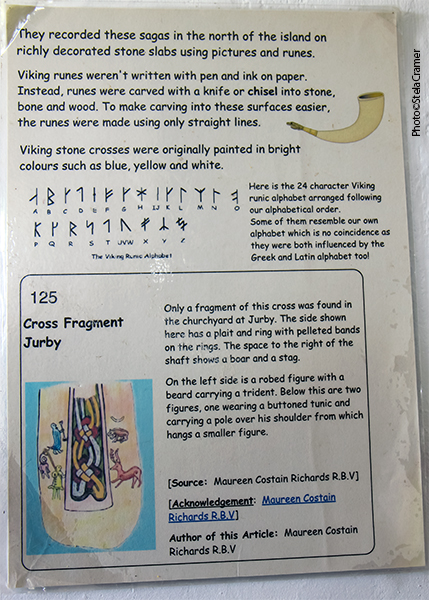
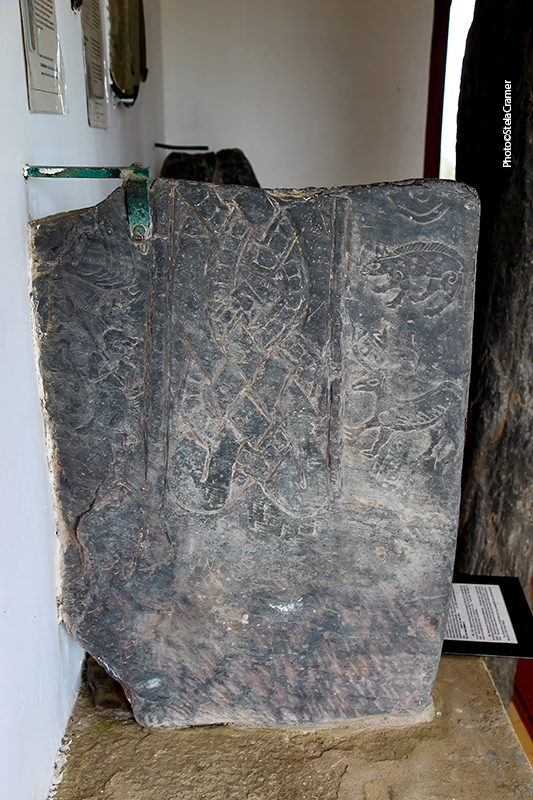
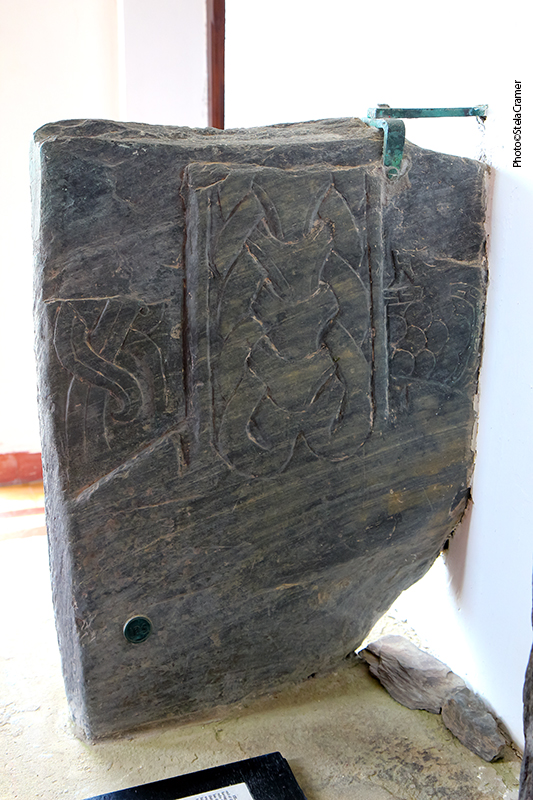
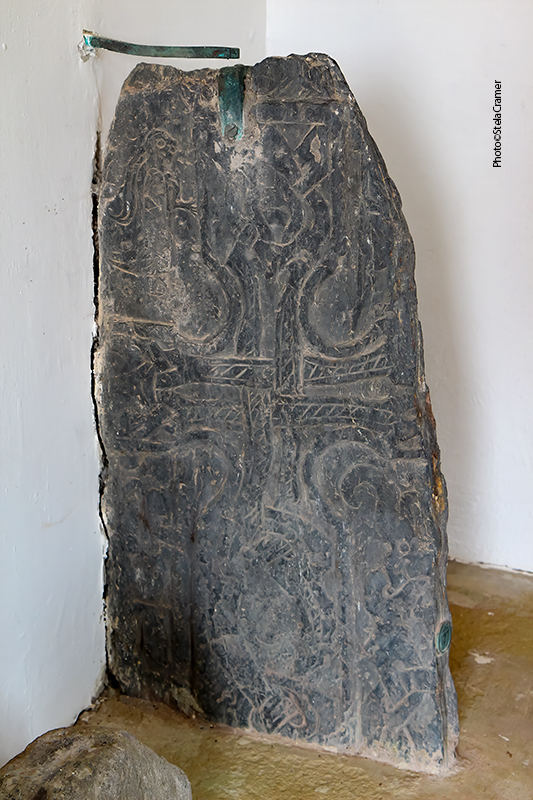
Conhecidas como Cruzes de Man, essas pedras testemunham o encontro entre o cristianismo e a cultura dos vikings que se estabeleceram na ilha, entalhadas com desenhos geométricos, animais, figuras humanas e inscrições rúnicas misturadas a cruzes cristãs. Elas revelam um período em que duas tradições religiosas conviviam e se entrelaçavam.
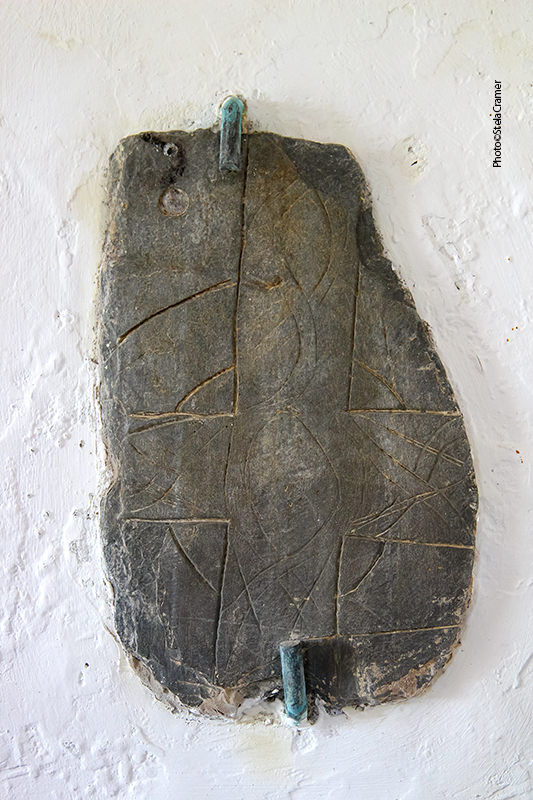
Known as the Manx Crosses, these stones bear witness to the meeting of Christianity and the culture of the Vikings who settled on the island. Their carvings combine intricate interlacing patterns, animals, human figures, runic inscriptions and Christian crosses. These monuments reflect a time of transition, when ancient Scandinavian beliefs coexisted with the spread of Christianity.
As mais famosas são a Cruz de Odin e a Cruz de Sigurd, ambas associadas à mitologia nórdica. A primeira apresenta figuras humanas e animais, incluindo uma cena interpretada como um sacrifício ao deus Odin, senhor da sabedoria, da guerra e dos mortos.
The most renowned Crosses are associated with the legends of Odin and Sigurd, figures from Norse mythology. The first depicts humanfigures and animals, including a scene depicting a sacrifice to Odin, Lord of Wisdom, War and the Dead.
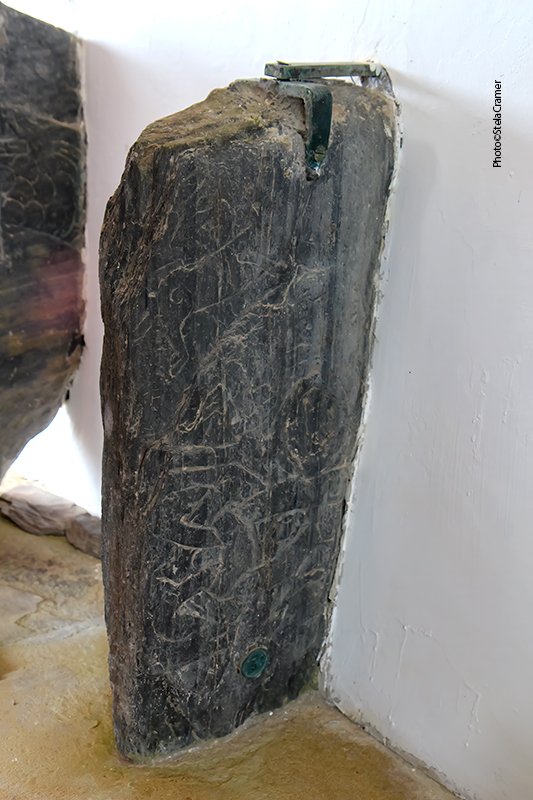
A segunda conta episódios da lenda de Sigurd, o herói que matou o dragão Fafnir para conquistar seu tesouro. Ao assar e provar o coração de Fafnir e banhar-se em seu sangue, Sigurd tornou-se quase invulnerável e adquiriu também a capacidade de compreender a linguagem dos pássaros.
The second one tells tales of Sigurd’s legend. He’s the hero who killed the dragon Fafnir to conquest his treasure. As he roasted and ate the dragon’s heart and bathed in its blood, Sigurd became almost invulnerable and learned the birds’ s language.
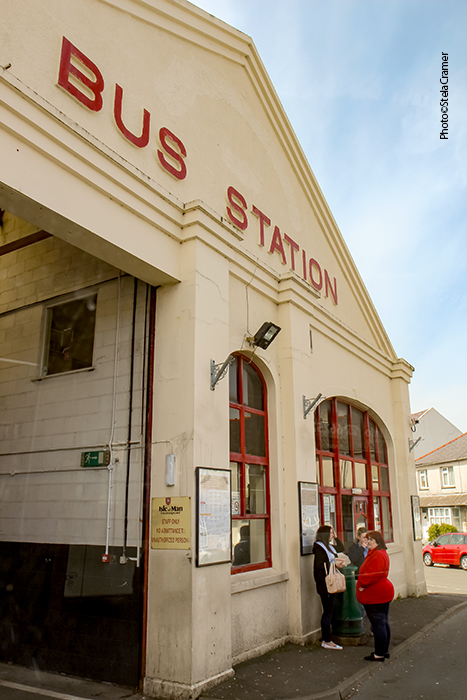
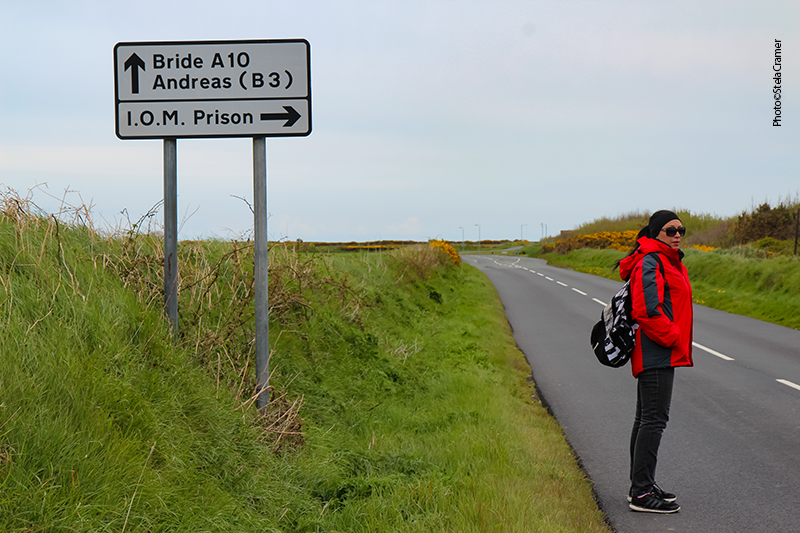
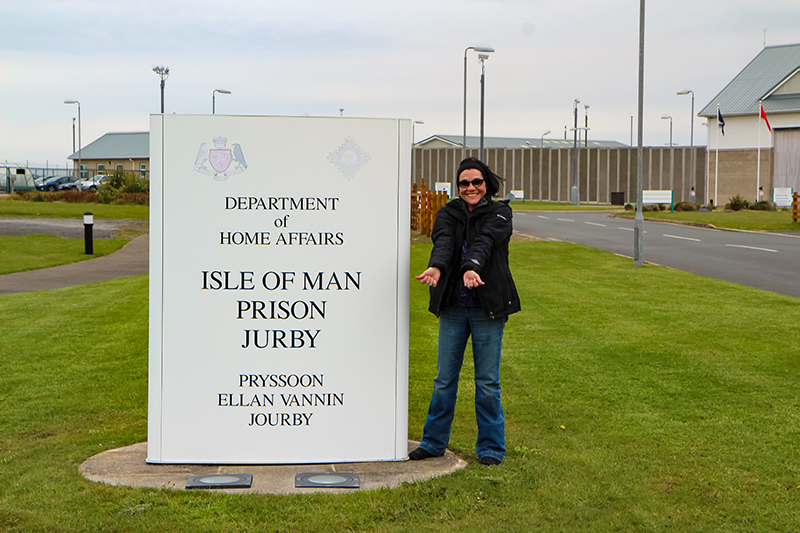
Ao fim da visita, voltamos para esperar nosso ônibus no ponto…bem em frente ao presídio da Ilha. Enquanto aguardávamos, Vicky e eu nos divertimos imaginando se alguém viria nos prender. Afinal, eu tinha cometido um crime dois dias antes: acidentalmente, atropelei um patinho. O pobrezinho era o último de uma fila que seguia atrás da mãe, cinza igual ao asfalto. Confesso que não o vi, prestando atenção nos outros carros. Até hoje fico triste ao lembrar. Felizmente, o ônibus chegou antes dos guardas.
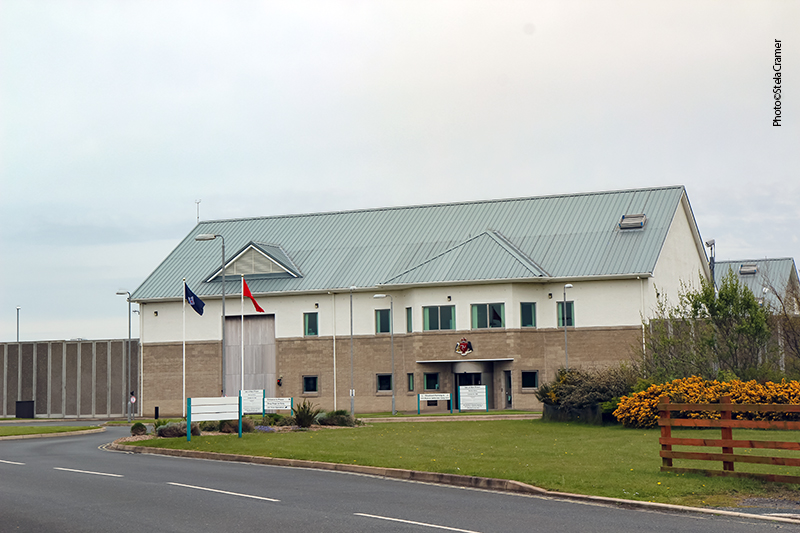
After the visit, we went to catch our bus back. The bus stop is right in front of the Isle’s Prison. While we waited, had some fun imagining if the officers would come to arrest us, for I had committed a crime: a couple days before, I had accidentally ran over a duckling on the road. The poor thing was the last in a line following behind their mother, grey as the tarmac. I confess that , paying attention to the traffic, I didn’t see it. To this day, makes me sad to think about that. But, fortunately, the bus arrived before the guards.
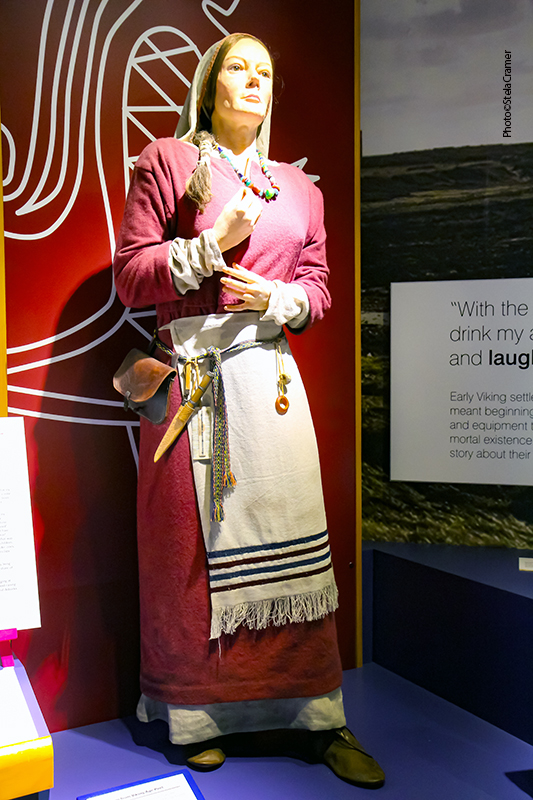
Ainda tivemos tempo de visitar o Manx Museu, em Douglas. Na Galeria Viking, entre muitos achados arqueológicos, está uma reconstrução da “Dama Pagã de Peel”.
Durante escavações no Castelo de Peel, os restos mortais de uma mulher do século X foram descobertos em uma sepultura revestida de pedra. Ela foi enterrada com vários itens que fizeram com que este fosse considerado o sepultamento feminino mais rico da Era Viking nas Ilhas Britânicas e Irlandesas, e também fora da Escandinávia.
A mulher foi sepultada com um colar fino e raro, composto por 73 contas de vidro esculpidas a partir de pedras vindas da Europa e do Oriente Médio. Havia outros objetos e vários amuletos em seu túmulo, incluindo duas peças de pedra que pareciam um pequeno pilão e almofariz. Ao seu lado foi encontrada uma longa haste de ferro, sementes e penas. Um espeto de cozinha de ferro, envolto em tecido de lã, havia sido colocado junto ao seu corpo. Penas de ganso foram encontradas sobre o espeto. Outros itens no túmulo incluíam facas, uma tesoura usada para cortar tecidos e uma bolsa de couro e bronze.
Tratava-se claramente do túmulo de uma mulher rica, porém, mais que isso, os itens encontrados com ela sugerem que era uma mulher sábia de alto prestígio. Seria uma sacerdotisa de Avalon?

We still had time to visit the Manx museum, em Douglas. In the Viking gallery, among lots of archaeological findings, stands a reconstruction of the “Pagan Lady of Peel”.
During excavations at Peel Castle, the remains of a 10th century woman was uncovered in a stone lined grave. She was buried with a number of items that have resulted in it being considered the richest Viking Age female burial in the British and Irish Isles and outside of Scandinavia.
The woman was buried with a fine and rare necklace made up of 73 glass beads sculptured from stones from over a wide area of Europe and the Middle east. There were other items and various charms in her grave, including two pieces of stone which looked like a tiny pestle and mortar. She also had a long iron rod down by her side with seeds and feathers. An iron cooking spit, wrapped in woollen cloth, had been placed by her side. Goose feathers were found on the spit. Other items buried with her included knives, a pair of shears used for cutting cloth, and a leather and bronze pouch.
This was clearly a grave of a wealthy woman, but more than that. The range of items found with her suggest that this could also be the final resting ground for a wise woman of high standing. She may have been an Avalon Priestess!