Feeds:
Posts
Comentários

Posts Tagged ‘Inglaterra’


Cornwall – a Cornualha

Comprei a passagem de ônibus, o 505 para Penzance, sem retorno dessa vez. A Cornualha tem praias aonde todo mundo vai pegar onda nas férias, como Newquay. O bagageiro do ônibus encheu com pranchas de surf. Penzance é a ultima cidade, de onde se vai ao Land’s End, o ponto final que encontra o Oceano Atlântico a sudeste. Era domingo, dia 27 de julho de 2005. De Londres a Camelford, foram cinco horas.  A estrada cruzava cidades minúsculas, que pareciam ter aspecto medieval, mas era impossível dizer com certeza pois choveu torrencialmente durante a viagem toda. Não dava para ver nada pela janela, só o mundo branco de neblina. Fiz o trajeto lendo o livro A Druid Abroad, de Sandra Parsons, sobre sua viagem a Newgrange, na Irlanda, em companhia de sua mãe. Fui a única passageira a descer em Camelford.

I bought a bus ticket, boarding the 505 to Penzance, this time without return. Cornwall is a summer destiny where you find the surf beaches as Newquay. The luggage compartment was full of surfboards. The last city is Penzance, from where you reach Land’s End, England’s south-eastern border facing the Atlantic Ocean. It was Sunday, July 27th. It took five hours from London to Camelford, where I was supposed to drop off. The road crossed tiny villages that could have a medieval look but I wasn’t sure, because it rained torrentially the whole day and beyond the windowpane the world was mostly white. I spent the time reading the book “A Druid Abroad” by Sandra Parsons, about her journey to Newgrange, in Ireland, with her mother. I was the only passenger to get off the bus in Camelford.

Uma placa na estrada indicava “Bodmin” e “Dozmary Pool”. Fiquei meio histérica pois Dozmary pool é o lago de onde se ergueu a Dama do Lago empunhando a espada Excalibur para ser dada a Arthur. E no fim da história, quando o Rei está mortalmente ferido, entrega Excalibur a Sir Bedivere, um dos Cavaleiros, para que a jogasse de volta no fundo do mesmo Lago, a fim de evitar que caísse em mãos inimigas. Eu precisava fotografar o lago, mas até aquele momento não fazia idéia da sua localização. Pensei então em seguir para lá imediatamente após a estada em Tintagel. Eu não fazia idéia, porém, da distância entre todos esses lugares.

A sign on a crossroads pointed the way to “Bodmin” and “Dozmary Pool”. I was entranced because that was the Pool from which waters rose the Lady of The Lake, bearing the mighty sword Excalibur to be given to Arthur. In the end of the tale, when the King is deadly wounded, he hands Excalibur to Sir Bedivere, one of the knights, with orders to throw it back into the deep of the Lake, to avoid its capture by enemies’ hands. I had to photograph that lake, although up to that moment I didn’t have the slightest idea of its location. So my mind was instantly made up: after the days in Tintagel I would go that way. But I had no idea of the real distance between these places.

Camelot Castle – Tintagel, Cornwall PL34 0DQ, Reino Unido – 01840 770202
http://www.camelotcastle.com


A chuva parou quando saltei do ônibus em Camelford. Parecia um lugar bonitinho, que valeria a pena visitar, mas fui direto para o ponto do ônibus local que me levaria a Tintagel, onde havia feito reserva no hotel “Camelot Castle” para duas noites. O ônibus já estava no ponto, como se esperasse por mim. Cerca de vinte minutos depois, desembarquei na cidade de Igraine. Percorri a avenida principal virando à esquerda no fim: o hotel ficava em frente ao mar. A construção (aliás, muito brega, aquele castelo fajuto estragava o visual) ficava bem ao lado de uma escadaria que levava à praia, uma pequena enseada aos pés do maciço sobre o qual se erguem as ruínas do castelo de Tintagel. Após fazer o check in, deixei a mochila no quarto com banheiro e desci imediatamente para a praia.

The rain ended when the coach reached Camelford, which seemed to be a nice place, worth visiting, but instead I went straight to the stop where the bus that would take me to Tintagel was already ready to leave, as if was just waiting for me. After about twenty minutes, I got off in Igraine’s city. I had booked two nights in the Camelot Castle Hotel, that stands facing the sea, turning left in the end of the main street. The building was pretty tacky, a fake castle ruining the gorgeous landscape. Beside it there was a stairway leading to the beach, a small bay of sapphire blue sea like those in pirate’s movies, at the feet of the massive rock where Tintagel Castle ruins still stand. After check in, I left my backpack in the room (with a private bathroom!) and went down to the beach.
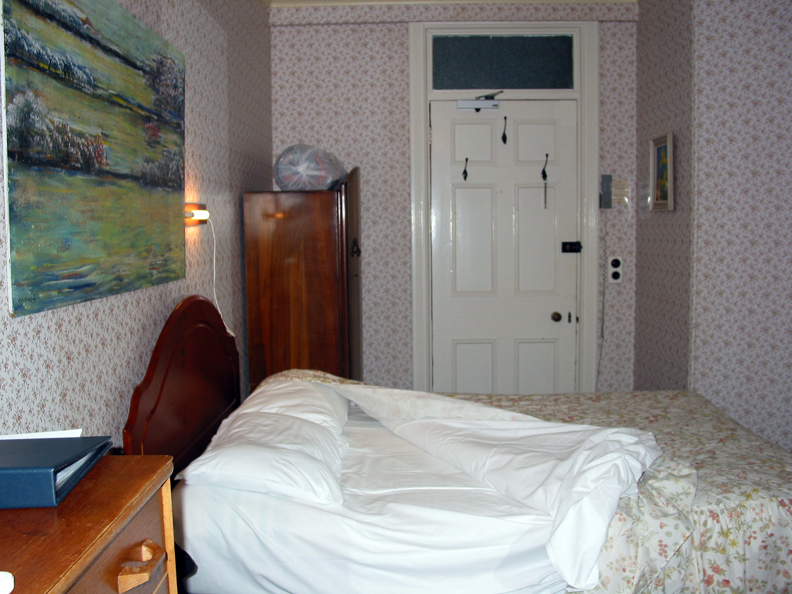
Pela primeira vez na viagem, um quarto com banheiro só para mim.
For the first time in this trip, a room with private bathroom, all only for me!

A vista da janela do meu quarto não era para o mar: algumas casas e a rua principal da cidade.
My room didn’t face the sea, but Tintagel’s main street  ahead

O tempo havia clareado, uma luz quase mágica banhava a paisagem. A enseada parecia cenário de filme de pirata, o mar cor de safira. Enquanto descia a trilha, um raio de sol irrompeu entre as nuvens, que pareciam se dissipar. Depois de ter viajado o dia todo em meio à tempestade e ao dilúvio, aquele sol era tão inacreditável que desapareceu mesmo instantes depois. Foi só para abençoar minha chegada. Agradeci aos deuses pulando na areia (ou melhor, seixos negros) como um cabrito drogado e gritando: “TINTAGEL! TINTAGEL!”

The weather had cleared, a magic light bathed the place, and while I was stepping down a golden sunbeam shone through the vanishing clouds. That was a blessing after travelling through storm and flood, an impossible ray of light so brief that it was gone as soon as I set my feet in the sand, or better, black pebbles. To thank the gods I started to jump like a goatling freaking out, and yelling: “TINTAGEL! TINTAGEL!”
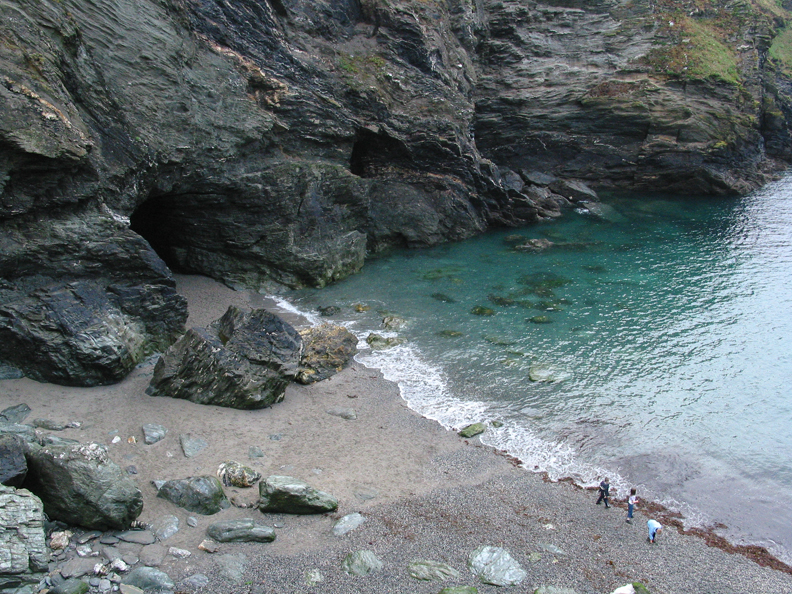
Na praia, a caverna sob o castelo de Tintagel por onde Uther se infiltrou para passar a noite com sua amada Igraine.Desse encontro nasceria Arthur.
The cave under Tintagel’s Castle where Uther penetrated the Castle to spend the night with his beloved Igraine. Of this meeting Arthur would be born.
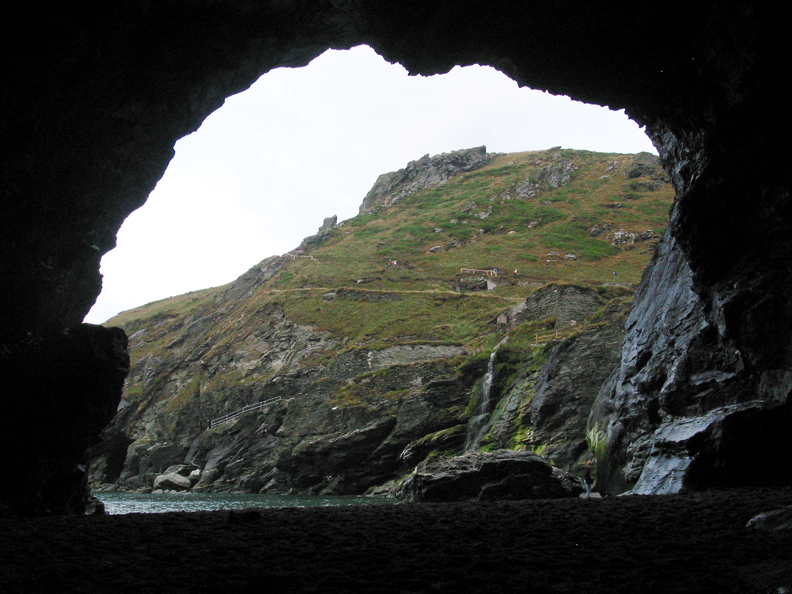
Dentro da caverna, na maré baixa.  / Inside the cave, low tide

Outra ponta da praia / The other end of the beach

Vista do alto da escadaria / Overview from the stairway above

Magic

Read Full Post »


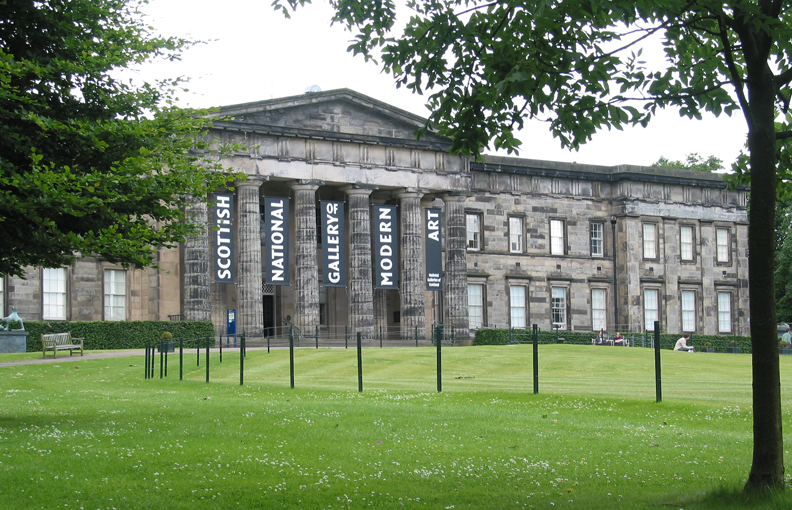
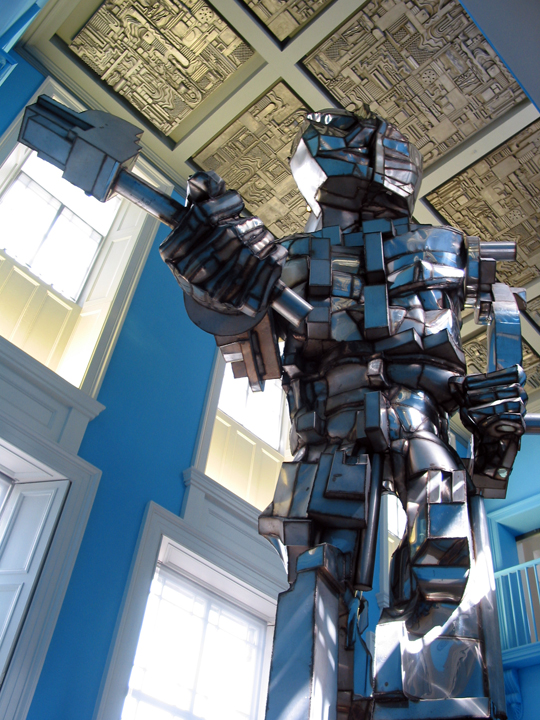
Na volta de Roslin, saltei em Edimburgo, arrastando a mala com dificuldade por ruas de paralelepípedos, rumo a museus e galerias para passar o tempo antes de pegar o ônibus noturno para Londres. Os museus eram gratuitos em Edimburgo, ocupando antigos castelos, com ênfase na arte contemporânea, o que criava um contraste espetacular entre os ambientes e as peças expostas.

Ruas de paralelepípedos, um caminho tortuoso / Tortuous treets of cobblestone

Back from Roslin, struggling to drag my suitcase over the streets of cobblestone, I headed to National Museum to spend the day before taking the night coach to London. Old castles in Edimburgh had become free museums and galleries, and the pieces of contemporary art created a fantastic contrast with the classical interiors.
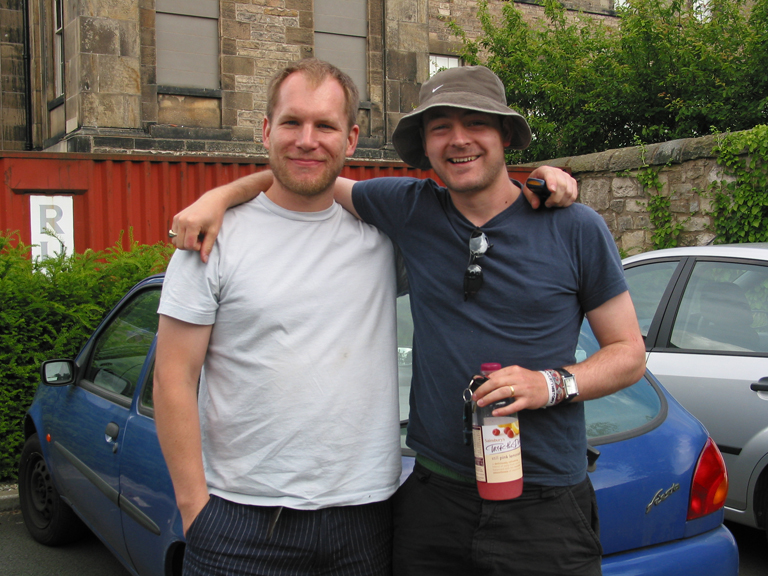
Conheci dois ingleses no museu e me convidaram para lanchar com eles antes de seguirem viagem. Estavam indo para Leeds de carro. Compramos frutas e sanduíches no supermercado fomos comer no gramado do parque.  Aquilo salvou meu dia, nada como uma boa conversa para recuperar o bom humor. Por fim pegaram a estrada e me deixaram na rodoviária. Fiquei ruminando se deveria ter pegado carona com os ingleses, mas eles sequer ofereceram… não restava nada a fazer senão encarar a madrugada no assento desconfortável do ônibus. A temperatura em Londres estava elevada, mais ainda devido ao atentado. Havia carros de polícia por toda a parte. Liguei para minha família, que estava preocupada porque eu não dera sinal de vida enquanto estava na Escócia.

Two English guys made friends with me in the museum. They were from Leeds and were driving back there, but first were going to have a snack and invited me to go along with them. So we bought fruit and sandwiches at the supermarket and sat down to eat in the park lawn. That saved my day; nothing better than a chat to uplift spirits. But eventually they took the road, leaving me in the station. I caught myself wondering why hadn’t I taken a ride with them, but they never offered it… There was nothing left to do but face the uncomfortable coach seat the whole night through.
Temperature was high in London, higher due to the terrorist attack. Police cars were everywhere. I phoned my family, they were very worried because I hadn’t been in touch while in Scotland.

O lago no Museu Nacional da Escócia também é uma instalação. /
Even the pond in Scottish National Museum was an art project

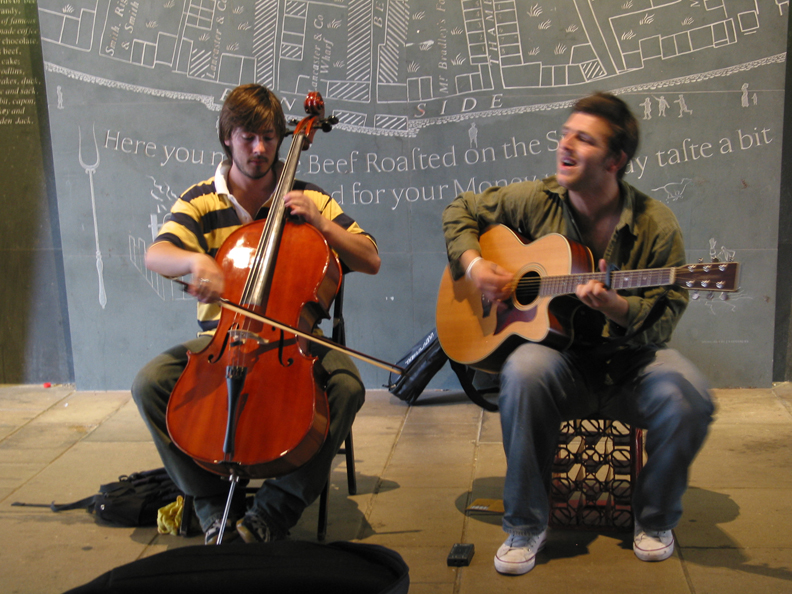
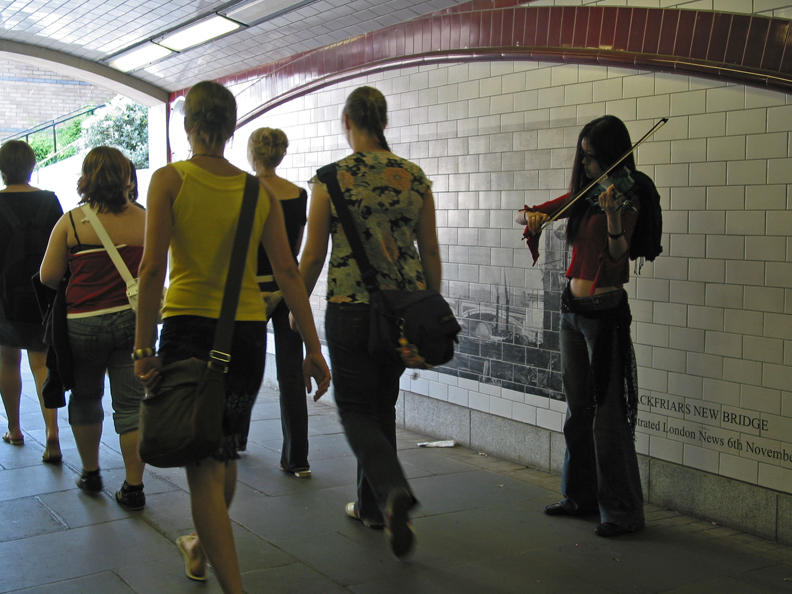
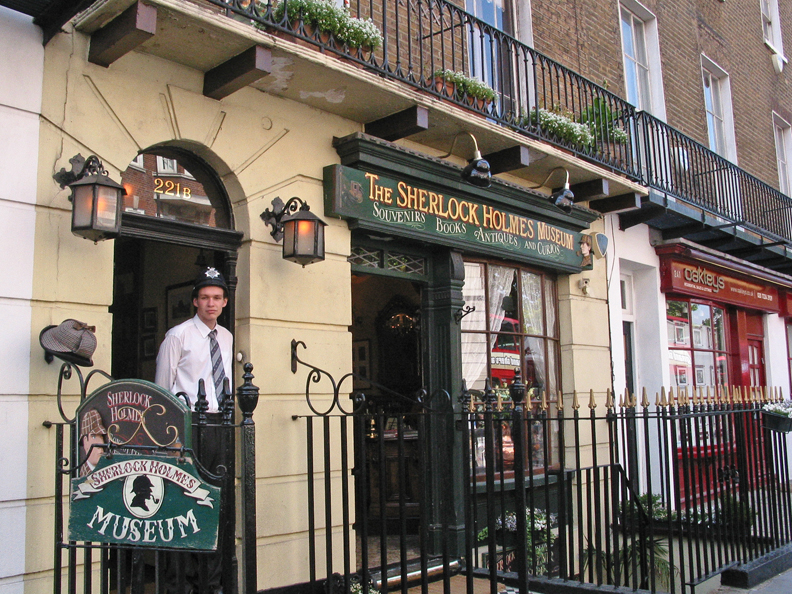
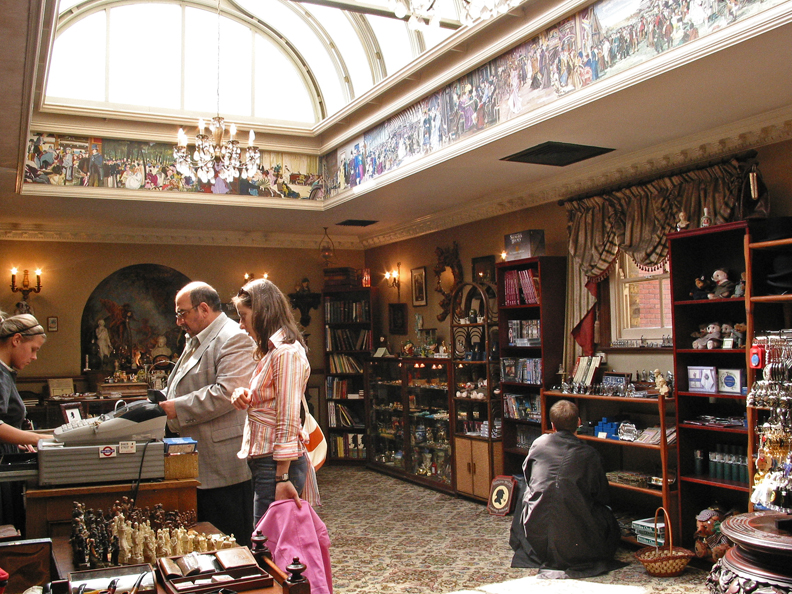
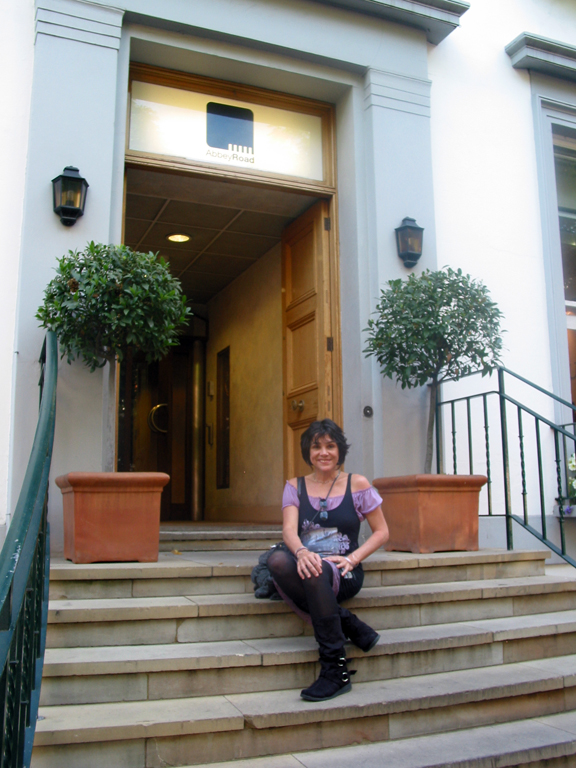
Enquanto planejava a ida para a Cornualha, aproveitei para bater pernas em Londres e visitar mais exposições: o salão de verão, passeios guiados gratuitos da Tate Modern e a retrospectiva de Frida Kahlo. Fui a Abbey Road, à casa de Sherlock Holmes, ao Museu de Cera Madame Tussaud. As ruas estavam repletas de artistas, desenhistas, malabaristas, músicos. Na saída da estação Blackfriars, uma violinista japonesa espalhava sua alma no ar, disfarçada de notas musicais. Eu caçava imagens através de vidraças, debaixo de pontes, em escadarias e praças públicas, na névoa da minha mente.

Amigos ingleses / British friends

While planning the trip to Cornwall, I took a couple of days strolling in London, and see the Summer Exhibition, Frida Kahlo retrospective, Tate Modern free guided tours. I went to Abbey Road, Sherlock Holmes house, Mme Tussaud’s. Art blossomed in the streets crowded with musicians, painters, jugglers. In Blackfriars Subway a japanese fiddler was spreading her soul in the air disguised of musical notes. And I chased images through windowpanes, under bridges, in parks and stairways, loose in my foggy trip.

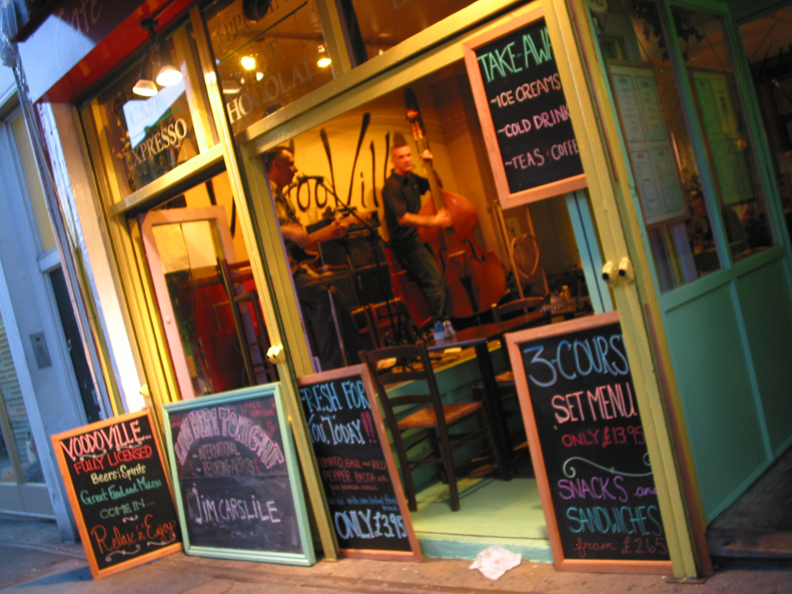
Músicos de rua em Londres / London Street Musicians

Ninguém sabia onde ficava Tintagel, terra de Igraine, mas achei o lugar na Internet; tinha até um hotel chamado Camelot Castle, ao lado das ruínas do castelo real onde nasceu Arthur. O site era tosco e o hotel caro, mas pensei em desfrutar de um pouco de conforto. Pagaria com cartão de crédito. Fiz uma reserva para duas noites no quarto mais barato, que não tinha vista para o mar. Pelo telefone, o recepcionista me indicou como chegar: pegar o trem para Penzance, descer em Camelford e lá pegar um taxi para Tintagel. Só o taxi custaria vinte libras. Então comprei a passagem de ônibus, bem mais em conta que o trem, e iria descobrir que de Camelford para Tintagel tinha ônibus de hora em hora aproximadamente. O preço da passagem era 2,25 libras.

Pub in Camden Town

Nobody knew where Tintagel, Igraine’s home, was. But I found it in the web. There was even a hotel named Camelot Castle, right beside the ruins of the real castle, Arthur’s birthplace. The site was rough and the hotel wasn’t cheap, but I thought I deserved a bit of comfort for once. Credicards were accepted, so I called and booked two nights, choosing the cheapest room, not facing the sea. A recepcionist gave me the directions. I should take a train to Penzance and drop off in Camelford. From there it was easy to find a taxi to Tintagel; that would cost about 20 pounds. So I bought a bus ticket to Penzance, much cheaper than the train, and in Camelford I was to find out there was an hourly bus to Tintagel, which costed 2,25 pounds.

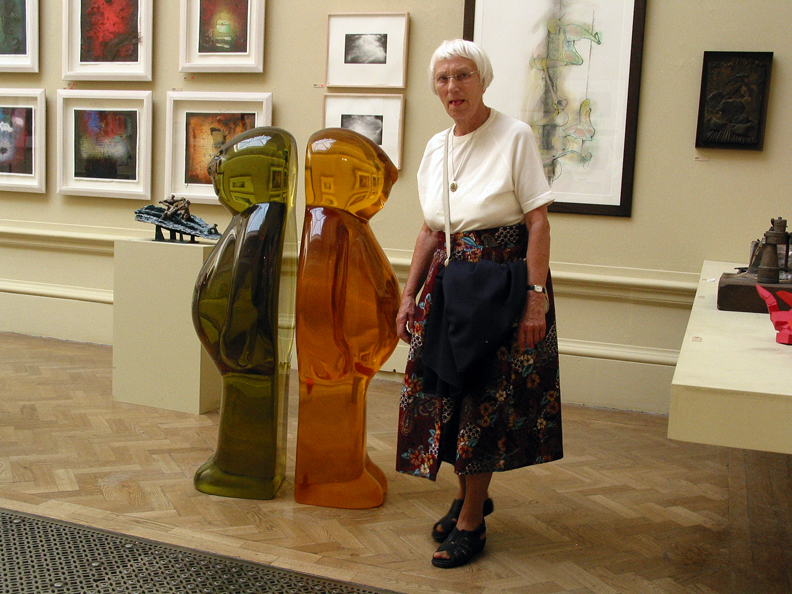
A maior atração do Slão de Verão em 2005 eram os “Jelly Babies” /
Summer Exhibition’s top attractions in 2005 were the Jelly Babies

Adorei estes ursinhos assassinos / Best for me were these murderous teddybears

221 Baker St.

Beatles’ souvenirs

Tate Modern

Londres: arte por toda parte / London: art everywhere

Covent Garden


Read Full Post »


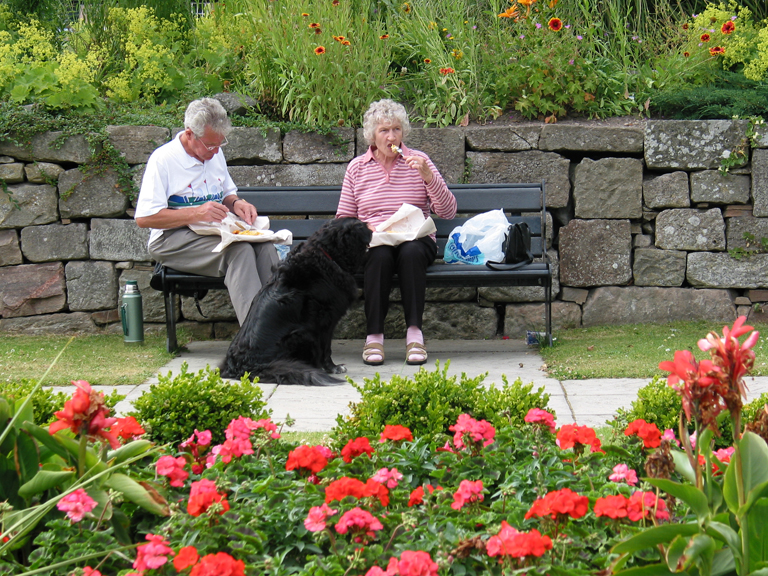
É comum ver pessoas almoçando ao ar livre, como esse casal e seu cão. Britânicos aproveitam cada instante do verão. / Couple with dog having lunch out in the sun. Not an unusual scene, british people enjoy every single summer moment.

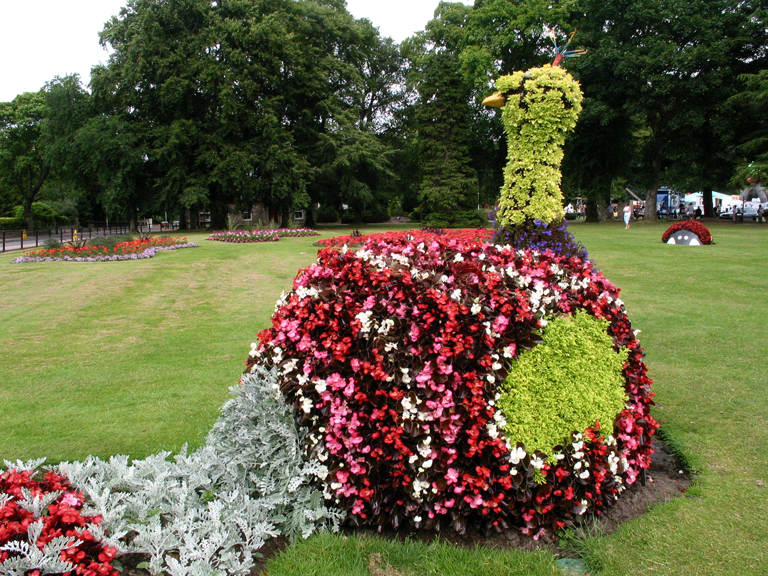
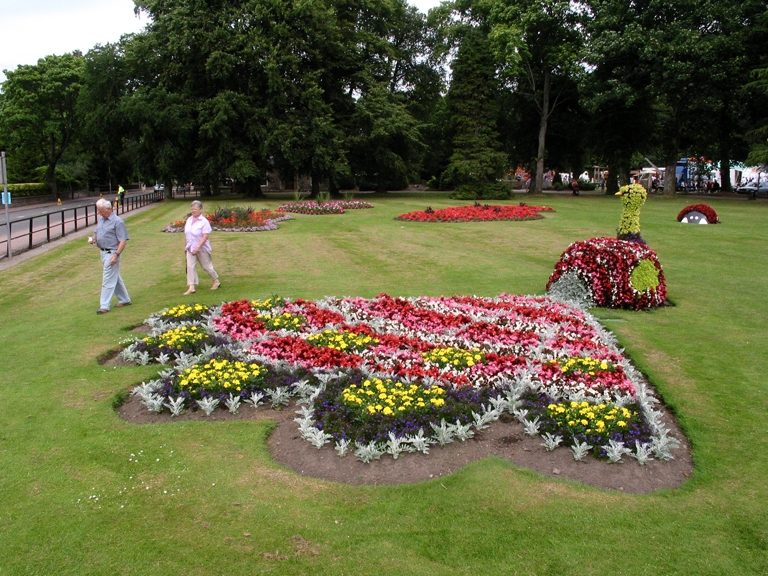
De Inverness a Forres são aproximadamente 50km; cheguei pela manhã, mas o dia estava cinzento, anunciando chuva. Forres é uma cidade bonitinha. Ganhara o prêmio de “jardim mais bonito” do Reino Unido, dizia a placa junto a uma praça onde realmente os jardineiros fizeram um trabalho notável. Usando bases de tela, esculpiram bichos feitos de plantas: joaninhas, pavões, lagartas. As guias de tela ordenaram o crescimento de flores cuidadosamente podadas, todas coloridas. Os britânicos são doidos por jardins, orgulham-se deles e este era realmente espetacular.

The distance from Inverness to Forres is around 31 miles. The day was foggy, forecasting rain when I arrived in that cute city. A sign in a square celebrated the prize Forres had just won as the most beautiful garden in UK. And the gardeners really did a hell of a job. They sculpted ladybugs, peacocks and caterpillars with coloured flowers, carefully trimmed, supported by an underneath grid. British people love gardening and are very proud of their work.

Topiaria: a arte de esculpir com plantas e flores, na qual os britânicos são experts. / Topiary: art of cutting trees and shrubs into ornamental forms, mastered by the British


Segui procurando o ponto de ônibus para Findhorn, mas as pessoas na rua nada sabiam informar. Nem havia muitas pessoas na rua, então saí andando, arrastando minha malinha pela avenida principal. Algumas placas indicavam um monumento próximo, a Sueno’s Stone, uma pedra com inscrições do tempo dos pictos que resolvi conferir. E fui seguindo as setas, mas, em outra praça, no meio do caminho, tinha outra pedra.

Sueno’s Stone, bem protegida em uma vitrine. As inscrições mostram cenas de batalha, possivelmente uma vitória contra invasores nórdicos. / Sueno’s Stone, well protected in a glass window. The carvings show battle scenes, maybe a victory against the Danes or Norse invaders.

I was looking for the Findhorn bus stop, and nobody knew where it was. There was no one out on the streets, so I went on carrying my little suitcase up the main street. Signs  pointed out a historical monument straight ahead, Sueno’s Stone, with pict inscriptions, so I decided to check it out and followed the arrows. But in another square, in the middle of the road, there was another stone.

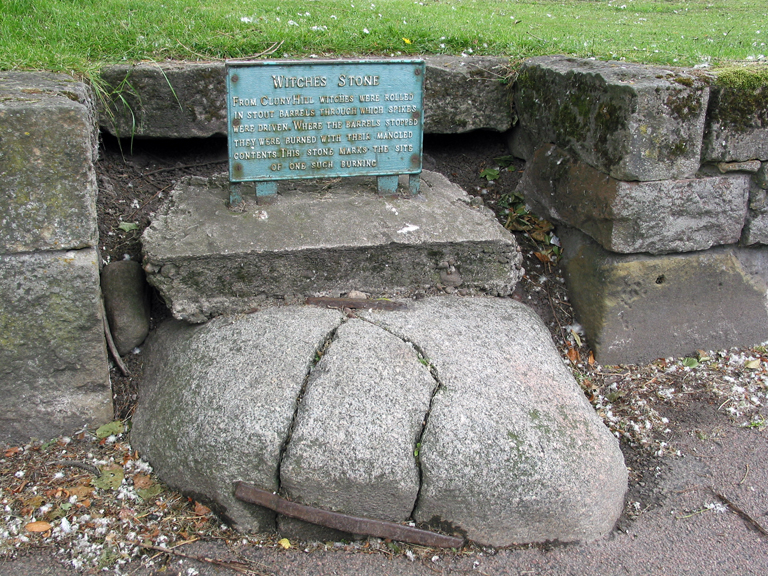
Witches Stone, Forres, Scotland

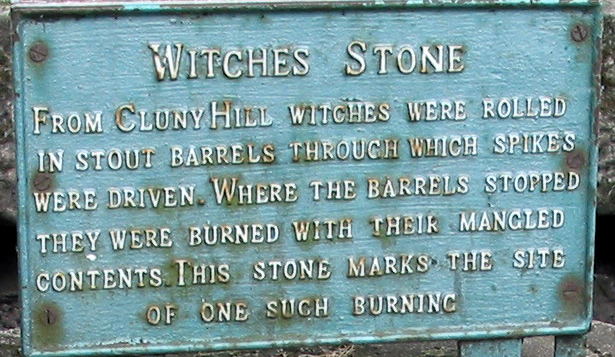
Witches Stone. A placa informava: no tempo da Inquisição, mulheres suspeitas de bruxaria eram postas dentro de um barril no alto da colina. O barril era espetado com várias lanças e empurrado para descer rolando pela encosta da colina de Cluny. Onde parava, ateavam fogo com o que restara da mulher dentro. Aquela pedra sinalizava o local onde um desses barris fora incendiado. Fiquei chapada. Esqueci Findhorn, o horário do ônibus, esqueci meu nome. Sentei e fiquei olhando aquele testemunho de algo que só tinha lido nos livros. Me vi dentro de um barril, sendo dilacerada e depois queimada viva.  Me veio a imagem de um porco no rolete.

Witches Stone. In Inquisition times, women judged guilty of witchcraft were put inside a barrel through which spikes were driven and the barrel was released to roll down Cluny Hill. When it came to a halt, fire was put to it with the woman’s remains still inside. That stone marked the spot where one of these burnings had happened long ago. I was stunned. I forgot all about Findhorn, the bus, I forgot my own name and just sat down there, staring at a material proof of something I had only read about in books. I could feel myself inside a stout barrel, being shredded in pieces and burnt alive. A hog roast came into my mind.

Detalhe. / Detail

E justo nas Terras Altas da Escócia, onde as mulheres reinavam nos antigos clãs! Possuíam seus próprios títulos, propriedades, terras. O livro “A Rosa Branca Rebelde”, de Janet Paisley, do qual transcrevo os seguintes trechos, descreve os costumes célticos dos clãs escoceses, povos que “escolhiam viver livremente juntos, pelo bem geral”. Ninguém passava fome nem ficava sem abrigo ou cuidado em caso de necessidade, pois todos se ajudavam mutuamente. “As mulheres, casadas ou não, deveriam se satisfazer caso quisessem outro homem. Suas ancestrais se divorciavam dos maridos com facilidade, quando eles não conseguiam sustentá-las ou respeitá-las, se roncassem, fofocassem, fossem impotentes ou apenas repugnantes. Uma esposa frustrada poderia ter um amante se seu marido bêbado não a satisfizesse. O noivado servia para que dois amantes vivessem juntos por um ano e decidissem se queriam mesmo casar-se um dia antes de completar esse período. As inglesas não tinham direitos nem poder, tampouco nome. Seu corpo, seus filhos e sua casa eram bens dos homens.” Ao casar-se, todos seus bens passavam a ser do marido e caso se separassem, a infeliz ficava sem nada.

It was a shock to learn that such stuff happened in the Highlands, where women were sovereign in ancient clan times. Scottish women, unlike the English ones, had their own titles, properties and land. I quote from “White Rose Rebel”, written by Janet Paisley, describing the celtic customs of Scottish clans, people “of free choice who lived together for common good”. Nobody would starve or go unattended in case of need, for people would care about each other. “Women, married or not, should satisfy their needs if they desired another man. Her grandmothers were already used to divorce easily if the husband did not sustain or respect the wife; if he snored, gossiped, were impotent or just disgusting. A frustrated wife could have a lover if her husband were a drunker and didn’t satisfy her. Engagement endured one year, so the lovers could live together and decide if they really wanted to get married after that time. English women didn’t have any rights, power or name. Their bodies, their children and their home belonged to the husband. If a couple divorced, all the properties were kept by the man”. There was nothing left for the poor woman.

Charles Edward Stuart fugiu após a derrota e passou o resto da vida no exílio.
Os lindos tartans, felizmente, continuam a existir.
Charles Edward Stuart fled after the defeat and spent the rest of his life in exile.
The beautiful tartans survived to the present day.

Em 1745, na Batalha de Culloden, o exército inglês massacrou a insurreição dos clãs das Terras Altas que apoiavam a volta de Charles, herdeiro legítimo dos Stuarts, ao trono do Reino Unido. Além da execução e deportação de milhares de escoceses, o Parlamento britânico baixou um ato de desarmamento, para confiscar todas as armas das Terras Altas (Highlands) e banir o uso de suas tradicionais roupas, gaitas, danças e tartans. Foi abolido o direito hereditário dos chefes de clãs de aplicar a justiça em tribunais regionais. Além disso os professores escolares deviam jurar lealdade à Coroa inglesa e o inglês substituir o gaélico como idioma nacional. Em suma, reduzir a pó toda a cultura de um povo. Chamar mulheres de bruxas e achar que isso justifica queimá-las me parece apenas a sequência do processo.

In 1745, in the Battle of Culloden, the English Army butchered the Highlands’ clans uprising in support of “Bonnie Prince Charlie’s” restoration, as last legitimate heir to the Stuarts, to the British throne. Thousands of Scots were killed and deported. The British Government enacted laws to incorporate Scotland—specifically the Scottish Highlands—within the rest of Britain. The abolition of Heritable Jurisdictions Act ended the hereditary right of landowners to govern and make justice in their estates through barony courts. The Disarming Act confiscated all “warlike weapons” and the Dress Act declared wearing tartans and kilts as illegal. The traditional pipes and dances were banished; teachers were forced to swear loyalty to the English Crown and English replaced Gaelic as official language. In short, a deathly blow to Scottish culture.
Seems to me that naming a woman a witch, and believing this is enough to burn her alive was just a later outgrowth of the process.

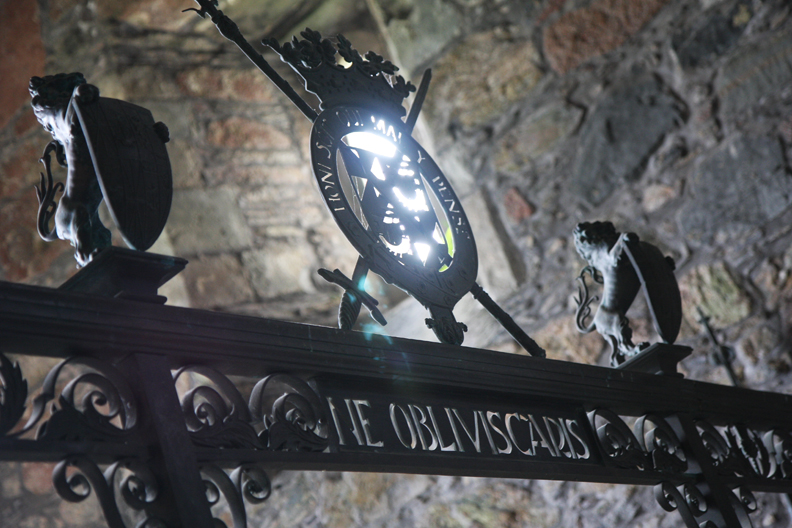
Ne Obliviscaris. Do Not Forget. Não esquece.

Entretanto, voltando ao tempo do Império Romano, poucos séculos antes, temos relatos de brutalidades semelhantes inflingidas às tribos britânicas pelos conquistadores. Na verdade a história se repete, até os dias de hoje, mudando apenas de endereço, remetente e destinatário. Quanta tradição preciosa perdeu-se para sempre! Me dei conta que poderia ter morrido assim em uma vida passada. Plantada em frente à pedra chorei bem uma meia hora por todas as injustiças do mundo dito civilizado.

However, if we go back in time a few centuries, to the Roman Empire, there’s evidence of the same brutality inflicted on the British tribes by the conquerors. Indeed History repeats itself to this very day, the only things that change are the characters involved. How much precious tradition is forever lost! I realized I could have been burnt in a past life, and remained roughly half an hour sitting by the Witches Stone, weeping for all unfairness of the so called civilized world.

Read Full Post »


Victoria Station, onde tantas vezes estive, indo e voltando
Victoria Station, where I’ve been so many times, coming or going

Uma coisa engraçada nos ônibus do Reino Unido é a paranóia dos motoristas com a bagagem de mão. Se for um pouquinho maior do que determinado tamanho ou estiver muito estufada, exigem que seja colocada no compartimento de bagagem. Como já tinha percebido esse detalhe, embarcava me mantendo sempre de frente para o motorista, ainda que precisasse subir os degraus de costas para que ele não visse o tamanho da mochila nas minhas costas, senão nem me deixaria entrar. E a escondia imediatamente debaixo da cadeira, atrás das minhas pernas, embora devesse guardá-la na prateleira acima dos assentos.
Para esta longa viagem ( de Londres a Edimburgo, 656km) levava casacos, cachecol, lanche, câmera e o livro Harry Potter and the Half-Blood Prince, um tijolo. Mas o volume passou despercebido quando o motorista foi checar se estava tudo em ordem no ônibus antes de dar a partida.

Something funny in UK coaches is the drivers’ paranoia concerning hand luggage.
If it’s an inch bigger than a certain size or too overweighted, they oblige you to put it in the luggage compartment under the vehicle. As soon as I took notice of this detail I made a plan, and it worked quite well. Whenever I was boarding I never turned my back to the driver so he couldn’t see my backpack size, otherwise he wouldn’t let me in. I would circumvent the man, climbing the steps backward if necessary. And immediately hid the backpack under the seat, behind my legs, although hand luggage is supposed to be kept in the compartment above the seats.
For this overnight journey (from london to Edimburgh, around 408 miles) I had brought coats, scarf, a snack, camera and “Harry Potter and the Half-Blood Prince”, a book thick as a brick. The driver went all the way through the corridor to check out if everything was in order before starting the engine, still the backpack went unnoticed.

Estrada para Edimburgo / On the road to Edimburgh

Presenciei uma cena bizarra na Victoria Station por causa de bagagem. Um negão entrou carregando um galão de vinte litros e, interpelado pelo motorista, disse que era óleo. Confusão à vista: o motorista disse que era proibido transportar óleo no ônibus. Mas o tal óleo – de cozinha talvez – não existia na cidade do passageiro, que tinha ido a Londres especialmente para comprar aquilo e se recusava a abandonar a mercadoria.
– Nesse caso, o senhor não pode viajar – afirmou o motorista.
– Mas eu paguei a passagem – rebateu o homem.
E a discussão começou. Dez minutos depois, o motorista mandou chamar uma guarda da estação, também negra, para ver se convencia o sujeito:
– Senhor, lamento, mas são normas da empresa, não posso permitir.
O passageiro insistiu. Não digo que as pessoas se amontoaram em volta, como teria acontecido na Rodoviária Novo Rio, porque os ingleses são muito discretos, mas o bate boca já estava chamando atenção e os demais passageiros amarrando a cara devido ao atraso. Foi chamado outro funcionário, mais graduado, que se mostrou irredutível do mesmo jeito. Nem no bagageiro era permitido levar óleo. Enfim, depois de quarenta minutos, o galão foi finalmente colocado num compartimento separado do resto da bagagem e o ônibus partiu.

I witnessed a bizarre occurrence concerning luggage in Victoria Station. A big black man was boarding the coach carrying a demijohn of around 5 galons. Heckled by the driver, he said it was oil, and the trouble started. The driver told him it was expressly forbidden to carry oil in the coach. But such oil (probably cooking oil) was not available in the passenger’s town. He had gone all the way to London just to buy it and refused to leave it behind.
“– You can’t travel then”, the driver stated.
“– But I paid for the ticket”, refuted the passenger.
The quarrel began, and after ten minutes of argument the driver sent for an officer, black herself, to talk him into the matter:
“– I’m sorry, Sir, these are the company rules, there’s nothing I can do”.
And the passenger insisted. There was not a crowd gathering around, as would surely happen in Brazil, for English people are very discreet, but the squabble was drawing people’s attention and the other passengers were already ugly-faced for the delay.
Another station officer appeared, adamant as well: it was forbidden to carry oil, even in the luggage compartment. At last, forty minutes later, the demijohn was put in another compartment, apart from the luggage, and the coach departed.

Vista da janela do ônibus a caminho de Edimburgo
View from the coach window, on my way to Edimburgh

A viagem levou a noite toda. O ônibus ia lotado, o carinha ao meu lado era um fofo e logo começamos a conversar. Ele percebeu que eu estava inconfortável naquele assento apertado e me emprestou uma almofadinha inflável que se encaixa em volta do pescoço, salvou minha vida. Embora fosse verão, fazia um frio absurdo. No meio da madrugada o ônibus fez uma parada. Jimi tinha cigarros, e saímos para fumar no estacionamento, quase congelamos no vento cortante.

The journey took all night. The coach was full, the guy sitting next to me was very nice and soon we were engaged in a conversation. He noticed how uncomfortable I was in that narrow seat and lent me an air cushion to put around my neck, that saved my life.
Despite being summertime, it was utterly cold. Early morning there was a stop, Jimi had cigarrettes and we got out to smoke in the parking lot. It was freezing there in the biting wind.

Aurora se anuncia / Dawn closing by

Não consegui dormir, mesmo com a almofada . Ao romper da aurora, já estava com a câmera grudada no vidro da janela.
Lamentei não ter um celular naquela hora para manter contato com Jimi. Ele poderia me ligar quando terminassem seus compromissos, mas eu nem sabia onde iria me hospedar. Então só trocamos e-mails e até hoje somos amigos no Facebook.

I tossed and turned but could not sleep. Came dawn, my camera was already pressed in the windowpane.
So sad I didn’t have a mobile to keep in touch with Jimi. He would call me when he was finished with his appointments, but I didn’t knew where I was going to stay in Edimburgh. But we exchanged e-mails and still today we’re friends in Facebook.

closer


Read Full Post »


Depois das ruínas, o jardim. We’ve seen ruins, let’s walk the garden now.

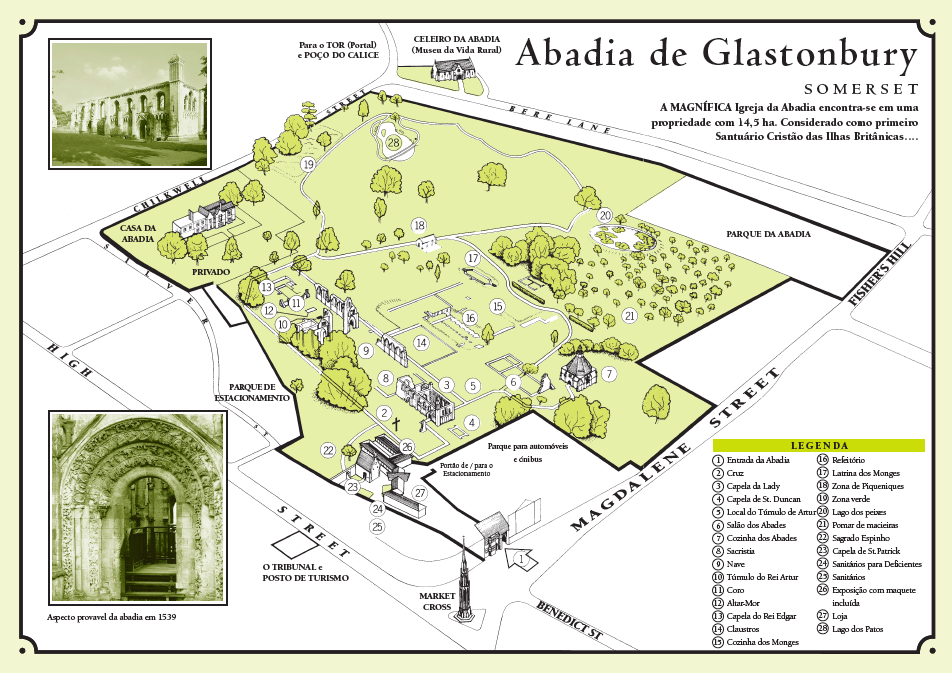
Abaixo o mapa desse lugar tão especial e a tabela com os preços de entrada. Os portões abrem às 9h da manhã. Em junho, julho e agosto só fecham às 20h. Março, abril e maio às 18h. Setembro, outubro e novembro às 17h e os demais meses (inverno) às 16h. Mais informações no site da Abadia.

Below goes the map of this unique place and the fares of admittance. The opening time is 9 a.m. but the closing time changes according to the season. In June, July and August it goes up to 8 pm. March, April and May 6 pm. September, October and november 5 pm and in wintertime the gates close at 4 pm.More information can be found in the site of the Abbey:

www.glastonburyabbey.com

Mapa em inglês / Map in English

Mapa em português / Map in portuguese

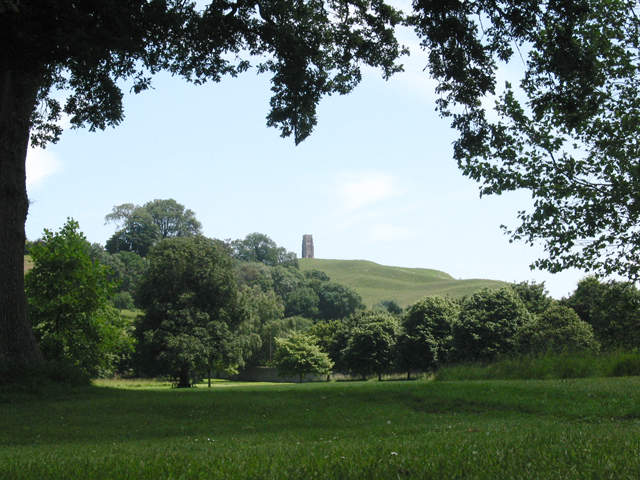
Vista do Tor / Tor View from the Abbey Garden.

O lago dos peixes / The Fish Pond

Um dos maiores carvalhos, junto ao lago. O carvalho é uma árvore sagrada para os druidas. One of the highest oak trees, close to the Fish pond. The oak is a sacred tree for druids.

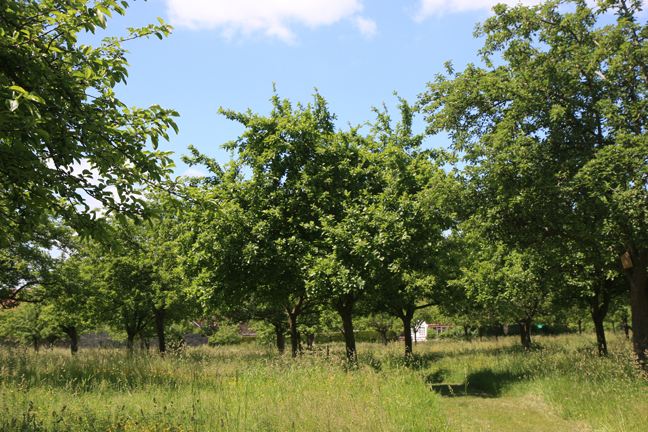
O pomar de macieiras. Avalon era antigamente conhecida como a Ilha das Maçãs.
The apple trees orchard. Avalon was known, in times of old, as the Isle of Apples.

Maçãs, embora pareçam romãs!
Apples, although they look like pomegranates!

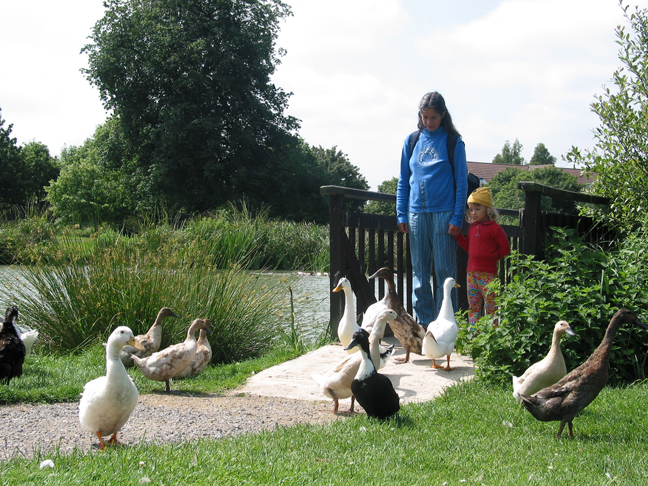
O lago dos patos / The Duck Pond

Os patos não são tão amistosos quanto deveriam, bati esta foto e saí correndo.
Ducks, not as friendly as they should be. I took the photo and ran.

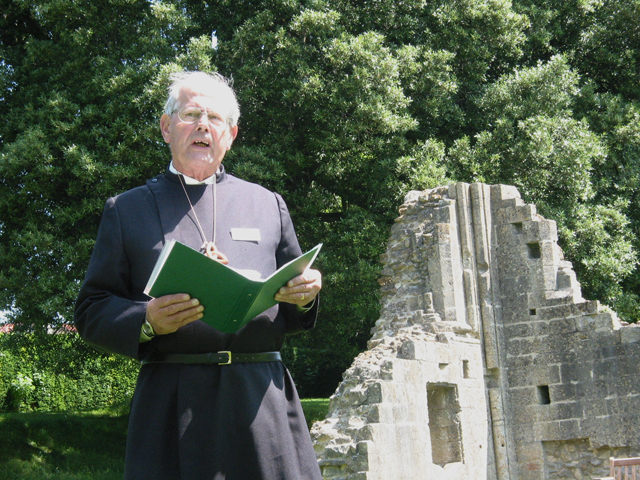
Um padre junto à cruz na entrada / A priest close to the Cross in the entrance

O padre é na verdade um capelão, e faz orações diariamente onde ficava o altar. The priest is actually a chaplain, who leads prayers everyday in the spot where once stood the High Altar.

Junto à loja de souvenirs encontra-se o Museu da Abadia.
The Museum, next to the Gift Shop.

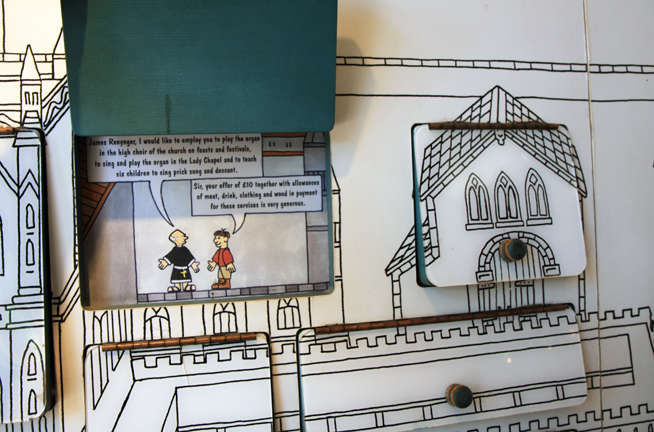
Painel interativo no Museu
Interactive panel in the Museum

Abrindo as janelinhas há informações sobre a vida na Abadia, ilustradas com personagens representando as pessoas que ali viviam e trabalhavam. As crianças adoram.
Behind each lid, characters present information on ancient life and work at the Abbey. Children love it!

Painel sobre Arthur. A ilustração mostra os monges desenterrando seu enorme caixão de carvalho, sobre o qual uma cruz trazia a inscrição: “His iacet inclitus Arturius in insula Avalonia” que significa ” Aqui jaz o Rei Arthur, enterrado na Ilha de Avalon”.
Panel about Arthur; monks are depicted unburying his massive oaken coffin, beneath a cross with the inscription “His iacet inclitus Arturius in insula Avalonia”, what means “Here lies King Arthur buried in the Isle of Avalon”.

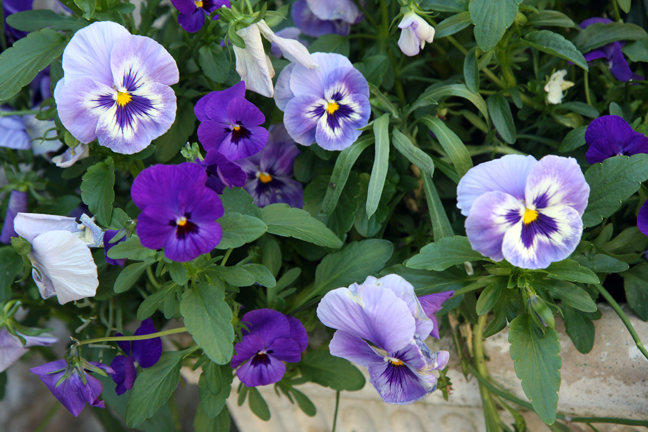
Fecho este post com as flores do amor-perfeito / It’s the end of this post, Forget-me-not!

Read Full Post »


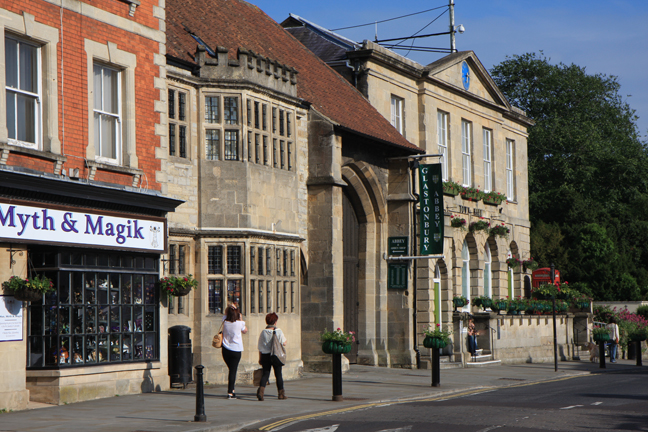
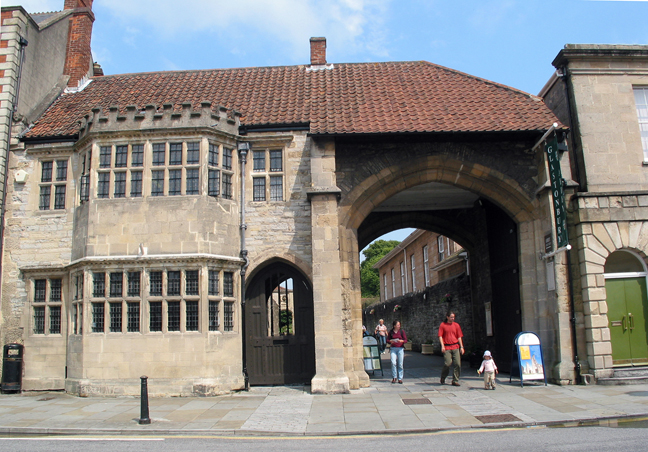
Abadia de Glastonbury / Glastonbury Abbey, Magdalene Street.

Este post é basicamente um álbum de fotos, fazendo um tour pela Abadia e Museu.
Somei fotos tiradas em diferentes dias, por isso a variação de luz.

This post is basically a photo album, a tour in Glasto Abbey and Museum. I added photos taken at different times and days, that’s why the light is not uniform.

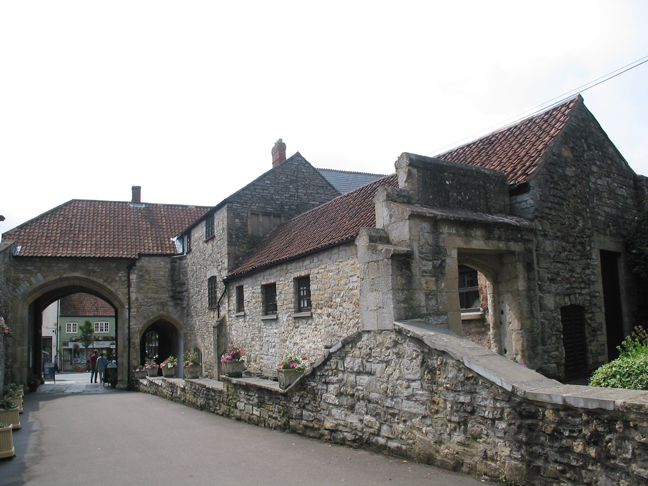
Entrada / Entrance

Corredor de entrada, ao fundo loja de souvenirs e museu./
Entrance, at its end souvenir shop and museum.

Olhando para trás, ao fundo Magdalene Street.
Looking back at Magdalene St.

Estátua de José de Arimatéia, que trouxe o catolicismo à Grã- Bretanha.
Joseph of Arimathea statue. He brought catolicism to Britain.

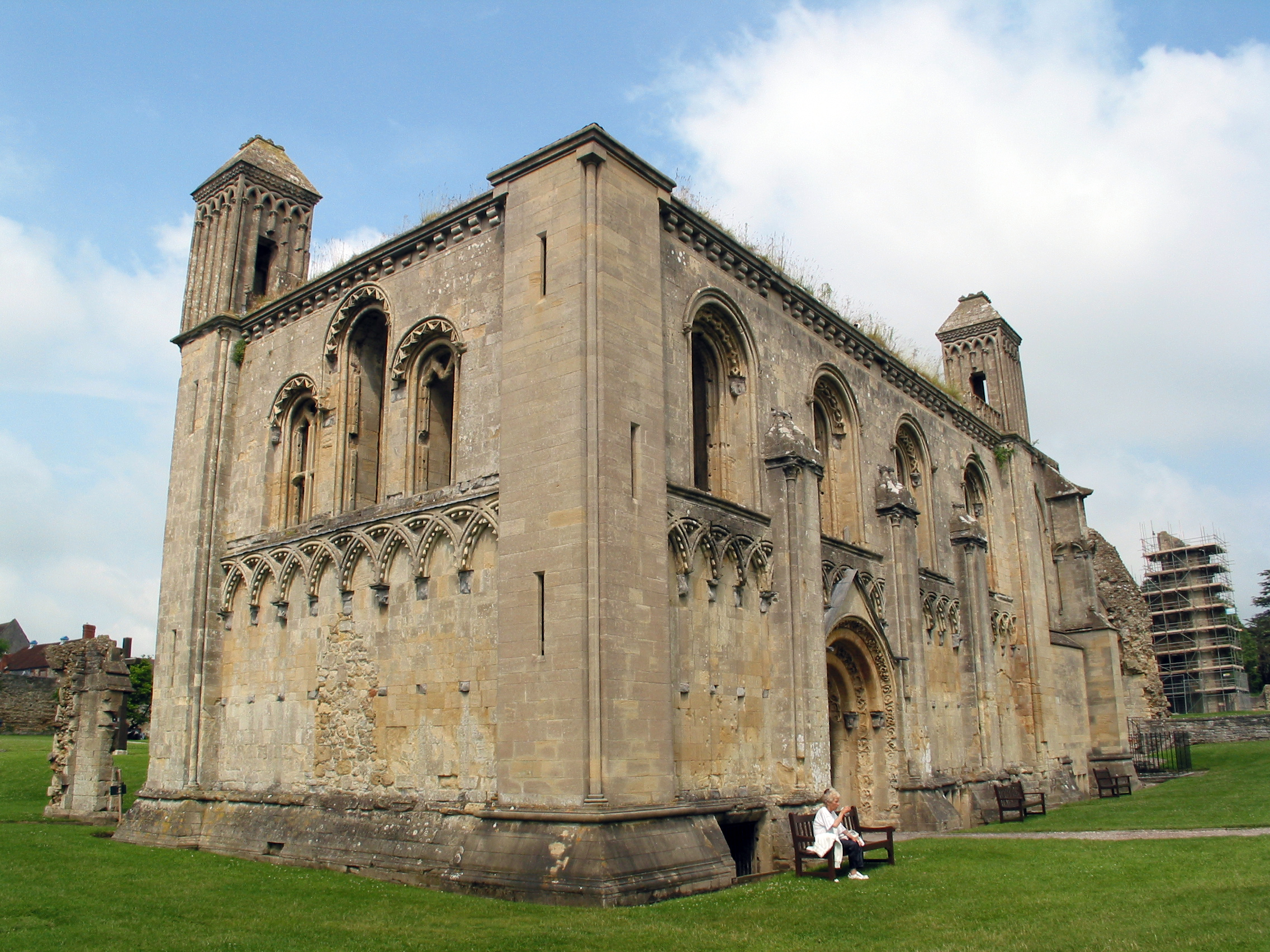
Capela da Senhora à esquerda, jardins à frente e lanchonete à direita
Lady Chapel to the left, garden ahead and coffee shop to the right

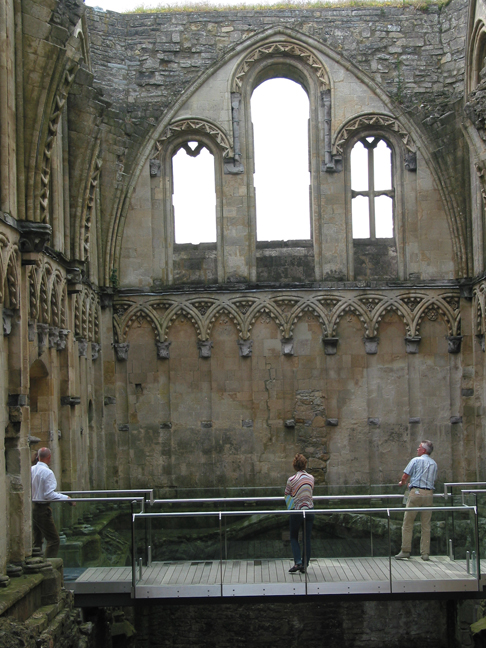
Lady Chapel

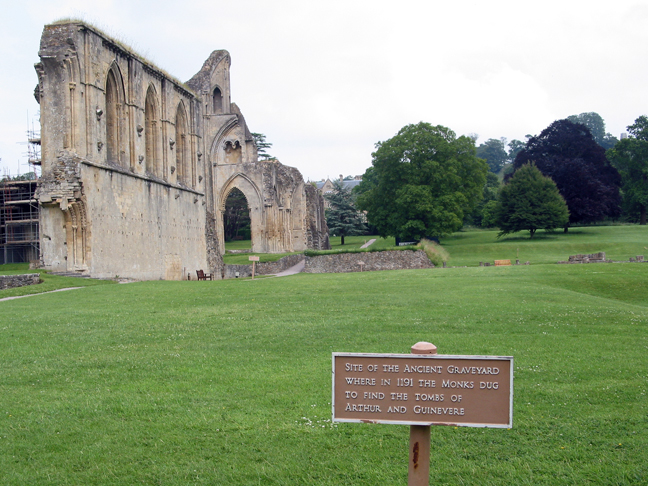
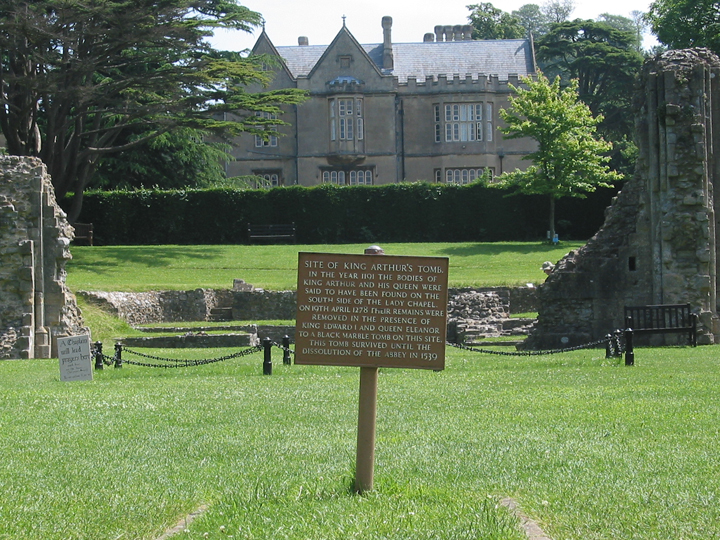
Local onde encontraram o túmulo de Arthur, ao fundo a Nave da Abadia
Site where Arthur’s grave was found; the Nave in the background

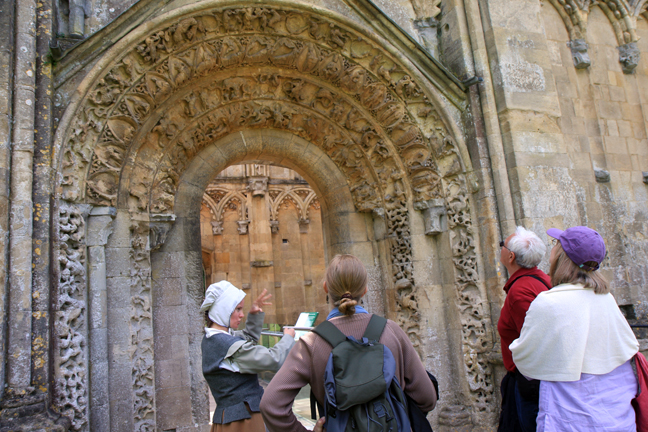
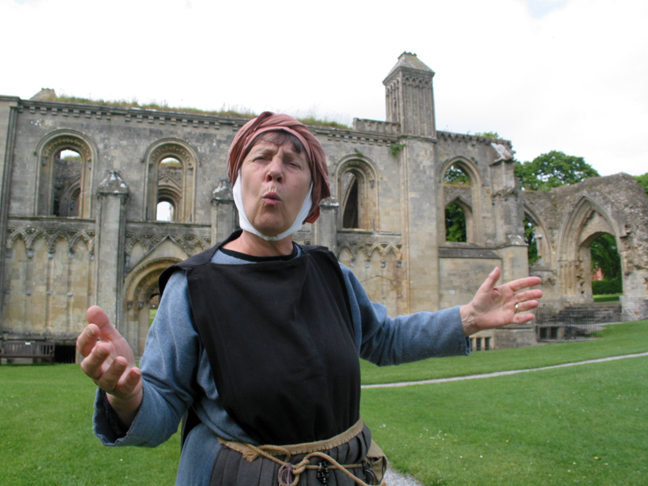
Guia em trajes de época mostrando detalhes do portal da Capela da Senhora
Guide wearing period clothes showing tourists details of Lady Chapel’s gate

Inside Lady Chapel

Saindo da Capela em direção à Nave
Walking from Lady Chapel towards the Nave

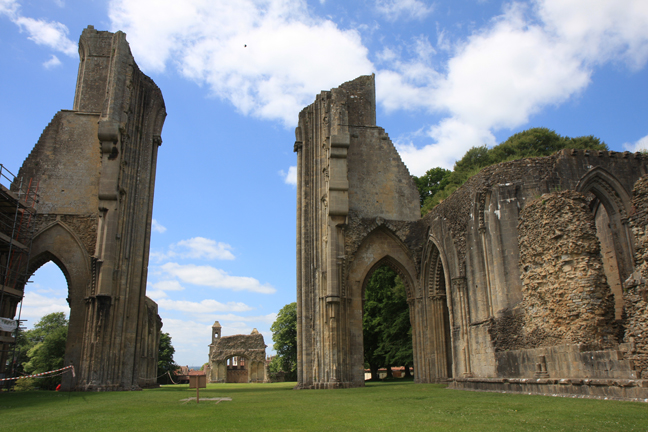
A nave restaurada; ao centro o local onde foi construído o mausoléu de Arthur em 1278
The restored Nave; in the centre the place where Arthur’s Tomb was built in 1278

Vista da Capela do Rei Edgar, altar principal, coro e nave ainda em restauração, em 2005
Overview of Edgar Chapel, High Altar, choir and Nave still in restoration, in 2005

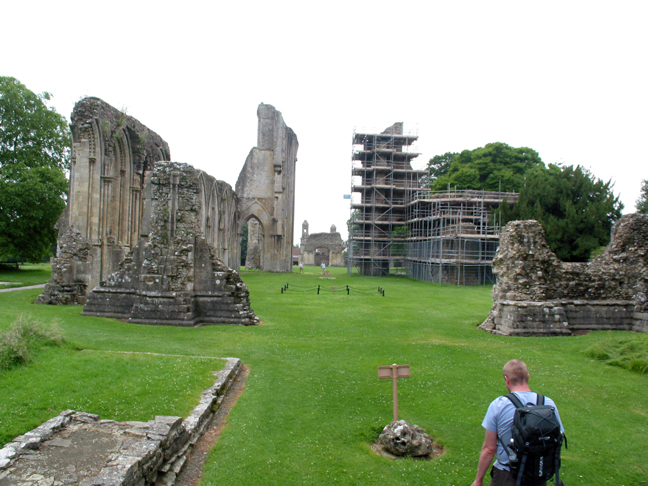
O que sobrou do túmulo de Arthur; ao fundo a Casa da Abadia, fechada a visitação
What remains of Arthur’s Tomb. In the background, the Abbey House, private.

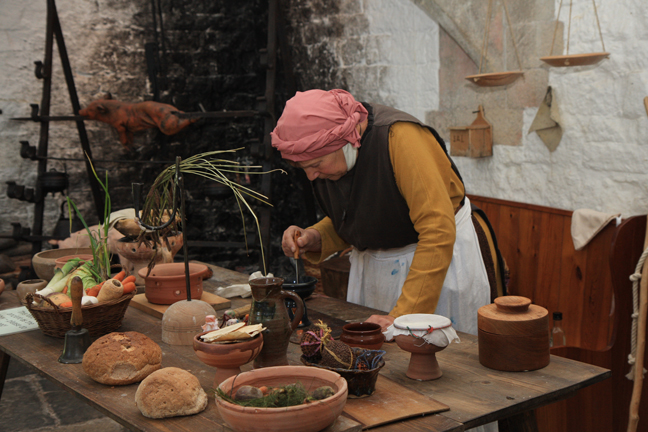
Guia vestida de cozinheira
Guide dressed as a cook

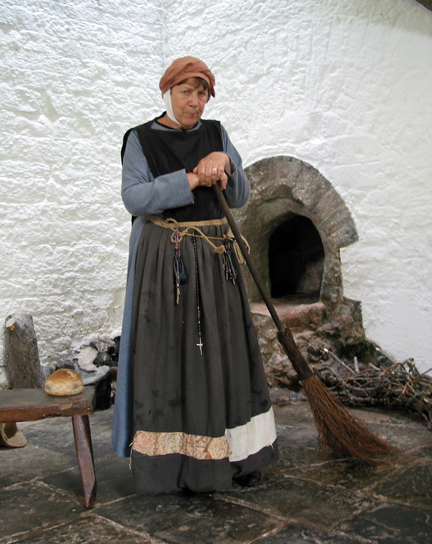
A cozinha dos monges é uma das construções históricas mais bem preservadas da Inglaterra.
The Monk’s kitchen is one of the best preserved historic sites in England.

Ambientação no interior da cozinha com a cozinheira trabalhando, utensílios e alimentos de época.
Inside the kitchen, the period atmosphere is recriated with the cook working, food and vessels

Read Full Post »


Da janela do trem de Londres para Salisbury avista-se um enorme cavalo carvado na montanha, uma das tantas “figuras de giz” que existem no Reino Unido; postarei fotos em breve com mais informações. One of the many massive horses (chalk figures) of UK seen by the window, in the train from London to Salisbury. Soon more photos and information on the subject.

Minha viagem foi incrível, porém caótica. Como eu tinha casa em Londres, fiquei o tempo todo voltando para lá em vez de traçar uma rota e seguir sempre em frente. Mas não, fiquei indo e vindo como um peru tonto na véspera de Natal. Talvez por estar viajando sozinha pela primeira vez, ter a casa do Fernando como base me dava segurança. Além disso, carregar a mala para toda a parte seria… uma mala sem alça! Imagine ir ao Solstício com aquele trambolho. Deixava a mala em Londres e levava uma mochila para viagens curtas. As estações não tem guarda-volumes, por medo de atentados a bomba.  Além disso, a passagem ida e volta é mais barata.
A primeira viagem foi em 2005; não faz tanto tempo assim, mas a Internet evoluiu uma barbaridade nesse tempo. Não havia Google Maps, Wikipédia, Facebook, blogs ou Twitter. Nem celular acessava a Internet!
Recomendo sempre consultar na Wikipedia (em inglês) as cidades que se pretende visitar. Além das informações básicas, há sempre uma lista de links onde consta o site oficial das cidades, que facilita muito a reserva de acomodações.
Pessoalmente, gosto de me hospedar em albergues, pois são bons, baratos e você sempre pode fazer amigos. A palavra chave no Google é backpackers, mas adianto aqui alguns links.

My trip was amazing, but chaotic. As I had a “home” in London I kept going back there instead of going straight ahead. I went forth and back like a drunk turkey in Christmas’ Eve. Maybe I felt safe and warm with Fernando, that was my first trip all by myself. Besides, I had a suitcase to carry, it was such an encumbrance, imagine taking it to Summer Solstice! Lockers are not available in stations anymore, people are afraid of bomb attacks. And return tickets are cheaper. So I ‘d rather do with a backpack and shorter journeys, leaving the suitcase in London.
My first trip was in 2005, not so long ago, but Internet developed tremendously in the meantime. I had no Google, Wikipedia, Facebook, blogs or Twitter. Mobiles couldn’t access the web.
My advice is to search the cities you want to go in the english Wikipedia. There’s always plenty of basic information and links to the cities’ official sites, which helps a lot to book accomodation.
I’m fond of hostels because they’re fine and fair, and a good place to make friends.
The keyword in Google is backpack, but here you have some links:

www.backpackers.co.uk

www.hostels.com

www.bug.co.uk

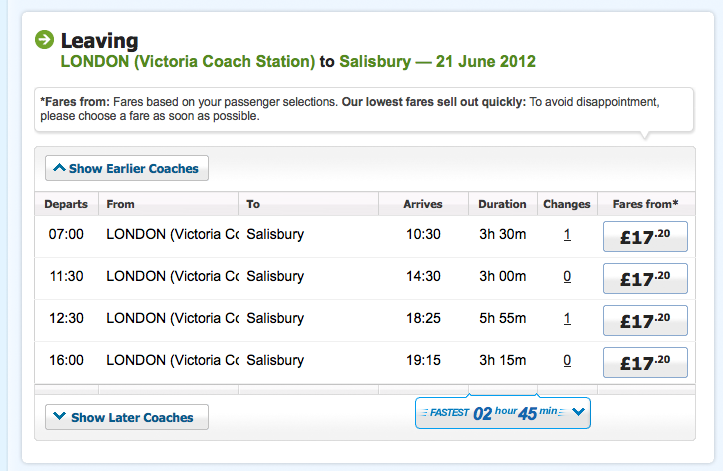
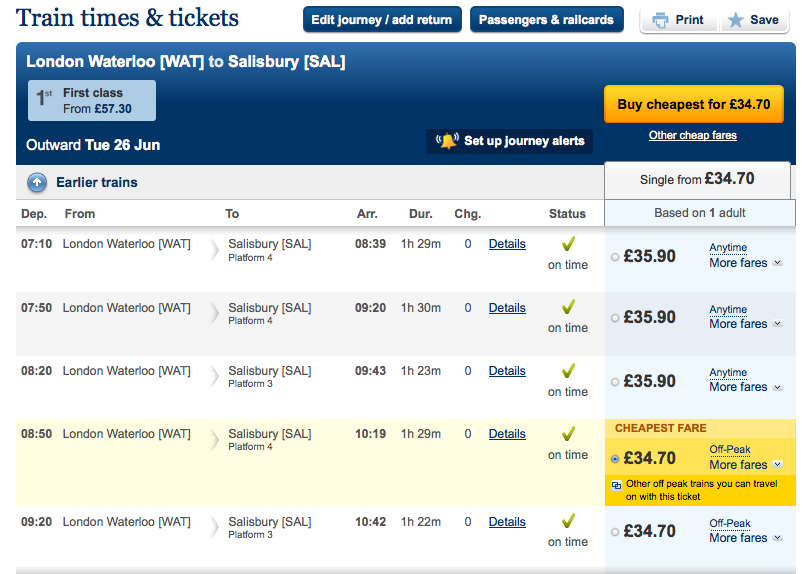
Para ir de Londres a Salisbury, você pode pegar o trem em Waterloo Station ou o ônibus em Victoria Station. Ambos tem saídas frequentes, mas compare preços e duração da viagem. Às vezes o preço da passagem é o mesmo mas um trem faz muito mais paradas que o de outro horário,  podendo a mesma viagem levar uma ou três horas. A quantidade de baldeações também faz muita diferença, especialmente se você carrega muito peso.

To go from London to Salisbury you can take a train in Waterloo Station or a coach in Victoria Station. Both provide frequent departures; you want to compare fares and duration. Sometimes the fare is the same but one train stops many times more than the next, so your trip can be twice or three times longer. Mind how many times you’ll have to transship, specially if you carry heavy bags.

Horários e preços de ônibus de Londres para Salisbury, partindo de Victoria Station

Trem de Londres para Salisbury: mais confortável, porém mais caro / From London to Salisbury by train: more comfortable, but more expensive

De Londres para Glastonbury não há trem, apenas ônibus com baldeação. Há quem vá de avião até Bristol, mas de lá terá que embarcar num ônibus. Saem vôos dos aeroportos de Heathrow e Gatwick.

From London to Glastonbury there’s no train, only coaches and buses. You can fly to Bristol but from there you can’t avoid the bus. Flights depart from Heathrow and Gatwick airports.

Londres/Glasto de ônibus
London/ Glasto by coach and bus

Viagem mista: London/Glasto de trem e ônibus, via Bristol
London/Glasto by train and bus changing in Bristol

Outra possibilidade de viagem mista: London/ Glasto Via Taunton, menos baldeações
Another possibility, through Taunton, you only change once

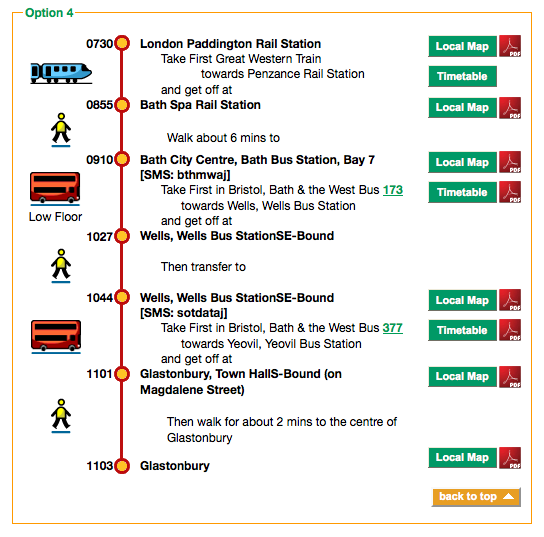
London/ Glasto through Bath

Analisando todos os trajetos, caso você queira refazer meus passos, partindo de Londres sugiro ir primeiro a Glastonbury. De Glastonbury pegue o ônibus para Bath, conforme linha acima. De Bath siga para Salisbury, para visitar Stonehenge. Salisbury é ponto de baldeação para: Cardiff, no País de Gales;Winchester, Avebury (a 37 km de Stonehenge) e outros lugares aonde chegaremos neste blog, como Tintagel, na Cornualha.

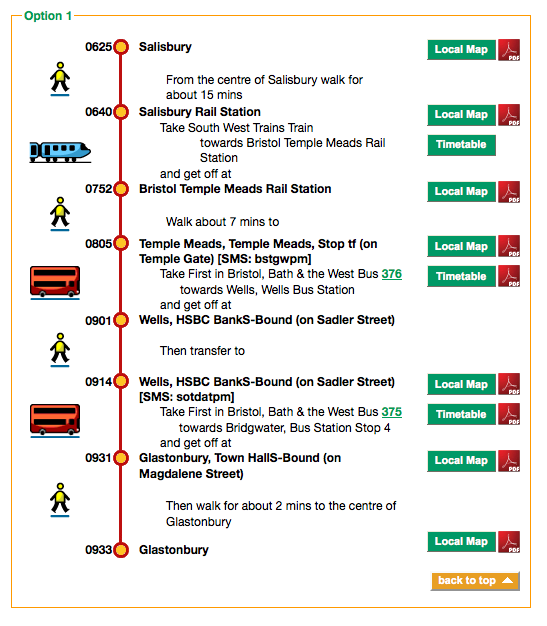
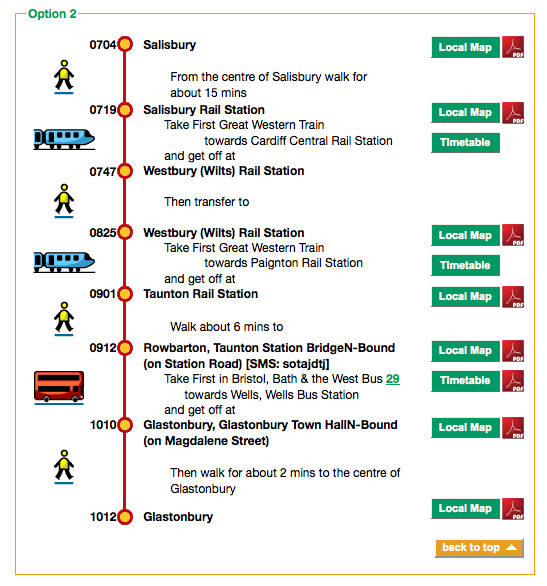
If you want to follow my steps, from London you better go straight to Glastonbury. From there take the bus to Bath. From Bath go to Salisbury, to visit Stonehenge. Salisbury is the place to change to Cardiff in Wales; Winchester, Avebury ( about 22 miles from Stonehenge) and many other places we’ll be arriving soon in this blog, as Tintagel in Cornwall. I got  these coach and train routes in this useful site for planning trips in UK. You’ll see below  the options to go from Salisbury to Glastonbury.

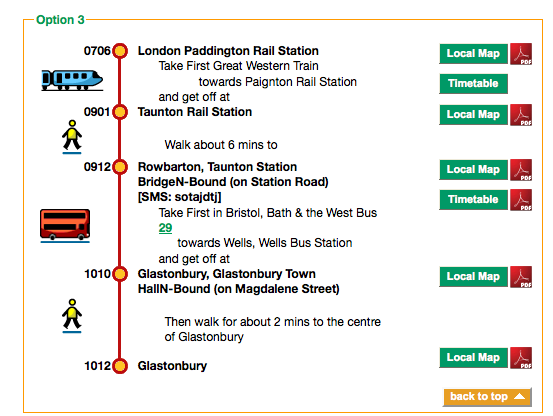
Estas viagens mistas obtive num site muito útil para planejar uma viagem no Reino Unido:

www.travelinesw.com

Aqui as opções para ir de Salisbury a Glastonbury:

Salisbury/ Glasto option 1

Salisbury/ Glasto option 2

Salisbury/ Glasto option 3

Para mais informações sobre trens/ More  train information:

www.nationalrail.co.uk

www.southwesttrains.co.uk

www.mytrainticket.co.uk

www.crosscountrytrains.co.uk

Ônibus / Coach:

www.nationalexpress.com

Read Full Post »


Os Teixos Guardiães no jardim do Poço do Cálice / Guardian Yews in Chalice Well garden

O teixo é uma árvore de crescimento lento e extraordinária longevidade. No cemitério de Brabourne em Kent, na Inglaterra, existe um cuja idade estimada é de mais de 3.000 anos. Árvore sagrada para os celtas, simboliza a imortalidade e a resistência. Suas folhas se mantém sempre verdes, mesmo durante o inverno. Na mitologia nórdica, a Yggdrasil (árvore gigantesca cujas raízes sustentavam e mantinham coesa a estrutura do planeta) era um teixo. Sua madeira resistente e flexível era usada para confecção de arcos e flechas. Sobre sua casca eram gravadas runas. Embora seja uma das mais antigas espécies do mundo, o teixo não é encontrado no Brasil.
The yew is a extraordinarily long-lived and slow growing tree. In Brabourne Cemetery, Kent, England, there’s one whose estimated age surpasses 3.000 years. A sacred tree for the celts, the yew symbolizes imortality and endurance. Its leaves are always green, even in wintertime. In Norse mythology, the Yggdrasil (giant tree whose roots support and uphold our planet’s structure) was a Yew. Of its wood, tough and flexible, bows and arrows were made. Its skin was suitable to engrave runes. Although the yew is one of the oldest species in the world, it can’t be found in Brazil.

Eihwaz, a runa do teixo. / The yew rune

Eihwaz nos remete à imagem de uma árvore secular, cujas raízes estão bem plantadas e, em sua resistência, já sofreu os abalos mais diversos provocados por tempestades, ventanias, nevascas, etc. No entanto permanece estável e segura, emanando vitalidade. A runa indica fortalecimento e estabilidade conquistados por atitudes de confiança e persistência, e nos aconselha a estarmos atentos, mesmo num momento de grande firmeza e segurança, para que tenhamos a necessária flexibilidade a fim de que nossas atitudes não se tornem rígidas demais.

Eihwaz recalls a centennial tree with well planted roots, which, in its endurance, has suffered storms, winds, snow, and keeps still and safe, pouring vitality. This rune indicates strengthening and stability won by trusty and persistent behavior. Its advice is to be alert, even in times of safety, to keep flexibility so our attitude doesn’t become too harsh.

Lindas flores / Gourgeous flowers

Na loja de souvenirs do Chalice Well, não fui tão bem recebida. Depois de visitar o jardim, entrei ali e estava feliz fuçando nos livros, quando o funcionário muito mal-humorado informou que iria fechar a loja em cinco minutos. E ficou me olhando feio. Fiquei chocada, disse que não era nada gentil receber um cliente daquela forma. Respondeu apenas que era pago para ficar ali até às cinco da tarde, portanto se eu quisesse comprar algo, que fizesse isso logo. Peguei um livro sobre mitologia celta que estava em promoção e uma corrente de prata com o símbolo da minha data de nascimento.

In the Chalice Well Shop I was not so welcome. After hours wandering in the gardens, I entered the shop and was so happy fussing the books when the salesclerk, in a dark mood, told me the store was closing in five minutes. And kept on staring at me with murder in his eyes. I expressed my shock saying that was not very polite of him to talk to a customer that way. His remark was that he got paid for staying there until 5 o’clock, so if I’ was to buy something I should do it at once. I grabbed a book on celt mythology on sale, a silver chain with my birthday’s date symbol and left pissed off.

Ingleses são loucos por jardinagem. / English people are natural born gardeners

Só fiz a compra mesmo porque amo livros e o símbolo tinha tudo a ver comigo: Magical Abilities. Comecei a acreditar que tinha mesmo alguma habilidade mágica. Saí de lá revendo o filme da minha vida e percebi que, de fato, era capaz de fazer as coisas acontecerem. Até esqueci a estupidez do funcionário, que, apesar de viver e trabalhar num lugar sagrado, era um pobre de espírito, coitado.
I only bought the stuff because I love books and the symbol touched me deep inside. It was Magical Abilities. I was about to believe I had some indeed. The movie of my life unwinded in my mind and I realized I could actually make things happen. I soon forgot the clerk’s rudeness and pitied him for being such a miserable soul despite living and working in a sacred place.


Quanto à habilidade mágica, agora sei que tudo tem a ver com o esforço que se faz. Mesmo os druidas precisavam colher as ervas na hora certa, na Lua certa, de acordo com sua finalidade. Mas não nasceram sabendo! Seu conhecimento advinha de uma vida inteira estudando arduamente. Quer dizer, nada vem por acaso. Você tem de dar a partida e engrenar a primeira, em outras palavras, botar o universo em andamento para atingir sua meta. E quando o movimento se estabelece ainda precisamos mantê-lo.
About magical abilities, now I’m sure it’s all about efforts. The Druids would harvest herbs in an accurate time, in the proper moon, according to their purpose. But they were not born with this knowledge; it was the result of a lifetime of hard study. What I mean is, nothing comes random, for free. You must start the engine, set the universe moving to reach your goal. And once the movement is established, still you must keep it rolling.


Viajei buscando o Arthur dentro de mim – aquele comandante que não desistia, mesmo parecendo derrotado, numericamente inferior ao inimigo, conforme relatos de tantas batalhas, acabava vencendo por achar uma estratégia que o levaria à vitória: a inteligência suplantando a força bruta.

My journey aimed at the Arthur inside me. That commander who wouldn’t give up; against all odds, outnumbered by the enemy – according to tales of countless battles- he would find his way to victory through strategy. Intelligence overcoming raw strenght.

Read Full Post »


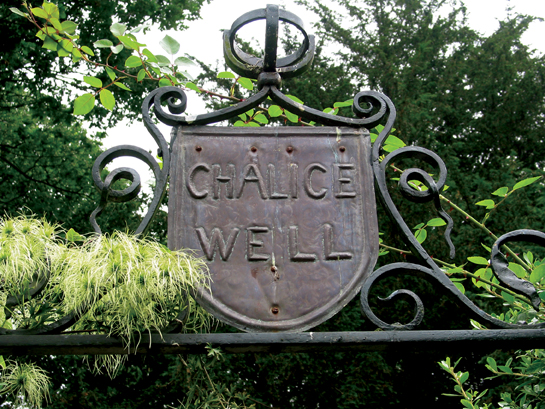
The Chalice Well Trust
Chilkwell Street, Glastonbury, Somerset – BA6 8DD – phone: 01458 831154

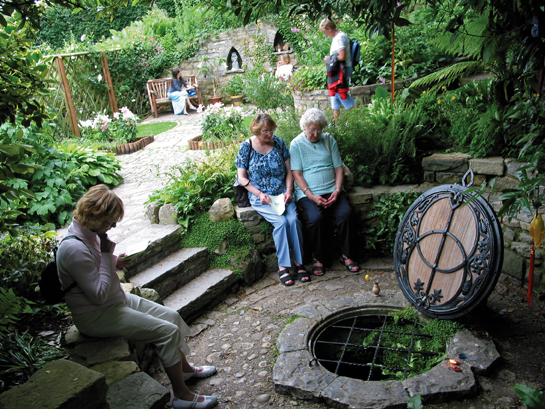
Existem evidências arqueológicas de que o poço vem sendo usado há pelo menos dois séculos. A água jorra abundante, cerca de noventa e cinco mil litros por dia, mesmo em épocas de seca.
Nas mitologias galesa e irlandesa, os poços são portais para o mundo dos espíritos, e o desenho da tampa do poço (Vesica Piscis) representa justamente a interseção entre os dois mundos, cortados ao meio por uma lança ou espada associada à Excalibur, a legendária espada do rei Arthur.

Archaeological evidence suggests that the well has been in almost constant use for at least two thousand years. Water issues from the spring at a rate of 25,000 gallons per day and has never failed, even during drought. Wells often feature in Welsh and Irish mitology as gateways to the spirit world. In the well lid design, known as Vesica Piscis, the overlapping of the inner and outer worlds is represented by two interlocking circles, bisected by a spear or sword, a possible reference to Excalibur, King Arthur’s legendary sword.

O lindo jardim, rumo ao poço / Inside the beautiful garden, heading to the well itself

Para os cristãos, dentro deste poço foi escondido o Graal, o cálice que teria recolhido o sangue de Cristo durante a crucificação. Isso, segundo a lenda, foi feito por José de Arimateia, um discípulo que fugiu para a Britânia de barco, dirigindo-se a Glastonbury.

Christians believe that in this well is hidden the Holy Grail, the chalice in which drops of Jesus’ blood was collected during crucifixion by Joseph of Arimathea, one of his disciples who fled by boat to Britain, heading for Glastonbury.

Poço do Cálice / Chalice Well

Vesica Piscis

O desenho de folhagens em torno do Vesica Piscis na tampa do poço faz referência ao Espinheiro Sagrado que teria brotado no exato local onde José fincou seu cajado, em Wearyhall Hill. Esta árvore era incomum por florir duas vezes por ano; a floração no inverno era considerada milagrosa. Embora sagrada, a árvore acabou morrendo. Antes, porém, os monges tiraram mudas e algumas estão lá até hoje.

Foliage around the Vesica Piscis represents the Glastonbury Holy Thorn, a tree supposed to have grown in the spot where Joseph thrust his staff, Wearyhall Hill. The thorn flowered twice in a year, what is unusual. Its flowering in mild weather just past midwinter was accounted miraculous. Despite its holiness, the tree died. However, many cuttings were taken from it by the monks and still live in Glastonbury.

Um pequeno lago dentro do jardim foi construído na forma do Vesica Piscis / A Vesica Piscis shaped pool inside the garden

Espinheiro em Wearyhall Hill, ao fundo o Tor / Thorn tree in Wearyhall Hill overlooking the city, the Tor in the background

Todo ano um galho do espinheiro de Glastonbury é enviado à Rainha no Natal. Isto começou no tempo da Rainha Anne.
Every year, a branch of the Glastonbury thorn is sent to the Queen at Christmas. This started in Queen Anne’s reign.

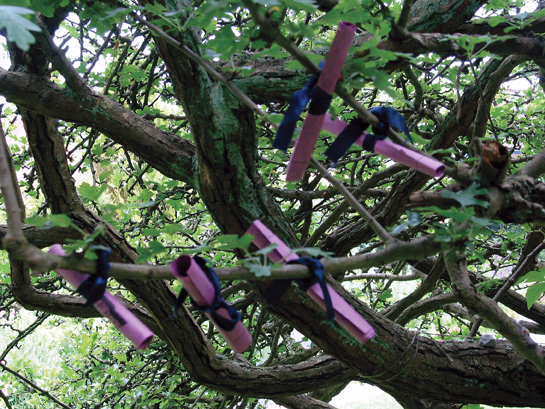
Espinheiro no jardim do Chalice Well, onde as pessoas amarram seus desejos por escrito / People tie their written wishes in the Thorn trees inside the Chalice Well garden

Read Full Post »


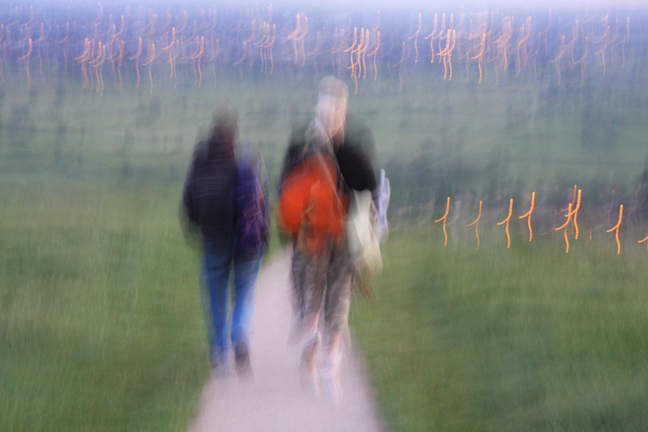
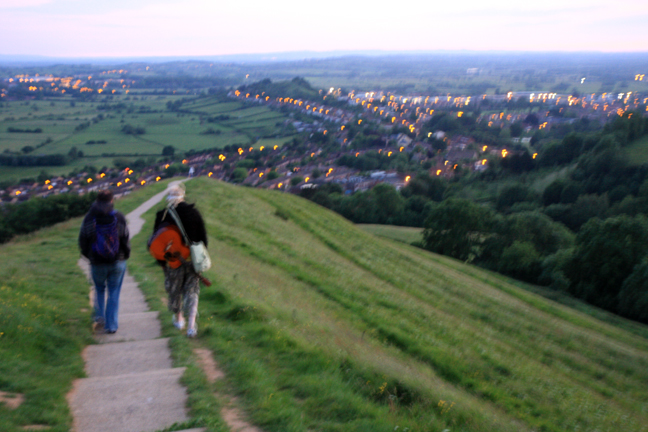
Pessoas sobem e descem o Tor o tempo todo. Fui lá todos os dias e o movimento é constante.
Por fim me enturmei com uns malucos que tinham sacos de dormir, bebida e disposição para compartilhar, enquanto o Sol fingia se pôr e o vento ficava mais frio, digamos enregelante. Acabei bem embrulhada no saco de dormir que um dos caras teve a gentileza de emprestar ao me ver tremendo da cabeça aos pés. Eu podia morrer de frio, mas não ia arredar o pé dali. O Sol, sem pressa, brincava de se esconder com a linha do horizonte. Não me lembro de onde eles eram nem seus nomes, porém jamais esquecerei que um dia assistimos ao anoitecer em Glastonbury juntos.

People go up and down the Tor all the time. I’ve been there everyday and confirmed there’s a constant flow. Me, at last, made friends with some dudes who had sleeping bags, booze and will to share it all, while the sun pretended to set and the wind chilled, turning to freezing. In a few minutes I was shivering and one of the guys was so kind as to lend me his sleeping bag, where I wrapped myself up. I‘d rather freeze to death than leave that place. The sun wasn’t hurried, playing hide-and-seek with the skyline. I can’t remember where those people were from, neither their names, but I’ll never forget that we once watched together nightfall over Glastonbury.

Músicos inspirados faziam suas performances, e em poucos minutos uma Lua cor de laranja começou a acordar no horizonte do outro lado do Tor, onde um barbudo grandalhão fazia malabares com pauzinhos, barbantes e bolas de fogo nas pontas. Para meu desespero, a bateria da câmera tinha arriado e, ao saber que eu era brasileira, alguém me passou às mãos um pandeiro, insistindo para que eu tocasse um samba! Não tenho o menor jeito para música, muito menos percussão, sou totalmente desprovida de ritmo. Após surrar de forma desconexa o instrumento por alguns instantes e ver a expressão atônita das pessoas, o devolvi ao dono, e imediatamente puxei conversa sobre outro assunto.

Inspired musicians were performing and soon an orange moon started raising on the opposite side of the hill. A big bearded man appeared juggling with fireballs in sticks. For my complete despair, camera batteries went dead. And someone heard that I was brazilian and gave me a tambourine, insisting that I should play samba. I’m definitely destituted of musical abilities and lack all rhytm. After striking clumsily the instrument for instants and realizing the shock in everybody’s faces, I returned it to its owner and changed subject promptly.

Tive de descer, embora quisesse ficar para sempre. No dia seguinte, iria fazer faxina no ashram, mas antes deveria comparecer a uma hora de meditação e orações. Era a regra. No primeiro dia achei ótimo acordar às sete da manhã ouvindo cânticos celestiais, achei que eram as pessoas cantando mas era apenas um CD. No terceiro dia deixei de comparecer, felizmente ninguém reclamou.

At last I had to leave, though I wished staying forever. Next day my cleaning work in the ashram should start, after one hour of meditation and prayer everyone was supposed to attend. Those were the rules, and next morning it was not so bad to wake up at seven, a heavenly song filled the air, I thought for a while that people were singing, but it was just a CD. I eventually ceased turning up at the meditation, fortunately no one noticed.

Read Full Post »

« Newer Posts - Older Posts »