Feeds:
Posts
Comentários

Archive for the ‘Uncategorized’ Category


Atravessando o estuário de Pentland / Crossing the Firth of Pentland

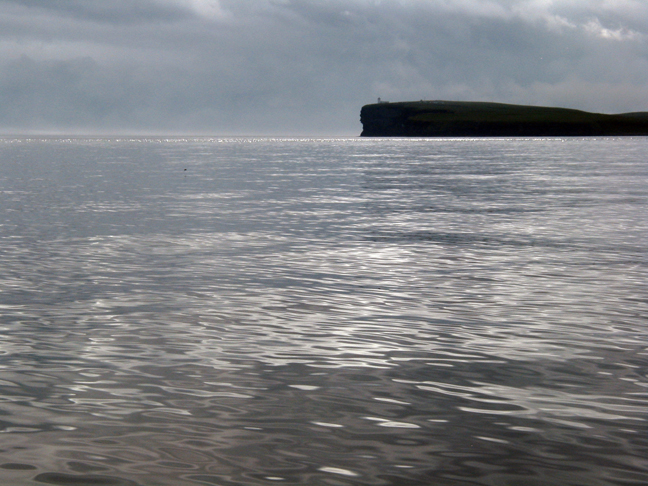
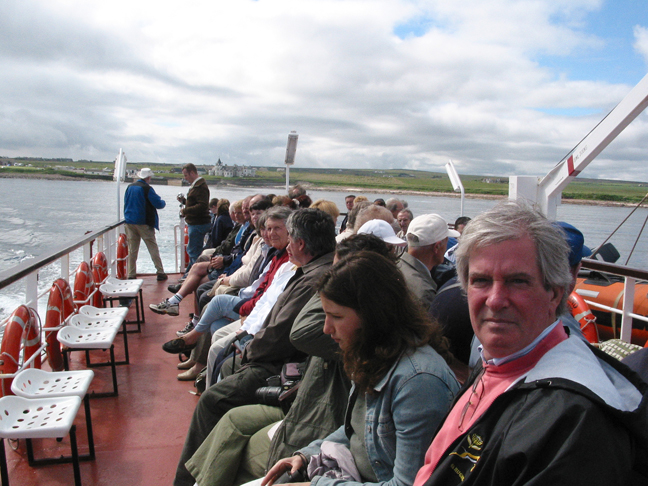
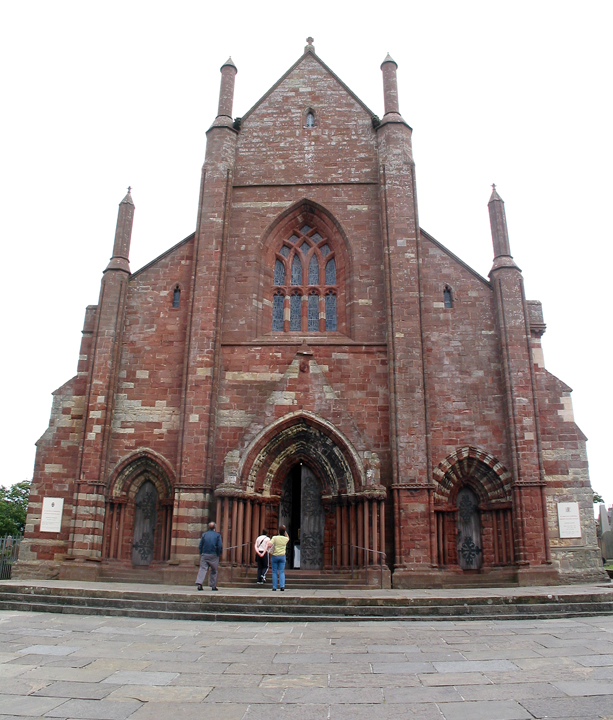
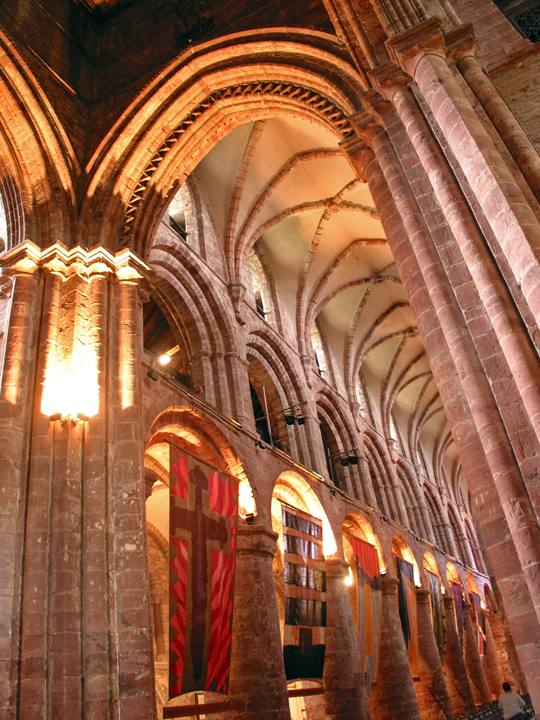
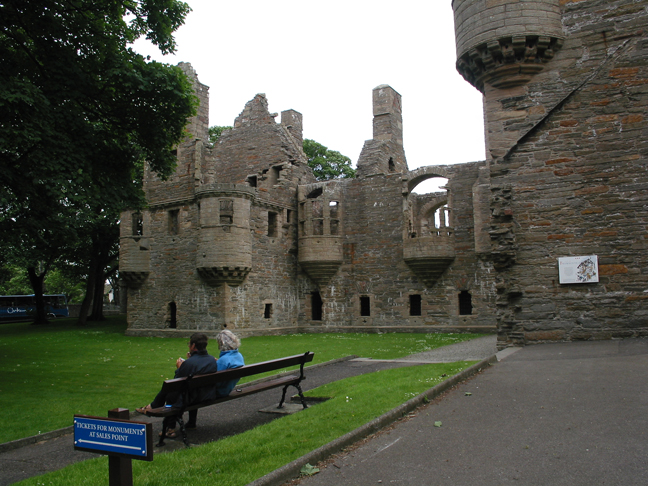
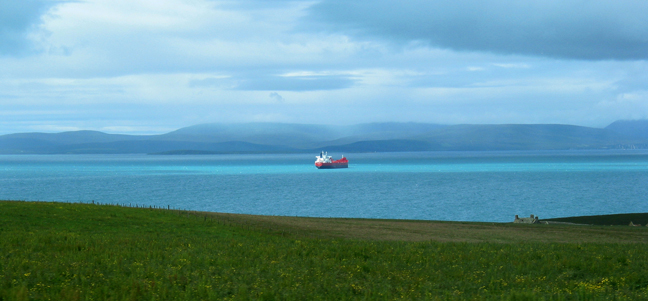
Após a almoço embarcamos no ferryboat para cruzar o estuário de Pentland. A travessia levou 40 minutos, sob o vento cortante do Mar do Norte. Outro ônibus nos esperava para prosseguir viagem até Kirkwall, principal cidade de Orkney, onde houve uma parada para visitar a catedral de St. Magnus, que data do século XII. Ao lado da igreja encontram-se as ruínas do Palácio do Conde. O tempo fechou, ameaçando chuva. Fiquei tensa, quarenta minutos me pareceram a eternidade, mas depois de um café e algumas fotos a excursão prosseguiu.

Mais perto / Closer

After lunch we boarded the ferry to cross Pentland Firth, 40 minutes under the freezing North Sea wind. In the end, another bus was waiting to carry us further, to  Kirkwall, main Orkney town. There was a stop to visit St. Magnus, a XII century Cathedral. Next to it are the ruins of the former Earl’s Palace. We stood there for what seemed eternity, plenty of time for pictures and a coffee and the weather went worse, threatening rain, so I was quite tense. But eventually the tour departed.  

St. Magnus Cathedral

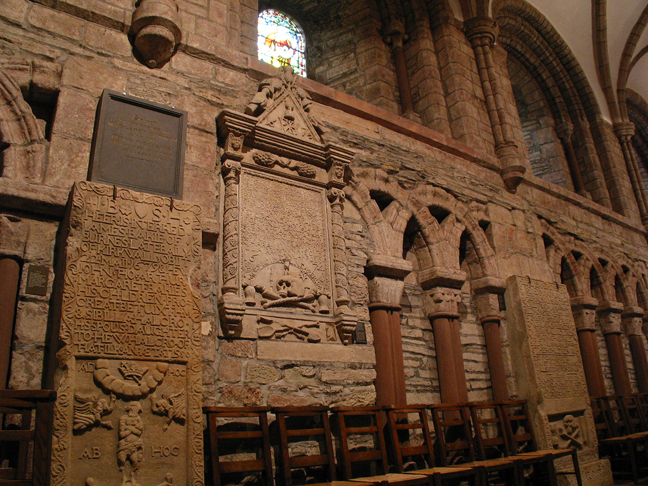
Interior sinistro da enorme catedral / Inside the massive Cathedral… creepy!

Ruínas do Palácio do Conde, no meio de um parque em Kirkwall
The Earl’s Palace ruins with a park around, in Kirkwall

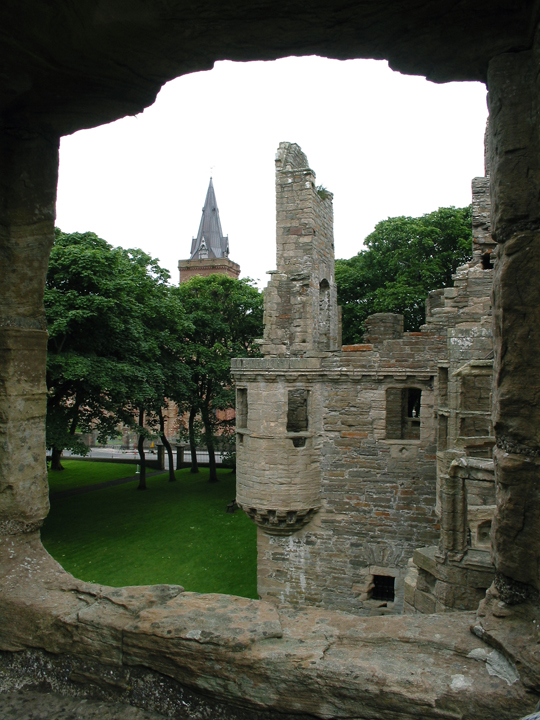
A torre da catedral vista do Palácio do conde
Cathedral Tower seen from the Earl’s Palace

Enfim raios de sol. / Sunlight at last.

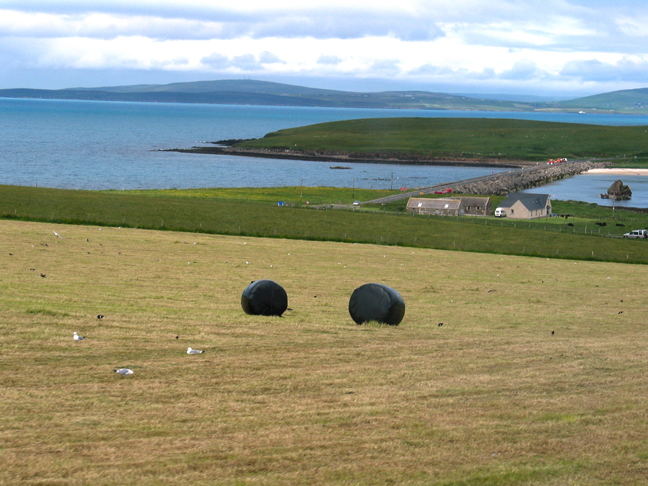
A estrada ia costurando as ilhas como um patchwork. São setenta ao todo, das quais apenas vinte são habitadas. Percorremos quilômetros entre nada e lugar nenhum, campos arados pontilhados por rolos de feno aguardando serem recolhidos sabem os deuses por quem, pois não se via uma alma sequer.

Pontes interligam as ilhas, algumas minúsculas / Bridges between the tiny islands

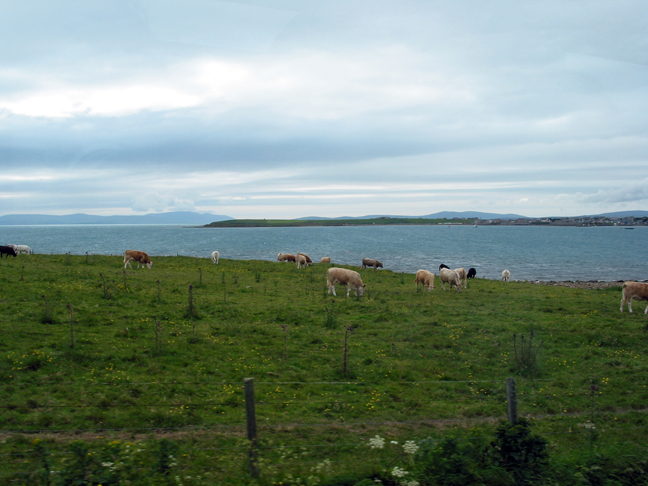
Paisagem através da janela do ônibus / Landscape seen through the bus window

Casco de um barco naufragado / Wreckage of an old boat

The road sewed together, like a patchwork , approximately 70 islands of which 20 are inhabited. A long way between nothingness and nowhere. Miles of plough fields dotted with haystacks waiting to be collected, the Gods only know by whom, for there wasn’t a single living being in sight.

Skara Brae!

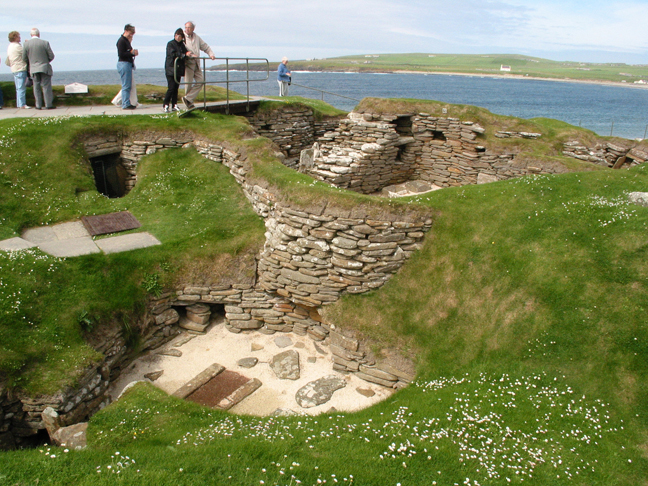
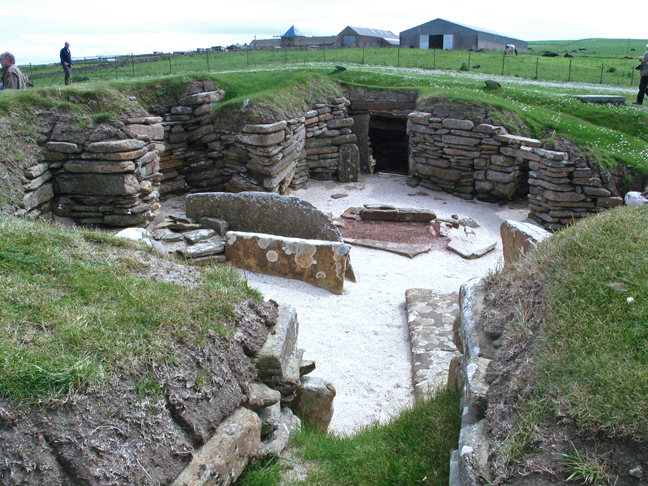
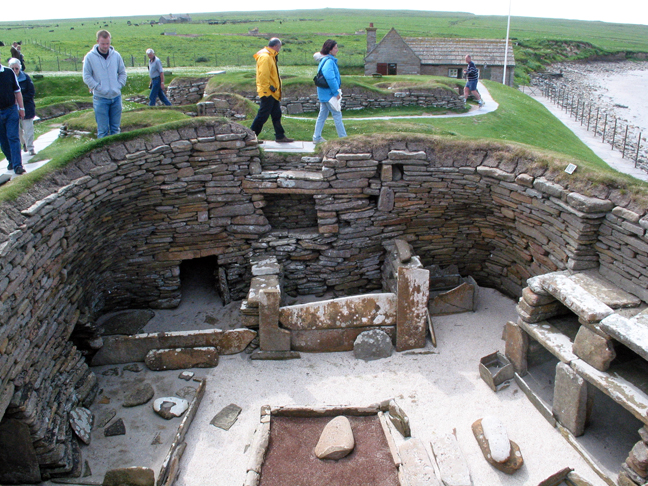
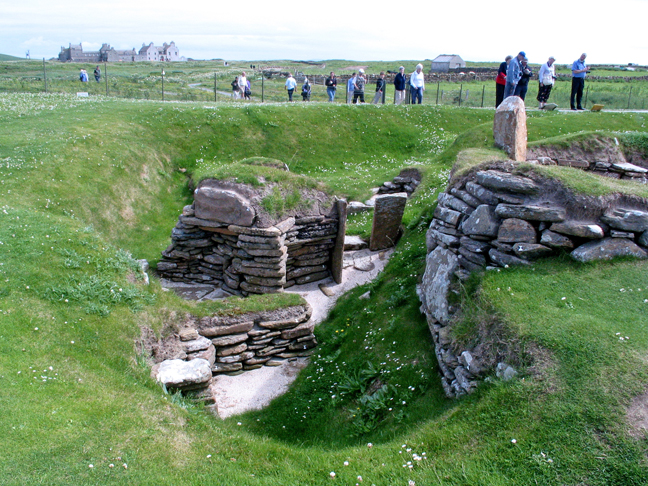
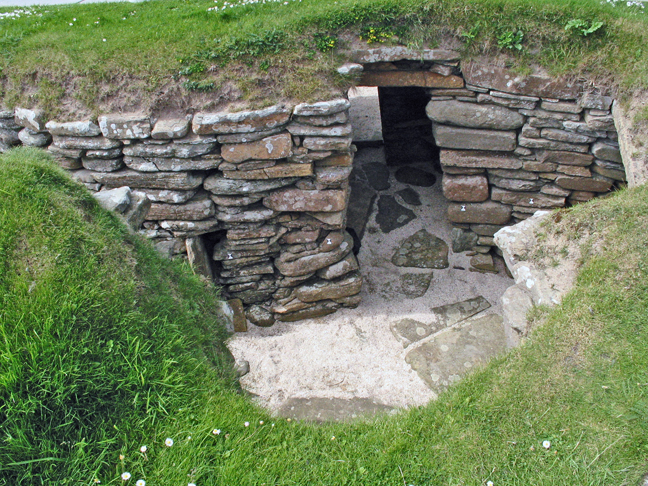
Por fim chegamos a Skara Brae, sítio arqueológico que guarda um dos mais antigos vestígios de ocupação humana de que se tem notícia, datado entre 3180 e 2500 a.C. Uma relíquia do Neolítico com tal grau de preservação que ganhou da UNESCO o título de Patrimônio Histórico Mundial. São dez habitações de pedra enterradas no solo, ligadas por passagens também de pedra, que abrigaram não mais de cinquenta seres humanos. Lugar absolutamente inóspito, o vento glacial constante nas Orkneys impede o crescimento de qualquer árvore, só se vê grama num raio de quilômetros.

Contornando as escavações / Circling around the excavations

We arrived at last in Skara Brae, archaeological site that keeps traces of the most ancient known human settlements, dating back to 3180 BCE – 2500 BCE. It’s Europe’s most complete Neolithic village. Due to its excellent preservation, it was given UNESCO World Heritage Site status. It consists of ten clustered stone houses sunk into the ground for insulation against Orkney’s harsh winter climate, where once lived no more than fifty people. An inhospitable place, an empty wilderness where the frosty wind prevents any tree from growing, all you see in a radius of miles is grass.

As casas foram cobertas pela areia gradualmente, e tudo indica que já tinham sido abandonadas quando isso ocorreu, mas não se sabe por que.
Burial in sand was gradual and it seems that the houses had already been abandoned — for what reason, no one can tell.

Skara Brae é mais antigo que Stonehenge e que as pirâmides. Na trilha para o sítio arqueológico, passa-se por uma réplica em tamanho real de uma das habitações, com vasilhas de barro, cestos de peixe seco, pilhas de lenha, peles e mobília de uma alvenaria feita com pedra, areia e palha. Os habitantes deviam ser esquimós, pois o gelo cobre tudo no inverno. Ali em pleno verão, ao meio-dia, apesar do sol ter aparecido, meu nariz e orelhas já estavam congelados assim como as mãos, que insistiam em empunhar a câmera.

Quase todas as casas tem mobiliário semelhante, com as camas e aparador no mesmo lugar. / Most of the houses have similar furniture, with the beds and dresser in the same places in each house.

Skara Brae is older than Stonehenge and the pyramids in Egypt. On the footpath to the archaeological site there’s a life size model of one of the houses, with all its pottery inside, baskets of dry fish, furs and stone-built pieces of furniture. The inhabitants must have been Eskimos, for in winter ice covers everything. It was midsummer, it was midday, the sun had decided to shine but I had my nose and ears frozen, as well as my hands that wouldn’t let go of the camera.

A aldeia tinha um sistema de drenagem que incluía um vaso sanitário tosco em cada habitação.
A drainage system was even incorporated into the village’s design, including a primitive form of toilet in each dwelling.

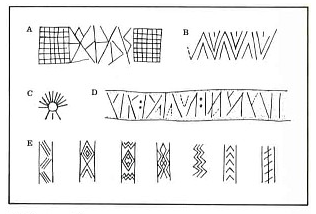
Os desenhos gravados nos objetos encontrados em Skara Brae são semelhantes aos encontrados no Vale do Boyne, Irlanda, sugerindo uma conexão entre estas culturas. / The spiral ornamentation on artifacts found at Skara Brae match stylistically objects found in the Boyne Valley in Ireland, suggesting a linkage between the two cultures.

Jules e eu sentamos na areia (pois Skara Brae é numa praia) e ficamos pensando o que seres humanos estariam fazendo em um lugar desses. Como chegaram ali? Será que já nasceram ali? Mas de onde vieram seus pais? Que combustível usavam? O que comiam? Apenas peixe, algas, ou será que plantavam cereais? Ou criavam gado e ovelhas? Ninguém sabe ao certo, mas as escavações indicam que durante seiscentos anos essa população sobreviveu. O frio e o sal preservaram suas construções, que hoje estão ali como prova do triunfo do espírito humano sobre a adversidade numa época remota.

Vista aérea de Skara Brae e o aspecto que devia ter, imagens do Google
Aerial view and how the village should have looked like, from Google Images

Jules and me sat in the sand (because Skara Brae stands in a beach) wondering what the fuck would human beings be doing in such a place. How did they get there? Were they born there? Where did their parents come from? What kind of fuel did they employ? What did they eat, fish and seaweed only? Or did they cultivate some cereal? Did they raise cattle and sheep as well? No one knows for sure, but excavations indicate that these people survived for about six hundred years. The cold and the salt preserved their buildings, that today stand there as a proof of triumph of the human spirit over adversity in early ages.

Read Full Post »


Me, Jules, Michelle and Nessie!

De volta a Inverness, desta vez dei sorte com o hostel. O Bazpackers era limpíssimo, tinha um jardim com mesas onde gente simpática conversava e dois recepcionistas brasileiros, ambos chamados Marcelo. Enturmei-me com uma menina do Canadá, uma da África do Sul e outra inglesa mesmo, que ia embora no dia seguinte. A canadense era magrinha, ruiva de olhos azuis, sardenta e comprava legumes no mercado para cozinhar suas refeições no albergue. A sul-africana, Jules, era gorducha, usava roupa de homem e só comia enroladinhos de salsicha, para “não perder tempo de viagem”.

Back to Inverness, I eventually found a excellent hostel, the Bazpackers, so tidy and neat, with a pleasant yard where tables provided people a meeting point. Two of the receptionists were Brazilian, both called Marcelo. I made friends with a girl from Canada, another from South Africa and a third, British, who was leaving the next day. The Canadian was thin, red haired, blue eyed, freckled faced and used to buy daily fresh vegetables to cook her meals in the hostel kitchen. The South African, Jules, was plump, wore men’s clothes and would eat only sausage rolls to “waste no travel time”.

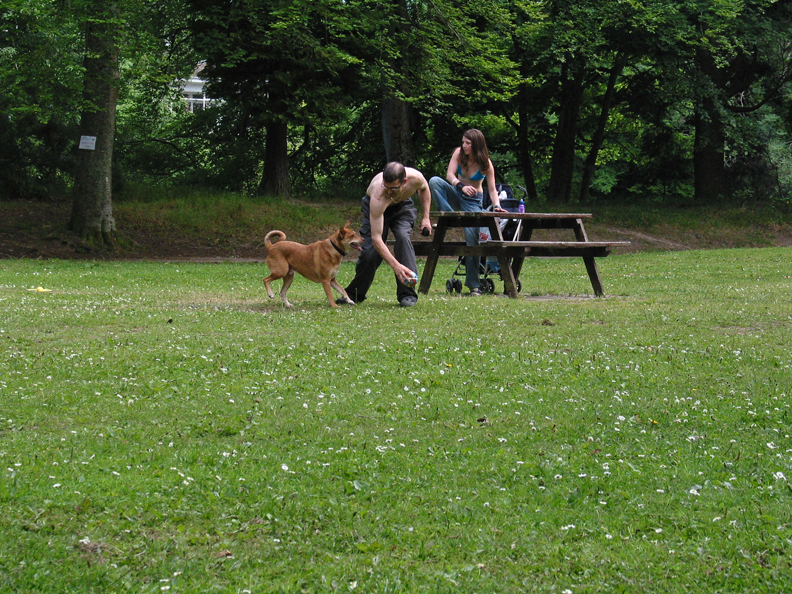
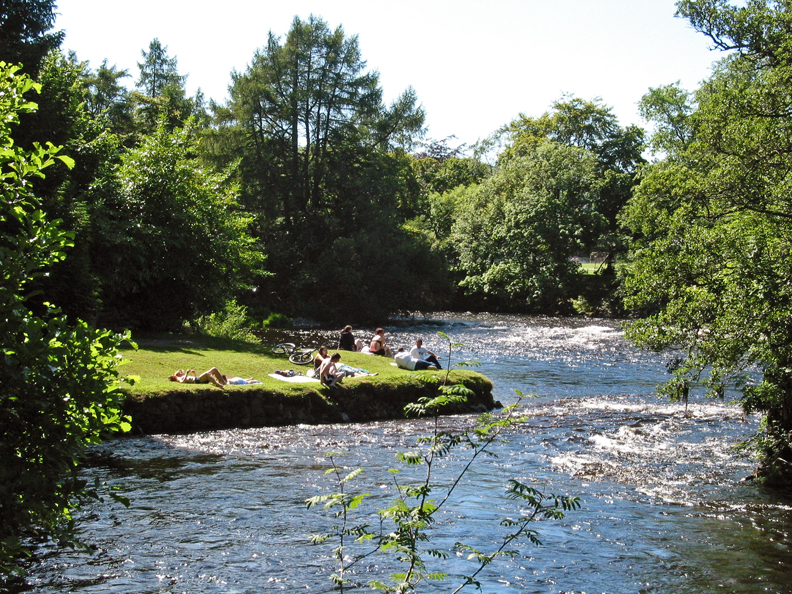
Pessoas brincando com seus cães no lindo parque às margens do rio.
People walking their dogs in the beautiful park surrounding the river.

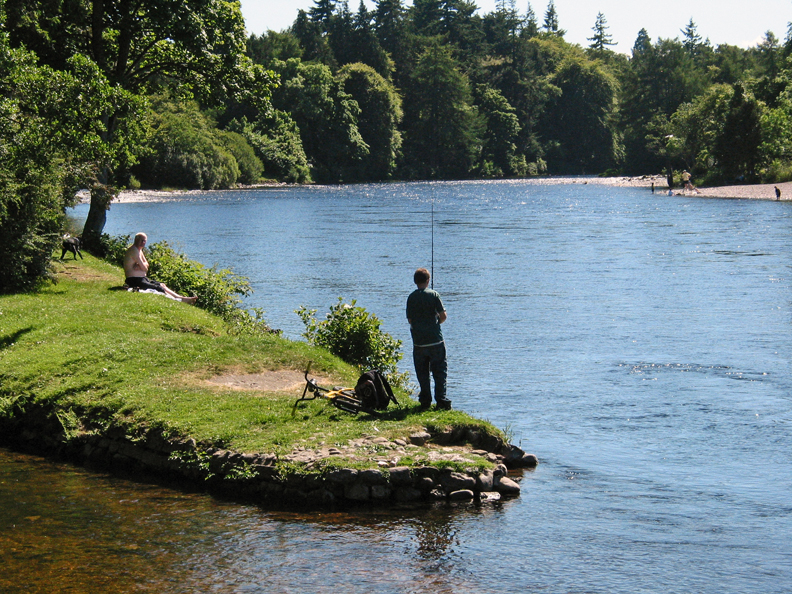
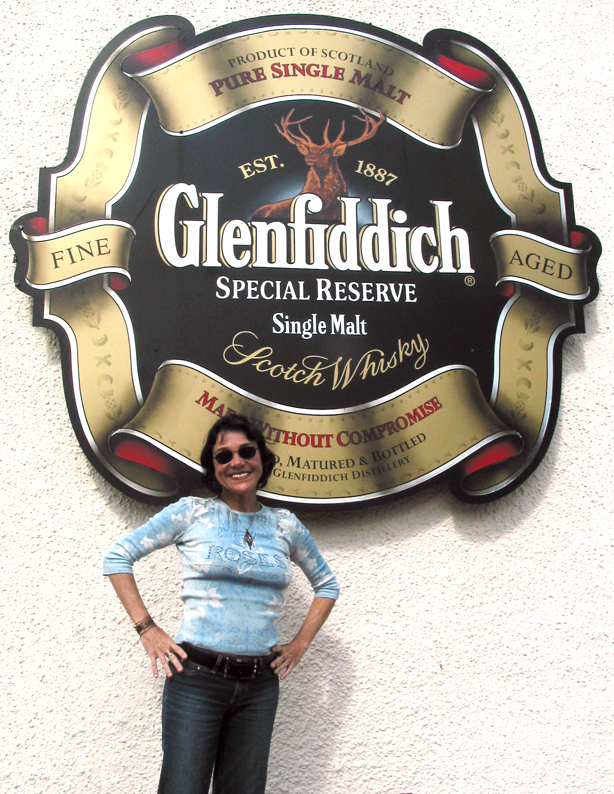
Fomos andar no belíssimo parque que beirava o rio Ness, de águas cristalinas, onde havia muita gente pescando… salmão! Jules dizia “Good thinking, Batman!” toda vez que uma boa ideia surgia na conversa. Ela era uma figura, super engraçada, de cara ficamos super amigas  e no dia seguinte fomos juntas à destilaria da Glenfiddich, que era seu uísque preferido. Michelle não quis ir, tinha combinado sair com um dos Marcelos.

We went for a walk in the gorgeous park settled along the River Ness, where many people were salmon fishing in those crystalline waters. Every time when we’re chatting and a brilliant idea came out of it Jules would say “Good thinking, Batman!” She was so funny, we made instant friendship and the next day went together to visit her favourite whisky distillery, Glenfiddich. Michelle didn’t go with us, she had a date with one of the Marcelos.

Inverness, 11 de julho de 2005 / July the 11th, 2005

Moleque pescando salmão / Kid salmon fishing

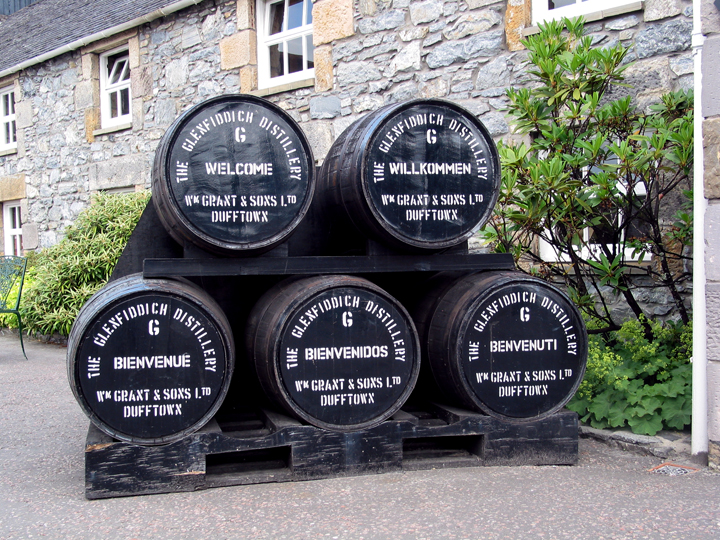
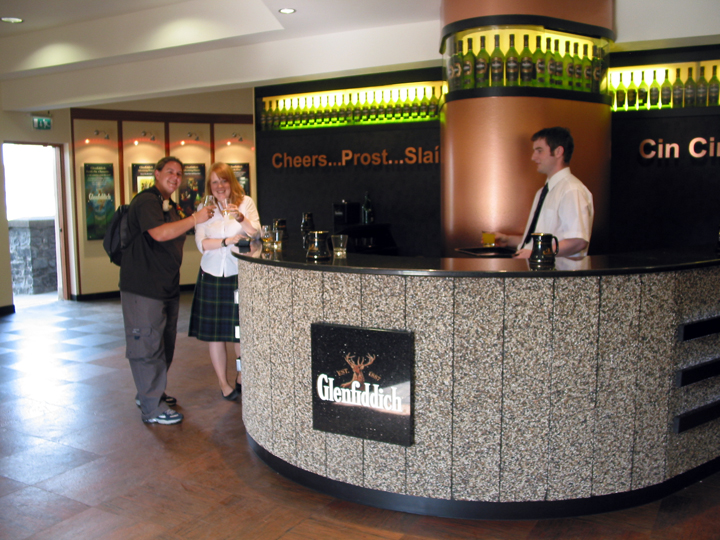
Quando entramos no ônibus e fomos pagar a passagem, lembrei de pedir ao trocador: “Return!” Custava praticamente o mesmo preço da passagem só de ida! No fim da visita à destilaria tinha degustação, e aporrinhamos tanto os funcionários, que acabamos bebendo muito mais que os outros visitantes. Ou seja, ficamos de pileque. Na volta, a caminho do albergue, passamos por um pub com música ao vivo e ainda tomamos algumas pints ali com o dinheiro que economizamos na passagem.

Glenfiddich Distillery Keith, Dufftown, Keith, Banffshire AB55 4DH, Reino Unido
01340 820373

I remembered to ask for a return ticket when we boarded the bus, and it costed almost the same as the one way ticket. After the tour in the distillery there was a degustation and we bugged the staff so much that in the end we were given much more whisky than the other tourists. In other words, we got drunk. Back in Inverness, on our way to the hostel there was a pub with live music and we’ve still hung around there and had a couple of pints with the money we’d saved.

Visita à Glenfiddich / The Glenfiddich Distillery Tour

No dia seguinte, acordamos cedo para uma excursão às Ilhas Orkney. No post 029 já falei sobre esse reino distante onde Mordred, o único filho de Arthur foi criado por sua tia Morgause, irmã de Igraine, que se tornara rainha de Orkney ao casar-se com o Rei Lot.

Os funcionários foram muito fofos apesar de termos enchido o saco deles.
Although we’ve surely pissed off the staff, they were very friendly and nice to us.

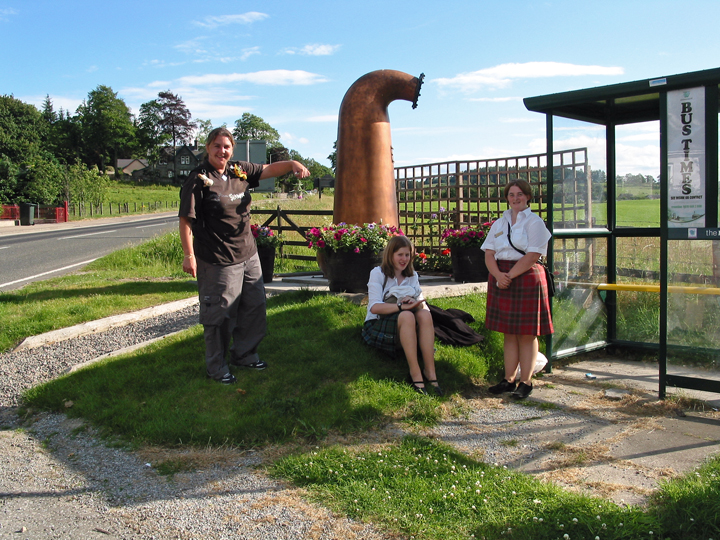
Ponto do ônibus em frente à destilaria.
Glenfiddich’s bus stop at the distillery’s entrance.

Early next morning we boarded a tour to Orkney Islands. I’ve said something about this place in Post 029, a far away kingdom where Arthur’s only son Mordred was raised by her aunt Morgause, Igraine’s sister who became a Queen by marrying Lot, the king of this realm.

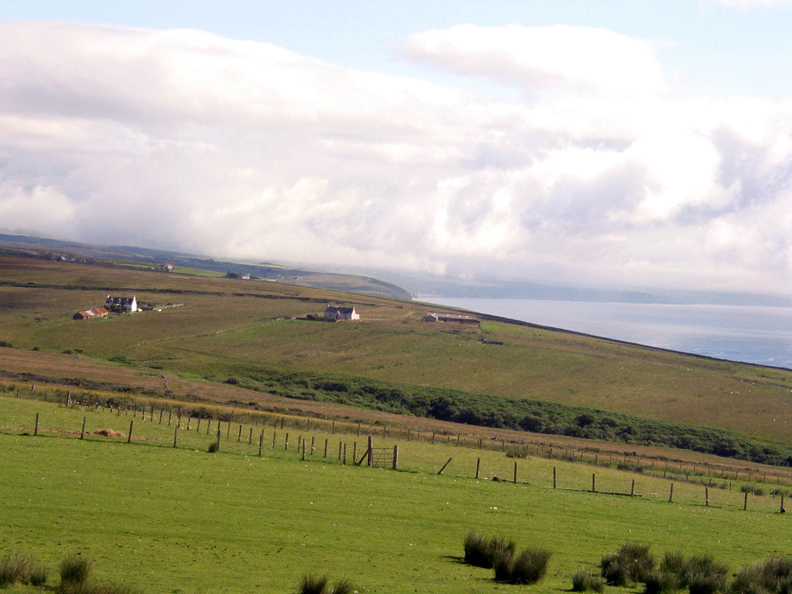
Caminho entre Inverness e John O’ Groats, da janela do ônibus.
The landscape from Inverness to John O’Groats through the bus window.

A viagem era muito longa, fomos parar bem ao norte do mundo. Era impossível entender o que o guia falava. Mesmo para Jules, cujo idioma pátrio era o inglês, o sotaque carregado do sujeito só permitia captar um mínimo de informações básicas. Levamos quase cinco horas até descer do ônibus em John O’Groats, a última cidade no extremo norte da Escócia, no condado de Caithness. Ali houve uma parada para almoço antes de prosseguir viagem num ferryboat. Consegui convencer minha amiga a almoçar uma sopa de legumes, que vinha acompanhada de cesta de pães e, apesar do sabor acentuado de molho de tomate, nos deixou satisfeitas, até por ser o prato mais barato do cardápio.

That was a long way north. The guide’s strong scottish accent made it impossible to understand him. Even Jules, a native english speaker, was able to get only tiny bits of basic information. It took us almost five hours to drop off the bus at John O’ Groats, the northernmost spot of Scotland, in Caithness County. There was a lunch break before boarding the ferryboat to resume the trip. I’ve got to persuade my friend to have a proper lunch – a vegetable soup, the cheapest menu option, which came with a basketful of bread and filled well our stomachs despite the strong taste of tomato sauce.

John O’Groats

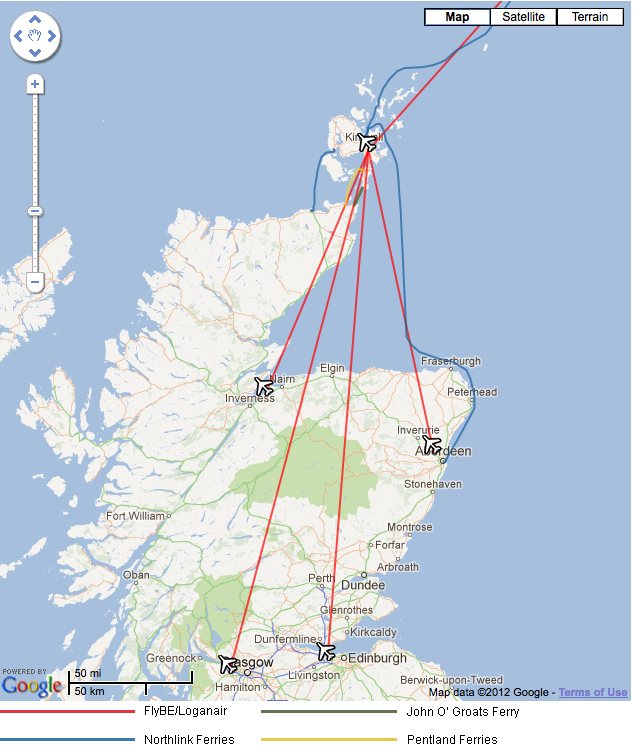
Há outras linhas de ferry para as Ilhas Orkney, e pode-se chegar lá de avião também, saindo de Aberdeen, Glasgow, Edinburgh e Inverness, como assinalado no mapa abaixo, que tirei da página “getting here” neste site super abrangente, que contém todas as informações para sua viagem:

http://www.visitorkney.com

There are other ferryboat services to Orkney Islands and also flights from Aberdeen, Glasgow, Edinburgh and Inverness, as shown in the map below that I copied from the embracing site above,  where all information you need is under the link “ getting here”.

Jules e eu optamos por uma excursão que ia e voltava no mesmo dia, totalizando 14h de viagem, cujos detalhes atualizados também colei aqui. O ônibus sai diariamente da plataforma 1 da Rodoviária de Inverness às 7:30 da manhã, e pode-se comprar o ticket na hora.

Jules and me have chosen an one-day bus tour , 14 h. duration, which updated details are copied below. Coaches leave daily from Platform 1 at Inverness Bus Station, 7:30 a.m. There’s no need to buy the tickets in advance.

Fiquem espertos: postarei na sequência as fotos desse passeio alucinante.

Don’t miss next entry: photos of this unforgettable tour.

Read Full Post »


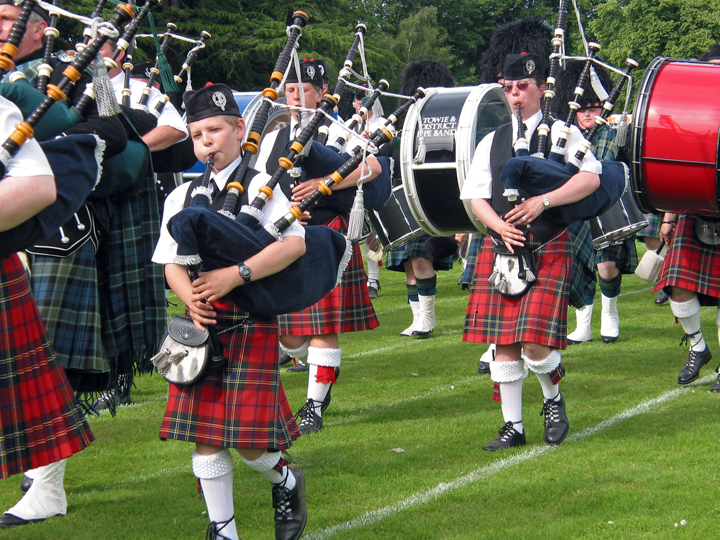
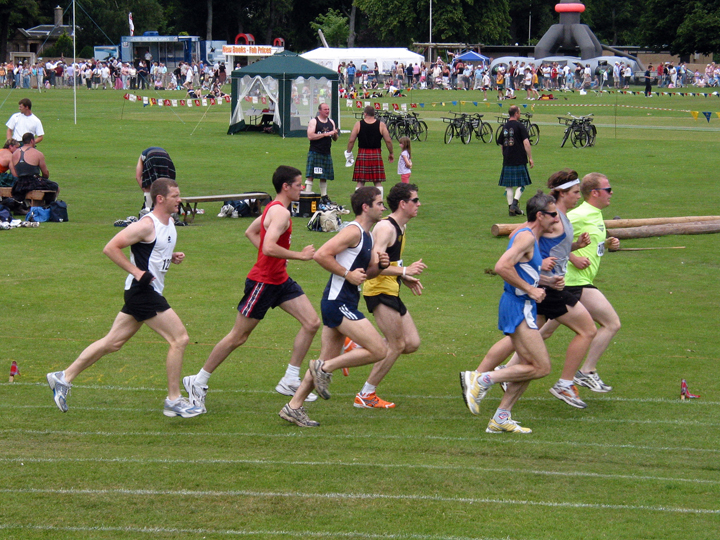
Desfile nos Highland Games / Parade

Os brasileiros me disseram que, no dia seguinte, haveria um evento imperdível em Forres: os Highland Games, que celebram a tradição e cultura céltica. Acabei indo sozinha mais cedo pois as pessoas tinham aulas até as cinco horas. Embarquei na van que fazia transporte gratuito entre Cluny Hill e a Fundação, e não foi preciso andar muito para localizar o evento no parque próximo à Pedra das Bruxas.

My Brazilian friends were talking about the Highland Games which were taking place the next day in Forres, unmissable, for It’s an event celebrating Scottish and Celtic culture and heritage. Eventually I went alone, earlier, because people had classes until 5pm. I took the free shuttle to Cluny Hill and dropped off in the park in Forres, near the Witches Stone, where the Games were going on.

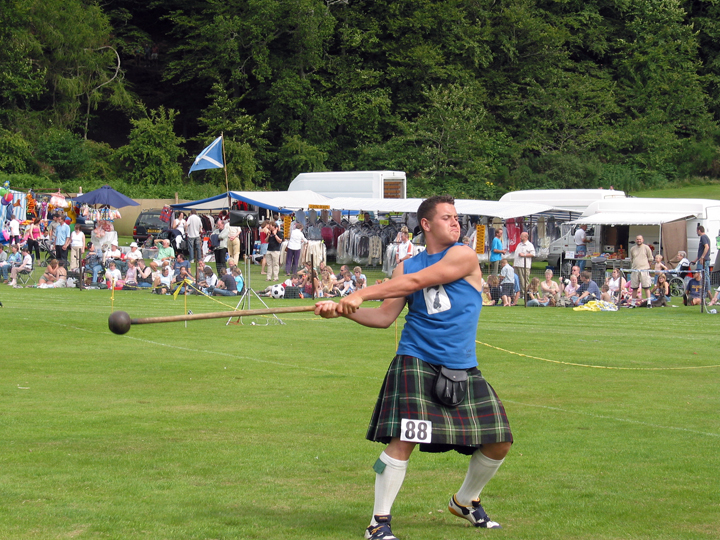
Arremesso de martelo (que devia pesar duas toneladas) / Hammer throw

A área estava cercada para os jogos com uma lona em toda sua extensão e a entrada custava cinco libras, mas um pouco adiante havia um pedaço rasgado e algumas crianças brincavam de passar de um lado para o outro. Quando me aproximei, uma delas olhou bem para mim, fez um gesto me chamando e disse: Vem! Obedeci rapidamente, com satisfação.

The area was isolated by a tarpaulin all around it and the entrance fee costed 5 pounds. So I took a walk around it and found a place where the tarpaulin was torn and some kids were playing, running inside/ outside. When I approached them, a boy took a good look at me and said “Come!”, making a gesture for me to follow him, what I did at once, gladly.

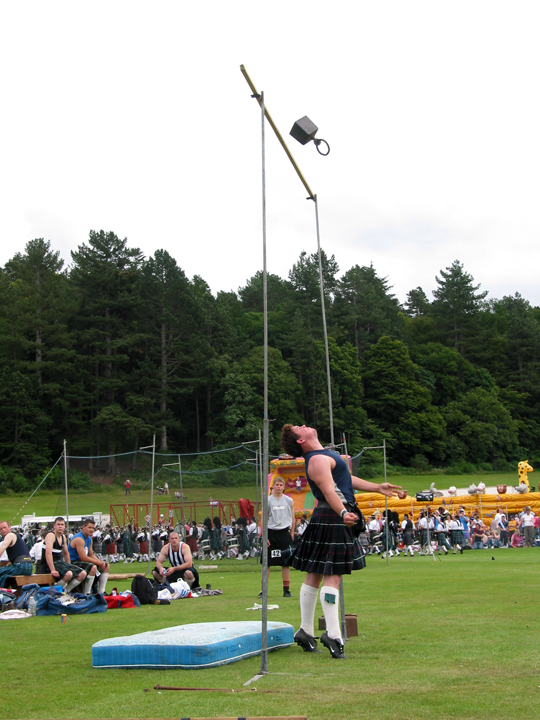
Arremesso de peso em altura / Weight over the bar, also known as weight for height

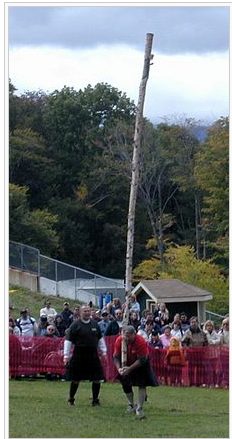
Lá dentro havia pula-pula, tobogã e outros brinquedos infláveis, barraquinhas vendendo comida, bebida e objetos usados na tenda da Caridade. As provas da competição eram dignas de Asterix e Obelix, e os competidores pareciam mesmo os invencíveis gauleses. Infelizmente já tinha terminado a que eu mais queria ver, o “Caber Toss”, na qual os competidores tinham de sair correndo segurando um tronco gigantesco e arremessá-lo para o alto de tal forma que ao tocar o chão tivesse dado uma volta completa no ar. Achei uma foto na Wikipedia.

There was playground with inflatable toys, carts selling food, drink and a Charity Thrift Tent. The games were worthy of Asterix and Obelix, and the players definitely looked like the invincible Gauls. Unfortunately what I wished to watch the most was over: the Caber Toss. A long tapered pine pole or log is stood upright and hoisted by the competitor who balances it vertically holding the smaller end in his hands (see Wikipedia photo below). Then the competitor runs forward attempting to toss it in such a way that it turns end over end with the upper (larger) end striking the ground first.

Caber Toss

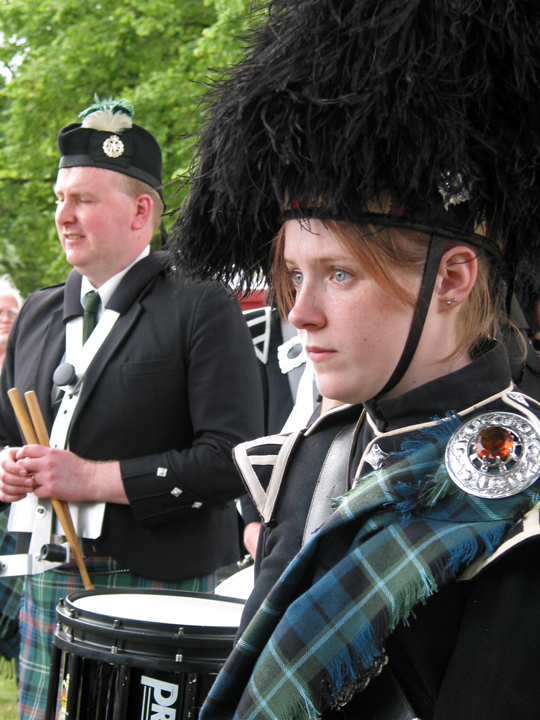
Concurso de bandas de gaita de foles / Pipe Bands competition

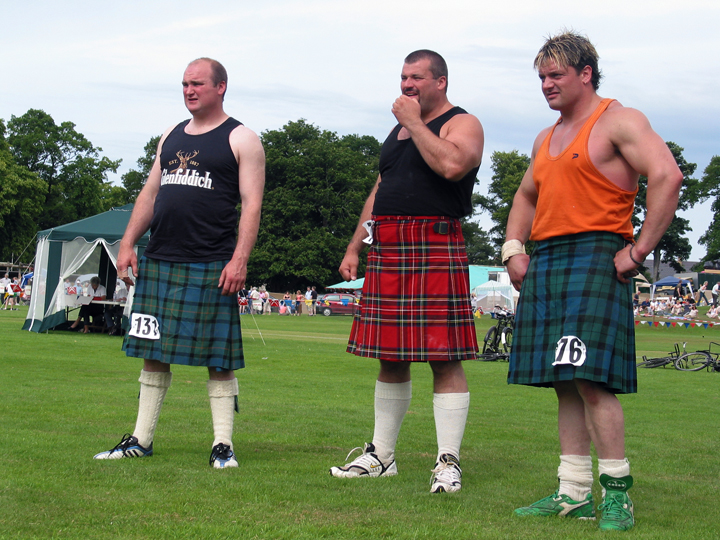
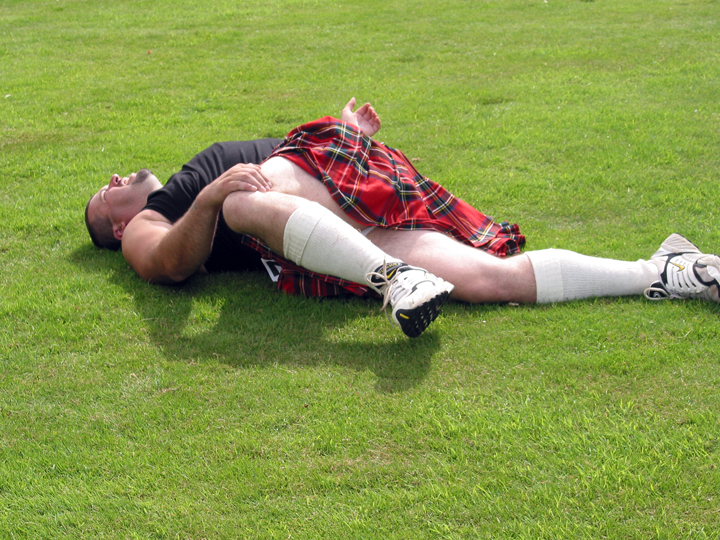
Ri bastante desses caras, verdadeiros armários, de Kilt.
These big guys looked funny indeed in kilts. Ooooops!

Adorei a Escócia. Na volta, havia um grupo de velhinhas no ponto de ônibus. Perguntei qual deveria tomar para chegar à Fundação, mas nenhuma delas sabia. Porém me disseram para esperar. O ônibus delas parou, uma foi falar com o motorista, voltou com a informação, que me fez repetir para certificar-se que eu entendera e por fim embarcou. Agradeci muito, e quando o ônibus arrancou, todas as velhinhas estavam acenando pela janela, me dando tchau, todas  sorridentes. Muito fofas! Quase chorei.

I was in love with Scotland. Later in the afternoon, in a bus stop, I asked a group of fluffy old ladies which number was the bus to the Foundation and none was quite sure, but they told me to wait a while, for their bus was approaching and when it came to a halt one of them talked to the driver and came back with the information. She bade me repeat it to be sure I had understood before boarding, what I did and thanked her gratefully. When the bus took off, all the ladies were at the windows waving me goodbye, smiling so sweet that tears came to my eyes.

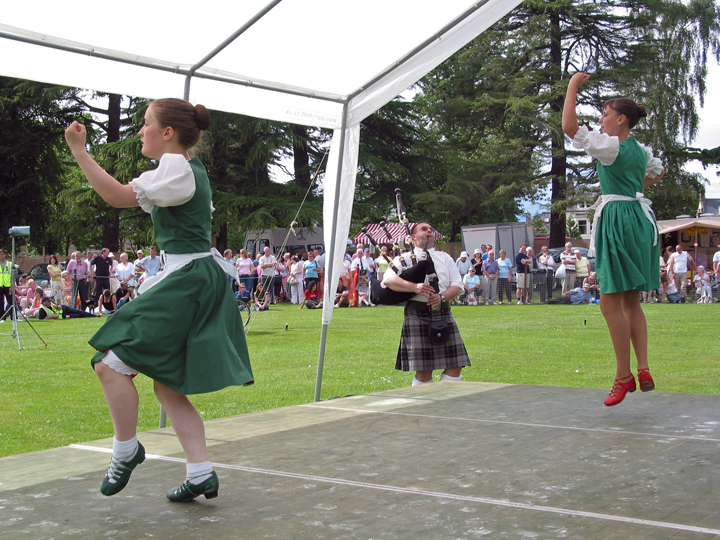
Concurso de danças típicas / Traditional Dance Competition

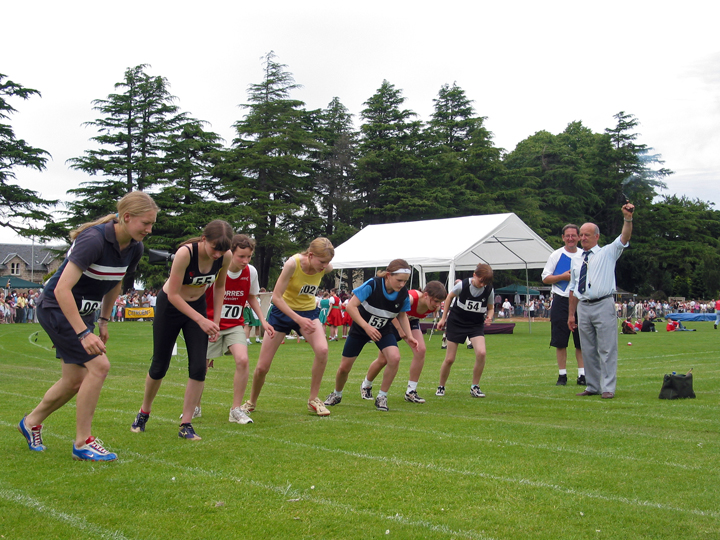
Corrida / Running

Entrega de prêmios / Awards delivery

Concentração / Concentration

Juiz adormecido / The sleeping referee

À noite haveria um baile na Fundação, pelo qual todos esperavam ansiosamente. Um grupo grego chamado Xenos iria tocar. Fiquei pensando como entrar sem pagar as cinco libras do ingresso. Mas não havia ninguém por perto com autoridade para me liberar a entrada em troca de algum trabalho, então fui sondar o Universal Hall, onde iria ser a festa. Tinha uma entrada principal, uma nos fundos que dava para os camarins, e um corredor entre o palco e o salão. E lá, num canto, estava…  uma vassoura! Peguei e comecei a varrer. Primeiro, toda a entrada e área em volta. Depois, a entrada dos fundos, por fim o corredor. Quando não restava uma folhinha sequer no chão, surgiu na minha frente um dos diretores, que olhou bem em volta e perguntou-me se eu tinha combinado com não sei quem de fazer a limpeza em troca do ingresso. Abri a boca meio sem saber o que dizer, mas ele não esperou pela resposta. Falou que a tal pessoa precisara se ausentar, mas que eu tinha feito um “excelente trabalho” e deveria entrar naquele momento, porque o espetáculo estava para começar. Guardei a vassoura e obedeci.
There was a ball in the Foundation that night, with live music played by a Greek band, Xenos, and people were so excited about it. I was wondering if there was some work I could do in exchange for the ticket. It costed 5 pounds and there was no one around who could help me, so I headed to Universal Hall, where the party was to take place. There was a main entrance, a back door to the dressing rooms and a corridor opening to the stage and to the ballroom. There, in a corner, leaning against the wall, was… a broom! I grabbed it and started sweeping the floor, first all around the main entrance, then all around the back door and when I was about to finish with the corridor, not a single leaf left on the floor, a door opened right in front of me and through it came one of the directors. He saw what I had done and asked if I had made an arrangement with a certain woman about it. I’d never actually seen her, and opened my mouth not sure about what to say, but he didn’t wait for my answer. He told me the lady had left earlier, but I had done an “excellent job” and should now go to the ballroom because the show was about to start. So I kept the broom and obeyed him.

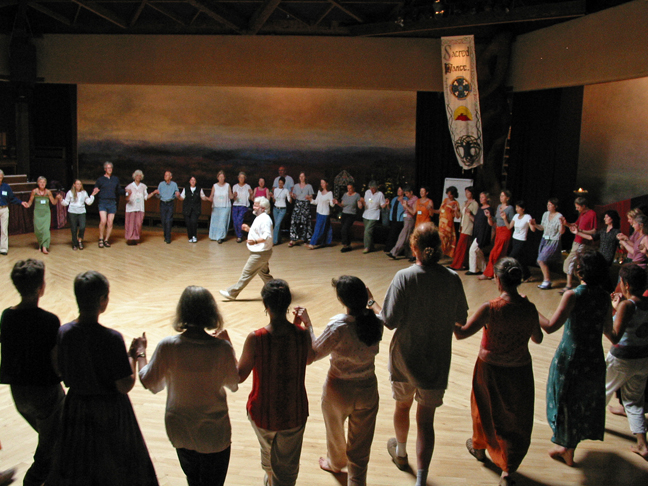
Danças Sagradas Circulares, algo além da minha capacidade de coordenação motora.
Circular Sacred Dances, something I had never enough motor coordination skills to perform.

No início, me animei. O grupo tocava música folclórica, meio cigana; saí dançando e as pessoas entraram no clima. Em minutos, todos estavam em transe rodopiando pelo salão, sorrindo e suando em bicas. Contudo, pouco depois comecei a achar a música repetitiva e, por fim, chata mesmo. Tinha uma moça tocando uma cornetinha que já estava me irritando. Em determinado momento, saí discretamente e fui dormir.
At first I was pretty high spirited. Xenos played folk music, kind of gipsy tunes, and when I started dancing people joined in the mood. In a little while they all looked like crazy whirling dervishes, smiling, sweat running down their hair, faces and bodies. Later, however, I realized the music was repetitive and a few minutes more, I was definitely fed up of that girl playing an irritating bugle, so I left the place unnoticed and went to bed.

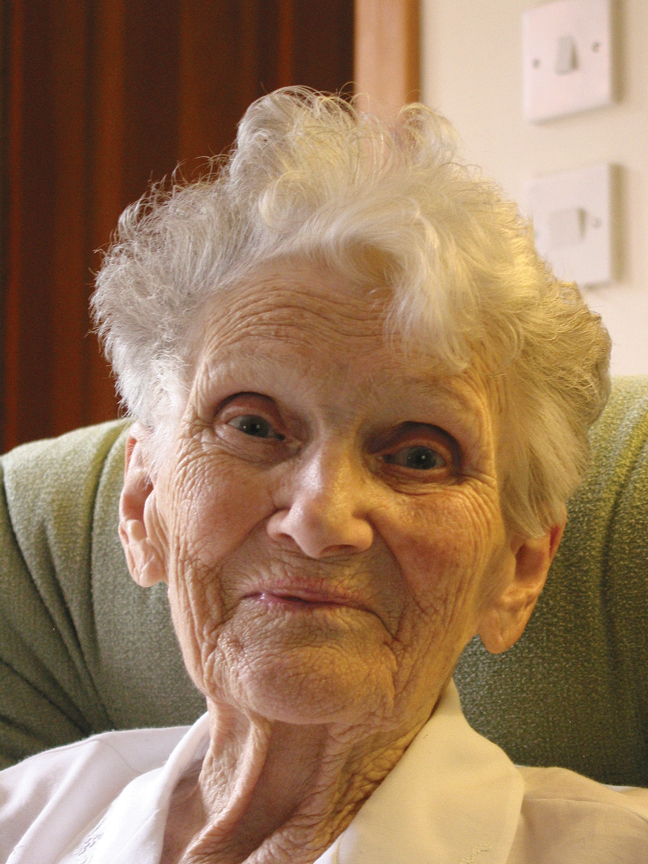
Eileen Caddy

Fiquei sabendo que haveria uma excursão à ilha de Iona, que confundi com Mona, esta no País de Gales, onde ficava a mais importante escola dos druidas, último a ser arrasado pelos romanos. Porém o ônibus estava cheio, não consegui lugar. Assim sendo, deixei um recado para Melissa no quadro de avisos da recepção agradecendo a força e voltei para Inverness. Antes, porém, consegui visitar e fotografar Eileen Caddy, uma das fundadoras de Findhorn, uma senhora fofa que aos 88 anos continuava escrevendo mensagens espirituais diárias ditadas pelas divindades. Pedi sua bênção antes de me despedir, e fiz isso em boa hora: ela veio a falecer no ano seguinte, dia 13 de dezembro de 2006.

I was told there would be a tour to Iona, which I mistook for Mona, this one in Wales, where the most important druid school had been, the last to stand against the Roman ravage. But the coach was full, there was not one single seat left for me. So I left Melissa a note in the wall at the reception, thanking her for having helped me and took the road back to Inverness. Before that, however, I had the chance to pay a visit and take a picture of Eileen Caddy, one of Findhorn’s founders, a sweet old lady that, at the age of 88, was still engaged in writing down daily spiritual messages under divine guidance. I was given a blessing before saying goodbye, and that came in good time, for she passed away the following year, in December 13, 2006.

Adeus, Findhorn. Aprendi muita coisa aqui.
Farewell, Findhorn. I learned so much in here.

Read Full Post »


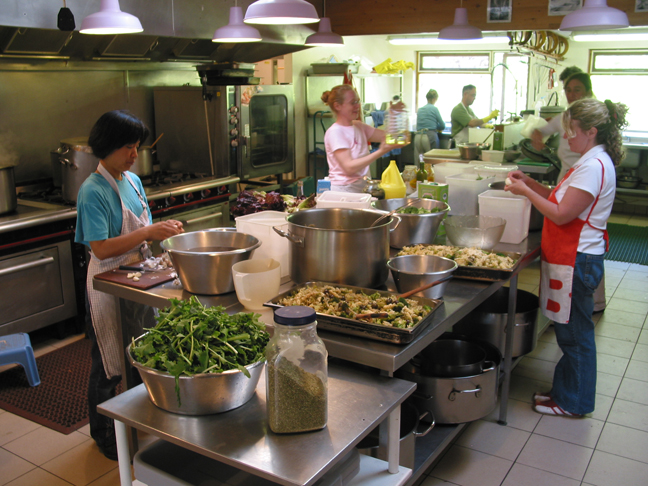
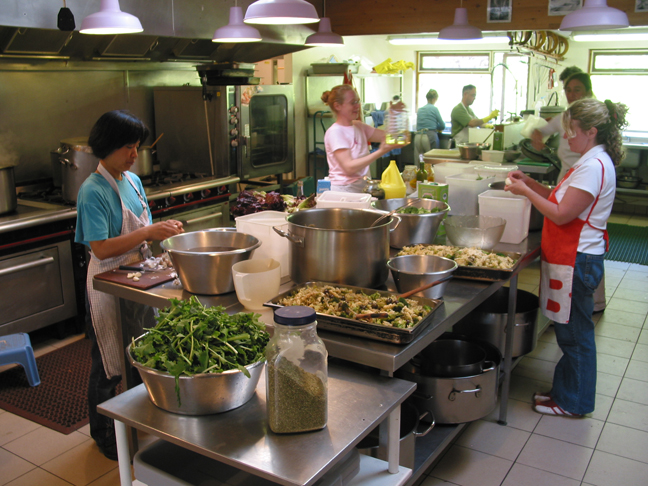
Trabalho comunitário na cozinha / Communitary work in the kitchen

Dia 9 de julho de 2005 trabalhei como voluntária na cozinha da Fundação. Como foi bom descascar ervilhas e cebolas, mexer com facas e panelas. Estava com saudade disso, e o trabalho também me valeu o delicioso almoço. No dia seguinte, eu teria de pagar para almoçar, por isso só entrei no salão de refeições para falar com os brasileiros no fim do horário de refeição. Reparei, no entanto, que não havia mais ninguém pegando os vales de quem entrava. Todos já estavam acabando de comer, sobrara bastante comida nas travessas e eu estava faminta.  Fiz um prato, sentei e comi. Felizmente, ninguém estranhou, nem tampouco veio me cobrar .

2005, July the 9th I volunteered to work in the kitchen. It felt so good to peel onions and peas, handle knives and pots, I was missing cooking, and for the work I was given (delicious!) lunch. Next day I would have to pay for my meal, but I entered the common room almost at closing time, just to talk to the other brazilians. However, nobody was there collecting lunch vouchers anymore. People were quite finished and there was still plenty of food on the buffet. Starving,  I fixed myself a plate, sat down, ate and fortunately no one appeared to make any fuss about it.

Em 2005 havia apenas um moinho para gerar energia eólica, atualmente já são quatro, que abastecem a comunidade de toda a eletricidade necessária. A energia excedente vai abastecer a rede local./
There was only one wind turbine back in 2005. Now there are four, supplying more than 100% of the community’s electricity needs.If production exceeds demand the surplus is exported to the grid.

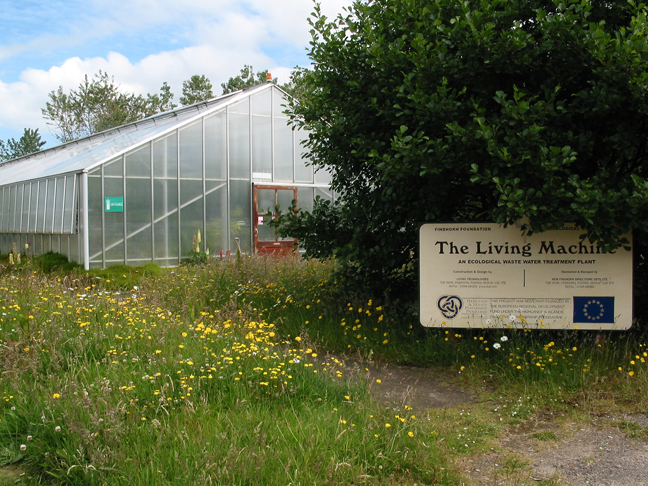
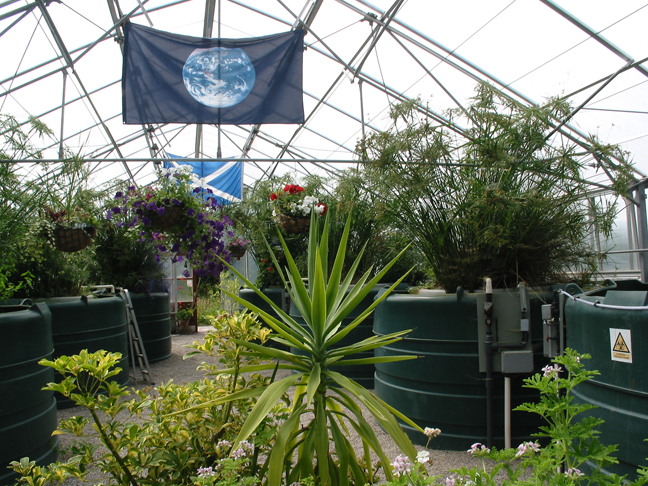
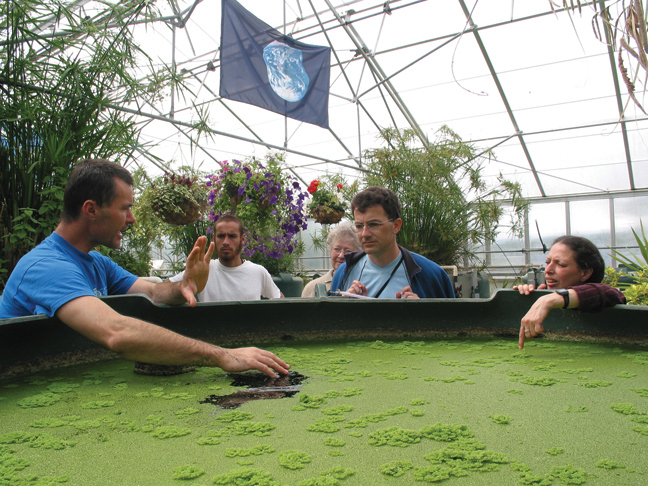
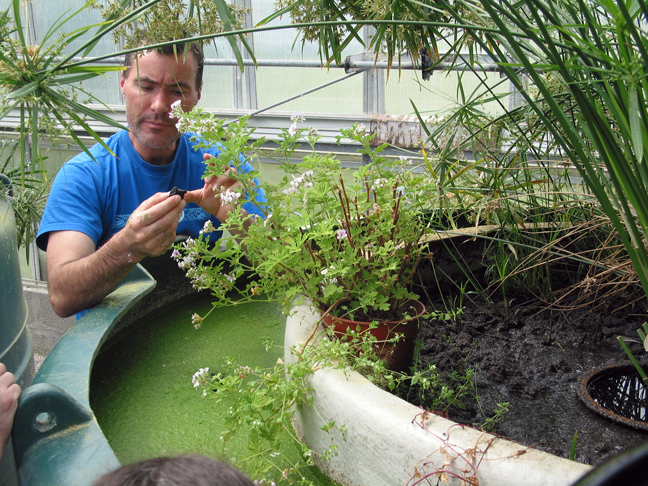
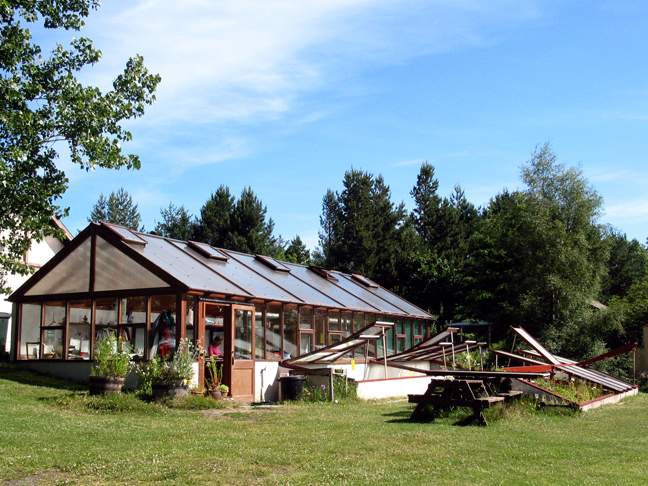
O grupo de brasileiros me mantinha informada sobre acontecimentos e atividades. Haveria um tour guiado pela Fundação incluindo a estação de tratamento ecológico de esgoto chamado Living Machine (Máquina Viva) cuja tecnologia me interessara conhecer. Me inscrevi e paguei as duas libras cobradas pela visita. Após percorrer diversas salas de atividades e meditação, inclusive o Santuário da Natureza, chegamos ao enorme galpão. A Máquina Viva reproduz em escala intensiva o processo de depuração que ocorre normalmente na natureza. Consiste numa sequência de tanques, onde desemboca o encanamento do esgoto. Em cada tanque há um ecossistema diferente composto por bactérias, algas, micro organismos, plantas, caracóis e peixes que se alimentam da sujeira,quebrando suas moléculas . A água que resulta desse processo, depois de passar por todos os tanques, está limpa (embora não potável) podendo ser devolvida ao mar ou reutilizada para regar plantas, lavar roupa e diversas outras finalidades. Não são utilizados produtos químicos e o custo é relativamente baixo. Sensacional!

Galpão da Máquina Viva / The Living Machine greenhouse

The Brazilians were updating me on activities and events. That afternoon, a guided tour to the Foundation was scheduled and it included the Living Machine, an ecological water treatment station which technology had caught my interest. To join the group I paid a two pounds fee. After visiting the facilities, studios, and meditation rooms including the Nature Sanctuary,  we got in the Living Machine. It was a massive greenhouse containing a series of tanks where sewage arrives through pipes. “Diverse communities of bacteria, algae, micro-organisms, numerous species of plants and trees, snails, and fish interact as whole ecologies in each one of these tanks and biofilters. These mirror processes that occur in the natural world, but do so more intensively. At the end of the series of tanks, the resulting water is pure enough to discharge directly into the sea or to be recycled. The technology is not only capable of meeting tough new sewage outflow standards, but uses no chemicals, and has a relatively inexpensive capital cost attached.” (quote from Findhorn Foundation Website)
Brilliant.

Aspecto da estação de tratamento de esgoto ecológica.
That’s how an ecological sewage treatment station looks like.

Tanques interconectados numa sequência que favorece a depuração da água.
The sequence of tank interconnection favors water depuration.

Essa estação trata todo o esgoto dos 500 habitantes da Ecovila. / This station treats sewage from the population of up to 500 people living at the Findhorn Ecovillage.

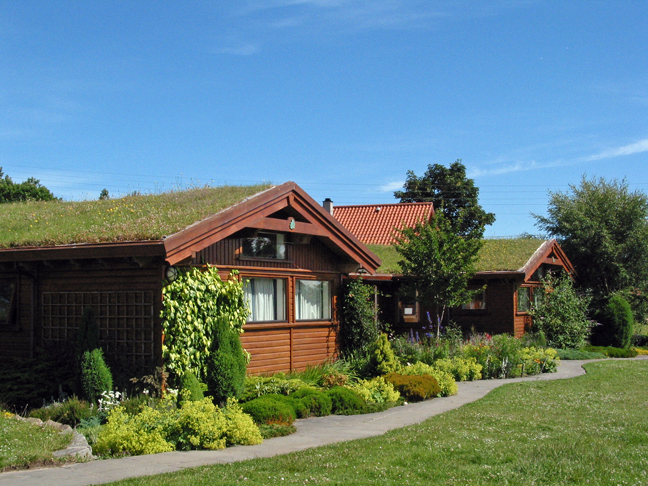
Vista da Ecovila / Ecovillage landscape

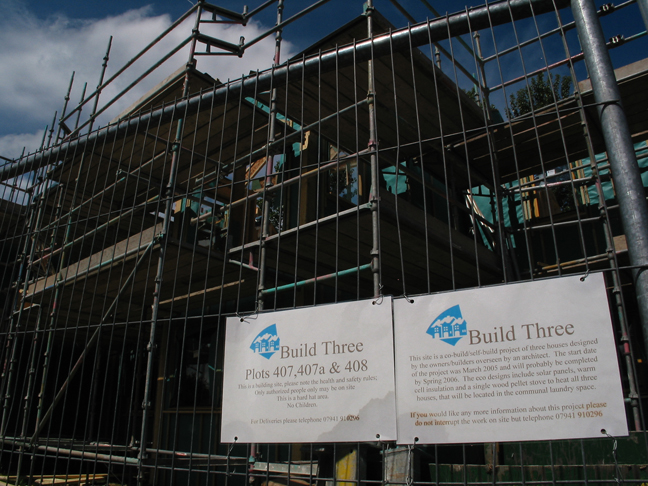
Construções ecológicas: para cada duas ou até três casas da Ecovila há uma área comum de cozinha e lavanderia (nesta casa, a parte central preta), minimizando o impacto ambiental. Emprega-se material reciclado e certificado, conforme detalhado na placa da obra. / Ecological buildings: each two or even three houses in the Ecovillage share facilities (laundry, kitchens – here, the black wal lin the middle ) avoiding unnecessary duplication, minimizing ambiental impact. All supplies are recycled and certificated, as stated in the sign shown below.

A construção e manutenção de tais casas pode ser executada pelos próprios donos.
Such houses are suitable for Self Building and Maintenance.

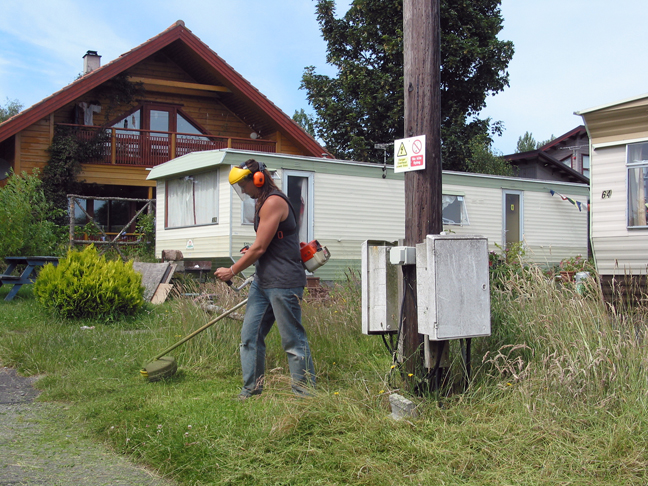
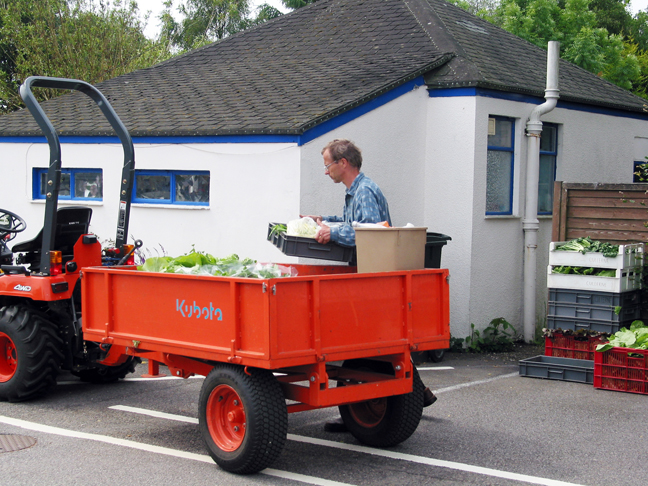
Os moradores da Ecovila estão sempre em atividade…
Ecovillage people are always busy…

… de um jeito ou de outro.
… in one way or another.

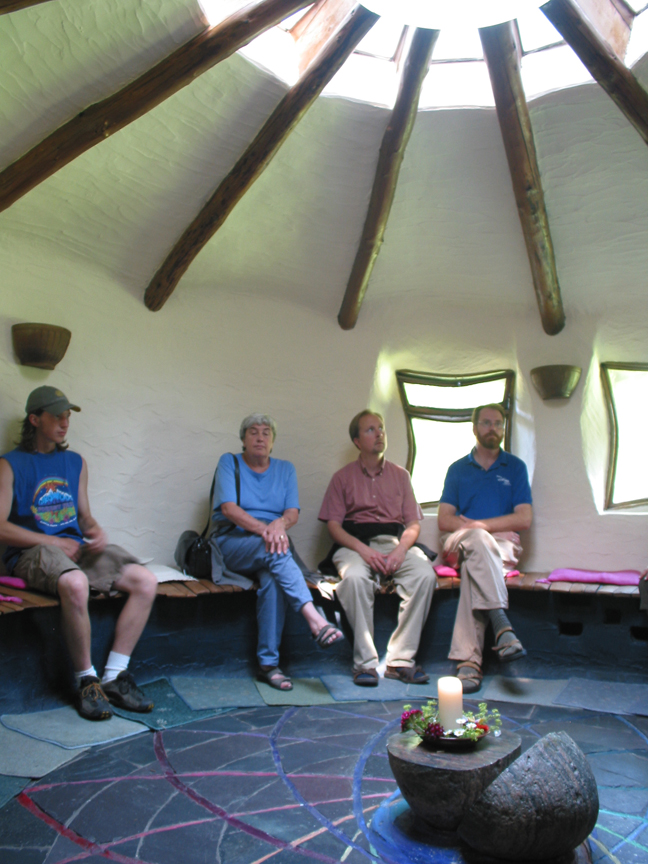
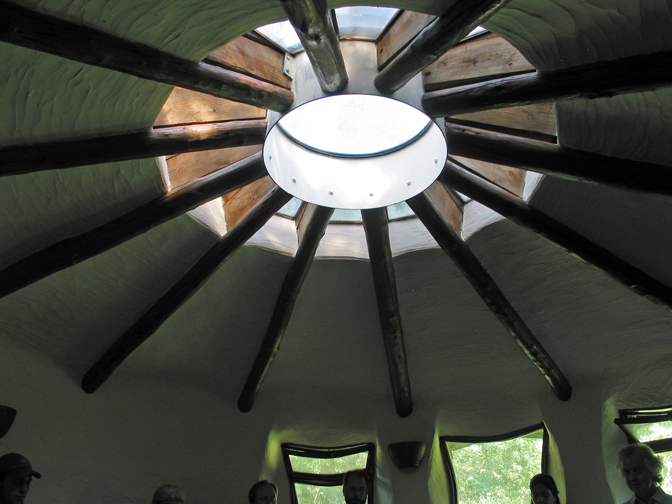
Detalhe do teto no Santuário da Natureza.
Roof detail, inside Nature’s Sanctuary

Detalhes de arte e ecologia. Através das clarabóias a luz natural dá destaque à linda pintura. / Artistic and ecologic details: through the skylight, natural light highlights the delicate painting.

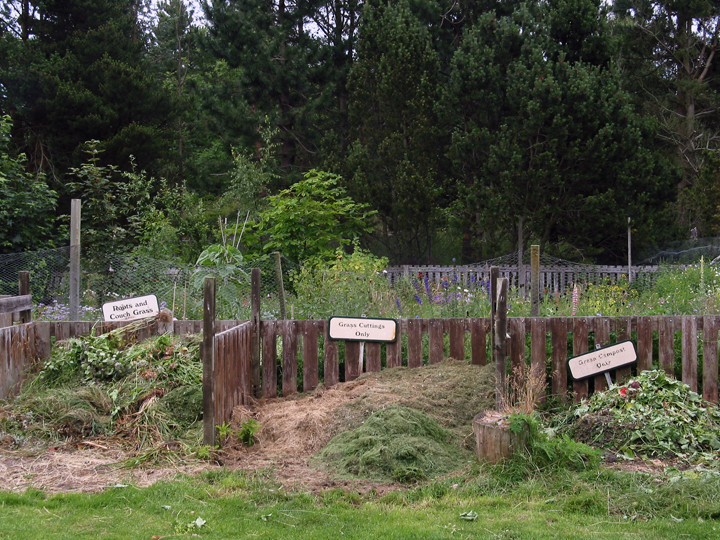
Compostagem / Composting

Bicicletas e madeira de florestas de gestão sustentável.
Bikes and locally grown and harvested timber from managed forests.

Brechó para troca de coisas e roupas usadas.
Thrift store for second hand stuff exchange.

Findhorn Foundation Website:

http://www.findhorn.org

Read Full Post »


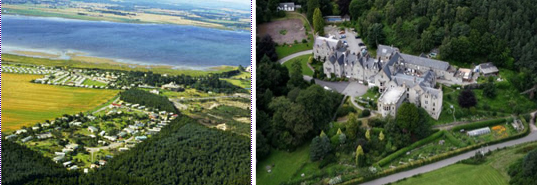
A Fundação Findhorn é uma comunidade espiritual, centro de ensino e ecovila cujas principais sedes são “O Parque” em Findhorn e Cluny Hill, em Forres (fotos acima). The Findhorn Foundation is a spiritual community, learning centre and ecovillage based mainly at The Park (Findhorn) and at Cluny Hill in Forres (pictures above).

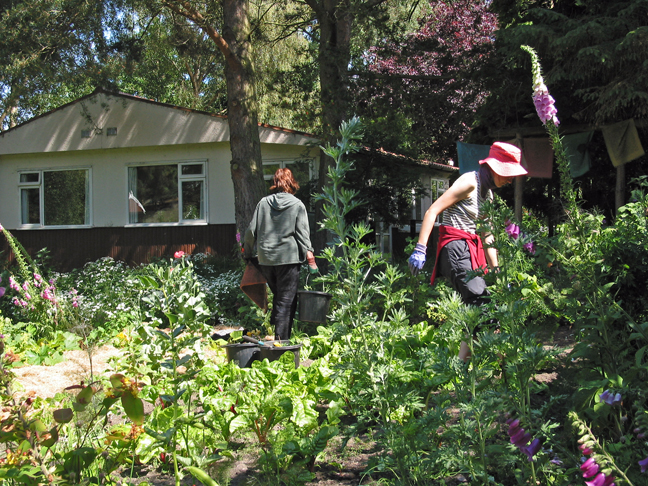
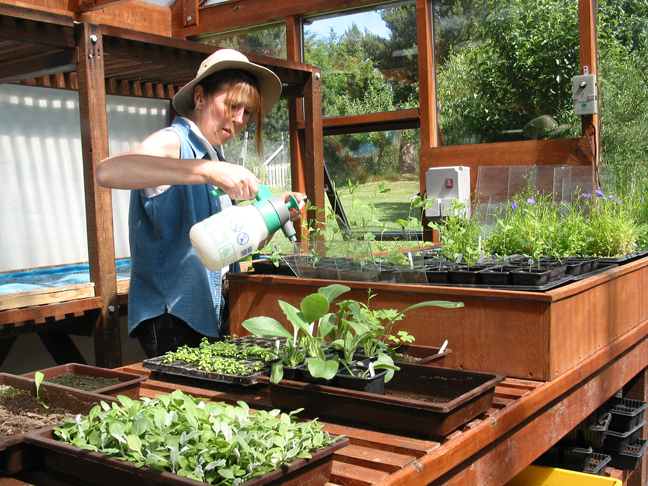
Os cursos ali não eram nada baratos, todos compreendendo meditação, atividades em grupo e trabalhos comunitários na horta, cozinha e jardim. Me pareceu esquisito pagar tão caro para fazer coisas tão corriqueiras como cozinhar. Mas há muita gente que precisa aprender a se comunicar e interagir com os outros.

Estudantes fazendo trabalho comunitário / People into communitary work

The workshops were not cheap and all included meditation, group activities and communitary work in the kitchen and garden. I thought it weird people pay so much to do common stuff such as cooking, but there are many who need to learn communicating and interacting with the others.

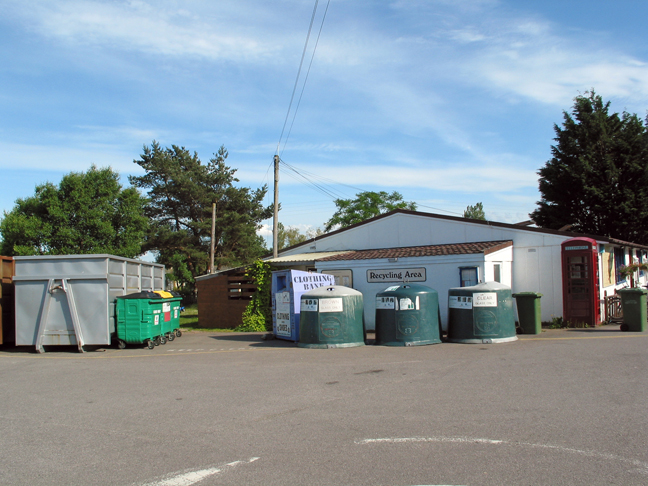
O Centro Comunitário junto à entrada do Parque. / Community Center next to The Park entrance

Mercadinho e reservatórios de material para reciclagem junto à entrada /
Mini market and recyclable stuff bins next to the entrance

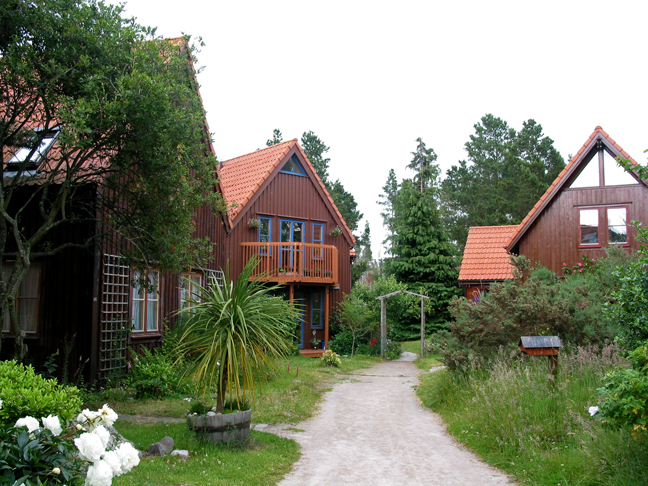
Caminhos do Parque, com casas e escritórios./
Paths in the Park, with houses and offices

Melissa me levou para copiar as fotos da passeata em Edimburgo no Centro de Informática, onde seis rapazes pilotavam Mac Minis, recém-lançados. Ela pediu para um deles fazer duas cópias e deixou-me lá para pegar os CDs quando estivessem prontos. O funcionário amarrou a cara, fez só uma e me despachou dizendo que tinha muito trabalho e não podia perder tempo com aquilo. Melissa ficou furiosa… comigo! Disse que eu devia ter insistido, e não quis aceitar o fato de que eu não tinha nenhuma autoridade para exigir nada do carinha. Sugeri que ela mesma fosse falar com ele e isso a irritou ainda mais.

To copy my pictures of the march in Edimburgh, Melissa took me to the Computers Centre where six guys were working, all in Mac Minis, that had just been released. She asked one of them to make two copies and left me there to take the CDs when they were ready. But the man was in a bad mood; made only one copy and sent me away because he had a lot of work to do and no time to waste on that. That made Melissa very angry… at me! She said I ought to have insisted and didn’t accept the fact that I had no authority to give orders to anyone there. I suggested she went back there and talked to him herself, but that only increased her rage.

Todas as construções são ecológicas, como estes alojamentos para estudantes. / All buildings are ecologic, as these lodgements for students.

Estufa para cultivo de plantas / Greenhouse

Jardins / Gardens

Casas feitas de antigos tonéis / Homes made of old barrels

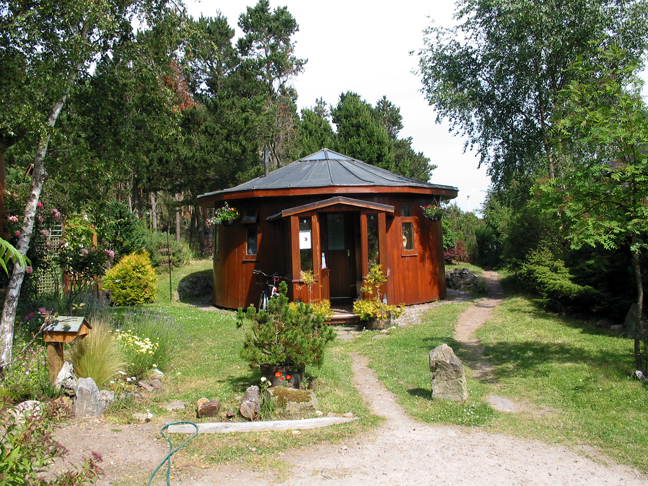
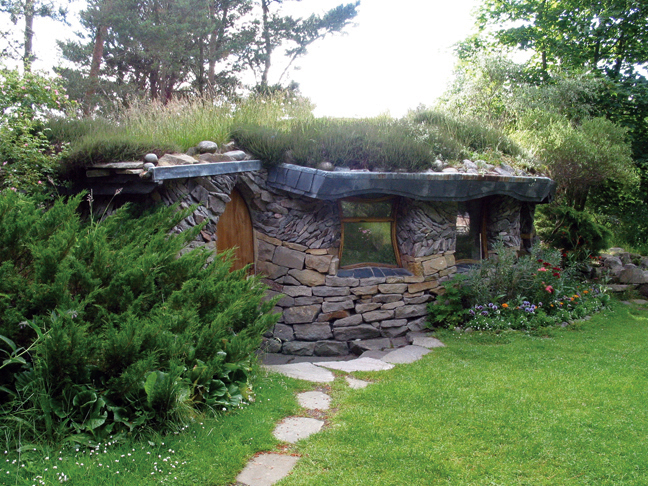
Comecei a achar a moça um tanto estranha, pois no momento seguinte ela me convidou a dar uma caminhada pela Fundação, toda sorridente. Passamos por jardins, estufas, chegando por fim a uma casinha igual à dos hobbits de J. R. R. Tolkien. Era de pedra, arredondada e toda irregular, com o telhado gramado. Tratava-se de um local de orações, lindo, na mesma hora levei a câmera aos olhos. Foi quando Melissa ficou histérica. Me deu uma bronca e proibiu-me de fotografar porque iria atrapalhar a concentração das pessoas que estavam meditando lá dentro. Além disso ser absurdo, estava uma luz linda, mas o tempo poderia fechar a qualquer momento. Não se deixa uma foto para depois. Cliquei, ela surtou e abruptamente interrompeu o passeio. Apresentou-me a uns paulistas que estavam lá fazendo cursos, disse que “não podia tomar conta de mim como se fosse uma criança, porque tinha mais o que fazer”, virou as costas e sumiu. Nunca mais a vi! Chateada, fui buscar minha mochila e saí do seu trailer, deletando-a da minha vida também. Ela tinha dito que tomava remédio porque contraíra uma doença crônica na África, mas acho que seu problema era mesmo uma bipolaridade grave.

A casinha de hobbit chamada Santuário da Natureza / The hobbithole was called Nature’s Sanctuary

I realized there was something wrong with the girl, because the next moment she smiled and invited me for a walk in the Foundation whereabouts. We crossed gardens, greenhouses, and found ourselves in front of a little cottage just like J.R.R. Tolkien’s hobbit holes. It was made of stone, all round and irregularly shaped, with grass covering the roof, so cute, at once I grabbed the camera. That was when she became hysterical. She scolded me saying it was a place for prayers and I was forbidden to take pictures because that would jeopardize the meditation in progress inside the house. Besides the absurd of the statement, the light was beautiful and I knew the weather could change in a blink. One does not postpone a photograph. So I took it anyway, and she, rabid, cut the walk short roughly. Found some brazilians who were there enrolled in workshops; introduced me to them, stated that she “couldn’t take care of me as if I was a child, because she had her own work to do”, turned her back on me and left. I never saw her again! Very upset and I went for my backpack and left her trailer, deleting her of my own life as well. She had said she was on heavy medicine due to a chronic illness she had caught in Africa, but I could tell for sure her problem was a serious bipolarity.

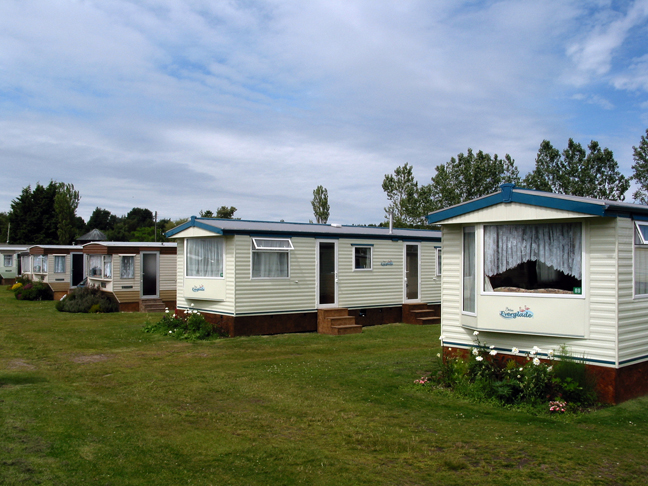
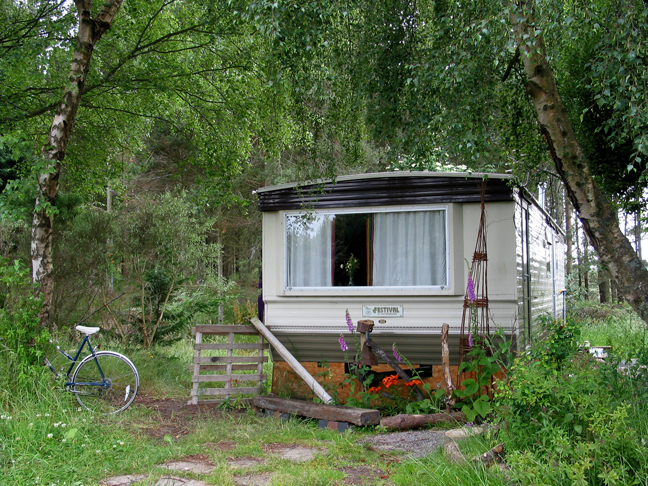
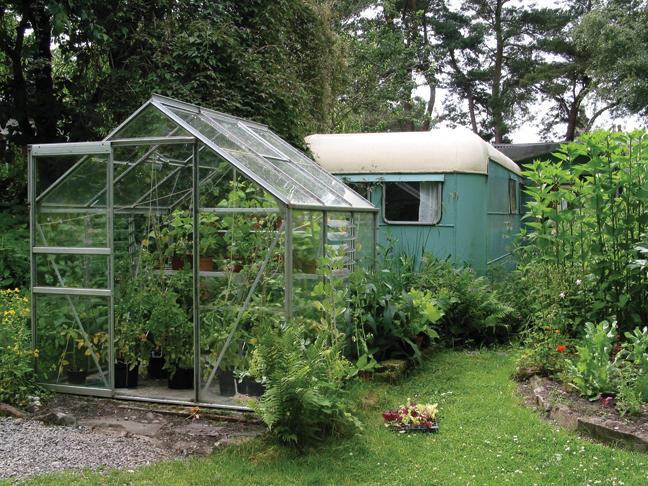
O antigo trailer de Eileen Caddy / Eileen Caddy’s old caravan

O novo estacionamento para trailers / The new caravan park

Uma das brasileiras a que fui apresentada, Claudia, embora morasse por ali e alugasse quartos, sabendo que eu tinha muito pouco dinheiro, sugeriu que eu me instalasse no trailer da Helka, uma alemã que estava em férias. Não me custaria nada e parecia a única coisa a fazer. Ela foi fofa e me levou até o trailer, onde já havia outra hóspede, uma moça da Croácia. Estava matriculada no curso de Danças Sagradas Circulares e não saía do telefone – deve ter deixado uma conta enorme para Helka. O trailer era confortável, a não ser pela água fria que não soubemos aquecer. Provavelmente, teria de acender a lareira e esperar, mas não conseguimos e acabamos tomando banho gelado todos os dias.

O trailer de Helka onde me instalei. / Helka’s caravan, where I lodged

One of the Brazilians I had just been introduced to, Claudia, lived around there and had rooms for rental in her home. But she knew I was short of money and was so kind as to take me to a caravan where I could stay for free. It belonged to a german woman called Helka who was out for holidays. It was the best I could do. In the caravan there was another guest, a girl from Croacia, enrolled in the workshop Circular Sacred Dances. She used to spend hours on the telephone, I guess she left Helka a very high phone bill. The caravan was comfortable except for the water in the bathroom we didn’t manage to heat. For sure we had to light the fireplace and wait a while, but none of us could do it. In the end, we resigned ourselves to endure everyday’s icy shower.

Aula de Danças Circulares Sagradas / Circular Sacred Dances Class

Outro restaurante, porém aqui tudo era pago. As refeições servidas no Centro Comunitário estavam incluídas no preço dos cursos. / Another restaurant, but here one had to pay; meals served in the Communitary Center were included in the workshops fees.

Abaixo o link para o site da Fundação Findhorn. Here goes the link to Findhorn Foundation website:

http://www.findhorn.org

Read Full Post »


Findhorn Bay

Cluny havia sido um hotel, onde trabalhavam Peter e Eileen Caddy, mais uma moça, Dorothy Maclean. Foram demitidos, mudaram-se para um trailer na pequena cidade junto à baía de Findhorn e começaram a meditar e ter contato com seres elementais. Na década de 1960, a espiritualidade dos três e sua suposta comunicação com devas (divindades da natureza) e com Deus (Eileen psicografava mensagens diárias) virou notícia. Os legumes que cresceram naquele solo considerado pobre assumiram proporções gigantescas, como a abóbora com cerca de 18 quilos. O feito foi creditado às instruções dos devas, curiosos começaram a aparecer e uma comunidade se formou.

Cluny once was a hotel, where Peter & Eileen Caddy, and Dorothy Maclean worked. They were fired and moved to a caravan in the small village by Findhorn Bay, where they started to meditate and contact elemental beings. In the 60’s word was spread about their spirituality and the supposed communication with devas (nature deities) and God himself (Eileen psychographed daily messages). The massive vegetables they grew according to devas’ directions, as 40 pounds pumpkins, in a barren sandy soil, were reported in newspapers and magazines. Curious people arose, some stood there and the place eventually became a community.

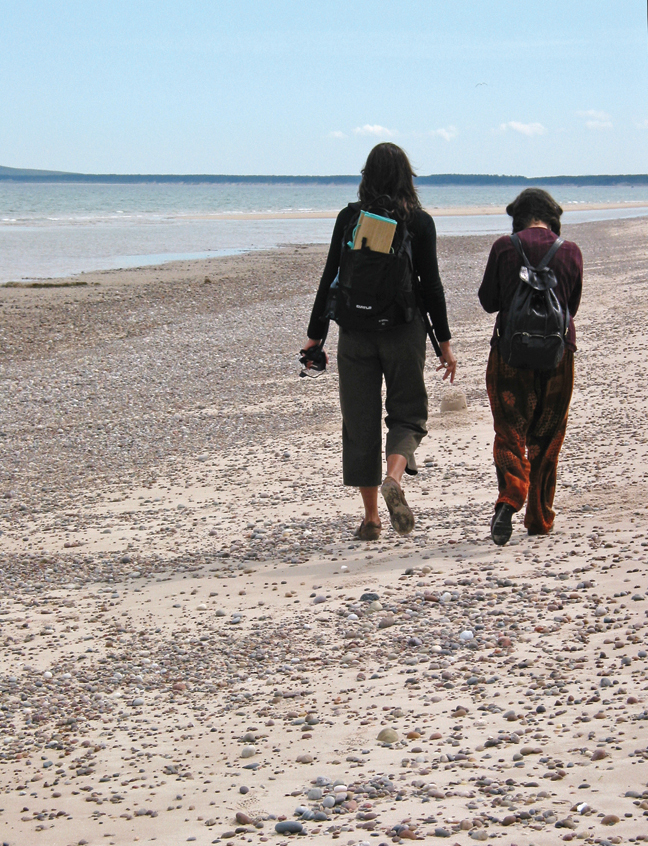
A caminho da praia / The way to the beach

Mar do Norte / North Sea

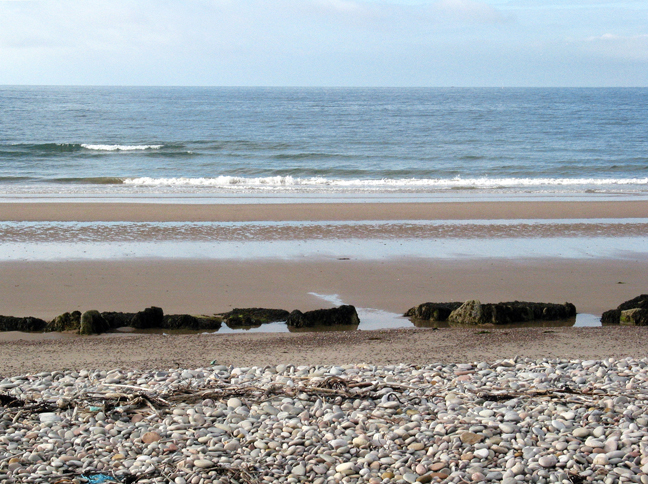
Nenhuma praia no Reino Unido tem areia, só pedrisco. Em Findhorn, são seixos brancos como os de aquário. / There’s no sand in UK beaches, only pebbles. In Findhorn, they’re white like those used in aquariums.

Em 1970, tendo evoluído para centro de educação espiritual e, posteriormente, ecovila, a comunidade foi registrada sob o nome Fundação Findhorn. Foi construído o enorme Universal Hall, teatro e salão de eventos. O hotel em Cluny Hill foi comprado e rebatizado Cluny Hill College, para sediar workshops e acomodar visitantes, Hoje superconceituada internacionalmente e conectada à ONU, a Fundação compreende “O Parque”, que se estende num raio de 80 km e acaba na praia, beijada pelo Mar do Norte. A paisagem se completa com uma baía cheia de veleiros, casas, um fish-and-chips e uma base aérea militar na vizinhança. É curioso como ao lado de lugares com caráter espiritual há sempre a presença do exército.

Os primeiros trailers, que pertenciam aos fundadores da comunidade, ainda estão lá. /
The first caravans that belonged to the community’s founders are still there

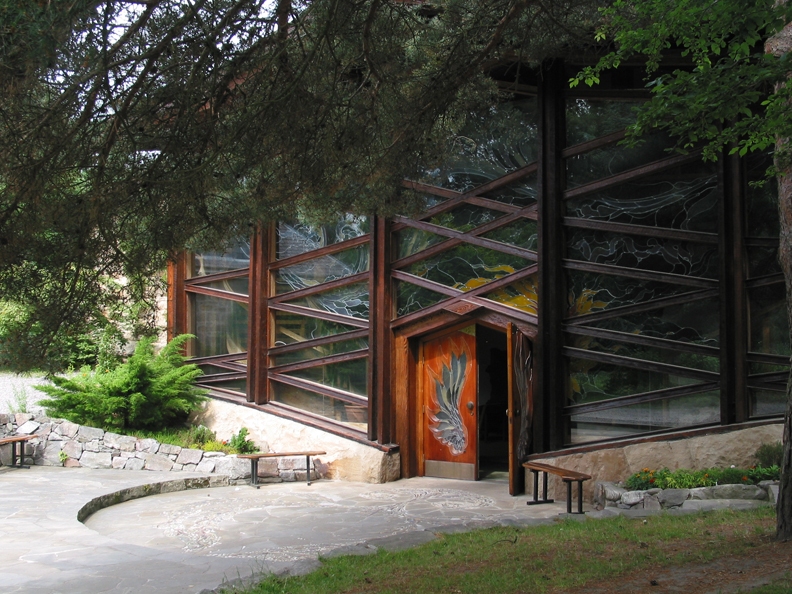
Universal Hall

In the 70’s a spiritual education center and ecovillage were stablished and the community was formally registered as a Scottish Charity under the name The Findhorn Foundation. The massive Universal Hall was built as Art Centre and Cluny Hill Hotel was purchased and renamed Cluny Hill College to be a centre for workshops and members’ accommodation. Nowadays the Foundation is internationally highly regarded and connected to ONU, comprising a 50 miles radius of land known as The Park, bordering a beach kissed by the North Sea. The landscape is framed by Findhorn Bay, with sailing boats, houses, fish-and-chips and a neighbour Air Force Military Base. It’s weird to remark the ever-present military zones in such places of spiritual nature.

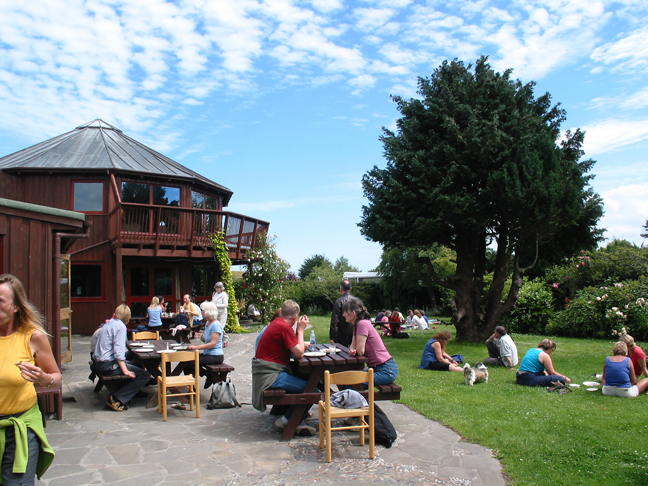
Almoço ao ar livre / Lunch out in the open

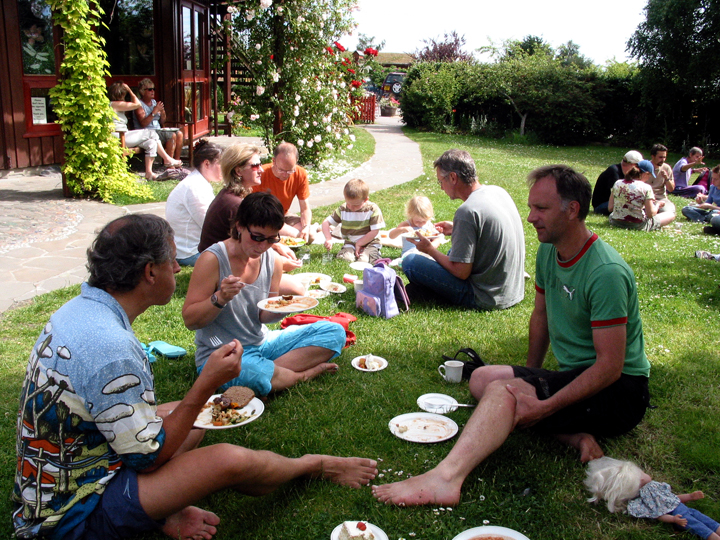
Quando cheguei, procurei a administração, localizaram Melissa e ela me levou para almoçar. O tempo abriu e o povo lá fica doido quando vê o sol. Aquelas pessoas de cor leitosa faziam sua refeição ao ar livre, pondo os pratos na grama e achando aquilo o máximo. Queriam se bronzear, mas, na verdade, ficavam vermelhas como pimenta. Eu, habituada a comer sentada à mesa usando talheres, como minha mãe me ensinou, estava bem sem jeito, desconfortável mesmo, mas fiquei quieta. A comida era vegetariana, orgânica e muito gostosa.

I arrived at the Foundation reception, Melissa was contacted and took me for lunch. The day was bright now and everybody there go nuts when they see the sun. Those milky white people were eating out with the plates on the grass and having much fun on that. They wanted to get a suntan but they would turn pepper red instead. I was used to eat by the table, using cutlery as my mother had taught me, so it was kind of clumsy and uncomfortable, but I kept my mouth shut and ate the delicious vegetarian organic meal.

Read Full Post »


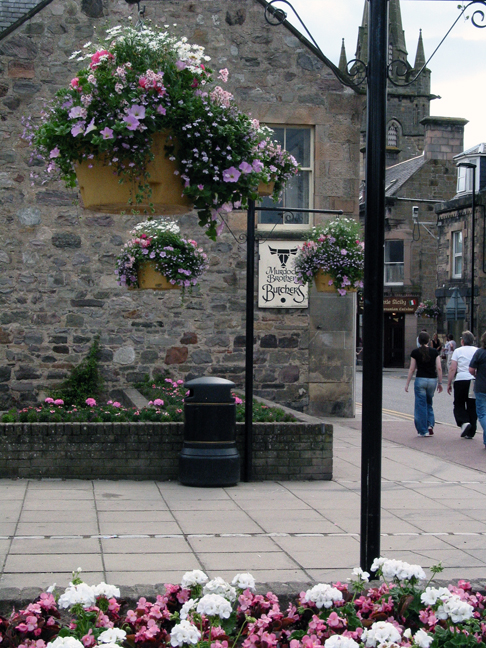
Rua em Forres / Street in Forres

Fiquei bastante tempo junto à Pedra das Bruxas, fazendo minhas orações para as mulheres que foram queimadas ali, e só fui embora porque começou a ameaçar chuva. Não havia nem um ponto de ônibus na longa rua, mas achei um posto de gasolina e fui pedir informações. Não havia frentista, mas um homem entrou  para abastecer o carro,  a ele me dirigi. Por sorte, conhecia Findhorn e ofereceu carona até o local de onde saía um shuttle gratuito para a Fundação. Sem pestanejar entrei no carro. Em dez minutos chegamos a um lugar que, a pé, eu levaria o dia todo para alcançar: Cluny, no alto de um morro, que foi um hotel na década de 60 e hoje faz parte da Fundação Findhorn, aonde chegaremos. Agradeci efusivamente ao gentil escocês de meia idade que se dispôs a sair de seu caminho para me levar até lá.

I stood longtime by the Witches stone, alone with my prayers for the women that had been scorched there, but under the threat of a gathering storm I eventually left. There was no bus stop in the long street, only a gas station, where I could ask for direction. There was no attendant, but a car came in to fuel so I addressed the driver. Fortunately he knew Findhorn and offered me a ride to a place where I could take a free shuttle to the Foundation. I accepted without a blink. The way up to the top of a high hill took us ten minutes; by foot it would take me the whole day to reach Cluny Hill College, a former hotel which now belongs to Findhorn Foundation, where we’re just about to arrive. I thanked heartily the Scot gentleman who had kindly strayed off his path to take me there.

Forres

A salvo da chuva que realmente caiu com vontade, esperei uma hora pelo shuttle, minha mente ainda ocupada pela questão da dominação cultural. Sabemos que a história é geralmente contada pelo ponto de vista do vencedor. A história do Rei Arthur, foco deste blog, também foi acrescida de elementos que não pertenciam à original, em momentos distintos, servindo a diferentes propósitos. No livro Aventuras da Távola Redonda (2003), o Prof. Antonio L. Furtado (org.) divide a literatura Arthuriana em três momentos distintos:
1ª fase – Crônicas pseudo-históricas;
2ª fase – Romances de cavalaria;
3ª fase – Histórias exemplares.

Next shuttle would leave in one hour, which I spent quietly sitting sheltered from the hard rain, my mind still busy with cultural subdue. It’s said that History is always told by the winner’s point of view. To King Arthur’s story, the main focus of this blog, elements were added which didn’t exist in the original tale, serving different purposes. In his book Adventures of the Round Table (2003), Prof. Antonio L. Furtado (org.) splits Arthurian literature in three distinct periods:
1st. – Pseudo-historical chronicles;
2nd. – Chivalry romances;
3rd. – Exemplary tales.

Praça principal de Forres / Forres main square

A primeira fase trata de relatos de batalhas e outras citações nas quais aparece o nome de Arthur, como em A história dos Reis da Bretanha, de Geoffrey de Monmouth, e nos Anais de Cambria (cidade no País de Gales) do ano 516, onde está escrito que “na Batalha de Badon, em que Artur levou a cruz de Nosso Senhor Jesus Cristo por três dias e três noites sobre seus ombros, e os bretões foram vitoriosos”. Um autor chamado Nennius, do século IX, afirma em sua História dos Bretões, que na batalha do Monte Badon, “morreram, em um dia, 960 homens numa investida de Arthur, e ninguém os abateu senão ele somente. E em todas as batalhas saiu vencedor”. Um certo Lucius Artorius Castus é citado por ter atingido o posto de “dux bellorum”, isto é, o Duque de Guerra. Foram encontradas duas placas com inscrições que atestam esta afirmação e a situam entre meados dos séculos II e III. Estes são exemplos de escritos em prosa, em latim, que sustentam a existência real de um Arthur.

The first phase concerns battle accounts and other reports where Arthur’s name appears, like Geoffrey de Monmouth’s “History of the Kings of Britain” and the “Annals of Cambria”(Welsh city), year 516, where the author states that “in the Battle of Mount Badon, where Arthur led the forces under our Lord Jesus Christ’s Cross banner for three days and three nights over his shoulders, and the Britons were victorious, utterly defeating the Saxons”.  Nennius, a IXth century writer, asserts in his “Historia Brittonum” that in Mount Badon “960 men died in one single day under Arthur’s onslaught and nobody slaughtered them but himself alone, and of all battles he was the winner”.  A certain Lucius Artorius Castus is mentioned as “dux bellorum”, what means “commander of war(s)”. Two plaques were found bearing inscriptions that prove this man’s existence in the late 2nd century or early 3rd century. These are a few examples of texts, written in latin prose, that support an Arthur’s true existence.

Lancelot & Guinevere

Na segunda fase, o romance é introduzido nestas histórias, que tratavam antes apenas de cavaleiros, seus duelos, sua coragem, feitos de bravura e guerras vencidas – aliás, um tanto enfadonhas. Os romances de cavalaria viraram moda nos salões da corte francesa, formatados em versos neste idioma. Chrétien de Troyes (escritor que traduziu A História dos Reis da Bretanha, de Geoffrey de Monmouth, para o francês) recebeu de sua patronesse a “encomenda” de uma história de Camelot, onde seria acrescida a narrativa de um romance entre a rainha e o melhor cavaleiro do rei, Lancelot, que até então nem existia nos relatos pseudo-históricos. A mecenas era a condessa Maria de Champagne, filha de Eleanor da Aquitânia (mulher de Henrique II da Inglaterra) que empregou Chrétien entre 1160 e 1172, ou seja, início do século XII.

The second phase had place when Chivalry Romances became the new fashion trend in Royal Courts, translated into French poetry, embodying chivalrous love in tales that formerly consisted only of jousts, knight bravery, victories in battle, very boring stuff, by the way. The writer Chrétien de Troyes, who translated the “History of the Kings of Britain” into French was hired to produce a Camelot novel, and the love story between Guinevere and Lancelot was thus inserted. Arthur’s best knight didn’t even exist in the original tale. Chrétien’s sponsor was the Countess Mary of Champagne, daughter of  Eleanor of Aquitania (who married the English King Henry II), from 1160 to 1172, early XIIth century.

A busca do Cálice Sagrado / The quest for the Holy Grail

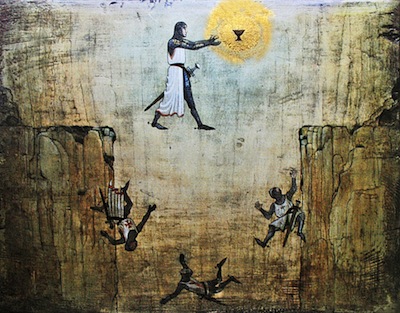
A terceira fase é formada por escritos em francês, em prosa, onde o Santo Graal entra na narrativa. Isto se dá justamente quando a Igreja Católica quer incitar os cristãos às Cruzadas, mais adiante no século XII. O catolicismo varreu do mapa a antiga religião, nunca mais se concebeu nenhuma versão da história de Arthur sem a busca do Graal. O interessante é que a cultura pagã foi preservada no próprio interior dos monastérios por druidas que, para sobreviver, declararam-se convertidos ao catolicismo. Estes sábios registraram por escrito suas tradições, que até então eram transmitidas oralmente através das gerações. Devemos a eles tudo que hoje se conhece da cultura celta.

In the third phase, written in French prose, the quest for the Holy Grail is added to Arthur’s story. That happened a bit later in the XIIth century, when Catholic Church was urging the Christians to join the Crusades. Catholicism overwhelmed the ancient rites. Not a single version of the Round Table legend was written, after that, without the Grail quest. What’s interesting is that pagan culture was preserved in the very heart of Catholic Monasteries, by druids who, in order to survive, pretended to be converted to this new religion. These wise men put down in written words all they could about their traditions which were, so far, orally transmitted through the generations. To them we owe all our present knowledge of celtic culture.

Morgana em “Excalibur”: a bruxa má / the bad witch

Morgana em “Brumas de Avalon”: a sacerdotisa
Morgana in “Mists of Avalon”: the priestess


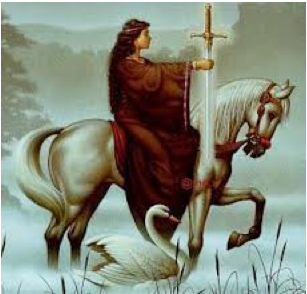
As Brumas de Avalon, da americana Marion Zimmer Bradley, lançado em 1979, é a abordagem da lenda de Arthur sob o ponto de vista feminino, reelaborando todo o universo mítico da trama. Pela primeira vez o estereótipo de bruxa má é retirado do personagem de Morgana.

The Mists of Avalon, by Marion Zimmer Bradley, 1979, approaches King Arthur’s legend under a feminine point of view, changing the mythical universe of the plot and for the first time releasing Morgana’s character of the bad witch stereotype.

Read Full Post »


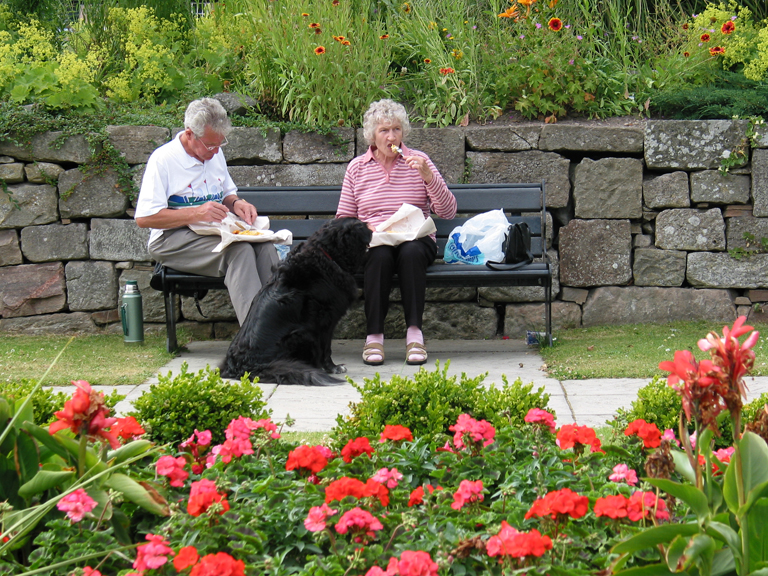
É comum ver pessoas almoçando ao ar livre, como esse casal e seu cão. Britânicos aproveitam cada instante do verão. / Couple with dog having lunch out in the sun. Not an unusual scene, british people enjoy every single summer moment.

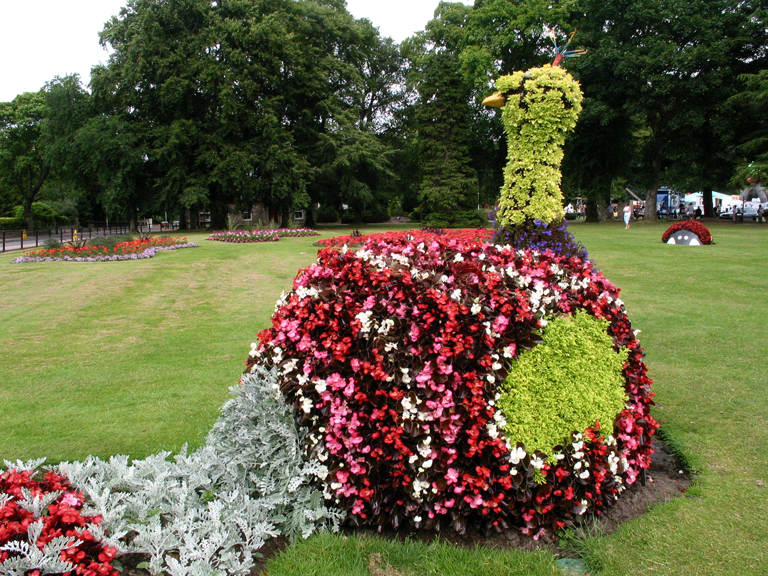
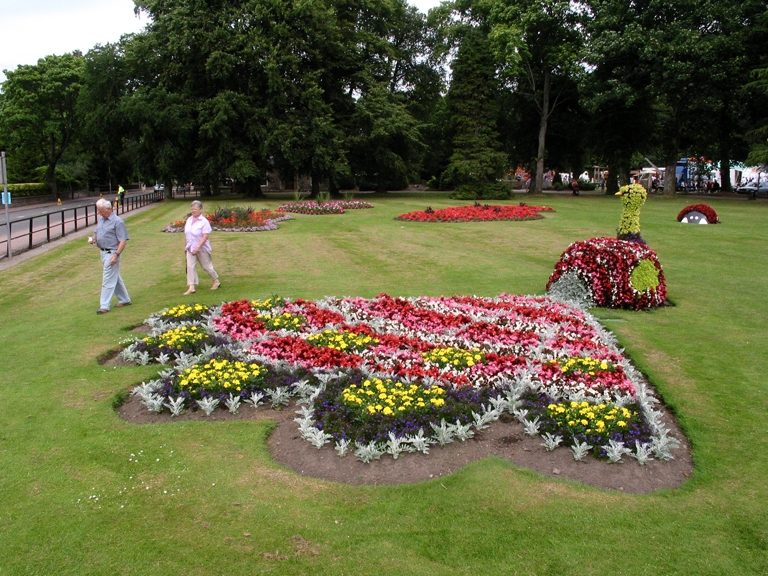
De Inverness a Forres são aproximadamente 50km; cheguei pela manhã, mas o dia estava cinzento, anunciando chuva. Forres é uma cidade bonitinha. Ganhara o prêmio de “jardim mais bonito” do Reino Unido, dizia a placa junto a uma praça onde realmente os jardineiros fizeram um trabalho notável. Usando bases de tela, esculpiram bichos feitos de plantas: joaninhas, pavões, lagartas. As guias de tela ordenaram o crescimento de flores cuidadosamente podadas, todas coloridas. Os britânicos são doidos por jardins, orgulham-se deles e este era realmente espetacular.

The distance from Inverness to Forres is around 31 miles. The day was foggy, forecasting rain when I arrived in that cute city. A sign in a square celebrated the prize Forres had just won as the most beautiful garden in UK. And the gardeners really did a hell of a job. They sculpted ladybugs, peacocks and caterpillars with coloured flowers, carefully trimmed, supported by an underneath grid. British people love gardening and are very proud of their work.

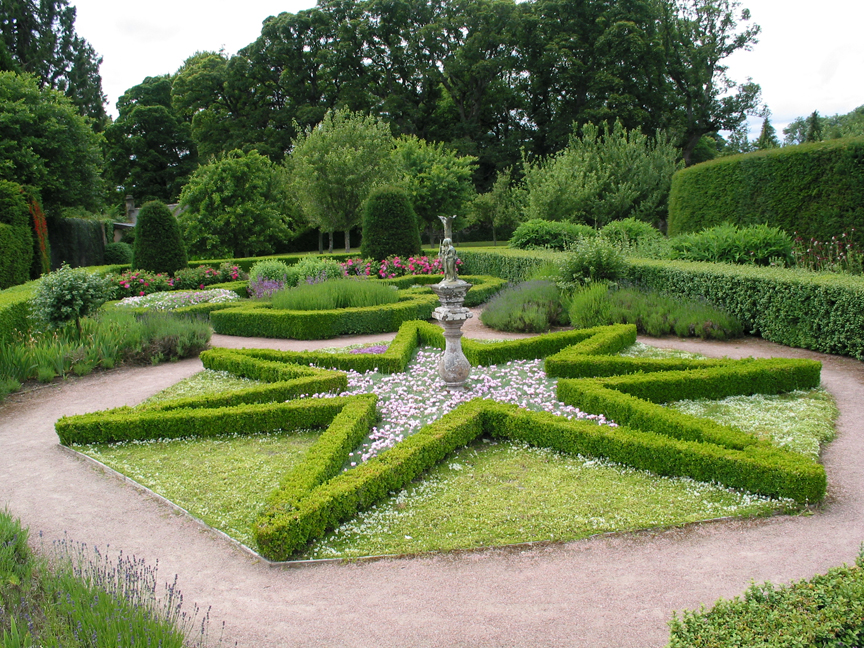
Topiaria: a arte de esculpir com plantas e flores, na qual os britânicos são experts. / Topiary: art of cutting trees and shrubs into ornamental forms, mastered by the British


Segui procurando o ponto de ônibus para Findhorn, mas as pessoas na rua nada sabiam informar. Nem havia muitas pessoas na rua, então saí andando, arrastando minha malinha pela avenida principal. Algumas placas indicavam um monumento próximo, a Sueno’s Stone, uma pedra com inscrições do tempo dos pictos que resolvi conferir. E fui seguindo as setas, mas, em outra praça, no meio do caminho, tinha outra pedra.

Sueno’s Stone, bem protegida em uma vitrine. As inscrições mostram cenas de batalha, possivelmente uma vitória contra invasores nórdicos. / Sueno’s Stone, well protected in a glass window. The carvings show battle scenes, maybe a victory against the Danes or Norse invaders.

I was looking for the Findhorn bus stop, and nobody knew where it was. There was no one out on the streets, so I went on carrying my little suitcase up the main street. Signs  pointed out a historical monument straight ahead, Sueno’s Stone, with pict inscriptions, so I decided to check it out and followed the arrows. But in another square, in the middle of the road, there was another stone.

Witches Stone, Forres, Scotland

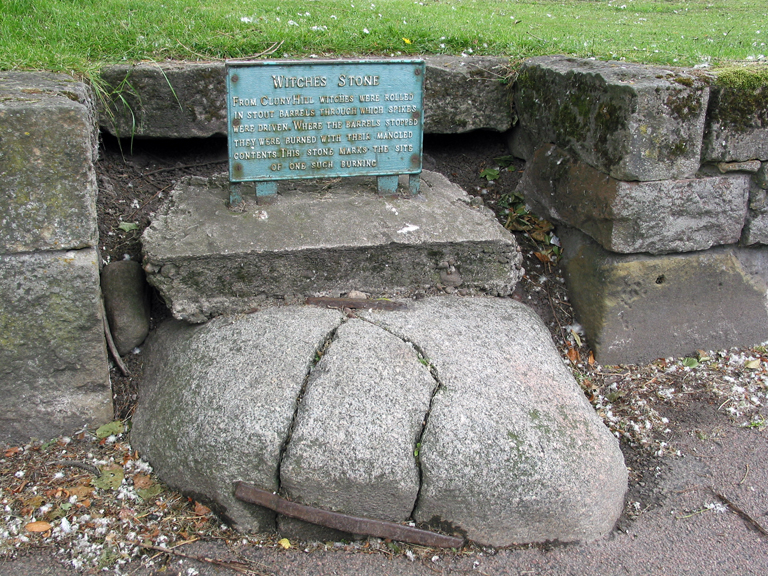
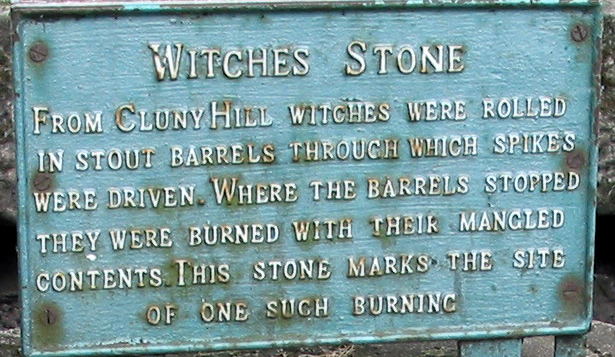
Witches Stone. A placa informava: no tempo da Inquisição, mulheres suspeitas de bruxaria eram postas dentro de um barril no alto da colina. O barril era espetado com várias lanças e empurrado para descer rolando pela encosta da colina de Cluny. Onde parava, ateavam fogo com o que restara da mulher dentro. Aquela pedra sinalizava o local onde um desses barris fora incendiado. Fiquei chapada. Esqueci Findhorn, o horário do ônibus, esqueci meu nome. Sentei e fiquei olhando aquele testemunho de algo que só tinha lido nos livros. Me vi dentro de um barril, sendo dilacerada e depois queimada viva.  Me veio a imagem de um porco no rolete.

Witches Stone. In Inquisition times, women judged guilty of witchcraft were put inside a barrel through which spikes were driven and the barrel was released to roll down Cluny Hill. When it came to a halt, fire was put to it with the woman’s remains still inside. That stone marked the spot where one of these burnings had happened long ago. I was stunned. I forgot all about Findhorn, the bus, I forgot my own name and just sat down there, staring at a material proof of something I had only read about in books. I could feel myself inside a stout barrel, being shredded in pieces and burnt alive. A hog roast came into my mind.

Detalhe. / Detail

E justo nas Terras Altas da Escócia, onde as mulheres reinavam nos antigos clãs! Possuíam seus próprios títulos, propriedades, terras. O livro “A Rosa Branca Rebelde”, de Janet Paisley, do qual transcrevo os seguintes trechos, descreve os costumes célticos dos clãs escoceses, povos que “escolhiam viver livremente juntos, pelo bem geral”. Ninguém passava fome nem ficava sem abrigo ou cuidado em caso de necessidade, pois todos se ajudavam mutuamente. “As mulheres, casadas ou não, deveriam se satisfazer caso quisessem outro homem. Suas ancestrais se divorciavam dos maridos com facilidade, quando eles não conseguiam sustentá-las ou respeitá-las, se roncassem, fofocassem, fossem impotentes ou apenas repugnantes. Uma esposa frustrada poderia ter um amante se seu marido bêbado não a satisfizesse. O noivado servia para que dois amantes vivessem juntos por um ano e decidissem se queriam mesmo casar-se um dia antes de completar esse período. As inglesas não tinham direitos nem poder, tampouco nome. Seu corpo, seus filhos e sua casa eram bens dos homens.” Ao casar-se, todos seus bens passavam a ser do marido e caso se separassem, a infeliz ficava sem nada.

It was a shock to learn that such stuff happened in the Highlands, where women were sovereign in ancient clan times. Scottish women, unlike the English ones, had their own titles, properties and land. I quote from “White Rose Rebel”, written by Janet Paisley, describing the celtic customs of Scottish clans, people “of free choice who lived together for common good”. Nobody would starve or go unattended in case of need, for people would care about each other. “Women, married or not, should satisfy their needs if they desired another man. Her grandmothers were already used to divorce easily if the husband did not sustain or respect the wife; if he snored, gossiped, were impotent or just disgusting. A frustrated wife could have a lover if her husband were a drunker and didn’t satisfy her. Engagement endured one year, so the lovers could live together and decide if they really wanted to get married after that time. English women didn’t have any rights, power or name. Their bodies, their children and their home belonged to the husband. If a couple divorced, all the properties were kept by the man”. There was nothing left for the poor woman.

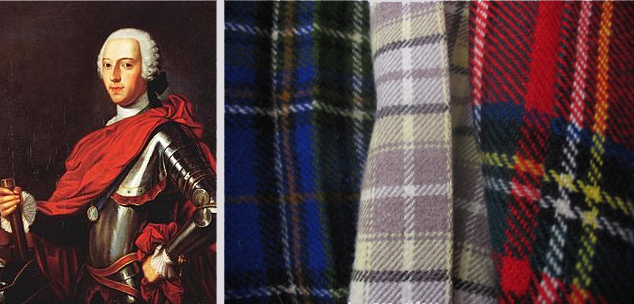
Charles Edward Stuart fugiu após a derrota e passou o resto da vida no exílio.
Os lindos tartans, felizmente, continuam a existir.
Charles Edward Stuart fled after the defeat and spent the rest of his life in exile.
The beautiful tartans survived to the present day.

Em 1745, na Batalha de Culloden, o exército inglês massacrou a insurreição dos clãs das Terras Altas que apoiavam a volta de Charles, herdeiro legítimo dos Stuarts, ao trono do Reino Unido. Além da execução e deportação de milhares de escoceses, o Parlamento britânico baixou um ato de desarmamento, para confiscar todas as armas das Terras Altas (Highlands) e banir o uso de suas tradicionais roupas, gaitas, danças e tartans. Foi abolido o direito hereditário dos chefes de clãs de aplicar a justiça em tribunais regionais. Além disso os professores escolares deviam jurar lealdade à Coroa inglesa e o inglês substituir o gaélico como idioma nacional. Em suma, reduzir a pó toda a cultura de um povo. Chamar mulheres de bruxas e achar que isso justifica queimá-las me parece apenas a sequência do processo.

In 1745, in the Battle of Culloden, the English Army butchered the Highlands’ clans uprising in support of “Bonnie Prince Charlie’s” restoration, as last legitimate heir to the Stuarts, to the British throne. Thousands of Scots were killed and deported. The British Government enacted laws to incorporate Scotland—specifically the Scottish Highlands—within the rest of Britain. The abolition of Heritable Jurisdictions Act ended the hereditary right of landowners to govern and make justice in their estates through barony courts. The Disarming Act confiscated all “warlike weapons” and the Dress Act declared wearing tartans and kilts as illegal. The traditional pipes and dances were banished; teachers were forced to swear loyalty to the English Crown and English replaced Gaelic as official language. In short, a deathly blow to Scottish culture.
Seems to me that naming a woman a witch, and believing this is enough to burn her alive was just a later outgrowth of the process.

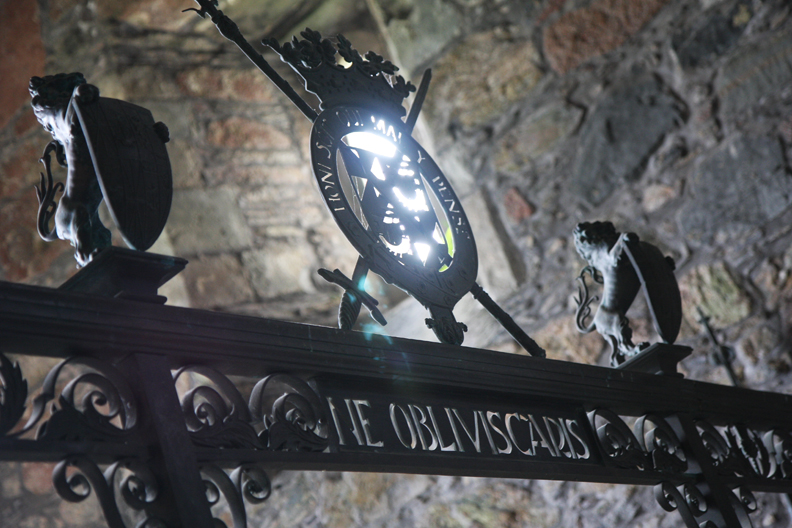
Ne Obliviscaris. Do Not Forget. Não esquece.

Entretanto, voltando ao tempo do Império Romano, poucos séculos antes, temos relatos de brutalidades semelhantes inflingidas às tribos britânicas pelos conquistadores. Na verdade a história se repete, até os dias de hoje, mudando apenas de endereço, remetente e destinatário. Quanta tradição preciosa perdeu-se para sempre! Me dei conta que poderia ter morrido assim em uma vida passada. Plantada em frente à pedra chorei bem uma meia hora por todas as injustiças do mundo dito civilizado.

However, if we go back in time a few centuries, to the Roman Empire, there’s evidence of the same brutality inflicted on the British tribes by the conquerors. Indeed History repeats itself to this very day, the only things that change are the characters involved. How much precious tradition is forever lost! I realized I could have been burnt in a past life, and remained roughly half an hour sitting by the Witches Stone, weeping for all unfairness of the so called civilized world.

Read Full Post »


Retornei ao albergue. A cozinha estava cheia de hóspedes, entre eles o indiano fazendo uma travessa de kebabs. Cobriu meia bola de isopor com papel prateado, na qual arrumou um monte de espetos mistos – pedaços de carne, frango, porco, salsicha, tudo misturado – e levou ao forno. Quando o prato ficou pronto, ele insistiu muito para que todos compartilhassem, mas ninguém quis. Eu devia ter desconfiado, mas estava faminta e aceitei. Comi um espeto inteiro. Ele tinha combinado com os americanos e o espanhol ir a um pub à noite e a room mate aqui foi convidada a acompanhá-los. Novamente aceitei, feliz porque iria me divertir com os novos amigos.

Back in the hostel, the kitchen was full of guests, amongst them the dutch/indian cooking a kebab plate. He had covered half of a styrofoam ball with foil, spiked the kebabs (mixed pieces of beef, pork, chicken, sausage, all together), and put it in the oven. When the stuff was ready, he invited insistently people to share, but everybody declined. I should have suspected, but I was starving and ate a big one. That night he was going to a pub with the spaniard and the american dudes, and I was invited to join them. I accepted happily, it would be cool to have some fun with the room mates.

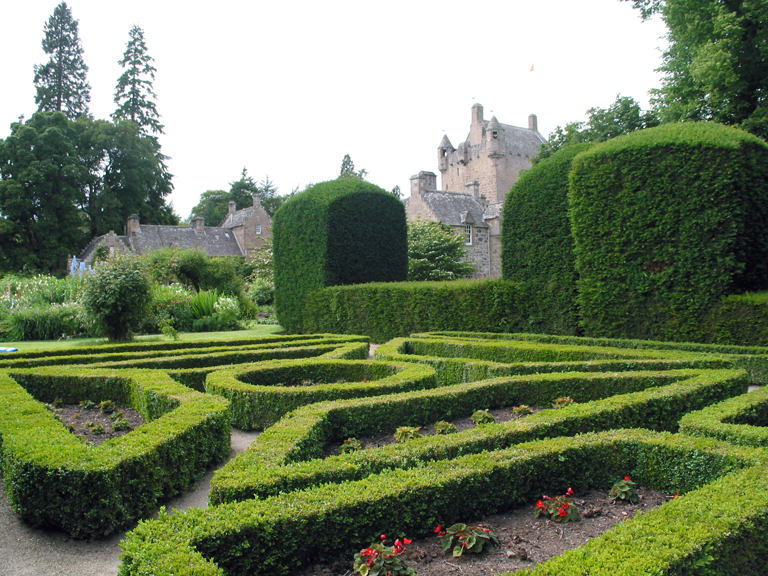
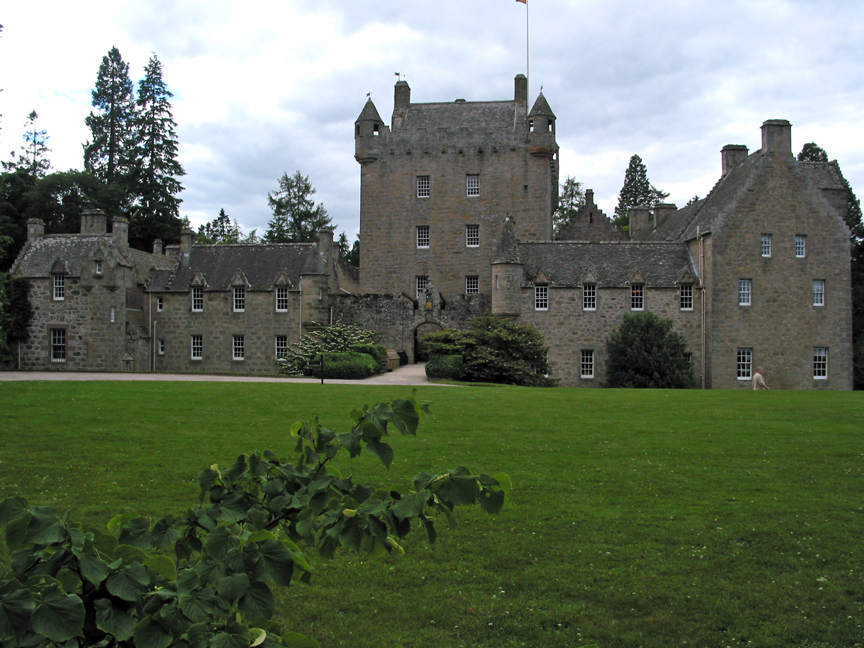
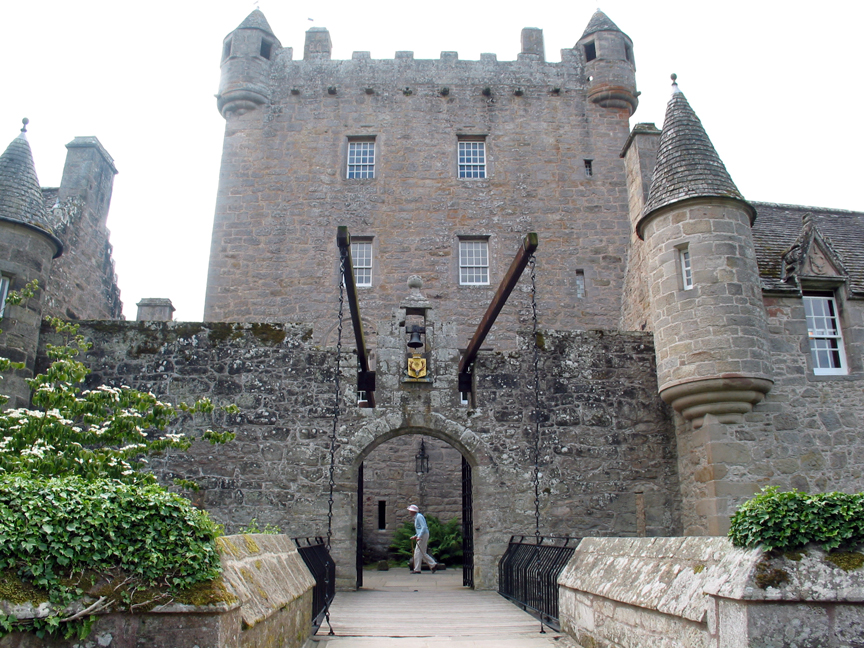
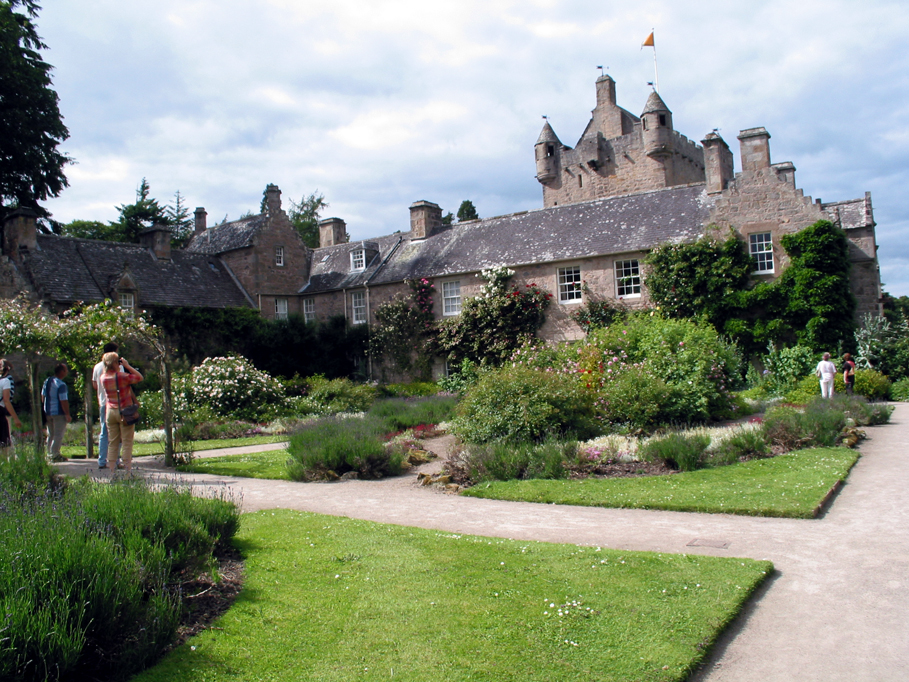
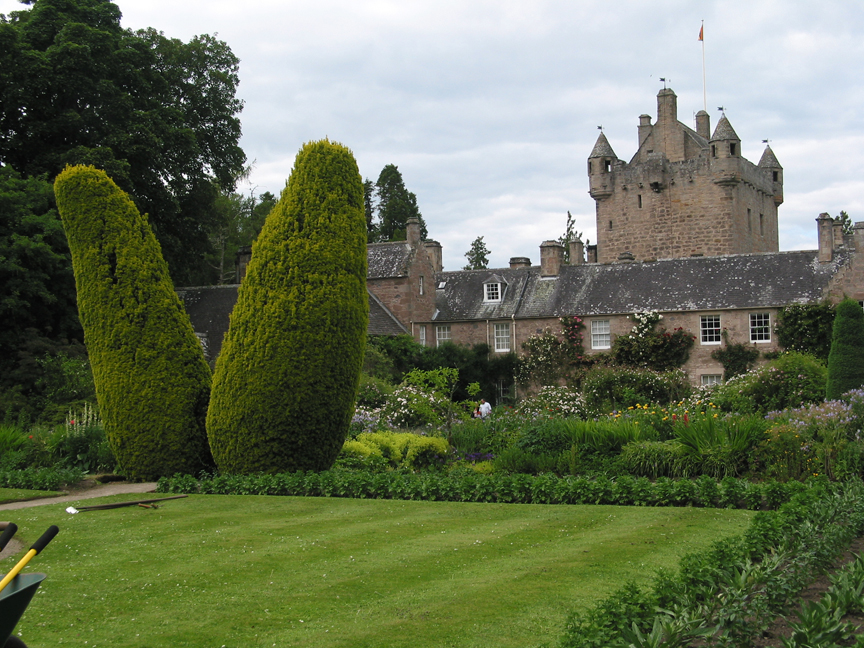
Cawdor Castle, cerca de 16 km de Inverness / 10 mls. from Inverness

Saímos. No verão, é delicioso como escurece tarde na Escócia. Eram nove horas mas estava claro como se ainda fosse final de tarde. Fomos andando, conversando e rindo, por fim entramos num pub. Acabamos nos enturmando com Paul, um rapaz bonitinho que trabalhava no correio (Royal Mail). Tinha cabelo preto curto e olhos azuis. Lá pelas tantas, o indiano-holandês começou um discurso terrorista que horrorizou o grupo, insistindo que queria colocar uma bomba em algum lugar. Criou um constrangimento tal que, ao declarar que iria para uma boate, ninguém quis ir com ele. Pelo contrário, sua partida foi um alívio. Os americanos tinham ido embora logo no início da conversa esquisita, portanto sobramos eu, o espanhol e Paul, o escocês, que nos convidou para ir para sua casa. Ao chegarmos, os pais dele já haviam se recolhido. Fomos até seu quarto, onde ficamos conversando, e o assunto ainda era o indiano.

We left the hostel at night, but the sky was still bright, such an amazing Scottish summer. Around 9 pm one could say it was still 5. We went strolling, talking and laughing until a nice pub was spotted. There we made friends with a Scottish guy, Paul, black hair, blue eyed, who worked in the Royal Mail. After some drinks the dutch/indian started a terrorist speech on how much he wanted to put a bomb somewhere. His insistence on the subject brought up such an uneasiness that the americans left. It was a relief when the freak stated he was going to a disco, of course none of us accompanied him. Me, the Spaniard and Paul stood, and later he  invited us to go to his house. His parents were asleep when we arrived. In his room, the talk was still about the weirdo.

Um dos lindos jardins do Castelo de Cawdor /
One of the splendid gardens in Cawdor Castle

Estava tudo bem, mas comecei a passar mal. O kebab voltou. Tive de sair correndo para o banheiro, segurando a boca com as duas mãos para não vomitar no meio do quarto. Minha pressão caiu, o mundo escureceu ao meu redor. Vomitei até o estômago doer; mas o pior foi que, enquanto me recompunha e procurava pasta de dentes, Paul irrompeu banheiro adentro. A porta não trancava.
– Are you OK?
– Oh, yes! – respondi, tentando sorrir para não parecer que me sentia na merda.
Dá para acreditar que o bonitinho veio me dar um beijo na boca? Evitei, pois ainda estava sentindo gosto de carne podre e morrendo de vergonha. Contei o que se passara e os dois ficaram ainda mais revoltados contra o indiano: “He could have killed her!”
A noite terminou com o escocês nos colocando num táxi de volta para o albergue, o espanhol muito irritado, pois queria ficar até mais tarde e eu tonta, já não me entendendo. Fui me deitar e no dia seguinte, acordei, mas os olhos não abriam. Estavam grudados e doíam horrivelmente. Tinha esquecido completamente de tirar as lentes de contato!

Everything was fine but a few minutes later I started to feel very ill. And the damned kababs came all the way up. I ran out of the room holding my mouth closed, trying not to throw up in the floor. Feeling dizzy, pressure dropping, seeing the world turn black, I headed to the bathroom. After having puked until my stomach ached, I was trying to piece myself together, looking for some toothpaste, when the door opened up – it didn’t have a lock – and Paul appeared.
– Are you OK?
– Oh, yes! – Was my answer, trying to smile although I was feeling like shit.
And then I couldn’t believe my eyes: the nice blue-eyed guy came to kiss my mouth! I had to avoid it, still tasting rotten meat, what a shame! So I told him what happened. Both guys were furious with the indian: “He could have killed her!”
The night ended with Paul calling a cab for me and the Spaniard, this one in anger because he still wanted to enjoy the night. Back in the hostel I went straight to bed and, the next day when I woke up, my eyes refused to open. Eyelids were stuck together and the pain was excruciating. I had forgotten to take out my contact lenses.

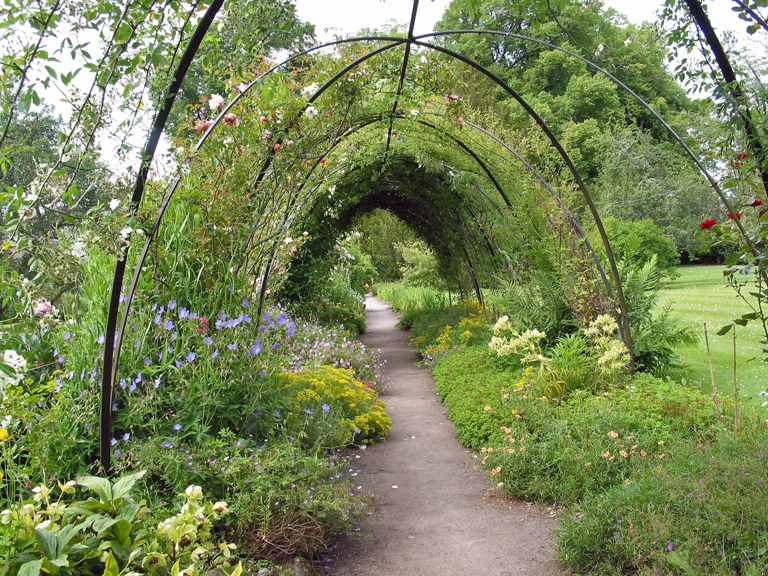
Cawdor Castle Gardens: The maze / Labirinto

Gastei quase todo o vidro de soro fisiológico, consegui tirar as lentes mas não enxergava nada, então bebi água e voltei a dormir. Acordei por volta de meio-dia ainda praticamente cega. Tentei raciocinar.  Precisava de um colírio, e não tinha mais ninguém no quarto. Teria que sair da cama e achar uma farmácia. Então, nem sei como, o fiz. Tateando consegui me arrumar e saí como um zumbi pelas ruas, sob o sol ofuscante, mas achei uma farmácia e o colírio que o balconista indicou aliviou muito a dor, mas ainda via apenas vultos.
Estava com raiva de mim mesma, como podia ter dado esse mole? Estava fazendo a viagem da minha vida, não queria perder tempo. Então resolvi ir assim mesmo, tateando pelas ruas até o ponto do ônibus que me levaria até o castelo de Cawdor, cenário de Macbeth, de Shakespeare. Embarquei, de câmera na mão e curiosamente bati umas fotos razoáveis nos jardins do castelo, que tinha um lindo labirinto de sebes.

It took me half a bottle of physiological saline to take off the contacts, but the blindness persisted, so I drank water and went back to sleep. By midday I woke up still blind, trying to figure out what to do. I was alone in the room, in desperate need of eye drops. I’d have to get out of bed and find a drugstore, so I did it, don’t ask me how. Groping I got dressed and went out like a zombie in the streets, under the dazzling summer sun. I managed to find a drugstore and the clerk appointed me eye drops that really healed much of the pain, but didn’t bring my sight back.
I was miserable and had only myself to blame. And this was the trip of my life, there was no time to waste. So I decided to go ahead, still groping, until the bus stop where I boarded the right one which would take me to Cawdor Castle, scenary of Shakespeare’s Macbeth. I had my camera in hand and curiously took some photos, not so bad! The gardens are very nice, one of them has a maze.

Procurando a cafeteria / Looking for the Coffee Shop

Quase chegando à cafeteria / Almost in the Coffee Shop

Eu fazia assim: parava, ficava um pouco de olhos fechados e ia abrindo aos poucos até ver o suficiente para me localizar, aí fechava os olhos de novo e caminhava na direção escolhida contando os passos, sempre pingando colírio. Aos trancos, mas sem derrubar nada nem esbarrar em ninguém, consegui chegar até a lanchonete do castelo, onde um delicioso chá com muffins levantou meu astral. Ainda vendo apenas vultos entrei no ônibus de volta ao albergue, onde caí na cama sem jantar. Desta vez, uma boa e longa noite de sono me recuperou. Acordei enxergando e resolvi partir imediatamente para Findhorn.

To walk around I opened my eyes slowly, until I could see enough to realize where I was and which way to go; then it was a matter of go ahead counting footsteps, always trickling eye drops. I managed to walk around and find the coffee shop without knocking down nothing and nobody, and a delicious tea with muffins restored my humor. Still almost blind, I took the bus back to the hostel and fell in bed at once, without dinner. A good long sleep brought back my sight and I set off at once for Findhorn.

Mapa do Castelo de Cawdor. Ainda não acredito como consegui andar tanto sem enxergar./
Cawdor Castle map. I still don’t realize how did I manage to walk so much around without seeing.

Turistas apreciando os magníficos jardins./
Tourists enjoying the magnificent gardens.

Para mais informações sobre o Castelo, preço e horário de visitas,  etc. acesse o link abaixo.

For more information about Cawdor Castle, opening times, admission prices, etc. :

www.cawdorcastle.com


Read Full Post »


Urqwhart Castle, às margens do Loch Ness / Urqwhart Castle on Loch Ness shore

Dormi cedo, porque, no dia seguinte, embarcaria numa excursão ao Loch Ness. Os tours saem diariamente e não é preciso fazer reserva. Optei por um passeio que se estendia até Clava Cairn, um túmulo da Idade do Bronze que fiquei curiosa para conhecer. O Loch Ness foi meio frustrante, pois o dia se cobriu com um manto cinza e as fotos não prestaram. Paramos num mirante à beira do lago onde o motorista mostrou um álbum de recortes de jornais com depoimentos das pessoas que diziam ter visto Nessie, o monstro do Loch Ness e especialistas analisando fotos. Passou na TV do ônibus um vídeo sobre o mesmo assunto. Mas para nós, Nessie não deu o ar de sua graça.

I went to sleep early because the next day I would take a tour to Loch Ness. These are daily tours and booking in advance is not required. I chose a company that extended the tour to Clava Cairn, a Bronze Age tomb that roused my curiosity. The Loch Ness was a bit disappointing. The day was clad in grey and the photographs resulted poor. The bus parked by the lakeside and the driver, who was also the guide, circulated a book of newspapers clipping about the appearances of Nessie, the Loch Ness monster – witnesses statements, photo analysis by experts and so on, while we watched a video on the same subject. But Nessie didn’t give us the grace of her presence.

O guia da excursão convidando os turistas a embarcar na lancha /
The tour guide inviting us to get in the motorboat

O Loch Ness, sem sinal de Nessie / The Loch Ness, with no sign of Nessie

O mais perto que chegamos do castelo / The closest we’ve been to Urqwart Castle

Seguimos adiante até um pequeno cais onde uma lancha nos levou às ruínas do castelo de Urqwhart, uma das maiores fortalezas escocesas da época medieval; porém, o barco não parou ali, contornou o penhasco e voltou. Dali nos encaminhamos ao centro turístico onde vendiam souvenirs e havia uma exposição do mesmo material que o motorista havia mostrado. Felizmente, havia uma boa lanchonete. Meia hora depois, seguimos enfim para Clava Cairn, que foi bem interessante. Existem cerca de 50 túmulos como este nas proximidades de Inverness: uma única câmara mortuária coberta por pedras empilhadas cuja entrada era uma estreita passagem, orientada para sudoeste, direção do por do sol no solsticio de inverno.

We went ahead towards a small quay, where a motorboat was waiting to take us to the ruins of Urquhart Castle, one of the largest strongholds of medieval Scotland. But the boat didn’t make a halt there, just skirted the Castle and came back. From there we were taken to a touristic centre with souvenirs for sale and an exhibition of the same stuff we’ve seen about Nessie’s appearances. Fortunately there was a good snack bar! Half an hour later we moved on to Clava Cairn, and that was really interesting. There are about 50 cairns of this type in an area round about Inverness: a single burial chamber linked to the entrance by a short passage and covered with a cairn of stones, with the entrance oriented south west towards midwinter sunset.

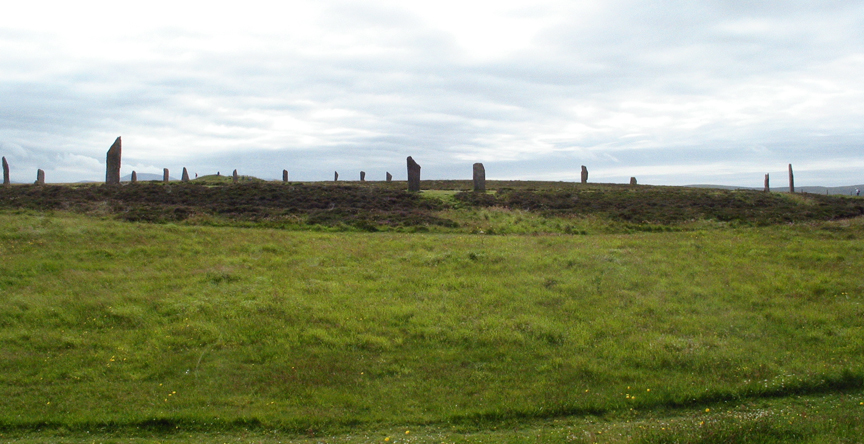
Clava Cairn: megalitos em volta do túmulo / Standing stones surrounding the tomb

Era comum nas sociedades ancestrais construir esses túmulos de pedra que podiam ser cobertos com vegetação, parecendo elevações naturais do terreno para protegê-los de saques e profanação. /
These ancient tombs built of stone when covered with grass would go unnoticed as natural terrain elevations, to prevent plunder and profanation.

Vista de cima / The tomb seen from above

A entrada ficava escondida por pedras e mato, grande o suficiente apenas para uma pessoa entrar se arrastando. /
The entrance, hidden by stones and bushes, was scarcely large enough for someone to crawl in

Vamos entrar? Let’s go inside?

O motorista acumulava a função de guia. Tinha um microfone e ia contando a história da Escócia enquanto dirigia. Os escoceses fazem piada dos ingleses, como os brasileiros fazem dos argentinos. Depois que o país caiu sob o jugo da Inglaterra, não conseguiu mais recuperar a independência. O motorista narrou algumas passagens em que isso quase aconteceu, mas, por alguma fatalidade ou absurdo do destino, não se concretizou. O relato do homem era totalmente passional, ele se indignava, esbravejava, quase largava o volante do ônibus. Parecia meu pai contando a história da França, não só pelo modo de falar, mas também fisicamente; por isso no fim da excursão, de volta a Inverness, uma saudade enorme veio à tona, saí andando pela cidade até achar um banco de praça escondidinho onde não houvesse ninguém para testemunhar minhas lágrimas.

The driver/guide had a microphone, he drove on telling us Scotland’s story. The Scottish make jokes on English, just like Brazilians on Argentines. After the country fell under English rule they never recovered independence. The driver told us historical events when this almost happened, but by misfortune or fate never substantiated.  He had a striking resemblance to my father, not only physically but in his manners as well. His speech was passionate, rampaging, even releasing hold of the steering wheel. I missed so much my father! So when the tour was over, back in Inverness, I walked the streets feeling miserable, looking for a hidden park bench where my tears would go unnoticed.

Dentro da câmara mortuária / Inside the burial chamber

Read Full Post »

« Newer Posts - Older Posts »