Feeds:
Posts
Comentários

Posts Tagged ‘VIking ruins’


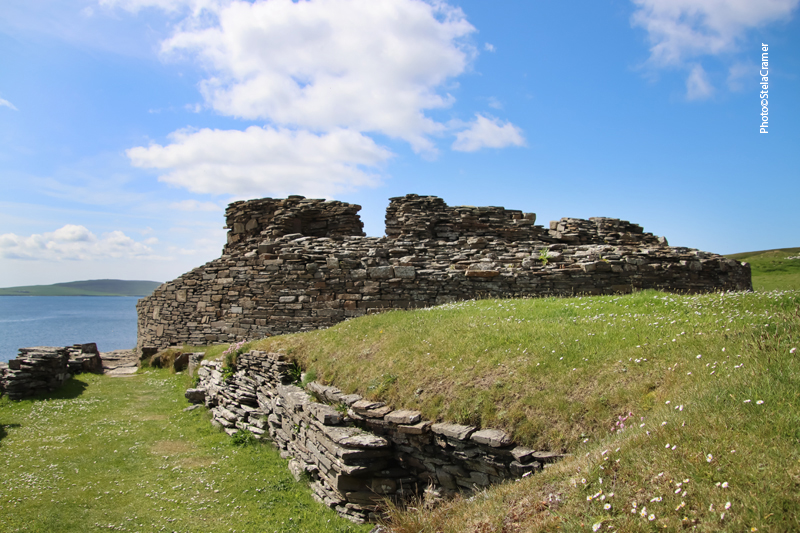
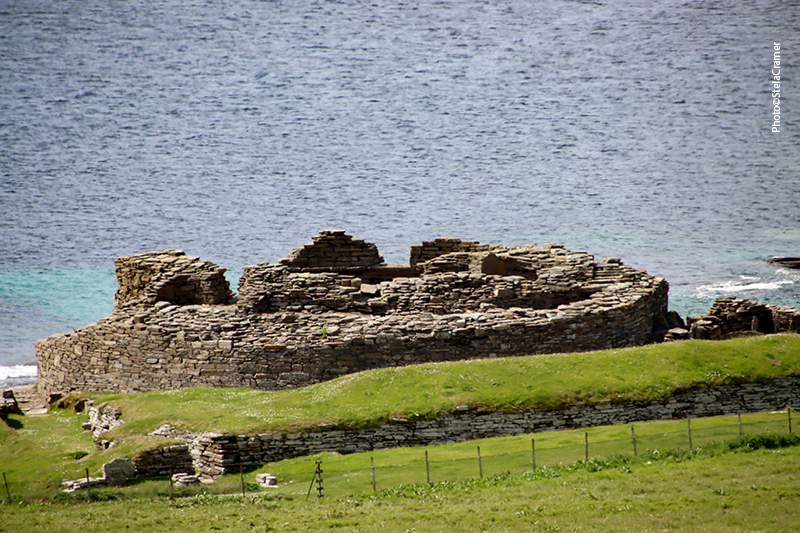
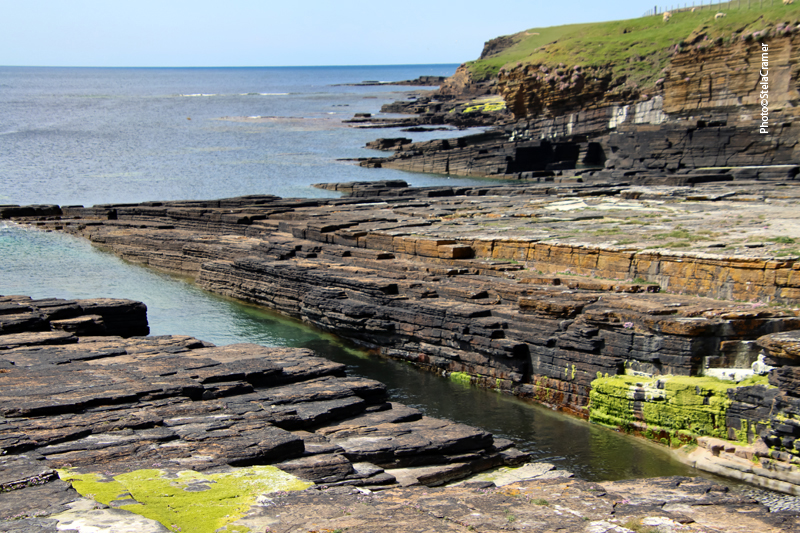
Midhowe Broch foi construído num estreito promontório em Eynhallow Sound há mais de 2000 anos atrás. “Midhowe” significa o monte do meio, sendo este um de três Brochs próximos: North Howe Broch e South Howe Broch, como o nome diz, um a noroeste e um ao sudeste. Há mais quatro outros Brochs ao longo dos 12 km de litoral entre este ponto e o Pier onde atraca o ferryboat vindo de Kirkwall. Parece que estes ainda não foram escavados.

Midhowe Broch was built on a narrow promontory beside Eynhallow Sound more than 2,000 years ago. The name “Midhowe” means middle mound and this is just one of three brochs closely grouped together: North Howe Broch to the north-west, and South Howe Broch to the south-east. There are remains of another four brochs along the five miles of shoreline between these and Trumland Pier, where the ferry from Kirkwakk moors. Apparently, these haven’t been excavated yet.

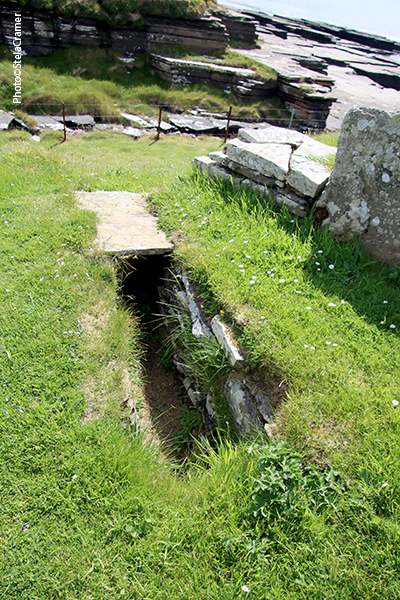
O promontório sobre o qual o Broch se ergue foi acentuado por canais cortados na pedra, dificultando o acesso pela costa. Por terra, as defesas consistiam em dois fossos e uma muralha. Outro muro (o que parece uma paliçada, mais ou menos no meio da foto acima) foi construído em 1930 para proteger o sítio da erosão.

The promontory on which the broch stands has been emphasised by channels cut into the rock making access along the shore much more difficult. Access from the landward side was deterred by two ditches and a rampart. A wall that today encloses the seaward side of the broch ( vertical spikes , more or less in the middle of the photo above) was built to defend it from the sea in the 1930s.
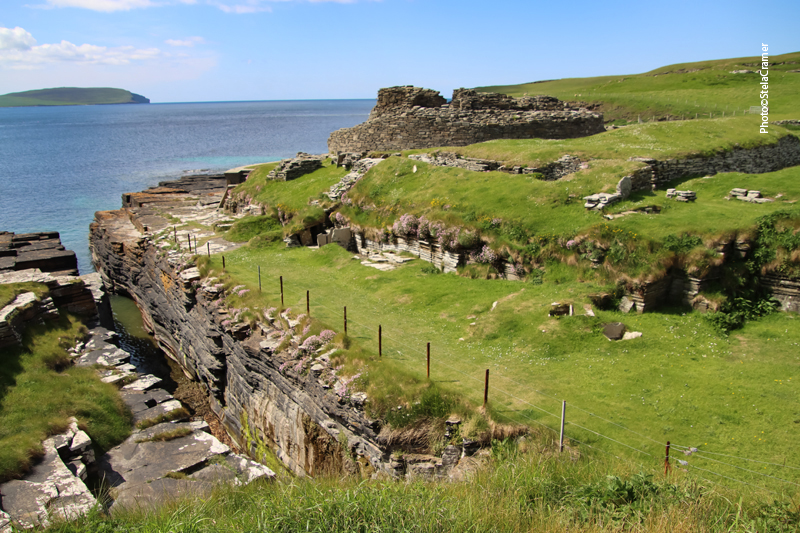
Vista com o fosso sudoeste, cortado na rocha, em primeiro plano. Ao fundo, cruzando o Eynhallow Sound, se encontra quase oposto o Broch de Gurness.
The Broch with the South-Eastern rock cut ditch in the foreground. In the background, across Eynhallow Sound, stands the Broch of Gurness, Brochs are almost opposite one another.
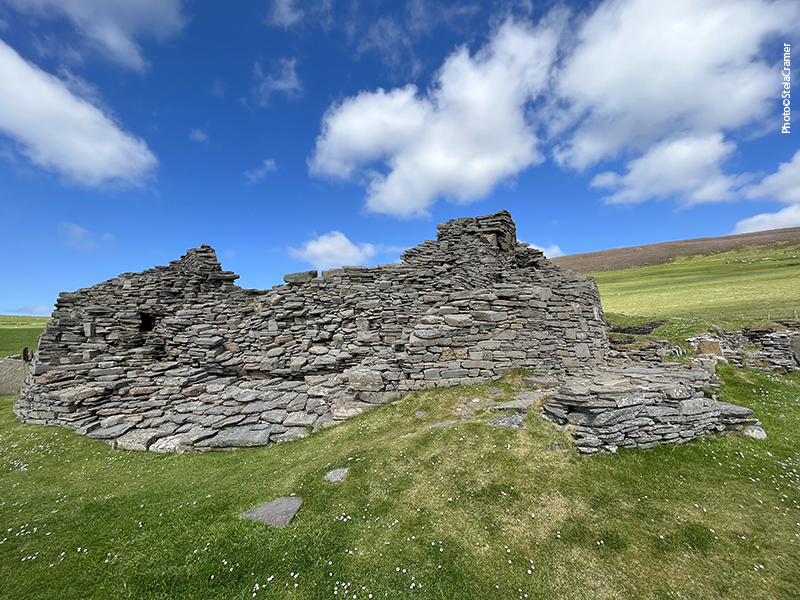
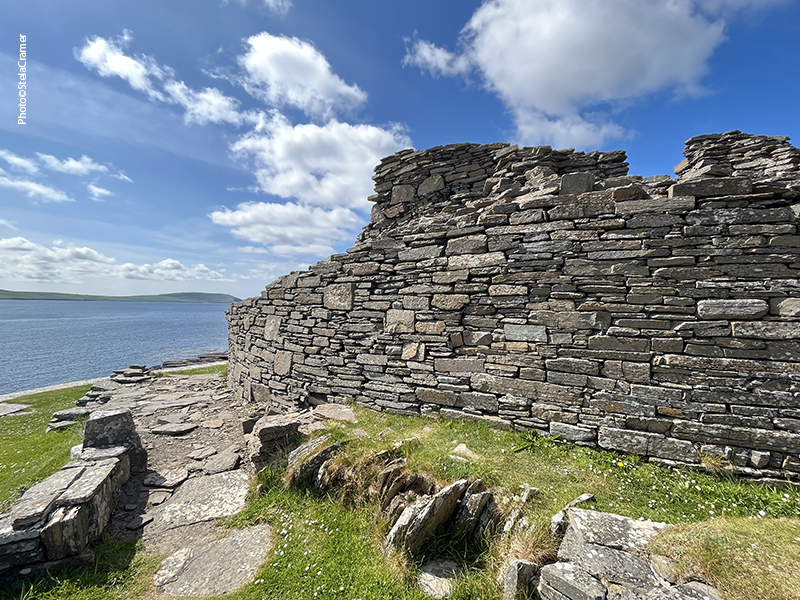
Vista do litoral (nordeste) / Northeast view, from the shore
Muro externo / Outer wall
Entrada / Entrance
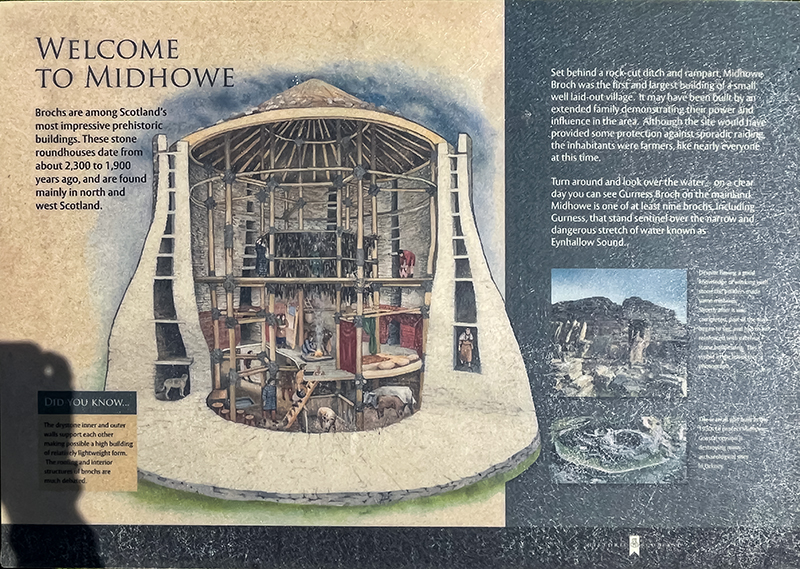
Como teria sido o interior do Broch / How it should have been inside the Broch
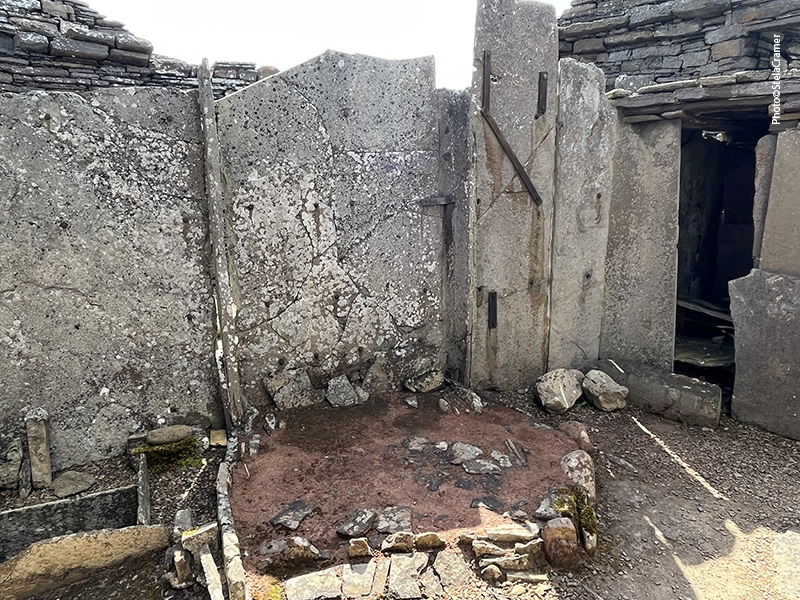
Primeiro salão principal / Main room One
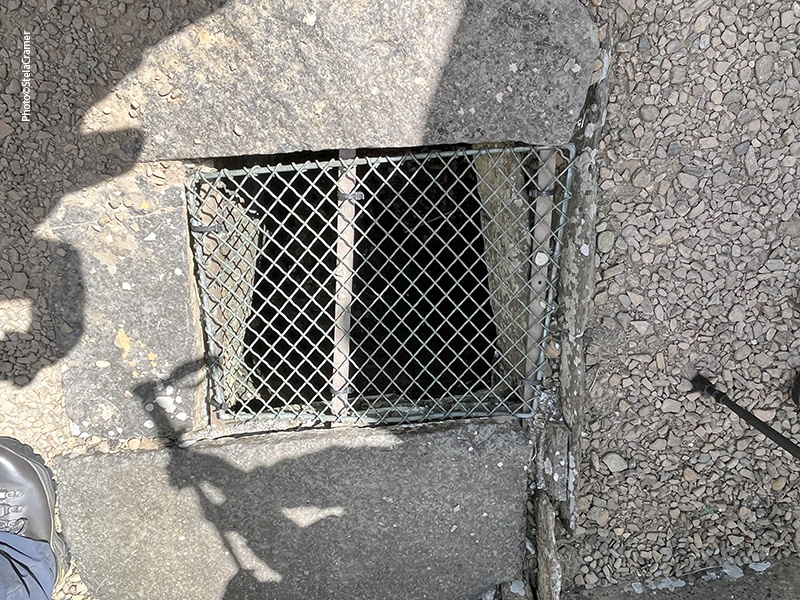
A cisterna é abastecida por uma fonte e, mais de 2000 anos depois, ainda funciona ! / The spring-fed water cistern, after more than 2,000 years, still seems to work as the original builders intended.
Vala para esgoto / Trench for water sewage
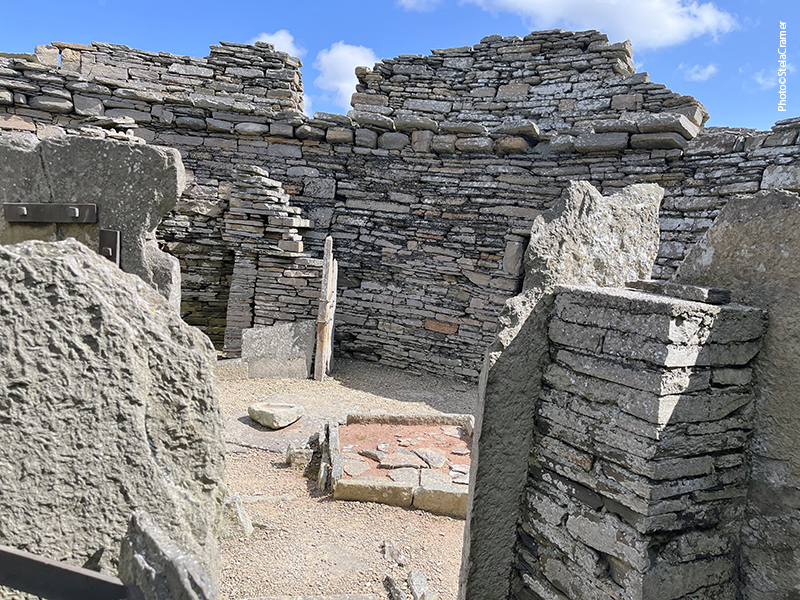
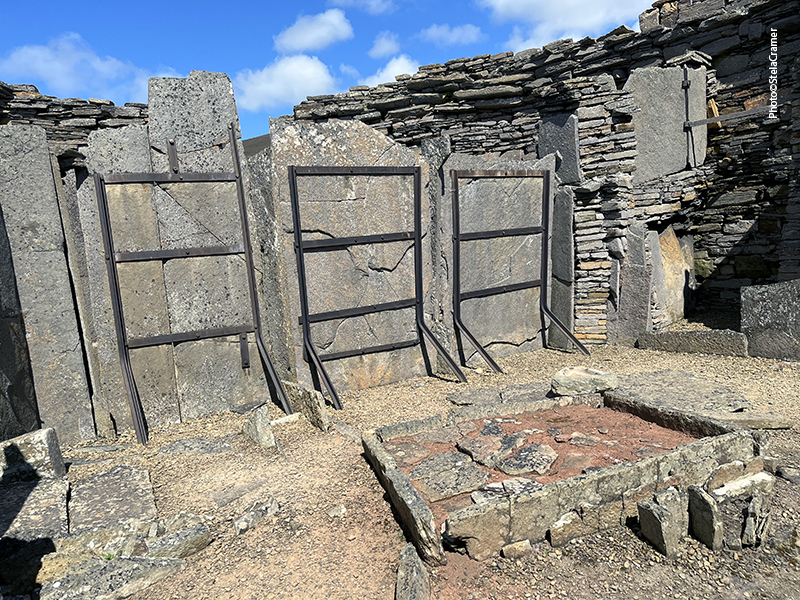
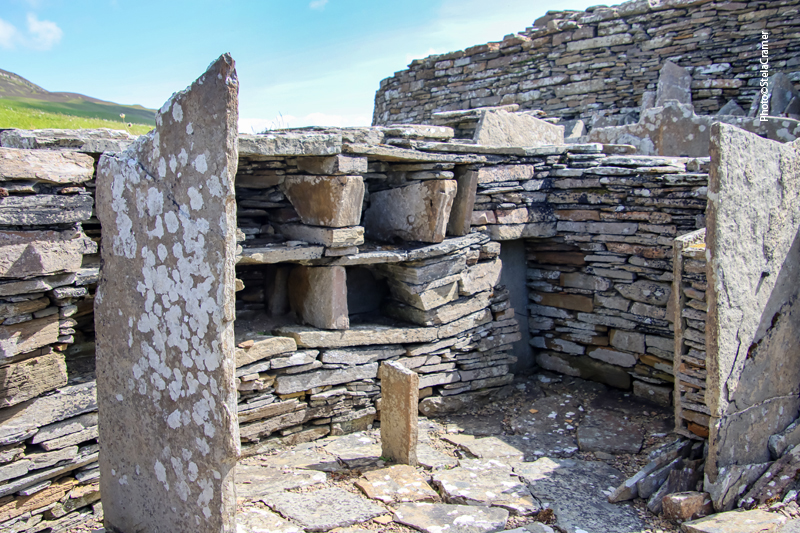
Segundo salão principal. Grandes lajes dividem o espaço em áreas para trabalho e armazenagem. / Main room Two. Large flags divide the space into two smaller areas used for working and storage.

Estas lajes maiores também foram usadas para construir “mobília” / These large slabs have been used to build various items of “furniture”.
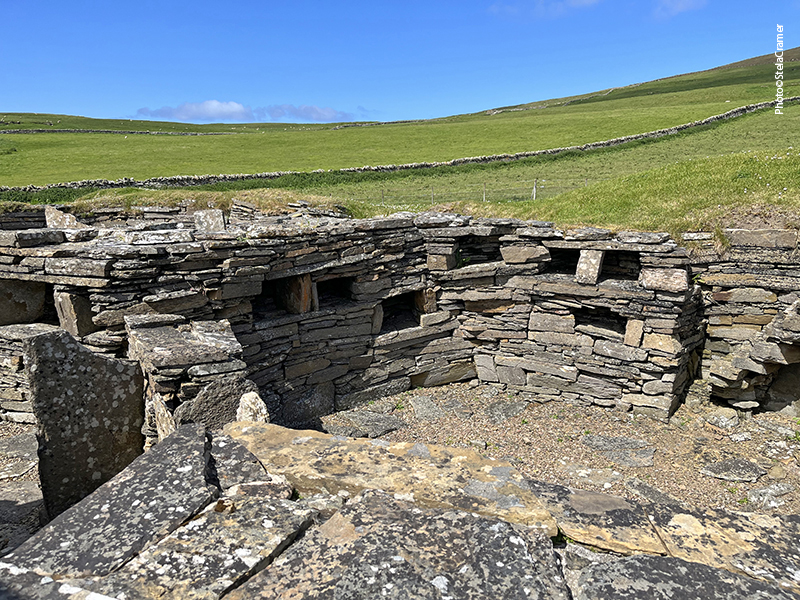
Edificações externas / Outer buildings

As estruturas externas para acomodação, armazenagem e ferraria foram acrescentadas posteriormente, pois foram construídas por cima do fosso interno original.

External additional structures used for accommodation, storage and iron working. These were added at a later date, as some were built over the original inner ditch of the landward defences.
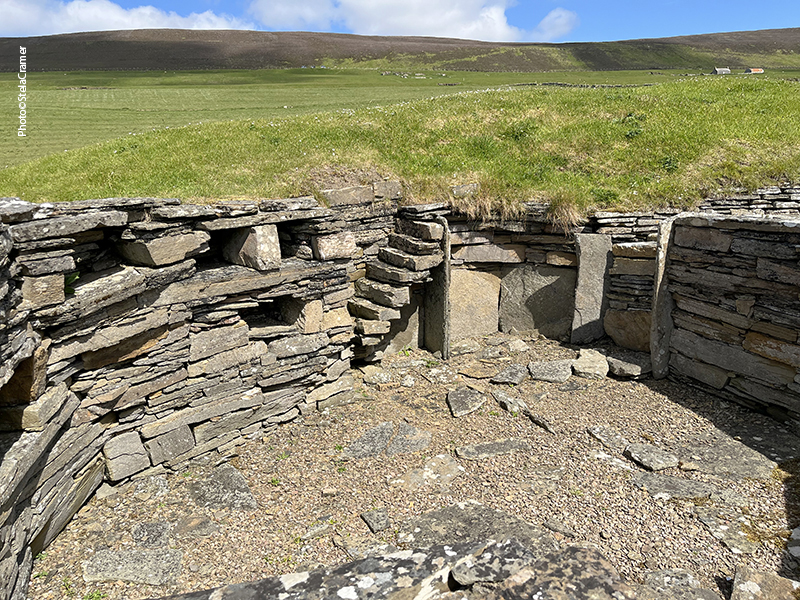
Escavações em 1930 encontraram uma notável quantidade de artefatos, incluindo ferramentas de pedra e de osso, associadas ao processamento de grãos, fiação e tecelagem; fragmentos de cadinhos e moldes indicativos de trabalho em bronze. Cerâmica e pedaços de tigelas Romanas foram especialmente importantes para os arqueólogos, como prova de que estes Brochs estavam habitados na época em que a região tinha ligações comerciais com o Império Romano. Isto confirma o que escreveu o historiador romano Eutropius: que o Rei de Orkney havia se submetido ao Imperador Claudius em 43 DC.

Archaeologists digging here in the 1930s found a remarkable array of everyday artefacts, including stone and bone tools, associated with grain processing, spinning and weaving; pieces from crucibles and moulds, indicating bronze-working. Pottery and fragments from Roman vessels had special interest to archaeologists, as evidence that these Brochs were still in use by the time the area had trading links with the Roman Empire. This corroborates Roman historian Eutropius, who wrote that the king of Orkney had submitted to Emperor Claudius in AD 43.
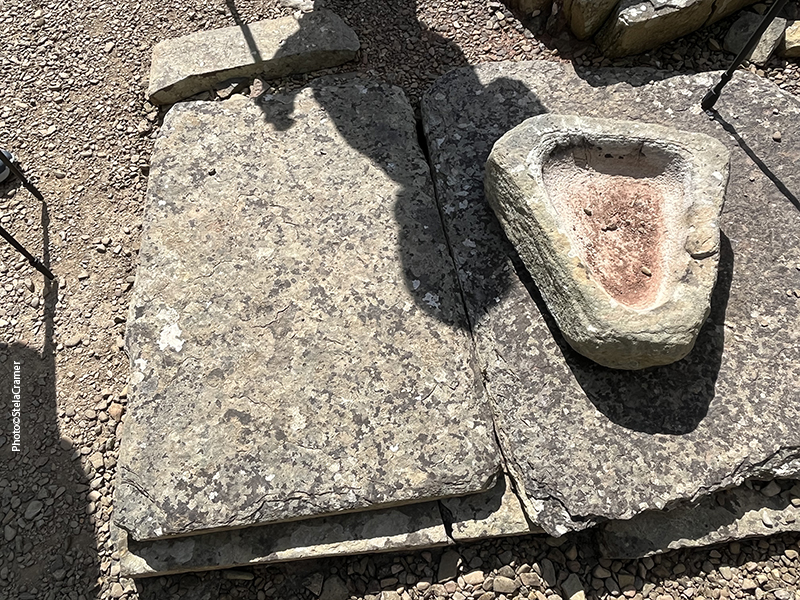
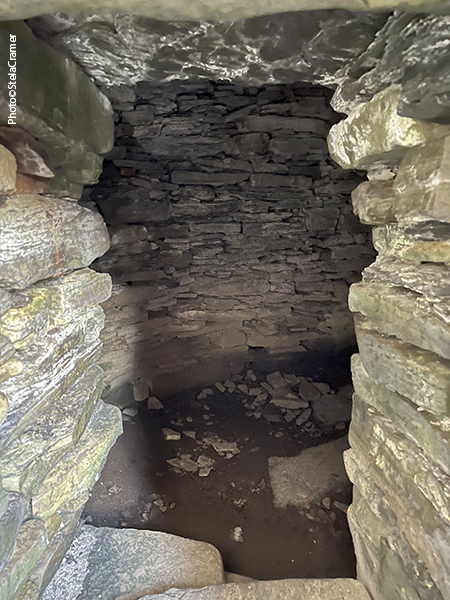
Câmaras no interior das paredes / Chambers inside the walls

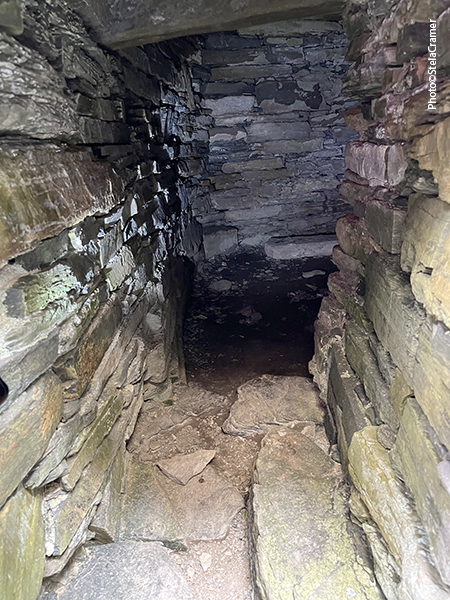
As grossas paredes continham escadas para os andares superiores.

Within the thickness of the walls, stairs gave access to the top level and upper floors of the broch.
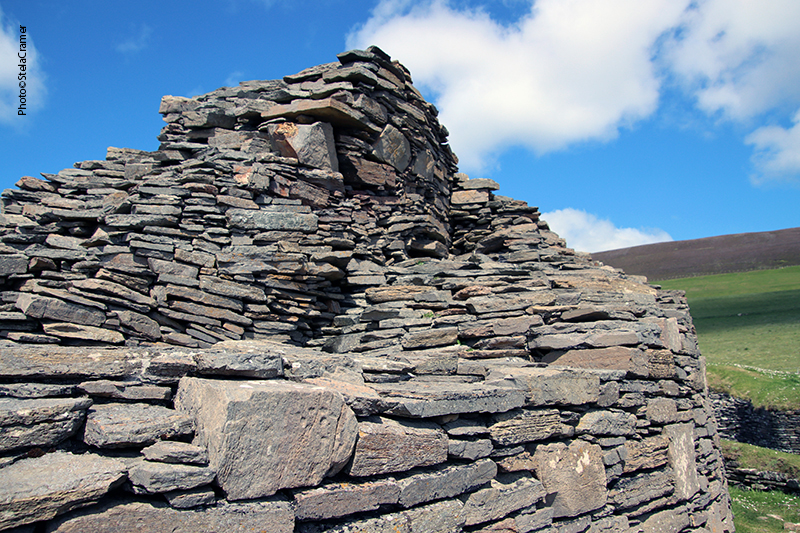
A torre tem 9 m de diâmetro interno, cercada por paredes de 4,5m de espessura, atualmente com 4,5m de altura. Originalmente teria o dobro ou mesmo o triplo dessa altura. /
The Broch tower has an internal diameter of 9 metres within a wall 4.5 metres thick, which still stands to a height of over 4 metres. Originally it would have risen to two or three times this height.
Patrick e senhoras do grupo / Mr. Patrick and some of the ladies in the group
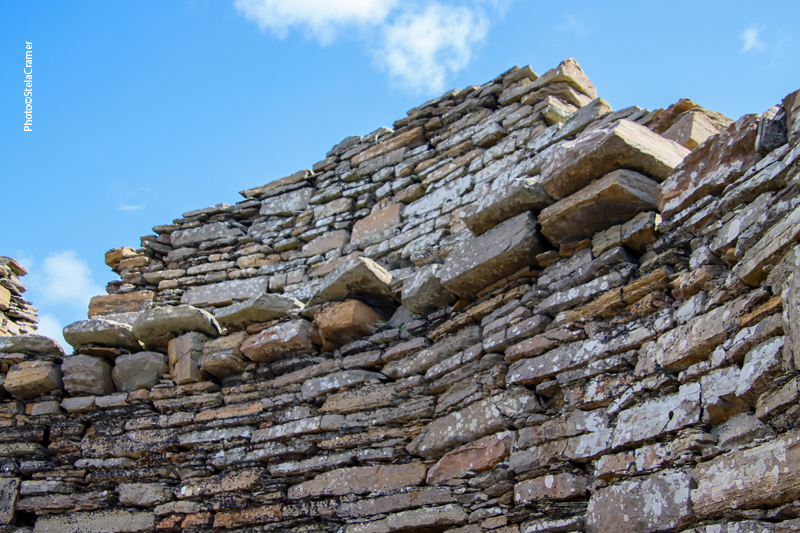
A impressionante alvenaria que se mantém firme através dos séculos / Impressive stonemasonry, keeping strong throughout the centuries

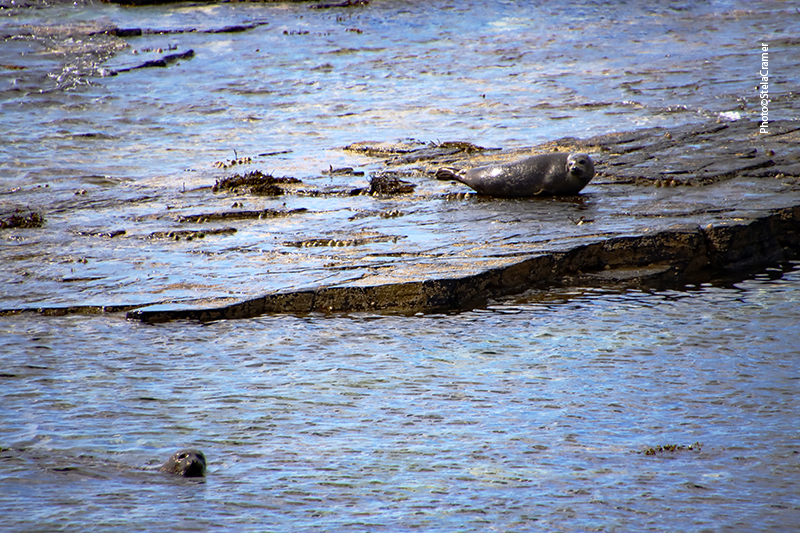
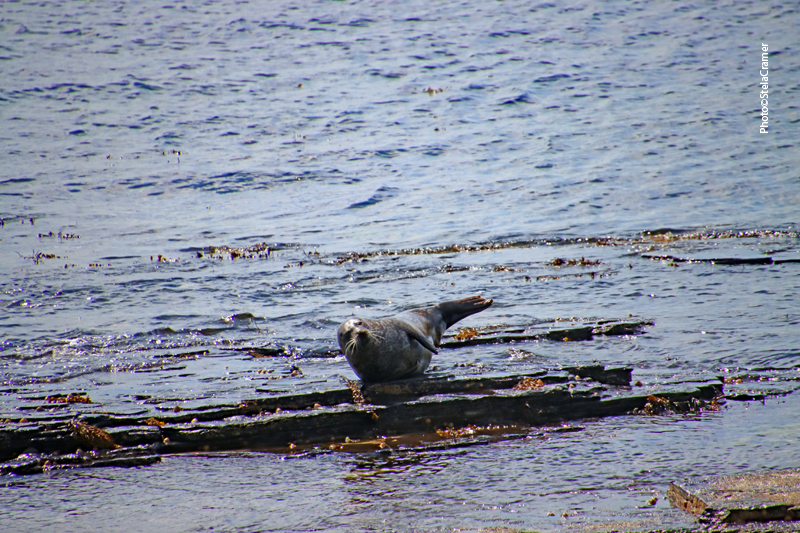
Vamos prosseguir pela costa, rumo às demais escavações existentes em Midhowe. Adivinha quem nos espera no caminho???

Let’s move on by the shore, towards Midhowe’s other excavations. Guess who’s waiting for us on the way?

Hello, lovely!

Read Full Post »


Casas de pescadores em Peel / Fishermen’s houses in Peel

Nosso segundo dia em Peel começou com um super café da manhã. Há dois dias comíamos basicamente sopa ou fish and chips… e muita cerveja. Assim, fomos surpreendidas por uma quantidade de especiarias locais, trazidas à mesa, nada de buffet. A própria June, dona do B&B, veio nos explicar que aquele queijo vinha de uma fazenda próxima e as geléias eram produzida localmente segundo uma receita de família. Podíamos escolher entre três ou quatro opções de pratos quentes à base de ovos frescos e/ou defumados como salmão, bacon e arenque (o famoso Manx Kipper, cuja produção vem do século XIX, sendo a mais importante indústria local).

Our second day in Peel started with a super breakfast. We hadn’t eaten properly these days, basically soup or fish and chips…and pints of beer. Thus we were amazed at the local delicacies brought to our table. No buffet. June, the B&B’s owner herself, was there to explain that the cheese came from a dairy farm nearby and the marmalades were locally crafted according to a traditional family recipe. We could choose between three or four hot dishes of fresh eggs and/or smoked salmon, bacon or herring (the famous Manx Kippers, that have been produced in Peel since at least the 19th century and were the Island’s main industry).

Saímos bem nutridas para pegar um ônibus até o aeroporto, onde ficava a locadora. Tínhamos reservado um carro, pois nessas ilhas é o melhor transporte, uma vez que tudo fica afastado. Caminhamos pela orla, subimos a Castle Street, admirando as casinhas e as ruas estreitas e sinuosas e, como nosso ônibus ia demorar, tivemos tempo de visitar a Catedral, ao lado do ponto final.

Well nourished, we left to take a bus to the airport, where the car rental facilities were located. We had booked a car, the best transport because, in such islands, everywhere is too far.
We walked along Marine Parade and went up Castle Street, admiring the lovely houses and narrow winding lanes. The bus stop was next to the Cathedral, and we had time for a short visit.

Reproduções de cruzes medievais na Catedral.
Reproductions of medieval Manx crosses at Peel Cathedral

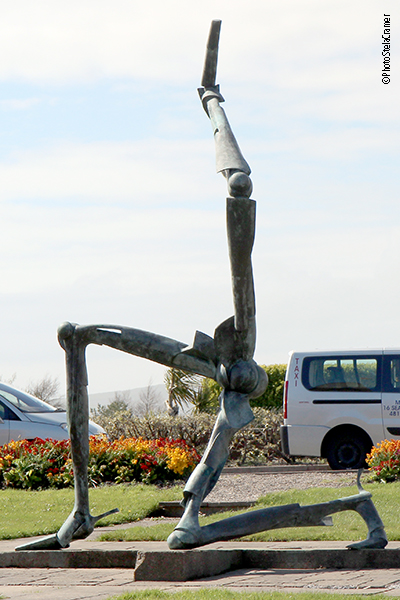
Escultura de Triskalion no aeroporto de Mann – Nosso carro alugado! /

Triskalion sculpture in Isle of Mann airport / Our rental car

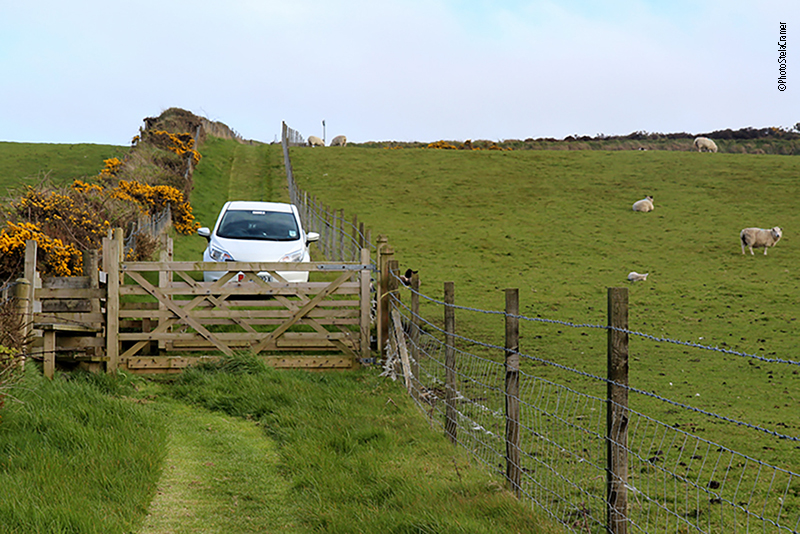
O tempo estava bom, mas até chegar no aeroporto, fazer todo o processo de alugar o carro e efetivamente sair de lá com ele, nuvens escuras já encobriam todo o céu.O plano era visitar The Braaid, um sítio arqueológico que ficava no caminho de volta a Peel. Pega-se menos de 1 km de estradinha de terra ao sair da rodovia. Estacionamos, ou melhor, largamos o carro em frente à porteira que dá acesso ao local, pois a estrada estreita não permitia qualquer manobra. Chegamos lá pouco antes da chuva, que felizmente não foi muito forte e parou em poucos minutos.

Weather was apparently good when we boarded the bus. But until we arrived at the airport, found the car rental, went through the rental process and actually leave with the car, dark clouds already covered the sky. Our plan was to visit The Braaid, an archaeological site, on our way back to Peel.
From the highway you must turn into a dirt road; half mile down the slope it ends in front of a rough gate that opens to the site. There we parked, or better, we just left the car as it was because the narrow path didn’t allow maneuvers. We got there a bit before the rain that, fortunately, wasn’t so heavy and stopped soon.

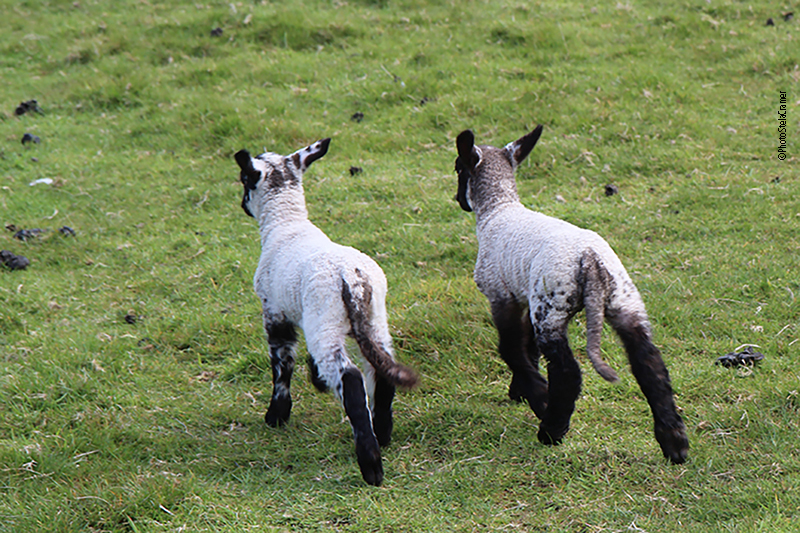
O sítio fica no meio de um pasto cheio de ovelhas, que pastavam felizes com seus filhotes. Estávamos na primavera – estação em que nascem as ovelhinhas.

The site is surrounded by fields were sheep were happily grazing with their offspring .It was springtime – lambing season!

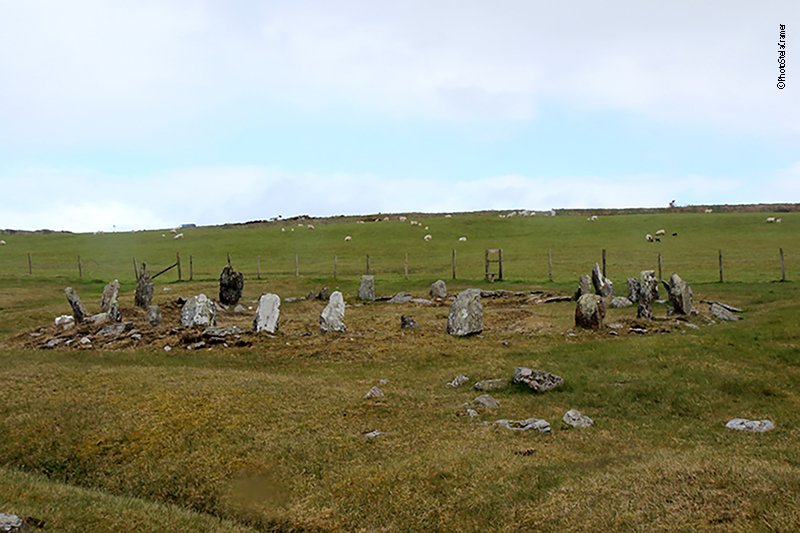
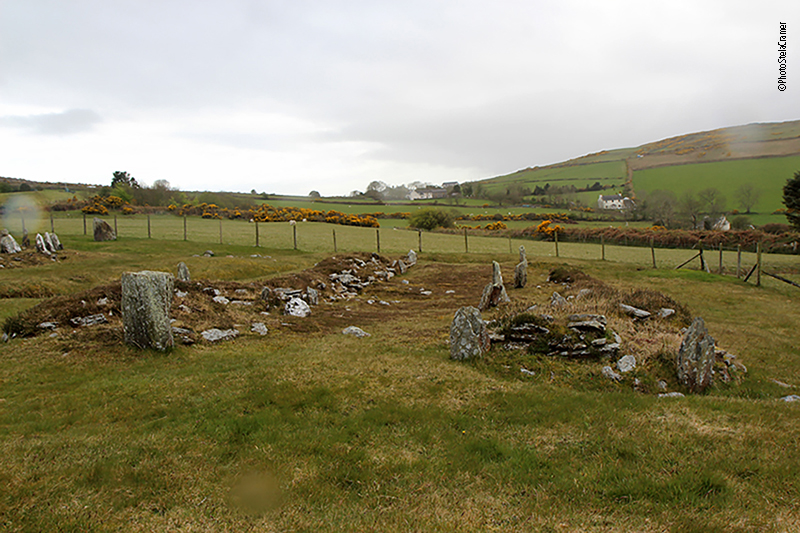
The Braaid consiste em uma fazenda abandonada onde coexistiam uma casa redonda da Idade do Ferro, duas casas compridas estilo Viking

The Braaid contains an example of an abandoned farmstead comprising of, an Iron Age round house, two Norse long houses, Iron Age buildings and Viking styles that were used together and survive today.
A casa redonda da Idade do Ferro / The Iron Age round house
As construções estiveram em uso até o século XI ou XII / The buildings had occupation until the 11th or 12th century AD

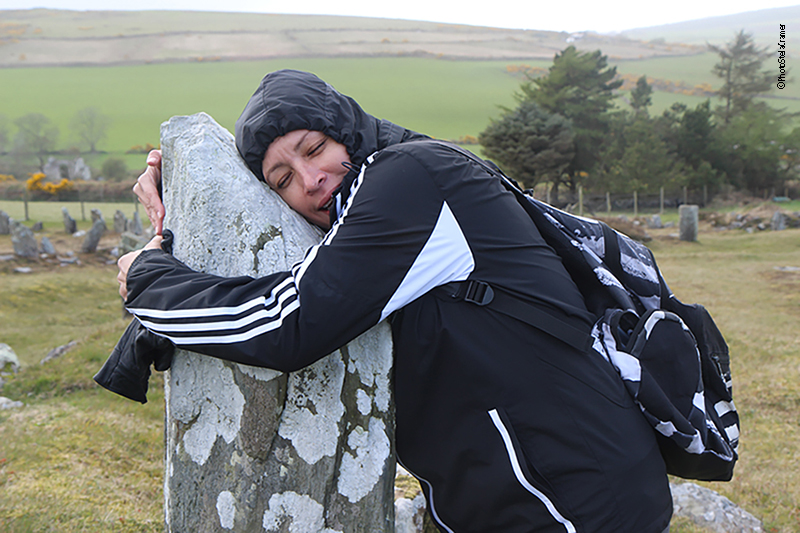
Vicky estava emocionadíssima pois este era o sítio mais antigo a que tínhamos chegado até então.

Vicky was thrilled because this was the most ancient site we had visited so far.

Vistas da casa redonda / The round house from different angles

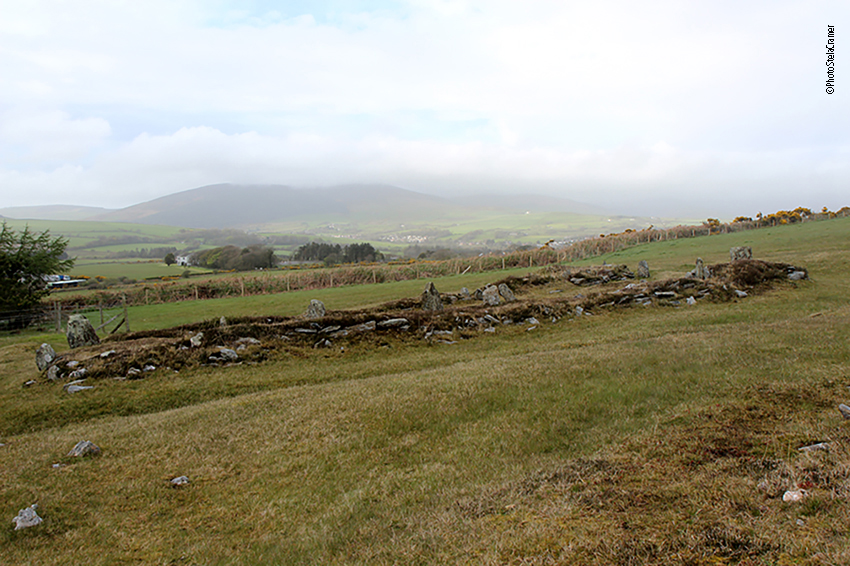
Uma das casas longas mede cerca de 20 por 9 metros, internamente. A outra era um curral, medindo externamente cerca de 18 por 8 metros. / One of the long houses is nearly 20 meters long and 9 m broad internally. The other was a cattle byre, measuring almost 18 by 8 meters externally.

Por um instante, uma pincelada de azul surgiu no céu e pudemos dar um tempo apreciando a paisagem rural ao redor de The Braaid: pastos salpicados por bosques, casas e colinas na distância. Porém isso não durou muito. O manto de nuvens cinzentas logo se fechou novamente, e decidimos pegar a estrada antes que começasse a escurecer.

For a brief moment, a bit of blue brushed the sky, and we could better appreciate the rural landscape around The Braaid: pastures sparkled with woods, some houses and hills in the distance. But it didn’t last long. Dark clouds overtook the scene, so we wanted to hit the road before it got dark.

Embora o carro tivesse GPS, não conhecíamos a estrada, e era a primeira vez que eu estava dirigindo na mão inglesa. Então voltamos pelo pasto até a porteira, onde tínhamos deixado o carro.
A estradinha de terra tinha virado um atoleiro, e teríamos que ir de ré – ladeira acima – até o asfalto.

It was the first time I was driving English way, on the right. Although the car had a GPS, we didn’t know the roads, so we walked back to the car.
The dirt road had become a bog, and we’d have to cross it in reverse, up the slope, to reach the paved road.

Read Full Post »