Feeds:
Posts
Comentários

Posts Tagged ‘tintagel’


Vista de Tintagel / Landscape

Vista de Tintagel / Landscape

Domingo, dia seguinte, enquanto tomava o último café no B&B ouvi a conversa de duas hóspedes – mãe e filha – que estavam de saída para Leiceston. Subi para pegar minha mala e já ia descendo quando ouvi o motor do carro sendo ligado e pude vê-lo saindo portão afora junto com minha chance de conseguir uma carona. Paciência, eu não ia mesmo para Leiceston. E pedir carona não significa necessariamente obtê-la, pensei enquanto me dirigia ao ponto de ônibus. Lá fiquei plantada até que um tempão depois percebi que havia confundido os horários de ida e volta. Por fim pedi ajuda a um passante e foi quando me dei conta do pior: estava olhando o horário dos dias de semana, e era domingo. Pouquíssimos ônibus circulavam, um tinha acabado de passar mas o perdi por julgar que ia na direção oposta; o próximo era só dali a quase três horas.

Next day was Sunday, and as I had my last breakfast in the Tintagel B&B two other guests were talking, and I noticed they were mother and daughter, just about to take the road to Leiceston. I ran to my room to grab my suitcase and was coming down the stairs when I heard the engine being turned on. I could still see the car – and my chance to get a ride – leaving through the gate. Anyway, I wasn’t going to Leiceston, and ask for a ride doesn’t mean mandatorily get it, I told myself on my way to the bus stop. There I stood for a long time until I realized I had mistaken the arrival and departure schedules. And worst, only when a passer-by came to my help I realized I was reading the schedule for  weekdays… and it was Sunday. Just a few buses were running, I had just lost one, thinking that it was going the opposite way, and next would come in more or less three hours.
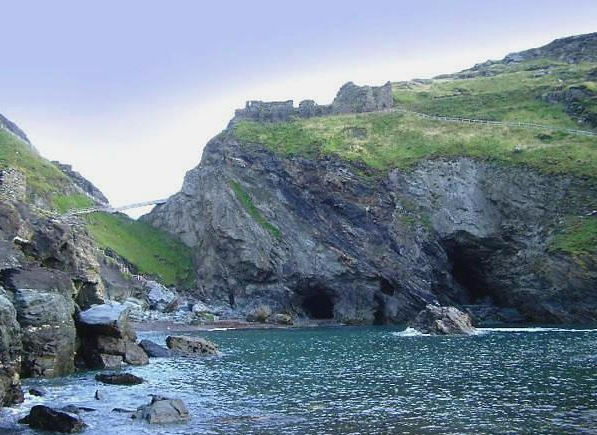
Outra vista da praia / Another beach landscape

Outra vista da praia, no alto o castelo / Another beach landscape, the castle on top

Uma placa indicava Albergue da Juventude para o outro lado, talvez eu devesse ter ido para lá em vez de viajar naquele dia, mas não o fiz. Acabei entrando no maldito ônibus, molhada e irritada porque começara a chover. Tinha comprado o livro Le Morte d’Arthur, o clássico de Sir Thomas Malory, no King Arthur’s Halls e, para ser sincera, era muito chato e ainda por cima um tijolo. Mas era o que eu tinha, fui lendo na viagem. O pão e o gorgonzola na mochila já cheiravam levemente azedo. Era preciso verificar constantemente se a conserva de peixe na mochila não estava derramando para terminar de empestear minhas roupas, a essa altura todas sujas e por lavar.

A sign indicated the way to a Youth Hostel, maybe I should had given up travelling that day and gone there instead, but I did not. Eventually I boarded the damned bus, angry and wet, because the rain had started. The book Le Morte d’Arthur, by Sir Thomas Malory, which I had bought at King Arthur’s Halls was boring and thick as a brick, but it was the only one I’d got to read on the way. The bread and gorgonzola cheese were not exactly stinking, but a bit sour and I had to mind the fish preserve in a backpack pouch not to spill over my clothes, turning filthy what was already muddy and unwashed.
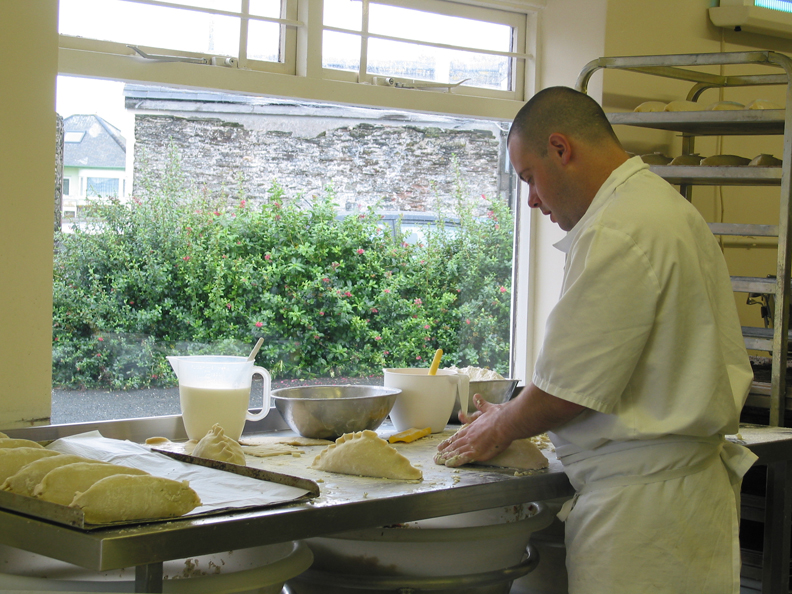
Uma especialidade local que as pessoas adoram mas eu achei uma gororoba: Cornish pasties /  a regional specialty. People love it but I found it awful

Uma especialidade local que as pessoas adoram mas eu achei uma gororoba, é massa recheada de batata misturada com um pouco de outras coisas: Cornish pasties / a regional specialty. People love it but I found it awful, a pasty filled with potatoes mixed to a bit of something else

Com todo esse bom humor, cheguei ao fim do mundo, que se chama Bodmin. O ponto final ficava no meio do nada (as estações de trem, pelo contrário, são sempre o centro dos lugares). Ali esperei mais duas horas por outro ônibus para o centro. De vez em quando, passava um ciclista, mas mais ninguém. A cidade faz parte do Camel Trail, uma trilha para bike. A ficha caiu quando, ao saltar na praça principal e arrastar a mala até o Centro de Informação Turística, dei com a porta fechada. Era domingo. Tudo que havia era uma vitrine com panfletos, desses que tem um mapa e telefones de hotéis e pousadas. Já eram quase quatro da tarde. Havia um telefone público, dali liguei para vários números, nenhum atendeu. Definitivamente, viajar domingo na Inglaterra é a maior roubada.
In this cheery mood, I arrived at World’s End: Bodmin. The last bus stop was in the middle of nowhere (train stations, on the contrary, are always the heart of places). There I waited more two hours for another bus, going downtown. From time to time a biker passed by, because the Camel Trail crosses this town. But no one else. When, at last, I dropped off in the main square and hauled my suitcase  to the Tourist Information Centre… the door was closed. It was Sunday. There were only booklets in a shelf, those with the city map surrounded by ads of hotels and B&Bs. It was about 4 p.m. From a public telephone I called many of those numbers, but no one answered. Definitely, travel in England on a Sunday is trouble.
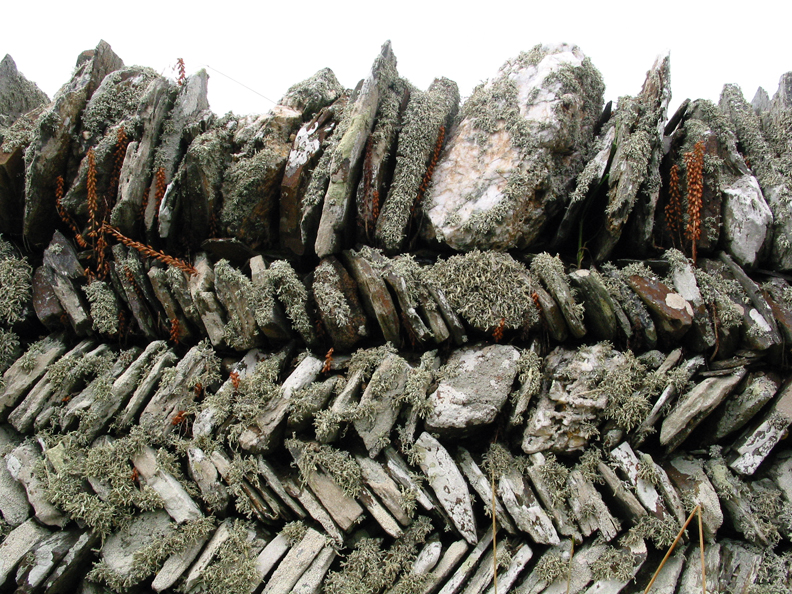
Antigo muro de pedras, um detalhe interessante An interesting detail of an ancient  stone wall

Antigo muro de pedras, um detalhe interessante
An interesting detail of an ancient stone wall

Pelo mapa, me parecera que Bodmin era perto do Dozmary Pool onde Arthur, gravemente ferido, devolveu a Excalibur à Dama do Lago. Em seguida foi levado de barca para Avalon. Depois disso, as brumas se fecharam para sempre, tornando a ilha sagrada inacessível.
Eu seria capaz de jurar que o encantamento se estendera a Bodmin, pois parecia uma cidade fantasma. Não havia uma alma na rua; às poucas que passaram pedi informações e todas me disseram coisas erradas. Ninguém nunca tinha ouvido falar no Dozmary Pool. Cheguei a pensar em pernoitar ali e prosseguir na manhã seguinte. Mas só o que havia por perto eram dois hotéis caros e um pub pulguento que alugava quartos no andar de cima, onde estava sentado um grupo e um velho bebum resolveu me dizer gracinhas. As pessoas que estavam com ele até pediram desculpas. O caixa do pub procurou o lago no mapa e calculou que um taxi para lá seria uma fortuna, algo como 150 libras; não havia outra condução e já era quase seis da tarde. Por fim me recomendou ir de trem para algum lugar mais perto do lago. Para a estação eu devia pegar um ônibus… no mesmo ponto de onde viera, seis quarteirões adiante. Enquanto andava, começou a chover, escurecendo de vez a tarde.

For what I’ve seen in the map, Bodmin seemed to be close to the pool where Arthur gave Excalibur back to the Lady of the Lake. After that he was taken by barge to Avalon. Then, the mists were forever closed, and the holy island became inaccessible to mankind. I could swear the spell was spread over Bodmin too, because it looked like a ghost city. There wasn’t a single soul on the street, except by a few I addressed and got back wrong indications. Nobody had ever heard about Dozmary Pool. I considered spending the night there to start fresh next morning but around there were only two expensive hotels and a creepy pub with upstairs fleabag rooms for rent. A bunch of people were sitting there, amongst them an old drunk man who started saying naughty things to me. His companions apologized, and the barman took a look at the map to find the pool. He estimated a taxi would charge me not less than 150 pounds, because there would be no other transport and it was almost 6 p.m. Finally, his advice was “take a train to somewhere closer to the pool”. I should take a bus to the train station… in the very place I had come from, six blocks away. While I was walking back there, from the grey clouds rain started to pour, turning the afternoon into dusk.
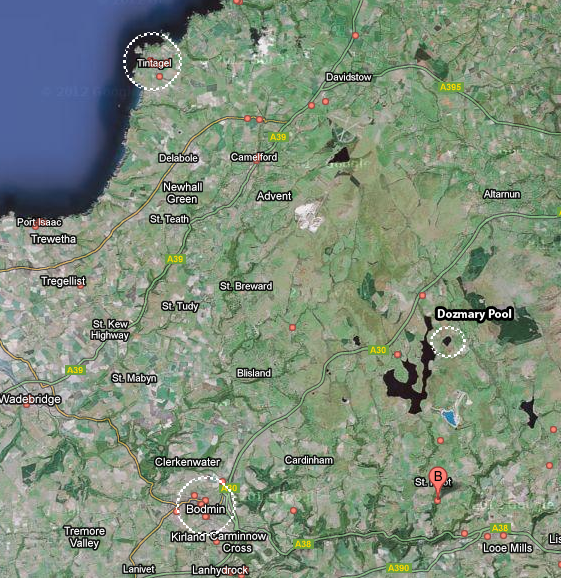
mapaCornwall

De Bodmin para o Dozmary Pool só se vai de carro. Não tem ônibus nem trem. O povoado mais próximo chama-se Bolventor, na beira da estrada, a cerca de 2 km do lago.
From Bodmin to Dozmary Pool there’s no train nor bus, you can only reach it by car. The closest village is called Bolventor, by the road side, about 1 mile from the lake

Depois de quarenta minutos plantada no ponto, finalmente surgiu um anjo da guarda. Uma moça, também de mochila nas costas, viu minha cara de desespero e parou para dizer-me que àquela hora não passava mais nenhum ônibus. Eu deveria pegar um taxi até a estação de trem, senão só chegaria lá no dia seguinte. Minutos depois, apareceu um taxi. E parou, nem acreditei. Paguei o valor da corrida com satisfação, pois queria sair logo dali, onde minha vida parecia ter estagnado, comendo pão velho com gorgonzola ardido e esperando uma condução que não passava.

After forty minutes standing at the bus stop, at last a guardian angel appeared. A backpacker girl, she saw my desperate face and stopped to tell me I should take a taxi to the train station or anywhere else I meant to go, otherwise only next day I’d get there. There were no more buses at that time. I couldn’t believe my eyes when, five minutes later, a taxi appeared. And stopped for me! I paid the charge happily, because all I wanted was to get away from that fucking place where my life was stuck, eating hard bread with sour cheese, waiting for a transport that wouldn’t come.
Read Full Post »


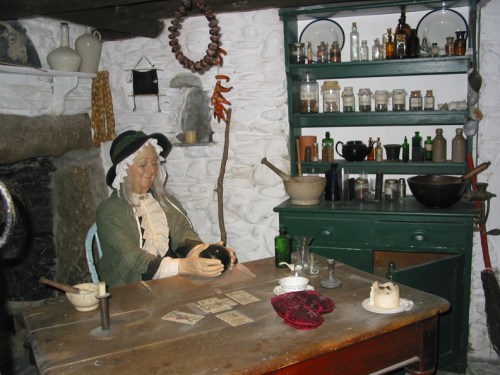
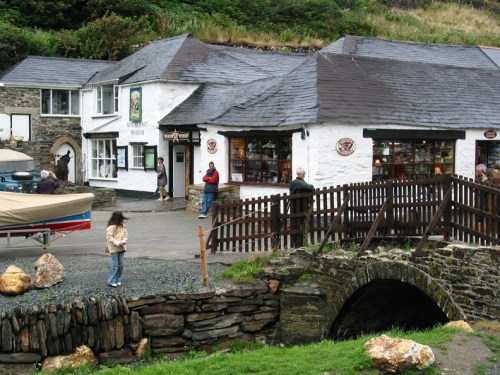
Witchcraft Museum, Boscastle, Cornwall, UK

Witchcraft Museum, Boscastle, Cornwall, UK

Boscastle é uma cidade próxima a Tintagel, que sofreu uma inundação em 16 de agosto de 2004 – um ano antes da minha ida. As paredes das casas ainda tem a mancha do nível que a água atingiu. Lá fica o Witchcraft Museum – Museu da Bruxaria. Por essa razão, resolvi visitar o lugar, mesmo debaixo de uma chuva torrencial. Algumas peças do museu se perderam devido à inundação, mas o lugar é interessante assim mesmo, bastante sinistro, cheio de artefatos de magia negra, vudu e afins. Tinha raízes de mandrágora, seres mumificados, objetos, painéis e salas temáticas, tudo meio no escuro para completar o clima.

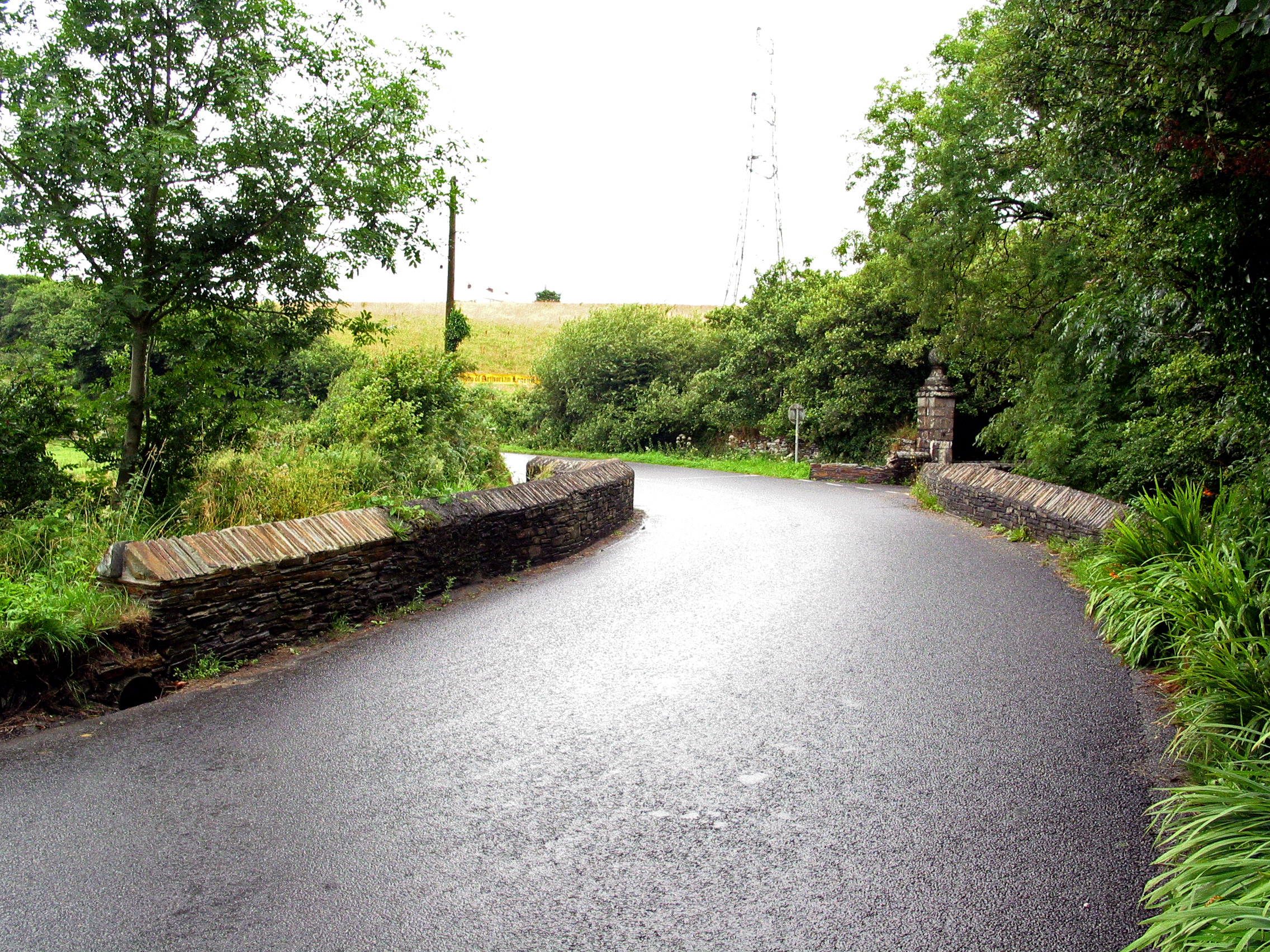
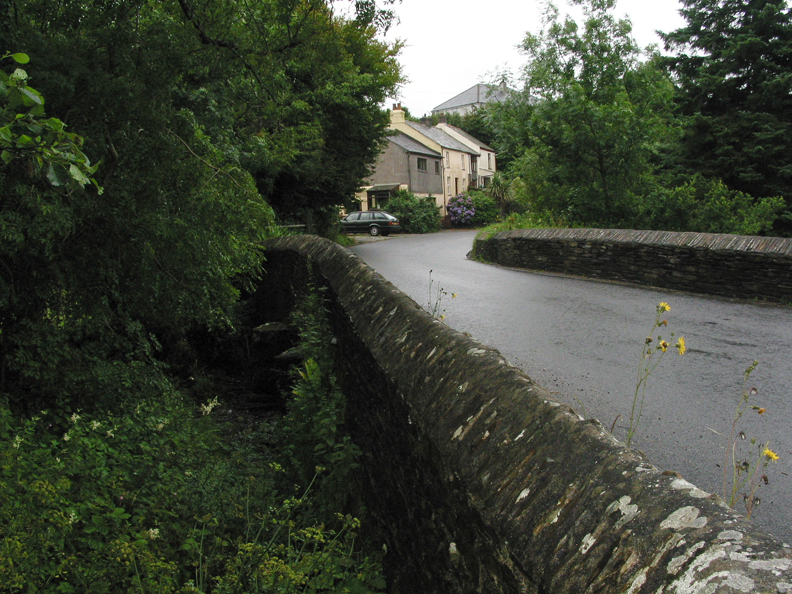
O ônibus para em frente à ponte, não tem como errar. / The bus stop is right across this bridge, so you can't miss the Museum.

O ônibus para em frente à ponte, não tem como errar.
The bus stop is right across this bridge, so you can’t miss the Museum.

Boscastle is a small town near Tintagel that suffered a terrible flood on 16 August 2004 and, one year later, in all buildings the water level patch still remains. There is located the Witchcraft Museum. For this reason I decided to face a torrential rainfall and visit the place. Some pieces of the museum were lost, but it’s very interesting anyway. A sinister atmosphere and assorted objects of black magic, voodoo and related stuff. The windows showed mandrake roots, mummified little beings, tools and objects. Panels and scenic rooms, barely illuminated, add to the experience.

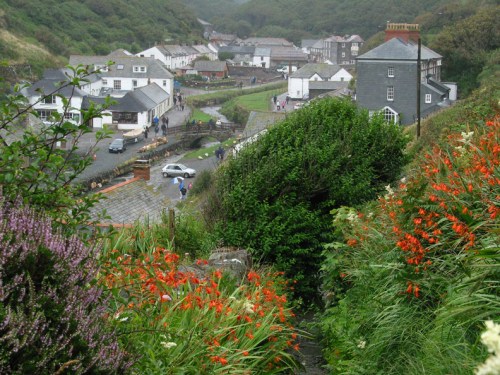
Vista de Boscastle / Overview

Vista de Boscastle / Overview

boscastle3

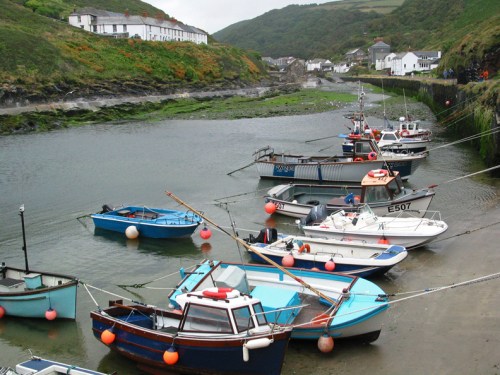
O porto / Boscastle Harbor

Para mim, acostumada a pensar a magia sempre branca, para o bem, foi estranho me deparar com o lado negro da Força. Eu tinha esquecido completamente que desde os tempos ancestrais pessoas invocam o sobrenatural para fazer mal aos outros. Até hoje isso acontece, apesar de tanta suposta evolução. Nossa sociedade desenvolveu a tecnologia e a espiritualidade de forma totalmente desproporcional.

Barcos / Boats in Boscastle

Barcos / Boats in Boscastle

As I’m used to think always in white magic, it was weird to face the Dark Side of the Force. I had completely forgotten that ever, since ancient times, some people used to invoke otherworldly powers to harm others. It still happens, despite our supposed evolution. Society developed technology and spirituality so disproportionally.

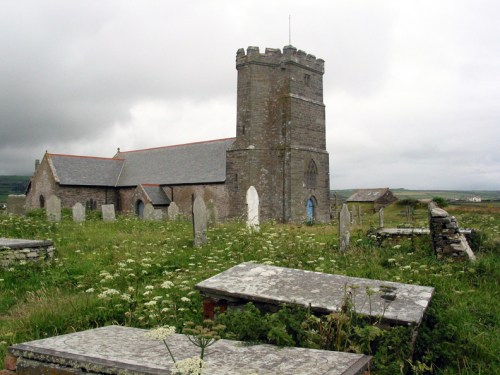
Old Parish Church, consacrated to / dedicada a St. Materiana.

Old Parish Church, consacrated to / dedicada a St. Materiana.

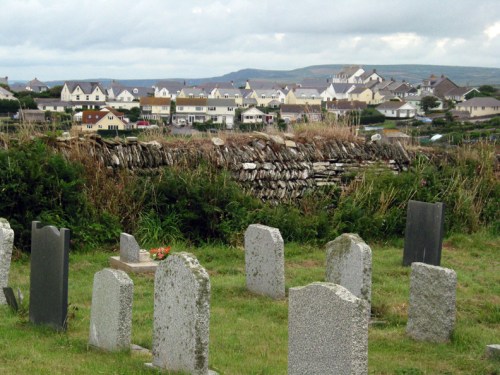
Tintagel Graveyard

Tintagel Graveyard, surrounding the Church
Cemitério em volta da igreja

Estava com fome na volta para Tintagel, mas não fui comer no pub porque havia comprado muita comida para o piquenique.e estava tudo quase intacto na mochila: pão, gorgonzola e conserva de peixe que durou três dias. No último dia em Tintagel, percorri uma trilha seguindo a encosta até a Old Parish Church, uma igreja de pedra no alto de uma escarpa, em frente ao mar. No cemitério atrás da construção, túmulos antigos com cruzes celtas desfiguradas pelo tempo se misturavam aos mais recentes. Uma boia sinalizava o local de descanso de um velho marinheiro. Empurrando a porta, penetrei na igreja às escuras, de pedra fria, como os túmulos.

De frente para o mar Home with a view

Eternidade de frente para o mar / Home with a view forever

TintagelOldParishChurch02

Old Parish Church, surrounded by the graveyard – the side door . Tintagel in the distance.
A Igreja envolvida pelo cemitério – porta lateral. Longe ao fundo, Tintagel.

Cemetery in Tintagel

Cemetery in Tintagel

Back to Tintagel, I was hungry but didn’t go to the pub for dinner, because in my backpack still lingered almost all the food I had bought for the picnic: bread, gorgonzola cheese and fish preserve which I had to eat for three days. My last afternoon in Tintagel was dedicated to follow a footpath uphill to the Old Parish Church, facing the sea. In the graveyard behind the church, ancient tombs with worn out celtic crosses were surrounded by new ones. A lifebuoy assigned an old sailor’s resting place. I pushed the church door open and entered the dark nave, cold as the gravestones.

Tintagel Parish Church DoorPorta da Igreja

Tintagel Parish Church Door
Porta da Igreja


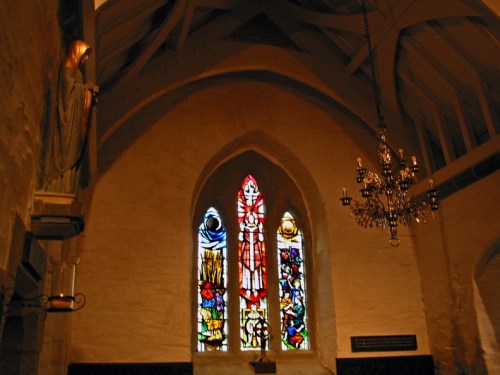
Interior / Inside Old Parish Church

Interior / Inside Old Parish Church

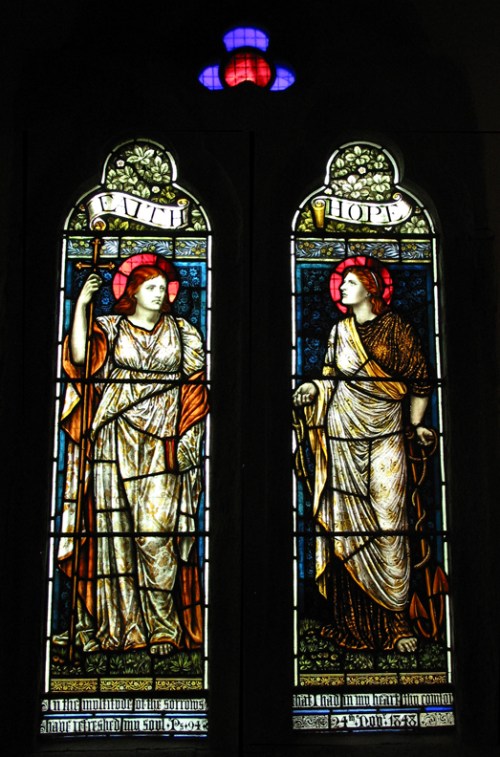
Truth and HopeVerdade e Esperança

Truth and Hope
Verdade e Esperança

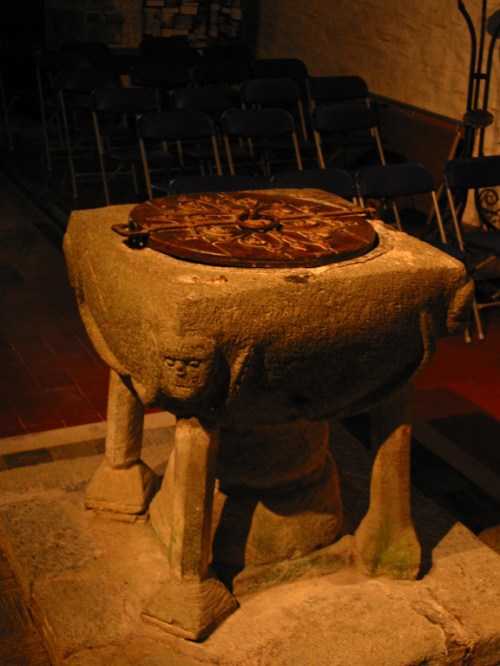
Pia batismal escavada em pedra / Baptismal font carved in stone

Pia batismal escavada em pedra / Baptismal font carved in stone


Havia uma espécie de pia batismal coberta, vitrais, uma estante cheia de postais e lindos cartões com orações antigas, desenhadas em letras góticas com iluminuras. Perfeitos para presentear pessoas. Peguei um de cada e deixei algumas moedas na caixinha. Aproveitei que estava num local de oração para fazer uma. Novamente agradeci por ter chegado ali, por saber que em casa tudo estava bem, por não precisar interromper a viagem por nenhuma razão. Meia hora depois, fui pensando enquanto caminhava de volta à cidade. Estava há dias em Tintagel, já tinha esgotado todas as atrações e nada do sol aparecer. Desisti de ficar esperando, ficaria com as fotos cinzentas mesmo. A título de consolação, comprei uma escultura deslumbrante que me chamara a atenção numa lojinha da rua principal: um anjo de um palmo de altura, com pássaros pousados nos braços abertos. Fazia parte da coleção Willow Tree e chamava-se Happiness. Perfeito. Consegui guardá-la entre as roupas na mala para não quebrar.

Felicidade / Happiness, by Susan Lordi

Felicidade / Happiness, by Susan Lordi

There was a kind of baptismal font, impressive glassworks and a shelf full of postcards and beautiful gothic cards of prayers, in illuminated hand lettering. Perfect for gifts. I chose one of each and left some coins in the box. As this was a prayer site, I took the chance to say my thanks, for having got there, for nothing had happened so far to bring me back, for knowing that everything was in order at home. Half an hour later, as I walked back to town, I was wondering. I was in Tintagel for almost a week, had gone through all attractions and still the sun refused to appear. So I gave up waiting for it and accept the grey picts. As consolation prize I bought myself a wonderful sculpture that had caught my eye the day before when I was strolling the shops in the main street. An angel, six inches high, with birds perched in its outstretched arms. It belonged to Willow Tree collection and its name was Happiness. So perfect. I carefully nested it in my suitcase, wrapped in clothes so it wouldn’t break.
Tintagel vista do cemitério/View from the graveyard

Tintagel vista do cemitério/
View from the graveyard

À noite, pela última vez fui ao pub. Um rapaz com quem minhas amigas tinham jogado sinuca perguntou por elas, mas quando soube que tinham ido embora, apenas virou as costas e saiu sem dizer oi nem tchau, grosso pakas. Era mesmo hora de partir. Resolvi tomar o rumo do Dozmary Pool, que não parecia ser muito longe dali. Uma grande roubada começava a se configurar.

At night I went to the pub for the last time. A guy my friends had played snooker with came by asking about them, but as I told him they were gone he just turn his back and left. The bugger didn’t  care to say hello nor goodbye. I realized it was indeed time to leave, and decided to head for Dozmary Pool, which didn’t seem to be so far. Big trouble was about to start.
Passeio no cemitério / Taking a walk on the dead side

Passeio no cemitério / Taking a walk on the dead side

Read Full Post »


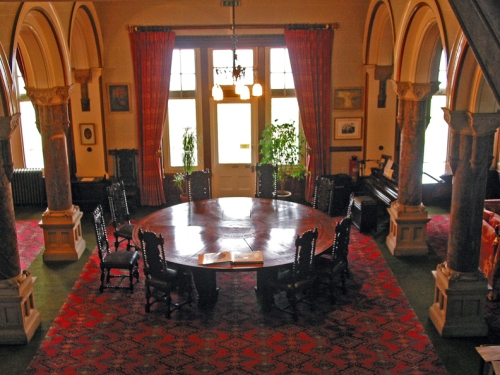
A Távola Redonda do hotel Camelot Castle / Camelot Castle Hotel's Round Table

A Távola Redonda do hotel Camelot Castle / Camelot Castle Hotel’s Round Table

Minhas duas noites no Camelot Castle já tinham se passado, portanto tratei de achar outro B&B, na avenida principal de Tintagel, pertinho do King Arthur’s Legs. Fiz meu check-out no e saí arrastando a mala. Antes porém tive a oportunidade de conhecer o dono do Camelot Castle. Era um artista plástico, Ted Stourton, que me mostrou todo o subterrâneo do castelo, onde fica seu ateliê de pintura e estúdio de música. Seus quadros são realmente lindos. Estão por toda parte no hotel, dá para perceber nitidamente os mais antigos e os mais recentes, acompanhar a evolução da expressão do artista. Ele disse que se soubesse que eu era fotógrafa, teria ficado hospedada de graça, pois o hotel acolhe artistas para desenvolver ali seu trabalho de criação. Infelizmente, tinha acabado de fechar a conta. Tempos depois, enviei mais de um e-mail solicitando nova acolhida, mas ainda não recebi resposta.

My two nights in Camelot Castle were over, so I found myself another B&B, in the main street, near the pub. When checking out, I had the chance to meet Ted Stourton, Camelot Castle’s owner. He’s a painter and showed me the castle’s dungeons where he has his atelier and music studio. His paintings are stunning indeed; they’re hanging in every wall inside the castle and taking a closer look one can see which are older and which are recent. It’s possible to notice the development of the artist’s expression. He told me that if he knew I was a photographer he would charge me nothing, because the hotel accepts for free artists at work. The place is supposed to inspire one’s creative process. Unfortunately I had just paid the bill, and he didn’t invite me to stay longer. Years later I sent an e-mail – more than one, actually- asking for free lodging while writing down my book, but I haven’t got an answer so far.

Minhas novas acomodações / My new lodging

Minhas novas acomodações / My new lodging

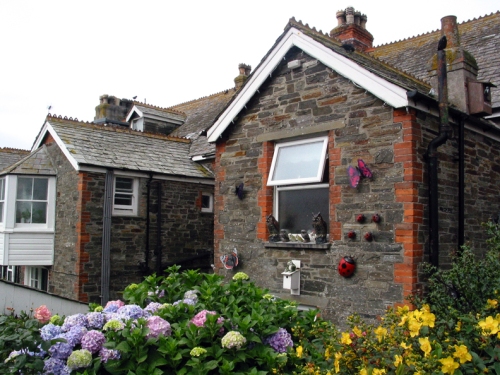
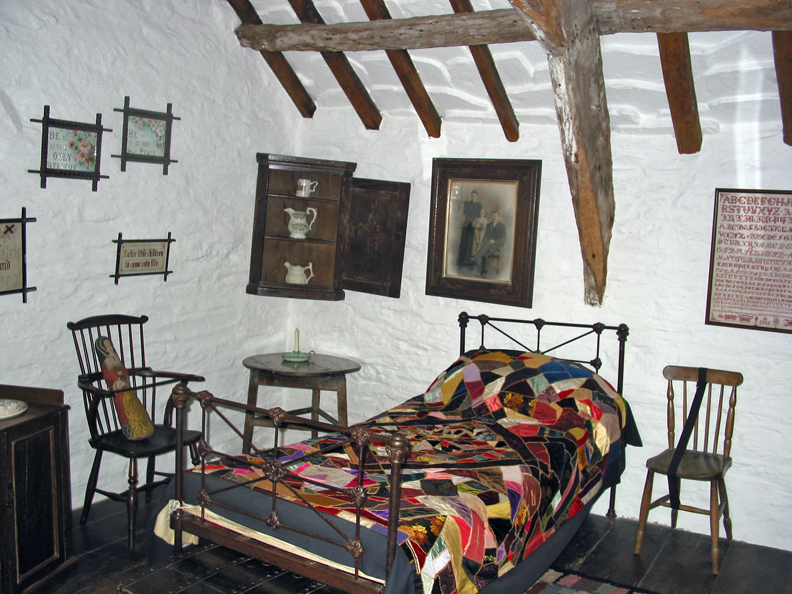
Quando Ted começou a falar sobre a Cientologia (aquela religião do Tom Cruise), insistindo na importância da leitura da Dianética, de Ron Hubbard, percebi que era chegado o momento de cair fora. A decoração do B&B para onde fui era hilária: havia borboletas de plástico colorido no jardim e dentro de casa, por toda a parte, bibelôs muito bregas. Todavia, o quarto era bom, com banheiro (acarpetado) em frente, limpinho. Servia um bom café da manhã, embora não tivesse cereais, como no Camelot Castle.

When Ted started talking about Scientology (Tom Cruise’s religion) and the must-read Dianetics by Ron Hubbard, I realized it was time to go. My new B&B was very kitsch; it had big plastic butterflies in the garden and, all over the house, cheesy pictures and bibelots. But the room was comfortable, and a clean bathroom right in front, carpeted, of course. The breakfast was good, although there were no cereals.

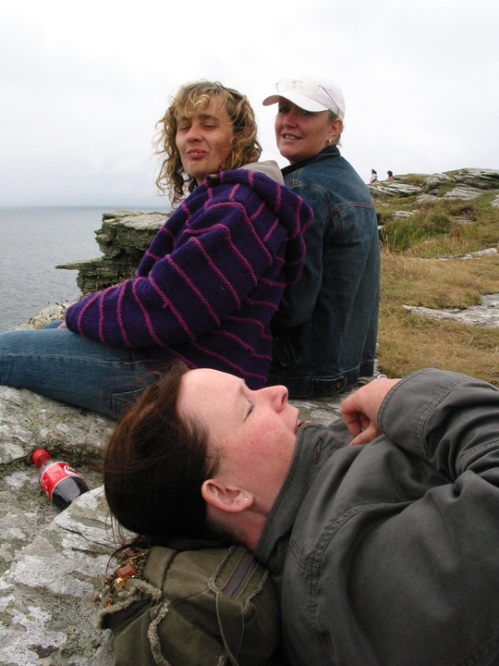
Michelle, Jewels & Kerry at Tintagel Castle

Michelle, Jewels & Kerry at Tintagel Castle

Tinha combinado de encontrar Michelle e Jewels à noite em outro pub. Quando cheguei lá, elas estavam aborrecidas com uns sujeitos que as assediavam de forma grosseira, por isso saímos dali para o King Arthur’s Legs. Tinha karaokê nessa noite. Kerry e Jewels foram jogar sinuca.Ficamos eu e Michelle na mesa e, de repente, dois caras se sentaram e nos convidaram para cantar. O mais velho engatou uma conversa com Michelle e o outro, carequinha, colou em mim. Tratava-se de uma guarnição do Exército da Escócia, que, por falta do que fazer nas férias, resolvera descer a pé de Glasgow até a Cornualha. Os soldadinhos se espalharam pelas mesas azarando as garotas. Estavam acampados no litoral a caminho de Newquay. Conversamos por horas e lá pelas tantas, o escocês já queria que eu fosse com ele para Newquay. Segundo ele, eu iria adorar caminhar pela trilha que costeia o mar, pois o visual era lindo, tudo espetacular. E eu era tão linda, ele estava tão apaixonado… quando respondi que aceitava, desde que ele carregasse minha mala, acredita que o soldado desconversou?!?! O pub já ia fechar. Saí rindo muito, abraçada com Jewels e Kerry igual àqueles três ursos bêbados de desenho animado.

I was to meet Michelle and Jewels by night, in another pub, but by the time I got there they were very upset. Some buggers were harassing them rudely, so we left to King Arthur’s Legs, where there would be karaoke. Kerry e Jewels went to the snooker table, leaving me and Michelle and, all of a sudden, a couple of guys appeared inviting us to sing with them. Soon they were sitting and we were all chatting. The older talked to Michelle and the younger, a bald one, to me. They belonged to a garrison of Royal Scottish Army who, having nothing better to do in vacations, decided to walk the coast all the way from Glasgow down to Cornwall. They were camping on the shore, on their way to Newquay, and the Scot now wanted me to go with him. I would love to walk the seaside trail, such a gorgeous landscape, and I was so beautiful, and he was so much in love… so I said yes, I would accept the invitation, with one condition, that he should carry my suitcase. Can you believe it, the soldier wavered and stepped back?!?! It was closing time, I left the pub laughing a lot, embraced with the girls, like those cartoon’s three drunk bears.

aatintagelCastle02

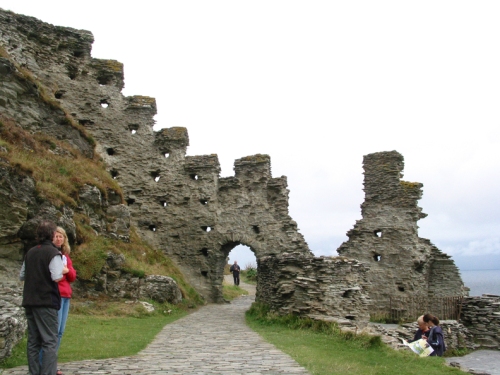
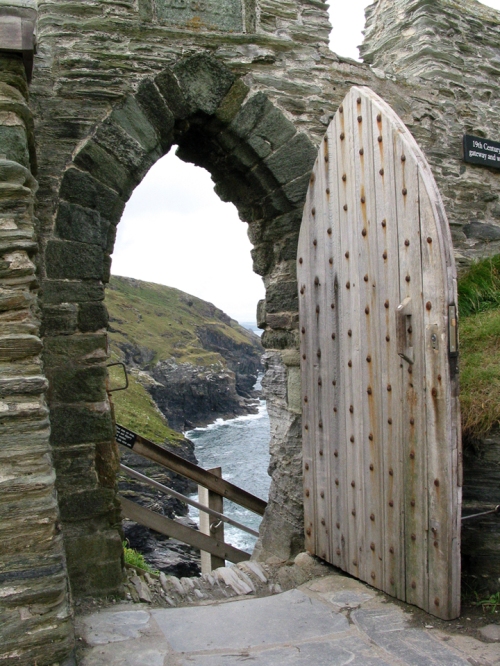
Tintagel Castle – Entrance

aatintagelCastleView1

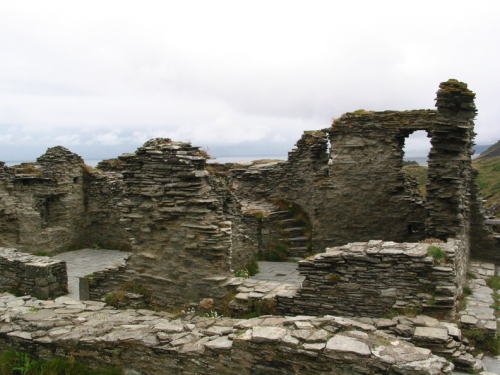
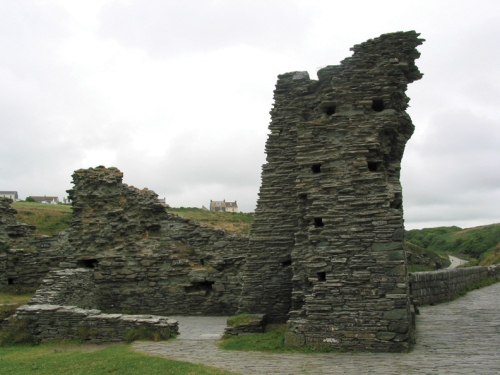
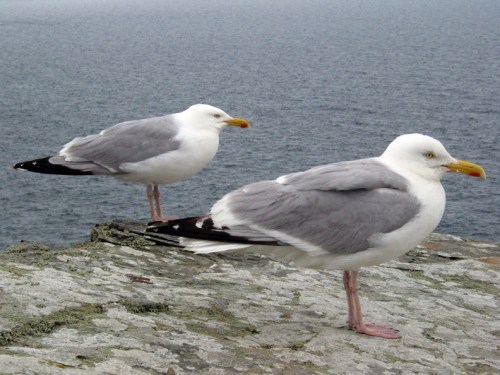
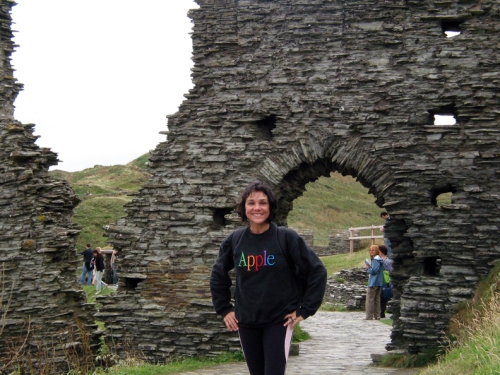
Combinamos visitar o castelo de Tintagel no dia seguinte. Faríamos um piquenique, cada uma levaria o que quisesse comer. Mas o dia cobriu-se com aquele manto cinza inglês, ameaçando chover. A verdade é que não tinha feito nenhum dia bonito ali, tirando o breve fim de tarde na praia e a primeira hora de sol da manhã seguinte. Isso me deixava frustrada. Queria fotos daquelas ruínas no lindo penhasco junto ao mar com céu azul, roxo ou laranja, qualquer cor menos cinza. Enquanto esperava minhas amigas, fiquei andando pelas ruínas. Fotografei gaivotas a meio metro de distância. Diferente das ovelhas, que se viravam e fugiam, elas praticamente posaram para mim. Não sei o que aconteceu com elas no camping, mas quando finalmente as meninas chegaram, foi só para dizer que haviam decidido ir embora naquele dia, e que nem iriam comer antes. Apenas andamos um pouco pelas ruínas.

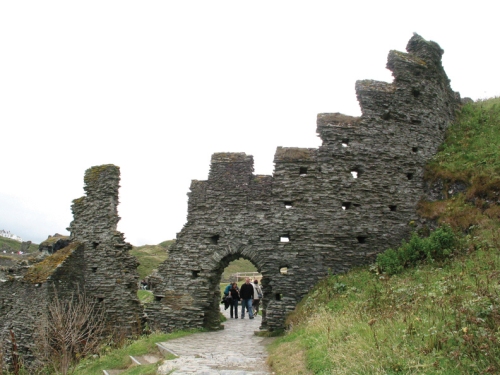
Tintagel Castle

Tintagel Castle

aatintagelCastleView

Next day we were eventually going to visit Tintagel Castle and make a picnic there. Each one should take something to eat. But the day was covered in that british gray mantle, a hard rain menacing to fall. True is, there was not a single day of good weather ever since I arrived, left alone that sunny moment in the beach when I arrived and the first hour of next morning. The rain was frustrating my plans of nice picts of those astonishing ruins upon the massive cliff by the sea. I wanted a blue sky, and I would do with a purple sky, or an orange sky, anything but that persistent grey. While I waited for my friends, I strolled the ruins taking pictures. The seagulls, unlike the sheep, were willing to be pictured, and let me come real close to them. When the girls arrived at last, they didn’t tell me what had happened in the camping, but they were leaving immediately and wouldn’t even eat. So we just walked around for a while.

aaseagulls

Fiquei chateada, querendo ir junto, mas o carro estava cheio com as três e suas coisas.  Na saída, havia uma ladeira longa e íngreme até a avenida, onde tinham estacionado. Michelle, que era gordinha, sentiu-se mal na subida e entrou numa van que cobrava duas libras para percorrer aquele trecho. Na avenida, trocamos e-mails, telefones e nos despedimos. Insistiram que eu as procurasse quando voltasse a Londres, pois Bristol não era longe e poderíamos nos encontrar novamente. Tintagel ficou mais cinza para mim quando o carro delas sumiu na distância. Aliás, todas as fotos de Tintagel ficaram cinza, pois o tempo não abria. Mas eu não iria desistir assim tão fácil.

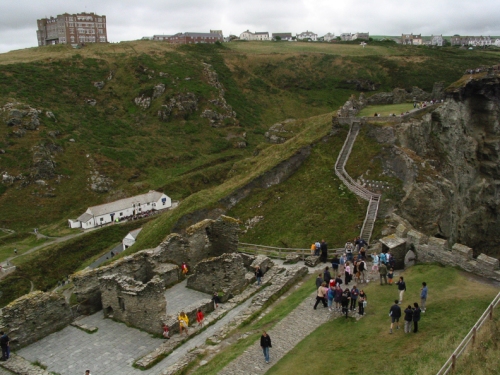
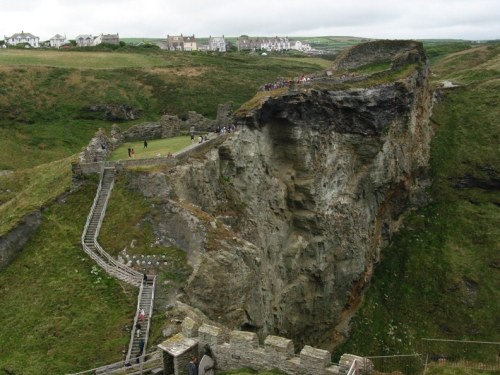
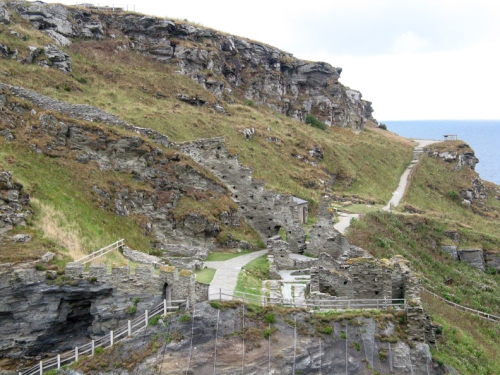
Por estas fotos dá para avaliar a subida do Castelo ao centro da cidade. / These pictures give an idea of the slope between the Castle and the main street.

Por estas fotos dá para avaliar a subida do Castelo ao centro da cidade. A entrada é pela casa branca embaixo, à esquerda / These pictures give an idea of the slope between the Castle and the main street. The entrance is through the white building down to the left.

aatintagelView

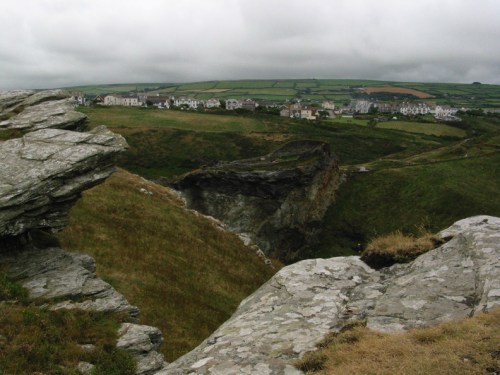
Tintagel vista do alto do antigo Castelo. Tintagel Overview from the top of the ancient Castle.

Tintagel vista do alto do antigo Castelo. Tintagel Overview from the top of the ancient Castle.

I was devastated, and would go with them if there was place for me in the car. But it was full with the three girls and their stuff. When we left the castle, there was a long steep slope to get back to the main street, where the car was parked. Michelle, who was plump, felt sick while walking and took a van to go all the way up, paying two pounds. We exchanged phone numbers, e-mails, and said goodbye. They insisted that I should call them when I got back to London, because Bristol wasn’t that far and maybe we could meet again. Grey Tintagel went darker as the car vanished in the distance. Moreover, all  photos from there were grey, because the bad weather didn’t recede. But I wasn’t giving up so easily.

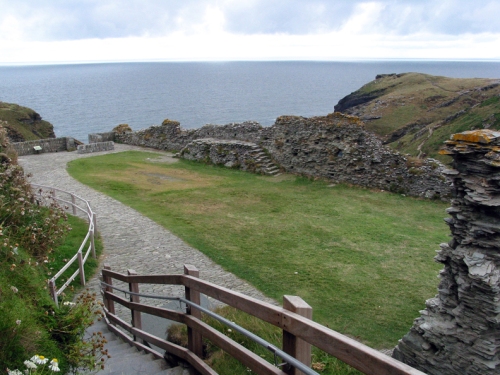
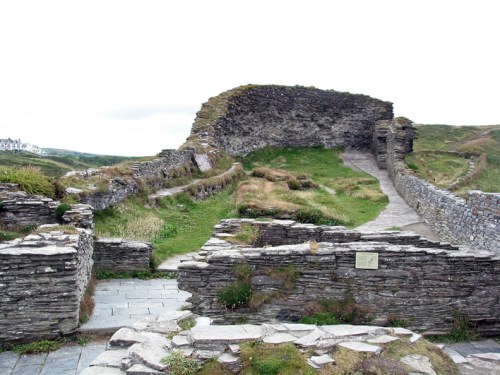
Mais vistas das ruínas./ More views of the ruins

Mais vistas das ruínas./ More views of the ruins

aacastle01

Este foi o céu mais perto do azul que consegui. /This was the closest to blue sky I was able to get.

aacastle

aacastleView

aadungeons

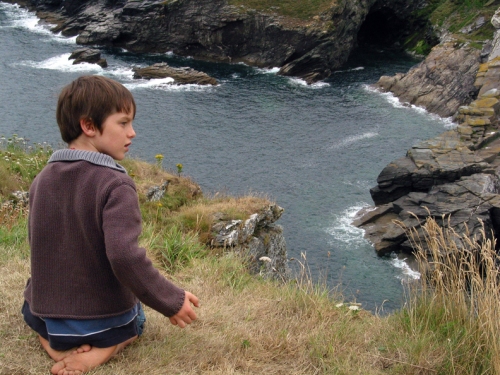
Boy enjoying the view / Garoto apreciando a vista

Boy enjoying the view / Garoto apreciando a vista

Eu fui! / I've been there!

Eu fui! / I’ve been there!


Read Full Post »


King Arthur’s Great Halls, Tintagel, Cornwall. PL34 0DA
Tel: +44 (0) 1840 770526 – Fax: +44  (0) 1208 851433 (Photo: Humphrey Bolton)

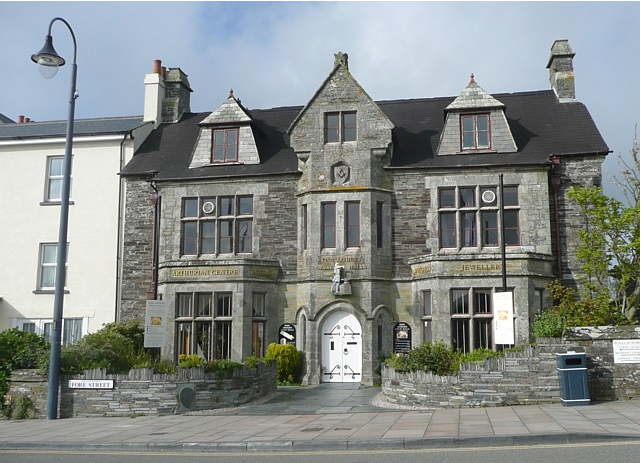
Antes de seguir para Slaughterbridge, tinha entrado no King Arthur’s Great Halls, na rua principal de Tintagel próximo ao antigo Correio. Nesse museu, o visitante é conduzido a um trono no centro da sala, onde se senta para assistir a um vídeo sobre a lenda de Arthur com efeitos especiais do século passado. Há pinturas, inspiradas no tema, de artistas locais. A maior atração são os vitrais, realmente lindos, mas muito altos, tanto que deletei minhas fotos todas porque ficaram ruins. Entretanto achei este site onde você pode apreciá-los e conhecer mais sobre o pitoresco lugar, que atualmente sedia uma Fraternidade inspirada nos ideais dos Cavaleiros da Távola Redonda. Na loja de souvenirs havia muitos livros, inclusive o raro La Morte D’Arthur, de Thomas Mallory, que comprei embora fosse um tijolo para carregar pelo resto da viagem.

KingArthursGreatHalls.htm#KING%20ARTHUR%27S%20GREAT%20HALLS

Before going to Slaughterbridge, I had visited King Arthur’s Great Halls, in the main street, not far from the Old Post Office. In this museum, the visitor sits in a throne to watch a video about Arthur’s legend, with funny two centuries ago “special effects” . There are paintings of local artists on the subject. The hotspot of this place are the glassworks, nice indeed, but too high to be photographed without a ladder. I deleted all my photos because they came out bad. But in this site you can check them, and have more information about the museum, which is also headquarters of a Friendship based upon Knight ideals. In the souvenir shop there were many books, even the rare Thomas Mallory’s Morte D’Arthur, which I bought despite it would be a brick to carry the rest of the trip.

Michelle & Jewels in St. Nectan’s Glen

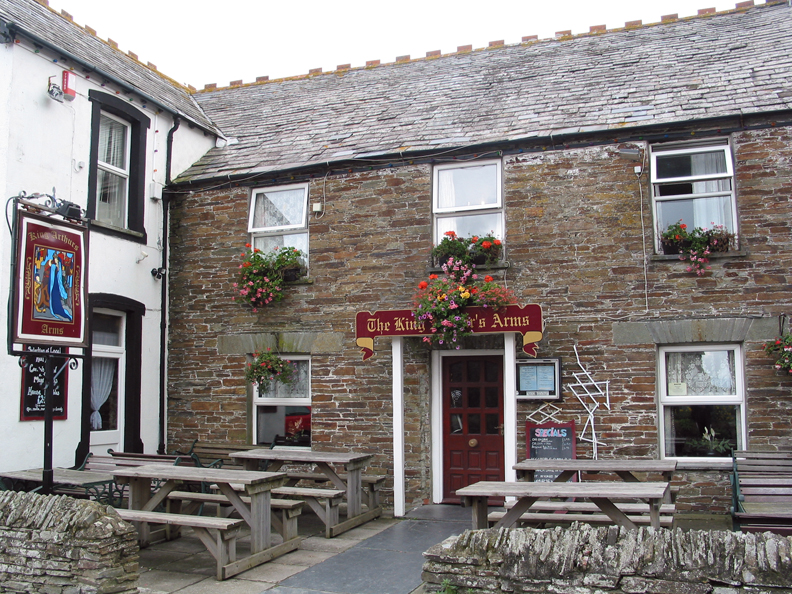
A questão era, no ônibus de volta, eu estava achando tudo uma merda. Seis libras de prejuízo, entre o ingresso no Arthurian Center e o trajeto do ônibus. O motorista me orientara a reclamar o dinheiro da passagem no terminal do ônibus em Camelford. Iria com certeza, se não implicasse em desembolsar outra passagem até lá e se não chovesse tanto, e eu já não estivesse encharcada. E com muita fome. O ponto final do ônibus em Tintagel era no extremo da avenida oposto ao do hotel Camelot Castle. Então entrei no King Arthur’s Arms para me abrigar da forte chuva e tomar uma pint. Uma banda iria tocar ali, os músicos estavam passando o som. Resolvi ficar para assistir. Depois de um tempo, o pub encheu e acabei conversando com três moças de Bristol. Kerry era uma loura de 1,80m; Jewels era do meu tamanho, muito simpática e estava de rolo com um dos músicos. Michelle era gorducha e casada.. Trabalhavam numa instituição que cuidava de adaptação de imigrantes. Estavam em férias, pernoitando em um trailer num camping perto do Camelot Castle. Conversei horas com essas pessoas. Aquele dia trágico terminou numa noite ótima.

A caminho de St. Nectan’s Glen / On the way to St. Nectan’s Glen

But, on the bus back from Slaughterbridge, I was miserable and everything sucked. Six pounds lost, between the Arthurian Center and the bus ticket! The driver had oriented me to ask a refund in the company office at Camelford. I’d have gone there if that didn’t imply paying another ticket, if it wasn’t raining so much and I wasn’t soaked and starving. The bus terminal in Tintagel was in the main road, in the opposite end of the hotel. And it was still raining hard, so I went into the pub for shelter and a pint. There would be live music and the band was starting the soundcheck. I decided to stay for the show. As time went by, the pub crowded and eventually I made friends with three girls from Bristol. Kerry was blond, almost six feet tall; Jewels was about my size, very friendly and was having kind of an affair with one of the guys in the band. Michelle was plump, she was the only married one. They worked in an institute for immigrants adaptation and were in holidays for a few days, sleeping in a motorhome parked in a camping close to the Camelot Castle. We talked for hours. That tragic day ended up in a cheerful night.

Diversidade de paisagem no caminho/ Variety of landscapes on the way

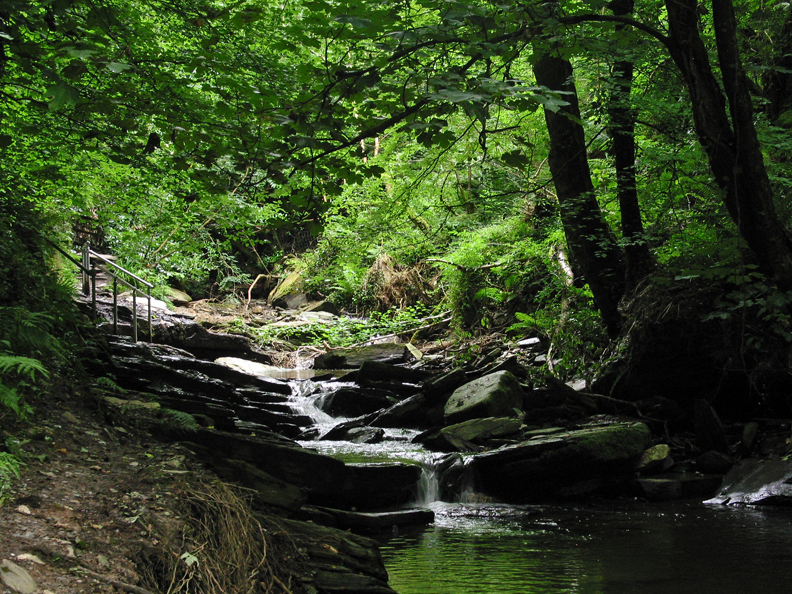
Eu tinha visto num prospecto turístico um lugar chamado St. Nectan’s Glen, uma cachoeira onde eram sagrados os cavaleiros da Távola Redonda. e queria tanto ir lá que contaminei as moças. Combinamos de nos encontrar em frente ao pub no dia seguinte, às onze horas; graças aos deuses elas tinham carro. Era longe, uns 40 minutos de carro, se eu fosse a pé – e achasse o caminho – só chegaria no dia seguinte. Havia um local para estacionar , dali saía uma trilha por entre pastos, casinhas, uma igreja antiga – St. Piran’s Chapel – e mais uma longa caminhada pelo meio da mata, uma hora margeando um rio de águas cristalinas até St. Nectan’s Glen Hermitage, onde supõe-se que tenha habitado este santo do sec.VI. Reza a lenda que ele tocava um sino de prata durante as tempestades para avisar os navios da existencia de perigosas rochas na foz do vale.

St. Piran’s Chapel – interior

I had seen in a touristic folder a place called St. Nectan’s Glen, a waterfall where the Knights of the Round Table men were consecrated. I was so excited about going there that made the girls cheer up and we agreed to meet next day, 11am in front of the pub. Thanks Gods they had a car, for it was a 40 minutes drive. If I was to walk there, and managed to find the way alone, I’d arrive the day after. It was really far until a parking lot from where a foot trail started. About one more hour walking pastures, small houses, an ancient church – St. Piran’s Chapel – and then through the woods, beside a crystal stream – until you reach St. Nectan’s Glen Hermitage. The sixth-century Saint Nectan is believed to have sited this hermitage above the waterfall. According to legend, he rang a silver bell in times of stormy weather to warn shipping of the perils of the rocks at the mouth of the Rocky Valley.

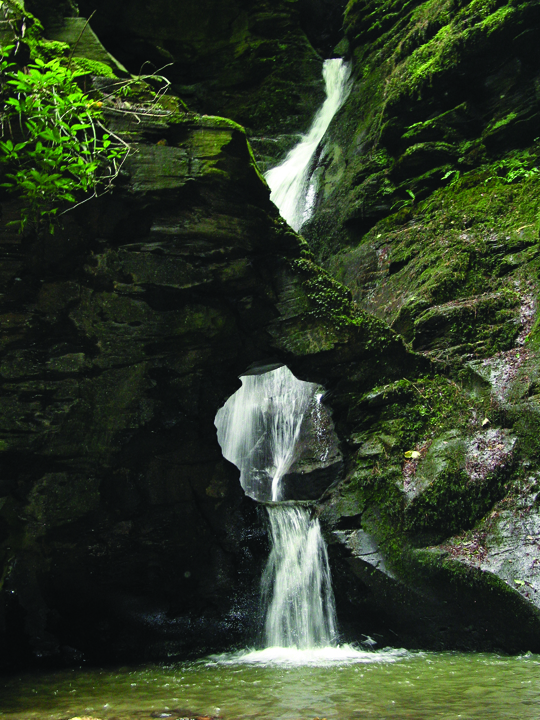
Saint Nectan’s Glen, local da sagração dos Cavaleiros /
where the Knights were knighted

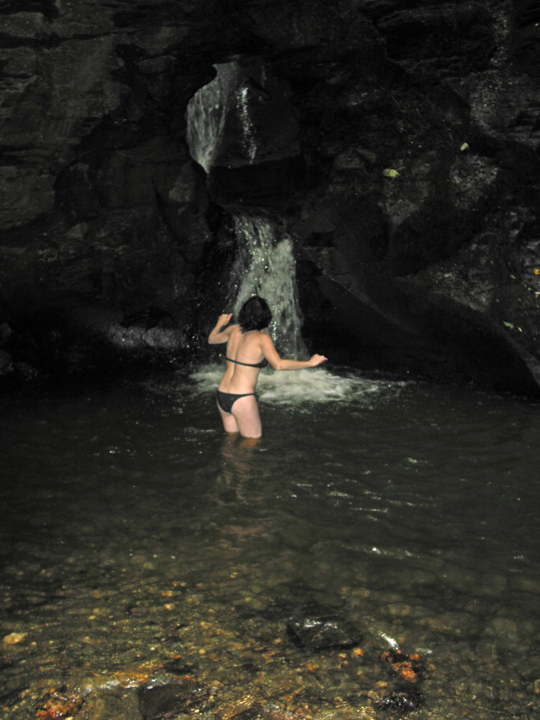
Há um café, uma loja de souvenirs e uma escada de pedra que leva ao rio e ao poço em questão. Paga-se para visitar a cachoeira, onde enfim chegamos, após mais quinze minutos de descida. A água gélida passa por um buraco redondo numa pedra enorme, formando a pequena cachoeira e o poço. A própria eternidade retratada. É claro que eu tinha ido de biquíni por baixo da roupa. Tirei a roupa e entrei na cachoeira. As meninas não acreditaram e morreram de rir quando me viram debaixo d’água gritando  “I am a knight of King Arthur’s Round Table!” Michelle bateu uma foto, ficou meio escura mas serve como prova.

There’s a coffee shop, a souvenir store and a stairway leading to the river. You must pay to go down to the waterfall, where we arrived after walking more fifteen minutes. The freezing water through the centuries dug a hole in a massive stone, shaping the waterfall and the kieve. Eternity translated in a shape. Of course I had my bikini under the clothes, which I took off without thinking twice. The girls laughed a lot when they saw me into the water screaming “I am a knight of King Arthur’s Round Table!”. Michelle took a picture, kind of dark but it’s a proof.

Eu entrei / I went in

Read Full Post »


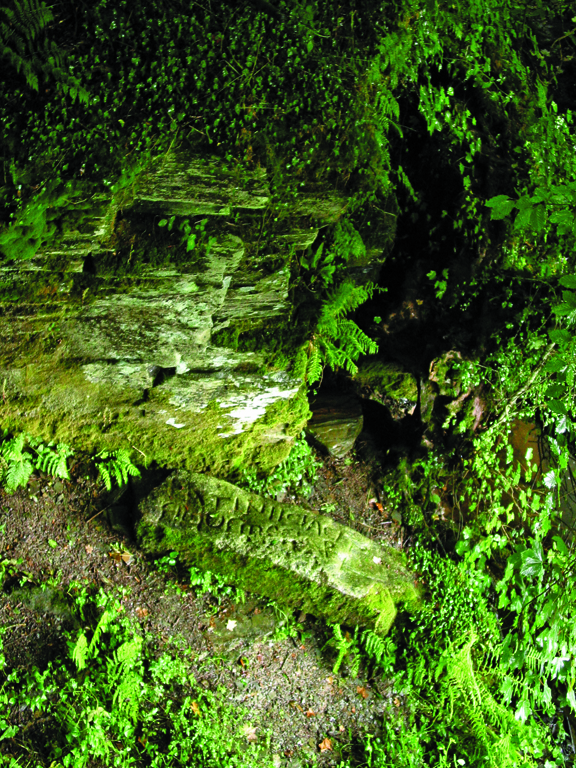
Arthur’s Stone

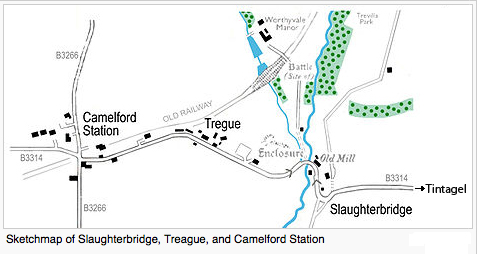
O trocador entendeu errado o nome da ponte – achou que eu ia para Wadebridge em Camelford, então me cobrou mais de duas libras pela passagem. Quando surgiu a placa indicando Slaughterbridge, percebi que o lugar era perto demais para aquela tarifa, fui reclamar. O homem disse que entendera errado porém não podia me devolver o dinheiro, porque já tinha destacado o tíquete. Eu teria que ir até o escritório da companhia para pedir reembolso. Fiquei uma arara; reclamei com o motorista, que foi muito grosseiro, o que me deixou chocada, mas era hora de descer do ônibus. Saltei em frente a um pavilhão chamado Arthurian Center. Agora sei que basta entrar numa ruela ao lado da ponte para chegar ao riacho em cujas margens se encontra a pedra de Arthur.

The collector of the bus misunderstood the name of the bridge – thought I was going to Wadebridge, in Camelford – so he charged me more than two pounds. When the sign “Slaughterbridge” appeared by the road I noticed that it was too close for such a fee, and complained about it. The man apologized for the mistake but he couldn’t give me back the money because the ticket had already been detached. I had to go all the way to the office to get a refund. I was pissed off and complained with the driver, who was extremely rude. But it was time to drop off, in front of a pavillion called Arthurian Center. Now I know that to find Arthur’s Stone one should go down a side lane beside the bridge. The stone is by the brook.

Slaughterbridge, da direita e da esquerda / Left and right

Como o tal Centro tinha uma placa dizendo “Sítio Arqueológico”, resolvi entrar para me informar. A entrada custava 3,50 libras. Havia uma exposição tosca de pinturas, cartazes desenhados à mão e um vídeo bizarro sem qualquer relação com Arthur: um sujeito vestido de preto andando; apareciam seus pés, a paisagem e uma entrevista sem pé nem cabeça com o cidadão. Fiquei assistindo apenas por que começou a chover torrencialmente. Quando a chuva diminuiu, saí em busca da pedra, seguindo a indicação de um funcionário. Havia uma trilha, mas dava mil voltas. Enfim, meia hora depois, encharcada e enlameada, cheguei ao rio e à pedra com inscrições celtas que atestam ali ter caído o rei. Depois é que fui perceber que o caminho terminava na estrada, na altura da ponte! Se tivesse entrado por ali, chegaria diretamente na pedra sem gastar minhas preciosas libras nem tomar aquele banho de chuva. Pelo menos passei pelo suposto campo da última batalha, onde fotografei a placa informativa .

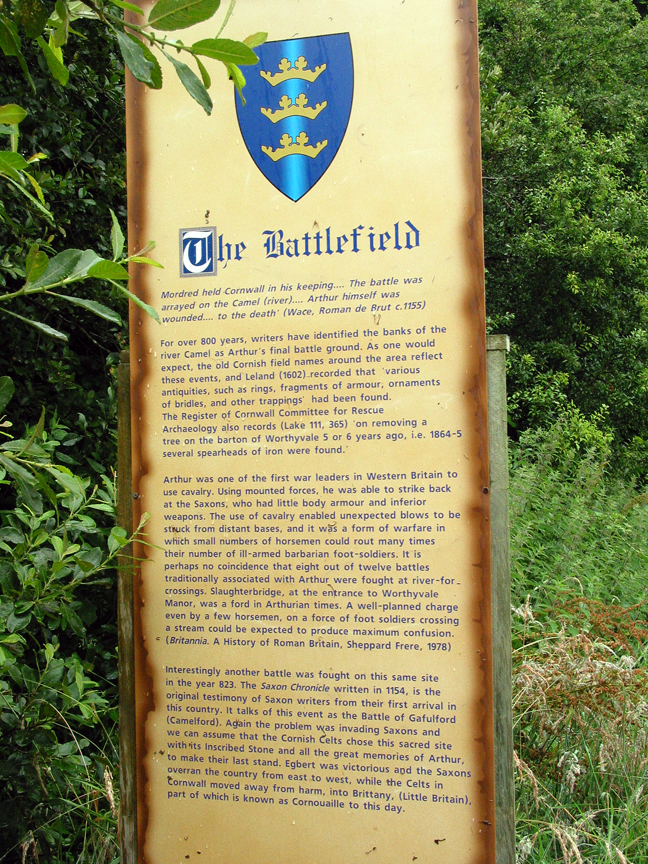
The Arthurian Center had a sign written “Archaeological Site”, so I entered it n search of information. The admittance costed 3,50 pounds. There was a poor exhibition of paintings, handmade posters and a video without any relation to Arthur’s legend. It showed a bizarre interview with a man clad in black, who appeared walking, the camera focusing his feet and sometimes a landscape. I watched for a while because a hard rain had started. When it diminished I went for the stone, according to the clerk’s indications. There was a path, but it coiled a thousand times and it took me half an hour to get to the stream and the stone. I was soaked and muddy from hair to toe when I took the photo of the celtic inscriptions in the stone asserting that it was the place where the King fell down. Only after that I noticed that the way ended by the road. If I had gone that way, I’d have reached the stone without wasting my precious pounds nor rain bathing. At least the path went through the presumed last battle field, where I photographed the informative sign.

“A Cornualha estava em poder de Mordred… A batalha teve suas trincheiras no (rio) Camel… o próprio Arthur foi ferido… mortalmente.” (Wace, Roman de Brut, 1155)

“Por cerca de 800 anos os escritores tem reconhecido as margens do Rio Camel como o local da batalha final de Arthur. Como seria de se esperar, os nomes dos antigos campos no dialeto da Cornualha refletem estes eventos, e Leland (1602) registrou que foram encontrados objetos antigos tais como anéis, fragmentos de armaduras, enfeites de rédeas e outros adereços. O arquivo do Comitê da Cornualha para Resgate Arqueológico também registra (Lake 111, 365) a descoberta de diversas pontas de lança de ferro ao remover-se uma árvore no solar de Worthyvale há 5 ou 6 anos, ou seja, em 1864-5.

Arthur foi um dos primeiros líderes da Bretanha Ocidental a usar cavalaria na guerra. Empregando forças montadas ele foi capaz de contra-atacar os Saxões, que usavam pouca armadura e armas inferiores. O uso da cavalaria permitia ataques surpresa longe da base, sendo uma forma de guerra em que poucos cavaleiros podiam derrotar um número muito maior de soldados bárbaros a pé, precariamente armados. Talvez não seja coincidência que oito entre doze batalhas tradicionalmente associadas a Arthur foram travadas em passagens de rios. Slaughterbridge, na entrada do feudo de Worthyvale, era um vau nos tempos de Arthur. Um ataque bem planejado de soldados montados, ainda que poucos, a uma tropa de infantaria atravessando um córrego causaria certamente grande estrago. (Britannia. A History of Roman Britain, Sheppard Frere, 1978).

Curiosamente, outra batalha foi travada neste mesmo lugar no ano de 823. A Crônica Saxã escrita em 1154 é o testemunho autêntico dos escritores Saxões sobre sua chegada a este país, e menciona tal evento como a Batalha de Gafulford (Camelford). Novamente o problema eram invasores saxões e podemos presumir que os Celtas da Cornualha escolheram este lugar sagrado, com sua pedra inscrita e todas as lembranças de Arthur para seu confronto final. Egbert (líder  saxão) venceu e os Saxões devastaram o país de leste a oeste, enquanto os Celtas da Cornualha fugiram para a Bretagne (Pequena Bretanha, na França), parte da qual até hoje se chama Cornouaille (Cornualha).”

“Mordred held Cornwall in his keeping… The battle was arrayed on the Camel (river)… Arthur himself was wounded… to the death.” (Wace, Roman de Brut, 1155)
For over 800 years, writers have identified the banks of the river Camel as Arthur’s final battle ground. As one would expect, the old Cornish fields names around the area reflect these events, and Leland (1602) recorded that various antiquities, such as rings, fragments of armour, ornaments of bridles, and other trappings had been found. The Register of Cornwall Committee for Rescue Archaeology also records (Lake 111, 365) on removing a tree on the barton of Worthyvale 5 or 6 years ago, ( i.e. 1864-5 ) several spearheads of iron were found.

Arthur was one of the first war leaders in Western Britain to use cavalry. Using mounted forces, he was able to strike back at the Saxons, who had little body armour and inferior weapons. The use of cavalry enabled unexpected blows to be struck from distant bases, and it was a form of warfare in which small numbers of horsemen could rout many times their number of ill-armed barbarian foot-soldiers. It is perhaps no coincidence that eight out of twelve battles traditionally associated with Arthur were fought at fords. Slaughterbridge, at the entrance to Worthyvale Manor, was a ford in Arthurian times. A well-planned charge even by a few horsemen, on a force of foot soldiers crossing a stream could be expected to produce maximum confusion. (Britannia. A History of Roman Britain, Sheppard Frere, 1978).

Interestingly another battle was fought on this same site in the year 823. The Saxon Chronicle written in 1154, is the original testimony of Saxon writers from their first arrival in this country. It talks of this event as the Battle of Gafulford (Camelford). Again the problem was invading Saxons and we can assume that the Cornish Celts chose this sacred site with its inscribed Stone and all the great memories of Arthur, to make their last stand. Egbert was victorious and the Saxons overran the country from east to west,  while the Celts in Cornwall moved away from harm, into Brittany (Little Britain), part of which is known as Cornouaille to this day.”

Read Full Post »


Estou horrível mas infelizmente só tenho esta foto da placa do Castelo.
I’m horrible, unfortunately this is the only photo I’ve got of the Castle sign.

O horário de visita às ruínas do castelo já tinha se encerrado naquele dia, portanto fiquei na pequena praia, cantando em voz alta enquanto ia de um lado para o outro batendo fotos. Devia estar parecendo uma maluca, pois percebi que duas moças estavam me olhando e rindo. Tive que rir também, e começamos a conversar. Eram tia e sobrinha em férias, a caminho de Newquay.

The Castle ruins were already closed for visitors that afternoon, so I strolled the little beach taking pictures, singing aloud. Then I noticed two girls looking and laughing at me, probably thinking me nuts. I had to laugh too, and we started  to talk. They were aunt and niece in holidays, on their way to Newquay.

Novas amigas / New friends

Eram quase sete da noite. Kimberly e Amanda iam jantar e me convidaram a acompanhá-las. Deixei a câmera no hotel e fomos ao King Arthur’s Arms, um pub ao qual eu iria voltar todos os dias. Foi quando fiz uma coisa horrível. Após fazermos os pedidos ao garçom, me levantei e fui ao banheiro. Quando retornei, os pratos já estavam na mesa. Meu salmão com ervilhas, batatas, cenouras e molho de manteiga estava divino. No Brasil, a conta vem no fim da refeição; lá paga-se na hora que se pede. Comemos, conversamos horas e só hora de ir embora, descobri que elas já haviam pagado a conta. Fiquei absolutamente sem graça, pois parecia que tinha feito de propósito.

It was almost 7pm. Kimberly and Amanda wanted to dinner and invited me to join them. I left the camera in my hotel room and we headed to King Arthur’s Arms, a pub where I’d be back each and every day. But then I did something regrettable. After ordering our plates, I went to the lavatory and the meal was already at the table when I got back. My grilled salmon with vegetables and butter sauce was divine, but… in Brazil the bill comes at the end. In England you pay when you order. So I ate, we talked for hours and only when it was time to leave I found out they had paid for my meal. That was so embarrassing, they probably thought I had done it on purpose.

King Arthur’s Arms, Fore Street, Tintagel

www.kingarthursarms.co.uk

Expliquei isso, mas minha tentativa de reembolso não foi aceita e ainda me perguntaram se eu gostaria de seguir com elas para Newquay. Fiquei arrasada, pois minha reserva no hotel era para duas noites e já tinha feito o check-in, assim declinei o convite. Por fim as moças foram embora, deixando o telefone e e-mail; achei que iríamos nos ver em Londres quando eu voltasse. Infelizmente isso não aconteceu. Os telefones não atendiam e o e-mail que enviei acusou erro.

I tried to explain but the girls didn’t accept my refund, and asked me to go with them to Newquay. I was devastated because I’d love to, but I had booked two nights at the Camelot Castle and had already checked in. So we said goodbye and eventually they took the road leaving their phone numbers and e-mail adresses. I thought we might meet in London when I went back, but unfortunately that never happened. Nobody answered the phone calls and the e-mails I’ve sent accused error.

National Trust Old Post Office

De volta ao Camelot Castle, percebi que o banheiro era uma cabine de fibra como as de avião dentro do quarto, com pia, vaso sanitário e box com ducha quentinha. Após o banho dormi profundamente numa cama muito macia. Na manhã seguinte, desci para o enorme salão de café do hotel, junto a uma varanda que dava para o mar. Podia-se escolher café da manhã inglês ou continental. Para provar, pedi o inglês e me arrependi amargamente: veio bacon, linguiça, um purê insosso de feijão, tomates e ovos – tudo frito com gordura escorrendo, um nojo. Feijão no café, que bizarro!Felizmente, havia também uma mesa com iogurtes e diversas caixinhas de cereais. Salvaram minha vida. Além de comer na hora levei para o quarto um pote de iogurte e granola, já pensando no jantar.

Back in Camelot Castle, I noticed that the bathroom was a fiberglass cabinet inside the room, like those of planes but provided with shower besides the sink and toilet. After a hot bath I fell deeply asleep in the soft bed. Next morning, breakfast was served in a massive room next to a balcony overlooking the sea. One could choose between Continental and English breakfast, and I decided to try the latest, which was a bad idea. I was served bacon, sausage, eggs, tomatoes and a tasteless beans purée, everything fried, still dripping oil, disgusting. How bizarre, beans in breakfast! Luckily there was a side table with a variety of yogurt and boxed cereal, which saved my life. I even took some to my room, saving it for dinner.

Interior do antigo Correio / Inside the Old Post Office

O dia estava bonito quando saí para conhecer a cidade, mas quinze minutos depois o tempo fechou. Eu estava chegando ao Old Post Office, o antigo correio que mais parecia uma casa de bonecas. No século XVIII, ali morava o funcionário que selava, despachava e recebia cartas. A correspondência era entregue a cavalo naquele tempo.

The weather was good at first, but clouded over as soon as I set foot on the street for a walk around. I was just arriving at the Old Post Office, an XVIII century building with the looks of a doll house. There lived the clerk who sealed and dispatched the mail, which went on horseback by that time.

Natureza morta no antigo correio / Still life in the Old Post Office

Mais uma / Another one


Porta para o jardim nos fundos / Backyard door

Dali fui pegar um ônibus até Slaughterbridge para ver a pedra que marca o lugar onde Arthur foi mortalmente ferido por Mordred.

From there I went to the station, in order to take a bus to Slaughterbridge, where a stone marks the place where Arthur fell deadly wounded by Mordred.

Read Full Post »


Cornwall – a Cornualha

Comprei a passagem de ônibus, o 505 para Penzance, sem retorno dessa vez. A Cornualha tem praias aonde todo mundo vai pegar onda nas férias, como Newquay. O bagageiro do ônibus encheu com pranchas de surf. Penzance é a ultima cidade, de onde se vai ao Land’s End, o ponto final que encontra o Oceano Atlântico a sudeste. Era domingo, dia 27 de julho de 2005. De Londres a Camelford, foram cinco horas.  A estrada cruzava cidades minúsculas, que pareciam ter aspecto medieval, mas era impossível dizer com certeza pois choveu torrencialmente durante a viagem toda. Não dava para ver nada pela janela, só o mundo branco de neblina. Fiz o trajeto lendo o livro A Druid Abroad, de Sandra Parsons, sobre sua viagem a Newgrange, na Irlanda, em companhia de sua mãe. Fui a única passageira a descer em Camelford.

I bought a bus ticket, boarding the 505 to Penzance, this time without return. Cornwall is a summer destiny where you find the surf beaches as Newquay. The luggage compartment was full of surfboards. The last city is Penzance, from where you reach Land’s End, England’s south-eastern border facing the Atlantic Ocean. It was Sunday, July 27th. It took five hours from London to Camelford, where I was supposed to drop off. The road crossed tiny villages that could have a medieval look but I wasn’t sure, because it rained torrentially the whole day and beyond the windowpane the world was mostly white. I spent the time reading the book “A Druid Abroad” by Sandra Parsons, about her journey to Newgrange, in Ireland, with her mother. I was the only passenger to get off the bus in Camelford.

Uma placa na estrada indicava “Bodmin” e “Dozmary Pool”. Fiquei meio histérica pois Dozmary pool é o lago de onde se ergueu a Dama do Lago empunhando a espada Excalibur para ser dada a Arthur. E no fim da história, quando o Rei está mortalmente ferido, entrega Excalibur a Sir Bedivere, um dos Cavaleiros, para que a jogasse de volta no fundo do mesmo Lago, a fim de evitar que caísse em mãos inimigas. Eu precisava fotografar o lago, mas até aquele momento não fazia idéia da sua localização. Pensei então em seguir para lá imediatamente após a estada em Tintagel. Eu não fazia idéia, porém, da distância entre todos esses lugares.

A sign on a crossroads pointed the way to “Bodmin” and “Dozmary Pool”. I was entranced because that was the Pool from which waters rose the Lady of The Lake, bearing the mighty sword Excalibur to be given to Arthur. In the end of the tale, when the King is deadly wounded, he hands Excalibur to Sir Bedivere, one of the knights, with orders to throw it back into the deep of the Lake, to avoid its capture by enemies’ hands. I had to photograph that lake, although up to that moment I didn’t have the slightest idea of its location. So my mind was instantly made up: after the days in Tintagel I would go that way. But I had no idea of the real distance between these places.

Camelot Castle – Tintagel, Cornwall PL34 0DQ, Reino Unido – 01840 770202
http://www.camelotcastle.com


A chuva parou quando saltei do ônibus em Camelford. Parecia um lugar bonitinho, que valeria a pena visitar, mas fui direto para o ponto do ônibus local que me levaria a Tintagel, onde havia feito reserva no hotel “Camelot Castle” para duas noites. O ônibus já estava no ponto, como se esperasse por mim. Cerca de vinte minutos depois, desembarquei na cidade de Igraine. Percorri a avenida principal virando à esquerda no fim: o hotel ficava em frente ao mar. A construção (aliás, muito brega, aquele castelo fajuto estragava o visual) ficava bem ao lado de uma escadaria que levava à praia, uma pequena enseada aos pés do maciço sobre o qual se erguem as ruínas do castelo de Tintagel. Após fazer o check in, deixei a mochila no quarto com banheiro e desci imediatamente para a praia.

The rain ended when the coach reached Camelford, which seemed to be a nice place, worth visiting, but instead I went straight to the stop where the bus that would take me to Tintagel was already ready to leave, as if was just waiting for me. After about twenty minutes, I got off in Igraine’s city. I had booked two nights in the Camelot Castle Hotel, that stands facing the sea, turning left in the end of the main street. The building was pretty tacky, a fake castle ruining the gorgeous landscape. Beside it there was a stairway leading to the beach, a small bay of sapphire blue sea like those in pirate’s movies, at the feet of the massive rock where Tintagel Castle ruins still stand. After check in, I left my backpack in the room (with a private bathroom!) and went down to the beach.

Pela primeira vez na viagem, um quarto com banheiro só para mim.
For the first time in this trip, a room with private bathroom, all only for me!

A vista da janela do meu quarto não era para o mar: algumas casas e a rua principal da cidade.
My room didn’t face the sea, but Tintagel’s main street  ahead

O tempo havia clareado, uma luz quase mágica banhava a paisagem. A enseada parecia cenário de filme de pirata, o mar cor de safira. Enquanto descia a trilha, um raio de sol irrompeu entre as nuvens, que pareciam se dissipar. Depois de ter viajado o dia todo em meio à tempestade e ao dilúvio, aquele sol era tão inacreditável que desapareceu mesmo instantes depois. Foi só para abençoar minha chegada. Agradeci aos deuses pulando na areia (ou melhor, seixos negros) como um cabrito drogado e gritando: “TINTAGEL! TINTAGEL!”

The weather had cleared, a magic light bathed the place, and while I was stepping down a golden sunbeam shone through the vanishing clouds. That was a blessing after travelling through storm and flood, an impossible ray of light so brief that it was gone as soon as I set my feet in the sand, or better, black pebbles. To thank the gods I started to jump like a goatling freaking out, and yelling: “TINTAGEL! TINTAGEL!”

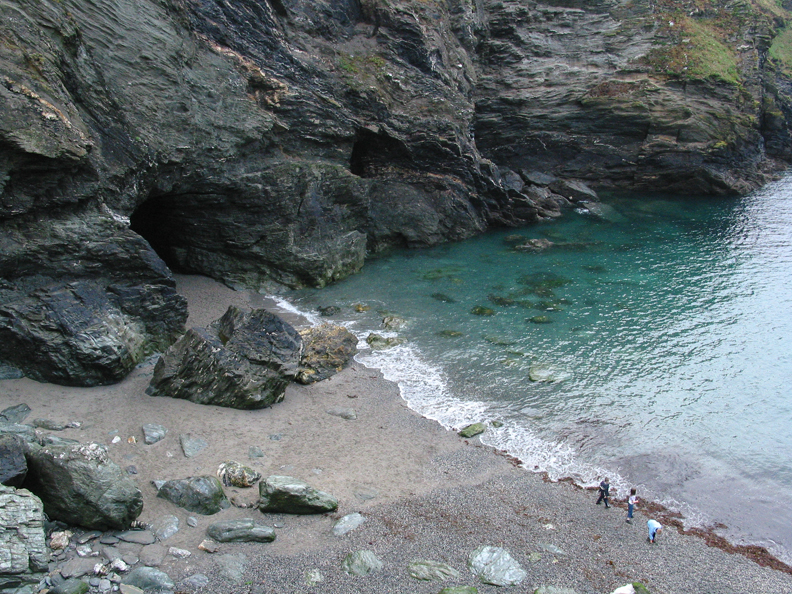
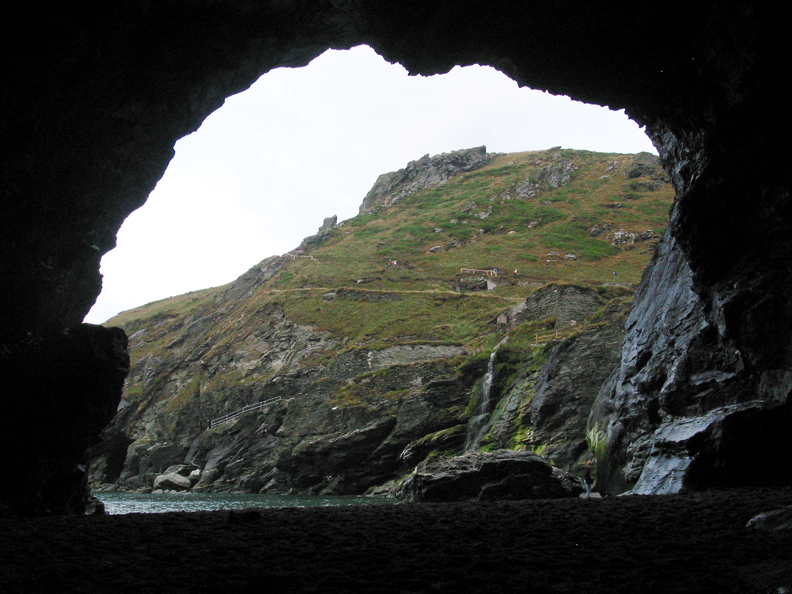
Na praia, a caverna sob o castelo de Tintagel por onde Uther se infiltrou para passar a noite com sua amada Igraine.Desse encontro nasceria Arthur.
The cave under Tintagel’s Castle where Uther penetrated the Castle to spend the night with his beloved Igraine. Of this meeting Arthur would be born.

Dentro da caverna, na maré baixa.  / Inside the cave, low tide

Outra ponta da praia / The other end of the beach

Vista do alto da escadaria / Overview from the stairway above

Magic

Read Full Post »


Todos os jovens desejavam se tornar cavaleiros. Arthur, tido como bastardo, tornou-se escudeiro de Kay, que pensava ser seu irmão mais velho.  O tempo passou e, quando Arthur tinha quinze anos, Sir Hector e Kay puseram-se em marcha para um torneio ao qual iriam todos os cavaleiros do reino, pois entre eles seria escolhido o sucessor de Uther, que não teve outros filhos. O território britânico continuava dividido em vários pequenos reinos – o feudalismo que estudamos nas aulas de História. Conta a lenda que a espada de Sir Kay desapareceu na hora do torneio. Arthur, então, saiu correndo para buscá-la. Talvez ele mesmo tivesse  esquecido de levá-la…  Mas no caminho perdeu-se na floresta, e deparou-se com uma pedra e uma bigorna onde estava cravada uma magnífica espada. Coisa digna de um rei. Em algumas versões existe apenas a pedra, sem bigorna (enorme bloco usado como ferramenta pelos ferreiros), mas  o disco de Rick Wakeman começa com o narrador lendo a frase gravada na pedra: “Who pulleth out this sword from the stone and anvil is the true born king of all Britain”, ou seja, “Aquele que tirar esta espada da pedra e da bigorna é o verdadeiro rei, por direito de nascença, de toda a Bretanha”.
Arthur não sabia ler – poucos além dos padres sabiam – mas viu aquela espada sem dono ou
propósito aparente, e resolveu levá-la para o irmão. Puxou a espada, que se desprendeu facilmente da
pedra, como se estivesse espetada em massa de modelar. Ninguém no torneio acreditou que o menino houvesse realizado tal feito. No entanto, Merlin surgiu e revelou a identidade secreta de Arthur, que acabou
reconhecido como rei, apesar da discordância dos nobres que cobiçavam o trono para si.

Every kid wanted to become a knight. Arthur, as a bastard, became a squire to his foster brother Kay.
Thus time went by and, when Arthur was fifteen, Sir Hector and Kay set their company in march to a tournament. Each and every knight of all realms was doing the same, because amongst them would be chosen King Uther’s sucessor, for he had no more sons with Igraine. British lands were still divided in lesser kingdoms – the feudalism we studied in History class. The tale tells that Kay’s sword disappeared when his time to joust was come, so Arthur hurried back to the camp to find it. Maybe he had forgotten it himself…
But Arthur, on his way, got lost in the forest and ran into a massive stone, with an anvil and a magnificent sword stuck in it. A sword fit for a king! Some authors only mention the stone, without anvil, but Rick Wakeman’s album starts with the  storyteller’s voice reading the words carved in the stone: “Who pulleth out this sword from the stone and anvil is the true born king of all Britain”.
Arthur couldn’t read – few people but the priests did – but saw that sword that seemed to belong to no one, in that weird place, and decided to take it to his brother. He easily pulled the sword free from the stone as if it was stuck in modeling clay. Back in the tournament, nobody believed that the boy had done that deed. Then Merlin appeared and revealed Arthur’s bloodline. He was crowned King in the end, despite many lords disagreed because they greeded the throne for themselves.

Read Full Post »