Feeds:
Posts
Comentários

Posts Tagged ‘England’


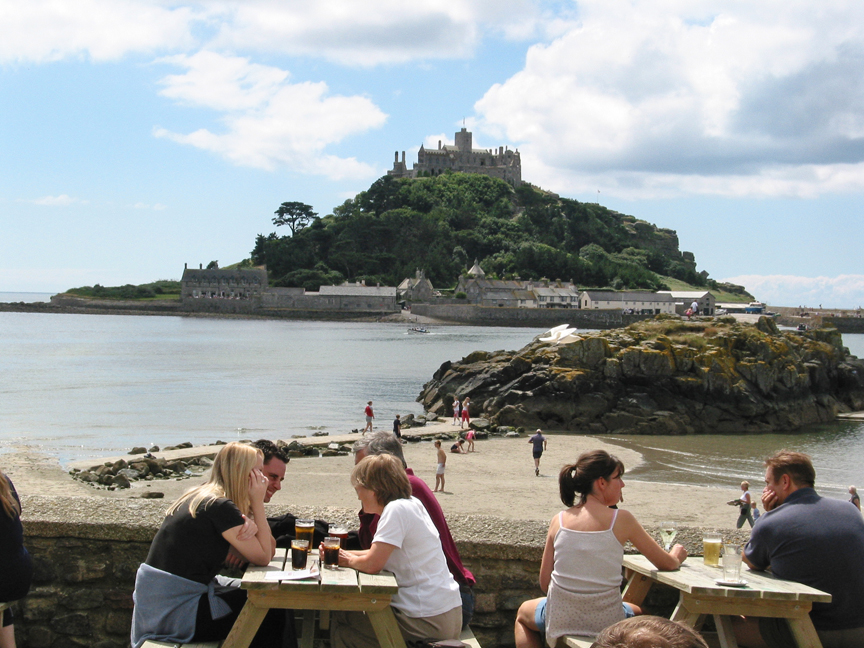
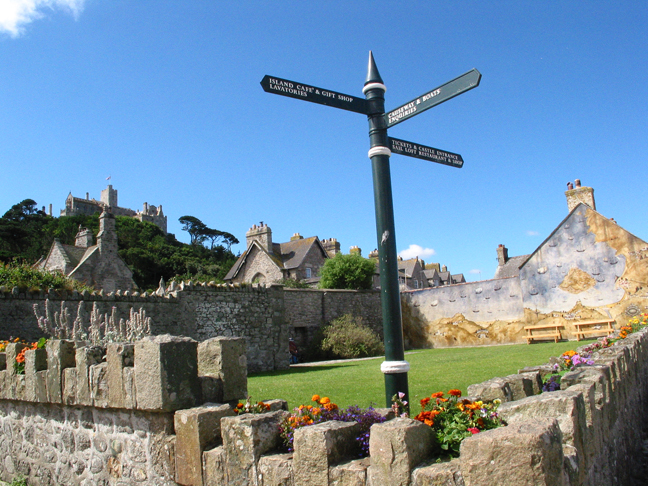
Café com vista para o Monte St. Michael / Coffee with a view

Café com vista para o Monte St. Michael / Coffee with a view

Precisei pagar a passagem de barco para sair dali, ou voltaria nadando devido à maré cheia. Embarquei parecendo um zumbi. Além da frustração (ainda via a bandeja de Cornish Cream Tea batendo asas na minha frente!) foi um forte choque descobrir que o credicard vencera e me preocupava o outro não ter sido aceito. O que seria de mim sem cartão? Teria de ligar para a central de atendimento. Estava respirando fundo, tomando coragem para fazer a ligação, quando vi numa vitrine postais com a foto de um círculo de pedras: as Merry Maidens.

Marazion, próximo à praia/ Next to the beach

Marazion, próximo à praia/ Next to the beach

As dezenove pedras, segundo a lenda, são moças que foram petrificadas por dançar no domingo, dia santo para a Igreja Católica. Duas pedras mais afastadas seriam os músicos que estavam tocando para elas. Essas lendas sobre petrificação eram espalhadas pelos católicos com o intuito de evitar que as pessoas continuassem realizando cultos pagãos nos lugares sagrados. Fiquei com vontade de ver as pedras e soube que passava em Marazion um ônibus circular que levava a Land’s End, o fim da terra, passando pelas Merry Maidens e outros pontos turísticos. Seu ponto final na volta era perto do bed and breakfast.

Rua principal de Marazion/ Main Street

Rua principal de Marazion/ Main Street

Eu podia pagar essa passagem e ainda comprar duas Pasties, outra comida típica da Cornualha: são pastéis de forno, baratos e enormes com diversos recheios. Em Tintagel, a loja de pasties tinha sempre fila na porta. Pareciam saborosas, eu estava faminta… mas na primeira mordida já fiquei arrasada. Era intragável, um pastelão recheado de batata com um pingo de algum outro recheio misturado. Não dava para acreditar. Pastel recheado de batata! Comecei a soltar fumaça pelos ouvidos. Mesmo assim as embrulhei e guardei na mochila, visto que já estavam pagas. Como a fila era grande, eu comprara logo duas, crente que seria uma delícia. Para espairecer, fui dar um mergulho e acabei embarcando com a pele ainda molhada e salgada no ônibus circular, que tinha dois andares lotados de turistas com chapeuzinho branco. Ligaria mais tarde para o Visa.

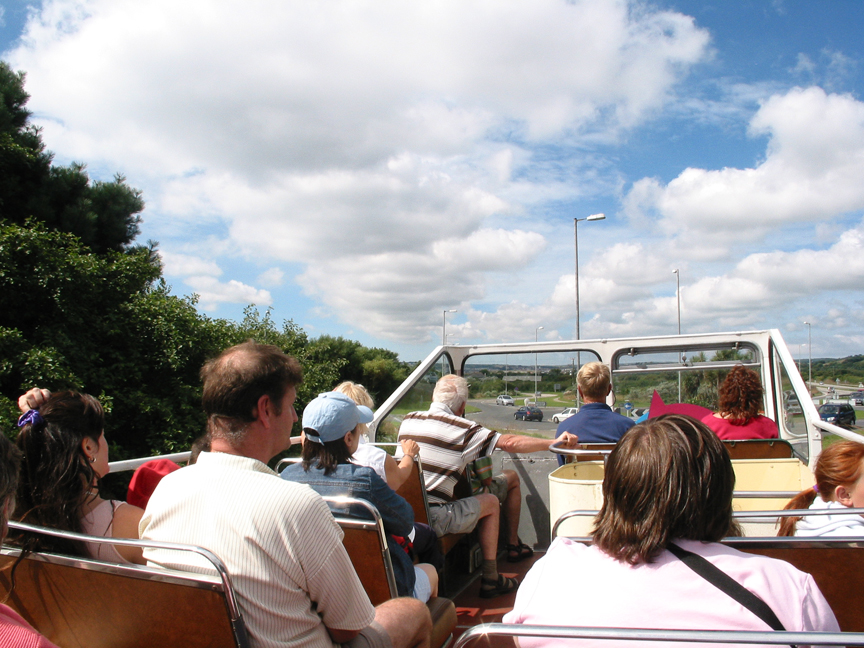
Ônibus circular de turismo/ Drop in-Drop off tour bus

Ônibus circular de turismo/ Drop in-Drop off tour bus

O ônibus não parou nas Merry Maidens, foi direto a Land’s End. Era bem diferente de John O’Groats. Ali havia um parque, com roda gigante e diversos brinquedos. O marco ficava dentro de um cercado, e era preciso pagar para bater fotos ali. Eles montam na hora com letrinhas de plástico o nome da cidade de onde você vem e a respectiva distância em milhas. Uma mulher saiu de um guichê e impediu que um casal batesse minha foto em frente ao marco, com a minha câmera. Teria de pagar quinze libras! Ou mais, se quisesse aplicar a foto em chaveiro, caneca e outras bugigangas.

Land'sEnd in Cornwall

Land’sEnd in Cornwall

land'sEndCornwall1

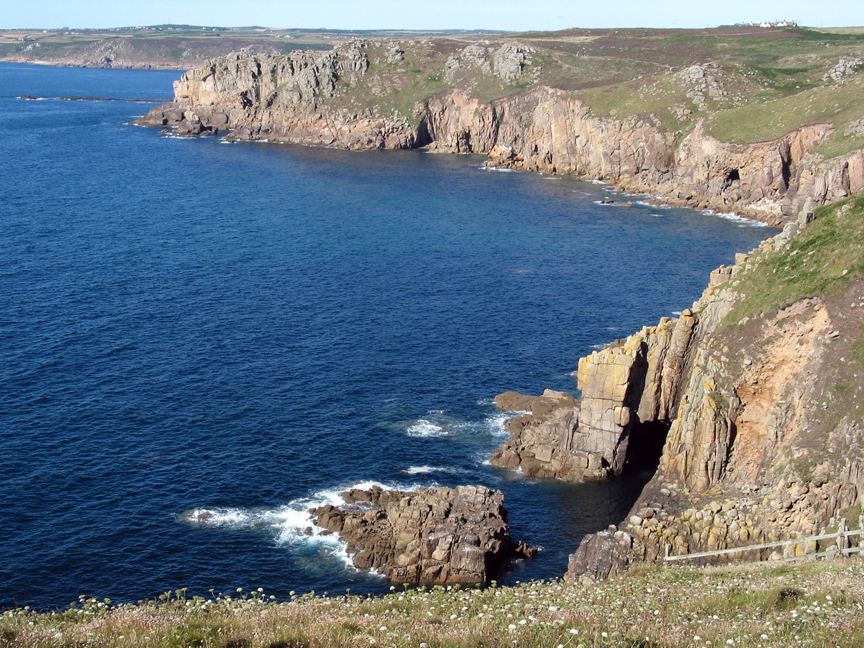
Landscape of Land’s End / Paisagem

landsEndCornwall

O marco do fim da Terra / The landmark

O casal acabou tirando a foto, num enquadramento diferente da que eu tinha no fim da terra do outro lado. E saiu tremida. Contudo, pelo menos existe como registro. Agradeci e, irritada, fui para o ponto esperar o ônibus seguinte. O parque fica no alto de um penhasco e não há praia lá embaixo, não havia nada para fazer naquele lugar. Comi uma pastie, intragável agora que estava fria. O ônibus demorou meia hora: fiquei torrando debaixo do sol, conversando com outra turista sobre política internacional. Ela estava esperando outra condução, mas me disse que os circulares não paravam mais em diversos pontos naquele horário, iam direto de Penzance ao fim da linha e retornavam. Resignada, entrei e fiquei prestando a maior atenção para fotografar as Merry Maidens pela janela.

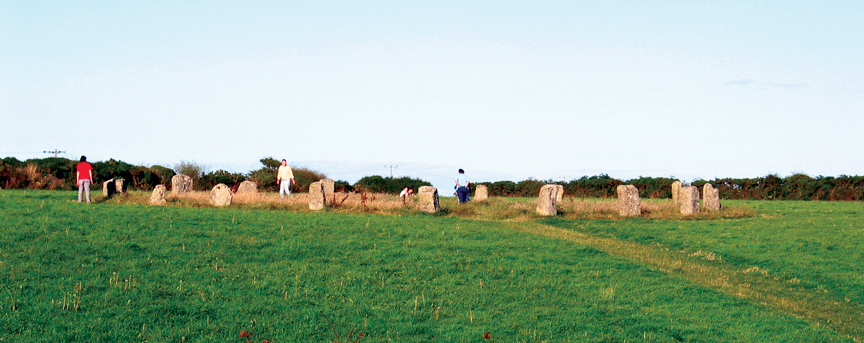
Merry Maidens

Merry Maidens

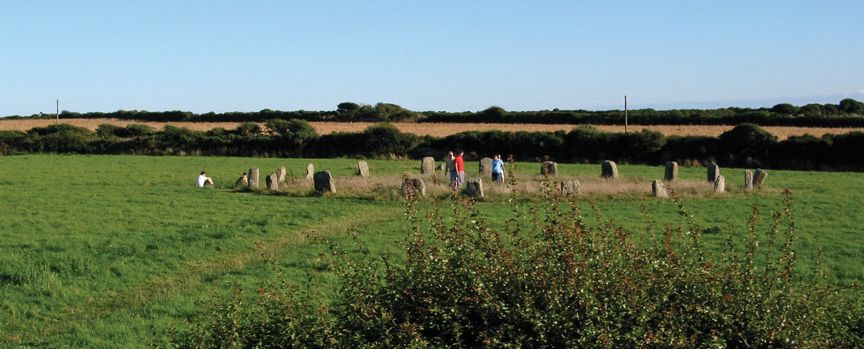
Merry Maidens, um minuto depois / One minute later

Merry Maidens, um minuto depois / One minute later

Um sujeito puxou assunto. Como eu estava há três dias sem conversar, exceto com a tal turista, dei trela depois de fazer a foto, e o infeliz grudou em mim. Estava estampado na testa que ele tinha algum tipo de distúrbio. Ficou doido quando soube que eu era brasileira. Sabia tudo sobre nosso futebol (muito mais do que eu) e insistia para que eu fosse me hospedar na casa dele. Jurou que me levaria para ver todos os pontos turísticos da região, que, segundo ele, conhecia como ninguém, porque morava numa cidade próxima a Penzance. Insistiu tanto que fiquei com medo – mais ainda quando chegamos a Penzance, e tive de me despedir da figura com firmeza, pois ele queria me acompanhar. Fui dar mais uma caminhada, e o sujeito surgiu na minha cola. Acabou indo embora, depois de me obrigar a aceitar uma lata de cerveja que trazia na mochila. Estava quente, mas tomei assim mesmo para que ele fosse embora. Para despistá-lo, saí da rua principal e dei umas voltas antes de entrar no bed and breakfast.

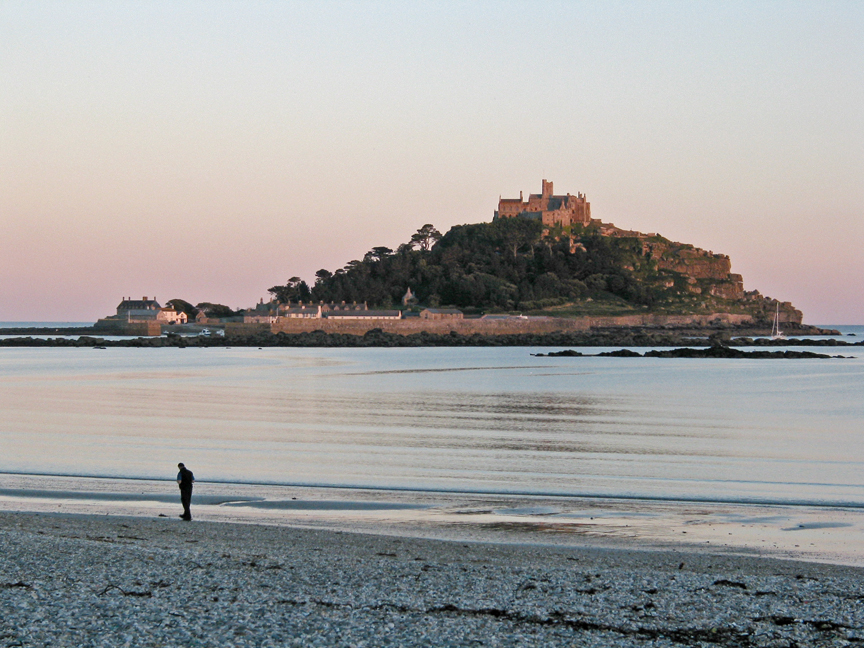
Monte St. Michael, fim de tarde. / Almost dusk.

Monte St. Michael, fim de tarde. / Almost dusk.

Pela manhã / Morning

Pela manhã / Morning

Para ser sincera, fiz algo horrível: combinei um encontro ao qual não pretendia ir. Falei que já tinha feito reserva para aquela noite e que estava muito cansada, mas prometi que no dia seguinte iria encontrá-lo em frente à rodoviária ao meio-dia para me hospedar na casa dele. Fiquei com o número de telefone para ligar assim que acordasse. Comprei um fish-and-chips para viagem, que comi no quarto e, na manhã seguinte, fugi no primeiro ônibus que saía de Penzance, às oito horas, para qualquer lugar. O destino me levou para St. Ives. Antes disso, liguei para a central de atendimento do cartão. A atendente confirmou que o Visa estava vencido e deu entrada no protocolo solicitando outro, que seria postado para o Brasil, portanto não poderia mais contar com ele nesta viagem. O Master, felizmente, estava dentro da validade e do limite, e só não passou na máquina da cafeteria por azar mesmo. Respirei aliviada.

eu

Read Full Post »


Praia entre Penzance e Marazion / The beach between Penzance and Marazion

Praia entre Penzance e Marazion / The beach between Penzance and Marazion

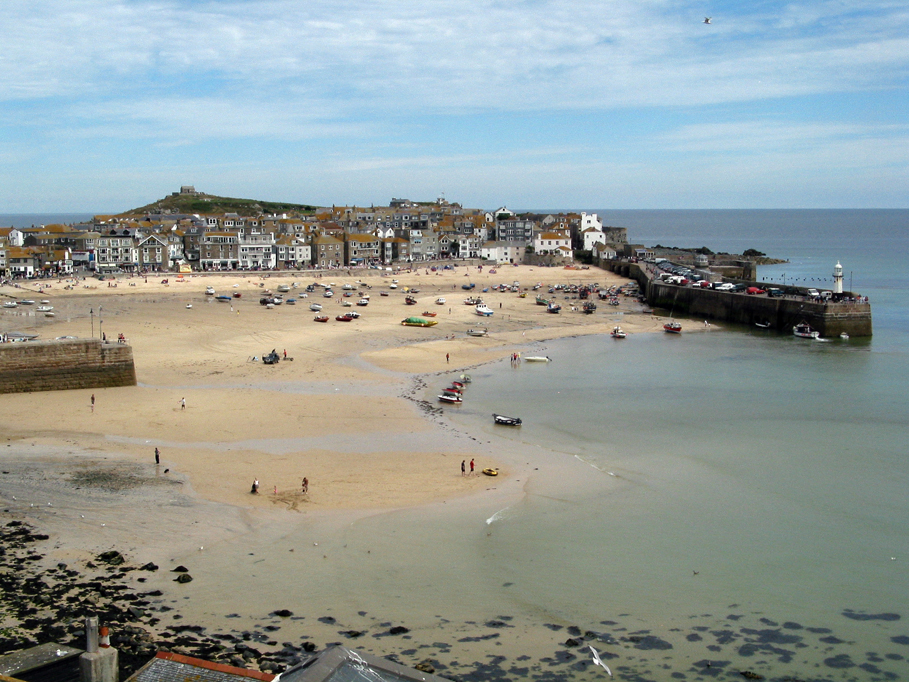
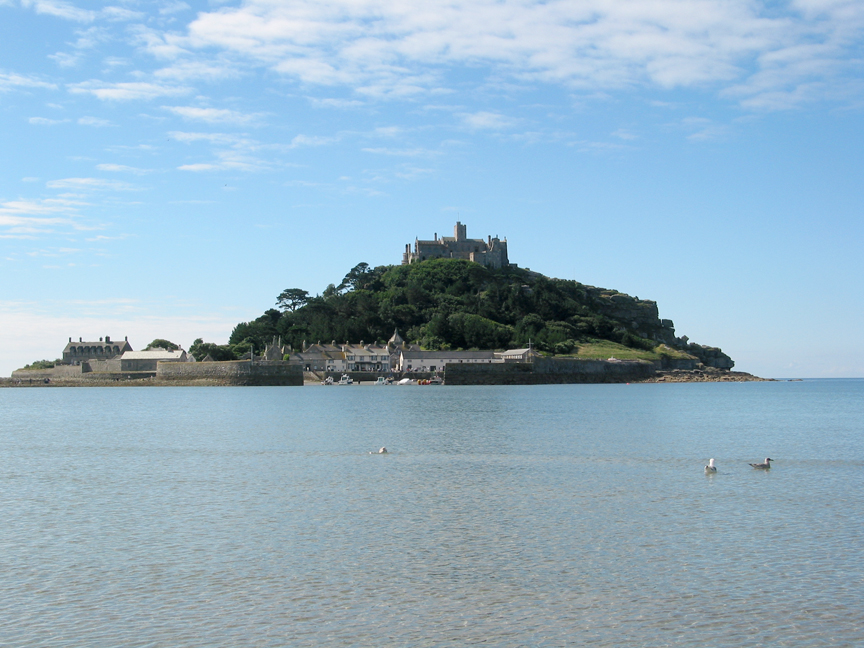
Depois de tudo que passei na véspera, resolvi me desobrigar da peregrinação. Que fosse à merda o Dozmary Pool. Acho que seria capaz de mandar à merda o próprio Arthur. Já tinha sofrido bastante por causa dele. Mas estava refeita pela noite de sono. Acordei e saí para caminhar cinco quilômetros pelo litoral até Saint Michael’s Mound, em Marazion, a cidade vizinha. Um lugar bonitinho, fofo mesmo. Era cedo, portanto o sol não estava esturricando. Soprava um vento fresco e a paisagem era linda, a longa praia com aquele castelo ao longe, plantado na ilha de Saint Michel, apenas um vulto azul acinzentado, do jeito que tudo fica azul e cinza na linha do horizonte. Como a maré estava baixa, não dava para mergulhar. Mesmo assim, passaram duas pessoas nadando.

St. Michael's Mound in Cornwall

St. Michael’s Mound, Cornualha,  na maré baixa / St. Michael’s Mound in Cornwall, low tide

After all I had gone through, I’d made up my mind about letting the pilgrimage go. To hell with Dozmary Pool. I could send to hell Arthur himself. I’d had enough of suffering for him. But a good night of sleep restored my energy, so I woke up to walk by the seaside. Three miles ahead, in the charming neighbor village called Marazion, stood Saint Michael’s Mound. At 8 a.m. the sun was still mild; a cool breeze was blowing and in the far end of the beach I could see the castle in the island, just a greyish blue shadow, like everything in the horizon looks greyish blue. I didn’t dive because it was low tide. Still, two swimmers passed by.

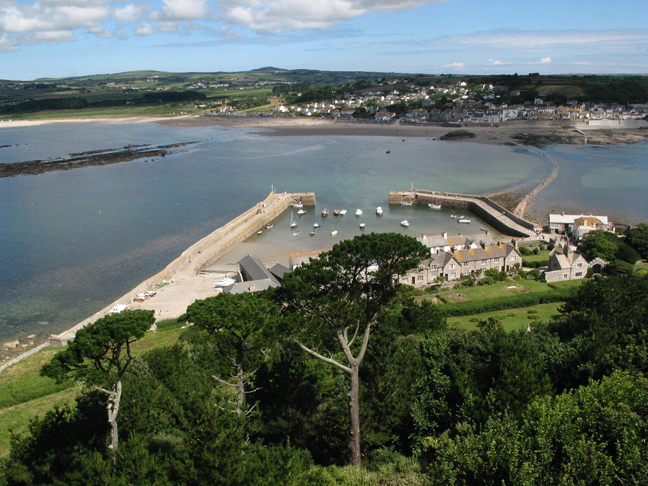
Marazion vista do castelo / Marazion's view from the Castle

Marazion vista do castelo na maré baixa / Marazion’s view from the Castle, low tide

A caminhada me ressuscitou. Respirava o ar marinho fresco e pisava em areia macia, coisa rara em litoral inglês. Muitos senhores cavavam a areia atrás de minhocas. Rosados e sorridentes, tinham seus anzóis e varas de pescar a postos. A terceira idade inglesa trata melhor os homens que as mulheres. Cheguei ao castelo e entrei para a visita guiada. Foi quando percebi que aquele não era o Monte Saint Michel em que eu estava pensando, que na verdade fica numa ilhota rochosa na costa da Normandia (França) onde há uma abadia beneditina, listada no patrimônio da Humanidade da UNESCO.

Karrek Loos y’n Koos – a pedra cinza na floresta / The grey stone in the woods

Karrek Loos y’n Koos – a pedra cinza na floresta / The grey stone in the woods

I came alive again with the walking, breathing the sea breeze, my feet feeling soft sand, which is not usual in British beaches. Old men were digging, looking for bait, the fishing rods and hooks all ready. They conveyed a happy mood, I realized that old age treats men better than for women in the UK. When I got to the Castle and the guided tour started I realized that it was not the famous St. Michael’s Mound I thought it were (which, as a matter of fact, is located in the Normandy coast, France, where stands a Benedictin Abbey recognized as World Heritage Site by UNESCO ).

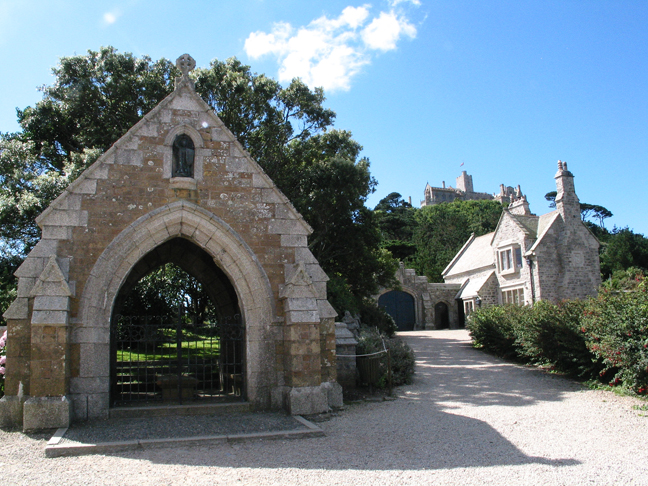
No Castelo / Inside the Castle

Entrada do Castelo / Castle’s Gates

Início da visita / Starting the tour

Início da visita / Starting the tour

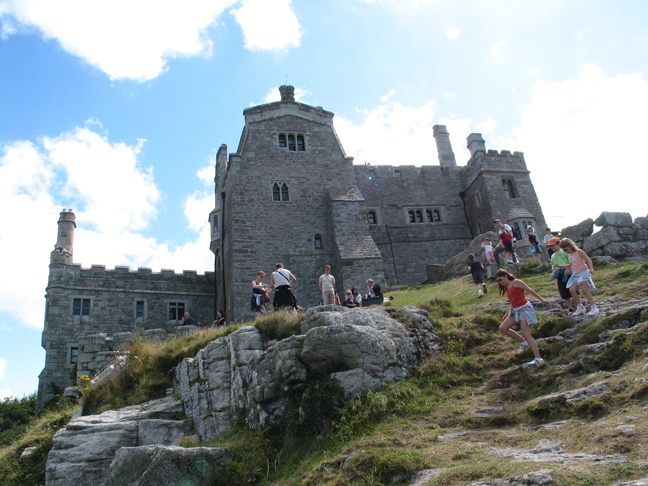
Este Saint Michel inglês era uma fortaleza do século XVIII plantada numa ilha bem perto da costa. Tão perto que na maré baixa vai-se andando da praia até ali. Quando a maré sobe é preciso ir de barco. Em dialeto Cornish, o nome era Karrek Loos y’n Koos – a pedra cinza na floresta.
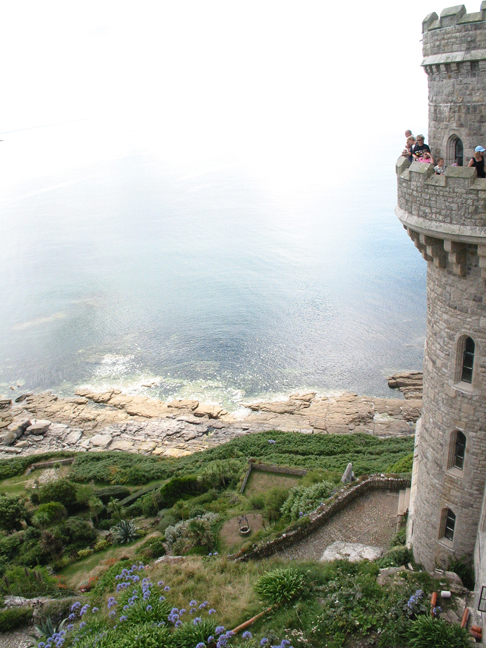
O castelo não era um monumento espiritual, mas histórico. Aquele forte protegia a cidade dos ataques de navios invasores. Da torre mais alta, a vista se perdia mar adentro. Assim, embora me sentisse uma anta pela confusão, estava aproveitando o passeio.

Um casal de portugueses bateu minha foto, mas confesso que fiquei tensa por me afastar tanto da câmera! / A nice portuguese couple offered to take my picture; I must admit I wasn't at ease so far away from my camera.

Um casal de portugueses bateu minha foto, mas confesso que fiquei tensa por me afastar tanto da câmera! / A nice portuguese couple I was talking to offered to take my picture; I must admit I wasn’t at ease so far away from my camera.

This castle was a XVIII century fortress, which name in Cornish dialect meant “The grey stone in the woods”. A historical monument instead of a spiritual one. That fortress kept the city safe from pirate and invaders’ ships. From the highest tower, the sea landscape stretched as far as the eyes could see. In low tide one can go on foot from the beach to the island, but in high tide one must take a boat. I had walked, and I was enjoying the tour, although feeling a stupid for the mistake.

Paisagem vista da torre / Sea landscape viewed from the tower

Paisagem vista da torre / Sea landscape viewed from the tower

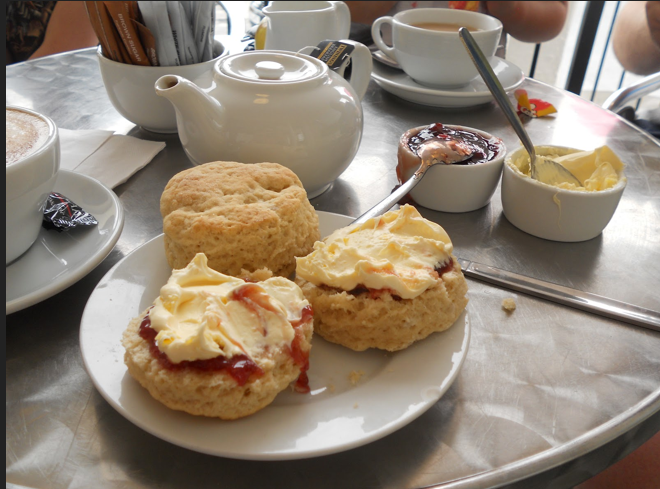
Havia uma lanchonete espetacular. Mesas e bancos de madeira numa varanda com vista para o mar, e  todo tipo de gordices expostas. Já que eu tinha decidido não sofrer mais, fiz uma bandeja de Cornish Cream Tea, que consiste em chá ou café com os melhores pãezinhos do mundo, tipo brioches e clotted cream – chantilly de creme fresco. Na Inglaterra, existem variações do creme de leite, como sour cream, double cream, half cream – cada um melhor do que o outro. Estava querendo esse Cornish Tea desde Tintagel, onde era servido em vários cafés na avenida principal. O creme era para passar no pão, e vinha também uma tigelinha de geleia. Além do Cornish Tea, pedi uma fatia de cheesecake.

Detalhe do Castelo / Detail of the Castle

Detalhe do Castelo / Detail of the Castle

The castle had a breathtaking coffee shop. The wooden seats were in a porch overlooking the sea, and  the window showed all kind of delicious pies and breads and pastries. I had made up my mind about not suffering anymore, so I entered the line and asked for a Cornish Cream Tea. That was something I was tempted to try since I saw it in Tintagel, a local delicacy, served in every Tea Room and Coffee shop. It consists in a cup of tea or coffee with freshly baked scones – soft, the best in the world – fruity jam and clotted cream. I love all kinds of British creams: the sour cream, the double cream, half cream, but most of all the clotted cream. I wanted so badly this Cornish Cream Tea! And I asked for a slice of cheesecake too.
Cornish Cream Tea

Cornish Cream Tea

Já estava comendo com os olhos quando passei com a bandeja no caixa, e foi quando meu mundo caiu: o cartão Visa tinha expirado na véspera. Antes de querer morrer, saquei o Master. Também tinha um cartão Diners, mas ninguém aceitava em lugar nenhum (exceto o lastminute.com – um guichê de passagens que fica bem na entrada da Victoria Station). O Master também não passou. A atendente do caixa achou que também estava vencido e sugeriu que eu pagasse em dinheiro. Como tinha levado pouco e ainda eram onze horas – tinha todo o dia pela frente – precisei abrir mão da torta e do Cornish Tea. Tomei apenas um café.

Maré alta: é preciso pagar o barquinho para a volta. / In high tide you must pay the boat to get back.

Maré alta: é preciso pagar o barquinho para a volta. /
In high tide you must pay the boat to get back.

Eating with my eyes, I pulled my Visa card out of the wallet. And that was when my world came crumbling down. The card had expired in the eve. Before feeling that deathwish, I tried the MasterCard. (I also had a Diners but it was accepted nowhere – the only exception was the lastminute.com ticket office in Victoria Station). The Master also failed. The clerk thought it expired too and suggested me to pay cash. But my cash was low, it was 11 a.m. and I had the whole day before me. So I gave up the cheesecake and the Cornish Cream Tea, and had a cup of coffee instead.

Read Full Post »


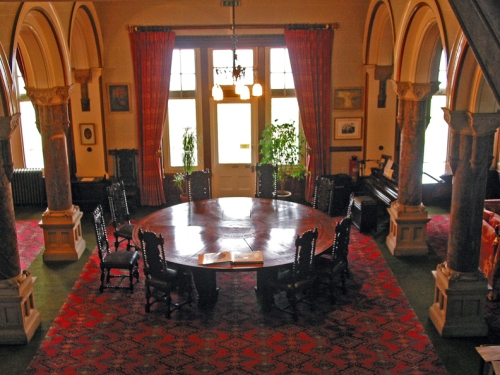
A Távola Redonda do hotel Camelot Castle / Camelot Castle Hotel's Round Table

A Távola Redonda do hotel Camelot Castle / Camelot Castle Hotel’s Round Table

Minhas duas noites no Camelot Castle já tinham se passado, portanto tratei de achar outro B&B, na avenida principal de Tintagel, pertinho do King Arthur’s Legs. Fiz meu check-out no e saí arrastando a mala. Antes porém tive a oportunidade de conhecer o dono do Camelot Castle. Era um artista plástico, Ted Stourton, que me mostrou todo o subterrâneo do castelo, onde fica seu ateliê de pintura e estúdio de música. Seus quadros são realmente lindos. Estão por toda parte no hotel, dá para perceber nitidamente os mais antigos e os mais recentes, acompanhar a evolução da expressão do artista. Ele disse que se soubesse que eu era fotógrafa, teria ficado hospedada de graça, pois o hotel acolhe artistas para desenvolver ali seu trabalho de criação. Infelizmente, tinha acabado de fechar a conta. Tempos depois, enviei mais de um e-mail solicitando nova acolhida, mas ainda não recebi resposta.

My two nights in Camelot Castle were over, so I found myself another B&B, in the main street, near the pub. When checking out, I had the chance to meet Ted Stourton, Camelot Castle’s owner. He’s a painter and showed me the castle’s dungeons where he has his atelier and music studio. His paintings are stunning indeed; they’re hanging in every wall inside the castle and taking a closer look one can see which are older and which are recent. It’s possible to notice the development of the artist’s expression. He told me that if he knew I was a photographer he would charge me nothing, because the hotel accepts for free artists at work. The place is supposed to inspire one’s creative process. Unfortunately I had just paid the bill, and he didn’t invite me to stay longer. Years later I sent an e-mail – more than one, actually- asking for free lodging while writing down my book, but I haven’t got an answer so far.
Minhas novas acomodações / My new lodging

Minhas novas acomodações / My new lodging

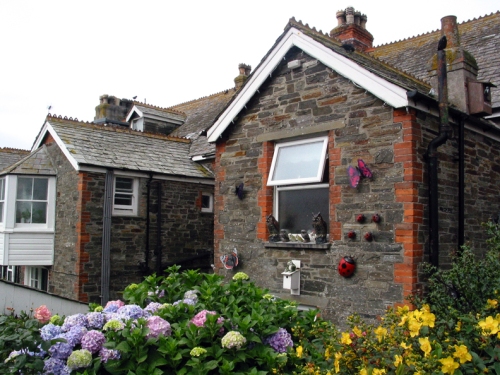
Quando Ted começou a falar sobre a Cientologia (aquela religião do Tom Cruise), insistindo na importância da leitura da Dianética, de Ron Hubbard, percebi que era chegado o momento de cair fora. A decoração do B&B para onde fui era hilária: havia borboletas de plástico colorido no jardim e dentro de casa, por toda a parte, bibelôs muito bregas. Todavia, o quarto era bom, com banheiro (acarpetado) em frente, limpinho. Servia um bom café da manhã, embora não tivesse cereais, como no Camelot Castle.

When Ted started talking about Scientology (Tom Cruise’s religion) and the must-read Dianetics by Ron Hubbard, I realized it was time to go. My new B&B was very kitsch; it had big plastic butterflies in the garden and, all over the house, cheesy pictures and bibelots. But the room was comfortable, and a clean bathroom right in front, carpeted, of course. The breakfast was good, although there were no cereals.

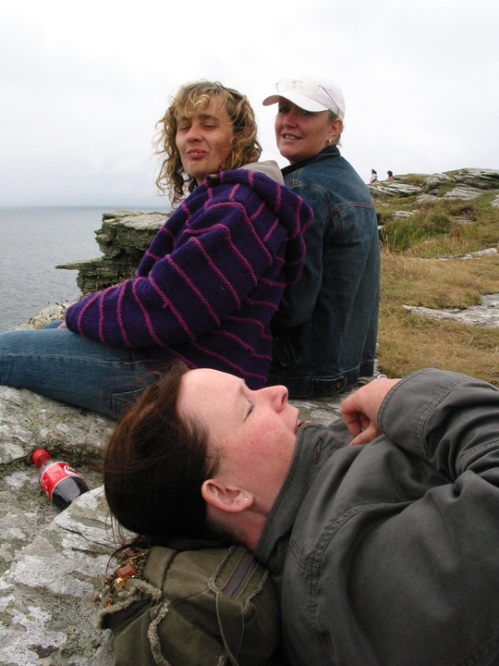
Michelle, Jewels & Kerry at Tintagel Castle

Michelle, Jewels & Kerry at Tintagel Castle

Tinha combinado de encontrar Michelle e Jewels à noite em outro pub. Quando cheguei lá, elas estavam aborrecidas com uns sujeitos que as assediavam de forma grosseira, por isso saímos dali para o King Arthur’s Legs. Tinha karaokê nessa noite. Kerry e Jewels foram jogar sinuca.Ficamos eu e Michelle na mesa e, de repente, dois caras se sentaram e nos convidaram para cantar. O mais velho engatou uma conversa com Michelle e o outro, carequinha, colou em mim. Tratava-se de uma guarnição do Exército da Escócia, que, por falta do que fazer nas férias, resolvera descer a pé de Glasgow até a Cornualha. Os soldadinhos se espalharam pelas mesas azarando as garotas. Estavam acampados no litoral a caminho de Newquay. Conversamos por horas e lá pelas tantas, o escocês já queria que eu fosse com ele para Newquay. Segundo ele, eu iria adorar caminhar pela trilha que costeia o mar, pois o visual era lindo, tudo espetacular. E eu era tão linda, ele estava tão apaixonado… quando respondi que aceitava, desde que ele carregasse minha mala, acredita que o soldado desconversou?!?! O pub já ia fechar. Saí rindo muito, abraçada com Jewels e Kerry igual àqueles três ursos bêbados de desenho animado.

I was to meet Michelle and Jewels by night, in another pub, but by the time I got there they were very upset. Some buggers were harassing them rudely, so we left to King Arthur’s Legs, where there would be karaoke. Kerry e Jewels went to the snooker table, leaving me and Michelle and, all of a sudden, a couple of guys appeared inviting us to sing with them. Soon they were sitting and we were all chatting. The older talked to Michelle and the younger, a bald one, to me. They belonged to a garrison of Royal Scottish Army who, having nothing better to do in vacations, decided to walk the coast all the way from Glasgow down to Cornwall. They were camping on the shore, on their way to Newquay, and the Scot now wanted me to go with him. I would love to walk the seaside trail, such a gorgeous landscape, and I was so beautiful, and he was so much in love… so I said yes, I would accept the invitation, with one condition, that he should carry my suitcase. Can you believe it, the soldier wavered and stepped back?!?! It was closing time, I left the pub laughing a lot, embraced with the girls, like those cartoon’s three drunk bears.

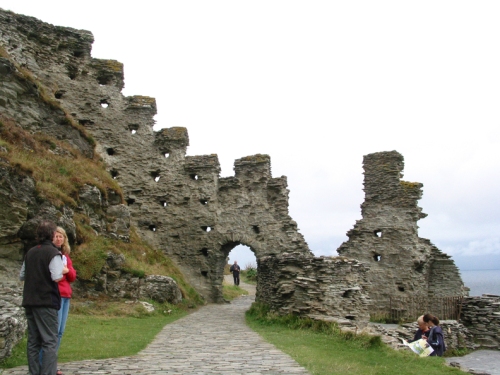
aatintagelCastle02

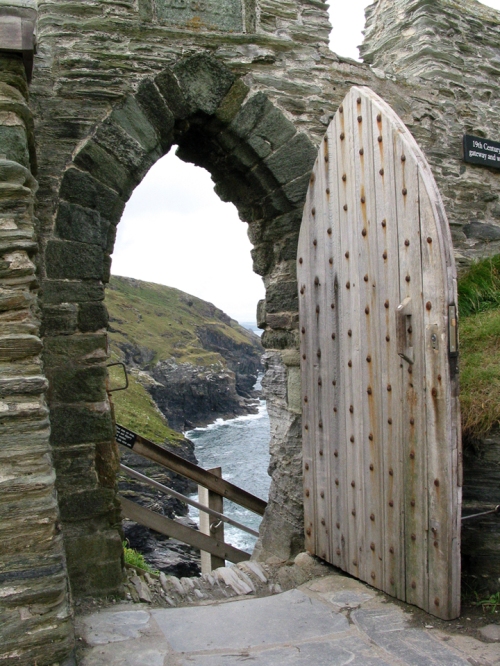
Tintagel Castle – Entrance

aatintagelCastleView1

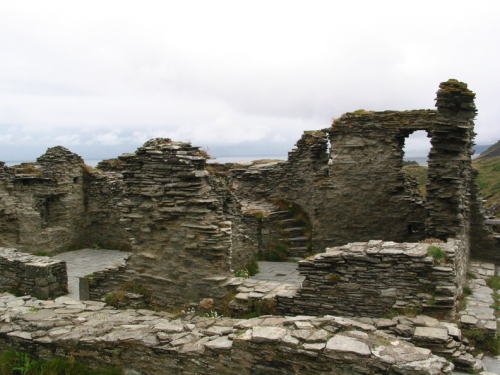
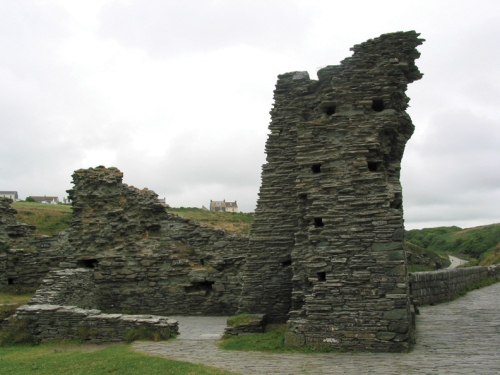
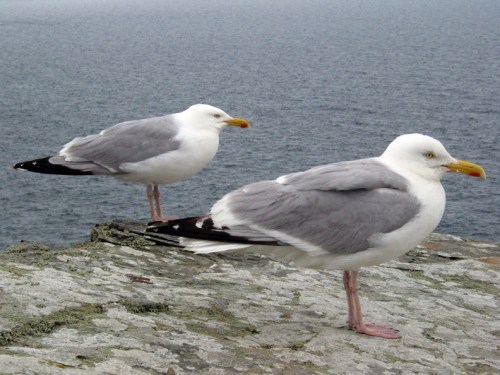
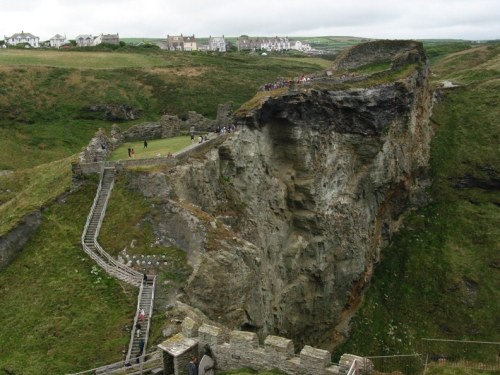
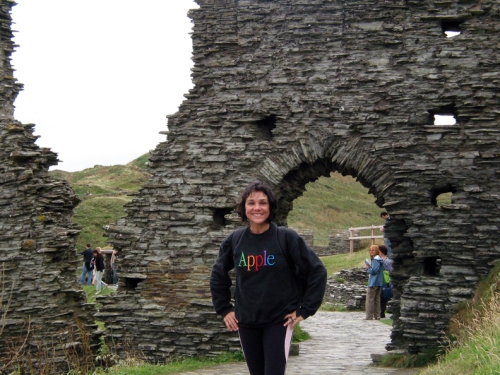
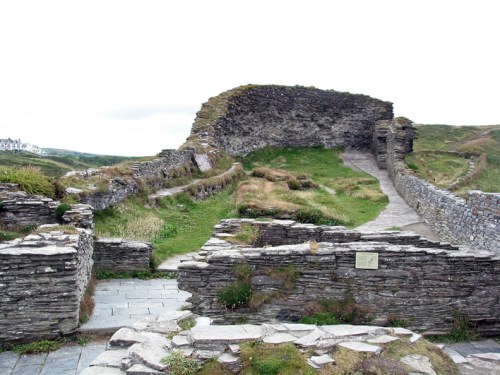
Combinamos visitar o castelo de Tintagel no dia seguinte. Faríamos um piquenique, cada uma levaria o que quisesse comer. Mas o dia cobriu-se com aquele manto cinza inglês, ameaçando chover. A verdade é que não tinha feito nenhum dia bonito ali, tirando o breve fim de tarde na praia e a primeira hora de sol da manhã seguinte. Isso me deixava frustrada. Queria fotos daquelas ruínas no lindo penhasco junto ao mar com céu azul, roxo ou laranja, qualquer cor menos cinza. Enquanto esperava minhas amigas, fiquei andando pelas ruínas. Fotografei gaivotas a meio metro de distância. Diferente das ovelhas, que se viravam e fugiam, elas praticamente posaram para mim. Não sei o que aconteceu com elas no camping, mas quando finalmente as meninas chegaram, foi só para dizer que haviam decidido ir embora naquele dia, e que nem iriam comer antes. Apenas andamos um pouco pelas ruínas.

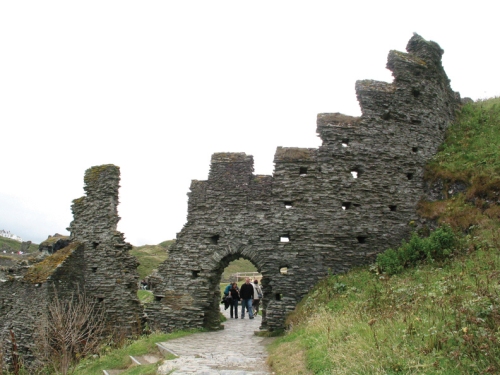
Tintagel Castle

Tintagel Castle

aatintagelCastleView

Next day we were eventually going to visit Tintagel Castle and make a picnic there. Each one should take something to eat. But the day was covered in that british gray mantle, a hard rain menacing to fall. True is, there was not a single day of good weather ever since I arrived, left alone that sunny moment in the beach when I arrived and the first hour of next morning. The rain was frustrating my plans of nice picts of those astonishing ruins upon the massive cliff by the sea. I wanted a blue sky, and I would do with a purple sky, or an orange sky, anything but that persistent grey. While I waited for my friends, I strolled the ruins taking pictures. The seagulls, unlike the sheep, were willing to be pictured, and let me come real close to them. When the girls arrived at last, they didn’t tell me what had happened in the camping, but they were leaving immediately and wouldn’t even eat. So we just walked around for a while.

aaseagulls

Fiquei chateada, querendo ir junto, mas o carro estava cheio com as três e suas coisas.  Na saída, havia uma ladeira longa e íngreme até a avenida, onde tinham estacionado. Michelle, que era gordinha, sentiu-se mal na subida e entrou numa van que cobrava duas libras para percorrer aquele trecho. Na avenida, trocamos e-mails, telefones e nos despedimos. Insistiram que eu as procurasse quando voltasse a Londres, pois Bristol não era longe e poderíamos nos encontrar novamente. Tintagel ficou mais cinza para mim quando o carro delas sumiu na distância. Aliás, todas as fotos de Tintagel ficaram cinza, pois o tempo não abria. Mas eu não iria desistir assim tão fácil.

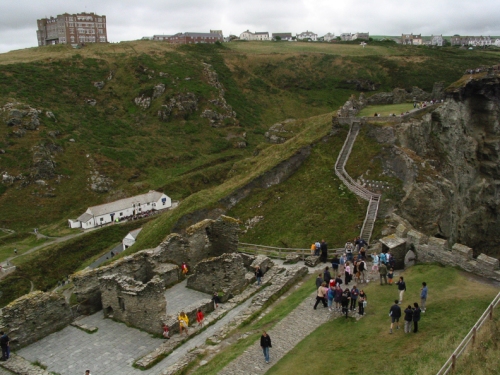
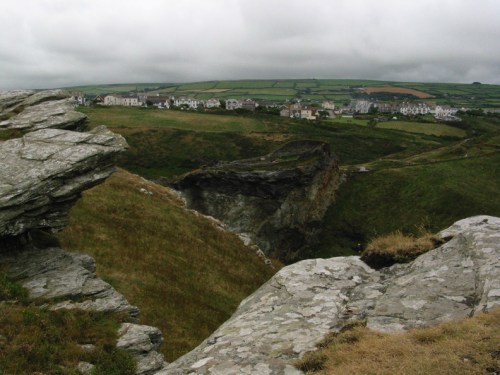
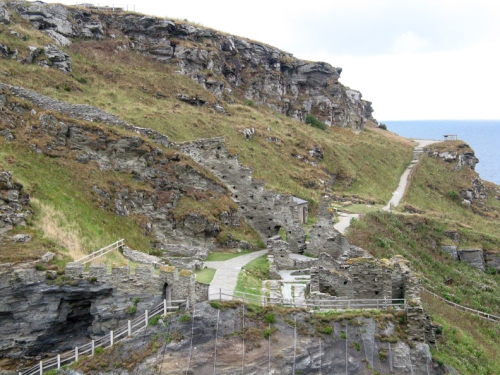
Por estas fotos dá para avaliar a subida do Castelo ao centro da cidade. / These pictures give an idea of the slope between the Castle and the main street.

Por estas fotos dá para avaliar a subida do Castelo ao centro da cidade. A entrada é pela casa branca embaixo, à esquerda / These pictures give an idea of the slope between the Castle and the main street. The entrance is through the white building down to the left.

aatintagelView

Tintagel vista do alto do antigo Castelo. Tintagel Overview from the top of the ancient Castle.

Tintagel vista do alto do antigo Castelo. Tintagel Overview from the top of the ancient Castle.

I was devastated, and would go with them if there was place for me in the car. But it was full with the three girls and their stuff. When we left the castle, there was a long steep slope to get back to the main street, where the car was parked. Michelle, who was plump, felt sick while walking and took a van to go all the way up, paying two pounds. We exchanged phone numbers, e-mails, and said goodbye. They insisted that I should call them when I got back to London, because Bristol wasn’t that far and maybe we could meet again. Grey Tintagel went darker as the car vanished in the distance. Moreover, all  photos from there were grey, because the bad weather didn’t recede. But I wasn’t giving up so easily.

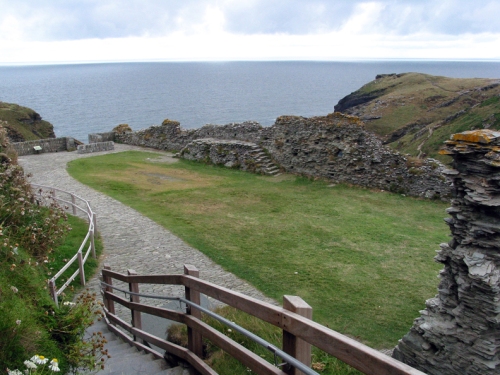
Mais vistas das ruínas./ More views of the ruins

Mais vistas das ruínas./ More views of the ruins

aacastle01

Este foi o céu mais perto do azul que consegui. /This was the closest to blue sky I was able to get.

aacastle

aacastleView

aadungeons

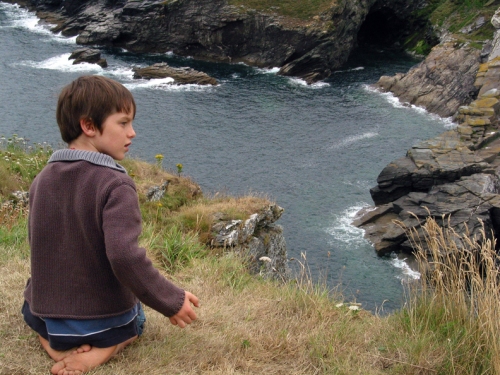
Boy enjoying the view / Garoto apreciando a vista

Boy enjoying the view / Garoto apreciando a vista

Eu fui! / I've been there!

Eu fui! / I’ve been there!


Read Full Post »


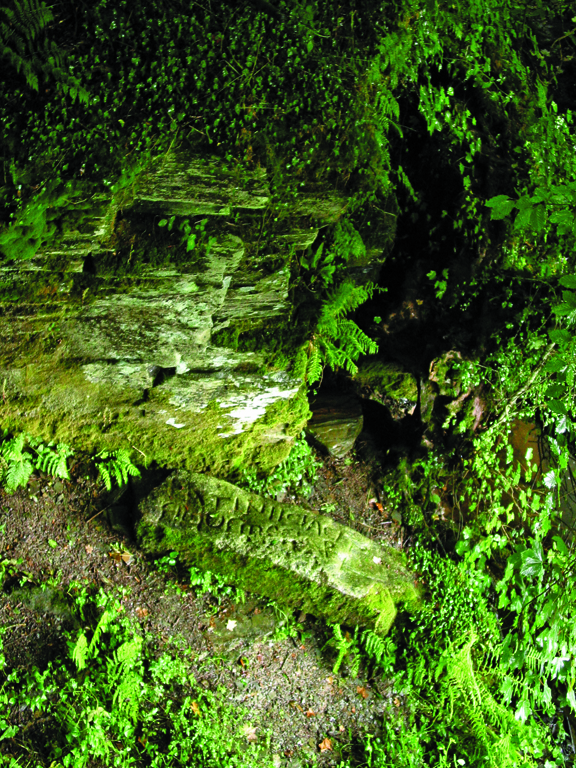
Arthur’s Stone

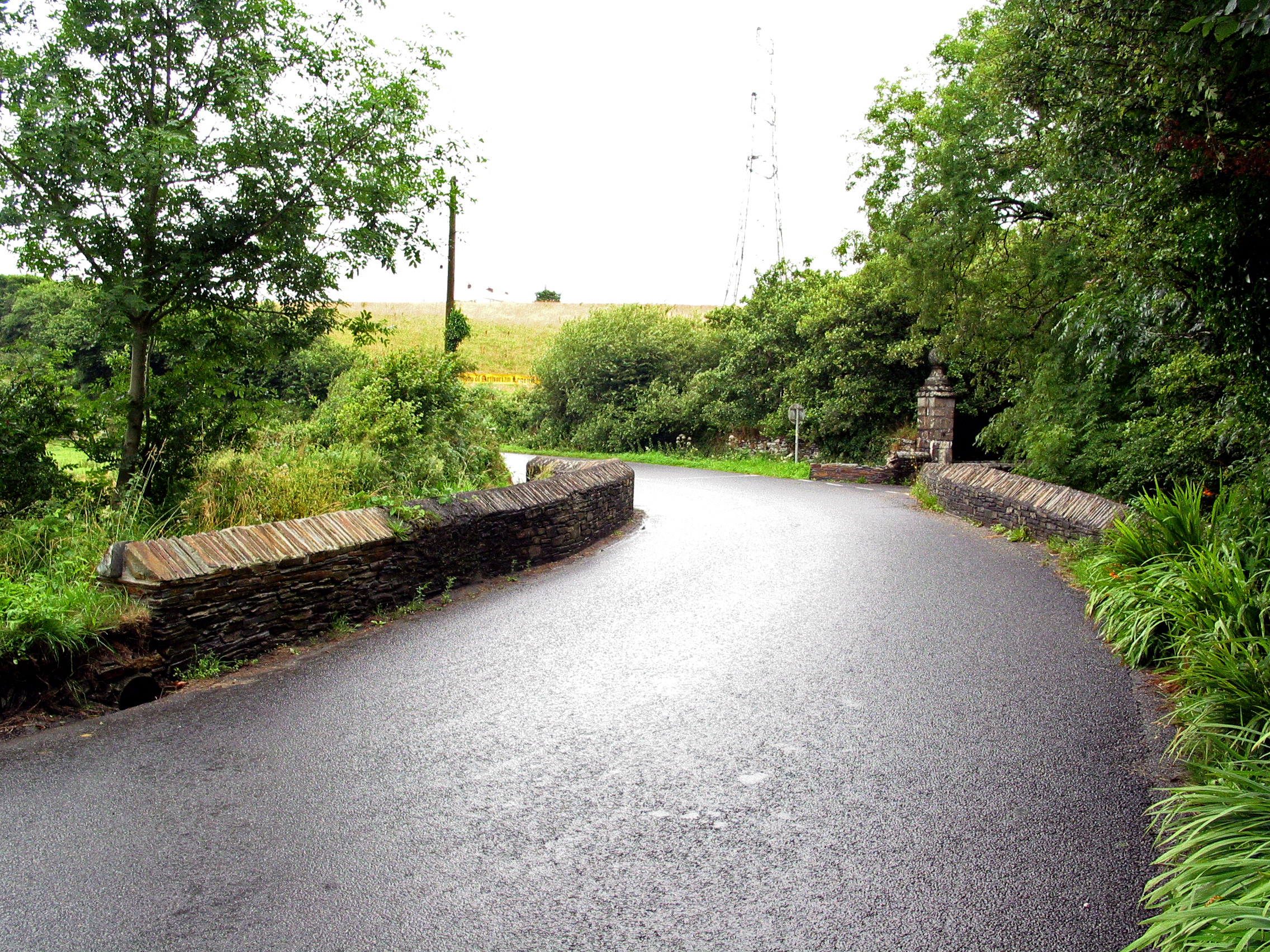
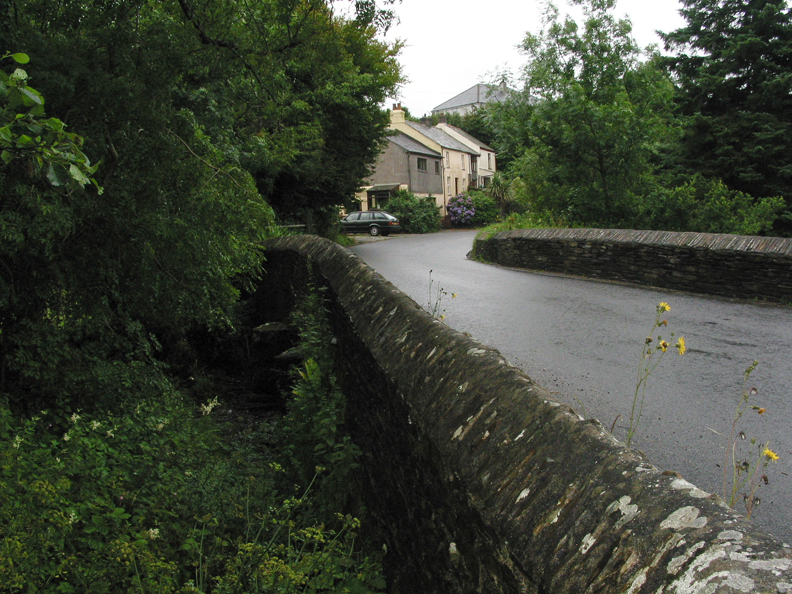
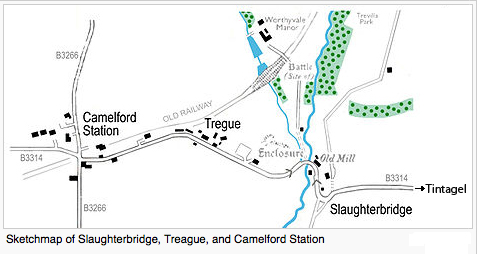
O trocador entendeu errado o nome da ponte – achou que eu ia para Wadebridge em Camelford, então me cobrou mais de duas libras pela passagem. Quando surgiu a placa indicando Slaughterbridge, percebi que o lugar era perto demais para aquela tarifa, fui reclamar. O homem disse que entendera errado porém não podia me devolver o dinheiro, porque já tinha destacado o tíquete. Eu teria que ir até o escritório da companhia para pedir reembolso. Fiquei uma arara; reclamei com o motorista, que foi muito grosseiro, o que me deixou chocada, mas era hora de descer do ônibus. Saltei em frente a um pavilhão chamado Arthurian Center. Agora sei que basta entrar numa ruela ao lado da ponte para chegar ao riacho em cujas margens se encontra a pedra de Arthur.

The collector of the bus misunderstood the name of the bridge – thought I was going to Wadebridge, in Camelford – so he charged me more than two pounds. When the sign “Slaughterbridge” appeared by the road I noticed that it was too close for such a fee, and complained about it. The man apologized for the mistake but he couldn’t give me back the money because the ticket had already been detached. I had to go all the way to the office to get a refund. I was pissed off and complained with the driver, who was extremely rude. But it was time to drop off, in front of a pavillion called Arthurian Center. Now I know that to find Arthur’s Stone one should go down a side lane beside the bridge. The stone is by the brook.

Slaughterbridge, da direita e da esquerda / Left and right

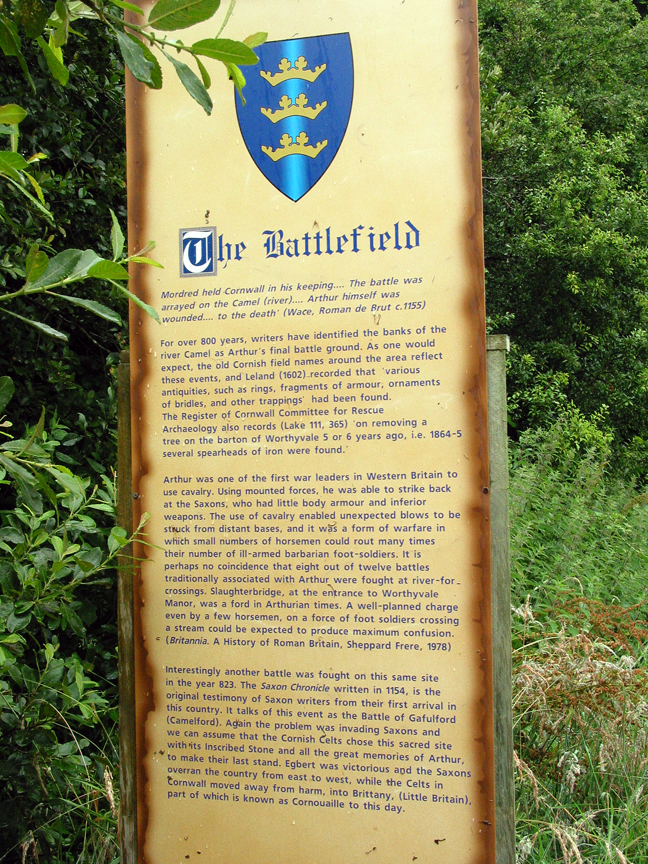
Como o tal Centro tinha uma placa dizendo “Sítio Arqueológico”, resolvi entrar para me informar. A entrada custava 3,50 libras. Havia uma exposição tosca de pinturas, cartazes desenhados à mão e um vídeo bizarro sem qualquer relação com Arthur: um sujeito vestido de preto andando; apareciam seus pés, a paisagem e uma entrevista sem pé nem cabeça com o cidadão. Fiquei assistindo apenas por que começou a chover torrencialmente. Quando a chuva diminuiu, saí em busca da pedra, seguindo a indicação de um funcionário. Havia uma trilha, mas dava mil voltas. Enfim, meia hora depois, encharcada e enlameada, cheguei ao rio e à pedra com inscrições celtas que atestam ali ter caído o rei. Depois é que fui perceber que o caminho terminava na estrada, na altura da ponte! Se tivesse entrado por ali, chegaria diretamente na pedra sem gastar minhas preciosas libras nem tomar aquele banho de chuva. Pelo menos passei pelo suposto campo da última batalha, onde fotografei a placa informativa .

The Arthurian Center had a sign written “Archaeological Site”, so I entered it n search of information. The admittance costed 3,50 pounds. There was a poor exhibition of paintings, handmade posters and a video without any relation to Arthur’s legend. It showed a bizarre interview with a man clad in black, who appeared walking, the camera focusing his feet and sometimes a landscape. I watched for a while because a hard rain had started. When it diminished I went for the stone, according to the clerk’s indications. There was a path, but it coiled a thousand times and it took me half an hour to get to the stream and the stone. I was soaked and muddy from hair to toe when I took the photo of the celtic inscriptions in the stone asserting that it was the place where the King fell down. Only after that I noticed that the way ended by the road. If I had gone that way, I’d have reached the stone without wasting my precious pounds nor rain bathing. At least the path went through the presumed last battle field, where I photographed the informative sign.

“A Cornualha estava em poder de Mordred… A batalha teve suas trincheiras no (rio) Camel… o próprio Arthur foi ferido… mortalmente.” (Wace, Roman de Brut, 1155)

“Por cerca de 800 anos os escritores tem reconhecido as margens do Rio Camel como o local da batalha final de Arthur. Como seria de se esperar, os nomes dos antigos campos no dialeto da Cornualha refletem estes eventos, e Leland (1602) registrou que foram encontrados objetos antigos tais como anéis, fragmentos de armaduras, enfeites de rédeas e outros adereços. O arquivo do Comitê da Cornualha para Resgate Arqueológico também registra (Lake 111, 365) a descoberta de diversas pontas de lança de ferro ao remover-se uma árvore no solar de Worthyvale há 5 ou 6 anos, ou seja, em 1864-5.

Arthur foi um dos primeiros líderes da Bretanha Ocidental a usar cavalaria na guerra. Empregando forças montadas ele foi capaz de contra-atacar os Saxões, que usavam pouca armadura e armas inferiores. O uso da cavalaria permitia ataques surpresa longe da base, sendo uma forma de guerra em que poucos cavaleiros podiam derrotar um número muito maior de soldados bárbaros a pé, precariamente armados. Talvez não seja coincidência que oito entre doze batalhas tradicionalmente associadas a Arthur foram travadas em passagens de rios. Slaughterbridge, na entrada do feudo de Worthyvale, era um vau nos tempos de Arthur. Um ataque bem planejado de soldados montados, ainda que poucos, a uma tropa de infantaria atravessando um córrego causaria certamente grande estrago. (Britannia. A History of Roman Britain, Sheppard Frere, 1978).

Curiosamente, outra batalha foi travada neste mesmo lugar no ano de 823. A Crônica Saxã escrita em 1154 é o testemunho autêntico dos escritores Saxões sobre sua chegada a este país, e menciona tal evento como a Batalha de Gafulford (Camelford). Novamente o problema eram invasores saxões e podemos presumir que os Celtas da Cornualha escolheram este lugar sagrado, com sua pedra inscrita e todas as lembranças de Arthur para seu confronto final. Egbert (líder  saxão) venceu e os Saxões devastaram o país de leste a oeste, enquanto os Celtas da Cornualha fugiram para a Bretagne (Pequena Bretanha, na França), parte da qual até hoje se chama Cornouaille (Cornualha).”

“Mordred held Cornwall in his keeping… The battle was arrayed on the Camel (river)… Arthur himself was wounded… to the death.” (Wace, Roman de Brut, 1155)
For over 800 years, writers have identified the banks of the river Camel as Arthur’s final battle ground. As one would expect, the old Cornish fields names around the area reflect these events, and Leland (1602) recorded that various antiquities, such as rings, fragments of armour, ornaments of bridles, and other trappings had been found. The Register of Cornwall Committee for Rescue Archaeology also records (Lake 111, 365) on removing a tree on the barton of Worthyvale 5 or 6 years ago, ( i.e. 1864-5 ) several spearheads of iron were found.

Arthur was one of the first war leaders in Western Britain to use cavalry. Using mounted forces, he was able to strike back at the Saxons, who had little body armour and inferior weapons. The use of cavalry enabled unexpected blows to be struck from distant bases, and it was a form of warfare in which small numbers of horsemen could rout many times their number of ill-armed barbarian foot-soldiers. It is perhaps no coincidence that eight out of twelve battles traditionally associated with Arthur were fought at fords. Slaughterbridge, at the entrance to Worthyvale Manor, was a ford in Arthurian times. A well-planned charge even by a few horsemen, on a force of foot soldiers crossing a stream could be expected to produce maximum confusion. (Britannia. A History of Roman Britain, Sheppard Frere, 1978).

Interestingly another battle was fought on this same site in the year 823. The Saxon Chronicle written in 1154, is the original testimony of Saxon writers from their first arrival in this country. It talks of this event as the Battle of Gafulford (Camelford). Again the problem was invading Saxons and we can assume that the Cornish Celts chose this sacred site with its inscribed Stone and all the great memories of Arthur, to make their last stand. Egbert was victorious and the Saxons overran the country from east to west,  while the Celts in Cornwall moved away from harm, into Brittany (Little Britain), part of which is known as Cornouaille to this day.”

Read Full Post »


Cornwall – a Cornualha

Comprei a passagem de ônibus, o 505 para Penzance, sem retorno dessa vez. A Cornualha tem praias aonde todo mundo vai pegar onda nas férias, como Newquay. O bagageiro do ônibus encheu com pranchas de surf. Penzance é a ultima cidade, de onde se vai ao Land’s End, o ponto final que encontra o Oceano Atlântico a sudeste. Era domingo, dia 27 de julho de 2005. De Londres a Camelford, foram cinco horas.  A estrada cruzava cidades minúsculas, que pareciam ter aspecto medieval, mas era impossível dizer com certeza pois choveu torrencialmente durante a viagem toda. Não dava para ver nada pela janela, só o mundo branco de neblina. Fiz o trajeto lendo o livro A Druid Abroad, de Sandra Parsons, sobre sua viagem a Newgrange, na Irlanda, em companhia de sua mãe. Fui a única passageira a descer em Camelford.

I bought a bus ticket, boarding the 505 to Penzance, this time without return. Cornwall is a summer destiny where you find the surf beaches as Newquay. The luggage compartment was full of surfboards. The last city is Penzance, from where you reach Land’s End, England’s south-eastern border facing the Atlantic Ocean. It was Sunday, July 27th. It took five hours from London to Camelford, where I was supposed to drop off. The road crossed tiny villages that could have a medieval look but I wasn’t sure, because it rained torrentially the whole day and beyond the windowpane the world was mostly white. I spent the time reading the book “A Druid Abroad” by Sandra Parsons, about her journey to Newgrange, in Ireland, with her mother. I was the only passenger to get off the bus in Camelford.

Uma placa na estrada indicava “Bodmin” e “Dozmary Pool”. Fiquei meio histérica pois Dozmary pool é o lago de onde se ergueu a Dama do Lago empunhando a espada Excalibur para ser dada a Arthur. E no fim da história, quando o Rei está mortalmente ferido, entrega Excalibur a Sir Bedivere, um dos Cavaleiros, para que a jogasse de volta no fundo do mesmo Lago, a fim de evitar que caísse em mãos inimigas. Eu precisava fotografar o lago, mas até aquele momento não fazia idéia da sua localização. Pensei então em seguir para lá imediatamente após a estada em Tintagel. Eu não fazia idéia, porém, da distância entre todos esses lugares.

A sign on a crossroads pointed the way to “Bodmin” and “Dozmary Pool”. I was entranced because that was the Pool from which waters rose the Lady of The Lake, bearing the mighty sword Excalibur to be given to Arthur. In the end of the tale, when the King is deadly wounded, he hands Excalibur to Sir Bedivere, one of the knights, with orders to throw it back into the deep of the Lake, to avoid its capture by enemies’ hands. I had to photograph that lake, although up to that moment I didn’t have the slightest idea of its location. So my mind was instantly made up: after the days in Tintagel I would go that way. But I had no idea of the real distance between these places.

Camelot Castle – Tintagel, Cornwall PL34 0DQ, Reino Unido – 01840 770202
http://www.camelotcastle.com


A chuva parou quando saltei do ônibus em Camelford. Parecia um lugar bonitinho, que valeria a pena visitar, mas fui direto para o ponto do ônibus local que me levaria a Tintagel, onde havia feito reserva no hotel “Camelot Castle” para duas noites. O ônibus já estava no ponto, como se esperasse por mim. Cerca de vinte minutos depois, desembarquei na cidade de Igraine. Percorri a avenida principal virando à esquerda no fim: o hotel ficava em frente ao mar. A construção (aliás, muito brega, aquele castelo fajuto estragava o visual) ficava bem ao lado de uma escadaria que levava à praia, uma pequena enseada aos pés do maciço sobre o qual se erguem as ruínas do castelo de Tintagel. Após fazer o check in, deixei a mochila no quarto com banheiro e desci imediatamente para a praia.

The rain ended when the coach reached Camelford, which seemed to be a nice place, worth visiting, but instead I went straight to the stop where the bus that would take me to Tintagel was already ready to leave, as if was just waiting for me. After about twenty minutes, I got off in Igraine’s city. I had booked two nights in the Camelot Castle Hotel, that stands facing the sea, turning left in the end of the main street. The building was pretty tacky, a fake castle ruining the gorgeous landscape. Beside it there was a stairway leading to the beach, a small bay of sapphire blue sea like those in pirate’s movies, at the feet of the massive rock where Tintagel Castle ruins still stand. After check in, I left my backpack in the room (with a private bathroom!) and went down to the beach.

Pela primeira vez na viagem, um quarto com banheiro só para mim.
For the first time in this trip, a room with private bathroom, all only for me!

A vista da janela do meu quarto não era para o mar: algumas casas e a rua principal da cidade.
My room didn’t face the sea, but Tintagel’s main street  ahead

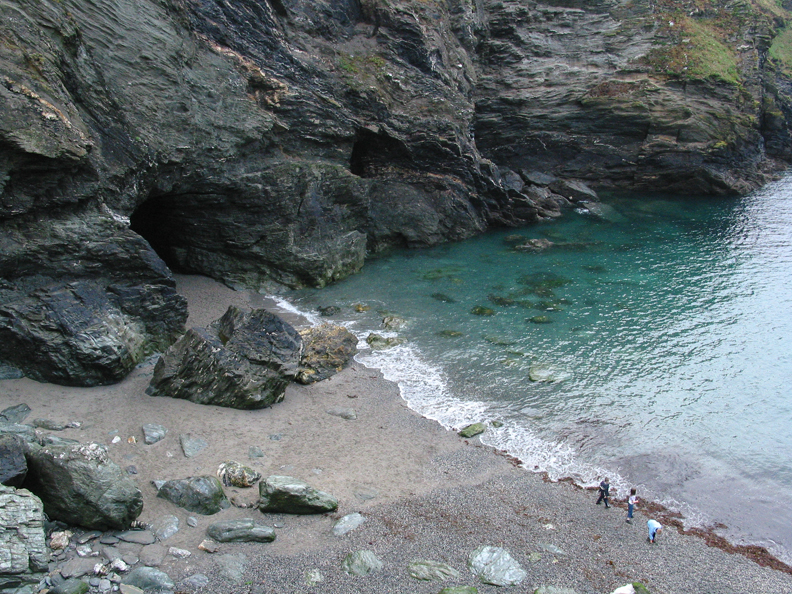
O tempo havia clareado, uma luz quase mágica banhava a paisagem. A enseada parecia cenário de filme de pirata, o mar cor de safira. Enquanto descia a trilha, um raio de sol irrompeu entre as nuvens, que pareciam se dissipar. Depois de ter viajado o dia todo em meio à tempestade e ao dilúvio, aquele sol era tão inacreditável que desapareceu mesmo instantes depois. Foi só para abençoar minha chegada. Agradeci aos deuses pulando na areia (ou melhor, seixos negros) como um cabrito drogado e gritando: “TINTAGEL! TINTAGEL!”

The weather had cleared, a magic light bathed the place, and while I was stepping down a golden sunbeam shone through the vanishing clouds. That was a blessing after travelling through storm and flood, an impossible ray of light so brief that it was gone as soon as I set my feet in the sand, or better, black pebbles. To thank the gods I started to jump like a goatling freaking out, and yelling: “TINTAGEL! TINTAGEL!”

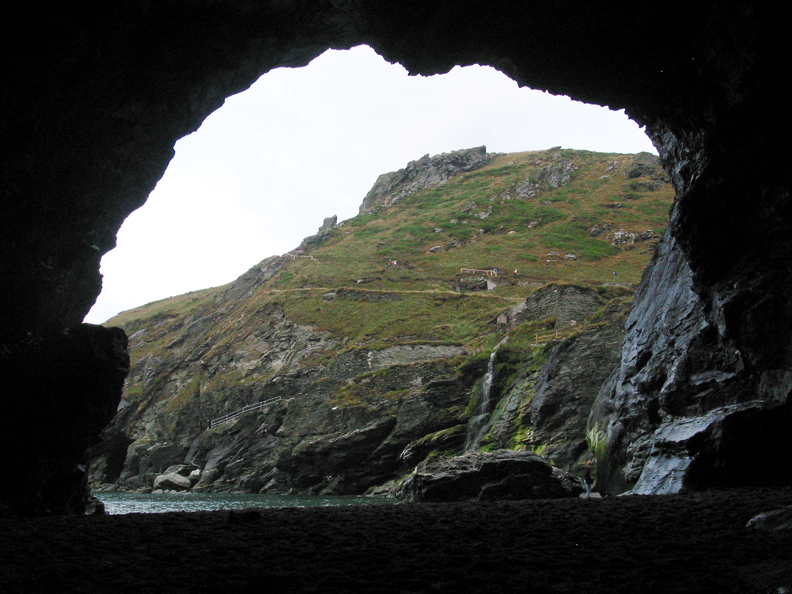
Na praia, a caverna sob o castelo de Tintagel por onde Uther se infiltrou para passar a noite com sua amada Igraine.Desse encontro nasceria Arthur.
The cave under Tintagel’s Castle where Uther penetrated the Castle to spend the night with his beloved Igraine. Of this meeting Arthur would be born.

Dentro da caverna, na maré baixa.  / Inside the cave, low tide

Outra ponta da praia / The other end of the beach

Vista do alto da escadaria / Overview from the stairway above

Magic

Read Full Post »


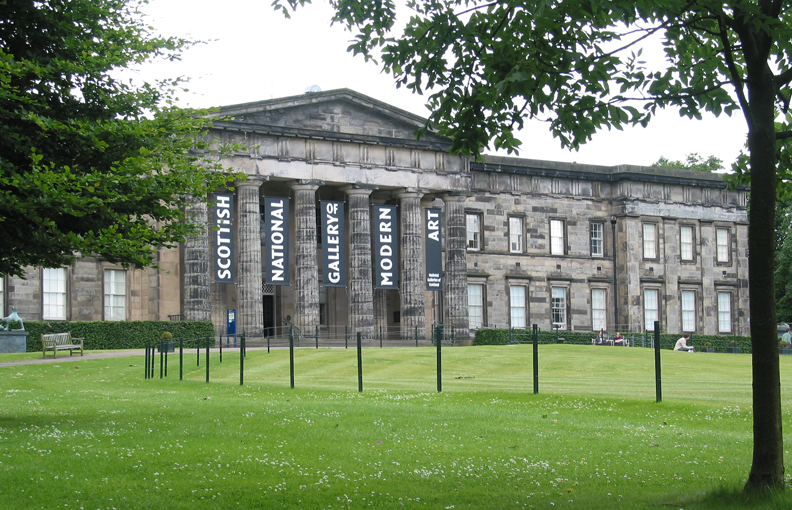
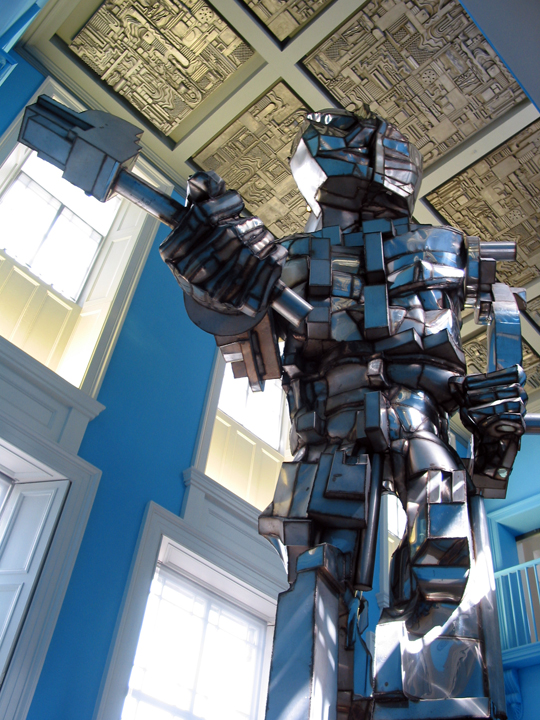
Na volta de Roslin, saltei em Edimburgo, arrastando a mala com dificuldade por ruas de paralelepípedos, rumo a museus e galerias para passar o tempo antes de pegar o ônibus noturno para Londres. Os museus eram gratuitos em Edimburgo, ocupando antigos castelos, com ênfase na arte contemporânea, o que criava um contraste espetacular entre os ambientes e as peças expostas.

Ruas de paralelepípedos, um caminho tortuoso / Tortuous treets of cobblestone

Back from Roslin, struggling to drag my suitcase over the streets of cobblestone, I headed to National Museum to spend the day before taking the night coach to London. Old castles in Edimburgh had become free museums and galleries, and the pieces of contemporary art created a fantastic contrast with the classical interiors.

Conheci dois ingleses no museu e me convidaram para lanchar com eles antes de seguirem viagem. Estavam indo para Leeds de carro. Compramos frutas e sanduíches no supermercado fomos comer no gramado do parque.  Aquilo salvou meu dia, nada como uma boa conversa para recuperar o bom humor. Por fim pegaram a estrada e me deixaram na rodoviária. Fiquei ruminando se deveria ter pegado carona com os ingleses, mas eles sequer ofereceram… não restava nada a fazer senão encarar a madrugada no assento desconfortável do ônibus. A temperatura em Londres estava elevada, mais ainda devido ao atentado. Havia carros de polícia por toda a parte. Liguei para minha família, que estava preocupada porque eu não dera sinal de vida enquanto estava na Escócia.

Two English guys made friends with me in the museum. They were from Leeds and were driving back there, but first were going to have a snack and invited me to go along with them. So we bought fruit and sandwiches at the supermarket and sat down to eat in the park lawn. That saved my day; nothing better than a chat to uplift spirits. But eventually they took the road, leaving me in the station. I caught myself wondering why hadn’t I taken a ride with them, but they never offered it… There was nothing left to do but face the uncomfortable coach seat the whole night through.
Temperature was high in London, higher due to the terrorist attack. Police cars were everywhere. I phoned my family, they were very worried because I hadn’t been in touch while in Scotland.

O lago no Museu Nacional da Escócia também é uma instalação. /
Even the pond in Scottish National Museum was an art project

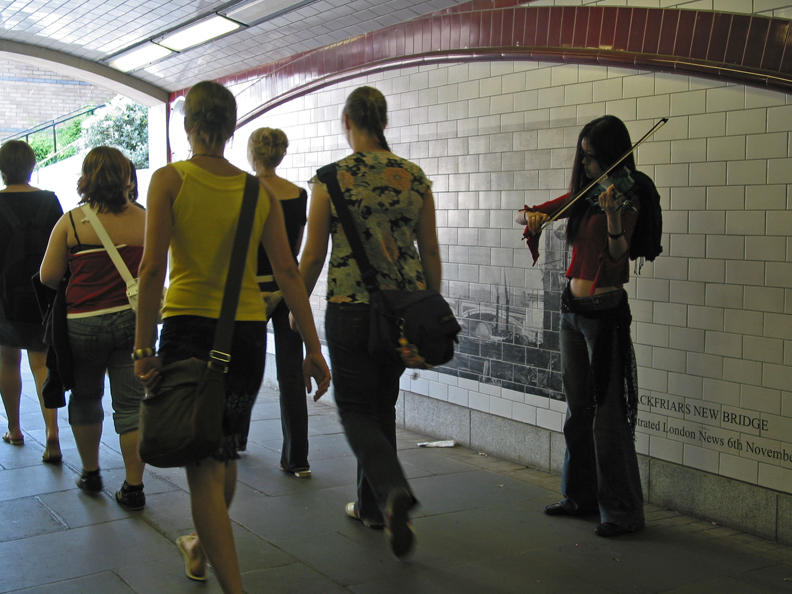
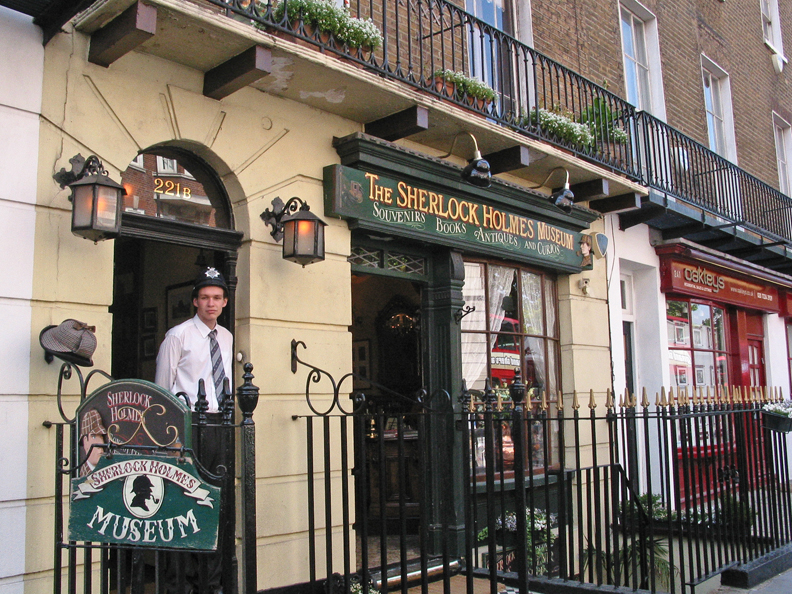
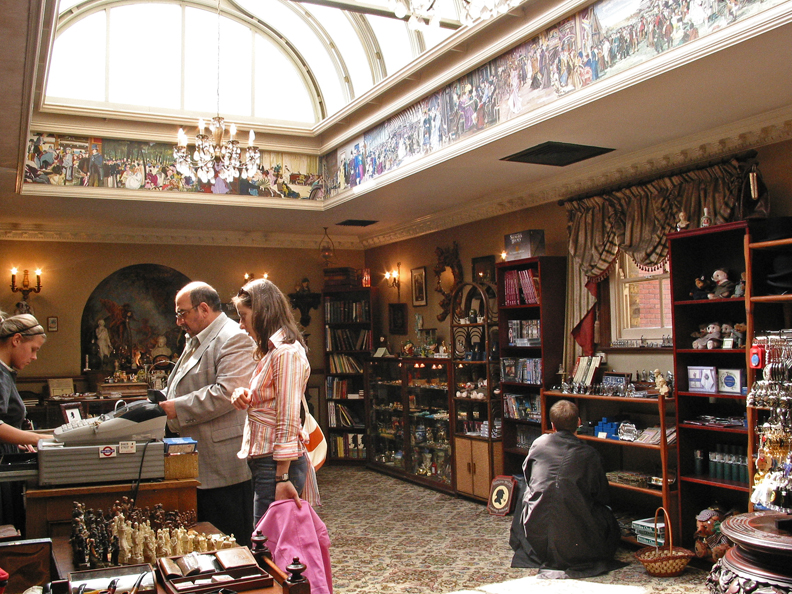
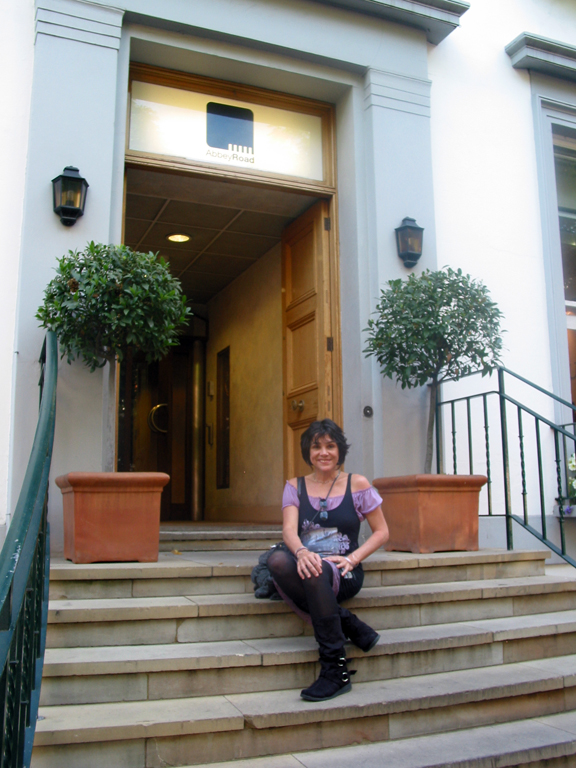
Enquanto planejava a ida para a Cornualha, aproveitei para bater pernas em Londres e visitar mais exposições: o salão de verão, passeios guiados gratuitos da Tate Modern e a retrospectiva de Frida Kahlo. Fui a Abbey Road, à casa de Sherlock Holmes, ao Museu de Cera Madame Tussaud. As ruas estavam repletas de artistas, desenhistas, malabaristas, músicos. Na saída da estação Blackfriars, uma violinista japonesa espalhava sua alma no ar, disfarçada de notas musicais. Eu caçava imagens através de vidraças, debaixo de pontes, em escadarias e praças públicas, na névoa da minha mente.

Amigos ingleses / British friends

While planning the trip to Cornwall, I took a couple of days strolling in London, and see the Summer Exhibition, Frida Kahlo retrospective, Tate Modern free guided tours. I went to Abbey Road, Sherlock Holmes house, Mme Tussaud’s. Art blossomed in the streets crowded with musicians, painters, jugglers. In Blackfriars Subway a japanese fiddler was spreading her soul in the air disguised of musical notes. And I chased images through windowpanes, under bridges, in parks and stairways, loose in my foggy trip.

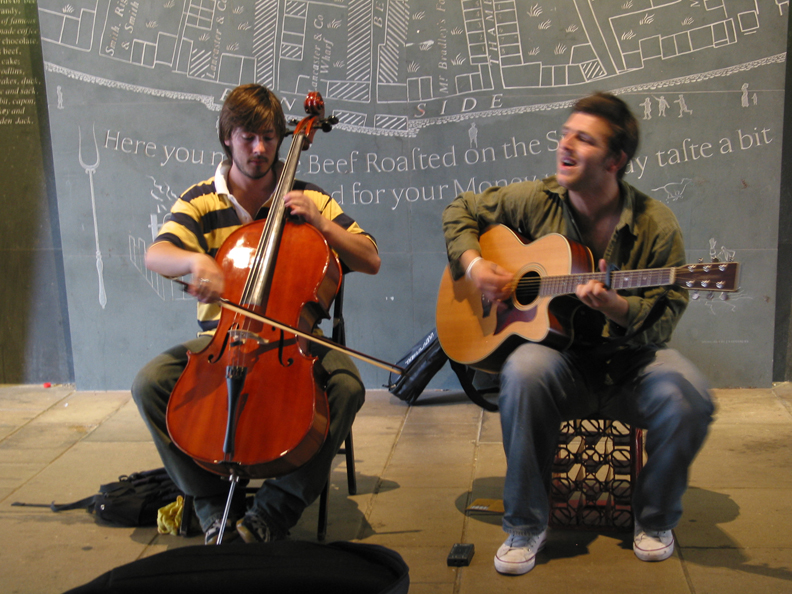
Músicos de rua em Londres / London Street Musicians

Ninguém sabia onde ficava Tintagel, terra de Igraine, mas achei o lugar na Internet; tinha até um hotel chamado Camelot Castle, ao lado das ruínas do castelo real onde nasceu Arthur. O site era tosco e o hotel caro, mas pensei em desfrutar de um pouco de conforto. Pagaria com cartão de crédito. Fiz uma reserva para duas noites no quarto mais barato, que não tinha vista para o mar. Pelo telefone, o recepcionista me indicou como chegar: pegar o trem para Penzance, descer em Camelford e lá pegar um taxi para Tintagel. Só o taxi custaria vinte libras. Então comprei a passagem de ônibus, bem mais em conta que o trem, e iria descobrir que de Camelford para Tintagel tinha ônibus de hora em hora aproximadamente. O preço da passagem era 2,25 libras.

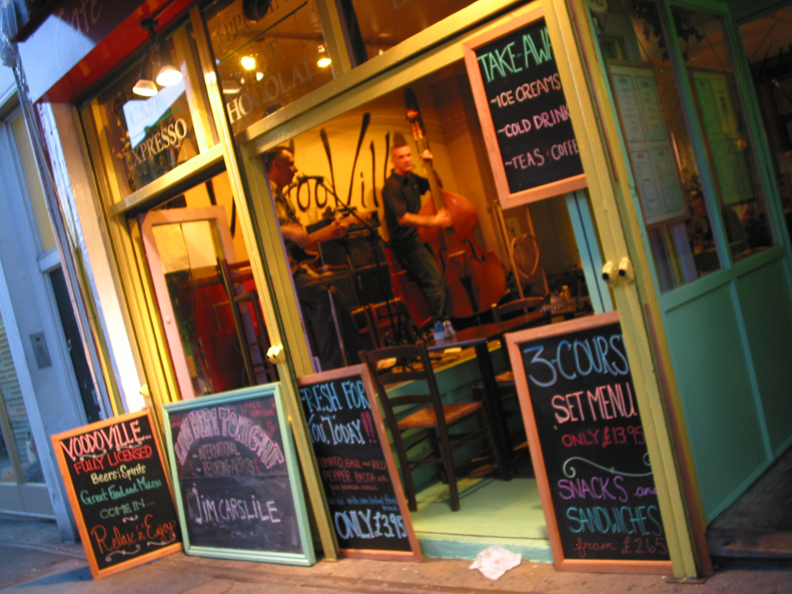
Pub in Camden Town

Nobody knew where Tintagel, Igraine’s home, was. But I found it in the web. There was even a hotel named Camelot Castle, right beside the ruins of the real castle, Arthur’s birthplace. The site was rough and the hotel wasn’t cheap, but I thought I deserved a bit of comfort for once. Credicards were accepted, so I called and booked two nights, choosing the cheapest room, not facing the sea. A recepcionist gave me the directions. I should take a train to Penzance and drop off in Camelford. From there it was easy to find a taxi to Tintagel; that would cost about 20 pounds. So I bought a bus ticket to Penzance, much cheaper than the train, and in Camelford I was to find out there was an hourly bus to Tintagel, which costed 2,25 pounds.

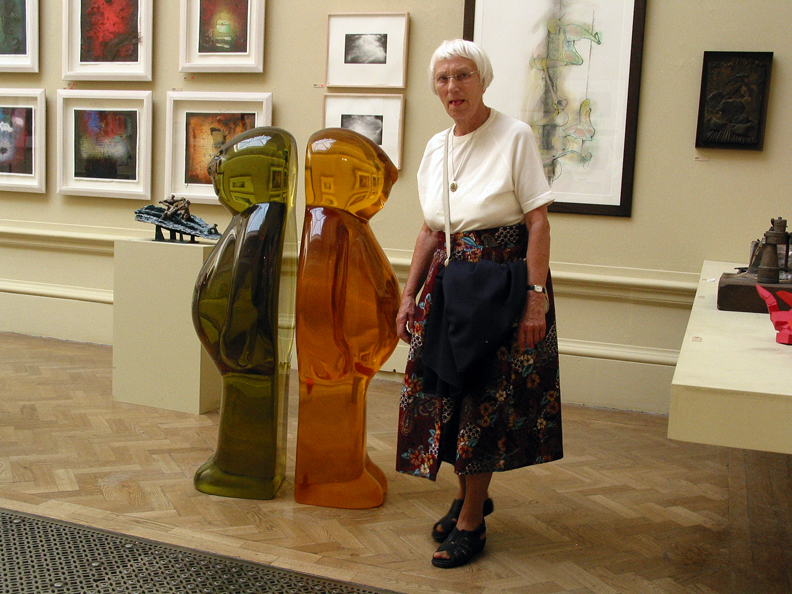
A maior atração do Slão de Verão em 2005 eram os “Jelly Babies” /
Summer Exhibition’s top attractions in 2005 were the Jelly Babies

Adorei estes ursinhos assassinos / Best for me were these murderous teddybears

221 Baker St.

Beatles’ souvenirs

Tate Modern

Londres: arte por toda parte / London: art everywhere

Covent Garden


Read Full Post »


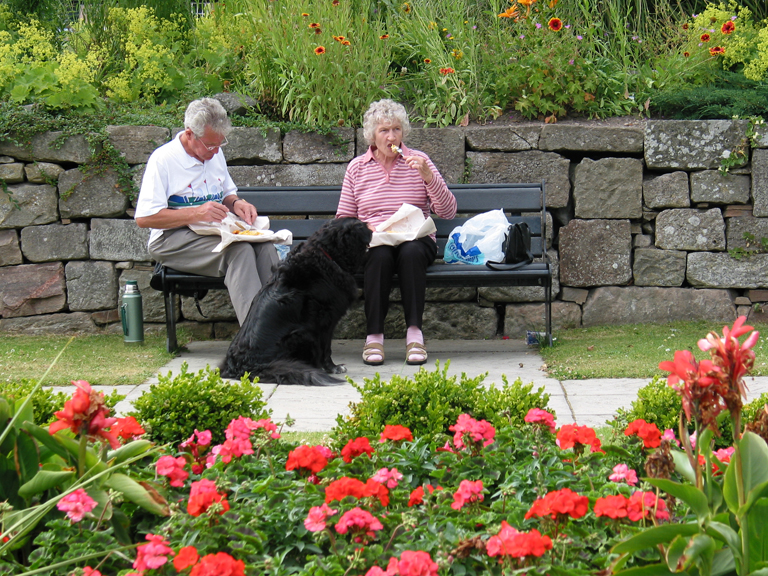
É comum ver pessoas almoçando ao ar livre, como esse casal e seu cão. Britânicos aproveitam cada instante do verão. / Couple with dog having lunch out in the sun. Not an unusual scene, british people enjoy every single summer moment.

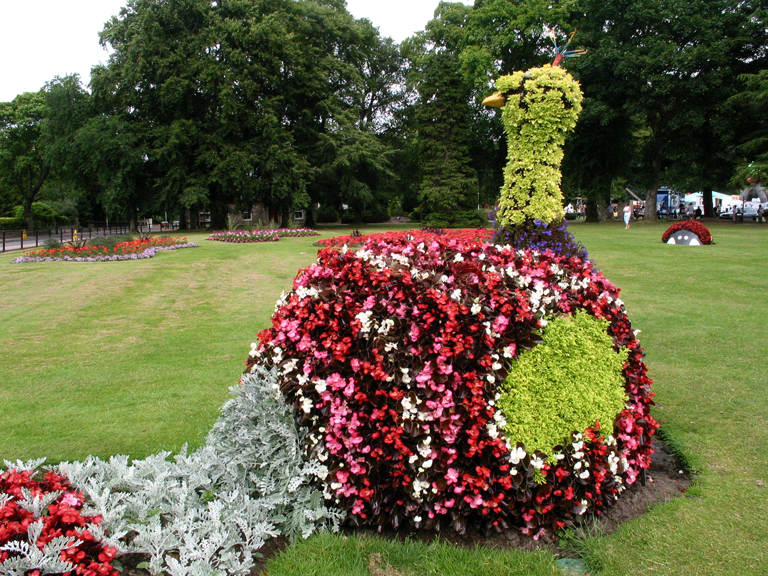
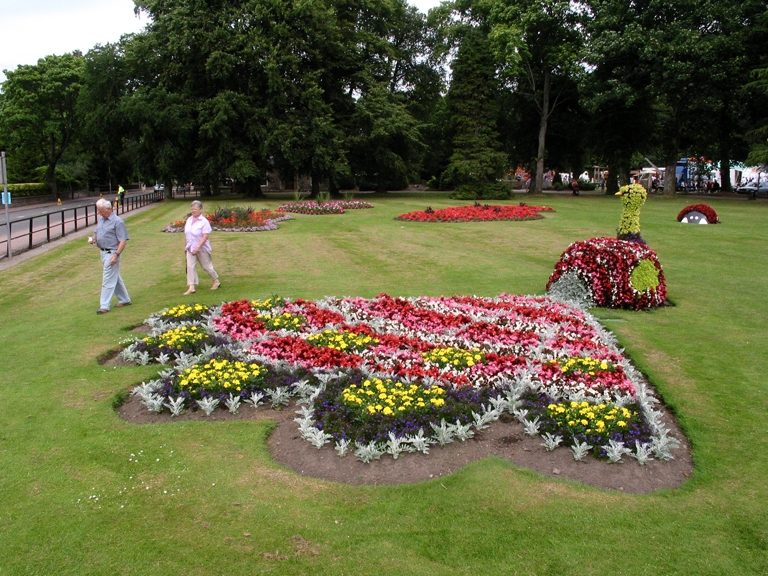
De Inverness a Forres são aproximadamente 50km; cheguei pela manhã, mas o dia estava cinzento, anunciando chuva. Forres é uma cidade bonitinha. Ganhara o prêmio de “jardim mais bonito” do Reino Unido, dizia a placa junto a uma praça onde realmente os jardineiros fizeram um trabalho notável. Usando bases de tela, esculpiram bichos feitos de plantas: joaninhas, pavões, lagartas. As guias de tela ordenaram o crescimento de flores cuidadosamente podadas, todas coloridas. Os britânicos são doidos por jardins, orgulham-se deles e este era realmente espetacular.

The distance from Inverness to Forres is around 31 miles. The day was foggy, forecasting rain when I arrived in that cute city. A sign in a square celebrated the prize Forres had just won as the most beautiful garden in UK. And the gardeners really did a hell of a job. They sculpted ladybugs, peacocks and caterpillars with coloured flowers, carefully trimmed, supported by an underneath grid. British people love gardening and are very proud of their work.

Topiaria: a arte de esculpir com plantas e flores, na qual os britânicos são experts. / Topiary: art of cutting trees and shrubs into ornamental forms, mastered by the British


Segui procurando o ponto de ônibus para Findhorn, mas as pessoas na rua nada sabiam informar. Nem havia muitas pessoas na rua, então saí andando, arrastando minha malinha pela avenida principal. Algumas placas indicavam um monumento próximo, a Sueno’s Stone, uma pedra com inscrições do tempo dos pictos que resolvi conferir. E fui seguindo as setas, mas, em outra praça, no meio do caminho, tinha outra pedra.

Sueno’s Stone, bem protegida em uma vitrine. As inscrições mostram cenas de batalha, possivelmente uma vitória contra invasores nórdicos. / Sueno’s Stone, well protected in a glass window. The carvings show battle scenes, maybe a victory against the Danes or Norse invaders.

I was looking for the Findhorn bus stop, and nobody knew where it was. There was no one out on the streets, so I went on carrying my little suitcase up the main street. Signs  pointed out a historical monument straight ahead, Sueno’s Stone, with pict inscriptions, so I decided to check it out and followed the arrows. But in another square, in the middle of the road, there was another stone.

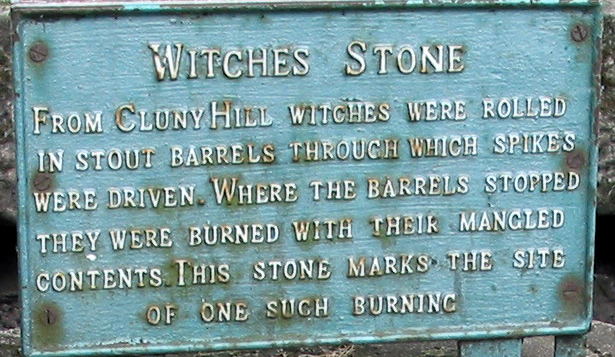
Witches Stone, Forres, Scotland

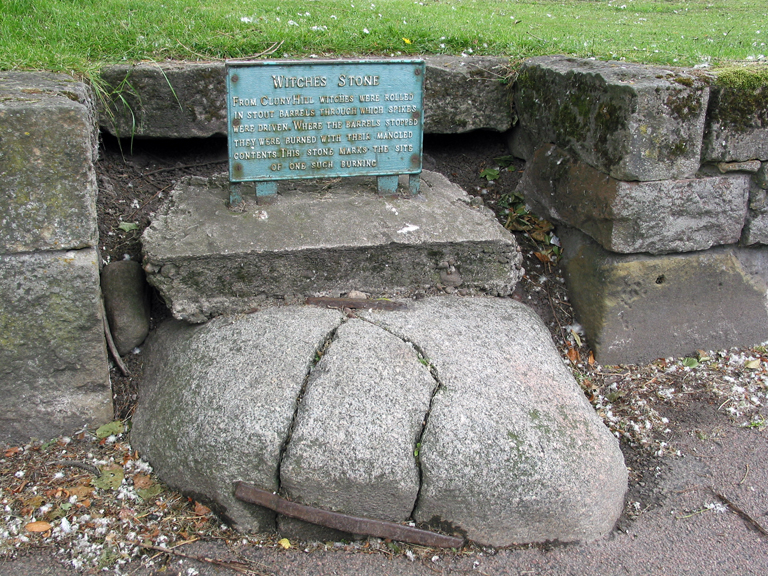
Witches Stone. A placa informava: no tempo da Inquisição, mulheres suspeitas de bruxaria eram postas dentro de um barril no alto da colina. O barril era espetado com várias lanças e empurrado para descer rolando pela encosta da colina de Cluny. Onde parava, ateavam fogo com o que restara da mulher dentro. Aquela pedra sinalizava o local onde um desses barris fora incendiado. Fiquei chapada. Esqueci Findhorn, o horário do ônibus, esqueci meu nome. Sentei e fiquei olhando aquele testemunho de algo que só tinha lido nos livros. Me vi dentro de um barril, sendo dilacerada e depois queimada viva.  Me veio a imagem de um porco no rolete.

Witches Stone. In Inquisition times, women judged guilty of witchcraft were put inside a barrel through which spikes were driven and the barrel was released to roll down Cluny Hill. When it came to a halt, fire was put to it with the woman’s remains still inside. That stone marked the spot where one of these burnings had happened long ago. I was stunned. I forgot all about Findhorn, the bus, I forgot my own name and just sat down there, staring at a material proof of something I had only read about in books. I could feel myself inside a stout barrel, being shredded in pieces and burnt alive. A hog roast came into my mind.

Detalhe. / Detail

E justo nas Terras Altas da Escócia, onde as mulheres reinavam nos antigos clãs! Possuíam seus próprios títulos, propriedades, terras. O livro “A Rosa Branca Rebelde”, de Janet Paisley, do qual transcrevo os seguintes trechos, descreve os costumes célticos dos clãs escoceses, povos que “escolhiam viver livremente juntos, pelo bem geral”. Ninguém passava fome nem ficava sem abrigo ou cuidado em caso de necessidade, pois todos se ajudavam mutuamente. “As mulheres, casadas ou não, deveriam se satisfazer caso quisessem outro homem. Suas ancestrais se divorciavam dos maridos com facilidade, quando eles não conseguiam sustentá-las ou respeitá-las, se roncassem, fofocassem, fossem impotentes ou apenas repugnantes. Uma esposa frustrada poderia ter um amante se seu marido bêbado não a satisfizesse. O noivado servia para que dois amantes vivessem juntos por um ano e decidissem se queriam mesmo casar-se um dia antes de completar esse período. As inglesas não tinham direitos nem poder, tampouco nome. Seu corpo, seus filhos e sua casa eram bens dos homens.” Ao casar-se, todos seus bens passavam a ser do marido e caso se separassem, a infeliz ficava sem nada.

It was a shock to learn that such stuff happened in the Highlands, where women were sovereign in ancient clan times. Scottish women, unlike the English ones, had their own titles, properties and land. I quote from “White Rose Rebel”, written by Janet Paisley, describing the celtic customs of Scottish clans, people “of free choice who lived together for common good”. Nobody would starve or go unattended in case of need, for people would care about each other. “Women, married or not, should satisfy their needs if they desired another man. Her grandmothers were already used to divorce easily if the husband did not sustain or respect the wife; if he snored, gossiped, were impotent or just disgusting. A frustrated wife could have a lover if her husband were a drunker and didn’t satisfy her. Engagement endured one year, so the lovers could live together and decide if they really wanted to get married after that time. English women didn’t have any rights, power or name. Their bodies, their children and their home belonged to the husband. If a couple divorced, all the properties were kept by the man”. There was nothing left for the poor woman.

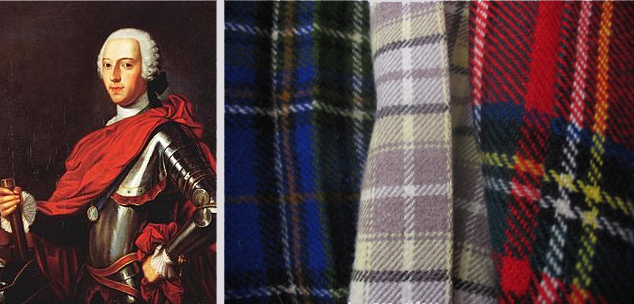
Charles Edward Stuart fugiu após a derrota e passou o resto da vida no exílio.
Os lindos tartans, felizmente, continuam a existir.
Charles Edward Stuart fled after the defeat and spent the rest of his life in exile.
The beautiful tartans survived to the present day.

Em 1745, na Batalha de Culloden, o exército inglês massacrou a insurreição dos clãs das Terras Altas que apoiavam a volta de Charles, herdeiro legítimo dos Stuarts, ao trono do Reino Unido. Além da execução e deportação de milhares de escoceses, o Parlamento britânico baixou um ato de desarmamento, para confiscar todas as armas das Terras Altas (Highlands) e banir o uso de suas tradicionais roupas, gaitas, danças e tartans. Foi abolido o direito hereditário dos chefes de clãs de aplicar a justiça em tribunais regionais. Além disso os professores escolares deviam jurar lealdade à Coroa inglesa e o inglês substituir o gaélico como idioma nacional. Em suma, reduzir a pó toda a cultura de um povo. Chamar mulheres de bruxas e achar que isso justifica queimá-las me parece apenas a sequência do processo.

In 1745, in the Battle of Culloden, the English Army butchered the Highlands’ clans uprising in support of “Bonnie Prince Charlie’s” restoration, as last legitimate heir to the Stuarts, to the British throne. Thousands of Scots were killed and deported. The British Government enacted laws to incorporate Scotland—specifically the Scottish Highlands—within the rest of Britain. The abolition of Heritable Jurisdictions Act ended the hereditary right of landowners to govern and make justice in their estates through barony courts. The Disarming Act confiscated all “warlike weapons” and the Dress Act declared wearing tartans and kilts as illegal. The traditional pipes and dances were banished; teachers were forced to swear loyalty to the English Crown and English replaced Gaelic as official language. In short, a deathly blow to Scottish culture.
Seems to me that naming a woman a witch, and believing this is enough to burn her alive was just a later outgrowth of the process.

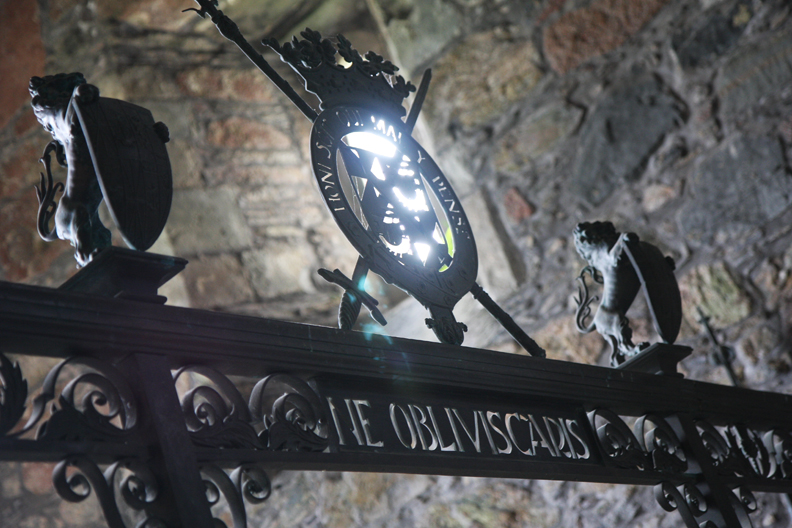
Ne Obliviscaris. Do Not Forget. Não esquece.

Entretanto, voltando ao tempo do Império Romano, poucos séculos antes, temos relatos de brutalidades semelhantes inflingidas às tribos britânicas pelos conquistadores. Na verdade a história se repete, até os dias de hoje, mudando apenas de endereço, remetente e destinatário. Quanta tradição preciosa perdeu-se para sempre! Me dei conta que poderia ter morrido assim em uma vida passada. Plantada em frente à pedra chorei bem uma meia hora por todas as injustiças do mundo dito civilizado.

However, if we go back in time a few centuries, to the Roman Empire, there’s evidence of the same brutality inflicted on the British tribes by the conquerors. Indeed History repeats itself to this very day, the only things that change are the characters involved. How much precious tradition is forever lost! I realized I could have been burnt in a past life, and remained roughly half an hour sitting by the Witches Stone, weeping for all unfairness of the so called civilized world.

Read Full Post »


Victoria Station, onde tantas vezes estive, indo e voltando
Victoria Station, where I’ve been so many times, coming or going

Uma coisa engraçada nos ônibus do Reino Unido é a paranóia dos motoristas com a bagagem de mão. Se for um pouquinho maior do que determinado tamanho ou estiver muito estufada, exigem que seja colocada no compartimento de bagagem. Como já tinha percebido esse detalhe, embarcava me mantendo sempre de frente para o motorista, ainda que precisasse subir os degraus de costas para que ele não visse o tamanho da mochila nas minhas costas, senão nem me deixaria entrar. E a escondia imediatamente debaixo da cadeira, atrás das minhas pernas, embora devesse guardá-la na prateleira acima dos assentos.
Para esta longa viagem ( de Londres a Edimburgo, 656km) levava casacos, cachecol, lanche, câmera e o livro Harry Potter and the Half-Blood Prince, um tijolo. Mas o volume passou despercebido quando o motorista foi checar se estava tudo em ordem no ônibus antes de dar a partida.

Something funny in UK coaches is the drivers’ paranoia concerning hand luggage.
If it’s an inch bigger than a certain size or too overweighted, they oblige you to put it in the luggage compartment under the vehicle. As soon as I took notice of this detail I made a plan, and it worked quite well. Whenever I was boarding I never turned my back to the driver so he couldn’t see my backpack size, otherwise he wouldn’t let me in. I would circumvent the man, climbing the steps backward if necessary. And immediately hid the backpack under the seat, behind my legs, although hand luggage is supposed to be kept in the compartment above the seats.
For this overnight journey (from london to Edimburgh, around 408 miles) I had brought coats, scarf, a snack, camera and “Harry Potter and the Half-Blood Prince”, a book thick as a brick. The driver went all the way through the corridor to check out if everything was in order before starting the engine, still the backpack went unnoticed.

Estrada para Edimburgo / On the road to Edimburgh

Presenciei uma cena bizarra na Victoria Station por causa de bagagem. Um negão entrou carregando um galão de vinte litros e, interpelado pelo motorista, disse que era óleo. Confusão à vista: o motorista disse que era proibido transportar óleo no ônibus. Mas o tal óleo – de cozinha talvez – não existia na cidade do passageiro, que tinha ido a Londres especialmente para comprar aquilo e se recusava a abandonar a mercadoria.
– Nesse caso, o senhor não pode viajar – afirmou o motorista.
– Mas eu paguei a passagem – rebateu o homem.
E a discussão começou. Dez minutos depois, o motorista mandou chamar uma guarda da estação, também negra, para ver se convencia o sujeito:
– Senhor, lamento, mas são normas da empresa, não posso permitir.
O passageiro insistiu. Não digo que as pessoas se amontoaram em volta, como teria acontecido na Rodoviária Novo Rio, porque os ingleses são muito discretos, mas o bate boca já estava chamando atenção e os demais passageiros amarrando a cara devido ao atraso. Foi chamado outro funcionário, mais graduado, que se mostrou irredutível do mesmo jeito. Nem no bagageiro era permitido levar óleo. Enfim, depois de quarenta minutos, o galão foi finalmente colocado num compartimento separado do resto da bagagem e o ônibus partiu.

I witnessed a bizarre occurrence concerning luggage in Victoria Station. A big black man was boarding the coach carrying a demijohn of around 5 galons. Heckled by the driver, he said it was oil, and the trouble started. The driver told him it was expressly forbidden to carry oil in the coach. But such oil (probably cooking oil) was not available in the passenger’s town. He had gone all the way to London just to buy it and refused to leave it behind.
“– You can’t travel then”, the driver stated.
“– But I paid for the ticket”, refuted the passenger.
The quarrel began, and after ten minutes of argument the driver sent for an officer, black herself, to talk him into the matter:
“– I’m sorry, Sir, these are the company rules, there’s nothing I can do”.
And the passenger insisted. There was not a crowd gathering around, as would surely happen in Brazil, for English people are very discreet, but the squabble was drawing people’s attention and the other passengers were already ugly-faced for the delay.
Another station officer appeared, adamant as well: it was forbidden to carry oil, even in the luggage compartment. At last, forty minutes later, the demijohn was put in another compartment, apart from the luggage, and the coach departed.

Vista da janela do ônibus a caminho de Edimburgo
View from the coach window, on my way to Edimburgh

A viagem levou a noite toda. O ônibus ia lotado, o carinha ao meu lado era um fofo e logo começamos a conversar. Ele percebeu que eu estava inconfortável naquele assento apertado e me emprestou uma almofadinha inflável que se encaixa em volta do pescoço, salvou minha vida. Embora fosse verão, fazia um frio absurdo. No meio da madrugada o ônibus fez uma parada. Jimi tinha cigarros, e saímos para fumar no estacionamento, quase congelamos no vento cortante.

The journey took all night. The coach was full, the guy sitting next to me was very nice and soon we were engaged in a conversation. He noticed how uncomfortable I was in that narrow seat and lent me an air cushion to put around my neck, that saved my life.
Despite being summertime, it was utterly cold. Early morning there was a stop, Jimi had cigarrettes and we got out to smoke in the parking lot. It was freezing there in the biting wind.

Aurora se anuncia / Dawn closing by

Não consegui dormir, mesmo com a almofada . Ao romper da aurora, já estava com a câmera grudada no vidro da janela.
Lamentei não ter um celular naquela hora para manter contato com Jimi. Ele poderia me ligar quando terminassem seus compromissos, mas eu nem sabia onde iria me hospedar. Então só trocamos e-mails e até hoje somos amigos no Facebook.

I tossed and turned but could not sleep. Came dawn, my camera was already pressed in the windowpane.
So sad I didn’t have a mobile to keep in touch with Jimi. He would call me when he was finished with his appointments, but I didn’t knew where I was going to stay in Edimburgh. But we exchanged e-mails and still today we’re friends in Facebook.

closer


Read Full Post »


Depois das ruínas, o jardim. We’ve seen ruins, let’s walk the garden now.

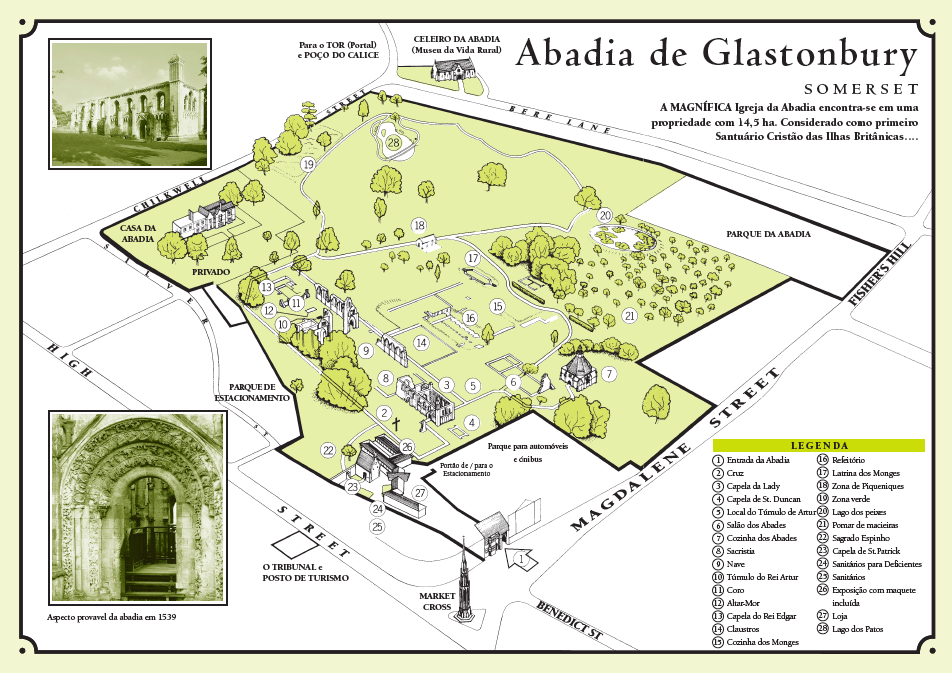
Abaixo o mapa desse lugar tão especial e a tabela com os preços de entrada. Os portões abrem às 9h da manhã. Em junho, julho e agosto só fecham às 20h. Março, abril e maio às 18h. Setembro, outubro e novembro às 17h e os demais meses (inverno) às 16h. Mais informações no site da Abadia.

Below goes the map of this unique place and the fares of admittance. The opening time is 9 a.m. but the closing time changes according to the season. In June, July and August it goes up to 8 pm. March, April and May 6 pm. September, October and november 5 pm and in wintertime the gates close at 4 pm.More information can be found in the site of the Abbey:

www.glastonburyabbey.com

Mapa em inglês / Map in English

Mapa em português / Map in portuguese

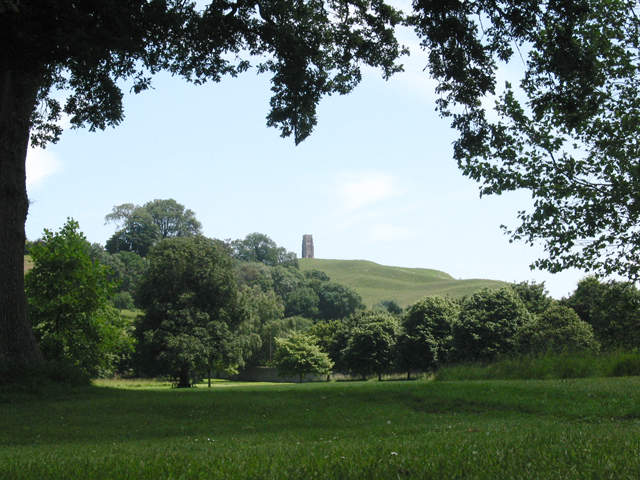
Vista do Tor / Tor View from the Abbey Garden.

O lago dos peixes / The Fish Pond

Um dos maiores carvalhos, junto ao lago. O carvalho é uma árvore sagrada para os druidas. One of the highest oak trees, close to the Fish pond. The oak is a sacred tree for druids.

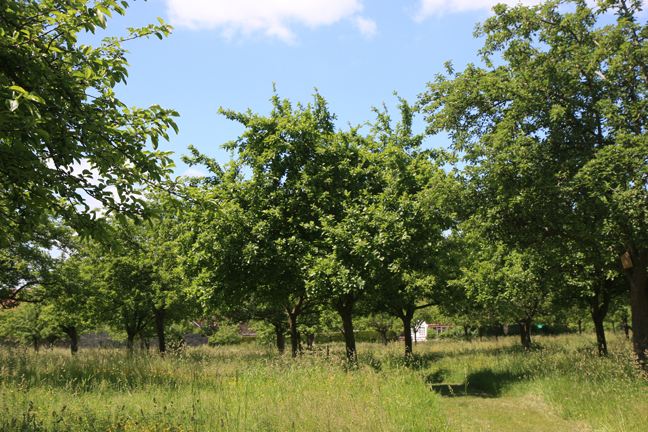
O pomar de macieiras. Avalon era antigamente conhecida como a Ilha das Maçãs.
The apple trees orchard. Avalon was known, in times of old, as the Isle of Apples.

Maçãs, embora pareçam romãs!
Apples, although they look like pomegranates!

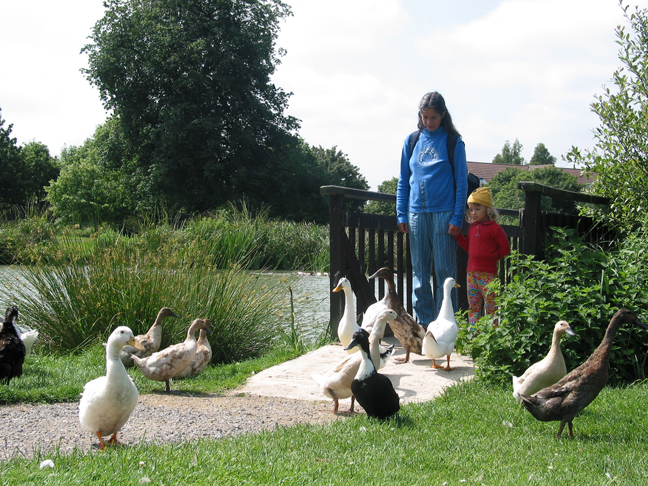
O lago dos patos / The Duck Pond

Os patos não são tão amistosos quanto deveriam, bati esta foto e saí correndo.
Ducks, not as friendly as they should be. I took the photo and ran.

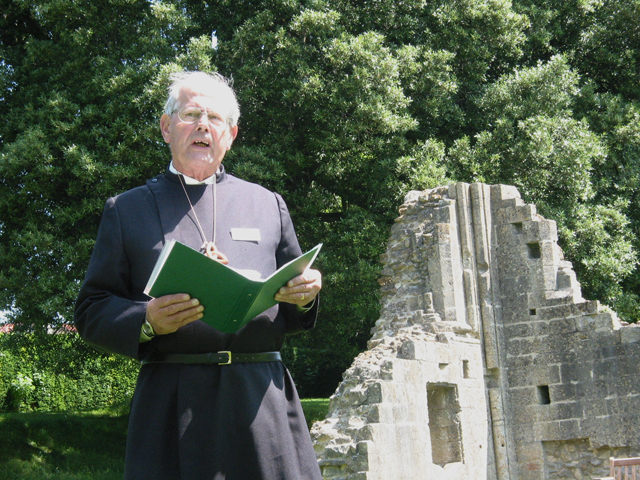
Um padre junto à cruz na entrada / A priest close to the Cross in the entrance

O padre é na verdade um capelão, e faz orações diariamente onde ficava o altar. The priest is actually a chaplain, who leads prayers everyday in the spot where once stood the High Altar.

Junto à loja de souvenirs encontra-se o Museu da Abadia.
The Museum, next to the Gift Shop.

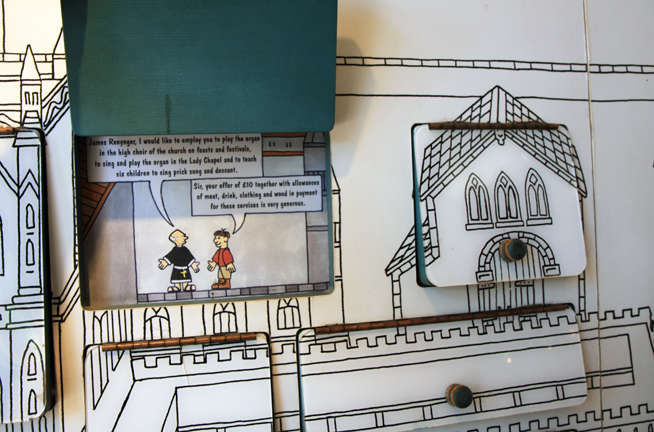
Painel interativo no Museu
Interactive panel in the Museum

Abrindo as janelinhas há informações sobre a vida na Abadia, ilustradas com personagens representando as pessoas que ali viviam e trabalhavam. As crianças adoram.
Behind each lid, characters present information on ancient life and work at the Abbey. Children love it!

Painel sobre Arthur. A ilustração mostra os monges desenterrando seu enorme caixão de carvalho, sobre o qual uma cruz trazia a inscrição: “His iacet inclitus Arturius in insula Avalonia” que significa ” Aqui jaz o Rei Arthur, enterrado na Ilha de Avalon”.
Panel about Arthur; monks are depicted unburying his massive oaken coffin, beneath a cross with the inscription “His iacet inclitus Arturius in insula Avalonia”, what means “Here lies King Arthur buried in the Isle of Avalon”.

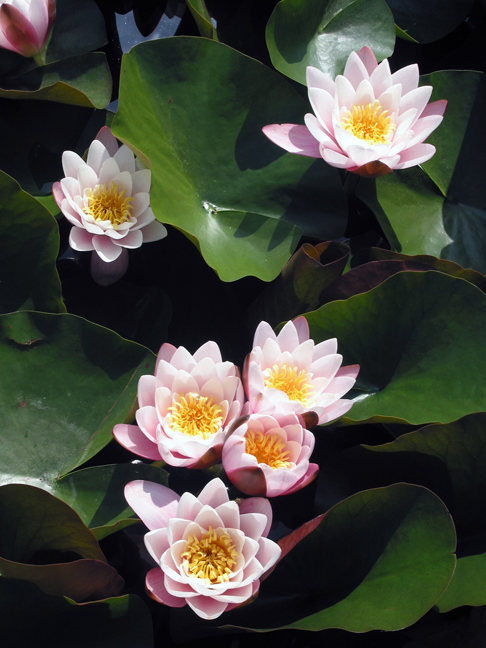
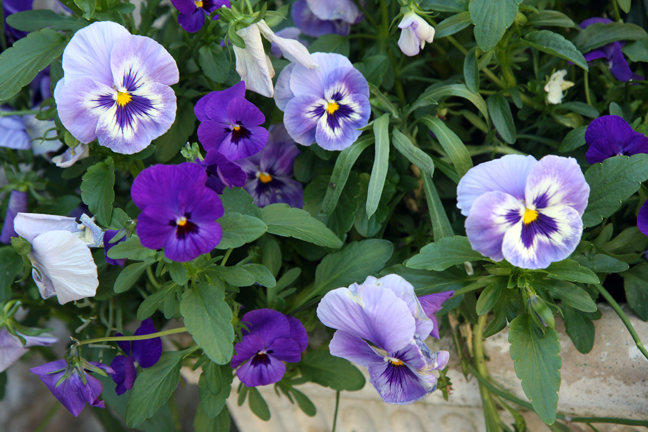
Fecho este post com as flores do amor-perfeito / It’s the end of this post, Forget-me-not!

Read Full Post »


Abadia de Glastonbury / Glastonbury Abbey, Magdalene Street.

Este post é basicamente um álbum de fotos, fazendo um tour pela Abadia e Museu.
Somei fotos tiradas em diferentes dias, por isso a variação de luz.

This post is basically a photo album, a tour in Glasto Abbey and Museum. I added photos taken at different times and days, that’s why the light is not uniform.

Entrada / Entrance

Corredor de entrada, ao fundo loja de souvenirs e museu./
Entrance, at its end souvenir shop and museum.

Olhando para trás, ao fundo Magdalene Street.
Looking back at Magdalene St.

Estátua de José de Arimatéia, que trouxe o catolicismo à Grã- Bretanha.
Joseph of Arimathea statue. He brought catolicism to Britain.

Capela da Senhora à esquerda, jardins à frente e lanchonete à direita
Lady Chapel to the left, garden ahead and coffee shop to the right

Lady Chapel

Local onde encontraram o túmulo de Arthur, ao fundo a Nave da Abadia
Site where Arthur’s grave was found; the Nave in the background

Guia em trajes de época mostrando detalhes do portal da Capela da Senhora
Guide wearing period clothes showing tourists details of Lady Chapel’s gate

Inside Lady Chapel

Saindo da Capela em direção à Nave
Walking from Lady Chapel towards the Nave

A nave restaurada; ao centro o local onde foi construído o mausoléu de Arthur em 1278
The restored Nave; in the centre the place where Arthur’s Tomb was built in 1278

Vista da Capela do Rei Edgar, altar principal, coro e nave ainda em restauração, em 2005
Overview of Edgar Chapel, High Altar, choir and Nave still in restoration, in 2005

O que sobrou do túmulo de Arthur; ao fundo a Casa da Abadia, fechada a visitação
What remains of Arthur’s Tomb. In the background, the Abbey House, private.

Guia vestida de cozinheira
Guide dressed as a cook

A cozinha dos monges é uma das construções históricas mais bem preservadas da Inglaterra.
The Monk’s kitchen is one of the best preserved historic sites in England.

Ambientação no interior da cozinha com a cozinheira trabalhando, utensílios e alimentos de época.
Inside the kitchen, the period atmosphere is recriated with the cook working, food and vessels

Read Full Post »

« Newer Posts - Older Posts »