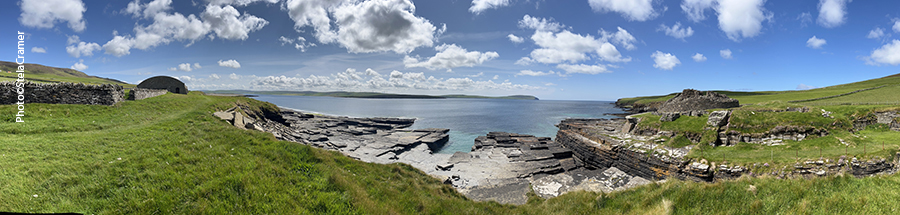
O dia do tour em Rousay – 8 de junho de 2023 – amanheceu lindo e ensolarado; estava até quente! Aliás os póprios escoceses estavam surpresos com o calor. Meu guia, Patrick, brincou que eu havia trazido o sol do Brasil. A luz e o céu azul, não muito comuns no Reino Unido, propiciaram algumas fotos de paisagens desta ilha habitada por pouco mais de 200 pessoas.
June 8th / 2023, the day of the Rousay Tour, was a hot sunny day! Even the Scots were astonished with the heat. My guide, Patrick joked that I had brought the sun from Brazil. The bright blue sky, unusual in the UK, made possible some landscape photos of this isle inhabited by few more than 200 people.


Casas curiosas / Odd houses

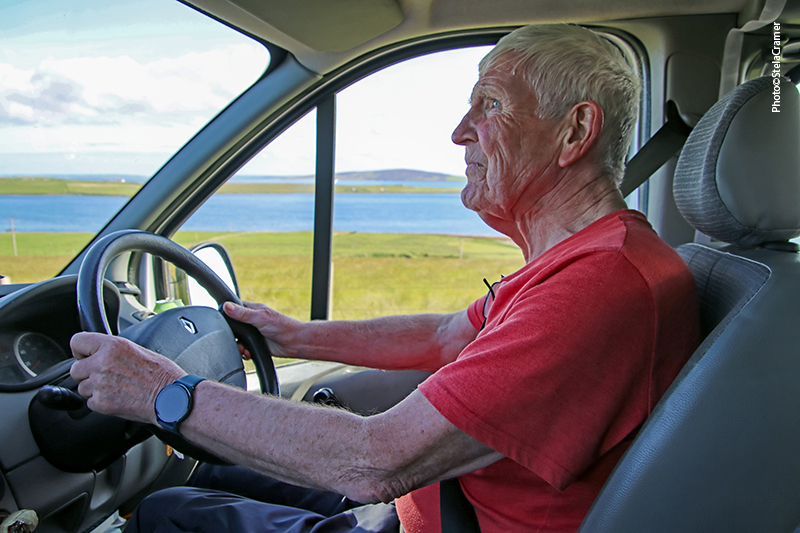

Verão na Escócia! Summertime in Scotland !

Após buscar alguns passageiros que chegaram de ferry, o tour seguiu a estreita estrada B9064, que contorna a ilha num total de 20 km, ao longo dos quais se encontram os sítios pré-históricos. Dos 100 já identificados, apenas alguns foram escavados e descritos.
After picking up some passengers that arrived with the ferry, the tour followed a single narrow lane, B9064, that makes a 13-mile circuit of the island, along which are the prehistoric sites. Over 100 have been identified but only a few have been excavated and characterized.

Passamos por um megalito de 2m de altura, chamado Yetnasteen Stone (“pedra gigante” em nórdico antigo): diz a lenda que trata-se de um gigante que foi transformado em pedra pela exposição à luz do dia. Mas toda noite de Ano Novo, quando o relógio bate meia-noite, ele é liberado o tempo necessário para ir beber um gole de água fresca no lago próximo. Como a pedra fica dentro de uma propriedade privada, só pudemos avistá-la de passagem, pela janela da van.
Yetnasteen Stone: in Old Norse, Jotunna-steinn means “giant stone”; the legend says it’s a giant who’s been turned to stone when exposed to daylight, but at the stroke of midnight at New Year he’s released for just long enough to take a drink from the nearby freshwater loch. We could only see the 2m-tall slab from the van’s window, because it stands in private land.

A escultura “Deuses da Terra, Deuses do Mar”, de Ian Hamilton Finlay, no penhasco de onde se avista a Baía de Saviskaill, e a ilha de Westray ao longe. Foi esculpida numa pedra de 15 toneladas trazida da Cornualha! Me pergunto porque escolheram trazer uma pedra do outro extremo do Reino Unido, a 1.368 km de distância.
The sculpture ‘Gods of the Earth, Gods of the Sea’, by Ian Hamilton Finlay, overlooking Saviskaill Bay, and Isle of Westray in the distance. It’s carved out of 15 tonnes of Portland Stone… from Cornwall ! I wonder why they chose to bring a stone from the other extreme of UK…850 miles away.


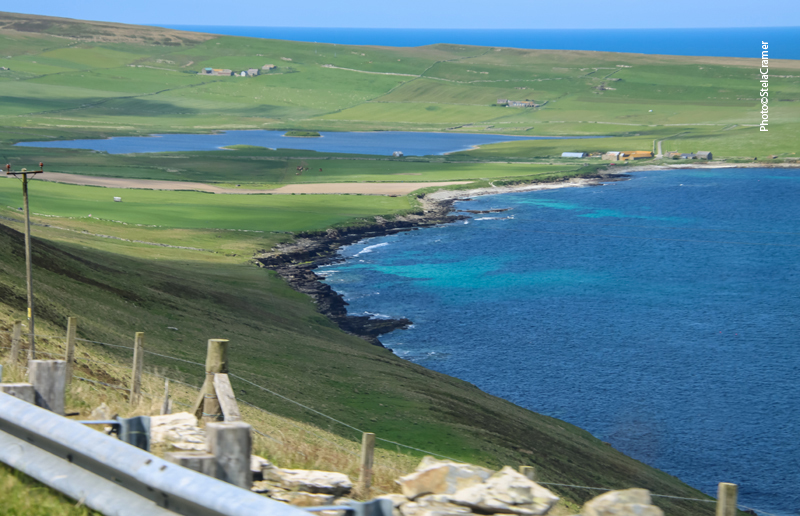
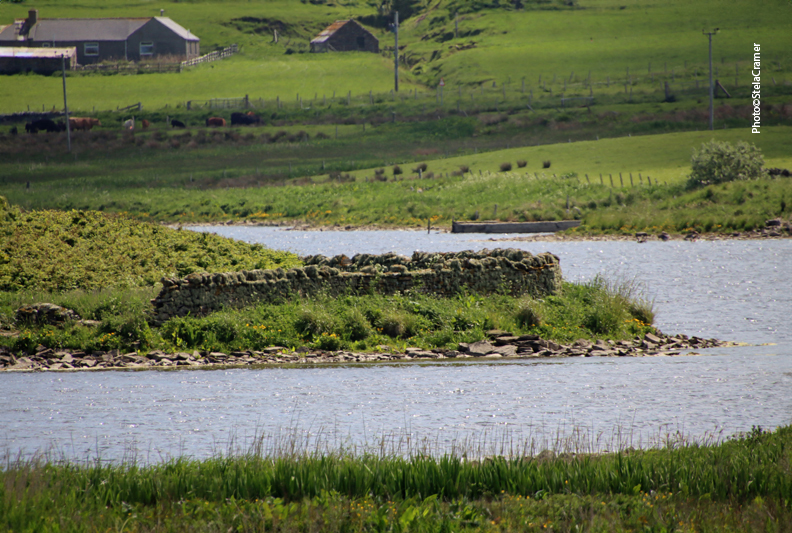
A Baía de Saviskaill e, na foto abaixo, o Lago Wasbister. Pode-se ver uma ilhota ao longe no lago. Saviskaill Bay and Wasbister Lake (photo below). You can see an islet in the far side of the lake.
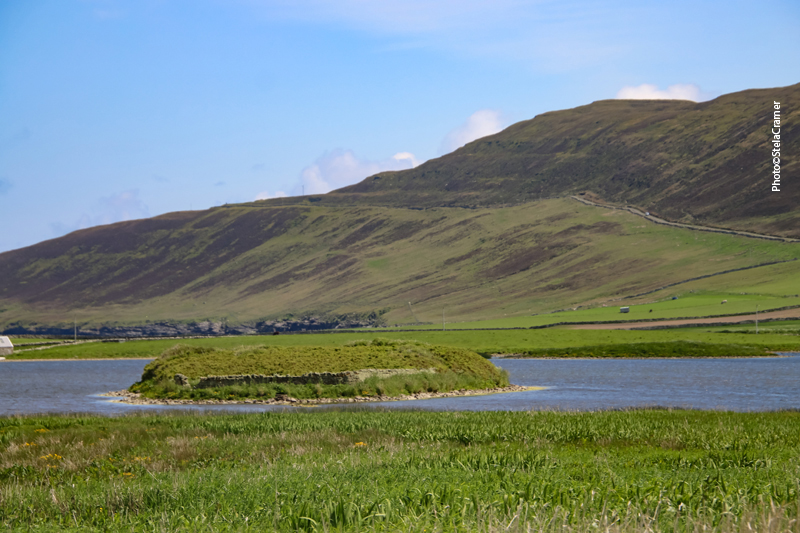
In the islet there are viking ruins, non yet excavated, according to Patrick.


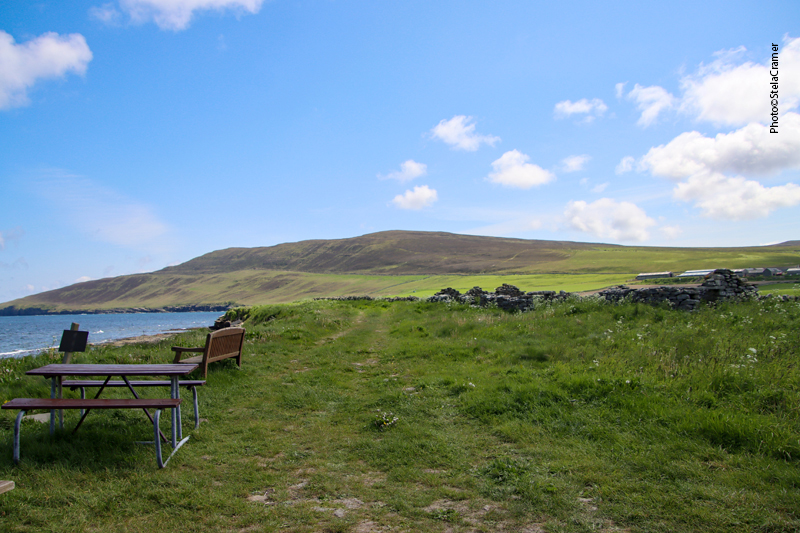
Seguimos para um picnic junto ao mar, em Saviskaill Bay, onde uma surpresa nos aguardava, além da bela paisagem. Rousay é um “Local de Interesse Científico Especial” devido à sua geologia, fauna e vida selvagem, colônias de pássaros e animais marinhos como lontras e focas. Elas estavam lá esperando por nós. Mas o melhor ainda estava por vir.
We stopped for a picnic by the sea, in Saviskaill Bay, where we had a surprise. Rousay is a Site of Special Scientific Interest because of its geology, wildflowers and bird life. Its wildlife includes otters and seals. And there they were, waiting for us. But the best was yet to come.


 Avalon