
The Chalice Well Trust
Chilkwell Street, Glastonbury, Somerset – BA6 8DD – phone: 01458 831154
Existem evidências arqueológicas de que o poço vem sendo usado há pelo menos dois séculos. A água jorra abundante, cerca de noventa e cinco mil litros por dia, mesmo em épocas de seca.
Nas mitologias galesa e irlandesa, os poços são portais para o mundo dos espíritos, e o desenho da tampa do poço (Vesica Piscis) representa justamente a interseção entre os dois mundos, cortados ao meio por uma lança ou espada associada à Excalibur, a legendária espada do rei Arthur.
Archaeological evidence suggests that the well has been in almost constant use for at least two thousand years. Water issues from the spring at a rate of 25,000 gallons per day and has never failed, even during drought. Wells often feature in Welsh and Irish mitology as gateways to the spirit world. In the well lid design, known as Vesica Piscis, the overlapping of the inner and outer worlds is represented by two interlocking circles, bisected by a spear or sword, a possible reference to Excalibur, King Arthur’s legendary sword.
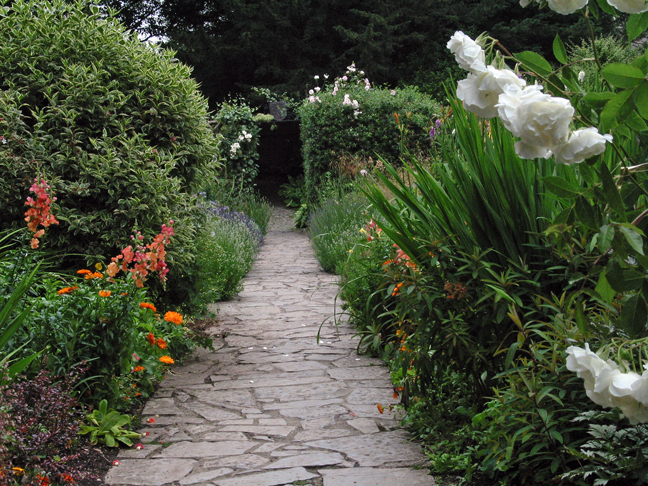
O lindo jardim, rumo ao poço / Inside the beautiful garden, heading to the well itself
Para os cristãos, dentro deste poço foi escondido o Graal, o cálice que teria recolhido o sangue de Cristo durante a crucificação. Isso, segundo a lenda, foi feito por José de Arimateia, um discípulo que fugiu para a Britânia de barco, dirigindo-se a Glastonbury.
Christians believe that in this well is hidden the Holy Grail, the chalice in which drops of Jesus’ blood was collected during crucifixion by Joseph of Arimathea, one of his disciples who fled by boat to Britain, heading for Glastonbury.
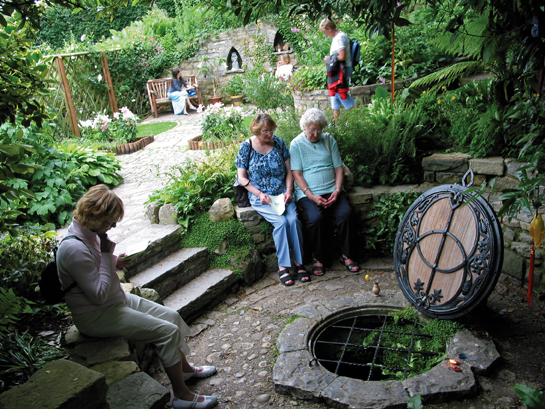
Poço do Cálice / Chalice Well

Vesica Piscis
O desenho de folhagens em torno do Vesica Piscis na tampa do poço faz referência ao Espinheiro Sagrado que teria brotado no exato local onde José fincou seu cajado, em Wearyhall Hill. Esta árvore era incomum por florir duas vezes por ano; a floração no inverno era considerada milagrosa. Embora sagrada, a árvore acabou morrendo. Antes, porém, os monges tiraram mudas e algumas estão lá até hoje.
Foliage around the Vesica Piscis represents the Glastonbury Holy Thorn, a tree supposed to have grown in the spot where Joseph thrust his staff, Wearyhall Hill. The thorn flowered twice in a year, what is unusual. Its flowering in mild weather just past midwinter was accounted miraculous. Despite its holiness, the tree died. However, many cuttings were taken from it by the monks and still live in Glastonbury.

Um pequeno lago dentro do jardim foi construído na forma do Vesica Piscis / A Vesica Piscis shaped pool inside the garden

Espinheiro em Wearyhall Hill, ao fundo o Tor / Thorn tree in Wearyhall Hill overlooking the city, the Tor in the background
Todo ano um galho do espinheiro de Glastonbury é enviado à Rainha no Natal. Isto começou no tempo da Rainha Anne.
Every year, a branch of the Glastonbury thorn is sent to the Queen at Christmas. This started in Queen Anne’s reign.
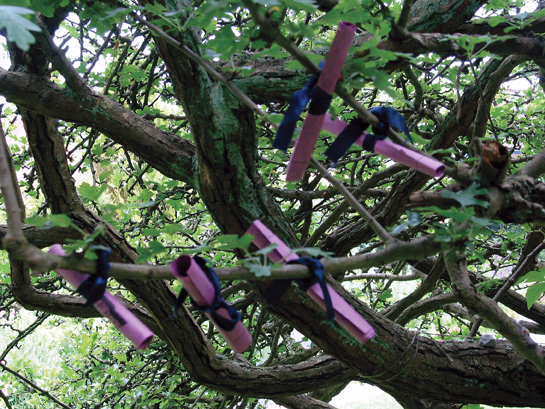
Espinheiro no jardim do Chalice Well, onde as pessoas amarram seus desejos por escrito / People tie their written wishes in the Thorn trees inside the Chalice Well garden
 Avalon
Teu blog está uma viagem Stelinha! Muito bom. Parabéns!!!
CurtirCurtir