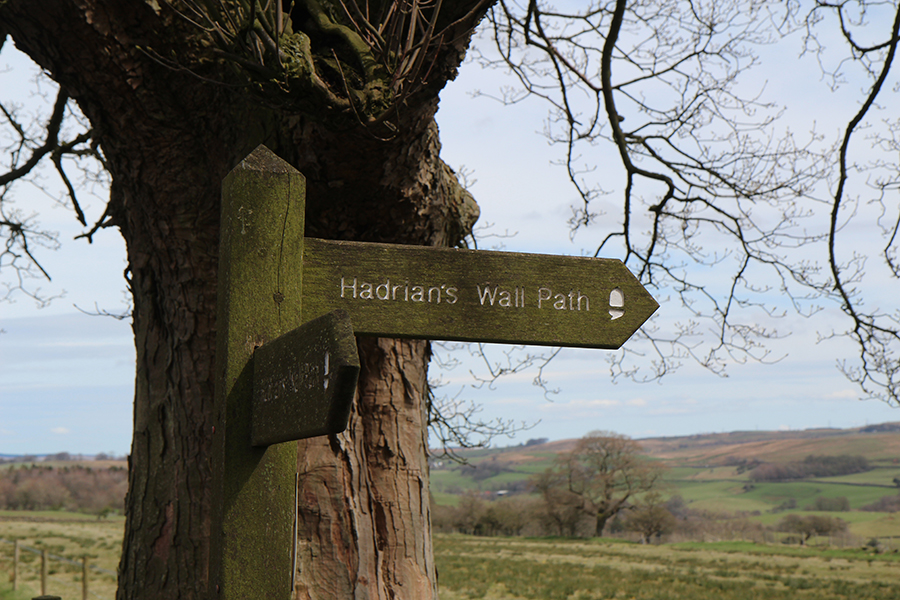
Prosseguindo… / Movin’ on
Estamos de volta após as férias.
Consegui os livros da autora Norma Goodrich! Acabei de recebê-los. Aguardem! Nesse meio tempo li a trilogia de Paul Bannister “Arthur Britannicus”, “Arthur Imperator” e “Arthur Invictus”. Esse autor associa Arthur a um imperador de origem romano-britânica chamado Carausius, cuja existência recentemente ficou provada. Abaixo transcrevo alguns trechos. Mas aviso que ele pode estar enganado.
We’re back after summer holidays. I’ve got Norma Goodrich’s books! They’ve just arrived. I’ll keep you up to date. In between days, I’ve read the trilogy by Paul Bannister “Arthur Britannicus”, “Arthur Imperator” and “Arthur Invictus”. This author links Arthur to an Emperor called Carausius, of roman-british parentage, whose existence has only recently been proved. Here are a few quotes, but I must warn you, he may be wrong.
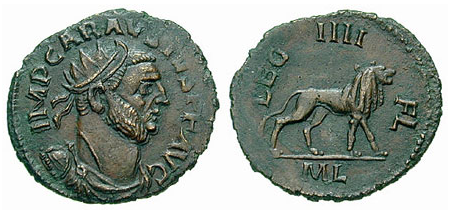
Moedas cunhadas por Carausius / Carausius coins
“O esquecido imperador britânico Carausius bem pode ser a verdadeira base da lenda do Rei Arthur, guerreiro mítico que se tornou símbolo de coragem e cavalheirismo. A importância de Carausius na história ficou esquecida por séculos, apesar do sucesso em afugentar os Romanos e aquietar os Pictos. Ele pode ter também derrotado invasores germânicos, pois suas fortificações na Costa Saxã provam que estava mais do que preparado para enfrentá-los. Seus triunfos, hoje conhecidos e aclamados, são ecos nítidos das histórias de Arthur. Carausius foi o primeiro governante britânico a unir o Império, e merece seu lugar na História por isso, mas de fato ficou mais conhecido pela excelente cunhagem de suas moedas. Estão expostas no Museu Britânico algumas das 800 moedas com sua efígie, parte de um tesouro de 52.500 peças romano-britânicas de ouro e prata encontradas em Somerset, no campo, em 2010. Existem conexões entre Carausius e muitos dos sítios tradicionalmente Arthurianos, e suas vitórias são um espelho das lendas de Arthur. A efígie de Carausius, como aparece em suas moedas de excelente cunhagem, nos mostram um homem parecido com um urso, de pescoço grosso, e a tradução britânica para Rei Urso é Arto-rig. Experts em linguística afirmam haver relação entre “Caros” e “Artorius”.
“Imperator Carausius was the first British ruler to unite the kingdom, and deserves his place in history for that, but he actually is best known for his fine coinage. On exhibit in the British Museum are some of the 800 Carausian coins that were among a hoard of 52.500 Romano-British pieces of silver and gold discovered in a Somerset field in the summer of 2010. There are connections between Carausius and many of the traditional Arthurian sites, and Carausius’ triumphs are closely echoed in legends of Arthur. Carausius’ image on his fine coinage shows him as a bearded, thick-necked, bear-like man and the British for “bear-king” is “Arto-rig”. Language experts say there are links between “Caros” and “Artorius”. Britain’s forgotten emperor Carausius and his triumphs may well be the true foundation of the legend of King Arthur, the mythic warrior who became a symbol of courage and chivalry. However, Carausius’ significance in history was forgotten for centuries despite his achievements in driving off the Romans and quieting the Picts. He may also have defeated Germanic invaders, as his Saxon Shore fortifications prove that he was more than prepared to meet them. Today, his known and acclaimed triumphs are closely echoed in the stories of King Arthur.”
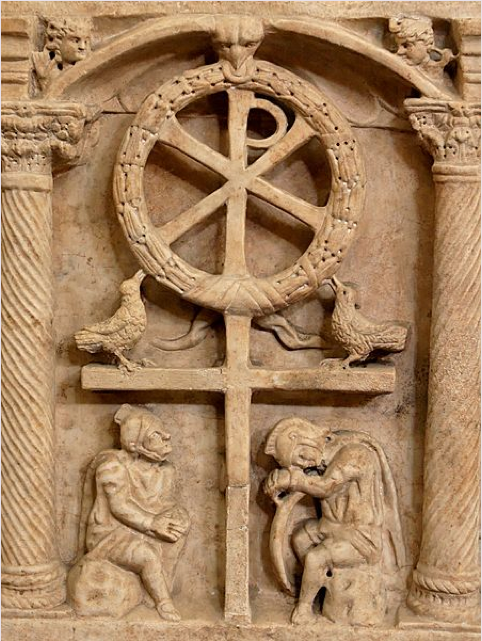
A Chi- Ro pode ser considerada a primeira representação da cruz cristã /
The Chi-Rho emblem can be viewed as the first Christian Cross.
As moedas, uma lápide em Penmachno e uma única pedra, um marco de milha descoberto próximo a Carlisle, são os únicos memoriais conhecidos desse Imperador perdido na História, pois os Romanos trataram de apagar seus vestígios quando recapturaram a Britannia. A lápide com a inscrição “Aqui jaz Carausius, sob este marco de pedras” foi encontrada no País de Gales. O morto era tão importante que a lápide e os ossos foram removidos para a Igreja de St Tudclud, em Penmachno, um importante sítio cristão ancestral, onde jaz Iorweth ab Owain Gwynedd, pai do maior Rei do País de Gales. Portanto, trata-se de um jazigo real. O fato de Carausius ser tão famoso a ponto de não necessitar uma identificação do tipo militar pode ser altamente significativo. Seu túmulo mostra que ele era cristão. A cruz Chi- Ro em sua lápide é especialmente rara.
Such coins, the Penmachno headstone and a single milestone uncovered near Carlisle are the only known memorials of Britain’s lost emperor, because the Romans expurgated his memorials after they recaptured Britain. A headstone inscribed “Carausius lies here in this cairn of stones” was found in Wales and the man memorialized in the cairn was so important that the gravestone and maybe the bones were moved to the nearby church of St Tudclud, in Penmachno, which is an important early Christian site and reputed burial place of Iorweth ab Owain Gwynedd, father of Wales’ greatest king. This, then is a royal graveyard. The fact that Carausius was so famous that he needed no soldier style identification could therefore be highly significant. His headstone shows he was a Christian. Carausius’ grave marker in Wales with its looped Chi – Ro cross is specially rare.
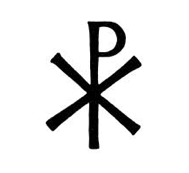
Chi- rho, como símbolo pré-cristão, significava boa sorte. “Chi” e “Rho” são as primeiras letras do nome Christo. /
As a pre-Christian symbol, the Chi-rho signified good fortune. The two letters come from the name of Christ- the Chi, or ‘ch,’ and Rho, or ‘r.’
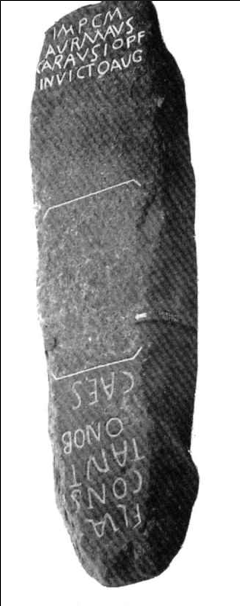
O outro único monumento conhecido ao Imperador perdido encontra-se no Museu Tullie House em Carlisle, num marco de milha que foi reutilizado invertido. A parte que estava enterrada escondia a inscrição: “Imperator Caesar Marcus Aurelius Mauseus Carausius, zeloso, afortunado, o augusto invicto”. E devia acrescentar: o esquecido.
The only other known memorial to the Lost Emperor is in the Tullie House Museum in Carlisle, on a milestone that was inverted and reused. The buried portion concealed a title reading: “Imperator Caesar Marcus Aurelius Mauseus Carausius, Dutiful, Fortunate, the Unconquered Augustus” . It should add: the Forgotten.
 Avalon