Feeds:
Posts
Comentários

Posts Tagged ‘museum’


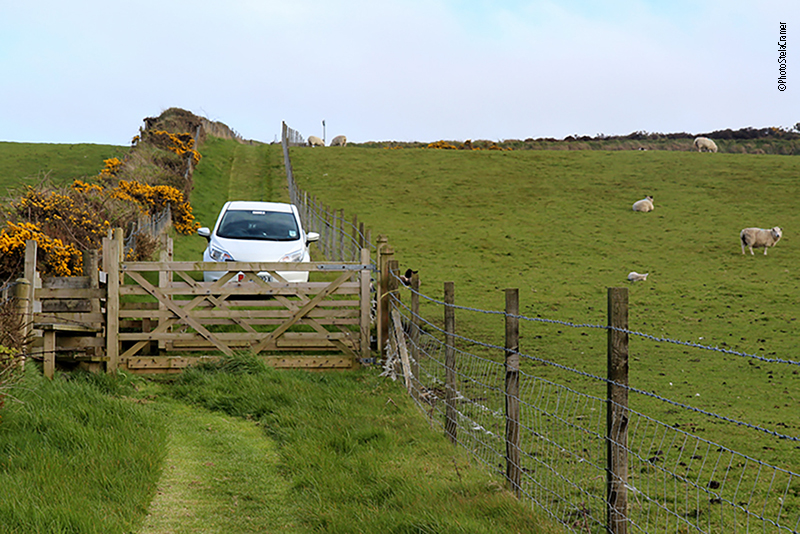
Estávamos entaladas no fim de uma estreita estrada de terra, sem largura para manobrar, no meio do atoleiro que se formara com a chuva que, felizmente, não tinha sido tão forte; assim o carro não estava atolado mas não foi muito fácil subir a ladeira de marcha-ré. Vicky precisou empurrar, e ir andando para o veículo ficar mais leve. Engasgando aqui e ali, consegui chegar até a beira da estrada. Ali se configurou o problema: a grossa camada de asfalto era um verdadeiro degrau e o carro de passeio não queria subir de jeito nenhum! Foi preciso juntar pedrinhas, mato, pedaços de qualquer coisa para tentar atenuar o degrau. Vinte minutos depois, todas enlameadas, começamos a nos preocupar pois começava a escurecer, a chuviscar novamente e a estrada estava deserta. Ninguém viria nos ajudar, apenas talvez os antigos deuses celtas. Para eles começamos a rezar.

We had parked at the end of a dirt road that turned into mud after the rain which, fortunately, hadn’t been heavy, so the car wasn’t stuck. Still, we were down a slope and it was too narrow to make a U-turn. We had to go in reverse. It wasn’t so hard, especially with Vicky pushing the car. Although it coughed a bit, we made it all the way up. We then realized the problem was the thick asphalt road, which next to the dirt, was like a large step; of course we didn’t notice that when we were going down, but now going up in reverse the car wouldn’t climb it. So we began gathering stones, sticks, leaves, anything to create a smoother path. Twenty minutes later, covered in mud from head to toe, we started to worry because it would soon be dark, it was starting to rain again, and the road was deserted. No one would come to help us – maybe only the ancient Druids. To them we started praying.
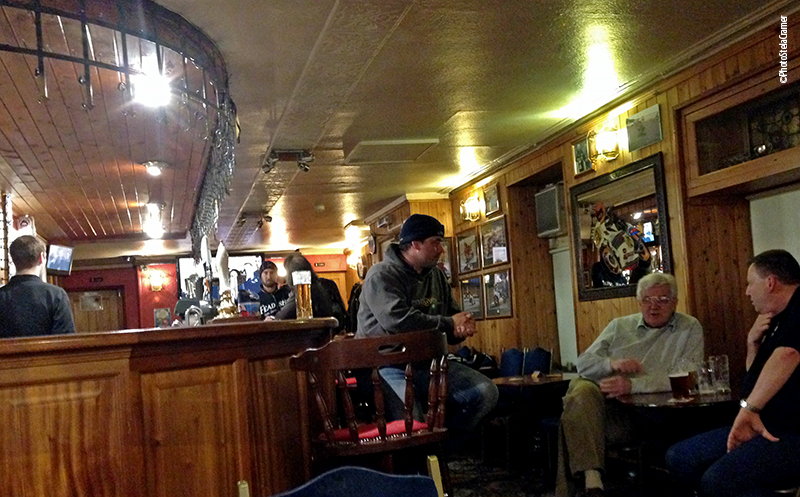
O pub onde fomos tomar uma merecida cerveja depois da aventura. /The pub where we went for a well deserved pint after the adventure.

Não havia acostamento para manobrar. Deixei o carro descer um pouco, virando na diagonal tanto quanto foi possível, para sair dos sulcos já feitos pelos pneus, engatamos a ré, retomamos a subida e quase na beira da estrada meti o pé no acelerador. Demos uma esmerilhada nos pneus, mas depois de alguns tensos segundos, conseguimos. Um pneu traseiro, outro, depois os dianteiros… finalmente se encontravam sobre o asfalto firme. Ficamos por instantes paradas ali, só respirando e agradecendo aos deuses! Digitei no GPS o endereço do Fernleigh, em Peel, e por um tempo parecia que tudo corria bem. Foi quando percebemos que o GPS era tosco, ou talvez o mau tempo afetasse a conexão, o fato é que em algum cruzamento nos perdemos e em vez de chegar em 20 minutos levamos mais de uma hora para estacionar em frente ao B&B, sãs e salvas, ainda que com fome, frio, cansadas e cobertas de lama. O carro, que era branco poucas horas antes, estava marrom. Felizmente era um carro alugado.

There was no shoulder to maneuver. All we could do was let the car go downhill a bit, as diagonally as possible to free the tires from the grooves they had created. We engaged reverse again and put the foot down on the throttle. We still bumped against the thick layer of asphalt, but persisted. After a few seconds of tension, holding our breath and burning the rubber on the tires , we made it. One after another, the four wheels found their way to the solid asphalt road. For a while we just stayed there, breathing and thanking the Druids. I put Peel Fernleigh’s address in the GPS, and for a while everything was apparently well. That was when we realized that the GPS was primeval, or perhaps the bad weather was messing with it. At some crossroads we got lost and, instead of arriving in 20 minutes, we took more than an hour to park in front of our B&B. Safe and sound, though hungry, thirsty, tired and muddy. The car, white hours ago, was now brown. Fortunately, it was a rental.
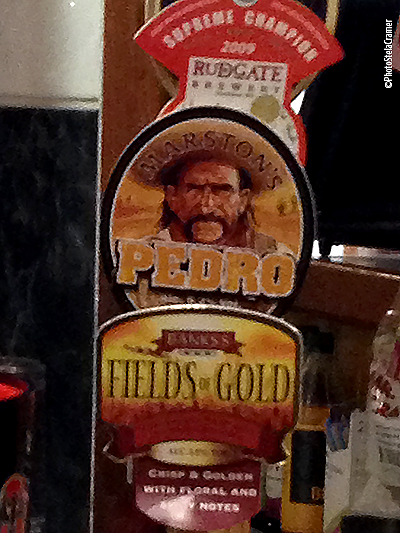
Precisávamos urgentemente de uma pint, então nos dirigimos ao pub mais próximo. Em Peel não estava chovendo, fomos caminhando pela orla, admirando a iluminação noturna do Castelo, crentes que o visitaríamos no dia seguinte. Sentamos numa mesa próxima ao balcão, rindo muito porque uma das cervejas expostas se chamava Pedro, e Vicky bateu foto para mandar para um Pedro amigo nosso. Lá pra tantas, ainda estávamos bebendo, rindo da aventura no atoleiro, quando dois homens muito bonitos se aproximaram perguntando se podiam sentar conosco. Os recebemos felizes e sorridentes; ambos eram inteligentes, engraçados, e pensamos que os deuses estavam nos enviando um prêmio consolação pelo perrengue daquela tarde. Um era mais velho e outro parecia mais novo, portanto supusemos que fossem pai e filho… só que não. Eram casados há mais de dez anos.

In urgent need of a pint, we walked by the shore to the nearest pub – it was not raining in Peel – admiring the Castle’s night lights. We intended to visit it the next day. Sitting at a table next to the counter, we bursted out laughing because of a beer bottle in the shelf labeled “Pedro”. Vicky took a picture to send to a friend of ours called Pedro. And there we were, still laughing at our adventure in the mud, when two really handsome guys approached, asking if they could sit with us. We welcomed them, smiling happily; both were intelligent, funny, and we thought that the Gods had sent us a consolation prize for the afternoon’s trouble. One was older and the other appeared younger, so we thought they could be father and son… only they were not. They were a couple, married for more than ten years.
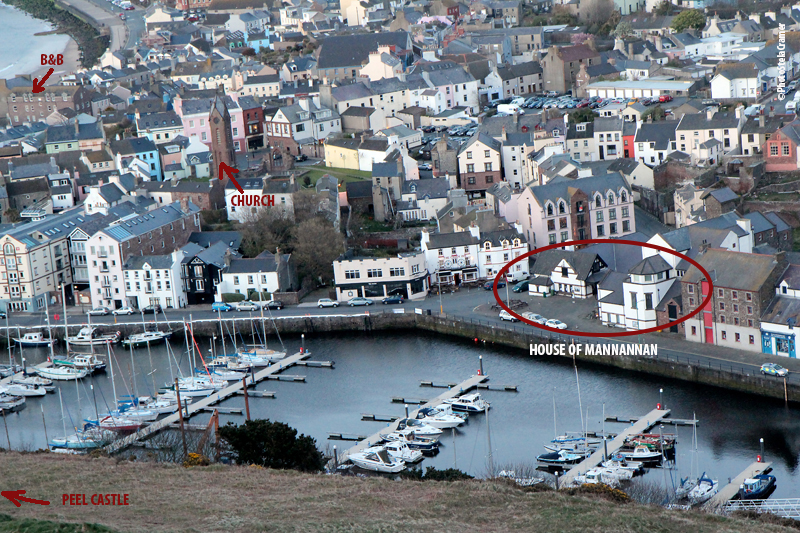
Pelo menos a conversa foi muito boa, tanto que bebemos mais pints do que o previsto, e por fim voltamos ao B&B, para tomar um bom banho e ir dormir. O dia seguinte amanheceu sob chuva torrencial. Pela janela do quarto dava para ver o carro ( e quase nada além dele); lavado pela chuva, estava ficando branco novamente! Resolvemos então vestir nossos casacos de chuva e andar até o Museu House of Mannannan, que era ali perto, cujas fotos ilustram este post.

At least the conversation was great, so that we‘ve drank a couple of pints more than we intended to, but eventually walked back to the B&B for a well deserved shower and sleep.
Next day we woke up under heavy rain. We could see the car from our window (and not much beyond it) and it was rainwashed to white again! So we decided to put on our raincoats and go visit the House of Mannannan Museum, just a couple of blocks away, which photos illustrate this post.

O museu tem o nome do deus mitológico Manannan mac Lir (filho do mar) e engloba a história Celta, Viking e marítima da ilha.
The museum is named after the mythological sea god Manannán mac Lir (“son of the sea”) and covers the island’s Celtic, Viking, and Maritime history.
A principal atração é a réplica de um navio Viking numa escala de 2/3. O “Corvo de Odin” foi construído na Noruega e navegou até Peel, chegando em 4 de Julho de 1979 para a comemoração de um milênio do Tynwald (Parlamento da Ilha de Man).
The Museum’s highlight is Odin’s Raven, a recreation of a Viking longboat in two-thirds scale. Odin’s Raven was made in Norway and then sailed to Peel, arriving on 4 July 1979 to celebrate the millenium of Tynwald (Manx Parliament).
Os navios longos eram construídos pelos Vikings da Escandinávia e Islândia para comércio, exploração e guerra./ Longships were naval vessels made and used by the Vikings from Scandinavia and Iceland for trade, commerce, exploration, and warfare.
As cabeças de animais entalhadas na proa dos navios Vikings se destinavam a conferir proteção divina à embarcação. /
The carved animal heads in the stern, in Viking vessels, had divine protection purposes.
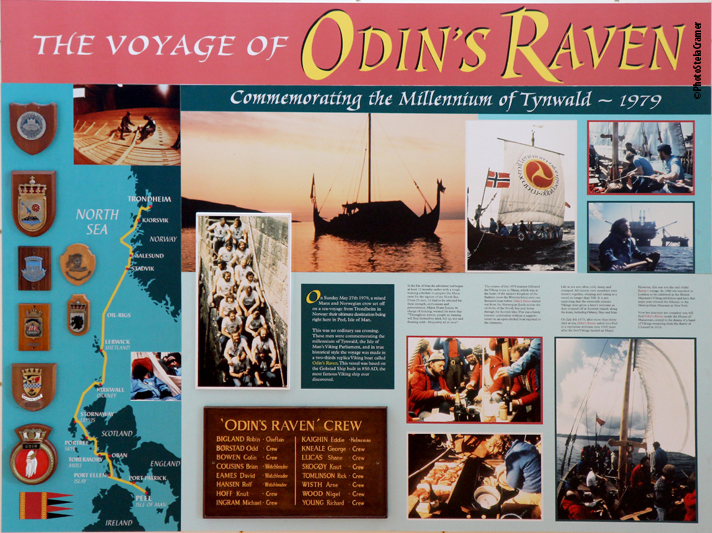
Tynwald é como se chama o Parlamento da Ilha de Man, o “mais antigo Parlamento em continuidade” segundo eles, por ser uma tradição herdada dos Vikings.O encontro acontece anualmente, ao ar livre, e ali as leis são promulgadas, petições são ouvidas e demais assuntos públicos tratados, tais como aprovação de impostos e assinatura de decretos. / Tynwald is the Manx Parliament, the “oldest continuous parliament” in the world according to them, because it’s a Viking heritage. The meeting is at an open-air ceremony, when all laws are promulgated, petitions are received and important public business is conducted, such as resolutions authorising taxes and bills signature .
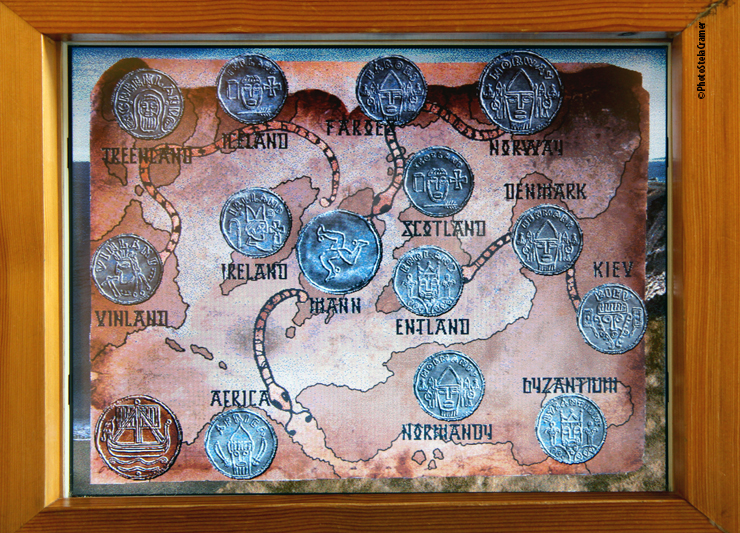
Antigas rotas de navegação / Ancient navigation routes
Exposições permanentes retratam a Ilha de Man desde o período Celta, incluindo uma reconstrução em tamanho real de uma típica casa redonda celta./ The museum has several permanent exhibitions depicting the Celtic period of the Isle of Man to the modern era, such as a life size reconstruction of a Celtic roundhouse.
Filmes curtos, exibidos continuamente nos cenários, mostram aspectos da vida em diferentes eras /
Short movies loop in stages, depicting life aspects in different periods
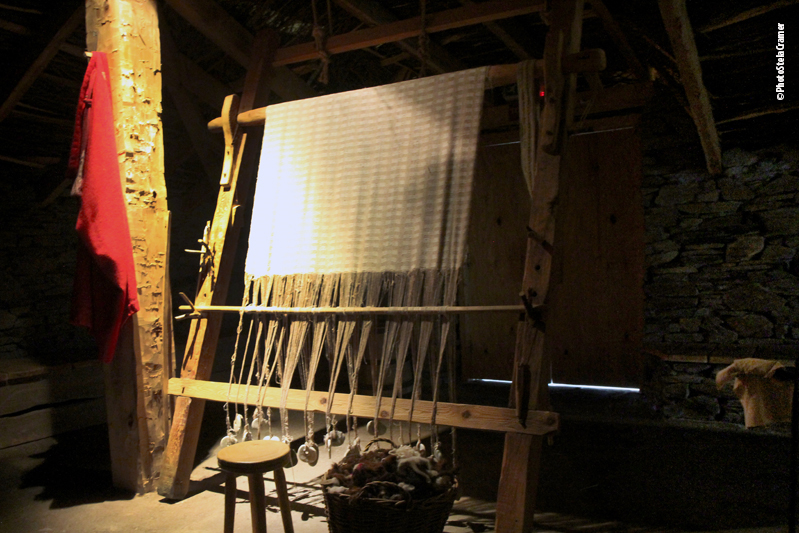
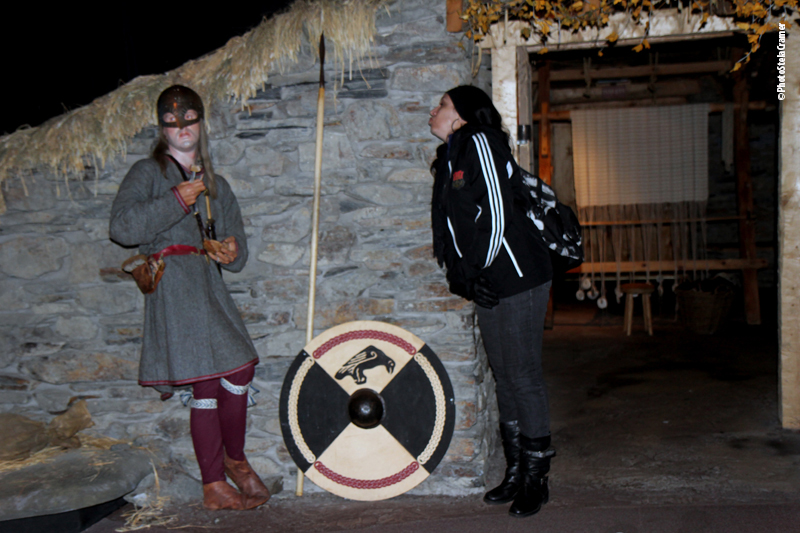
A tecelagem era uma atividade fundamental para os povos antigos, não só para confecção de roupas e agasalhos, mas também redes de pesca e velas para os barcos / Weaving was essential for the ancient people, not only for clothing and wraps but also for fishnets and sails
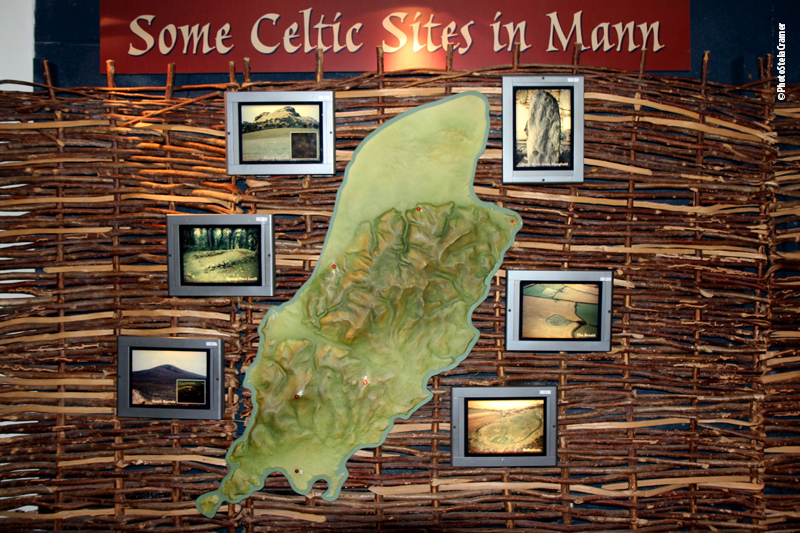
Mapa de sites arqueológicos da Ilha / Isle of Man’s archaeological sites map
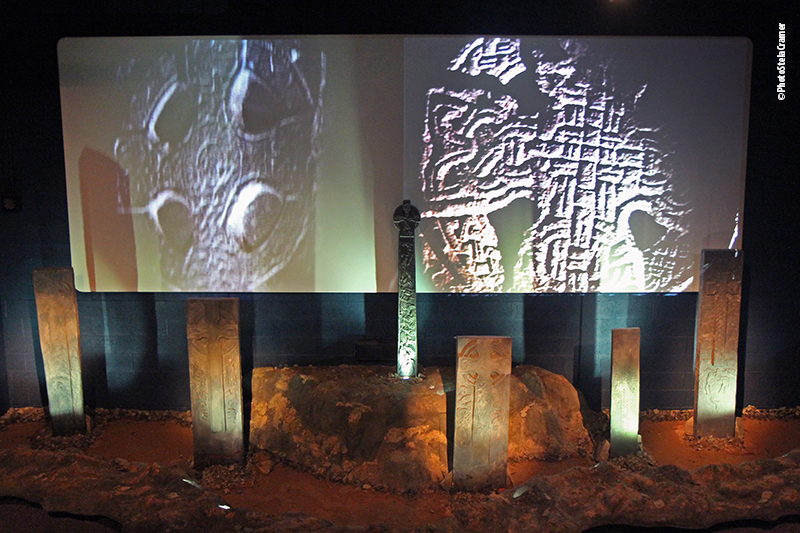
Filme sobre as Cruzes Célticas da Ilha. Voltaremos a esse assunto. / Movie about Manx Celtic Crosses. We’ll talk about it soon.
Vicky encontra o amor de sua vida (passada). / Vicky finds the love of her (past) life

Read Full Post »


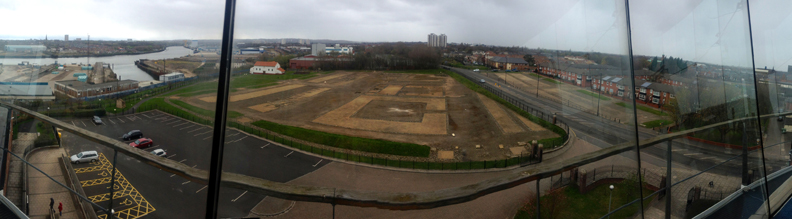
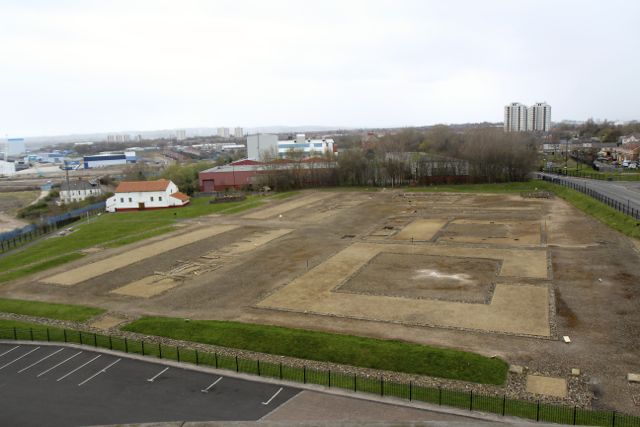
Segedunun, vista da torre do museu / Overview from the Museum Tower

Segedunun, vista da torre do museu. Confesso que fiquei desapontada, o lugar é muito feio / Overview from the Museum Tower. I was disappointed with the ugliness of the place.

Bernard Cornwell na sua Trilogia Arthuriana considera que a formação de Arthur foi de soldado romano. Essa abordagem se confirma em King Arthur, filme com Clive Owen e Keira Knightley que aliás achei fraco, cheio de clichês, porém me convenceu do fato histórico: Arthur foi um general (“dux bellorum” ) e, se passou a ser chamado de rei, foi graças ao seu carisma. Combatia com estratégia e disciplina, por causa da educação romana. Embora as legiões tivessem sido chamadas de volta a Roma, seu legado permaneceu. De fato, a história menciona um Artorius,  líder na Britannia, que derrotou os invasores saxões em praticamente todos os confrontos. Tudo faz sentido.

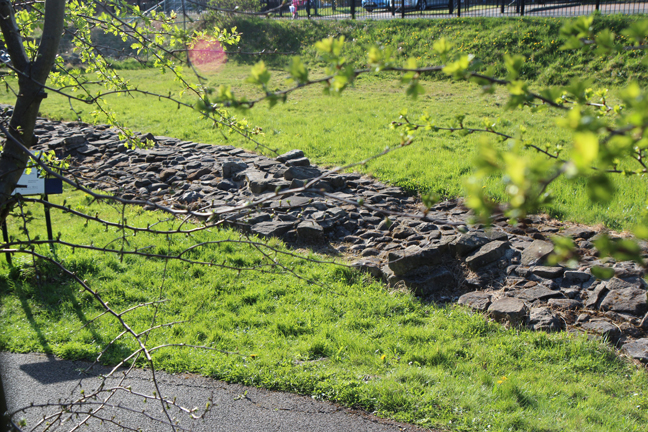
Trecho de muralha em Segedunun / Wall remains

Trecho de muralha em Segedunun / Wall remains

In Arthur’s Chronicles trology, Bernard Cornwell states that Arthur was raised as a roman soldier. This proposition is confirmed in the movie King Arthur, starring Clive Owen and Keira Knightley. It’s a feeble movie, but it convinced me of the historical fact. Arthur must have been a general (“dux bellorum”, a war lord ) and if tales turned him into a king, it was due to his charisma. He leaded his men with discipline and used strategy to win battles even when outnumbered, relying on his roman education. Although the legions had left Britain, their legacy remained. There are historical records of a certain Artorius, British chieftain who won almost all battles against the Saxon invaders. All this makes sense to me.

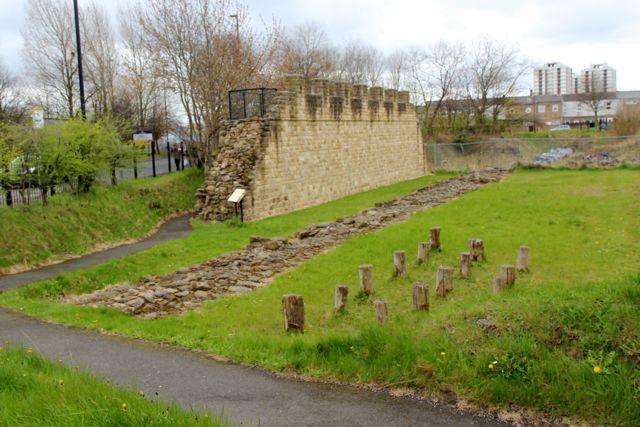
Reprodução de muralha ao lado de um trecho original / A reconstruction besides an original piece of the Wall

Reprodução de muralha ao lado do trecho original /
A reconstruction beside the original piece of the Wall

Não estou dizendo que admiro os romanos, pois a conquista da Britannia, assim como a de todos os territórios, se deu pelo massacre da população local – os celtas. Mas impossível não admirar sua engenharia formidável. A construção da Muralha foi iniciada por ordem do imperador Adriano em 122DC. Levou apenas seis anos para ficar pronta, estendendo-se por 73 milhas (aproximadamente 118 km.) Sua função era separar os romanos dos chamados “bárbaros” – os povos nativos.

Hadrian's Wall: the frontier between England and Scotland / A muralha fica na fronteira entre Inglaterra e Escócia

Hadrian’s Wall: the frontier between England and Scotland /Fronteira entre Inglaterra e Escócia

I’m not saying that I admire the Romans, because the conquest of Britain, just like everywhere else, meant massacre to the local people – the celts. But it’s impossible not to awe at their brilliant engeneering. The Emperor Hadrian ordered the construction of this wall in AD122 to separate the native “barbarians” from the Romans. It was completed in AD128, spanning 73 miles.

Cidades ao longo da Muralha / Cities along the Wall

Cidades ao longo da Muralha / Cities along the Wall

A Muralha de Adriano vai de Wallsend no leste até Bowness-on-Solway no Oeste, contando com um sistema de portões fortificados a cada milha, protegidos por pequenas fortalezas chamadas de Milecastles. Entre eles ainda havia torres, chamadas turrets, em intervalos de um terço de milha romana – cerca de 1,47 km.  Os soldados lotados nos fortes podiam proteger a provincia de ataques, evitar saques na região fronteiriça e coletar impostos de quem viesse comerciar nos mercados romanos. Era também um impressionante simbolo de poder e autoridade, assinalando a fronteira noroeste do Imperio Romano.

Segedunun - vistas do sítio arqueológico / Archaeologic site views

Segedunun – vistas do sítio arqueológico / Archaeologic site views

segedunun5

segedunun3

The Wall stretches from Wallsend in the east to Bowness-on-Solway in the west. At every mile along the wall was placed a gate protected by a small fortlet termed a milecastle. On either side of each milecastle was a turret, positioned at intervals of around one third of a Roman mile – about 4,851 feet or 1,617 yards. The soldiers stationed in the forts there could protect the province from assault, prevent cross-border raiding and collect taxes from merchants wishing to trade their goods at Roman markets. It was also a impressive statement of power and authority, marking the north-west frontier of the Roman empire.

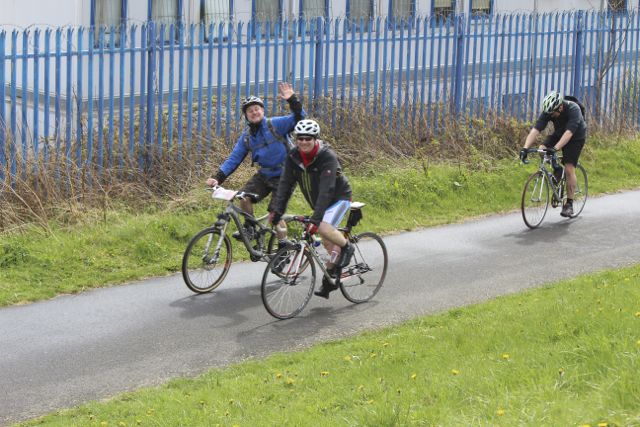
Uns fazem a trilha a pé, outros vão de bicicleta / Some people walk the path, others bike

Uns fazem a trilha a pé, outros vão de bicicleta / Some people walk the path, others bike

A Trilha da Muralha de Adriano é uma caminhada que acompanha a linha original da Muralha, embora apenas entre Chollerford e Birdoswald haja ruínas, sítios arqueológicos e trechos de muralha visíveis. A trilha (84 milhas = 135 km) é mais extensa que a muralha em si pois alguns trechos foram modificados para tornar o percurso mais atraente. Por exemplo, em vez de cruzar uma cidade movimentada, acompanhar um rio).

Museu em Segedunun/ The Museum

Museu em Segedunun/ The Museum

segedunun8

Atrações para crianças / Activities for children

Atrações para crianças / Activities for children

In the present day, the Hadrian’s Wall National Trail follows the line of the original Wall, but the wall itself , ruins and archaeological sites are mainly evident over approximately a 30-mile stretch, between Birdoswald and Chollerford. The length of the Trail, at 84 miles, is longer than the original Wall. diversions having been added in certain sections to make it more appealing (eg a footpath along a riverbank rather than through a modern busy city centre).

Reconstrução da Casa de Banhos (Termas) em Segedunun / Reconstruction of Segedunun's Baths

Reconstrução da Casa de Banhos (Termas) em Segedunun / Reconstruction of Segedunun’s Baths

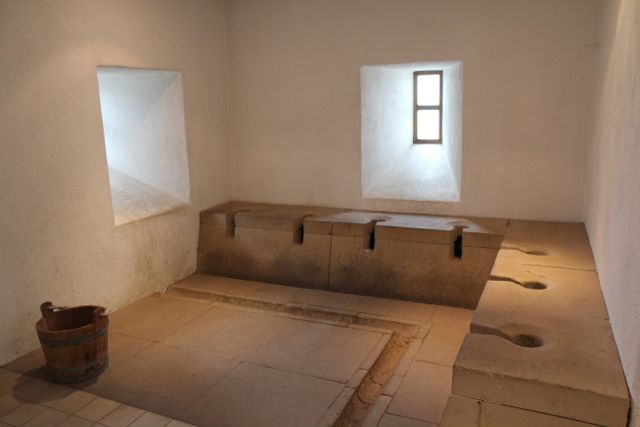
Reprodução do interior das termas - latrina  / Reconstruction of the Baths, interior: the latrine

Reprodução do interior das termas – latrina / Reconstruction of the Baths, interior: the latrine

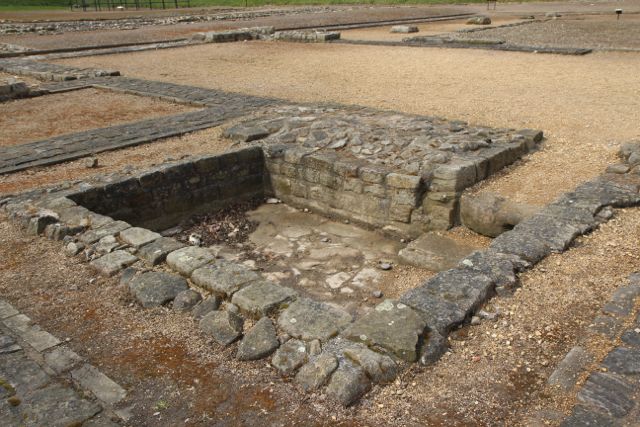
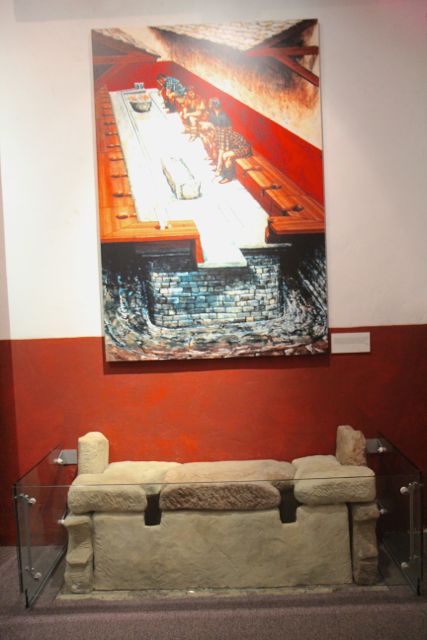
Pedaço da latrina original no museu... imagina a cena! / Original latrine, now in the Museum. Can you imagine the scene?

Pedaço da latrina original no museu… imagina a cena! /
Original latrine, now in the Museum. Can you imagine the scene?

A Muralha desapareceu em grande parte porque depois que os romanos abandonaram a Britannia, as pessoas começaram a usar as pedras para construir casas e outras edificações como a abadia de Lanercost, que visitei hoje. Os lugares onde ela ainda existe são no alto de montes, no meio do nada. De onde a vista se perde no horizonte.

When the Roman Army abandoned Britain, people started to take stone from the Wall to build houses and other edifications, like the Lanercost Abbey, which I visited today. That’s why it has disappeared in many places. But high up in the mountains it’s still there, in the middle of nowhere, where the landscape stretches as far as the eye can see.

Como era o forte de Segedunun. Este nome vem das palavras celtas que significavam "forte forte" ou "forte da vitória". Muitas vezes os nomes dos fortes se originavam e palavras nativas em vez de latinas. A cidade atualmente se chama Wallsend, que significa "fim da Muralha". Para os romanos que chegavam por mar, entretanto, era o início e não o fim.

Como era o forte de Segedunun. Este nome vem das palavras celtas que significavam “forte forte” ou “forte da vitória”. Muitas vezes os nomes dos fortes se originavam e palavras nativas em vez de latinas. A cidade atualmente se chama Wallsend, que significa “fim da Muralha”. Para os romanos que chegavam por mar, entretanto, era o início e não o fim.

Restou apenas um contorno no chão./ All that's left is an outline on the ground.

Restou apenas um contorno no chão espremido entre residencias e zona industrial./ All that’s left is an outline on the ground, boxed up between houses and an industrial zone.

Read Full Post »