Feeds:
Posts
Comentários

Posts Tagged ‘knights of the Round Table’


Pendragon presente / presence

O autor Gerald de Wales, em seu “Itinerarium Cambriae” de 1191, escrito sobre uma viagem de recrutamento para a terceira Cruzada no País de Gales em 1188, diz sobre Caerleon: “ Aqui os Embaixadores Romanos tiveram audiência na corte do grande Rei Arthur”.

In his 1191 Itinerarium Cambriae, written about a tour of Wales in 1188 to recruit for the Third Crusade, the author Gerald of Wales says of Caerleon, “the Roman ambassadors here received their audience at the court of the great king Arthur.”
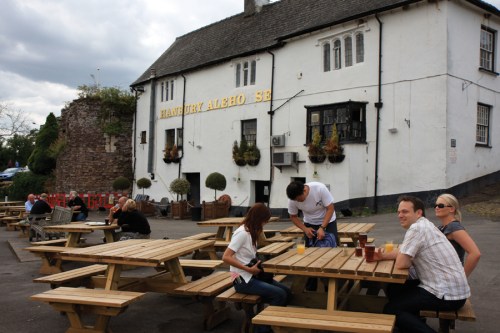
Lord Tennyson hospedou-se no Henbury Arms em 1856, quando trabalhava em seu longo poema “Idílios do Rei”, inspirado no Rei Arthur e Cavaleiros da Távola Redonda. Havia uma teoria de que a Távola Redonda se situava no Anfiteatro Romano em Caerleon. / In 1856, Lord Tennyson lodged at the Hanbury Arms while working on his long poem Idylls of the King. His inspiration was the legend of King Arthur and the knights of the round table. There was a theory that the round table was located at the remains of Caerleon’s Roman amphitheatre.

Geoffrey de Monmouth, o primeiro autor a escrever longamente sobre o Rei Arthur, considera Caerleon a capital de Arthur, e uma das mais importantes cidades britânicas em sua “História dos Reis da Grã-Bretanha”.

Geoffrey of Monmouth, the first author to write at length of King Arthur, makes Caerleon Arthur’s capital , one of the most important cities in Britain in his Historia Regum Britanniæ.
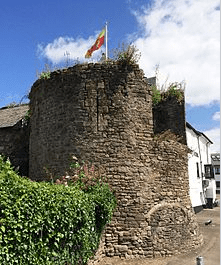
A Torre Redonda, ao lado do Hanbury Arms, é tudo que restou do Castelo de Caerleon./ The Round Tower, at the Hanbury Arms public house, last remnant of Caerleon Castle

Sir Thomas Malory considera Arthur coroado em Caerleon. O autor associa o ainda visível anfiteatro romano à Távola Redonda presente nas narrativas Arthurianas, sugerindo que a lenda possivelmente tenha se originado daí: “Porque se localizava num agradável lugar em Glamorgan, no Rio Usk, não longe do Canal de Bristol*. … pois o nobre rio que mencionei corre paralelo a este em uma das margens, onde os reis e príncipes que vinham de além mar podiam chegar de navio. Mas a outra margem, protegida por pradarias e florestas, destacava-se pelos palácios reais… Caerleon foi preparada para a anunciada festa”. ((Historia Regum Britanniae / História dos Reis da Grã-Bretanha)
*O Canal de Bristol até a época dos Tudors, e ainda hoje no País de Gales e na Cornualha, era conhecido como Mar de Severn.

Edifício do Priorado de Caerleon

Sir Thomas Malory has Arthur re-crowned there. The still-visible Roman amphitheatre at Caerleon has been associated with Arthur’s ‘Round-Table’s element of the tales; and has been suggested as a possible source for the legend: “For it was located in a delightful spot in Glamorgan, on the River Usk, not far from the Severn Sea*... For the noble river I have named flows along it on one side, upon which the kings and princes who would be coming from overseas could be carried by ship. But on the other side, protected by meadow and woods, it was remarkable for royal palaces… Caerleon was made ready for the announced feast.” (Historia Regum Britanniae /History of the Kings of Britain)
* – Until Tudor times the Bristol Channel was known as the Severn Sea, and it is still known as this in both Welsh and Cornish.
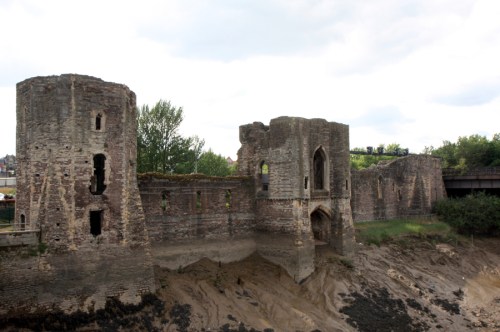
Ruínas do Castelo de Newport , também às margens do Rio Usk / Newport Castle ruins, also by the River Usk

Embora Geoffrey possa ter se inspirado na dimensão das ruínas, assim como na importância de Caerleon como centro urbano do Reino de Gwent, no inicio da Idade Média, a mais importante fonte histórica da ligação de Arthur com o “acampam ento da legião” é a lista das doze batalhas de Arthur na “Historia Brittonum” ( História Britânica) escrita por Nennius no século IX. Ele se refere à nona delas como a Batalha da Cidade da Legião. As hipóteses sobre o local desta batalha incluem Carlisle, Chester, York e Caerleon – também, segundo Geoffrey of Monmouth, local da corte de Arthur e do convento de Guinevere. Entretanto, é mais provável que a “urbs legionis” ( cidade da Legião) mencionada seja Chester, ou mesmo York. “Camelot” aparece pela primeira vez em Lancelot, escrito por Chrétien de Troyes, embora este autor também mencione Caerleon.
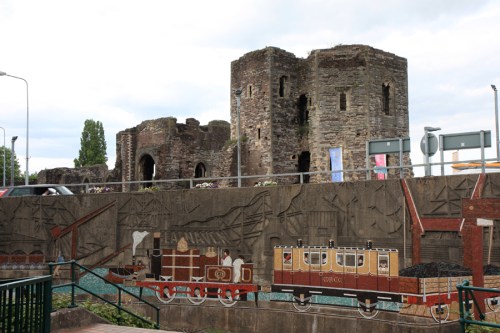
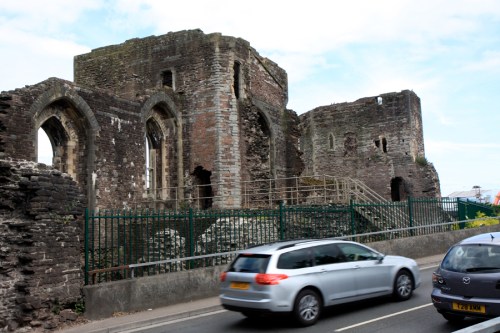
Em Newport, caminho para Caerleon, as ruínas dividem a paisagem com o espaço urbano / In Newport, on the way to Caerleon, the Castle ruins amongst urban landscape
Though the huge scale of the ruins along with Caerleon’s importance as an urban centre in early medieval Kingdom of Gwent may have inspired Geoffrey, the main historical source for Arthur’s link with “the city of the legion” is the list of the twelve battles of Arthur in the 9th century Historia Brittonum by Nennius.He refers to the Battle of the City of the Legion as 9th battle. Hypothesized sites for this battle include Carlisle, Chester, York and Caerleon – also, according to Geoffrey of Monmouth, the site of Arthur’s court and Guinevere’s convent. However the “urbs legionis” mentioned there may rather more probably be Chester , or even York.  “Camelot” first appears in Chrétien de Troyes’ Lancelot, though Chrétien also mentions Caerleon.

Agora só resta o lado leste do castelo./ Now, only the east side of the castle remains

A escritora Mary Stewart, em sua narrativa das lendas Arthurianas, também menciona Carleon como sendo um lugar da corte de Arthur.

Mary Stewart’s account of the Arthurian legends also mentions Caerleon as a place where Arthur held court.
Read Full Post »


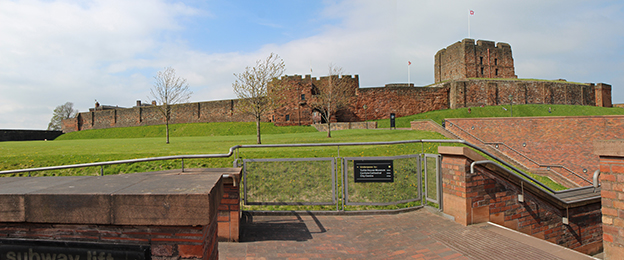
Carlisle Castle

Carlisle Castle

Esta cidade foi onde terminei a caminhada. Na verdade o fim do percurso é em Bowness-on-Solway, uma vila com cerca de 100 casas no estuário de Firth, fronteira entre Inglaterra e Escócia, o extremo oeste da Muralha de Adriano. Em vez de prosseguir eu tinha que voltar a Londres, pois perdera o passaporte no início da caminhada e precisava ir ao consulado brasileiro para obter o documento que me permitiria embarcar de volta para casa. Assim, a exploração da área teve que ficar para a próxima vez.

Mosaico representando uma cena medieval na passagem para pedestres / Medieval scene tiled in the pedestrian's passage

Mosaico representando uma cena medieval na passagem para pedestres / Medieval scene tiled in the pedestrian’s passage

In this city my journey ended, although the western end of Hadrian’s Wall is in Bowness-on-Solway, a village of about 100 houses on the Solway Firth separating England and Scotland. But I had to go back to London, because I had lost my passport when I started walking and had to go to Brazilian Consulate to get a document required to board the plane back home. So I had to postpone exploring that area.

Centro da cidade num dia chuvoso / A rainy day downtown

Centro da cidade num dia chuvoso / A rainy day downtown

” Carlisle era o segundo mais importante centro cristão na época de Arthur, a julgar pelos achados arqueológicos. Como Londres, Caerleon e Chester, foi anteriormente um vicus , ou centro militar romano. Do ponto de vista logístico era o tipo de centro capaz de suprir alimento e forragem para um exército e seus cavalos, um centro agrícola. No tempo dos romanos, seus quase 300 quilômetros quadrados eram cercados por muros e protegidos ainda pela geografia natural do terreno…. Provavelmente o Rei Arthur foi coroado em Carlisle” . (Citando “Arthur”, de Norma Goodrich).

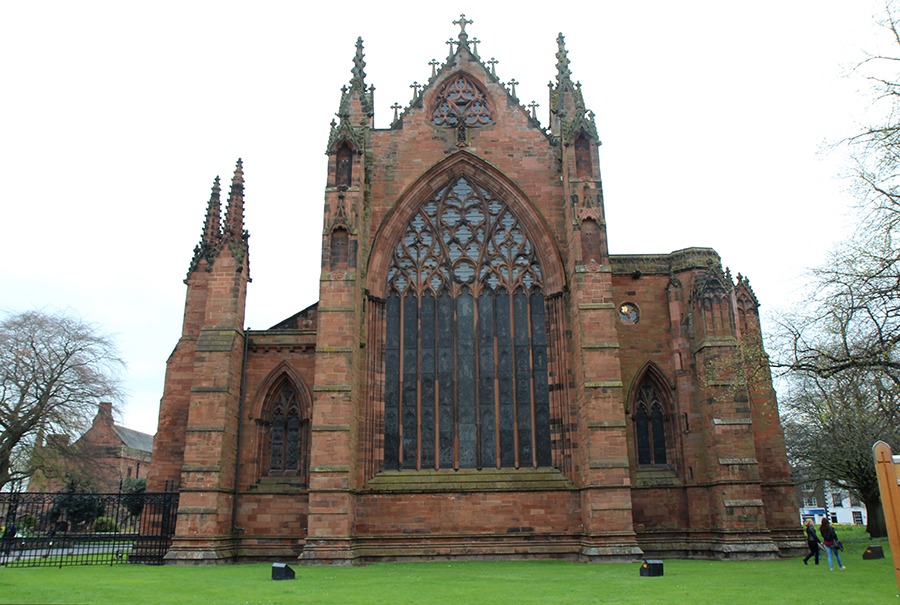
Carlisle Cathedral

Carlisle Cathedral

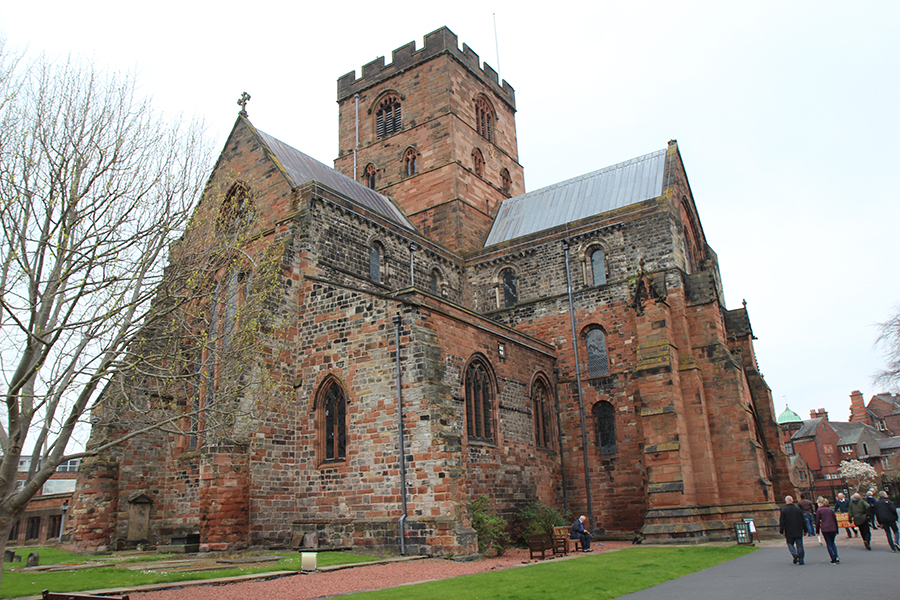
Em volta da Catedral / Around the Cathedral

Em volta da Catedral / Around the Cathedral

Carlisle was the second most important Christian center in Britain in Arthur’s day, judging from archaeological finds. Like London, Caerleon and Chester, it had previously been a vicus, or a Roman military center. From a logistical point of view, it was the kind of center capable of supplying foodstuffs and fodder for an army and their horses, an agricultural center. In Roman times its seventy-four acres were enclosed by walls and protected by the natural geography of the land. King Arthur was probably crowned at Carlisle.” (quote: Arthur, by Norma Goodrich).

Jardins da Catedral , certamente mais bonitos num dia de sol/ Cathedral's garden, surely more beautiful in a sunny day

Jardins da Catedral , certamente mais bonitos num dia de sol/ Cathedral’s garden, surely more beautiful in a sunny day

Confesso que tive um choque ao ler as conclusões da autora provando que Arthur era cristão, pois as Brumas de Avalon e demais livros o apresentam criado em Avalon, por druidas e sacerdotisas da Antiga Religião. Entretanto, o cristianismo celta era bem diferente do que hoje conhecemos. Praticamente não há registros, suprimidos pela ascensão da Igreja Romana ao longo da Idade Média e destruídos por sucessivos conquistadores. Restou a descrição de algumas cerimônias por Geoffrey de Monmouth e alguns textos de Bede, Nennius e Gildas. A Dra. Goodrich afirma que “embora se diga que as provas mais antigas da existência do Cristianismo na Britannia datam do ano 120, quando o Imperador Adriano ergueu a Muralha , a religião parecia estar florescendo no tempo do Rei Arthur – uma época de piedade cristã, segundo ela. E que Saint Gildas, cujo testemunho sustenta a existência do Rei (475-542) , era um brilhante escritor cristão”.

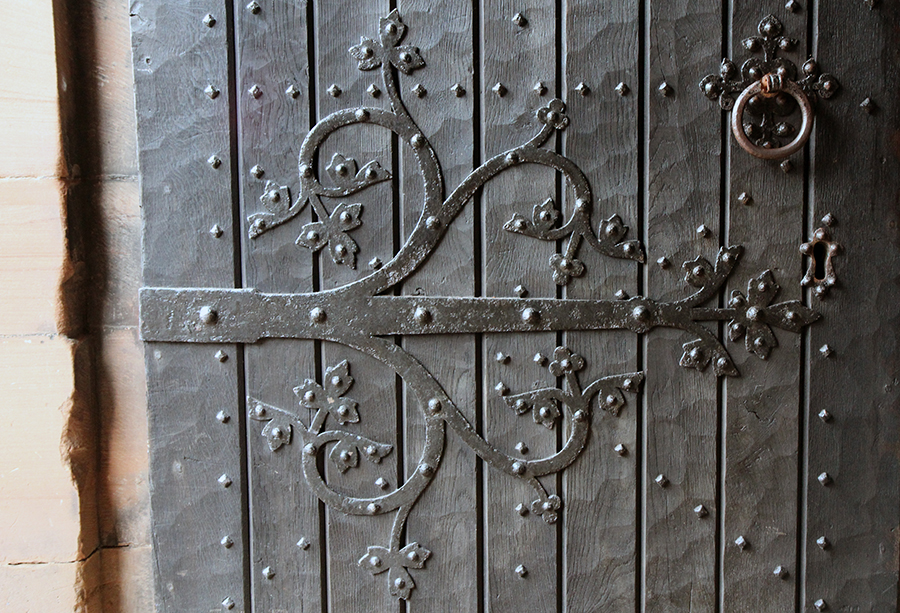
Detalhe- porta da Catedral / Detail: Cathedral 's door

Detalhe- porta da Catedral / Detail: Cathedral ‘s door

I confess it was a shock to read the researcher’s conclusions proving Arthur a Christian , because The Mists of Avalon and other books show him being raised in Avalon by druids and priestesses of the Old Religion. Still, the Celt Christianism was very different of the one we acknowledge today. Few records survived, mostly suppressed by the uprise of the Roman Church through the Middle Ages or destroyed by consecutive conquerors. What was left was Geoffrey of Monmouth’s accounts of ceremonies and a few texts by Bede, Nennius e Gildas. Dr. Goodrich states that “while the earliest proofs of Christianity in Britain are said to go back no further than the year 120, when Emperor Hadrian erected his wall, religion was aparently flourishing by King Arthur’s time – an Age of Christian piety. Saint Gildas, whose testimony supports Arthur (c. 475-542), was a brilliant Christian writer”.

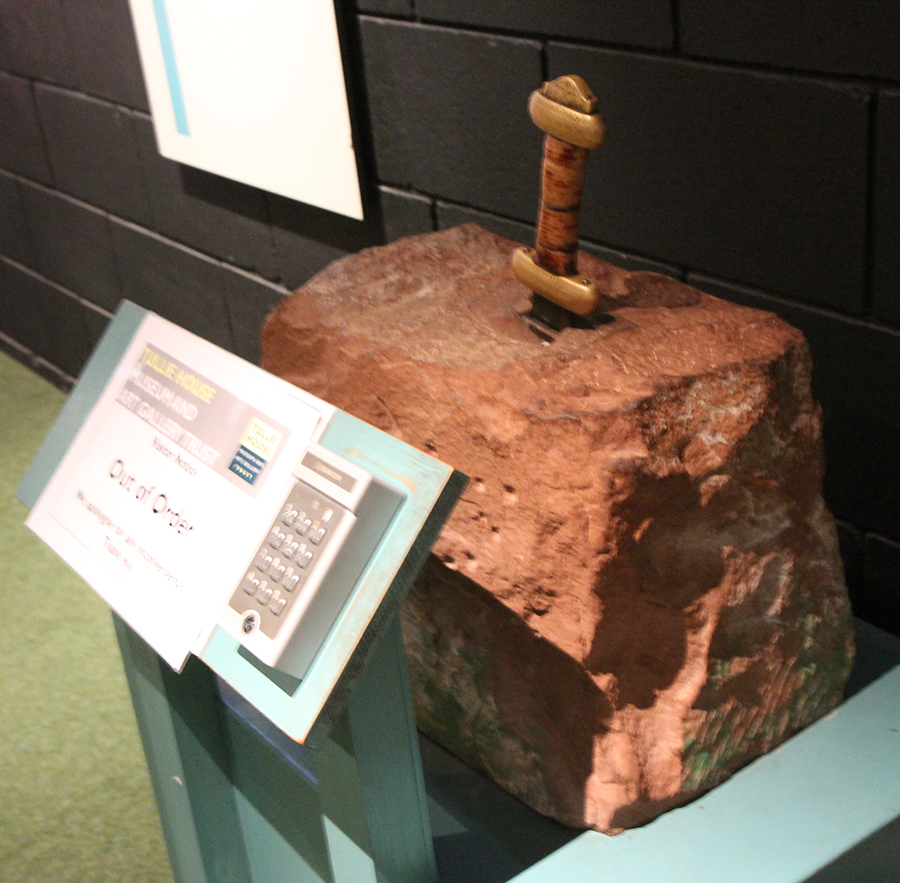
Excalibur de brinquedo no museu Tully House, Carlisle / A toy Excalibur at Tully House Museum

Excalibur de brinquedo no museu Tully House, Carlisle /
A toy Excalibur at Tully House Museum

Seja como for, devia ser algo muito diferente mesmo pois  por volta do ano 429, para os ortodoxos no continente europeu, “ a heresia era frequente pois os britânicos preferiam suas próprias tradições às de todas as igrejas do mundo”.
Anyway, it should be particular indeed, because around the year 429, for the orthodoxy on the European continent, “heresy was already rife in Britain, for the Britons preferred their own traditions before all the churches in the world”.

O círculo de pedras de Castlerigg representado no museu Tully House/ Castlerigg landscape in the Tully House

O círculo de pedras de Castlerigg representado no museu Tully House/
Castlerigg landscape in the Tully House

Da mesma forma, ainda estou sob o impacto da prova da existência de Arthur – e também Merlin, Guinevere, Lancelot e os demais cavaleiros. Minha jornada espiritual passou a ser histórica também. Peço um pouco de paciência pois vou precisar de uns dias para conseguir fechar um texto sobre isso.
I’m also still under the impact of the proof of Arthur’s existance, and Merlin’s, Guinevere’s, Lancelot’s and the other knights’ too. My spiritual journey has became historic as well.  I beg of you a bit of patience because I’ll need a few days to write a proper text about all this.

Meu quarto no B&B de Carlisle. / My room in the B&B at Carlisle

Meu quarto no B&B de Carlisle. / My room in the B&B at Carlisle

Read Full Post »


St Nectan's Glen

St Nectan’s Glen

Além de nós, havia meia dúzia de turistas em St. Nectan’s Glen, olhando sem entender nada, aquele ser humano – eu – mergulhando e gritando na cachoeira, “Now I’m a knight of the Round Table!” Mas também ninguém sabia todos os obstáculos que precisei superar e o tanto que significava para mim estar ali. Enfim, minha própria história se misturava com a dos Cavaleiros que eram consagrados naquele lugar.

There were a few tourists beside us in St. Nectan’s Glen, not believing their eyes, watching a human being (me) diving and shouting in the waterfall – “Now I’m a knight of the Round Table!” But they had no idea how hard it had been to get there and how much did it mean to me. At last, my own life merged with the Knight’s, in that very spot where they were knighted.

A Távola Redonda / The Round Table

A Távola Redonda / The Round Table

Esta Távola, que se encontra no Castelo de Winchester, foi encomendada pelo Rei Henrique VIII, que se fez retratar no  lugar do Rei Arthur.  /This table, in Winchester Castle, was comissioned by King Henry VIII, who ordered King Arthur to be portraited as himself

Esta Távola, que se encontra no Castelo de Winchester, foi encomendada pelo Rei Henrique VIII, que se fez retratar no lugar do Rei Arthur. /This table, in Winchester Castle, was comissioned by King Henry VIII, who ordered King Arthur to be portraited as himself

A Távola Redonda era a mais elevada Ordem de Cavalaria na corte do Rei Arthur, a tropa de elite Britânica. Seu código de honra, segundo Sir Thomas Malory (e outros autores) compreendia:
• Não cometer maus tratos, assassinato ou traição,
• Ter compaixão, ser misericordioso e leal
• Prestar socorro e defender os mais fracos e as mulheres
• Jamais violentar jovens, mulheres ou viúvas
• Buscar a honra em primeiro lugar, não brigar injustamente por bens materiais ou amor;
• Jamais depor as armas ou atacar outro cavaleiro
• Lutar pela segurança de seu país, dar a própria vida se preciso
• Acolher a todos com hospitalidade
• Aplicar-se na prática da religião, procurar por milagres
• Na honra ou na desgraça, reportar fielmente os fatos para os registros

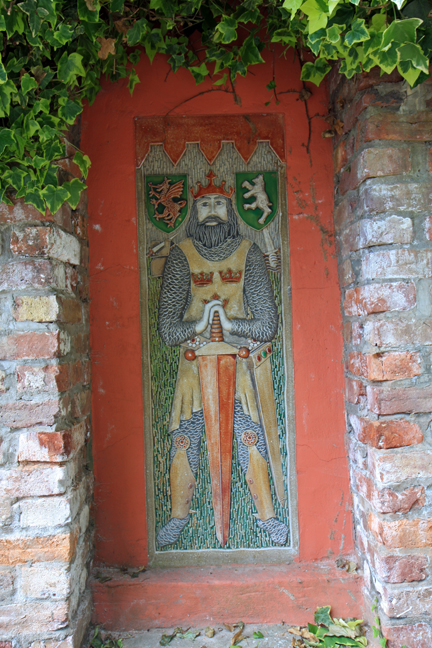
King Arthur, fresco in The Ffwrrwm, Caerleon

King Arthur, fresco in The Ffwrrwm, Caerleon

The Round Table was the highest Order of Chivalry at the Court of King Arthur. Its members were the cream of the British military who followed a strict code of honour and service. According to Sir Thomas Malory (and other writers), it comprised:
• To injure no one, never do outrage nor murder ;
• Always to flee treason, never to break faith for any reason
• To by no means be cruel but to give mercy unto him who asks for mercy
• When called upon, to defend the rights of the weak (including women) with all one’s strength
• To never force ladies, gentlewomen or widows, always do them succor
• To seek nothing before honour , not to take up battles in wrongful quarrels for love or worldly goods
• To never lay down arms nor to attack one another
• To fight for the safety of one’s country, to give one’s life for one’s country
• To practice religion most diligently and seek after wonders
• To grant hospitality to anyone, each according to his ability
• Whether in honour or disgrace, to report with the greatest fidelity to truth to those who keep the annals.

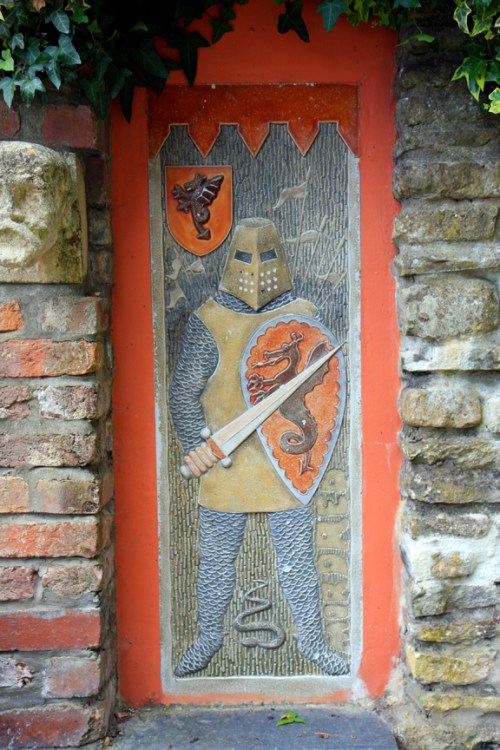
Sir Lancelot, fresco in The Ffwrrwm, Caerleon

Sir Lancelot, fresco in The Ffwrrwm, Caerleon

Algumas coisas parecem bizarras mas fazem sentido, levando-se em conta a época. Outras são absurdamente atuais, inclusive no que diz respeito às mulheres. O código de honra dos Cavaleiros parece uma versão rebuscada dos dez mandamentos cristãos.  “Reportar fatos fielmente” pode ser traduzido como não mentir. “Acolher com hospitalidade” é tratar o outro como gostaria de ser tratado, isto é quase amar o próximo como a ti mesmo. Não sou católica, mas os mandamentos são uma perfeita lista de boas práticas para a (co)existencia humana. Quando se fala em mudar o mundo, o que na verdade precisa mudar é cada ser humano, por si. Quando todos forem capazes de viver segundo essas diretrizes simples, o mundo estará mudado.
Não se trata de religião. Apenas bom senso. Todas as religiões dizem mais ou menos essas mesmas coisas, tipo “não matarás”. O problema é que as pessoas se acostumaram a fazer o que é mais fácil ou mais proveitoso. Quem pauta suas ações pela ética e justiça é incompreendido, chamado de burro ou maluco.
É uma pena ver tantas pessoas que se dizem religiosas mas não seguem os mandamentos. Conheço gente que não perde uma missa aos domingos, mas passa o resto da semana falando da vida alheia.

Sir Galahad,fresco in The Ffwrrwm, Caerleon

Sir Galahad,fresco in The Ffwrrwm, Caerleon

Some points may seem bizarre but they make sense in the context of that time. Others are incredibly up to date, specially what concerns women. The Knights’ honour code reminds me the ten christian commandments, in a flourish language. “Thou shall not kill – no murder ”.To “ report with the greatest fidelity to truth” can be translated as “not to lie”. To “grant hospitality to anyone” is the same of treat other people as you would like to be treated, or, going farther, love each other as thyself.  I’m not a catholic, but the ten commandments are a perfect list of good practices for human coexistence. We speak of “changing the world”, but this can only be done if each and every one changes and becomes able to live according to those simple rules. When all people are changed, the world will have changed. This is not about religion, is just common sense. Every religion says more of less the same. The problem is, people got used to do what is easier or more profitable. Who acts with ethics and justice is called a weirdo or a stupid. And it’s a shame to see so many who call themselves religious but don’t follow the commandments. I know people who never lose sunday mass, but dedicate the other days of the week to gossip.

O Anfiteatro Romano em Caerleon, País de Gales. Há quem diga que esta era a verdadeira Távola Redonda, pois havia na verdade centenas de cavaleiros. / The Roman Amphitheater in Caerleon, Wales. Some say this place was the real Round Table, because actually there were hundreds of Knights.

O Anfiteatro Romano em Caerleon, País de Gales. Há quem diga que esta era a verdadeira Távola Redonda, pois havia na verdade centenas de cavaleiros. / The Roman Amphitheater in Caerleon, Wales. Some say this place was the real Round Table, because actually there were hundreds of Knights.

Cristalino como a água da cachoeira onde eu me banhava, interiorizando meus votos de ser um Cavaleiro do século XXI. Jurei tornar-me uma pessoa melhor, disposta a fazer as coisas certas, ainda que contrariando satisfações pessoais imediatas, reconhecendo que geralmente são mesquinharias. Quando meus dedos começaram a ficar azuis saí da água. Me vesti e voltamos pela trilha, agora uma subida íngreme, mas não importava. Sempre escolhia o caminho mais difícil mesmo. Faz parte, quando você faz um voto. Subi quase levitando. Eu não sabia exatamente em que estava me metendo. Votos são coisas sérias, ficam impregnadas na alma, não se dissolvem nem se pode esquecê-los. Agir corretamente exige um esforço, tem um grau de dificuldade por vezes elevado. Dirigir no Rio de Janeiro, por exemplo, uma tarde inteira sem enraivecer-se nem xingar ninguém, é quase impossível, mas continuo tentando.

Clear as the waterfall where I bathed, while making my vows to be a XXI century Knight. I swore to make a better person of myself, willing to do things right, even if that goes against personal immediate satisfaction, which I recognize are often selfish behavior. I left the water when my fingers started to turn blue; got dressed and we walked back the footpath, now harder because we were going up, but it didn’t matter. When you make a vow, you choose the hardest way. I floated up the path.
But I didn’t know exactly what I was going into. Vows are serious stuff, they penetrate the soul and never melt, and can’t be forgotten. To behave properly needs an effort and sometimes presents a high level of difficulty. To drive the streets of RJ, for example, one whole afternoon without falling into deep rage or calling the others bad names is close to impossible, but I keep on trying.

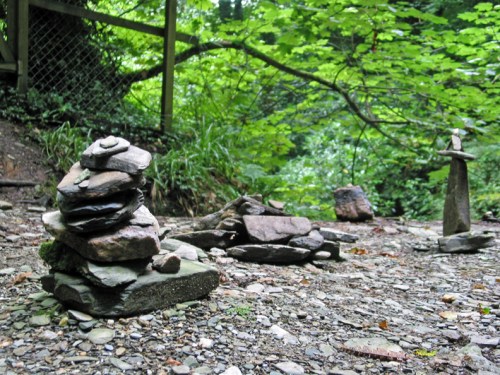
Pilhas de pedras feitas pelos visitantes junto à cachoeira / Stone piles left by visitors next to waterfall

Pilhas de pedras feitas pelos visitantes junto à cachoeira / Stone piles left by visitors next to waterfal

Read Full Post »