Feeds:
Posts
Comentários

Posts Tagged ‘king arthur’


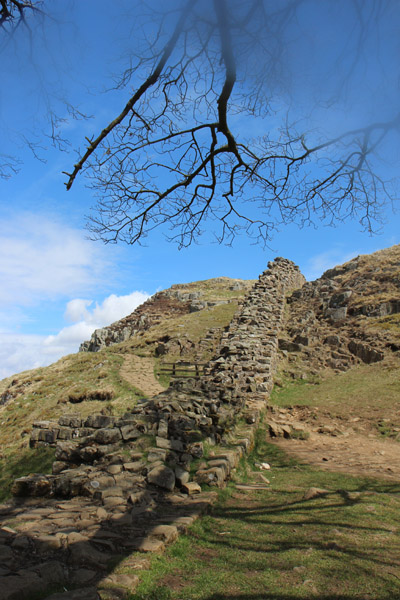
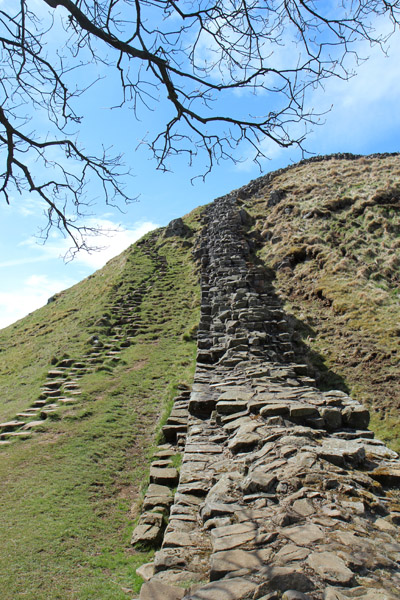
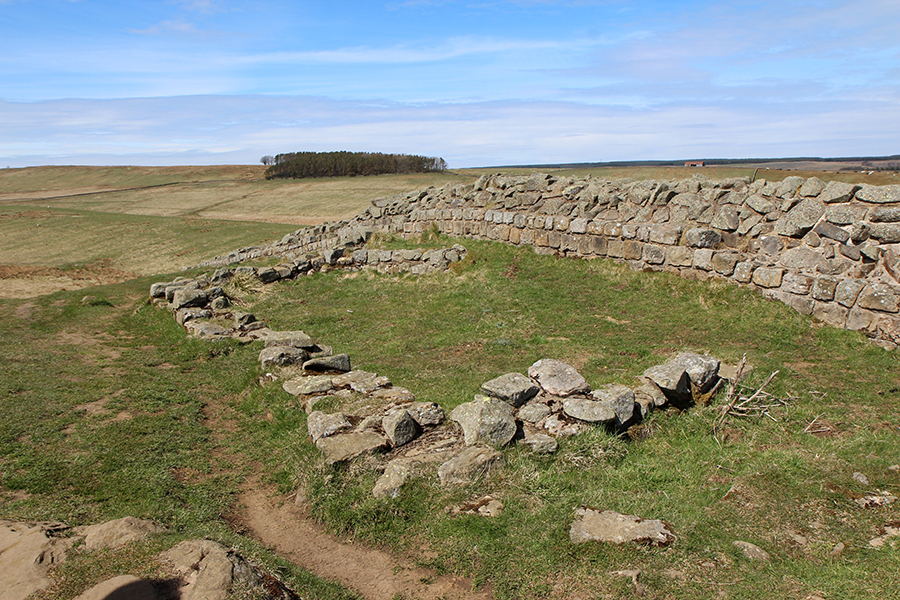
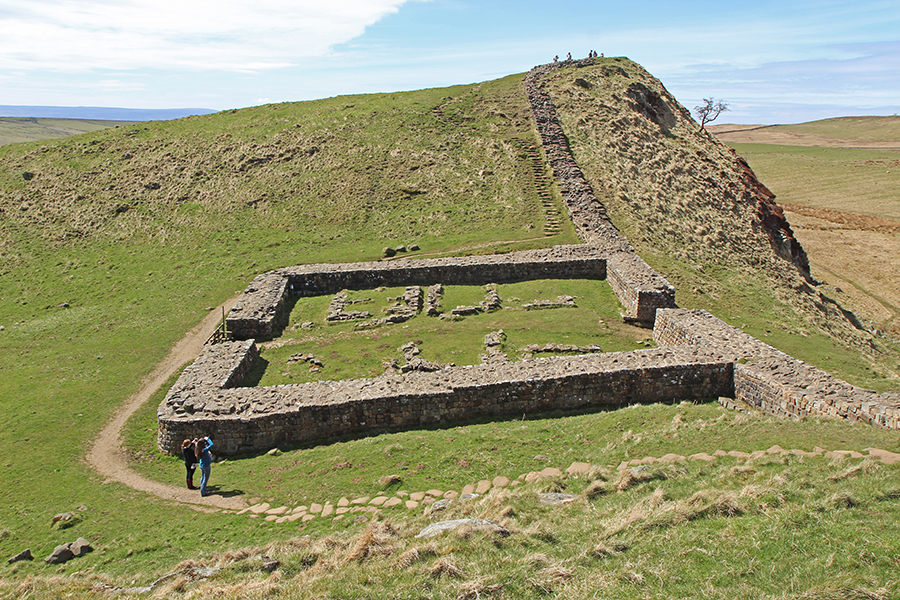
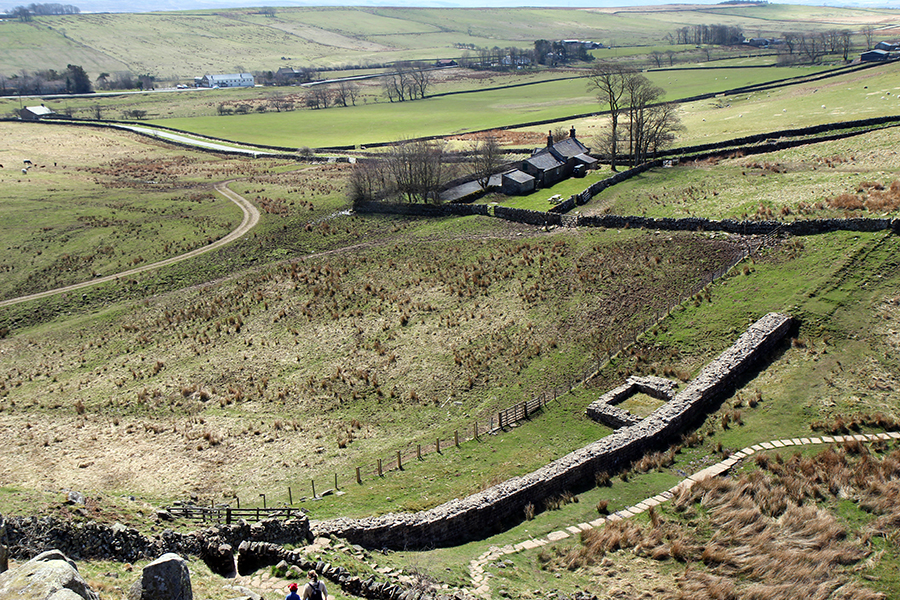
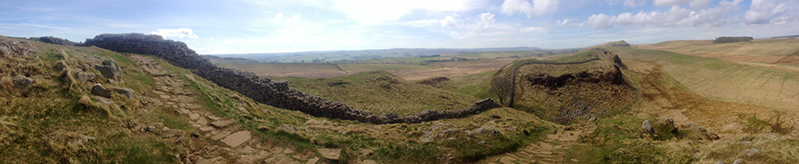
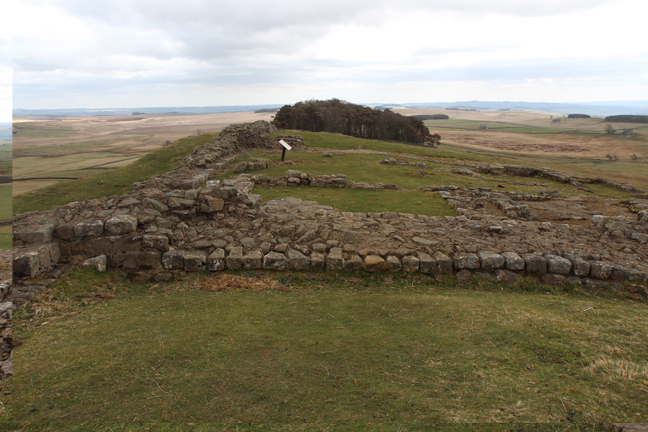
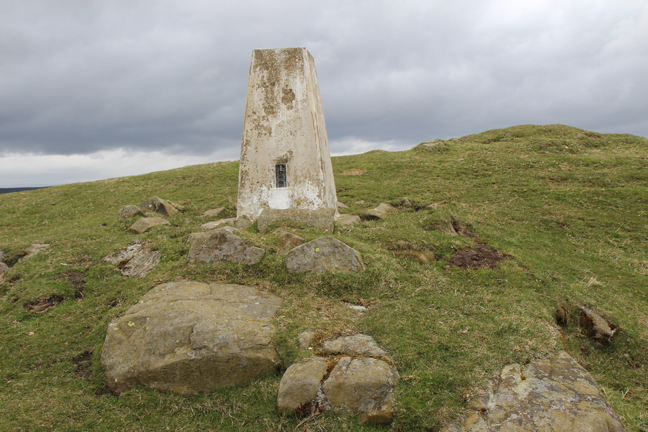
Turret 51

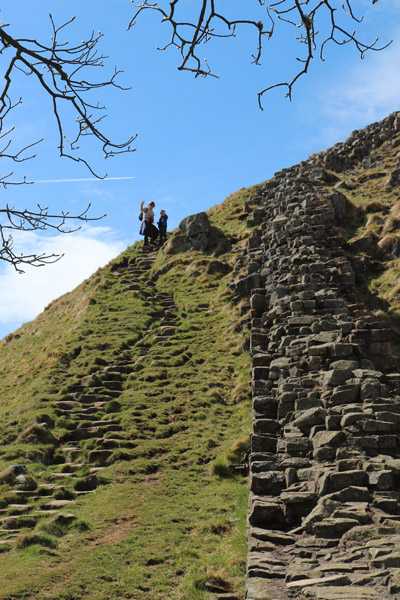
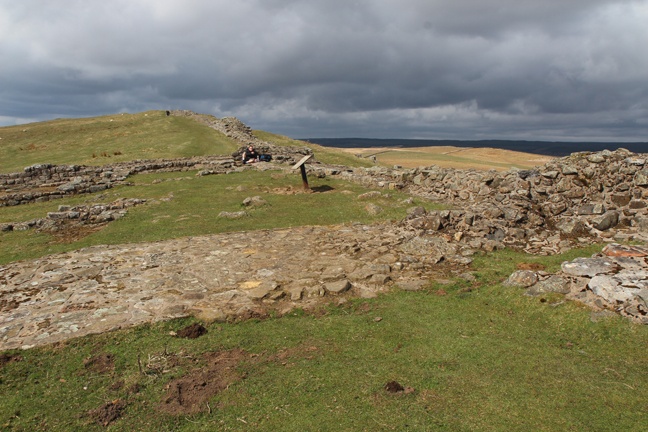
Turret 51A, Hadrian’s Wall

Continuamos com King Arthur, de Norma L. Goodrich: “Delimitamos o reino de Arthur nos quatro cantos: Dumbarton (NW), Carlisle (SW), Stirling (NE) e Berwick (SE). Estas cidades hoje são importantes centros, à exceção do porto de Berwick, que foi em grande parte destruído durante as guerras entre Inglaterra e Escócia que se seguiram.”
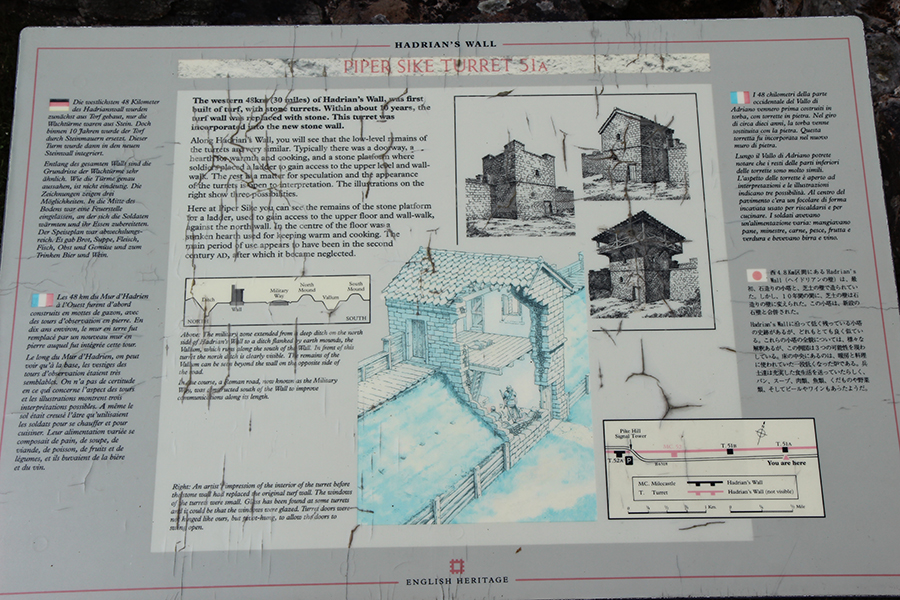
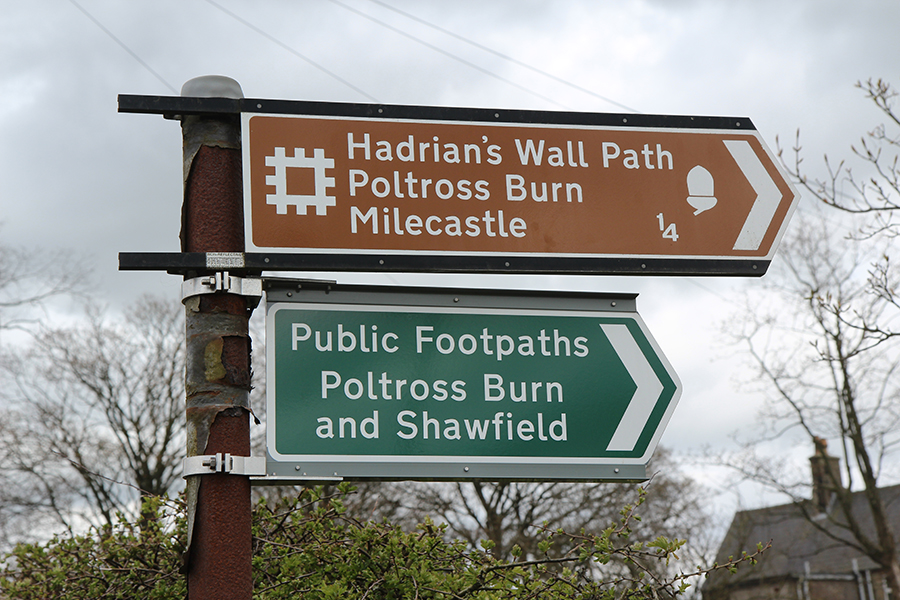
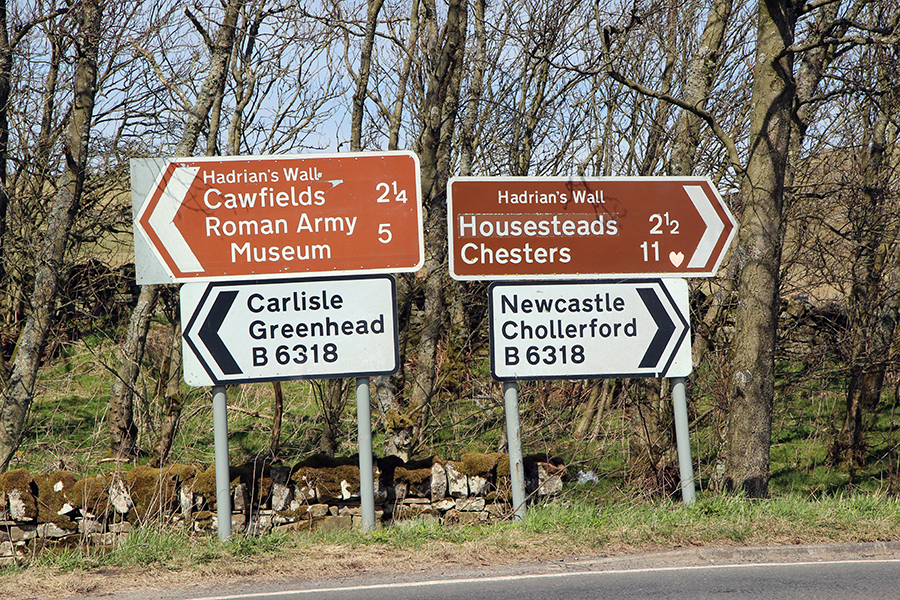
Placa informativa da Turret 51 / Signpost

Placa informativa da Turret 51A / Signpost

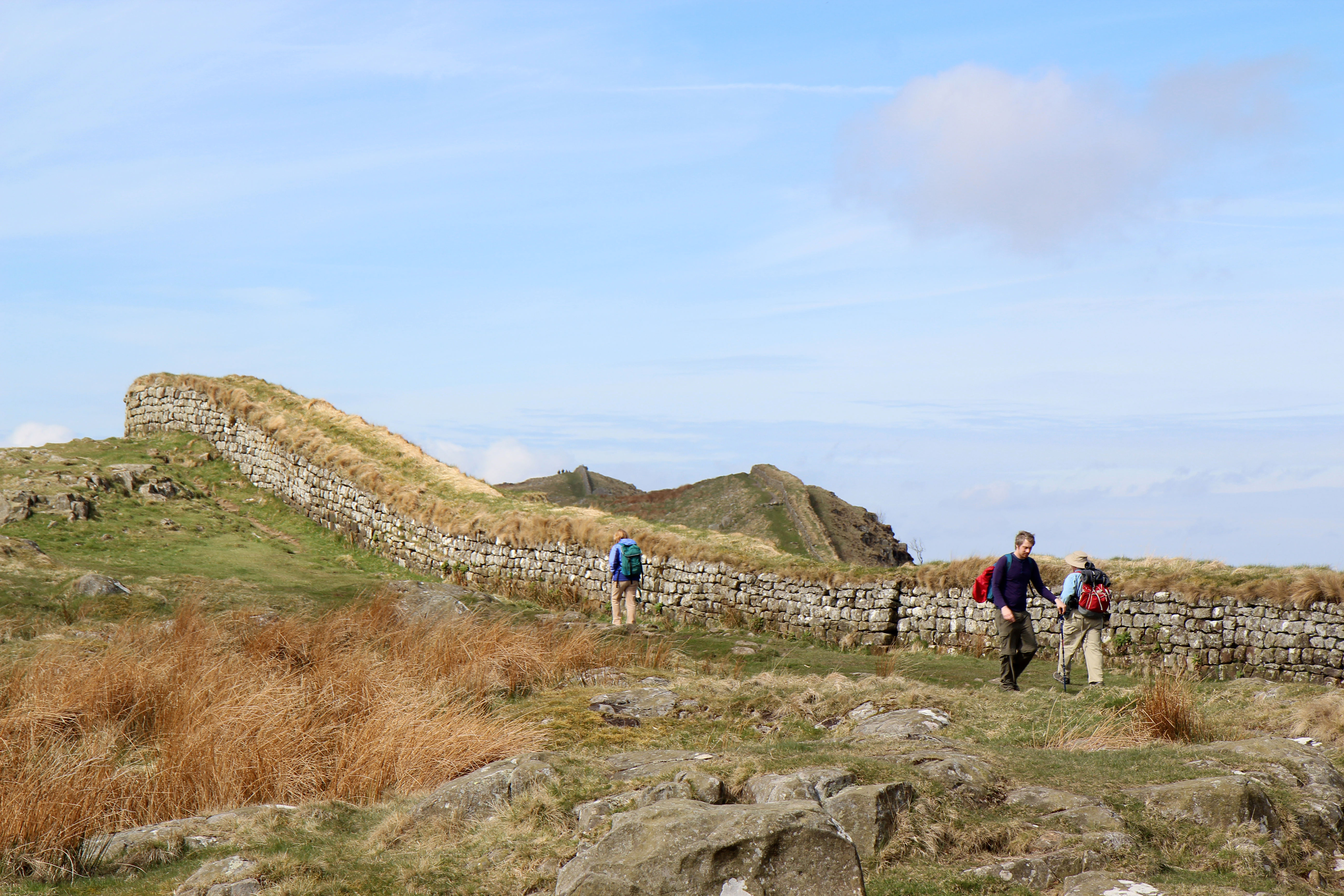
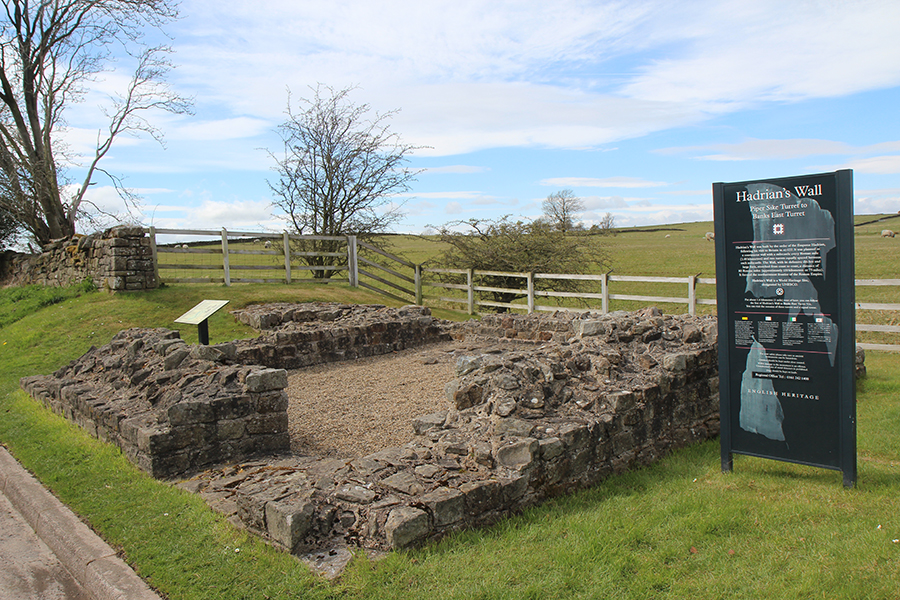
Piper Sike Turret 51

Piper Sike Turret 51A

Let’s keep reading King Arthur by Norma L. Goodrich:
“ We delimited King Arthur’s kingdom at its four corners: Dumbarton (NW), Carlisle (SW), Stirling (NE) and Berwick (SE).  These are key centers today, with the possible exception of the seaport of Berwick, which was largely destroyed during the subsequent wars between Scotland and England.”

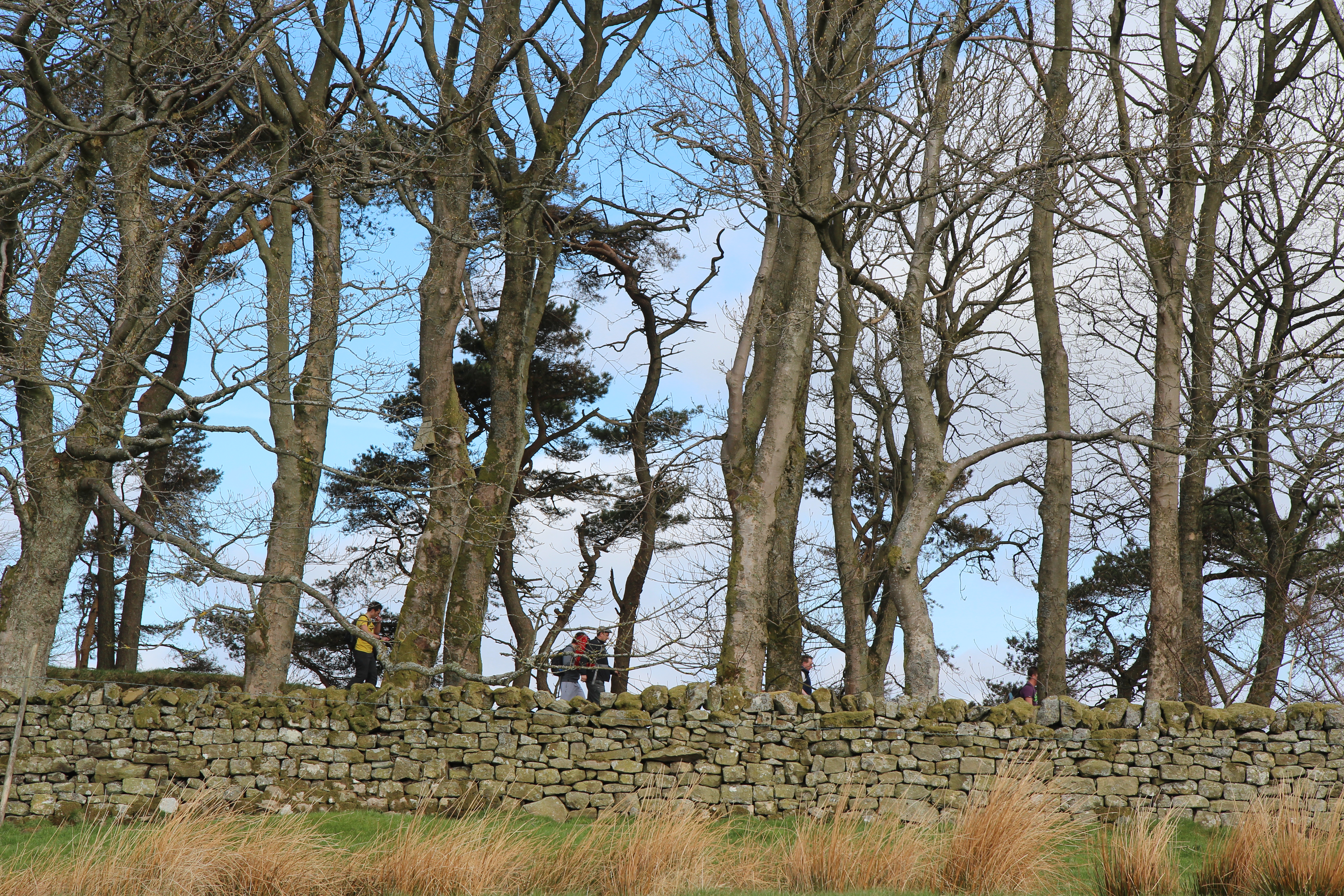
Turret 51B

Turret 51B

“Para quem acredita no Arthur histórico, o principal problema é a localização dos seus castelos. Camelot permanece o mais importante de todos, onde provavelmente estariam abrigados os tesouros do Rei. Estes foram citados pelo enciclopedista Lambert de Saint-Omer em seu livro “Liber floridus”, que precedeu Geoffrey of Monmouth em mais de uma década: “Existe um palácio na Grã Bretanha, na terra dos Pictos, do guerreiro Arthur, construído com arte maravilhosa e diversa, no qual todos os feitos épicos de suas conquistas e guerras podem ser vistos esculpidos”.”

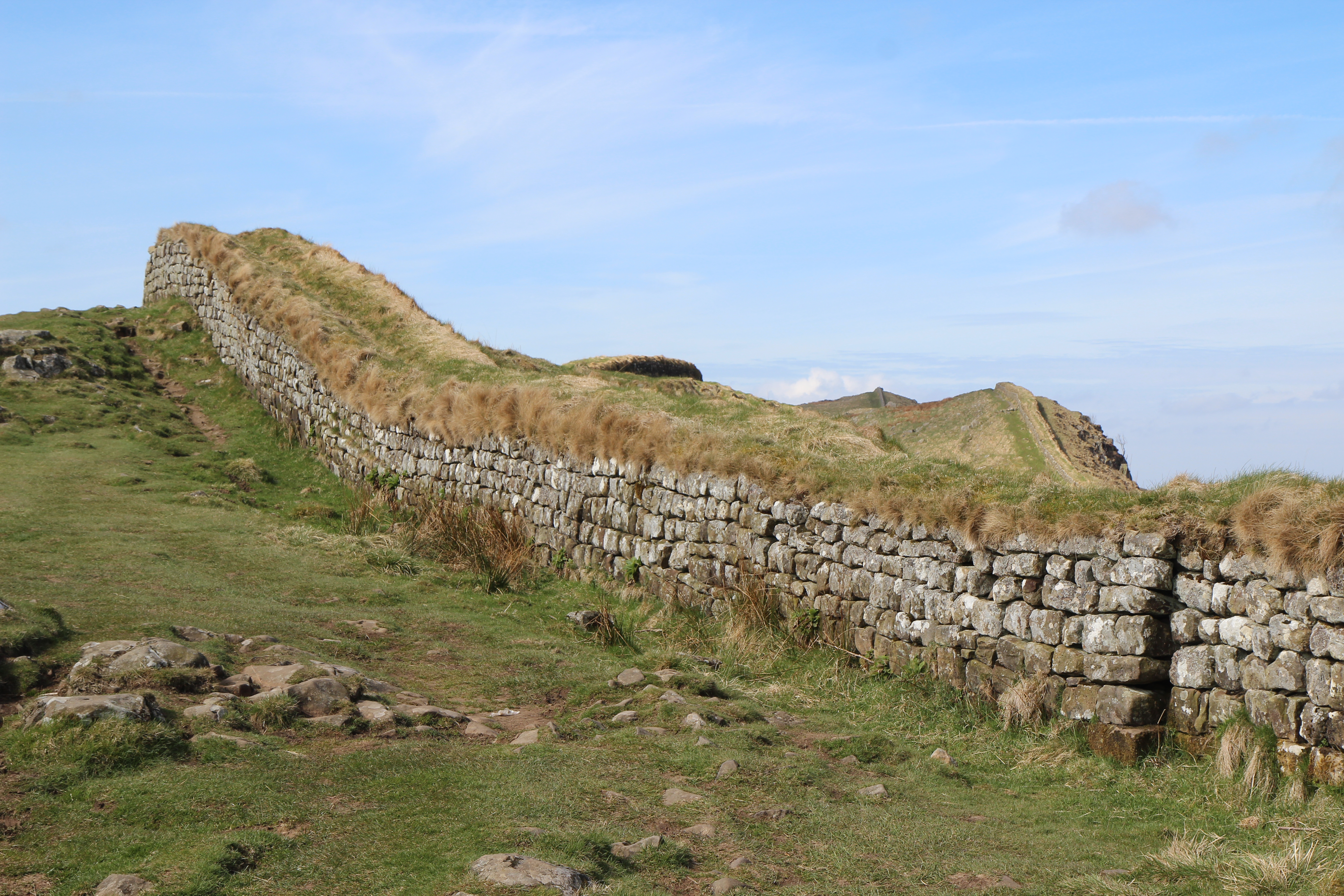
Hadrian's Wall Turret 51B

Hadrian’s Wall Turret 51B

Placa informativa, Turret 51B/ Signpost

Placa informativa, Turret 51B/ Signpost

Turret 51B, à beira da estrada

Turret 51B, à beira da estrada / By the highway

“For those who think of King Arthur as historical, the chief problem must be the emplacements of King Arthur’s castles. Camelot must remain most important of all, and it is likely that it housed the king’s treasures. These were reported by the encyclopedist Lambert de Saint-Omer in his book “Liber floridus”, which antedated Geoffrey of Monmouth by more than a decade: “There is a palace in Britain, in the land of the Picts, of the warrior Arthur, built with marvelous art and variety, in which all the epic deeds of his conquests and of his wars are to be seen sculpted”.”
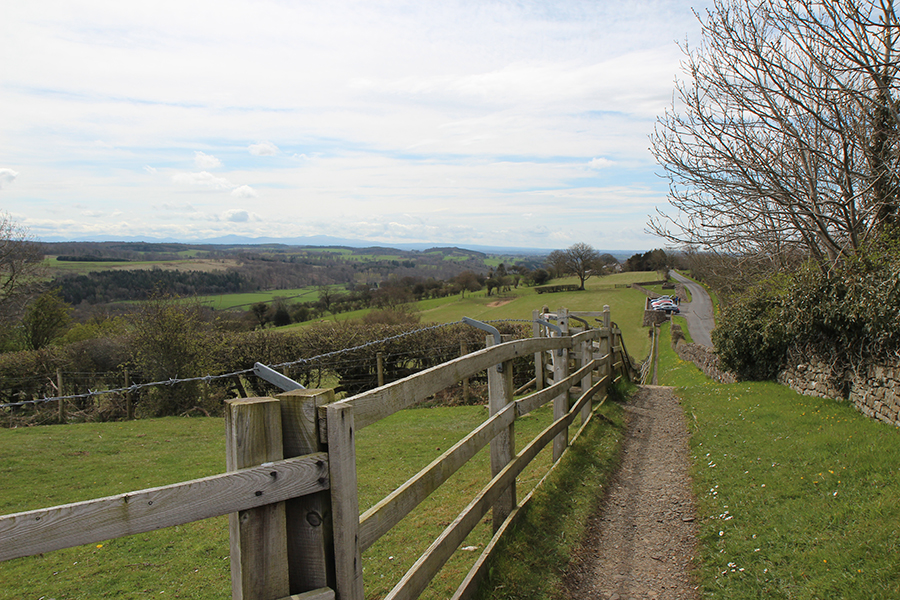
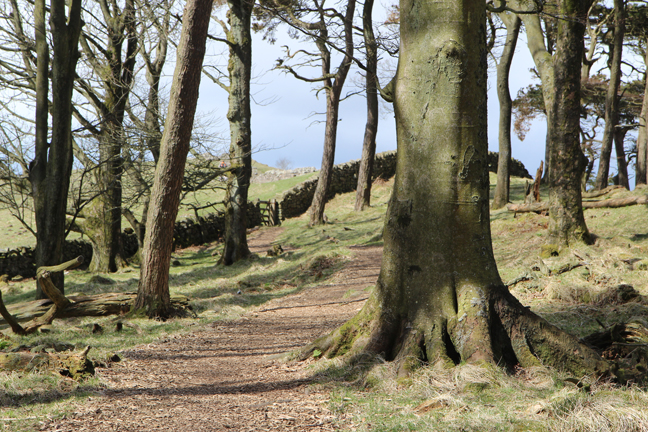
Trilha segue paralela à estrada

Trilha segue paralela à estrada/ Footpath parallel to the road

“Camelot, como sabemos, por muito tempo foi considerado fictício. Já foi identificado como sendo Colchester, Cadbury e Winchester, mas estudiosos por fim concluíram que não era o nome de nenhum lugar na Grã -Bretanha. Sir Thomas Malory parecia inclinado a acreditar que Camelot era o nome dado ao castelo onde e enquanto o Rei ali estivesse residindo, qualquer que fosse o lugar. O livro “Perlesvaus” * afirma que havia dois Camelots.”
NOTA: * significa Percival – o cavaleiro que por fim encontrou o Santo Graal. Este livro também é chamado Li Hauz Livres du Graal, A Nobre História do Santo Graal, trata-se de um antigo romance Arthuriano francês da primeira década do século XIII, do qual sobreviveram três manuscritos, dois fragmentos e duas gravuras do século XVI. Nada se sabe sobre o autor.
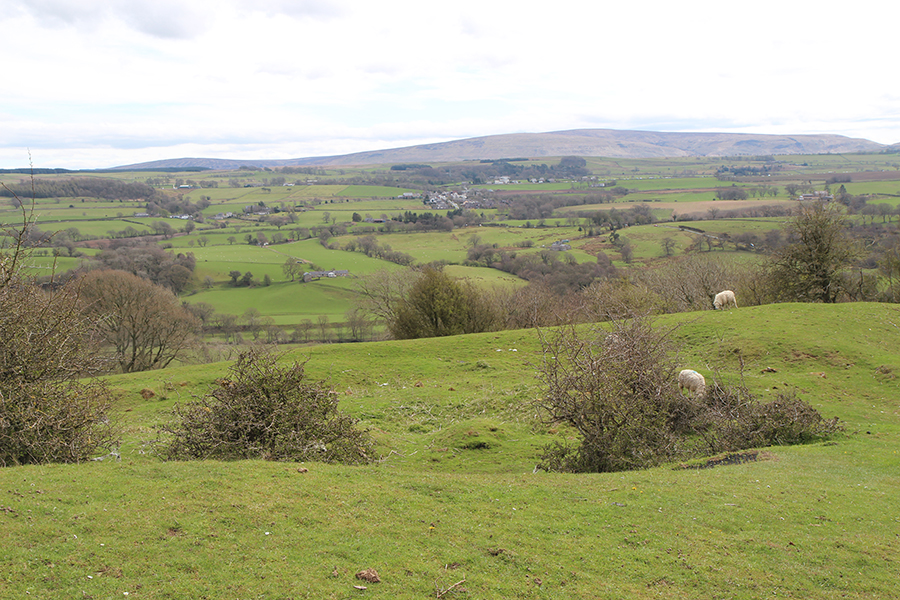
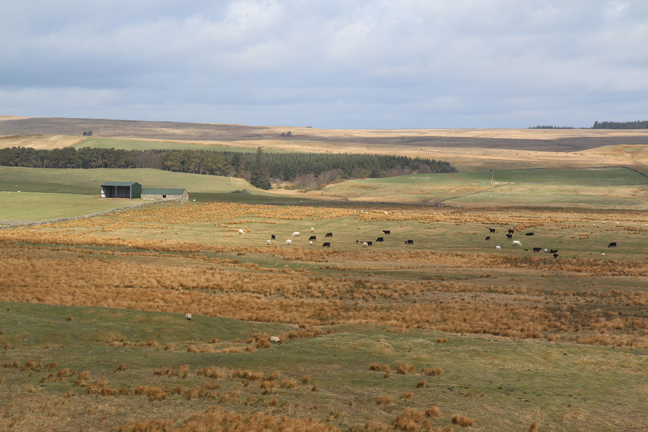
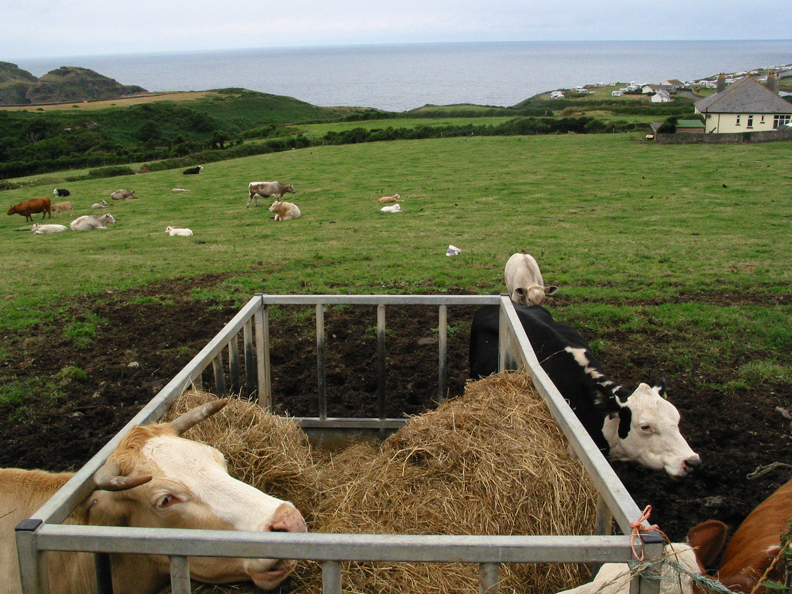
Linda região de pastagens/ Lovely pasture landscape

Linda região de pastagens/ Lovely pasture landscape

“Camelot, we know, has long been considered fictitious. It has been identified as Colchester, Cadbury and Winchester, but scholars finally concluded that it was not the name of any place in Britain. Sir Thomas Malory seems to have been inclined to believe that Camelot was King Arthur’s castle when the king was in residence there, at whatever site that may have been. The book “ Perlesvaus * ” states that there were two Camelots.”
 NOTE: *means Percival – the knight who eventually found the Holy Grail. This book is also called Li Hauz Livres du Graal , The High History of the Holy Grail, is an old French Arthurian romance dating to the first decade of the 13th century. It survives in three manuscripts, two fragments, and two 16th-century printings. Nothing is known of the author.
Ovelhas

Ovelhas / Sheep

“Claramente Carlisle é apontado como sendo o principal castelo de Arthur, portanto seria um deles, e o outro foi identificado por O.G.S. Crawford:  Castelo de Stirling, chamada “chave para a Escócia”. William of Worcester também escreveu que “Rei Arthur presidia a Távola Redonda na fortaleza militar de Stirling, também conhecida como Snowdon West Castle.”
Norma Goodrich afirma que Camelot  se situava em King’s Knot, abaixo da face norte do penhasco em Stirling: “ A topografia é inconfundível, de acordo com todas as descrições feitas por diversos autores.”
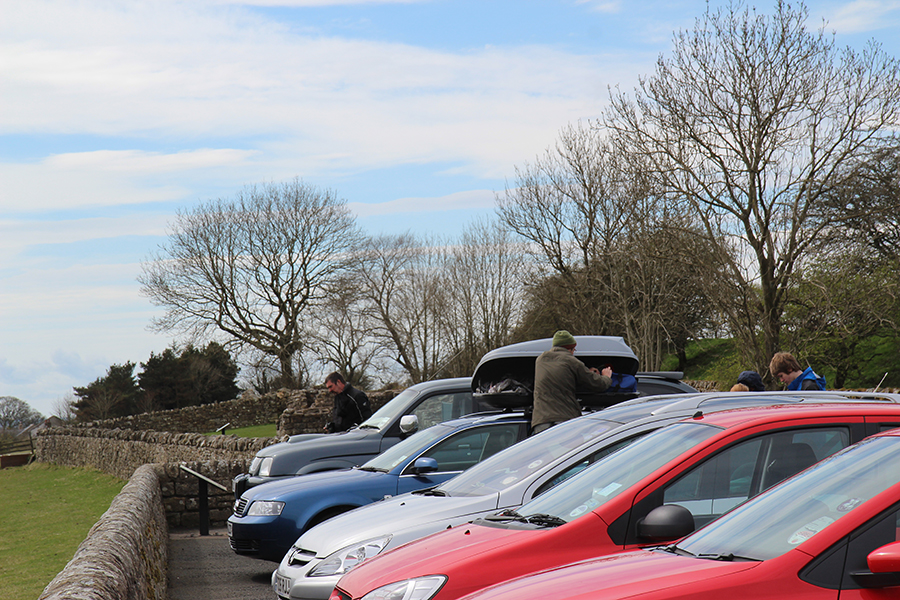
Estacionamento próximo às ruínas / Parking lot beside the ruins

Estacionamento próximo às ruínas / Parking lot beside the ruins

“Clearly Carlisle is indicated as King Arthur’s principal castle, so it was probably one, and the other has been identified by O.G.S. Crawford as Stirling Castle, called the “key to Scotland”. William of Worcester also wrote that “King Arthur presided over the Round Table in the military fort of Stirling, otherwise known as Snowdon West Castle. “
Norma Goodrich states that Camelot was located at King’s Knot, below the western-facing cliff at Stirling: “ The topography is unmistakable, fitting all descriptions by several authors.”
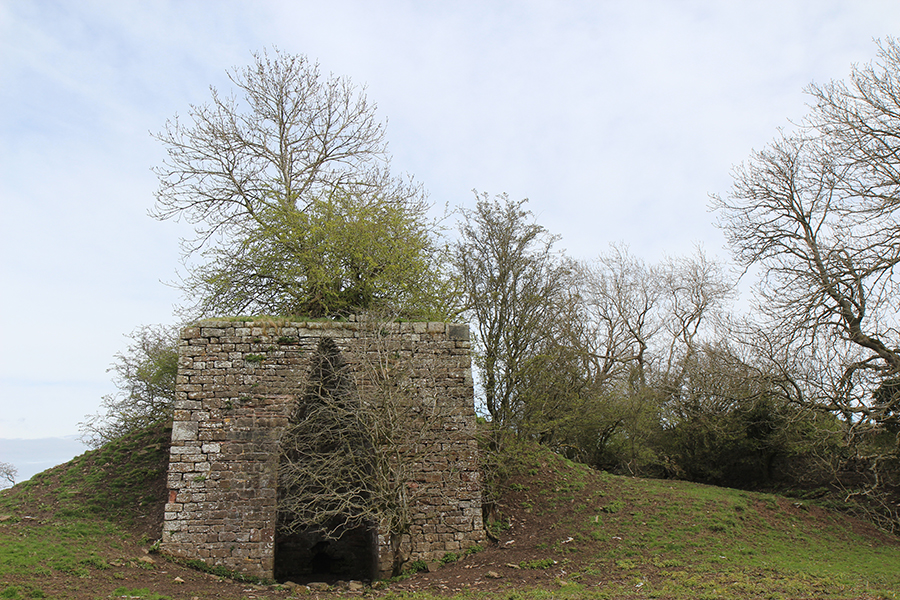
Pike Hill Signal Tower

Pike Hill Signal Tower

“Tanto na Idade das Trevas como hoje, pode-se chegar à garganta de Stirling, entre os imponentes montes Campsie-Gargunnock a oeste e o estuário do Rio Forth a leste. O corredor norte-sul, conhecido por muitas batalhas, tem dez milhas de comprimento e quatro de largura. O forte pré-histórico ficava, como a fortaleza moderna e os quartéis ainda em uso hoje, sobre a enorme parede inexpugnável, avistando do alto dos íngremes penhascos a cidade de Dumbarton a oeste. Praticamente a única montanha em toda a extensão de planícies. Stirling, visto da Muralha de Antonino, é ainda mais impressionante. O Castelo de Stirling dominava a única e estreita travessia do estuário do Rio Forth que, durante a cheia, atingia a largura de uma milha. Junto ao castelo, olhando para baixo dos penhascos a oeste, pode-se ver claramente a planície abaixo do King’s Knot. Trata-se de um monte octogonal cujo nome significa “castelo do monte”, do tipo sobre o qual eram construídos castelos com paliçadas de madeira nos tempos ancestrais. Sobre este monte outrora ergueu-se Camelot, de onde o Rei Arthur presidia a Távola Redonda.”
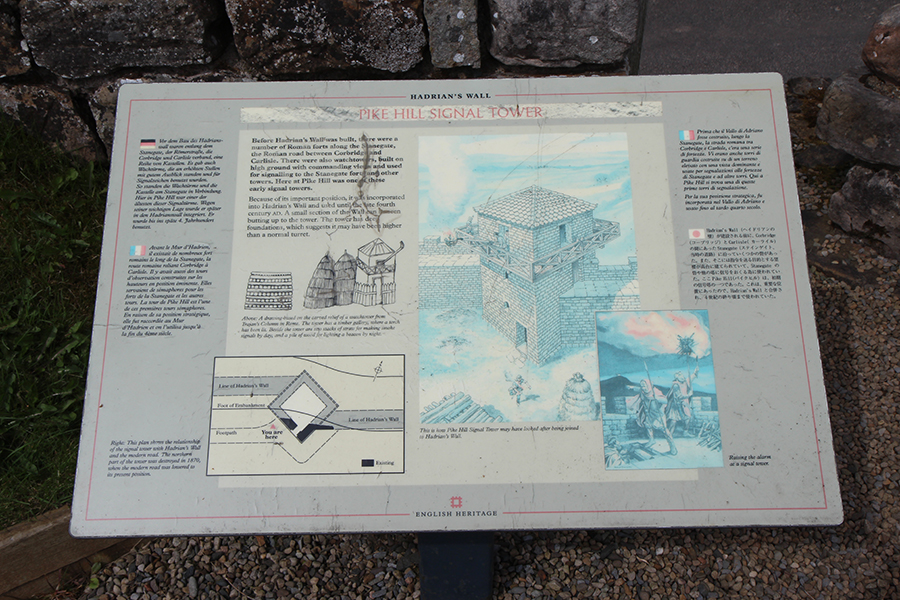
Pike Hill Signal Tower Signpost

Pike Hill Signal Tower Signpost

“Whether in the Dark Ages or today, one can stand at the Stirling Gap, beside the lofty Campsie-Gargunnock Hills to the west and the Forth estuary to the East. The north-south corridor, famous for many battles, is ten miles long and four miles wide. The prehistoric fort sat, like the modern fortress and barracks still in use today, upon the great impregnable wall, looking down its precipitious cliffs toward Dumbarton on the west.
One mountain almost alone in the expanse of flatlands. Stirling seen from the Antonine Wall is an even more impressive mass. Stirling Castle commanded the only and very narrow crossing of the flooded Forth River estuary. At peak flood the Forth stretched one mile wide across flatlands. Standing beside the castle and looking down the west cliffs of Stirling, one can plainly see on the meadowland below the King’s Knot. This is an octogonal mound, whose name means  “castle mound”, upon which the wooden palisaded castles were built in ancient times. Upon this mound once stood King Arthur’s Camelot. At his castle he chaired the Round Table.”

footpath

footpath

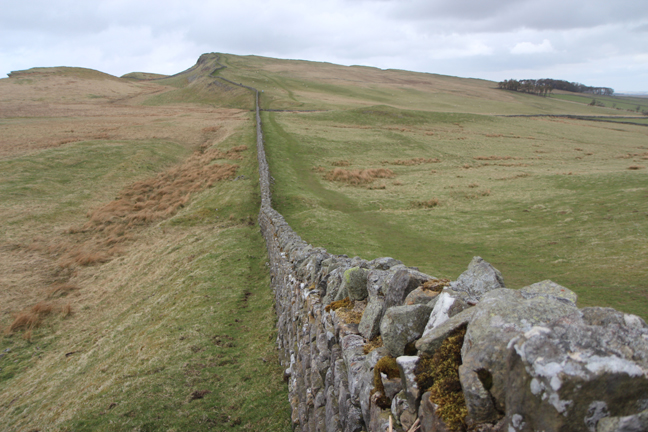
Assim, enquanto eu trilhava a Muralha de Adriano a caminho do Forte Romano de Birdoswald, estav muito mais perto de Arthur do que podia imaginar.
So, as I treaded along Hadrian’s Wall, approaching Birdoswald Roman Fort, I was much closer to Arthur than I could imagine.

mais turrets

mais turrets

Vista da região de Stirling no Google Maps / Stirling overview


Read Full Post »


As fotos deste post foram tiradas no caminho entre Greenhead e o Forte de Birdoswald. / The photos in this entry were taken on the way from Greenhead to Birdoswald Roman Fort.

As fotos deste post foram tiradas no caminho entre Greenhead e o Forte de Birdoswald. / The photos in this entry were taken on the way from Greenhead to Birdoswald Roman Fort.

Meu exemplar do “King Arthur” está tão surrado que nem parece novo. Levo comigo e vou lendo na fila do banco, no ônibus, em salas de espera. Mas creio que a informação que mais me interessa estará na última página – a localização da ilha de Avalon. Até pensei em ler de trás pra frente. A autora se baseia inicialmente em Geoffrey de Monmouth, primeiro autor a escrever sobre Arthur, vai comparando com relatos posteriores e assim chega `as conclusões que, uma vez lidas, parecem incrivelmente óbvias – como ninguém nunca tinha pensado nisso?

Paisagem bucólica / Bucolic landscape

Paisagem bucólica / Bucolic landscape

My copy of “King Arthur” is so threadbare. I carry it in my handbag so I can read in waiting rooms, in lines, on the bus… everywhere. But I’m sure that the most precious information will be in the last page – the real location of Avalon. I even considered reading it back to front. The author’s main source is Geoffrey of Monmouth, the first to mention Arthur. She compares his texts with later accounts and arrives to conclusions that, once read, seem so incredibly evident that it’s a wonder how no one had ever thought about that.

Hello lovely!

Hello lovely!

Os erros de localização geográfica, como por exemplo situar a Ilha de Avalon em Glastonbury – milhas distante do litoral mais próximo- ou o nascimento de Arthur em Tintagel, onde nem havia um castelo na época em que o Rei surgiu no mundo – se devem, segundo ela, a erros de tradução em função da fonética. Palavras parecidas em idiomas diferentes. Não havia dicionários naquela época, inclusive muitas línguas não eram escritas, apenas faladas.

greenheadToBirdoswaldDitch

O fosso que acompanhava a Muralha ainda é bem visível. / The ditch is still visible along the Wall


sheepInTheDitch

sheep&lamb

She states that Geographic misplacements ( as placing the Isle of Avalon in Glastonbury, miles away from any coast ; or Arthur’s birthplace in Tintagel, where there was no castle by the time Arthur was born) were due to mistakes in translation, mostly phonetics, resembling words in different lidioms. There were no dictionaries then and some languages were oral, without written records.

Tarde movimentada na Muralha de Adriano/ Busy afternoon in Hadrian's Wall

Tarde movimentada na Muralha de Adriano/
Busy afternoon in Hadrian’s Wall


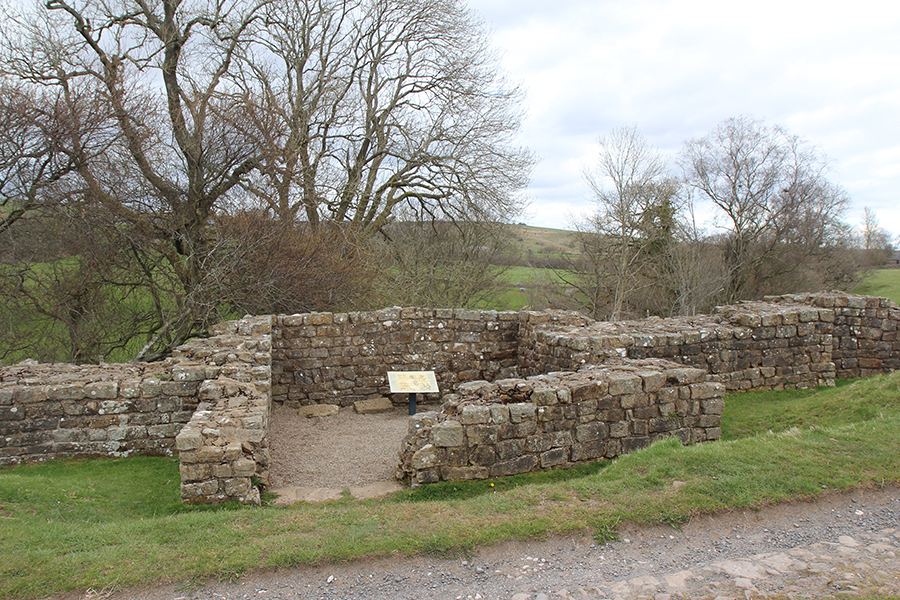
Turret 48A

Turret 48A

turret48view02

Por isso não se conseguiu descobrir onde era exatamente Monte Badon – local da Batalha na qual Arthur derrotou definitivamente os invasores Saxões – nem a Batalha de Camlan, onde o Rei foi mortalmente ferido. Os locais na Inglaterra associados a Arthur são muito distantes uns dos outros, de Glastonbury, de York e de Londres. Pude confirmar isso porque visitei esses lugares e mesmo de trem são viagens longas. O movimento de tropas montadas ou a pé (infantaria) entre tais cidades levaria meses! Mas as cidades definidas por Norma Goodrich são próximas o suficiente para garantir o deslocamento rápido de tropas para enfrentar ataques inimigos… na Escócia.

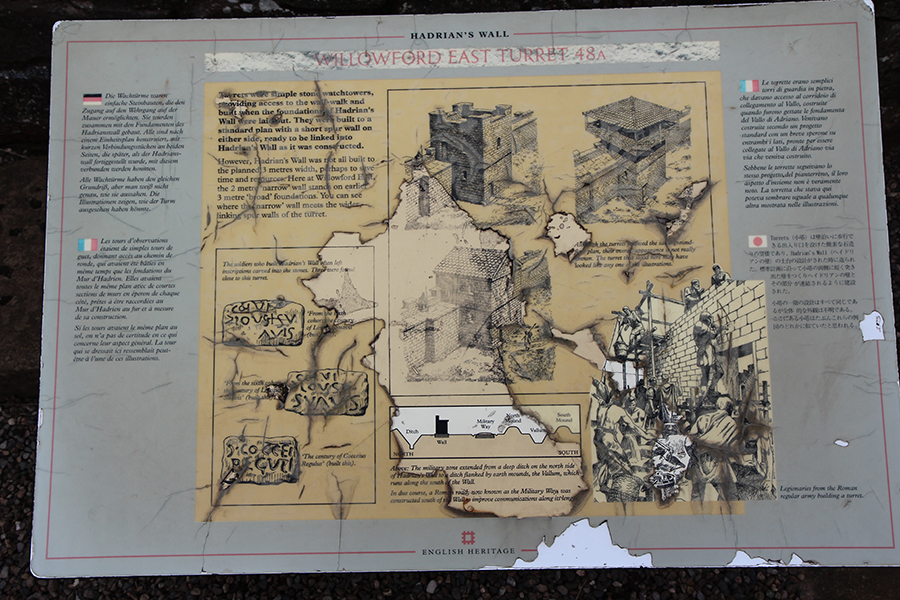
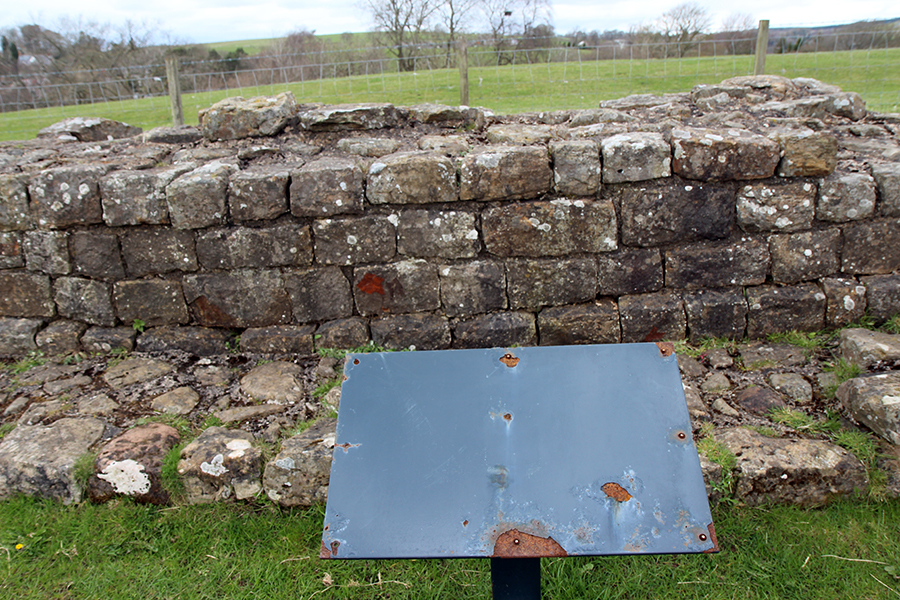
Neste trecho as placas estão bem estragadas/ Signs are rotten in this stretch

Neste trecho as placas estão bem estragadas/
Signs are pretty rotten in this stretch of Wall


DamagedTurretSign

That explains why it’s still unknown the location of battles such as Mount Badon, when Arthur defeated the Saxons once for all, or Camlan, when the King was deadly wounded. The sites in England usually related to Arthur are very far from each other, a long way to Glastonbury, to York, to London. That’s easy to corroborate: such trips are long even by train. Moving troops, cavalry and infantry between these sites would take months. But the cities stated by Norma Goodrich are close enough to assure a quick arrival of soldiers to face enemy raids… in Scotland.

Árvores e lenha / Trees and firewood

Árvores e lenha / Trees and firewood

Segundo ela, Carlisle, ao norte da Muralha de Adriano, seria a capital do reino de Arthur – situada no cruzamento de sete estradas romanas:
According to her, the chief city of Arthur’s kingdom was Carlisle, north of Hadrian’s Wall, that sits at the intersection of seven Roman roads:
1- Dunbarton / Glasgow a noroeste (northwest)
2- Edinburgh / Stirling ao norte (north)
3- Newcastle (via Muralha de Adriano – Hadrian’s Wall) a leste (east)
4- York a sudeste (southeast)
5- Cumbria e Lake District a oeste (west)
6- Penrith e Chester ao sul (south)
7- Galloway e portos de embarque para a Irlanda a oeste. (Galloway and embarkation ports to Ireland to the west).

Mas Carlisle não era Avalon.
But Carlisle wasn’t Avalon.


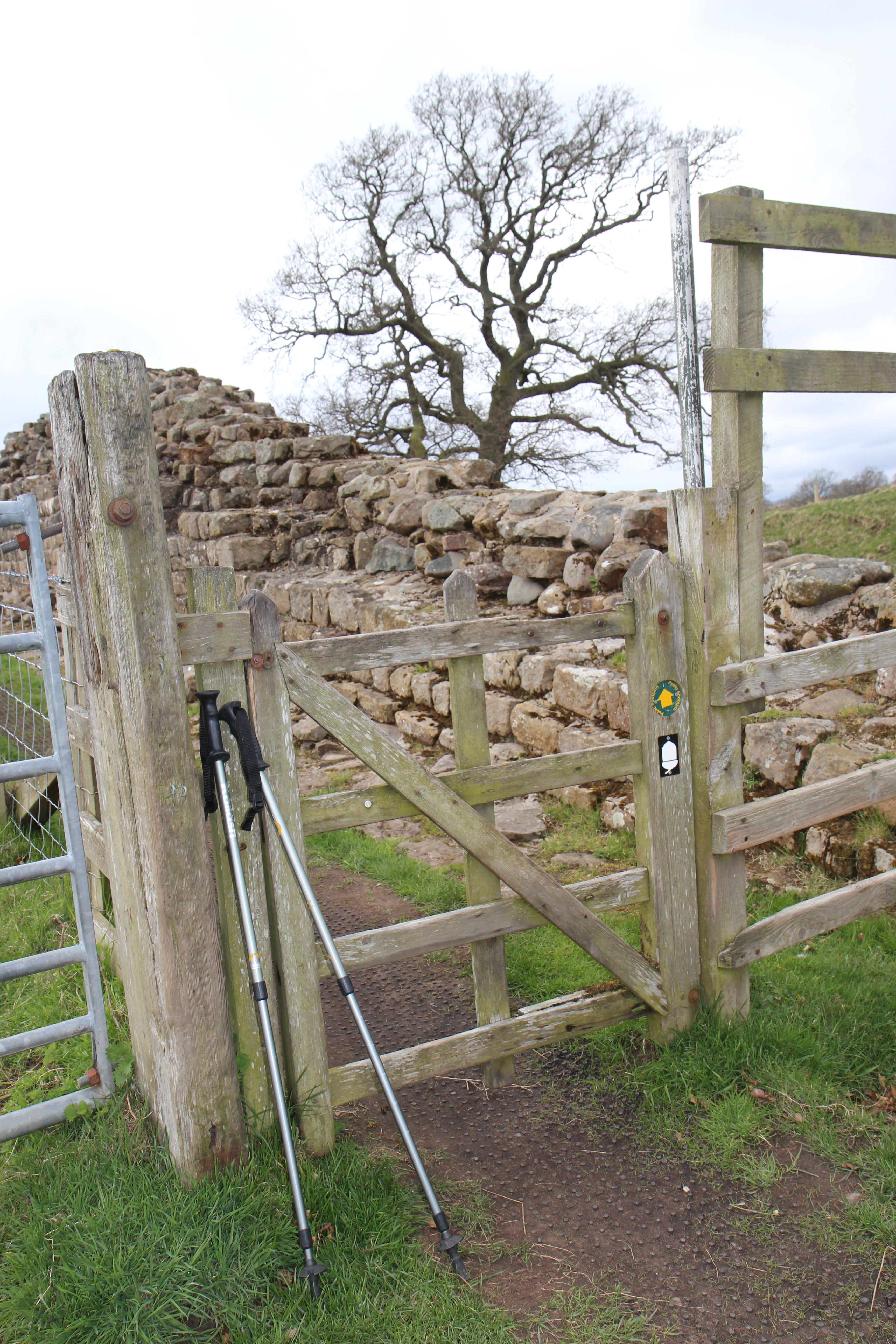
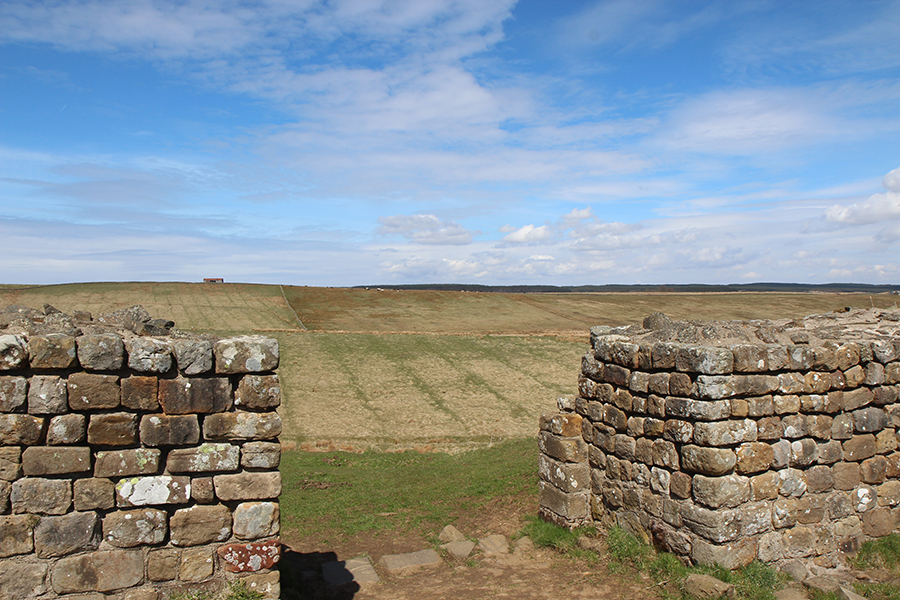
A Muralha de Adriano atravessa muitas propriedades privadas, todas tem portões como estes nas cercas. Perdi a conta de quantos atravessei. / Hadrian's Wall crosses a number of private properties, all fences provided with gates like these. I lost account of how many I've gone through.

A Muralha de Adriano atravessa muitas propriedades privadas, todas tem portões como estes nas cercas. Perdi a conta de quantos atravessei. / Hadrian’s Wall crosses a number of private properties, all fences provided with gates like these. I lost account of how many I’ve gone through.

Read Full Post »


Os estábulos de Arthur na Muralha de Adriano / Arthur's Stables in Hadrian's Wall

Os estábulos de Arthur na Muralha de Adriano / Arthur’s Stables in Hadrian’s Wall

Neste post transcrevo trechos de “King Arthur”, da autora Norma Lorre Goodrich, que realizou extensa pesquisa sobre a existência histórica do Rei e escreveu uma série de livros sobre o assunto. Resumindo, a autora situa Arthur na Escócia! Isso muda tudo. Num primeiro momento me desesperei, porque significa que grande parte do que fotografei na verdade não tem relação com o Rei, embora tenha sido uma viagem estupenda. Por outro lado, viva a minha intuição, ao decidir trilhar a Muralha de Adriano. Sem saber, estava muito mais perto do Arthur real.

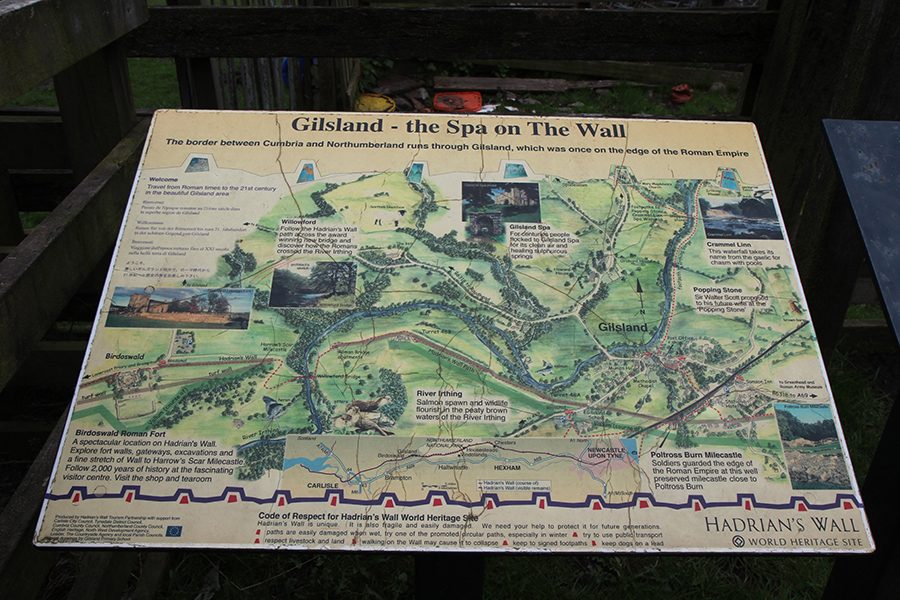
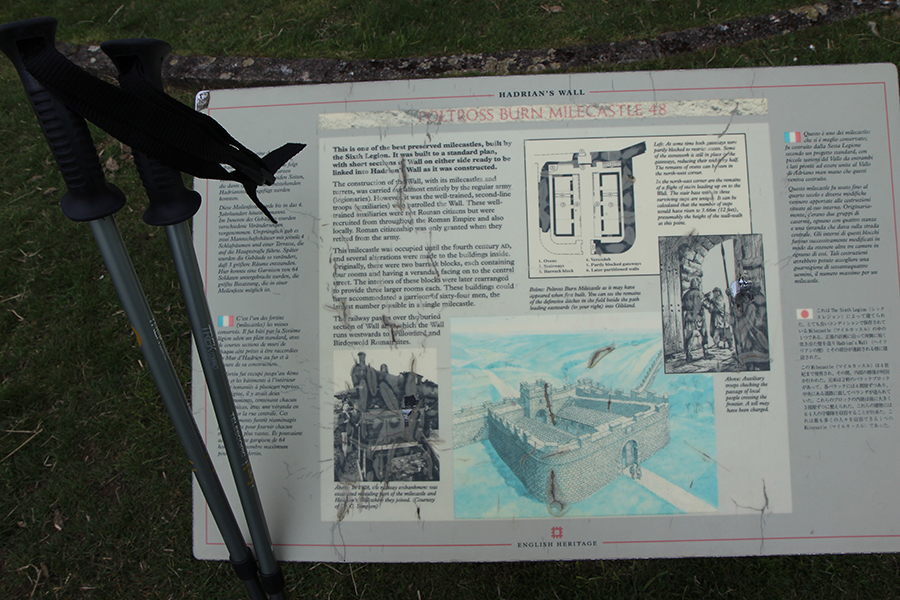
Mapa da região. Abaixo, à direita, está Poltross Burn, Milecastle 48, os Estábulos de Arthur / Map of the area. In the bottom right is located Poltross Burn, the Milecastle 48, or Athur's Stables.

Mapa da região, entre Greenhead eo forte romano de Birdoswald. Abaixo, à direita, está Poltross Burn, Milecastle 48, os Estábulos de Arthur / Map of the area between Greenhead and Birdoswald Roman Fort. In the bottom right is located Poltross Burn, the Milecastle 48, or Athur’s Stables.

In this entry I quote “King Arthur” by Norma Lorre Goodrich, who researched deeply and wrote a series of books on the historical subject. To cut it short, the author places Arthur in Scotland! That changes everything. At first, I fell into despair because it means that most of what I have photographed has actually no relation with tha King, albeit it’s been a terrific trip. On the other hand, I thanked my intuition, that led me to walk Hadrian’s Wall footpath. I was much closer to the real Arthur, although I didn’t know it.

O caminho cruza a estrada de ferro / The path crosses a railway

O caminho cruza a estrada de ferro / The path crosses a railway

Transcrevendo: “Minha intenção básica era oferecer as primeiras provas históricas da existência do Rei Arthur. Quem era o Rei Arthur, ou Arturus? Porque este rei britânico nunca foi encontrado? Onde era seu reino?
Os estudiosos da Idade Média se confrontaram com as mesmas questões que nós atualmente. Tendo poucos recursos e praticamente nenhum acesso ao trabalho de outros estudiosos, eles falharam em encontrar respostas convincentes. Tendo em vista a escassez de bibliotecas – frequentemente sua inexistência, assim como a de disciplinas tais como história, arqueologia, antropologia e linguística – e a insuficiência de meios de transporte, podemos perguntar como essas pessoas poderiam desenrolar um fio que os conduzisse de volta aos dias do Rei Arthur. Tais dias desapareceram junto com a Idade das Trevas. E ainda, sem o auxílio de dicionários, estes escritores e estudiosos copiaram à mão, decifraram, ponderaram e traduziram o melhor que puderam um grande número de manuscritos que tratavam do Rei Arthur, seu reino e sua corte. Muitos deles simplesmente acabaram desistindo do assunto, e ao fazê-lo permitiram que o Rei Arthur e seu mundo deslizassem mais e mais para o reino da mitologia.”

Poltross Burn

Near Poltross Burn

Quoting: “ Primary among my intentions was to offer the first historical proof of the existence of King Arthur. Who was K.A., or Arturus? Why has this king of Britain not been found? Where was his kingdom?
The scholars of the Middle Ages were confronted by the same questions as we are today. Having few resources and virtually no access to colleagues and their work, they failed to reply convincingly to them. Given their scanty libraries (more often, none at all), the lack of such disciplines as history, anthropology, archaeology, and linguistics, and the paucity of means of travel, one might well ask how they could possibly unwind any thread that led all the way back to King Arthur’s day. That day had been swallowed up along with the Dark Ages. And yet, without benefit of a dictionary, these writers and scholars hand copied, deciphered, pondered and translated as best as they could an inordinately large number of manuscripts dealing with K. A., his kingdom and his court. Many of them simply gave up and in so doing let King Arthur and his world slip deeper and deeper into the realm of mythology.”

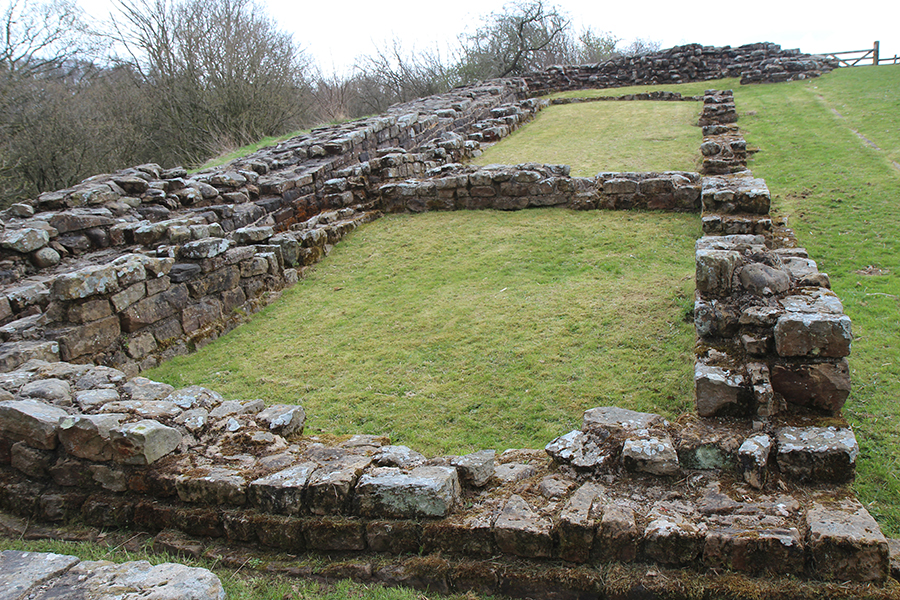
Os estábulos de Arthur, onde seus cavalos eram criados /  Arthur's Stables, where his horses were bred

Os estábulos de Arthur, onde seus cavalos eram criados /
Arthur’s Stables, where his horses were bred

“Pouco se ouviu sobre Arthur depois de 542, portanto esta deve ser a data de sua morte. É significativo, entretanto, que crianças de origem nobre e real começaram a receber o nome de Arthur após o ano 542. Um nome curioso, que não existia até antes do Rei, cuja versão em Latim, “Arturus”, nunca foi encontrado em nenhum outro lugar. Portanto, o nome provavelmente deriva do rei perdido da Idade das Trevas, ou da Grã-Bretanha pré-histórica. Arthur não era um personagem da Idade Média, ou Era da Cavalaria, quando o cavalheirismo estava no auge. Seus 150 ou mais guerreiros não eram cavaleiros galantes. Ele não nasceu no Castelo de Tintagel, que só veio a ser construído na época dos castelos de pedra, nos séculos 12 e 13. Quando formos procurar seu local de nascimento, não vamos buscar ruínas de um castelo medieval, mas sim uma quase imperceptível trincheira de terra batida – a construção característica da Idade das Trevas.”

Embora Arthur tenha defendido sua terra de muitos ataques por mar, seus cavaleiros ficaram famosos/  Arthur's mounted warriors  became the famous ones, although the king defended his land from many sea raids

Embora Arthur tenha defendido sua terra de muitos ataques por mar, seus cavaleiros ficaram famosos/
Arthur’s mounted warriors became the famous ones, although the king defended his land mostly from  sea raiders

“Little was heard of Arthur after 542, so presumably this is the date of his death. Significantly, however, youths of noble and royal birth began to bear the name Arthur after the year 542. A strange name, it has not been found prior to K.A., and its Latin version, Arturus, has never been found anywhere else. Thus, the name probably is derived from the lost king of the Dark Ages, or of prehistoric Britain.
Arthur was not a figure of the Middle Ages or of the Age of Chivalry, when knighthood was in flower. His 150 or so warriors were not gallant knights gaily bedight. He was not born at Tintagel Castle, which was not built until the age of stone castles, in the 12th and 13th centuries. When it comes time to seek his probable birthplace, the search will be not for the ruins of a medieval castle but for a barely discernible castle mound of piled earth – a construction characteristic of the Dark Ages.”

Detalhe da construção / Building detail

Detalhe da construção / Building detail

“Historiadores relatam que Arthur defendeu com sucesso a Grã-Bretanha de invasões por mar ; afirmam que ele interrompeu as invasões dos Saxões por um período considerável e que venceu todas as batalhas que lutou com exceção da última, quando foi mortalmente ferido. Poucos são os que ainda insistem que ele teria lutado na Cornualha, ou que lá teria nascido, por uma simples razão: os Saxões NÃO estavam invadindo a Cornualha durante o tempo em que Arthur viveu. Historiadores Anglo-Saxões dizem que as batalhas de Arthur não poderiam ter sido vencidas na Inglaterra pois, de acordo com vários manuscritos, os Saxões efetivamente conquistaram a Inglaterra na época de Arthur. Temos que localizar Arthur não nos territórios onde ele não venceu, mas sim naqueles onde a invasão dos Saxões falhou. Quando Arthur nasceu, as tropas Romanas haviam finalmente se retirado por completo e deixado a ilha sem governantes. Grande parte da Grã-Bretanha ainda falava apenas idiomas Celtas. A maioria destas populações propriamente Celtas ainda habita a área chamada Strathclyde, região fronteiriça entre as Muralhas de Adriano e de Antonino, a única vasta área que não foi conquistada pelos Anglo-Saxões.”

Outra vista dos estábulos/ Another view of the stables

Outra vista dos estábulos/
Another view of the stables
“Historians still tell us that K.A. successfully defended all Britain from invasion by the sea. They had it on excellent authority that he halted the Saxon invaders for a considerable period of time and won all his engagements except the last one, in which he was fatally wounded. Very few scholars still insist that he fought in Cornwall or that he was born there, for the simple reason that the Saxons were NOT invading Cornwall during Arthur’s lifetime. Historians of the Anglo-Saxons say that Arthur could not have won his battles in England, because they know from the several manuscripts of the Anglo-Saxon Chronicles that the Saxons conquered England in King Arthur’s lifetime. We will think of Arthur as not in those territories which he could not have conquered but in those which the Saxons failed to overrun. By the time of Arthur’s birth, when the Roman troops had finally withdrawn completely and left the island without governors, certain large areas of Britain still spoke only Celtic tongues. The largest of these properly Celtic populations still resides in the area called Strathclyde, a border area between the Hadrianic and Antonine Walls, the only large area unconquered by the Anglo-Saxons.”
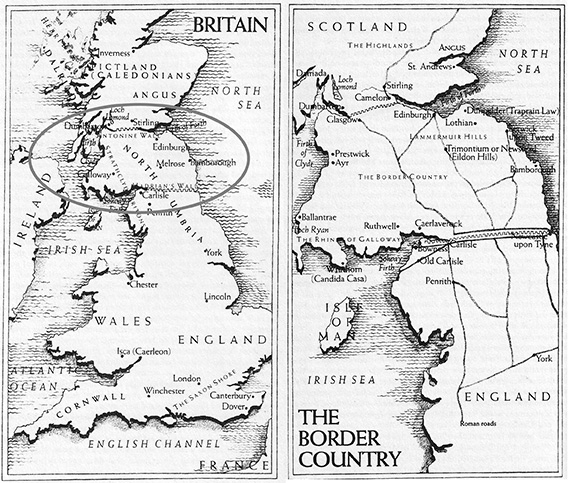
Mapa da Grã-Bretanha e da região onde Arthur reinou de fato, segundo Norma Goodrich / Map of Britain, enlarging the location of Arthur's true kingdom, according to Norma Goodrich

Mapa da Grã-Bretanha e da região onde Arthur reinou de fato, segundo Norma Goodrich / Map of Britain, enlarging the location of Arthur’s true kingdom, according to Norma Goodrich

Read Full Post »


Prosseguindo... / Movin' on

Prosseguindo… / Movin’ on

Estamos de volta após as férias.
Consegui os livros da autora Norma Goodrich! Acabei de recebê-los. Aguardem! Nesse meio tempo li a trilogia de Paul Bannister “Arthur Britannicus”, “Arthur Imperator” e “Arthur Invictus”. Esse autor associa Arthur a um imperador de origem romano-britânica chamado Carausius, cuja existência recentemente ficou provada. Abaixo transcrevo alguns trechos. Mas aviso que ele pode estar enganado.

We’re back after summer holidays. I’ve got Norma Goodrich’s books! They’ve just arrived. I’ll keep you up to date. In between days, I’ve read the trilogy by Paul Bannister “Arthur Britannicus”, “Arthur Imperator” and “Arthur Invictus”. This author links Arthur to an Emperor called Carausius, of roman-british parentage, whose existence has only recently been proved. Here are a few quotes, but I must warn you, he may be wrong.

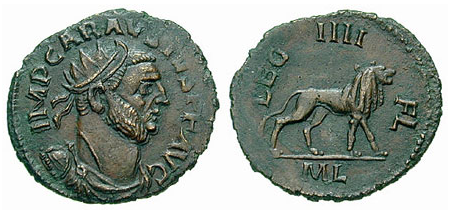
Moedas cunhadas por Carausius / Carausius coins

Moedas cunhadas por Carausius / Carausius coins

“O esquecido imperador britânico Carausius bem pode ser a verdadeira base da lenda do Rei Arthur, guerreiro mítico que se tornou símbolo de coragem e cavalheirismo. A importância de Carausius na história ficou esquecida por séculos, apesar do sucesso em afugentar os Romanos e aquietar os Pictos. Ele pode ter também derrotado invasores germânicos, pois suas fortificações na Costa Saxã provam que estava mais do que preparado para enfrentá-los. Seus triunfos, hoje conhecidos e aclamados, são ecos nítidos das histórias de Arthur. Carausius foi o primeiro governante britânico a unir o Império, e merece seu lugar na História por isso, mas de fato ficou mais conhecido pela excelente cunhagem de suas moedas. Estão expostas no Museu Britânico algumas das 800 moedas com sua efígie, parte de um tesouro de 52.500 peças romano-britânicas de ouro e prata encontradas em Somerset, no campo, em 2010. Existem conexões entre Carausius e muitos dos sítios tradicionalmente Arthurianos, e suas vitórias são um espelho das lendas de Arthur. A efígie de Carausius, como aparece em suas moedas de excelente cunhagem, nos mostram um homem parecido com um urso, de pescoço grosso, e a tradução britânica para Rei Urso é Arto-rig. Experts em linguística afirmam haver relação entre “Caros” e “Artorius”.

Carausius' coins

“Imperator Carausius was the first British ruler to unite the kingdom, and deserves his place in history for that, but he actually is best known for his fine coinage. On exhibit in the British Museum are some of the 800 Carausian coins that were among a hoard of 52.500 Romano-British pieces of silver and gold discovered in a Somerset field in the summer of 2010. There are connections between Carausius and many of the traditional Arthurian sites, and Carausius’ triumphs are closely echoed in legends of Arthur. Carausius’ image on his fine coinage shows him as a bearded, thick-necked, bear-like man and the British for “bear-king” is “Arto-rig”. Language experts say there are links between “Caros” and “Artorius”. Britain’s forgotten emperor Carausius and his triumphs may well be the true foundation of the legend of King Arthur, the mythic warrior who became a symbol of courage and chivalry. However, Carausius’ significance in history was forgotten for centuries despite his achievements in driving off the Romans and quieting the Picts. He may also have defeated Germanic invaders, as his Saxon Shore fortifications prove that he was more than prepared to meet them. Today, his known and acclaimed triumphs are closely echoed in the stories of King Arthur.”

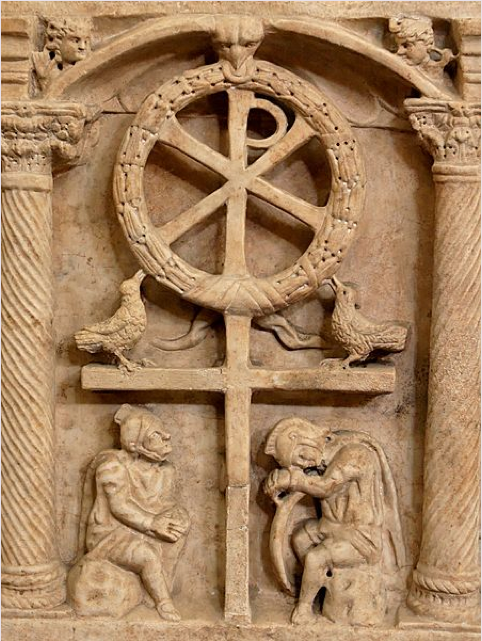
A Chi- Ro pode ser considerada a primeira representação da cruz cristã /The Chi-Rho emblem can be viewed as the first Christian Cross.

A Chi- Ro pode ser considerada a primeira representação da cruz cristã /
The Chi-Rho emblem can be viewed as the first Christian Cross.

As moedas, uma lápide em Penmachno e uma única pedra, um marco de milha descoberto próximo a Carlisle, são os únicos memoriais conhecidos desse Imperador perdido na História, pois os Romanos trataram de apagar seus vestígios quando recapturaram a Britannia. A lápide com a inscrição “Aqui jaz Carausius, sob este marco de pedras” foi encontrada no País de Gales. O morto era tão importante que a lápide e os ossos foram removidos para a Igreja de St Tudclud, em Penmachno, um importante sítio cristão ancestral, onde jaz Iorweth ab Owain Gwynedd, pai do maior Rei do País de Gales. Portanto, trata-se de um jazigo real. O fato de Carausius ser tão famoso a ponto de não necessitar uma identificação do tipo militar pode ser altamente significativo. Seu túmulo mostra que ele era cristão. A cruz Chi- Ro em sua lápide é especialmente rara.

Such coins, the Penmachno headstone and a single milestone uncovered near Carlisle are the only known memorials of Britain’s lost emperor, because the Romans expurgated his memorials after they recaptured Britain. A headstone inscribed “Carausius lies here in this cairn of stones” was found in Wales and the man memorialized in the cairn was so important that the gravestone and maybe the bones were moved to the nearby church of St Tudclud, in Penmachno, which is an important early Christian site and reputed burial place of Iorweth ab Owain Gwynedd, father of Wales’ greatest king. This, then is a royal graveyard. The fact that Carausius was so famous that he needed no soldier style identification could therefore be highly significant. His headstone shows he was a Christian. Carausius’ grave marker in Wales with its looped Chi – Ro cross is specially rare.

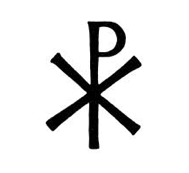
Chi- rho, como símbolo pré-cristão, significava boa sorte. "Chi" e "Rho" são as primeiras letras do nome Christo. /  As a pre-Christian symbol, the Chi-rho signified good fortune. The two letters come from the name of Christ- the Chi, or ‘ch,’ and Rho, or ‘r.’

Chi- rho, como símbolo pré-cristão, significava boa sorte. “Chi” e “Rho” são as primeiras letras do nome Christo. /
As a pre-Christian symbol, the Chi-rho signified good fortune. The two letters come from the name of Christ- the Chi, or ‘ch,’ and Rho, or ‘r.’

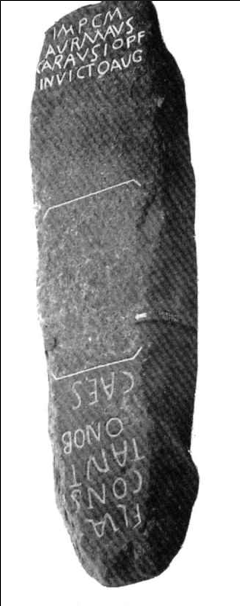
O outro único monumento conhecido ao Imperador perdido encontra-se no Museu Tullie House em Carlisle, num marco de milha que foi reutilizado invertido. A parte que estava enterrada escondia a inscrição: “Imperator Caesar Marcus Aurelius Mauseus Carausius, zeloso, afortunado, o augusto invicto”. E devia acrescentar: o esquecido.
The only other known memorial to the Lost Emperor is in the Tullie House Museum in Carlisle, on a milestone that was inverted and reused. The buried portion concealed a title reading: “Imperator Caesar Marcus Aurelius Mauseus Carausius, Dutiful, Fortunate, the Unconquered Augustus” . It should add: the Forgotten.

Carausius' milestone

Read Full Post »


The Greenhead Hotel , Greenhead, Brampton - CA8 7HB Tel: 01697 747411

The Greenhead Hotel , Greenhead, Brampton – CA8 7HB Tel: 01697 747411

O quarto que eu tinha reservado por duas noites, por engano da recepcionista, não estaria livre na noite seguinte. Eles me ofereceram então um apartamento do outro lado da rua, no hostel do mesmo proprietário. Tinha três quartos e uma sala, tudo enorme, mas como não havia outra solução concordei, desde que pagasse o mesmo valor, que já era bem alto. A princípio a recepcionista relutou, mas chamei o gerente, expliquei a situação e tudo se resolveu. Afinal, o erro tinha sido deles e não havia outro alojamento num raio de quilômetros.

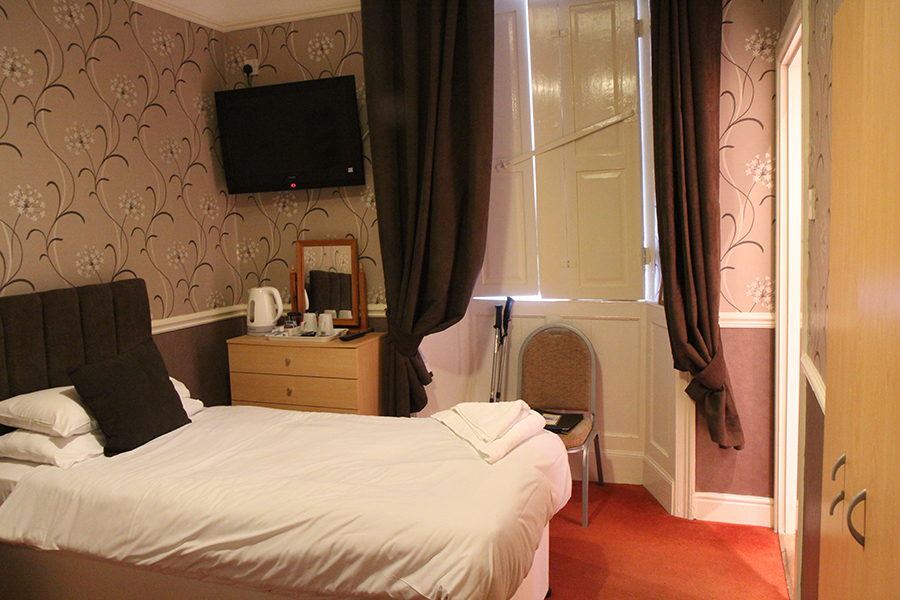
My room / Meu quarto

My room, 40 pounds with breakfast / Meu quarto, 40 libras com café da manhã

The room I had booked for two nights actually was not free the morrow. The receptionist had made a mistake. So she offered me an apartment in their hostel across the street. It had three bedrooms and a huge living room, too much for me, but I had no other choice, for there was no other inn nearby. Anyway, I made it clear I wouldn’t pay a higher fare. It was already too expensive! At first she didn’t seem very happy but I called the manager, explained the situation and he agreed, because the mistake had been theirs.

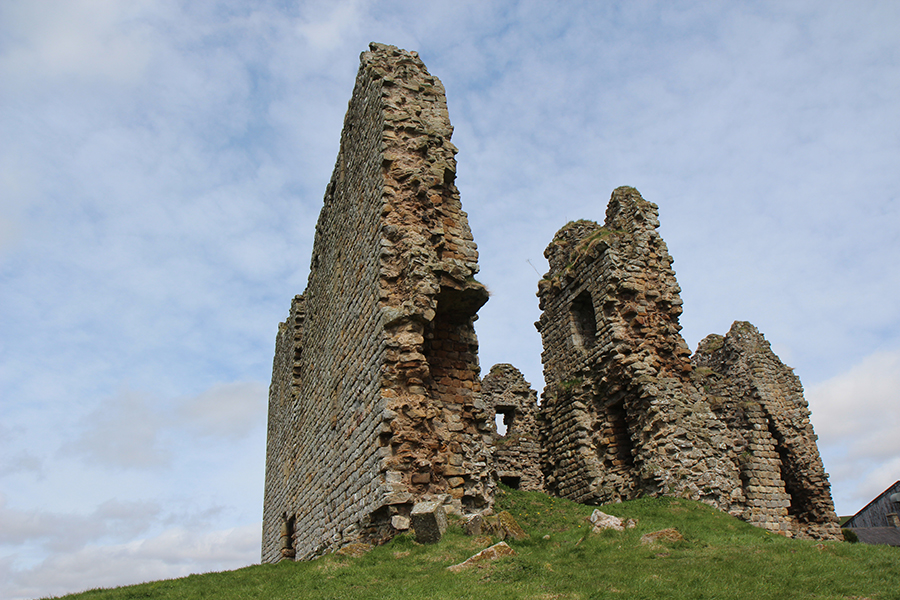
Thirlwall Castle, a 5 minutos de caminhada / five minute walk

Thirlwall Castle, a 5 minutos de caminhada do B&B / five minute walk from the B&B

Depois de um bom banho desci para jantar. A mesa ao lado estava ocupada por dois homens de meia idade e o mais falante acabou puxando assunto comigo. Eram John e Martin, amigos desde o tempo de escola, que volta e meia fugiam de suas casas e famílias para fazer uma caminhada no fim de semana. Martin olhava fixamente meu cabelo, como se nunca tivesse visto alguém de cabelo preto e comprido, e por fim declarou que estava encantado em conhecer uma … descendente de índios! Tive um ataque de riso. Respondi que embora sendo brasileira, não havia nenhum índio na minha família. A cara de decepção do sujeito foi hilária.

Ruínas do castelo / Castle ruins

Ruínas do castelo / Castle ruins

After a restoring shower I went down for dinner. The table next to mine was occupied by two middle aged men, and after a while one of them stroke up a conversation. Their names were John and Martin, old classmates, who from time to time escaped their homes and families for a walking weekend. Martin’s eyes were set in my hair, as if he’d never seen someone with long black hair. At last he declared he was delighted to make acquaintance with a … descendant of Indians! I burst into laughter. He was so disappointed as I told him there were no traces of Indians in my family, in spite of being Brazilian.

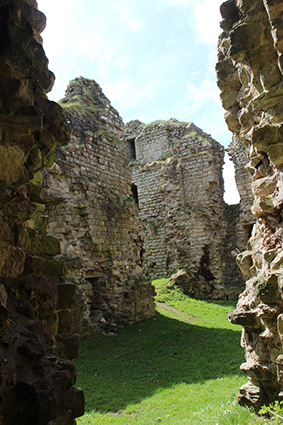
dentro do Castelo / Inside the Castle

Dentro do Castelo / Inside the Castle

A construção data do inicio do século 14 / It was built in the early 14th century

A construção data do inicio do século 14 /
It was built in the early 14th century

Mas a conversa acabou sendo proveitosa, pois quando expliquei meu interesse pelos sítios Arthurianos, John afirmou categoricamente que eu estava certa, e que já ficara provado que o Rei Arthur de fato existiu. Recomendou-me os livros de uma autora, Norma Goodrich, pesquisadora de história e arqueologia, onde eu encontraria todas as informações que buscava.

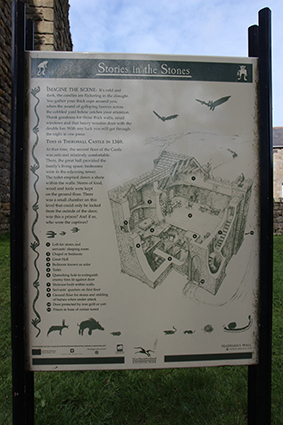
Thirlwall Castle as it once has been  / Como era o Castelo

Thirlwall Castle as it once has been / Como era o Castelo

But the chat was very profitable. When I explained my interest in Arthurian sites, John asserted positively that I was right, for Arthur’s existence had definitely been proved. He recommended the books by Norma Goodrich, an author who had made researches in history and archaeology, assuring me I would find there all the information I was looking for.

Delicious fish and chips!

Delicious fish and chips!

Essa descoberta, somada a um típico Fish and Chips inglês e uma garrafa de vinho que os dois gentilmente compartilharam, me proporcionou a melhor noite de sono da viagem. Até esqueci que tinha perdido o passaporte.

This discovery, added to a typical British fish and chips and the wine the guys kindly shared with me, provided my best night of sleep in the trip. Even my lost passport was forgotten.

Informações sobre o Castelo / Tourist info

Informações sobre o Castelo / Tourist info

Thirlwall Castle Panorama

Thirlwall Castle Panorama

Read Full Post »


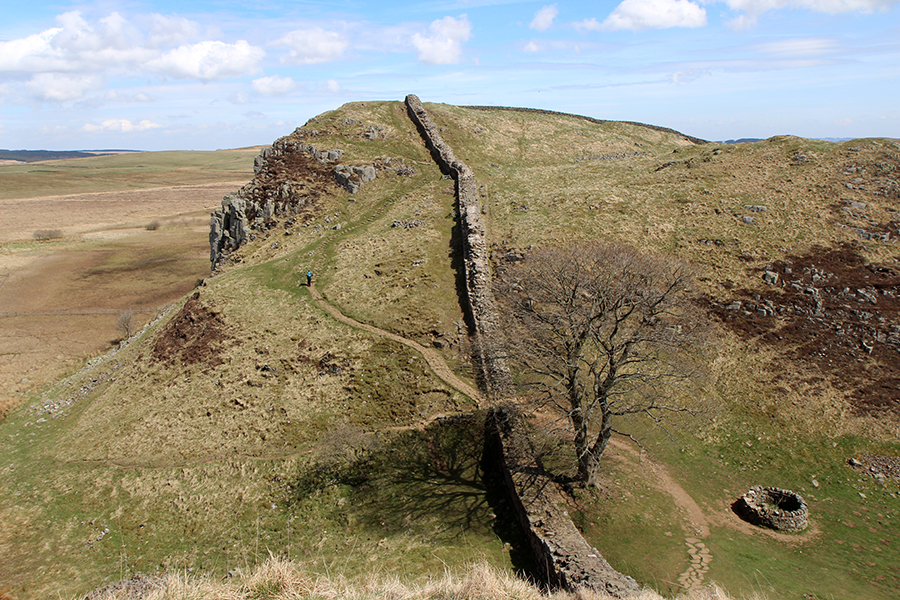
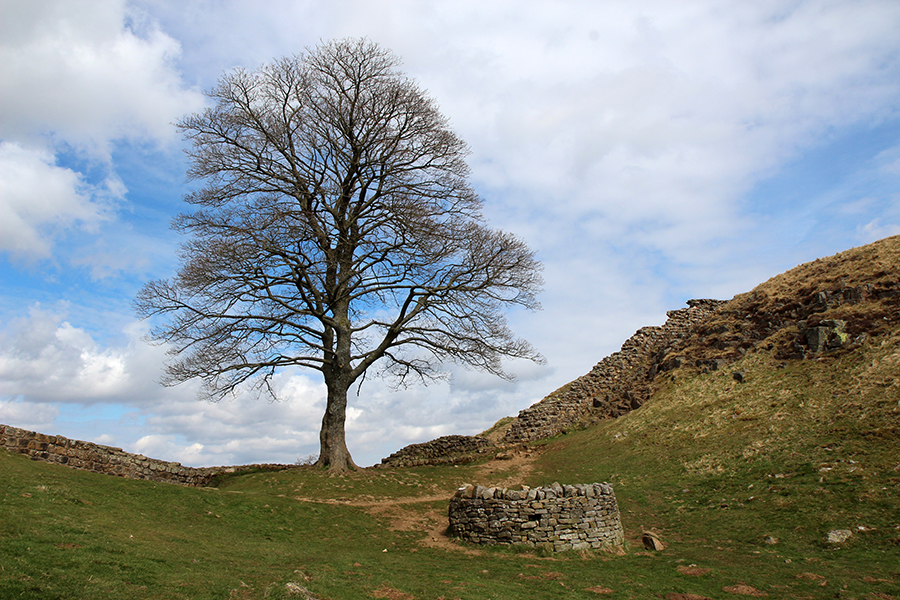
Sycamore Gap

Sycamore Gap

Christian e sua mãe já estavam lanchando quango os alcancei no Sycamore Gap.
Christian and his mother were already having their snack when I met them at Sycamore Gap.

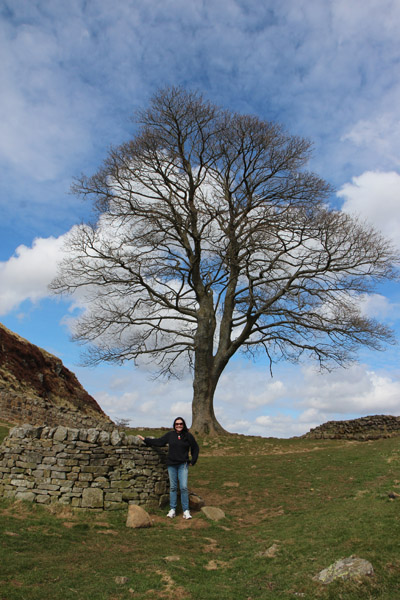
The proof I've been there / A prova de que estive lá

The proof I’ve been there / A prova de que estive lá

Marcela era do leste europeu, mas casou-se com um inglês e seu filho Christian já nasceu na Inglaterra. Estavam aproveitando o lindo dia durante um recesso escolar para fazer seu passeio favorito, piquenique no Sycamore Gap. O marido iria buscá-los num ponto ali perto, um estacionamento, justamente onde eu também teria que passar para chegar a Vindolanda. O fato de eu ser brasileira gerou praticamente uma entrevista, pois Christian tinha que fazer um trabalho escolar sobre países estrangeiros. Alegremente respondi tudo. Eles adoraram as castanhas do Pará que eu tinha na mochila.

SycamoreGap from above

SycamoreGap from above

Marcela was born in Eastern Europe but had married an Englishman and their son Christian was born in England. They were enjoying that lovely day in a school break for their favorite ride, picnic in Sycamore Gap. The husband was going to pick them up in a parking lot nearby, somewhere I had to pass by too, on my way to Vindolanda. As I happen to be Brazilian, and the kid had to do a school task about foreign countries, I was practically interviewed about my country, and gladly answered the questions. They loved the Brazilian Nuts I had in my backpack.

Que sorte a minha! Encontrar um gnomo de verdade neste lugar mágico. / How lucky I am! I just met a real gnome in this magical place.

Que sorte a minha! Encontrar um gnomo de verdade neste lugar mágico. /
How lucky I am! I just met a real gnome in this magical place.

Próximo ao sicômoro havia um poço e eu estava crente que se tratava de algo antigo, mas Marcela explicou que uma muda da árvore tinha sido plantada ali e a cerca se destinava a proteger a mudinha do forte vento, constante naquelas paragens, com o qual eu já estava até acostumada. Bati várias fotos dos dois com a câmera da Marcela e agora me arrependo de não ter repetido a sessão. Ela ficou um bom tempo abraçada à árvore e incentivou-me a fazer o mesmo para recarregar energias antes de prosseguir.

Goodbye!

Goodbye!

Beside the Sycamore there was a well and I thought it ancient, but Marcela told me that a sapling of the tree had been planted there. The stones around it were meant to protect the sapling from the constant strong wind, to which I was starting to be used in Hadrian’s Wall country. I took many pictures of them with Marcela’s camera and now I regret hadn’t repeated the session with my own. She stood for a while hugging the tree and encouraged me to do the same, to recharge my energies before resuming the walk.

Por onde vim / The road I'd trailed

Por onde vim / The road I’d trailed

The road ahead / O caminho `a frente

The road ahead / O caminho `a frente

Objetivo do dia / My goal for the day

Objetivo do dia, mais adiante / My goal for the day, still ahead

Mons Fabricius, a próxima colina / Next uphill

Mons Fabricius, a próxima colina / Next uphill

Milecastle 39

Milecastle 39

Um mirante na Muralha /  A belvedere in the Wall

Um mirante na Muralha / A belvedere in the Wall

Milecastle 39, também chamado Castle Nick. Ao fundo, Crag Lough/ Milecastle 39 is also called Castle Nick. In the background, Crag Lough.

Deixando para trás o Milecastle 39, também chamado Castle Nick. Ao fundo, Crag Lough/
Looking back at Milecastle 39, also called Castle Nick. Far in the background, Crag Lough.

Once Brewed Inn in sight

Vista da estrada com o Once Brewed e, uma milha adiante, o Twice Brewed, onde eu tinha reserva para o pernoite. / Once Brewed Inn in sight, on the road. One mile ahead, Twice Brewed Inn, where I had booked a room.

Este seria um longo dia. Em meia hora eu estaria chegando a Vindolanda, um sítio arqueológico em escavação. Pessoas estavam lá trabalhando, e eu estava doida para ver isso.

This was to be a long day. In about half an hour I’d be arriving at Vindolanda Roman Fort, an archaeological site where excavation is in progress. People actually working on a excavation! I was longing to see that.

Read Full Post »


Sycamore Gap, o lugar mais bonito do trajeto. /  The most beautiul point of the footpath

Um lindo dia para percorrer a parte mais bonita do trajeto. / An amazing day to walk the most beautiul stretch of the footpath.

O dia amanheceu prometendo sol, por isso tratei de pegar a estrada, deixando o problema do laptop entupido para mais tarde. Não tornei a ver as pessoas com quem tinha jantado na véspera. Mas quando estava me despedindo de Sandra chegou a caminhonete do transporte de bagagem e acabei pegando uma carona até Housesteads. Da estrada ao forte são cerca de duas milhas, um caminho de terra no meio de pasto onde dezenas de ovelhas estavam acordando, enroscadas com seus filhotes, que se espreguiçavam e já saíam pulando, muito fofos. Eu, uma moça e seu filho paramos para apreciar a cena e começamos a conversar.

Subindo pelo lado oeste do forte há uma escada que conduz o caminhante de volta à Trilha. / One can rejoin the Path by wandering up by the west side of the fort to a step-stile.

Subindo pelo lado oeste do forte há uma escada que conduz o caminhante de volta à Trilha. /
One can rejoin the Path by wandering up by the west side of the fort to a step-stile.

The new day brought the promise of sun. I’d better take the road at once and postpone the frozen laptop trouble. I never saw again those people I’d had dinner with the night before. As I was saying goodbye to Sandra, the luggage transfer van arrived and I’ve got a ride until Housesteads. That saved me one day of bus pass. From the road to the fort there are 2 miles of footpath, crossing a field where dozens of sheep were waking up, still entwined with their babies, as cats do. The lovely little lambs already awake were jumping around. I stopped to watch them, and the same did a young lady with her kid. So we started talking; they were going to picnic somewhere ahead in the Wall, in the Sycamore Gap, so we went technically together. I always fall behind because I stop to take pictures, but I always eventually arrive.

A trilha prossegue atravessando uma pequena floresta. / The Path goes on through a small wood.

A trilha prossegue atravessando a pequena floresta de Housesteads. /
The Path goes on through the pine grove of Housesteads Wood.

Talvez devido ao bom tempo, havia bastante gente caminhando nessa manhã. / The inviting weather brought a lot of people to walk this morning.

Talvez devido ao bom tempo, havia bastante gente caminhando nessa manhã. / The inviting weather brought a lot of people to walk this morning.

O advogado e arqueólogo John Clayton da Casa de Chester foi responsável pela restauração desse trecho da Muralha. / The lawyer and archaeologist John Clayton of Chesters House is to be accounted for the excavation and restoration of this Wall long stretch.

O advogado e arqueólogo John Clayton da Casa de Chester foi responsável pela restauração desse trecho da Muralha. / The lawyer and archaeologist John Clayton of Chesters House is to be accounted for the excavation and restoration of this Wall long stretch.

Estonteante vista do Milecastle 37 / Awesome landscape from Milecastle 37

Estonteante vista do Milecastle 37; ao longe o Lago Bromlee / Awesome landscape from Milecastle 37, Bromlee Lough in the background

Milecastle 37 - aqui sobreviveu parte do arco sobre o portão norte/ with remaining partial archway in the north gate

Milecastle 37 – aqui sobreviveu parte do arco sobre o portão norte/ with remaining partial archway in the north gate

Marcela e seu filho Christian estavam sempre à minha frente. / Marcela and her son Christian were always ahead of me.

Marcela e seu filho Christian estavam sempre à minha frente. / Marcela and her son Christian were always ahead of me.

Olhando para trás você tem uma noção do quanto caminhou em apenas dois dias./ Looking behind you realize how much did you walk in only two days.

Olhando para trás você tem uma noção do quanto caminhou em apenas dois dias./
Looking behind you realize how much did you walk in only two days.

Read Full Post »


O ônibus me deixou perto de BlackCarts, onde eu tinha começado a caminhada naquela manhã /  Hadrian's Wall bus left me back at Blackcarts, where I had started to walk that morning

O ônibus me deixou perto de BlackCarts, onde eu tinha começado a caminhada naquela manhã /
Hadrian’s Wall bus left me back at Blackcarts, where I had started to walk that morning

Após visitar o forte me dirigi à recepção para tomar um café quente e comer enfim o sanduíche que Sandra fizera para mim. Mais turistas chegaram e  por fim me vi conversando com um rapaz e sua amiga da faculdade. Ele era louro e bonito, porém andava com o auxílio de uma muleta e traços faciais indicavam um leve mongolismo. Mas estava cursando Direito na universidade; viera com a amiga, de carro, para um passeio antes de seguir para a Alemanha onde passaria as férias com a família. A moça era super atenciosa e parecia realmente gostar muito dele. Como sempre, o fato de eu ser brasileira os surpreendeu bastante, até por ser branca e não usar um cocar de penas. Como quase todo mundo, sabiam que o Rio era lindo e declararam seu desejo de um dia conhecer minha cidade.

After visiting the Fort I headed to the Reception where I could have a cup of hot coffee and eat Sandra’s sandwich. More tourists were arriving and eventually I found myself chatting with a handsome blond guy and his girlfriend from College. He needed a crutch to walk and subtle facial features indicated a slight Down syndrome. But he was a Law student anyway, and had accepted the girl’s invitation for a tour in English countryside before going to Germany, to spend the holidays with his family. The girl was very regardful and seemed to be very fond of him. As usual, they were surprised to know I was Brazilian, probably because I’m white and wasn’t wearing a feather cockade. As everyone else, they knew Rio de Janeiro is a beautiful city and declared their fancied to go there one day.

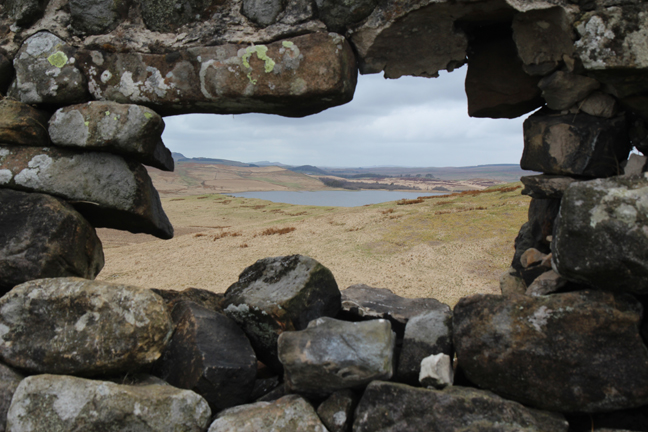
Esta janela na Muralha , um pouco antes de Housesteads, era chamada King's Wicket, ou Vigia do Rei. O Rei em questão era Arthur! / This kind of window in the wall was called the King's Wicket, and the King was Arthur!

Esta janela na Muralha , um pouco antes de Housesteads, era chamada de Vigia do Rei. O Rei em questão era Arthur! / This kind of window in the Wall , a bit before Housesteads Fort, was called the King’s Wicket, and the King was Arthur!

Um temporal parecia estar se formando, portanto após lanchar começamos a descer juntos o caminho para a estrada, onde ficava o estacionamento, a uns três quilômetros do forte romano. Lá estava o carro deles e também o ponto do meu ônibus, que pelos meus cálculos não tardaria a passar. O rapaz caminhava muito lentamente, por isso optei por me despedir ali mesmo e descer a estradinha na maior carreira.

A storm seemed to be on the way, so after the snack we started together the footpath to the parking lot by the road, about two miles from Housesteads Fort. Their car was there and also my bus stop. According to my estimate, the bus was about to arrive, and the guy walked real slow, so I’ve chosen to say goodbye to them and hurry up.

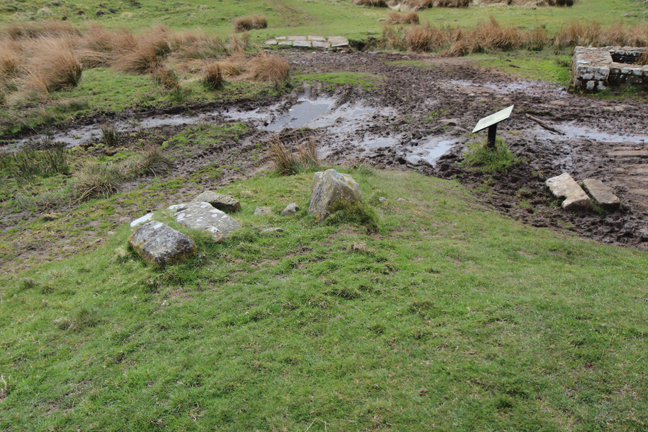
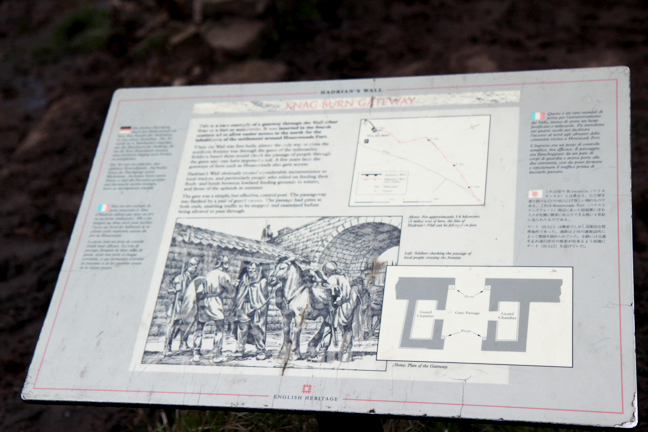
O lugar enlameado logo antes de housesteads era chamado Knag Burn Gateway. ? The muddy place just before Housesteads was called Knag Burn Gateway.

O lugar enlameado logo antes de housesteads era chamado Knag Burn Gateway. / The muddy place just before Housesteads was called Knag Burn Gateway.

O forte vento que soprava acabou por carregar as nuvens e o sol surgiu junto com o ônibus do Caminho de Adriano. Senti uma pontada. O céu cinza tirara todo o glamour das minhas fotos, tive ímpetos de voltar tudo a pé para refazer algumas imagens com esta nova luz. Mas eram três e meia da tarde, eu estava andando desde oito da manhã e provavelmente o tempo fecharia de novo caso eu descesse do ônibus, por isso ali permaneci. Ainda tinha um bom pedaço para andar do ponto do ônibus até Greencarts, e às seis horas Sandra levaria os hóspedes para jantar no pub. Isso era imperdível. Decidi que o céu carregado daria dramaticidade às fotos. E autenticidade. O sol não é tão comum no Reino Unido.

The strong wind eventually carried away the dark clouds and the sun appeared as the Hadrian’s Wall Bus did. I felt a twinge. The dark grey sky had stolen the beautiful landscape atmosphere from my photos and I felt a urge to go back all the way and depict the place under this new sunlight. But it was half past three p.m., I had been walking since 8 a.m. and the weather would probably turn bad again as soon as the bus disappeared in the horizon. So I just boarded it. There was still a couple of miles to walk from the road to Greencarts, and at six Sandra would be taking the guests to dinner in the pub, something I didn’t want to lose. So I made up my mind, the dark sky would add dramaticity to the photos. And truth. Sunny days are not commonplace in UK.

Knag Burn Gateway

Knag Burn Gateway

Naquela tarde havia chegado um casal inglês e a cunhada. Fomos levados a outro pub, e a comida era tão boa quanto a da véspera. Pedi cogumelos gratinados. Era um prato de entrada mas me deixou absolutamente satisfeita. Tomei um whisky enquanto os outros devoravam enormes pratos e teclavam compulsivamente em seus celulares. Na manhã seguinte eu deixaria Greencarts Farm. Sabia que ia sentir saudade de Sandra. Ela ligou para o Hadrian’s Haul, serviço de transfer de bagagens, para garantir que minha mala fosse levada dali para o Twice Brewed Inn, meu próximo albergue. Eu voltaria de ônibus para Housesteads, retomando a caminhada do ponto onde havia parado. Dali seguiria até Vindolanda, o próximo forte romano na Muralha, ainda em escavação. Estava louca para ver isso.

the Crown Inn, best creamy mushrooms ever! / Onde comer os melhores cogumelos gratinados

the Crown Inn, best creamy mushrooms ever! / Onde comer os melhores cogumelos gratinados

That afternoon a couple and the woman’s sister were my companions for dinner. We were taken to a different pub from the eve, but the food was good just the same. I ordered  Creamy Mushrooms, a first course that let me totally satisfied, so I had a whisky while the others attacked massive plates and typed compulsively in their mobiles. I was to leave Greencarts next morning, and I knew I was going to miss Sandra. She called the Hadrian’s Haul luggage transfer service to assure my bag would be picked up and left at the Twice Brewed Inn -my next stop. I would take the Hadrian’s bus back to Housesteads Fort and resume walking from there to Vindolanda, next roman fort on the way. I was curious to see it, because there were ongoing excavations.

Broomlee Lake and the King's Wicket.

Broomlee Lake and the King’s Wicket.

Arrumei a mala, deixando de fora apenas a roupa que vestiria ao acordar. O episódio do passaporte me deixara meio paranóica. Sandra ligara para a policia mas não havia sinal dele.  Por fim assumi que “o que não tem remédio remediado está”. Fiz uma rápida limpeza na câmera antes de dormir e ainda tentei fazer o download das fotos, mas o HD do laptop estava entupido. Era preciso deletar toneladas de arquivos do iPhoto que estavam devidamente salvos num HD externo, mas eu não tinha reparado que o iPhoto possui sua própria lixeira, que deve ser esvaziada da mesma forma que a lixeira do sistema, e que esta já estava abarrotada, por isso a simples operação de jogar fora um álbum travava o sistema todo. Um problema para ser resolvido no dia seguinte.

I tidied my stuff, leaving outside the suitcase only clothes for the morrow. The passport event had let me a bit paranoid over my stuff. Sandra had called the Northumbria Police but they had no news for me. So I assumed that “whatever has no cure, healed it is”.  I cleaned the camera before going to bed and tried to download the pictures taken so far, but my laptop HD was clogged. It was necessary to delete tons of iPhoto files that I had kept safe in an external drive, but I haven’t noticed that iPhoto has its own trash which must be emptied from time to time, so now it was overflowing and the easy operation of throwing an album away would freeze the whole system. A trouble to be dealt with… the next day.

Read Full Post »


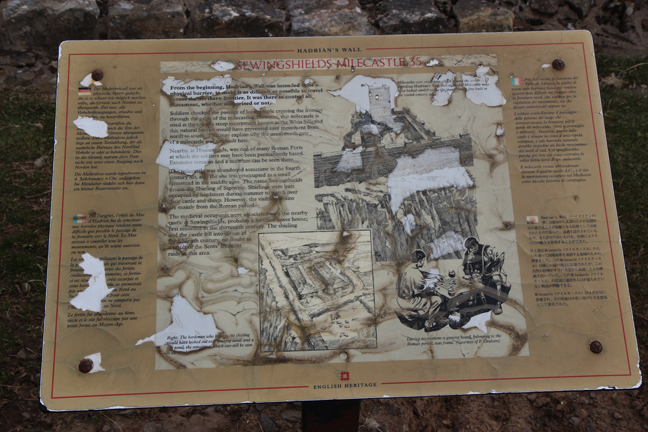
Sewingshields

Sewingshields

Les estava sentado no Milecastle 35, chamado Sewingshields.
Vim a saber que o lugar foi um castelo e tem conexão com a história do Rei Arthur. Em uma das inúmeras batalhas contra invasores ele teria ficado lá com sua corte. Isso faz sentido: o primeiro desembarque dos nórdicos na Britannia foi registrado no século I em Lindisfarne, ilha na costa de Northumberland, região onde fica a Muralha. Resumo aqui a lenda que li mas não sei se a fonte é confiável. Pode ser uma história plantada, mais um lugar querendo ser o verdadeiro túmulo do Rei. A liga sobre a mesa remete à Ordem da Jarreteira, criada em 1348  pelo rei Eduardo III, inspirada na Távola Redonda.

Landscape

Paisagem em volta / Landscape around

Les was sitting by Milecastle 35, a place called Sewingshields. I learned later that Sewingshields once had its own castle, where the story is that King Arthur held court while fighting the invading Anglo-Saxons in the vicinity of Hadrian’s Wall. It makes sense because the first viking raid party arrived in the 1st century in Lindisfarne, an isle in Northumberland coast, region where the Wall stands. I copied the legend but I’m not sure if the source is reliable. There are plenty of places that claim to be the true King’s tomb. The garter on the table points to the Chevalry Order created in 1348 by King Edward III, who took his inspiration from King Arthur’s Round Table.

Florestinha antes de Sewingshields / Woods before Sewingshields

Florestinha antes de Sewingshields / Woods before Sewingshields

No século 19, um pastor estava sentada tricotando quando seu novelo de lã caiu no meio do mato que cobria as ruínas. Tentando recuperá-lo, ele se deparou com uma passagem  que levava a uma câmara subterrânea. Lá estava o Rei com seus cavaleiros, a Rainha Guinevere e cães de caça, todos profundamente adormecidos. Sobre uma mesa havia uma espada, uma liga e uma trompa. Era preciso pegar a espada, cortar a liga e soprar a trompa para acordar a turma, mas foi só o pastor pegar a espada e cortar a liga que o Rei abriu os olhos. O pastor vendo aquilo entrou em pânico, largou a espada e fugiu correndo. Não soprou a trompa, por isso os personagens permaneceram em seu sono. A passagem nunca mais foi encontrada.

In Sewingshields, looking back at the woods / olhando para a florestinha que ficou para trás

In Sewingshields, looking back at the woods / olhando para a florestinha que ficou para trás

Sometime in the 19th century, a Roman Wall shepherd was knitting in the ruins of Sewingshields castle when he accidentally dropped his wool. When chasing it through the mass of weeds and nettles that covered the overgrown ruin, he stumbled upon a secret passage, crawling with bats, lizards and toads. He boldly entered the passage and came across a blazing – but fuelless – fire in the centre of a subterranean hall.And around the hall were ranged King Arthur, his queen, his knights and his hounds, all in a deep sleep. On a table close to the fire were a bugle, a garter and a sword. Legend had it that whoever drew the sword from its scabbard, cut the garter and blew the bugle would rule the land. The shepherd removed the sword from its scabbard and cut the garter and saw Arthur and his knights open their eyes and look around. But the startled shepherd lost his nerve and re-sheathed the sword – at which point all the knights went back to sleep. Once he had recovered his composure, the shepherd returned to Sewingshields, but was never again able to find that secret passage.

As placas precisam ser trocadas com urgência! It's about time to put new  boards, English Heritage!

As placas precisam ser trocadas com urgência!
It’s about time to put new boards, English Heritage!

Achei engraçado o pastor estar fazendo tricô…
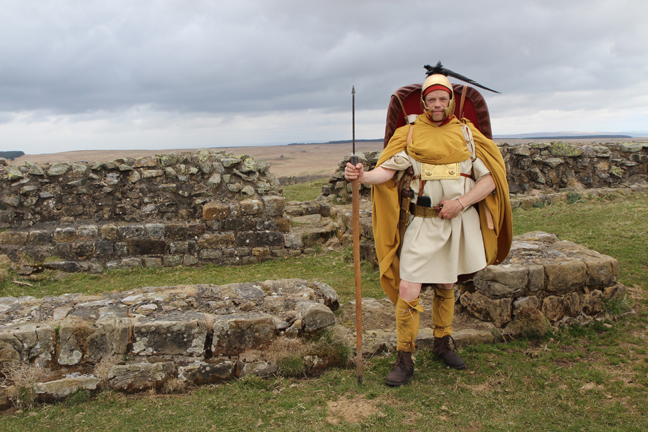
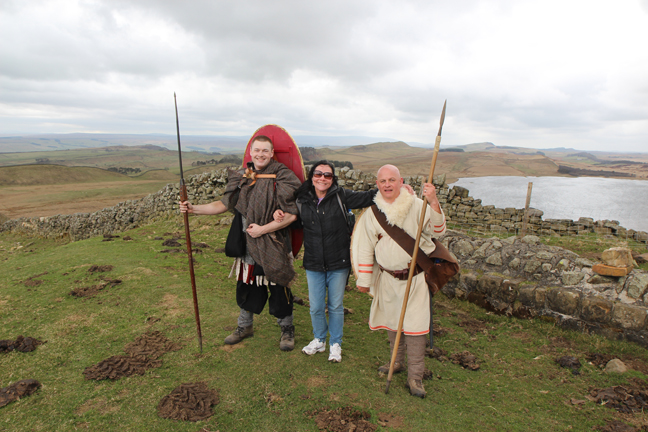
Bem, continuamos caminhando, o tempo definitivamente fechado, quando tive uma surpresa. Da direção oposta vinha um sujeito vestido de legionário romano, com escudo e tudo, que eu obviamente quis fotografar. E logo atrás vinham mais dois. A permissão para fotografar implicava em pingar moedas na latinha que um deles levava. Contribuí com o maior gosto! Os malucos estavam fazendo a caminhada fantasiados a fim de angariar fundos para os Médicos Sem Fronteiras. Enquanto eu fotografava e conversava, Les seguiu adiante e não tornamos a nos encontrar.

Goodbye!

Goodbye!

Funny that the shepherd was knitting!
Well, we were back to the trail, the weather definitely bad now, when I had a surprise. Opposite came a guy all dressed as Roman Legionary, even with a shield, of whom, of course, I had to take some photos. Two more were coming right behind him. The permission to photograph implied in dropping a few coins in a can, what I did happily because the guys were walking the path in these garments for charity, raising funds for the Doctors Without Borders. While we were talking, Les moved on and we never came to meet again.

Modern Legionary

Modern Legionaries

Your help is welcome too! Você também pode contribuir!
Visite o site dos Médicos Sem Fronteiras.

http://www.doctorswithoutborders.org

If you know these guys , please show them this page! Thanks

If you know these guys , please show them this page! Thanks

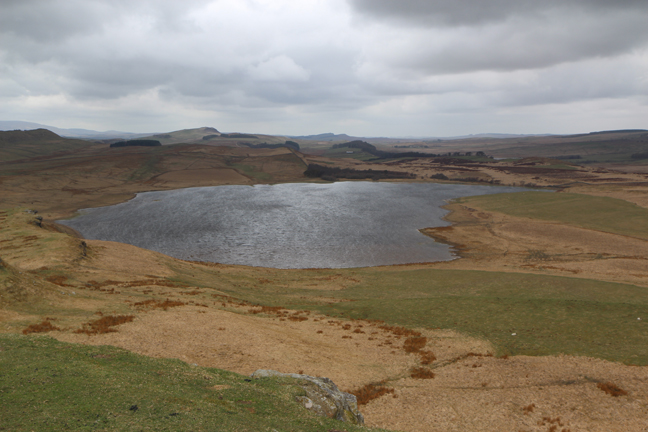
A trilha subia sempre e um enorme lago apareceu à direita, ao avistá-lo me invadiu aquela sensação de eternidade que é a melhor coisa dessas caminhadas. É quando você se depara com algo enorme, belo, solene e poderoso, que está ali há tempos e assim vai permanecer, enquanto você mesmo é apenas uma formiguinha passando, só com sua mochila, livre para naquele momento apenas existir, respirar, contemplar e se extasiar.

Broomlee Lough (Lake)

Broomlee Lough (Lake)

The footpath went always up and a massive lake appeared to the left.  With it came that eternity feeling, the best part of walking. It comes when you suddenly face something huge, beautiful, solemn and powerful that have been there for ages and so will stay, while yourself is nothing more than a little ant passing by, alone with your backpack, free just to be there, just breathe, and stare in awe.

Landscape of Northumberland National Park

Landscape of Northumberland National Park

Keep walking.

Keep walking.

Landmark

Landmark

Hadrian's Wall

Hadrian’s Wall

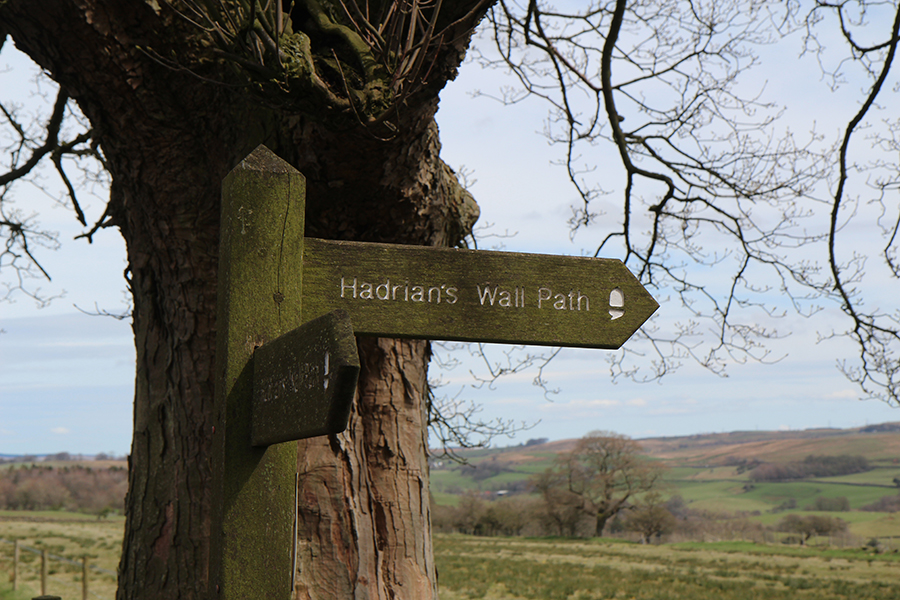
Hadrian's Wall Footpath

Housesteads stands hidden behind those trees. Atrás das árvores se esconde Housesteads.

Mais à frente, outra surpresa: ao sair de mais um cercado cheio de árvores, de repente bem diante de meus olhos, ali estava Housesteads.
A bit ahead, another surprise: after crossing another bunch of trees, suddenly right in front of my eyes there was Housesteads.

Read Full Post »


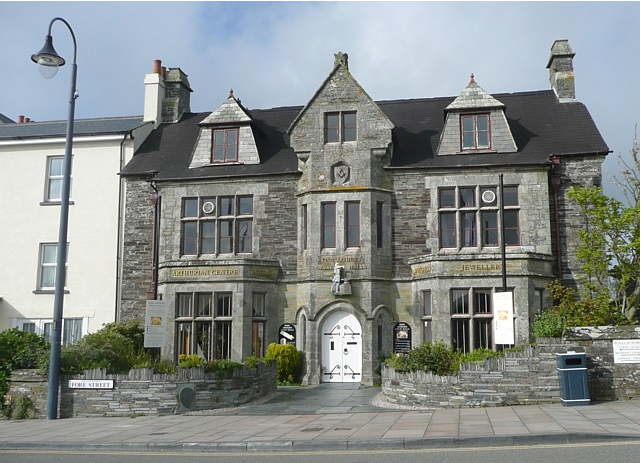
King Arthur’s Great Halls, Tintagel, Cornwall. PL34 0DA
Tel: +44 (0) 1840 770526 – Fax: +44  (0) 1208 851433 (Photo: Humphrey Bolton)

Antes de seguir para Slaughterbridge, tinha entrado no King Arthur’s Great Halls, na rua principal de Tintagel próximo ao antigo Correio. Nesse museu, o visitante é conduzido a um trono no centro da sala, onde se senta para assistir a um vídeo sobre a lenda de Arthur com efeitos especiais do século passado. Há pinturas, inspiradas no tema, de artistas locais. A maior atração são os vitrais, realmente lindos, mas muito altos, tanto que deletei minhas fotos todas porque ficaram ruins. Entretanto achei este site onde você pode apreciá-los e conhecer mais sobre o pitoresco lugar, que atualmente sedia uma Fraternidade inspirada nos ideais dos Cavaleiros da Távola Redonda. Na loja de souvenirs havia muitos livros, inclusive o raro La Morte D’Arthur, de Thomas Mallory, que comprei embora fosse um tijolo para carregar pelo resto da viagem.

KingArthursGreatHalls.htm#KING%20ARTHUR%27S%20GREAT%20HALLS

Before going to Slaughterbridge, I had visited King Arthur’s Great Halls, in the main street, not far from the Old Post Office. In this museum, the visitor sits in a throne to watch a video about Arthur’s legend, with funny two centuries ago “special effects” . There are paintings of local artists on the subject. The hotspot of this place are the glassworks, nice indeed, but too high to be photographed without a ladder. I deleted all my photos because they came out bad. But in this site you can check them, and have more information about the museum, which is also headquarters of a Friendship based upon Knight ideals. In the souvenir shop there were many books, even the rare Thomas Mallory’s Morte D’Arthur, which I bought despite it would be a brick to carry the rest of the trip.

Michelle & Jewels in St. Nectan’s Glen

A questão era, no ônibus de volta, eu estava achando tudo uma merda. Seis libras de prejuízo, entre o ingresso no Arthurian Center e o trajeto do ônibus. O motorista me orientara a reclamar o dinheiro da passagem no terminal do ônibus em Camelford. Iria com certeza, se não implicasse em desembolsar outra passagem até lá e se não chovesse tanto, e eu já não estivesse encharcada. E com muita fome. O ponto final do ônibus em Tintagel era no extremo da avenida oposto ao do hotel Camelot Castle. Então entrei no King Arthur’s Arms para me abrigar da forte chuva e tomar uma pint. Uma banda iria tocar ali, os músicos estavam passando o som. Resolvi ficar para assistir. Depois de um tempo, o pub encheu e acabei conversando com três moças de Bristol. Kerry era uma loura de 1,80m; Jewels era do meu tamanho, muito simpática e estava de rolo com um dos músicos. Michelle era gorducha e casada.. Trabalhavam numa instituição que cuidava de adaptação de imigrantes. Estavam em férias, pernoitando em um trailer num camping perto do Camelot Castle. Conversei horas com essas pessoas. Aquele dia trágico terminou numa noite ótima.

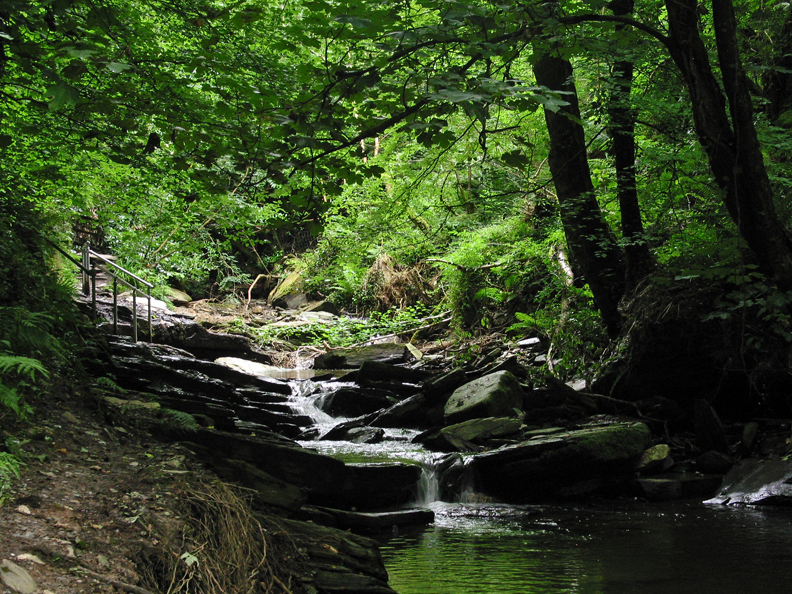
A caminho de St. Nectan’s Glen / On the way to St. Nectan’s Glen

But, on the bus back from Slaughterbridge, I was miserable and everything sucked. Six pounds lost, between the Arthurian Center and the bus ticket! The driver had oriented me to ask a refund in the company office at Camelford. I’d have gone there if that didn’t imply paying another ticket, if it wasn’t raining so much and I wasn’t soaked and starving. The bus terminal in Tintagel was in the main road, in the opposite end of the hotel. And it was still raining hard, so I went into the pub for shelter and a pint. There would be live music and the band was starting the soundcheck. I decided to stay for the show. As time went by, the pub crowded and eventually I made friends with three girls from Bristol. Kerry was blond, almost six feet tall; Jewels was about my size, very friendly and was having kind of an affair with one of the guys in the band. Michelle was plump, she was the only married one. They worked in an institute for immigrants adaptation and were in holidays for a few days, sleeping in a motorhome parked in a camping close to the Camelot Castle. We talked for hours. That tragic day ended up in a cheerful night.

Diversidade de paisagem no caminho/ Variety of landscapes on the way

Eu tinha visto num prospecto turístico um lugar chamado St. Nectan’s Glen, uma cachoeira onde eram sagrados os cavaleiros da Távola Redonda. e queria tanto ir lá que contaminei as moças. Combinamos de nos encontrar em frente ao pub no dia seguinte, às onze horas; graças aos deuses elas tinham carro. Era longe, uns 40 minutos de carro, se eu fosse a pé – e achasse o caminho – só chegaria no dia seguinte. Havia um local para estacionar , dali saía uma trilha por entre pastos, casinhas, uma igreja antiga – St. Piran’s Chapel – e mais uma longa caminhada pelo meio da mata, uma hora margeando um rio de águas cristalinas até St. Nectan’s Glen Hermitage, onde supõe-se que tenha habitado este santo do sec.VI. Reza a lenda que ele tocava um sino de prata durante as tempestades para avisar os navios da existencia de perigosas rochas na foz do vale.

St. Piran’s Chapel – interior

I had seen in a touristic folder a place called St. Nectan’s Glen, a waterfall where the Knights of the Round Table men were consecrated. I was so excited about going there that made the girls cheer up and we agreed to meet next day, 11am in front of the pub. Thanks Gods they had a car, for it was a 40 minutes drive. If I was to walk there, and managed to find the way alone, I’d arrive the day after. It was really far until a parking lot from where a foot trail started. About one more hour walking pastures, small houses, an ancient church – St. Piran’s Chapel – and then through the woods, beside a crystal stream – until you reach St. Nectan’s Glen Hermitage. The sixth-century Saint Nectan is believed to have sited this hermitage above the waterfall. According to legend, he rang a silver bell in times of stormy weather to warn shipping of the perils of the rocks at the mouth of the Rocky Valley.

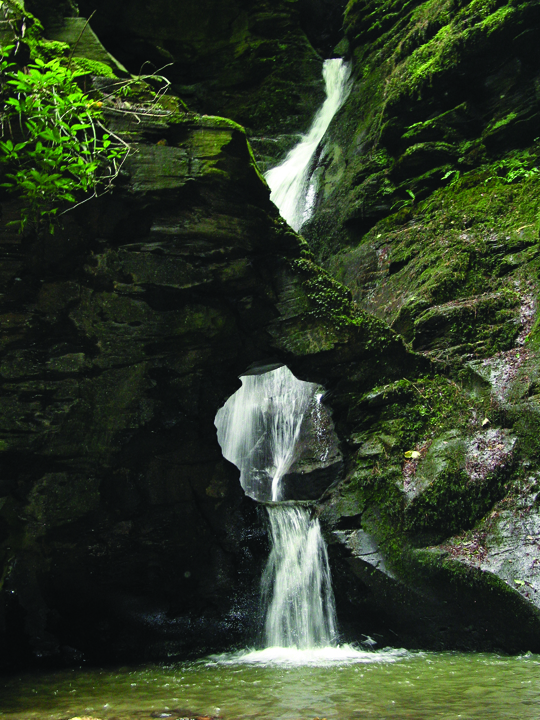
Saint Nectan’s Glen, local da sagração dos Cavaleiros /
where the Knights were knighted

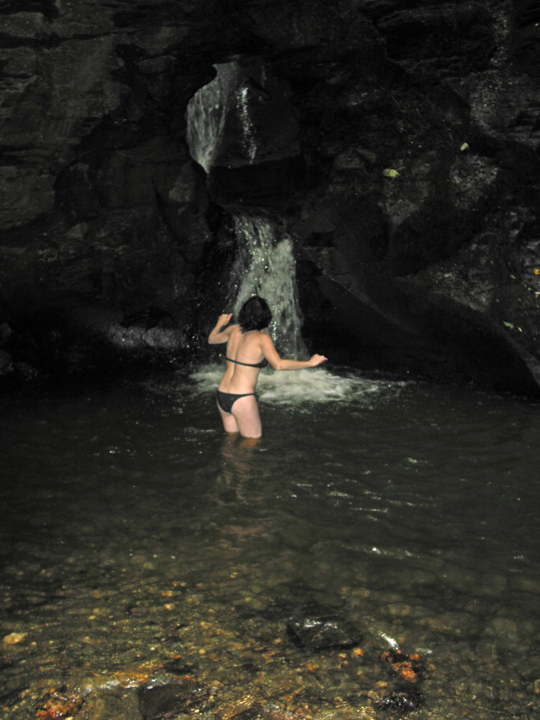
Há um café, uma loja de souvenirs e uma escada de pedra que leva ao rio e ao poço em questão. Paga-se para visitar a cachoeira, onde enfim chegamos, após mais quinze minutos de descida. A água gélida passa por um buraco redondo numa pedra enorme, formando a pequena cachoeira e o poço. A própria eternidade retratada. É claro que eu tinha ido de biquíni por baixo da roupa. Tirei a roupa e entrei na cachoeira. As meninas não acreditaram e morreram de rir quando me viram debaixo d’água gritando  “I am a knight of King Arthur’s Round Table!” Michelle bateu uma foto, ficou meio escura mas serve como prova.

There’s a coffee shop, a souvenir store and a stairway leading to the river. You must pay to go down to the waterfall, where we arrived after walking more fifteen minutes. The freezing water through the centuries dug a hole in a massive stone, shaping the waterfall and the kieve. Eternity translated in a shape. Of course I had my bikini under the clothes, which I took off without thinking twice. The girls laughed a lot when they saw me into the water screaming “I am a knight of King Arthur’s Round Table!”. Michelle took a picture, kind of dark but it’s a proof.

Eu entrei / I went in

Read Full Post »

« Newer Posts - Older Posts »