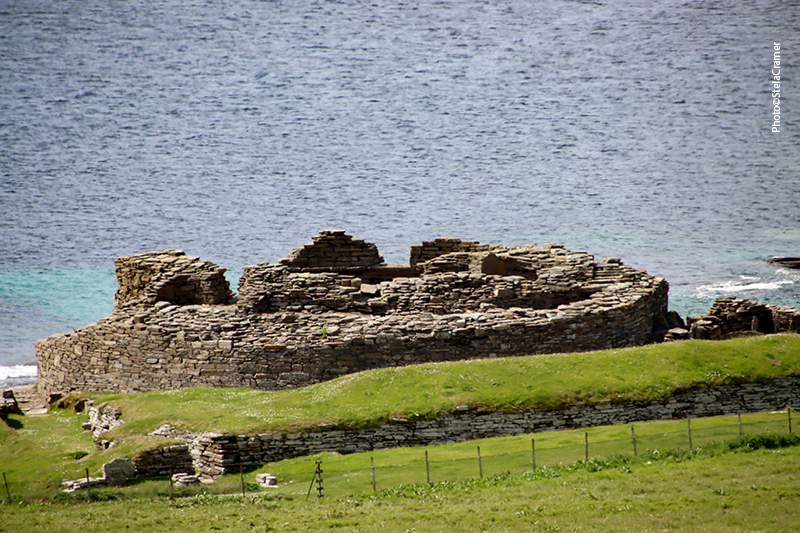
Midhowe Broch foi construído num estreito promontório em Eynhallow Sound há mais de 2000 anos atrás. “Midhowe” significa o monte do meio, sendo este um de três Brochs próximos: North Howe Broch e South Howe Broch, como o nome diz, um a noroeste e um ao sudeste. Há mais quatro outros Brochs ao longo dos 12 km de litoral entre este ponto e o Pier onde atraca o ferryboat vindo de Kirkwall. Parece que estes ainda não foram escavados.
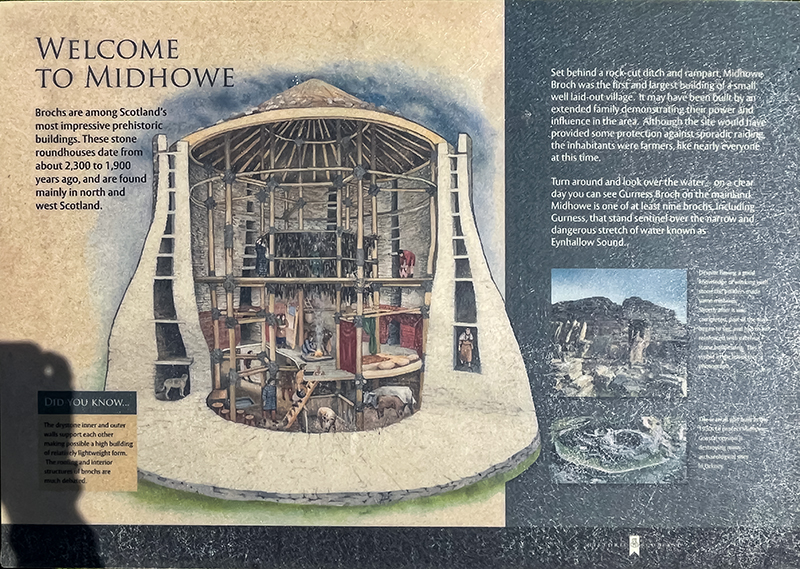
Midhowe Broch was built on a narrow promontory beside Eynhallow Sound more than 2,000 years ago. The name “Midhowe” means middle mound and this is just one of three brochs closely grouped together: North Howe Broch to the north-west, and South Howe Broch to the south-east. There are remains of another four brochs along the five miles of shoreline between these and Trumland Pier, where the ferry from Kirkwakk moors. Apparently, these haven’t been excavated yet.


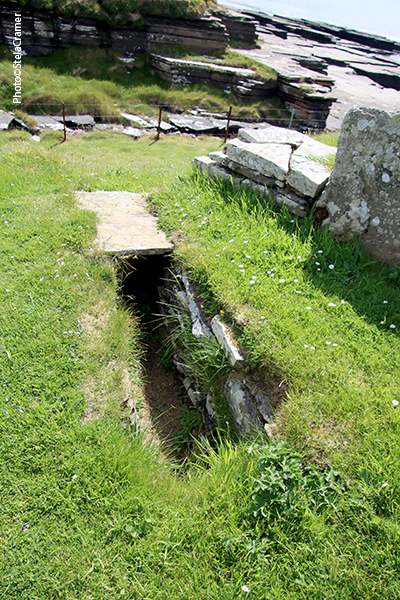
O promontório sobre o qual o Broch se ergue foi acentuado por canais cortados na pedra, dificultando o acesso pela costa. Por terra, as defesas consistiam em dois fossos e uma muralha. Outro muro (o que parece uma paliçada, mais ou menos no meio da foto acima) foi construído em 1930 para proteger o sítio da erosão.
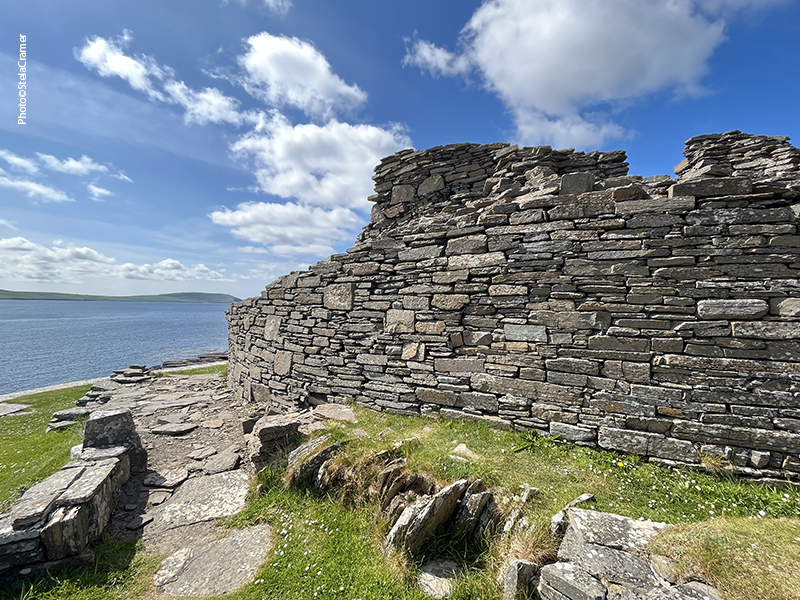
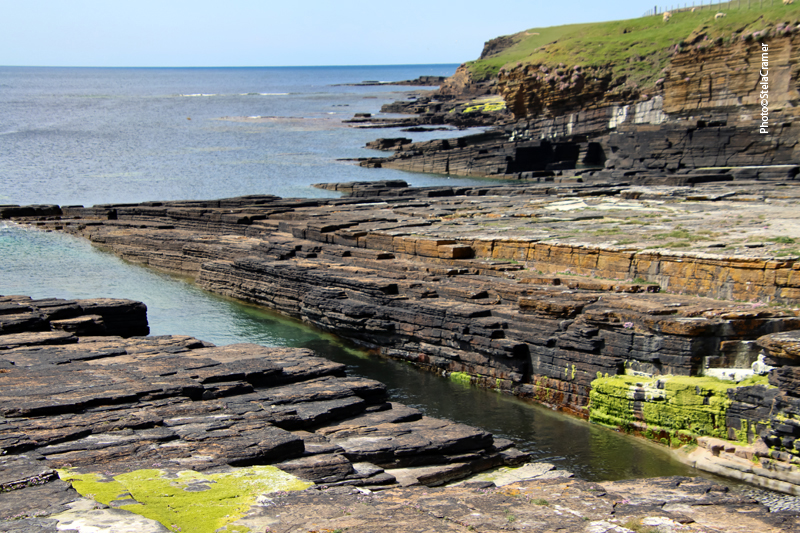
The promontory on which the broch stands has been emphasised by channels cut into the rock making access along the shore much more difficult. Access from the landward side was deterred by two ditches and a rampart. A wall that today encloses the seaward side of the broch ( vertical spikes , more or less in the middle of the photo above) was built to defend it from the sea in the 1930s.
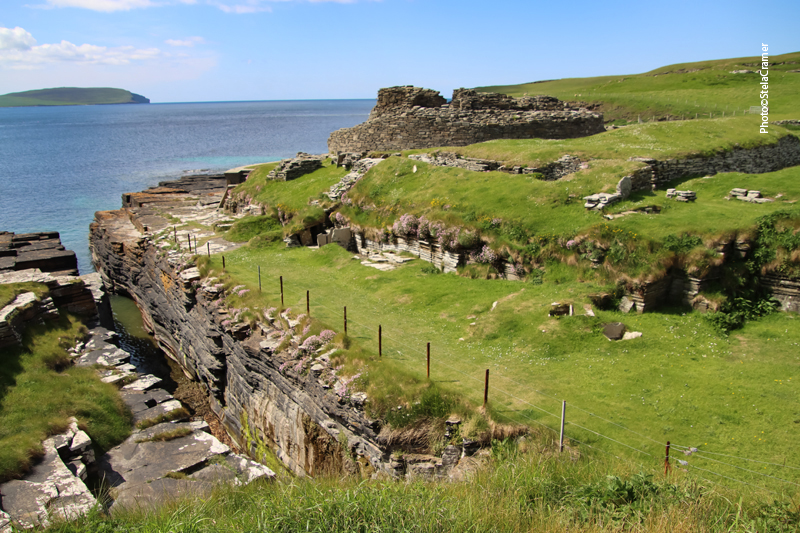
The Broch with the South-Eastern rock cut ditch in the foreground. In the background, across Eynhallow Sound, stands the Broch of Gurness, Brochs are almost opposite one another.
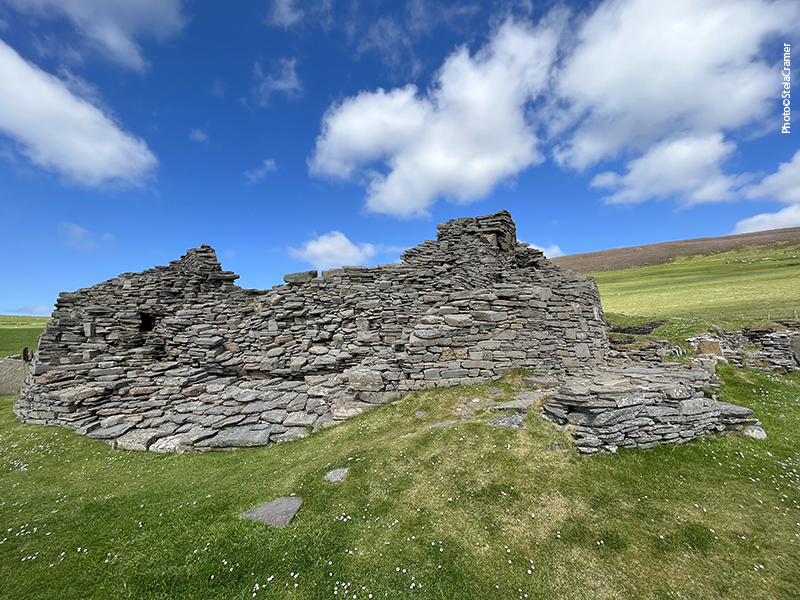
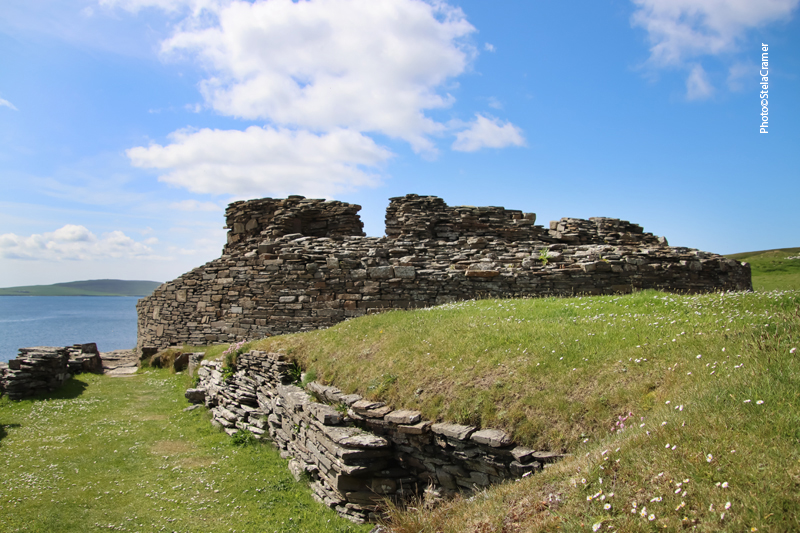


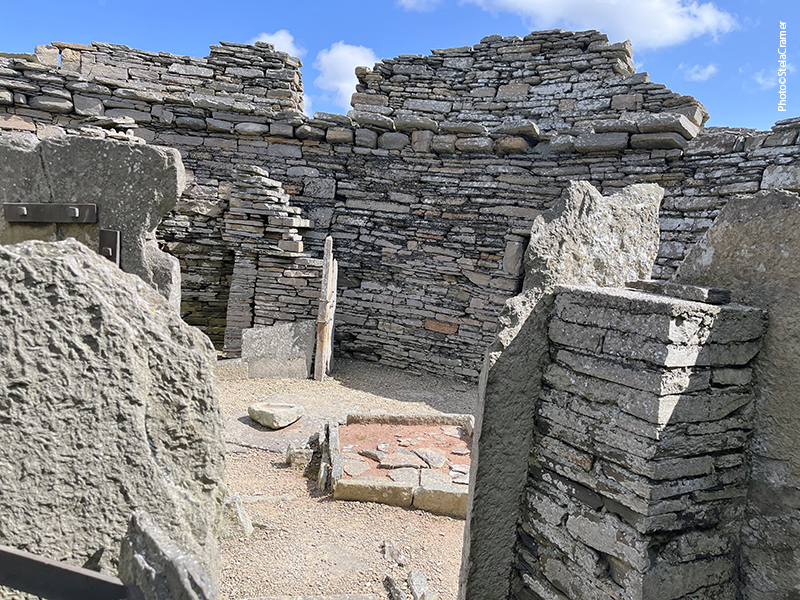
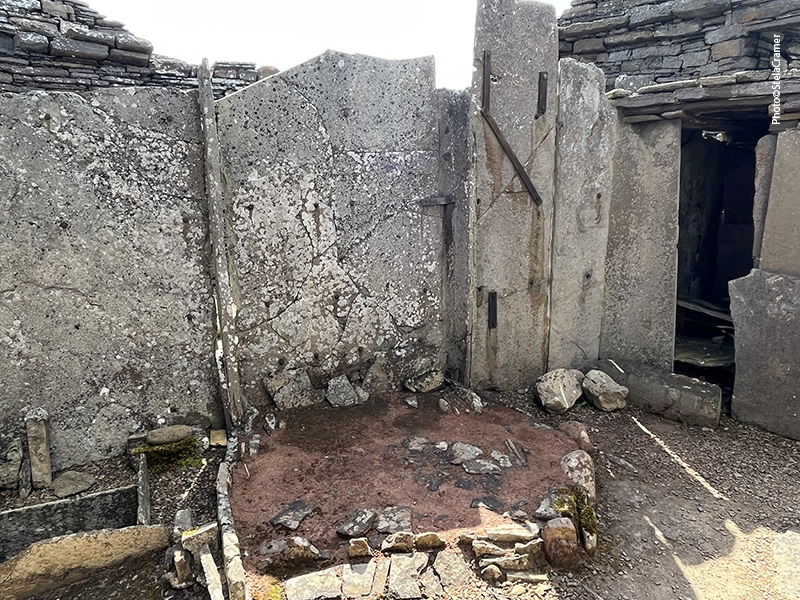
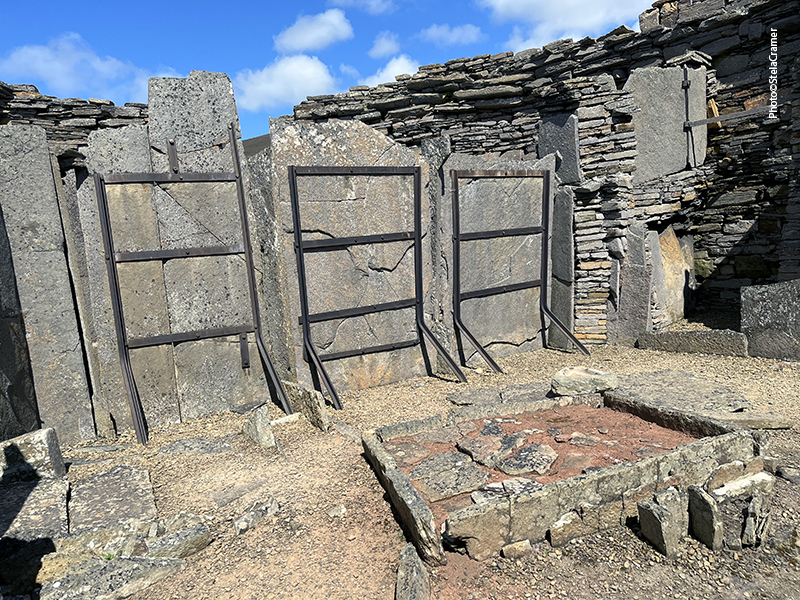
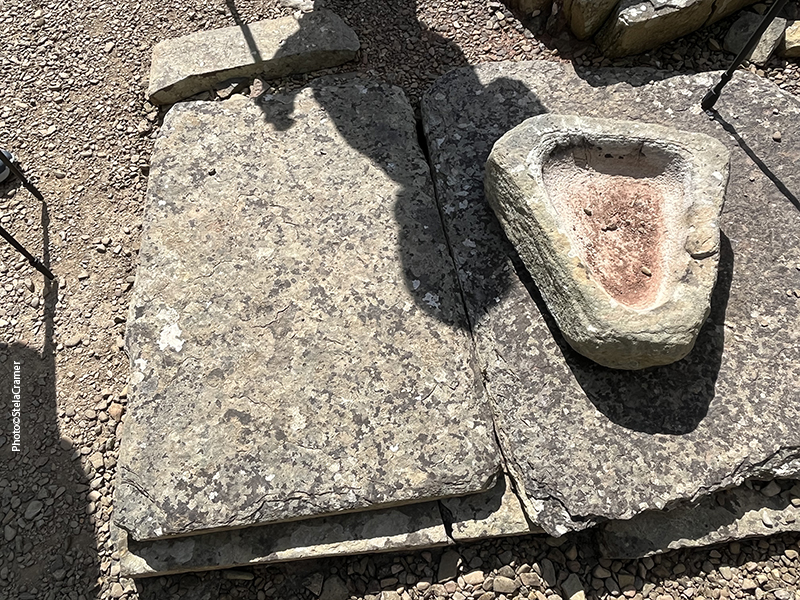
Estas lajes maiores também foram usadas para construir “mobília” / These large slabs have been used to build various items of “furniture”.
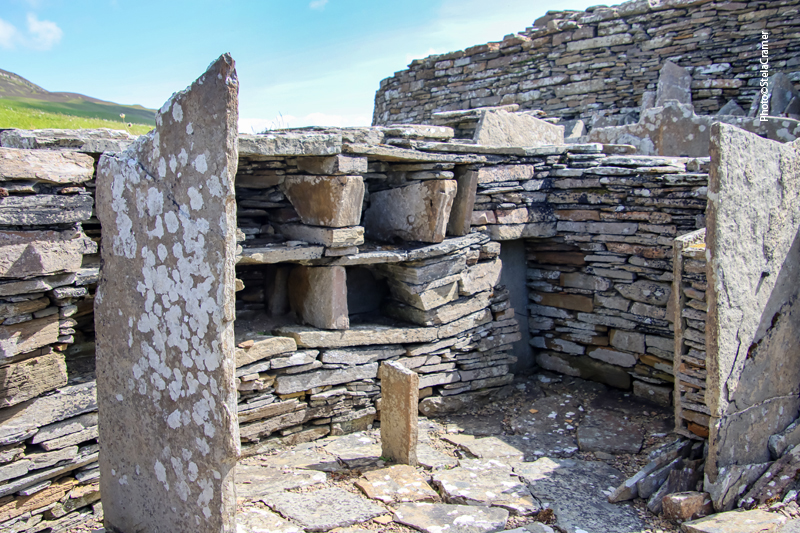
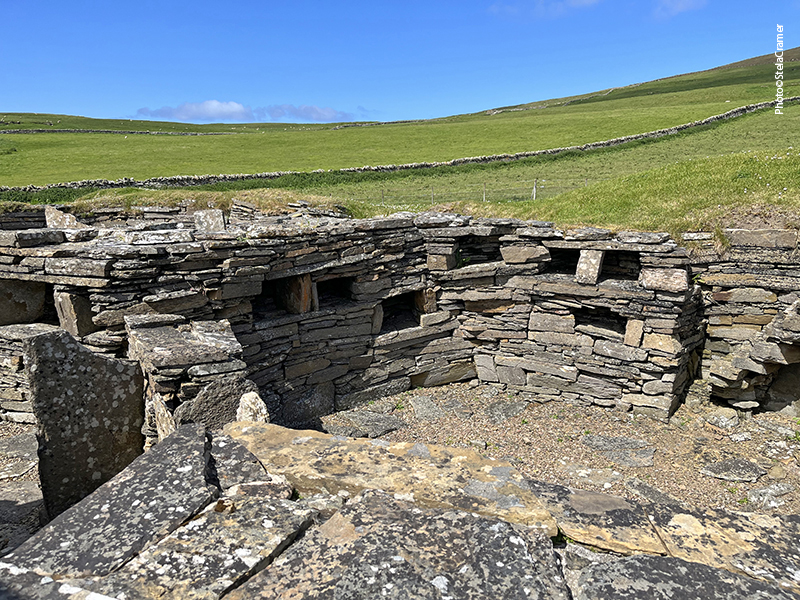
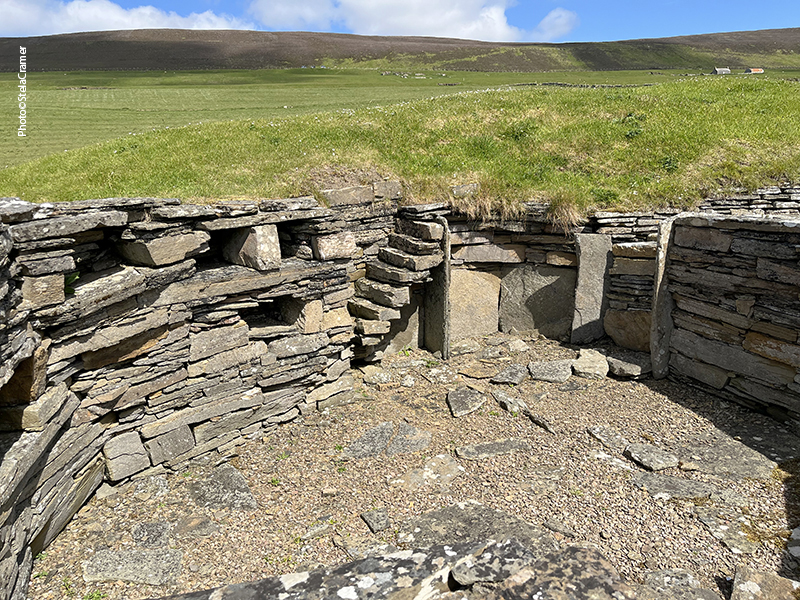
As estruturas externas para acomodação, armazenagem e ferraria foram acrescentadas posteriormente, pois foram construídas por cima do fosso interno original.
External additional structures used for accommodation, storage and iron working. These were added at a later date, as some were built over the original inner ditch of the landward defences.
Escavações em 1930 encontraram uma notável quantidade de artefatos, incluindo ferramentas de pedra e de osso, associadas ao processamento de grãos, fiação e tecelagem; fragmentos de cadinhos e moldes indicativos de trabalho em bronze. Cerâmica e pedaços de tigelas Romanas foram especialmente importantes para os arqueólogos, como prova de que estes Brochs estavam habitados na época em que a região tinha ligações comerciais com o Império Romano. Isto confirma o que escreveu o historiador romano Eutropius: que o Rei de Orkney havia se submetido ao Imperador Claudius em 43 DC.
Archaeologists digging here in the 1930s found a remarkable array of everyday artefacts, including stone and bone tools, associated with grain processing, spinning and weaving; pieces from crucibles and moulds, indicating bronze-working. Pottery and fragments from Roman vessels had special interest to archaeologists, as evidence that these Brochs were still in use by the time the area had trading links with the Roman Empire. This corroborates Roman historian Eutropius, who wrote that the king of Orkney had submitted to Emperor Claudius in AD 43.

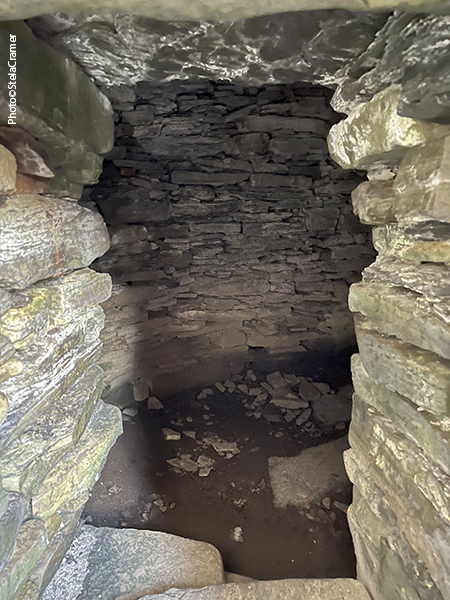
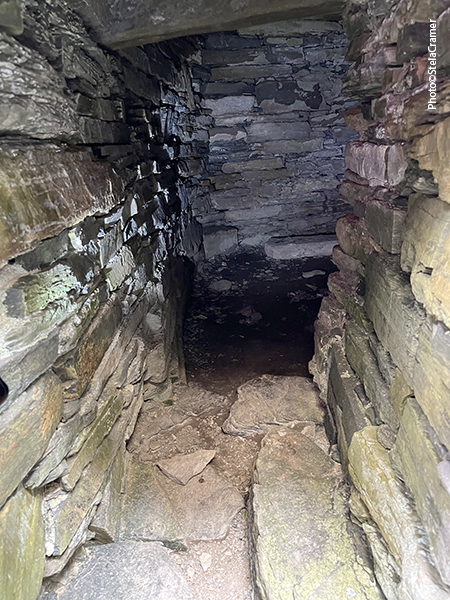
Câmaras no interior das paredes / Chambers inside the walls


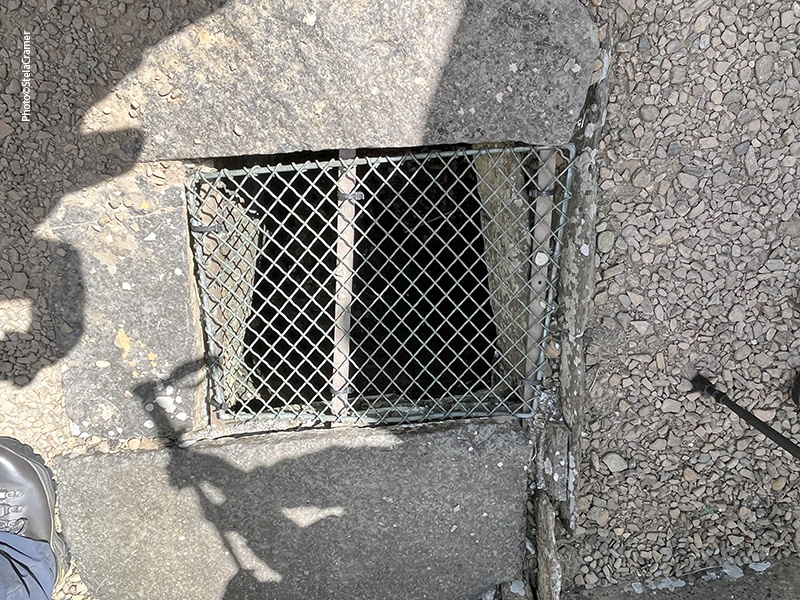
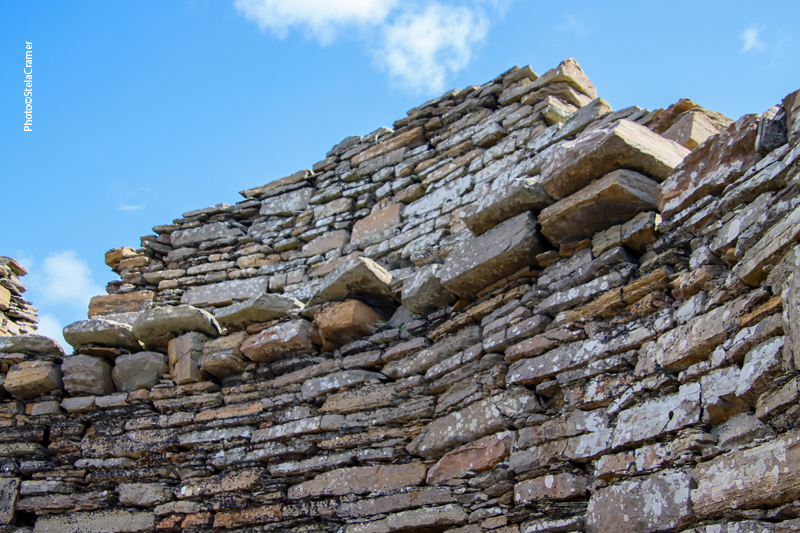
As grossas paredes continham escadas para os andares superiores.
Within the thickness of the walls, stairs gave access to the top level and upper floors of the broch.
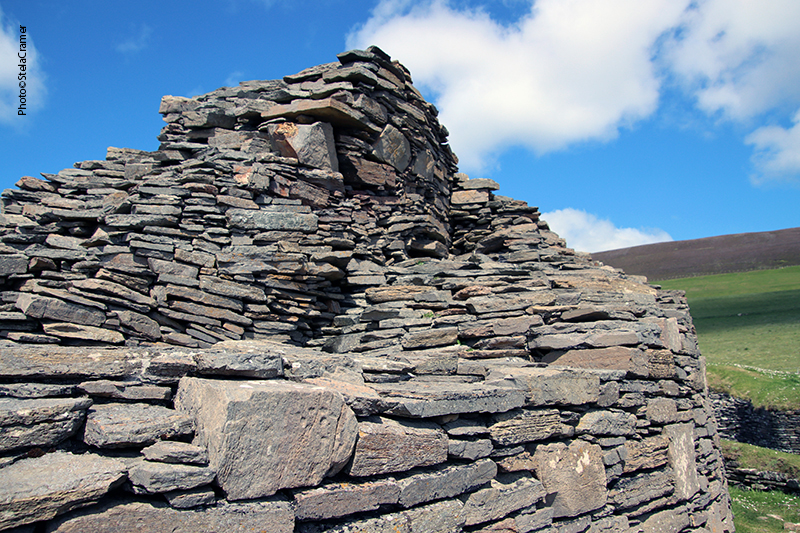
The Broch tower has an internal diameter of 9 metres within a wall 4.5 metres thick, which still stands to a height of over 4 metres. Originally it would have risen to two or three times this height.



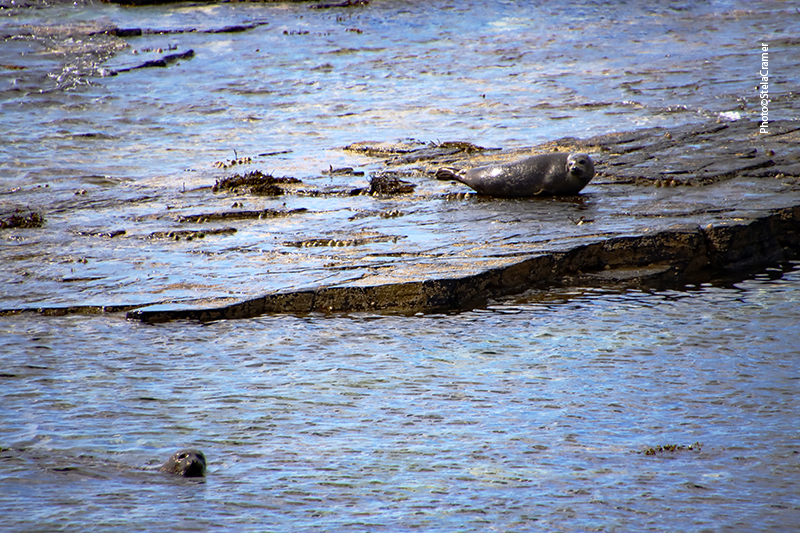
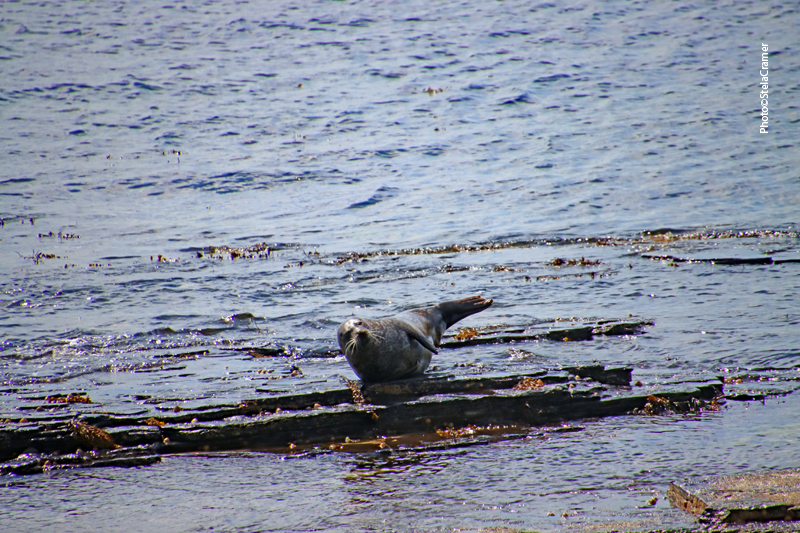
Vamos prosseguir pela costa, rumo às demais escavações existentes em Midhowe. Adivinha quem nos espera no caminho???
Let’s move on by the shore, towards Midhowe’s other excavations. Guess who’s waiting for us on the way?



 Avalon