Feeds:
Posts
Comentários

St Nectan's Glen

St Nectan’s Glen

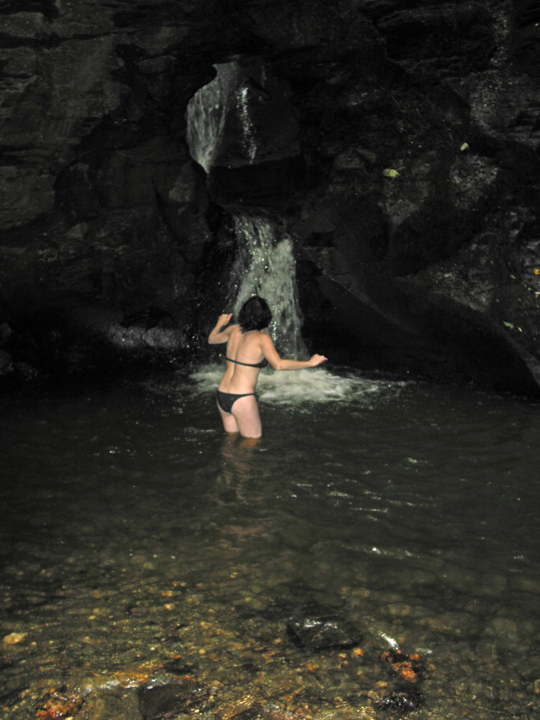
Além de nós, havia meia dúzia de turistas em St. Nectan’s Glen, olhando sem entender nada, aquele ser humano – eu – mergulhando e gritando na cachoeira, “Now I’m a knight of the Round Table!” Mas também ninguém sabia todos os obstáculos que precisei superar e o tanto que significava para mim estar ali. Enfim, minha própria história se misturava com a dos Cavaleiros que eram consagrados naquele lugar.

There were a few tourists beside us in St. Nectan’s Glen, not believing their eyes, watching a human being (me) diving and shouting in the waterfall – “Now I’m a knight of the Round Table!” But they had no idea how hard it had been to get there and how much did it mean to me. At last, my own life merged with the Knight’s, in that very spot where they were knighted.

A Távola Redonda / The Round Table

A Távola Redonda / The Round Table

Esta Távola, que se encontra no Castelo de Winchester, foi encomendada pelo Rei Henrique VIII, que se fez retratar no  lugar do Rei Arthur.  /This table, in Winchester Castle, was comissioned by King Henry VIII, who ordered King Arthur to be portraited as himself

Esta Távola, que se encontra no Castelo de Winchester, foi encomendada pelo Rei Henrique VIII, que se fez retratar no lugar do Rei Arthur. /This table, in Winchester Castle, was comissioned by King Henry VIII, who ordered King Arthur to be portraited as himself

A Távola Redonda era a mais elevada Ordem de Cavalaria na corte do Rei Arthur, a tropa de elite Britânica. Seu código de honra, segundo Sir Thomas Malory (e outros autores) compreendia:
• Não cometer maus tratos, assassinato ou traição,
• Ter compaixão, ser misericordioso e leal
• Prestar socorro e defender os mais fracos e as mulheres
• Jamais violentar jovens, mulheres ou viúvas
• Buscar a honra em primeiro lugar, não brigar injustamente por bens materiais ou amor;
• Jamais depor as armas ou atacar outro cavaleiro
• Lutar pela segurança de seu país, dar a própria vida se preciso
• Acolher a todos com hospitalidade
• Aplicar-se na prática da religião, procurar por milagres
• Na honra ou na desgraça, reportar fielmente os fatos para os registros

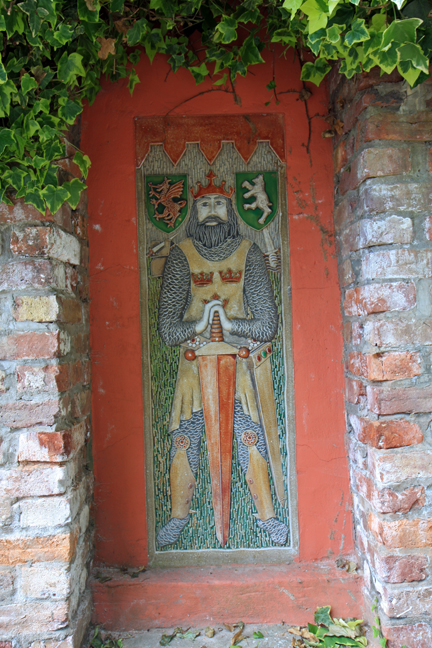
King Arthur, fresco in The Ffwrrwm, Caerleon

King Arthur, fresco in The Ffwrrwm, Caerleon

The Round Table was the highest Order of Chivalry at the Court of King Arthur. Its members were the cream of the British military who followed a strict code of honour and service. According to Sir Thomas Malory (and other writers), it comprised:
• To injure no one, never do outrage nor murder ;
• Always to flee treason, never to break faith for any reason
• To by no means be cruel but to give mercy unto him who asks for mercy
• When called upon, to defend the rights of the weak (including women) with all one’s strength
• To never force ladies, gentlewomen or widows, always do them succor
• To seek nothing before honour , not to take up battles in wrongful quarrels for love or worldly goods
• To never lay down arms nor to attack one another
• To fight for the safety of one’s country, to give one’s life for one’s country
• To practice religion most diligently and seek after wonders
• To grant hospitality to anyone, each according to his ability
• Whether in honour or disgrace, to report with the greatest fidelity to truth to those who keep the annals.

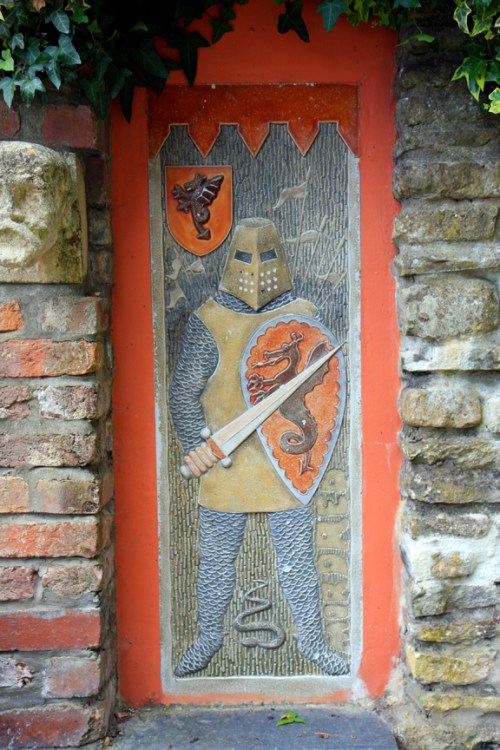
Sir Lancelot, fresco in The Ffwrrwm, Caerleon

Sir Lancelot, fresco in The Ffwrrwm, Caerleon

Algumas coisas parecem bizarras mas fazem sentido, levando-se em conta a época. Outras são absurdamente atuais, inclusive no que diz respeito às mulheres. O código de honra dos Cavaleiros parece uma versão rebuscada dos dez mandamentos cristãos.  “Reportar fatos fielmente” pode ser traduzido como não mentir. “Acolher com hospitalidade” é tratar o outro como gostaria de ser tratado, isto é quase amar o próximo como a ti mesmo. Não sou católica, mas os mandamentos são uma perfeita lista de boas práticas para a (co)existencia humana. Quando se fala em mudar o mundo, o que na verdade precisa mudar é cada ser humano, por si. Quando todos forem capazes de viver segundo essas diretrizes simples, o mundo estará mudado.
Não se trata de religião. Apenas bom senso. Todas as religiões dizem mais ou menos essas mesmas coisas, tipo “não matarás”. O problema é que as pessoas se acostumaram a fazer o que é mais fácil ou mais proveitoso. Quem pauta suas ações pela ética e justiça é incompreendido, chamado de burro ou maluco.
É uma pena ver tantas pessoas que se dizem religiosas mas não seguem os mandamentos. Conheço gente que não perde uma missa aos domingos, mas passa o resto da semana falando da vida alheia.

Sir Galahad,fresco in The Ffwrrwm, Caerleon

Sir Galahad,fresco in The Ffwrrwm, Caerleon

Some points may seem bizarre but they make sense in the context of that time. Others are incredibly up to date, specially what concerns women. The Knights’ honour code reminds me the ten christian commandments, in a flourish language. “Thou shall not kill – no murder ”.To “ report with the greatest fidelity to truth” can be translated as “not to lie”. To “grant hospitality to anyone” is the same of treat other people as you would like to be treated, or, going farther, love each other as thyself.  I’m not a catholic, but the ten commandments are a perfect list of good practices for human coexistence. We speak of “changing the world”, but this can only be done if each and every one changes and becomes able to live according to those simple rules. When all people are changed, the world will have changed. This is not about religion, is just common sense. Every religion says more of less the same. The problem is, people got used to do what is easier or more profitable. Who acts with ethics and justice is called a weirdo or a stupid. And it’s a shame to see so many who call themselves religious but don’t follow the commandments. I know people who never lose sunday mass, but dedicate the other days of the week to gossip.

O Anfiteatro Romano em Caerleon, País de Gales. Há quem diga que esta era a verdadeira Távola Redonda, pois havia na verdade centenas de cavaleiros. / The Roman Amphitheater in Caerleon, Wales. Some say this place was the real Round Table, because actually there were hundreds of Knights.

O Anfiteatro Romano em Caerleon, País de Gales. Há quem diga que esta era a verdadeira Távola Redonda, pois havia na verdade centenas de cavaleiros. / The Roman Amphitheater in Caerleon, Wales. Some say this place was the real Round Table, because actually there were hundreds of Knights.

Cristalino como a água da cachoeira onde eu me banhava, interiorizando meus votos de ser um Cavaleiro do século XXI. Jurei tornar-me uma pessoa melhor, disposta a fazer as coisas certas, ainda que contrariando satisfações pessoais imediatas, reconhecendo que geralmente são mesquinharias. Quando meus dedos começaram a ficar azuis saí da água. Me vesti e voltamos pela trilha, agora uma subida íngreme, mas não importava. Sempre escolhia o caminho mais difícil mesmo. Faz parte, quando você faz um voto. Subi quase levitando. Eu não sabia exatamente em que estava me metendo. Votos são coisas sérias, ficam impregnadas na alma, não se dissolvem nem se pode esquecê-los. Agir corretamente exige um esforço, tem um grau de dificuldade por vezes elevado. Dirigir no Rio de Janeiro, por exemplo, uma tarde inteira sem enraivecer-se nem xingar ninguém, é quase impossível, mas continuo tentando.

Clear as the waterfall where I bathed, while making my vows to be a XXI century Knight. I swore to make a better person of myself, willing to do things right, even if that goes against personal immediate satisfaction, which I recognize are often selfish behavior. I left the water when my fingers started to turn blue; got dressed and we walked back the footpath, now harder because we were going up, but it didn’t matter. When you make a vow, you choose the hardest way. I floated up the path.
But I didn’t know exactly what I was going into. Vows are serious stuff, they penetrate the soul and never melt, and can’t be forgotten. To behave properly needs an effort and sometimes presents a high level of difficulty. To drive the streets of RJ, for example, one whole afternoon without falling into deep rage or calling the others bad names is close to impossible, but I keep on trying.

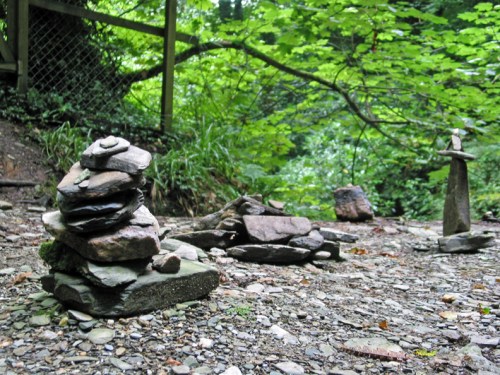
Pilhas de pedras feitas pelos visitantes junto à cachoeira / Stone piles left by visitors next to waterfall

Pilhas de pedras feitas pelos visitantes junto à cachoeira / Stone piles left by visitors next to waterfal

St. Nectan’s Glen – Post 053


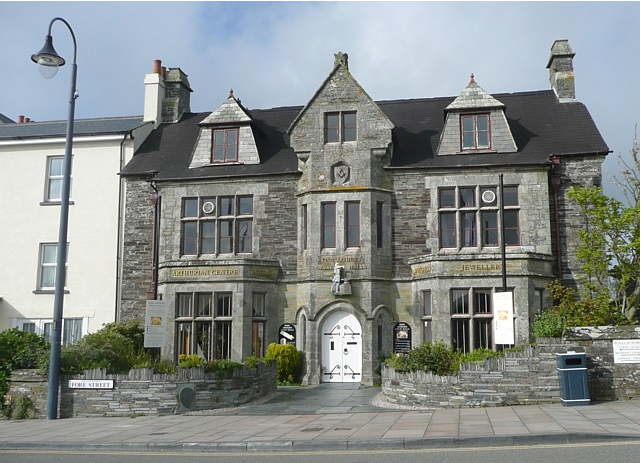
King Arthur’s Great Halls, Tintagel, Cornwall. PL34 0DA
Tel: +44 (0) 1840 770526 – Fax: +44  (0) 1208 851433 (Photo: Humphrey Bolton)

Antes de seguir para Slaughterbridge, tinha entrado no King Arthur’s Great Halls, na rua principal de Tintagel próximo ao antigo Correio. Nesse museu, o visitante é conduzido a um trono no centro da sala, onde se senta para assistir a um vídeo sobre a lenda de Arthur com efeitos especiais do século passado. Há pinturas, inspiradas no tema, de artistas locais. A maior atração são os vitrais, realmente lindos, mas muito altos, tanto que deletei minhas fotos todas porque ficaram ruins. Entretanto achei este site onde você pode apreciá-los e conhecer mais sobre o pitoresco lugar, que atualmente sedia uma Fraternidade inspirada nos ideais dos Cavaleiros da Távola Redonda. Na loja de souvenirs havia muitos livros, inclusive o raro La Morte D’Arthur, de Thomas Mallory, que comprei embora fosse um tijolo para carregar pelo resto da viagem.

KingArthursGreatHalls.htm#KING%20ARTHUR%27S%20GREAT%20HALLS

Before going to Slaughterbridge, I had visited King Arthur’s Great Halls, in the main street, not far from the Old Post Office. In this museum, the visitor sits in a throne to watch a video about Arthur’s legend, with funny two centuries ago “special effects” . There are paintings of local artists on the subject. The hotspot of this place are the glassworks, nice indeed, but too high to be photographed without a ladder. I deleted all my photos because they came out bad. But in this site you can check them, and have more information about the museum, which is also headquarters of a Friendship based upon Knight ideals. In the souvenir shop there were many books, even the rare Thomas Mallory’s Morte D’Arthur, which I bought despite it would be a brick to carry the rest of the trip.

Michelle & Jewels in St. Nectan’s Glen

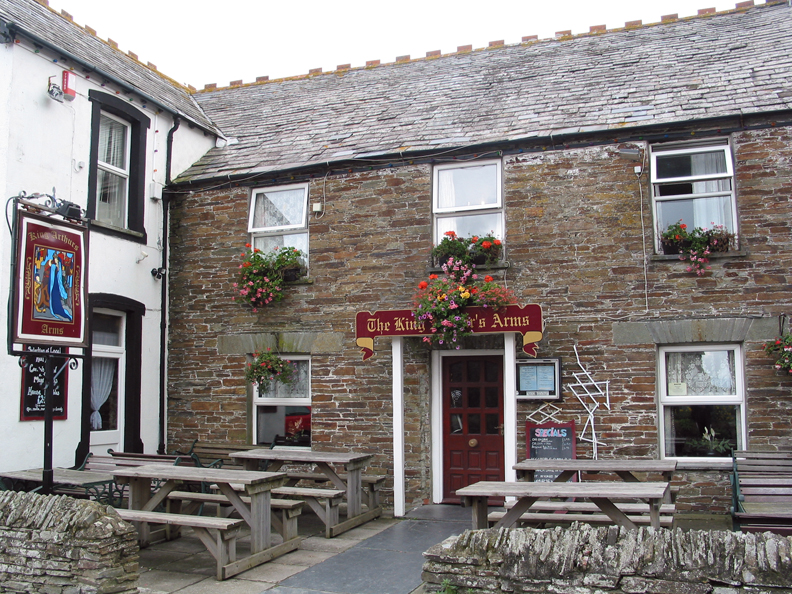
A questão era, no ônibus de volta, eu estava achando tudo uma merda. Seis libras de prejuízo, entre o ingresso no Arthurian Center e o trajeto do ônibus. O motorista me orientara a reclamar o dinheiro da passagem no terminal do ônibus em Camelford. Iria com certeza, se não implicasse em desembolsar outra passagem até lá e se não chovesse tanto, e eu já não estivesse encharcada. E com muita fome. O ponto final do ônibus em Tintagel era no extremo da avenida oposto ao do hotel Camelot Castle. Então entrei no King Arthur’s Arms para me abrigar da forte chuva e tomar uma pint. Uma banda iria tocar ali, os músicos estavam passando o som. Resolvi ficar para assistir. Depois de um tempo, o pub encheu e acabei conversando com três moças de Bristol. Kerry era uma loura de 1,80m; Jewels era do meu tamanho, muito simpática e estava de rolo com um dos músicos. Michelle era gorducha e casada.. Trabalhavam numa instituição que cuidava de adaptação de imigrantes. Estavam em férias, pernoitando em um trailer num camping perto do Camelot Castle. Conversei horas com essas pessoas. Aquele dia trágico terminou numa noite ótima.

A caminho de St. Nectan’s Glen / On the way to St. Nectan’s Glen

But, on the bus back from Slaughterbridge, I was miserable and everything sucked. Six pounds lost, between the Arthurian Center and the bus ticket! The driver had oriented me to ask a refund in the company office at Camelford. I’d have gone there if that didn’t imply paying another ticket, if it wasn’t raining so much and I wasn’t soaked and starving. The bus terminal in Tintagel was in the main road, in the opposite end of the hotel. And it was still raining hard, so I went into the pub for shelter and a pint. There would be live music and the band was starting the soundcheck. I decided to stay for the show. As time went by, the pub crowded and eventually I made friends with three girls from Bristol. Kerry was blond, almost six feet tall; Jewels was about my size, very friendly and was having kind of an affair with one of the guys in the band. Michelle was plump, she was the only married one. They worked in an institute for immigrants adaptation and were in holidays for a few days, sleeping in a motorhome parked in a camping close to the Camelot Castle. We talked for hours. That tragic day ended up in a cheerful night.

Diversidade de paisagem no caminho/ Variety of landscapes on the way

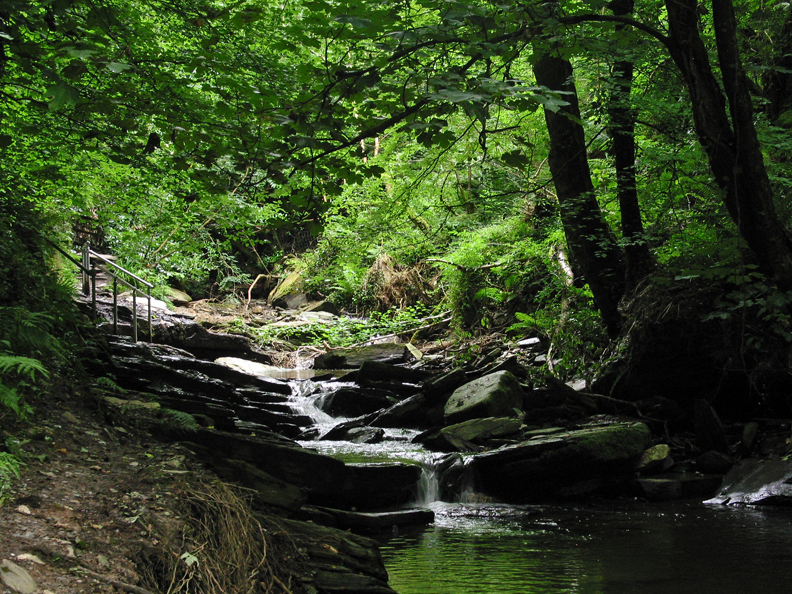
Eu tinha visto num prospecto turístico um lugar chamado St. Nectan’s Glen, uma cachoeira onde eram sagrados os cavaleiros da Távola Redonda. e queria tanto ir lá que contaminei as moças. Combinamos de nos encontrar em frente ao pub no dia seguinte, às onze horas; graças aos deuses elas tinham carro. Era longe, uns 40 minutos de carro, se eu fosse a pé – e achasse o caminho – só chegaria no dia seguinte. Havia um local para estacionar , dali saía uma trilha por entre pastos, casinhas, uma igreja antiga – St. Piran’s Chapel – e mais uma longa caminhada pelo meio da mata, uma hora margeando um rio de águas cristalinas até St. Nectan’s Glen Hermitage, onde supõe-se que tenha habitado este santo do sec.VI. Reza a lenda que ele tocava um sino de prata durante as tempestades para avisar os navios da existencia de perigosas rochas na foz do vale.

St. Piran’s Chapel – interior

I had seen in a touristic folder a place called St. Nectan’s Glen, a waterfall where the Knights of the Round Table men were consecrated. I was so excited about going there that made the girls cheer up and we agreed to meet next day, 11am in front of the pub. Thanks Gods they had a car, for it was a 40 minutes drive. If I was to walk there, and managed to find the way alone, I’d arrive the day after. It was really far until a parking lot from where a foot trail started. About one more hour walking pastures, small houses, an ancient church – St. Piran’s Chapel – and then through the woods, beside a crystal stream – until you reach St. Nectan’s Glen Hermitage. The sixth-century Saint Nectan is believed to have sited this hermitage above the waterfall. According to legend, he rang a silver bell in times of stormy weather to warn shipping of the perils of the rocks at the mouth of the Rocky Valley.

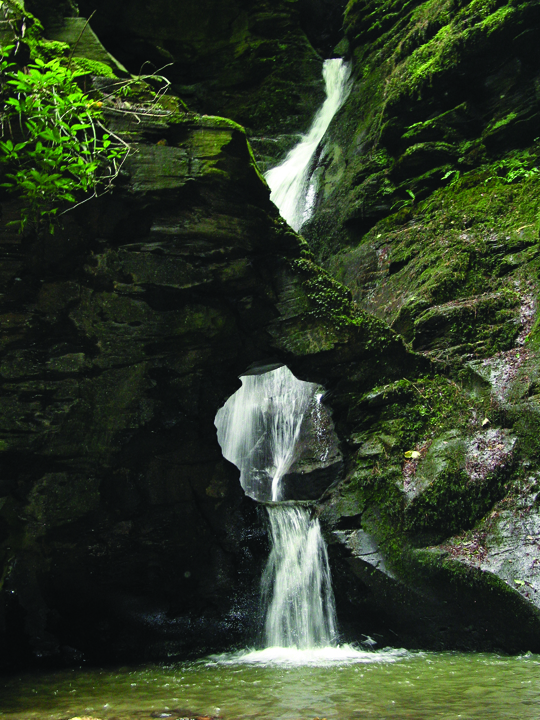
Saint Nectan’s Glen, local da sagração dos Cavaleiros /
where the Knights were knighted

Há um café, uma loja de souvenirs e uma escada de pedra que leva ao rio e ao poço em questão. Paga-se para visitar a cachoeira, onde enfim chegamos, após mais quinze minutos de descida. A água gélida passa por um buraco redondo numa pedra enorme, formando a pequena cachoeira e o poço. A própria eternidade retratada. É claro que eu tinha ido de biquíni por baixo da roupa. Tirei a roupa e entrei na cachoeira. As meninas não acreditaram e morreram de rir quando me viram debaixo d’água gritando  “I am a knight of King Arthur’s Round Table!” Michelle bateu uma foto, ficou meio escura mas serve como prova.

There’s a coffee shop, a souvenir store and a stairway leading to the river. You must pay to go down to the waterfall, where we arrived after walking more fifteen minutes. The freezing water through the centuries dug a hole in a massive stone, shaping the waterfall and the kieve. Eternity translated in a shape. Of course I had my bikini under the clothes, which I took off without thinking twice. The girls laughed a lot when they saw me into the water screaming “I am a knight of King Arthur’s Round Table!”. Michelle took a picture, kind of dark but it’s a proof.

Eu entrei / I went in


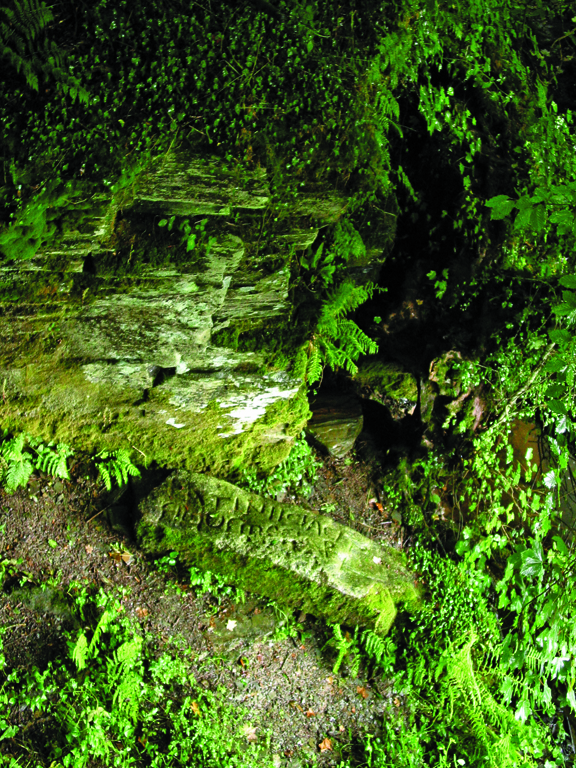
Arthur’s Stone

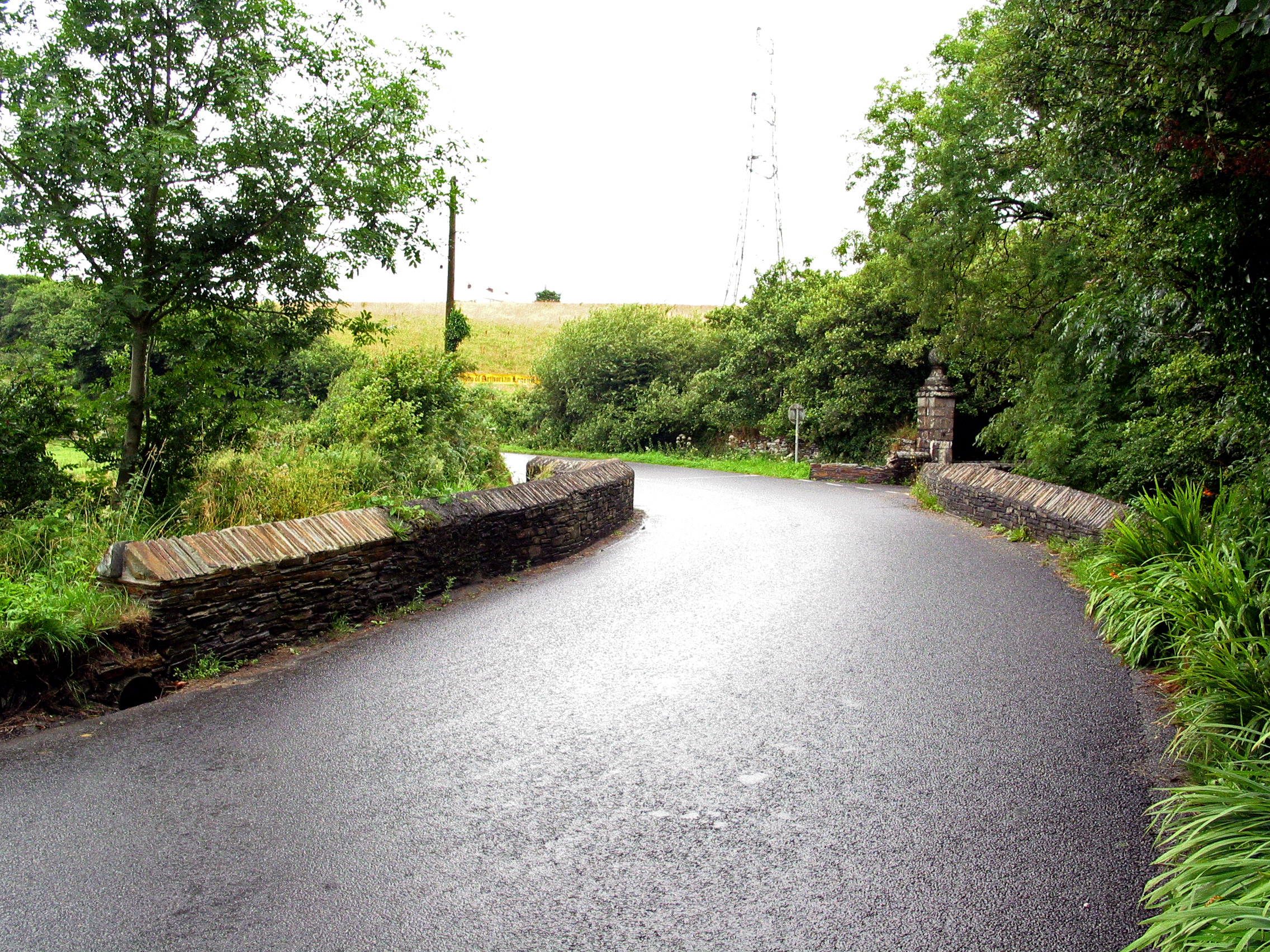
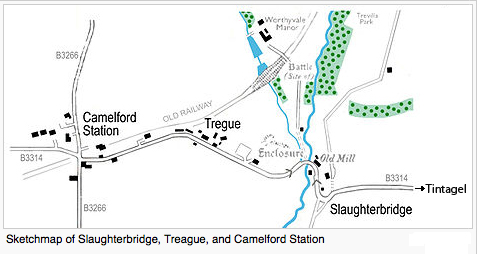
O trocador entendeu errado o nome da ponte – achou que eu ia para Wadebridge em Camelford, então me cobrou mais de duas libras pela passagem. Quando surgiu a placa indicando Slaughterbridge, percebi que o lugar era perto demais para aquela tarifa, fui reclamar. O homem disse que entendera errado porém não podia me devolver o dinheiro, porque já tinha destacado o tíquete. Eu teria que ir até o escritório da companhia para pedir reembolso. Fiquei uma arara; reclamei com o motorista, que foi muito grosseiro, o que me deixou chocada, mas era hora de descer do ônibus. Saltei em frente a um pavilhão chamado Arthurian Center. Agora sei que basta entrar numa ruela ao lado da ponte para chegar ao riacho em cujas margens se encontra a pedra de Arthur.

The collector of the bus misunderstood the name of the bridge – thought I was going to Wadebridge, in Camelford – so he charged me more than two pounds. When the sign “Slaughterbridge” appeared by the road I noticed that it was too close for such a fee, and complained about it. The man apologized for the mistake but he couldn’t give me back the money because the ticket had already been detached. I had to go all the way to the office to get a refund. I was pissed off and complained with the driver, who was extremely rude. But it was time to drop off, in front of a pavillion called Arthurian Center. Now I know that to find Arthur’s Stone one should go down a side lane beside the bridge. The stone is by the brook.

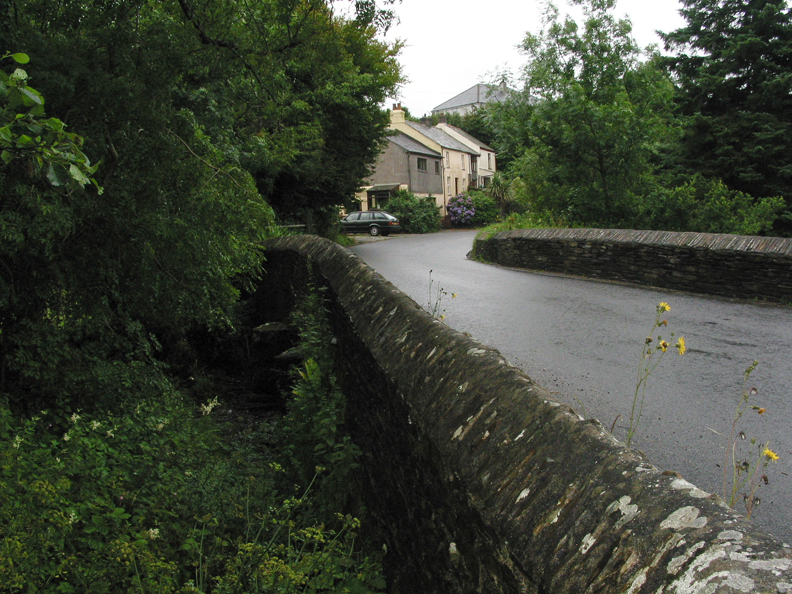
Slaughterbridge, da direita e da esquerda / Left and right

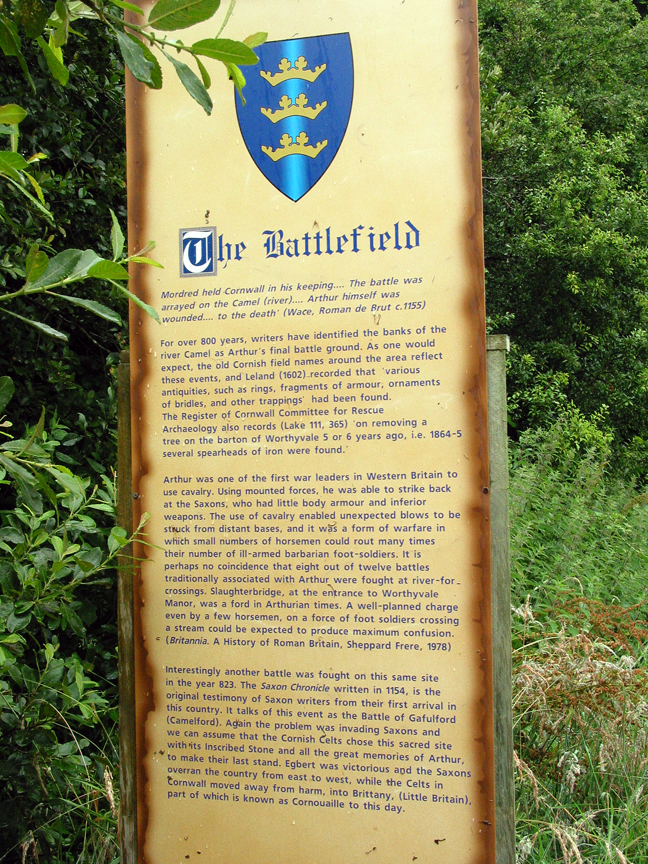
Como o tal Centro tinha uma placa dizendo “Sítio Arqueológico”, resolvi entrar para me informar. A entrada custava 3,50 libras. Havia uma exposição tosca de pinturas, cartazes desenhados à mão e um vídeo bizarro sem qualquer relação com Arthur: um sujeito vestido de preto andando; apareciam seus pés, a paisagem e uma entrevista sem pé nem cabeça com o cidadão. Fiquei assistindo apenas por que começou a chover torrencialmente. Quando a chuva diminuiu, saí em busca da pedra, seguindo a indicação de um funcionário. Havia uma trilha, mas dava mil voltas. Enfim, meia hora depois, encharcada e enlameada, cheguei ao rio e à pedra com inscrições celtas que atestam ali ter caído o rei. Depois é que fui perceber que o caminho terminava na estrada, na altura da ponte! Se tivesse entrado por ali, chegaria diretamente na pedra sem gastar minhas preciosas libras nem tomar aquele banho de chuva. Pelo menos passei pelo suposto campo da última batalha, onde fotografei a placa informativa .

The Arthurian Center had a sign written “Archaeological Site”, so I entered it n search of information. The admittance costed 3,50 pounds. There was a poor exhibition of paintings, handmade posters and a video without any relation to Arthur’s legend. It showed a bizarre interview with a man clad in black, who appeared walking, the camera focusing his feet and sometimes a landscape. I watched for a while because a hard rain had started. When it diminished I went for the stone, according to the clerk’s indications. There was a path, but it coiled a thousand times and it took me half an hour to get to the stream and the stone. I was soaked and muddy from hair to toe when I took the photo of the celtic inscriptions in the stone asserting that it was the place where the King fell down. Only after that I noticed that the way ended by the road. If I had gone that way, I’d have reached the stone without wasting my precious pounds nor rain bathing. At least the path went through the presumed last battle field, where I photographed the informative sign.

“A Cornualha estava em poder de Mordred… A batalha teve suas trincheiras no (rio) Camel… o próprio Arthur foi ferido… mortalmente.” (Wace, Roman de Brut, 1155)

“Por cerca de 800 anos os escritores tem reconhecido as margens do Rio Camel como o local da batalha final de Arthur. Como seria de se esperar, os nomes dos antigos campos no dialeto da Cornualha refletem estes eventos, e Leland (1602) registrou que foram encontrados objetos antigos tais como anéis, fragmentos de armaduras, enfeites de rédeas e outros adereços. O arquivo do Comitê da Cornualha para Resgate Arqueológico também registra (Lake 111, 365) a descoberta de diversas pontas de lança de ferro ao remover-se uma árvore no solar de Worthyvale há 5 ou 6 anos, ou seja, em 1864-5.

Arthur foi um dos primeiros líderes da Bretanha Ocidental a usar cavalaria na guerra. Empregando forças montadas ele foi capaz de contra-atacar os Saxões, que usavam pouca armadura e armas inferiores. O uso da cavalaria permitia ataques surpresa longe da base, sendo uma forma de guerra em que poucos cavaleiros podiam derrotar um número muito maior de soldados bárbaros a pé, precariamente armados. Talvez não seja coincidência que oito entre doze batalhas tradicionalmente associadas a Arthur foram travadas em passagens de rios. Slaughterbridge, na entrada do feudo de Worthyvale, era um vau nos tempos de Arthur. Um ataque bem planejado de soldados montados, ainda que poucos, a uma tropa de infantaria atravessando um córrego causaria certamente grande estrago. (Britannia. A History of Roman Britain, Sheppard Frere, 1978).

Curiosamente, outra batalha foi travada neste mesmo lugar no ano de 823. A Crônica Saxã escrita em 1154 é o testemunho autêntico dos escritores Saxões sobre sua chegada a este país, e menciona tal evento como a Batalha de Gafulford (Camelford). Novamente o problema eram invasores saxões e podemos presumir que os Celtas da Cornualha escolheram este lugar sagrado, com sua pedra inscrita e todas as lembranças de Arthur para seu confronto final. Egbert (líder  saxão) venceu e os Saxões devastaram o país de leste a oeste, enquanto os Celtas da Cornualha fugiram para a Bretagne (Pequena Bretanha, na França), parte da qual até hoje se chama Cornouaille (Cornualha).”

“Mordred held Cornwall in his keeping… The battle was arrayed on the Camel (river)… Arthur himself was wounded… to the death.” (Wace, Roman de Brut, 1155)
For over 800 years, writers have identified the banks of the river Camel as Arthur’s final battle ground. As one would expect, the old Cornish fields names around the area reflect these events, and Leland (1602) recorded that various antiquities, such as rings, fragments of armour, ornaments of bridles, and other trappings had been found. The Register of Cornwall Committee for Rescue Archaeology also records (Lake 111, 365) on removing a tree on the barton of Worthyvale 5 or 6 years ago, ( i.e. 1864-5 ) several spearheads of iron were found.

Arthur was one of the first war leaders in Western Britain to use cavalry. Using mounted forces, he was able to strike back at the Saxons, who had little body armour and inferior weapons. The use of cavalry enabled unexpected blows to be struck from distant bases, and it was a form of warfare in which small numbers of horsemen could rout many times their number of ill-armed barbarian foot-soldiers. It is perhaps no coincidence that eight out of twelve battles traditionally associated with Arthur were fought at fords. Slaughterbridge, at the entrance to Worthyvale Manor, was a ford in Arthurian times. A well-planned charge even by a few horsemen, on a force of foot soldiers crossing a stream could be expected to produce maximum confusion. (Britannia. A History of Roman Britain, Sheppard Frere, 1978).

Interestingly another battle was fought on this same site in the year 823. The Saxon Chronicle written in 1154, is the original testimony of Saxon writers from their first arrival in this country. It talks of this event as the Battle of Gafulford (Camelford). Again the problem was invading Saxons and we can assume that the Cornish Celts chose this sacred site with its inscribed Stone and all the great memories of Arthur, to make their last stand. Egbert was victorious and the Saxons overran the country from east to west,  while the Celts in Cornwall moved away from harm, into Brittany (Little Britain), part of which is known as Cornouaille to this day.”


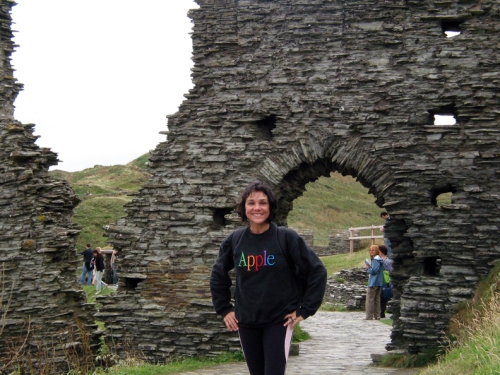
Estou horrível mas infelizmente só tenho esta foto da placa do Castelo.
I’m horrible, unfortunately this is the only photo I’ve got of the Castle sign.

O horário de visita às ruínas do castelo já tinha se encerrado naquele dia, portanto fiquei na pequena praia, cantando em voz alta enquanto ia de um lado para o outro batendo fotos. Devia estar parecendo uma maluca, pois percebi que duas moças estavam me olhando e rindo. Tive que rir também, e começamos a conversar. Eram tia e sobrinha em férias, a caminho de Newquay.

The Castle ruins were already closed for visitors that afternoon, so I strolled the little beach taking pictures, singing aloud. Then I noticed two girls looking and laughing at me, probably thinking me nuts. I had to laugh too, and we started  to talk. They were aunt and niece in holidays, on their way to Newquay.

Novas amigas / New friends

Eram quase sete da noite. Kimberly e Amanda iam jantar e me convidaram a acompanhá-las. Deixei a câmera no hotel e fomos ao King Arthur’s Arms, um pub ao qual eu iria voltar todos os dias. Foi quando fiz uma coisa horrível. Após fazermos os pedidos ao garçom, me levantei e fui ao banheiro. Quando retornei, os pratos já estavam na mesa. Meu salmão com ervilhas, batatas, cenouras e molho de manteiga estava divino. No Brasil, a conta vem no fim da refeição; lá paga-se na hora que se pede. Comemos, conversamos horas e só hora de ir embora, descobri que elas já haviam pagado a conta. Fiquei absolutamente sem graça, pois parecia que tinha feito de propósito.

It was almost 7pm. Kimberly and Amanda wanted to dinner and invited me to join them. I left the camera in my hotel room and we headed to King Arthur’s Arms, a pub where I’d be back each and every day. But then I did something regrettable. After ordering our plates, I went to the lavatory and the meal was already at the table when I got back. My grilled salmon with vegetables and butter sauce was divine, but… in Brazil the bill comes at the end. In England you pay when you order. So I ate, we talked for hours and only when it was time to leave I found out they had paid for my meal. That was so embarrassing, they probably thought I had done it on purpose.

King Arthur’s Arms, Fore Street, Tintagel

www.kingarthursarms.co.uk

Expliquei isso, mas minha tentativa de reembolso não foi aceita e ainda me perguntaram se eu gostaria de seguir com elas para Newquay. Fiquei arrasada, pois minha reserva no hotel era para duas noites e já tinha feito o check-in, assim declinei o convite. Por fim as moças foram embora, deixando o telefone e e-mail; achei que iríamos nos ver em Londres quando eu voltasse. Infelizmente isso não aconteceu. Os telefones não atendiam e o e-mail que enviei acusou erro.

I tried to explain but the girls didn’t accept my refund, and asked me to go with them to Newquay. I was devastated because I’d love to, but I had booked two nights at the Camelot Castle and had already checked in. So we said goodbye and eventually they took the road leaving their phone numbers and e-mail adresses. I thought we might meet in London when I went back, but unfortunately that never happened. Nobody answered the phone calls and the e-mails I’ve sent accused error.

National Trust Old Post Office

De volta ao Camelot Castle, percebi que o banheiro era uma cabine de fibra como as de avião dentro do quarto, com pia, vaso sanitário e box com ducha quentinha. Após o banho dormi profundamente numa cama muito macia. Na manhã seguinte, desci para o enorme salão de café do hotel, junto a uma varanda que dava para o mar. Podia-se escolher café da manhã inglês ou continental. Para provar, pedi o inglês e me arrependi amargamente: veio bacon, linguiça, um purê insosso de feijão, tomates e ovos – tudo frito com gordura escorrendo, um nojo. Feijão no café, que bizarro!Felizmente, havia também uma mesa com iogurtes e diversas caixinhas de cereais. Salvaram minha vida. Além de comer na hora levei para o quarto um pote de iogurte e granola, já pensando no jantar.

Back in Camelot Castle, I noticed that the bathroom was a fiberglass cabinet inside the room, like those of planes but provided with shower besides the sink and toilet. After a hot bath I fell deeply asleep in the soft bed. Next morning, breakfast was served in a massive room next to a balcony overlooking the sea. One could choose between Continental and English breakfast, and I decided to try the latest, which was a bad idea. I was served bacon, sausage, eggs, tomatoes and a tasteless beans purée, everything fried, still dripping oil, disgusting. How bizarre, beans in breakfast! Luckily there was a side table with a variety of yogurt and boxed cereal, which saved my life. I even took some to my room, saving it for dinner.

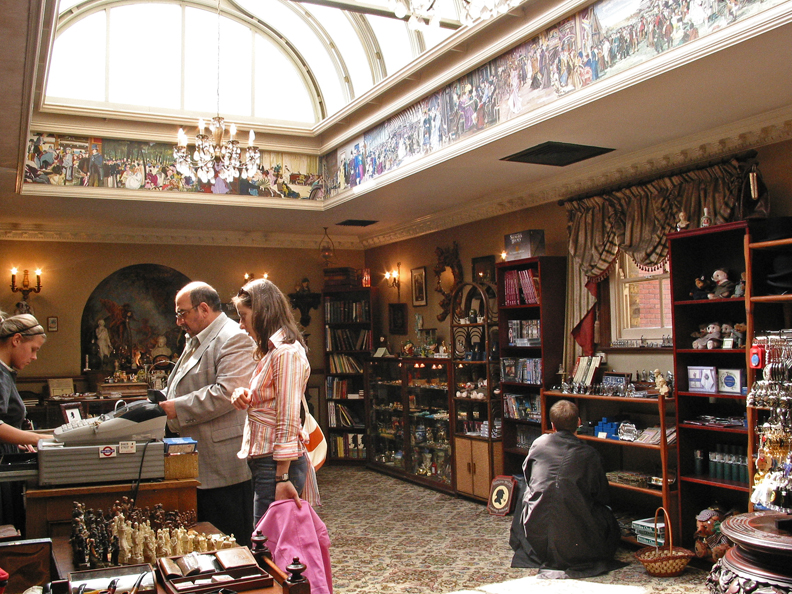
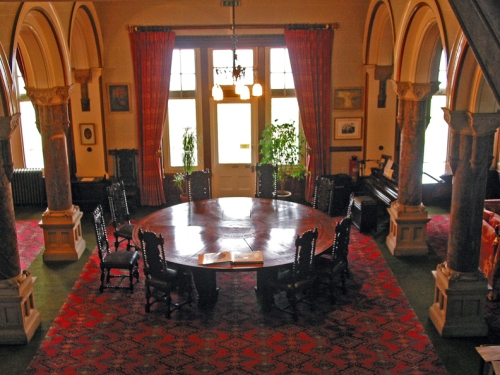
Interior do antigo Correio / Inside the Old Post Office

O dia estava bonito quando saí para conhecer a cidade, mas quinze minutos depois o tempo fechou. Eu estava chegando ao Old Post Office, o antigo correio que mais parecia uma casa de bonecas. No século XVIII, ali morava o funcionário que selava, despachava e recebia cartas. A correspondência era entregue a cavalo naquele tempo.

The weather was good at first, but clouded over as soon as I set foot on the street for a walk around. I was just arriving at the Old Post Office, an XVIII century building with the looks of a doll house. There lived the clerk who sealed and dispatched the mail, which went on horseback by that time.

Natureza morta no antigo correio / Still life in the Old Post Office

Mais uma / Another one


Porta para o jardim nos fundos / Backyard door

Dali fui pegar um ônibus até Slaughterbridge para ver a pedra que marca o lugar onde Arthur foi mortalmente ferido por Mordred.

From there I went to the station, in order to take a bus to Slaughterbridge, where a stone marks the place where Arthur fell deadly wounded by Mordred.


Cornwall – a Cornualha

Comprei a passagem de ônibus, o 505 para Penzance, sem retorno dessa vez. A Cornualha tem praias aonde todo mundo vai pegar onda nas férias, como Newquay. O bagageiro do ônibus encheu com pranchas de surf. Penzance é a ultima cidade, de onde se vai ao Land’s End, o ponto final que encontra o Oceano Atlântico a sudeste. Era domingo, dia 27 de julho de 2005. De Londres a Camelford, foram cinco horas.  A estrada cruzava cidades minúsculas, que pareciam ter aspecto medieval, mas era impossível dizer com certeza pois choveu torrencialmente durante a viagem toda. Não dava para ver nada pela janela, só o mundo branco de neblina. Fiz o trajeto lendo o livro A Druid Abroad, de Sandra Parsons, sobre sua viagem a Newgrange, na Irlanda, em companhia de sua mãe. Fui a única passageira a descer em Camelford.

I bought a bus ticket, boarding the 505 to Penzance, this time without return. Cornwall is a summer destiny where you find the surf beaches as Newquay. The luggage compartment was full of surfboards. The last city is Penzance, from where you reach Land’s End, England’s south-eastern border facing the Atlantic Ocean. It was Sunday, July 27th. It took five hours from London to Camelford, where I was supposed to drop off. The road crossed tiny villages that could have a medieval look but I wasn’t sure, because it rained torrentially the whole day and beyond the windowpane the world was mostly white. I spent the time reading the book “A Druid Abroad” by Sandra Parsons, about her journey to Newgrange, in Ireland, with her mother. I was the only passenger to get off the bus in Camelford.

Uma placa na estrada indicava “Bodmin” e “Dozmary Pool”. Fiquei meio histérica pois Dozmary pool é o lago de onde se ergueu a Dama do Lago empunhando a espada Excalibur para ser dada a Arthur. E no fim da história, quando o Rei está mortalmente ferido, entrega Excalibur a Sir Bedivere, um dos Cavaleiros, para que a jogasse de volta no fundo do mesmo Lago, a fim de evitar que caísse em mãos inimigas. Eu precisava fotografar o lago, mas até aquele momento não fazia idéia da sua localização. Pensei então em seguir para lá imediatamente após a estada em Tintagel. Eu não fazia idéia, porém, da distância entre todos esses lugares.

A sign on a crossroads pointed the way to “Bodmin” and “Dozmary Pool”. I was entranced because that was the Pool from which waters rose the Lady of The Lake, bearing the mighty sword Excalibur to be given to Arthur. In the end of the tale, when the King is deadly wounded, he hands Excalibur to Sir Bedivere, one of the knights, with orders to throw it back into the deep of the Lake, to avoid its capture by enemies’ hands. I had to photograph that lake, although up to that moment I didn’t have the slightest idea of its location. So my mind was instantly made up: after the days in Tintagel I would go that way. But I had no idea of the real distance between these places.

Camelot Castle – Tintagel, Cornwall PL34 0DQ, Reino Unido – 01840 770202
http://www.camelotcastle.com


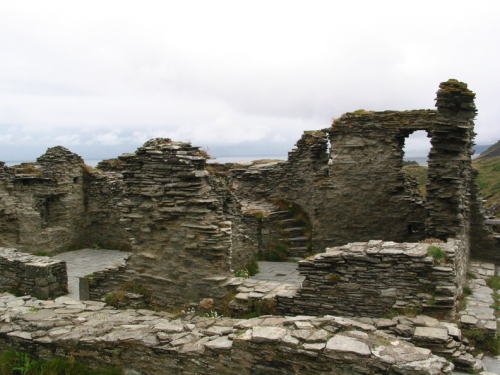
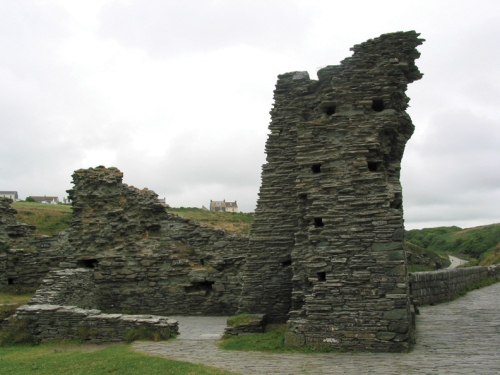
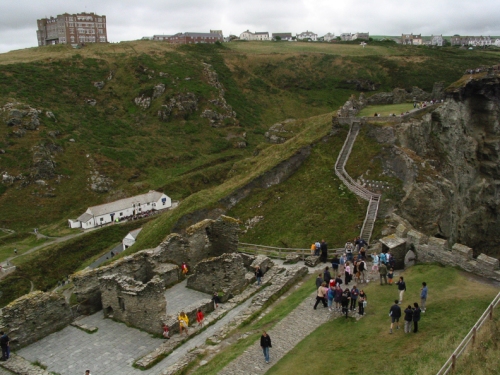
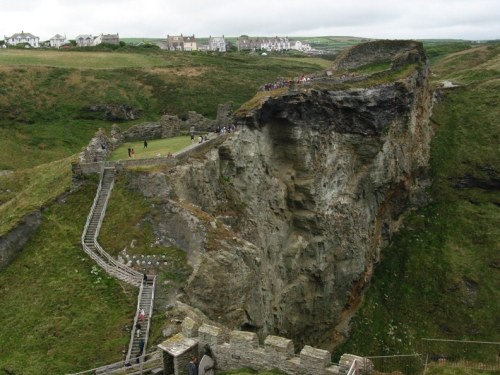
A chuva parou quando saltei do ônibus em Camelford. Parecia um lugar bonitinho, que valeria a pena visitar, mas fui direto para o ponto do ônibus local que me levaria a Tintagel, onde havia feito reserva no hotel “Camelot Castle” para duas noites. O ônibus já estava no ponto, como se esperasse por mim. Cerca de vinte minutos depois, desembarquei na cidade de Igraine. Percorri a avenida principal virando à esquerda no fim: o hotel ficava em frente ao mar. A construção (aliás, muito brega, aquele castelo fajuto estragava o visual) ficava bem ao lado de uma escadaria que levava à praia, uma pequena enseada aos pés do maciço sobre o qual se erguem as ruínas do castelo de Tintagel. Após fazer o check in, deixei a mochila no quarto com banheiro e desci imediatamente para a praia.

The rain ended when the coach reached Camelford, which seemed to be a nice place, worth visiting, but instead I went straight to the stop where the bus that would take me to Tintagel was already ready to leave, as if was just waiting for me. After about twenty minutes, I got off in Igraine’s city. I had booked two nights in the Camelot Castle Hotel, that stands facing the sea, turning left in the end of the main street. The building was pretty tacky, a fake castle ruining the gorgeous landscape. Beside it there was a stairway leading to the beach, a small bay of sapphire blue sea like those in pirate’s movies, at the feet of the massive rock where Tintagel Castle ruins still stand. After check in, I left my backpack in the room (with a private bathroom!) and went down to the beach.

Pela primeira vez na viagem, um quarto com banheiro só para mim.
For the first time in this trip, a room with private bathroom, all only for me!

A vista da janela do meu quarto não era para o mar: algumas casas e a rua principal da cidade.
My room didn’t face the sea, but Tintagel’s main street  ahead

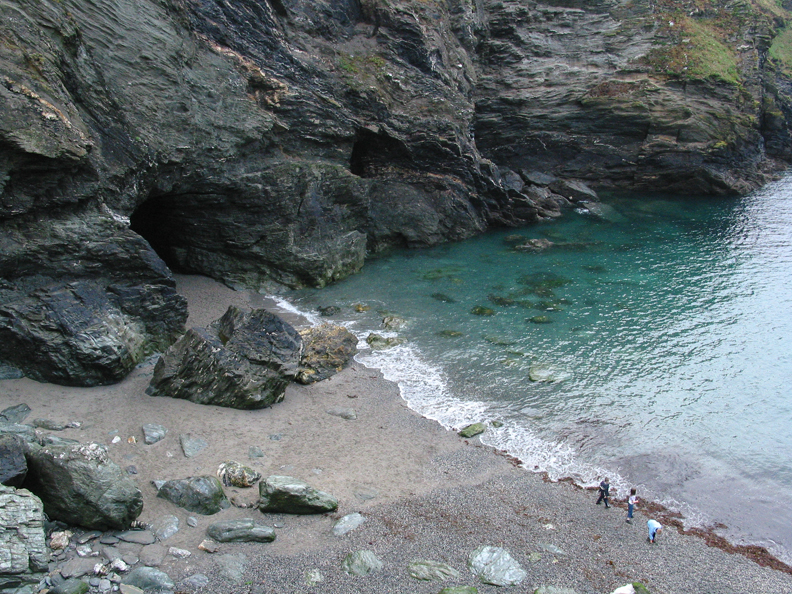
O tempo havia clareado, uma luz quase mágica banhava a paisagem. A enseada parecia cenário de filme de pirata, o mar cor de safira. Enquanto descia a trilha, um raio de sol irrompeu entre as nuvens, que pareciam se dissipar. Depois de ter viajado o dia todo em meio à tempestade e ao dilúvio, aquele sol era tão inacreditável que desapareceu mesmo instantes depois. Foi só para abençoar minha chegada. Agradeci aos deuses pulando na areia (ou melhor, seixos negros) como um cabrito drogado e gritando: “TINTAGEL! TINTAGEL!”

The weather had cleared, a magic light bathed the place, and while I was stepping down a golden sunbeam shone through the vanishing clouds. That was a blessing after travelling through storm and flood, an impossible ray of light so brief that it was gone as soon as I set my feet in the sand, or better, black pebbles. To thank the gods I started to jump like a goatling freaking out, and yelling: “TINTAGEL! TINTAGEL!”

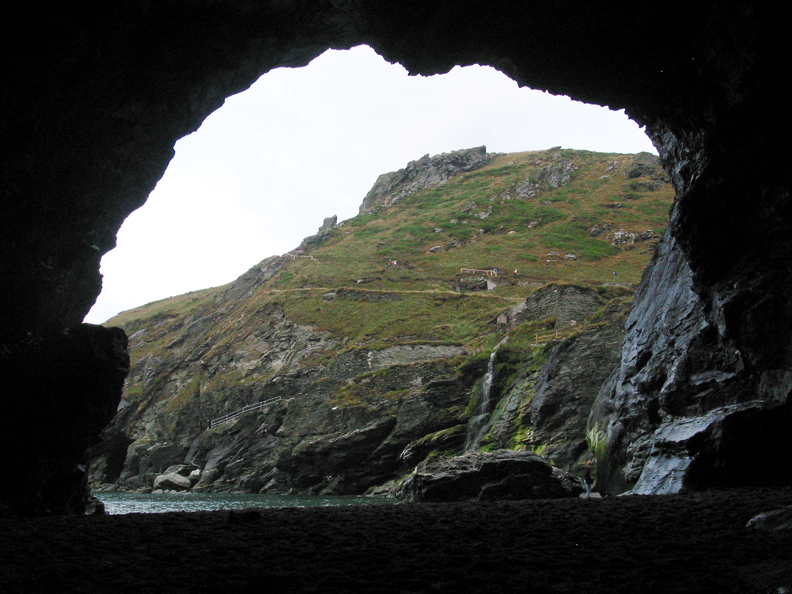
Na praia, a caverna sob o castelo de Tintagel por onde Uther se infiltrou para passar a noite com sua amada Igraine.Desse encontro nasceria Arthur.
The cave under Tintagel’s Castle where Uther penetrated the Castle to spend the night with his beloved Igraine. Of this meeting Arthur would be born.

Dentro da caverna, na maré baixa.  / Inside the cave, low tide

Outra ponta da praia / The other end of the beach

Vista do alto da escadaria / Overview from the stairway above

Magic


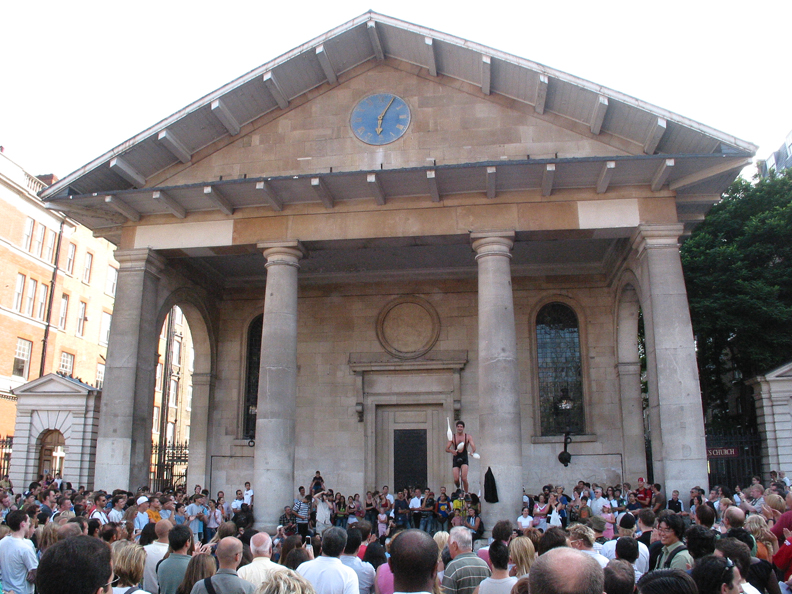
Anoitecer / Dusk in Covent Garden

Antes de prosseguir com a viagem para Tintagel, posto algumas das fotos batidas em Londres.

Before taking the road to Tintagel, let’s post some of the photos taken in London.

Ainda em Covent Garden, homem fazendo truques com cartas e um malabarista / still in Covent Garden, man doing tricks with cards and a juggler

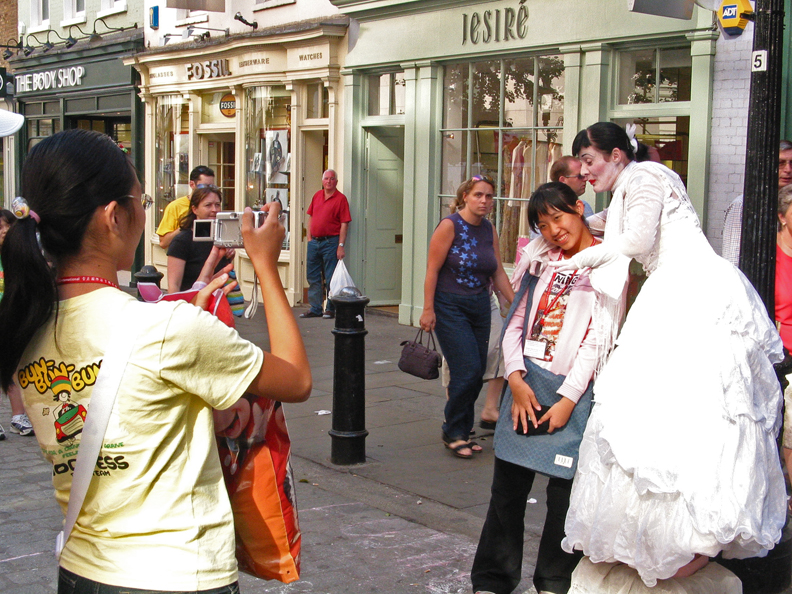
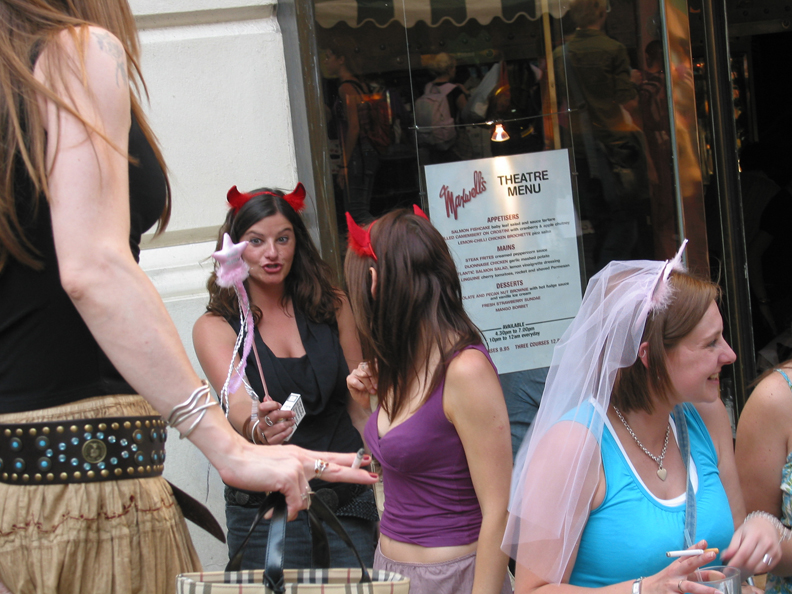
Personagens nas ruas / Interesting characters in the streets

Personagens reais e virtuais / Real and fake characters

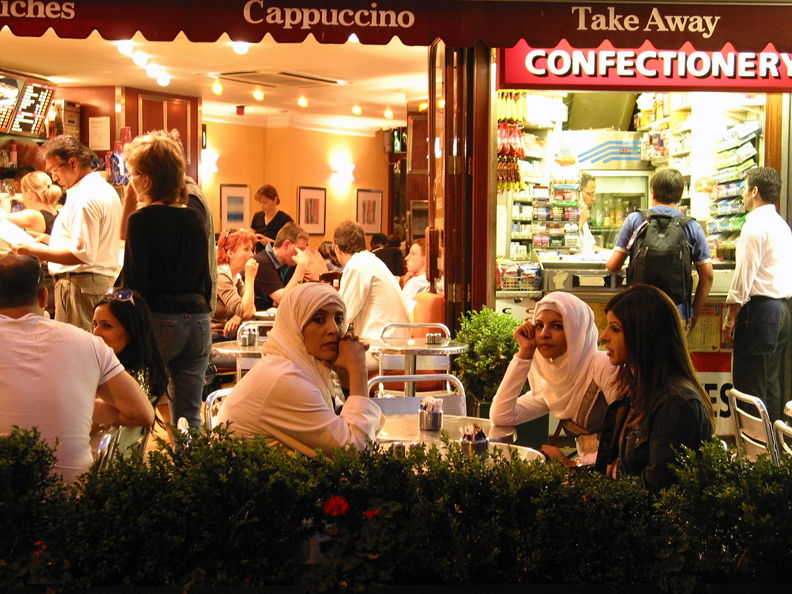
Bares cheios / Crowded pubs

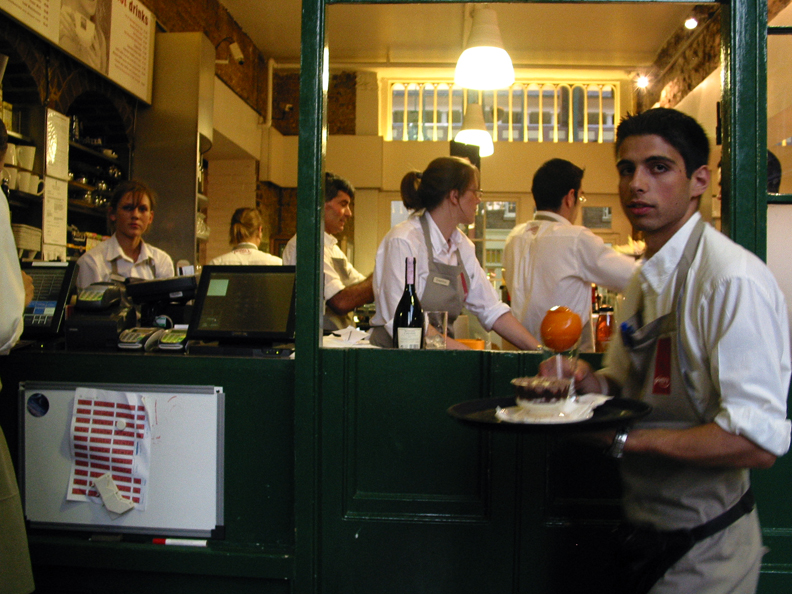
Garçons atarefados / Busy waiters

Millenium Bridge

Tate Modern: O beijo de Rodin e a entrada da mostra Frida Kahlo/
The Kiss by Rodin and overview of the entrance of Frida Kahlo’s retrospective

Varanda da Tate Modern com vista para o Rio Tâmisa/
Overlooking the Thames from Tate Modern upper balcony

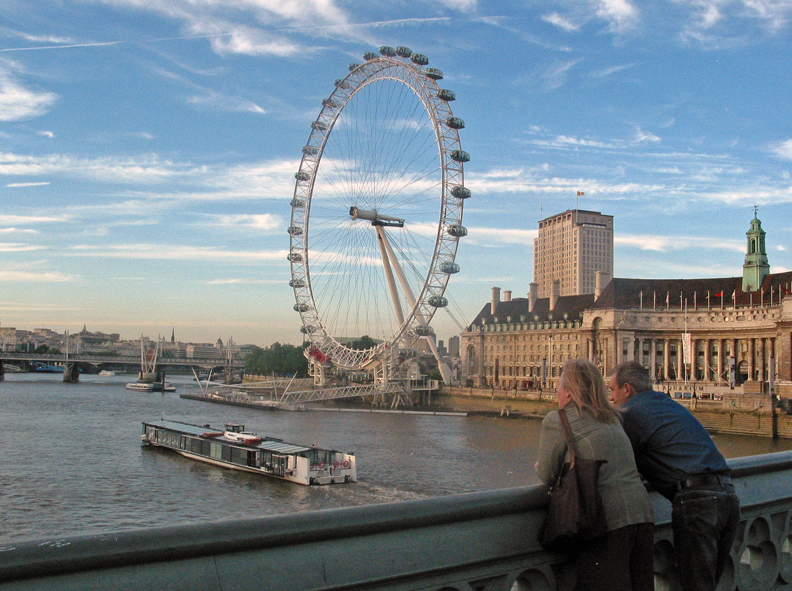
Thames River and London Eye

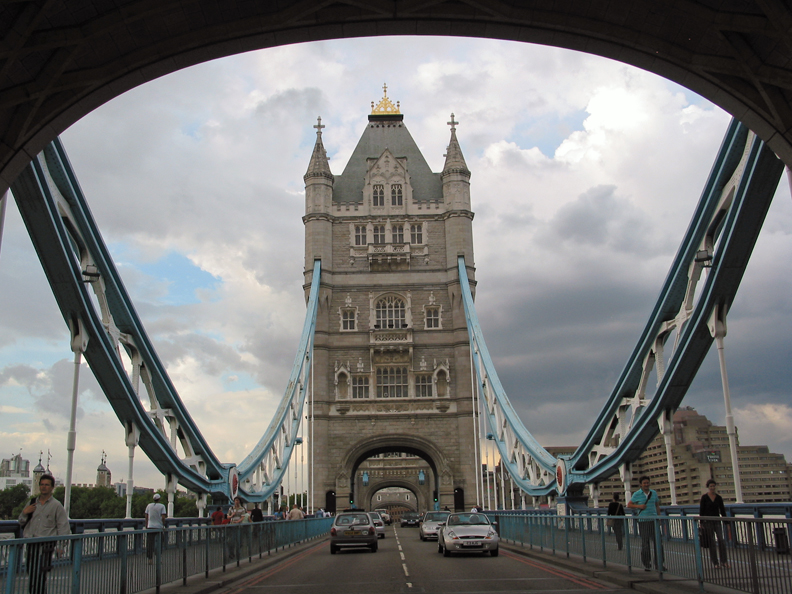
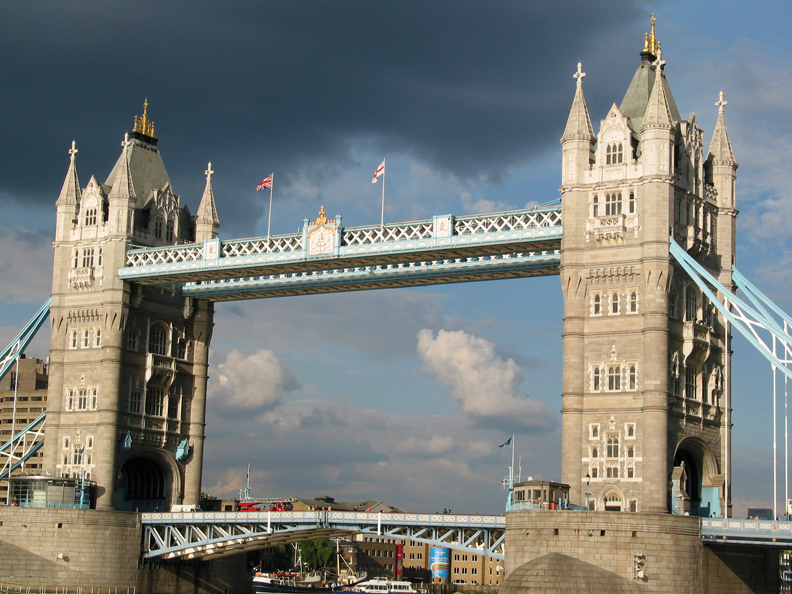
London Bridge

Antes da chuva / Before the rain

Hyde Park

Earlsfield


Na volta de Roslin, saltei em Edimburgo, arrastando a mala com dificuldade por ruas de paralelepípedos, rumo a museus e galerias para passar o tempo antes de pegar o ônibus noturno para Londres. Os museus eram gratuitos em Edimburgo, ocupando antigos castelos, com ênfase na arte contemporânea, o que criava um contraste espetacular entre os ambientes e as peças expostas.

Ruas de paralelepípedos, um caminho tortuoso / Tortuous treets of cobblestone

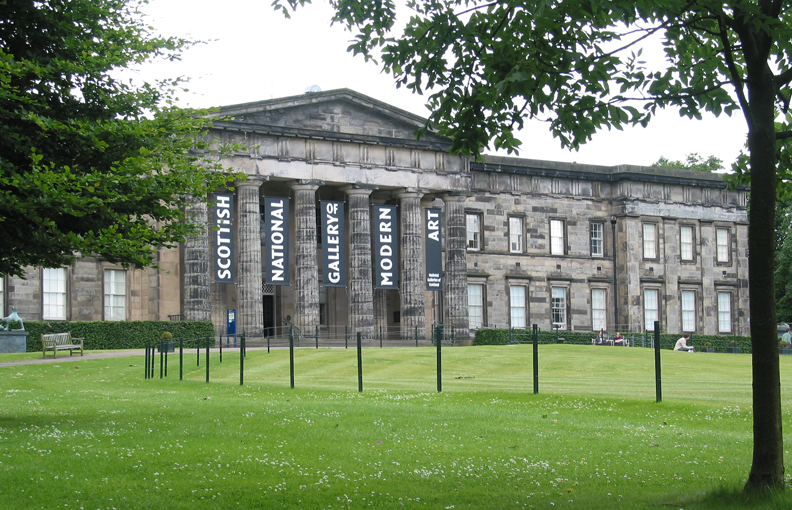
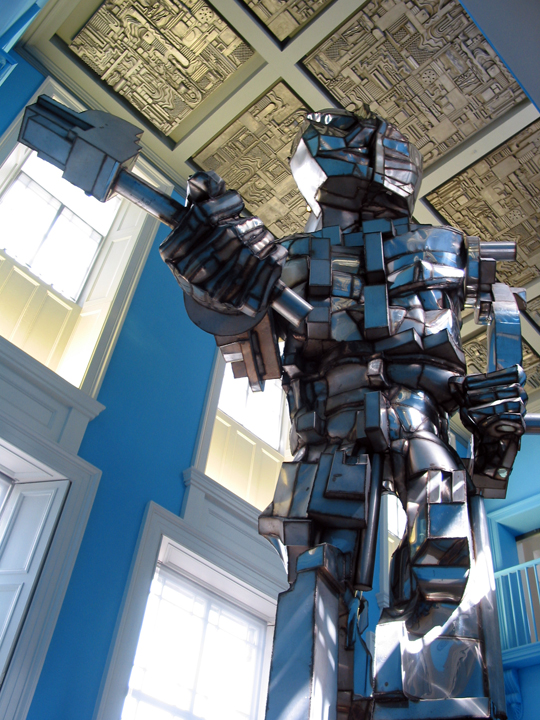
Back from Roslin, struggling to drag my suitcase over the streets of cobblestone, I headed to National Museum to spend the day before taking the night coach to London. Old castles in Edimburgh had become free museums and galleries, and the pieces of contemporary art created a fantastic contrast with the classical interiors.

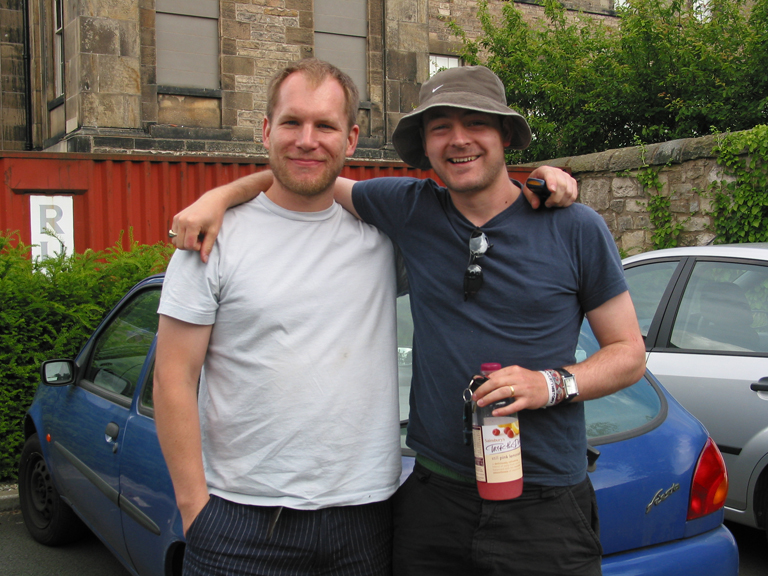
Conheci dois ingleses no museu e me convidaram para lanchar com eles antes de seguirem viagem. Estavam indo para Leeds de carro. Compramos frutas e sanduíches no supermercado fomos comer no gramado do parque.  Aquilo salvou meu dia, nada como uma boa conversa para recuperar o bom humor. Por fim pegaram a estrada e me deixaram na rodoviária. Fiquei ruminando se deveria ter pegado carona com os ingleses, mas eles sequer ofereceram… não restava nada a fazer senão encarar a madrugada no assento desconfortável do ônibus. A temperatura em Londres estava elevada, mais ainda devido ao atentado. Havia carros de polícia por toda a parte. Liguei para minha família, que estava preocupada porque eu não dera sinal de vida enquanto estava na Escócia.

Two English guys made friends with me in the museum. They were from Leeds and were driving back there, but first were going to have a snack and invited me to go along with them. So we bought fruit and sandwiches at the supermarket and sat down to eat in the park lawn. That saved my day; nothing better than a chat to uplift spirits. But eventually they took the road, leaving me in the station. I caught myself wondering why hadn’t I taken a ride with them, but they never offered it… There was nothing left to do but face the uncomfortable coach seat the whole night through.
Temperature was high in London, higher due to the terrorist attack. Police cars were everywhere. I phoned my family, they were very worried because I hadn’t been in touch while in Scotland.

O lago no Museu Nacional da Escócia também é uma instalação. /
Even the pond in Scottish National Museum was an art project

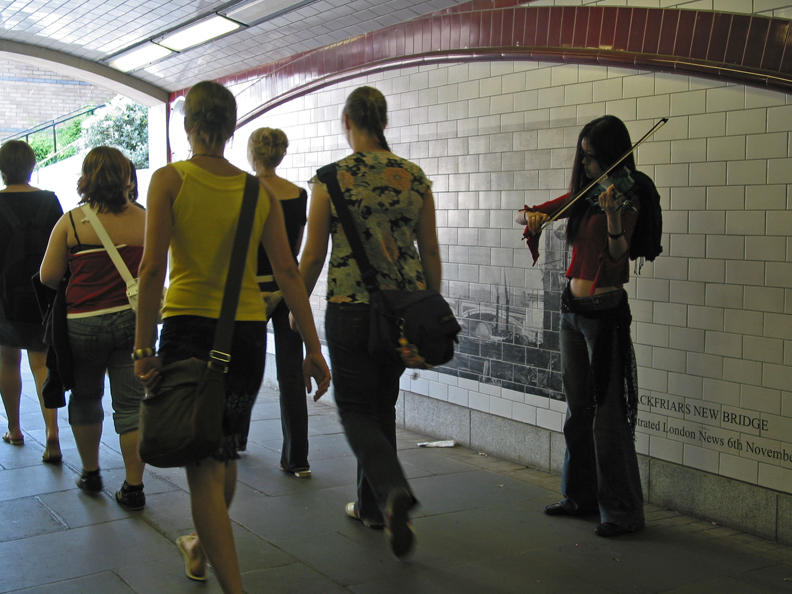
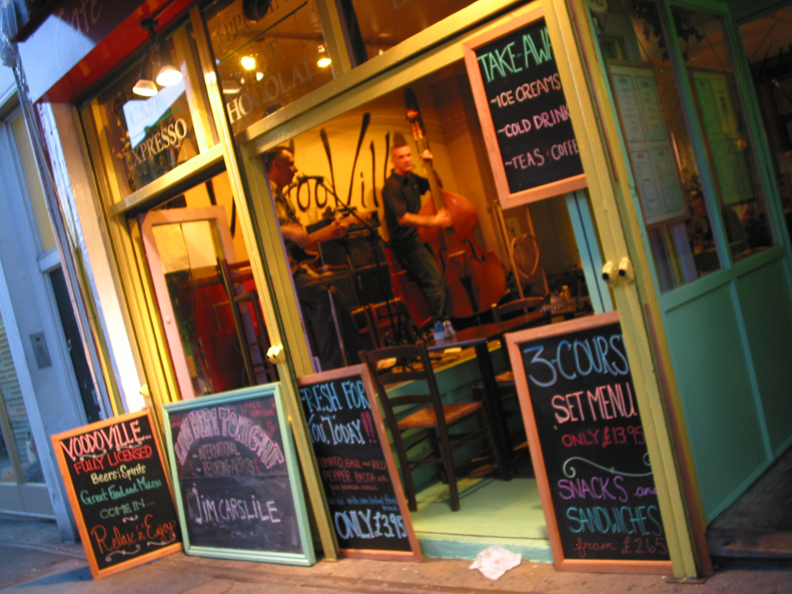
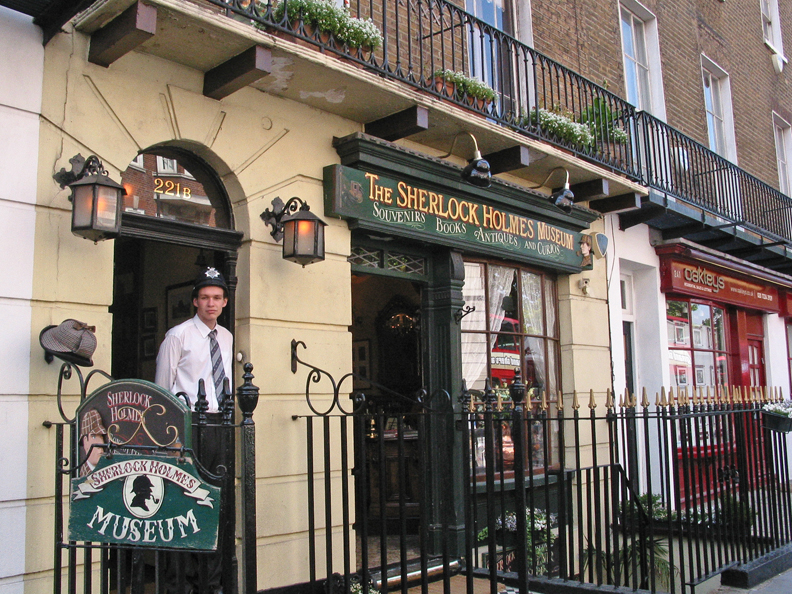
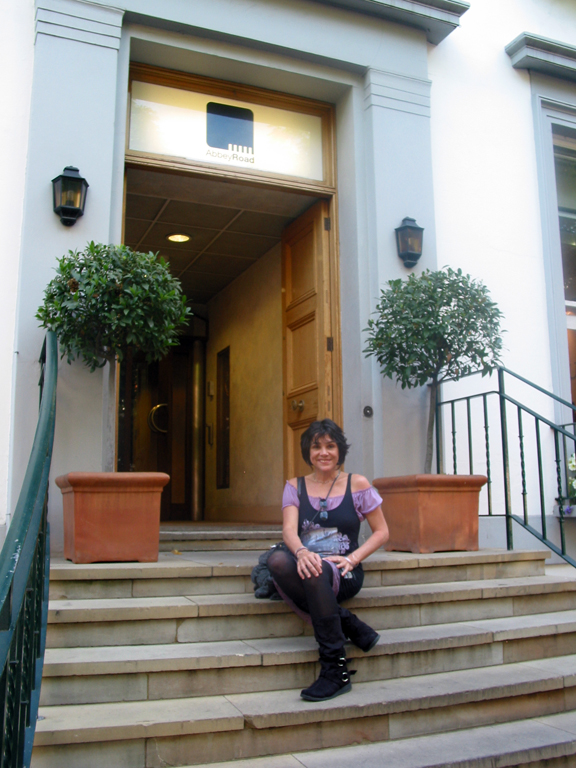
Enquanto planejava a ida para a Cornualha, aproveitei para bater pernas em Londres e visitar mais exposições: o salão de verão, passeios guiados gratuitos da Tate Modern e a retrospectiva de Frida Kahlo. Fui a Abbey Road, à casa de Sherlock Holmes, ao Museu de Cera Madame Tussaud. As ruas estavam repletas de artistas, desenhistas, malabaristas, músicos. Na saída da estação Blackfriars, uma violinista japonesa espalhava sua alma no ar, disfarçada de notas musicais. Eu caçava imagens através de vidraças, debaixo de pontes, em escadarias e praças públicas, na névoa da minha mente.

Amigos ingleses / British friends

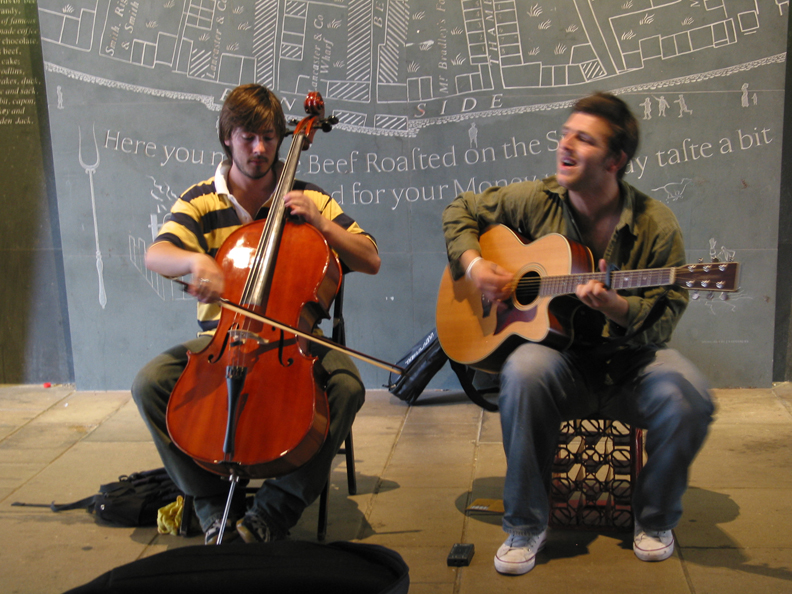
While planning the trip to Cornwall, I took a couple of days strolling in London, and see the Summer Exhibition, Frida Kahlo retrospective, Tate Modern free guided tours. I went to Abbey Road, Sherlock Holmes house, Mme Tussaud’s. Art blossomed in the streets crowded with musicians, painters, jugglers. In Blackfriars Subway a japanese fiddler was spreading her soul in the air disguised of musical notes. And I chased images through windowpanes, under bridges, in parks and stairways, loose in my foggy trip.

Músicos de rua em Londres / London Street Musicians

Ninguém sabia onde ficava Tintagel, terra de Igraine, mas achei o lugar na Internet; tinha até um hotel chamado Camelot Castle, ao lado das ruínas do castelo real onde nasceu Arthur. O site era tosco e o hotel caro, mas pensei em desfrutar de um pouco de conforto. Pagaria com cartão de crédito. Fiz uma reserva para duas noites no quarto mais barato, que não tinha vista para o mar. Pelo telefone, o recepcionista me indicou como chegar: pegar o trem para Penzance, descer em Camelford e lá pegar um taxi para Tintagel. Só o taxi custaria vinte libras. Então comprei a passagem de ônibus, bem mais em conta que o trem, e iria descobrir que de Camelford para Tintagel tinha ônibus de hora em hora aproximadamente. O preço da passagem era 2,25 libras.

Pub in Camden Town

Nobody knew where Tintagel, Igraine’s home, was. But I found it in the web. There was even a hotel named Camelot Castle, right beside the ruins of the real castle, Arthur’s birthplace. The site was rough and the hotel wasn’t cheap, but I thought I deserved a bit of comfort for once. Credicards were accepted, so I called and booked two nights, choosing the cheapest room, not facing the sea. A recepcionist gave me the directions. I should take a train to Penzance and drop off in Camelford. From there it was easy to find a taxi to Tintagel; that would cost about 20 pounds. So I bought a bus ticket to Penzance, much cheaper than the train, and in Camelford I was to find out there was an hourly bus to Tintagel, which costed 2,25 pounds.

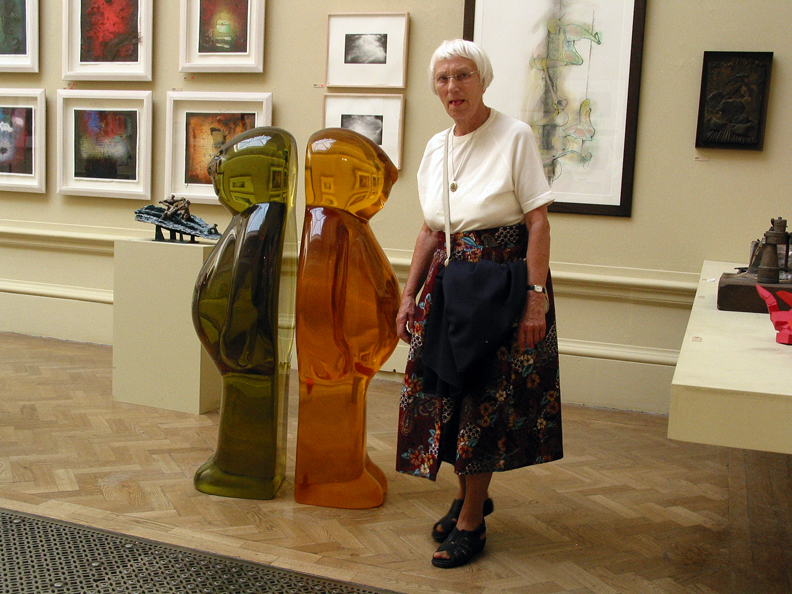
A maior atração do Slão de Verão em 2005 eram os “Jelly Babies” /
Summer Exhibition’s top attractions in 2005 were the Jelly Babies

Adorei estes ursinhos assassinos / Best for me were these murderous teddybears

221 Baker St.

Beatles’ souvenirs

Tate Modern

Londres: arte por toda parte / London: art everywhere

Covent Garden


Fachada, com andaimes e visitantes / Facade with scaffoldings and visitors

Ao deixar as Highlands, senti que parte de mim ficava ali e nada iria me alegrar nunca mais até que eu voltasse para buscar essa parte. Mas as libras estavam contadas, as passagens de volta na mão e dali eu retornaria a Londres. Ficaria uns dias e por fim seguiria para a Cornualha, para o Castelo de Igraine em Tintagel. Assim, chegando a Edimburgo peguei o ônibus para Roslin, tendo o tempo exato para comer um sanduíche na rodoviária. Roslin é a cidade onde fica a Capela Rosslyn, a viagem leva cerca de vinte minutos. Há ponto praticamente em frente à Capela.

Interior, cheio de turistas / Crowd of tourists inside the Chapel

I was so frustrated by leaving the Highlands, as if a bit of me was staying there and nothing would ever restore my joyfullness until I went back to retrieve it. But my pounds were running out, return tickets were paid for, so from there I would be on the road back to London. After a couple of days I’d head to Cornwall, to visit Igraine’s Castle at last. From Edimburgh, after eating a sandwich I took a bus to Roslin ( where the Rosslyn Chapel is); about twenty minutes later I dropped off nearly at the Chapel’s gates.

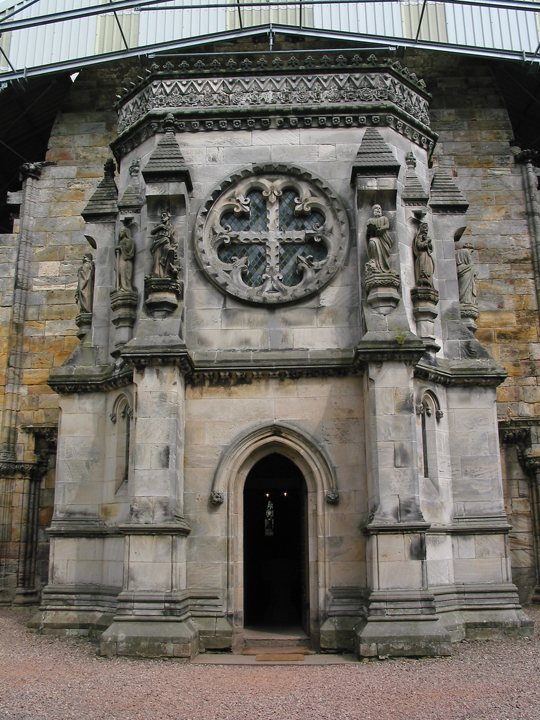
Entrada principal / Main entrance

A Capela Rosslyn data de meados do século XV, foi construída por um nobre chamado William Sinclair, cuja familia descendia de reis normandos. A ela estão associadas inúmeras lendas e histórias envolvendo a Maçonaria e os Templários, pois seus símbolos estão esculpidos por toda a parte.
Como só há registros de Casas Maçônicas a partir do fim do sec. XVI, é provável que tais esculturas tenham sido acrescentadas quando, em 1860,o arquiteto David Bryce, maçom declarado, foi incumbido da restauração de parte da igreja. Entretanto também se encontram imagens pagãs como o Homem Verde (rosto humano envolto em folhagem, símbolo de fertilidade e renovação) do qual existem mais de 100 representações dentro e fora da Capela.

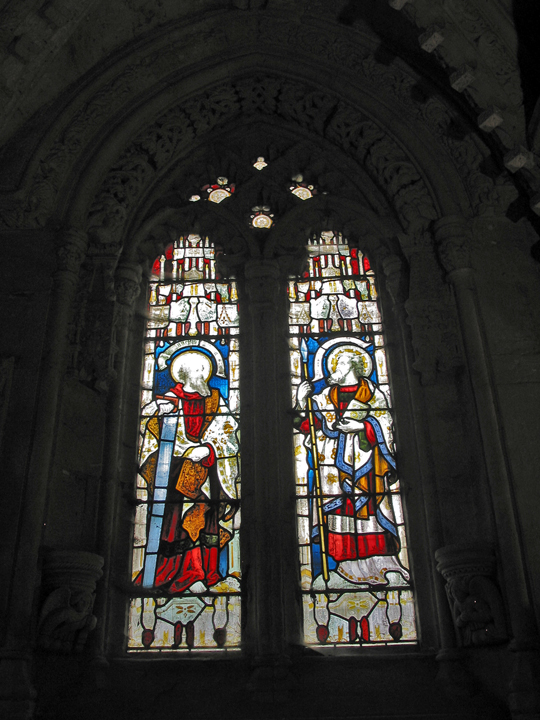
Vitrais / Glassworks

Rosslyn Chapel was built in the 15th century, by William Sinclair, whose noble family descended from Norman kings. There’s a bunch of tales and legends linking Rosslyn to Freemasonry and the Templars, because the carvings in the chapel reflect their imagery. But the earliest records of Freemasonic lodges date back only to the late 16th. The more likely explanation is that this sculptures were added later, in the 1860s when architect David Bryce, a known freemason, was charged with the restoration work on areas of the church including many of the carvings. But there’s also about a hundred carvings of Green Men (human face surrounded by greenery) in and around the Chapel, a pagan symbol of fertility and renewal.

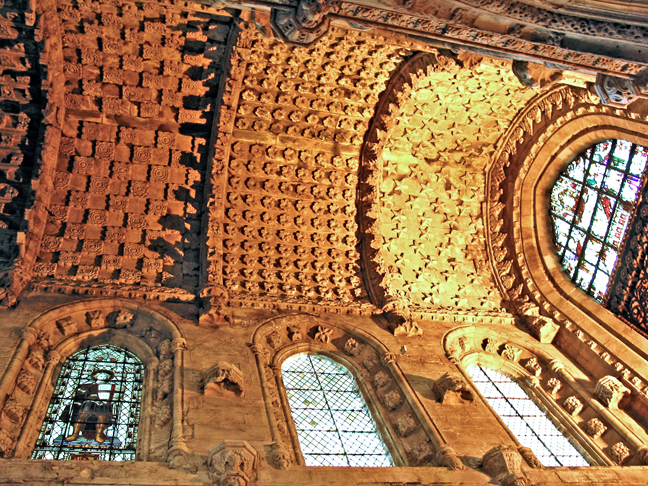
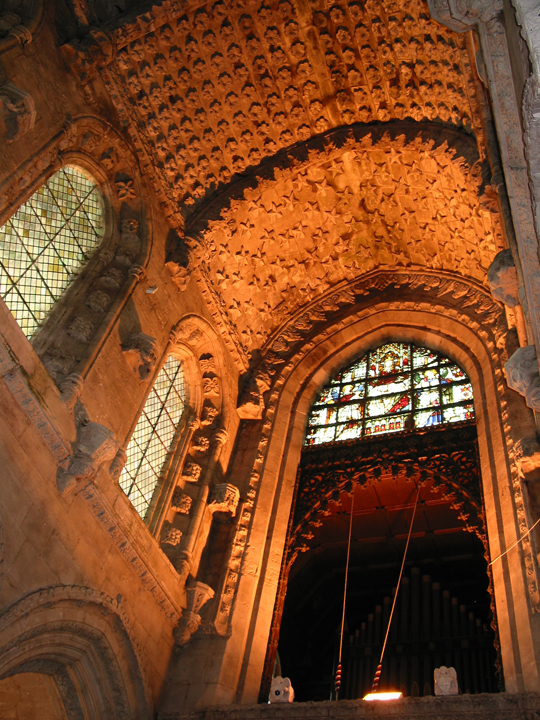
Intrincadas esculturas do teto/ Ceiling knotty carvings

Existe uma cripta descendo um lance de escadas nos fundos da Capela, que durante anos permaneceu lacrada, e permanecia fechada para visitantes. Há quem diga que esta cripta é apenas a entrada para um subterrâneo maior, onde estariam escondidos tesouros como o santo Graal, o ouro dos Templários, as jóias originais da coroa da Escócia e mesmo a cabeça mumificada de Jesus Cristo. O que se tem certeza é que ali estão enterradas gerações de Sinclairs.

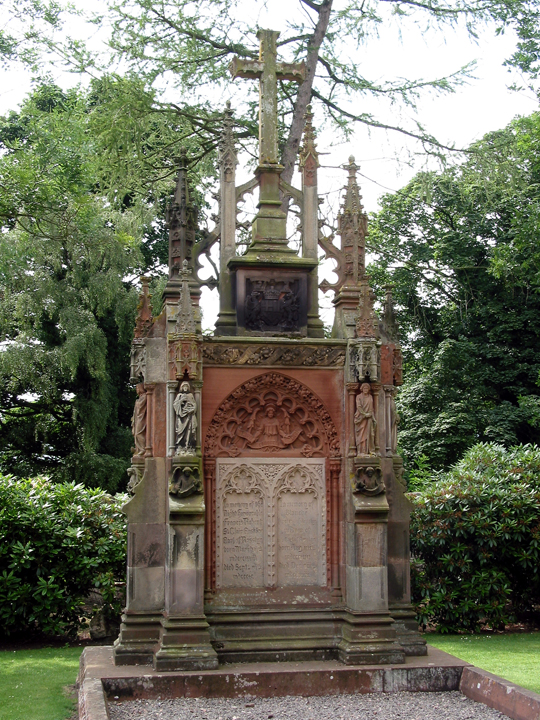
Memorial Sinclair no jardim / Sinclair memorial in the Chapel’s gardens

There’s a crypt accessible from a descending stair at the rear of the chapel that has for many years been sealed shut, and was still closed for visitors then. Some believe it’s the entrance to a more extensive subterranean vault where treasures are hidden, such as the Holy Grail, the original crown jewels of Scotland, Templar’s gold and even the mummified head of Jesus. What we know for sure is that the crypt was a burial place for several generations of the Sinclairs.

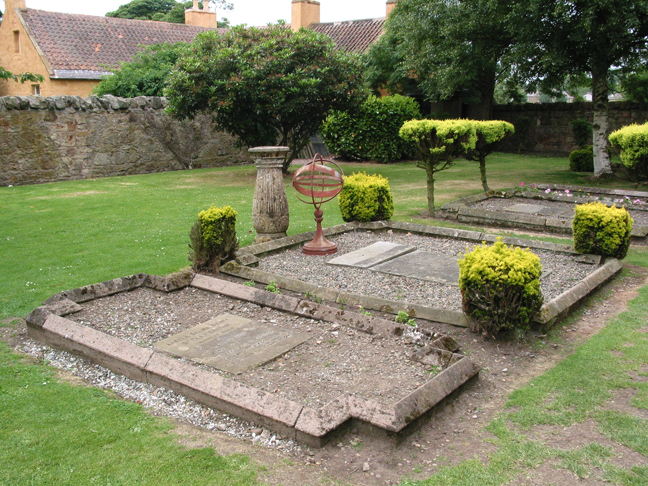
Túmulos de Sinclairs no jardim / Sinclairs’ graves in the backyard

Estas (abaixo) são as colunas do Mestre, do Viajante e, a mais famosa, do Aprendiz, em espiral. Copiei a lenda da Wikipedia: “O mestre pedreiro não acreditava que o aprendiz pudesse fazer a complicada escultura da coluna sem ver a original que inspirara aquele desenho. Ele mesmo viajou para  ver a original, mas quando retornou, o aprendiz já tinha terminado a coluna. Num surto de raiva e inveja, o mestre matou o aprendiz  com um golpe de marreta. Como castigo, o rosto do mestre foi esculpido bem em frente à coluna para que, pela eternidade, tivesse que olhar para o trabalho de seu aprendiz.”

As três colunas, todas diferentes. The three different pillars

These three pillars are named the Master Pillar, the Journeyman Pillar, and most famously, the spiral Apprentice Pillar. Its legend is, according to Wikipedia: “The master mason did not believe that the apprentice could perform the complicated task of carving the column without seeing the original which inspired the design. He travelled to see the original himself, but upon his return was enraged to find that the upstart apprentice had completed the column anyway. In a fit of jealous anger the mason took up his mallet and struck the apprentice on the head, killing him. As punishment for his crime, the master mason’s face was carved into the opposite corner to forever gaze upon his apprentice’s pillar.”

Scaffoldings everywhere / Andaimes por toda parte

Mas apesar disso tudo não achei a menor graça na Capela. Tinha comprado a passagem com retorno a Edimburgo unicamente para visitá-la, e por causa disso tivera que me separar da melhor amiga que tinha feito na viagem. Afinal de contas, o famoso Código Da Vinci é uma ficção e o lugar estava em obras por causa de infiltrações. Havia um sobreteto como protecão contra a chuva e andaimes enormes por toda parte para estragar as fotos. A escuridão e a quantidade de esculturas recobrindo cada centímetro das paredes e do teto tornaram impossível localizar um Green Man sequer que eu pudesse fotografar com nitidez. Tive de comprar um cartão postal. Para ser sincera, estava com tanta raiva que furtei o postal, aliás três. Ao sair, na loja de souvenirs comprei o booklet da capela, paguei por ele, mas no meio das páginas meti os cartões.

Consegue ver um Homem Verde junto à primeira janela do lado esquerdo?
Can you find a Green Man next to the first window on the left?

In spite of all this, I couldn’t take any delight in the Chapel. I had bought the return ticket to Edinburgh only to visit it; for that I parted with the best friend I had made in the whole journey. And after all, the famous Da Vinci Code is a fiction and the place was under repairs for water infiltration. There was a massive roof cover to keep the rain out and scaffoldings all around to spoil my photos. It was dark inside and in the maze of carvings that covered every inch of the Chapel I couldn’t find one single Green Man suitable for a clear shot. I had to buy a postcard. To be honest I was so angry I stole a postcard, actually three. Before leaving, in the souvenir store, I bought a booklet about the Chapel; I paid for it, but the cards went hidden between the pages.

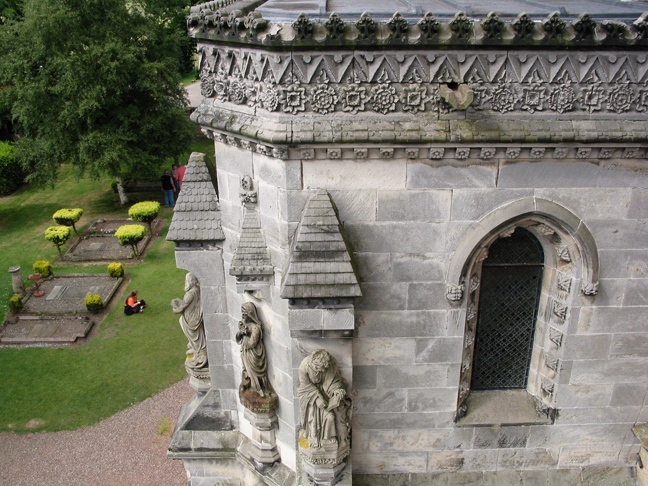
Detalhes externos / External carved details

Atualmente, vindo do centro de Edimburgo, você deve pegar o ônibus número 15 e saltar no ponto “Hotel”, a dois minutos de caminhada da Capela. Abaixo a tabela de horários, mas havendo dúvida consulte o site da empresa de ônibus.

Currently the number 15 bus comes from the centre of Edinburgh to Roslin Village.  If you get off the bus at the ‘Hotel’ stop, then Rosslyn Chapel is a 2 minute walk along Chapel Loan. I copied its schedule, but if you have any doubts try the bus company site:

www.lothianbuses.com 

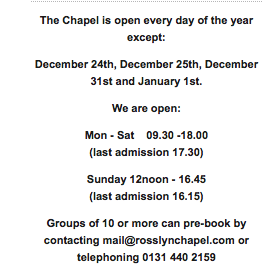
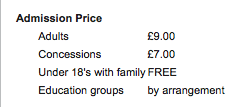
Aqui os preços, horário de visitas e link para o site oficial da Capela Rosslyn.

Here are the fares, opening times and link to Rosslyn Chapel official site:

www.rosslynchapel.org.uk


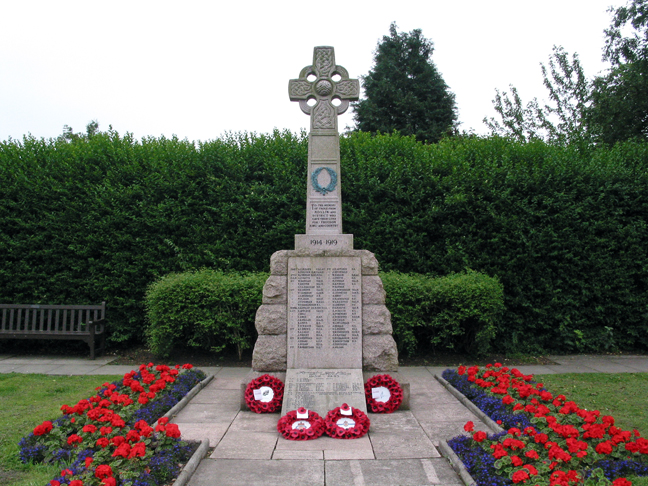
Monumento aos mortos na 1ª Guerra Mundial próximo à Capela
Monument to citizens deceased in First World War close to the Chapel


Inverness Castle

Chegamos em Inverness à noite, mas ainda estava claro e o pessoal do albergue ia a um pub, onde uma banda de rock estaria tocando. A música estava ótima, tomamos cerveja, dançamos e só fomos embora quando o pub fechou. Apenas quando fui me deitar percebi que meus óculos haviam desaparecido. Procurei-os em toda a parte, falei com a faxineira do albergue, voltei ao pub, mas não estavam em lugar nenhum. Teria de prosseguir viagem só com as lentes de contato, que ficaram meio ardidas depois daquele incidente.

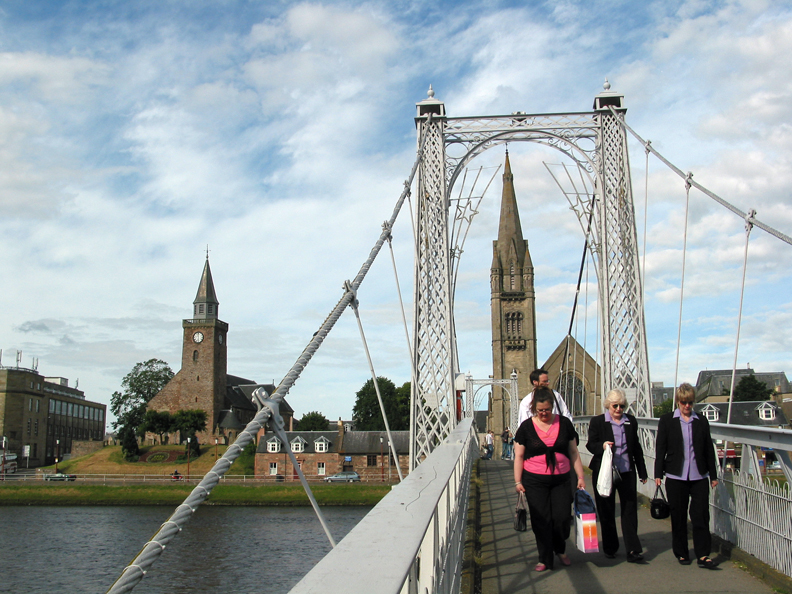
Catedral vista do jardim do Castelo / Cathedral seen from the Castle Gardens.

We arrived back in Inverness at night, but daylight lingered and everybody in the hostel was going to a pub where there was going to be live rock. The band was quite good, we had some beers, danced and only left when the pub was about to close. Only when I was going to bed I realized my glasses were missing. I looked for them everywhere, asked the cleaning woman, went back to the pub, but they were nowhere to be found. I’d have to go on only with the contacts, which had turned sour after that incident.

Ponte sobre o rio Ness / Bridge over River Ness

Um casal da Espanha havia chegado ao Bazpackers. A moça usava um vestido estampado por cima da calça jeans, cuja barra estava toda rasgada, pois se arrastava uns dez centímetros no chão, e não trocou de roupa em nenhum momento. Os dois falavam alto, e esparramaram o conteúdo de suas mochilas por todo o chão do quarto, as pessoas tinham de pular por cima das coisas. Achei muita falta de noção e confesso que pisei nas roupas espalhadas.

Victorian Market

A Spanish couple had arrived to Bazpackers. The girl wore a flower printed dress over the jeans, which hem was ragged because it was dragging four inches on the ground. She never changed clothes. They spoke very loud and spread their backpack contents all over the floor, people had to jump over it all. I found that so clueless that I must confess, I stepped on the scattered clothes.

Antiga Igreja, de 1915 / Old High Church

Na noite depois do pub, enquanto tirava a roupa e vestia uma camiseta de dormir , fiquei cantando “About a Girl”, do Nirvana, baixinho, porém um roommate ouviu e me disse no dia seguinte:
– Você estava cantando!
O carinha era um imigrante da República Tcheca, estava procurando trabalho há duas semanas.
– Arrumei um trabalho! – disse-me ele todo sorridente, estendido no beliche de cima.
– Que bom! Vamos comemorar! – eu disse, enquanto procurava desesperadamente meus óculos na bolsa e na mochila. Convidei-o para ir ao pub, mas ele ia começar muito cedo seu primeiro dia de trabalho, em uma obra, e não podia se atrasar.

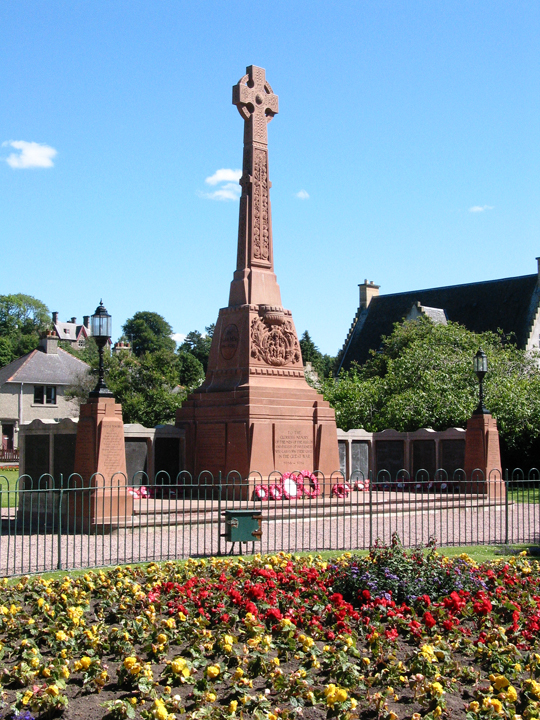
Monumento aos soldados mortos na Primeira Guerra Mundial
Monument to dead soldiers of 1st World War

That night after the pub, while I was changing into sleeping T-shirt, I was singing Nirvana’s About a Girl very low, but one of the roommates heard it, for the next day he told me:
– You were singing!
The guy was a immigrant from Czech Republic who had been looking for a job for about two weeks.
– I’ve got a job! – he said smiling, outstretched in his upper bunk bed.
– Good! Let’s celebrate! – I said, while desperately searching my backpack and bag for the lost  glasses. I invited him to go for a pint, but he declined because next day was his first at work, in a construction site, and he couldn’t be late.

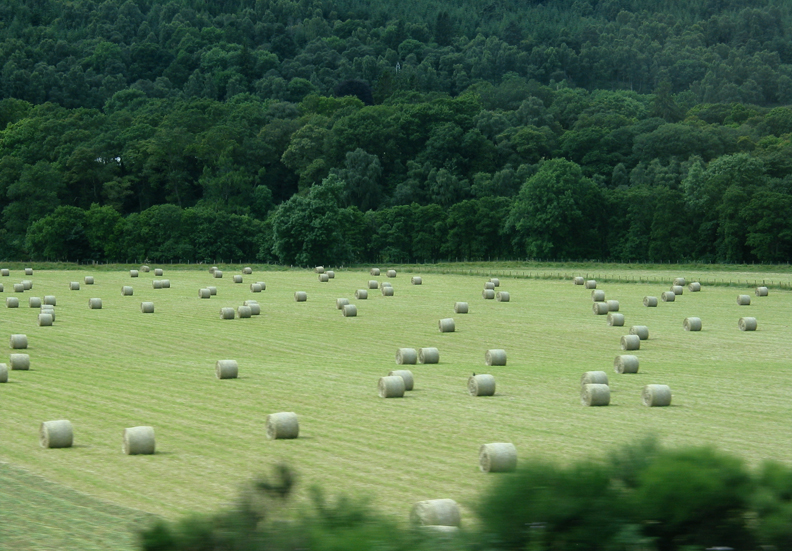
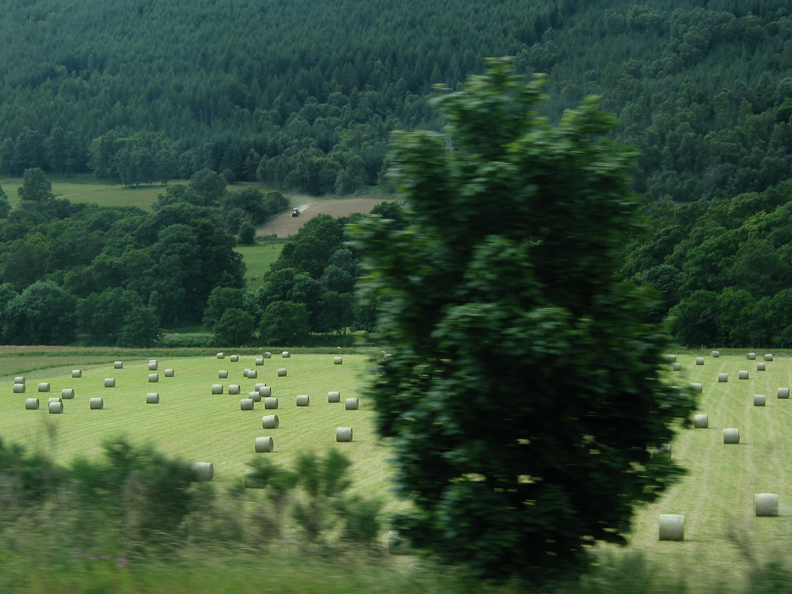
Rolos de feno nos campos / Haystacks in the fields

Fomos juntas à rodoviária, eu e Jules. Ela não tinha decidido aonde ia. Eu, já quase sem dinheiro, tinha volta marcada para Edimburgo; de lá, ia conhecer a Capela Rosslyn e retornar a Londres. Mas estava muito triste, pois seria ótimo seguirmos viagem juntas. No guichê, depois de muito pensar e ver horários, ela decidiu ir a Ullapool, uma praia a noroeste. Tentei trocar minha passagem, mas era um tíquete de ida e volta agendado em Londres, a moça da bilheteria não podia trocar. Sendo assim, ali nos despedimos quando entrei no ônibus e pela segunda vez a dor me mordeu na viagem. Estava só novamente.
Enquanto estávamos em Orkney, houve um atentado terrorista no metrô de Londres. O motorista escocês que me reconduziu a Edimburgo parou no acostamento e pediu que os passageiros fizessem um minuto de oração silenciosa pelas vítimas. Todos atenderam.

Hora de dizer adeus e seguir em frente.
Time to say goodbye and move on.

Jules and me went to the bus station together. She hadn’t made up her mind about her next destiny. I was short of money and had my round trip ticket back to Edinburgh. From there I was going to Rosslyn Chapel and, finally, back to London. But I was very sad because it would be great if we could keep on travelling together. At the ticket office, after hours of asking and thinking, she decided to go to Ullapool, a beach northwest. I even tried to change my ticket but it was a return, bought in London, the clerk couldn’t change it. So we said goodbye as I boarded my bus and, for the second time in the trip, pain bit me hard. I was alone again.
While we were in Orkney Islands, there was a terrorist attack in London subway. The Scot driver who brought me back to Edinburgh suddenly pulled the bus off the highway and asked the passengers to make one minute of silent prayer for the victims. Everybody joined him.


Ring of Brodgar, Orkney Islands, Scotland

As Ilhas Orkney se estendem ainda mais ao norte, porém depois da parada em Skara Brae o ônibus volta a Kirkwall, só então passando pelo Anel de Brodgar, mas para minha surpresa não para lá e sim nas Standing Stones of Stenness, um pouco adiante na estrada. “Por que não paramos em Brodgar?” Reclamei com o guia ao ver o enorme círculo de pedra ficar para trás e o veículo estacionar em Stenness. Falei que eu tinha vindo do Brasil para ver o Anel; ele replicou que Stenness tinha maior valor arqueológico e o horário da excursão não comportava visitar os dois, ou perderíamos o último ferry.

The Orkneys are spread further north, but the coach returns to Kirkwall after Skara Brae, and only then it passes by the Ring of Brodgar, but for my astonishment it didn’t stop there! We halted one mile ahead, in the Standing Stones of Stenness. As the massive circle was left behind, I asked the tour guide why was that. I told him I had come all the way from Brazil to see the Ring. He replied that Stenness was archaeologically more relevant, and the tour schedule didn’t allow to stop in both places, otherwise we’d lose the ferryboat.

The Standing Stones of Stenness.
Of course the coach would park in the perfect spot to spoil my picture.
Claro que o ônibus parou no lugar ideal para estragar minha foto.

Na hora aceitei a explicação e fui fotografar as pedras. O tempo estava fechando, o céu se tingia de grafite, e fiquei tentando me convencer de que daria um ar dramático às fotos. Pela milésima vez na vida quis ter asas, que me erguessem pelo menos uns cinco metros do chão, para sobrevoar o local e conseguir por todas as pedras numa mesma foto.

For the moment I accepted the excuse and went strolling among the stones to take pictures. The sunny weather at Skara Brae was quickly turning into a graphite grey sky, and I tried to believe it would add a dramatic atmosphere to the photos. For the thousandth time in life I wish I had wings that could uplift me a few meters, just enough to overfly the place and get all the stones in one single picture.

Barnhouse Stone

Do círculo de pedras se avista Barnhouse Stone, um monólito solitário, e o mound de Maeshowe, uns setecentos metros adiante. Os monumentos ficam todos alinhados, mas só os vimos de longe. Consegui duas fotos do Anel, que ficaram tortas e tremidas através do vidro sujo do ônibus. Um profundo mau humor tomou conta de mim. Estava  revoltada porque não paramos em Brodgar, mas o pior foi que depois disso a excursão parou numa droga de uma capela italiana construída por prisioneiros da Segunda Guerra e lá ficamos meia hora antes de voltarmos ao ferryboat! Meia hora preciosa que poderíamos ter passado em Brodgar. Saí possessa atrás do guia, que, ao ver a minha expressão assassina, desapareceu entre os turistas.

From the Standing Stones of Stenness you spot Barnhouse Stone, a lonely standing stone, and the Maeshowe Mound ahead. All the monuments stay in a line, but we could only see the latest from the distance. I’ve got two photos of the Ring of Brodgar, crooked and blurred through the dusty coach window. A dark mood took hold of me. I couln’t accept missing the Ring, but the worst was yet to come. The tour made one last stop in a stupid Italian Chapel built by II World War prisioners, and remained there for half an hour, thirteen precious minutes stolen from Brodgar! I went after the guide, in rage. The man noticed my murderous look and disappeared among the tourists, aware that I was going to strangle him.
The Italian Chapel and a monument in front of it. What a waste of time.
A capela Italiana e o monumento em frente. Que perda de tempo.

Voltamos a Burwick, onde o ferryboat nos aguardava para os quarenta e cinco minutos de travessia até John O’Groats. Jules ficara íntima do capitão na viagem de ida, mas o frio na volta a deixou mais quieta. Na verdade, quase congelamos. Eram cinco da tarde, o vento norte não dava trégua.
Eu estava arrasada pois queria tanto percorrer o Anel de Brodgar, e o lugar é tão longe que duvidava muito que conseguisse voltar lá um dia para fazer as fotos que perdera hoje. Minha amiga observou que eu tinha “tanto tesão em fotos”, e que eu não devia me sentir assim, que realmente estava chateada sem motivo. Afinal, quantos brasileiros eu conhecia que já tinham estado em Orkney? Provavelmente só eu mesma. E bati tantas fotos quanto comportou a memória da câmera. O problema é que quero sempre mais.

Back to Burwick, the ferryboat was waiting to take us back to John O’Groats, forty five minutes under the unmerciful North Wind. Jules had made friendship with the captain in the outward journey, but now she was silent, such was the cold at 5 pm. We’d nearly frozen. I was devastated because I had been longing so long for a walk in the Ring of Brodgar and that was denied me. I doubted I could ever go back there for the lost pictures. My friend remarked I had “such a lust in photos” and I shouldn’t feel that bad; for how many Brazilians I knew had ever been to the Orkneys? Probably only me. And I took as many pictures as my memory cards could bear.
The problem is, I do always want more.

Despite the frustration, I’ve been able to smile and say a prayer.
Apesar da frustração, fui capaz de fazer uma oração e dar um sorriso.