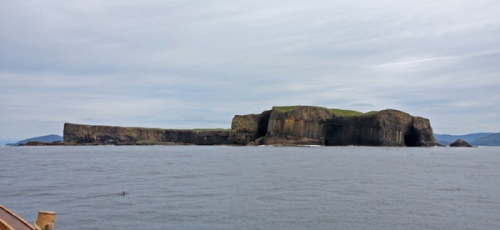
A ilha de Staffa, cerca de 10km a oeste de Mull e 9km a nordeste de Iona / Isle of Staffa, about 6 mi west of Mull, and 9 km northeast of Iona.
No dia seguinte, havia uma excursão de barco para Staffa e meus hospedeiros me inscreveram. Foi alucinante.
Next day there was a boat trip to Staffa and my landlords had me enrolled. It was so exciting!
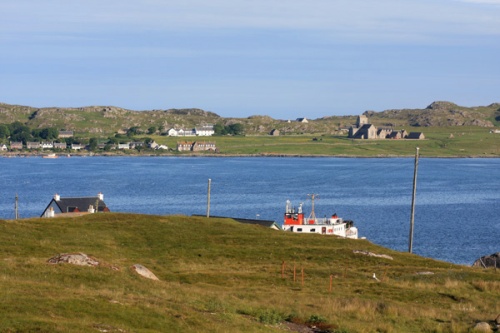
Vista da janela do quarto: A abadia em Iona, a 1 km e o ferry ancorado./ My room’s view: Iona Abbey, half a mile away, and the ferry moored to the harbor
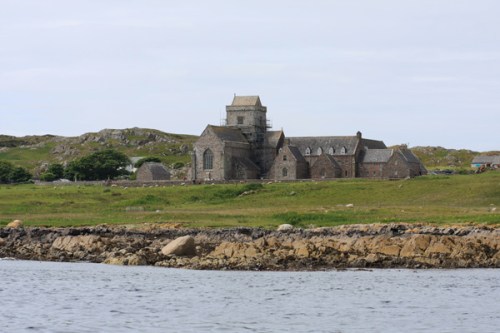
A Abadia de Iona vista do barco / Iona Abbey, view from the boat
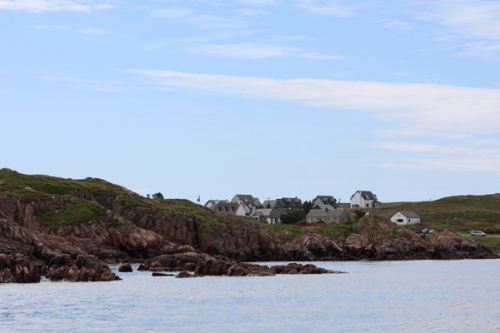
Saindo do porto, Iona ao longe / Leaving the harbor, Iona in the distance
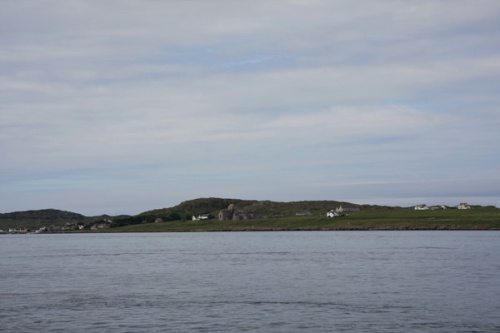
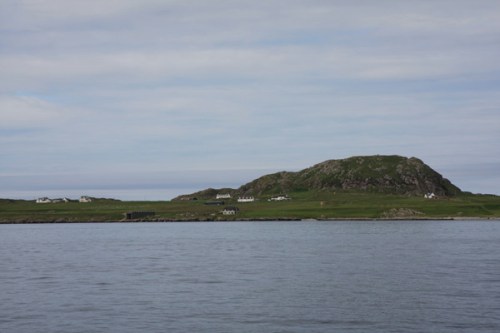
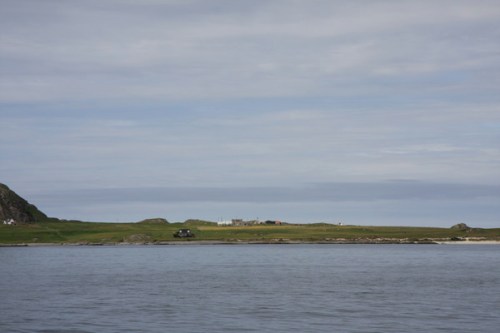
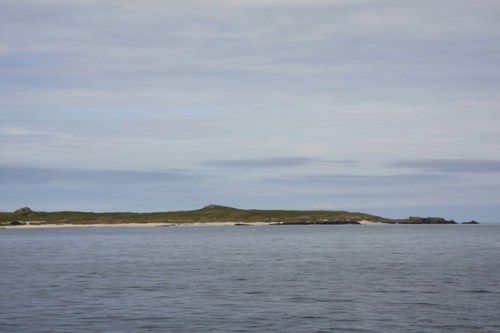
Navegando ao longo de Iona / Sailing alongside Iona’s coast
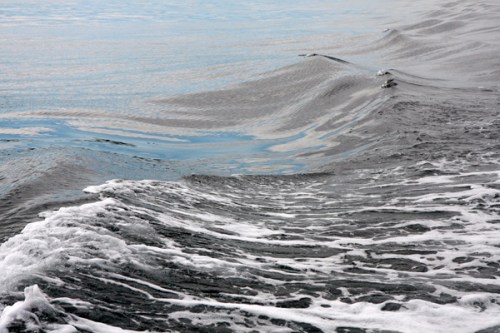
Mar aberto / Open sea
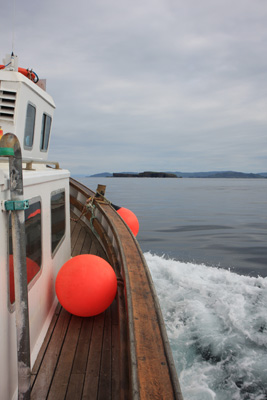
A viagem leva cerca de uma hora. Staffa à vista! / The trip takes about one hour. Staffa on sight!
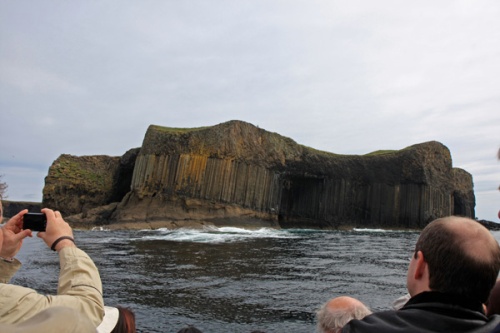
Chegando perto, um tímido sol começa a surgir / Getting closer, a shy sunlight starts to shine
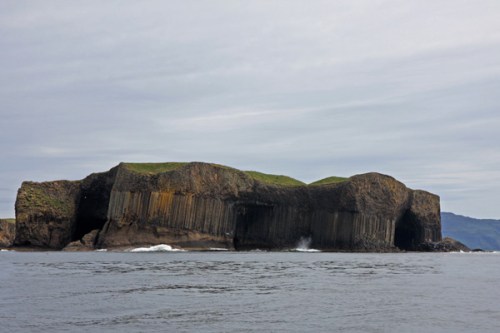
A caverna do gigante Fingal à direita/ Fingal’s Cave to the right.
Staffa é uma ilha de rocha vulcânica que abriga várias cavernas, escavadas pela ação da chuva, das correntes e do mar. Destaca-se Fingal’s Cave – a caverna do gigante Fingal, com cerca de 20m de altura e 75 de extensão. Formada por penhascos de colunas basálticas hexagonais, pareceu-me um vestígio da perdida Atlântida.
Staffa is entirely of volcanic origin, where numerous caves have been carved out by rain, streams and sea. Its most famous feature is Fingal’s Cave, some 20 m high and 75 m long formed in cliffs of hexagonal basalt columns. It looked to me like a shadow from long lost Atlantis.
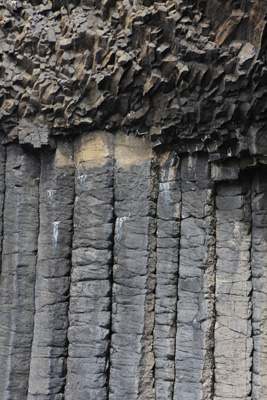
Detalhe da rocha vulcânica / Volcanic rock detail
A caverna de Fingal também ee chamada An Uamh Binn (Caverna da Melodia). Sua estrutura tipo catedral é única, e as colunas hexagonais são semelhantes às da Calçada do Gigante na Irlanda. A caverna foi imortalizada por Mendelssohn na sua Abertura das Hébridas depois de sua visita à ilha em 1829, e por J M W Turner numa famosa pintura.
Fingal’s Cave is also known as An Uamh Binn (Cave of Melody). It has a unique, cathedral-like structure and its hexagonal columns are similar to those of the Giant’s Causeway in Ireland. Fingal’s Cave was immortalised by Mendelssohn in his Hebrides Overture, after he visited the island in 1829, and in a famous painting by the artist J M W Turner.
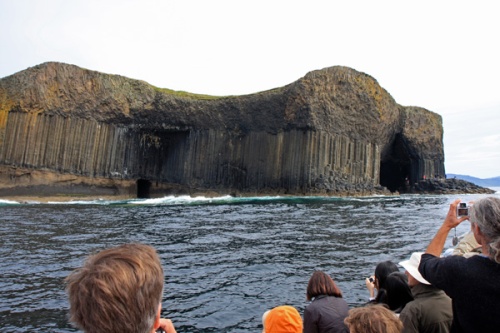
Mais perto, já avistamos gente entrando na caverna. Não fiquei muito feliz. Grupos de turistas sempre estragam as fotos. / Closer, we can see people going in Fingal’s Cave. I wasn’t very happy. Tourist groups always spoil the pictures.
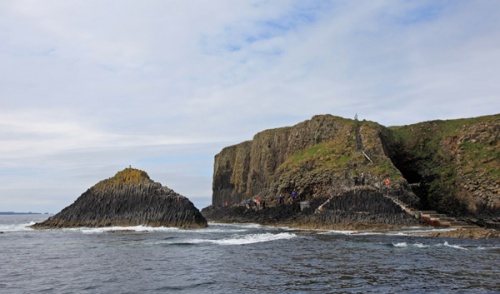
O barco contorna a ilha para ancorar num pequeno cais. Dali o acesso à caverna é feito a pé. Há corrimão em toda a extensão do caminho./ The boat goes around the island to anchor in a small wharf. From there people reach the cave on foot. There’s a handrail all along the way.
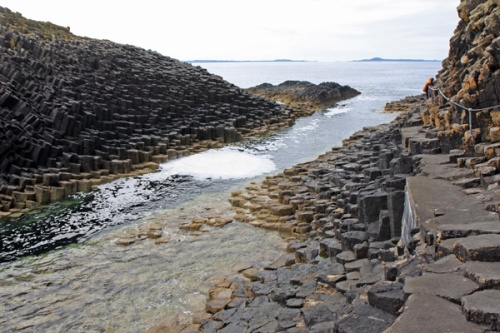
Só na maré baixa se pode alcançar a entrada da caverna./ Only at ebbtide one can reach Fingal’s Cave entrance.
O barco ia cheio, mas cheguei à caverna antes de todos, pois estava sozinha e ia leve, só com o necessário: câmera e uma mochila com dinheiro, casaco, protetor solar, garrafa de água.
There were around 20 people in the group but I managed to reach the cave before them all. I was on my own and carrying only the essencial: camera and a backpack with money, a coat, sunblock and water.
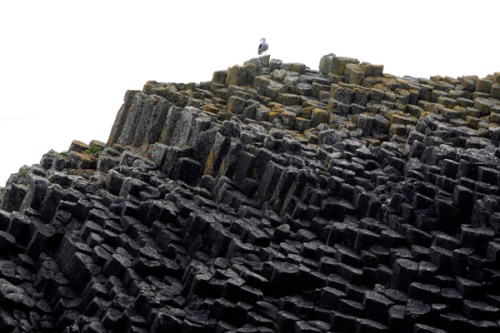
Viajando na paisagem fractal/ Rejoicing in the fractal landscape
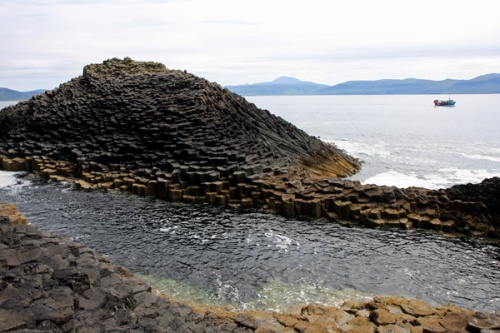
A ilhota piramidal de Am Buachaille ( O Pastor) , uma pilha de colunas basálticas, só pode ser vista na maré baixa./ The pyramidal rock islet of Am Buachaille (‘The Herdsman’), a pile of basalt columns can be seen fully only at low tide.
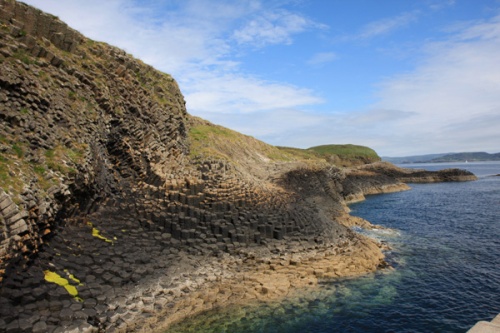
Mais paisagens fractais / More fractal landscapes
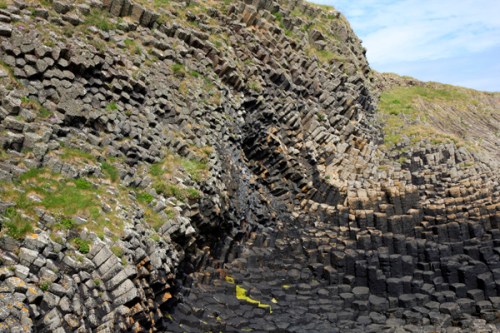
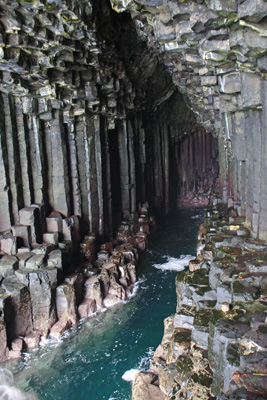
A Caverna de Fingal / Fingal’s Cave
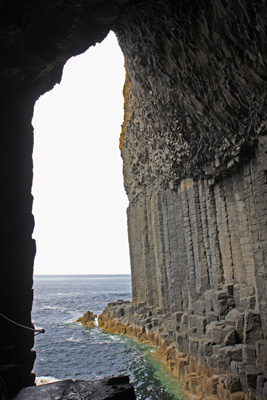
Dentro da caverna / Inside the cave
Aos poucos a multidão foi chegando. Duas japonesas se alternavam no registro uma da outra. Ficaram super felizes porque me ofereci para fazer a foto das duas juntas. Depois, cliquei uma família inteira, sempre me oferecia para fotografar as pessoas com suas próprias câmeras. É uma forma de dar uma força, para que tenham pelo menos uma fotografia de todos juntos, pois na imagem sempre fica faltando quem está pilotando a câmera.
People started to arrive. Two Japanese girls were taking photos of each other and were very happy when I offered to take a picture of them together. Then I depicted a whole family. I always affer to take people’s photo with their cameras. It’s a way of helping, so they can have at least one photo of everybody, because the one behind the camera is always missing.
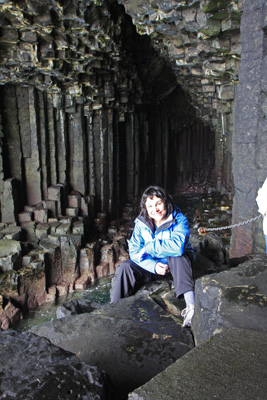
… e alguém sempre retribui batendo minha própria foto. / And someone always takes my photo as well.
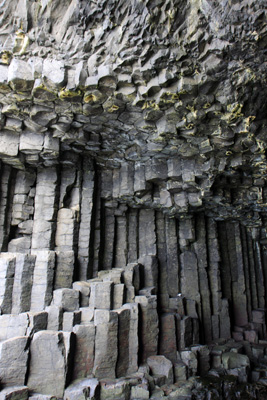
Rock patterns
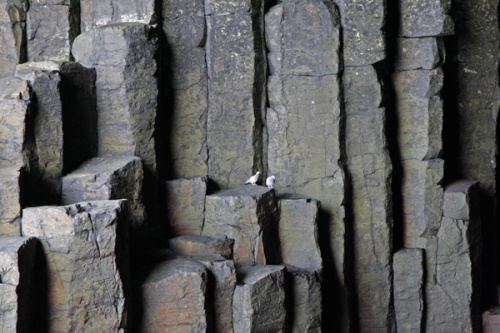
Pássaros dão uma escala de grandeza da paisagem / Birds giving the landscape a scale of magnitude
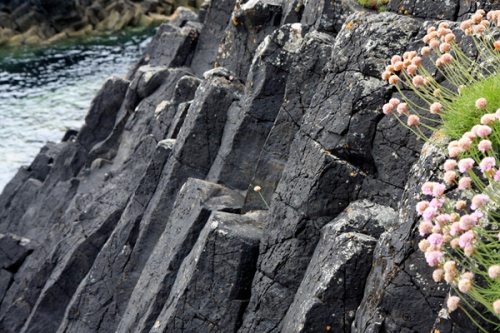
Uma trilha leva ao topo da ilha/ A footpath leads to the top of the isle
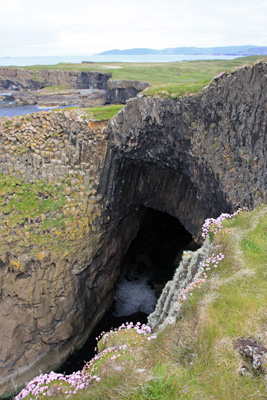
Nenhuma árvore à vista.
/No trees as far as the eye can reach.
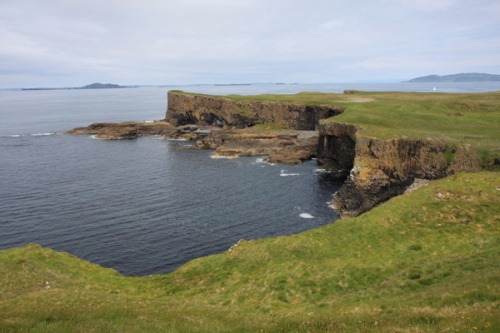
Um planalto gramado recobre aquele palácio de pedra. / A grassy plateau overlays that stone palace.
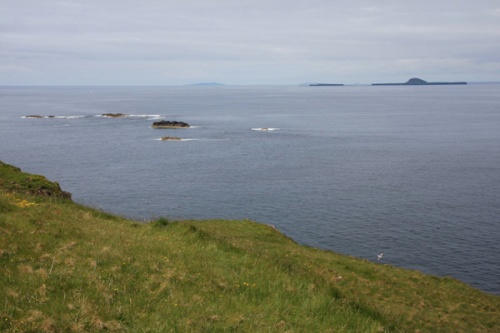
Apenas o mar em toda a volta. Ao longe , no horizonte , Iona parece o chapéu do Pequeno Príncipe./ Only sea all around. Iona in the distance looks like The Little Prince’s hat.
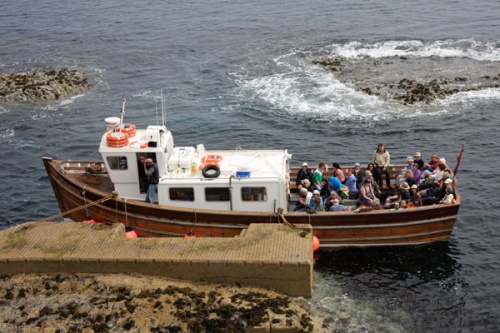
Me distraí e quase perdi o barco. Todos já estavam a bordo me esperando para zarpar.
Wondering absent-minded, I almost lost the boat. Evebody else was already aboard, waiting just for me to depart.
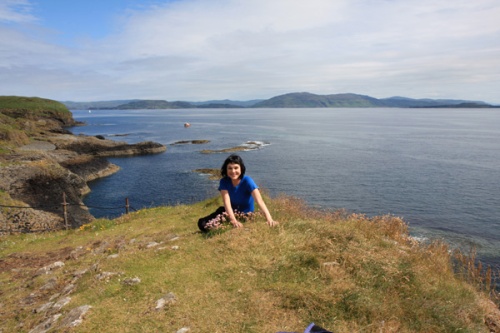
Feeling on top of the world
 Avalon
Deixe um comentário