Feeds:
Posts
Comentários

Archive for novembro \20\America/Sao_Paulo 2012


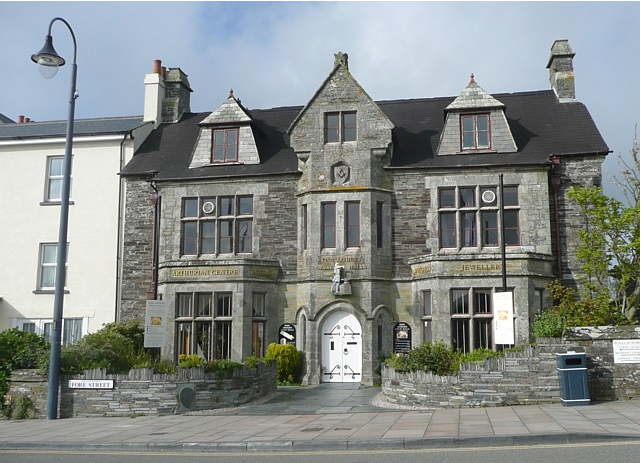
King Arthur’s Great Halls, Tintagel, Cornwall. PL34 0DA
Tel: +44 (0) 1840 770526 – Fax: +44  (0) 1208 851433 (Photo: Humphrey Bolton)

Antes de seguir para Slaughterbridge, tinha entrado no King Arthur’s Great Halls, na rua principal de Tintagel próximo ao antigo Correio. Nesse museu, o visitante é conduzido a um trono no centro da sala, onde se senta para assistir a um vídeo sobre a lenda de Arthur com efeitos especiais do século passado. Há pinturas, inspiradas no tema, de artistas locais. A maior atração são os vitrais, realmente lindos, mas muito altos, tanto que deletei minhas fotos todas porque ficaram ruins. Entretanto achei este site onde você pode apreciá-los e conhecer mais sobre o pitoresco lugar, que atualmente sedia uma Fraternidade inspirada nos ideais dos Cavaleiros da Távola Redonda. Na loja de souvenirs havia muitos livros, inclusive o raro La Morte D’Arthur, de Thomas Mallory, que comprei embora fosse um tijolo para carregar pelo resto da viagem.

KingArthursGreatHalls.htm#KING%20ARTHUR%27S%20GREAT%20HALLS

Before going to Slaughterbridge, I had visited King Arthur’s Great Halls, in the main street, not far from the Old Post Office. In this museum, the visitor sits in a throne to watch a video about Arthur’s legend, with funny two centuries ago “special effects” . There are paintings of local artists on the subject. The hotspot of this place are the glassworks, nice indeed, but too high to be photographed without a ladder. I deleted all my photos because they came out bad. But in this site you can check them, and have more information about the museum, which is also headquarters of a Friendship based upon Knight ideals. In the souvenir shop there were many books, even the rare Thomas Mallory’s Morte D’Arthur, which I bought despite it would be a brick to carry the rest of the trip.

Michelle & Jewels in St. Nectan’s Glen

A questão era, no ônibus de volta, eu estava achando tudo uma merda. Seis libras de prejuízo, entre o ingresso no Arthurian Center e o trajeto do ônibus. O motorista me orientara a reclamar o dinheiro da passagem no terminal do ônibus em Camelford. Iria com certeza, se não implicasse em desembolsar outra passagem até lá e se não chovesse tanto, e eu já não estivesse encharcada. E com muita fome. O ponto final do ônibus em Tintagel era no extremo da avenida oposto ao do hotel Camelot Castle. Então entrei no King Arthur’s Arms para me abrigar da forte chuva e tomar uma pint. Uma banda iria tocar ali, os músicos estavam passando o som. Resolvi ficar para assistir. Depois de um tempo, o pub encheu e acabei conversando com três moças de Bristol. Kerry era uma loura de 1,80m; Jewels era do meu tamanho, muito simpática e estava de rolo com um dos músicos. Michelle era gorducha e casada.. Trabalhavam numa instituição que cuidava de adaptação de imigrantes. Estavam em férias, pernoitando em um trailer num camping perto do Camelot Castle. Conversei horas com essas pessoas. Aquele dia trágico terminou numa noite ótima.

A caminho de St. Nectan’s Glen / On the way to St. Nectan’s Glen

But, on the bus back from Slaughterbridge, I was miserable and everything sucked. Six pounds lost, between the Arthurian Center and the bus ticket! The driver had oriented me to ask a refund in the company office at Camelford. I’d have gone there if that didn’t imply paying another ticket, if it wasn’t raining so much and I wasn’t soaked and starving. The bus terminal in Tintagel was in the main road, in the opposite end of the hotel. And it was still raining hard, so I went into the pub for shelter and a pint. There would be live music and the band was starting the soundcheck. I decided to stay for the show. As time went by, the pub crowded and eventually I made friends with three girls from Bristol. Kerry was blond, almost six feet tall; Jewels was about my size, very friendly and was having kind of an affair with one of the guys in the band. Michelle was plump, she was the only married one. They worked in an institute for immigrants adaptation and were in holidays for a few days, sleeping in a motorhome parked in a camping close to the Camelot Castle. We talked for hours. That tragic day ended up in a cheerful night.
Diversidade de paisagem no caminho/ Variety of landscapes on the way
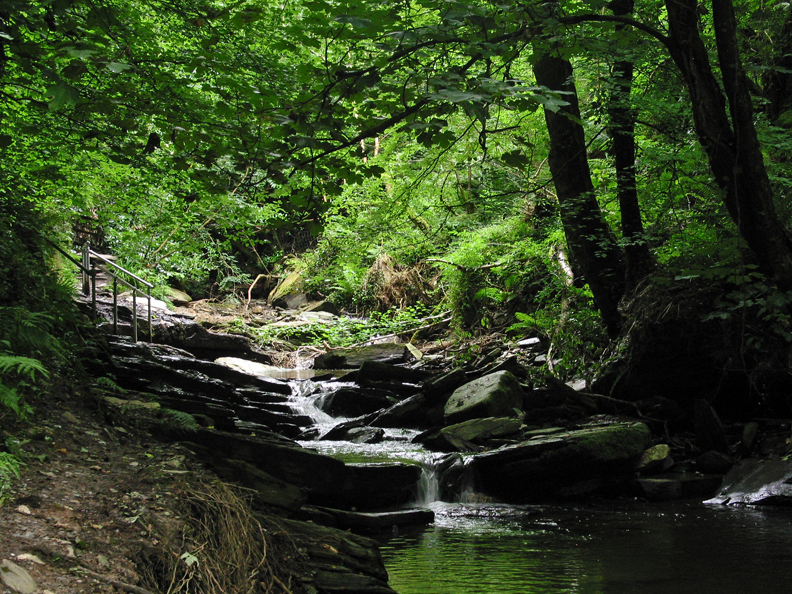
Eu tinha visto num prospecto turístico um lugar chamado St. Nectan’s Glen, uma cachoeira onde eram sagrados os cavaleiros da Távola Redonda. e queria tanto ir lá que contaminei as moças. Combinamos de nos encontrar em frente ao pub no dia seguinte, às onze horas; graças aos deuses elas tinham carro. Era longe, uns 40 minutos de carro, se eu fosse a pé – e achasse o caminho – só chegaria no dia seguinte. Havia um local para estacionar , dali saía uma trilha por entre pastos, casinhas, uma igreja antiga – St. Piran’s Chapel – e mais uma longa caminhada pelo meio da mata, uma hora margeando um rio de águas cristalinas até St. Nectan’s Glen Hermitage, onde supõe-se que tenha habitado este santo do sec.VI. Reza a lenda que ele tocava um sino de prata durante as tempestades para avisar os navios da existencia de perigosas rochas na foz do vale.

St. Piran’s Chapel – interior

I had seen in a touristic folder a place called St. Nectan’s Glen, a waterfall where the Knights of the Round Table men were consecrated. I was so excited about going there that made the girls cheer up and we agreed to meet next day, 11am in front of the pub. Thanks Gods they had a car, for it was a 40 minutes drive. If I was to walk there, and managed to find the way alone, I’d arrive the day after. It was really far until a parking lot from where a foot trail started. About one more hour walking pastures, small houses, an ancient church – St. Piran’s Chapel – and then through the woods, beside a crystal stream – until you reach St. Nectan’s Glen Hermitage. The sixth-century Saint Nectan is believed to have sited this hermitage above the waterfall. According to legend, he rang a silver bell in times of stormy weather to warn shipping of the perils of the rocks at the mouth of the Rocky Valley.
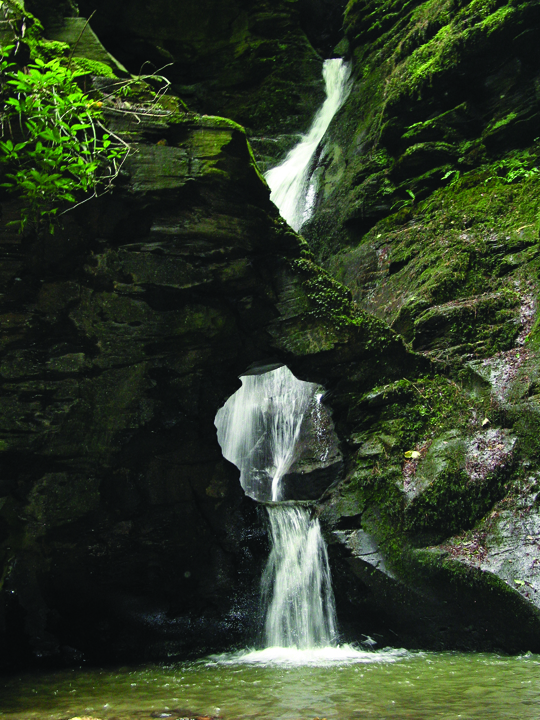
Saint Nectan’s Glen, local da sagração dos Cavaleiros /
where the Knights were knighted

Há um café, uma loja de souvenirs e uma escada de pedra que leva ao rio e ao poço em questão. Paga-se para visitar a cachoeira, onde enfim chegamos, após mais quinze minutos de descida. A água gélida passa por um buraco redondo numa pedra enorme, formando a pequena cachoeira e o poço. A própria eternidade retratada. É claro que eu tinha ido de biquíni por baixo da roupa. Tirei a roupa e entrei na cachoeira. As meninas não acreditaram e morreram de rir quando me viram debaixo d’água gritando  “I am a knight of King Arthur’s Round Table!” Michelle bateu uma foto, ficou meio escura mas serve como prova.

There’s a coffee shop, a souvenir store and a stairway leading to the river. You must pay to go down to the waterfall, where we arrived after walking more fifteen minutes. The freezing water through the centuries dug a hole in a massive stone, shaping the waterfall and the kieve. Eternity translated in a shape. Of course I had my bikini under the clothes, which I took off without thinking twice. The girls laughed a lot when they saw me into the water screaming “I am a knight of King Arthur’s Round Table!”. Michelle took a picture, kind of dark but it’s a proof.
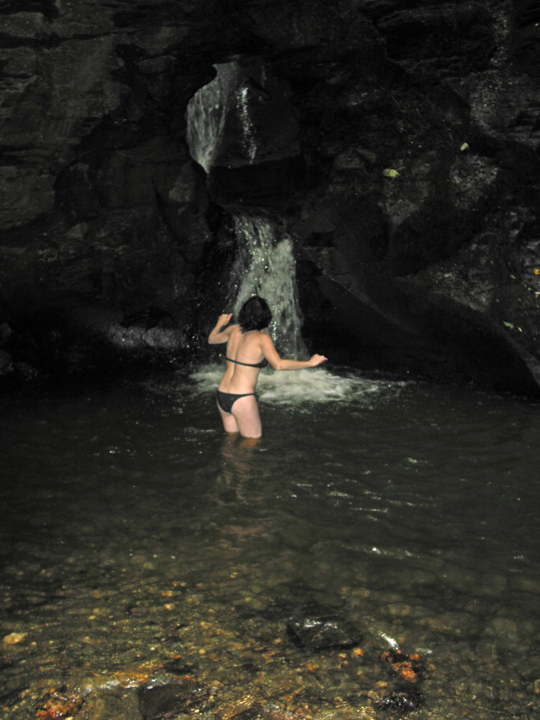
Eu entrei / I went in
Read Full Post »


Arthur’s Stone

O trocador entendeu errado o nome da ponte – achou que eu ia para Wadebridge em Camelford, então me cobrou mais de duas libras pela passagem. Quando surgiu a placa indicando Slaughterbridge, percebi que o lugar era perto demais para aquela tarifa, fui reclamar. O homem disse que entendera errado porém não podia me devolver o dinheiro, porque já tinha destacado o tíquete. Eu teria que ir até o escritório da companhia para pedir reembolso. Fiquei uma arara; reclamei com o motorista, que foi muito grosseiro, o que me deixou chocada, mas era hora de descer do ônibus. Saltei em frente a um pavilhão chamado Arthurian Center. Agora sei que basta entrar numa ruela ao lado da ponte para chegar ao riacho em cujas margens se encontra a pedra de Arthur.

The collector of the bus misunderstood the name of the bridge – thought I was going to Wadebridge, in Camelford – so he charged me more than two pounds. When the sign “Slaughterbridge” appeared by the road I noticed that it was too close for such a fee, and complained about it. The man apologized for the mistake but he couldn’t give me back the money because the ticket had already been detached. I had to go all the way to the office to get a refund. I was pissed off and complained with the driver, who was extremely rude. But it was time to drop off, in front of a pavillion called Arthurian Center. Now I know that to find Arthur’s Stone one should go down a side lane beside the bridge. The stone is by the brook.

Slaughterbridge, da direita e da esquerda / Left and right

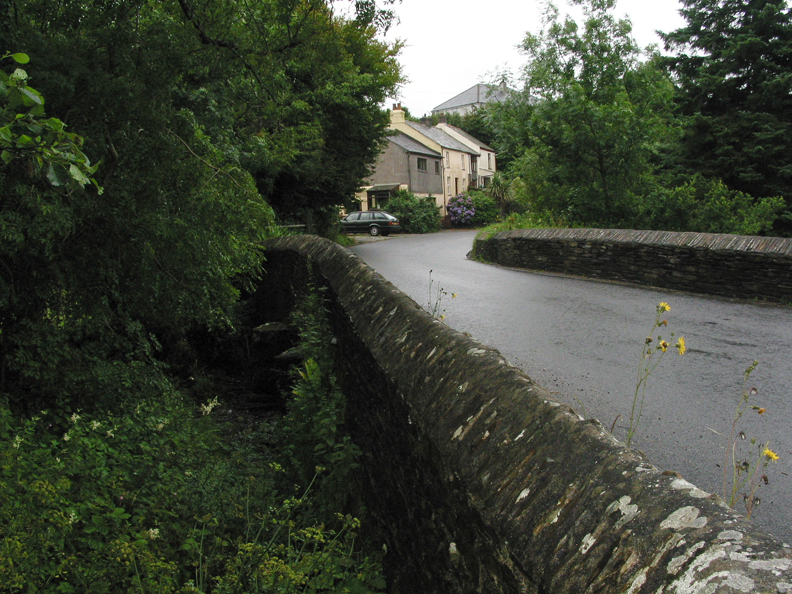
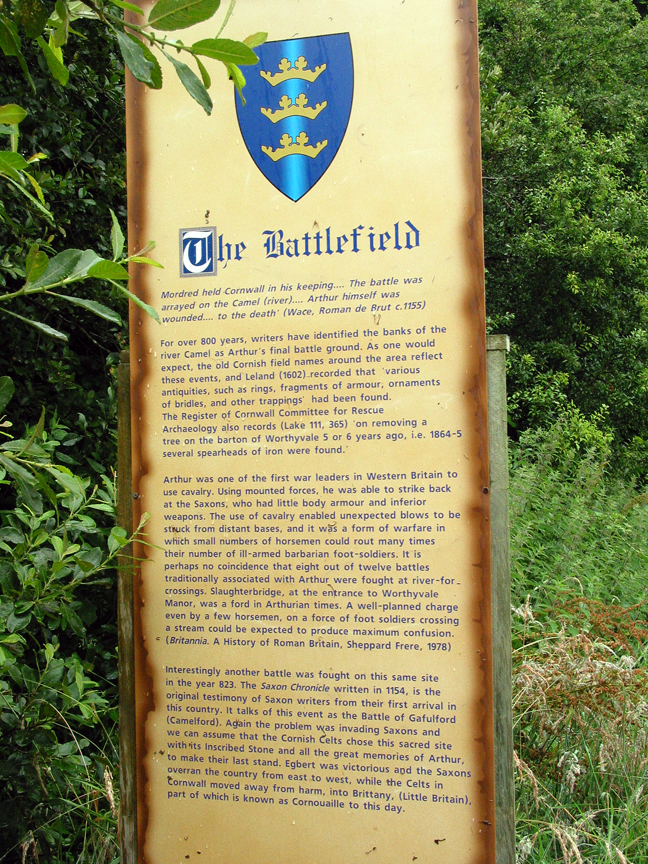
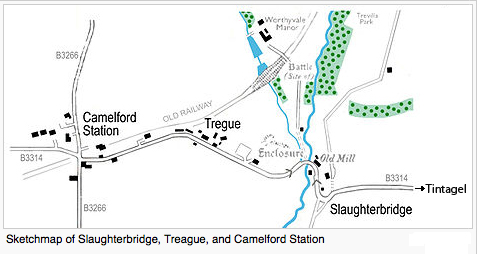
Como o tal Centro tinha uma placa dizendo “Sítio Arqueológico”, resolvi entrar para me informar. A entrada custava 3,50 libras. Havia uma exposição tosca de pinturas, cartazes desenhados à mão e um vídeo bizarro sem qualquer relação com Arthur: um sujeito vestido de preto andando; apareciam seus pés, a paisagem e uma entrevista sem pé nem cabeça com o cidadão. Fiquei assistindo apenas por que começou a chover torrencialmente. Quando a chuva diminuiu, saí em busca da pedra, seguindo a indicação de um funcionário. Havia uma trilha, mas dava mil voltas. Enfim, meia hora depois, encharcada e enlameada, cheguei ao rio e à pedra com inscrições celtas que atestam ali ter caído o rei. Depois é que fui perceber que o caminho terminava na estrada, na altura da ponte! Se tivesse entrado por ali, chegaria diretamente na pedra sem gastar minhas preciosas libras nem tomar aquele banho de chuva. Pelo menos passei pelo suposto campo da última batalha, onde fotografei a placa informativa .

The Arthurian Center had a sign written “Archaeological Site”, so I entered it n search of information. The admittance costed 3,50 pounds. There was a poor exhibition of paintings, handmade posters and a video without any relation to Arthur’s legend. It showed a bizarre interview with a man clad in black, who appeared walking, the camera focusing his feet and sometimes a landscape. I watched for a while because a hard rain had started. When it diminished I went for the stone, according to the clerk’s indications. There was a path, but it coiled a thousand times and it took me half an hour to get to the stream and the stone. I was soaked and muddy from hair to toe when I took the photo of the celtic inscriptions in the stone asserting that it was the place where the King fell down. Only after that I noticed that the way ended by the road. If I had gone that way, I’d have reached the stone without wasting my precious pounds nor rain bathing. At least the path went through the presumed last battle field, where I photographed the informative sign.

“A Cornualha estava em poder de Mordred… A batalha teve suas trincheiras no (rio) Camel… o próprio Arthur foi ferido… mortalmente.” (Wace, Roman de Brut, 1155)

“Por cerca de 800 anos os escritores tem reconhecido as margens do Rio Camel como o local da batalha final de Arthur. Como seria de se esperar, os nomes dos antigos campos no dialeto da Cornualha refletem estes eventos, e Leland (1602) registrou que foram encontrados objetos antigos tais como anéis, fragmentos de armaduras, enfeites de rédeas e outros adereços. O arquivo do Comitê da Cornualha para Resgate Arqueológico também registra (Lake 111, 365) a descoberta de diversas pontas de lança de ferro ao remover-se uma árvore no solar de Worthyvale há 5 ou 6 anos, ou seja, em 1864-5.

Arthur foi um dos primeiros líderes da Bretanha Ocidental a usar cavalaria na guerra. Empregando forças montadas ele foi capaz de contra-atacar os Saxões, que usavam pouca armadura e armas inferiores. O uso da cavalaria permitia ataques surpresa longe da base, sendo uma forma de guerra em que poucos cavaleiros podiam derrotar um número muito maior de soldados bárbaros a pé, precariamente armados. Talvez não seja coincidência que oito entre doze batalhas tradicionalmente associadas a Arthur foram travadas em passagens de rios. Slaughterbridge, na entrada do feudo de Worthyvale, era um vau nos tempos de Arthur. Um ataque bem planejado de soldados montados, ainda que poucos, a uma tropa de infantaria atravessando um córrego causaria certamente grande estrago. (Britannia. A History of Roman Britain, Sheppard Frere, 1978).

Curiosamente, outra batalha foi travada neste mesmo lugar no ano de 823. A Crônica Saxã escrita em 1154 é o testemunho autêntico dos escritores Saxões sobre sua chegada a este país, e menciona tal evento como a Batalha de Gafulford (Camelford). Novamente o problema eram invasores saxões e podemos presumir que os Celtas da Cornualha escolheram este lugar sagrado, com sua pedra inscrita e todas as lembranças de Arthur para seu confronto final. Egbert (líder  saxão) venceu e os Saxões devastaram o país de leste a oeste, enquanto os Celtas da Cornualha fugiram para a Bretagne (Pequena Bretanha, na França), parte da qual até hoje se chama Cornouaille (Cornualha).”

“Mordred held Cornwall in his keeping… The battle was arrayed on the Camel (river)… Arthur himself was wounded… to the death.” (Wace, Roman de Brut, 1155)
For over 800 years, writers have identified the banks of the river Camel as Arthur’s final battle ground. As one would expect, the old Cornish fields names around the area reflect these events, and Leland (1602) recorded that various antiquities, such as rings, fragments of armour, ornaments of bridles, and other trappings had been found. The Register of Cornwall Committee for Rescue Archaeology also records (Lake 111, 365) on removing a tree on the barton of Worthyvale 5 or 6 years ago, ( i.e. 1864-5 ) several spearheads of iron were found.

Arthur was one of the first war leaders in Western Britain to use cavalry. Using mounted forces, he was able to strike back at the Saxons, who had little body armour and inferior weapons. The use of cavalry enabled unexpected blows to be struck from distant bases, and it was a form of warfare in which small numbers of horsemen could rout many times their number of ill-armed barbarian foot-soldiers. It is perhaps no coincidence that eight out of twelve battles traditionally associated with Arthur were fought at fords. Slaughterbridge, at the entrance to Worthyvale Manor, was a ford in Arthurian times. A well-planned charge even by a few horsemen, on a force of foot soldiers crossing a stream could be expected to produce maximum confusion. (Britannia. A History of Roman Britain, Sheppard Frere, 1978).

Interestingly another battle was fought on this same site in the year 823. The Saxon Chronicle written in 1154, is the original testimony of Saxon writers from their first arrival in this country. It talks of this event as the Battle of Gafulford (Camelford). Again the problem was invading Saxons and we can assume that the Cornish Celts chose this sacred site with its inscribed Stone and all the great memories of Arthur, to make their last stand. Egbert was victorious and the Saxons overran the country from east to west,  while the Celts in Cornwall moved away from harm, into Brittany (Little Britain), part of which is known as Cornouaille to this day.”

Read Full Post »


Estou horrível mas infelizmente só tenho esta foto da placa do Castelo.
I’m horrible, unfortunately this is the only photo I’ve got of the Castle sign.

O horário de visita às ruínas do castelo já tinha se encerrado naquele dia, portanto fiquei na pequena praia, cantando em voz alta enquanto ia de um lado para o outro batendo fotos. Devia estar parecendo uma maluca, pois percebi que duas moças estavam me olhando e rindo. Tive que rir também, e começamos a conversar. Eram tia e sobrinha em férias, a caminho de Newquay.

The Castle ruins were already closed for visitors that afternoon, so I strolled the little beach taking pictures, singing aloud. Then I noticed two girls looking and laughing at me, probably thinking me nuts. I had to laugh too, and we started  to talk. They were aunt and niece in holidays, on their way to Newquay.

Novas amigas / New friends

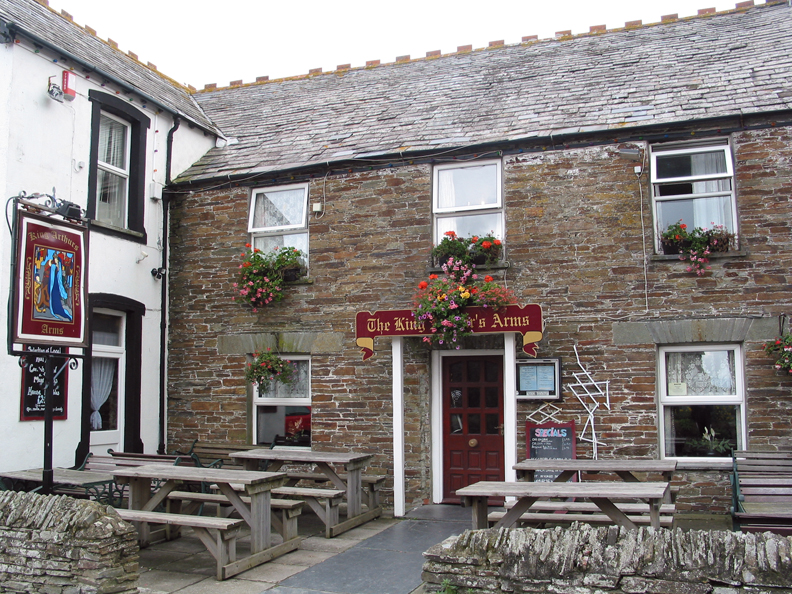
Eram quase sete da noite. Kimberly e Amanda iam jantar e me convidaram a acompanhá-las. Deixei a câmera no hotel e fomos ao King Arthur’s Arms, um pub ao qual eu iria voltar todos os dias. Foi quando fiz uma coisa horrível. Após fazermos os pedidos ao garçom, me levantei e fui ao banheiro. Quando retornei, os pratos já estavam na mesa. Meu salmão com ervilhas, batatas, cenouras e molho de manteiga estava divino. No Brasil, a conta vem no fim da refeição; lá paga-se na hora que se pede. Comemos, conversamos horas e só hora de ir embora, descobri que elas já haviam pagado a conta. Fiquei absolutamente sem graça, pois parecia que tinha feito de propósito.

It was almost 7pm. Kimberly and Amanda wanted to dinner and invited me to join them. I left the camera in my hotel room and we headed to King Arthur’s Arms, a pub where I’d be back each and every day. But then I did something regrettable. After ordering our plates, I went to the lavatory and the meal was already at the table when I got back. My grilled salmon with vegetables and butter sauce was divine, but… in Brazil the bill comes at the end. In England you pay when you order. So I ate, we talked for hours and only when it was time to leave I found out they had paid for my meal. That was so embarrassing, they probably thought I had done it on purpose.

King Arthur’s Arms, Fore Street, Tintagel

www.kingarthursarms.co.uk

Expliquei isso, mas minha tentativa de reembolso não foi aceita e ainda me perguntaram se eu gostaria de seguir com elas para Newquay. Fiquei arrasada, pois minha reserva no hotel era para duas noites e já tinha feito o check-in, assim declinei o convite. Por fim as moças foram embora, deixando o telefone e e-mail; achei que iríamos nos ver em Londres quando eu voltasse. Infelizmente isso não aconteceu. Os telefones não atendiam e o e-mail que enviei acusou erro.

I tried to explain but the girls didn’t accept my refund, and asked me to go with them to Newquay. I was devastated because I’d love to, but I had booked two nights at the Camelot Castle and had already checked in. So we said goodbye and eventually they took the road leaving their phone numbers and e-mail adresses. I thought we might meet in London when I went back, but unfortunately that never happened. Nobody answered the phone calls and the e-mails I’ve sent accused error.

National Trust Old Post Office

De volta ao Camelot Castle, percebi que o banheiro era uma cabine de fibra como as de avião dentro do quarto, com pia, vaso sanitário e box com ducha quentinha. Após o banho dormi profundamente numa cama muito macia. Na manhã seguinte, desci para o enorme salão de café do hotel, junto a uma varanda que dava para o mar. Podia-se escolher café da manhã inglês ou continental. Para provar, pedi o inglês e me arrependi amargamente: veio bacon, linguiça, um purê insosso de feijão, tomates e ovos – tudo frito com gordura escorrendo, um nojo. Feijão no café, que bizarro!Felizmente, havia também uma mesa com iogurtes e diversas caixinhas de cereais. Salvaram minha vida. Além de comer na hora levei para o quarto um pote de iogurte e granola, já pensando no jantar.

Back in Camelot Castle, I noticed that the bathroom was a fiberglass cabinet inside the room, like those of planes but provided with shower besides the sink and toilet. After a hot bath I fell deeply asleep in the soft bed. Next morning, breakfast was served in a massive room next to a balcony overlooking the sea. One could choose between Continental and English breakfast, and I decided to try the latest, which was a bad idea. I was served bacon, sausage, eggs, tomatoes and a tasteless beans purée, everything fried, still dripping oil, disgusting. How bizarre, beans in breakfast! Luckily there was a side table with a variety of yogurt and boxed cereal, which saved my life. I even took some to my room, saving it for dinner.

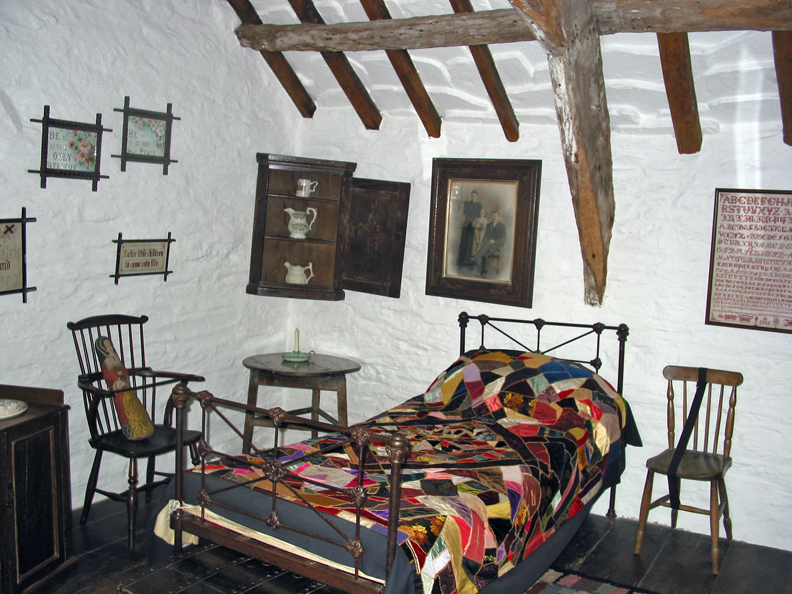
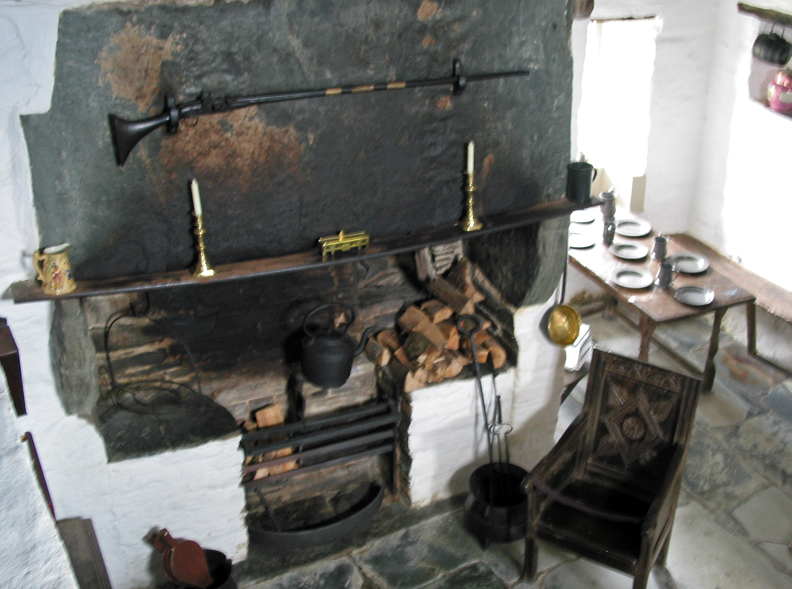
Interior do antigo Correio / Inside the Old Post Office

O dia estava bonito quando saí para conhecer a cidade, mas quinze minutos depois o tempo fechou. Eu estava chegando ao Old Post Office, o antigo correio que mais parecia uma casa de bonecas. No século XVIII, ali morava o funcionário que selava, despachava e recebia cartas. A correspondência era entregue a cavalo naquele tempo.

The weather was good at first, but clouded over as soon as I set foot on the street for a walk around. I was just arriving at the Old Post Office, an XVIII century building with the looks of a doll house. There lived the clerk who sealed and dispatched the mail, which went on horseback by that time.

Natureza morta no antigo correio / Still life in the Old Post Office

Mais uma / Another one


Porta para o jardim nos fundos / Backyard door

Dali fui pegar um ônibus até Slaughterbridge para ver a pedra que marca o lugar onde Arthur foi mortalmente ferido por Mordred.

From there I went to the station, in order to take a bus to Slaughterbridge, where a stone marks the place where Arthur fell deadly wounded by Mordred.

Read Full Post »