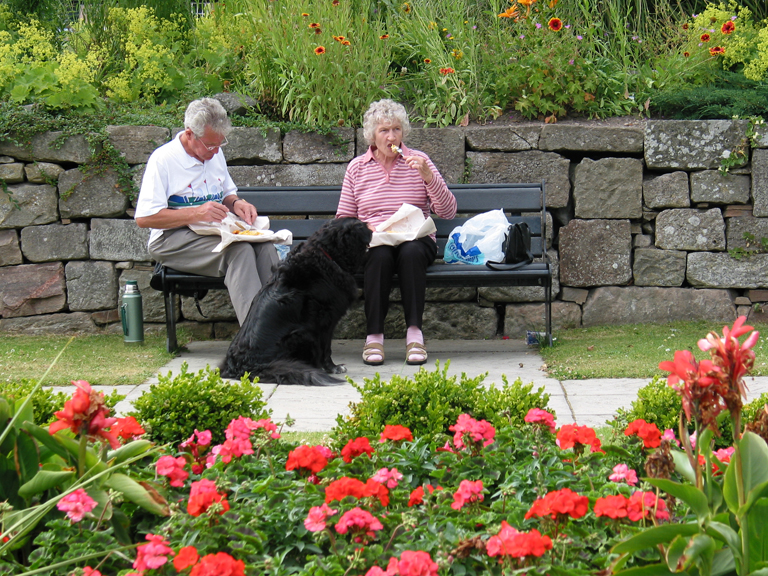
É comum ver pessoas almoçando ao ar livre, como esse casal e seu cão. Britânicos aproveitam cada instante do verão. / Couple with dog having lunch out in the sun. Not an unusual scene, british people enjoy every single summer moment.
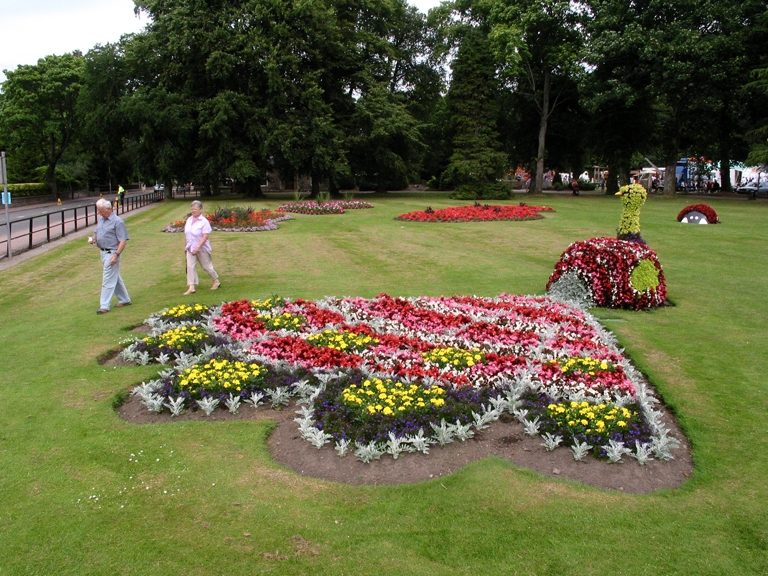
De Inverness a Forres são aproximadamente 50km; cheguei pela manhã, mas o dia estava cinzento, anunciando chuva. Forres é uma cidade bonitinha. Ganhara o prêmio de “jardim mais bonito” do Reino Unido, dizia a placa junto a uma praça onde realmente os jardineiros fizeram um trabalho notável. Usando bases de tela, esculpiram bichos feitos de plantas: joaninhas, pavões, lagartas. As guias de tela ordenaram o crescimento de flores cuidadosamente podadas, todas coloridas. Os britânicos são doidos por jardins, orgulham-se deles e este era realmente espetacular.
The distance from Inverness to Forres is around 31 miles. The day was foggy, forecasting rain when I arrived in that cute city. A sign in a square celebrated the prize Forres had just won as the most beautiful garden in UK. And the gardeners really did a hell of a job. They sculpted ladybugs, peacocks and caterpillars with coloured flowers, carefully trimmed, supported by an underneath grid. British people love gardening and are very proud of their work.
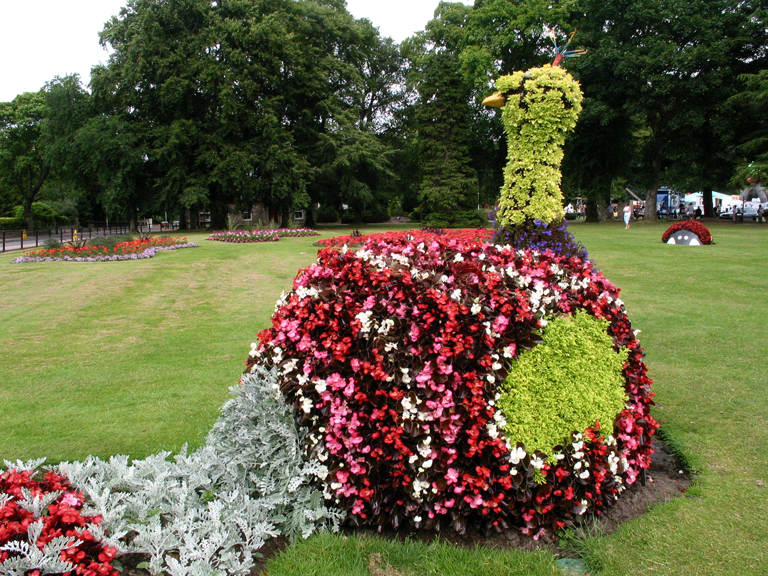
Topiaria: a arte de esculpir com plantas e flores, na qual os britânicos são experts. / Topiary: art of cutting trees and shrubs into ornamental forms, mastered by the British

Segui procurando o ponto de ônibus para Findhorn, mas as pessoas na rua nada sabiam informar. Nem havia muitas pessoas na rua, então saí andando, arrastando minha malinha pela avenida principal. Algumas placas indicavam um monumento próximo, a Sueno’s Stone, uma pedra com inscrições do tempo dos pictos que resolvi conferir. E fui seguindo as setas, mas, em outra praça, no meio do caminho, tinha outra pedra.

Sueno’s Stone, bem protegida em uma vitrine. As inscrições mostram cenas de batalha, possivelmente uma vitória contra invasores nórdicos. / Sueno’s Stone, well protected in a glass window. The carvings show battle scenes, maybe a victory against the Danes or Norse invaders.
I was looking for the Findhorn bus stop, and nobody knew where it was. There was no one out on the streets, so I went on carrying my little suitcase up the main street. Signs pointed out a historical monument straight ahead, Sueno’s Stone, with pict inscriptions, so I decided to check it out and followed the arrows. But in another square, in the middle of the road, there was another stone.
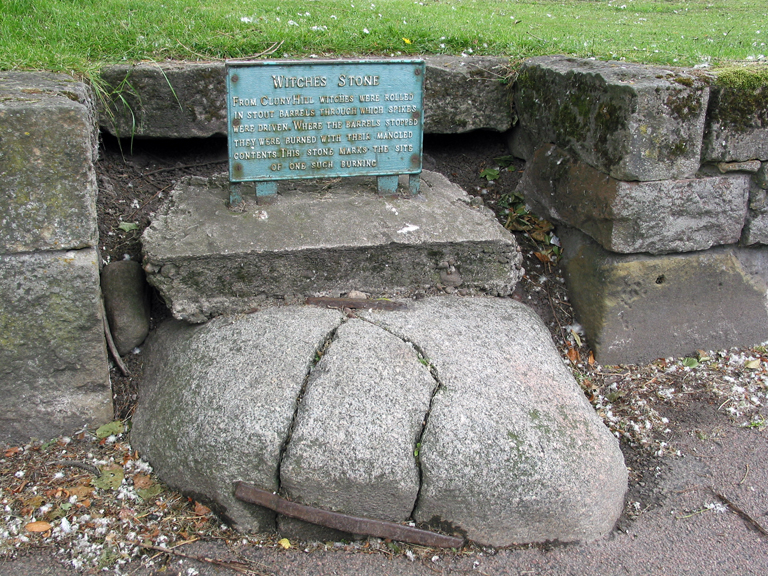
Witches Stone, Forres, Scotland
Witches Stone. A placa informava: no tempo da Inquisição, mulheres suspeitas de bruxaria eram postas dentro de um barril no alto da colina. O barril era espetado com várias lanças e empurrado para descer rolando pela encosta da colina de Cluny. Onde parava, ateavam fogo com o que restara da mulher dentro. Aquela pedra sinalizava o local onde um desses barris fora incendiado. Fiquei chapada. Esqueci Findhorn, o horário do ônibus, esqueci meu nome. Sentei e fiquei olhando aquele testemunho de algo que só tinha lido nos livros. Me vi dentro de um barril, sendo dilacerada e depois queimada viva. Me veio a imagem de um porco no rolete.
Witches Stone. In Inquisition times, women judged guilty of witchcraft were put inside a barrel through which spikes were driven and the barrel was released to roll down Cluny Hill. When it came to a halt, fire was put to it with the woman’s remains still inside. That stone marked the spot where one of these burnings had happened long ago. I was stunned. I forgot all about Findhorn, the bus, I forgot my own name and just sat down there, staring at a material proof of something I had only read about in books. I could feel myself inside a stout barrel, being shredded in pieces and burnt alive. A hog roast came into my mind.
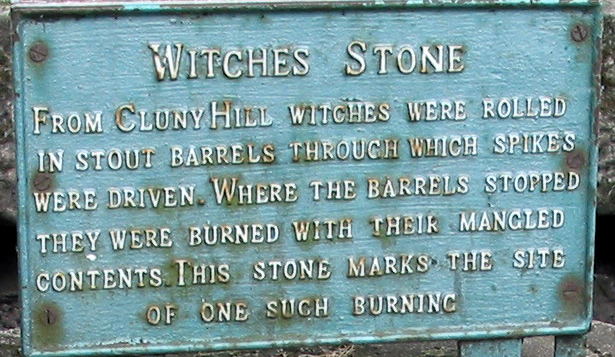
Detalhe. / Detail
E justo nas Terras Altas da Escócia, onde as mulheres reinavam nos antigos clãs! Possuíam seus próprios títulos, propriedades, terras. O livro “A Rosa Branca Rebelde”, de Janet Paisley, do qual transcrevo os seguintes trechos, descreve os costumes célticos dos clãs escoceses, povos que “escolhiam viver livremente juntos, pelo bem geral”. Ninguém passava fome nem ficava sem abrigo ou cuidado em caso de necessidade, pois todos se ajudavam mutuamente. “As mulheres, casadas ou não, deveriam se satisfazer caso quisessem outro homem. Suas ancestrais se divorciavam dos maridos com facilidade, quando eles não conseguiam sustentá-las ou respeitá-las, se roncassem, fofocassem, fossem impotentes ou apenas repugnantes. Uma esposa frustrada poderia ter um amante se seu marido bêbado não a satisfizesse. O noivado servia para que dois amantes vivessem juntos por um ano e decidissem se queriam mesmo casar-se um dia antes de completar esse período. As inglesas não tinham direitos nem poder, tampouco nome. Seu corpo, seus filhos e sua casa eram bens dos homens.” Ao casar-se, todos seus bens passavam a ser do marido e caso se separassem, a infeliz ficava sem nada.
It was a shock to learn that such stuff happened in the Highlands, where women were sovereign in ancient clan times. Scottish women, unlike the English ones, had their own titles, properties and land. I quote from “White Rose Rebel”, written by Janet Paisley, describing the celtic customs of Scottish clans, people “of free choice who lived together for common good”. Nobody would starve or go unattended in case of need, for people would care about each other. “Women, married or not, should satisfy their needs if they desired another man. Her grandmothers were already used to divorce easily if the husband did not sustain or respect the wife; if he snored, gossiped, were impotent or just disgusting. A frustrated wife could have a lover if her husband were a drunker and didn’t satisfy her. Engagement endured one year, so the lovers could live together and decide if they really wanted to get married after that time. English women didn’t have any rights, power or name. Their bodies, their children and their home belonged to the husband. If a couple divorced, all the properties were kept by the man”. There was nothing left for the poor woman.
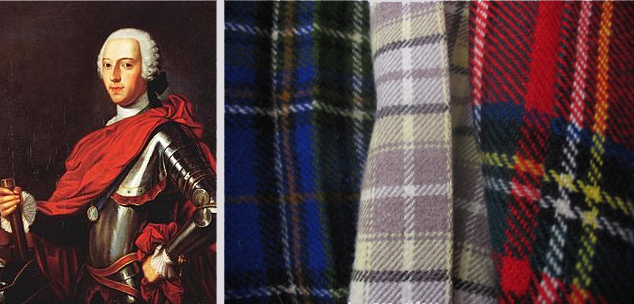
Charles Edward Stuart fugiu após a derrota e passou o resto da vida no exílio.
Os lindos tartans, felizmente, continuam a existir.
Charles Edward Stuart fled after the defeat and spent the rest of his life in exile.
The beautiful tartans survived to the present day.
Em 1745, na Batalha de Culloden, o exército inglês massacrou a insurreição dos clãs das Terras Altas que apoiavam a volta de Charles, herdeiro legítimo dos Stuarts, ao trono do Reino Unido. Além da execução e deportação de milhares de escoceses, o Parlamento britânico baixou um ato de desarmamento, para confiscar todas as armas das Terras Altas (Highlands) e banir o uso de suas tradicionais roupas, gaitas, danças e tartans. Foi abolido o direito hereditário dos chefes de clãs de aplicar a justiça em tribunais regionais. Além disso os professores escolares deviam jurar lealdade à Coroa inglesa e o inglês substituir o gaélico como idioma nacional. Em suma, reduzir a pó toda a cultura de um povo. Chamar mulheres de bruxas e achar que isso justifica queimá-las me parece apenas a sequência do processo.
In 1745, in the Battle of Culloden, the English Army butchered the Highlands’ clans uprising in support of “Bonnie Prince Charlie’s” restoration, as last legitimate heir to the Stuarts, to the British throne. Thousands of Scots were killed and deported. The British Government enacted laws to incorporate Scotland—specifically the Scottish Highlands—within the rest of Britain. The abolition of Heritable Jurisdictions Act ended the hereditary right of landowners to govern and make justice in their estates through barony courts. The Disarming Act confiscated all “warlike weapons” and the Dress Act declared wearing tartans and kilts as illegal. The traditional pipes and dances were banished; teachers were forced to swear loyalty to the English Crown and English replaced Gaelic as official language. In short, a deathly blow to Scottish culture.
Seems to me that naming a woman a witch, and believing this is enough to burn her alive was just a later outgrowth of the process.
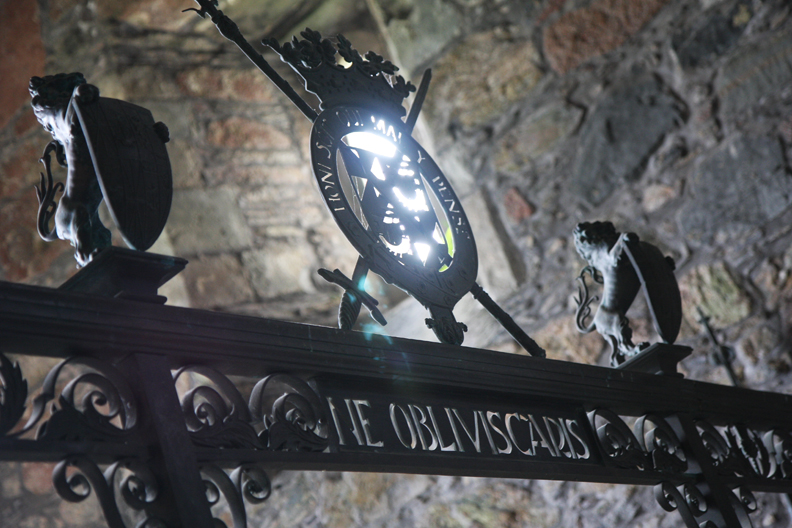
Ne Obliviscaris. Do Not Forget. Não esquece.
Entretanto, voltando ao tempo do Império Romano, poucos séculos antes, temos relatos de brutalidades semelhantes inflingidas às tribos britânicas pelos conquistadores. Na verdade a história se repete, até os dias de hoje, mudando apenas de endereço, remetente e destinatário. Quanta tradição preciosa perdeu-se para sempre! Me dei conta que poderia ter morrido assim em uma vida passada. Plantada em frente à pedra chorei bem uma meia hora por todas as injustiças do mundo dito civilizado.
However, if we go back in time a few centuries, to the Roman Empire, there’s evidence of the same brutality inflicted on the British tribes by the conquerors. Indeed History repeats itself to this very day, the only things that change are the characters involved. How much precious tradition is forever lost! I realized I could have been burnt in a past life, and remained roughly half an hour sitting by the Witches Stone, weeping for all unfairness of the so called civilized world.
 Avalon
Muito maneiro, Stella, vc foi uma privilegiada em poder percorrer estes caminhos…………………
CurtirCurtir
O mais legal é como o caminho físico traz questionamentos e transformação… viagem espiritual também. Obrigada, Rogério! Se vc gostar, divulga por favor. Bjxx
CurtirCurtir