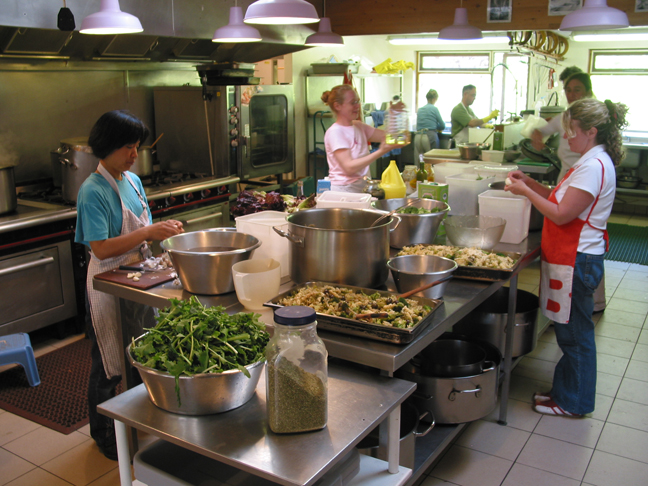
Trabalho comunitário na cozinha / Communitary work in the kitchen
Dia 9 de julho de 2005 trabalhei como voluntária na cozinha da Fundação. Como foi bom descascar ervilhas e cebolas, mexer com facas e panelas. Estava com saudade disso, e o trabalho também me valeu o delicioso almoço. No dia seguinte, eu teria de pagar para almoçar, por isso só entrei no salão de refeições para falar com os brasileiros no fim do horário de refeição. Reparei, no entanto, que não havia mais ninguém pegando os vales de quem entrava. Todos já estavam acabando de comer, sobrara bastante comida nas travessas e eu estava faminta. Fiz um prato, sentei e comi. Felizmente, ninguém estranhou, nem tampouco veio me cobrar .
2005, July the 9th I volunteered to work in the kitchen. It felt so good to peel onions and peas, handle knives and pots, I was missing cooking, and for the work I was given (delicious!) lunch. Next day I would have to pay for my meal, but I entered the common room almost at closing time, just to talk to the other brazilians. However, nobody was there collecting lunch vouchers anymore. People were quite finished and there was still plenty of food on the buffet. Starving, I fixed myself a plate, sat down, ate and fortunately no one appeared to make any fuss about it.

Em 2005 havia apenas um moinho para gerar energia eólica, atualmente já são quatro, que abastecem a comunidade de toda a eletricidade necessária. A energia excedente vai abastecer a rede local./
There was only one wind turbine back in 2005. Now there are four, supplying more than 100% of the community’s electricity needs.If production exceeds demand the surplus is exported to the grid.
O grupo de brasileiros me mantinha informada sobre acontecimentos e atividades. Haveria um tour guiado pela Fundação incluindo a estação de tratamento ecológico de esgoto chamado Living Machine (Máquina Viva) cuja tecnologia me interessara conhecer. Me inscrevi e paguei as duas libras cobradas pela visita. Após percorrer diversas salas de atividades e meditação, inclusive o Santuário da Natureza, chegamos ao enorme galpão. A Máquina Viva reproduz em escala intensiva o processo de depuração que ocorre normalmente na natureza. Consiste numa sequência de tanques, onde desemboca o encanamento do esgoto. Em cada tanque há um ecossistema diferente composto por bactérias, algas, micro organismos, plantas, caracóis e peixes que se alimentam da sujeira,quebrando suas moléculas . A água que resulta desse processo, depois de passar por todos os tanques, está limpa (embora não potável) podendo ser devolvida ao mar ou reutilizada para regar plantas, lavar roupa e diversas outras finalidades. Não são utilizados produtos químicos e o custo é relativamente baixo. Sensacional!
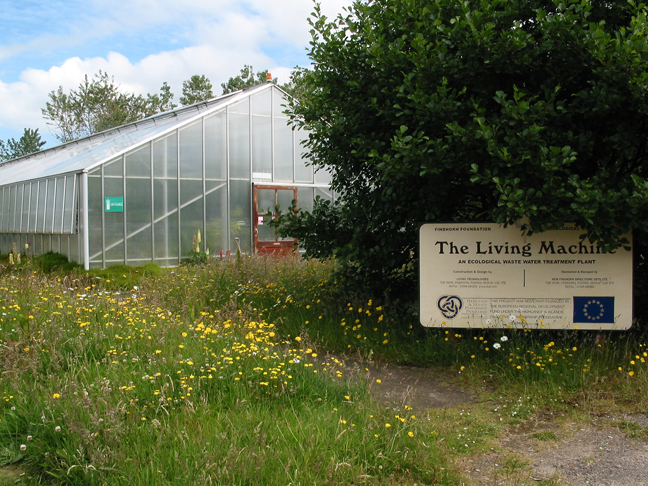
Galpão da Máquina Viva / The Living Machine greenhouse
The Brazilians were updating me on activities and events. That afternoon, a guided tour to the Foundation was scheduled and it included the Living Machine, an ecological water treatment station which technology had caught my interest. To join the group I paid a two pounds fee. After visiting the facilities, studios, and meditation rooms including the Nature Sanctuary, we got in the Living Machine. It was a massive greenhouse containing a series of tanks where sewage arrives through pipes. “Diverse communities of bacteria, algae, micro-organisms, numerous species of plants and trees, snails, and fish interact as whole ecologies in each one of these tanks and biofilters. These mirror processes that occur in the natural world, but do so more intensively. At the end of the series of tanks, the resulting water is pure enough to discharge directly into the sea or to be recycled. The technology is not only capable of meeting tough new sewage outflow standards, but uses no chemicals, and has a relatively inexpensive capital cost attached.” (quote from Findhorn Foundation Website)
Brilliant.

Aspecto da estação de tratamento de esgoto ecológica.
That’s how an ecological sewage treatment station looks like.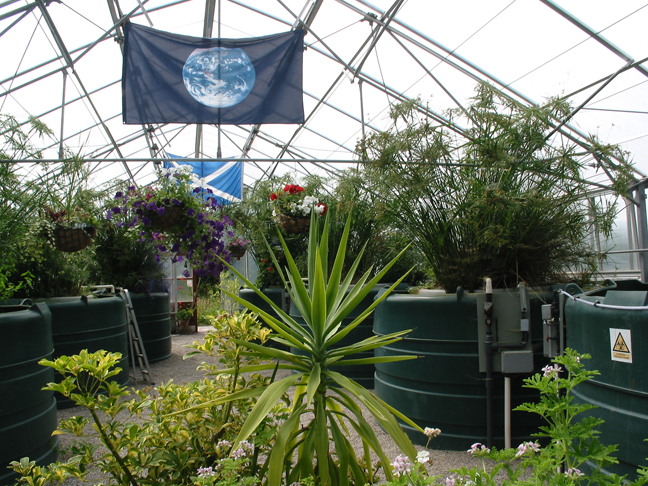
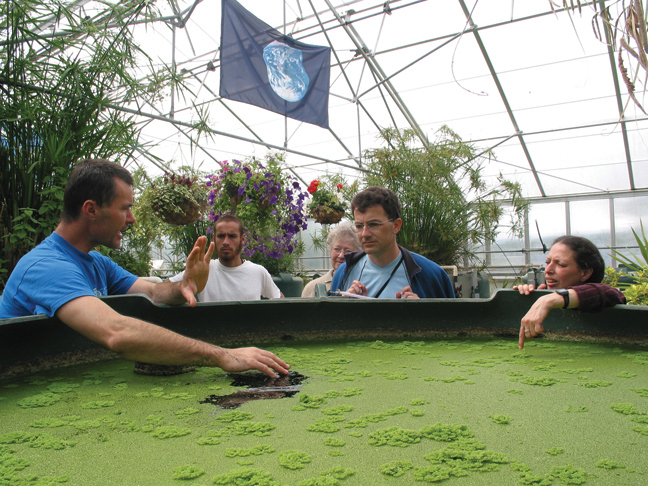
Tanques interconectados numa sequência que favorece a depuração da água.
The sequence of tank interconnection favors water depuration.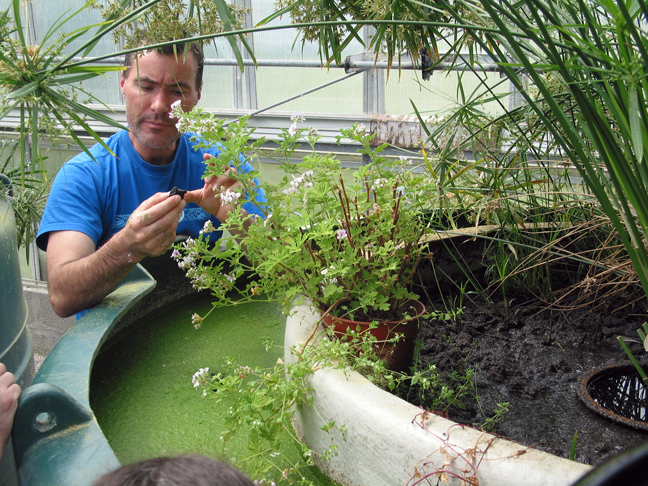

Essa estação trata todo o esgoto dos 500 habitantes da Ecovila. / This station treats sewage from the population of up to 500 people living at the Findhorn Ecovillage.

Vista da Ecovila / Ecovillage landscape

Construções ecológicas: para cada duas ou até três casas da Ecovila há uma área comum de cozinha e lavanderia (nesta casa, a parte central preta), minimizando o impacto ambiental. Emprega-se material reciclado e certificado, conforme detalhado na placa da obra. / Ecological buildings: each two or even three houses in the Ecovillage share facilities (laundry, kitchens – here, the black wal lin the middle ) avoiding unnecessary duplication, minimizing ambiental impact. All supplies are recycled and certificated, as stated in the sign shown below.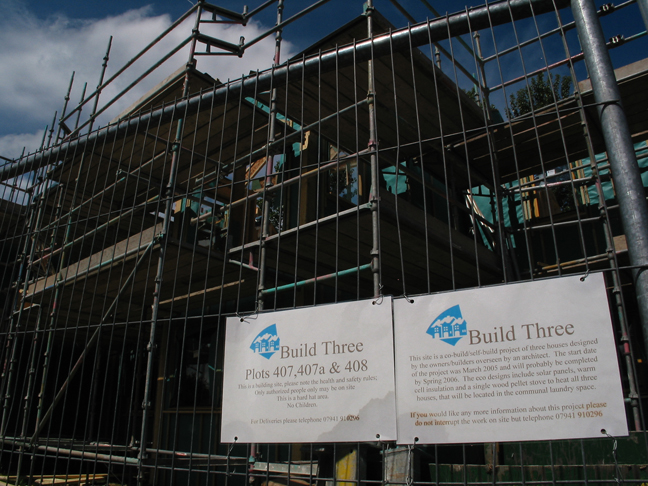

A construção e manutenção de tais casas pode ser executada pelos próprios donos.
Such houses are suitable for Self Building and Maintenance.
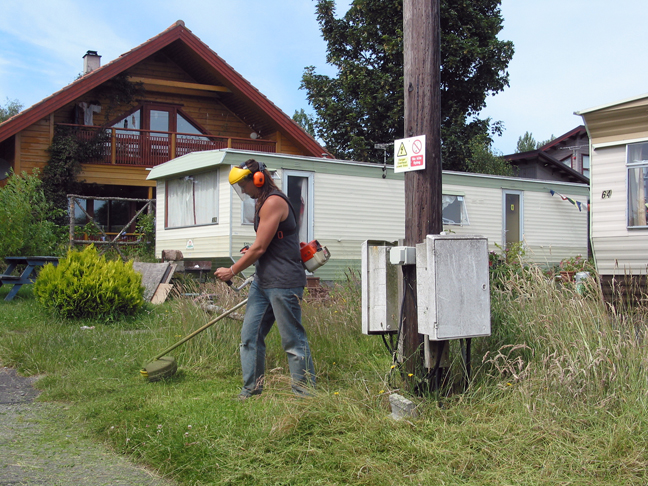
Os moradores da Ecovila estão sempre em atividade…
Ecovillage people are always busy…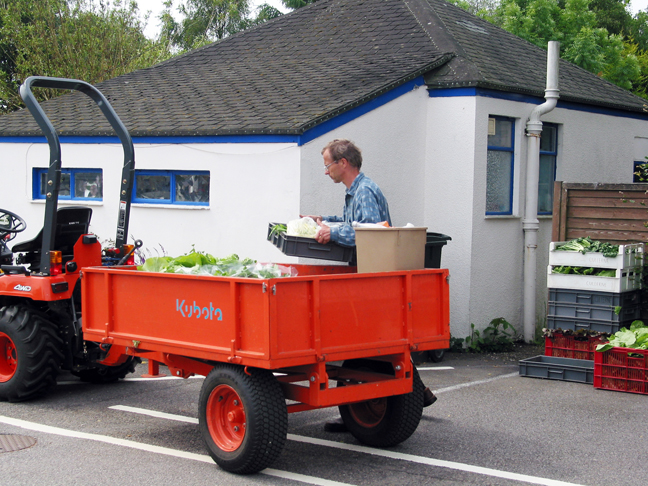
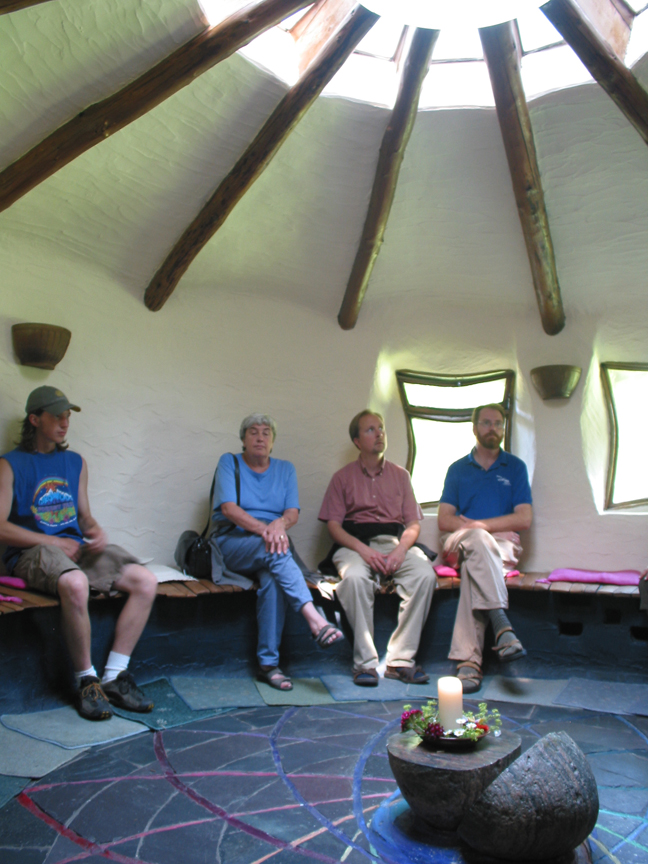
… de um jeito ou de outro.
… in one way or another.
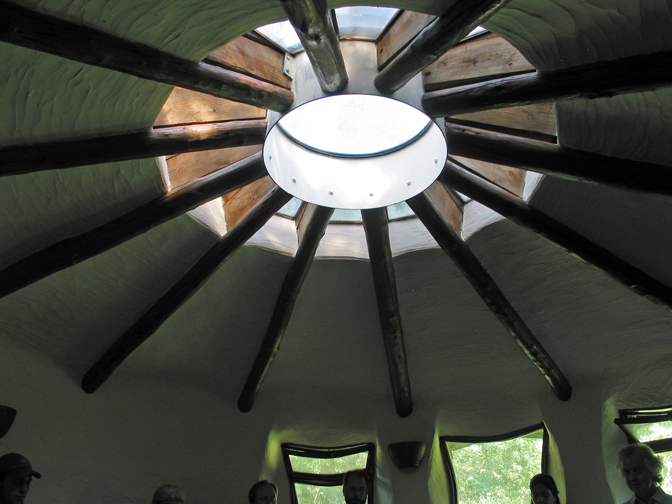
Detalhe do teto no Santuário da Natureza.
Roof detail, inside Nature’s Sanctuary

Detalhes de arte e ecologia. Através das clarabóias a luz natural dá destaque à linda pintura. / Artistic and ecologic details: through the skylight, natural light highlights the delicate painting.
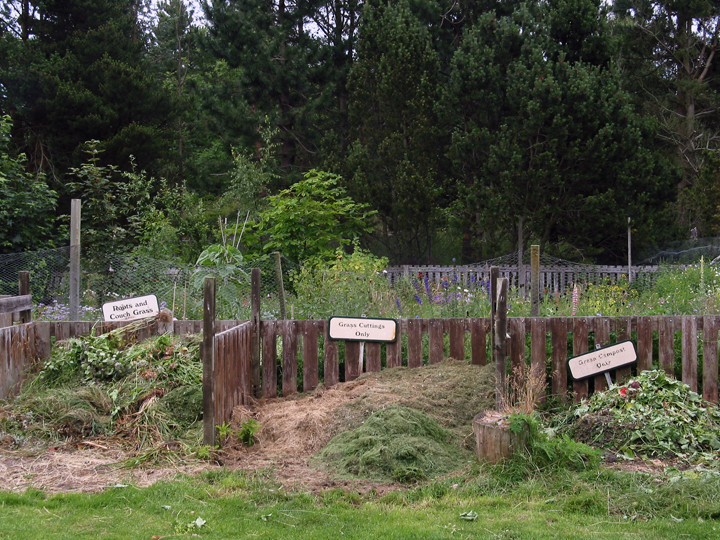
Compostagem / Composting

Bicicletas e madeira de florestas de gestão sustentável.
Bikes and locally grown and harvested timber from managed forests.
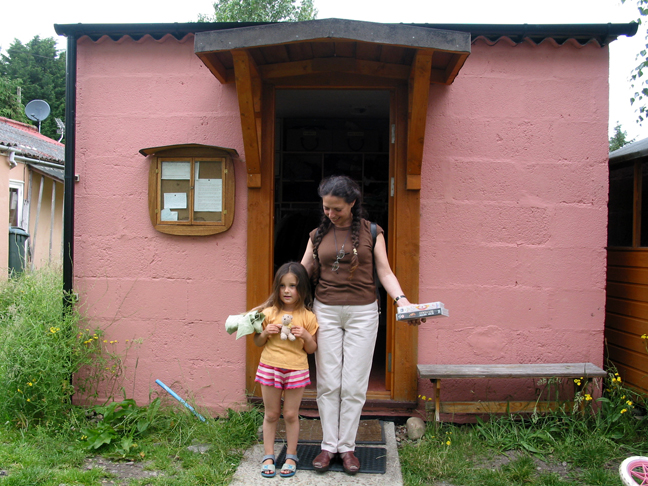
Brechó para troca de coisas e roupas usadas.
Thrift store for second hand stuff exchange.
Findhorn Foundation Website:
 Avalon