Feeds:
Posts
Comentários

Posts Tagged ‘Forres’


Desfile nos Highland Games / Parade

Os brasileiros me disseram que, no dia seguinte, haveria um evento imperdível em Forres: os Highland Games, que celebram a tradição e cultura céltica. Acabei indo sozinha mais cedo pois as pessoas tinham aulas até as cinco horas. Embarquei na van que fazia transporte gratuito entre Cluny Hill e a Fundação, e não foi preciso andar muito para localizar o evento no parque próximo à Pedra das Bruxas.

My Brazilian friends were talking about the Highland Games which were taking place the next day in Forres, unmissable, for It’s an event celebrating Scottish and Celtic culture and heritage. Eventually I went alone, earlier, because people had classes until 5pm. I took the free shuttle to Cluny Hill and dropped off in the park in Forres, near the Witches Stone, where the Games were going on.

Arremesso de martelo (que devia pesar duas toneladas) / Hammer throw
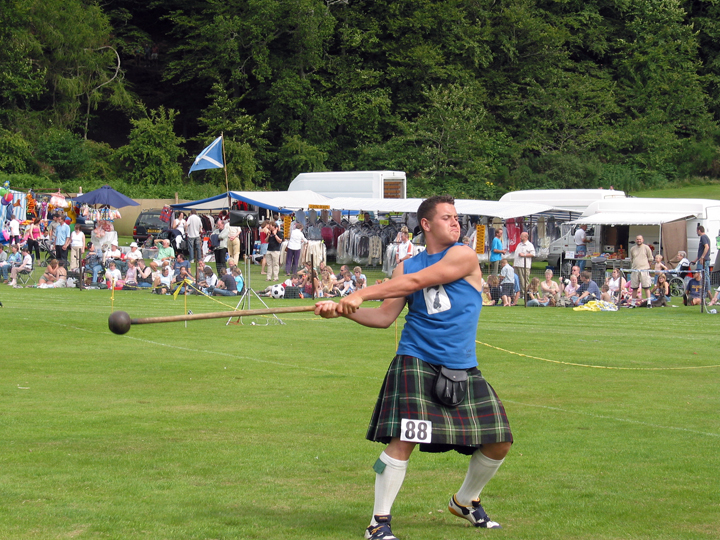
A área estava cercada para os jogos com uma lona em toda sua extensão e a entrada custava cinco libras, mas um pouco adiante havia um pedaço rasgado e algumas crianças brincavam de passar de um lado para o outro. Quando me aproximei, uma delas olhou bem para mim, fez um gesto me chamando e disse: Vem! Obedeci rapidamente, com satisfação.

The area was isolated by a tarpaulin all around it and the entrance fee costed 5 pounds. So I took a walk around it and found a place where the tarpaulin was torn and some kids were playing, running inside/ outside. When I approached them, a boy took a good look at me and said “Come!”, making a gesture for me to follow him, what I did at once, gladly.
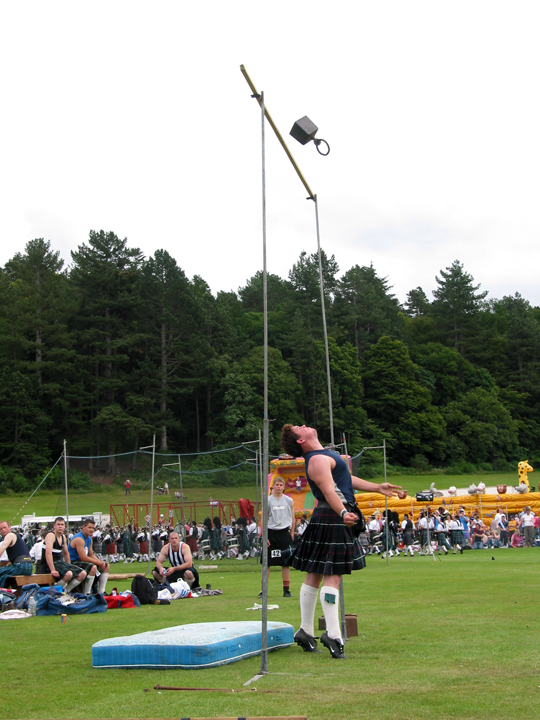
Arremesso de peso em altura / Weight over the bar, also known as weight for height

Lá dentro havia pula-pula, tobogã e outros brinquedos infláveis, barraquinhas vendendo comida, bebida e objetos usados na tenda da Caridade. As provas da competição eram dignas de Asterix e Obelix, e os competidores pareciam mesmo os invencíveis gauleses. Infelizmente já tinha terminado a que eu mais queria ver, o “Caber Toss”, na qual os competidores tinham de sair correndo segurando um tronco gigantesco e arremessá-lo para o alto de tal forma que ao tocar o chão tivesse dado uma volta completa no ar. Achei uma foto na Wikipedia.

There was playground with inflatable toys, carts selling food, drink and a Charity Thrift Tent. The games were worthy of Asterix and Obelix, and the players definitely looked like the invincible Gauls. Unfortunately what I wished to watch the most was over: the Caber Toss. A long tapered pine pole or log is stood upright and hoisted by the competitor who balances it vertically holding the smaller end in his hands (see Wikipedia photo below). Then the competitor runs forward attempting to toss it in such a way that it turns end over end with the upper (larger) end striking the ground first.
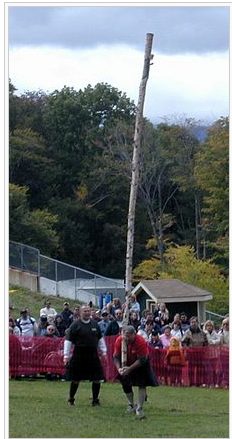
Caber Toss
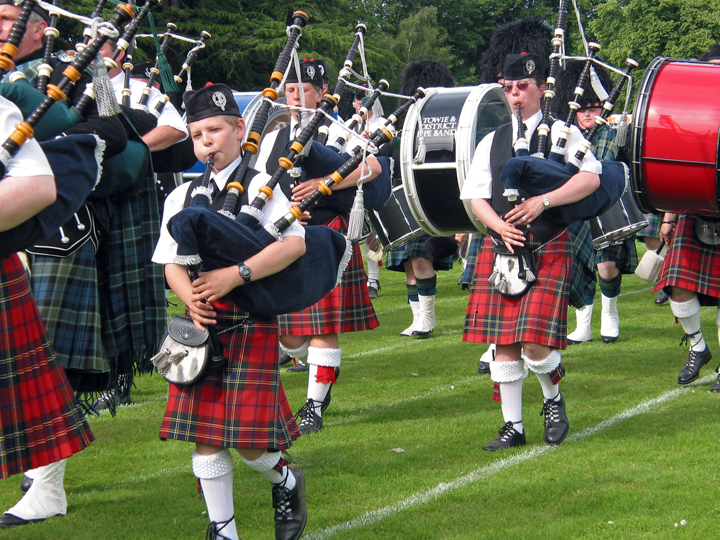
Concurso de bandas de gaita de foles / Pipe Bands competition
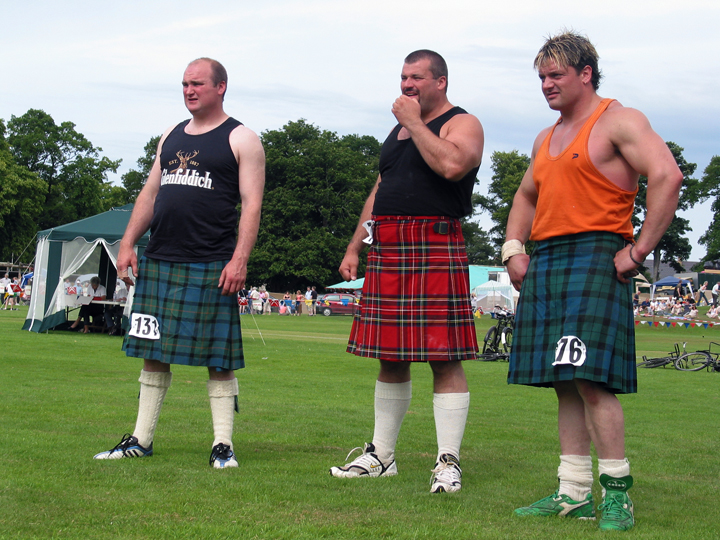
Ri bastante desses caras, verdadeiros armários, de Kilt.
These big guys looked funny indeed in kilts. Ooooops!
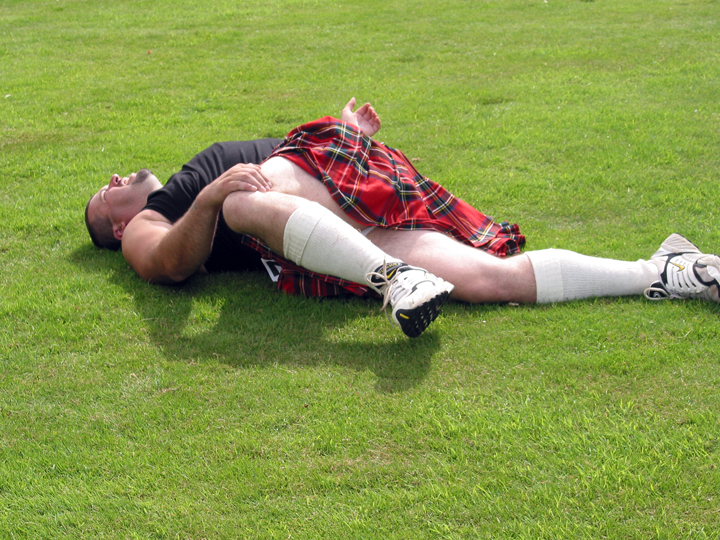
Adorei a Escócia. Na volta, havia um grupo de velhinhas no ponto de ônibus. Perguntei qual deveria tomar para chegar à Fundação, mas nenhuma delas sabia. Porém me disseram para esperar. O ônibus delas parou, uma foi falar com o motorista, voltou com a informação, que me fez repetir para certificar-se que eu entendera e por fim embarcou. Agradeci muito, e quando o ônibus arrancou, todas as velhinhas estavam acenando pela janela, me dando tchau, todas  sorridentes. Muito fofas! Quase chorei.

I was in love with Scotland. Later in the afternoon, in a bus stop, I asked a group of fluffy old ladies which number was the bus to the Foundation and none was quite sure, but they told me to wait a while, for their bus was approaching and when it came to a halt one of them talked to the driver and came back with the information. She bade me repeat it to be sure I had understood before boarding, what I did and thanked her gratefully. When the bus took off, all the ladies were at the windows waving me goodbye, smiling so sweet that tears came to my eyes.
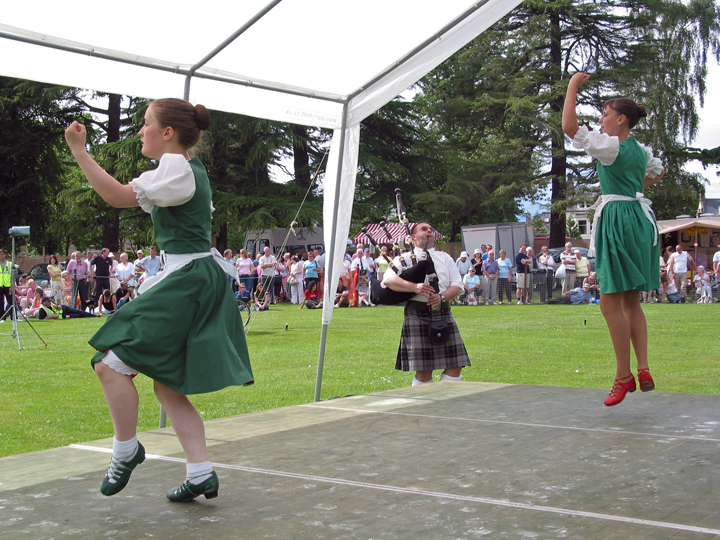
Concurso de danças típicas / Traditional Dance Competition
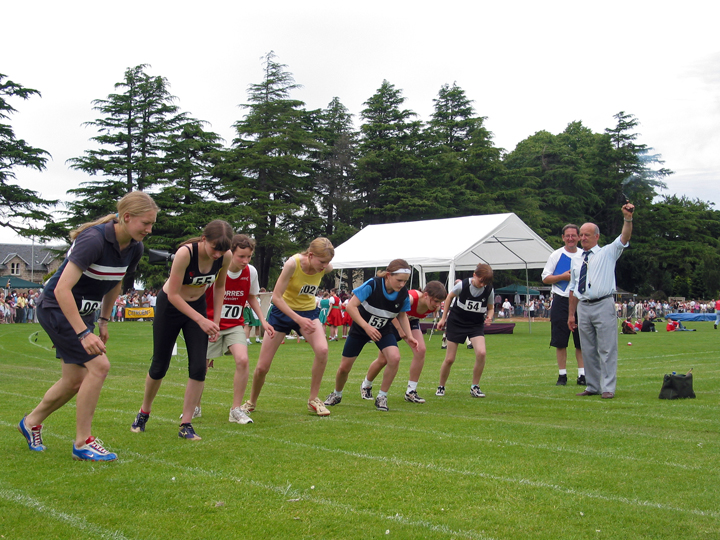
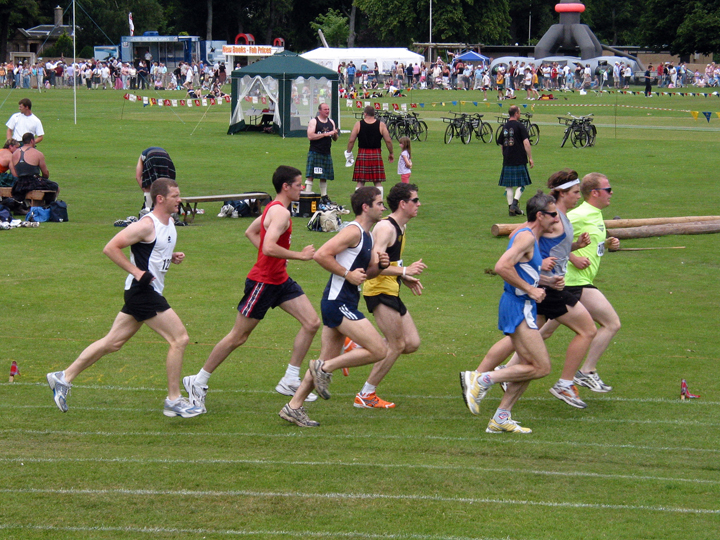
Corrida / Running
Entrega de prêmios / Awards delivery
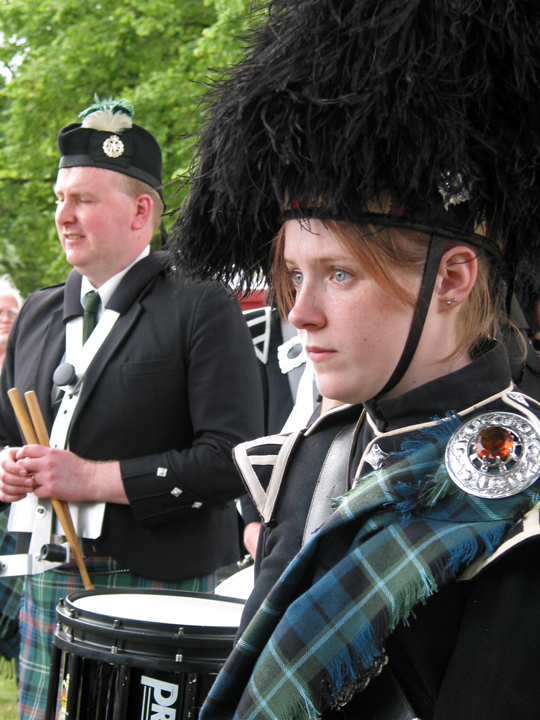
Concentração / Concentration

Juiz adormecido / The sleeping referee

À noite haveria um baile na Fundação, pelo qual todos esperavam ansiosamente. Um grupo grego chamado Xenos iria tocar. Fiquei pensando como entrar sem pagar as cinco libras do ingresso. Mas não havia ninguém por perto com autoridade para me liberar a entrada em troca de algum trabalho, então fui sondar o Universal Hall, onde iria ser a festa. Tinha uma entrada principal, uma nos fundos que dava para os camarins, e um corredor entre o palco e o salão. E lá, num canto, estava…  uma vassoura! Peguei e comecei a varrer. Primeiro, toda a entrada e área em volta. Depois, a entrada dos fundos, por fim o corredor. Quando não restava uma folhinha sequer no chão, surgiu na minha frente um dos diretores, que olhou bem em volta e perguntou-me se eu tinha combinado com não sei quem de fazer a limpeza em troca do ingresso. Abri a boca meio sem saber o que dizer, mas ele não esperou pela resposta. Falou que a tal pessoa precisara se ausentar, mas que eu tinha feito um “excelente trabalho” e deveria entrar naquele momento, porque o espetáculo estava para começar. Guardei a vassoura e obedeci.

There was a ball in the Foundation that night, with live music played by a Greek band, Xenos, and people were so excited about it. I was wondering if there was some work I could do in exchange for the ticket. It costed 5 pounds and there was no one around who could help me, so I headed to Universal Hall, where the party was to take place. There was a main entrance, a back door to the dressing rooms and a corridor opening to the stage and to the ballroom. There, in a corner, leaning against the wall, was… a broom! I grabbed it and started sweeping the floor, first all around the main entrance, then all around the back door and when I was about to finish with the corridor, not a single leaf left on the floor, a door opened right in front of me and through it came one of the directors. He saw what I had done and asked if I had made an arrangement with a certain woman about it. I’d never actually seen her, and opened my mouth not sure about what to say, but he didn’t wait for my answer. He told me the lady had left earlier, but I had done an “excellent job” and should now go to the ballroom because the show was about to start. So I kept the broom and obeyed him.

Danças Sagradas Circulares, algo além da minha capacidade de coordenação motora.
Circular Sacred Dances, something I had never enough motor coordination skills to perform.

No início, me animei. O grupo tocava música folclórica, meio cigana; saí dançando e as pessoas entraram no clima. Em minutos, todos estavam em transe rodopiando pelo salão, sorrindo e suando em bicas. Contudo, pouco depois comecei a achar a música repetitiva e, por fim, chata mesmo. Tinha uma moça tocando uma cornetinha que já estava me irritando. Em determinado momento, saí discretamente e fui dormir.

At first I was pretty high spirited. Xenos played folk music, kind of gipsy tunes, and when I started dancing people joined in the mood. In a little while they all looked like crazy whirling dervishes, smiling, sweat running down their hair, faces and bodies. Later, however, I realized the music was repetitive and a few minutes more, I was definitely fed up of that girl playing an irritating bugle, so I left the place unnoticed and went to bed.
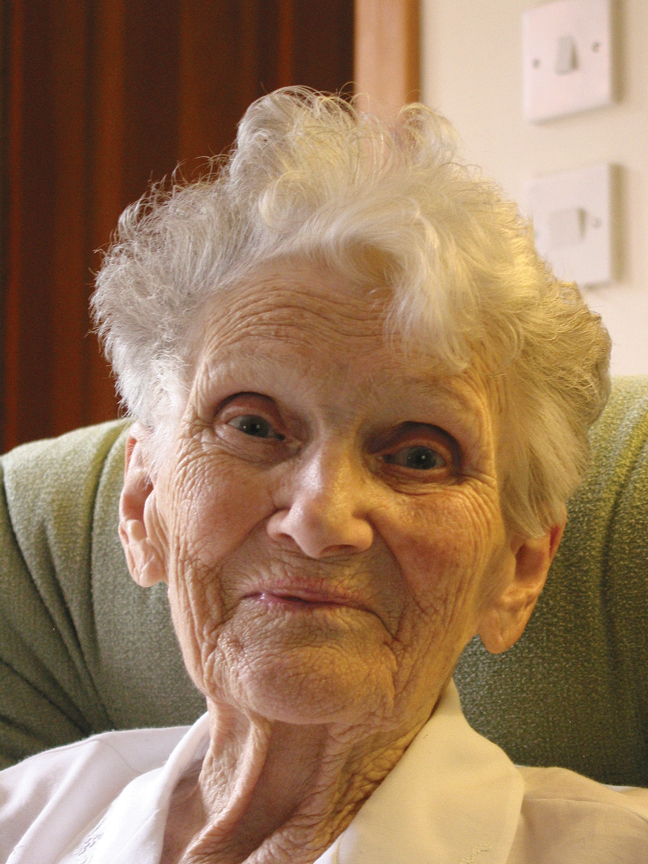
Eileen Caddy

Fiquei sabendo que haveria uma excursão à ilha de Iona, que confundi com Mona, esta no País de Gales, onde ficava a mais importante escola dos druidas, último a ser arrasado pelos romanos. Porém o ônibus estava cheio, não consegui lugar. Assim sendo, deixei um recado para Melissa no quadro de avisos da recepção agradecendo a força e voltei para Inverness. Antes, porém, consegui visitar e fotografar Eileen Caddy, uma das fundadoras de Findhorn, uma senhora fofa que aos 88 anos continuava escrevendo mensagens espirituais diárias ditadas pelas divindades. Pedi sua bênção antes de me despedir, e fiz isso em boa hora: ela veio a falecer no ano seguinte, dia 13 de dezembro de 2006.

I was told there would be a tour to Iona, which I mistook for Mona, this one in Wales, where the most important druid school had been, the last to stand against the Roman ravage. But the coach was full, there was not one single seat left for me. So I left Melissa a note in the wall at the reception, thanking her for having helped me and took the road back to Inverness. Before that, however, I had the chance to pay a visit and take a picture of Eileen Caddy, one of Findhorn’s founders, a sweet old lady that, at the age of 88, was still engaged in writing down daily spiritual messages under divine guidance. I was given a blessing before saying goodbye, and that came in good time, for she passed away the following year, in December 13, 2006.
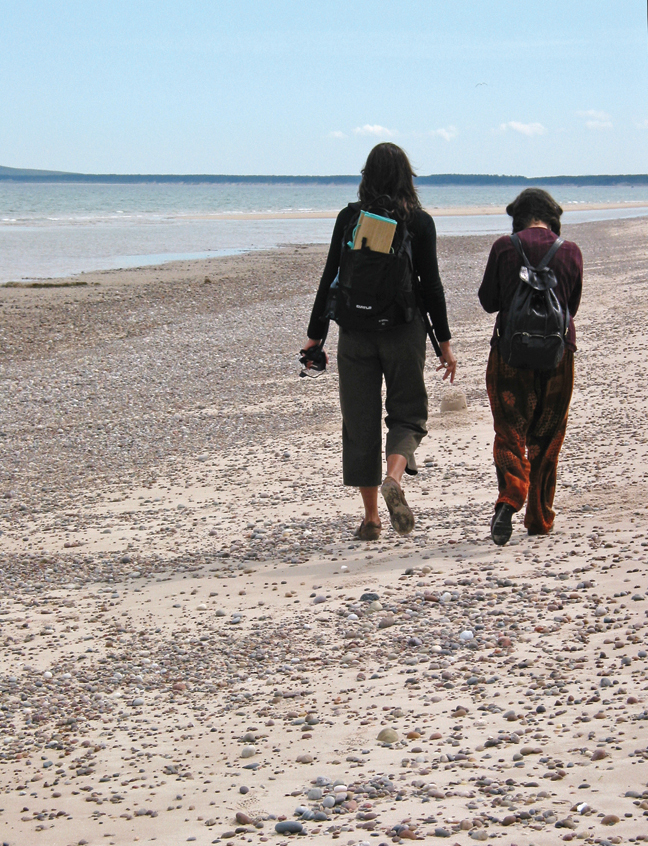
Adeus, Findhorn. Aprendi muita coisa aqui.
Farewell, Findhorn. I learned so much in here.
Read Full Post »


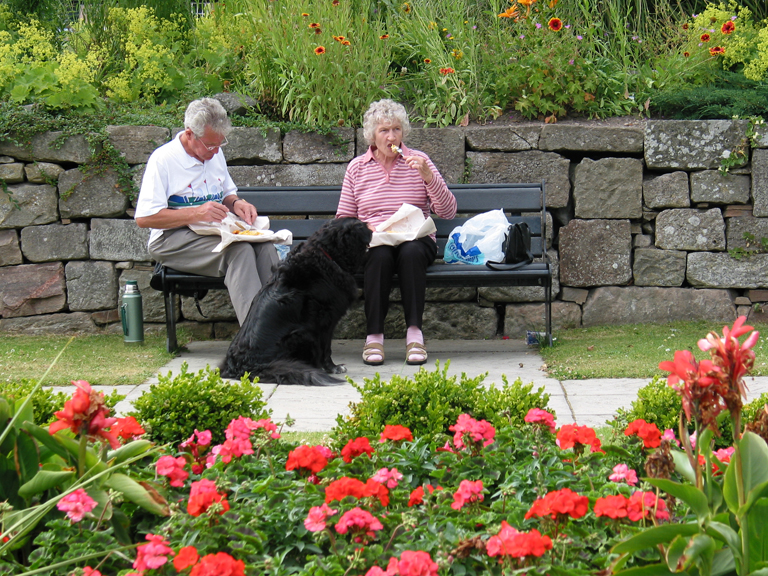
É comum ver pessoas almoçando ao ar livre, como esse casal e seu cão. Britânicos aproveitam cada instante do verão. / Couple with dog having lunch out in the sun. Not an unusual scene, british people enjoy every single summer moment.

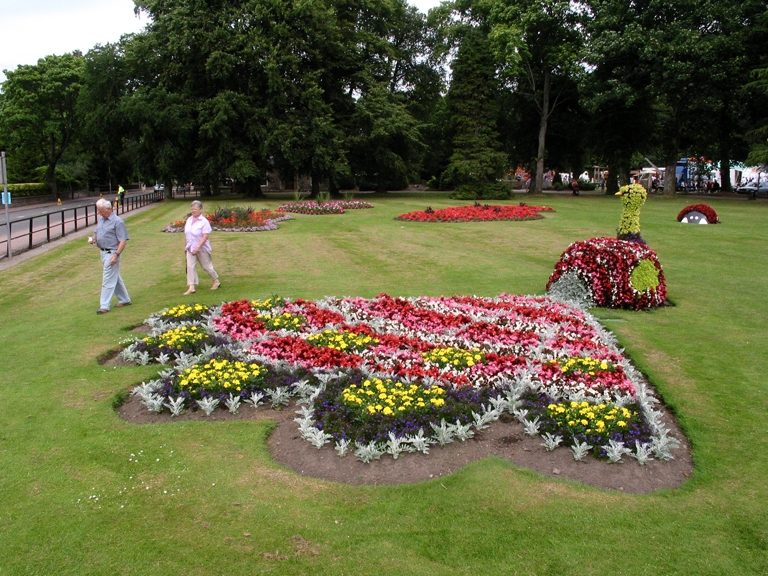
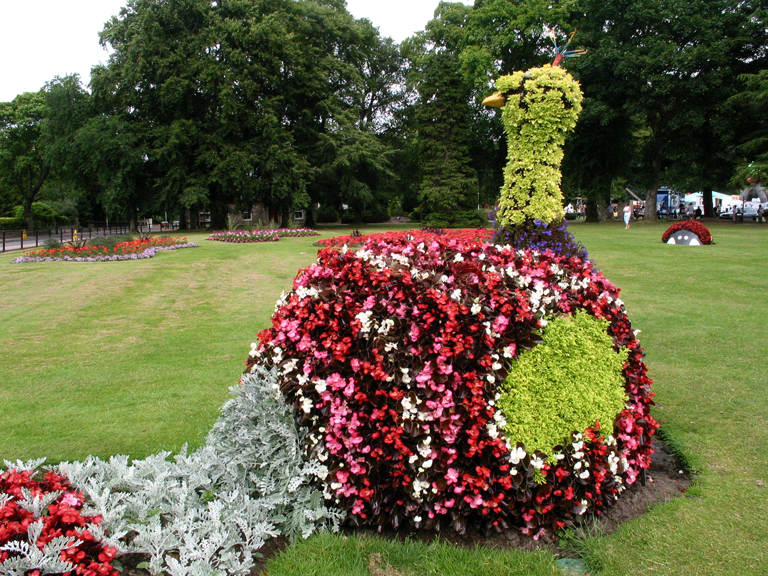
De Inverness a Forres são aproximadamente 50km; cheguei pela manhã, mas o dia estava cinzento, anunciando chuva. Forres é uma cidade bonitinha. Ganhara o prêmio de “jardim mais bonito” do Reino Unido, dizia a placa junto a uma praça onde realmente os jardineiros fizeram um trabalho notável. Usando bases de tela, esculpiram bichos feitos de plantas: joaninhas, pavões, lagartas. As guias de tela ordenaram o crescimento de flores cuidadosamente podadas, todas coloridas. Os britânicos são doidos por jardins, orgulham-se deles e este era realmente espetacular.

The distance from Inverness to Forres is around 31 miles. The day was foggy, forecasting rain when I arrived in that cute city. A sign in a square celebrated the prize Forres had just won as the most beautiful garden in UK. And the gardeners really did a hell of a job. They sculpted ladybugs, peacocks and caterpillars with coloured flowers, carefully trimmed, supported by an underneath grid. British people love gardening and are very proud of their work.

Topiaria: a arte de esculpir com plantas e flores, na qual os britânicos são experts. / Topiary: art of cutting trees and shrubs into ornamental forms, mastered by the British


Segui procurando o ponto de ônibus para Findhorn, mas as pessoas na rua nada sabiam informar. Nem havia muitas pessoas na rua, então saí andando, arrastando minha malinha pela avenida principal. Algumas placas indicavam um monumento próximo, a Sueno’s Stone, uma pedra com inscrições do tempo dos pictos que resolvi conferir. E fui seguindo as setas, mas, em outra praça, no meio do caminho, tinha outra pedra.

Sueno’s Stone, bem protegida em uma vitrine. As inscrições mostram cenas de batalha, possivelmente uma vitória contra invasores nórdicos. / Sueno’s Stone, well protected in a glass window. The carvings show battle scenes, maybe a victory against the Danes or Norse invaders.

I was looking for the Findhorn bus stop, and nobody knew where it was. There was no one out on the streets, so I went on carrying my little suitcase up the main street. Signs  pointed out a historical monument straight ahead, Sueno’s Stone, with pict inscriptions, so I decided to check it out and followed the arrows. But in another square, in the middle of the road, there was another stone.

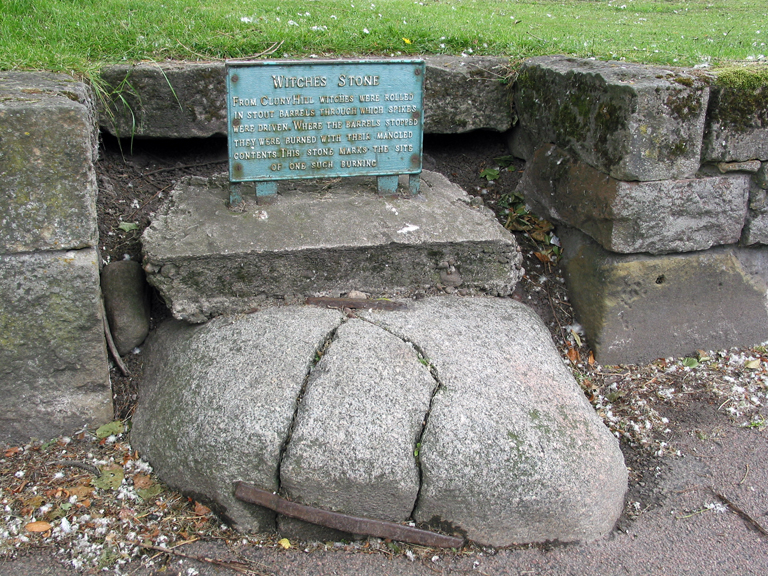
Witches Stone, Forres, Scotland

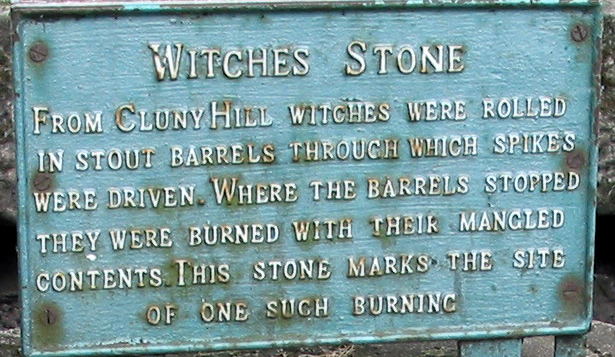
Witches Stone. A placa informava: no tempo da Inquisição, mulheres suspeitas de bruxaria eram postas dentro de um barril no alto da colina. O barril era espetado com várias lanças e empurrado para descer rolando pela encosta da colina de Cluny. Onde parava, ateavam fogo com o que restara da mulher dentro. Aquela pedra sinalizava o local onde um desses barris fora incendiado. Fiquei chapada. Esqueci Findhorn, o horário do ônibus, esqueci meu nome. Sentei e fiquei olhando aquele testemunho de algo que só tinha lido nos livros. Me vi dentro de um barril, sendo dilacerada e depois queimada viva.  Me veio a imagem de um porco no rolete.

Witches Stone. In Inquisition times, women judged guilty of witchcraft were put inside a barrel through which spikes were driven and the barrel was released to roll down Cluny Hill. When it came to a halt, fire was put to it with the woman’s remains still inside. That stone marked the spot where one of these burnings had happened long ago. I was stunned. I forgot all about Findhorn, the bus, I forgot my own name and just sat down there, staring at a material proof of something I had only read about in books. I could feel myself inside a stout barrel, being shredded in pieces and burnt alive. A hog roast came into my mind.

Detalhe. / Detail

E justo nas Terras Altas da Escócia, onde as mulheres reinavam nos antigos clãs! Possuíam seus próprios títulos, propriedades, terras. O livro “A Rosa Branca Rebelde”, de Janet Paisley, do qual transcrevo os seguintes trechos, descreve os costumes célticos dos clãs escoceses, povos que “escolhiam viver livremente juntos, pelo bem geral”. Ninguém passava fome nem ficava sem abrigo ou cuidado em caso de necessidade, pois todos se ajudavam mutuamente. “As mulheres, casadas ou não, deveriam se satisfazer caso quisessem outro homem. Suas ancestrais se divorciavam dos maridos com facilidade, quando eles não conseguiam sustentá-las ou respeitá-las, se roncassem, fofocassem, fossem impotentes ou apenas repugnantes. Uma esposa frustrada poderia ter um amante se seu marido bêbado não a satisfizesse. O noivado servia para que dois amantes vivessem juntos por um ano e decidissem se queriam mesmo casar-se um dia antes de completar esse período. As inglesas não tinham direitos nem poder, tampouco nome. Seu corpo, seus filhos e sua casa eram bens dos homens.” Ao casar-se, todos seus bens passavam a ser do marido e caso se separassem, a infeliz ficava sem nada.

It was a shock to learn that such stuff happened in the Highlands, where women were sovereign in ancient clan times. Scottish women, unlike the English ones, had their own titles, properties and land. I quote from “White Rose Rebel”, written by Janet Paisley, describing the celtic customs of Scottish clans, people “of free choice who lived together for common good”. Nobody would starve or go unattended in case of need, for people would care about each other. “Women, married or not, should satisfy their needs if they desired another man. Her grandmothers were already used to divorce easily if the husband did not sustain or respect the wife; if he snored, gossiped, were impotent or just disgusting. A frustrated wife could have a lover if her husband were a drunker and didn’t satisfy her. Engagement endured one year, so the lovers could live together and decide if they really wanted to get married after that time. English women didn’t have any rights, power or name. Their bodies, their children and their home belonged to the husband. If a couple divorced, all the properties were kept by the man”. There was nothing left for the poor woman.

Charles Edward Stuart fugiu após a derrota e passou o resto da vida no exílio.
Os lindos tartans, felizmente, continuam a existir.
Charles Edward Stuart fled after the defeat and spent the rest of his life in exile.
The beautiful tartans survived to the present day.

Em 1745, na Batalha de Culloden, o exército inglês massacrou a insurreição dos clãs das Terras Altas que apoiavam a volta de Charles, herdeiro legítimo dos Stuarts, ao trono do Reino Unido. Além da execução e deportação de milhares de escoceses, o Parlamento britânico baixou um ato de desarmamento, para confiscar todas as armas das Terras Altas (Highlands) e banir o uso de suas tradicionais roupas, gaitas, danças e tartans. Foi abolido o direito hereditário dos chefes de clãs de aplicar a justiça em tribunais regionais. Além disso os professores escolares deviam jurar lealdade à Coroa inglesa e o inglês substituir o gaélico como idioma nacional. Em suma, reduzir a pó toda a cultura de um povo. Chamar mulheres de bruxas e achar que isso justifica queimá-las me parece apenas a sequência do processo.

In 1745, in the Battle of Culloden, the English Army butchered the Highlands’ clans uprising in support of “Bonnie Prince Charlie’s” restoration, as last legitimate heir to the Stuarts, to the British throne. Thousands of Scots were killed and deported. The British Government enacted laws to incorporate Scotland—specifically the Scottish Highlands—within the rest of Britain. The abolition of Heritable Jurisdictions Act ended the hereditary right of landowners to govern and make justice in their estates through barony courts. The Disarming Act confiscated all “warlike weapons” and the Dress Act declared wearing tartans and kilts as illegal. The traditional pipes and dances were banished; teachers were forced to swear loyalty to the English Crown and English replaced Gaelic as official language. In short, a deathly blow to Scottish culture.
Seems to me that naming a woman a witch, and believing this is enough to burn her alive was just a later outgrowth of the process.

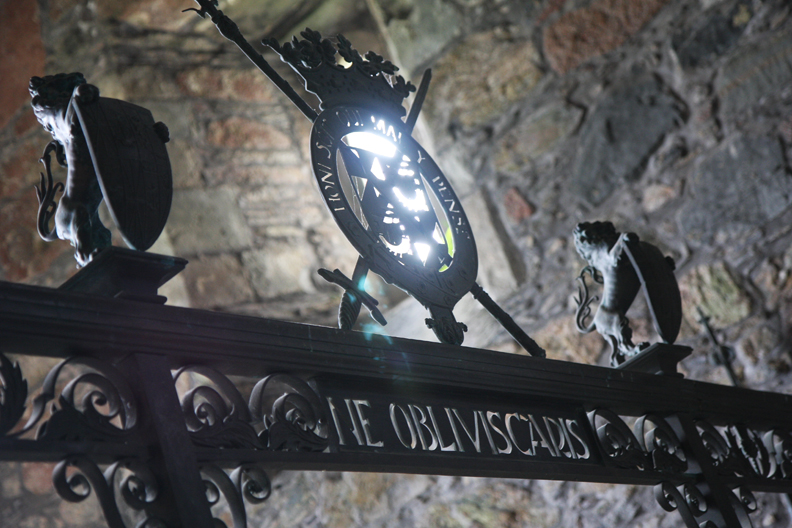
Ne Obliviscaris. Do Not Forget. Não esquece.

Entretanto, voltando ao tempo do Império Romano, poucos séculos antes, temos relatos de brutalidades semelhantes inflingidas às tribos britânicas pelos conquistadores. Na verdade a história se repete, até os dias de hoje, mudando apenas de endereço, remetente e destinatário. Quanta tradição preciosa perdeu-se para sempre! Me dei conta que poderia ter morrido assim em uma vida passada. Plantada em frente à pedra chorei bem uma meia hora por todas as injustiças do mundo dito civilizado.

However, if we go back in time a few centuries, to the Roman Empire, there’s evidence of the same brutality inflicted on the British tribes by the conquerors. Indeed History repeats itself to this very day, the only things that change are the characters involved. How much precious tradition is forever lost! I realized I could have been burnt in a past life, and remained roughly half an hour sitting by the Witches Stone, weeping for all unfairness of the so called civilized world.

Read Full Post »