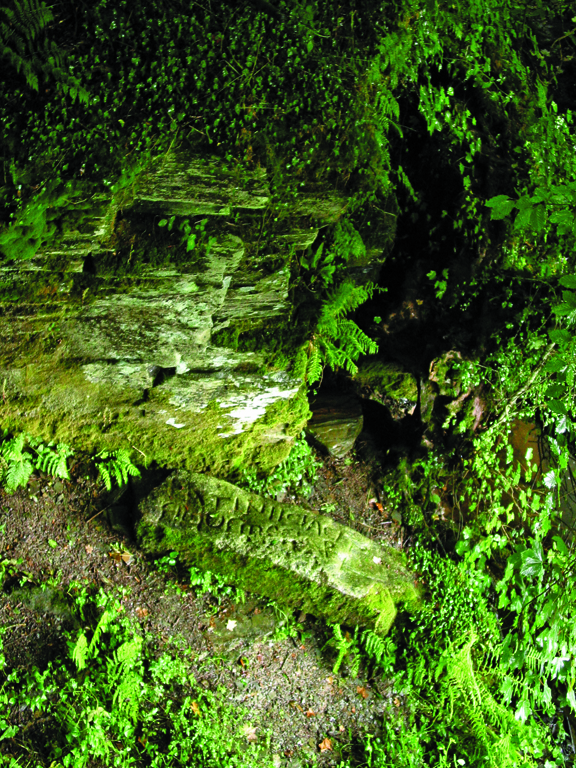
Arthur’s Stone
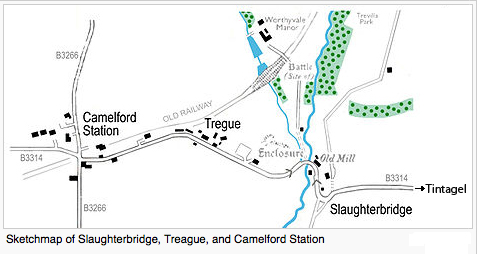
O trocador entendeu errado o nome da ponte – achou que eu ia para Wadebridge em Camelford, então me cobrou mais de duas libras pela passagem. Quando surgiu a placa indicando Slaughterbridge, percebi que o lugar era perto demais para aquela tarifa, fui reclamar. O homem disse que entendera errado porém não podia me devolver o dinheiro, porque já tinha destacado o tíquete. Eu teria que ir até o escritório da companhia para pedir reembolso. Fiquei uma arara; reclamei com o motorista, que foi muito grosseiro, o que me deixou chocada, mas era hora de descer do ônibus. Saltei em frente a um pavilhão chamado Arthurian Center. Agora sei que basta entrar numa ruela ao lado da ponte para chegar ao riacho em cujas margens se encontra a pedra de Arthur.
The collector of the bus misunderstood the name of the bridge – thought I was going to Wadebridge, in Camelford – so he charged me more than two pounds. When the sign “Slaughterbridge” appeared by the road I noticed that it was too close for such a fee, and complained about it. The man apologized for the mistake but he couldn’t give me back the money because the ticket had already been detached. I had to go all the way to the office to get a refund. I was pissed off and complained with the driver, who was extremely rude. But it was time to drop off, in front of a pavillion called Arthurian Center. Now I know that to find Arthur’s Stone one should go down a side lane beside the bridge. The stone is by the brook.
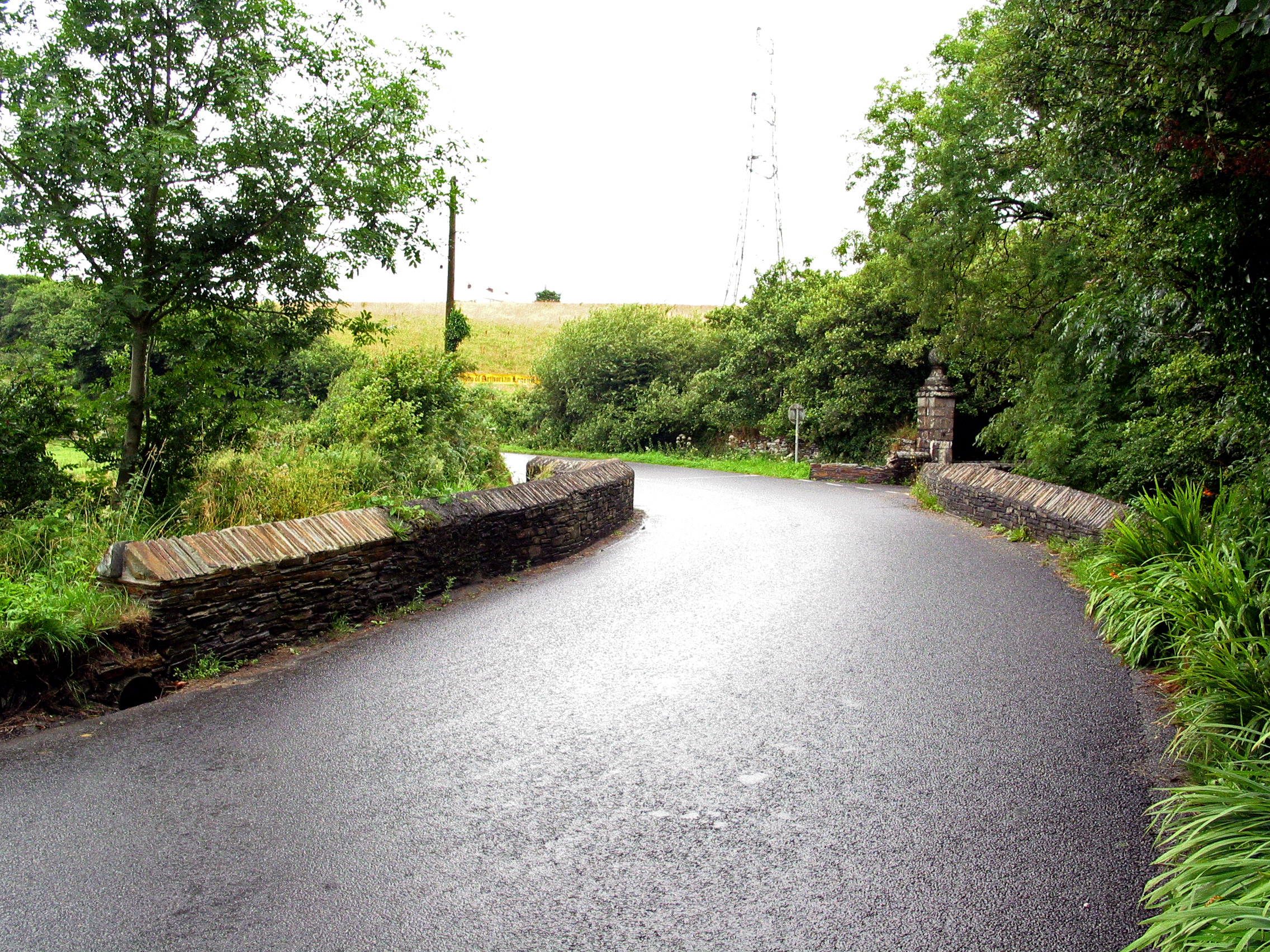
Slaughterbridge, da direita e da esquerda / Left and right 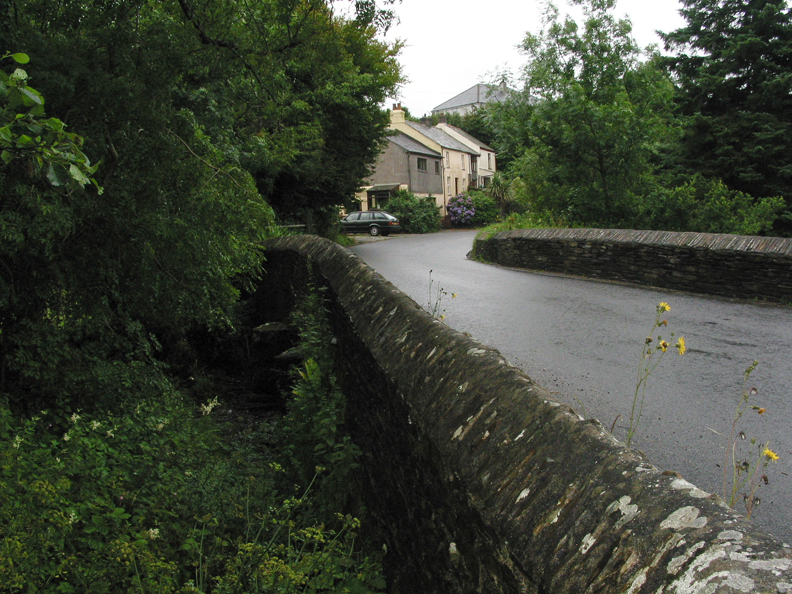
Como o tal Centro tinha uma placa dizendo “Sítio Arqueológico”, resolvi entrar para me informar. A entrada custava 3,50 libras. Havia uma exposição tosca de pinturas, cartazes desenhados à mão e um vídeo bizarro sem qualquer relação com Arthur: um sujeito vestido de preto andando; apareciam seus pés, a paisagem e uma entrevista sem pé nem cabeça com o cidadão. Fiquei assistindo apenas por que começou a chover torrencialmente. Quando a chuva diminuiu, saí em busca da pedra, seguindo a indicação de um funcionário. Havia uma trilha, mas dava mil voltas. Enfim, meia hora depois, encharcada e enlameada, cheguei ao rio e à pedra com inscrições celtas que atestam ali ter caído o rei. Depois é que fui perceber que o caminho terminava na estrada, na altura da ponte! Se tivesse entrado por ali, chegaria diretamente na pedra sem gastar minhas preciosas libras nem tomar aquele banho de chuva. Pelo menos passei pelo suposto campo da última batalha, onde fotografei a placa informativa .
The Arthurian Center had a sign written “Archaeological Site”, so I entered it n search of information. The admittance costed 3,50 pounds. There was a poor exhibition of paintings, handmade posters and a video without any relation to Arthur’s legend. It showed a bizarre interview with a man clad in black, who appeared walking, the camera focusing his feet and sometimes a landscape. I watched for a while because a hard rain had started. When it diminished I went for the stone, according to the clerk’s indications. There was a path, but it coiled a thousand times and it took me half an hour to get to the stream and the stone. I was soaked and muddy from hair to toe when I took the photo of the celtic inscriptions in the stone asserting that it was the place where the King fell down. Only after that I noticed that the way ended by the road. If I had gone that way, I’d have reached the stone without wasting my precious pounds nor rain bathing. At least the path went through the presumed last battle field, where I photographed the informative sign.
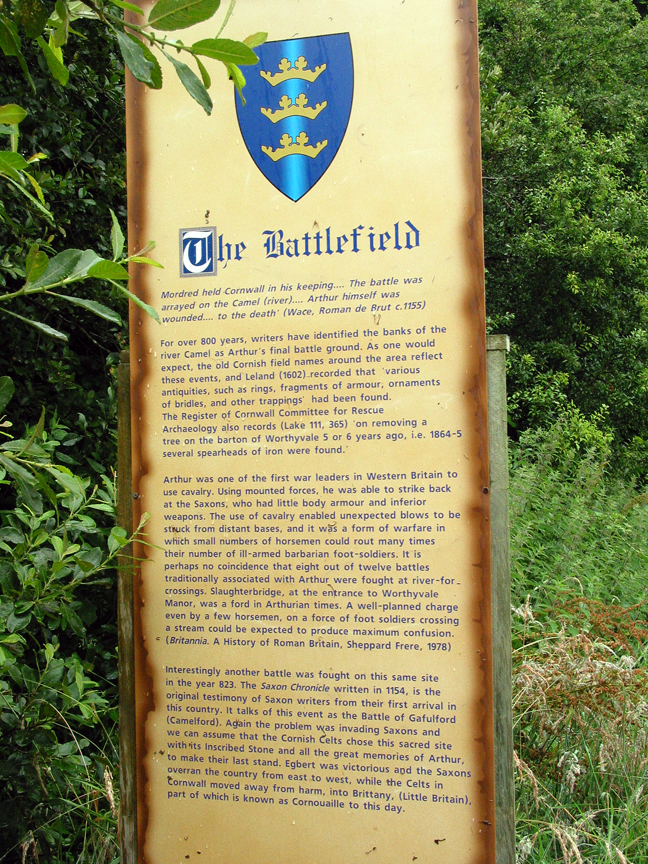
“A Cornualha estava em poder de Mordred… A batalha teve suas trincheiras no (rio) Camel… o próprio Arthur foi ferido… mortalmente.” (Wace, Roman de Brut, 1155)
“Por cerca de 800 anos os escritores tem reconhecido as margens do Rio Camel como o local da batalha final de Arthur. Como seria de se esperar, os nomes dos antigos campos no dialeto da Cornualha refletem estes eventos, e Leland (1602) registrou que foram encontrados objetos antigos tais como anéis, fragmentos de armaduras, enfeites de rédeas e outros adereços. O arquivo do Comitê da Cornualha para Resgate Arqueológico também registra (Lake 111, 365) a descoberta de diversas pontas de lança de ferro ao remover-se uma árvore no solar de Worthyvale há 5 ou 6 anos, ou seja, em 1864-5.
Arthur foi um dos primeiros líderes da Bretanha Ocidental a usar cavalaria na guerra. Empregando forças montadas ele foi capaz de contra-atacar os Saxões, que usavam pouca armadura e armas inferiores. O uso da cavalaria permitia ataques surpresa longe da base, sendo uma forma de guerra em que poucos cavaleiros podiam derrotar um número muito maior de soldados bárbaros a pé, precariamente armados. Talvez não seja coincidência que oito entre doze batalhas tradicionalmente associadas a Arthur foram travadas em passagens de rios. Slaughterbridge, na entrada do feudo de Worthyvale, era um vau nos tempos de Arthur. Um ataque bem planejado de soldados montados, ainda que poucos, a uma tropa de infantaria atravessando um córrego causaria certamente grande estrago. (Britannia. A History of Roman Britain, Sheppard Frere, 1978).
Curiosamente, outra batalha foi travada neste mesmo lugar no ano de 823. A Crônica Saxã escrita em 1154 é o testemunho autêntico dos escritores Saxões sobre sua chegada a este país, e menciona tal evento como a Batalha de Gafulford (Camelford). Novamente o problema eram invasores saxões e podemos presumir que os Celtas da Cornualha escolheram este lugar sagrado, com sua pedra inscrita e todas as lembranças de Arthur para seu confronto final. Egbert (líder saxão) venceu e os Saxões devastaram o país de leste a oeste, enquanto os Celtas da Cornualha fugiram para a Bretagne (Pequena Bretanha, na França), parte da qual até hoje se chama Cornouaille (Cornualha).”
“Mordred held Cornwall in his keeping… The battle was arrayed on the Camel (river)… Arthur himself was wounded… to the death.” (Wace, Roman de Brut, 1155)
For over 800 years, writers have identified the banks of the river Camel as Arthur’s final battle ground. As one would expect, the old Cornish fields names around the area reflect these events, and Leland (1602) recorded that various antiquities, such as rings, fragments of armour, ornaments of bridles, and other trappings had been found. The Register of Cornwall Committee for Rescue Archaeology also records (Lake 111, 365) on removing a tree on the barton of Worthyvale 5 or 6 years ago, ( i.e. 1864-5 ) several spearheads of iron were found.
Arthur was one of the first war leaders in Western Britain to use cavalry. Using mounted forces, he was able to strike back at the Saxons, who had little body armour and inferior weapons. The use of cavalry enabled unexpected blows to be struck from distant bases, and it was a form of warfare in which small numbers of horsemen could rout many times their number of ill-armed barbarian foot-soldiers. It is perhaps no coincidence that eight out of twelve battles traditionally associated with Arthur were fought at fords. Slaughterbridge, at the entrance to Worthyvale Manor, was a ford in Arthurian times. A well-planned charge even by a few horsemen, on a force of foot soldiers crossing a stream could be expected to produce maximum confusion. (Britannia. A History of Roman Britain, Sheppard Frere, 1978).
Interestingly another battle was fought on this same site in the year 823. The Saxon Chronicle written in 1154, is the original testimony of Saxon writers from their first arrival in this country. It talks of this event as the Battle of Gafulford (Camelford). Again the problem was invading Saxons and we can assume that the Cornish Celts chose this sacred site with its inscribed Stone and all the great memories of Arthur, to make their last stand. Egbert was victorious and the Saxons overran the country from east to west, while the Celts in Cornwall moved away from harm, into Brittany (Little Britain), part of which is known as Cornouaille to this day.”
 Avalon